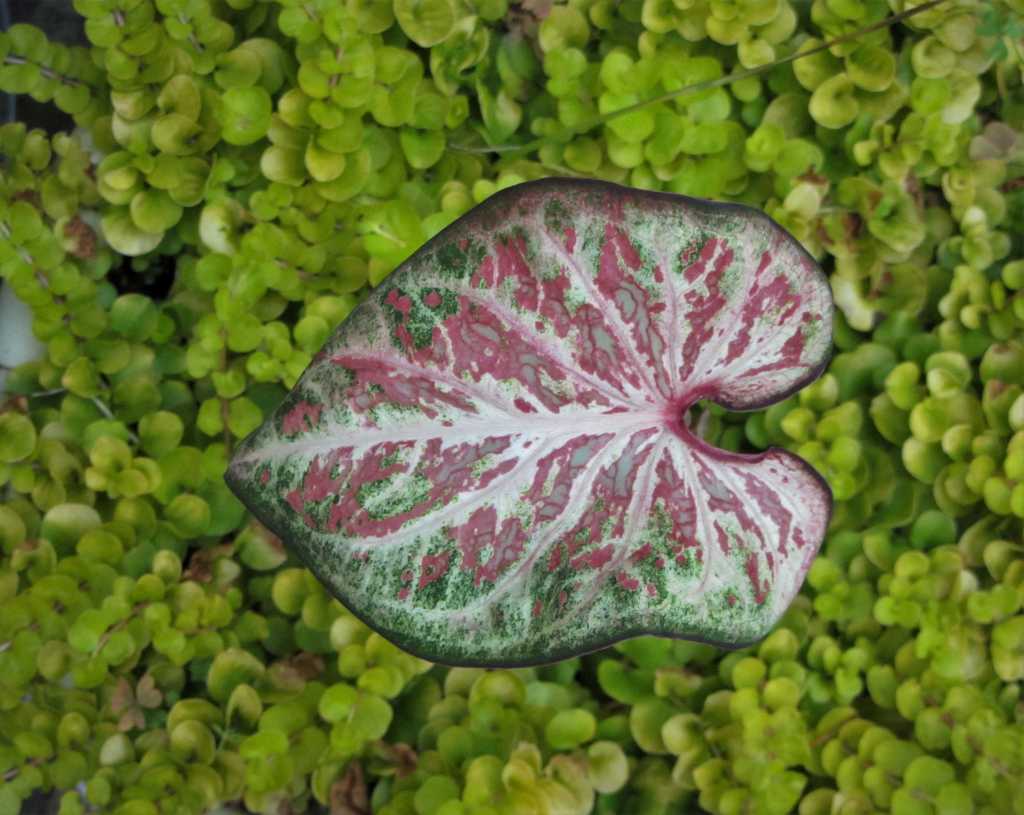
A neighborhood friend called last weekend to chat, and near the end of our conversation she offered an invitation to come and see her garden. Then she immediately mentioned that I probably wouldn’t like it much, or wouldn’t approve, because her back yard is filled with her favorite tropical plants. She was assuming, she later explained, that because I am an Extension Master Gardener I would only be interested in native plants.
We had a good laugh over that comment as I told her that I share her love for tropical plants. My love for ‘exotic’ tender perennials extends back to my childhood. My parents grew so many beautiful plants over the years, many of them imported tender perennials that most people in our area treat as ‘annuals’ because they aren’t hardy in our climate. So many traditional bedding plants, from Impatiens and Begonias to Coleus, Caladiums, geraniums, and the scarlet sage my father loved, are perennials in their native regions.
But that wasn’t what she meant. She grows the big tropicals like bananas, Colocosias, and other dramatic plants that thrive in our long hot, humid summers. Most of these plants have big, beautiful leaves and add a bit of drama to the garden.
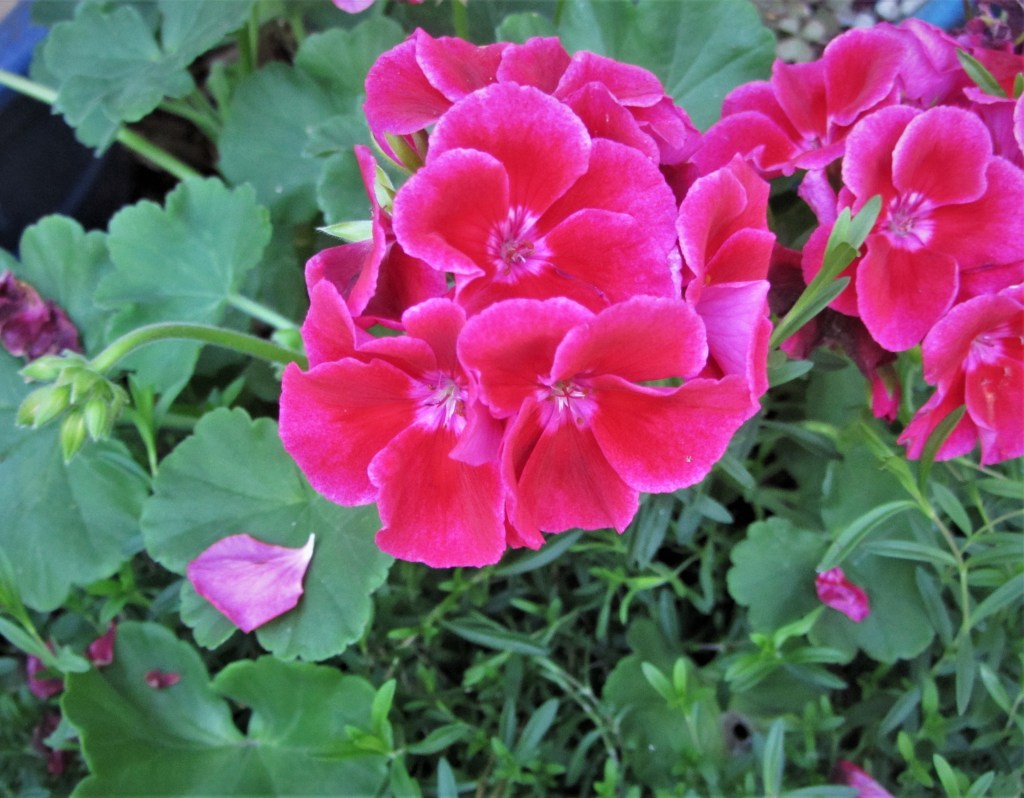
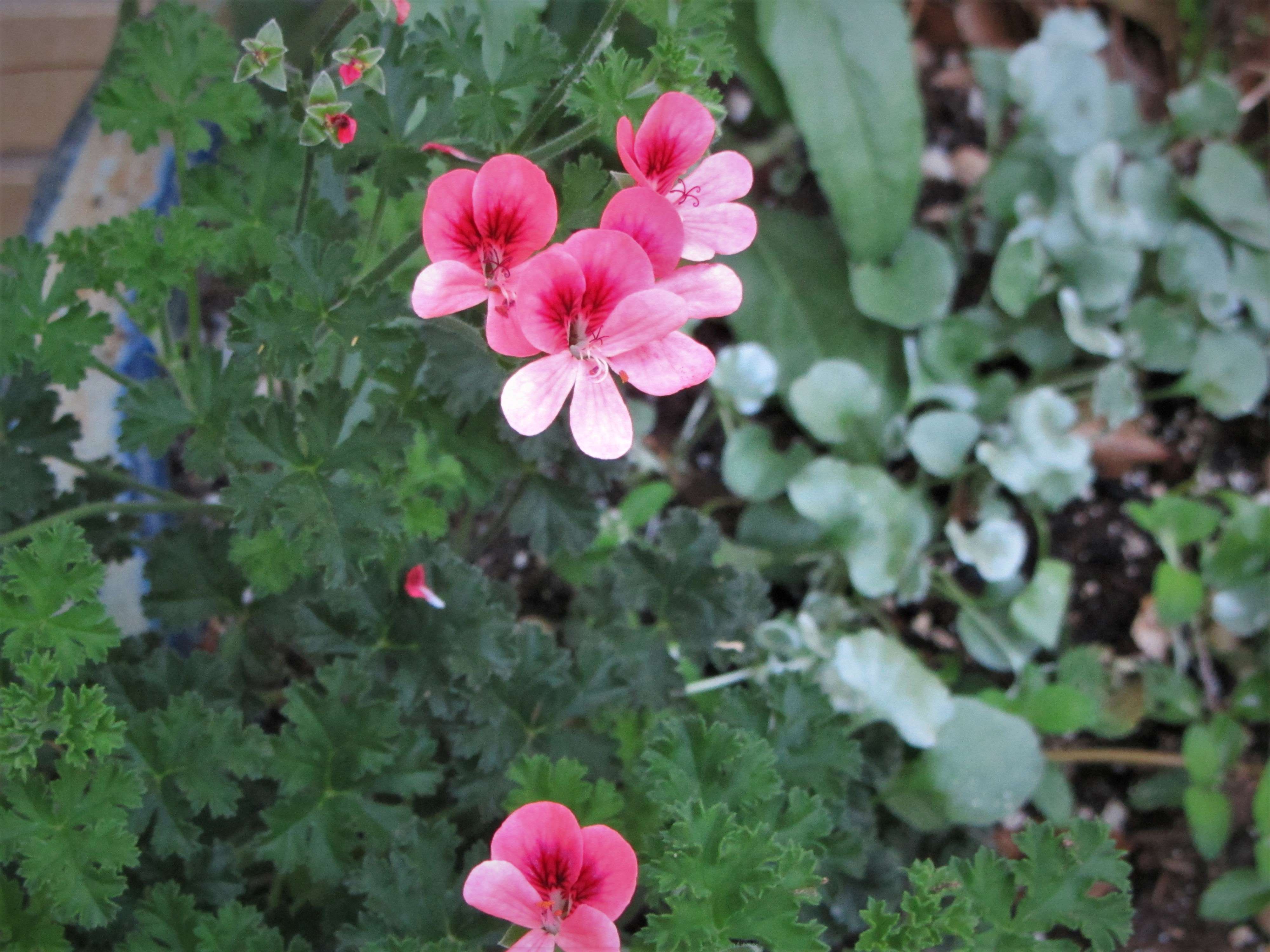
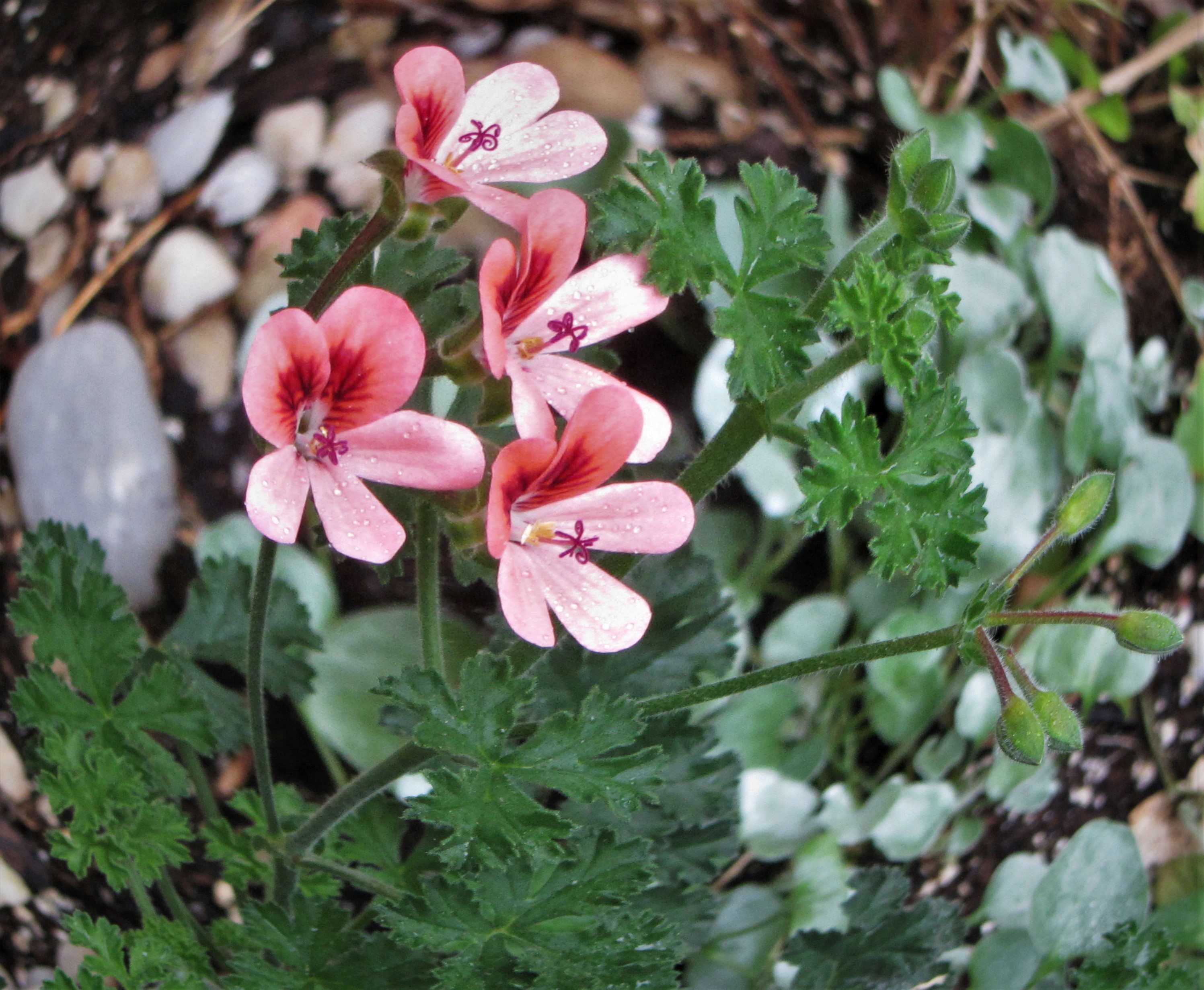
What Master Gardeners learn to live by is, ‘Right plant, right place.’ That means that we try to choose plants that will thrive in the conditions we can offer, with a minimum of ‘inputs’ or interventions to keep them alive. There is an elegance in finding the right plant for the right spot in a garden, whatever the provenance of that plant.
Perhaps you have noticed that the landscapes we have created around our homes, roads and businesses are a bit different from the ‘native’ landscape of long ago. People change the environment to meet their needs. We cut trees, drain swamps, strip away the native soil, build roads, and plow prairies to raise crops. We blow the tops off of mountains, fill valleys, dam up rivers, and we’ve even managed to alter the ‘native’ weather patterns that the native flora depended on for millennia.
It is smart to cultivate plants that will thrive in the environment we have today- not some mythical yesteryear when cultural conditions were quite different. Sometimes indigenous plants can thrive in the conditions we can provide. Sometimes not. Sometimes a hybrid, a cultivar, or a plant native to another continent will work better for our purposes and our conditions than a native plant will.
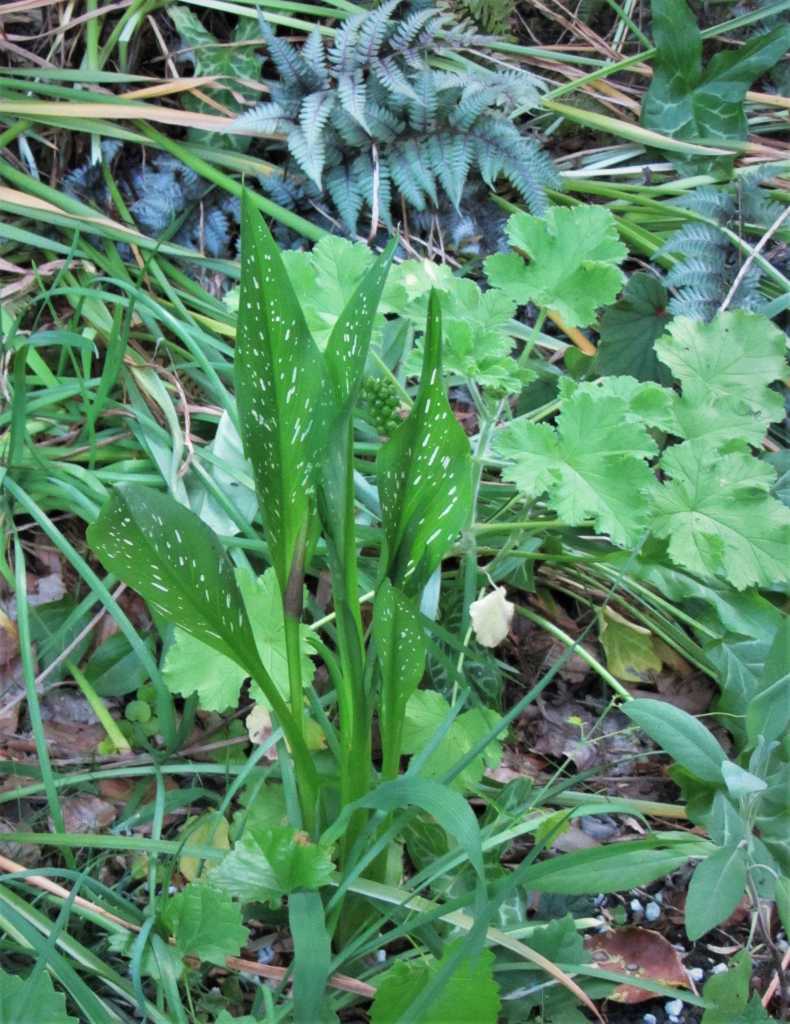
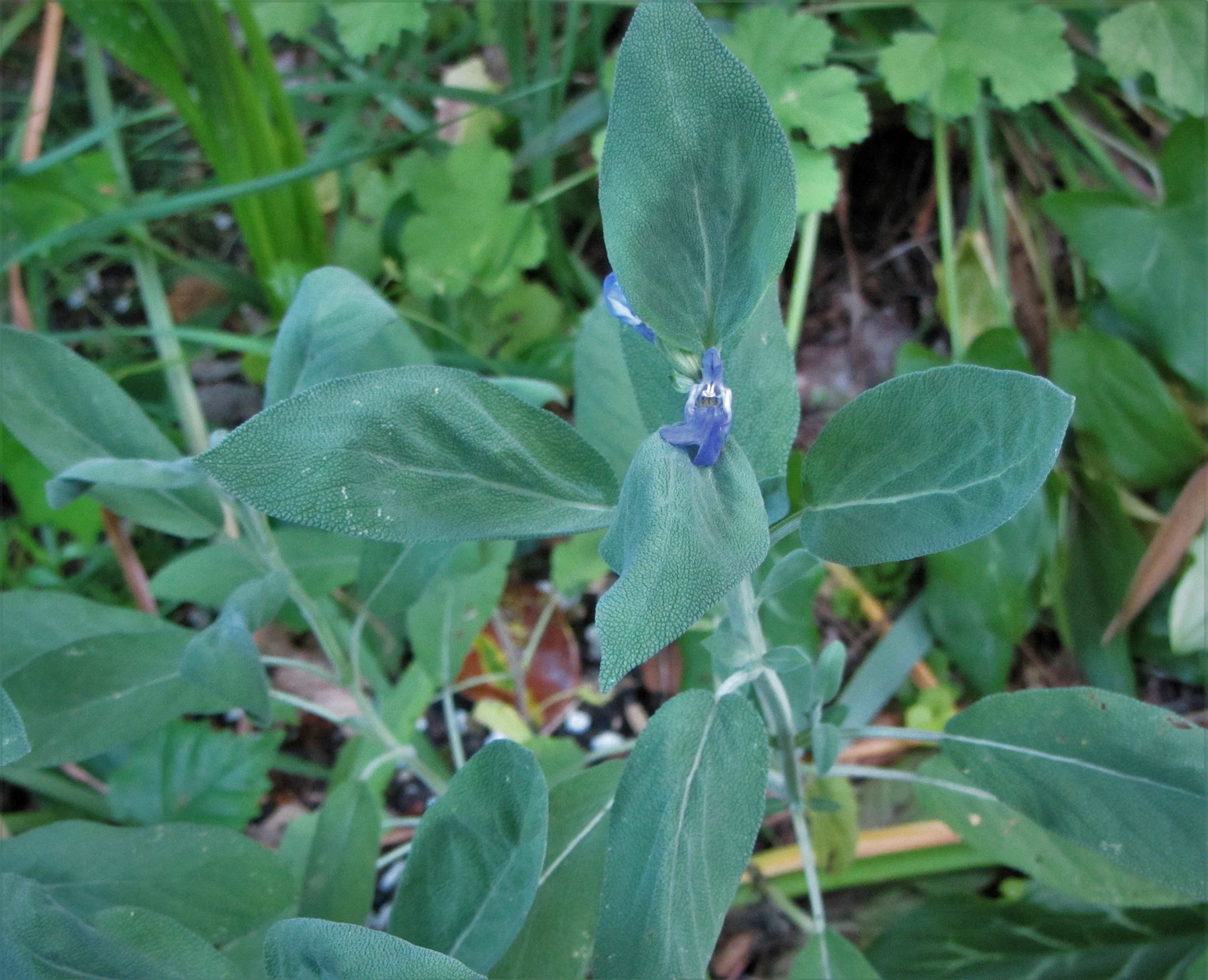
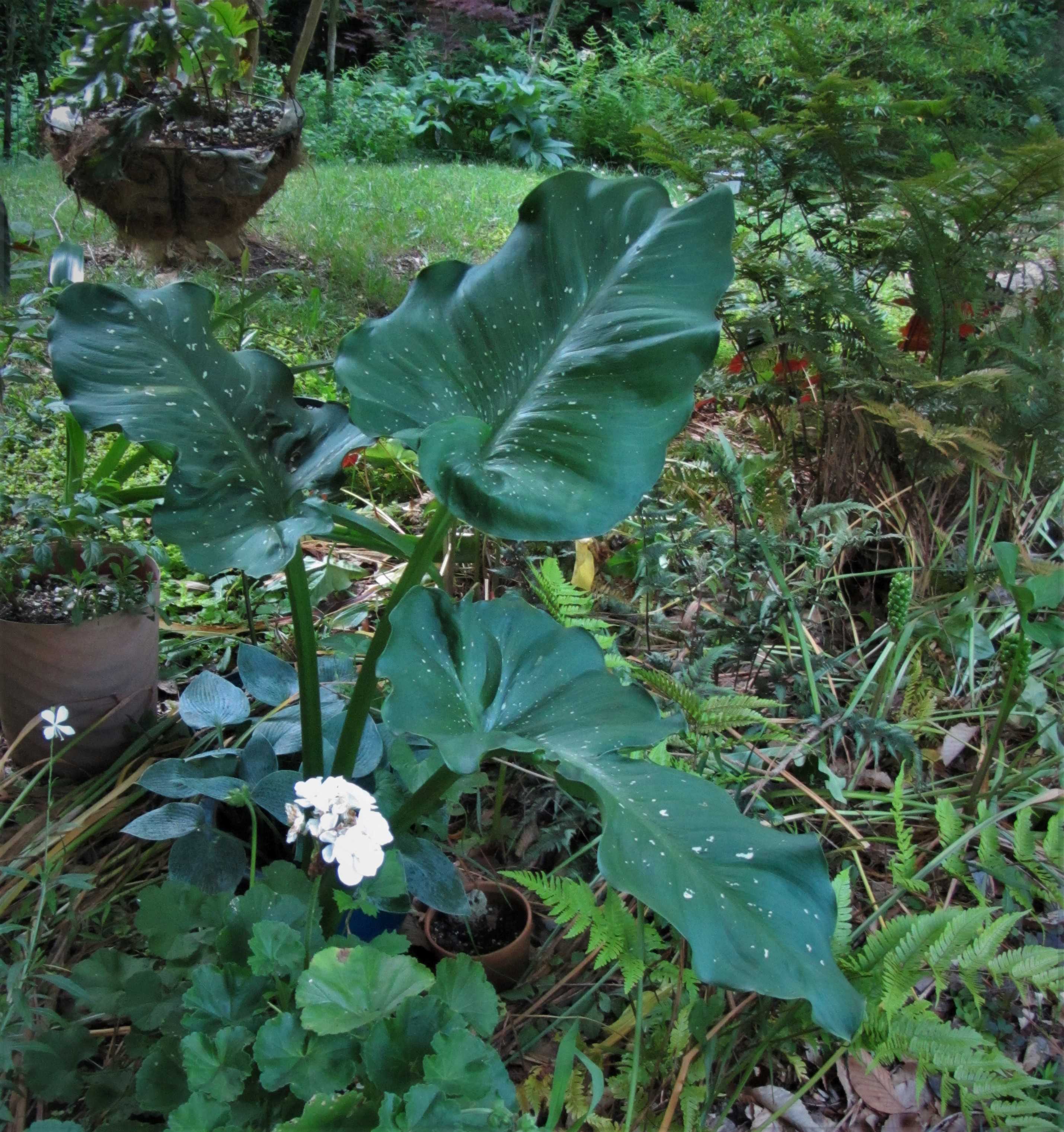
I have been collecting Aroids ever since I realized that deer and rabbits leave them alone. There is a crystal in Aroid leaf tissue that irritates the mouth, and so deer and rabbits rarely steal a nibble. Since our environment includes rabbits and deer, that makes Aroids like Caladiums, calla lilies, Colocasia, Italian Arum, and Alocasias particularly attractive to me. A few of these are hardy, but most need to overwinter in the garage, basement, or a spare room. Since they are geophytes, they can go fully dormant until spring, or they can limp along with just a leaf or two, half-asleep until spring.
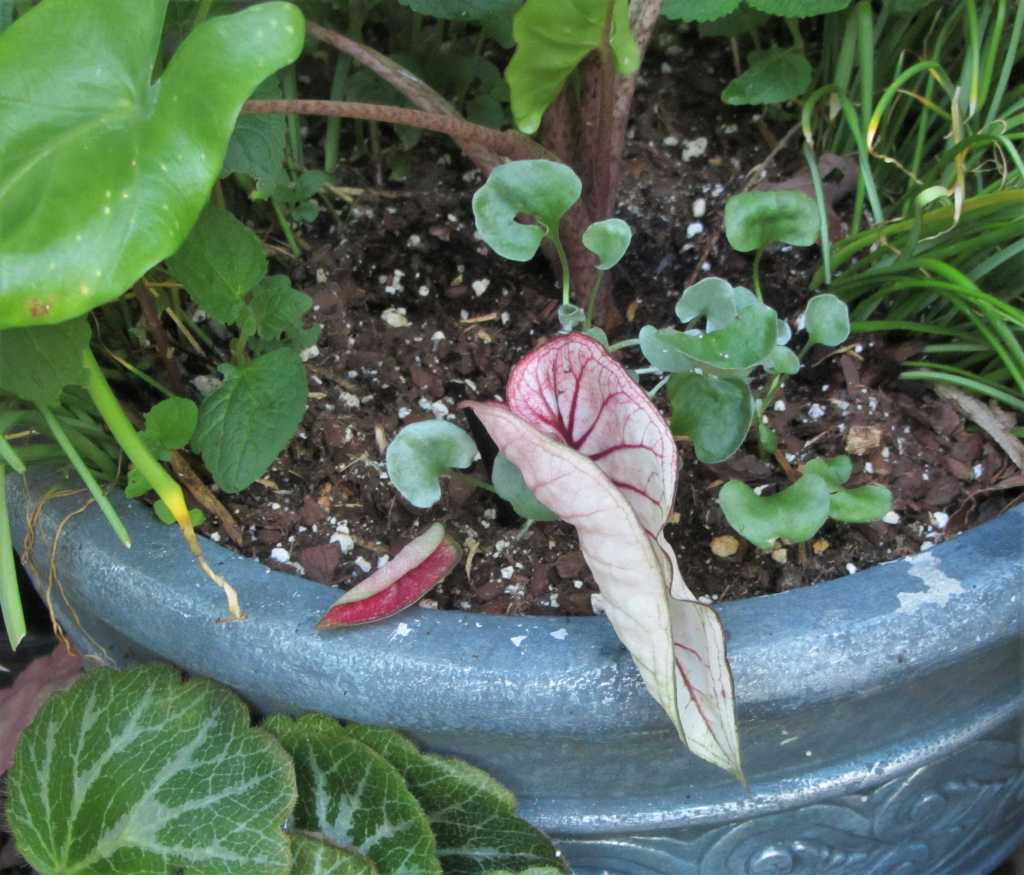
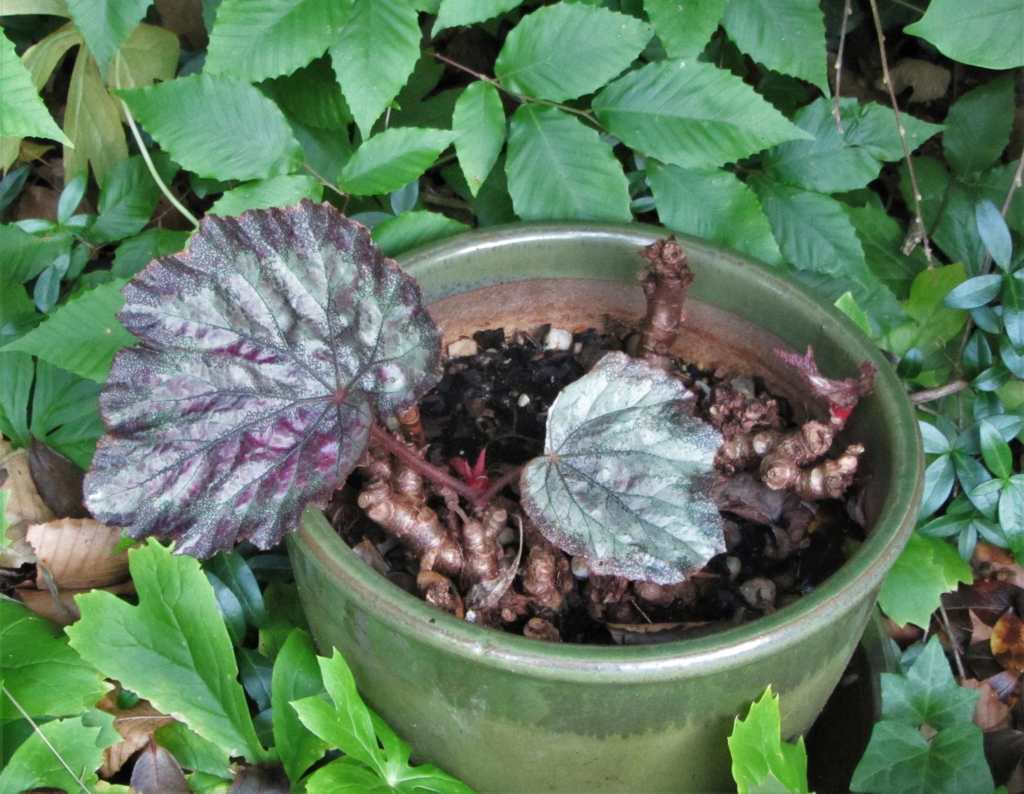
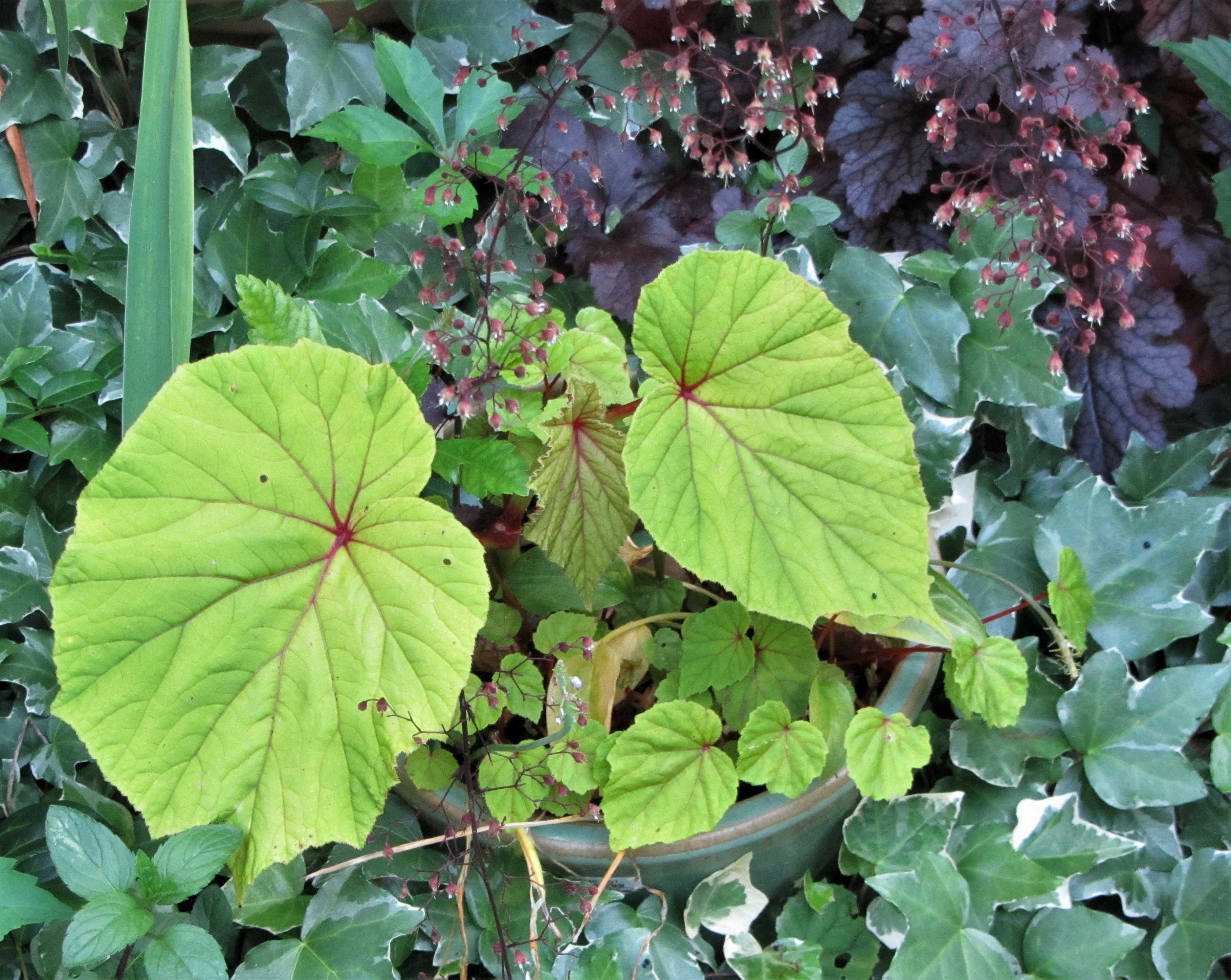
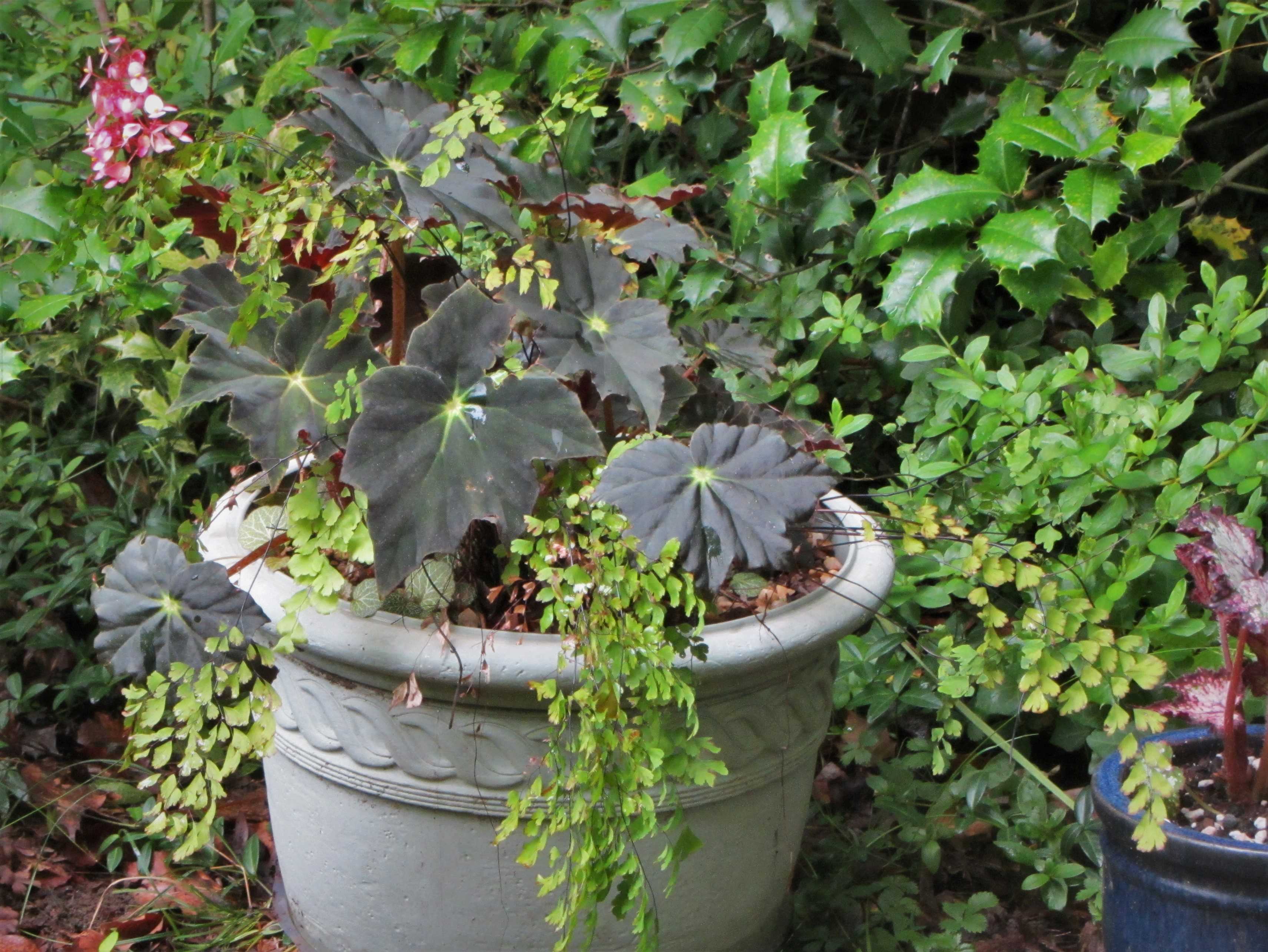
And now, in the first week of June, the sleepers are awakening. I have been delighted to watch their new leaves unfurl as they respond to the warmth and last week’s plentiful rain. Many of our overwintered Begonias are growing again, too. Canes that looked nearly dead a few weeks ago are covering themselves in fresh, new leaves. It is such a source of joy (and a huge relief) to watch plants emerge from their dormancy and begin to grow again.
An important part of our American history, and our shared history with our European, Asian, African, and Pacific Island cousins, is our love for discovering and sharing plants. The thirst for exploration was rooted in curiosity, and the desire to cultivate new plants and learn their secrets. As European colonists brought their favorite herbs, vegetables, and flowers with them to Virginia, so they sent seeds for trees, vines and flowers back to Europe. Traders went in search of spices, tea, fruits, and flowers that could be introduced into cultivation at home and abroad. In England, gardens on large estates became parks and woodlands to accommodate the colorful new trees imported from the colonies.
You might enjoy Richard Aiken’s Botanical Riches: Stories of Botanical Exploration, which is filled, page after page with gorgeous paintings of plants discovered during the Age of Exploration. I’ve been reading that this week, along with Joan Parry Dutton’s Plants of Colonial Williamsburg: How to Identify 200 of Colonial America’s Flowers, Herbs, and Trees. Dutton’s book tells the story of the people, places and plants important here during those early colonial years, and explains where each of the plants cultivated in Colonial Williamsburg originally came from. It is so interesting to learn how much useful plants were valued in those times.
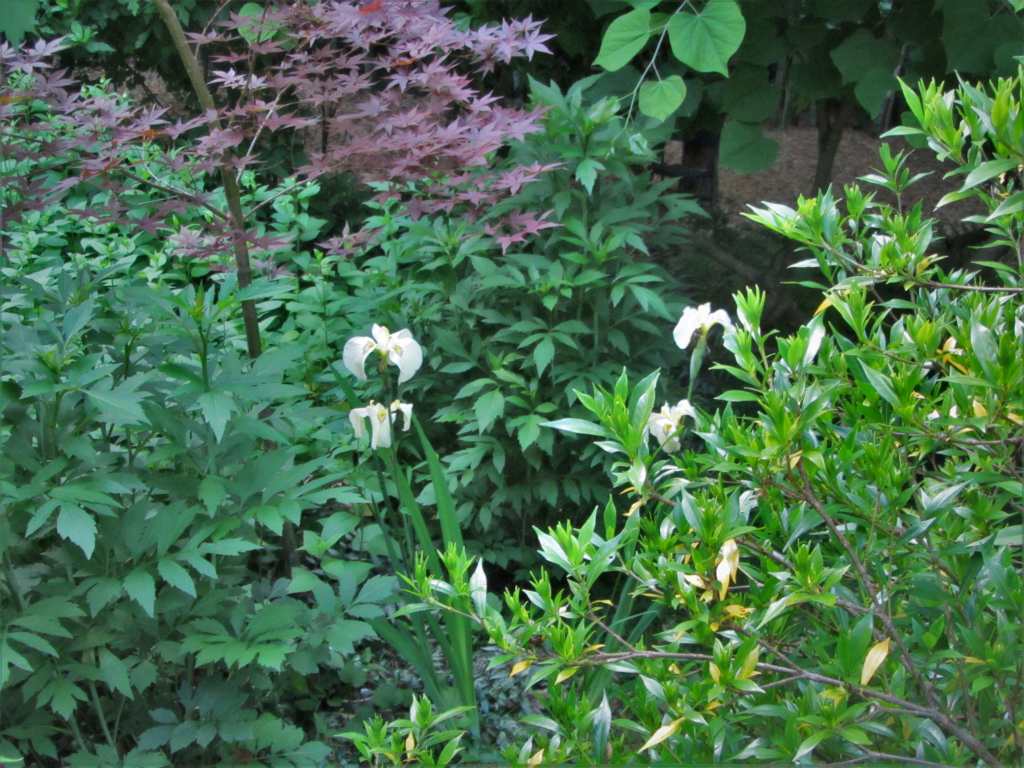
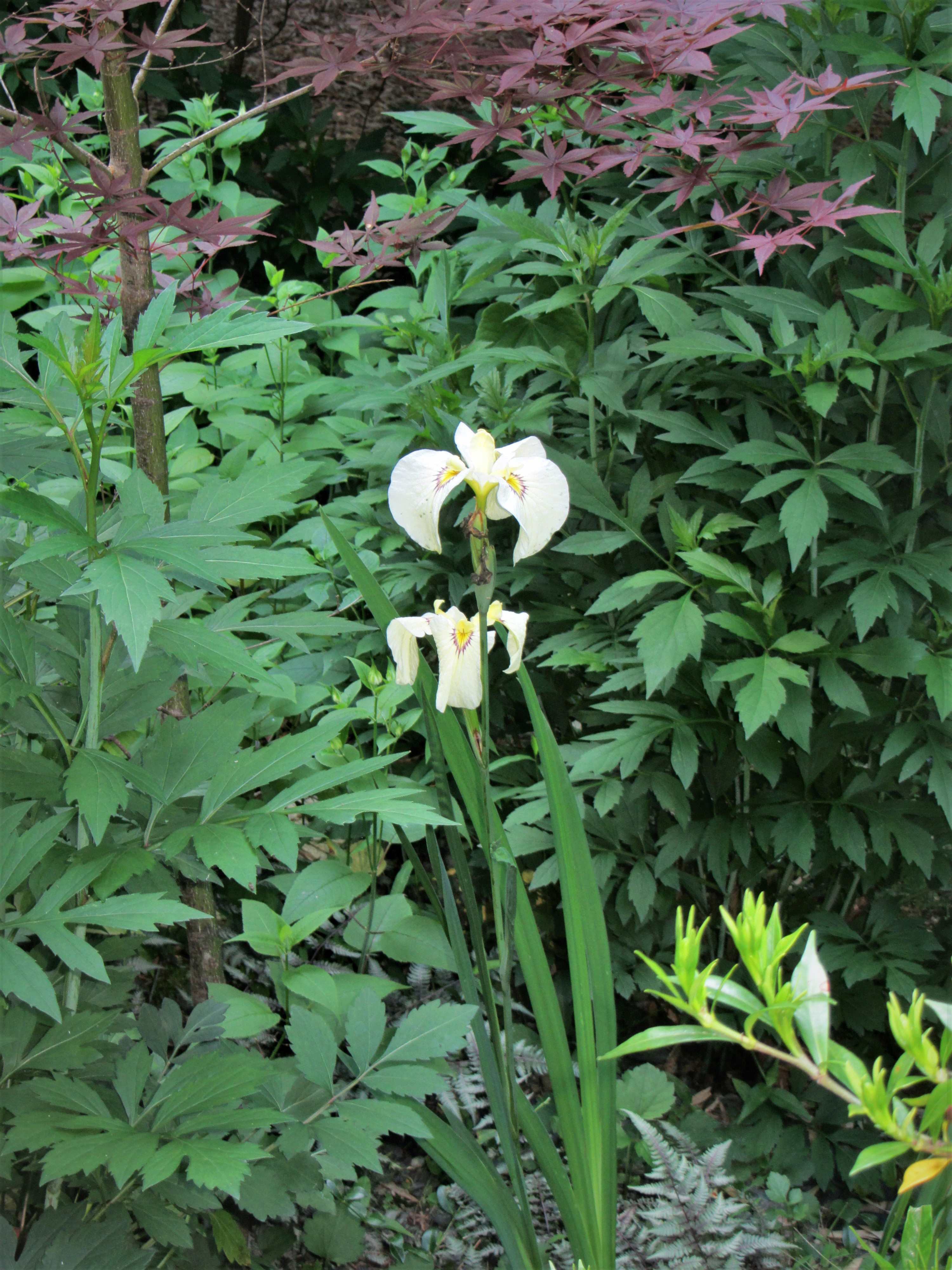
And garden plants are still valuable today for their functions and beauty, but also for the history and culture they bring to life. The geraniums by our front door remind me of their discovery in South Africa. The Colocasia remind me of those who depend on them as a staple food crop in Hawaii, India and Indonesia. The rosemary and lavender by the kitchen door remind me of their long history of healing around the Mediterranean Sea. And the Iris still in bloom are a tribute to those botanists who bred Japanese Iris with European yellow flag Iris, to create a healthy, elegant I. pseudata hybrid that isn’t invasive.
So many people have devoted their lives to discovering, importing, cultivating, propagating, hybridizing, and introducing plants to cultivation. I have deep appreciation and respect for their determination and energy, their courage and ingenuity. How could I not want to grow some of the fascinating plants they made available? I’m deeply curious about how they grow and develop, and how they will respond to the conditions I can give them.
So, one day next week, when it isn’t raining, I’m going to pot up one of my extra Colocasias and go visit my neighbor, to enjoy her garden. And I look forward to learning about what she is growing, and why. The spring work of planting and weeding is nearly done, here. Now it is time to take pleasure in watching it all grow.
With appreciation to Jim Stephens of Garden Ruminations, who hosts Six on Saturday each week.

You might enjoy my new series of posts, Plants I Love That Deer Ignore.
Visit Illuminations for a daily photo and
 Our Forest Garden
Rhody and I just got back from the Los Angeles region, and happened to walk around a bit within unrefined forested areas of the Hollywood Hills, which reminds me of how mundane the region would be without so much exotic vegetation.
LikeLiked by 1 person
The flowers you highlighted are lovely. I particularly liked the black sage. Could that be related to the cultivar S. ‘Black and Blue ‘ available commercially? The leaf looks different, but I like the form of the infloresence. What interesting country. Opuntia is blooming here, too, but surely a different, smaller species.
LikeLiked by 1 person
‘Black and Blue’ is the same genus, but a very different species. Salvia are impressively diverse. Black sage happens to be one of my favorites because of the aromatic foliage, and because it grows wild here. However, it is not a sort that I would recommend for refined landscapes. The bloom is not particularly colorful, and leaves gray dried floral stalks for the remainder of the year. The stems are rather sloppy, so neither stand up in shrubby form, nor sprawl over the ground in ground cover form. They are sort of in between, like sloppy shrubby ground cover. I have one in a can here that I found rooted under an old specimen in a landscape. I will likely put it on the side of the road this autumn, so that it can grow wild, without my intervention.
LikeLiked by 1 person
GREAT PHOTOS and GREAT POST! Her backyard looks great! I lived in Mississippi for several years and transformed the backyard. Back in Missouri, I can’t do that. The Alocasia are confined to pots which they don’t really appreciate…
LikeLiked by 1 person
Thank you 🍀
LikeLiked by 1 person