Amateur (N. or Adj.), from the French amator, or lover
Synonyms: dilettante, layman, dabbler, putterer
- Taking part in an activity for pleasure, not as a job. A hobbyist or volunteer.
- Devotee, admirer.
- Someone who doesn’t have much skill in what they do. Incompetent.
Little has made me feel more like of an amateur gardener than finding favorite ferns grazed back to their crown by deer. For years now, I have recommended planting ferns to fellow gardeners who also contend with deer tromping through their yards, grazing valuable plants all the way. “Deer won’t eat ferns. They don’t like the texture,” I would assure them, with some earnest air of authority.
I could open a half-dozen gardening books and point to that nugget of wisdom. I’ve added ‘ferns’ to all my lists of ‘deer resistant’ plants over the years. And yet an hour exploring our garden this morning, hose in hand, before the heat of the day descends again, proved that when it comes to gardening, I remain a rank amateur.
And that is fine. Better to be an amateur and admit that although you love some pursuit passionately, you know almost nothing in the larger scheme of things. That leaves one open to learning from the daily challenges, without getting too puffed up with all the things you think you know.
An ‘amateur’ is a lover, in the purest linguistic sense. The negative connotation of a ‘dilettante,’ or worse an ‘incompetent,’ came later. This morning’s garden tour left me feeling more of an incompetent, however, as I noticed how many plants continue to struggle in this odd weather year.
I became an ‘amateur gardener’ around the age of five, when I first experimentally planted some of my dad’s grass seed into a glass peanut butter jar half filled with soil. I don’t recall whether I scooped up some soil from the yard or found a bag of potting soil in the utility room. But I remember planting and watering the seeds, setting them near a window, and watching them grow into blades of grass. That had me hooked.
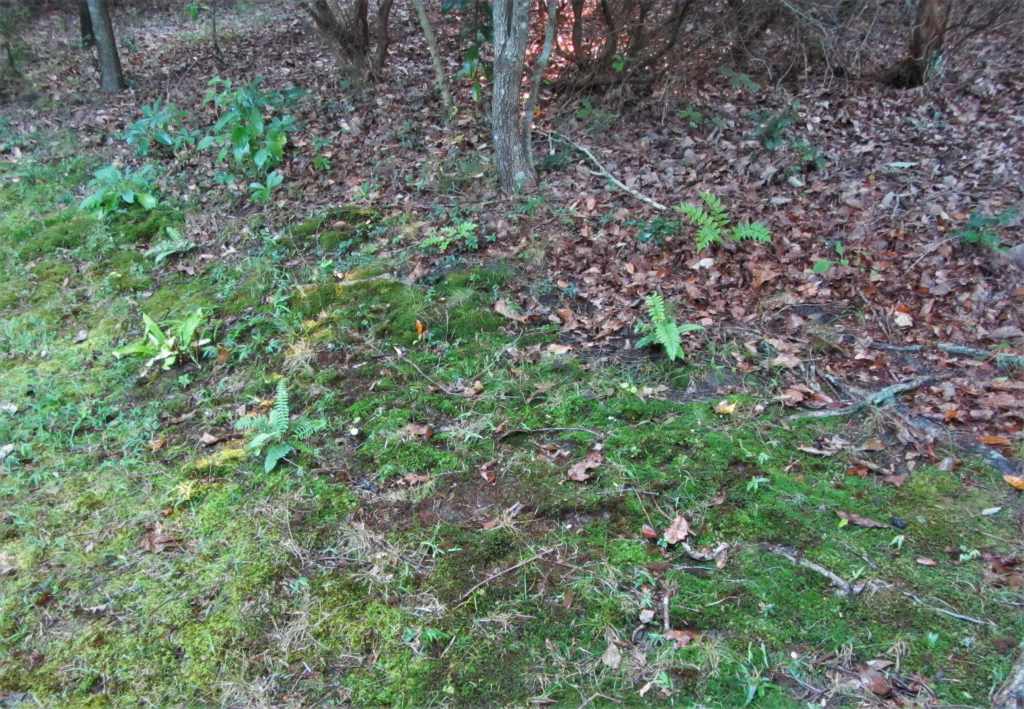
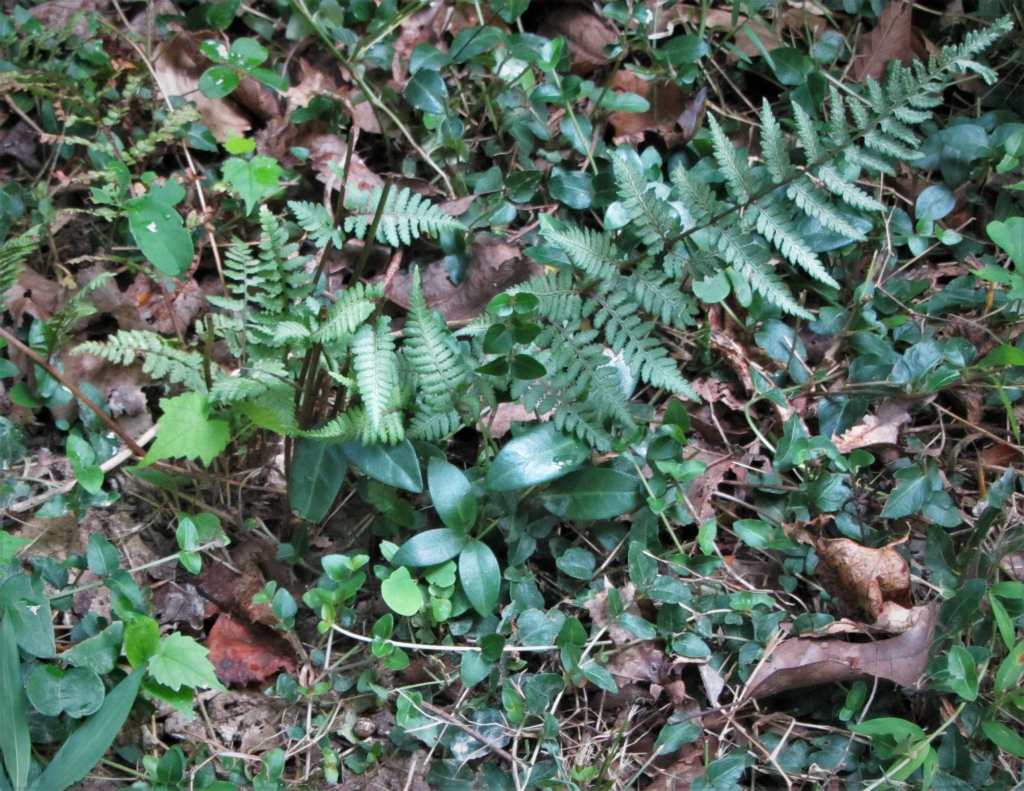
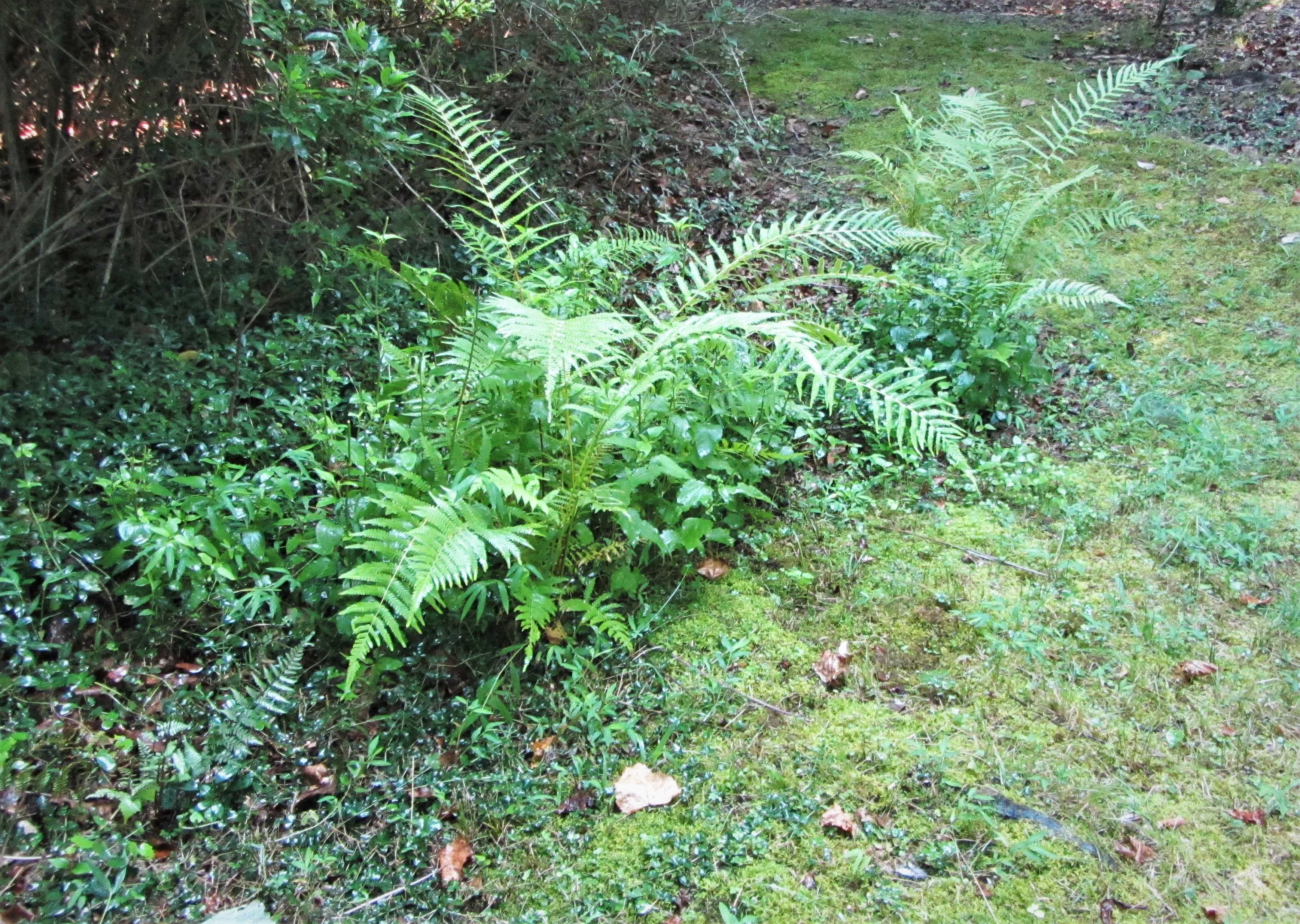
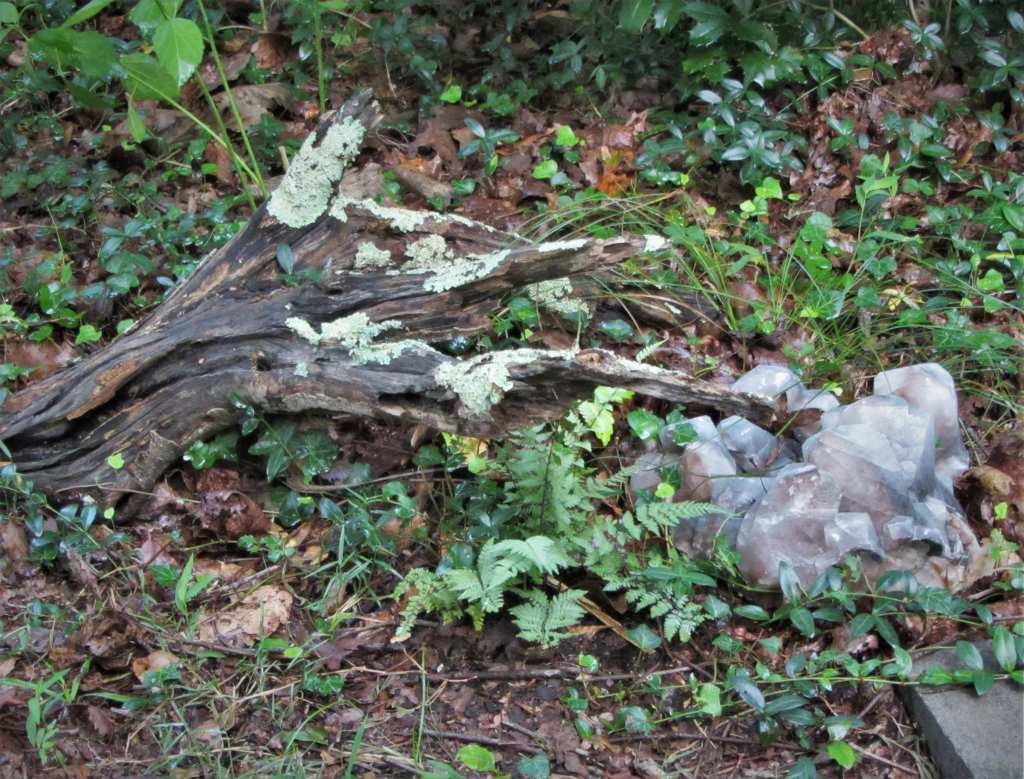
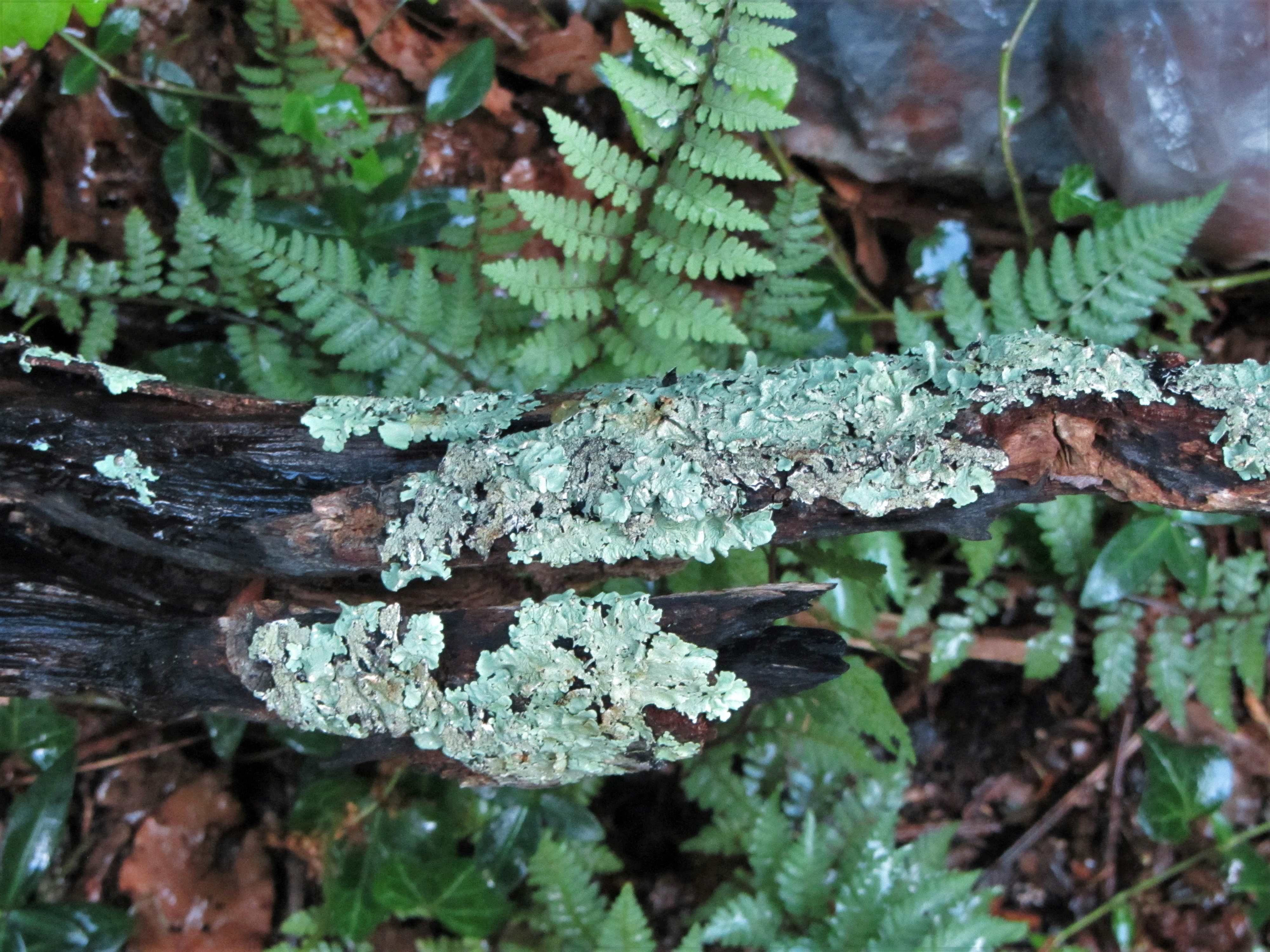
I have been encouraging this moss to fill in and spread over the path. This is across from photo 2 above, which shows native Dryopteris ferns which weren’t grazed, growing beside A. ‘Ghost’. An assortment of Christmas fern, Hart’s tongue fern, Japanese holly fern, Iris cristata and other perennials grow in this area under the Mountain Laurel shrubs. 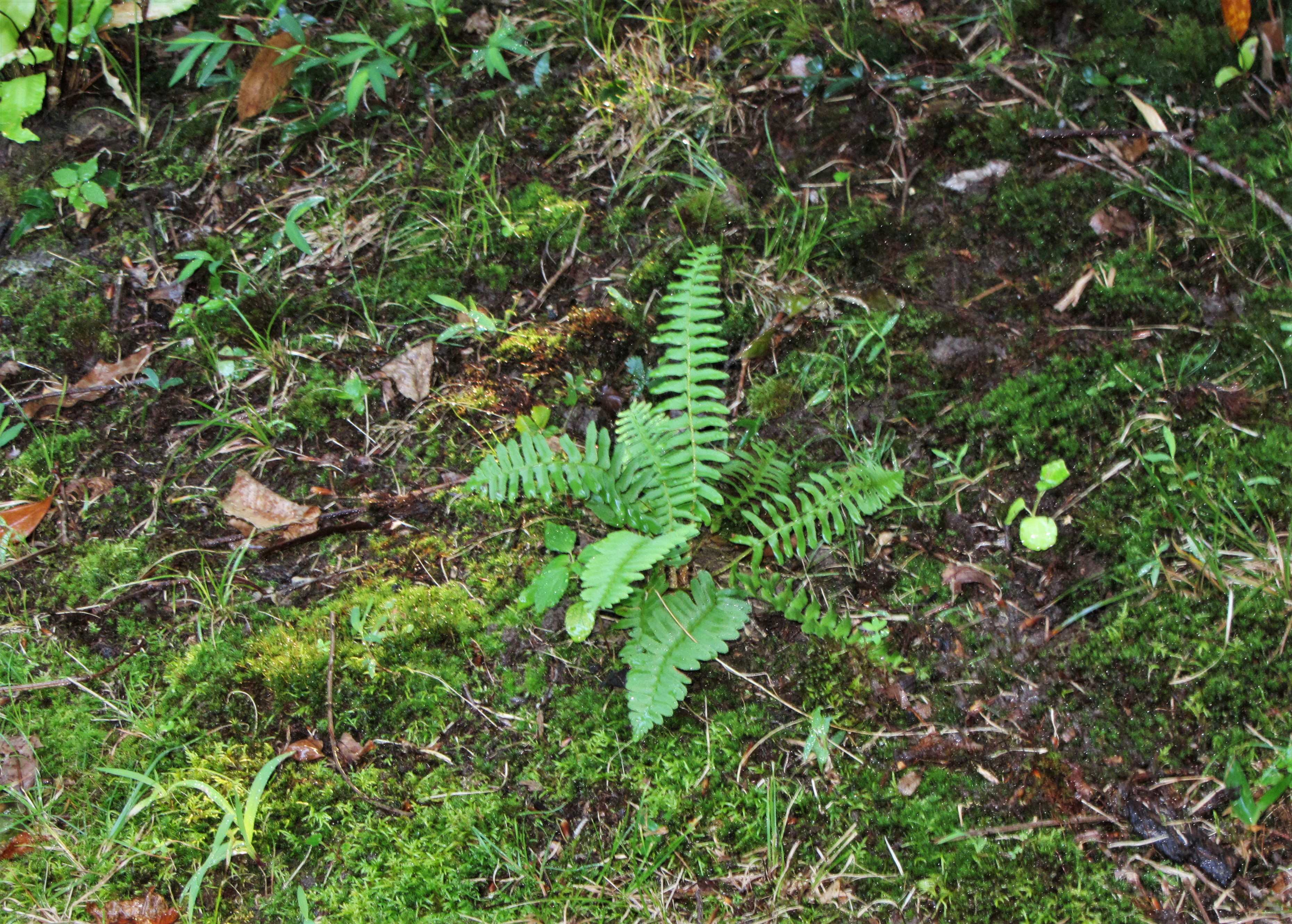
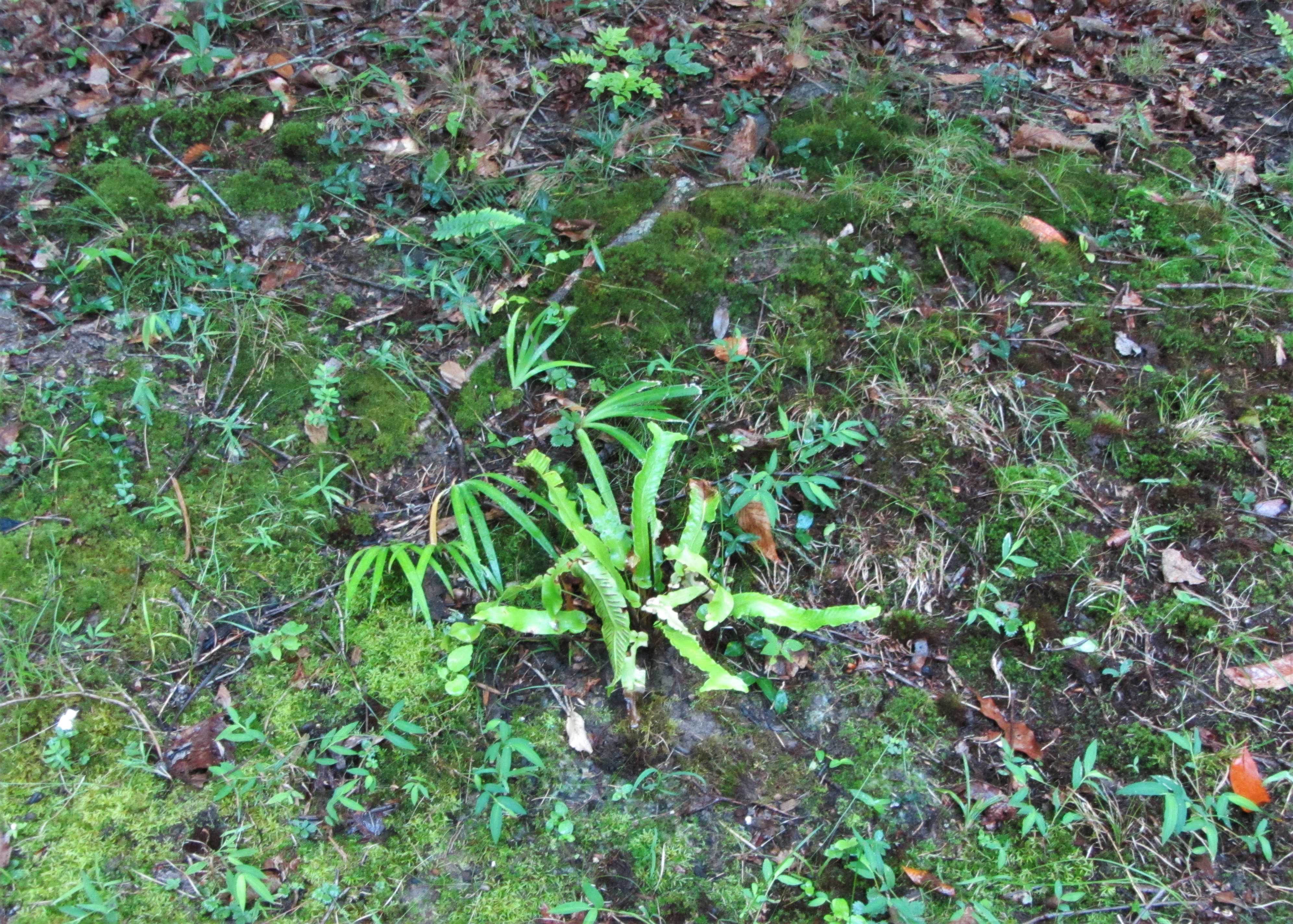
I’ve gardened in many different places over the years with varying levels of success and ‘teachable moments’ of failure. This yard, near Jamestown, and overrun with wildlife, has presented the steepest learning curve to manage. Classes, certifications, books read, gardens visited, videos watched, and earnest instruction from colleagues and mentors have all ultimately left me, still a beginner.
And that is partly because every month and every year present novel challenges here. ‘Solutions’ prove temporary, at best. There are more mysteries, still, than final answers. Despite the disappointments and challenges, I still love watching things grow. I love experimenting with bits of plants to see what they will do. I still enjoy cultivating the unconventional. Our garden is an ongoing ‘experiment,’ and will never be quite ‘finished.’
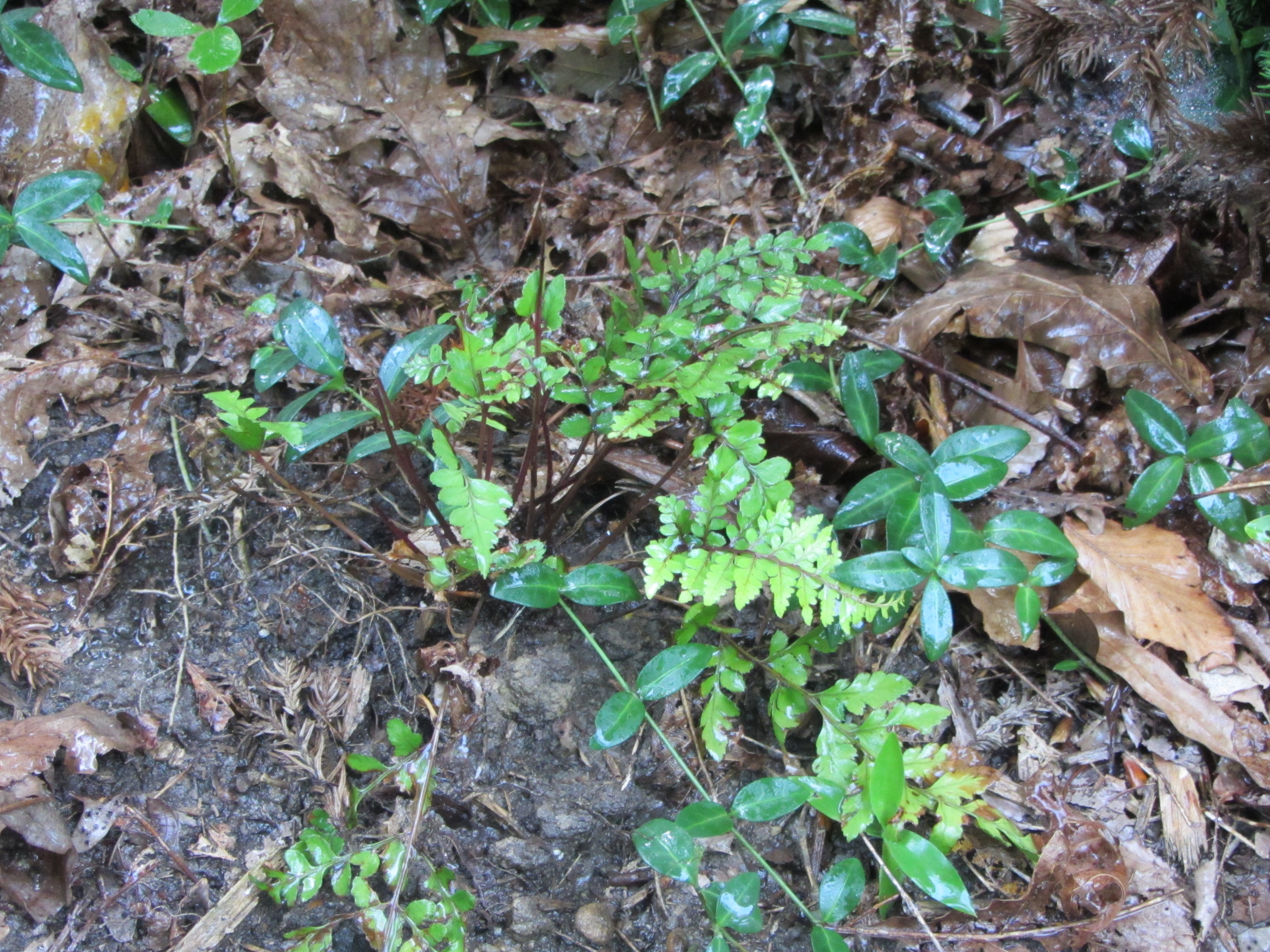
Despite the damaged ferns, grazed perhaps by deer, or by turtles and rabbits, my experiment with planting Christmas and other evergreen ferns to sequester carbon is going very well. The grazed ferns today were both Athyriums, one a hybrid, ‘Ghost,’ and the other an Asian A. otophorum. A rabbit or turtle most likely uprooted and consumed the three missing Christmas ferns planted as sporeling plugs this spring. The mossy path between the main areas of ferns in the upper, wooded garden continues to slowly fill in to form a lush carpet, despite the heat and dry spells this summer.
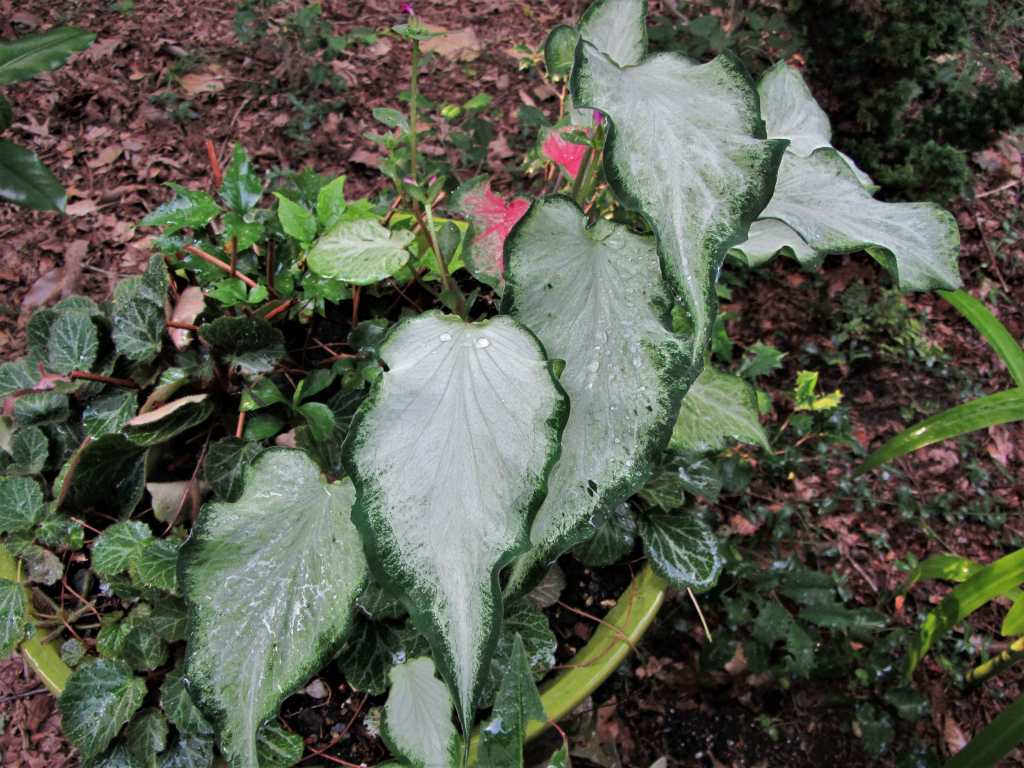
Interestingly, the evergreen Japanese holly ferns, Cyrtomium falcatum and C. fortune, that I’ve recommended to others in recent years, had a huge setback this past winter and still are very slow to produce much new growth. They have been established in containers for more than three years now. Caladiums are filling one of these containers, finally, but the ferns are barely making an effort to send out new fronds, even with regular water and feeding.
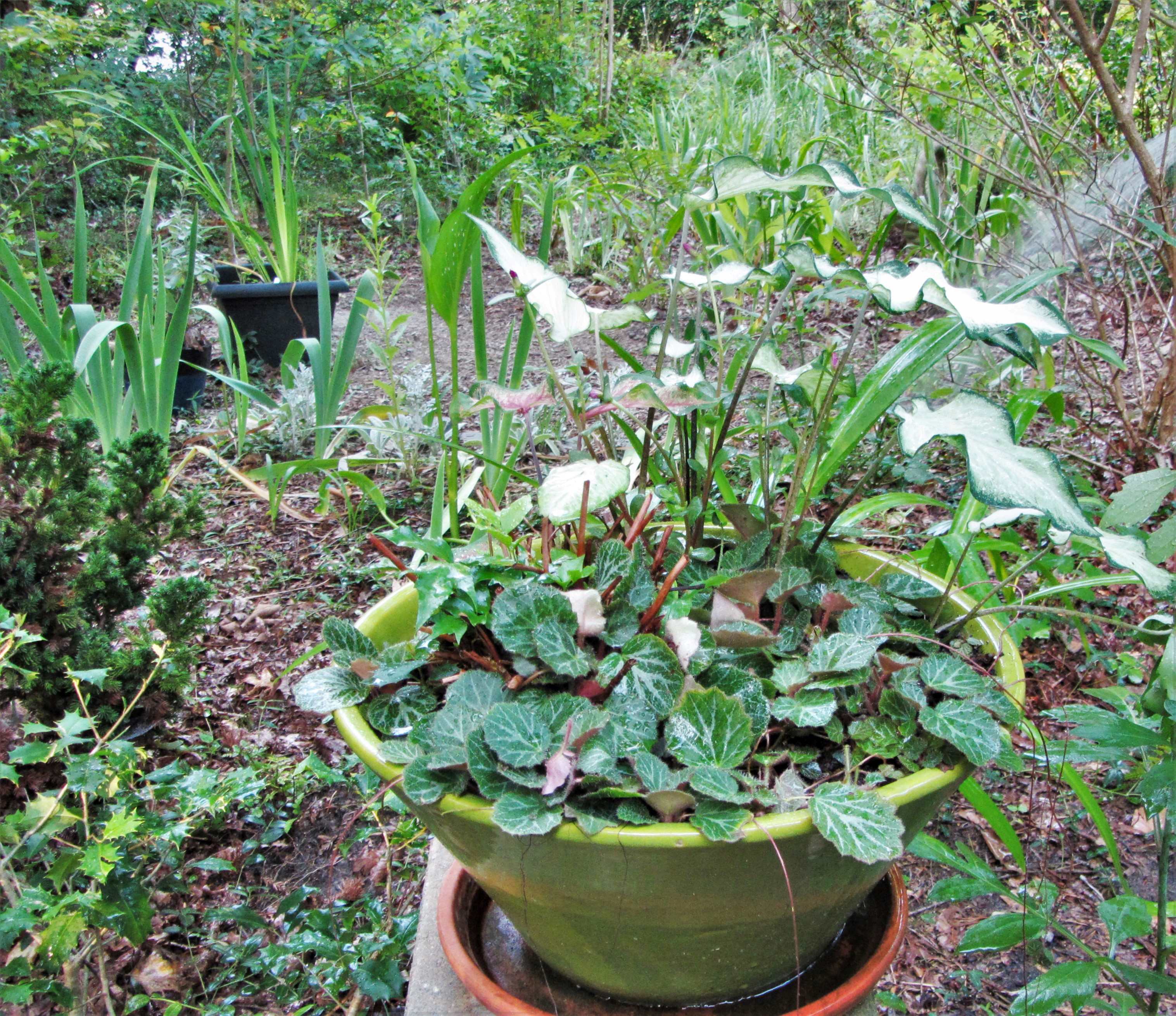
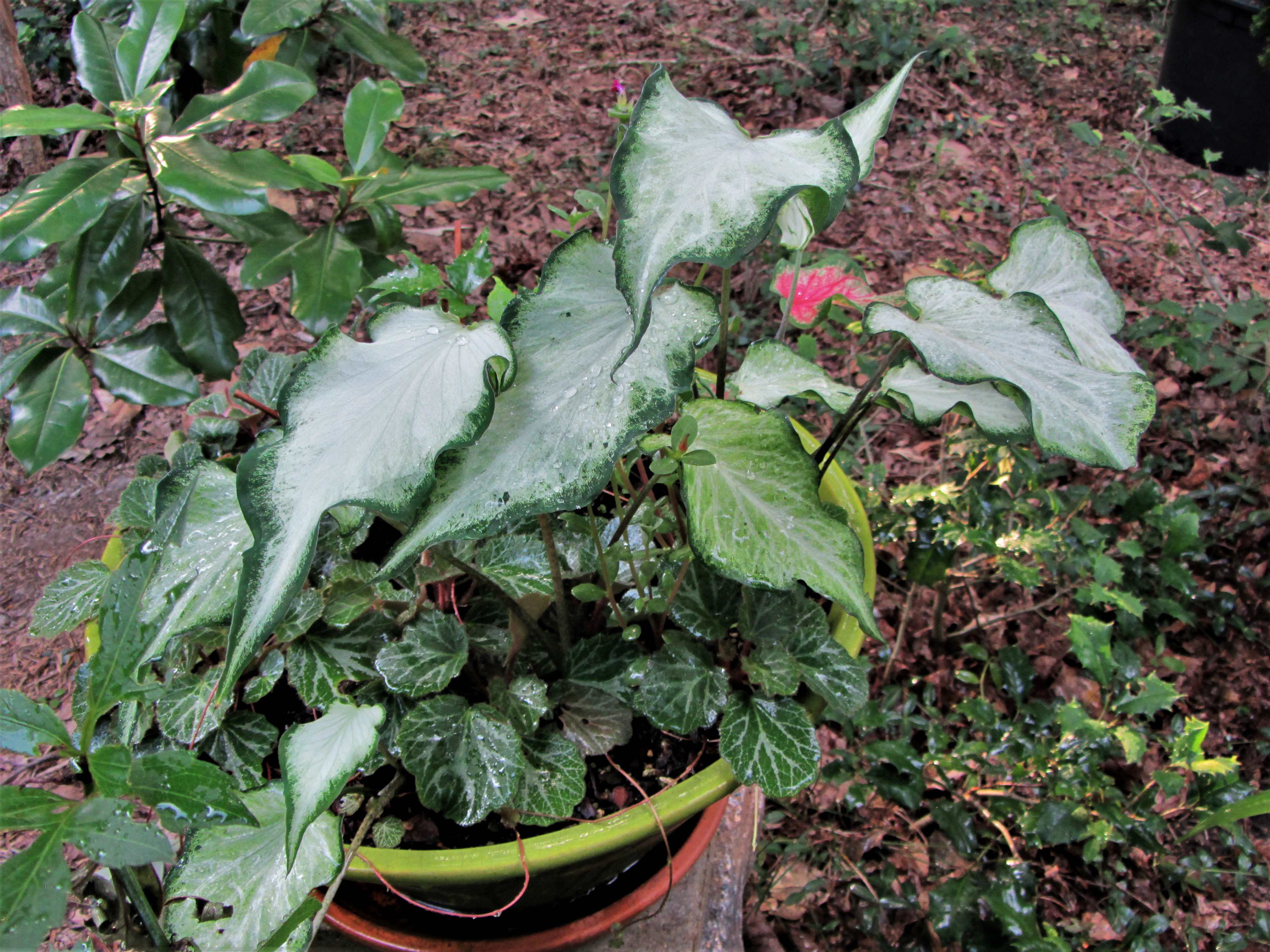
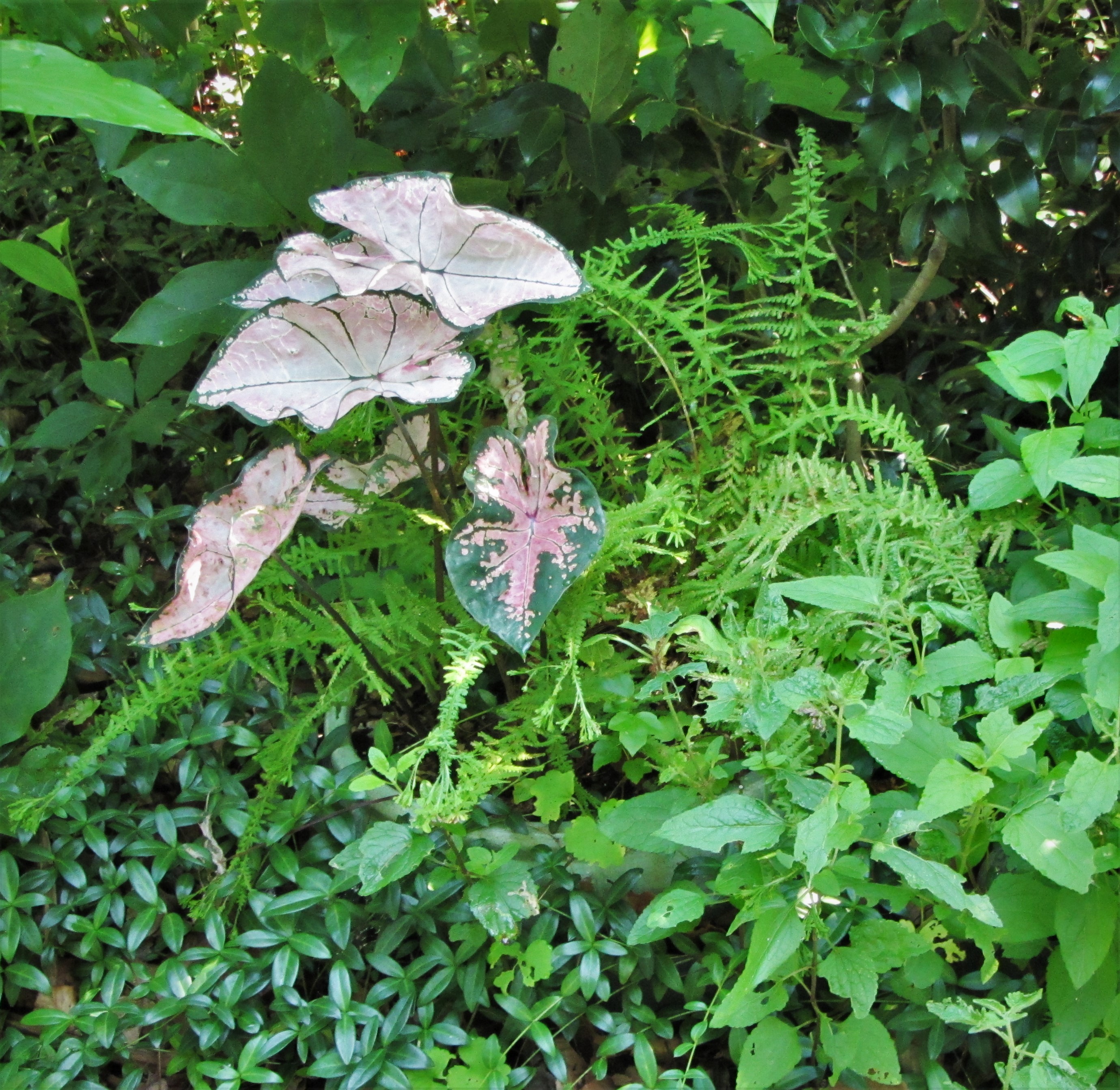
But many plants in our garden remain slow to grow overall, this year. I’ve been wondering whether the Canadian wildfire smoke has affected growth rates, too. I planted lots of Pentas, Salvias, Gauras, herbs, and other flowering plants this spring and have been keeping them watered and tended, since. Few have flowers blooming this week.
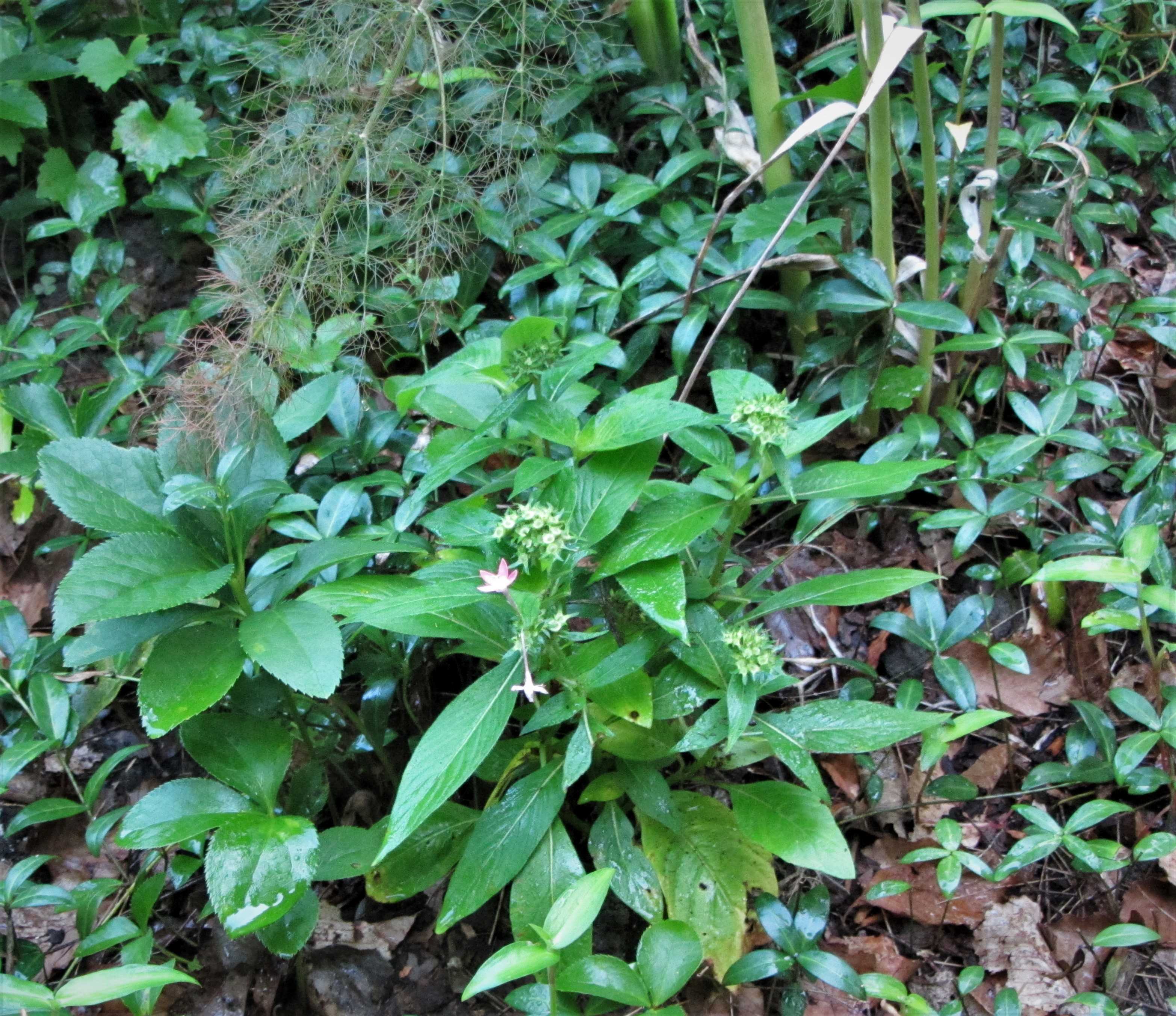
One of the Pentas was covered in flowers on Thursday morning, but I had trouble finding it, today. I searched as I watered where it should be. You guessed it… it had been eaten down to the crown. Another supposedly ‘deer resistant’ plant, off the list. Several others, planted elsewhere, continue to grow, but aren’t as large or covered in flowers as I expect at the end of July. Even so, we have enjoyed watching hummingbirds dart around the garden, visiting the Verbena, Hibsicus and Cannas, now in bloom.
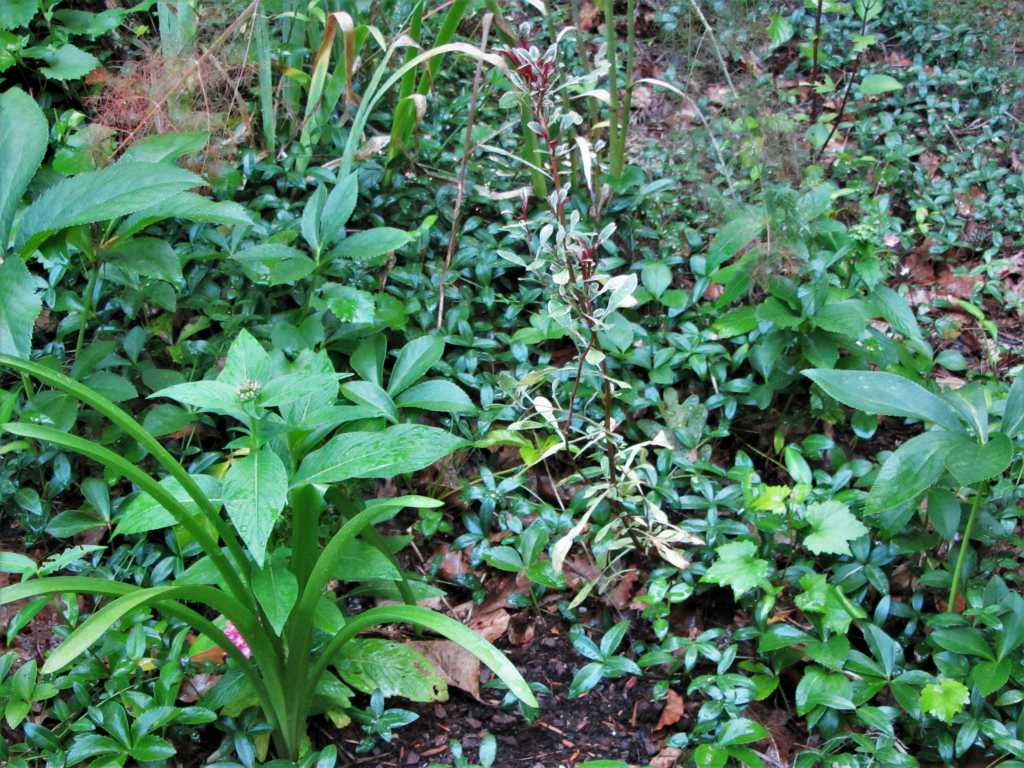
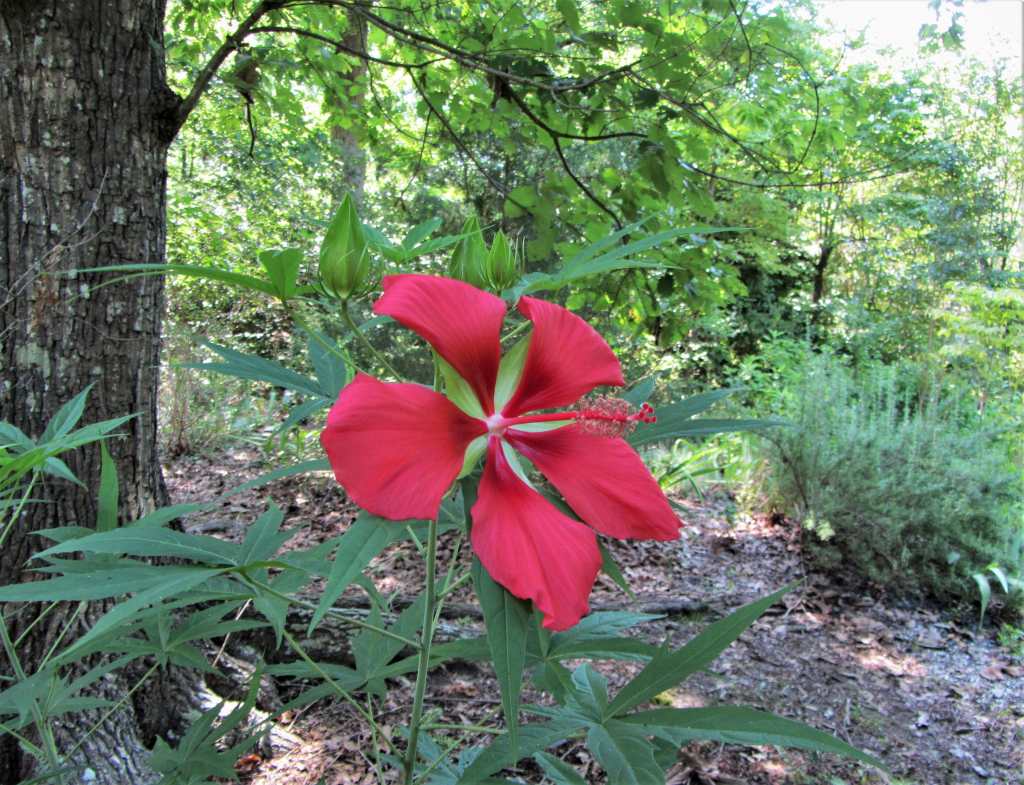
We had Hibiscus coccineus bloom this week, another native Hibiscus that volunteered in our yard some years ago. I was happy to find olive trees for sale at our local grocery, and have one potted up and happily growing alongside several others on our front patio. One of the older trees is fruiting this year. The Salvia stems I botched with the string trimmer rooted, and they are potted up now and growing on the deck. And the Begonias are all doing well, covering themselves with beautiful leaves and flowers.
Many of our sporeling ferns, grown from collected spores in previous years, have grown large enough to pot up and begin their independent lives. I was happy to dig them out of their propagation boxes and plant them on the deck this week. I have also begun collecting fresh spores to sow in the coming weeks.
It has been so hot and humid here for the last several days, with excessive heat warnings, that we have mostly stayed indoors. Any watering happens between dawn and around 9 AM. My gardening ‘to-do’ list grows as I look forward to cooler days and nights ahead. Late summer and fall are our ‘second spring’ each year, and I’m looking forward to renewed growth and enthusiasm from all of our green-skinned companions. As some wise person once said, and others have repeated, “When obstacles block your path, notice that the way forward is through the obstacles. The obstacles often show you the way.”
How does anyone learn anything, without lots of experience with failures? I’ll continue to count our successes as happy accidents, and the failures as teachable moments. What else could you expect from a beginner, a rank amateur gardener?
With appreciation to Jim Stephens of Garden Ruminations, who hosts Six on Saturday each week.
Late Summer in the Garden: To Do, To Do Less, and What to Avoid
You might enjoy my series of posts, Plants I Love That Deer Ignore.
Visit Illuminations for a daily photo and quotation
 Our Forest Garden
Oh no! (I was going to write oh Deer! but thought it was a little insensitive) Perhaps the normal food that deer eat is lacking if things are slow growing this year?
LikeLiked by 1 person
Lovely discussion of the true meaning of “amateur.” Yes, I am one, too. And though I don’t have too much of a deer problem, I do have rabbits, rabbits, and more rabbits. Fortunately, this year we seem to have a resident fox in the back woods, which is helping immensely. Love the Caladiums, and everything else you’ve shared here.
LikeLiked by 1 person
It’s good to have added a little French in your post ! 😂👍🏻
I love the photo of the hibiscus coccineus
LikeLiked by 1 person
Bonjour, Fred, Your English is so perfect, it seemed only polite to make some tiny attempt to include a bit of French. I loved studying French back in the day, and love listening to it. It is such a beautiful and expressive language. We always celebrate when that Hibiscus blooms each summer.
LikeLiked by 1 person
Most welcome and I could say the same for English! I only studied English in school when I was young (I’m 48) and I missed a lot of practice. With social medias, I’m glad I learned more, but writing and reading is what I do best when I’m poor at listening and talking…. I have to travel more !
LikeLiked by 1 person
Travel is definitely the most enjoyable way to learn. I had a Belgian friend back when I was learning a tiny bit of French, and it was amazing how much that helped me improve speaking/listening. I mostly need to see French in writing to figure out the meaning. You are very good at writing in English for your blog. I read a wonderful book, a year or so ago, about an American couple who chose to live in Paris in an attempt to improve their French and to enjoy the beautiful culture. They said that the most important thing they learned is to ALWAYS greet whomever they are speaking with, with “Bonjour!” ❤ ❤ ❤
LikeLike
Caladiums sure are pretty. I do not know why they are unpopular here. Perhaps they need more humidity to perform well. They were available as pot plants in the 1980s, but never became popular for gardening. Like almost all pot plants, they get discarded when they are no longer visually appealing. I do not even know how they perform as perennials out in a garden.
LikeLiked by 1 person
Caladiums come in such a wide variety of colors and leaf designs. They are very easy, here, but exceptionally tender. They prefer night temps above 60F and do very well with humidity. There are lots of new cultivars available in recent years, including some spectacular white varieties. I’m a little surprised that they aren’t popular and widely available in your area. Caladiums can be planted in the ground for summer color, but must be dug up, dried, and kept indoors over winter. A lot of people do discard them, but I save them year to year. I’ve also found that a Caladium leaf will root in water if you can remove a leaf with a bit of the rhizome at the bottom of the petiole. I order from classiccaladiums.com, which is a reputable grower and breeder in FL. They have several varieties that will grow in full sun, and some may be tolerant of your lower humidity.
LikeLiked by 1 person