“Do you have rabbit damage in your garden? Ready for a radical thought? It’s not damage. It’s nature. It’s an animal using a plant to survive, and the plant was designed to be eaten.
Yes, it stinks when herbivores eat what cost money and then curtail our garden dreams, to the point where we have to pivot / alter our dreams to fit the reality — which can be hard and frustrating, like marriage (we ARE married to our gardens, folks).
But maybe the problem with rabbits eating plants is that we see it as a problem. Also, we tend to plant this way: one specimen marooned in wood mulch (or icky rock!) not allowed to touch other plants. First off, this is like putting spotlights on the plant with flashy neon lights that say “eats — open all night.”
Just HAVING a garden is sort of the same, especially if you live in a place with few other resources — food, shelter, general habitat — like most urban and suburban areas. You’ve put out a bunny buffet. They are thankful. Wouldn’t you be?
Benjamin Vogt, from “On Rabbits And Salad Bars in Suburbia” 7.18.23
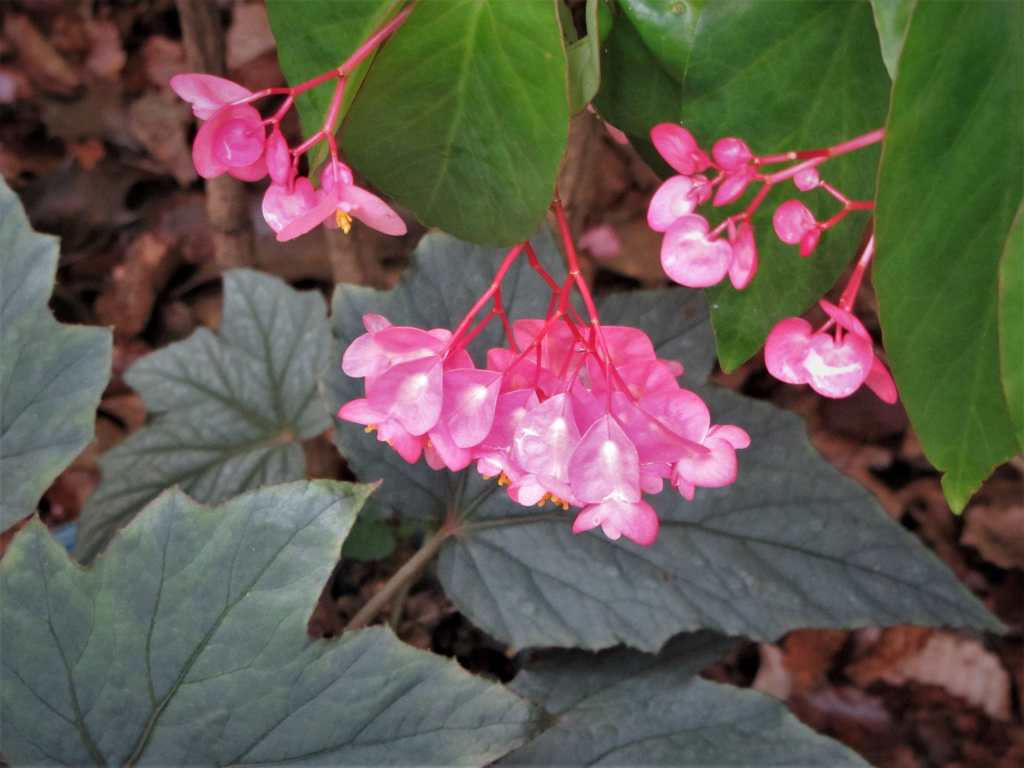
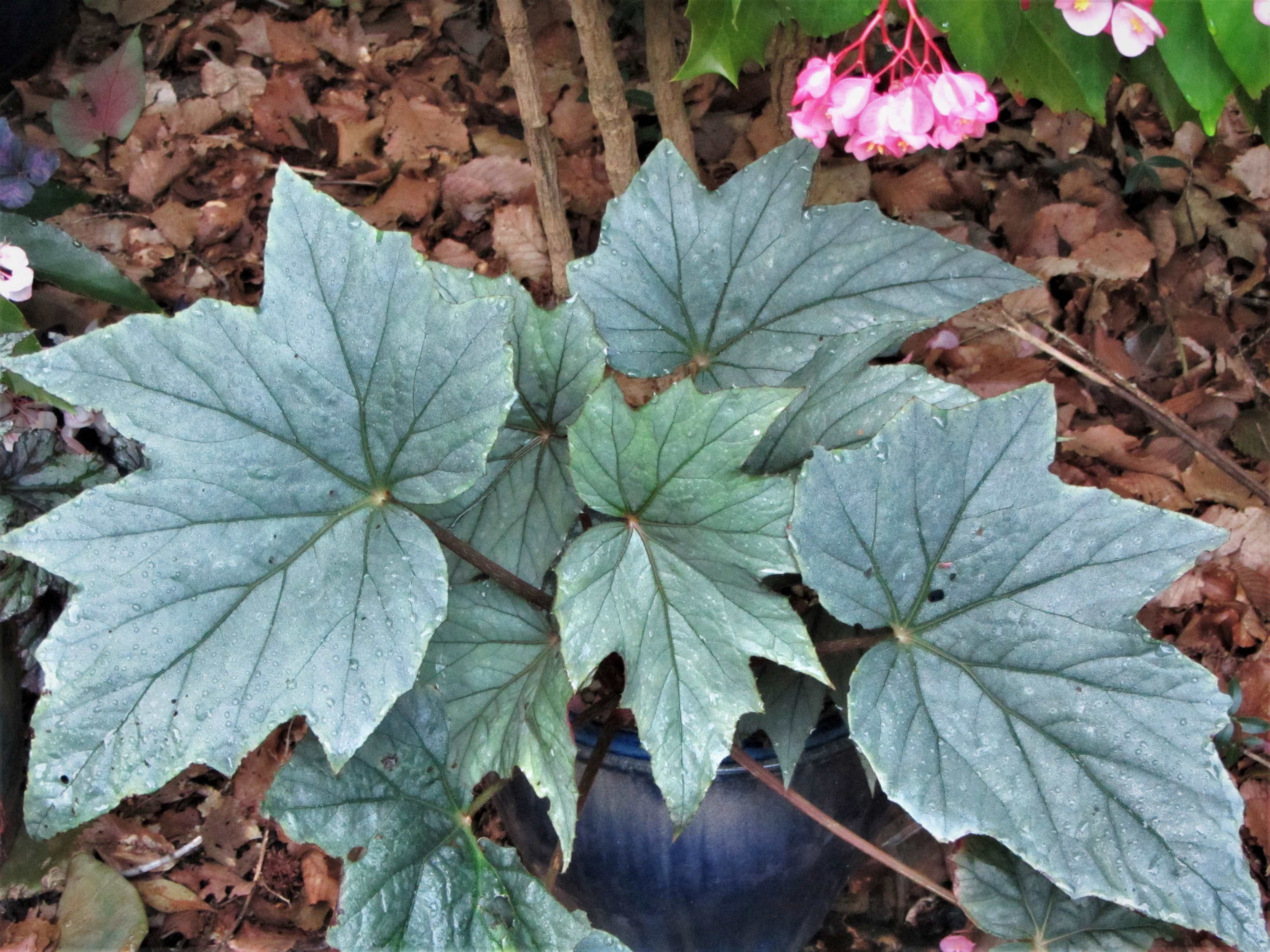
Benjamin Vogt’s 2017 A New Garden Ethic- Cultivating Defiant Compassion for an Uncertain Future, hit me like some psychotropic plant nibbled unknowingly. Like Castaneda’s first peyote button, all of those years ago, it opened my eyes to seeing in a totally new way. I call him, ‘Dr. Doug Tallamy, 3.0.’ Vogt’s early August newsletter with its link to the rabbit article hit my inbox just as I was wavering in my intentional compassion towards our resident herbivores. They have eaten a lot this summer.
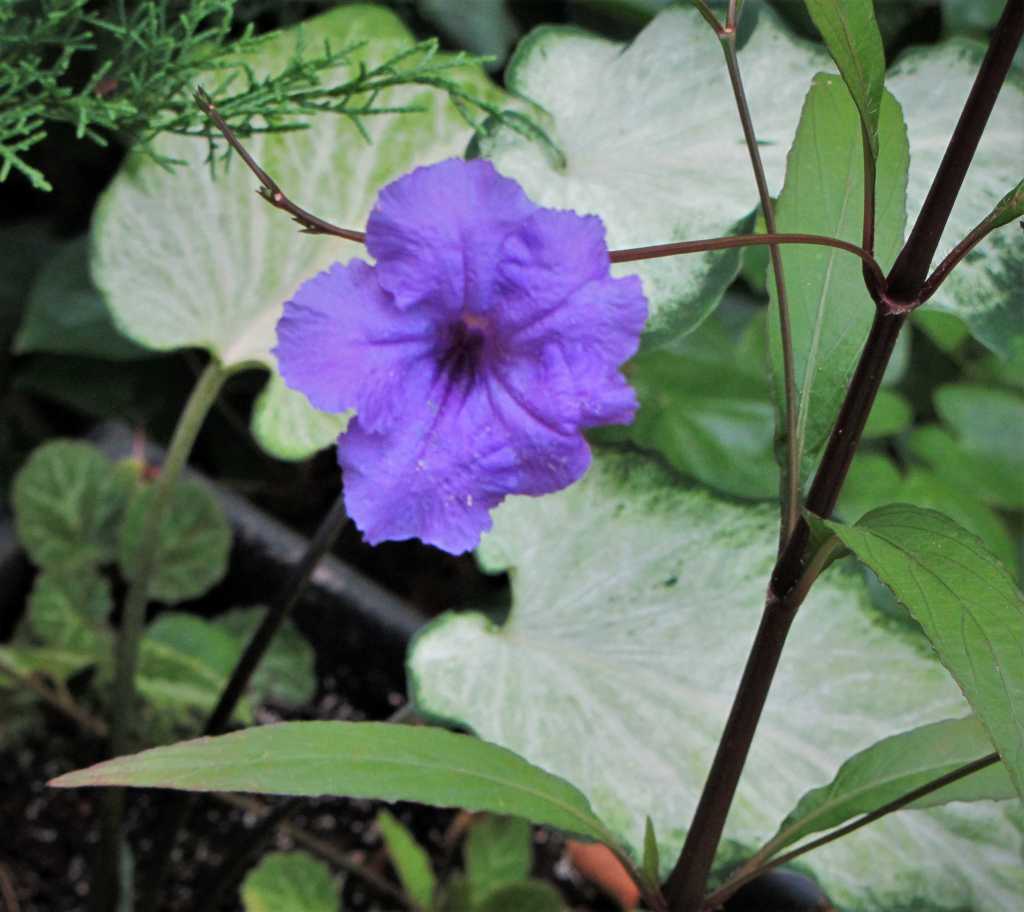
An older succulent planting, saved in the garage year to year, caught our rabbits’ attention. It is a tough old thing, and spiny. Still, I’ve found them on their hind legs stretching to nibble around the edges at the container that summers on our front porch. One early August morning I found it virtually destroyed, most of the stems lying on the patio among green bits of nibbled leaves and an uprooted tree seedling. A few of the oldest bits still stood in the middle, apparently out of reach. So I gathered up the pieces and moved the pot to the deck, eight feet off the ground.
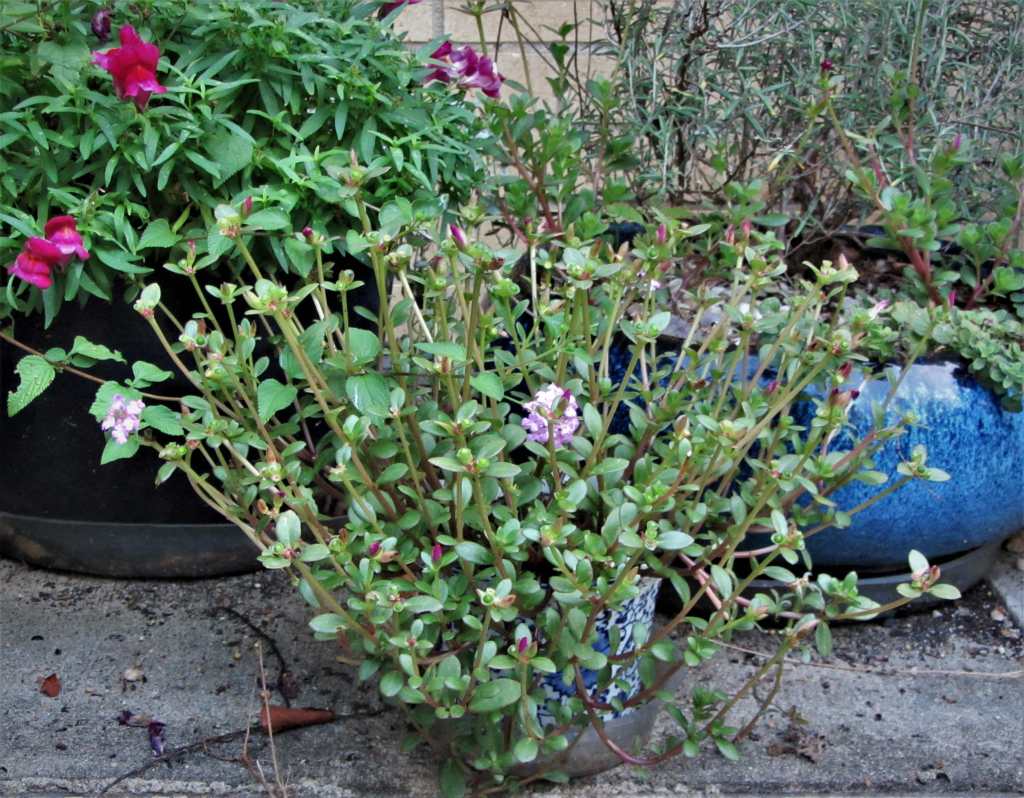
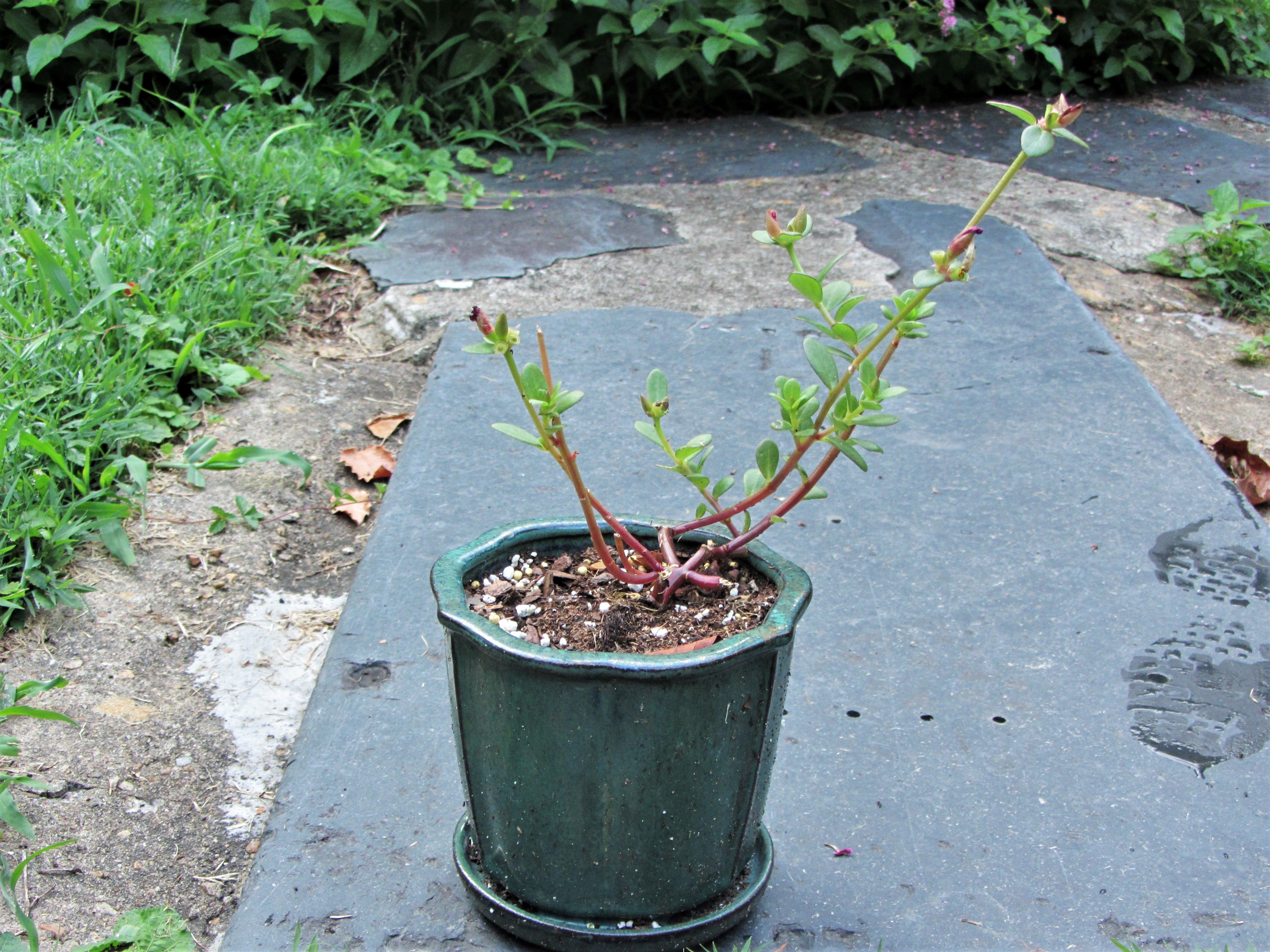
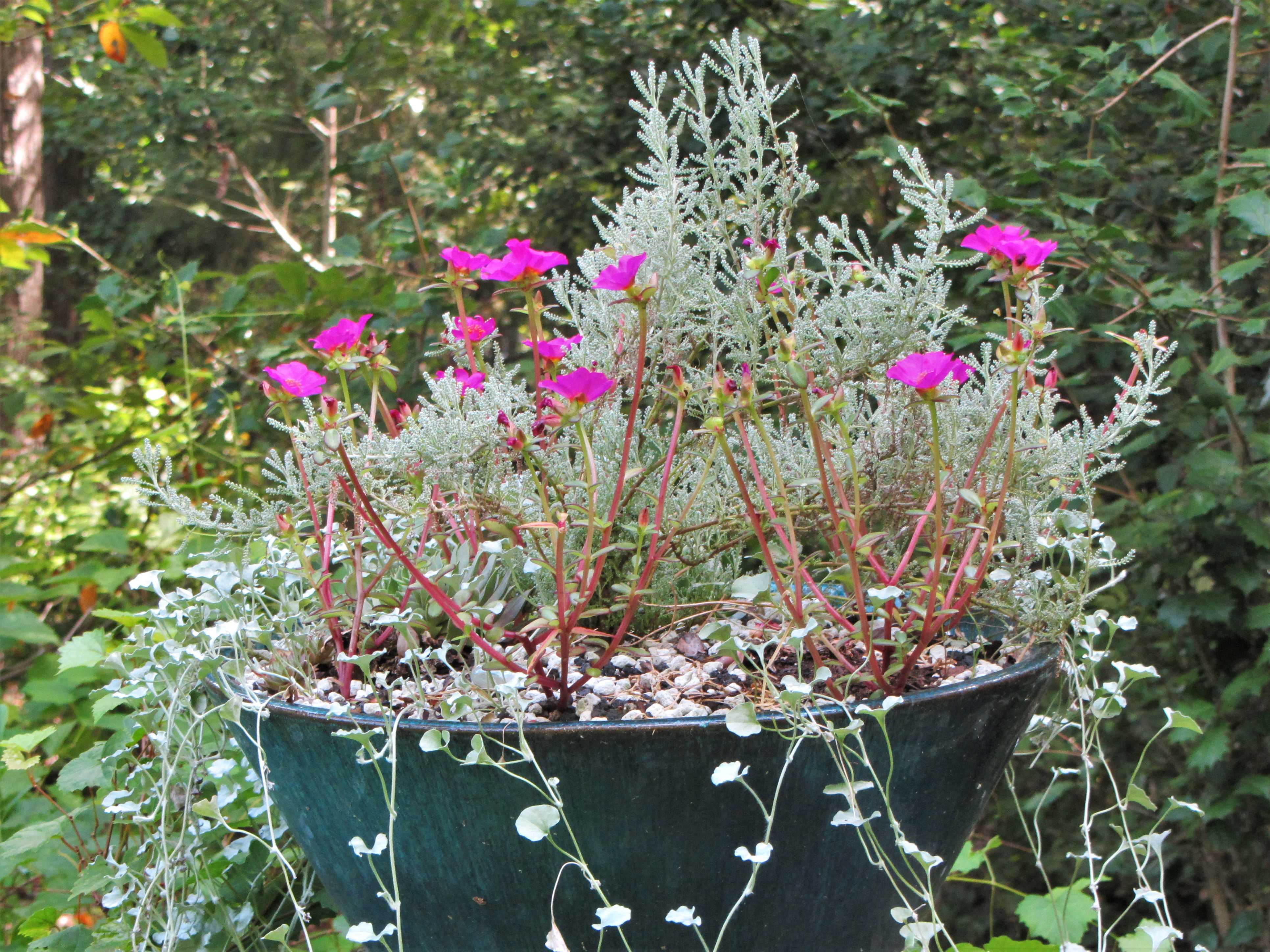
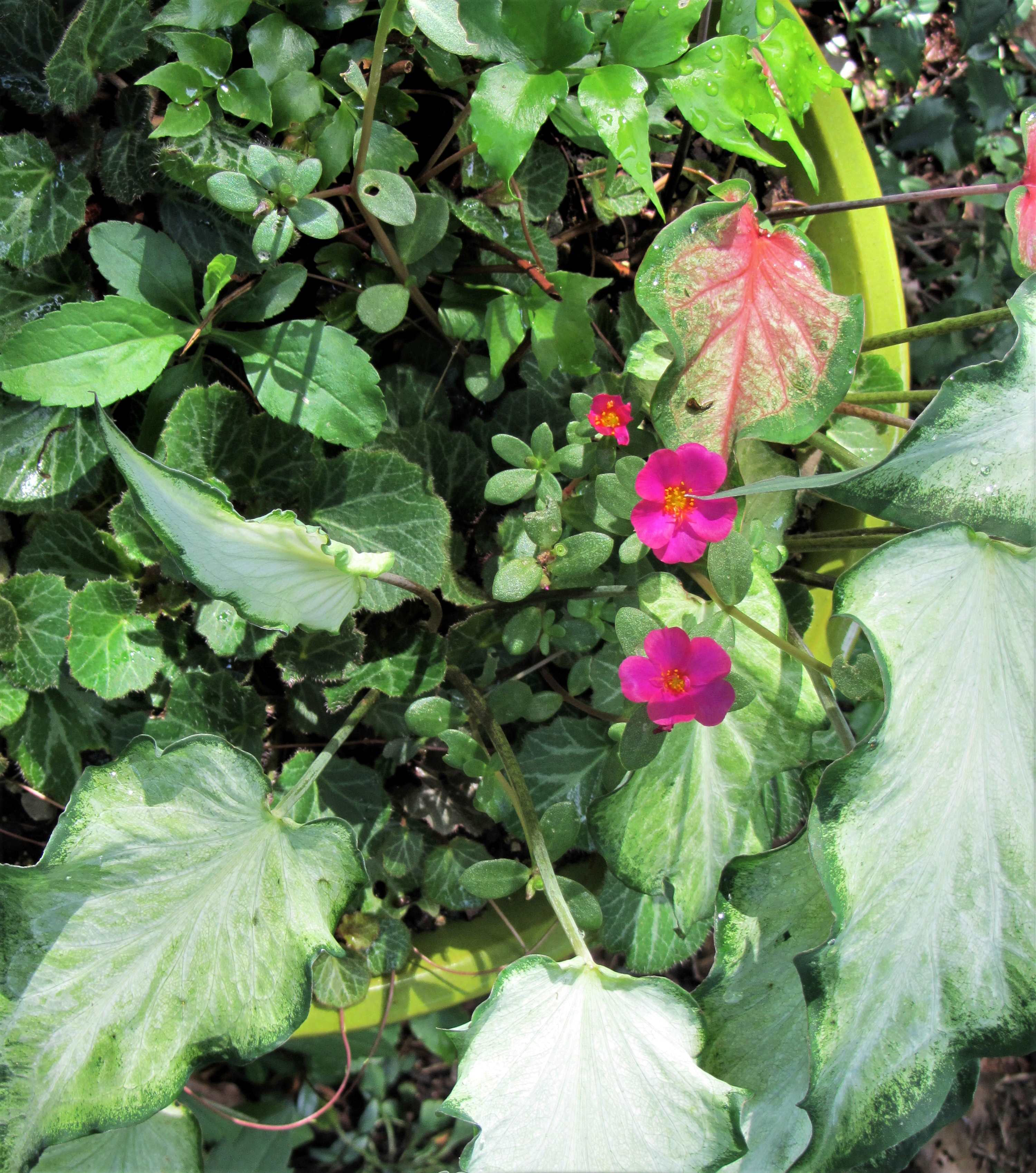
The same thing happened to a container of Portulaca this past week. In full bloom, a rabbit (?) methodically severed nearly every stem. We found them lying in a circle around the container in a great, sad heap, pink blossoms still perky. We couldn’t tell whether any were actually eaten, so much was left on the patio. Again, we gathered them all up and I’ve struck them to root. Then I gave the patio plantings, and much of the yard, a good smelly spray of ‘Repels-all’ yet again.
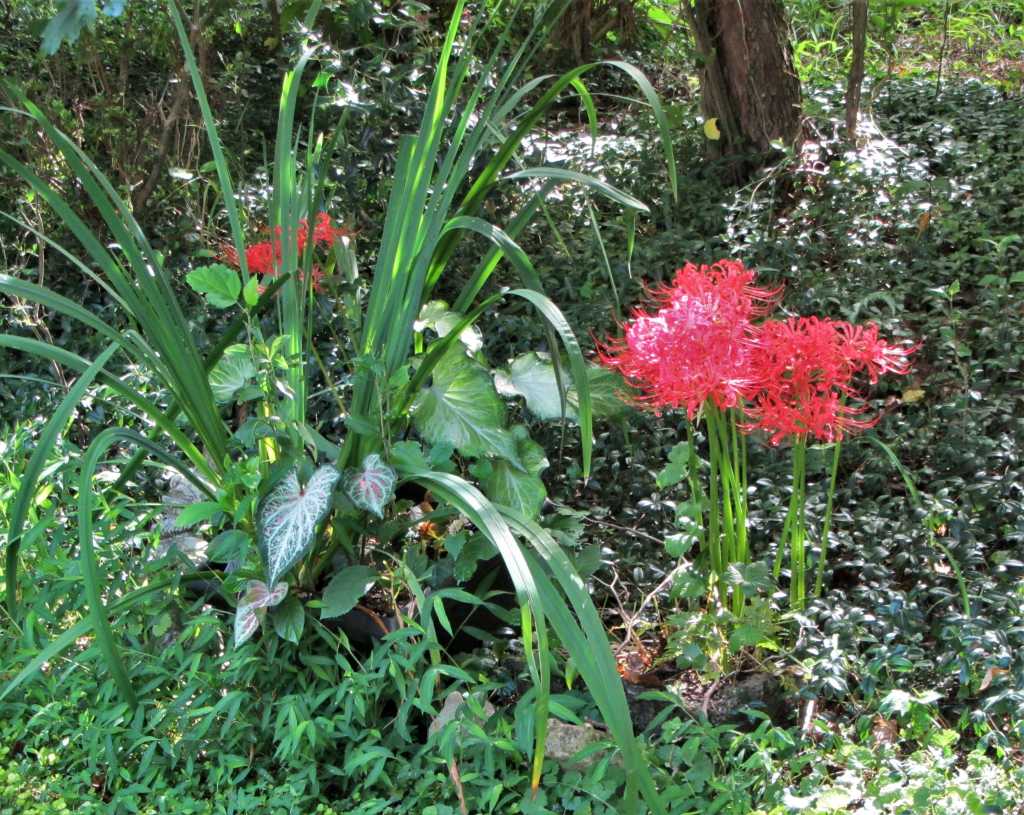
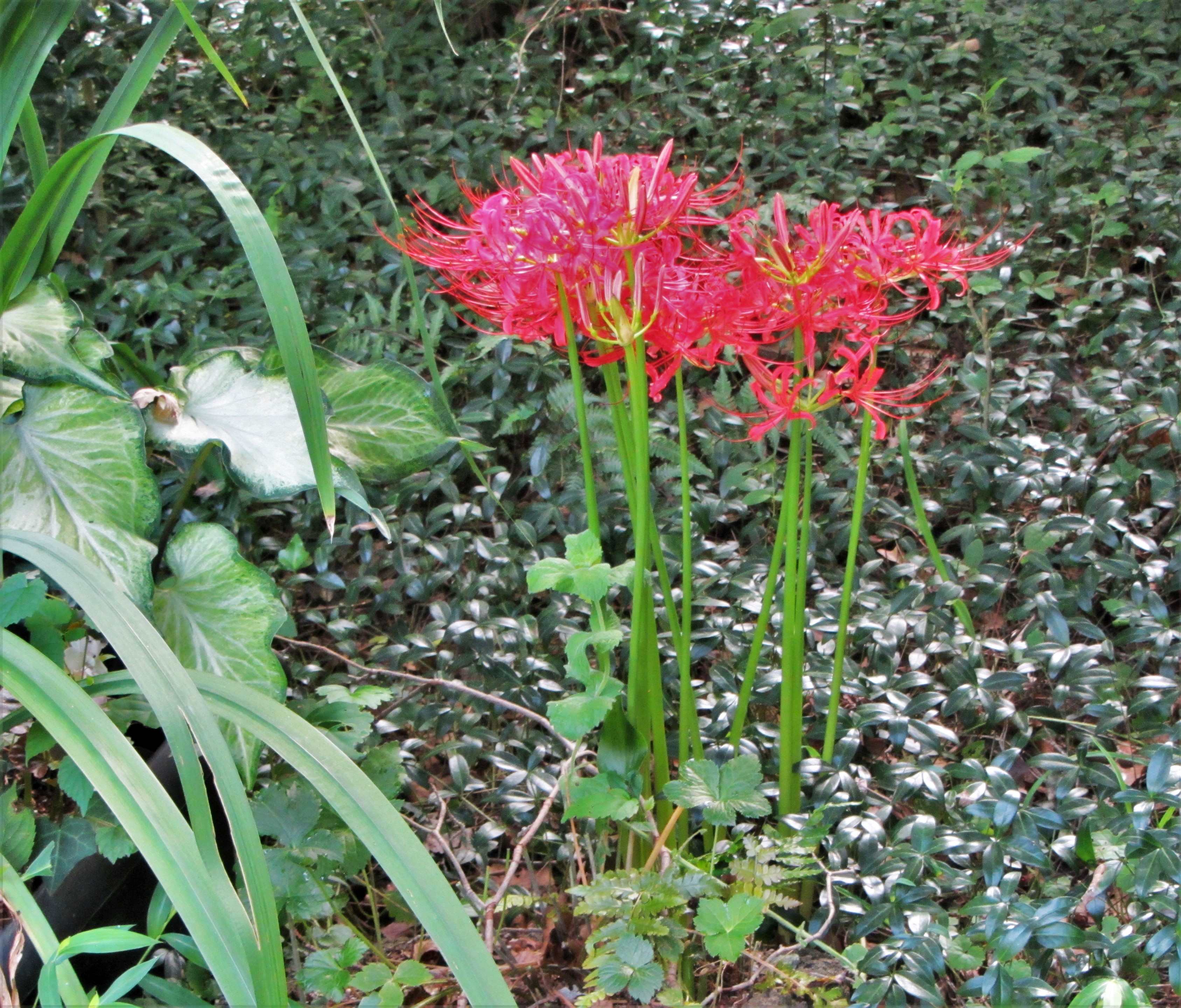
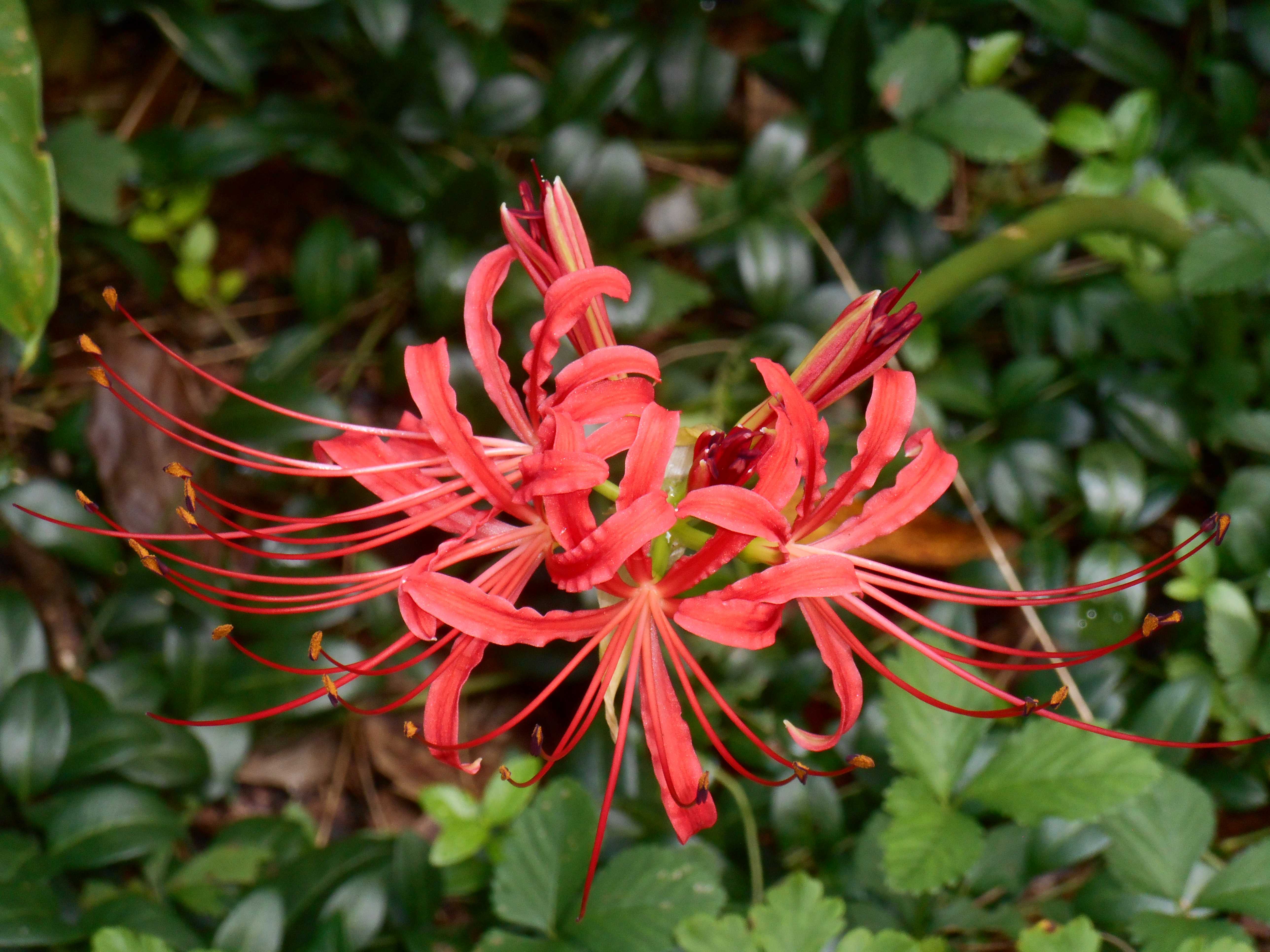
We intentionally plant to support so much wildlife. It still jars my ego, however, when some hungry or bored critter comes along and eats what I have planted for our own enjoyment. I’ve been focused this month on hummingbirds. After finishing up my hummingbird article last weekend, I celebrated publication by ordering two beautiful blown-glass hummingbird feeders from Amazon. They arrived on Monday and I got them washed up, filled, and hanging where we could see them, that afternoon.
And then we waited, and watched, and waited some more. As I have always suspected, the birds flew right past the feeders to feed from the Hibiscus, Lantana and other flowers we plant for them. Natural nectar must have more nutrients than sugar water, I’ve always reasoned. My stint as a mother left its mark, and I’m wanting the hummingbird kiddos to eat their meal ahead of their dessert.
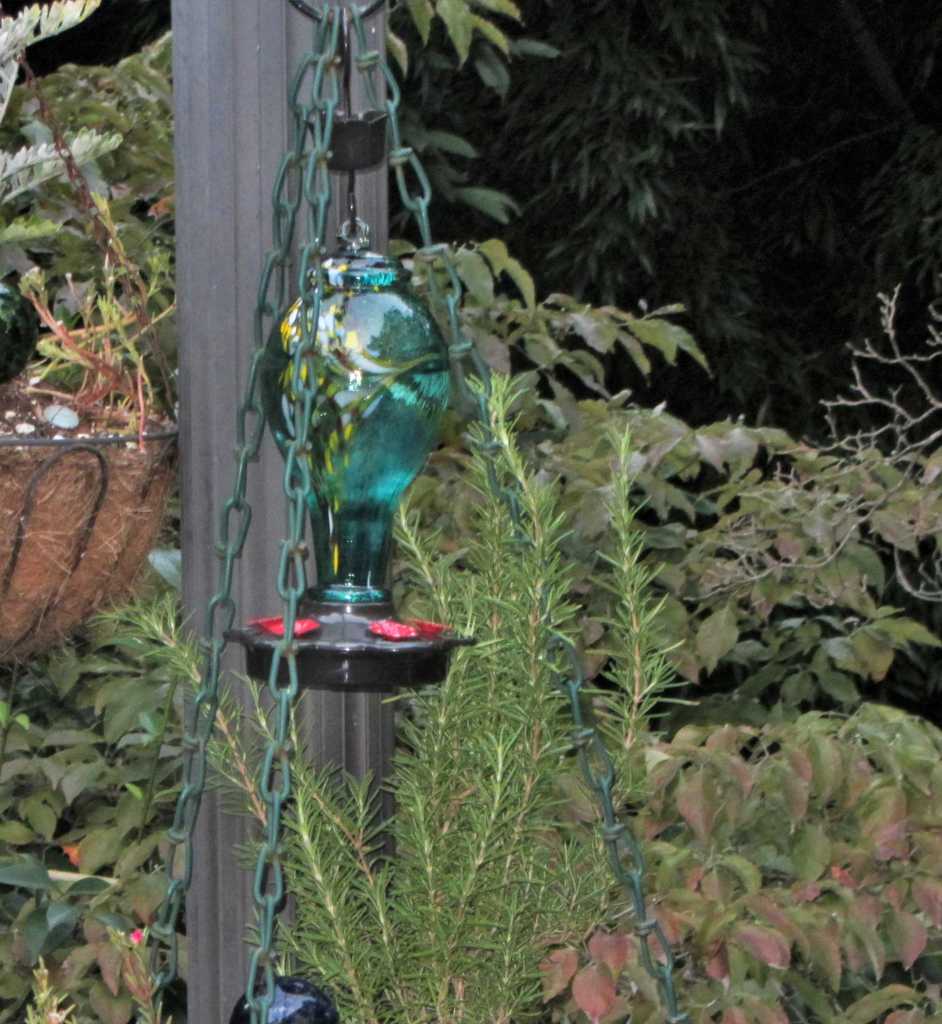
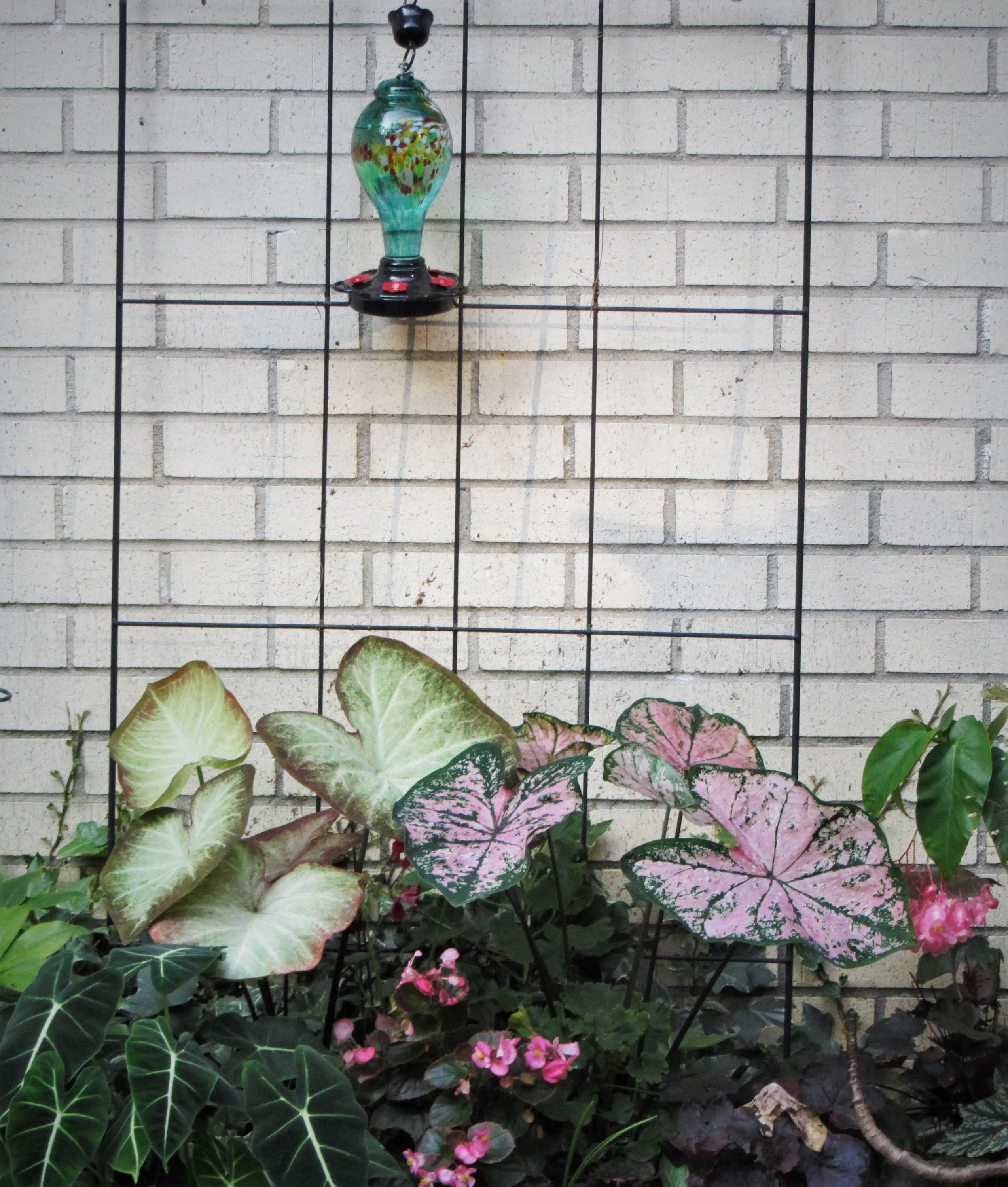
That initial hesitancy to sip was only their natural caution around something new. Once the first brave hummingbird tasted the feeder nectar, she was hooked. Our feeders have perches, too, so they can land and rest while they drink, no hovering required.
Now we have regular traffic at both feeders. I saw three tiny birds fly away as I opened the door to take the photo of our feeder on the back deck. Last night I watched one fly forward and back repeatedly to first sip, and then survey the scene, before sipping again. It only paused when it noticed me watching from the window.
The Lantana still gets the most attention from the hummingbirds. There is a huge mound of it growing in the center of our front ‘lawn.’ I planted the first plugs more than a decade ago and they survive year to year because I never cut them back until early spring. The plants grow to seven or eight feet tall again by late summer, absolutely covered in flowers.
In a normal year, butterflies and moths flit about from flower to flower throughout the day. Hummingbirds dive in for a snack before zipping off again, and birds land on the upper branches or root about beneath looking for a ripened drupe or some tasty insect. This year, as we continue to observe, is not normal. A butterfly sighting is rare and is always celebrated.
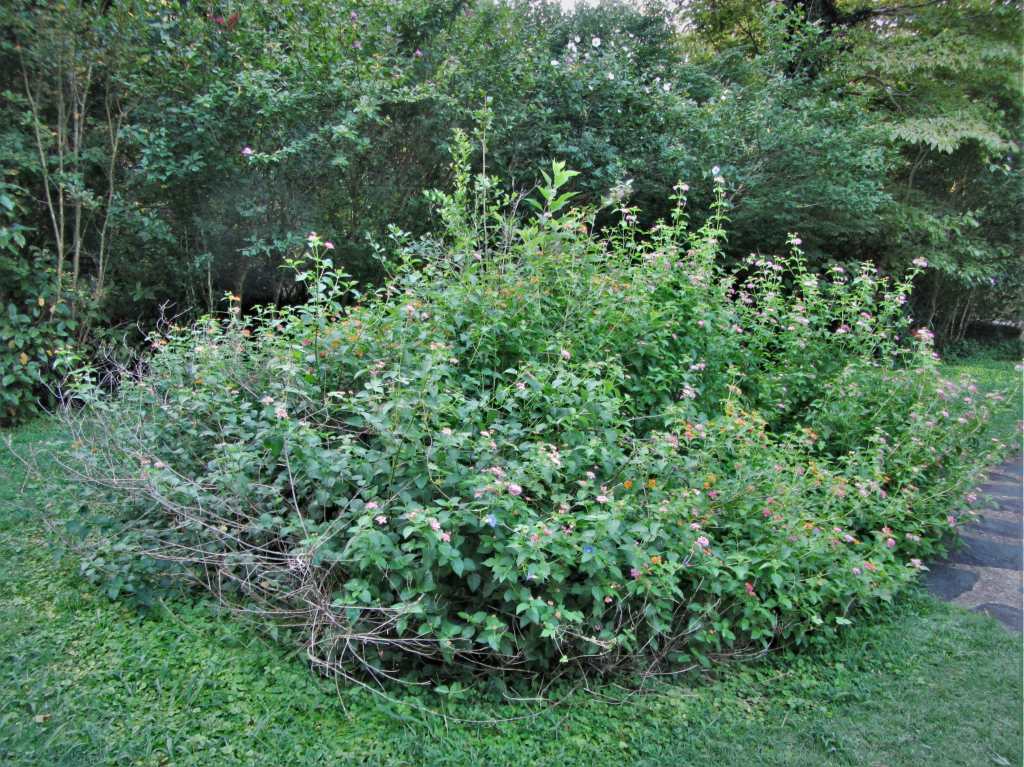
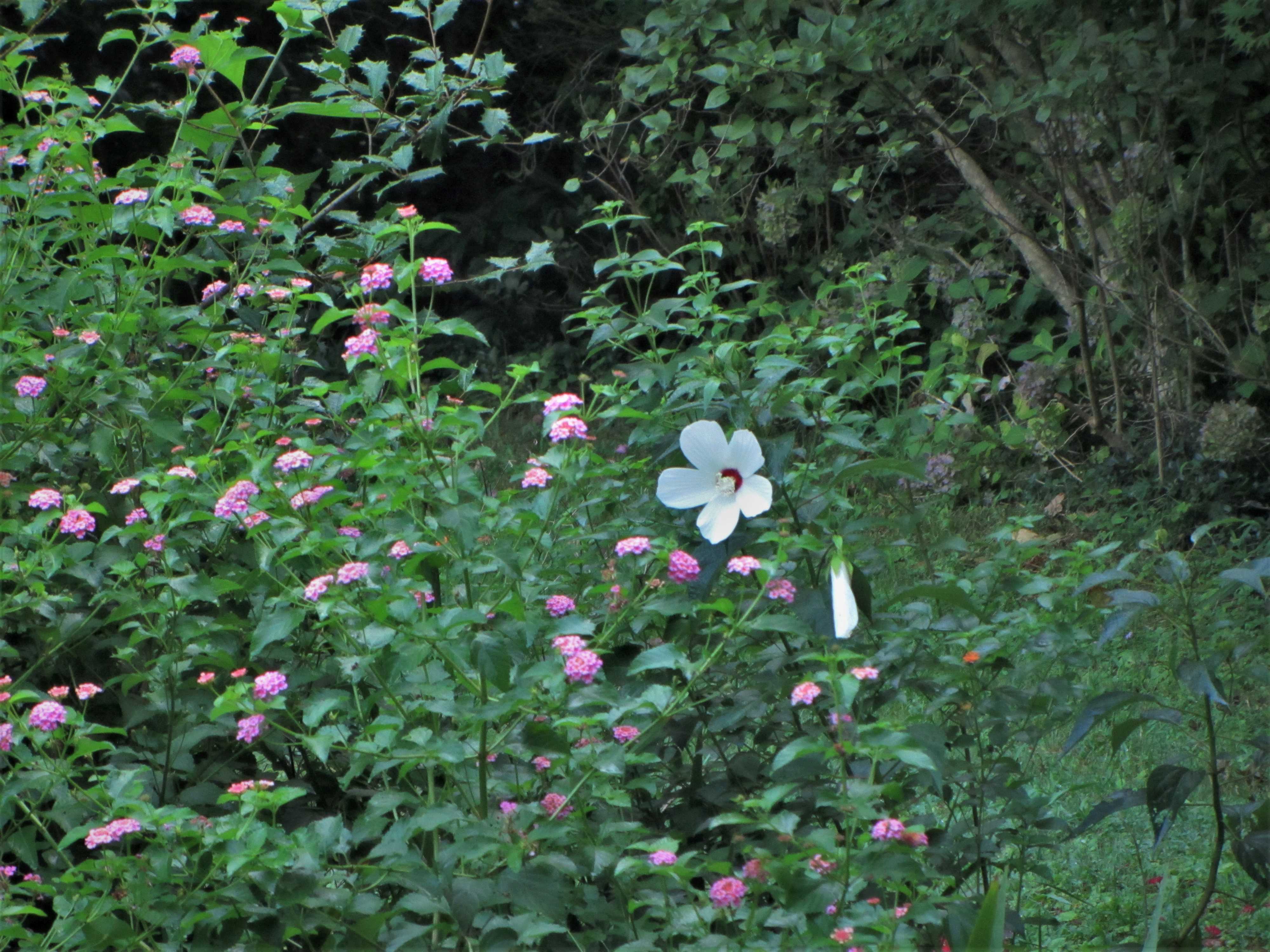
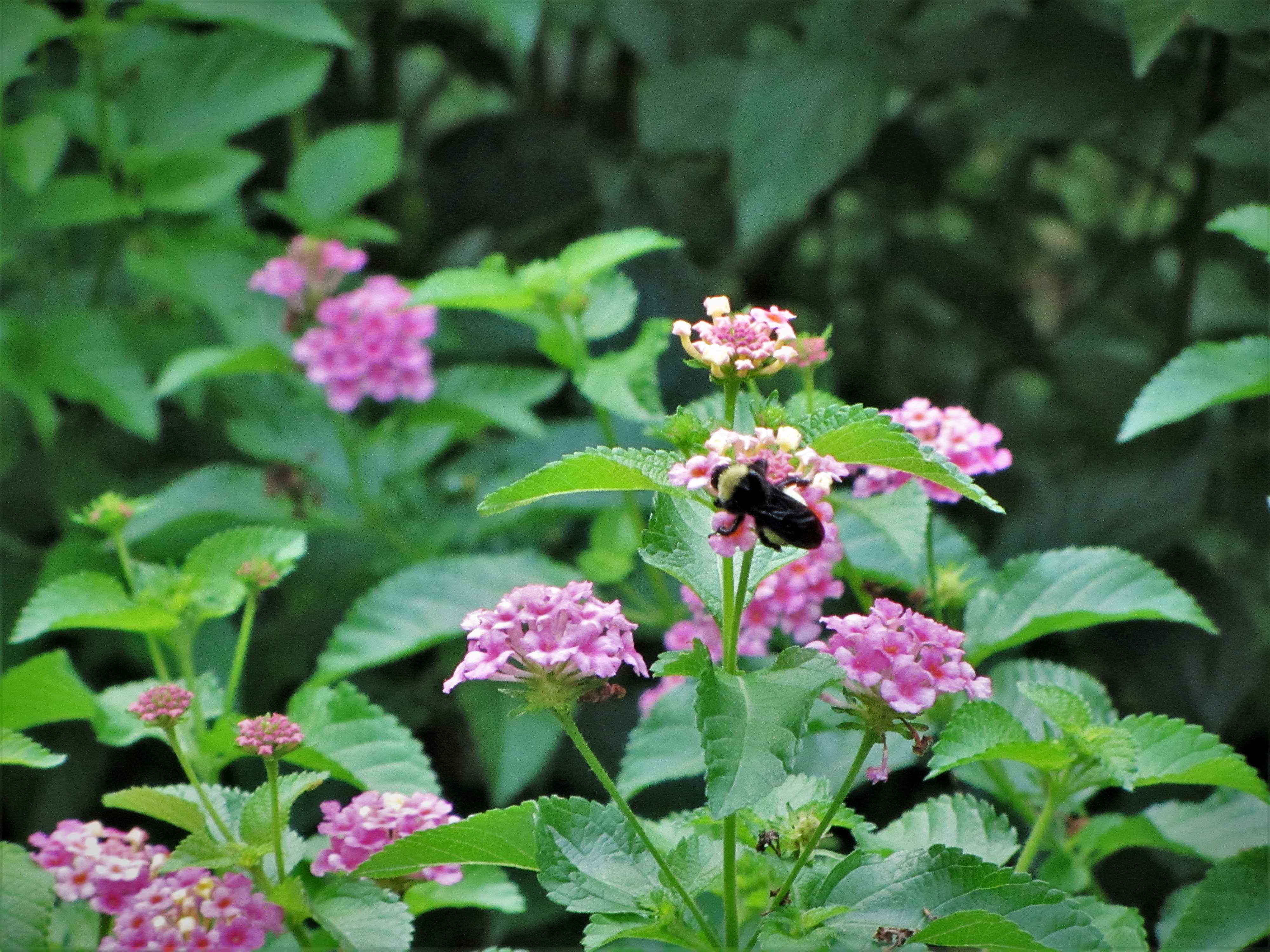
This year I never fully cut back the old stems, and the new have nearly grown in to cover last season’s bones. A wonderful thing has happened here as rabbits, turtles, toads, birds, and who knows what else, find shelter under the massive canopy of Lantana. We see a huge variety of animals coming and going, finding shade, shelter and food. We keep a bowl of water nearby on the patio for sipping and bathing. A cardinal family was there getting their baths last night at dusk.
We pause more often by the windows now, watching for hummingbirds, as we move about inside the cool of our home. It has been wicked hot again this week, humid, and altogether uncomfortable for any reasonable person to be outside much past nine or ten in the morning. The heat chased me in from watering on Wednesday morning by 8. It was already 80F with high humidity. The clouds promised rain, but I didn’t trust the forecast and watered, anyway. Thunderstorms finally rolled past after dusk, with a few minutes of heavy rain, and then later showers through the night.
The garden is left to grow, mostly undisturbed by us, in August. It has been too hot to mow the grass in recent weeks. I’ve used a few cool mornings to pull a few weeds and cut out vines. And take some photos. Now, we’ll watch for hummingbirds from the windows until they fly south again. Once the weather cools, we will finally get back outside to do something useful again. It all falls neatly into place, a part of the plan.
With appreciation to Jim Stephens of Garden Ruminations, who hosts Six on Saturday each week.

How to Create a Haven for Hummingbirds 8.12.23
You might enjoy my series of posts, Plants I Love That Deer Ignore.
Visit Illuminations for a daily photo and quotation
 Our Forest Garden
I can only imagine how exciting it must be to see humming birds. I’m glad they’ve accepted the new feeders. I don’t have any rabbits in the garden yet but that ‘putting spotlights on the plant with flashy neon lights that say “eats — open all night”’ quote does make a lot of sense come to think of it.
LikeLiked by 1 person
Funny how things make sense when seen from a little different perspective. The hummingbirds still are shy to feed while I’m working on the back deck. They hover near the feeder, wanting to sip so badly, but fly past to rest in a nearby tree- watching. They are hyper aware of what is around them, and ‘speak’ in little chirps to make their point. Thank you for visiting ❤
LikeLiked by 1 person
Haha! The rabbit bit reminds me of the relatively recent Peter Rabbit animated movie in which Farmer MacGregor’s neighbor appears as he is chasing the rabbits with murderous intent. She calmly explains the the rabbits that “That is HIS garden” before turning to MacGregor with “There, now I am sure they will resist the urge to FEED THEMSELVES.”
I don’t mind sharing but if they decide to eat something to the nub, I put some bunny fence around it. They will snip the bean vines at the ground, then no beans for anyone. Ditto the purple prairie clover. They don’t eat too much from my garden, though I expect that is down to hawks and feral cats. The hummingbirds will visit your feeder – I see them sometimes visit a few flowers and the feeder like a buffet.
When you mentioned Portulaca, I envisioned P. oleracea, which is a common weed that is quite tasty, the leaves in a salad, or sauteed with garlic. Is yours edible/tasty to humans? I can see why a bunny wouldwant it if it tastes at all like the edible weed.
LikeLiked by 1 person
Love the anecdote from the new Peter Rabbit movie! Finally, someone who understands and sticks up for the rabbit family! A colleague put up a determined bunny fence around the garden bed she tended at the garden where I used to volunteer. It didn’t stop the bunnies- I took photos of them inside her fence. Animals have nothing much to do with their considerable intelligence beyond figuring out how to eat and meet their other needs. Our small efforts to thwart them generally prove temporary. The bunnies normally eat our clover and grass. I’m still trying to figure out why the needed to dismember the succulents. We have the P. oleracea in this area, but that isn’t what I am growing in the pots. This Portulaca is an ornamental variety. Perhaps it also tastes good to the rabbits! ❤ ❤ ❤
It seems that once rabbits or deer graze a plant, they tend to return. The grazed Penta from a few weeks ago is still a nub. Any new growth gets nibbled, though the other Penta plants remain untouched. So interesting to see what animals will do.
LikeLike
I love that the Cardinals came for family bath time. We all need more of working with nature rather than against it but it can fell like a hard slog.
LikeLiked by 1 person
The cardinals always look out for one another. It is unusual to see only one of them. The other is almost always nearby keeping watch. It seems much easier and more enjoyable to look out for nature when you have a relationship with a variety of creatures. Many small efforts, joined together, can make a huge difference ❤ ❤ ❤
LikeLike
Oh, those wascally wabbits! 😉
LikeLiked by 1 person
❤ ❤ ❤
LikeLike
I had many gluttonous rabbits a few years ago but they were decimated by some disease. It’s quiet now but we had to deal with…
Impressed by the size of the lantana when mine is rather small (I have to take cuttings for each winter)
LikeLiked by 1 person
Lantana is considered a shrub in its native range. We are right on the edge (USDA Zone 7b) of where some varieties will overwinter. L. ‘Miss Huff’ is the most hardy, and there are several hybrids in her line that also prove hardy. There are a few other varieties that I’ve been able to keep year to year by waiting to do any cutting back until early spring of the following year. L. moneividensis, a low growing sprawling species of Lantana with very flexible stems, is variably hardy here. It does better planted in the ground and used as ground cover, but will sometimes come back when planted in containers. I like it in containers and hanging baskets because it has a graceful form and wonderful soft lavender or white flowers. It takes several years for the shrubby Lantana to achieve the stature of ours. As the roots develop, they can support larger plants. I had to try to remove an older (planted in 2018) L. ‘Miss Huff’ from a deep raised bed at the garden where I volunteered last December. I could cut branches back to the trunk, but I couldn’t begin to budge its roots. They are tenacious once established. Good luck with yours! Have you tried digging and potting the entire plant to over-winter in a frost free area?
LikeLiked by 1 person
No, but you give me a good idea, because the plant is not so big to be potted.
In my frost-free greenhouse around 5°C or rather in the garage ?(bright at 14°C and less humid).
No pruning or shortening of stems?
LikeLiked by 1 person
Hi Fred,
I’ll leave it to your judgement- or experimentation- whether to cut back the stems, or not. They should be cut back before new growth begins to perhaps 4″-6″. I don’t cut them so the freezing cold doesn’t get into the stem tissue at the unprotected pruning cuts. I had to cut back stems in that raised bed I mentioned, which was mostly planted in L. ‘Chapel Hill Yellow’ or L. ‘Chapel Hill Gold,’ both hybrids of ‘Miss Huff.’ About half of the pruned plants survived winter each year. Either garage or greenhouse should work fine to protect your Lantana plants over winter. They begin to grow here again around late April or May. They are slow to show new leaves, and some years I nearly give up on them. Patience pays dividends when overwintering Lantana.
LikeLiked by 1 person
Thanks for your tips !
LikeLiked by 1 person
Well, now you have portulaca cuttings! You will get more than you started with.
LikeLiked by 1 person
Horticultural multiplication- one of the great joys of working with plants! The critters finished off the original little plant on Sunday night, but I gathered up a few pieces, again, to root. Did you get any rain at all as Hillary sped by?
LikeLiked by 1 person
NO! It totally missed this area! It rained quite generously in Beverly Hills, but that is three hundred and fifty miles to the southeast. The flooding that was in the news was in the region of Palm Springs. I distinctly remember that when Brent and I went to Palm Springs in about 1987, the main roads were designed to divert flash flood water out of town. It did not happen often, but the town was ready for it. People just knew to not drive through it, and to stay at home during torrential downpours. Nowadays, people do not respect the weather. Although the storm was very unusual, flooding is not.
LikeLiked by 1 person
The folks in CA affected by this storm appear to be very smart, savvy, and aware. Oh, the disasters that can be mitigated when folks simply pay attention and do the right thing.
LikeLiked by 1 person
This flooding would have been worse in a more urban region. Palm Springs is a major city, but there are not many other big cities out there, particularly to the east.
LikeLiked by 1 person