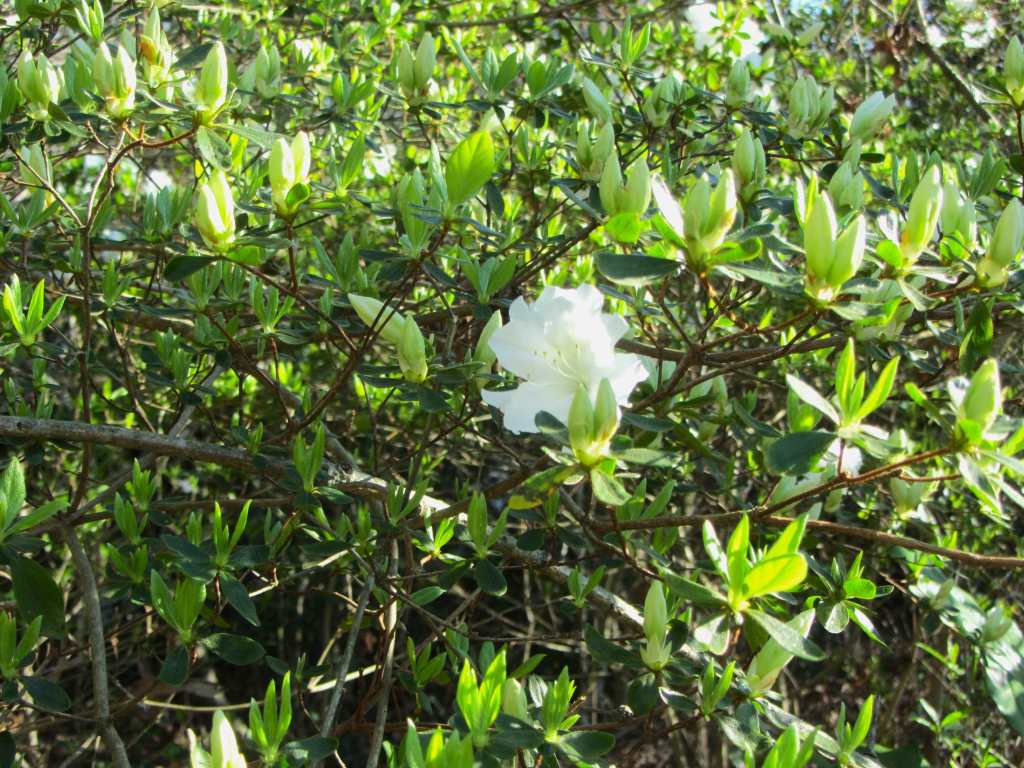
March is certainly living up to its well-earned reputation for surprises here in coastal Virginia. We remain on the spring weather roller-coaster as the temperature, barometer, wind gauge, and outlook for rain continue their steep climbs and dives through these blustery days.
The Washington Post ran a fascinating story yesterday about this year’s extremely early bloom of the Japanese cherry trees around the Tidal Basin. Their photographers took daily photos of the unfolding flower buds from early March through last Monday, the day after peak bloom, showing their rapid development. The article also shows how high above average the temperature was in Washington on each day the buds were photographed.
This year was the second earliest peak bloom on record, and many days were more than 10 degrees above the average temperature, as measured in 1951-1980. Sea level rise has impacted the trees so much in recent years that their roots remain bathed in brine from the Tidal Basin much of the time. The city is preparing to raise the sea wall by 5 feet once the trees finish blooming, which also means some of the historic trees will be removed as part of the project.
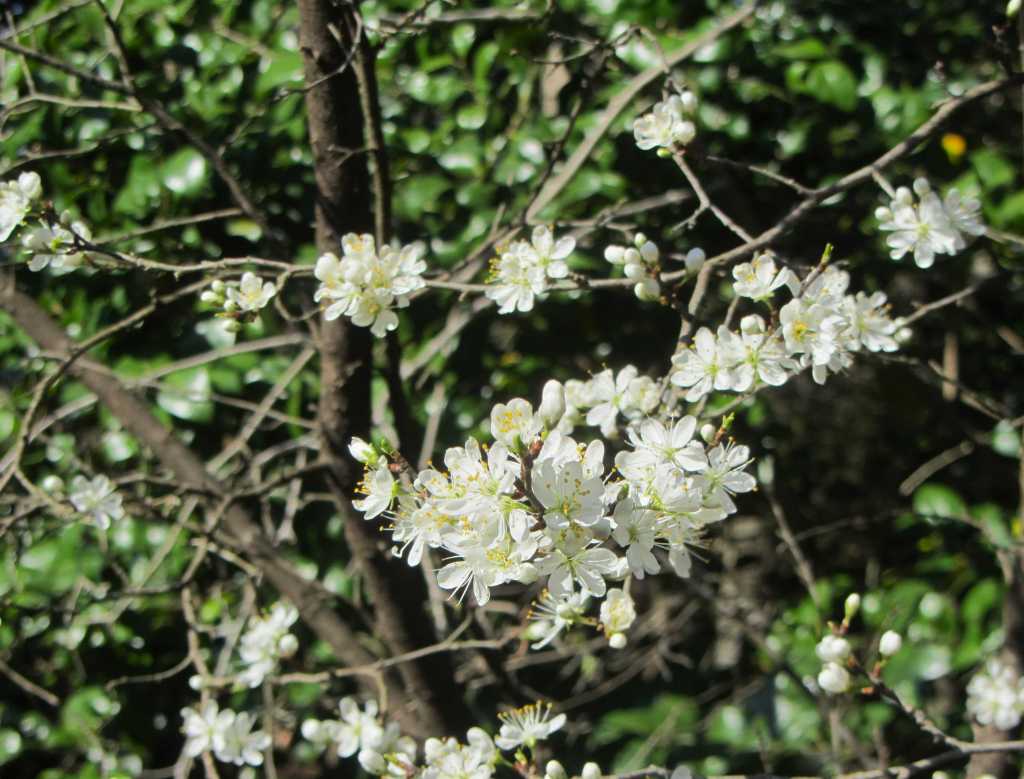
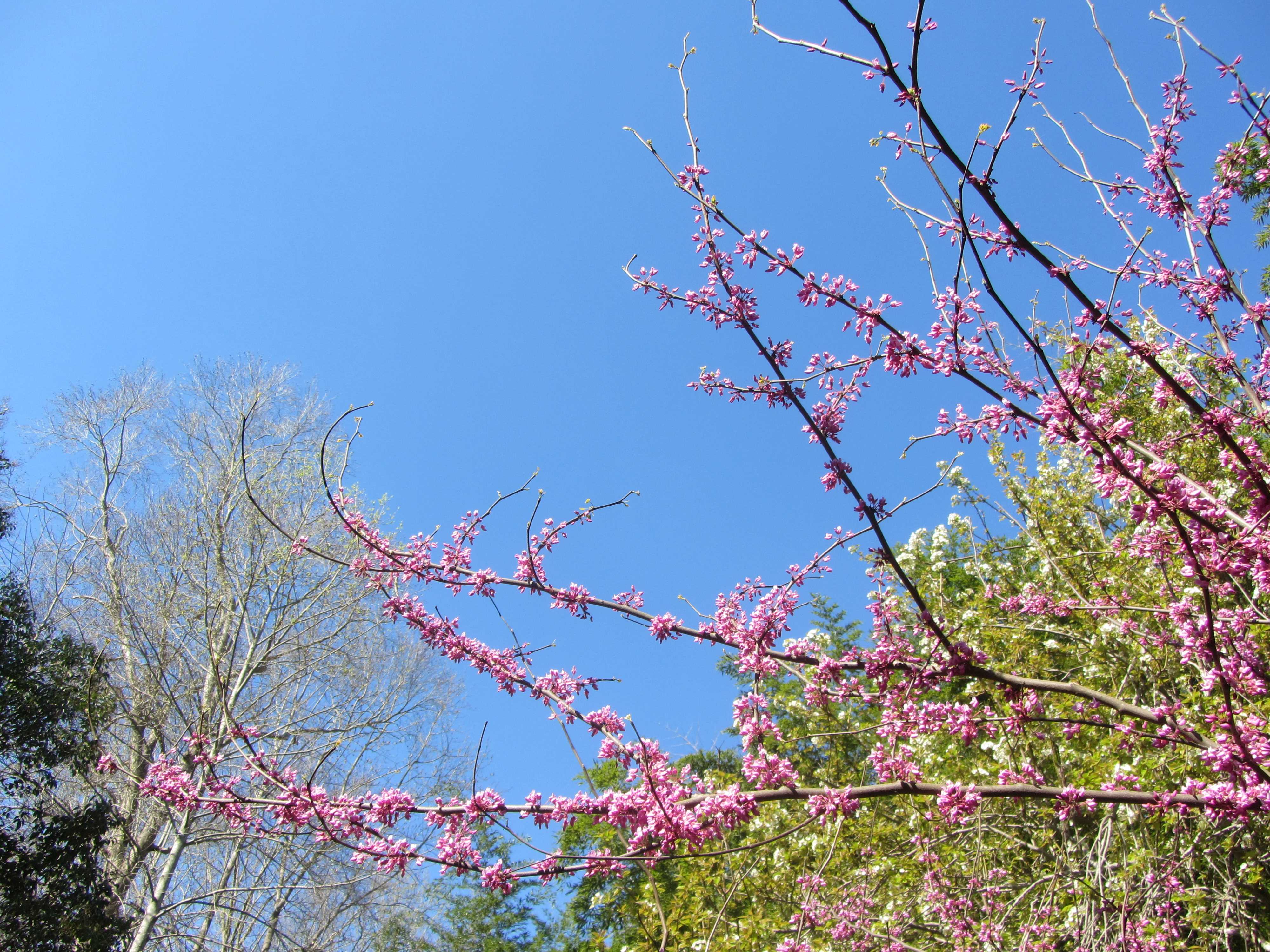
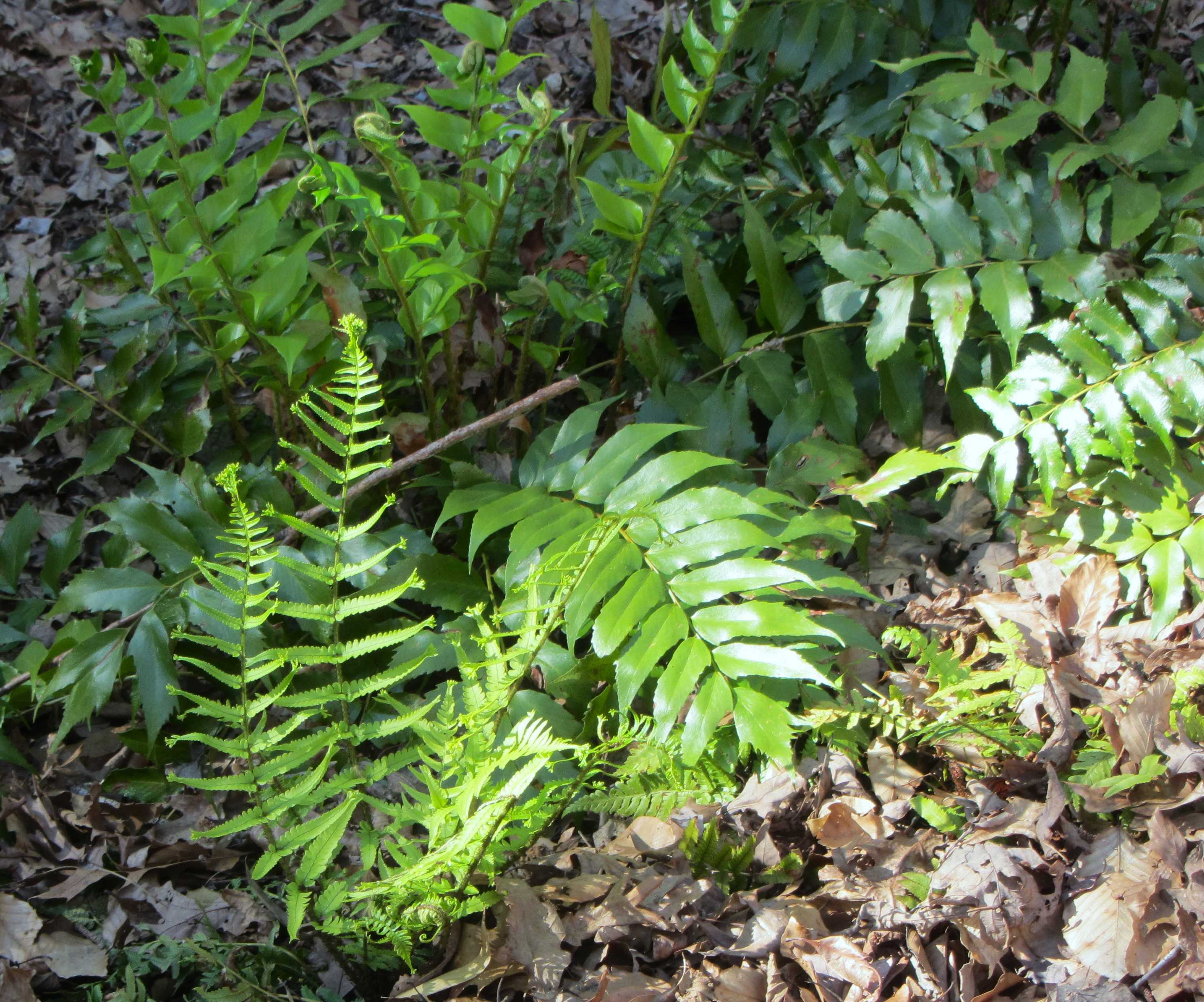
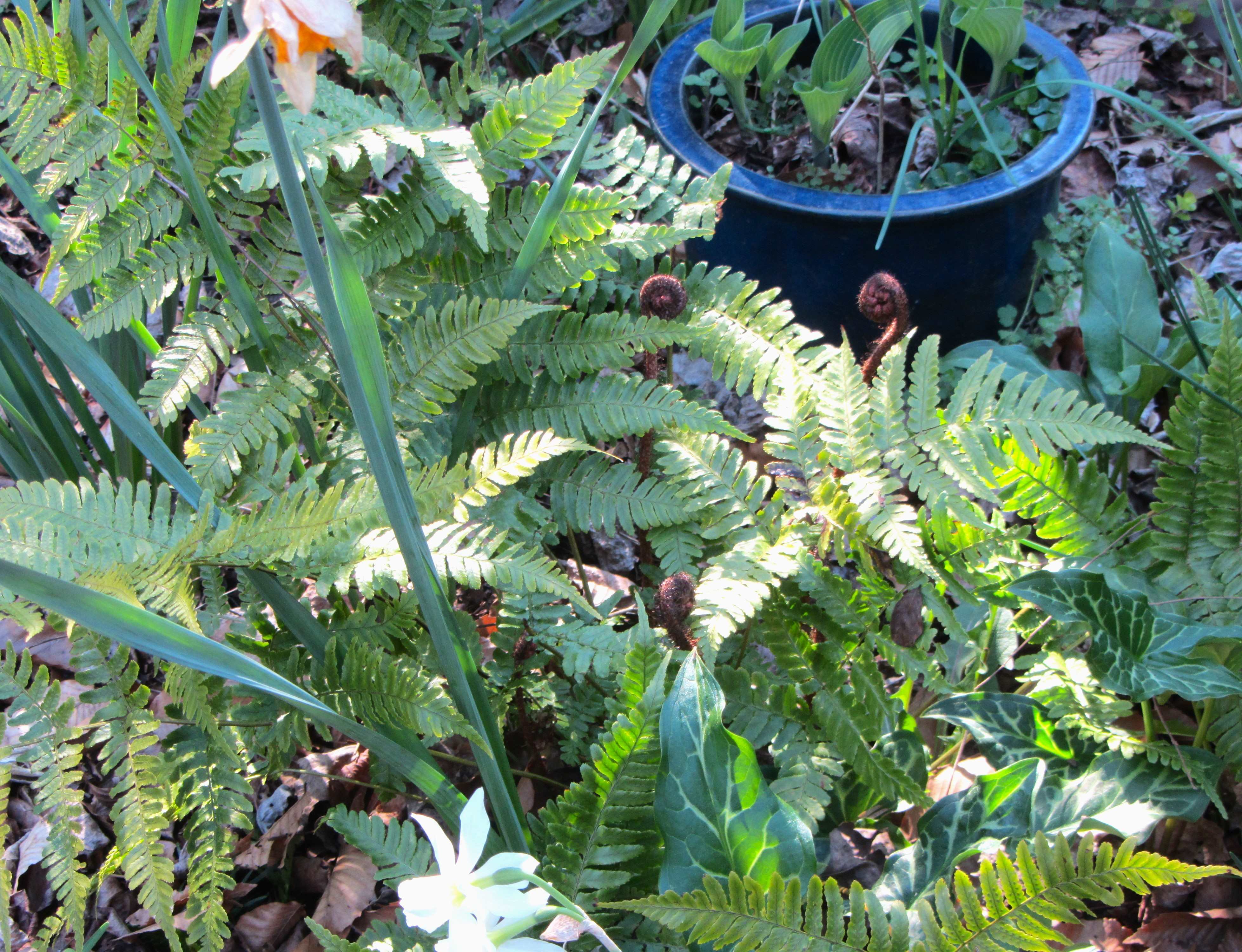
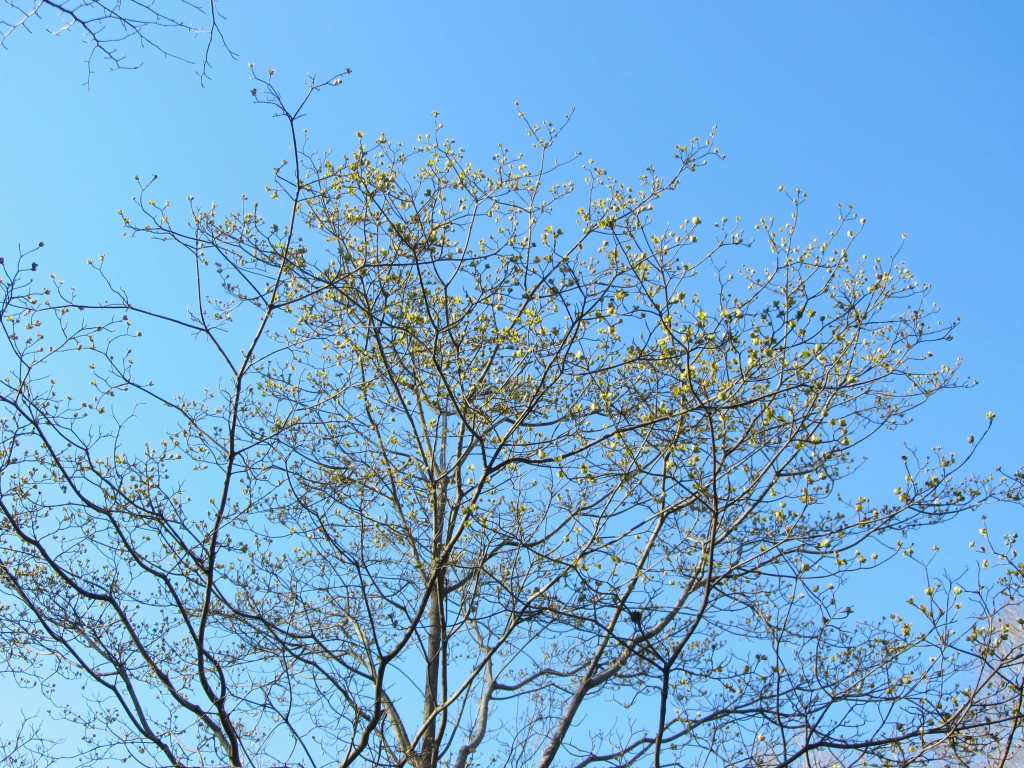
I’ve taken several hundred photos this week, so choosing six for today may be tougher than usual. Flowering trees, bulbs, perennials and ferns are coming along so fast now that it is a challenge to document the daily changes. There was frost on the roof Friday morning before the sun rose. We awakened this morning to temperatures in the 60s and heavy rain, a gale warning, and we expect areas around us to freeze tonight. We will be right on the line so fingers and toes are crossed that the trees won’t suffer damage.
I’ve divided my time this week between writing and gardening, both necessary to ‘follow-through’ on what is already in motion. March is that in-between time when we are still clearing away the old from last season, finishing the pruning, planting the first of the hardy perennials, bringing in some new mulch, and assessing the damage deer and squirrels have wrought in the landscape. I have been shocked at how much deer grazed our ferns over winter, and am spreading animal repellents now to try to protect the tender, emerging fiddleheads.
The Japanese maple seeds I found clinging to the branches of a favorite tree in early March germinated on the kitchen counter, so I moved the seedlings into a plug tray this week, put them out in a protected spot on the deck, and I am hoping to see a few true leaves emerge soon. And, I’ve invested several hours this week finding, cutting, and unwinding the many honeysuckle and Akebia vines colonizing trees and shrubs in parts of our yard.
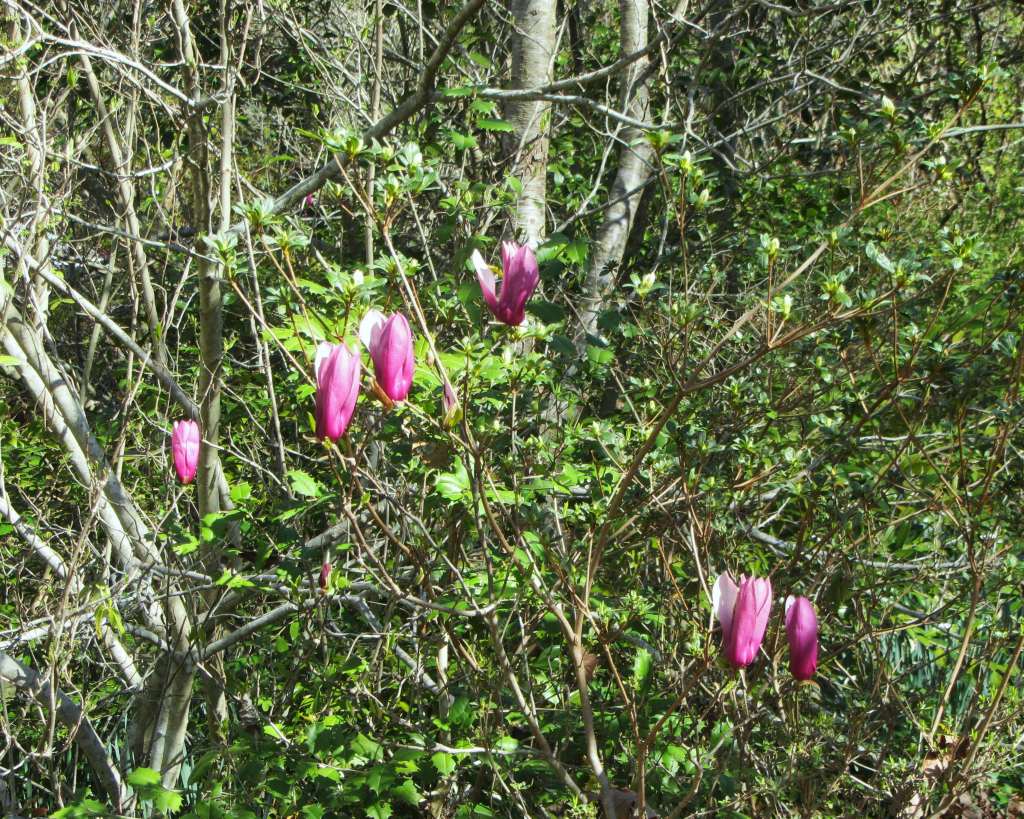
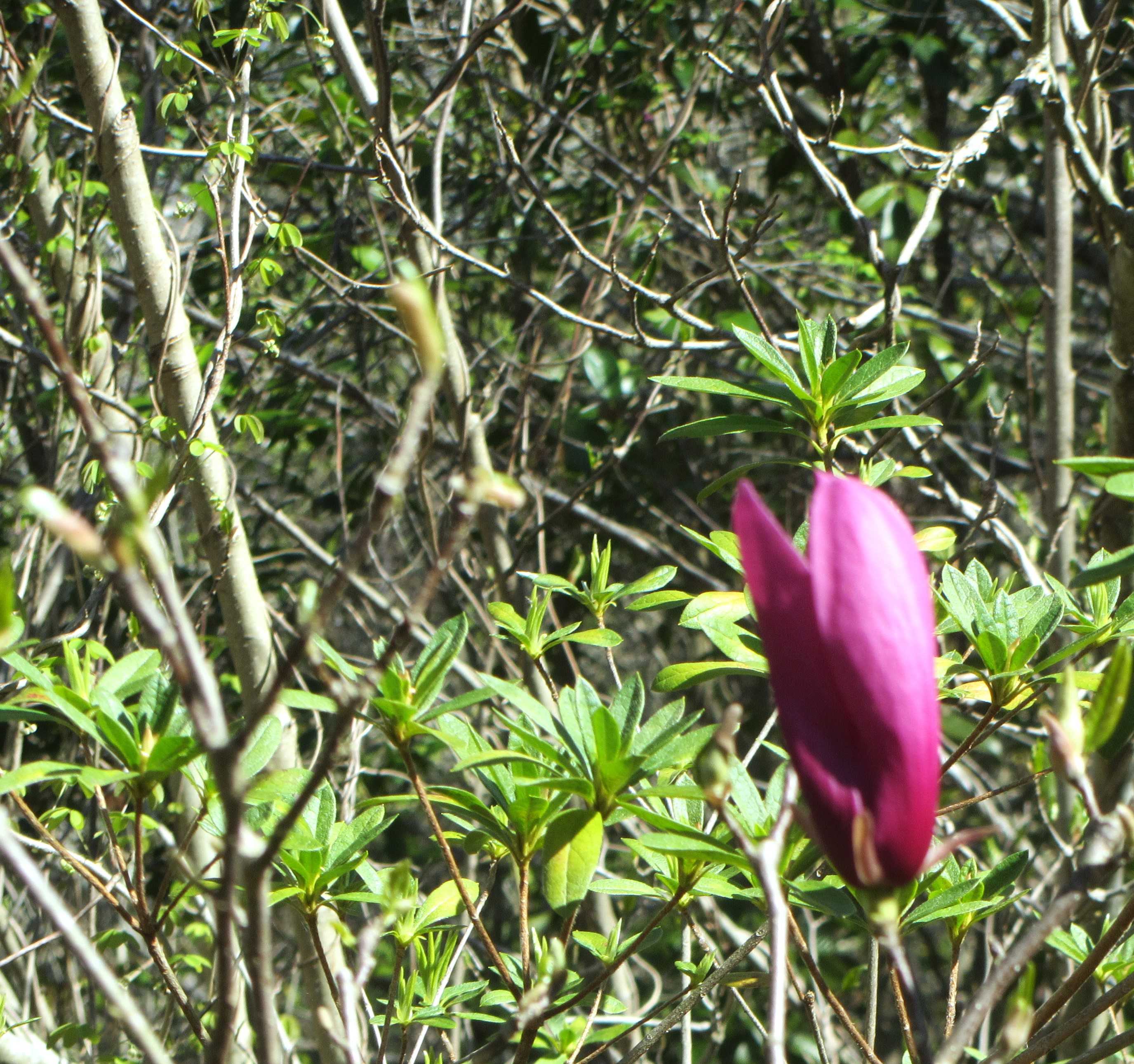
The Akebia is particularly aggressive and persistent. I so wish that I had done more research before ordering a single plant, which is now trying to take over an entire area of the garden with its prolific runners and climbing tendrils. It twists, chokes, and shades out other, far more desirable and productive trees and shrubs wherever it grows. It is so strong that it can bend branches over and bind them together, much like wires on a bonsai. Yes, its spring flowers are pretty, and I’ve grown to thoroughly dislike them because of the effort needed to fight this vine. Many folks would advise me to apply some herbicide and be done with it.
But, thus far, I’ve kept my pledge to not use herbicides, insecticides, or fungicides in the yard since I had it designated as a wildlife habitat. And, I try to closely study the relationships between all of the plants here and the many animals they support.
Another surprise: On Wednesday, my partner called me to the windows looking out to our front patio, where a long, black snake was sunning a bit of himself, resting on the metal frame for a small garden flag. The rest of him (her?) was still coiled in a nearby evergreen shrub. And all of this was within feet of the bowl of water I keep on the patio for the squirrels and birds.
A while later, the snake had turned itself around so its head was extended towards the warm brick wall while its tail remained in the shrub. We could see about four feet of him at that point. Now I know why we’ve seen fewer birds at the bowl lately. And, we’ve moved the bowl now to a less sheltered spot. So all of my wandering through the garden and pruning vines from the shrubs since Wednesday has been with a greater awareness to watch for the slitheries, now clearly awake for the year! It is very interesting that I was just reading about how in various cultural iconography, from ancient Sumeria through modern Druidery, a snake and a large bird frequently accompany depictions of the Tree of Life. Something to ponder, since the snake usually symbolizes wisdom.


After I vented a bit in my Six on Saturday rant last week, I settled down to do the research about the history of this current obsession with eradicating so-called ‘invasive’ plants. And by Wednesday, I had a decent article ready to publish on our local Master Gardener website. It traces the involvement of the American chemical manufacturers who produced the terrible herbicides that the United States deployed against Southeast Asia during the debacle known now as the Vietnam War up to present day. Once the war in Asia ended at some point in the 1970s, those manufacturers developed a new market for their chemical weapons here at home by convincing Americans to deploy herbicides in the timber and farming industries, and to convince homeowners to wage war on the weeds in their lawns, and now on ‘invasive’ plants.
We can thank Bill Clinton for signing an Executive Order in 1999 to authorize federal agencies to fight ‘invasive plants,’ even before there was a satisfactory, working definition of what ‘invasive’ means when applied to one plant or another. Incidentally, the Clinton administration also pulled back much of the federal funding for agricultural research from state universities across America, opening the door for the agrochemical corporations to step up with lots of research grant money to fill the gap. And the rest is history…



So there is huge profit to be made from demonizing certain plants and advising conscientious home gardeners, along with homeowners associations, city parks staffs, and even conservation groups to kill off all of these invasive plants with chemical herbicides. It has become a huge business here in the United States. But there hasn’t been much research into the ecological benefits that these maligned plants offer, and why they thrive where other plants struggle. That is the other side of the coin and one we should be more curious about. In quite a few cases, the so called ‘invasive’ plants are useful, often edible, and they support wildlife. We simply no longer use them or have natural ways to control their spread. Sometimes, like with my Akebia, it is human negligence that allows them to take off beyond their intended boundaries.
It was raining here about a tenth of an inch an hour most of the night, and I am very grateful for the rain. I planted a tray of ferns yesterday and the rain is watering them in as it revives the moss and fuels the trees to unfold their buds. March came in here like a lamb, so I am holding my breath to see what the next week brings. One thing I know- it will be beautiful.
With appreciation to Jim Stephens of Garden Ruminations, who
hosts Six on Saturday each week.

 Our Forest Garden
Interesting research, those chemical are quite scary.
LikeLiked by 1 person
Indeed they are. But like so many things, they are normalized now in our culture and most folks don’t give it a second thought before using them. I hope you’re well ❤ ❤ ❤
LikeLiked by 1 person
The cercis C. is superb! I love it… Here my cercis siliquastrum has not yet burst and the flowers will arrive within 15 days I think. I’ve had an akebia for 3 years, but I had to be very careful to avoid suckers and I kept a regular eye on it. The flowers of this climber are truly pretty . I never had fruit, perhaps my only regret. I had to get rid of it because it was taking on more and more volume, as you said.
LikeLiked by 1 person
I hope you will post photos of your C. siliquastrum when it blooms. I’m not familiar with that species. We never had fruit from the Akebia, either, though that was the plan when I planted it. I believe that 2 vines are required to produce fruit. Now I am so very grateful that we only bought 1, and wish we had chosen something much tamer, like a Clematis, for the trellis on which it is planted. It is a monster gobbling up the trees! ❤
LikeLiked by 1 person
Yes I will of course ! A cercis grown from seedlings years ago. I’m proud to have succeeded
LikeLiked by 1 person
It really is immense satisfaction with seedlings and cuttings succeed!
LikeLiked by 1 person
Flowering cherries are earlier there than here!
LikeLiked by 1 person