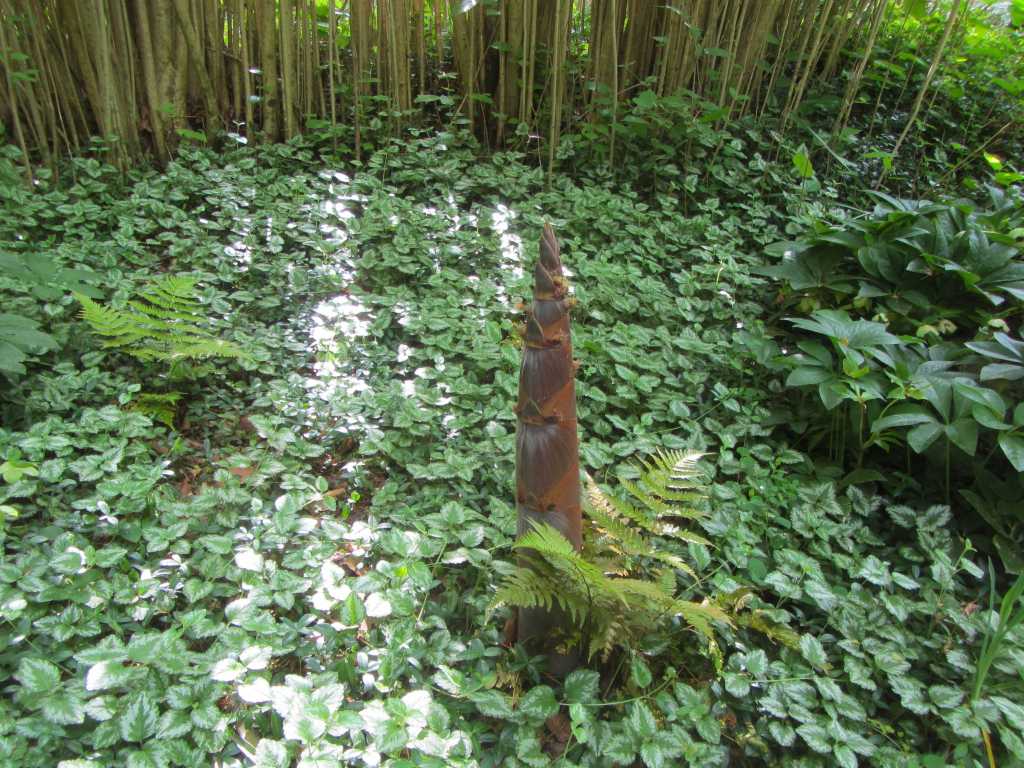
May brings us roses, peonies, Iris, ferns, mayflies and newly emerging bamboo. This year we also have the hum of cicadas. We appreciate the bamboo that grows in the ravine at the back of our home. A visiting Master Gardener friend questioned me about it when she stopped by to pick up some tree seedlings last winter. I could see the skepticism in her eyes as she almost whispered, “Is that bamboo back there?”
“Yes,” I answered her, “and we love it. It gives us a wonderful privacy screen, it shelters flocks of birds, and it was already growing in the RPA when we came here.” Since you can’t remove vegetation from the resource protection areas that protect the watersheds without getting local government approval first, she accepted my answer and the conversation moved on. But bamboo is on Virginia’s ‘invasive species’ list for good reason.
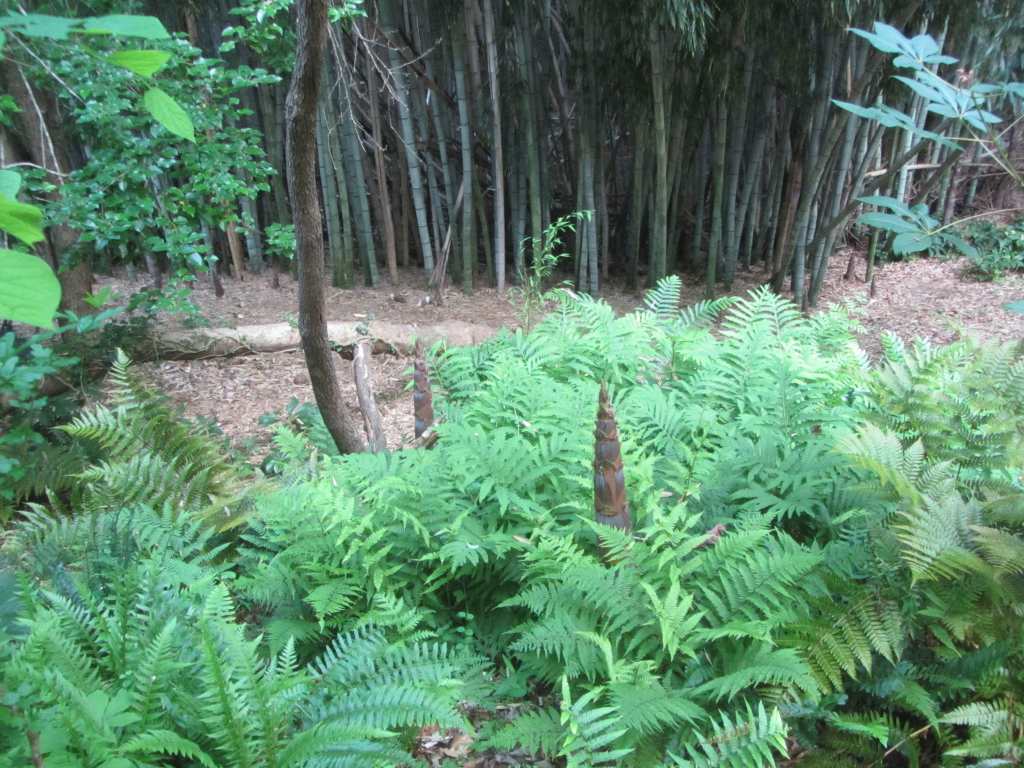
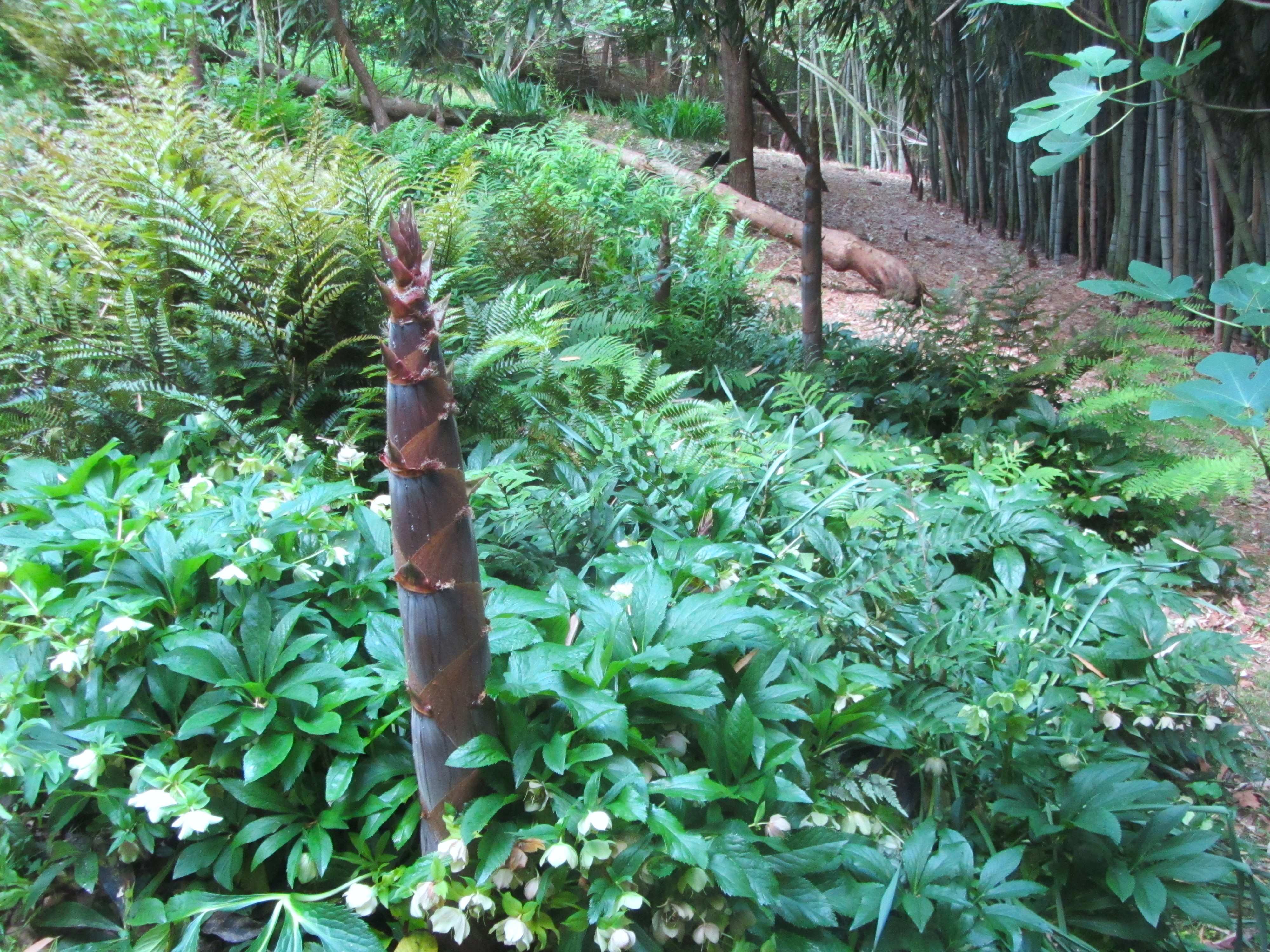
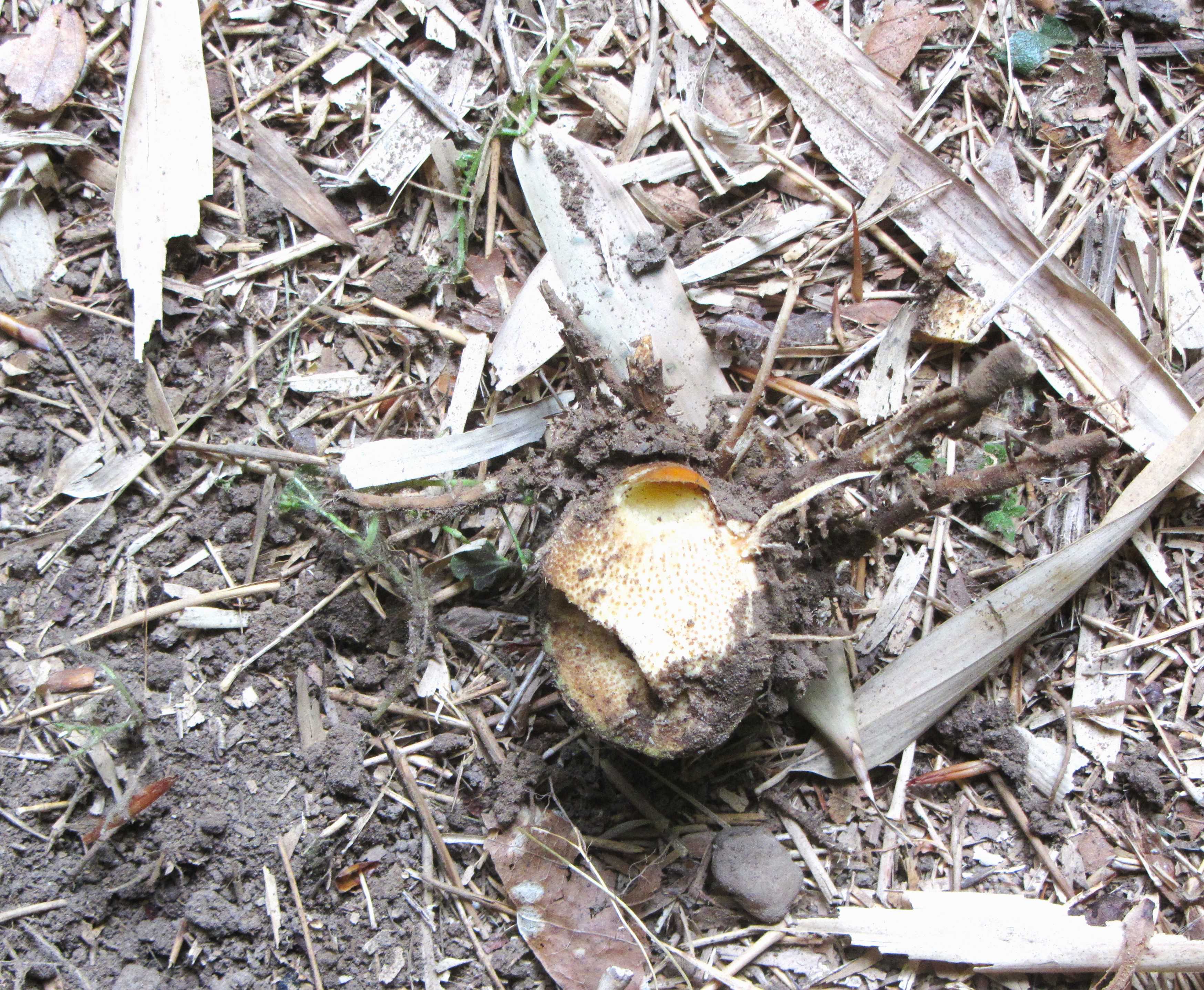
Bamboo is a very large grass, a relic of geological ages long past. And like other grasses, it spreads on rhizomes. These woody rhizomes stretch themselves out, just below the soil’s surface, in search of new real estate for the plant to colonize. We learned about the wandering bamboo during our first May in this garden, and so bamboo hunting is now a part of our spring routine. We try to set limits to only allow those shoots near the bottom edge of our yard to grow to maturity, renewing the stand, while removing those that appear further away, wanting to claim our entire back yard for their kin. We also cut the thick rhizomes and remove a section whenever we find them growing close enough to the surface to see them. The third photo above shows a section of rhizome we removed last week.
We are always amazed at how fast the bamboo grows. We try to hunt for new bamboo shoots daily in early May, but if we get busy and miss a day, we are greeted with huge shoots emerging in very unexpected places! They have emerged closer to our home this year than ever before, having succeeded in climbing the hill that is our back yard.
The shoots are fairly easy to kick over, or knock over with a hammer or shovel, when they are young. And they are edible. I could be putting up jars and jars of bamboo pickle if I wanted or braising them with some noodles. We leave them in the edge of the bamboo grove for the squirrels and rabbits, and the wildlife always cleans them up so nothing goes to waste.
When you think about it, bamboo is one of those plants perfectly suited to clean the air. It filters carbon dioxide and other gasses and pollutants from the air and sequesters them in its enormous canes, roots and rhizomes. It can also absorb pollutants, like any heavy metals, from the soil. It is the perfect plant to guard the watershed which leads to the James River and the Chesapeake Bay. I just read yesterday that the NOAA Global Monitoring Laboratory in Hawaii recorded its highest ever levels of carbon dioxide in the air last week (beginning on 4.28.24), at 427 ppm. That is higher than last year, and over 25 ppm. higher than ten years ago.
Perhaps it is time to embrace vegetation that can help solve our problems with air, soil, and water pollution, and not feel so persnickety about its provenance. Although, I must admit, I don’t necessarily want to allow the bamboo to take over our fern gardens or grow up around our home’s foundation. It is a balance.
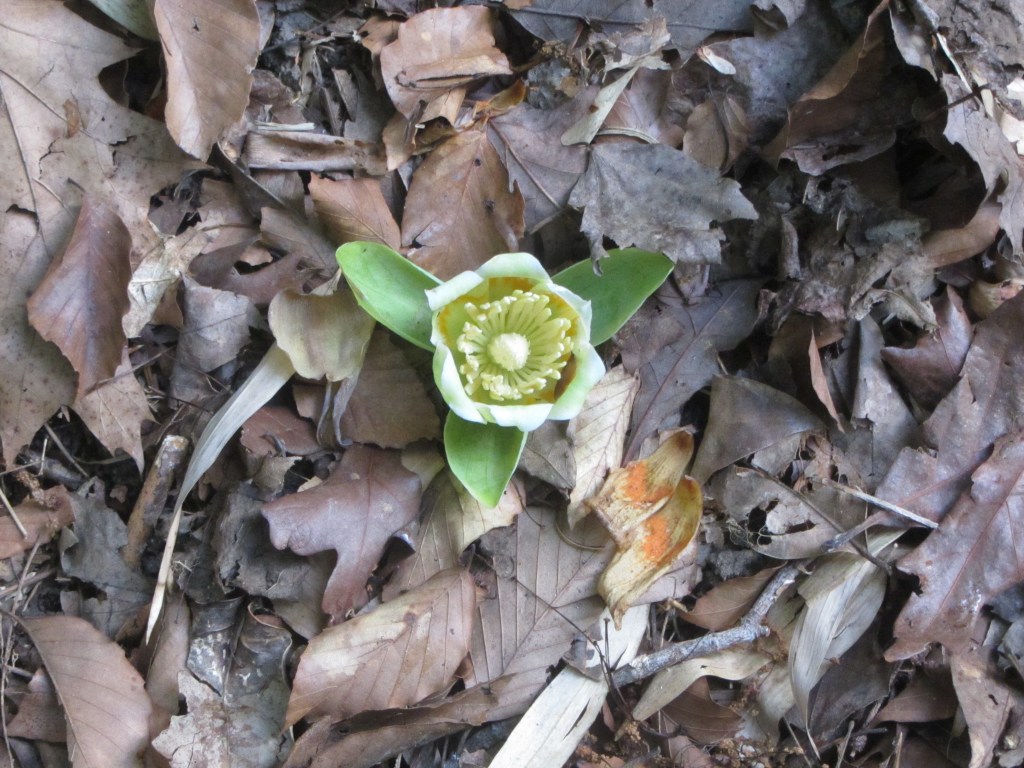
Dr. Doug Tallamy observes that a single native tree that serves wildlife has more value in the ecosystem than the showy ‘native’ perennials we often plant, like milkweed or Echinacea. A single tulip tree is covered in hundreds, maybe thousands of small flowers each May. Hummingbirds, bees, cedar waxwings, and butterflies nectar at these flowers. We rarely see the flowers like this because they grow high up in the tree’s canopy. Normally, we just see the faded petals as they drop, and later the woody seed capsules that drop in fall and winter. But perhaps you recognize, from the flower’s structure, that the Liriodendron is a member of the Magnolia family of trees.
Tulip trees serve as a larval host plant for several species of swallowtail and the Viceroy butterflies. Deer graze their leaves and twigs, and birds and small mammals eat their huge crop of seeds all winter. The tree’s bark has medicinal uses by native Americans and the tree has excellent, strong wood. I find seedlings of this tree everywhere in our yard, and normally remove them. But the several mature trees on the edges of our yard are both beautiful and important to wildlife. These trees can grow to 120′ tall over the years, and their roots run deep, holding them securely in storms and storing lots of carbon underground.
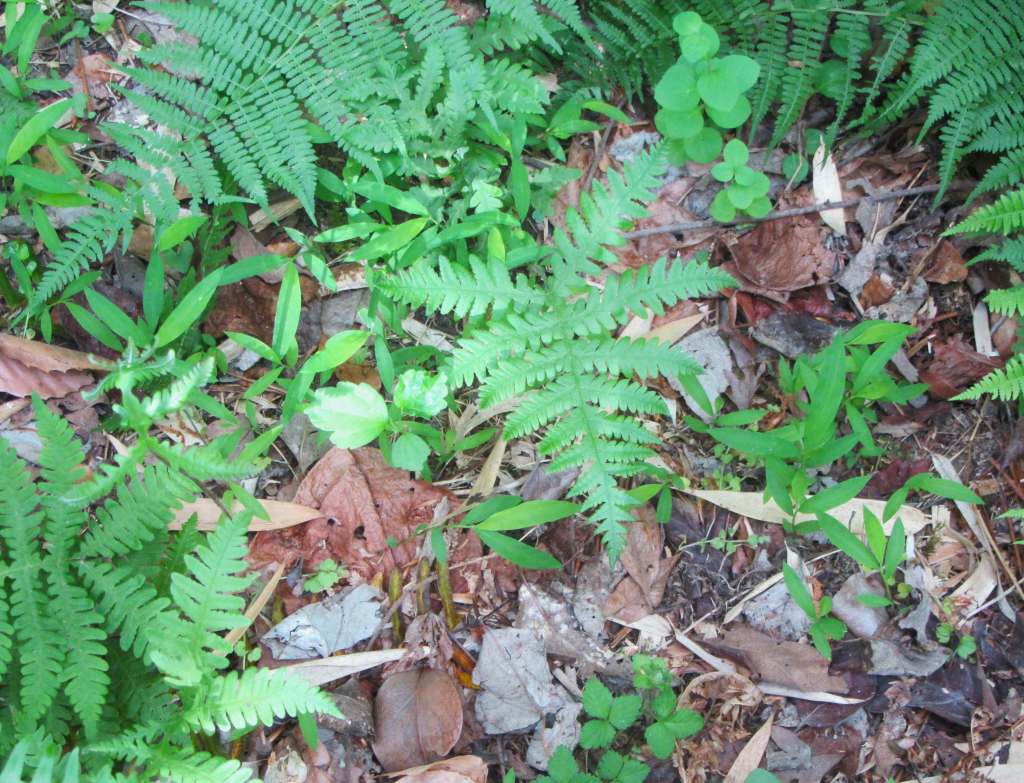
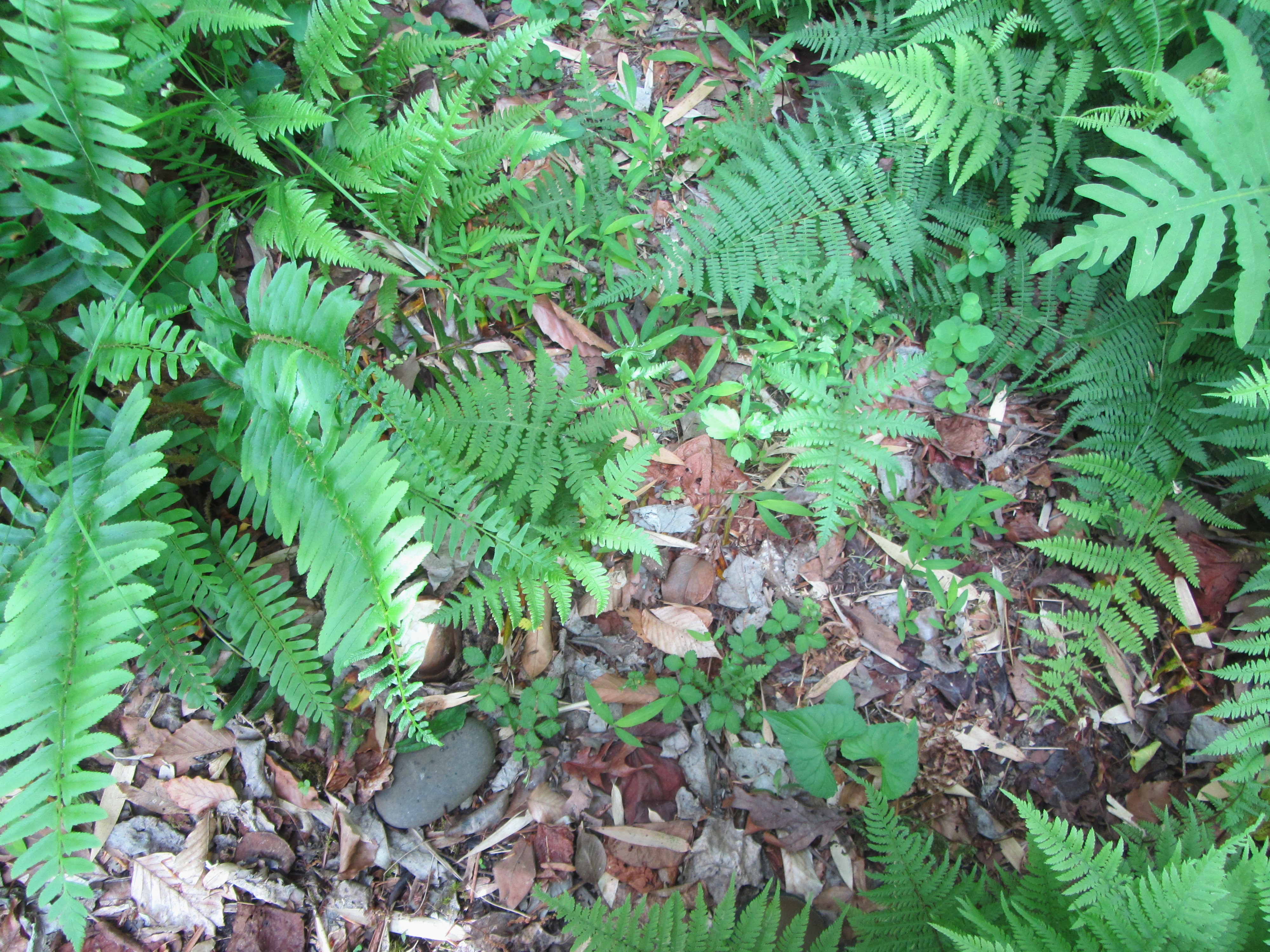
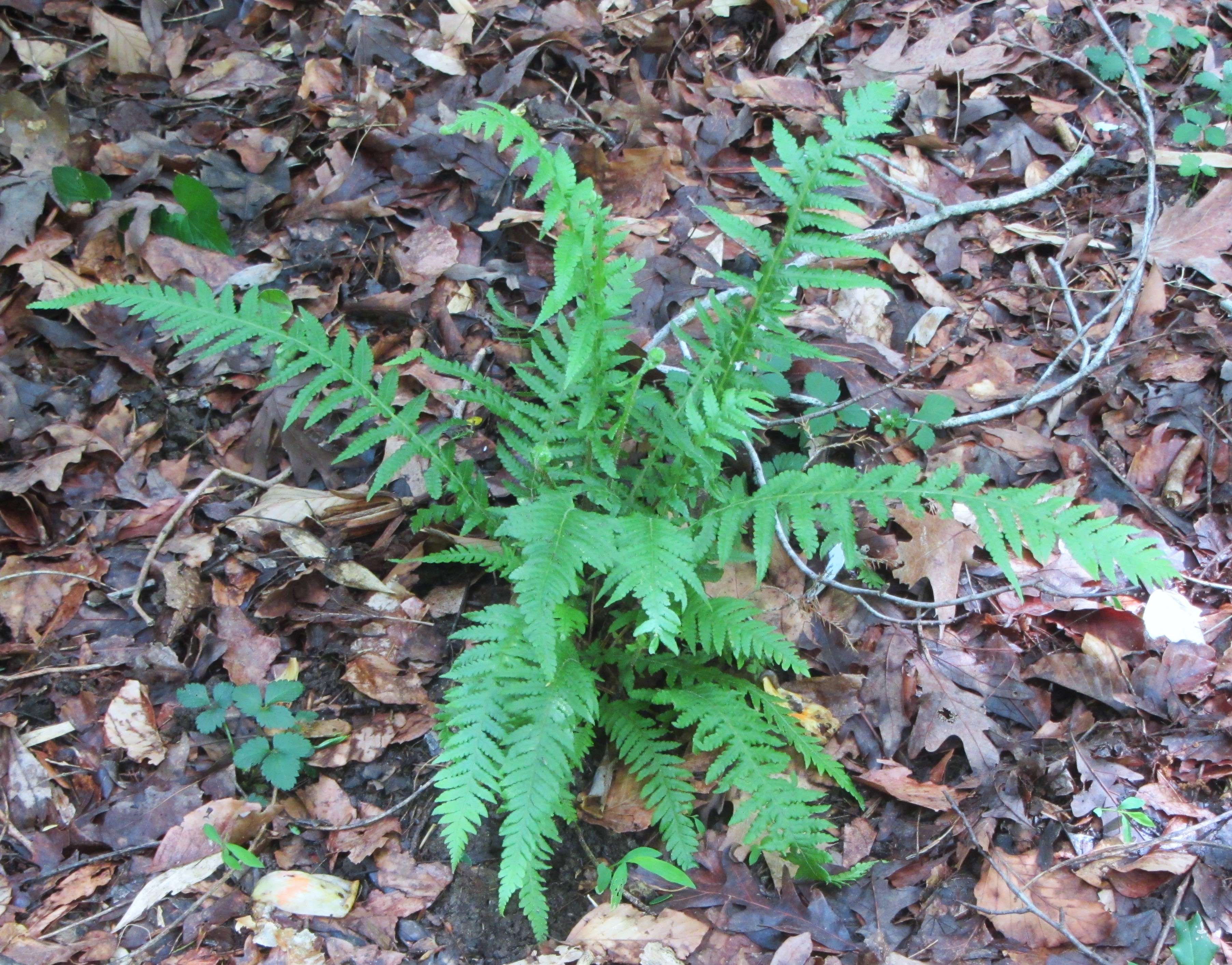
Finding this stand of broad beech fern growing in that large fern garden where the bamboo appeared was a happy surprise this week. This is a native fern in our area, and is rarely offered for sale at local nurseries. I say rarely, but don’t remember ever seeing it for sale at a garden center. I bought Japanese beech fern last spring, the first and only time I saw it offered for sale. It is both taller, and has a thinner frond (3rd photo above). And as you might guess, both of these ferns were named because they are often found growing under beech trees in the wild.
I can only guess that maybe I introduced the broad beech fern years ago when a friend invited me to dig some wild ferns growing on the slope behind here home. I recognized few of the ferns I dug that day by name. Or maybe this fern hitchhiked on some other fern I planted over the years. It was a wonderful surprise to notice its distinctive frond this past week.
Phegopteris spread, like the bamboo, on rhizomes that grow just under the soil. They emerge as single fronds and spread themselves into larger colonies over the years in moist, acidic soil. They can grow in deep shade or dappled sunlight, but are deciduous. So it is easy to forget over winter where they may emerge the following spring. I have established another clump or two of the Japanese beech fern and have more still in a container ready to plant out this spring.
The fern to the left of the frame in the second photo is native Christmas fern, Polystichum acrostichoides, and the fern to the right, with very wide pinnae, is sensitive fern, Onoclea sensibilis. I began planting 2″ plugs of Christmas ferns last spring in a small effort to both underplant our wooded areas with the native fern most often found in our local woods, but also to use an evergreen ground cover fern to sequester carbon. Christmas fern grows to between 2′ and 3′ high when mature, forms a wide clump, and remains evergreen through the winter. It is very long lived and drought tolerant.
I planted two trays of plugs last spring, and asked our friends at Homestead Garden Center to order two more trays this spring when they came available. I’ve been waiting since the first ferns came into stock in late February, and the staff kept telling me that they were trying, but the supplier didn’t have the plugs ready to sell. I finally gave up some time in mid-April, certain that the ferns just weren’t available. And so I bought other ferns- lots of other ferns…. and have been planting larger ferns of various species, but not the native Christmas ferns I had wanted to use because they simply weren’t available in any size smaller than a 1 gal. pot.
And so it was a total surprise, and a bit of a shock, to be presented with two trays of Christmas ferns in 2″ plugs when we stopped by the garden center on Thursday. Our friends came through for us, and I appreciate it very much. But, now of course, I’ve got to find spaces for them all! Some will replace ferns I planted last year that didn’t survive the summer drought and thirsty wildlife that uprooted them. It will be interesting to locate good spots for this new batch, where I am more confident that they will survive.
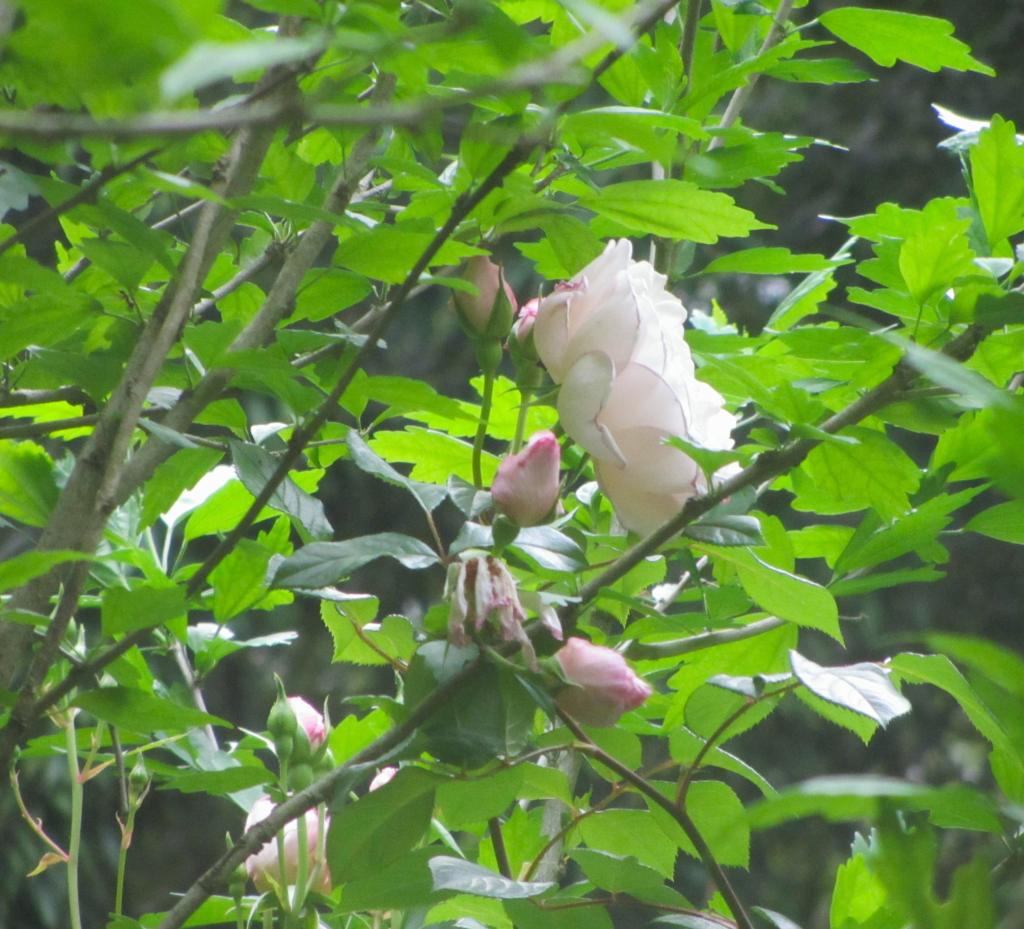
It is Mother’s Day weekend in the US, and so we will end today with roses and peonies and a wish for happiness and good health to all who have mothers, who love their mothers, who are mothers, or who want to be mothers. Does that cover the spectrum? Roses and peonies are the special flowers for celebrating Mother’s Day and I love them both.
These climbing roses are visible from my kitchen window, so I can enjoy them even thought they are growing up through shrubs in the back garden. Of the many roses I’ve planted in this garden ‘The Generous Gardener’ is a true survivor, probably because it grows up beyond the reach of the deer.
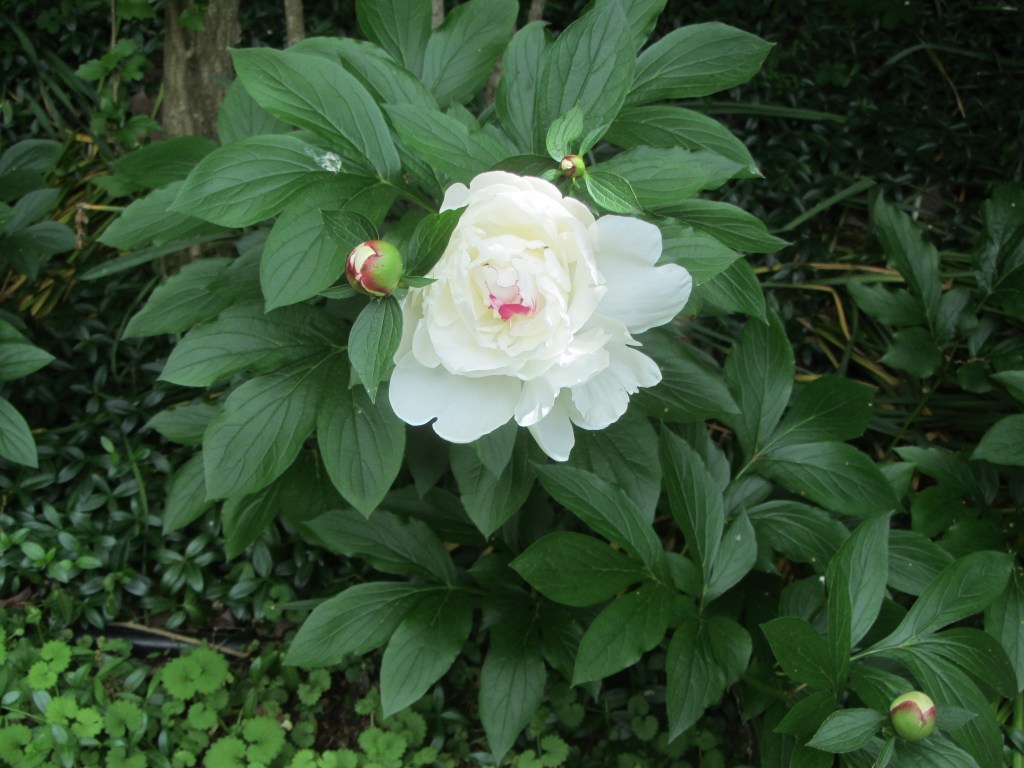
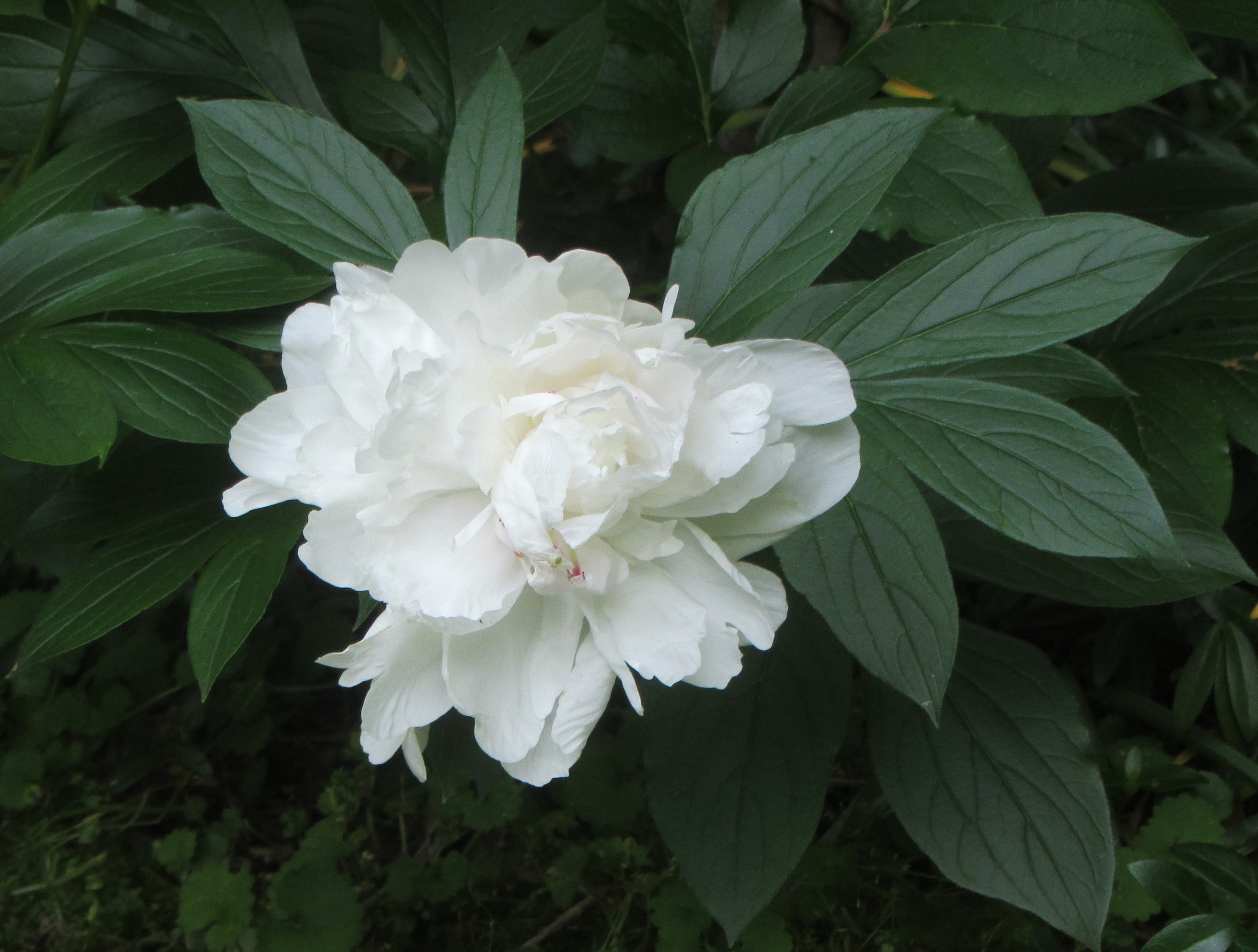
The peonies were already growing here when we arrived, and surprise us with their beauty each spring. They are very persistent and long-lived, even though they are now in a bit too much shade as the shrubs have grown behind them. A neighbor gave me peony divisions a few years ago and I have them growing in a bit more sun in other areas, but they aren’t yet in bloom.
I have been reading about peonies this week as I prepare to write an article about them later today to post tomorrow on the MG website. And I have learned a bit about their history and medicinal uses that I didn’t know. The research has reminded me how much I enjoy these elegant flowers.
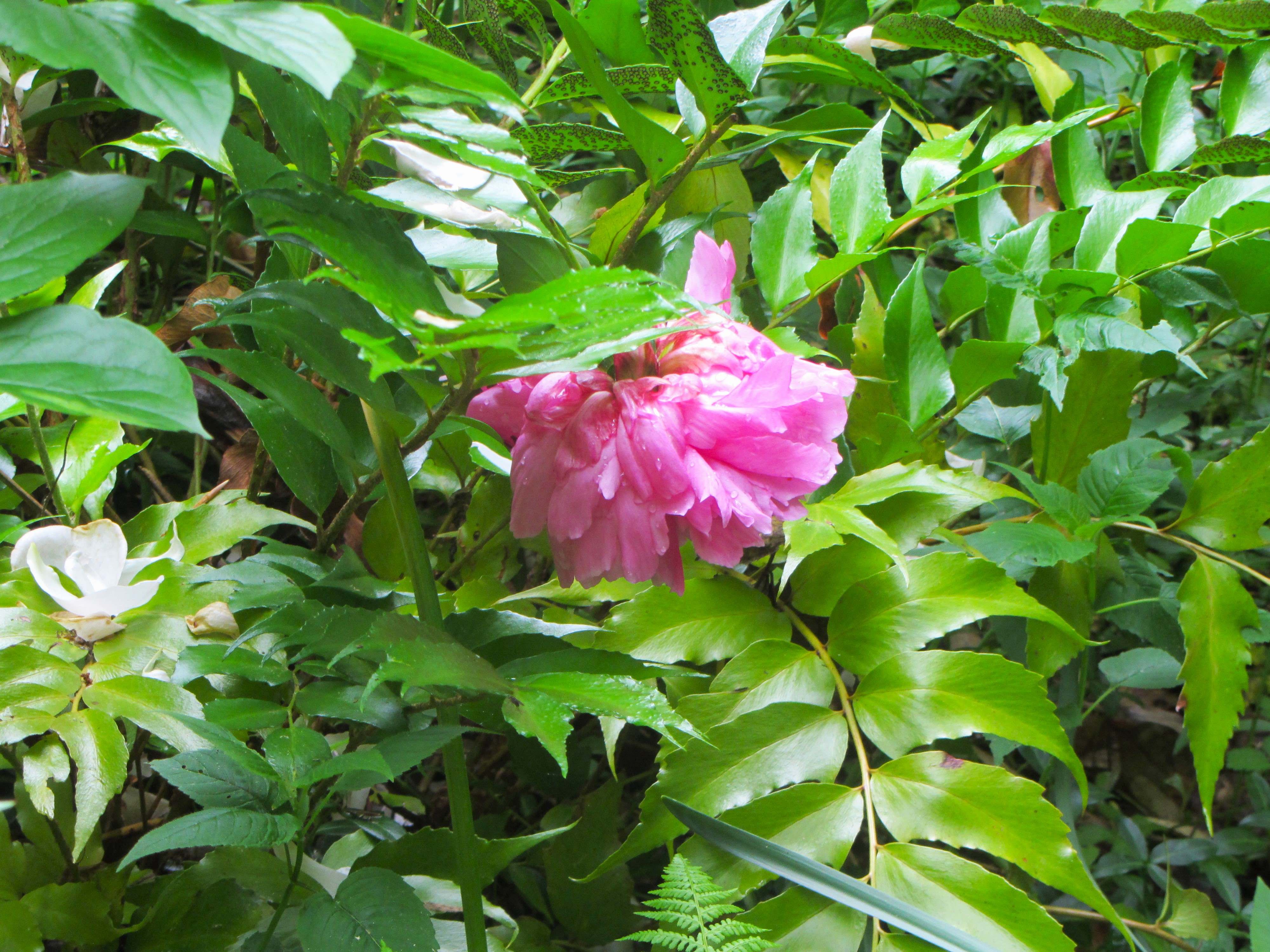
Our rain this week, much needed and much appreciated, has knocked down the peonies in bloom, which once again I forgot to stake as they emerged. But I learned that peony petals are not only edible, but a delicacy in Japan. One can gather those fallen petals when the blossom falls apart, steam them, and enjoy eating them. Perhaps with a bit of bamboo on the side?
Just like caring for a young child, our gardens require our vigilance to grow and succeed. Otherwise, who can know what mischief will emerge right when we least expect it?
With appreciation to Jim Stephens of Garden Ruminations, who
hosts Six on Saturday each week.

 Our Forest Garden
peonies are one of my favourite plants although I’ve not tried to grow them here as it’s too windy!
LikeLiked by 1 person
Oh, . . . bamboo. Brent had a . . . unique experience with his.
LikeLiked by 1 person
Bamboo is aggressive. I have seen a shoot come up on the other side of an unpaved road from the bamboo stand. It can also be a health problem. A friend was “stabbed” by one he was cutting down. The wound abscessed and required some surgery to remove remnants.
LikeLiked by 1 person
Very sorry to hear about that. I hope your friend is fully recovered now. They are definitely sharp, particularly as they age and dry out. We try to take care of them when they are young and soft, but one must still deal with the older canes when they are damaged in storms. Yes, definitely a safety issue! Thank you for the reminder.
LikeLike
My most spreading bamboo (phyllostachys nigra) is potted to prevent it from growing everywhere. But the new shoots and stems are about the size of my finger. Yours looks bigger!
LikeLiked by 1 person
Bamboo is something else! giant lumber bamboo sounds scary! I don’t know that it would grow here, and I don’t want to find out!
LikeLiked by 1 person
You could definitely build something substantial with these canes! It grows visibly by the hour, probably more so since we have had some nice rain in recent days. It gives us lots of cool shade in the back. ❤ ❤ ❤
LikeLiked by 1 person
I bet! It would be amazing to see in its natural habitat, as a forest! Perhaps complete with pandas!
LikeLiked by 1 person
I agree! We would love to watch the pandas in the bamboo. As it is, we have deer wandering through the bamboo grove behind us 😉
LikeLike