This week has been pretty good for gardens, but not so good for gardeners in Eastern Virginia lately. We have finally gotten the rain we so desperately needed. And after we made up for June’s drought and caught up with what we needed for July, it kept on raining. I love listening to the rain and knowing that the soil is moist and the plants are happy. But humidity levels here have bounced around between 80% and 100% most of the week. Between thunderstorms and cloudbursts, saturated soil and dripping branches, I have found excuses to mostly stay indoors for much of the past two weeks.
The extra time indoors allowed me to invest some time in researching a Japanese method for growing a mature, ‘climax community’ old growth type of forest in a few decades instead of a few centuries. No, the trees don’t age any faster, but they grow more quickly and without competition from plants that arise earlier in the natural succession of the site. When I first heard about the Miyawaki method for growing forests on The Weather Channel earlier this month, I immediately began looking for more information.

One thing led to another, and I published two articles last weekend about how to plant a tiny forest. The first article explains the Miyawaki method and how to adapt it to our region. Part 2, the second one, lists native trees recommended for our area to use in a project of this type. I was deeply involved in working on those articles when it was time to post a Six on Saturday last week. Since I didn’t have many photos from last week to share, I kept my focus on the tiny forest articles.
You may find the first article interesting because it begins with a look at what happened to our yard 11 years ago that started me on this path of growing trees and writing about the progress of our garden. My response to the ‘catastrophe’ was to sit indoors and start my first Forest Garden website while the arborists ground up our lost trees. There is also a little history of our area and an explanation for why all of our forests in this region are fairly young.
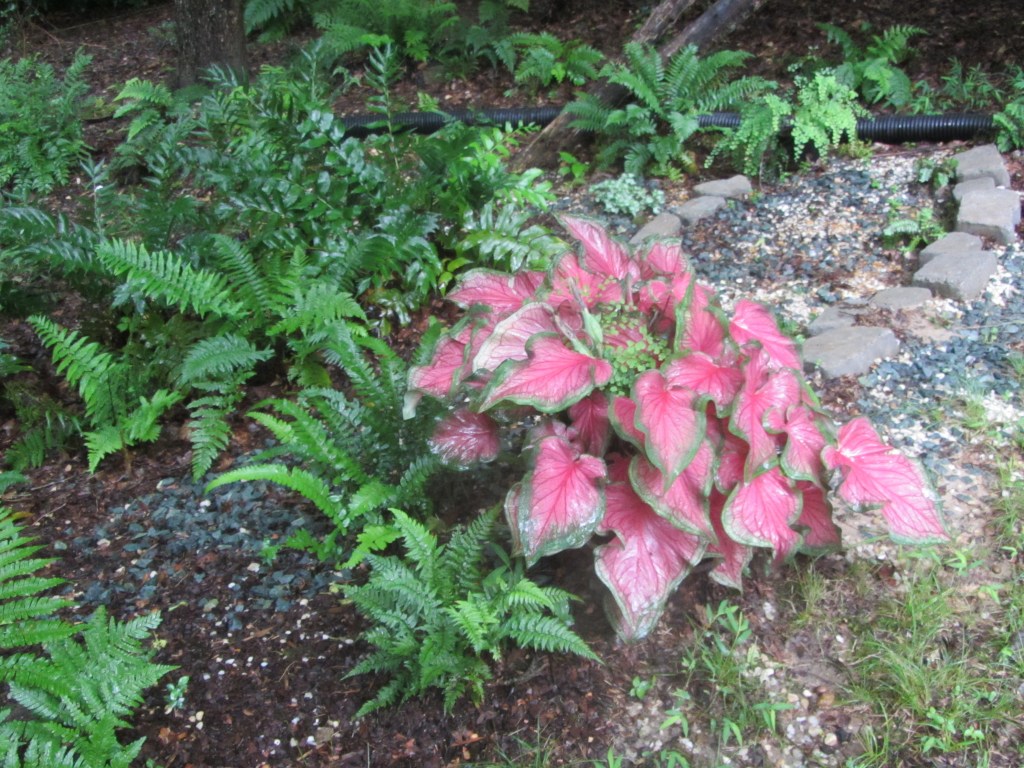
The land where our neighborhood sits has older trees than many areas because as far as we can tell, it was never used for agriculture. The owners of this piece of land did little with it, other than some logging nearly a century ago now. The developers intentionally kept as many trees as possible as homes were built beginning in the mid 1960s. We are very fortunate.

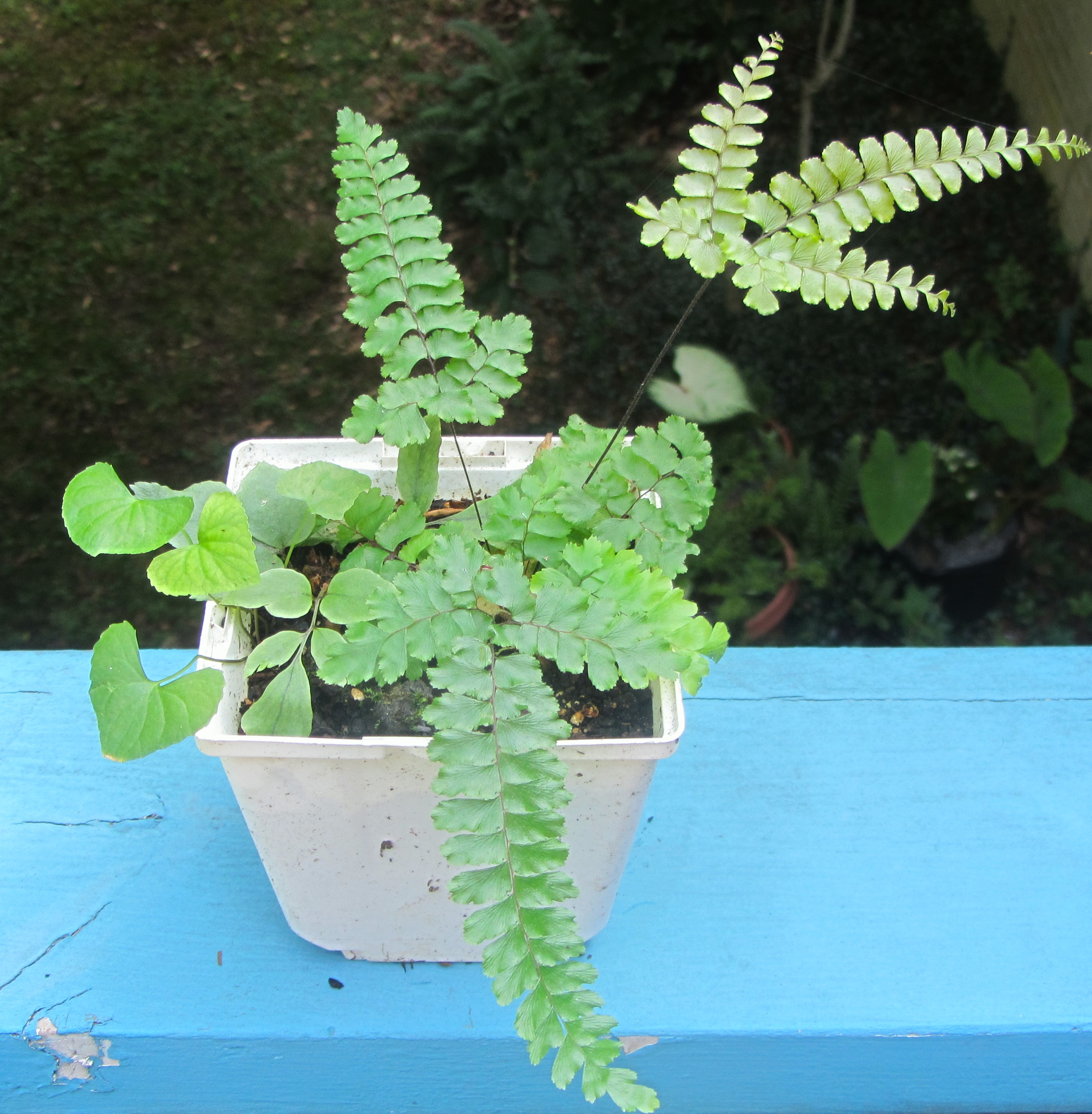
Some more of the first ferns that I began from spores in 2022 are now maturing enough to pot them up and enjoy them. I believe that this is a rosy maidenhair fern, Adiantum hispidulum. It is supposed to be hardy in Zones 8-11. We are now designated Zone 8, although we had a few very cold spells these last two winters. I overwintered the mother maidenhair fern indoors with a cane Begonia, and this sporeling remained outside in a very sheltered location. This maidenhair, just moved up from a nursery pot to something prettier, is doing much better than the parent fern. It will be a hard choice to decide where to keep this one this coming winter.
I have lots of baby sporelings coming along. Some are getting a little too tall for the shallow containers where I sowed their spores, but aren’t quite grown enough yet to move them up to pots. I have lost a lot of sporelings by potting them up too soon. So I spent some time this week figuring out ways to give them more space to grow. A few went into a nice, lidded clear cracker container which I saved from the trash. Others got a new canopy of cling wrap supported by toothpicks. All of the ferns are coming along very happily in this damp, cloudy weather.
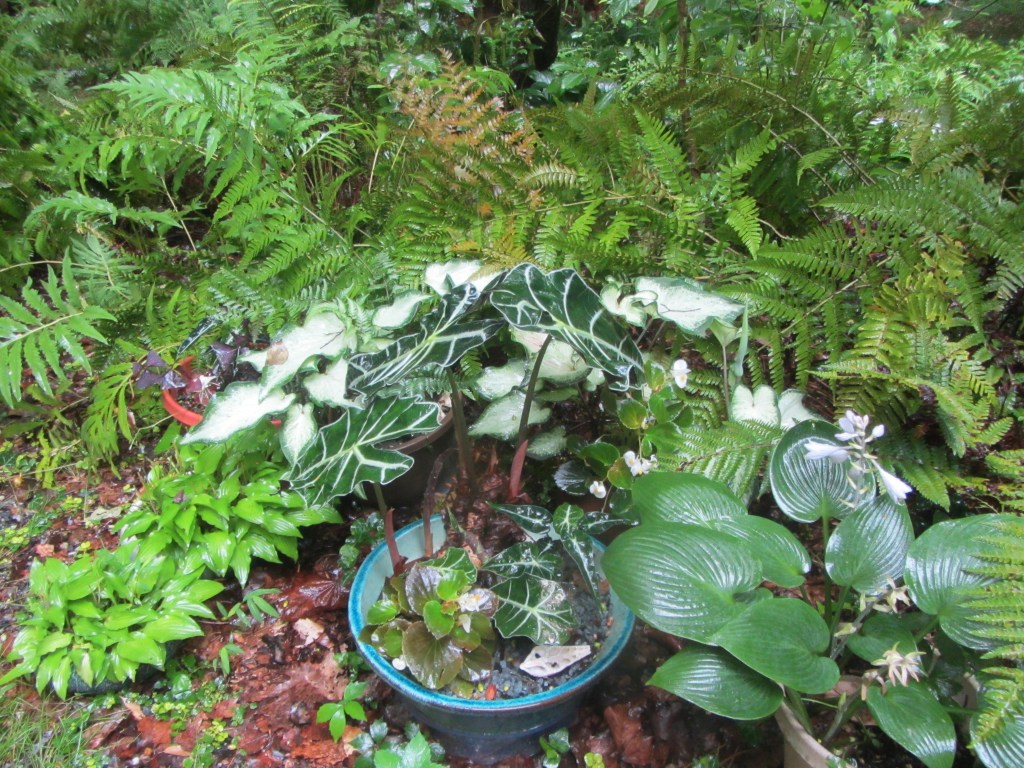
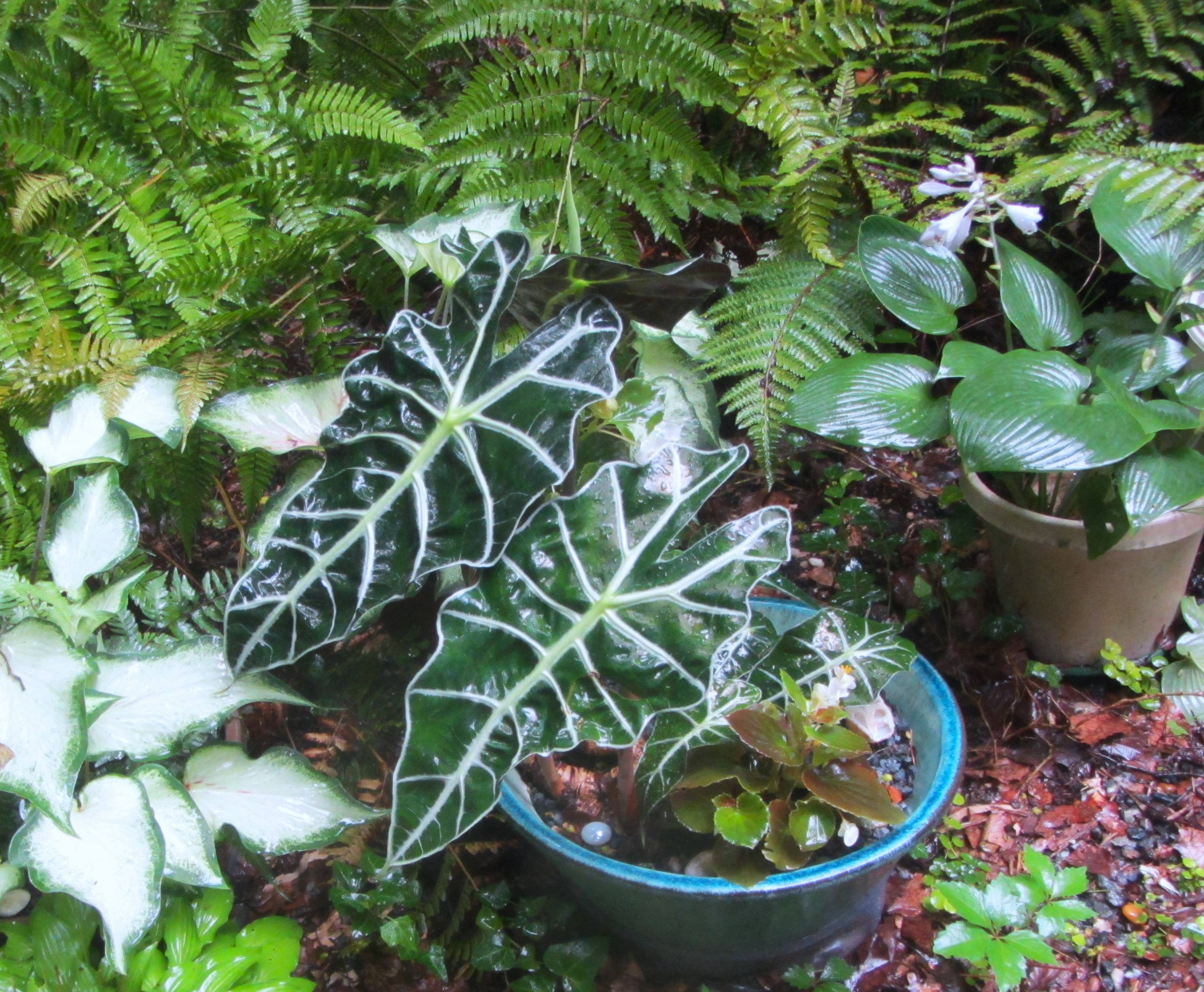
You may remember the Asclepias covered in caterpillars from earlier this month. It was nibbled down to just its stems, and I found a chrysalis or two. I’m happy to share that new leaves are sprouting and all of the cats have dispersed. The follow-up photos aren’t very pretty, so I’ll leave it to your imagination how the cats plumped up as the poor plant grew more ragged.
We have a family of bunnies helping mow the grass every day now, and a family of deer, with two tiny fawns, finding shelter in our yard. They pulled three beautiful, blooming Portulacas out of a strawberry pot on Wednesday and left what they didn’t eat lying on the patio. The deer were nearly to the front door when I spotted them grazing on the potted collection. The rescued Portulacas are re-potted and moved to the deck, out of reach, just like the others grazed earlier in July. The deer have grazed and damaged so many plants this summer, more than usual, but I still find it hard to get angry at baby deer and their mother. It has been too wet to apply repellents.
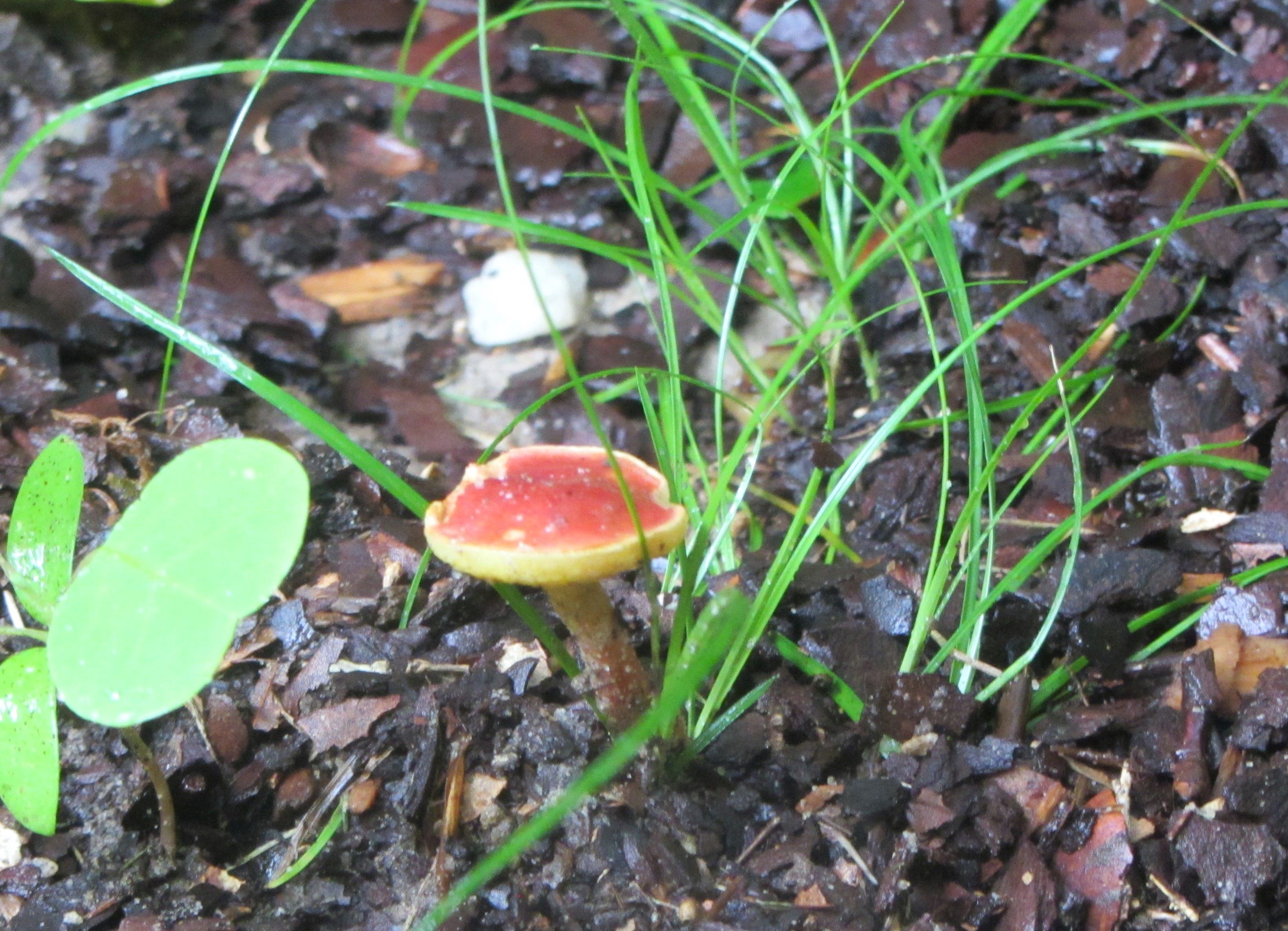
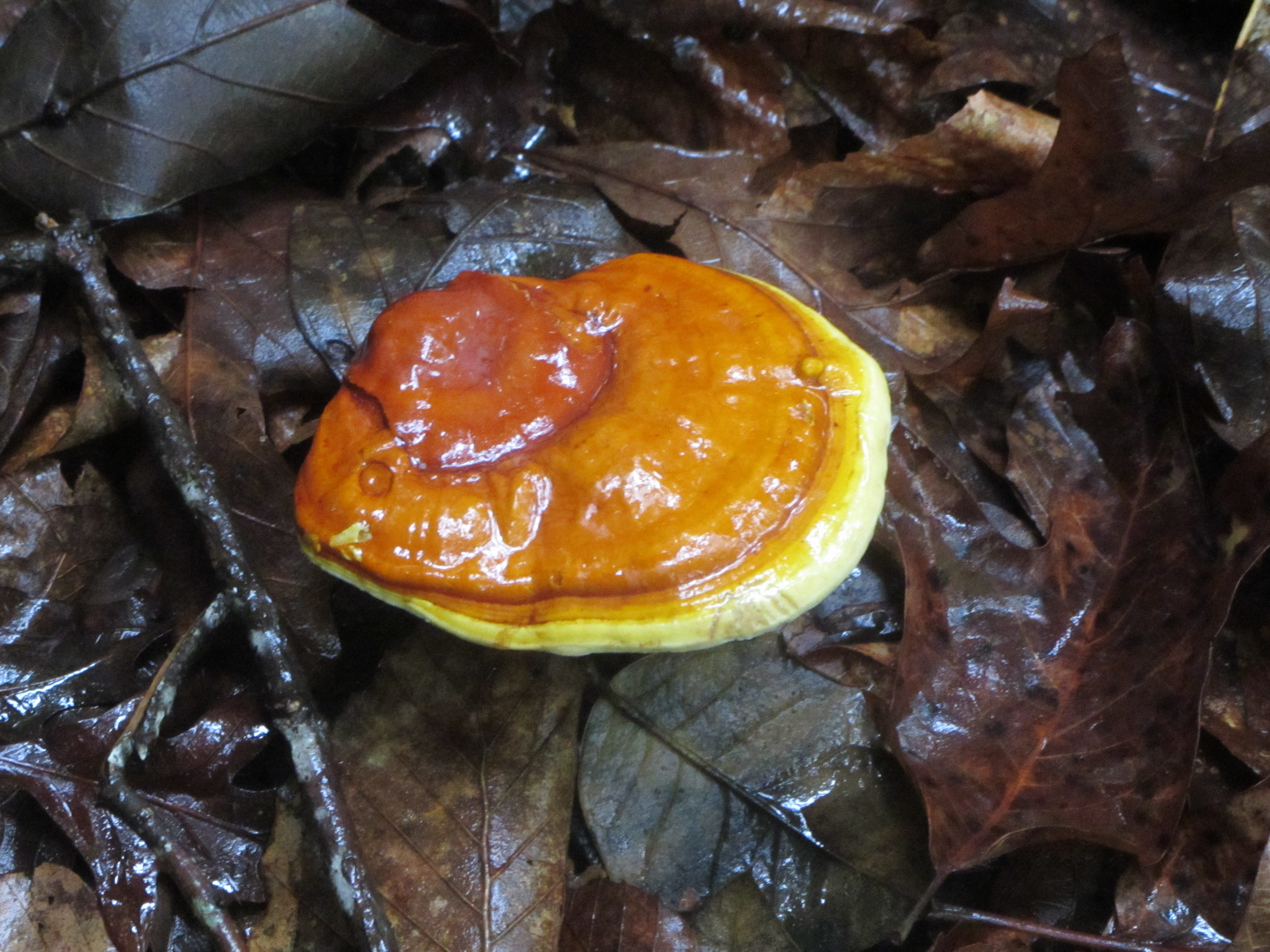
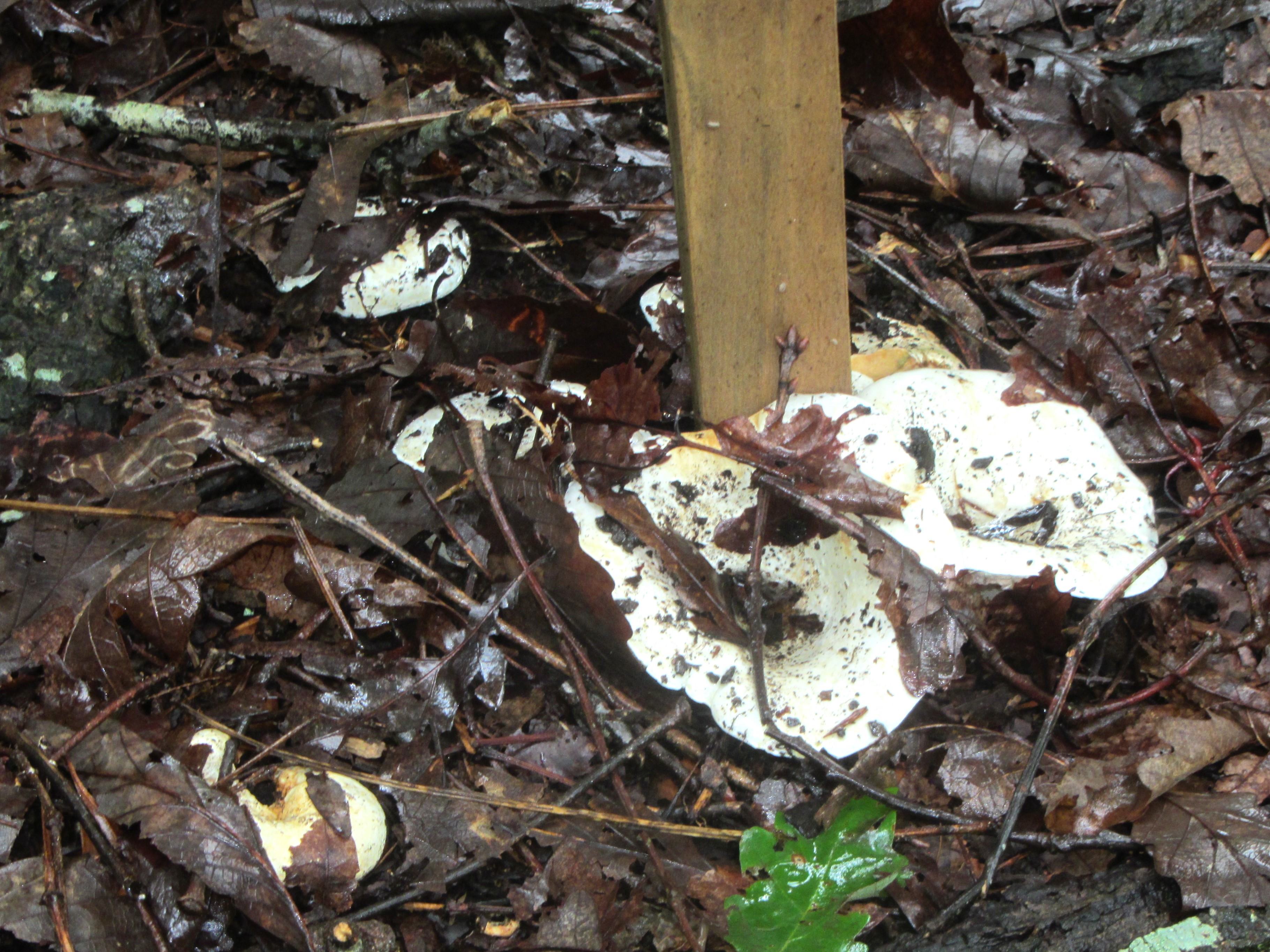
And finally, it is wet enough in the garden for mushrooms, the fruiting bodies of mycelium, to emerge. My partner told me that he watched a baby box turtle eating something white on Thursday morning. He was watching from the window and couldn’t quite see what the turtle was eating. When I went out to investigate later, I found a mostly nibbled white mushroom stem.
I have begun working on a new article about the importance of mycorrhizal fungi to plant growth, good soil, and to all the various chemical processes that keep the elements on our planet recycled and available for growth. The fungi not only break down old wood and leaves, but mushrooms feed turtles, squirrels, and many other animals.
The mushroom photos below were taken while it was raining on Thursday morning. I noticed huge crops of mushrooms by the roadside earlier today. The fungal networks are responding to our rain this month and taking the opportunity to grow and reproduce. All in all, it is a good place to be as we look forward to August. And, with a break in the rain this weekend, I expect to be back outside and enjoying time in the garden again tomorrow.



With appreciation to Jim Stephens of Garden Ruminations, who
hosts Six on Saturday each week.

 Our Forest Garden
Living alongside nature is a wonderful challenge. I’m sure that I don’t appreciate it as much as I should when the badger destroys my plants, the magpies, pick off flowers, just for fun it seems, and the pigeons eat all my cabbages.
LikeLiked by 1 person
You have me giggling at that. We never have worries with badgers or magpies and the pigeons seem rather tame. But yes, a challenge and a test of one’s patience. Have a wonderful week ❤ ❤ ❤
LikeLiked by 1 person
Wow! I have never had enough monarch caterpillars to decimate their home plant! Wow! I just found my second of the season, which is exciting. And an egg, so perhaps there will be another soon.
LikeLiked by 1 person
Is crape myrtle naturalized there, or do they just occasionally grow from seed? I have never seen one grow from seed, although I suspect that one that came from the Arbor Day Foundation was grown from seed in a nursery. None of ours have bloomed yet, which is odd for those with good exposure. (The first crape myrtle is too shaded to bloom well now.)
LikeLiked by 1 person
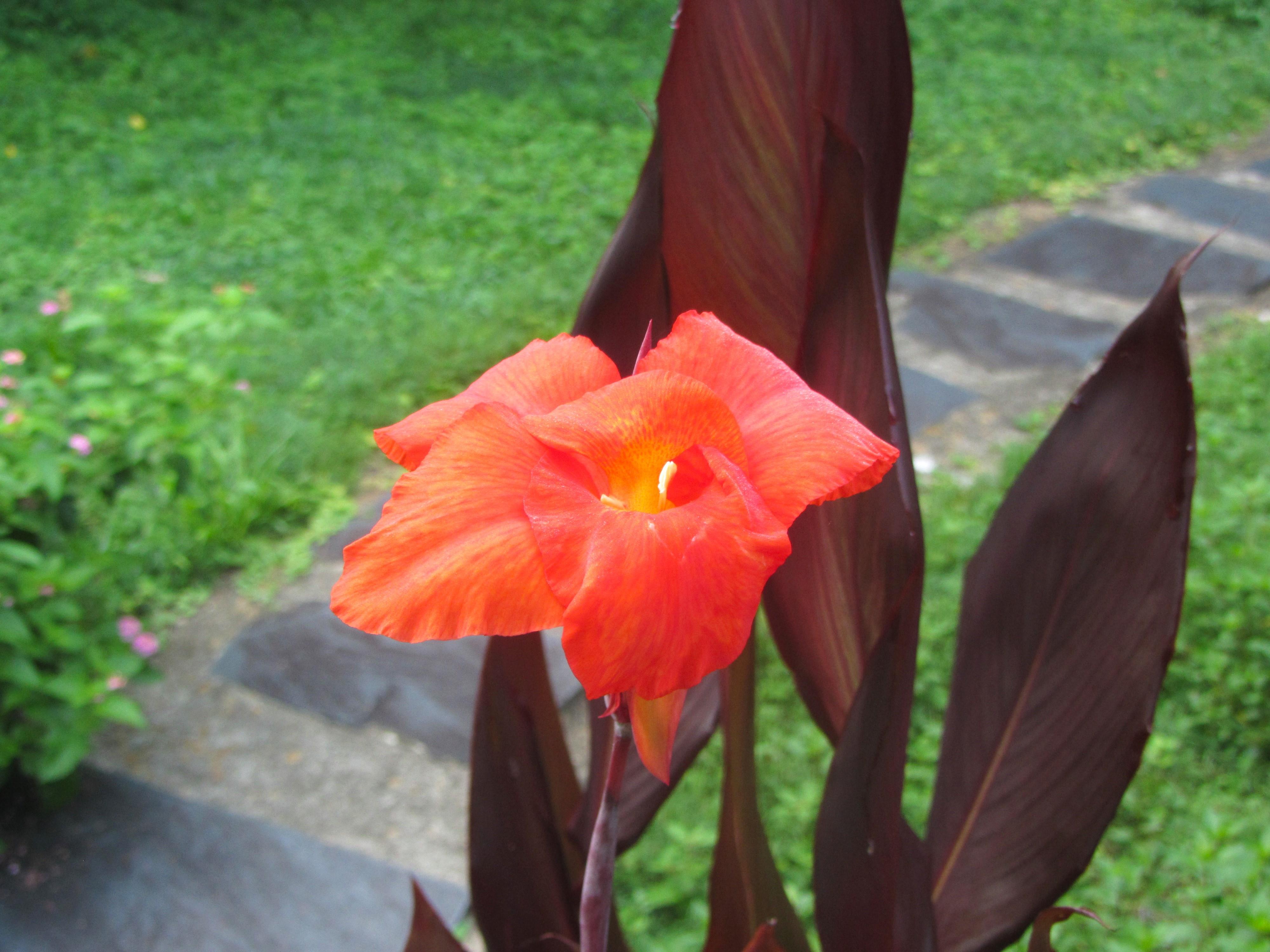
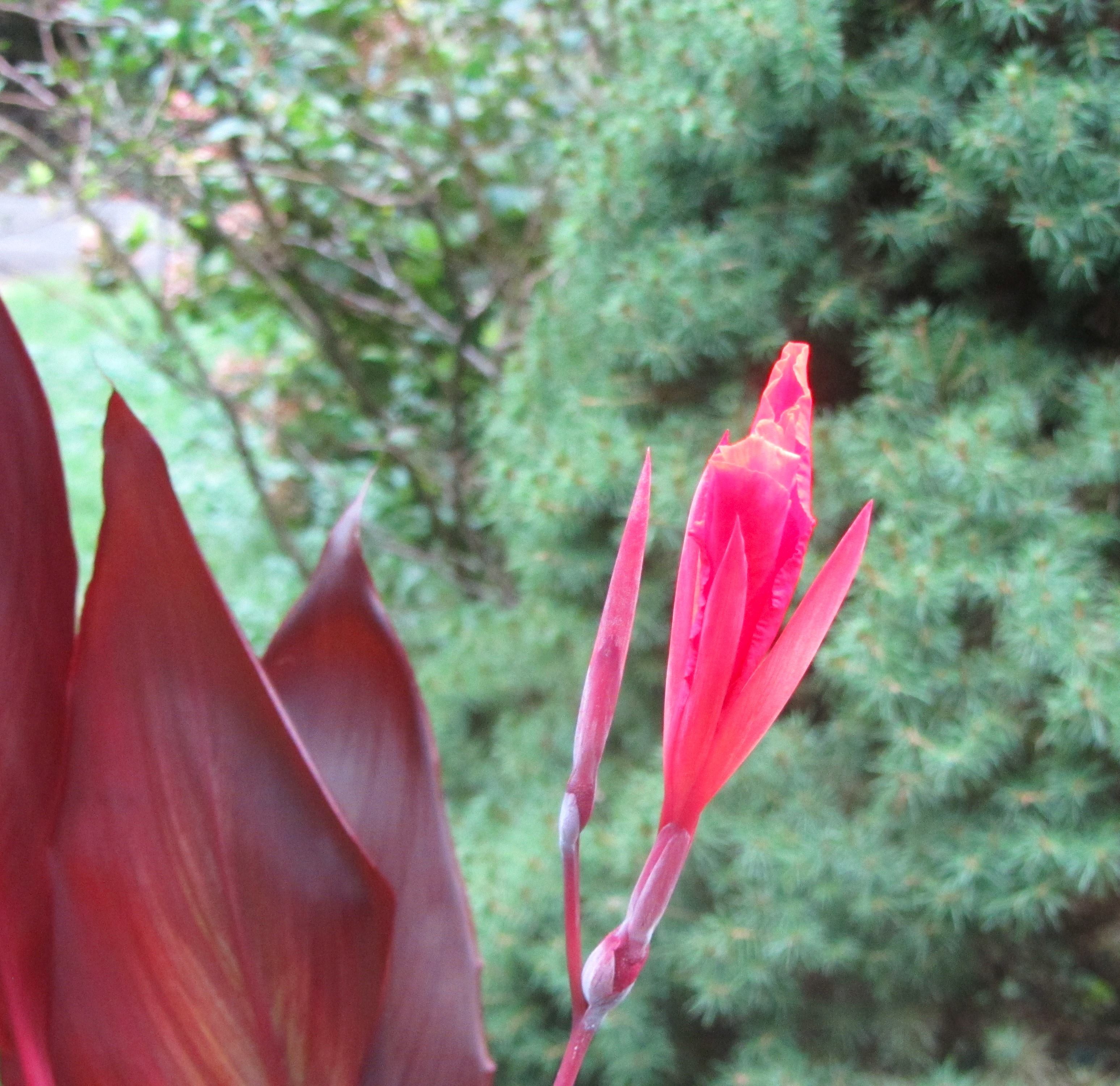
Hi Tony, Yes, crape myrtle reseeds here, particularly a sturdy white variety. They are easy to start from seed and from softwood cuttings. Ours are pretty late to bloom this year. I have several trees that still don’t have any flowers. The weird weather has messed up bloom for a lot of our dependable plants here. But, the first photo on my six is one of the Cannas you sent to me. I noticed yesterday that the caption crediting you with that plant disappeared when I added a photo of the flower fully open. We are really enjoying it, and so are the dragonflies. We have a bevvy of dragonflies competing for the privilege of perching on the uppermost tip of an unopened bud, waiting for its chance to hunt.
LikeLiked by 1 person
Splendid! That ‘Australia’ Canna has really gotten around.
LikeLiked by 1 person
It was absolutely gorgeous, with several blooms on Friday. We had a gust front blow through here with damaging winds on Friday evening and it blew the tallest canes right over. We lost the flowers, but I have propped up one of the canes and put the other in a vase to enjoy indoors. I am sure new canes, and flowers, will emerge soon. We are enjoying it so much! The other Cannas are growing well, but haven’t yet bloomed. We keep watching for them!
LikeLiked by 1 person
Cannas are not such great cut flowers, but sometimes, they do not leave us much choice.
LikeLiked by 1 person