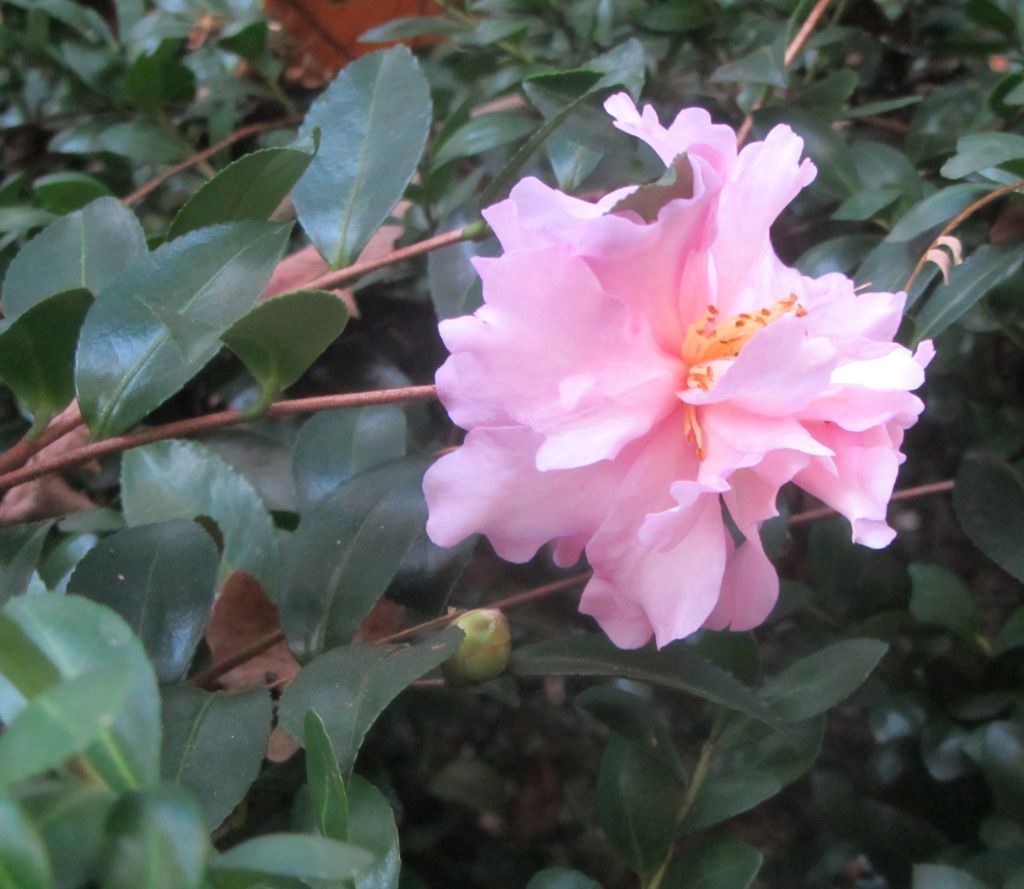
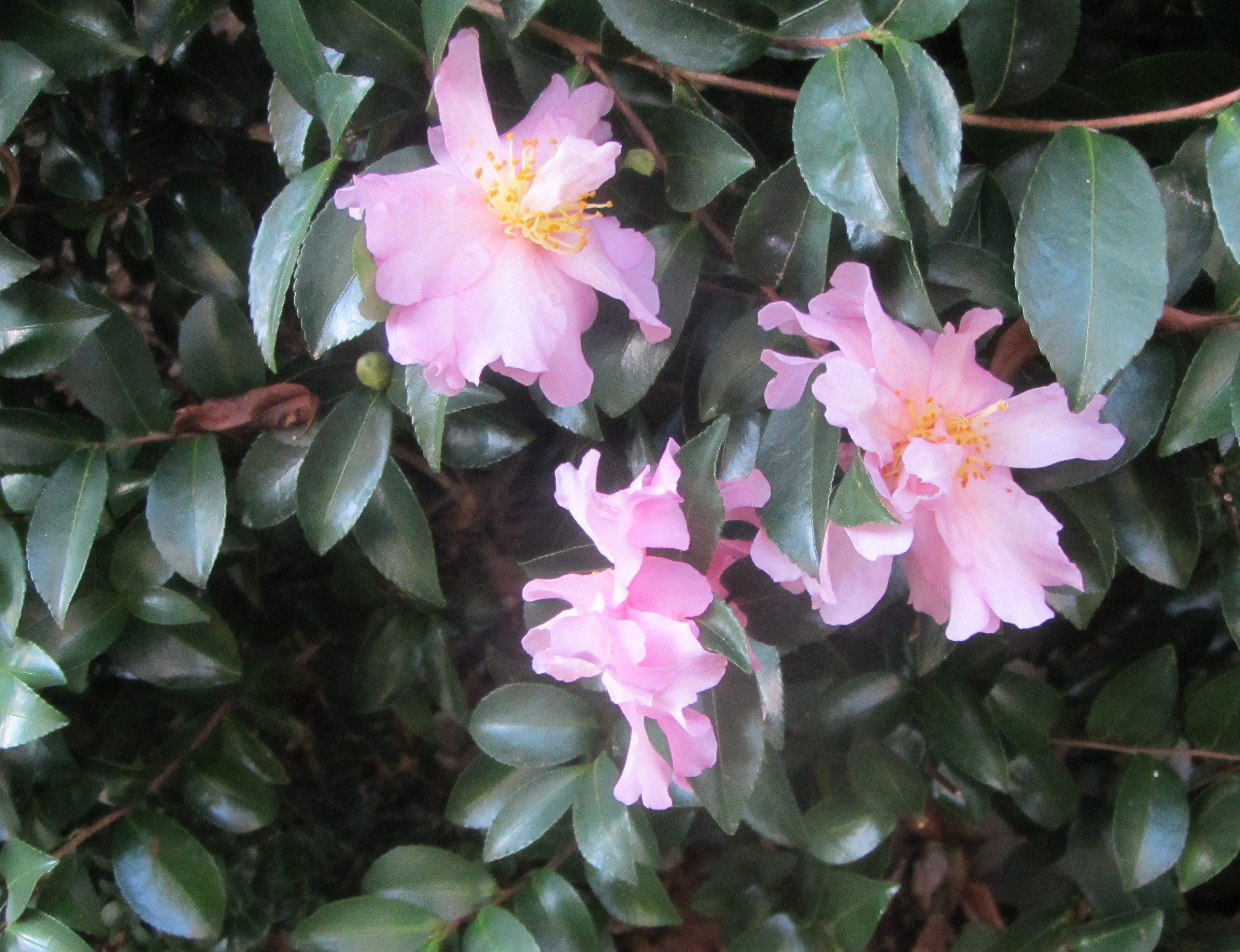
These frilly pink Camellias bloom on the edge of the garden facing the street. They were a lovely surprise earlier this week when we found two shrubs covered with them. Older now, and much larger than when we planted them a decade ago, the shrubs grow right up to the pavement and so are subject to frequent trimming back by my partner, who is fastidious about these things. Even so, they are covered with flowers this week, and such a joy when everything else remains dry.
We were forecast to have rain late on Thursday night. If any fell here, and I didn’t hear it or see it Friday morning, it was measured in hundredths of an inch and evaporated before dawn. I can’t remember when the ground has felt so rock hard, even in areas where I’ve been watering from time to time.
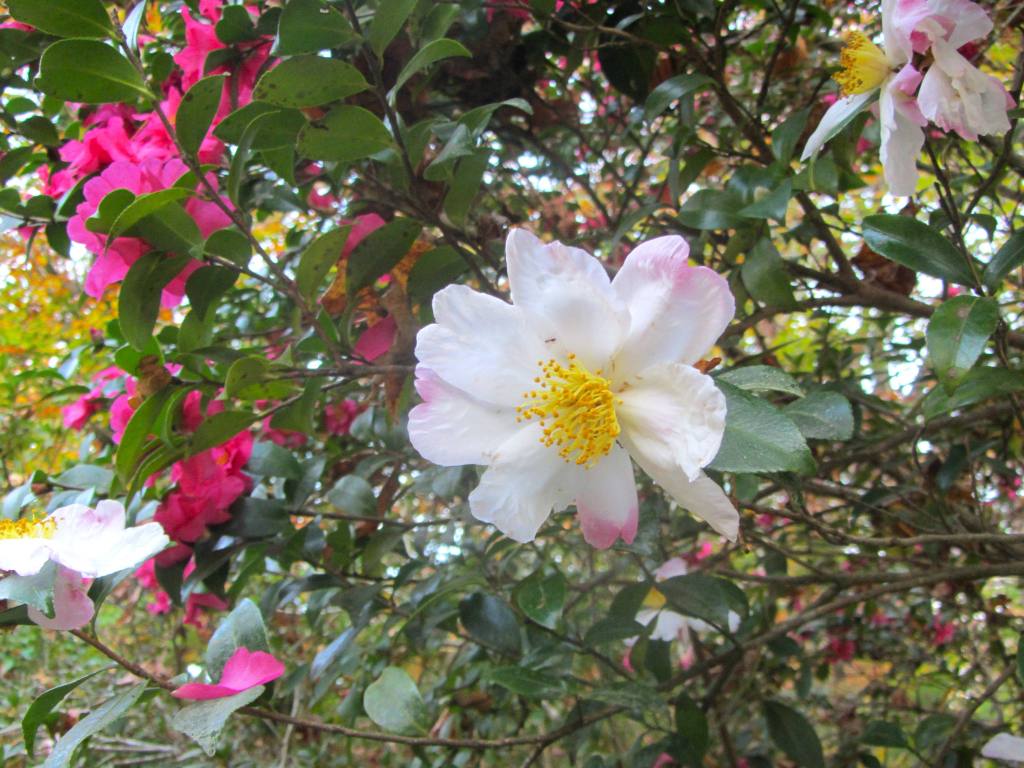
Leaves falling in the breeze today were so brittle I could hear little ‘chink, chink’ sounds as they chimed against one another and against the ground as they landed. I don’t recall ever hearing falling leaves sounding like sleet or hail. But it is so dry now that watering with a hose makes little difference, except for containers. But still, the Camellias bloom on with determination and grace. Ants and little bees find moisture here, at least.
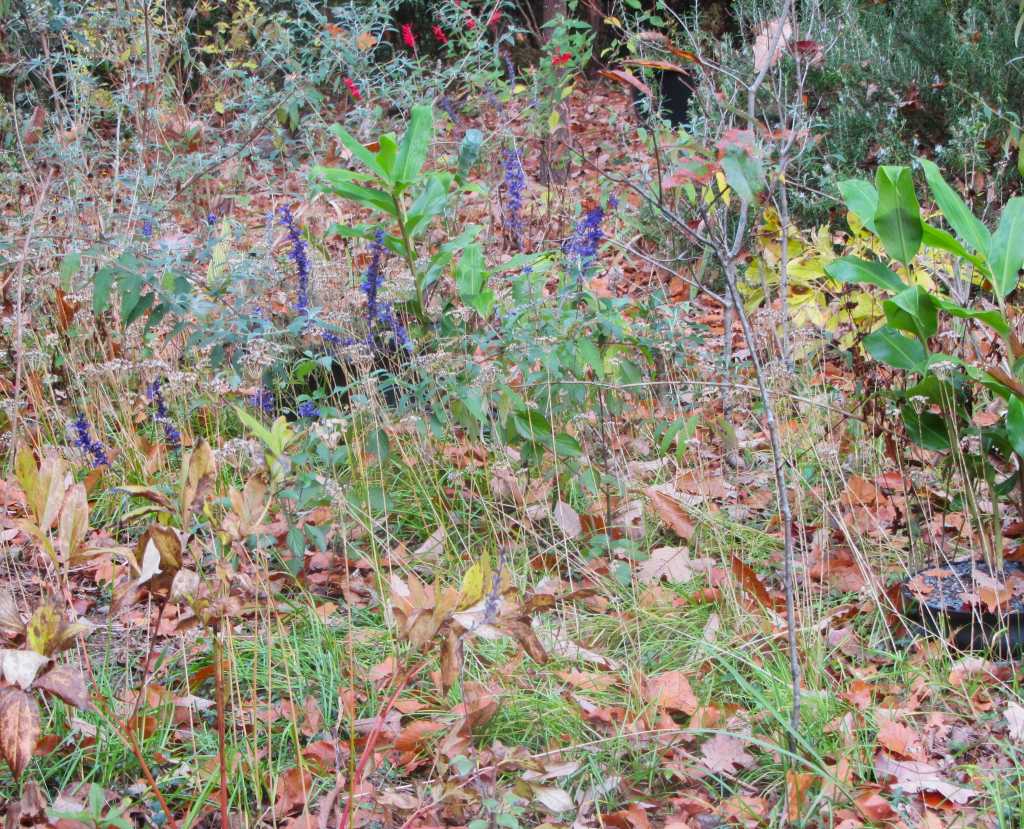
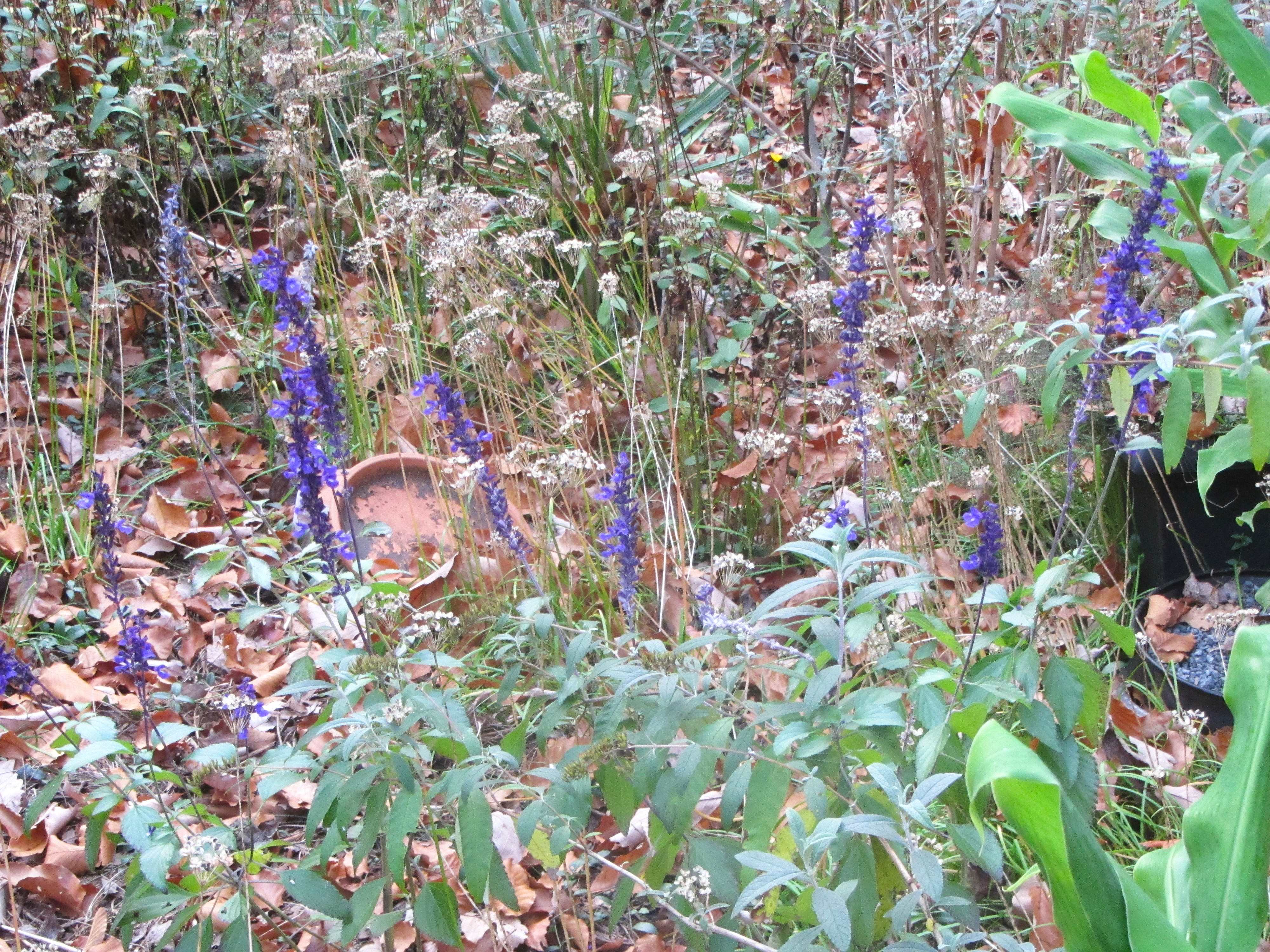
Leaves are falling steadily enough to cover over the driveway within a few hours of its last cleaning. Trying to manage them in the planted areas is a fool’s errand at the moment. The last perennials to bravely bloom are the rosemary, Salvia rosmarinus; the Salvia ‘Mystic Spires,’ a beacon blooming in deepest blue; and Salvia elegans, pineapple sage in red. Do you discern a pattern here? Seed heads of garlic chives remain like flimsy ghosts dancing in the autumn breeze.
We went to Gloucester to pick up our bulb order on Monday. The ground is too hard to dig without a power auger at present. So the bulbs wait in the garage for better weather. It will take some serious rain to soften the soil enough to set out bulbs or the little ferns still waiting in their nursery pots. I bought two beautiful little Begonia Rex plants while there to replace a few lost over the past year.
Some of the Rex and some of the fibrous rooted Begonias have had a tough year. The deer are so thirsty now that they are more experimental in their grazing. The leaves of the Begonias in this pot were grazed off early in the season.
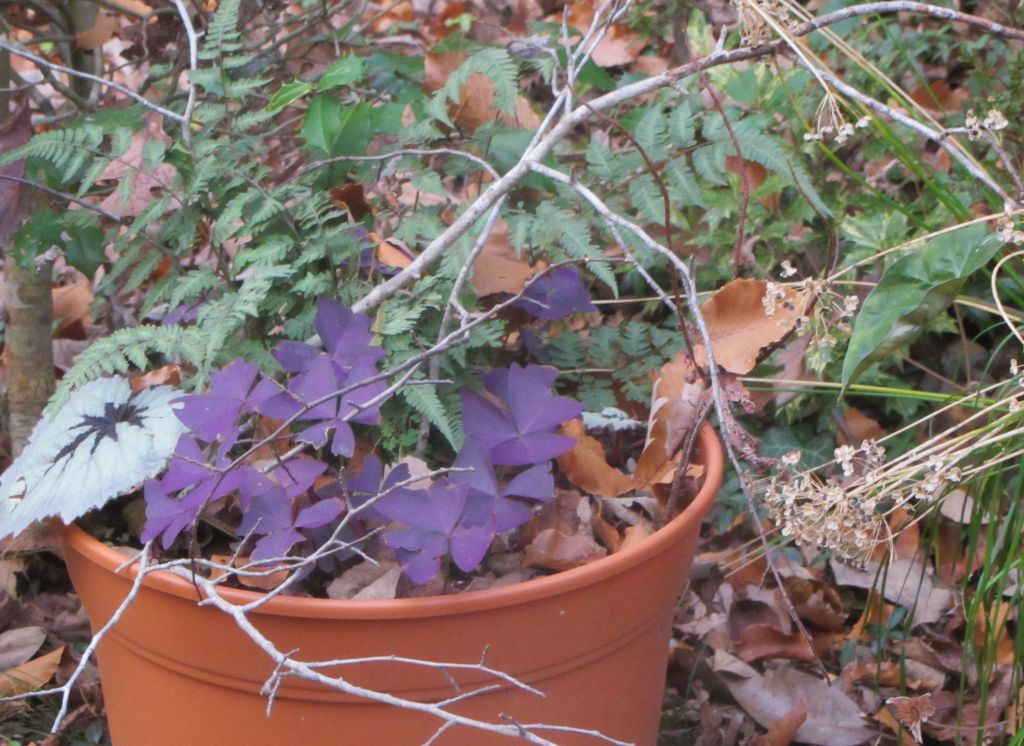
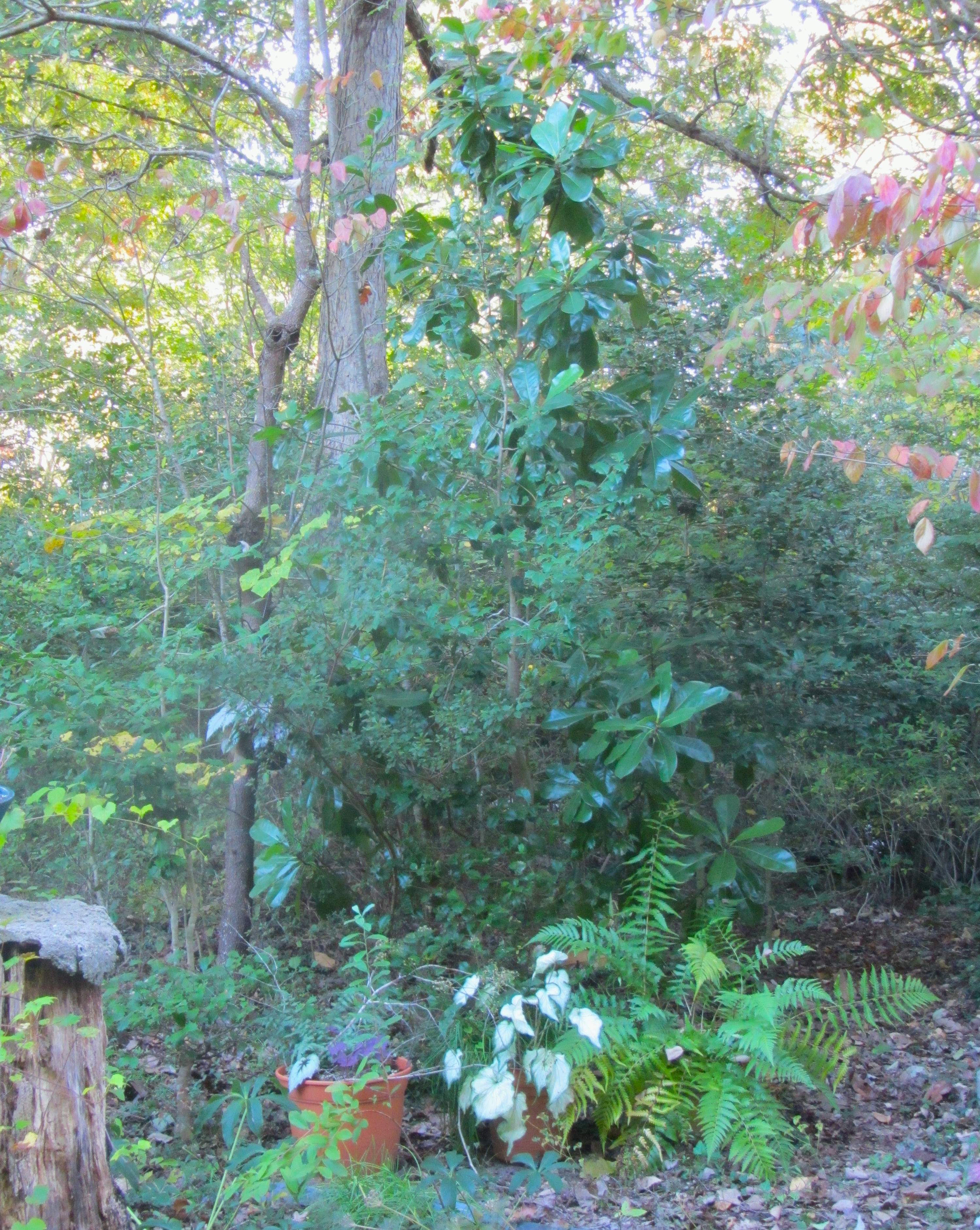
I’ve been trying to protect the foliage with twigs and sticks, as well as with animal repellents. I believe that the Begonias will probably revive beautifully once I move their pot back into the garage for the winter. The Oxalis and Japanese painted fern lose occasional leaves but must not be as tasty as the Begonias. The Alocasia emerged in mid-summer in the pot to the right. It is one I experimented with leaving out over the winter, so I was delighted to see it emerge again this year. All of these pots are in an area of trees and shrubs in a wilder part of the garden.
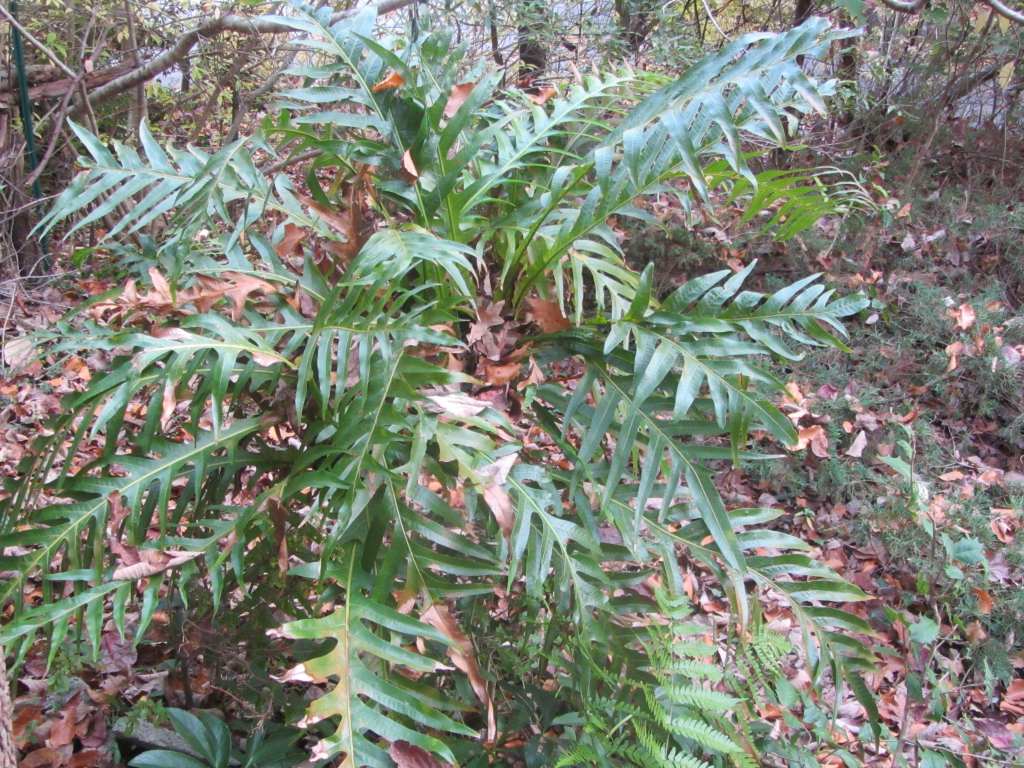
This footed fern grows from a basket hung in a nearby tree, further to the right of the three containers. It has quite outgrown its basket, but is so intertwined with the basket that it would damage the fern to try to remove it. So it will come indoors before Thanksgiving to its winter spot in the garage. I set this, and other plants in baskets, in the tops of 5 gallon buckets during the winter.
Weather like this demonstrates which plants are truly tough. Forsythia has been one of my favorite shrubs since childhood. I love its bright yellow flowers that burst from its branches in late winter, usually the first blooming shrub I noticed in those days. And now, even in this record dry weather (35 days without rain, and counting….) it still looks gorgeous. It has beautiful color and hasn’t shown signs of wilting.
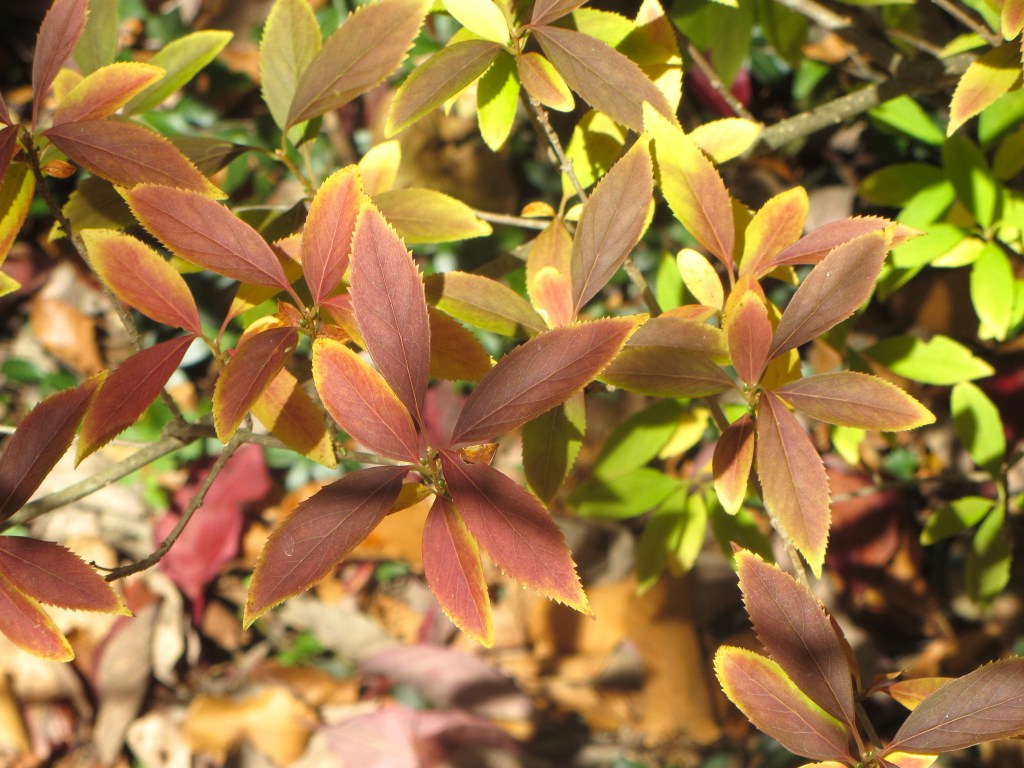
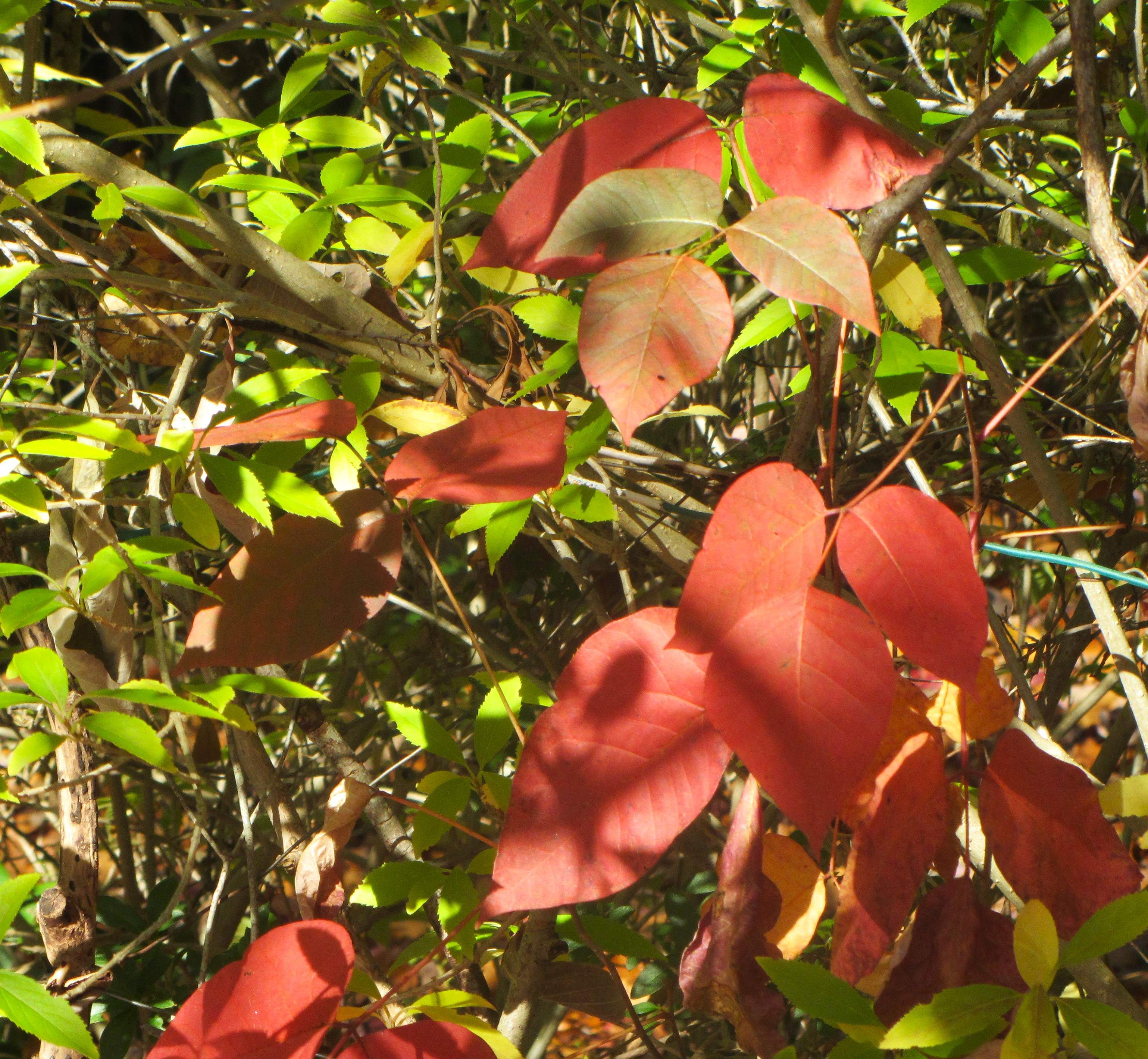
Tough times teach lessons we could learn no other way. These lessons are gifts, in their own unusual way. The more we observe, the more we learn. And the things we learn will serve us well as we adapt to the changes still unfolding.
With appreciation to Jim Stephens of Garden Ruminations, who
hosts Six on Saturday each week.

 Our Forest Garden
Salvias were popularized here in the 1980s, and likely earlier, because they are related to native Salvias. Some that were marketed as drought tolerant are not exactly as resilient to the climate here as we thought they would be. As much as I dislike fads, that was a good one. Some that were perhaps more popular than they should have been remain popular now because they really do well in the climate here, even if some of them want regular watering. We got pineapple sage, but it really should go where it can perform well. (It is one that wants a bit more water.)
LikeLiked by 1 person
Those Forsythia leaves have coloured nicely. Hope you get some rain soon to help soften the ground in preparation for bulb planting.
LikeLiked by 1 person
Thank you ❤ ❤ ❤
LikeLike