Serious gardeners experience a lot of waiting. We wait for our plant orders to arrive, for our seeds to sprout, for the fiddleheads to emerge, and for favorite flowers to bloom. We wait for that exact 10-14 days of the year when our favorite Irises bloom, for last frost in the spring, and for the weather to warm enough to plant our tomatoes and basil.
Perhaps someone in your life taught you that ‘all good things come to those who wait,’ as my dad frequently assured me. Patience was a virtue in our family, a virtue that like so many others I chafed against. Maturity has demonstrated that how one waits makes all the difference.
There are different types of waiting, as you have surely discovered. There is predictable waiting where you know that you will receive whatever you are waiting for in a proscribed time. Amazon deliveries, lunch hours, weekends, and daffodils fall into this category. Then there is the unpredictable waiting so often tinged with angst. First frost in the fall, first dates, lost luggage and drought fall into this category. Sometimes the waiting goes on and on with no resolution, and sometimes the wait involves permanent loss or harm.
There is also active waiting and passive waiting. My daffodil order was ready the first week of November, as promised. Nothing I did would speed up that time frame by more than a week or two. Passive, confident waiting was the key. But drought requires active waiting: proactively irrigating plants to help them survive until the rains come. Cooking a pot of soup requires careful watching and stirring. Family holidays require endless lists, shopping trips, and extra chores to make the magic happen.
And yes, good things can happen at the conclusion of patient yet mindful waiting, which I have richly experienced this week. It rained. After more than 40 dry days, we enjoyed loud, exuberant rain pounding on the roof and running through the gutters from Wednesday afternoon until Thursday morning. We received about 2″ of rain, and a walk through the garden shows the beneficial effects of this long and steady rain. The ground feels soft again, the moss springy, and everything is wet. Now the season will proceed in ease and grace as bulbs awaken and grow, evergreen ferns survive into the winter, and trees sport their vibrant colors before all the leaves blow down. And there is more rain coming next week, so the weather pattern has shifted.
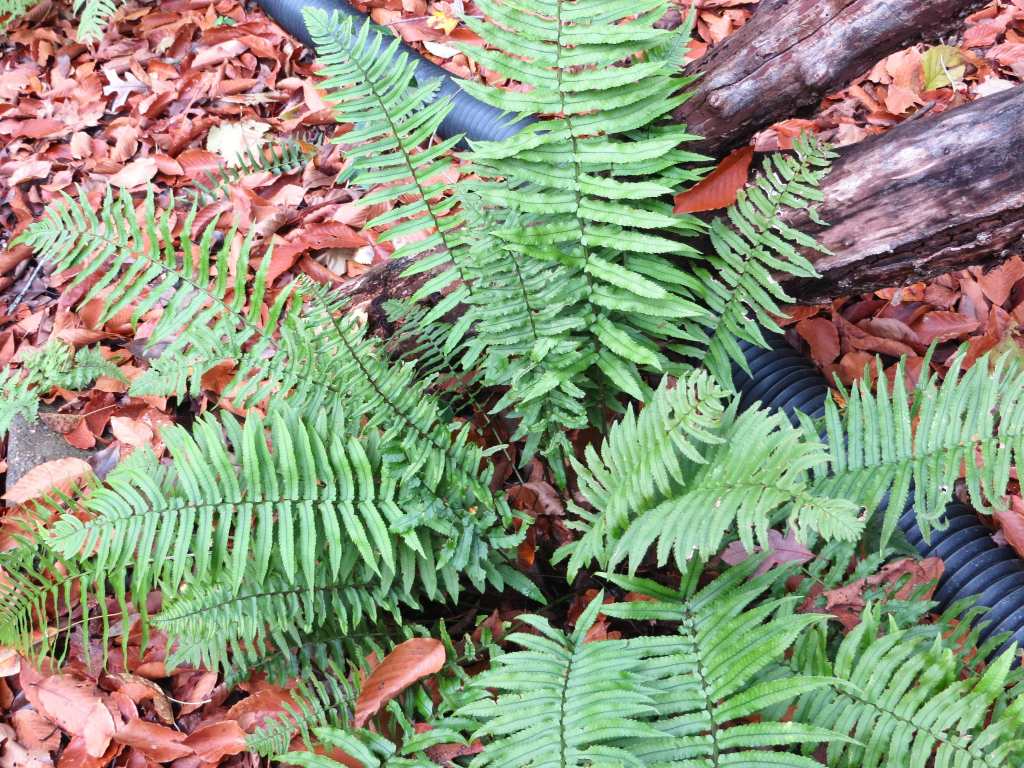
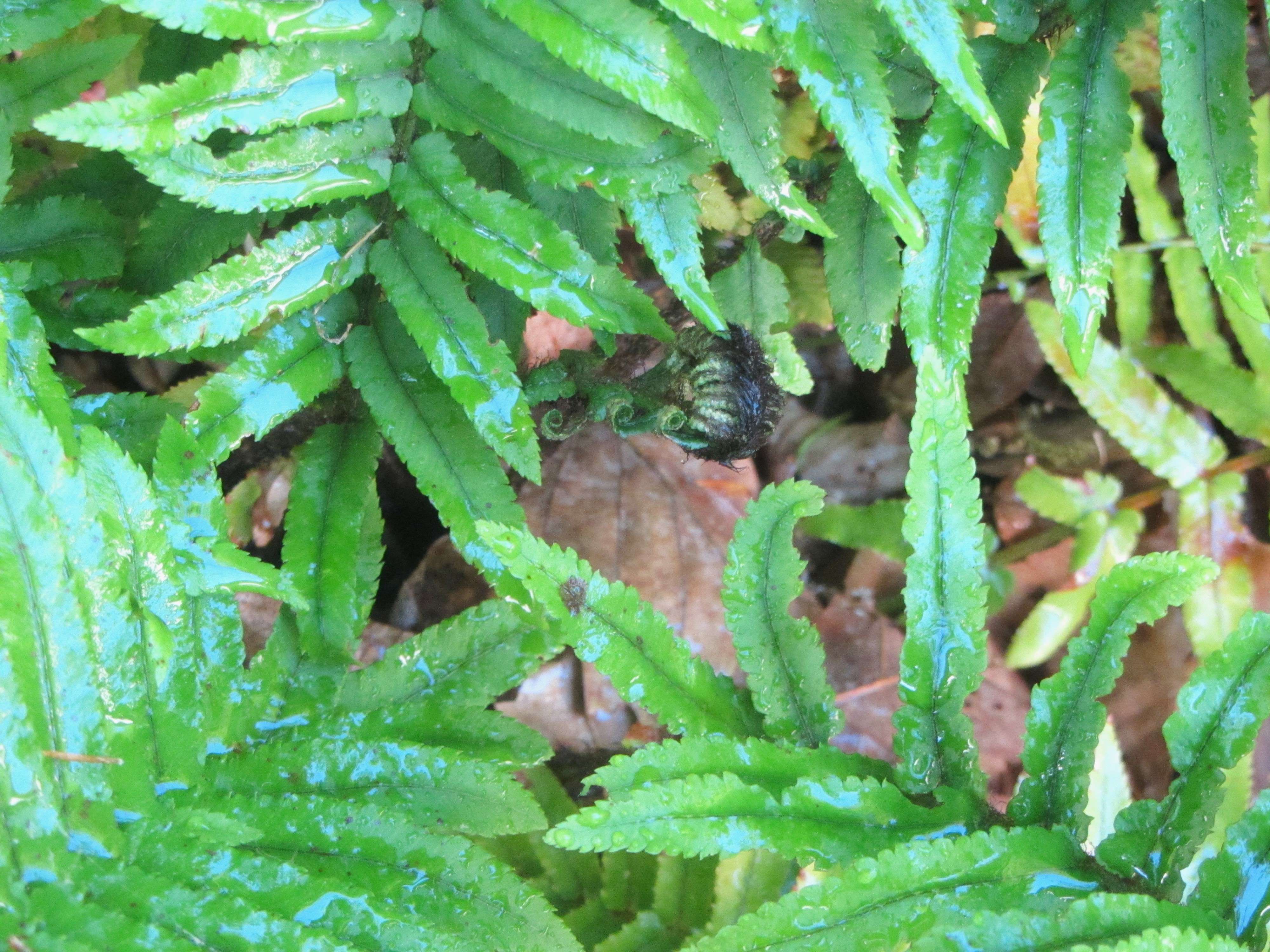
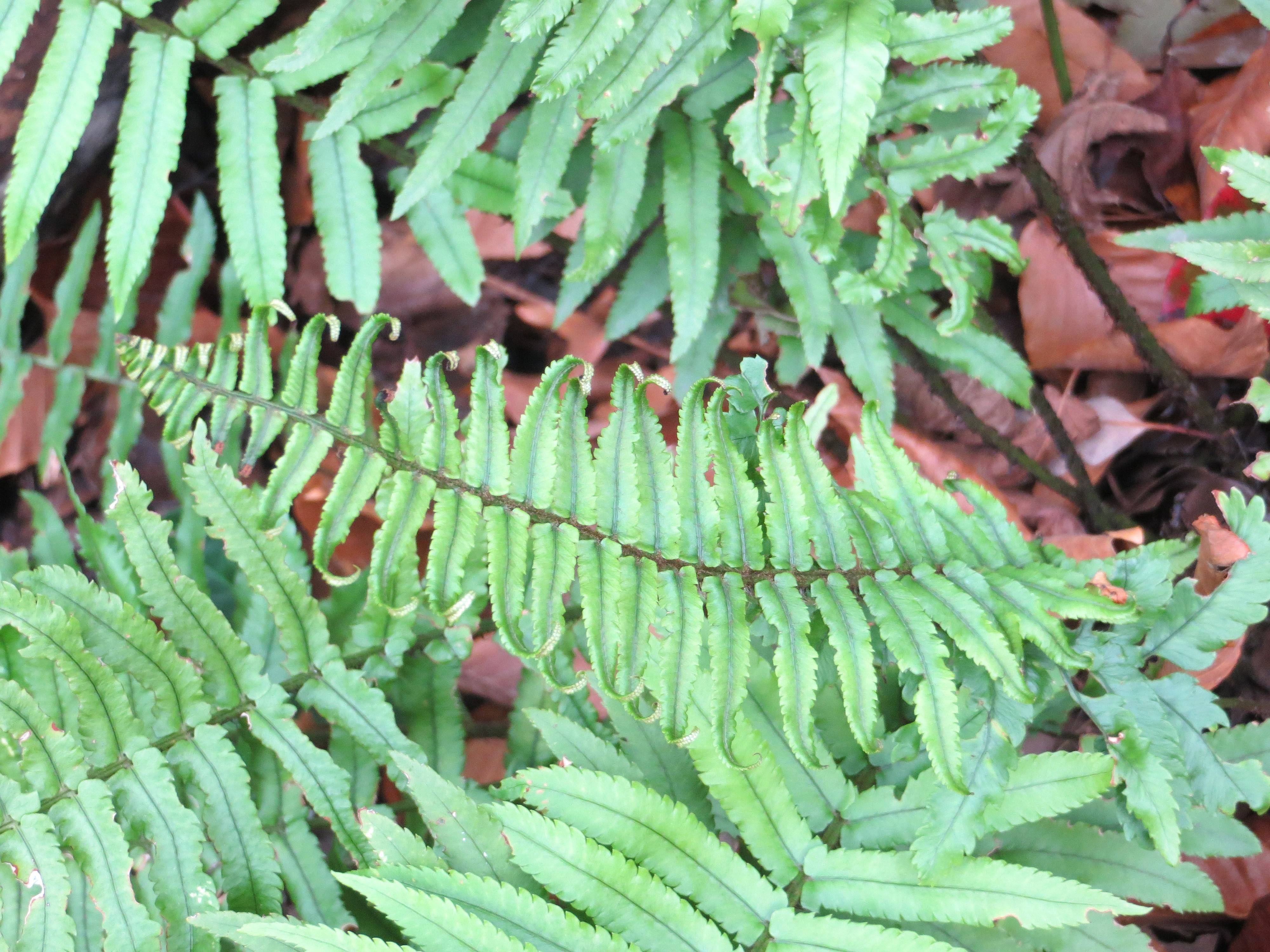
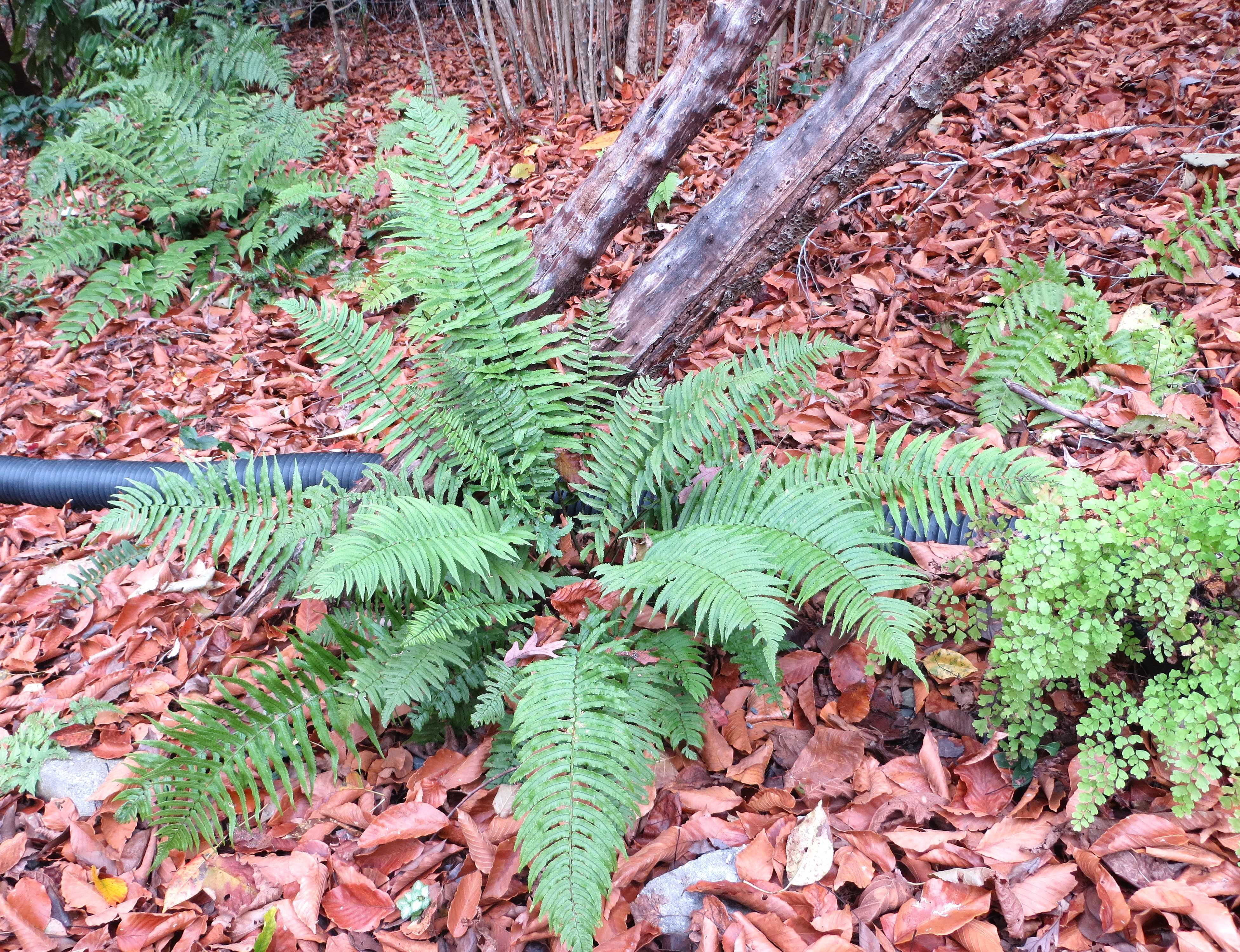
I have also been patiently, persistently, trying to track down the proper name of a fern I planted without leaving a tag beside it a few years ago. I can’t quite remember whether I ordered the fern or purchased it locally. But it is highly unusual, with black hairs along its stipe and covering its fiddleheads. Its leathery fronds are long and glossy green. I used a photo of it taken last April in my 2025 garden calendar, and published the photo without any more identification than, ’emerging fiddleheads’ That was embarrassingly lame, but the best I could muster.
Some days I thought it was a Dryopteris, others a Cyrtomium. I couldn’t quite nail the genus, species, or common name in any of the resources I regularly consult. It was an outlier. Finally, I searched online for ‘ferns with black stipes.’ The images finally convinced me this had to be a Dryopteris. A further search for ‘Dryopteris with black stipes’ finally showed me to a page with a photo of a fiddlehead and unfurling frond. Dryopteris cycadina shaggy wood fern.
Gardeners wait for trees to grow, shrubs to bloom, and fruit to ripen. We are observers of change, wizards of improvements. Several weeks ago, I noticed weird effects as I tried to shoot photos in bright light. There were ‘smudges’ of light in my photos. Somehow I had scratched my camera’s lens, probably by carelessly dropping my camera into a pocket with other tools. And so the long process of finding a replacement began.
It took some time, since I have never been a technology geek. But slowly I found my way through the many choices and decided to order an upgraded model of what I have, except with a 20x zoom lens. I need a camera to be both small and simple to use since I’m usually busy working as I stop to take a photo. My new camera arrived on Monday, and so I have been learning about it this week. It will take time and patience to learn what all it can do, but I can take a basic photo with it. I am glad I waited a few weeks to come around to the one I chose. Sometimes waiting brings us something much better than we might have chosen (or settled for) in a moment of impatience.
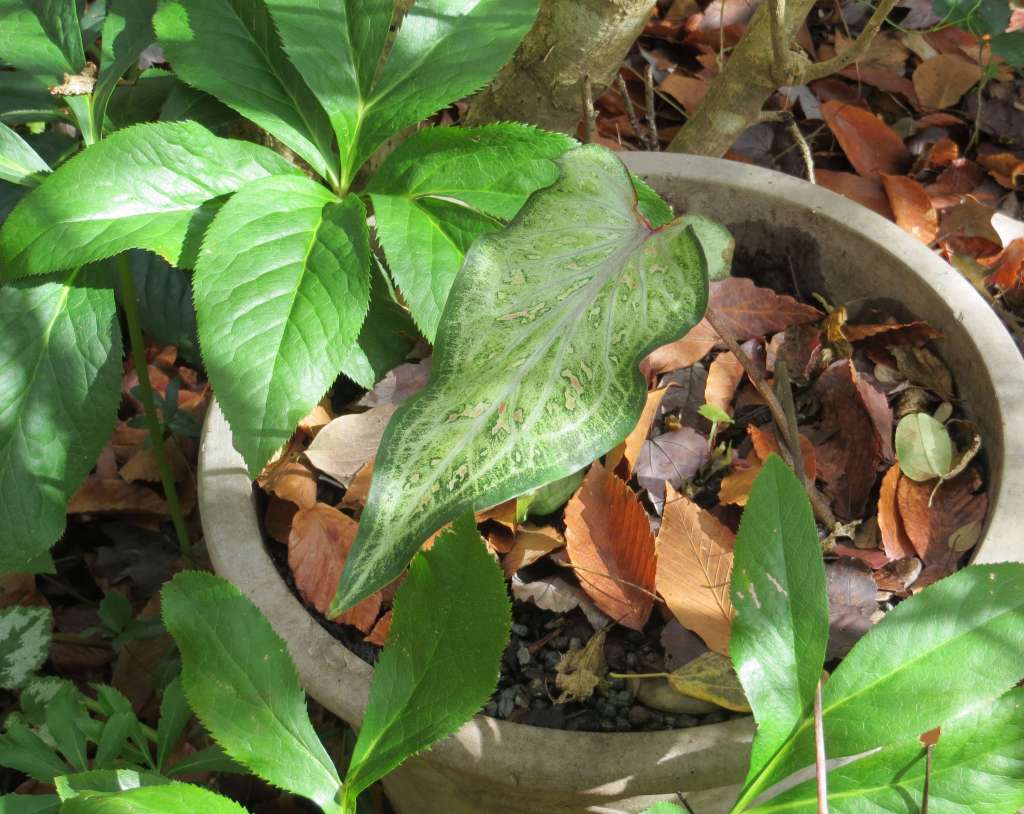
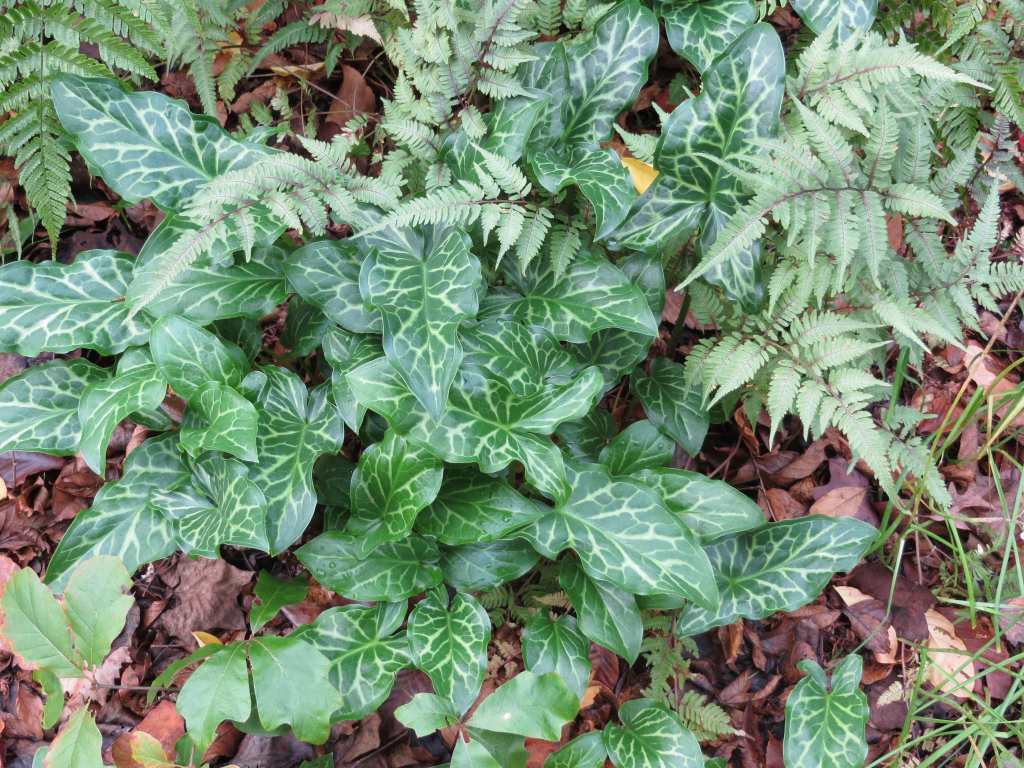
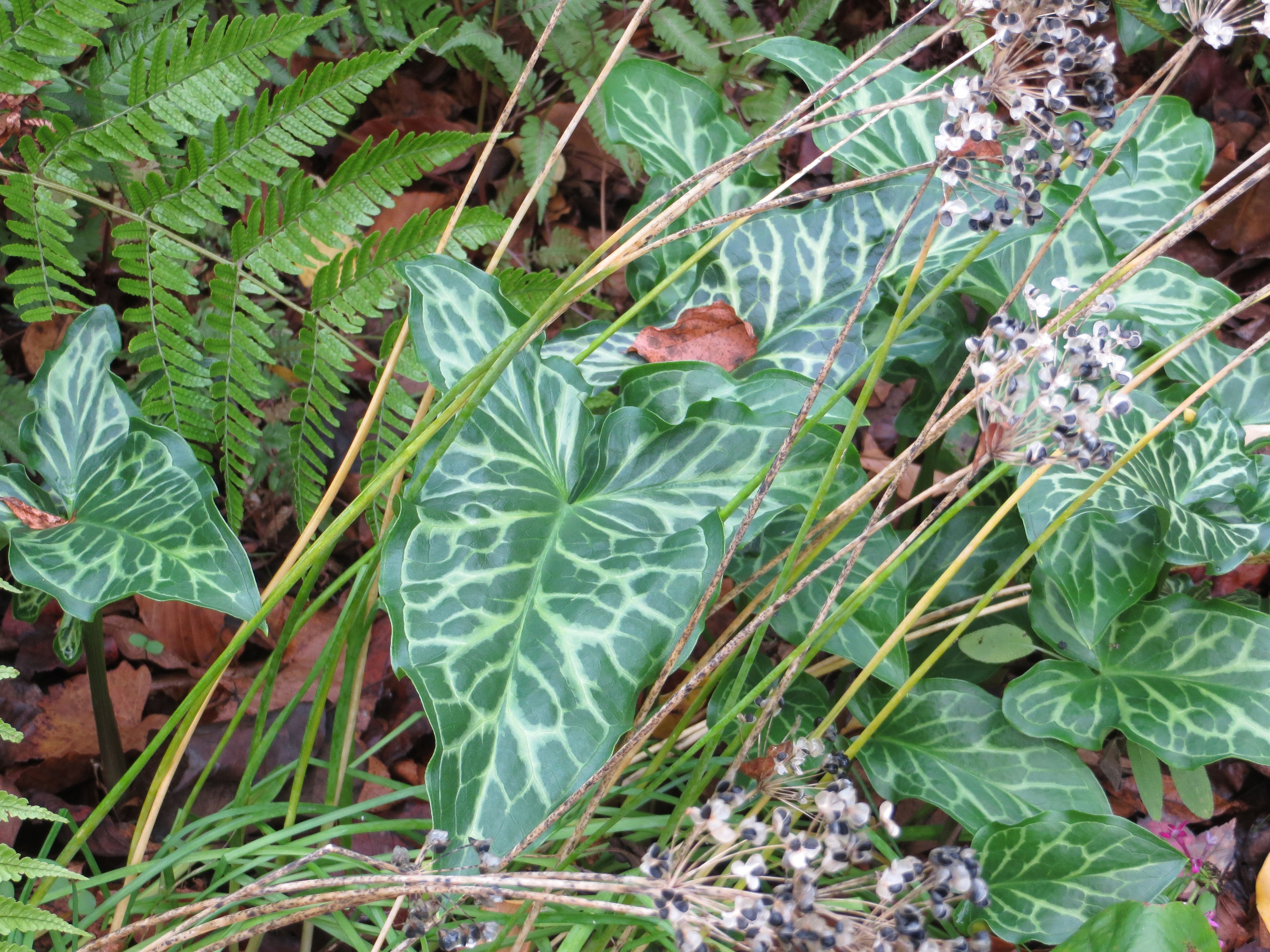
The Italian Arum has emerged in beds and pots, filling space between the ferns in anticipation of daffodils emerging among its sharply marked leaves. This is one of those reliable plants that marks the seasons for me with its comings and goings. I love that it emerges in all of its beauty while so many other plants are dying back.
It is time to move the tender potted plants back indoors, but I am waiting, allowing them a few more days outside to soak up the autumn sunshine. I admire some of them and regret the damage to others. There is always another year for them to grow again and repair the damages of this unusual year. First frost still lurks in an unknown future.
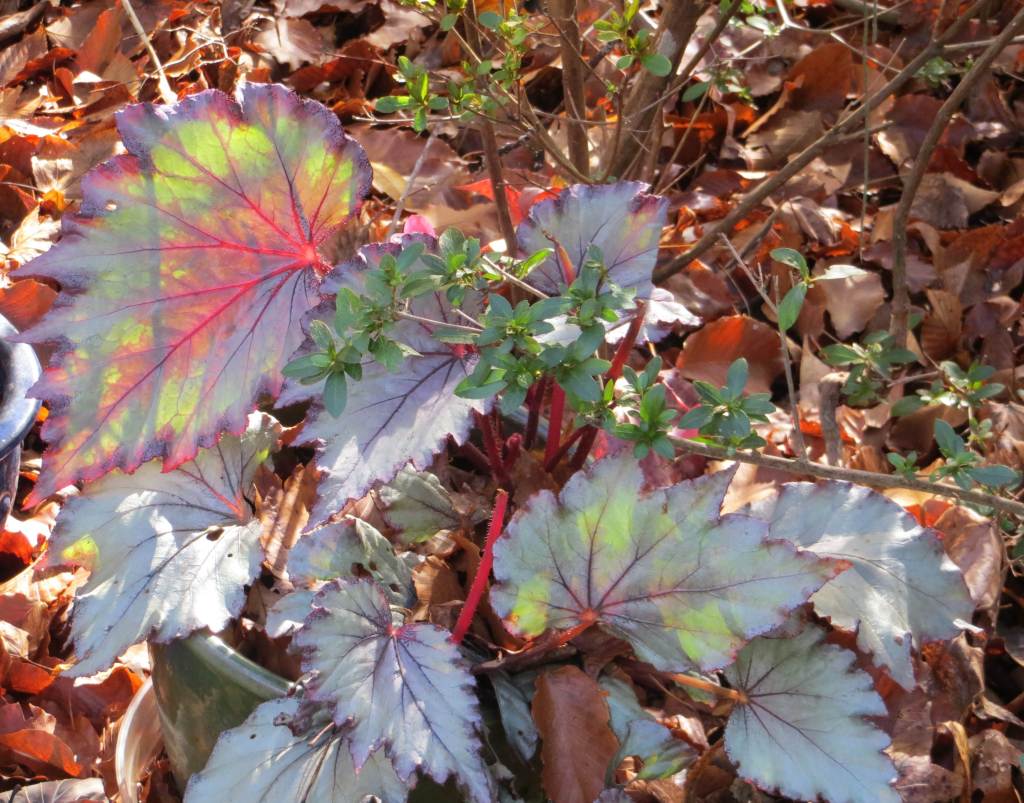
Perhaps the real secret to patient waiting is a deeper appreciation of ‘now.’ Now is all we have, so why not be happy and at peace in this moment? Now contains infinite potential for happiness, for productivity, for kindness, and for insight. The past is a dream, and the future a murky projection. Why let regret, fear or angst ruin the moment? Now, the sun shines through the Begonia leaf. Now, I can grab the hose and water a thirsty pot. Now, I can plant the bulbs, or blow the leaves, chat with a friend, or take some photos.
So 50+ years on, I’ve learned that my dad was right. Good things do come to those who wait, so long as our waiting is accomplished in the right spirit, and with a clear enough idea of what we are waiting for that we use this moment creatively. I’m grateful that though we are now past our expected ‘first frost’ date, the garden remains alive and filled with beauty. I’m grateful to know the rain has finally softened the ground enough to dig and plant again. And I’m grateful to still have more questions than answers, and more curiosity than certainty.
In case you were wondering– There are still five 2025 ‘Our Forest Fern Garden’ calendars available. They are filled with photos of ferns taken over the past year and gardening tips and reminders for each month. Please leave me a note in the comments if you would like to order one.
With appreciation to Jim Stephens of Garden Ruminations, who
hosts Six on Saturday each week.

 Our Forest Garden
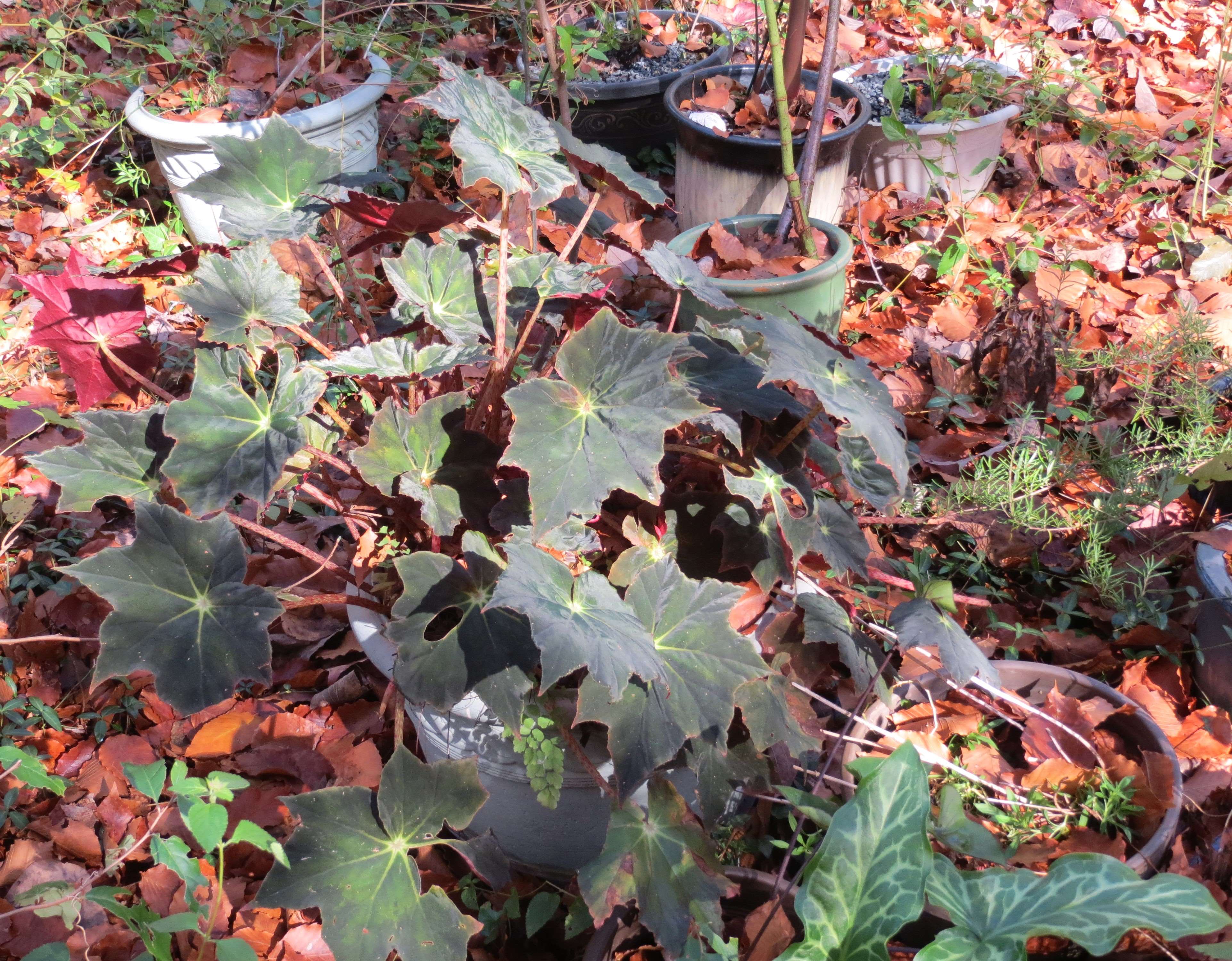
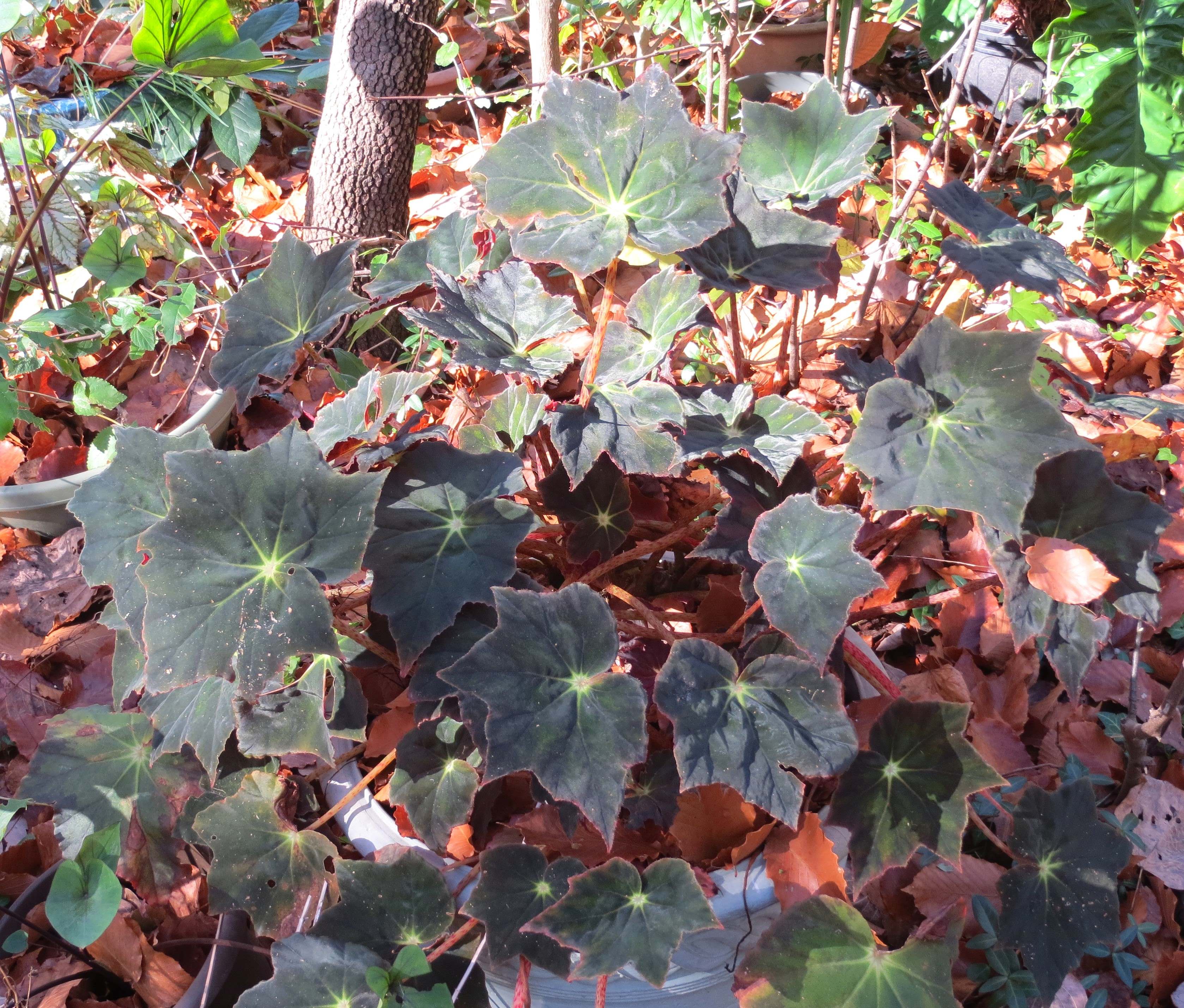
‘Santa Cruz’ Begonia boliviensis just got to be impressive in our garden, now that the weather is getting too cool for it to continue to grow. It is so pretty that it will likely get protected from frost through winter, rather than being allowed to get frosted a bit back. I am pleased that it grew so well, but bummed that it is at its best now. I am sort of impressed that yours looks as good as it does now. I still expect your frost to be earlier and more severe than ours.
LikeLiked by 1 person
Tony, the weather is too unpredictable now to make good ‘guesses’ based on past experience. The local weather folks can’t even predict the next day accurately quite often, let alone call it a week out. So far only the Caladiums and 1 Begonia have come in because I needed to repot it. But I realize this idyllic weather won’t hold and I’ll have to get busy to move everything ahead, especially if there is a ‘surprise’ frost. B. boliviensis is one of my favorite Begonias, but they never last through our hot and humid summers. Mine always seem to rot at the stems before they make it through August. It could be overwatering, but I suspect it is from a combo of the humidity, our insects, and heavy summer rains. So you are very fortunate to have yours doing so well into November! I’m glad you’re going to keep it protected from frost. Begonias blooming indoors through the winter are such a treat!
LikeLiked by 1 person
This begonia was not my idea. Actually, I was not so keen on it because it is a modern cultivar. The other horticulturist here got it because of its name. He purchased it in Santa Cruz, and we are in Santa Cruz County. I only learned to like it as it grew and bloomed here, and actually, I prefer it to ‘Santa Barbara’ which blooms with white flowers.
LikeLiked by 1 person
Aren’t they native to South America?
LikeLiked by 1 person
Yes, but also South America, Central America and tropical and subtropical portons of Asia.
LikeLiked by 1 person
Hard to believe that you prefer a red flower to a white one…
LikeLiked by 1 person
Well, there are a few flowers that I prefer in colors other than white, such as crape myrtle, which is not so impressive in white. Begonia boliviensis ‘Santa Barbara’ bloom has such prominent yellow stamens that It does not seem to be simple white.
LikeLiked by 1 person
Lovely sentiments on waiting and being in the “now”. Hard to manage sometimes when there are so many things pulling our attention, but gardening and being out in nature puts me in a better frame of mind than when I started out. I love ferns and would gladly let them colonize the shady areas at the way back were it not for the mower in chief. I have a new bed to plant and some seeds to scatter there. Exciting the start the “wait”. So many birds flitting about eating seeds from the existing native plants that I hesitate to scatter my collected native seeds until it is colder with snow in the forecast.
LikeLiked by 1 person
I love that begonia and that wood fern! This fern reminds me of my vacation in Reunion where there were lots of tree ferns.
LikeLiked by 1 person