“Spring invites us to treasure the small.
“Autumn frost and winter storms long since claimed late summer’s towering goldenrods and bushy pineapple sages. The Cannas and gingers and huge elephant ear leaves were cut down months ago, and live on only in memory and photos and dormant tubers resting underground.
“After several months of bare ground, woody stems and largely open space, the smallest bits of new growth excite me with their promise of a new growing season awakening.
“It is easiest to start again small. Small flowers from very small bulbs, like grape sized Iris reticulata and I. histrioides. Small roots on small cuttings, carefully planted into small pots to ‘grow-on’; and small starts in small pots that will move up into hanging baskets and potted arrangements once the weather warms.”
Woodland Gnome, March 2019
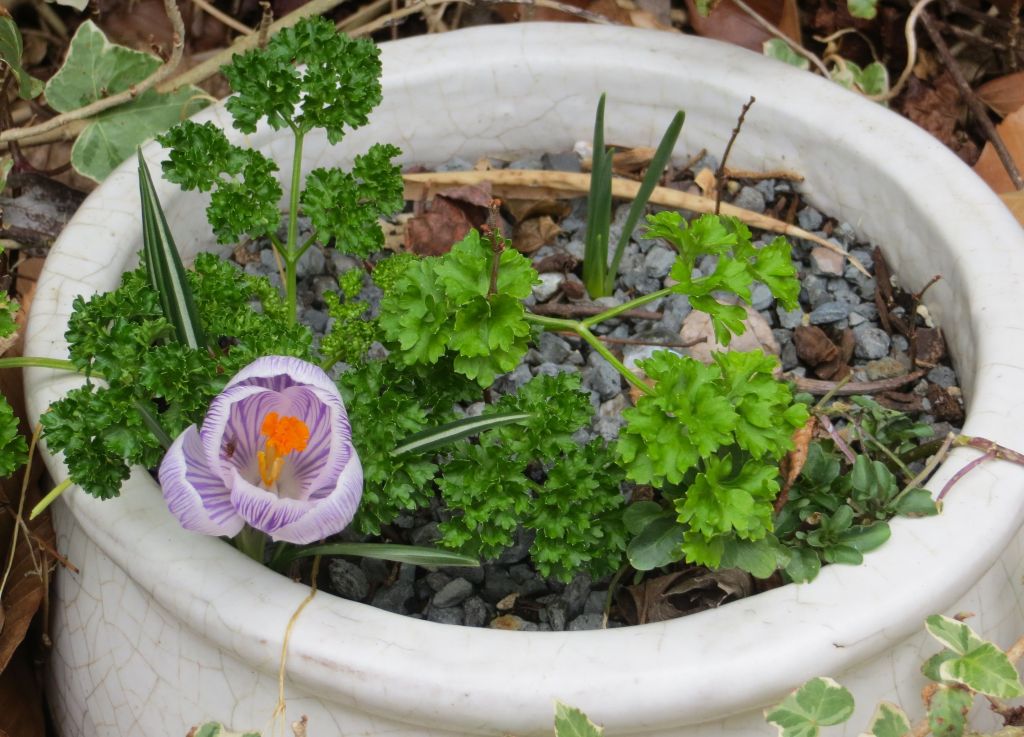
Gardening guides us in cycles and spirals, coming ’round again each year to similar experiences, insights, feelings, and actions. Only hopefully, we have learned something along the way and somehow improved our knowledge, our approach, and our skills. That quotation comes from a 2019 post to my previous website, Forest Garden, in a post titled ‘Green Thumb Tip #23: From Small Beginnings.’ I have been gathering those old posts this week in the first stirrings of a new project.
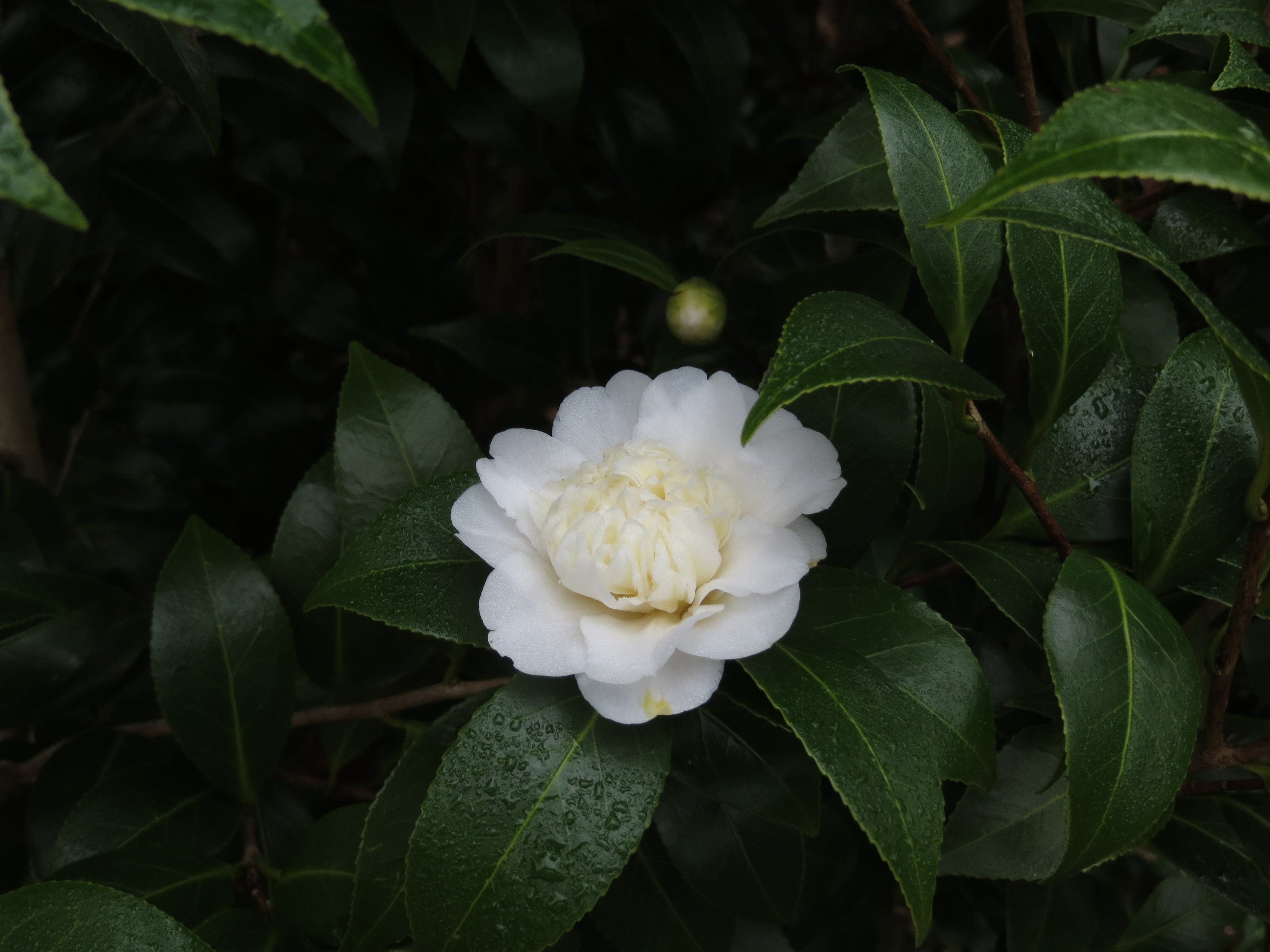
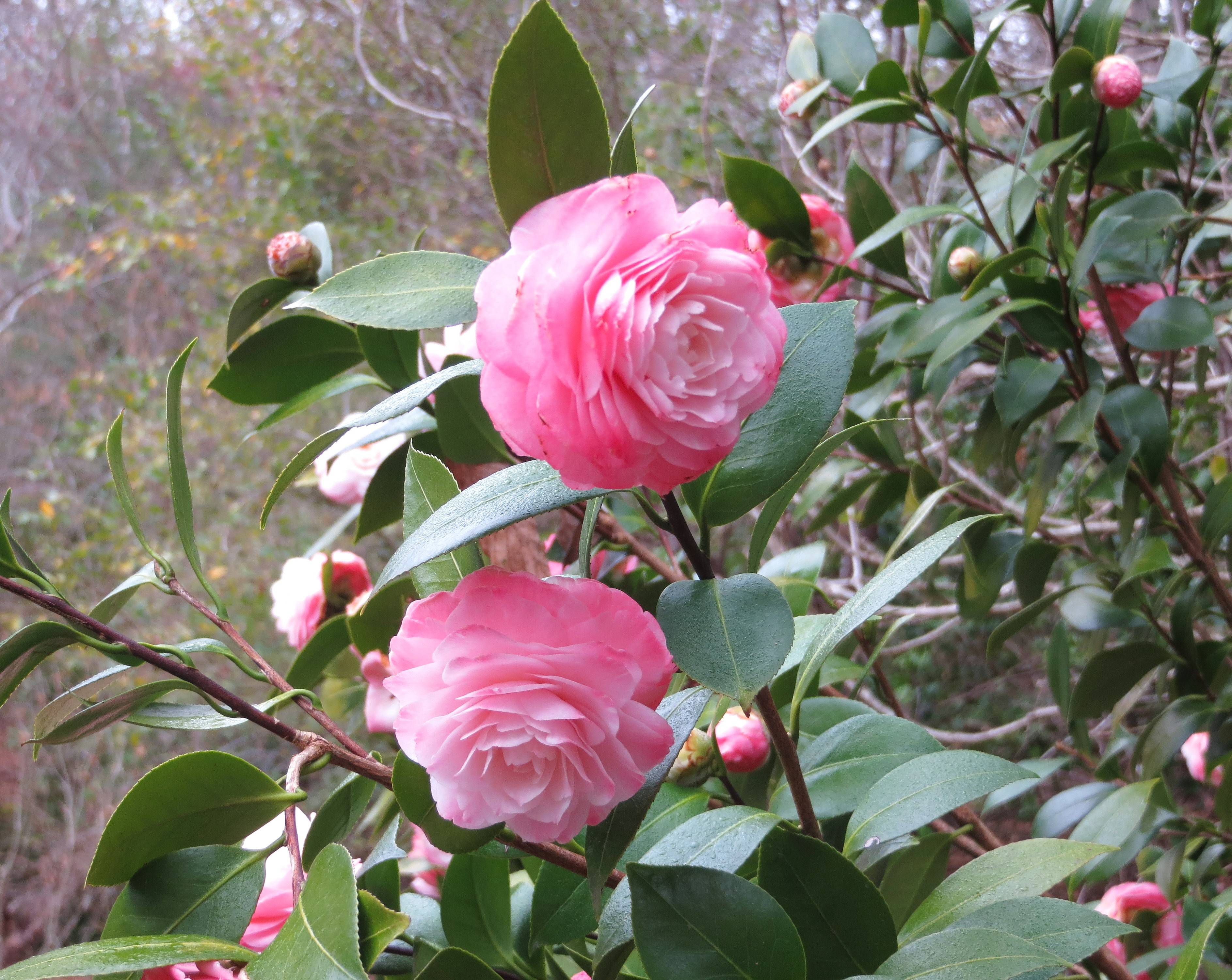
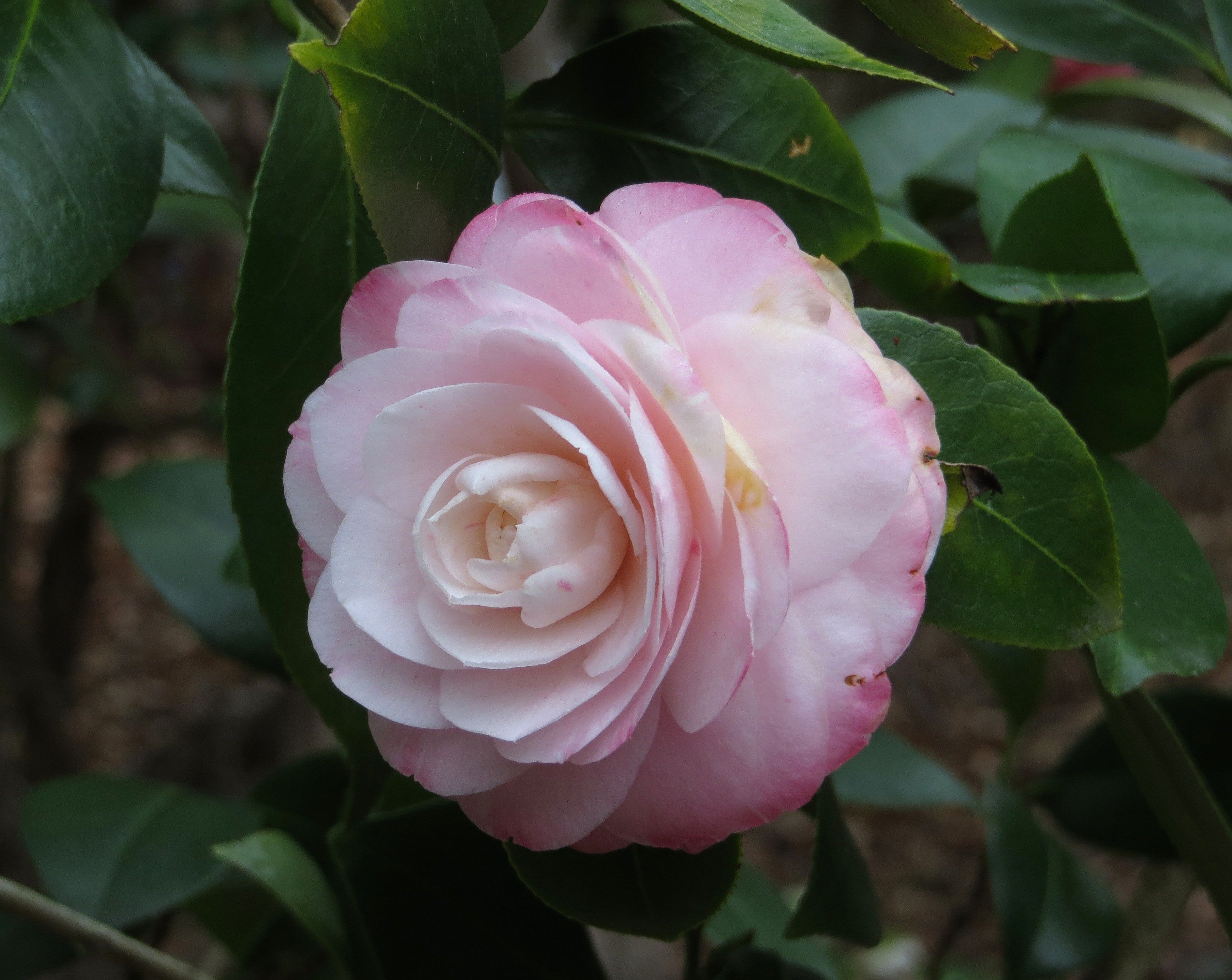
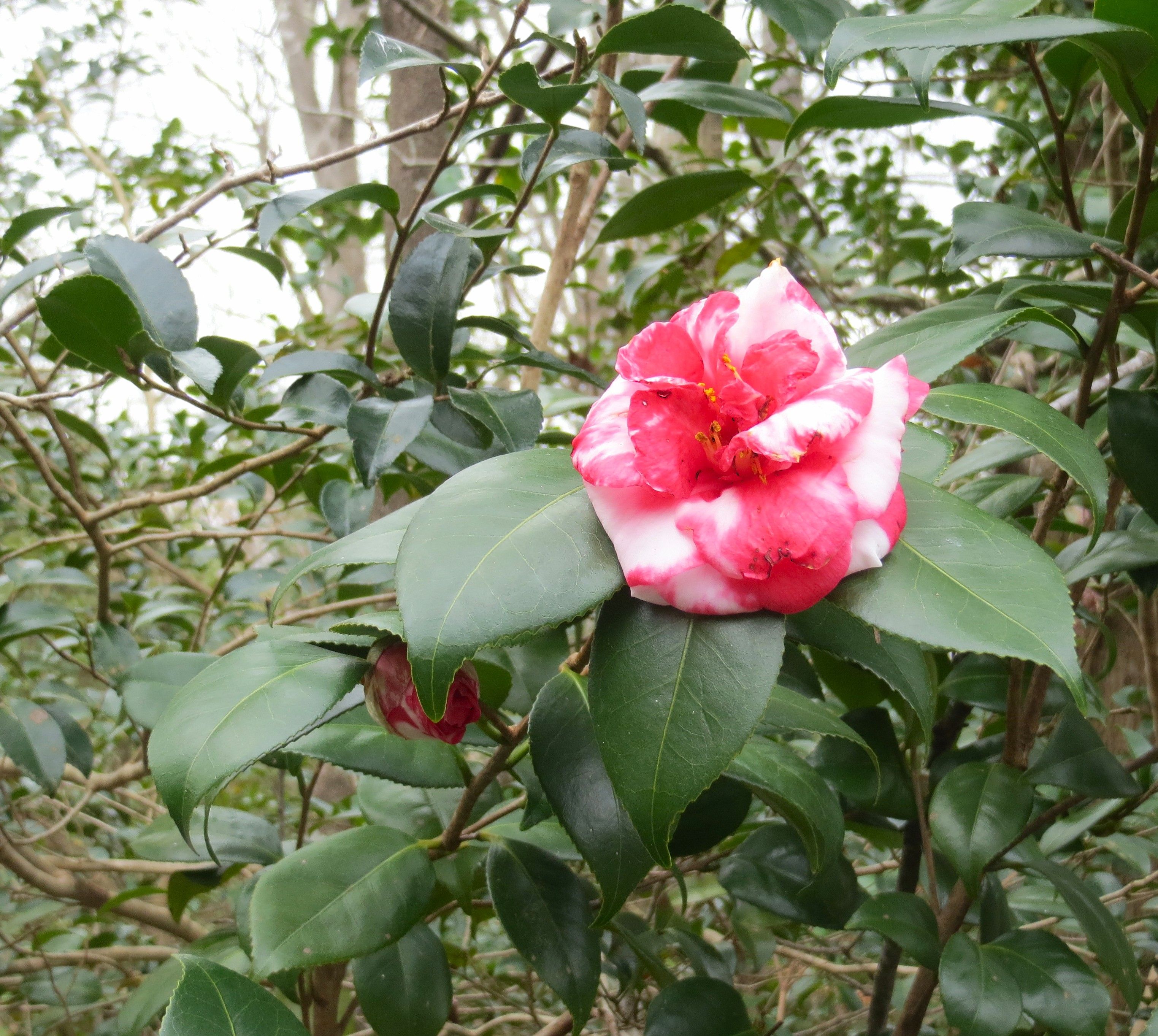
And outside in the garden, I have been admiring the small beginnings of this new 2025 gardening season breaking ground and breaking bud. I found the first pink buds barely breaking through the bark of our oldest redbud tree the day after I published an article about our native Eastern redbuds. Several Camellias have bloomed in recent days, and we found flowers opening on the Japanese Pieris.
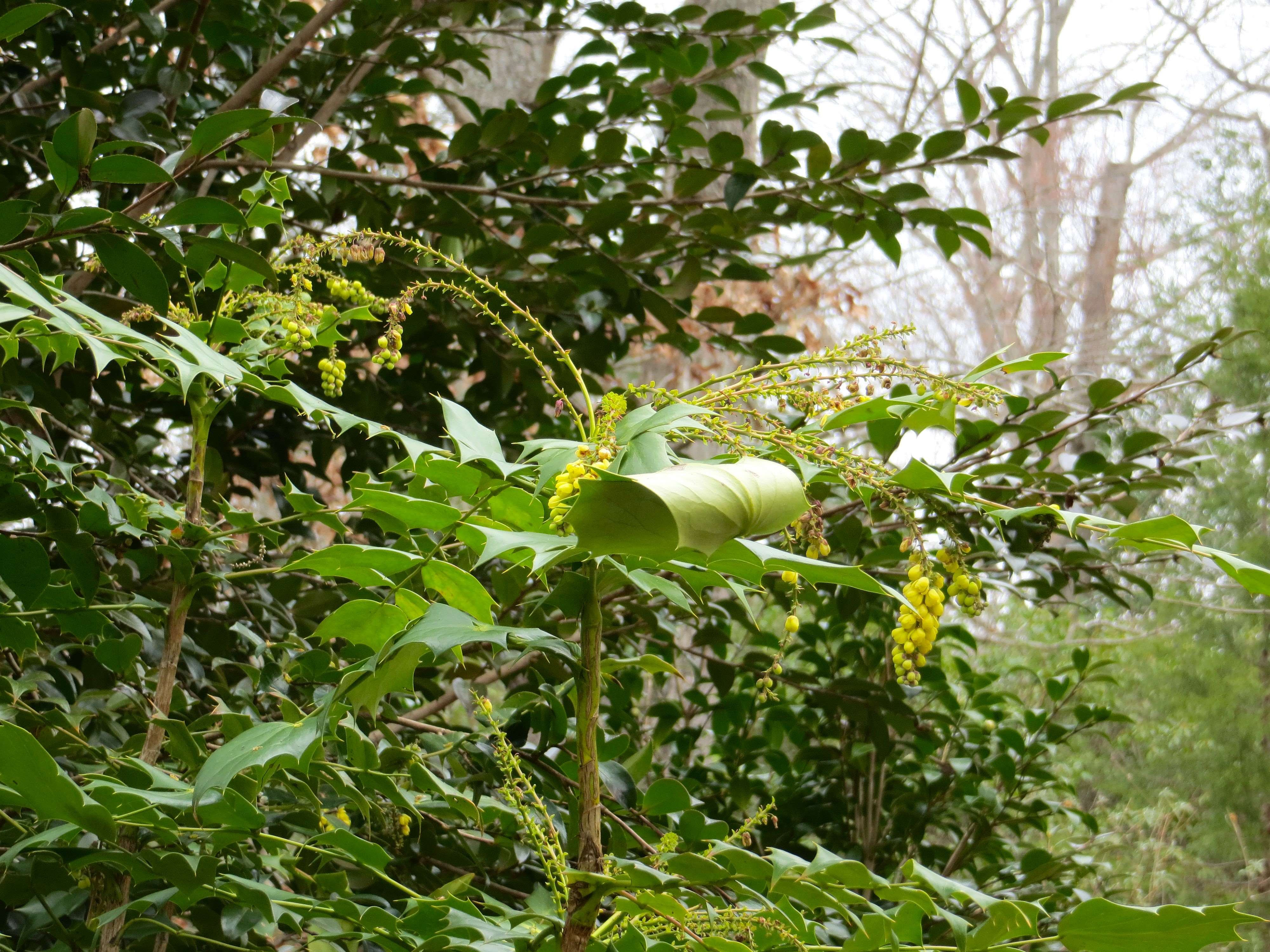
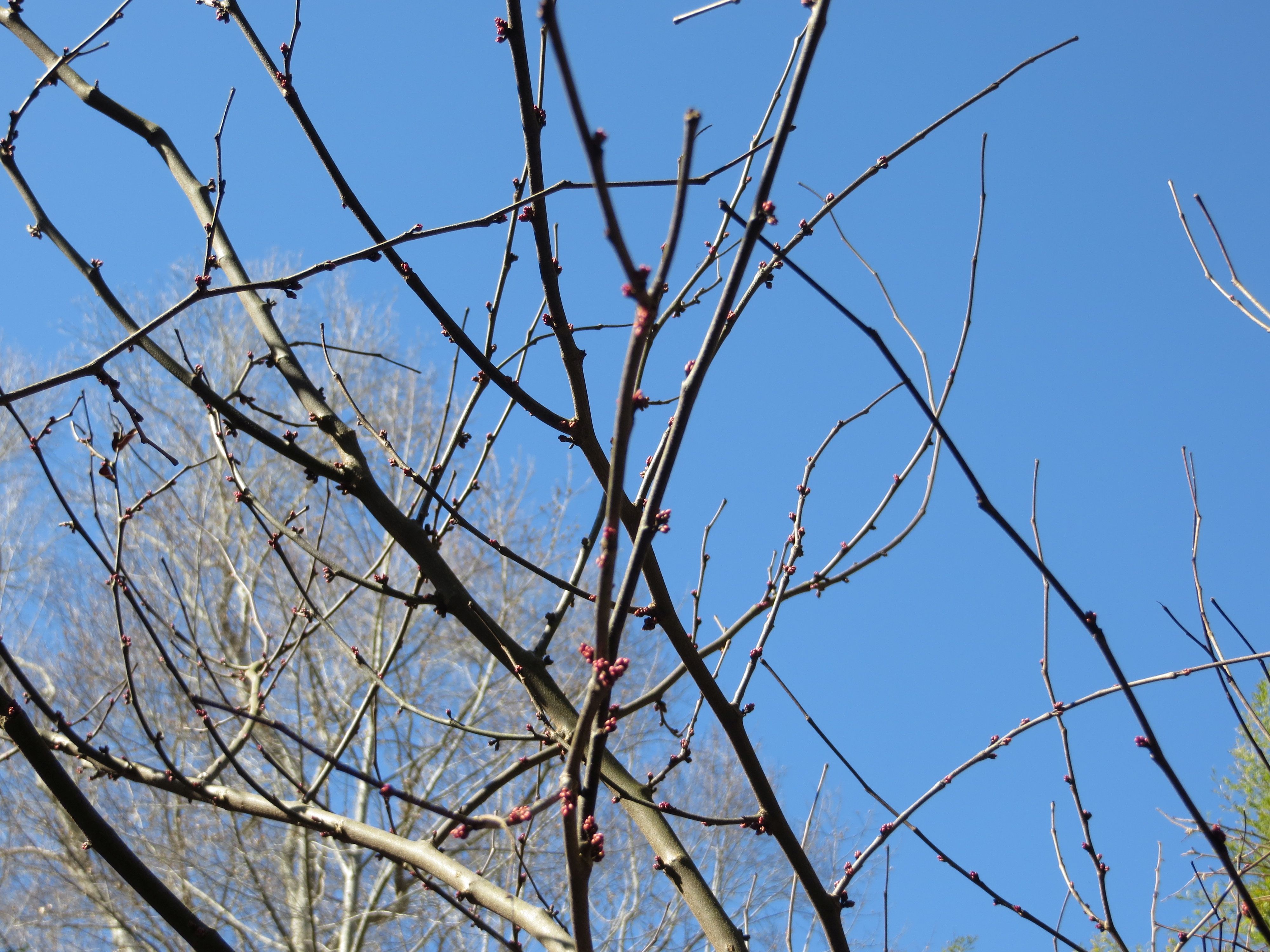
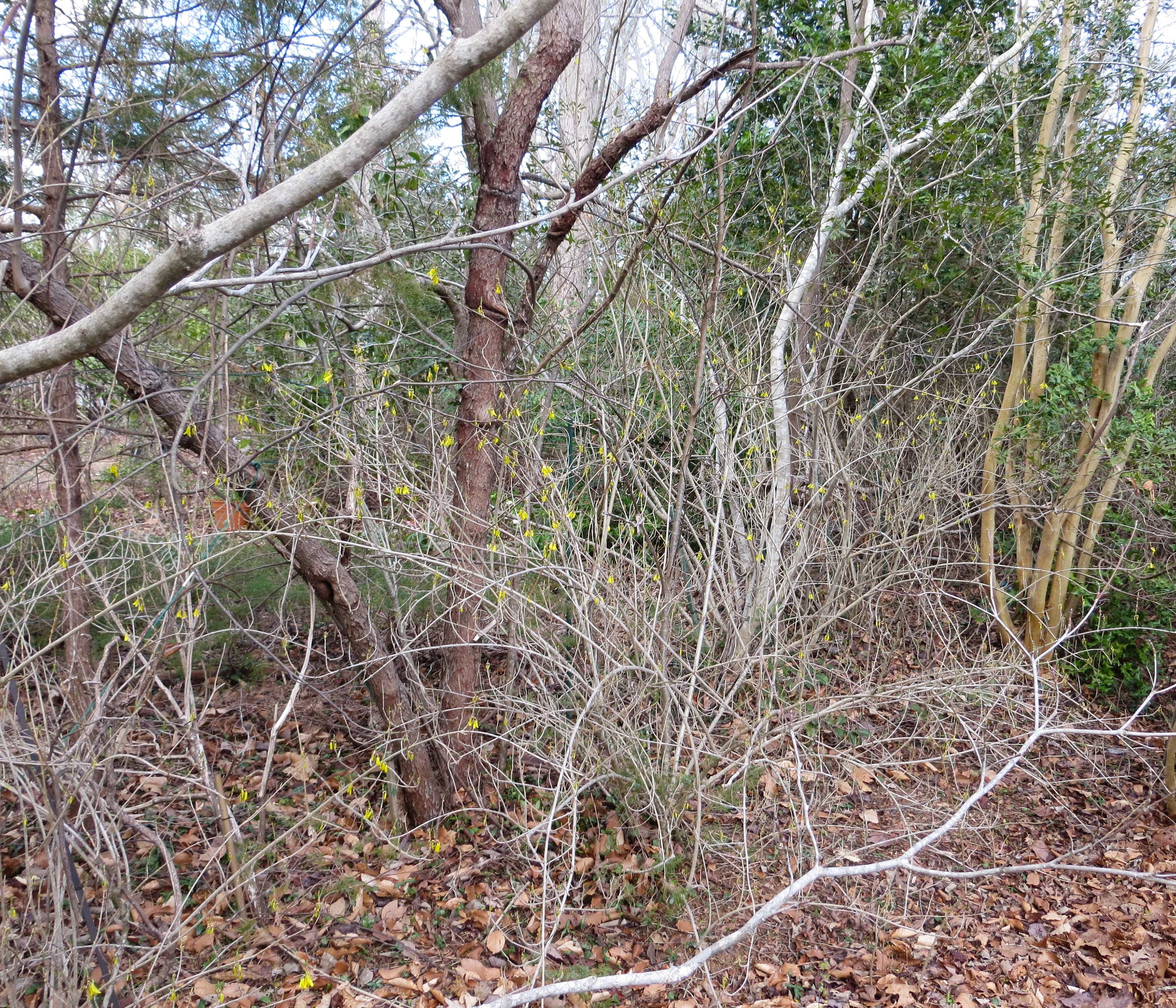
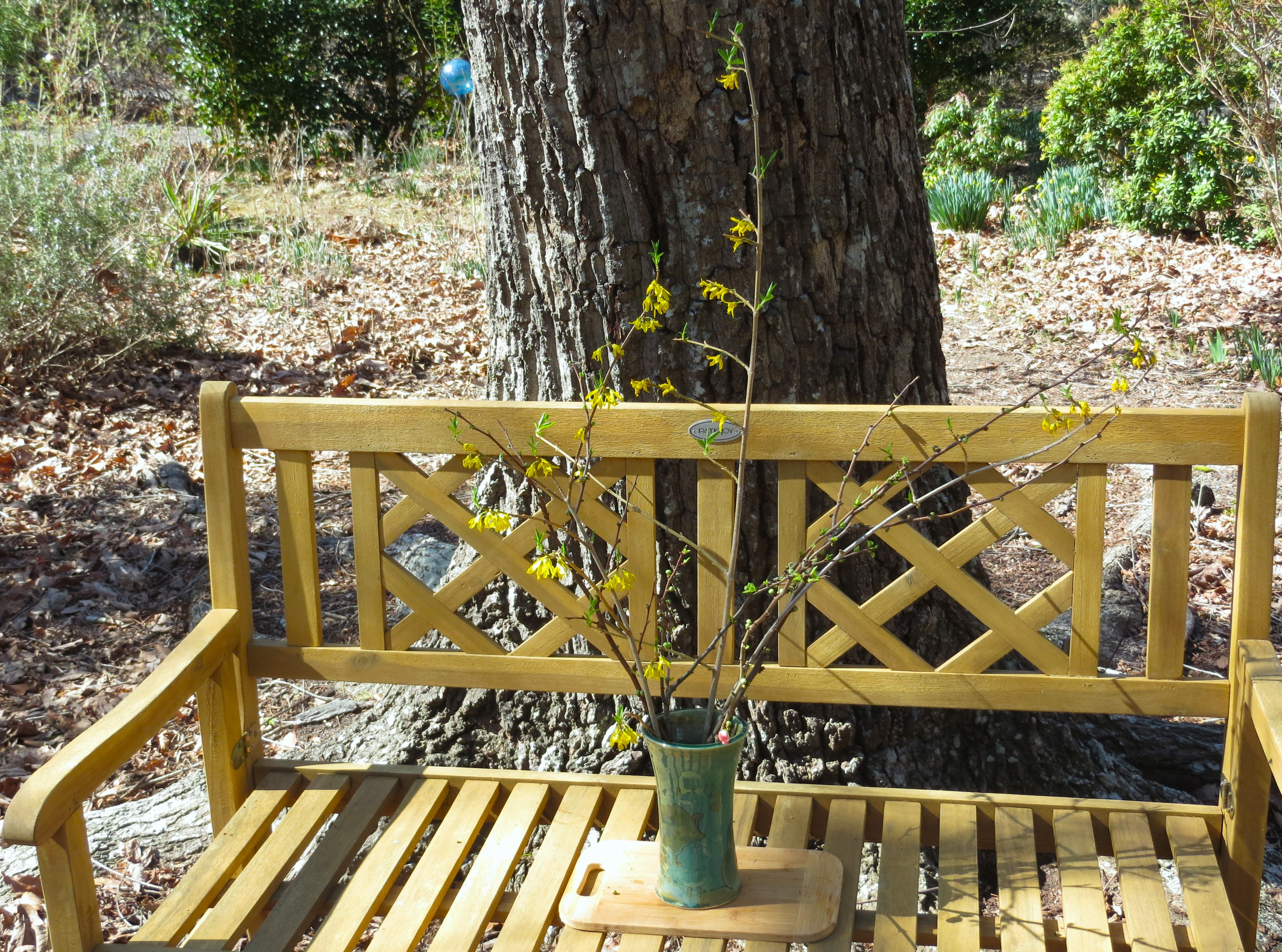
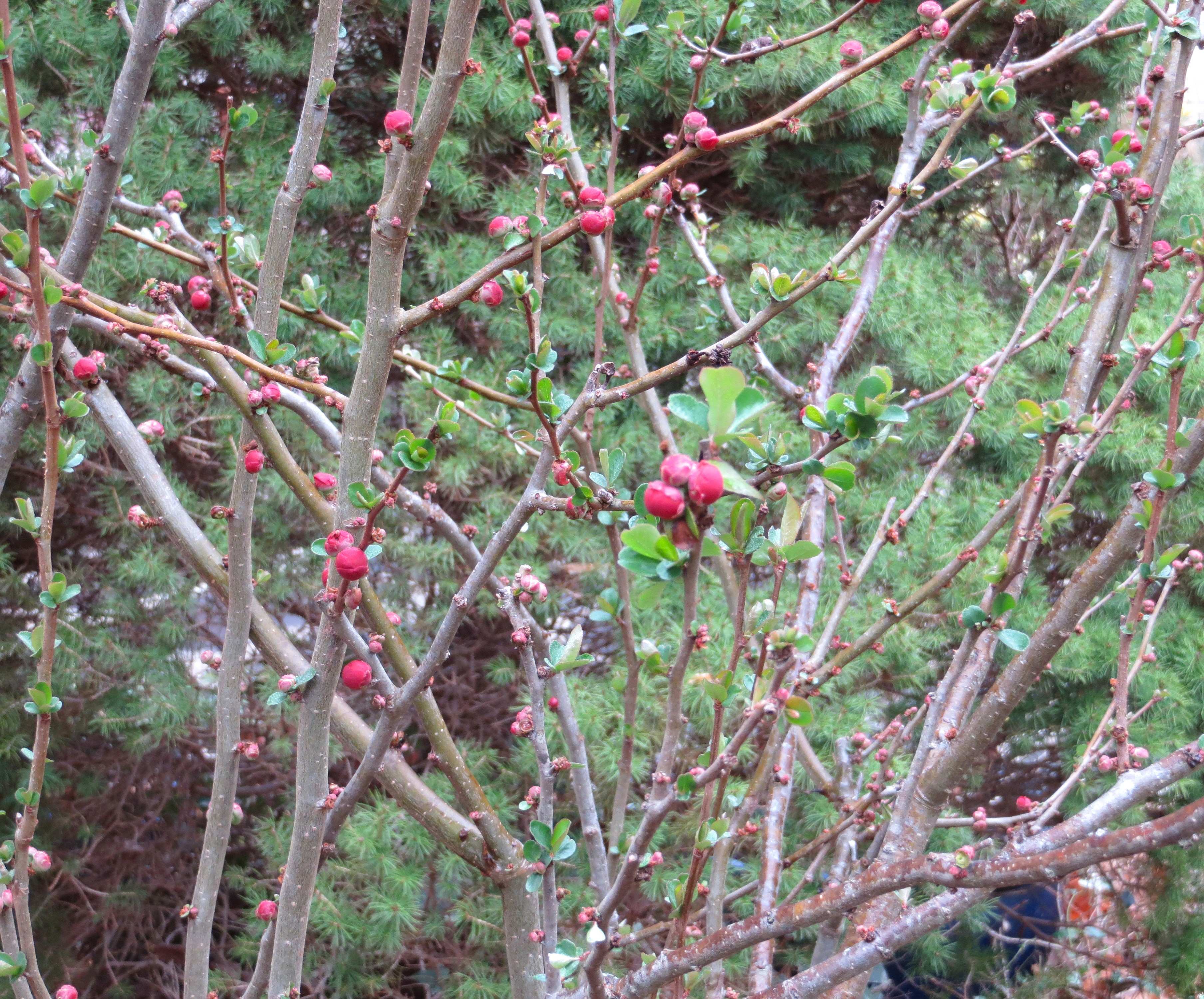
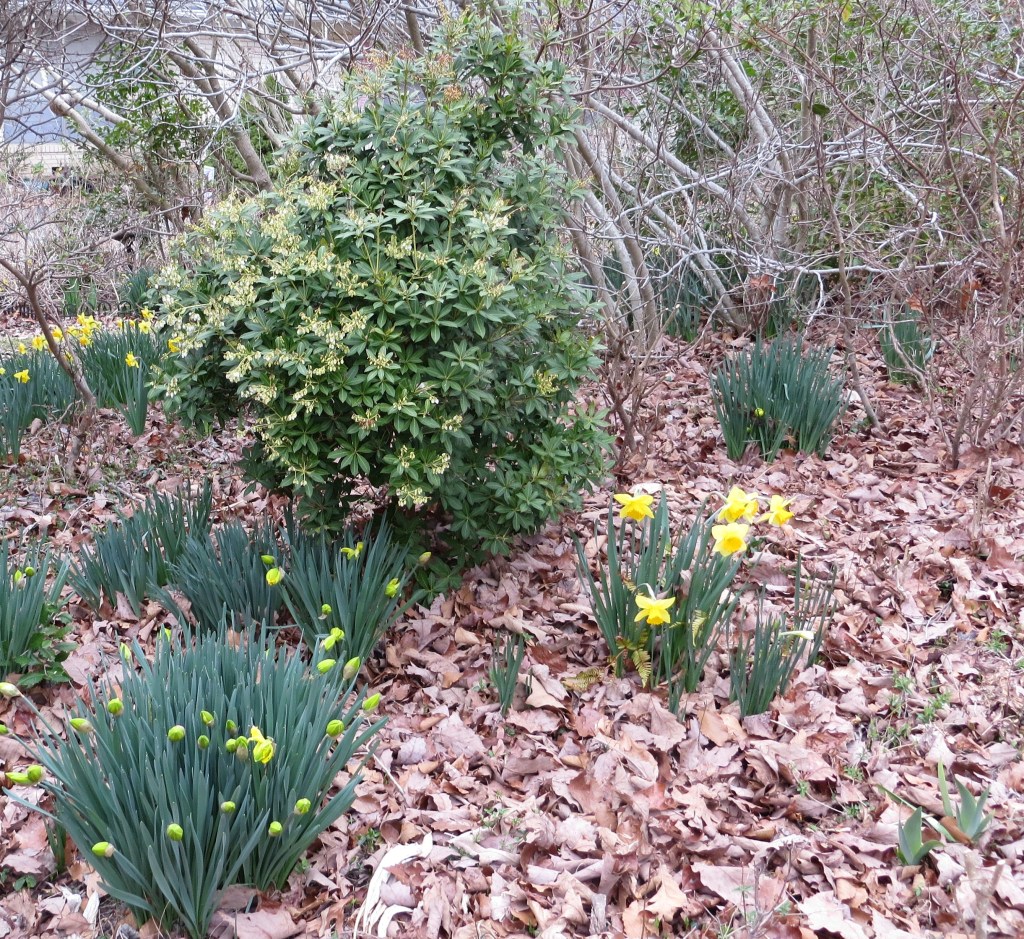
Everything is a bit late this year, in our area. The flowers on our grape Mahonia, which often open to feed hungry bees by late December, were just opening their first few buds when I checked them on Thursday. The Chaenomeles, hybrid Japanese quince, are budding. But not a single flower has bloomed. The Forsythia began blooming this week and looks a little better each day. It is good to have color again amid these great bushy bare shrubs, but I have seen Forsythia bloom before mid-February in previous years. Maple trees are swathed in deep red as their buds begin to open and catkins hang from every hazelnut. We are still enjoying Galanthus and tiny early Irises in containers here and there, even as more daffodils bloom each day.
It has been chilly and foggy several days this week, further slowing the progress of spring, but I’m grateful for the fog and mist as it settles on the garden. I’ve been going outside a bit each day to watch which daffodils are blooming and to do a bit more cutting back and cleaning up. There are browning leaves and fronds to cut, sticks to pull out of shrubs where they landed during recent storms, and the last brown stems of black eyed Susans and garlic chives to gather. Spring is a lot about tidying up, isn’t it?
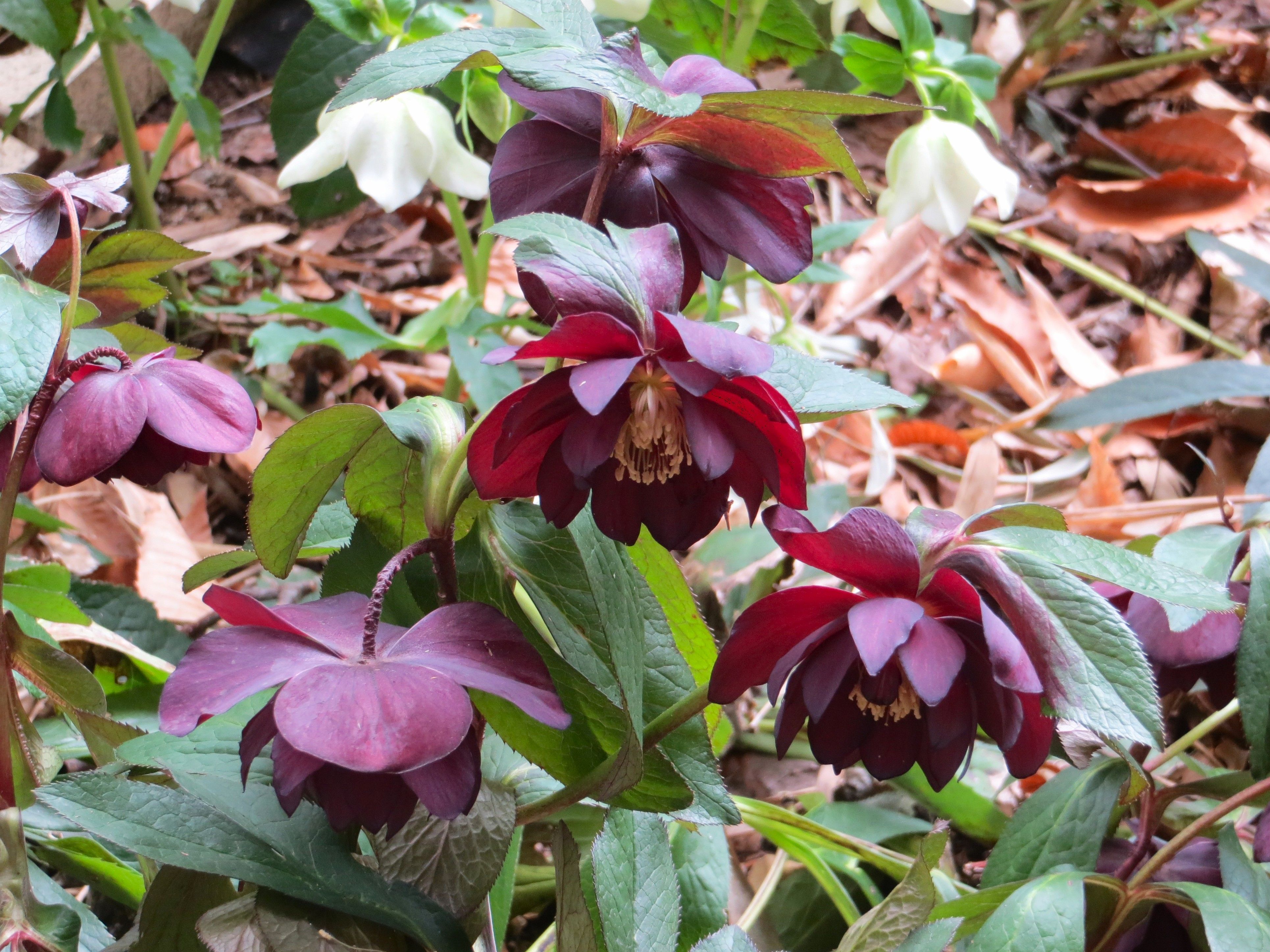
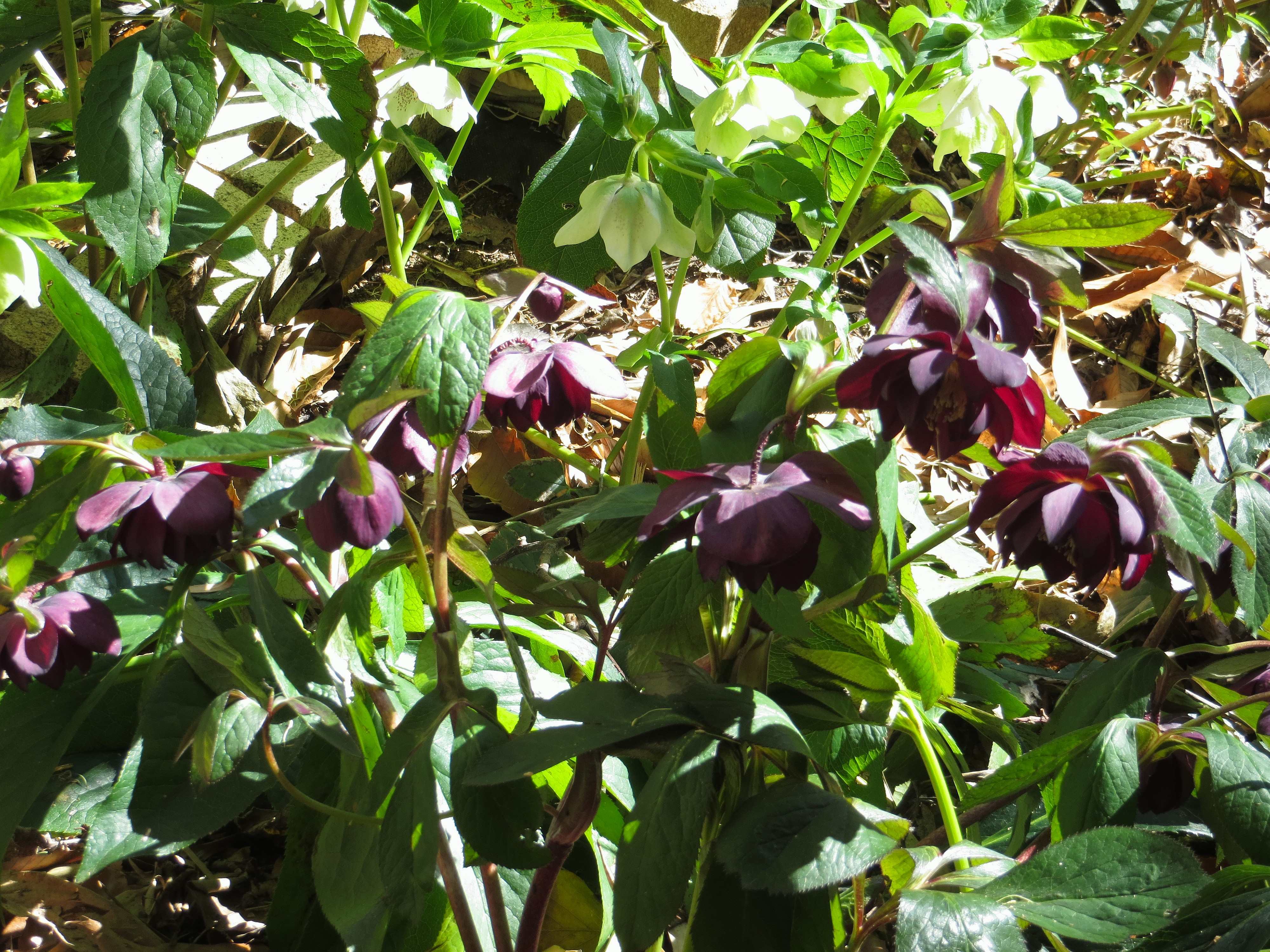
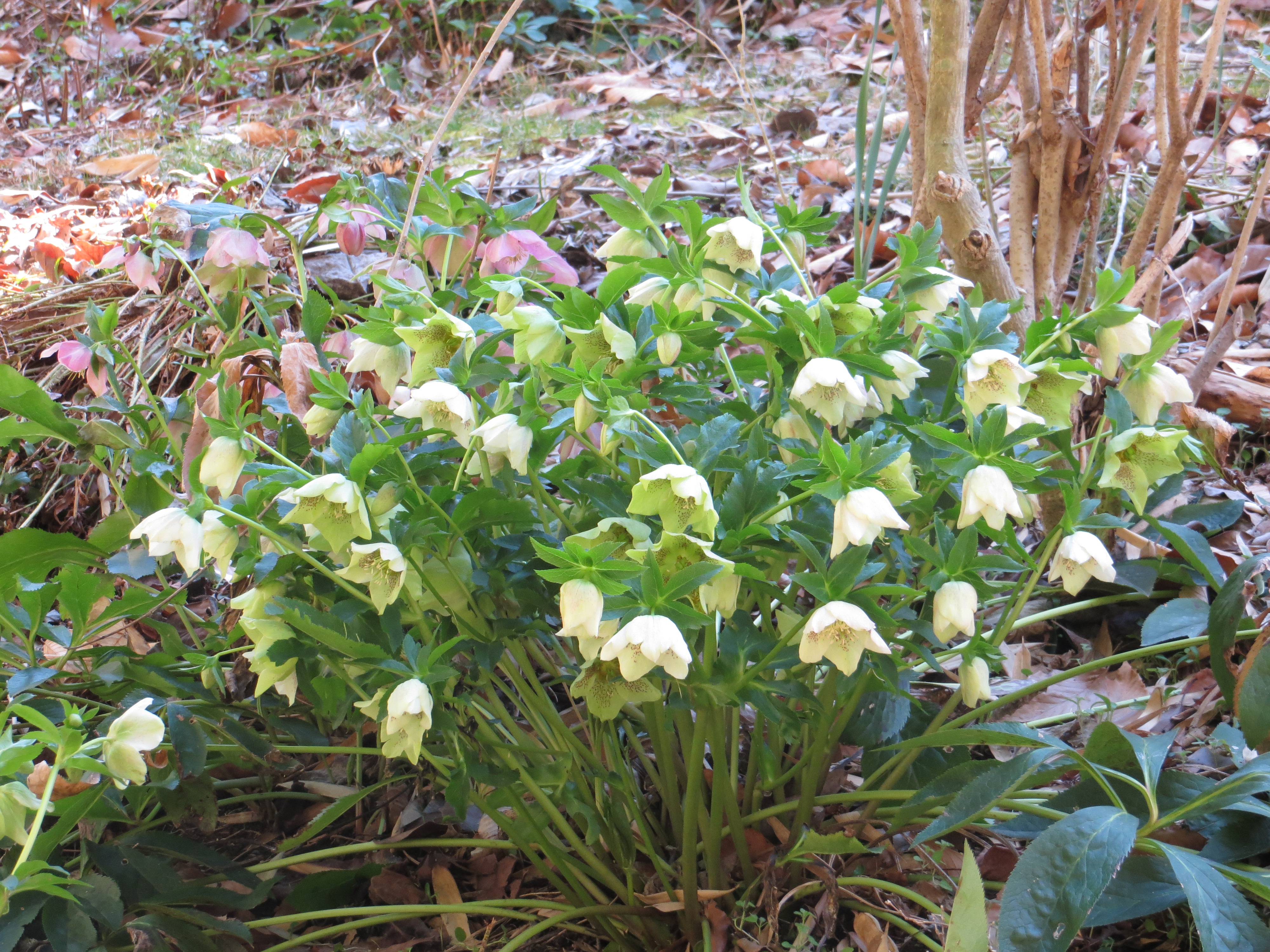
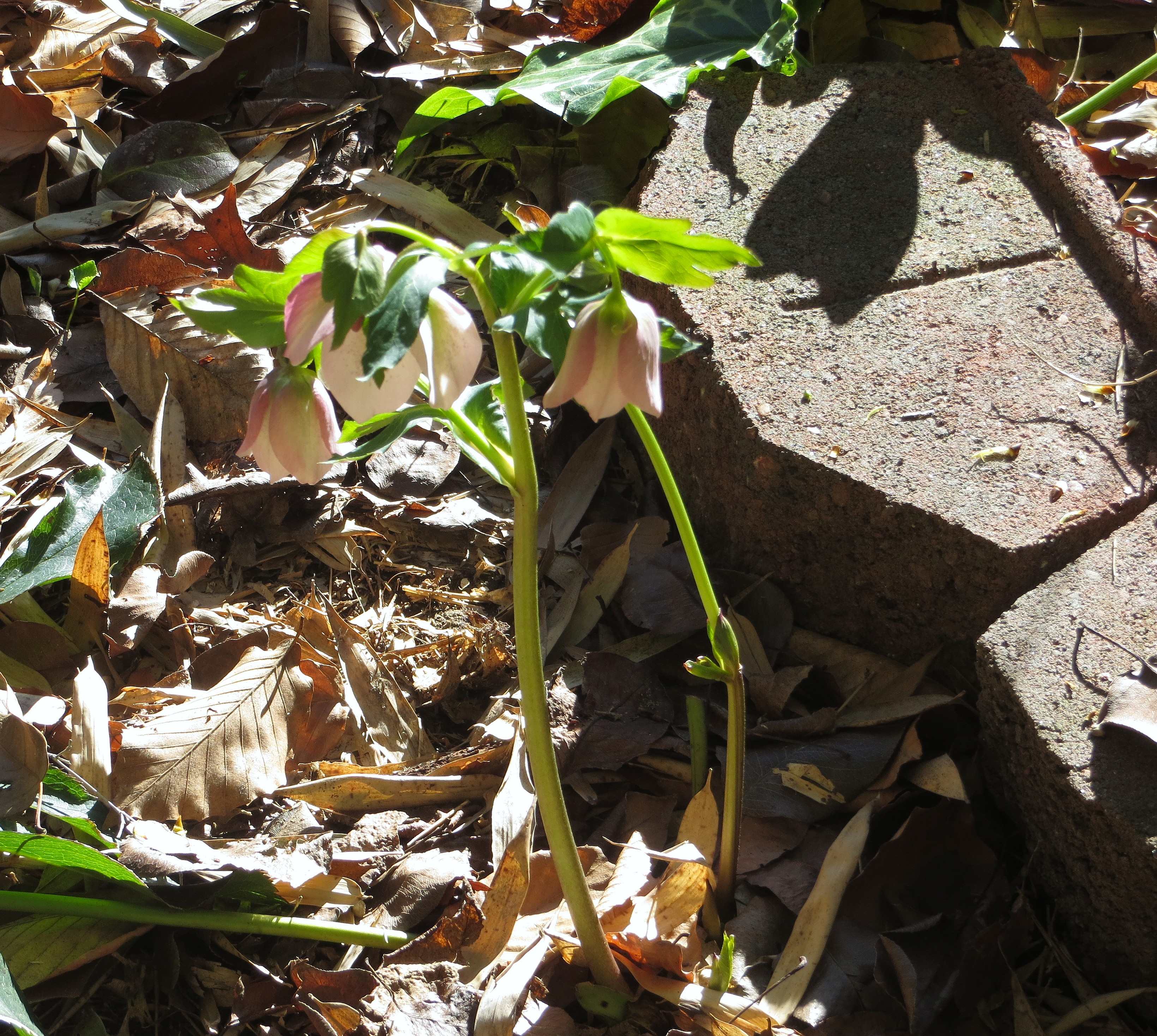
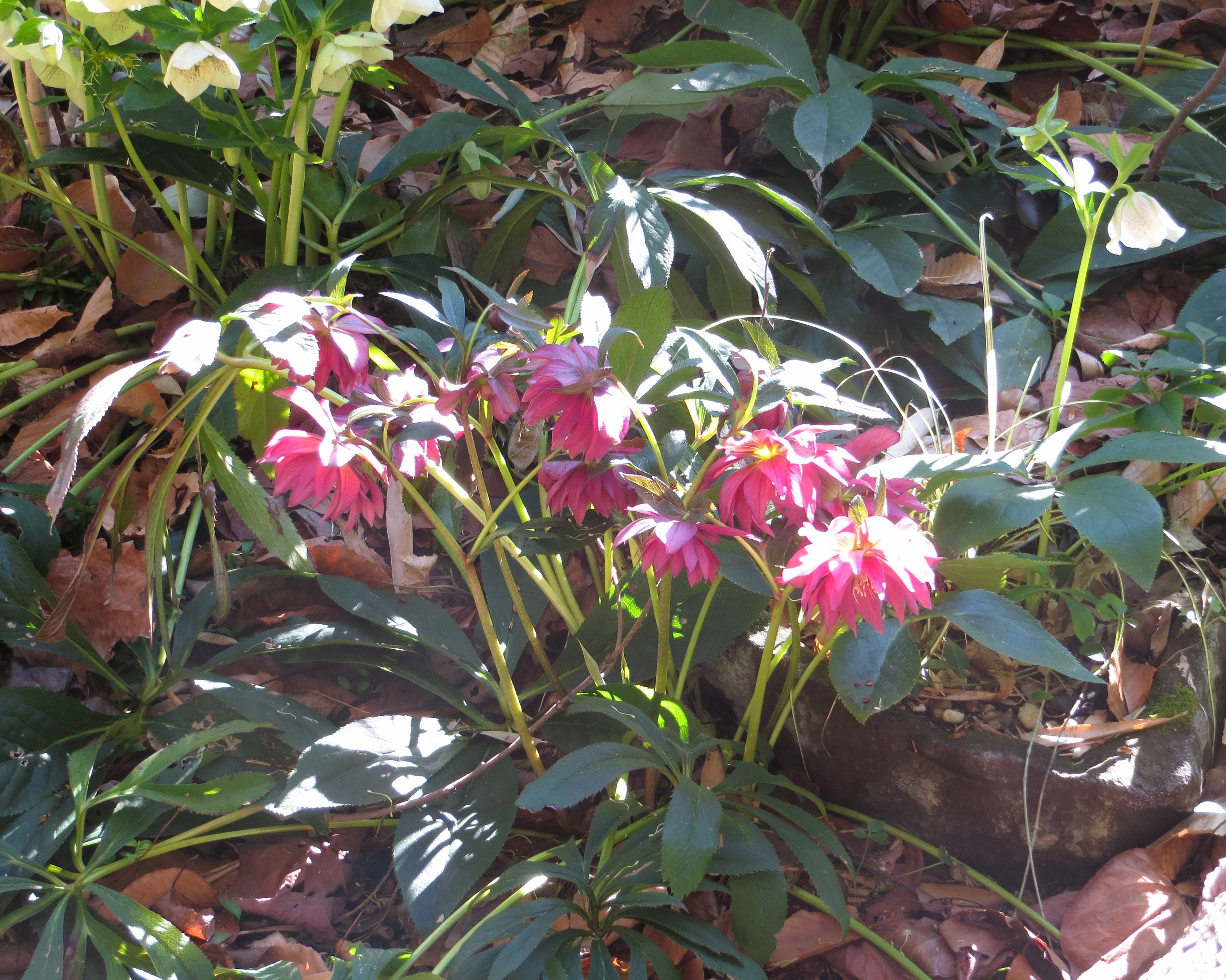
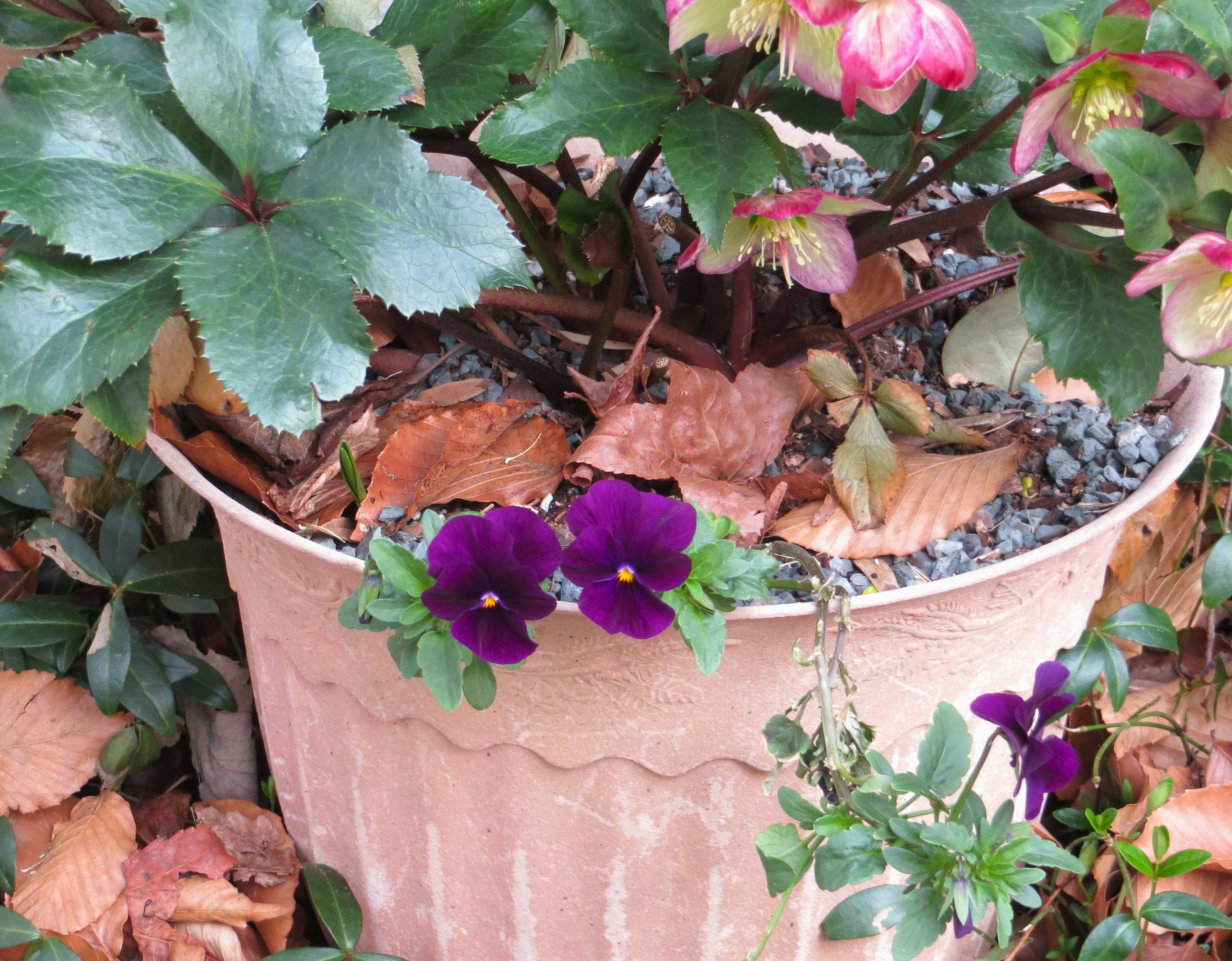
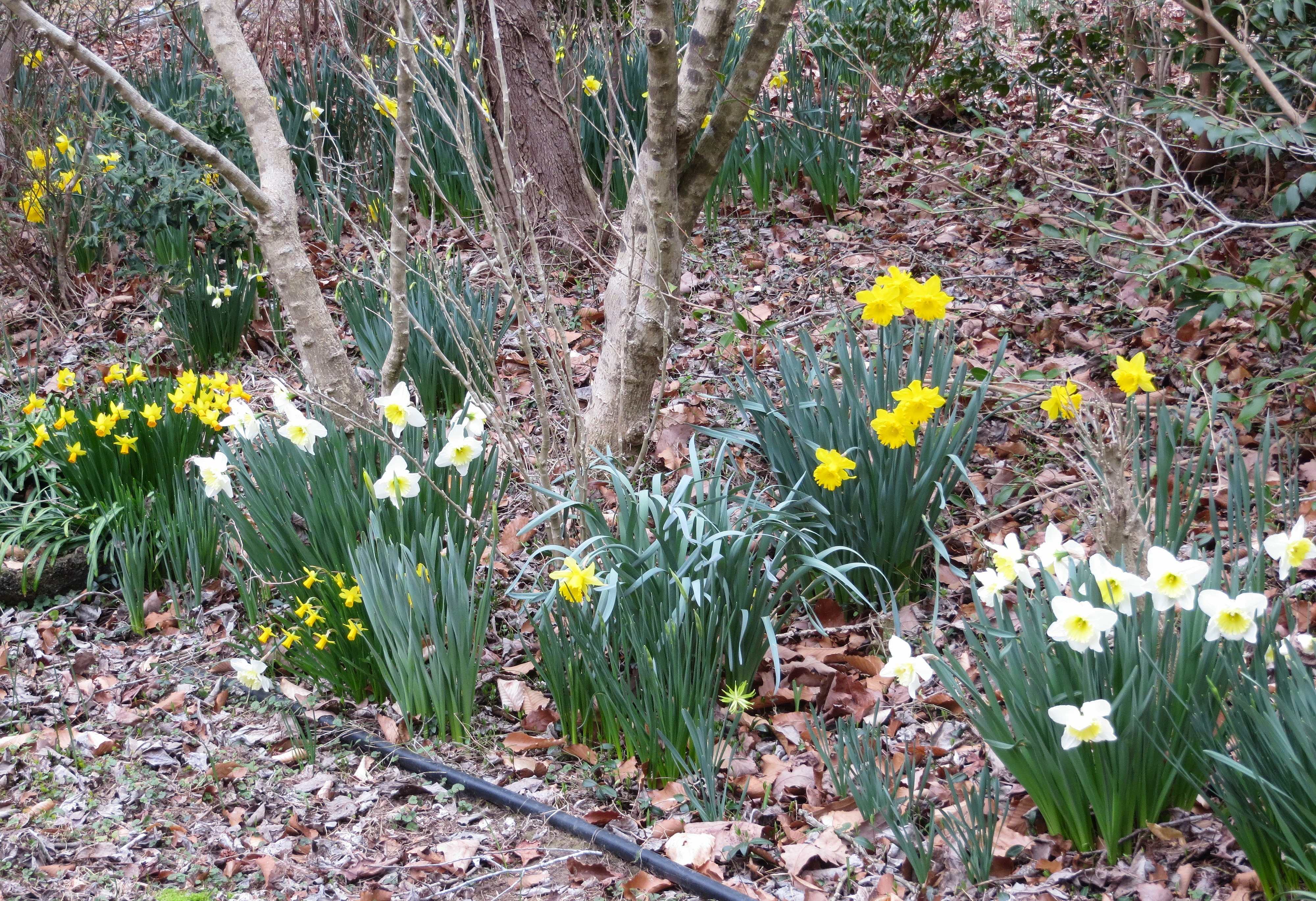
I finally found a patch of Siberian squill yesterday, poking up through the lamb’s ears. They looked rather ragged. It was only earlier this week that we noticed a few bees buzzing around in the garden. But the Hellebores and Narcissus are gorgeous this year. We are enjoying watching the Hellebores pop open to see their color and form. I’ve been moving around seedlings in recent years, establishing Hellebores in new areas of the garden, and so some plants are blooming for the first time in deep rose, creamy white, and delicate shades of pink.
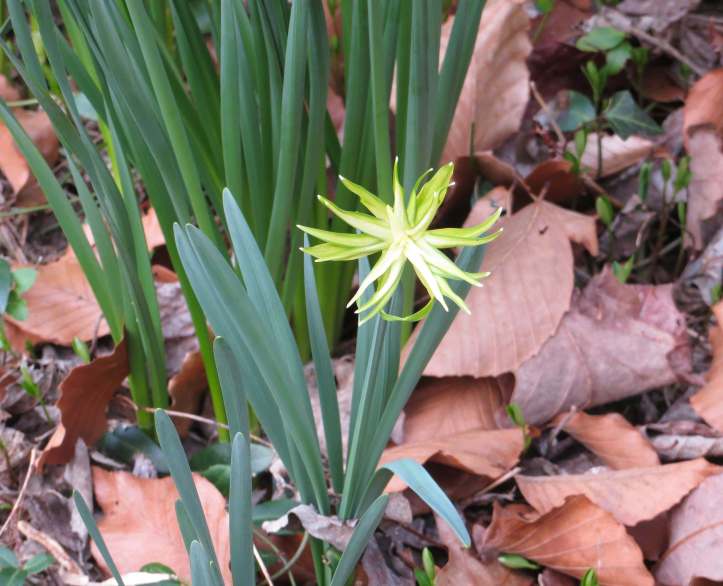
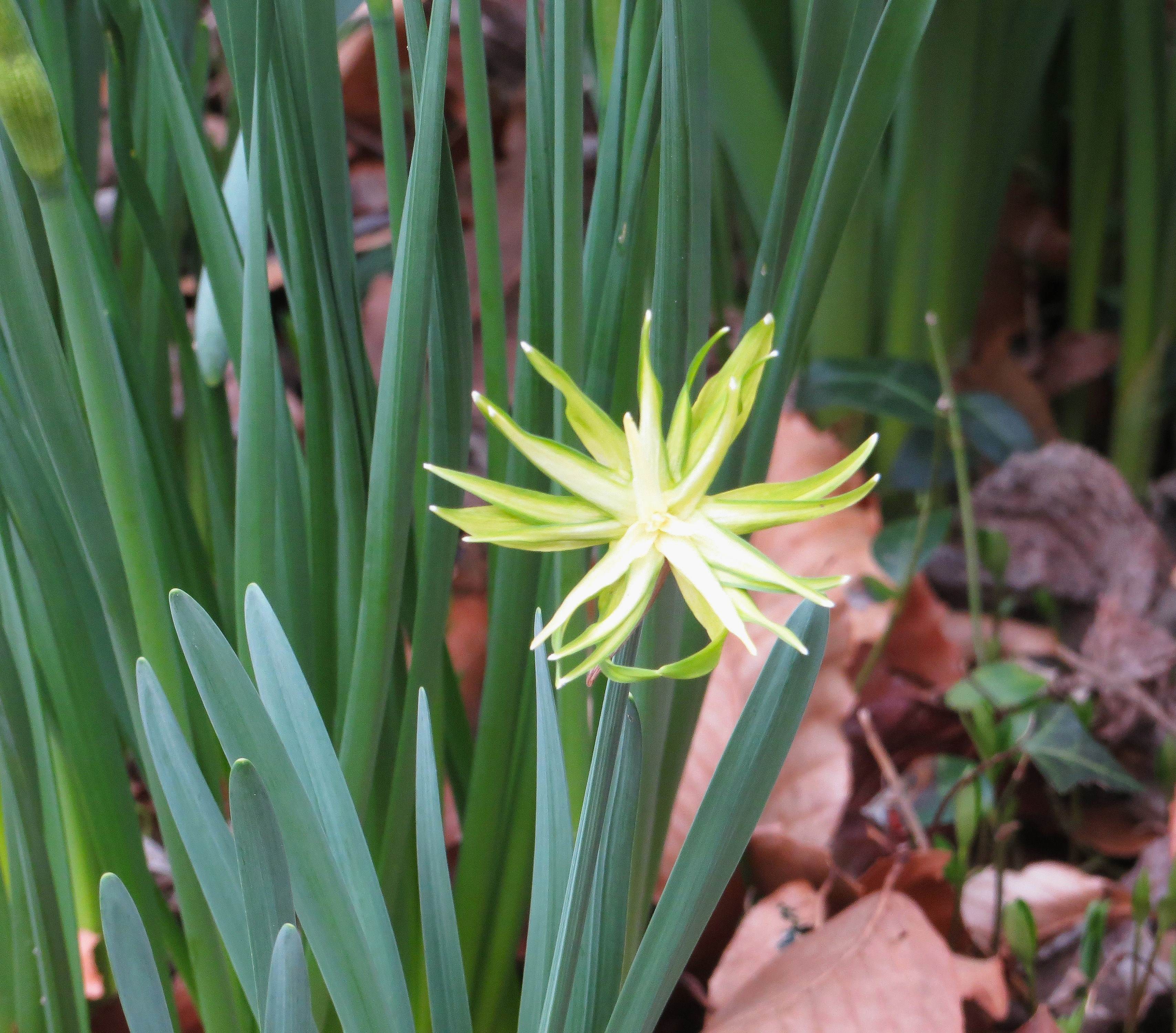
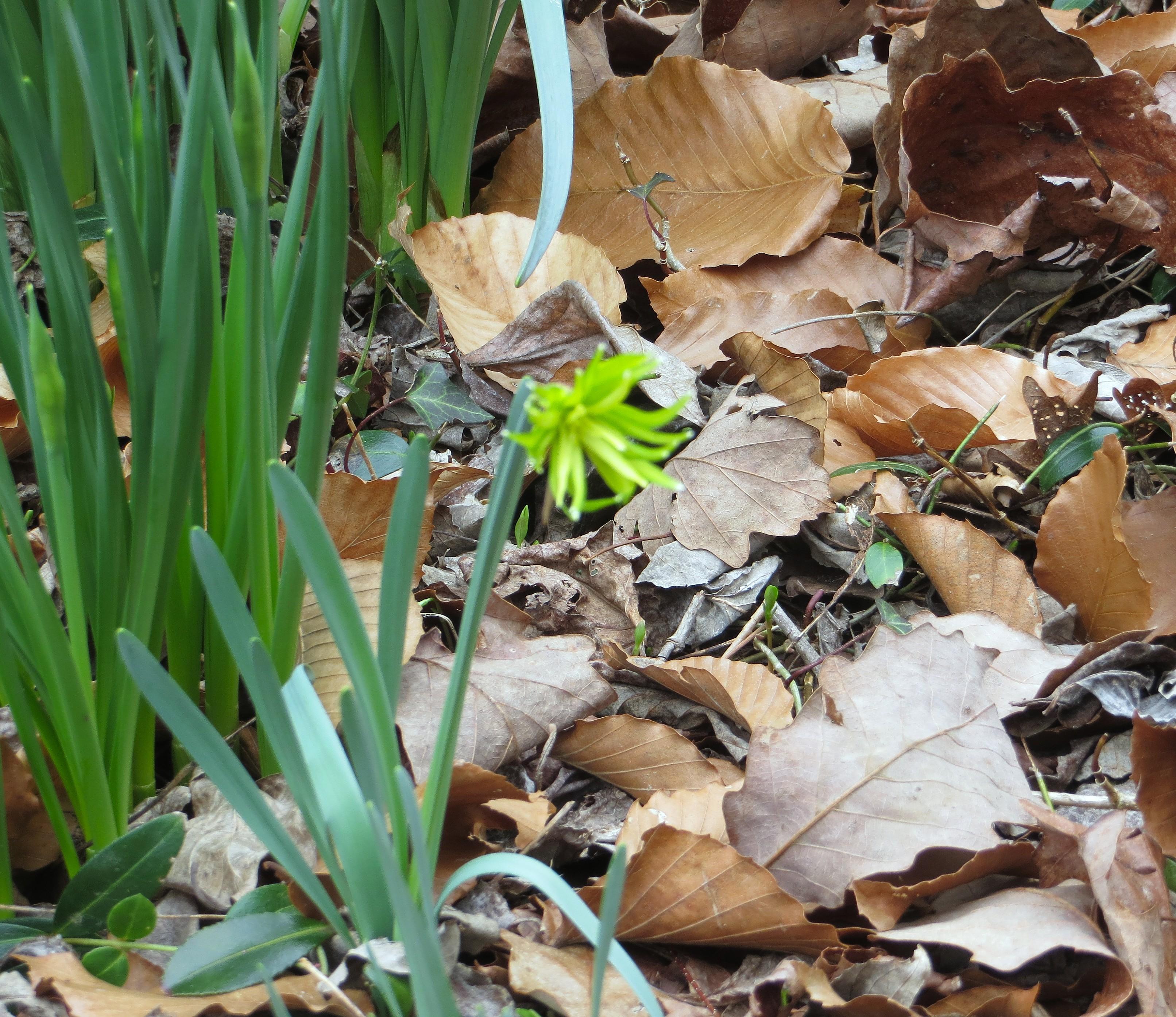
An unusual flower bloomed in a border where I have planted miniature Narcissus over the years. But I certainly don’t recognize it as something I chose, purchased and planted. It is enough of a mystery flower that I reached out to Brent Heath, our local Narcissus specialist based in Gloucester to ask him whether he recognizes it. The closest Narcissus with this sort of appearance is one known as N. ‘Rip van Winkle.’ But that one is much more golden, and with wider petals. So I hope that he finds time to reply and can perhaps shed some light on this flower.
It has been chilly enough, and the weather unpredictable enough, that there is a lot I am waiting to do this spring. I’m waiting to plant out anything new. I’m waiting to start the Caladiums and to move pots back outdoors from the house. I’ve been waiting to do the final pruning and cleanup to leave last summer’s seeds for the birds. I’m even waiting to rake up and shred autumn’s fallen leaves, allowing them to insulate and decay while they also harbor tiny insects and spiders for the birds. While it feels some days like I should just get on with it, the wisdom of experience reminds me to expect the unexpected and just be patient. Spring will unfold on its own schedule and to its own rhythm.
Here is what I wrote six Marches ago, in 2019:
“Perhaps it’s a good thing that I’ve waited this long to rake up winter-blown leaves and finish the pruning. Once woodies begin to bud and bloom, cold nights like these can ruin tender petals and leaves. I’ve learned its wise to not rush the season, but to wait and see what more winter weather may come our way.
“Rather than rushing, this March I’m going to savor what comes into leaf or bloom each day. Each small flower, every tiny bud swelling on a branch, every bit of emerging perennial pushing up through the muddy earth is beautiful.
“Perhaps it is better to savor spring slowly; to re-discover the treasures of awakening plant life in miniature. The smallest parsley seed holds wonder and promises magic. From small beginnings, beautiful gardens will surely grow.“
Woodland Gnome, March 2019
“Rejoice in small things and they will continue to grow”
Slaven Vujic
With appreciation to Jim Stephens of Garden Ruminations, who
hosts Six on Saturday each week.

 Our Forest Garden
Could the odd narcissus flower be fasciated? The Tommy crocus looks like ‘Pickwick’ Dutch crocus. Are Dutch crocus varieties of Crocus tommasinianus?
LikeLiked by 1 person
That is a great question, Tony, and I don’t know. I am hoping that Brent Heath can offer some insight. The Crocus is likely Crocus – tommasinianus ‘Whitewell Purple’. So far as I know, the Tommys are considered Dutch Crocus because they are mostly propagated and raised in Holland. Great questions today!
LikeLiked by 1 person
Still, that crocus looks more like ‘Pickwick’ to me, since ‘Whitewell Purple’ lacks stripes. Crocus vernus are the ‘common’ Dutch crocus, although they are produced in New England and the Pacific Northwest.
LikeLiked by 1 person
Well Tony, I’m sure you’re right. After writing back to you I went back and studied the bulb catalog more closely, with the photo at hand, and realized that ‘Whitewell Purple’ lacks stripes and the white background. So I’ll go with your naming. Crocus aren’t one of the genera that I have studied that closely. Our supplier, Brent and Becky’s Bulbs, does the bulk of their growing in Holland and some in Gloucester, VA, for some Narcissus.
LikeLiked by 1 person
Dutch crocus here are about as Dutch as California pepper from Peru is.
LikeLiked by 1 person
❤
LikeLiked by 1 person
Perhaps there was a rogue Narcissus in your pack?
LikeLike
I have wondered the same thing! 😉
LikeLike
Beautiful thoughts at the beginning, and that is truly a unique Narcissus! I am such a huge Camellia fan, and I wish I could grow them here (my climate is too cold). I will go back and fawn over your Camellia pictures again. Happy Six!
LikeLiked by 1 person
Thank you, Beth. Camellias are such a treat in spring and late fall when it is too cold for most flowers. I’m sorry you can’t grow them. I love Jim’s posts since he often shows Camellia flowers I’ve not seen before. Happy Six! ❤
LikeLike
Spring is an exciting unfolding. I wonder if your daffodil has a virus, or perhaps is a crossed seedling? A mystery!
LikeLiked by 1 person
Yes, spring is always interesting between the plants budding out and the weather coming unpredictably. I hadn’t considered a virus- something is certainly weird with the little daffodil! ❤ ❤ ❤
LikeLike
It’s a weird narcissus ! I’ve never seen one like that. And firstly I thought like Tony with a fasciated flower. I can’t help you more.
LikeLiked by 1 person
Thank you so much for sharing your thoughts on it, Fred. I’ve never seen anything like it. There are several other clumps of identical foliage nearby, but so far no more flowers. I can’t wait to see whether the flowers look the same, or turn out as something different. A garden mystery!
LikeLiked by 1 person