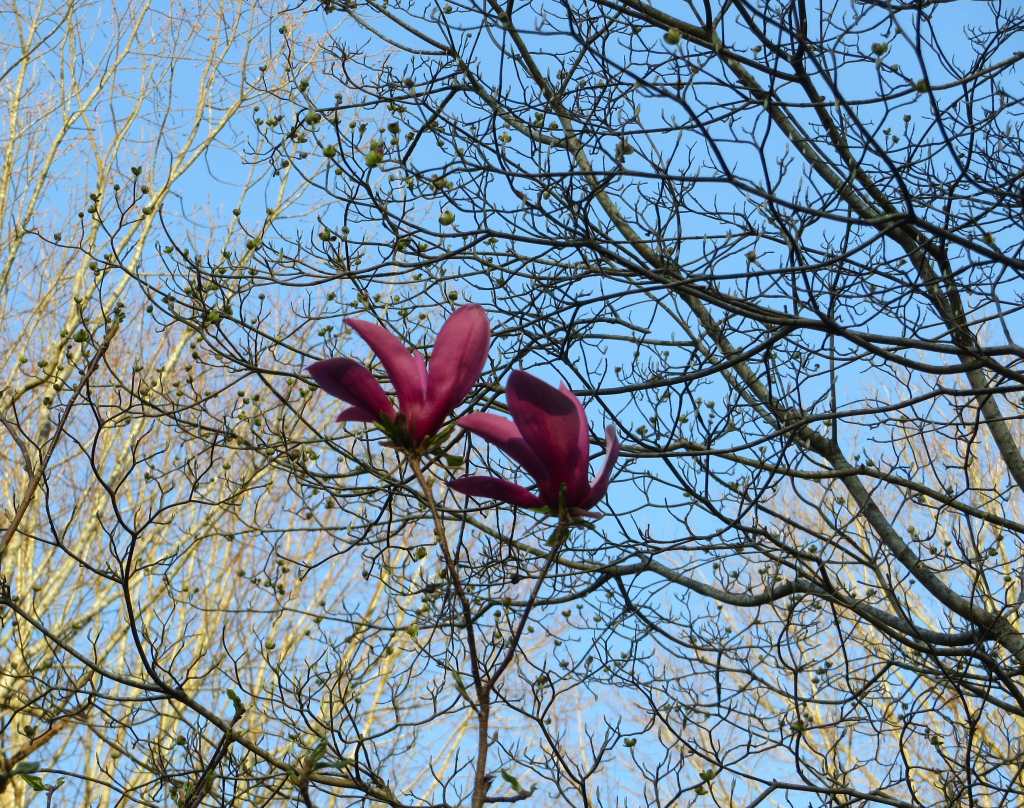
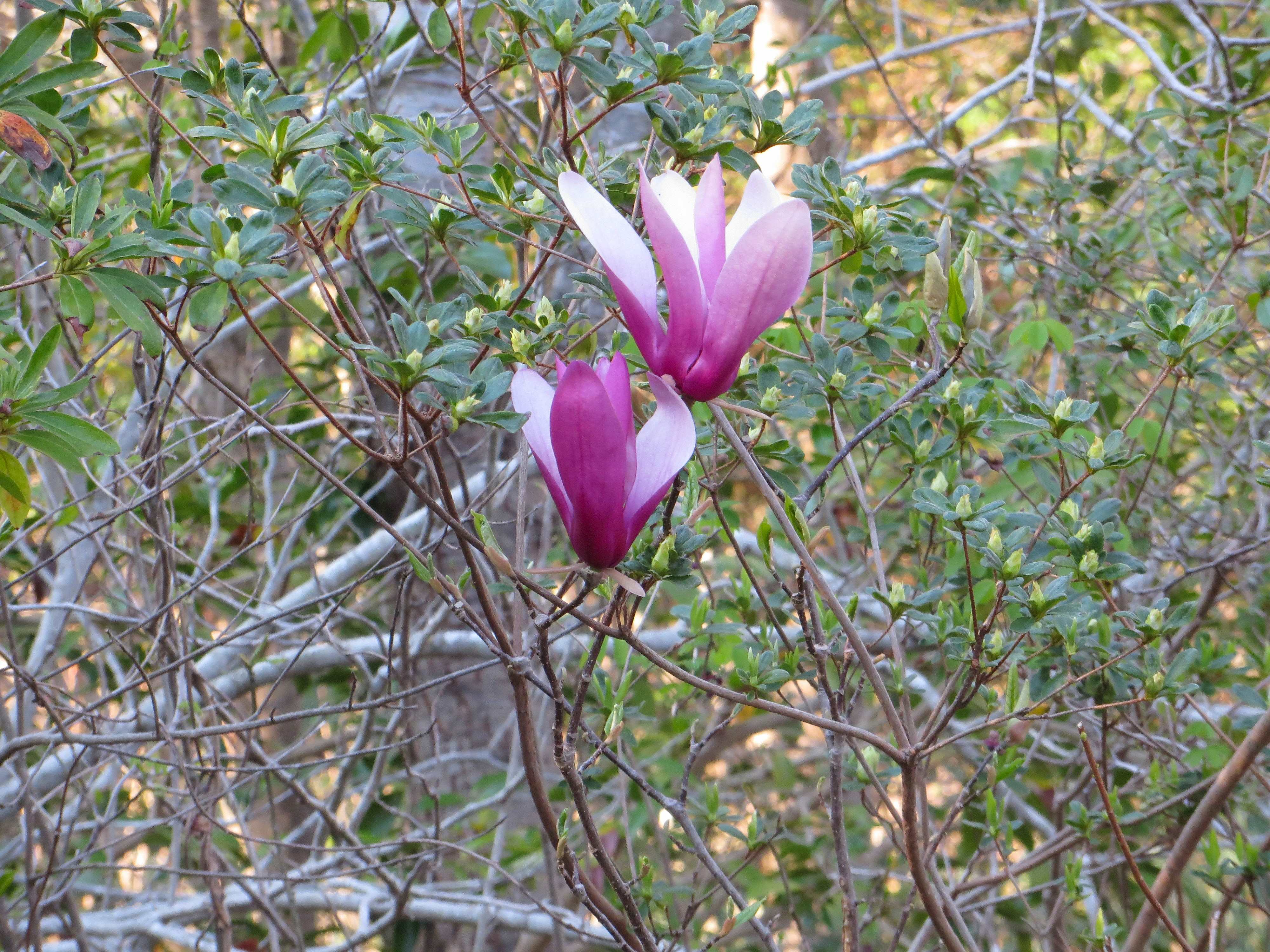
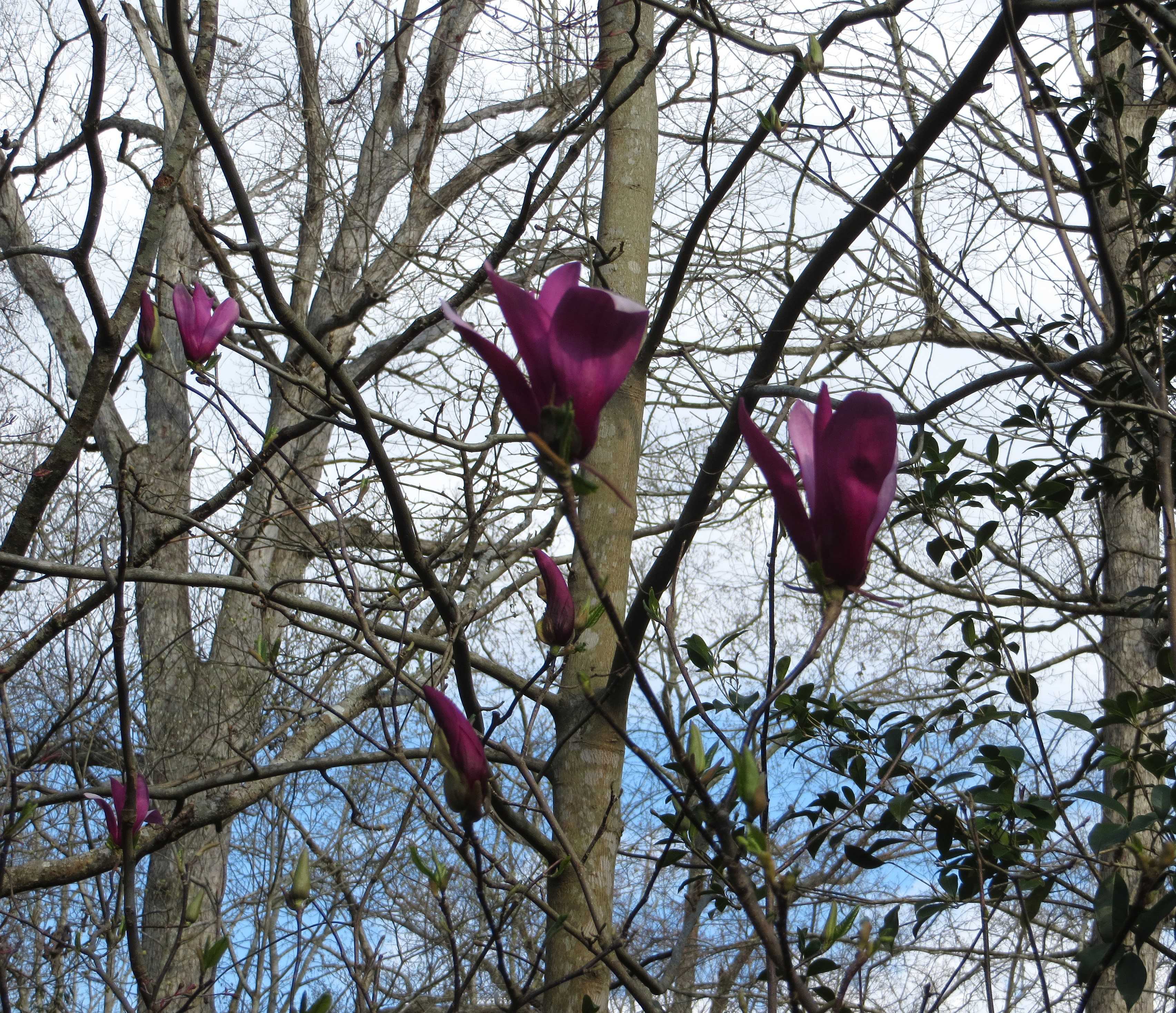
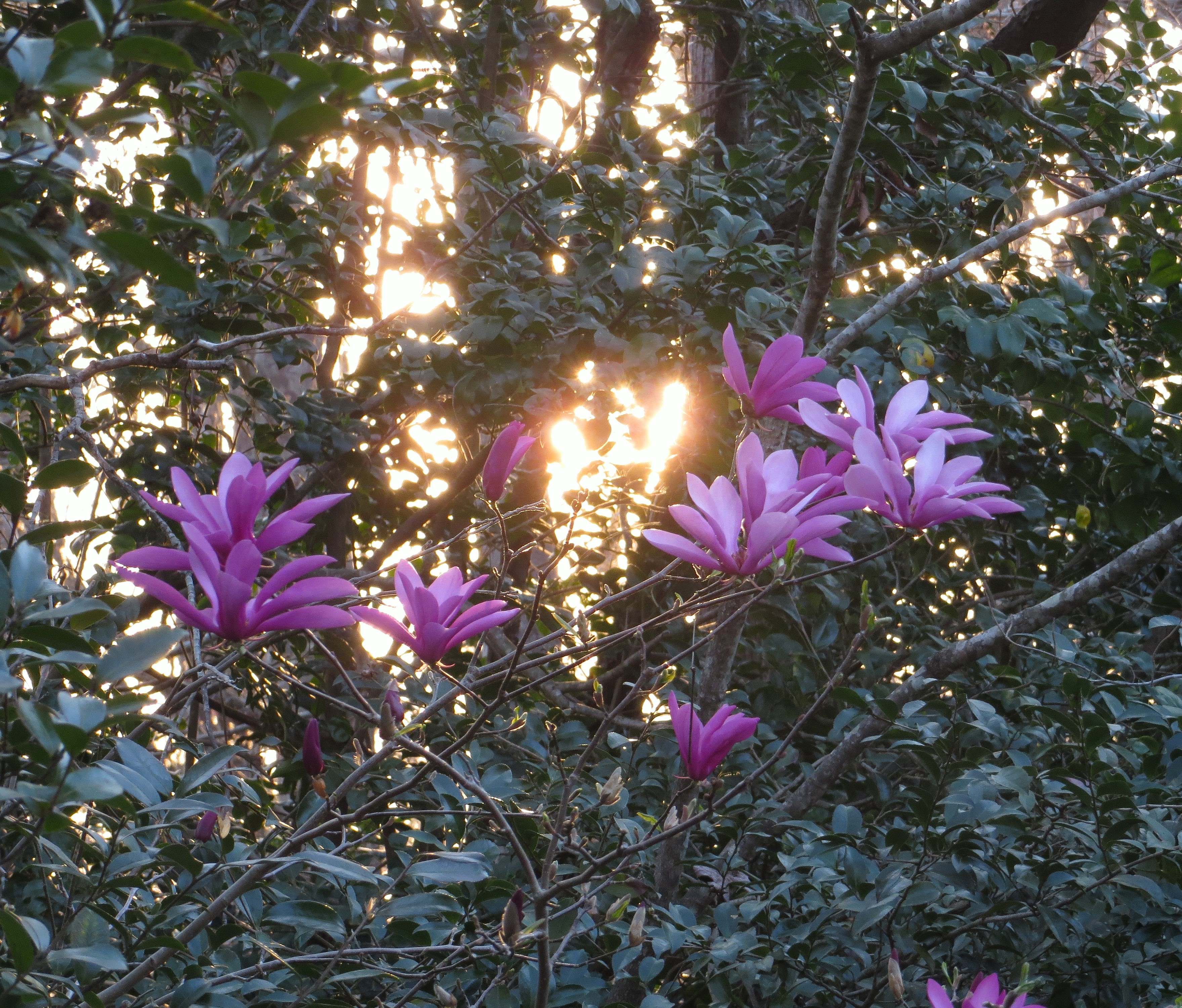
A partial solar eclipse will begin here in less than an hour, at exactly two minutes after sunrise. There must be a message for us there somewhere when the moon partially blocks the sun just as it is rising in Aries. It reminds me how many of the natural forces that influence us and shape our lives are beyond our understanding and control. The common ideas of ‘good’ and ‘bad’ most of us were raised with dissolve into the Asian answer, ‘mu,’ which means the answer is unknowable; just as what waits for us in the next moment, hour, or week remains unknowable.
Our garden’s progress this week reminds us that what does or doesn’t happen, how the plants respond, and their timing, is entirely dependent on forces beyond our personal control. I recall reading an article published sometime in late January or February which was predicting, based on the nearly two years of record warm monthly temperatures experienced in our region, that the cherry blossoms in Washington DC would open earlier this spring than ever before. The article was accompanied by complex explanations of what ‘peak bloom’ means and timetables of previous years’ bud break, peak bloom, and fading. The article left one feeling a bit strange witnessing the real-world effects of this rapid change in our environment apparently caused by unprecedented atmospheric warming. It was akin to the feeling I get when reading about melting glaciers and polar bears set adrift in the ocean.
And yet, here we are at the last weekend of March and the cherry blossoms are just about to reach peak bloom in the coming days, much later in the month than was forecast. In fact, the same paper ran an article this week documenting areas of the country where spring bud break is running much further ahead or further behind the average. And our region, including Washington DC, is running more than 7 days behind average. There are regions near us that are 3 to 7 days later, and other parts of the United States running ahead of average for trees to bloom and leaf out. The colorful map was stratified in mysterious ways beyond my understanding since the patterns it documented this spring don’t really follow any previously understood paradigm. They cut across regions and climate zones.
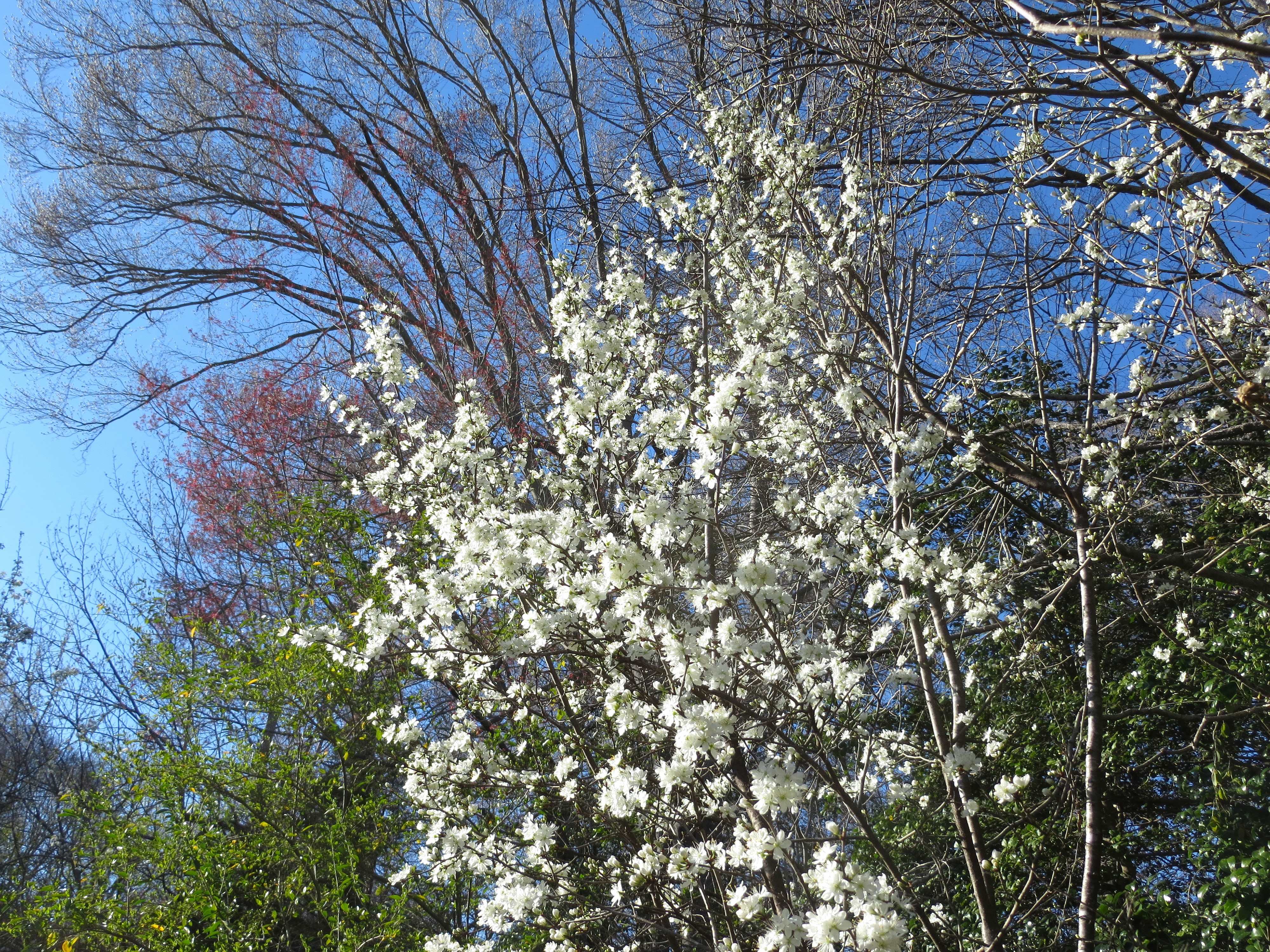
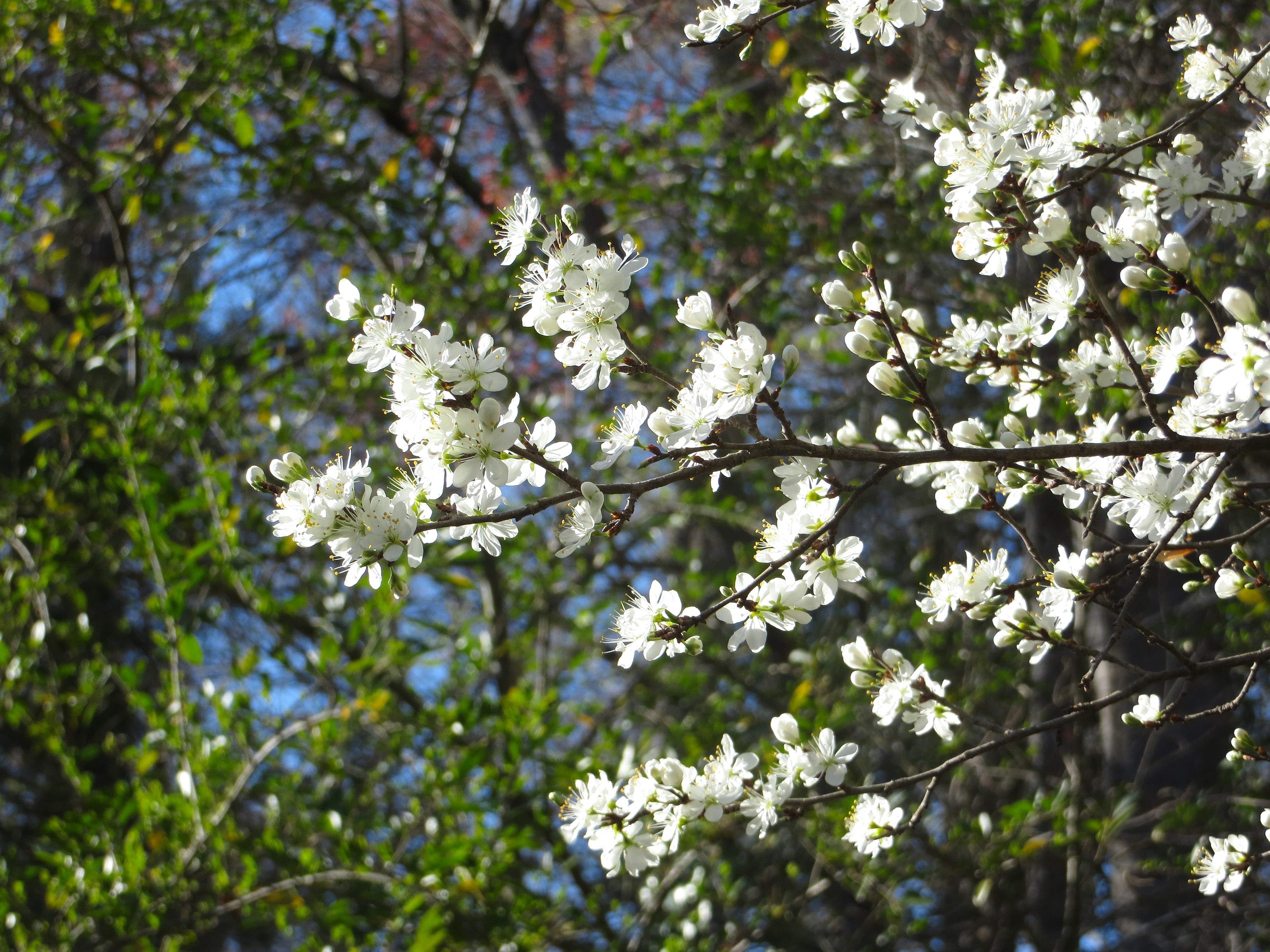
Here is Williamsburg, we are in that region where bud break is over a week behind ‘normal,’ and winter has lingered far longer than in recent memory. I’ve been indoors traveling down photographic memory lane while searching out photographs taken in previous years to illustrate a few articles this month. Those photos reminded me that we normally enjoys flowering trees, unfolding ferns, and emerging perennials much earlier in March than has been the case this year.
Winter’s chill settled in early here and we had more extreme and prolonged cold than is normal; and it has lingered later into what we normally enjoy as spring. We’ve watched the Siberian polar vortex sweep southwards, allowing Arctic air to blow across our entire continent down to the Gulf of Mexico, bringing ice and snow along with cold air to regions that rarely experience them. All those fruit trees needing chilling hours and seeds requiring cold stratification to germinate had their needs met this winter. And I must admit, it has been a refreshing change from last summer’s heat.
But winter’s spell broke this week. After a final night in the upper 30sF mid-week, just above freezing, the wind has changed from north to south. We have a stretch, beginning today, where the high temperature may reach 80F or more. And since we’ve had good rain these past few weeks, the plants are poised to grow… rapidly.
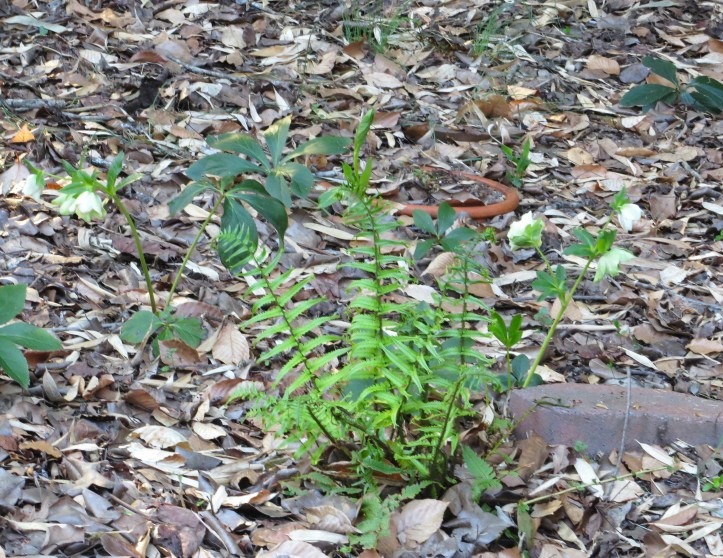
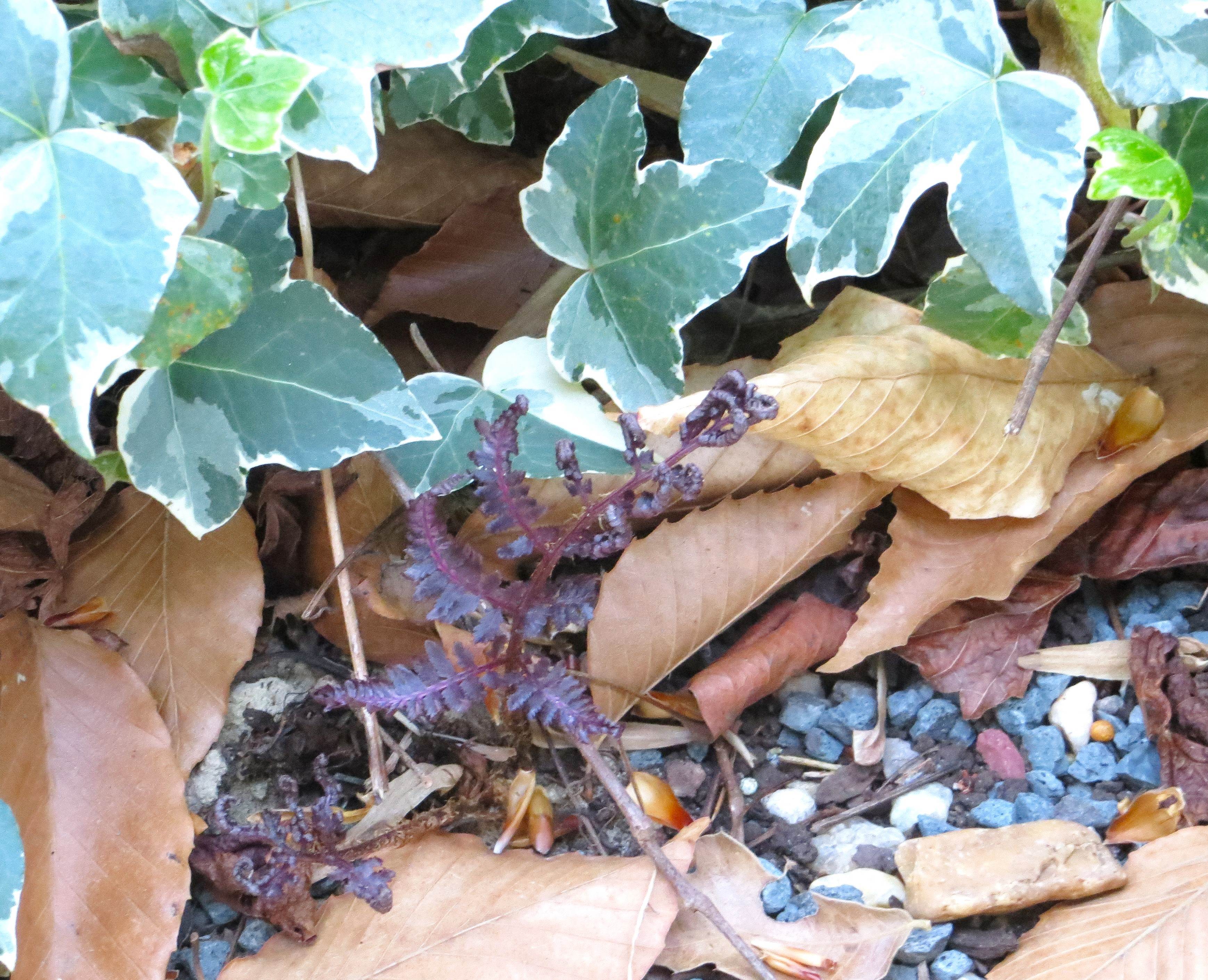
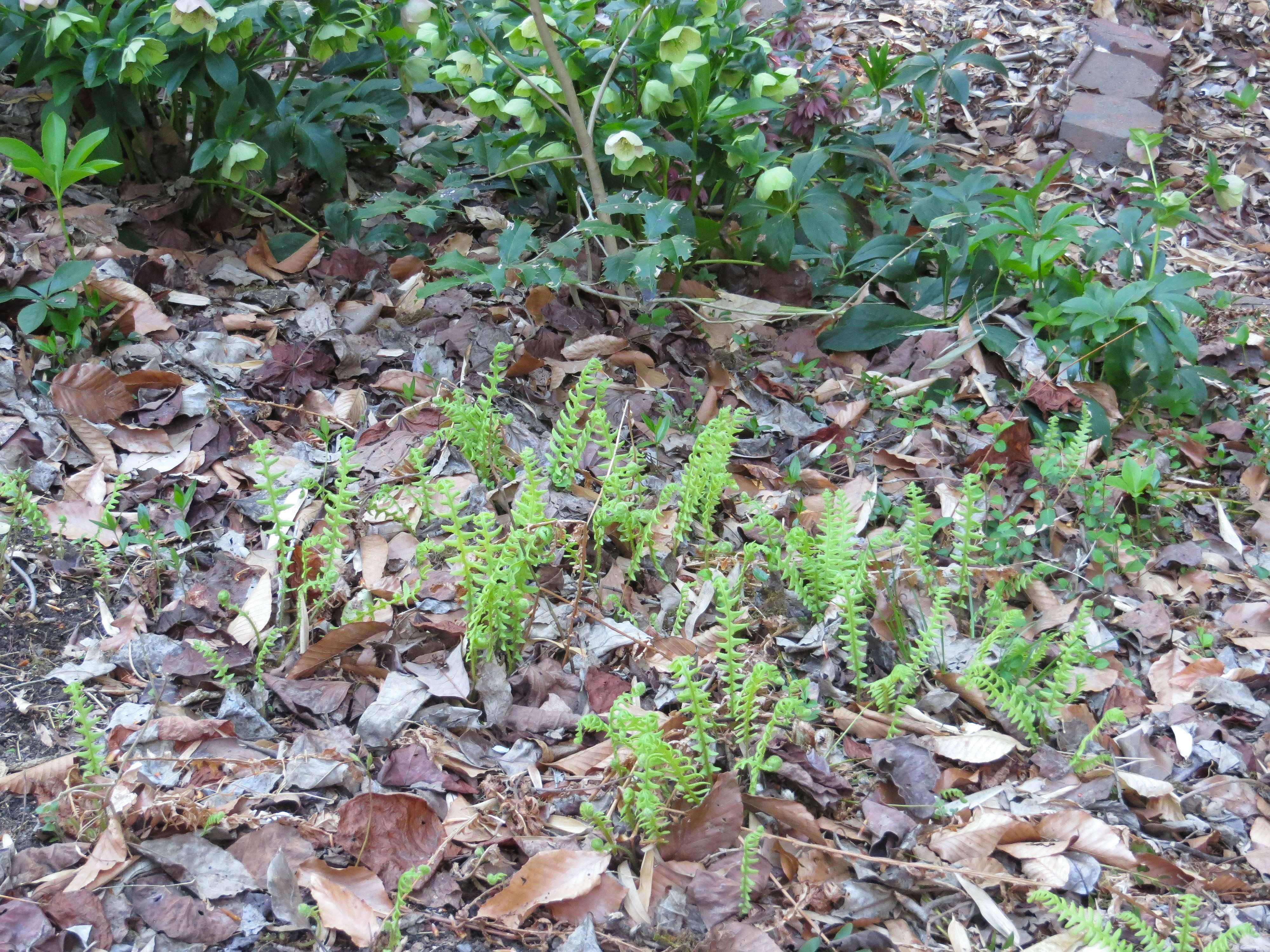
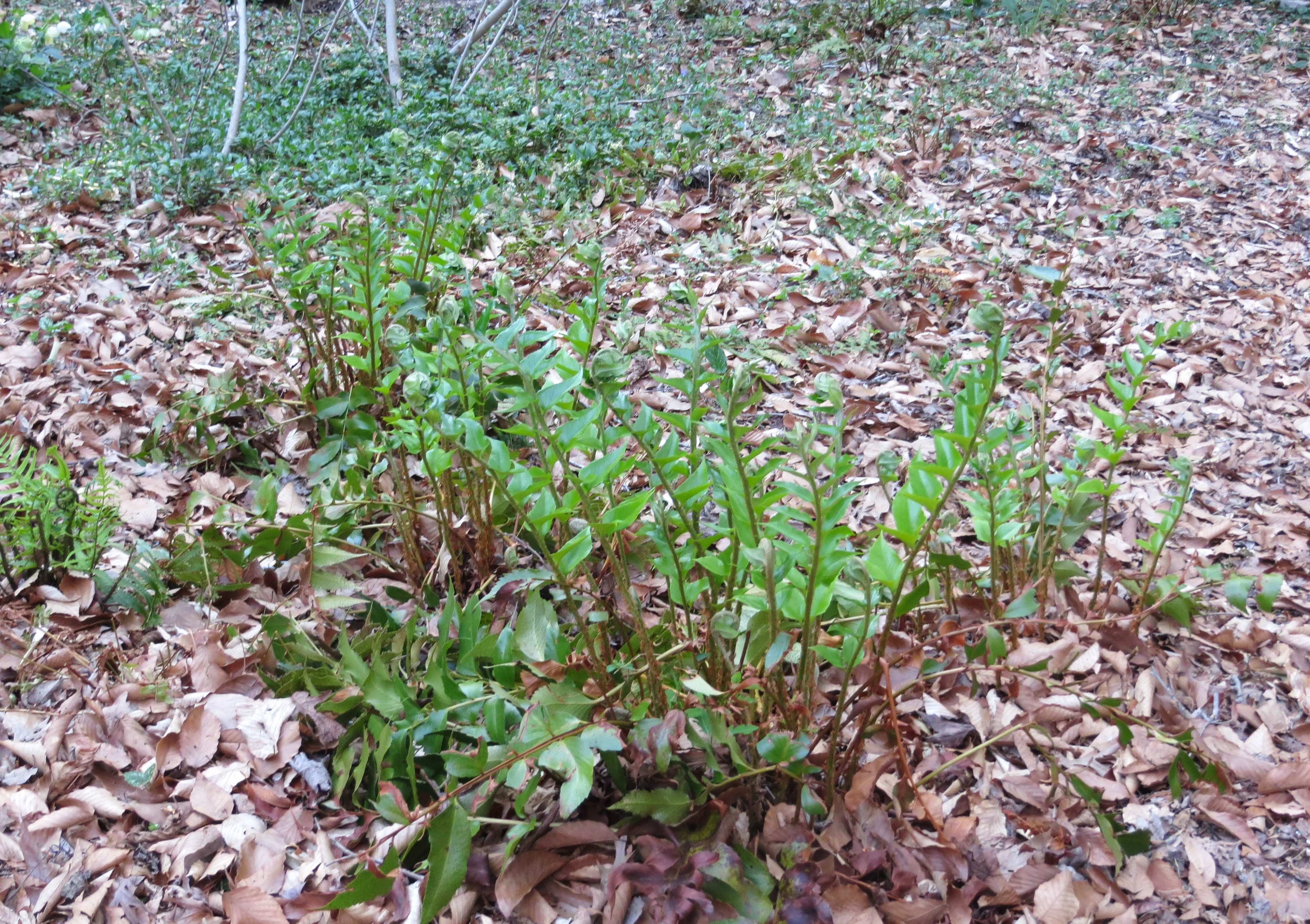
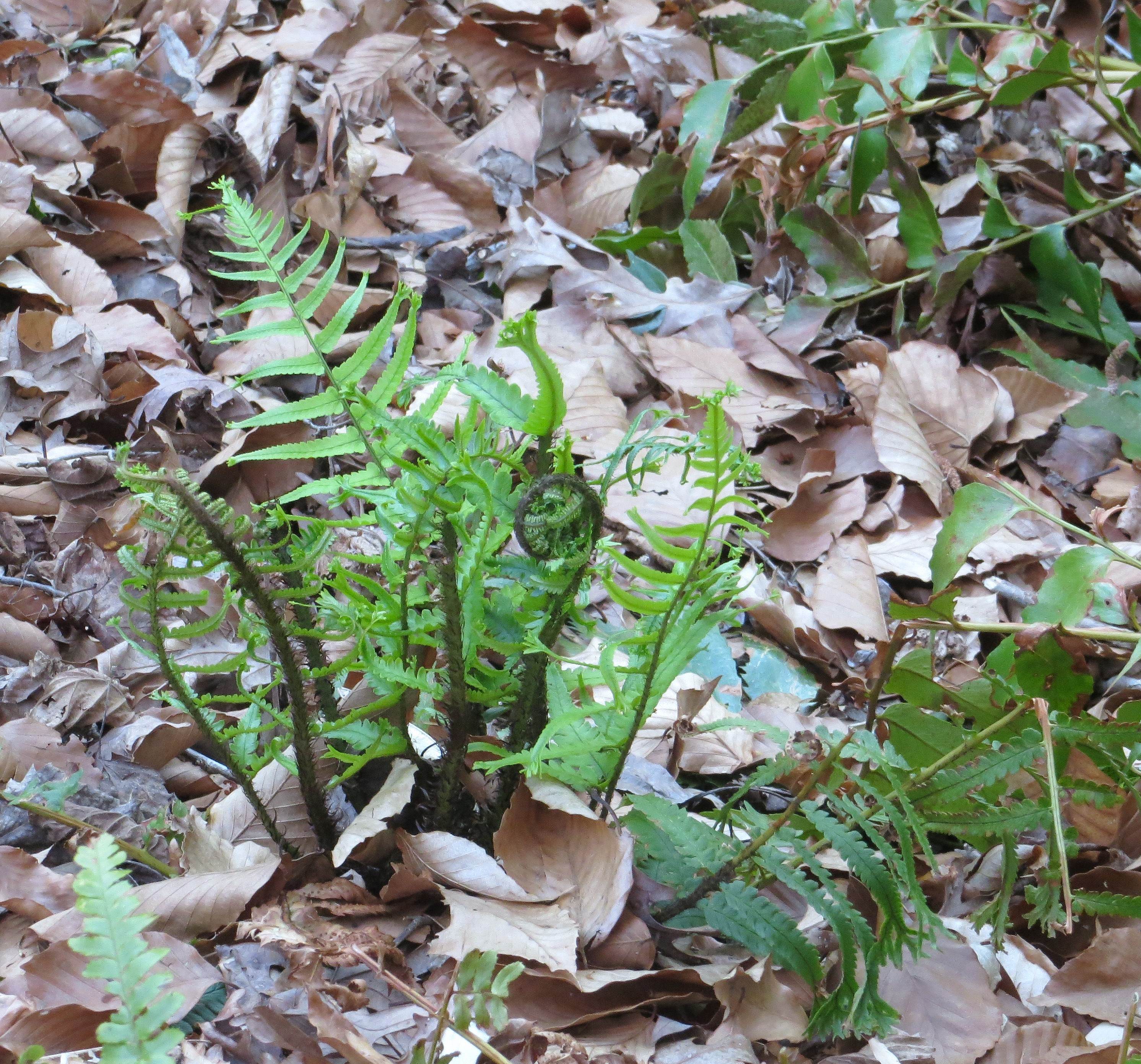
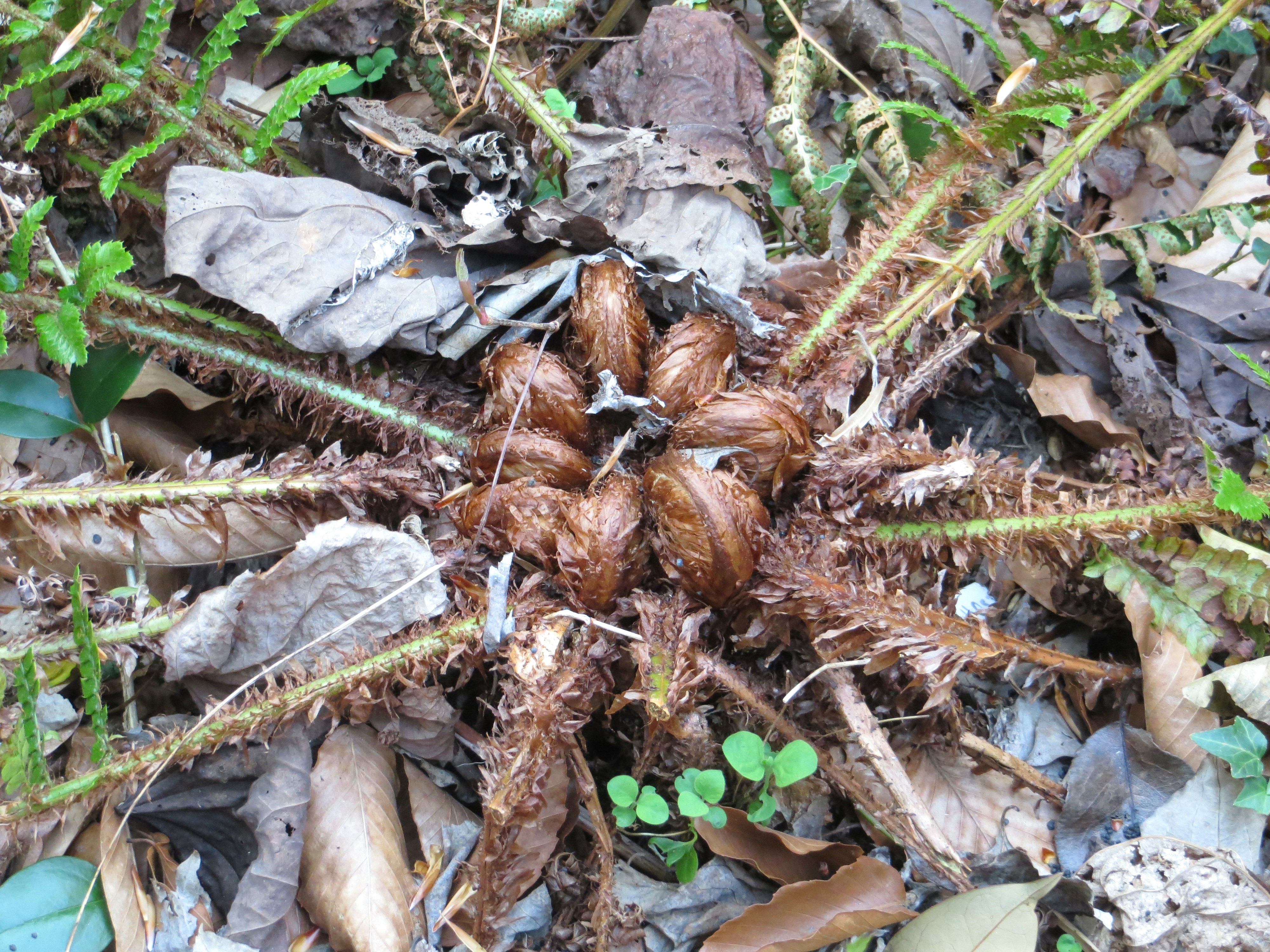
Last Saturday morning I went outside to take a few more photos of our ferns before publishing ‘Six on Saturday.’ When I went back to those same ferns later in the afternoon, I was astounded to realize those fronds, just beginning to unfurl in the morning, were already several inches taller. This week I’ve been watching the buds swell on a Prunus of unknown species which blooms in our side yard each spring. Its cloud of tiny, perfect white flowers is always a highlight of spring for us here. And after days and days of watching its buds swell it finally bloomed on Thursday.
After writing on Wednesday about Podophyllum peltatum, or mayapple, which is the Virginia Native Plant Society’s Wildflower of the Year for 2025, I went in search of emerging mayapple leaves where they have grown here in previous years. And to my utter delight they are beginning to emerge from the leaf litter. They expand a bit each year to make an interesting patch along a path under an old oak tree. Utterly poisonous, no grazers disturb them. They require no fuss or care. I like how they look a bit mysterious and blend so well with spring bulbs, ferns, and ground cover vines.
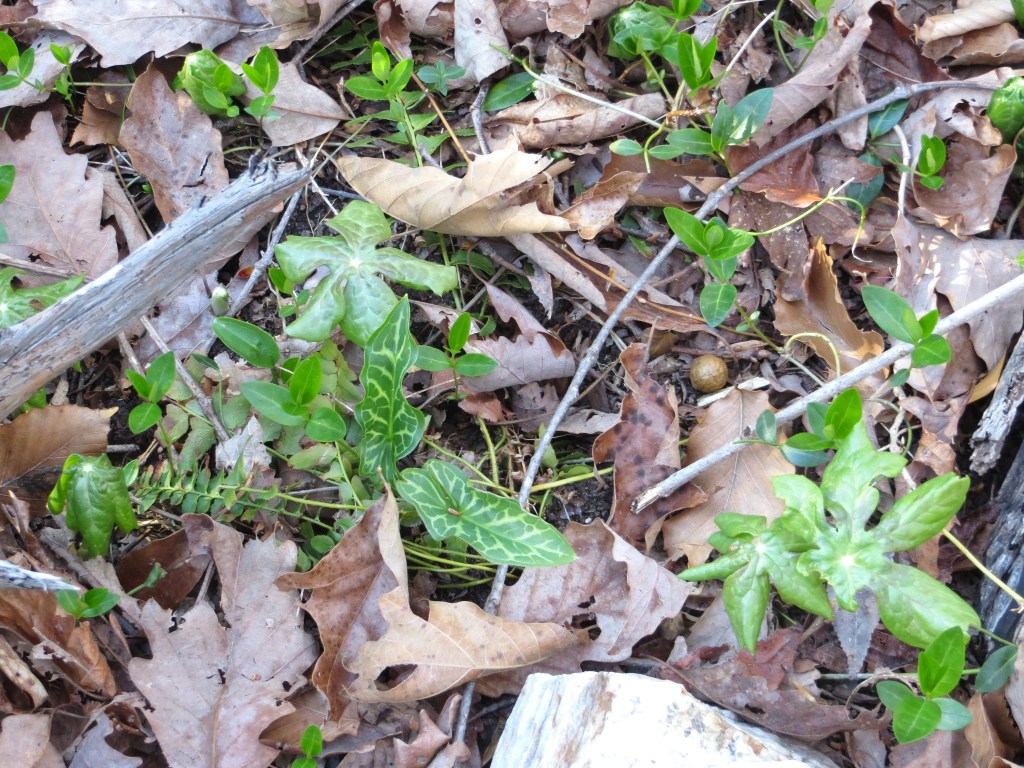
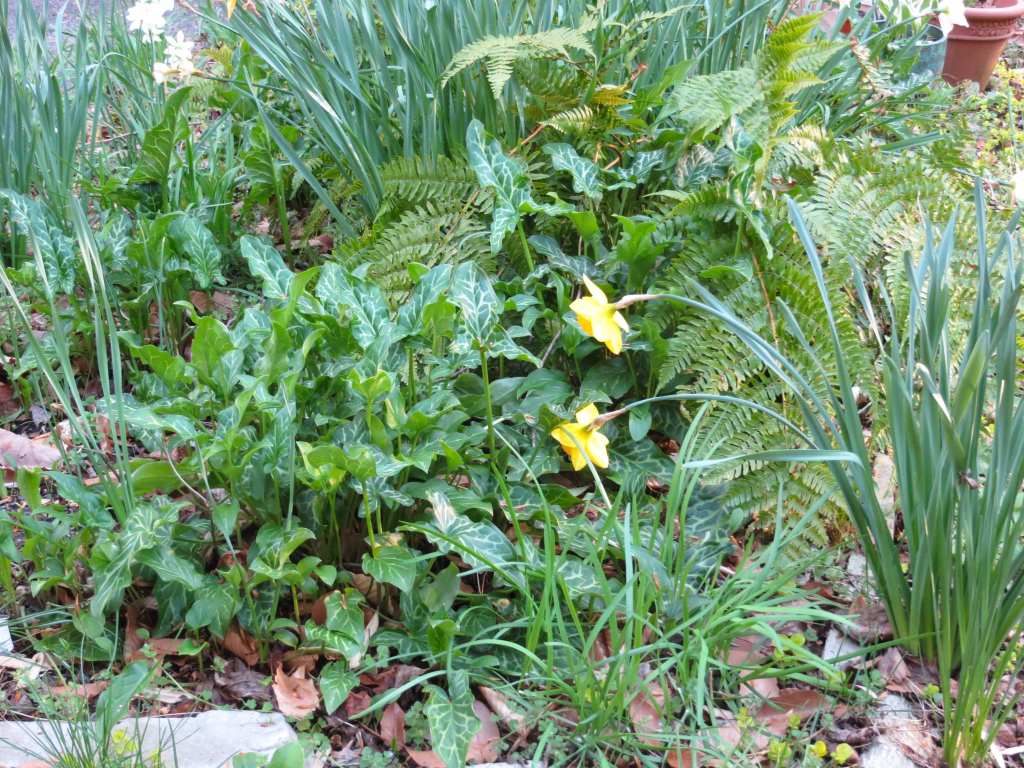
Deeply lobed mayapple leaves emerged among the leaf litter late this week. the striped leaf to the left is Italian Arum. Many of those plants, which usually emerge from rhizomes each autumn, are only now appearing for the first time this season. Fronds of last summer’s Christmas ferns remain, soon to be replaced by new growth. 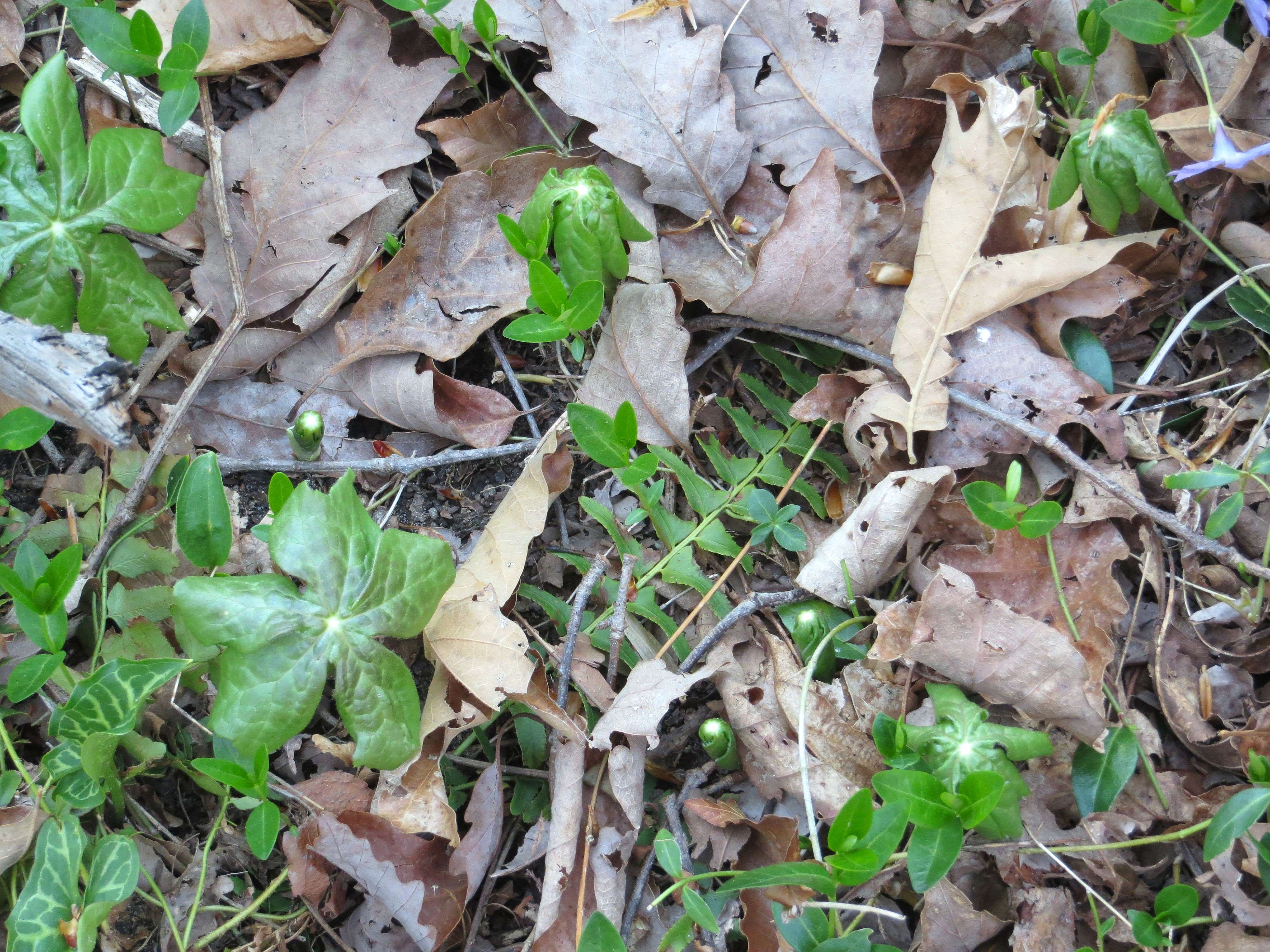
Scented Pelargoniums are a favorite container plant each summer partly for their beauty, partly for their fragrance, and partly because deer won’t graze them. I learned the hard way last summer that deer will sometimes graze the more floriferous zonal geraniums. Each spring I search out my favorites scented geraniums like P. ‘Lady Plymouth Grey’ and P. ‘Chocolate Mint.’ Most of the garden centers in our area carry P. ‘Citronella’ and call it a day, so it is a bit of a challenge. Although I intend to purchase fewer plants this spring, I was very pleased to find an online nursery that carries a tremendous selection of scented geraniums, more than 50 different named varieties, as plugs.
I placed an order in early March for scented geraniums and a few culinary Salvias to arrive this past week, expecting it to be plenty warm enough to plant them outside by the last week of March. They arrived on Wednesday afternoon, and it dropped to 34F here by sunrise Thursday morning. And so after letting them rest indoors for a day or two, I finally began planting them out into containers on Friday.
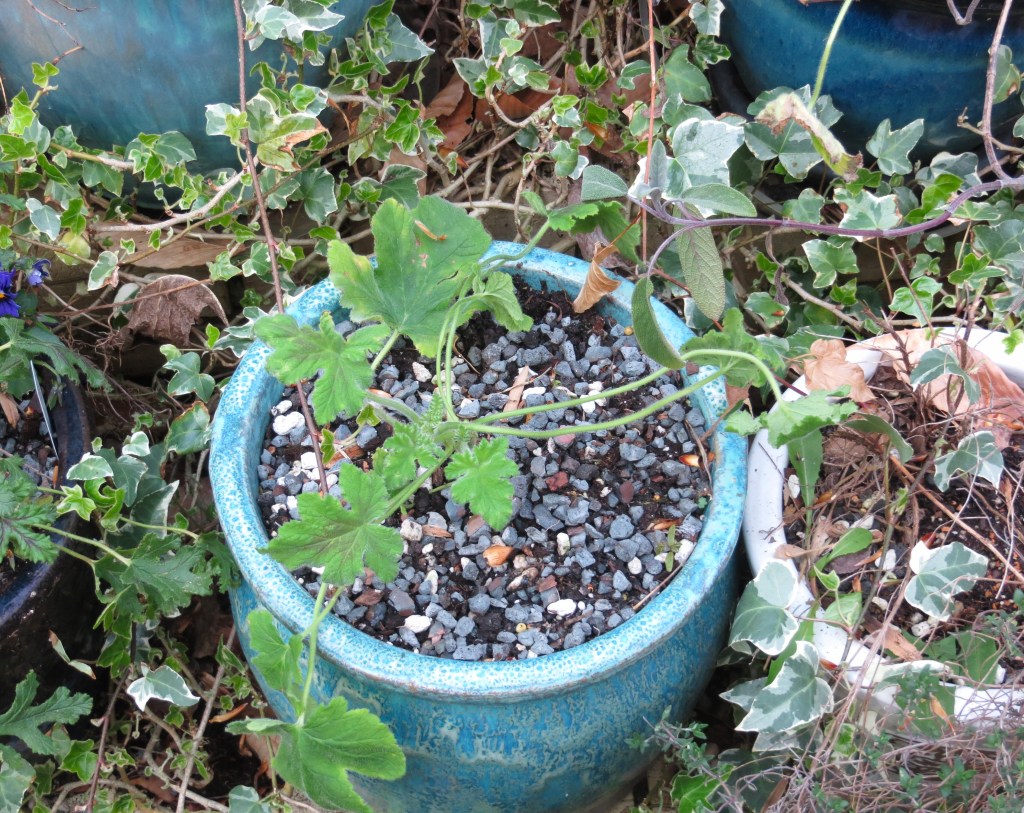
This is one of my favorite new scented geranium plugs, P. ‘Chocolate Mint.’ It has large variegated leaves but develops very few, small flowers during the season. The leaf of another new scented geranium is in the pot to the left. The second photo is of a third variety, P. ‘Mint Rose’ that I have planted in a sunny bed where walkers passing our yard can enjoy it. 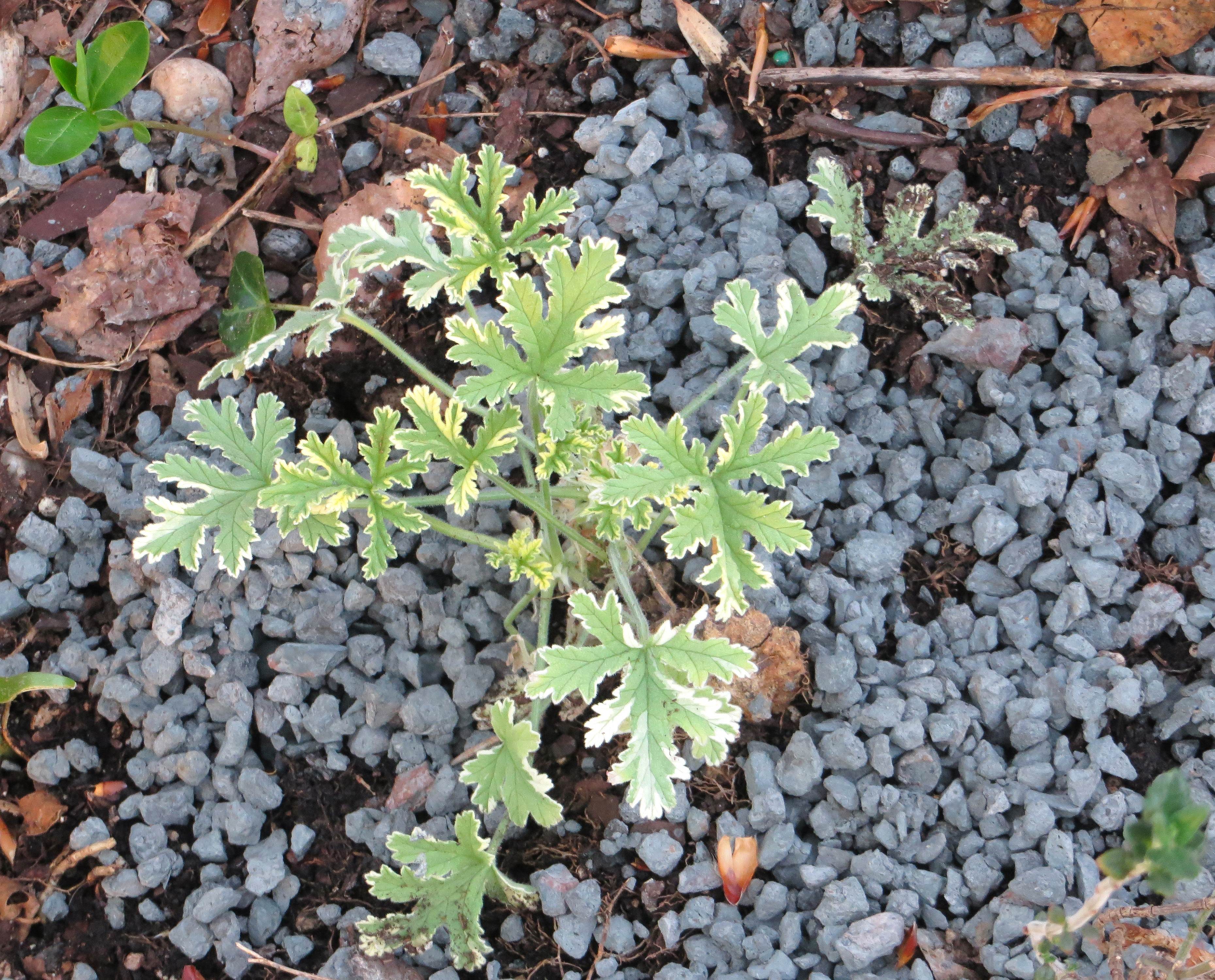
Just handling each little plant is a pleasure. Their intricately shaped and shaded leaves and their intense fragrance makes them very different from most of the common plants sold for containers and bedding each spring. These Pelargoniums are perennial in their native South Africa, but most varieties are hardy only to around Zone 9 or 10. I have rarely kept one alive over winter outside in a protected spot. By late summer they are quite large, and they require a good sunny spot to keep them over winter inside.
I am gambling on warming weather going forwards, planting out the scented geraniums along with a few zonal geraniums, some Verbena, and other herbs and ferns. It can be tricky looking at the remains of last year’s marginal perennials and herbs, and deciding whether there is enough life still in the roots to leave the crown in place with a good trim, or whether to replace it. And I’m always so happy to see new growth poking out of a woody stem. So I am in process of evaluating each container left out over winter, cleaning it up, adding a shake of fertilizer, and either pruning or replacing what grew there last season.
In each season we are called upon to release the old and embrace the new; perhaps to see things a bit differently, and to understand life’s processes in more depth. When a change in the winds brings about profound changes in everything around us we realize how deeply everything is connected. It isn’t a matter of whether or not we like those changes or view them as bad or as good. That’s not the point. Nature adapts or dies, thus making way for something new. There is a lesson there for us, too.
With appreciation to Jim Stephens of Garden Ruminations, who
hosts Six on Saturday each week,

 Our Forest Garden
Definitely very ‘mu.’ 🙂
LikeLiked by 1 person
It makes life much easier when we realise we are not in control of much. Just accept and react if we need to. And enjoy what we have, of course. 🙂
LikeLiked by 1 person
❤ ❤ ❤
LikeLike
This was a fascinating essay, for many reasons. Interesting when parts of the country and the world have very different trends from “normal” in the same season. I think we are ahead of “normal” here in my part of S. Wisconsin, but behind what we had last year. Re: the scented Geraniums…yum. 🙂
LikeLiked by 1 person
Yes, Beth, things seem to be somewhat uneven- even within the same state or region. We are amazed to watch epic storms cross certain areas again and again, and then see some of those same areas are officially ‘in drought.’ All that I can figure out is that maybe rain is running off already dry ground instead of soaking in to the deeper layers of soil. And heat is also very drying. We are amazed to see areas that have had epic and catastrophic rainfall now experiencing wildfires. It is a time of extremes in many areas and we can’t rely on what has always been true in the past. I hope you are enjoying spring, however rapidly or slowly it is unfolding for you! ❤ ❤ ❤
LikeLiked by 1 person
The last photo of the magnolia flowers is superb! Bravo. What % of the eclipse do you have? Here it was 28%, so we couldn’t see much… Next time will be august 2026 with 92% for us !!
LikeLiked by 1 person
That last photo was taken last evening at sunset. SO glad you like it, too. We didn’t get any visuals of the eclipse here because we were slightly too far south to see it, but also because it was overcast this morning and the trees quite block the rising sun until it is well above the horizon. Yet, we still sat on the front patio, facing east, listening to the birds and watching the sky change colors. We could still feel a much cooler wind at the time of the eclipse and notice a slight dimming of the light. Did you go outside during the eclipse?
LikeLiked by 1 person
I was in the garden. Unlike 1999 when all life had stopped, and the birds no longer sang, I didn’t notice anything special today, even though the light hasn’t decreased much.
LikeLiked by 1 person
Yes, the birds were chattering with their normal dawn greetings here, too. I think a total eclipse has a more dramatic effect, and it may also have something to do with how long it lasts?
LikeLiked by 1 person
It is all off after the starter’s gun! Although we had a light frost this morning, with another forecast next week too.
LikeLiked by 1 person
It is exciting to watch everything wake and grow so quickly in the spring. What a relief after months of winter! I hope your light frosts remain light and cause no harm to anything already in leaf or bud ❤
LikeLike
While some flowers bloom reliably at about the same time annually, regardless of weather, others are remarkably variable. Those that are remarkably variable respond to different stimuli, so that even their variableness is variable. Consequently, the chronology of bloom of the various cultivars of flowering cherry can be different from year to year.
LikeLiked by 1 person
Fascinating!
LikeLiked by 1 person