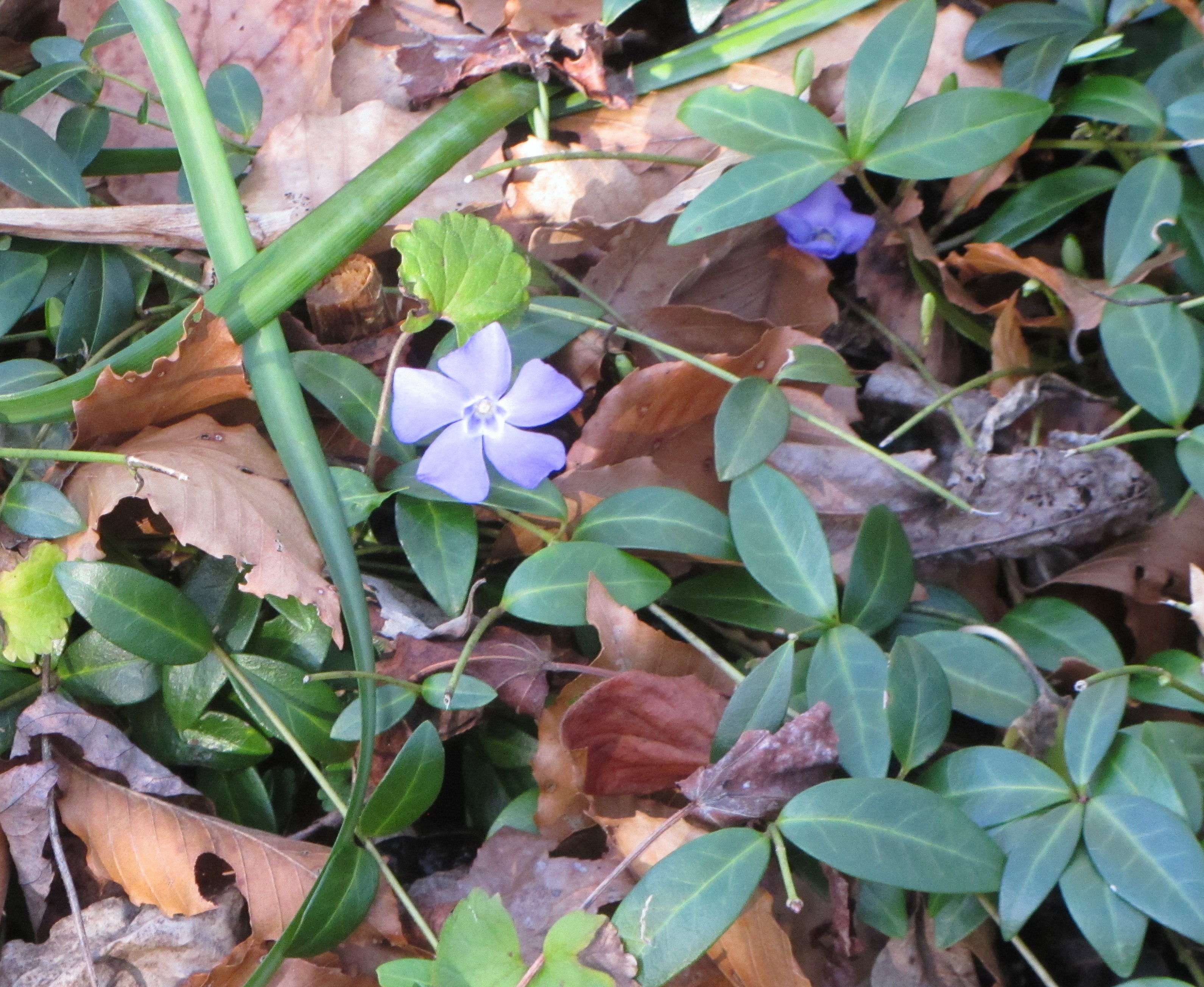
Last week, I learned from a friend who is an historian at Jamestown that the humble periwinkle vine, Vinca minor, is one of the markers that archeologists look for when searching for cemeteries. It is a particular marker for old cemeteries of unmarked graves, in our area, where African Americans were buried during Colonial times. This beautiful vine, that blooms in spring with the daffodils, was planted on top of graves as a living marker because it is evergreen, tenacious and resilient.
Vinca is drought tolerant and thrives in dry shade, but can withstand partial sun. Because it can grow roots from every node along its stem, this delicate vine roots itself firmly into place. It is excellent for protecting the earth from heavy rainfall, and it stops erosion. It transplants easily, and every small piece of the vine has the potential to root and so grow into an entirely new plant. This vine’s tenacity and versatility have earned it the designation of invasive in our area since it was brought here by European colonists and isn’t native to Virginia.
Vinca is one of those special plants enmeshed in folklore and tradition that carries with it associations of familial binding together, happy memories, and protection from harm. Its light blue or white flowers inspire peace, harmony, and acceptance of one’s situation in life. As it is planted to protect and mark graves, so it is also commonly found around old home sites. Folk tradition says that Vinca, or periwinkle, used as a ground cover around one’s home protects the family and bring harmony to the home.
There is so much periwinkle growing around our home that I hardly ever give it a second thought, except when I need to dig up a clump of it to plant something else. We appreciate it most in early spring when it begins to grow again and covers itself in small, five petaled flowers. As with other five-petaled flowers, it may be viewed by some as a living pentagram, a sign of protection and luck associated with many goddesses, including Venus, Innana, and Isis. I have no idea whether our Vinca was planted by the original gardeners here, or if it simply was seeded here by birds, or maybe was already growing here before the neighborhood was developed. Vinca was introduced in our area around 400 years ago and has naturalized.
Much of our periwinkle still slumbers under a blanket of fallen leaves like the ivy. Ivy is another tenacious evergreen vine that continues to live, sequestering carbon and cleaning the air, while bringing color to the winter garden. It is also a European vine brought to the American colonies by the colonists that is now considered invasive, despite its beauty and usefulness. Many different cultivars are available with various leaf sizes, shapes, and patterns of coloration.
One day soon, when we have a warm day, I’ll venture out with rake, secateurs, and leaf blower to clean up the remains of 2025’s garden. I had hoped that day might be yesterday, as sunshine and warmer weather was forecast. But the north breeze sent me back inside at mid-day after just a few minutes of looking for six things to photograph and share this week.
Most of us are beyond weary of wintery weather by mid-February, and we find ourselves searching for signs of spring. Valentine’s weekend has us buying flowers (or chocolate!) for loved ones as tokens of affection. The memories of happiness together bind families over the years, and these traditional plants like periwinkle and narcissus inspire that happiness and harmony anew. There is an old European charm where one gazes at a blue periwinkle flower and asks to be reminded of memories of happy times and laughter with a certain someone, to keep the relationship strong and harmonious. Then the little flower is pressed and kept to seal the charm.
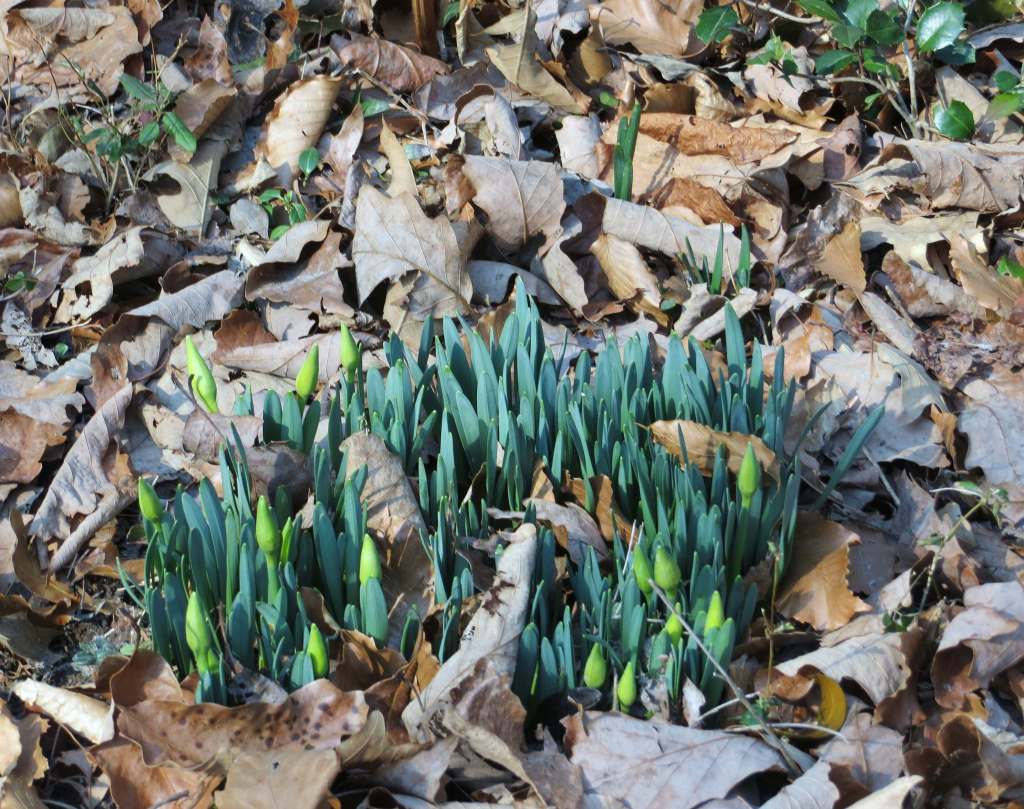
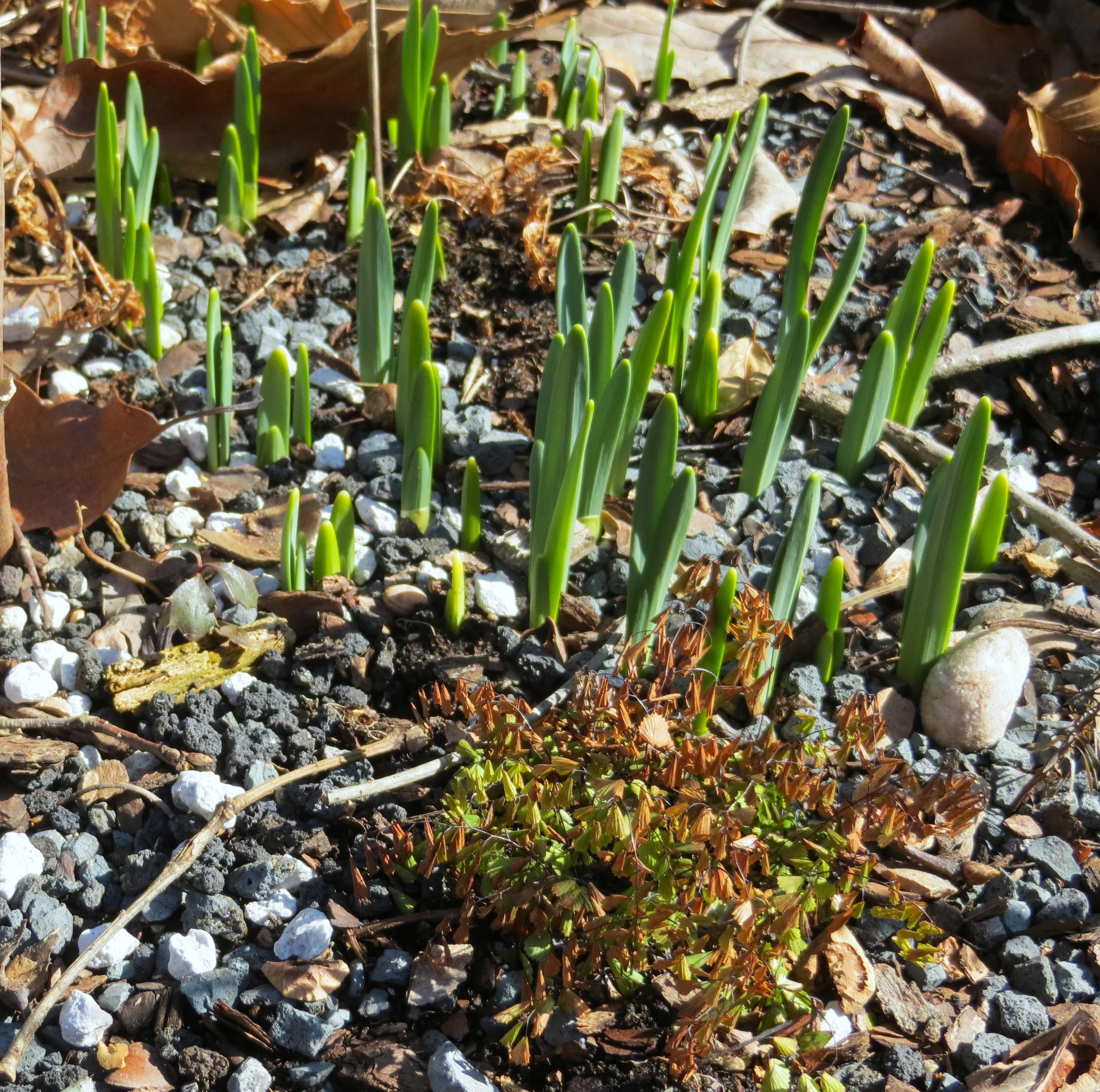
Narcissus flowers, also native in parts of Europe and western Asia, are associated not only with happiness, but with eternal life. Geophytes like Narcissus and Arum, which may appear dead when dormant, reawaken regularly at a particular time of the year, grow, flower, and then die back again just as predictably. Our Narcissus are just beginning to appear because all earlier progress was stopped for several weeks by the very cold weather we’ve had. The snow finally melted, mid-week, after some rain and above freezing days. But the ground remains mostly frozen.
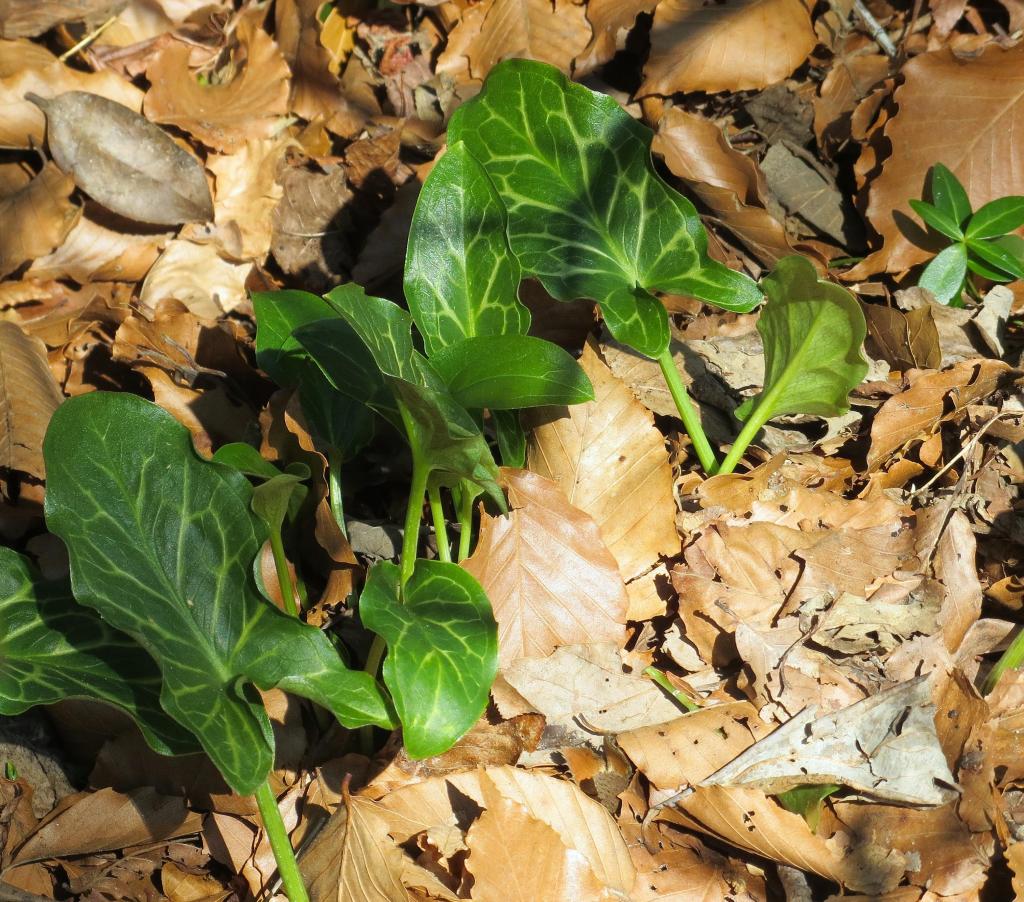
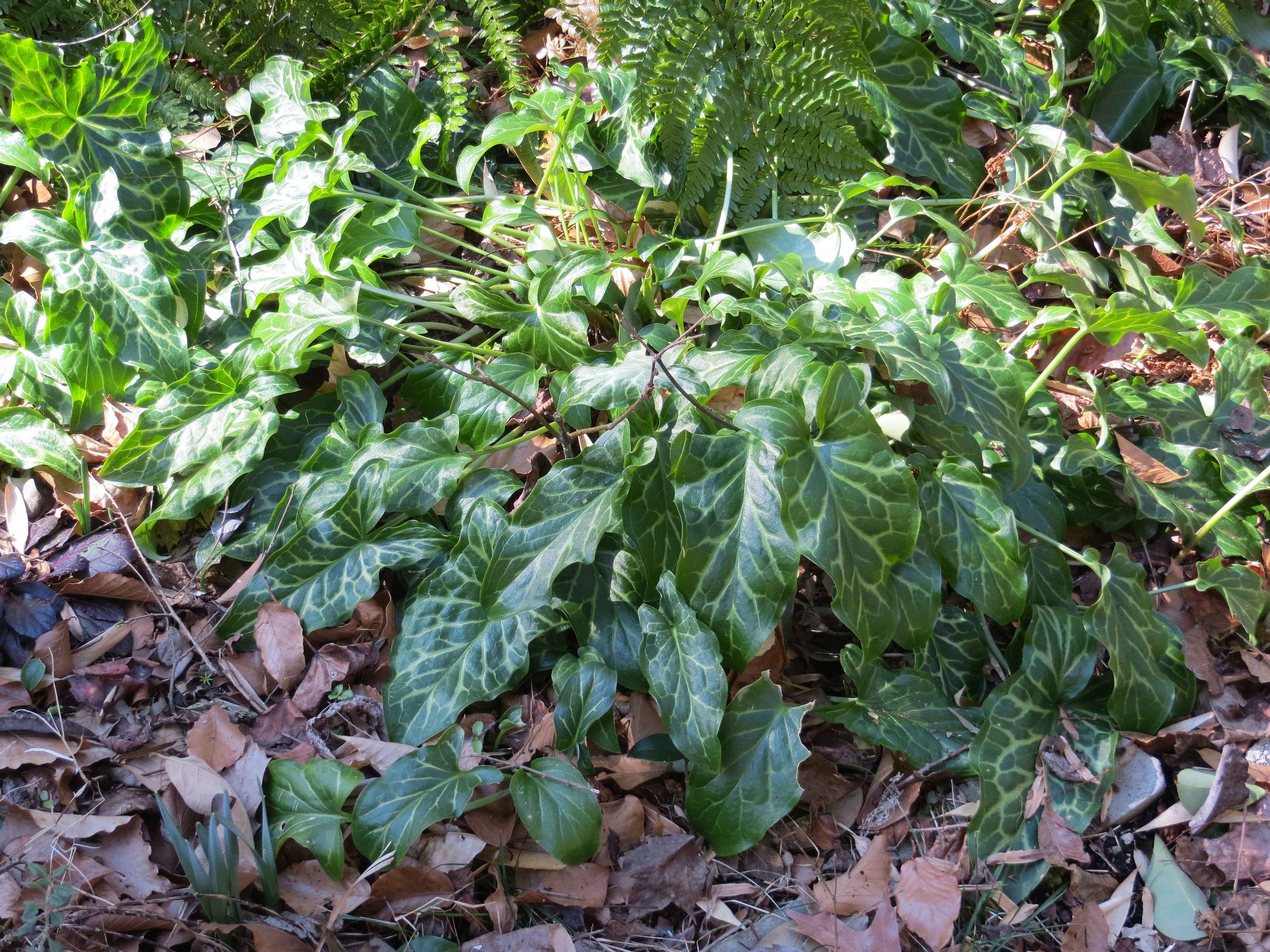
Like Narcissus, Arum italicum and Arum maculatum are seasonal geophytes. But Arum grows over a much longer season, emerging sometime from September through early winter and growing beautifully all winter, before blooming sometime in May in our climate. The flower is simple and short lived, but the flower’s stem is soon covered in plump green fruits that turn a fiery orangey red before they finally disappear July.
Arum has a certain glamour to it as it might make you think it is summer once again because it is so vibrant and alive. Its biochemistry actually produces a small amount of heat, and snow melts first around its leaves. I like Arum because it fills a winter bed with green leaves that remind me of Hosta or even a green Caladium. But like periwinkle, it too has recently been designated as invasive here because of how widely animals spread its seeds into uncultivated areas. That said, there have been a steady stream of recent introductions of named Arum cultivars with beautifully marked leaves.
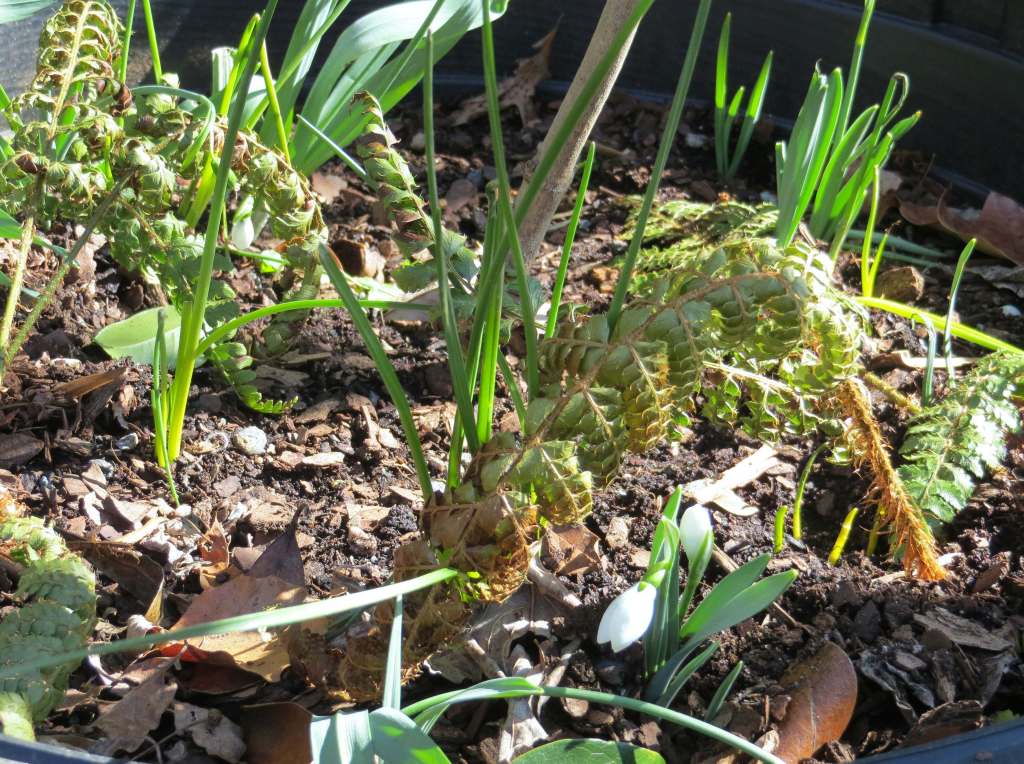
Of all of the various species of Dryopteris and Polystichum that I have tried here, D. erythrosora looks the best by February. It holds onto both its vibrant green color and its beautiful form. This beautiful Asian fern also seems to have the superpower to free itself relatively quickly from a blanket of snow and ice. Once the snow is gone, the fronds spring back.
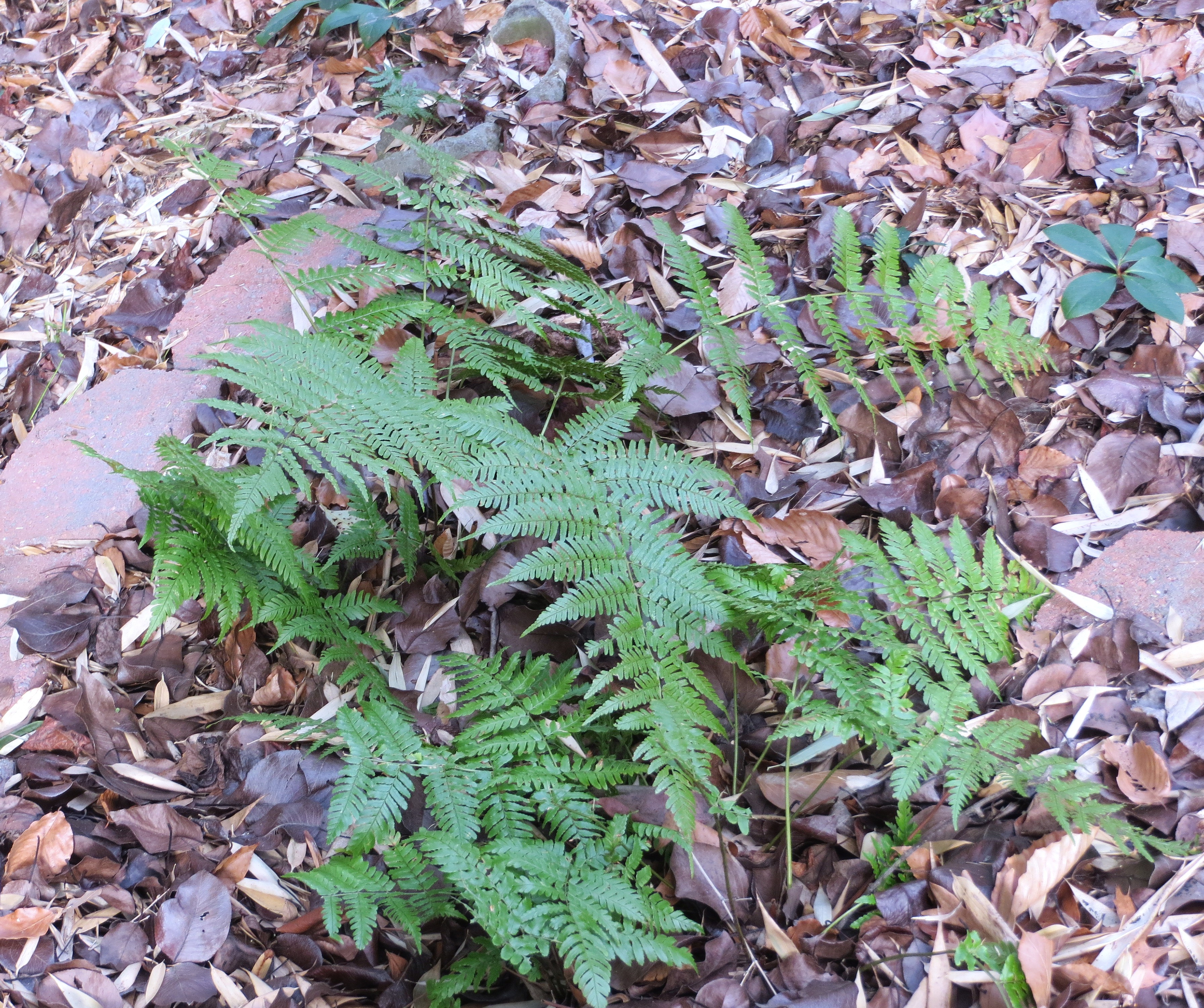
It grows an extensive root system which helps it find moisture when the ground freezes, so it never looks as desiccated as some other ferns might after a long bout of freezing weather. Although many of the ferns I’ve planted are considered ‘evergreen,’ most have truly suffered this winter and will need to be cut back hard in a few weeks. But this autumn fern goes the distance and maintains an attractive presence year-round.
Even our hellebores seem late to bloom this winter. Those that were showing signs of blooming a few weeks ago were set back by the ice storm. While I trimmed back ratty leaves in December, I haven’t been back around to get those damaged in this latest cold. And so they remain as a living, though perhaps unattractive mulch as we finally see buds emerging this month.
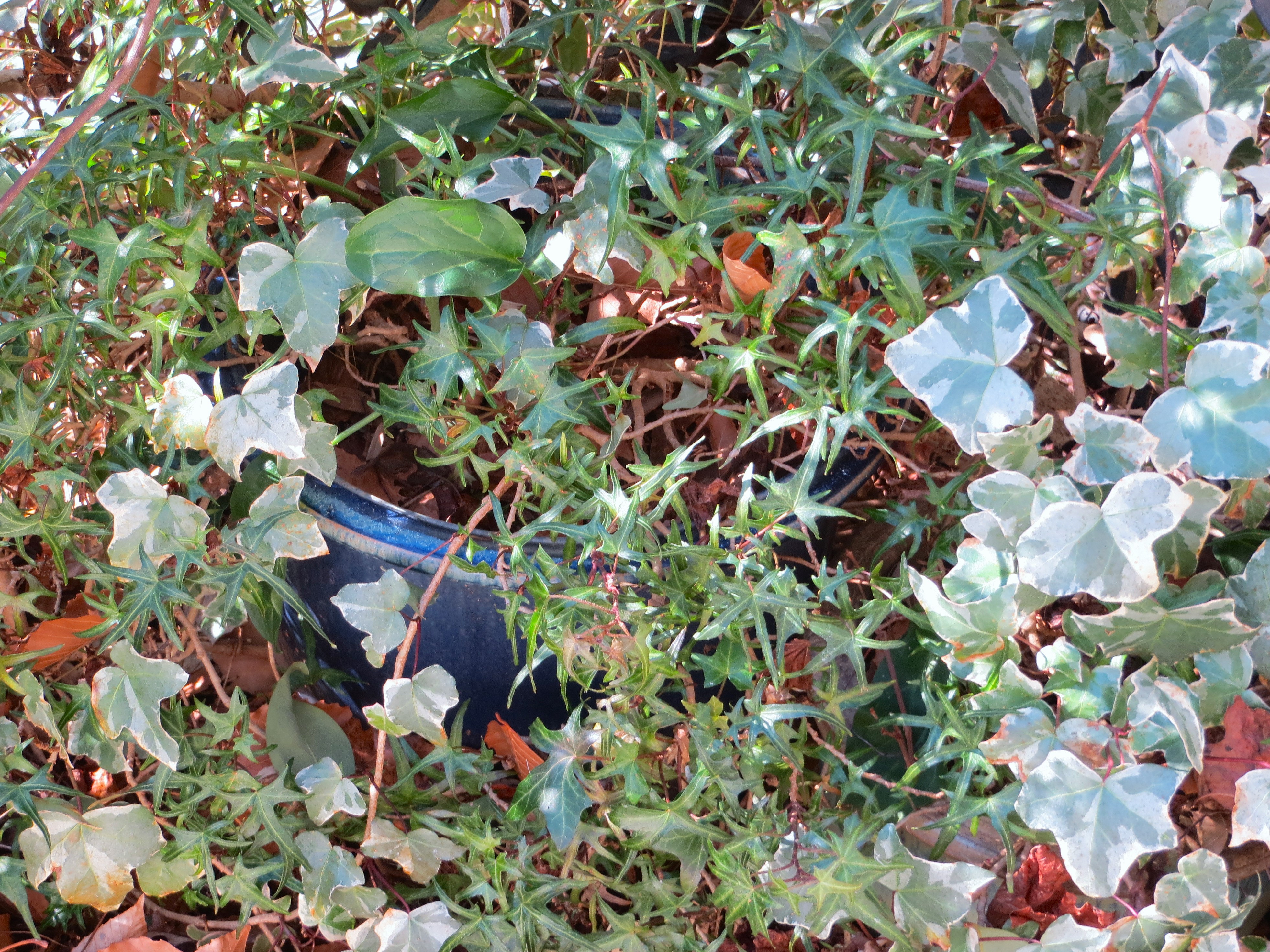
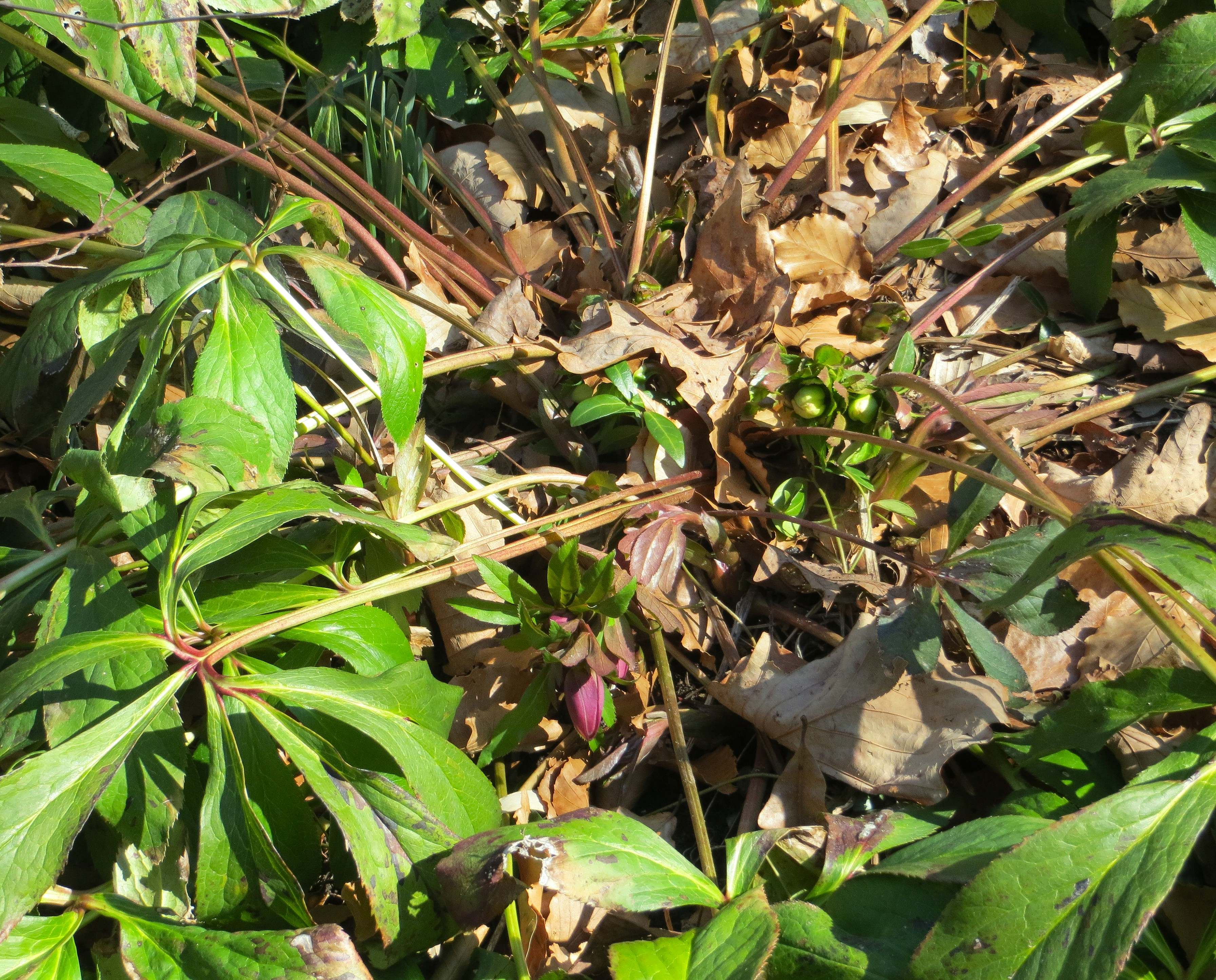
A variety of ivy cultivars grow in this big blue pot near our back door. A lone leaf of Arum is competing with the ivy. Second photo: a few buds have begun to emerge this week on one of our older hybrid Helleborus plants. It is always good to remove the older leaves as new ones emerge, but that task is waiting for warmer weather.
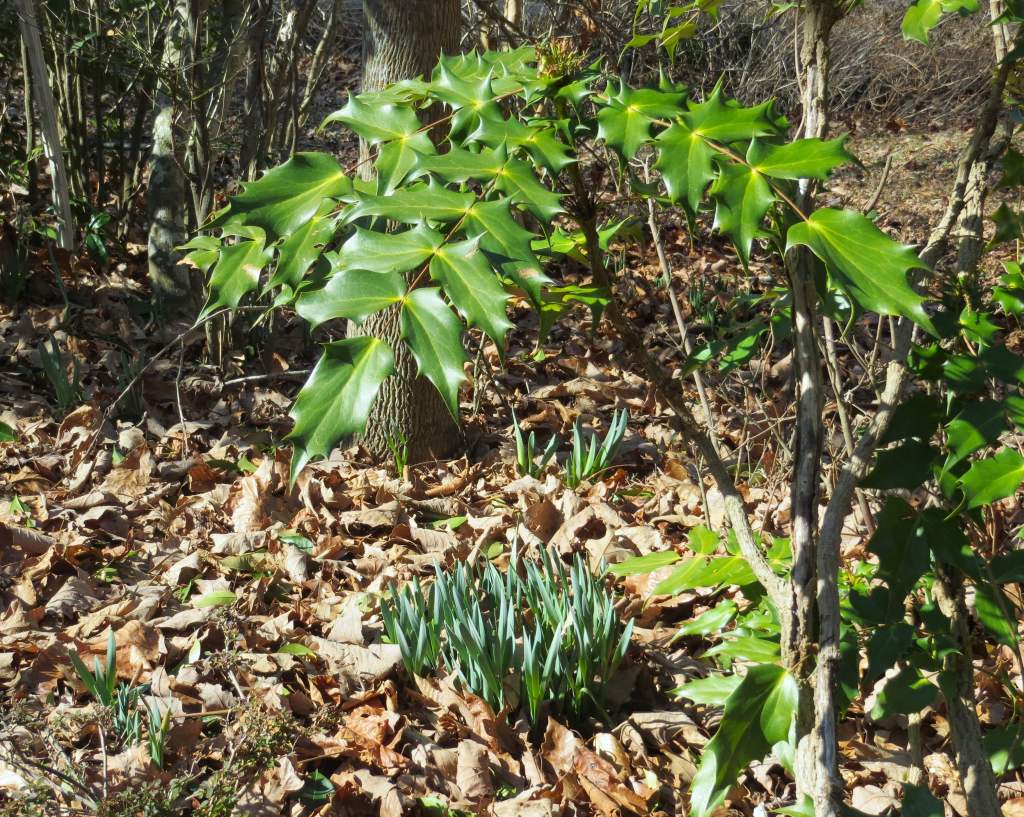
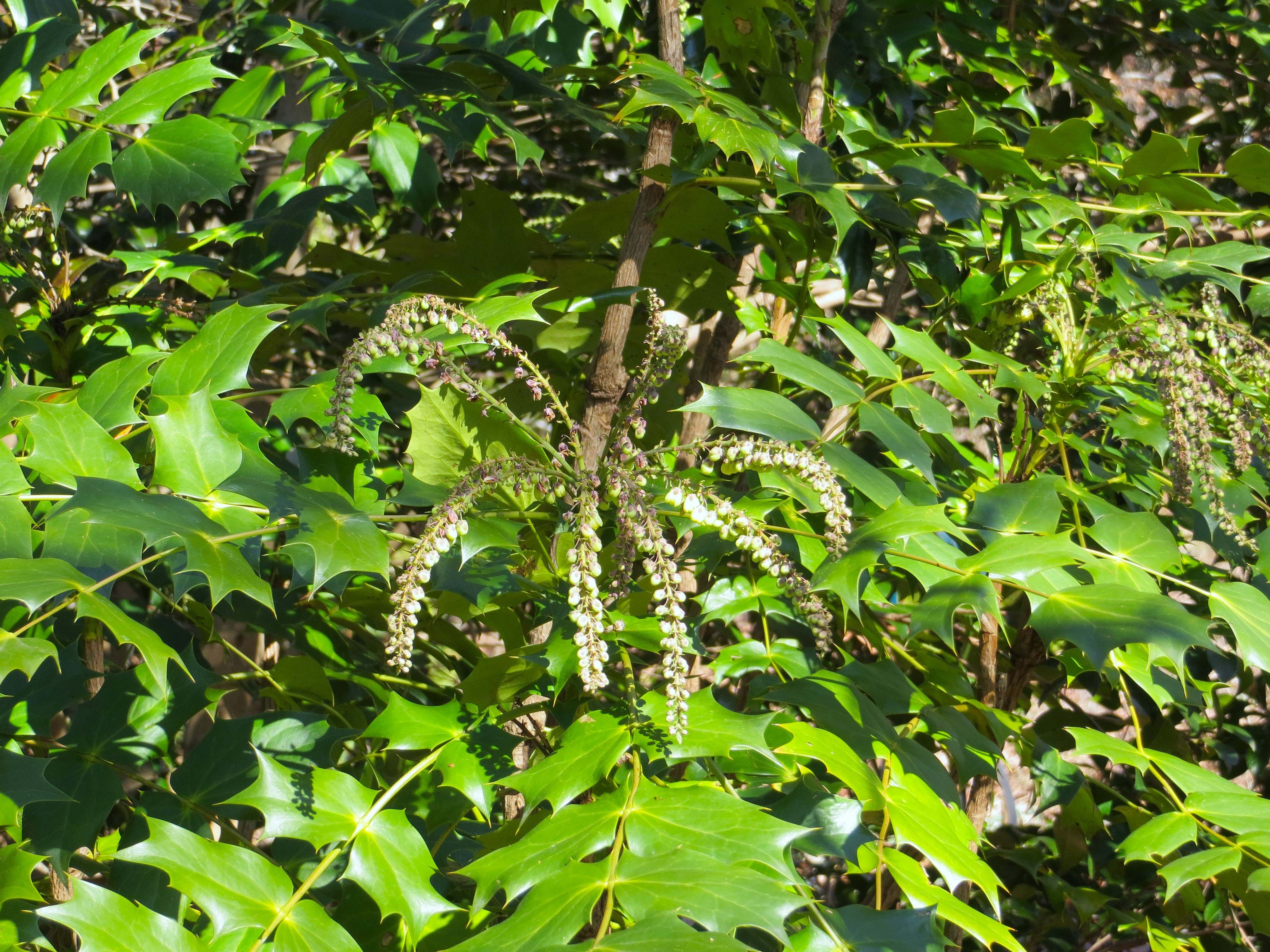
At this point in the year, I feel very grateful for every living green leaf holding out its promise of life returning to the garden. We are happy for the beautiful green hollies, Magnolia trees, camellias, and every other shrub with green needles or leaves. As buds are swelling on the Japanese quince and other trees, we are enjoying the many shades of green that have lasted through the winter.

 Our Forest Garden
Funny, this week I’m also highlighting an arum, but it’s the A. maculatum variety.😁
LikeLike
How interesting that we are enjoying the same plants, Fred, so many thousands of miles apart. I hope weather in your area is improving, too! ❤ ❤ ❤
LikeLiked by 1 person
That is interesting trivia about Vinca minor. Vinca major is an invasive exotic species here. Vinca minor is supposed to be also, but does not seem to be as invasive. It does not migrate very fast.
LikeLiked by 1 person
I didn’t know Vinca had these associations, but it makes sense. I think it’s a lovely plant, even though it is also considered invasive here in the UK. We have some in a pot – less likely to spread that way. In Switzerland, where my mother lives, it’s a native and common in forests.
LikeLiked by 1 person
How interesting that even in Europe gardeners tend to keep Vinca in a pot to control its spread. I didn’t know it is considered native in Switzerland. It is a pretty plant at least. ❤
LikeLike
Arum italicum is on the noxious weed list in Washington State, which is a darn shame, because it popped up in my garden as soon as I cleared ground in 2010. I love the marbled leaves and am halfhearted in trying to get rid of it. I do try! Vinca major and minor are both on the monitor list here, and I have seen it spreading across the entirety of a wooded lot next door to a garden we cared for. I have it also, in a contained area between house and concrete path, where it had been planted by previous homeowner. I keep thinking I will remove it and yet I am sure it is rooted under the house and will reappear, and I just don’t get around to the task. Some of it is a very pretty variegated form.
LikeLiked by 1 person
I’m sorry to hear Arum called a noxious weed in Washington. I know it spreads even more aggressively in the Pacific Northwest than it does here, and yet what I have planted, before I was even aware it was on a watch list, doesn’t seem aggressive at all. It spreads in its immediate area, but I don’t notice it cropping up elsewhere. I look at evergreen plants like Arum, Vinca, and ivy as useful in our current circumstances because they continue to filter the air and sequester carbon year round. Deciduous plants stop performing that service once their leaves drop in autumn. We don’t have many native ground cover sorts of plants to do that here through a Virginia winter. In my own perspective, we need to weigh the known benefits against the potential harms and take a reasonable approach to plant selection. Thank you for commenting and sharing your experience with Vinca ❤ ❤ ❤
LikeLike
Alien plants have the same potential for riling people up as alien people. Alien animals are the same (grey squirrels – grrrr!) Birds by and large get let off the hook though. It’s not like we don’t have unpleasant and invasive native plants, bracken for one here.
LikeLiked by 1 person
Oh, birds catch grief, too, here in the US. It is a shame because living things naturally move around looking for opportunity. Squirrels are always digging in my pots and eating tasty offerings like dormant Cyclamen… Actually, I am most triggered by native goldenrod which grows like an absolute thug once it gets a root sunk into our garden. But you can’t call a native plant ‘invasive,’ no matter its habit, according to our native plant specialists.
LikeLike
I must admit I’m a fan of Vinca minor. We have quite a bit of it growing here, and even though it’s not native … It seems to stay roughly in the same area, and it was here when we moved in … long story about why I haven’t removed it. Your other plants look lush and healthy, too. Happy almost spring!
LikeLiked by 1 person
Happy nearly spring to you, too! Vinca is one of those steadfast plants that is easy to overlook, but serves to fill an important niche in most of our yards. I might dig up small clumps from time to time, but would never want to eliminate it entirely. And I look for spots to replant those clumps I do dig up when planting because they are very useful. Stay well and warm ❤
LikeLike