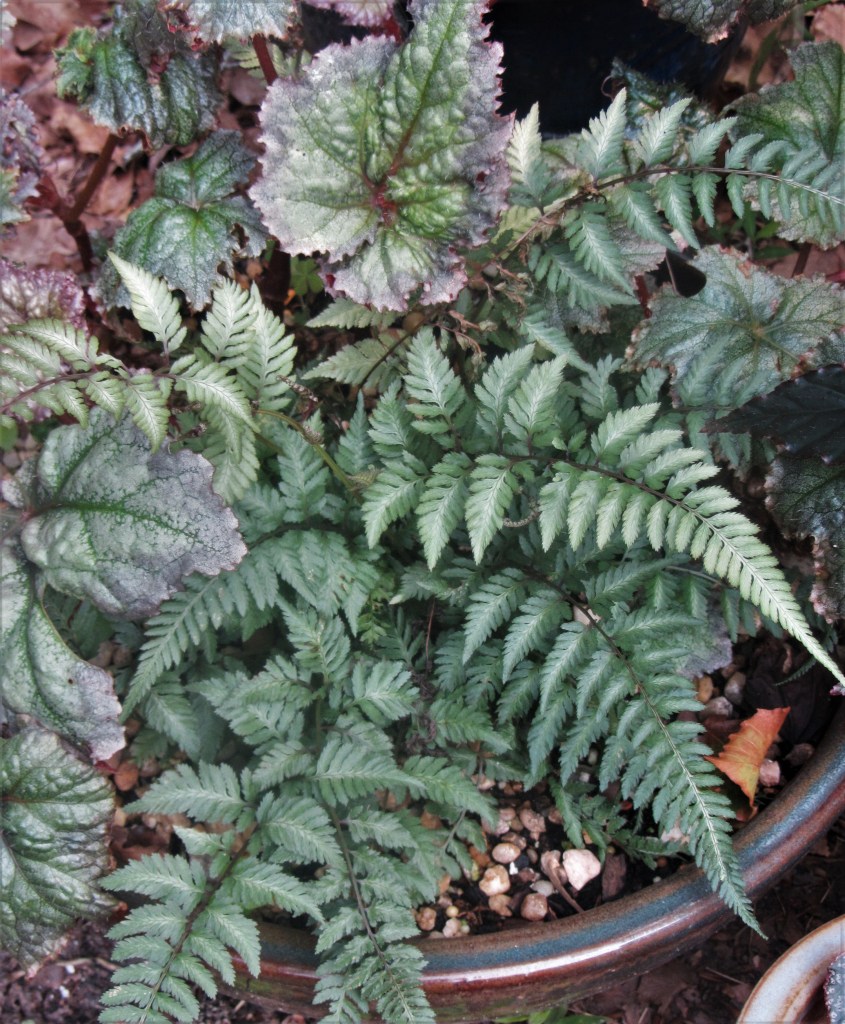
Lady ferns earned their name in another century, while plants were being named, because their fronds are much lacier and more delicate than the common ‘male fern,’ Dryopteris. Lady ferns, Athyrium species, may be found in many parts of the world, though most often in the Northern Hemisphere. All are hardy, cold tolerant deciduous species.
Their genus name may come from the Greek athyros meaning “doorless” in reference to their slowly opening, ‘hinged’ spore covers on the back of each pinnule. Some say their name may be derived from the Greek athoros, which means ‘good at breeding.’ This is an understatement for the lady ferns, as there are more than 200 documented species and uncounted hybrids and cultivars.
Lady ferns have adapted to many types of growing conditions and soils. They prefer a moist acidic soil, and will grow even in bright sun when hydrated. They propagate freely. This makes me very happy, as I continue to find baby volunteer lady ferns in mossy areas of my yard. Most of these I’ve dug and moved to a pot or border where they can grow on without fear of a lawn mower or mis-placed foot.
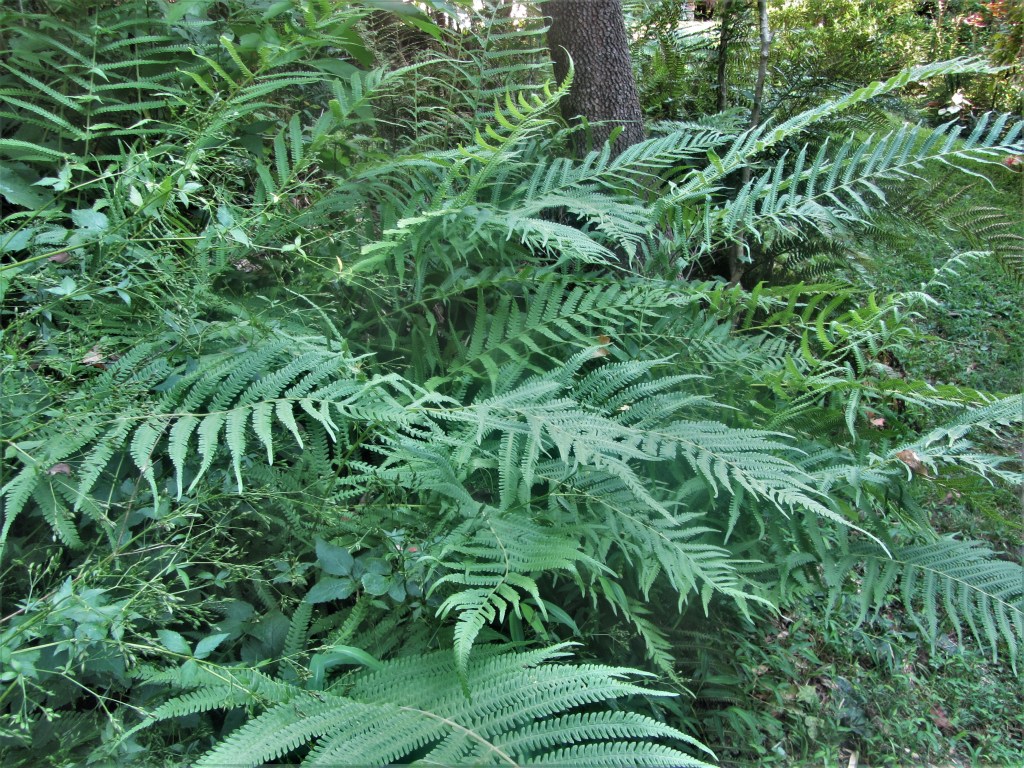
The wild, native lady ferns growing in our yard may actually be more properly named as Athyrium asplenioides, or Southern Lady Fern. Our native lady ferns spread by both spores and by their underground rhizomes.
World wide, lady ferns grow from around a foot, to as much as 6’ tall, depending on their cultivar. Like Dryopteris, or male ferns, many sport colorful stipes or fronds, especially when growth is fresh and new. A currently popular cultivar is Athyrium filix-femina ‘Red Neck Girl.’ It has scarlet stipes holding up very lacey, light green fronds. In case you may be wondering, ‘filix’ is Latin for ‘fern.’
A number of these lady ferns grow lacy crests at the tips of their fronds and even the tips of each branching pinnae. Most grow with astounding geometry in their form.
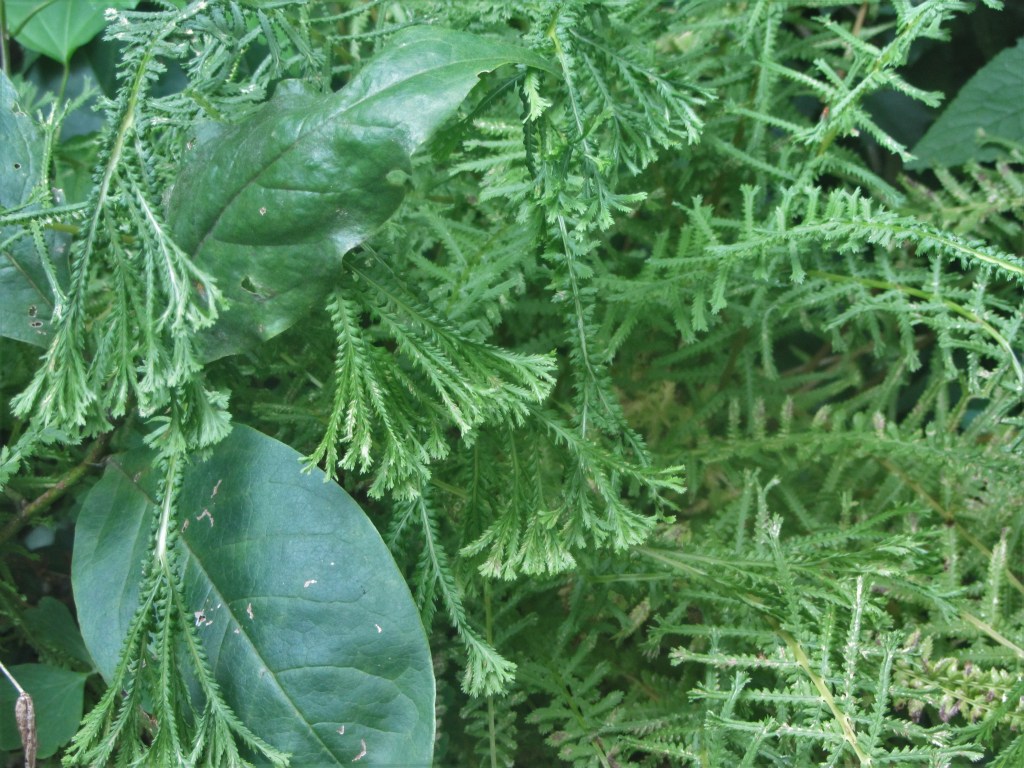
Tall Athyriums benefit from some protection from wind and rough weather. Their fronds are delicate enough that they may be easily damaged. Damaged fronds may be pruned with a good expectation that fresh ones will soon grow. Most Athyriums continue to produce new fronds throughout the growing season.
The far more ornamental Japanese painted ferns, Athyrium niponicum, are known for their colorful fronds. They may grow in shades of silver, grey, green and burgundy. Some, like Athyrium niponicum ‘Ghost,’ are so silvery they are almost white. Their color is determined in part by how much sun or shade they get where they are planted.
The Eared Lady Fern, Athyrium otophorum, is an Asian lady fern with distinctive dark burgundy stipes and distinctively toothed and ‘eared’ pinnules. The pinnules are a light green with a burgundy tinge in early stages of growth. They are an elegant plant, hardy to Zone 6.
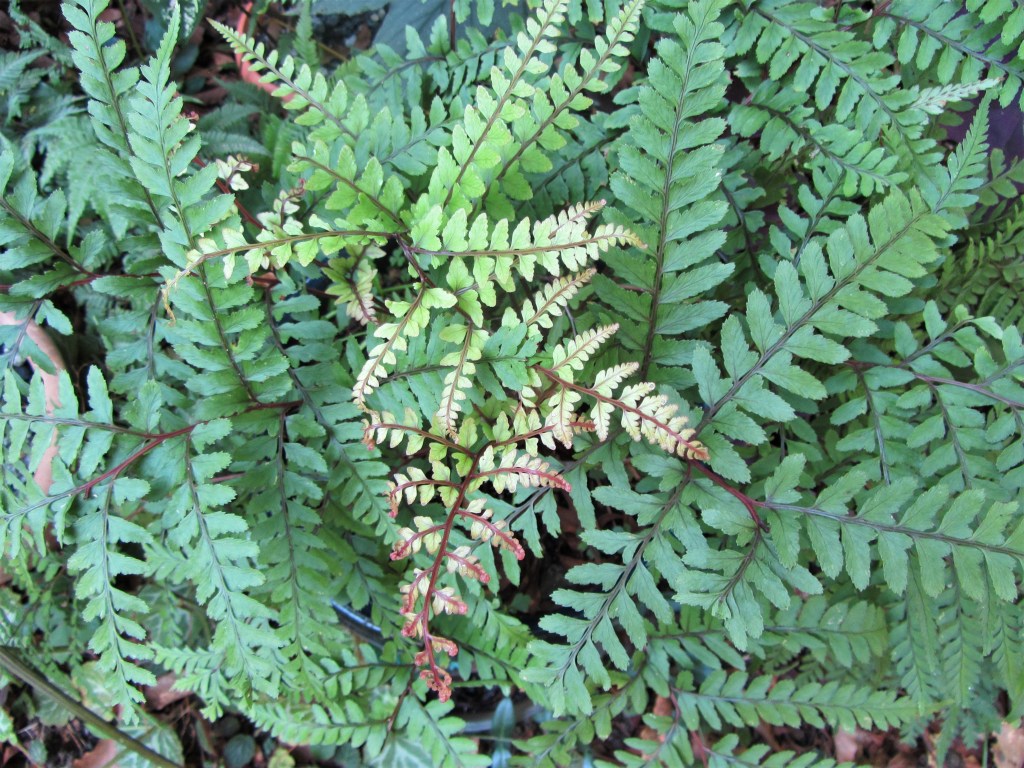
Grow lady ferns in pots, baskets, raised beds, or just in a bed or border. They perform especially well as ‘shoes and socks’ plants under trees and shrubs. Grown as a groundcover, they help hold in moisture while not over-competing with the trees above. Their fibrous roots and spreading rhizomes hold the soil on steep banks, where they also cushion the soil against heavy rains and stop erosion. Their lush growth sequesters carbon, cleaning the air. Deer and rabbits ignore them, but many small animals like skinks, toads, beetles, and birds find food, shade and cover in their dense foliage. Birds sometimes use their soft fronds in their nests.
I have been planting baby lady ferns in a new way this summer, lifting them, along with the moss where I find them growing, to use on fern tables. Their roots are tiny when I dig them, but quickly grow in to help hold the mounded soil on the fern table.
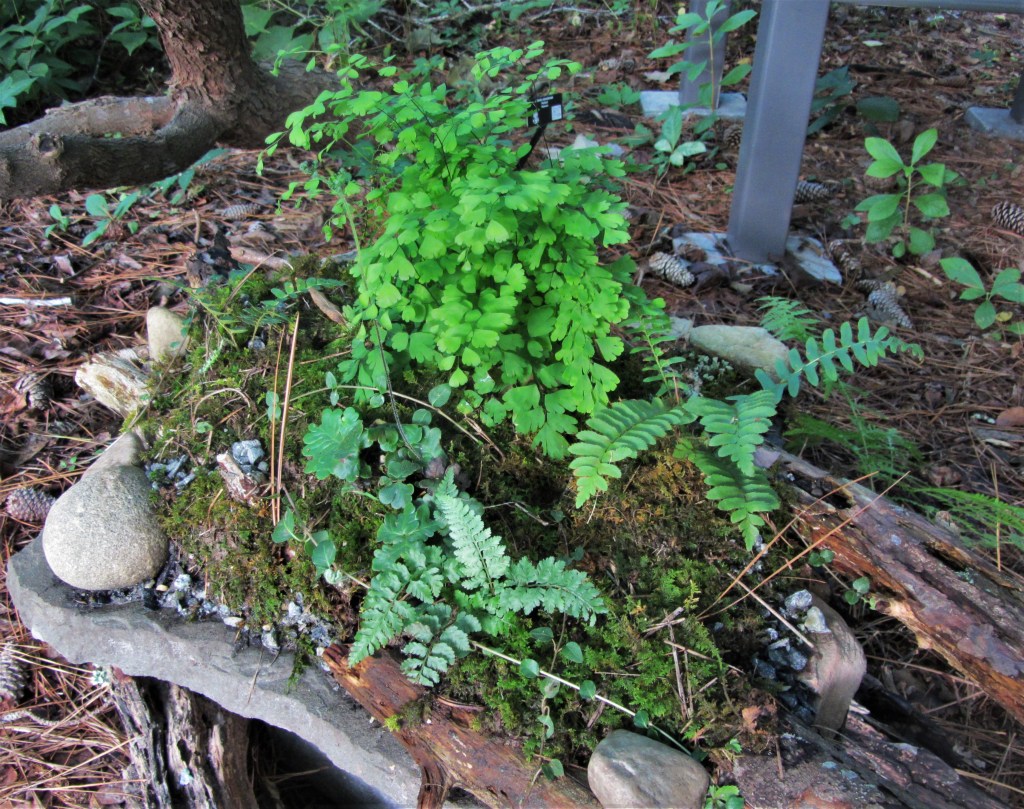
The baby ferns I’m finding are likely offspring of the many Athyrium niponicum plants already in our garden. Their fronds are light and silvery, with the feel of the Japanese painted fern. It is fascinating to watch them grow and develop, waiting for an indication of their mature colors and forms. Maybe we will find a new cultivar to name and share.
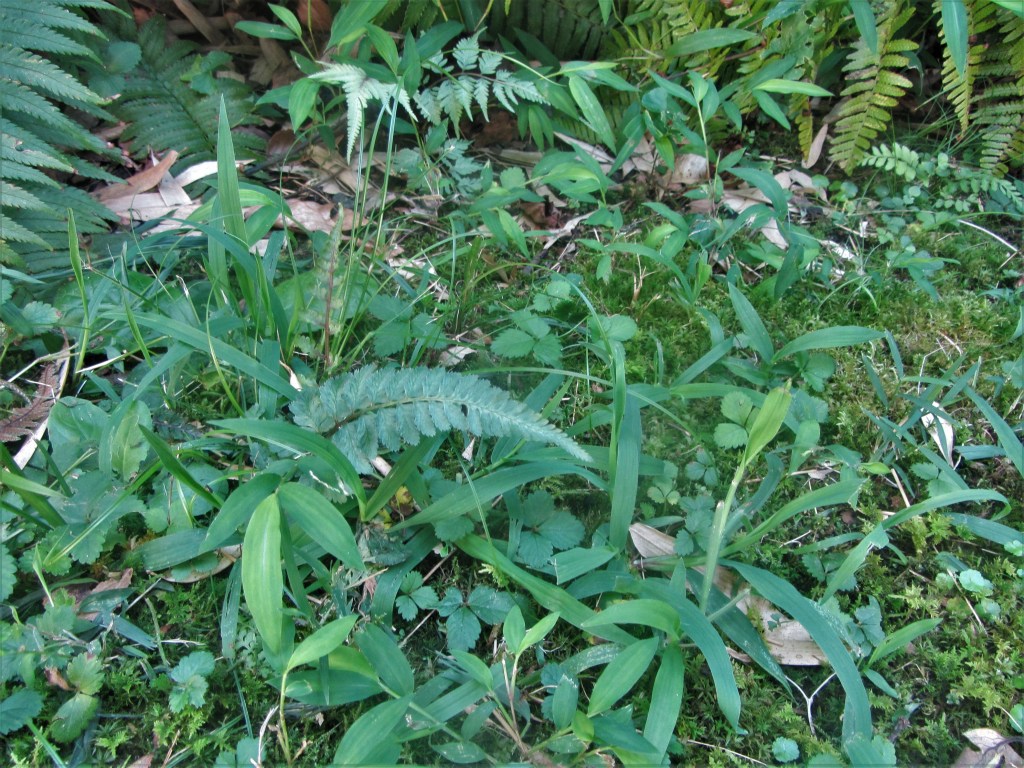
With appreciation to The Propagator who hosts Six on Saturday each week
 Our Forest Garden
This post speaks to my heart. If there is anything I love more than roses, it is ferns. Probably because living in the tropics we had them everywhere. And these varieties are so beautiful.
LikeLiked by 1 person
Well, we share the same love of roses and ferns. They are so easy to grow, and don’t become ‘deer candy. Lady ferns can be as beautiful as flowers, and last the entire season. Thank you for commenting. ‘ ❤ ❤ ❤
LikeLike
Oh I definitely need a fern table, not least to have a place to corral all the ferny babies. Thank you for the introduction!
LikeLiked by 1 person
You’ll find some references and instructions in my earlier posts about fern tables. Richie Steffen’s instructions might prove helpful when you are ready to build your own. They certainly helped me get started. Thank you for commenting ❤ ❤ ❤
LikeLiked by 1 person
Thanks for the advice. It’s on my to do list!
LikeLiked by 1 person
I do love the ferns! It’s just that the snakes love to hide there and we have some mean ones here!
LikeLiked by 1 person
Jayne, that is an excellent point. We use a snake repellent each spring, which helps. But you are correct that ferns provide habitat for all sorts of creatures.
LikeLike
The fern/Begonia combination is one I will look to copy, I have lots of both. I’ve never had babies from my Athyriums, a bit too dry perhaps, but maybe I could collect spores and grow some, if they’re fairly easy.
LikeLiked by 1 person
There are so many beautiful Rex Begonias with a little metallic tint to their leaves, and they blend well in color and size with some of the Japanese ferns. I hope you find a combo that works for you. The main challenge in growing ferns from spores, as far as I can tell, is exercising your patience. it is a slow process. I had what looked like some moss growing in a shallow tray where I’d started some Camellia seeds in the fall. A few weeks later, it looked like liverworts were growing in there. The shallow plastic tray was less than 2″ deep and small enough to fit into a gallon zip lock storage bag. By this summer, I realized that little fronds were growing up out of those ‘liverworts.’ The tray must have been seeded with spores at some point before I sealed it up last fall. The Camellias never germinated, but I have a beautiful little crop of ferns. Such is gardening. Good luck with your experiments with ferns ❤ ❤ ❤
LikeLike