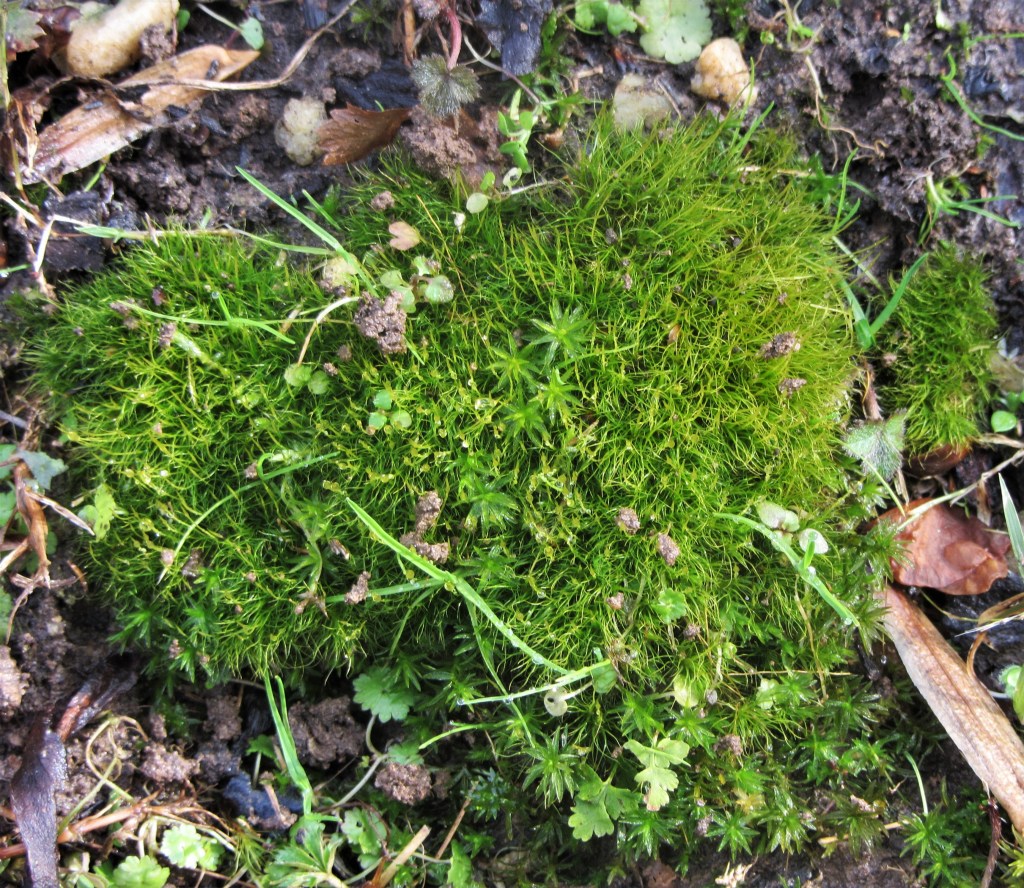
Moss thrives in the cool, damp weather that we enjoy from December through early April. Just as the winter world resolves into shades of grey and brown, bright patches of green moss appear to catch the eye and brighten the spirit.
As we walk through the yard or drive through the winter woods, evergreen plants sparkle in the winter sunlight or peacefully glow through the misty gloom. Their presence reminds us that while most plants are resting and dormant, life goes on.
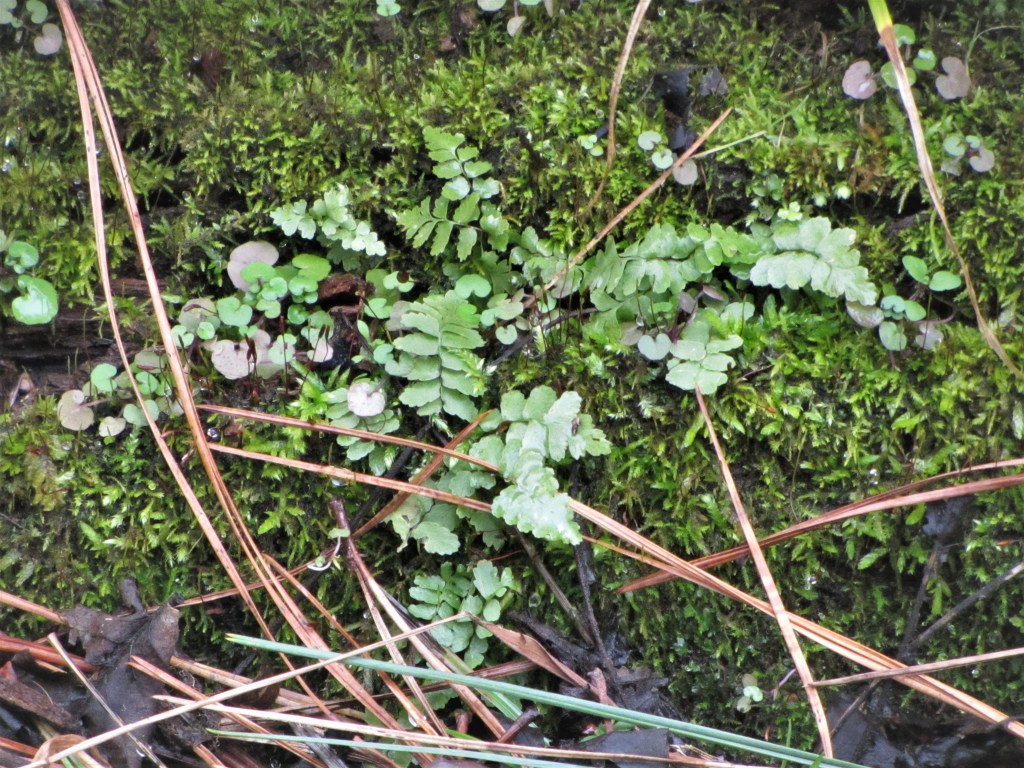
It has been so wet this winter that we find mosses, and their close relation, lichens, in unexpected places. While lichens are a combination of fungi and algae, with the algae providing their green or grey tint, mosses are simple, photosynthetic plants. They are so simple that they have no real roots and no flowers.
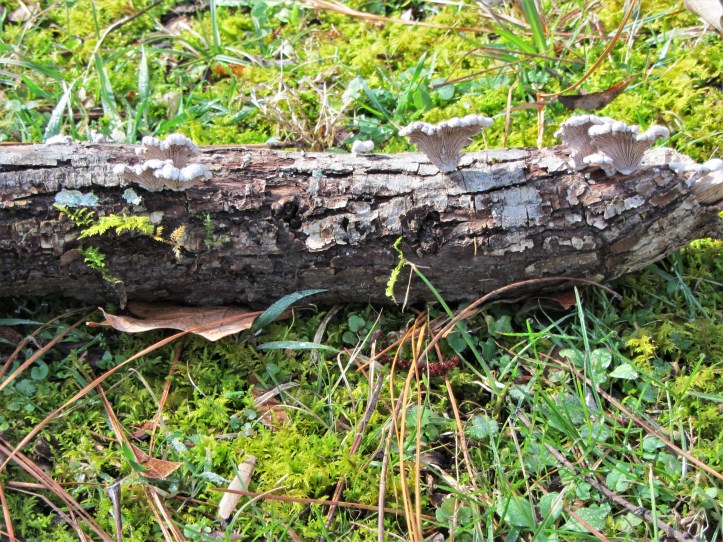
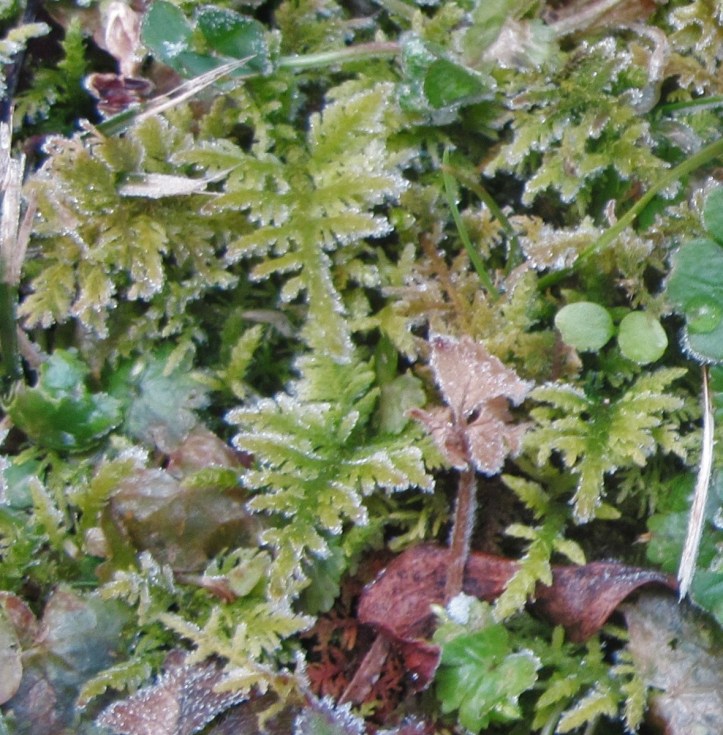
Mosses anchor themselves in place with rhizoids, which are much simpler than vascular roots. Moisture moves through moss from cell to cell without any system of veins. This allows mosses to absorb and use dew, frost, rain, and even a good spray from a garden hose. Misty fog makes mosses very happy.
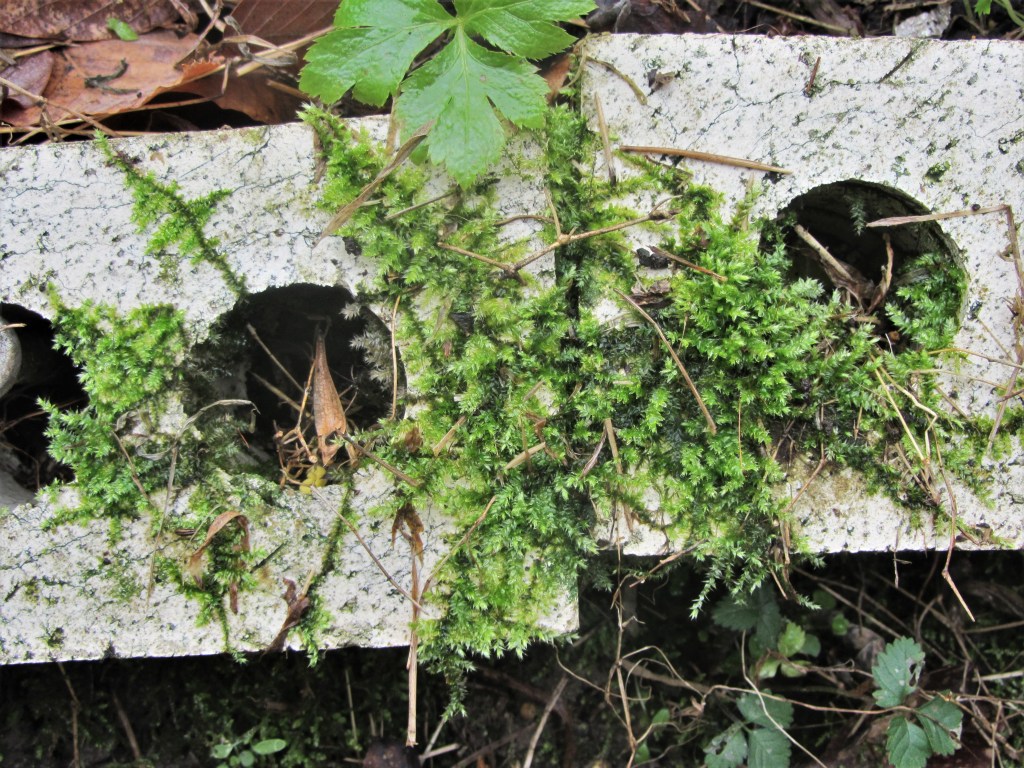
Mosses can grow on most any shaded, porous surface, anchored by their rhizoids. This includes vertical surfaces like the bark and branches of trees, masonry walls, and steeply pitched roofs. Different moss species have different preferences for what they grow on, and some surfaces simply won’t support moss.

Many mosses prefer acid or neutral soils, but some can grow on cement, limestone and brick. Some professional moss gardeners start their colonies on sheets of felt like material, which they later anchor to the ground they want to cover in a solid sheet of moss.
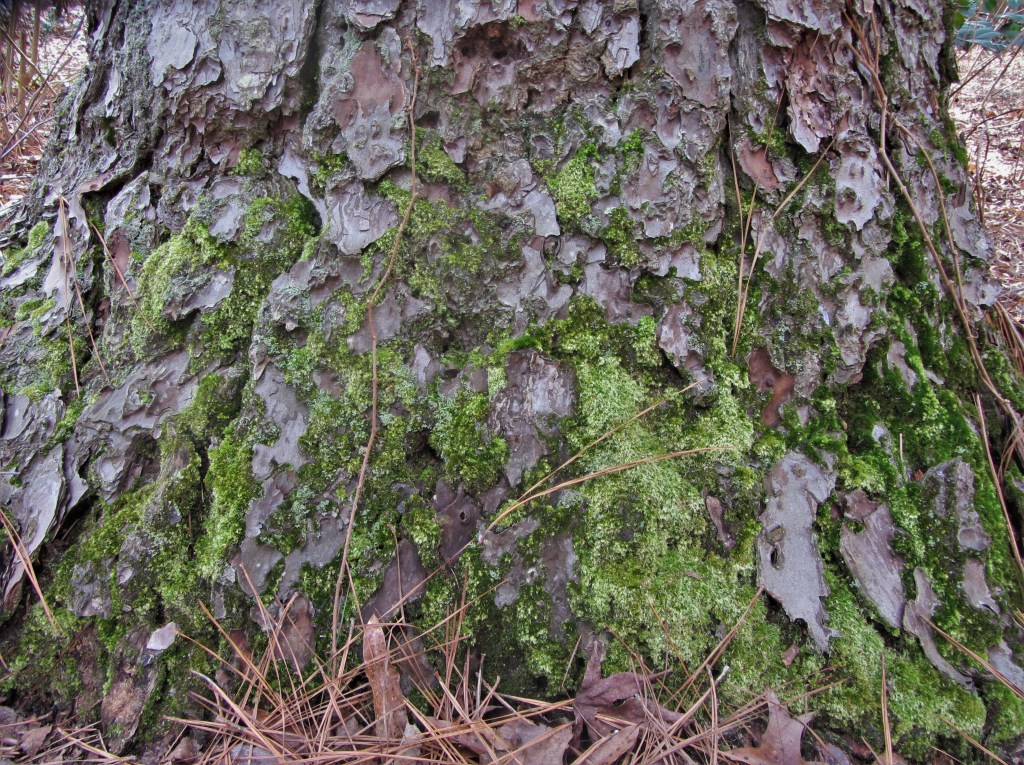
My own experiments in growing moss on sheets of felt were less than impressive. Even those sheets that gathered a good covering of moss looked and felt awkward in plantings. We are fortunate that moss will grow directly on our soil through much of the garden. I’ve been encouraging moss covered paths in all of our shady areas.
While we will sometimes find clumps of fern moss kicked up where a deer has passed, especially if they were running across a mossy area, we haven’t seen deer grazing any of the mosses we grow. Perhaps you have heard of ‘reindeer moss.’ We have patches of it growing in this area, usually beside the road at the edges of woods.
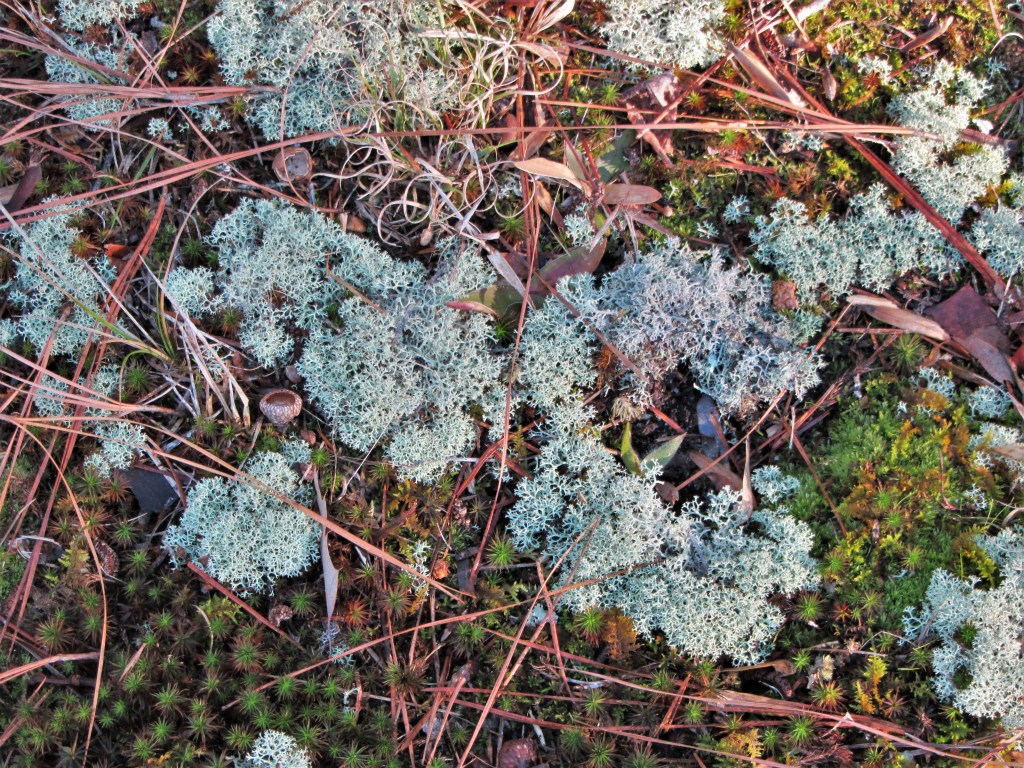
You’ll find it in craft stores and it is sometimes used in terrariums. ‘Reindeer moss’ is actually ‘reindeer lichens.’ It is a symbiotic ‘plant’ that contains both fungus and algae, and it is highly nutritious. Not only will deer, reindeer, moose and other animals graze on it, particularly in the winter, but chefs have experimented with using it as a flour substitute. It can be eaten as a survival food. Think of it like a specialized mushroom, but boil it to remove some of the acid, as it can cause stomach upset.
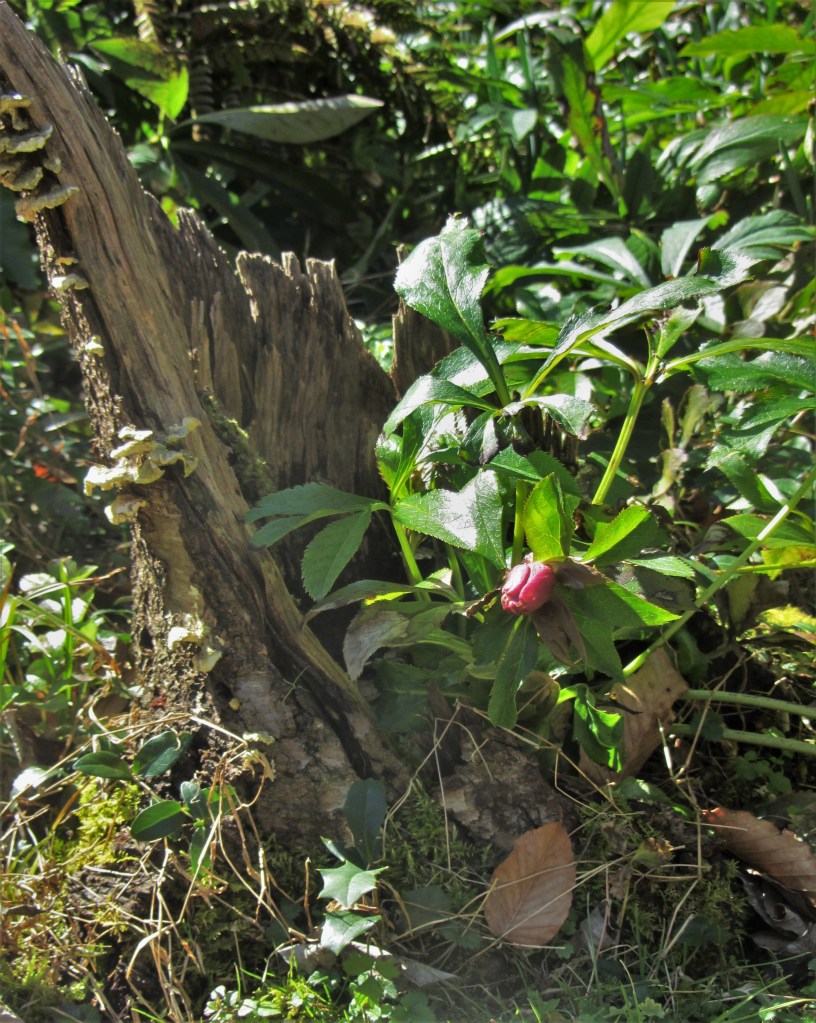
As I look out at our early February garden, I admire our evergreen shrubs, a few Hellebores coming into bloom, the elegant lines of bare trees, a few evergreen ferns, emerging bulb leaves, and the beautiful green carpet of moss growing beneath them all.
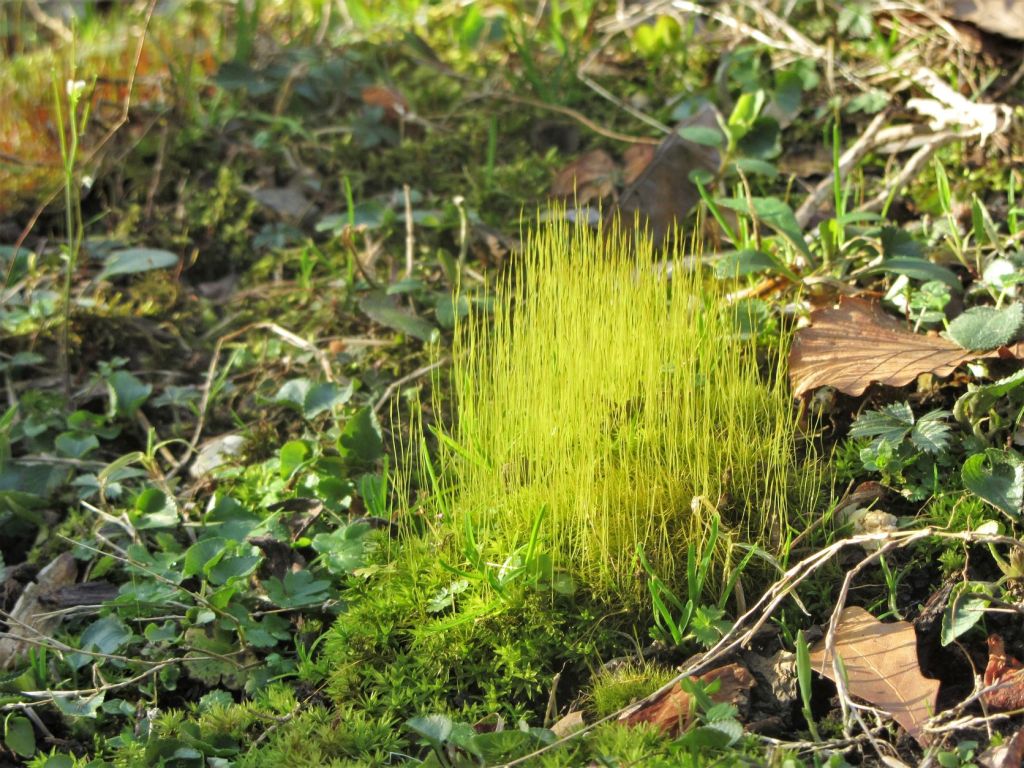
Moss spreads itself around very efficiently, by blowing spores, where conditions support it. I still help it along by moving bits and pieces to bare soil. The pieces can be pinned in place with a small stick or a florist pin, but can also be pushed firmly into place with the sole of a boot. Moss doesn’t mind getting stepped on. The pressure of walking on it can help the rhizoids connect with a new patch of soil. As a clump of moss grows and spreads, the new growth will anchor the plant, but it is still a very shallow attachment. It is easy to pull up a small piece to move elsewhere.

Encourage moss to grow and spread by keeping it clean and clear of leaf litter and by keeping it moist. I use a leaf blower, set on a gentle setting, to blow away leaves and small sticks so they don’t block light to the moss. Sometimes small clumps will blow up, which can simply be pressed back into place.
Moss is very effective in preventing erosion on sloping ground. It also sequesters carbon from the air, as it contains carbon stored in the soil. Evergreen plants continue to filter the air and release oxygen year round.
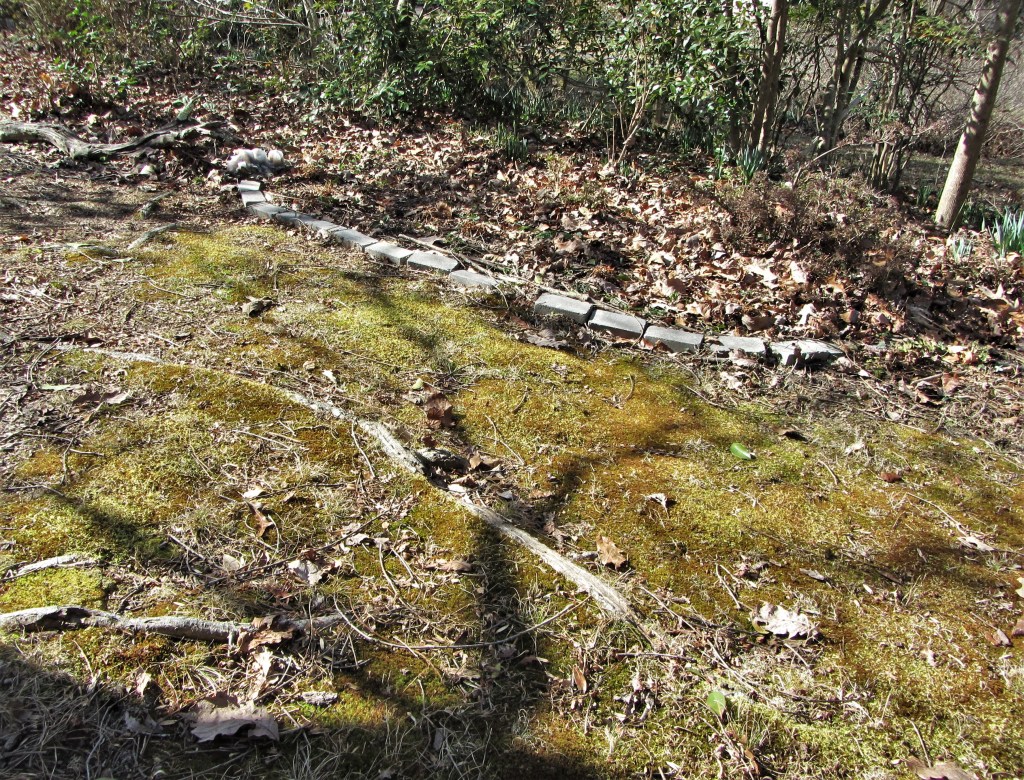
I sometimes water our moss during dry spells, especially in the summer when we haven’t had rain. The moss fluffs up and looks greener and springier almost immediately. The moss would grow even without this special attention, but it tends to shrivel and shrink when it dries out. Finding wide swaths of moss growing wild along the roadside proves that it is very self-reliant. But it looks better, year round in our garden, with this simple attention.
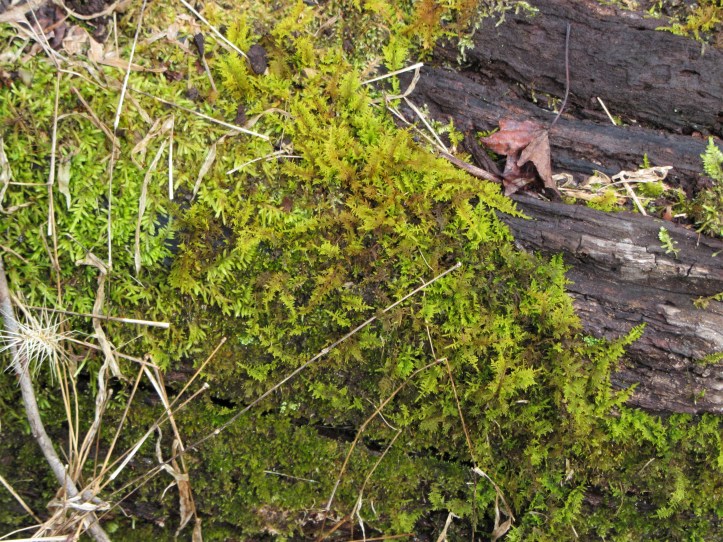
Mosses and ferns, the simplest of plants, are also the simplest plants to grow in a shady, wildlife friendly garden. I always enjoy their beauty, and grow them with confidence, knowing that deer will leave them alone. They grow better and spread more widely each season, adding an element of wild beauty to our garden throughout the year.
 Our Forest Garden
Moss and lichen always delight me. The woods would a whole lot less pretty without them. ❤
LikeLiked by 1 person
Absolutely. I have been noticing how many Christmas ferns grow in the woods along the Colonial Parkway this winter. Their green fronds really stand out against the leafy forest floor.
We started this morning at around 16F. How about you, Eliza? How cold is it at your farm this morning?
LikeLike
Our low last night was -16F, my sister in VT about an hour north was -22F! Darn, that is cold, with the wicked wind even worse. I just calculated windchill for 20 mph and it was -50 to -70, with higher gusts not even worth contemplating! Luckily, tomorrow is going to a balmy mid-40s!
LikeLiked by 1 person
So glad you’ll have a break tomorrow, Eliza. That is just too cold! It just hit 32 here, and the sun is shining. We will count our blessings! Stay warm ❤ ❤ ❤
LikeLiked by 1 person
Mosses are some of the vegetation that is notably more abundant on the coast side of the Santa Cruz Mountains than on the inland side. They dislike arid climates, so are less prolific in the Santa Clara Valley. They seem to be lacking in desert climates, although they survive even there, within the few damp riparian situations.
LikeLiked by 1 person
Thanks for sharing this excellent information, Tony. With all the rain lately, I would guess that mosses are more abundant than usual in your area this winter. My daughter tells me that moss is colonizing her car on the coast up in Oregon. I’m not sure that I would ever adapt to a desert environment, but it must be very beautiful in its own way.
LikeLiked by 1 person
Moss is abundant every winter here, even during the driest winters. The climates here are extremely diverse. The climate here is very different from the climates just a few miles inland. We get at least twice as much rain, and often three times as much rain here as there. My former neighborhood got about a foot of rain annually. This neighborhood gets about two or three feet annually.
LikeLiked by 1 person
Tony, you are always teaching me. I had no idea that your area has such a diverse climate and is so variable over short distances. The altitude and proximity to the coast make such a difference.
LikeLiked by 1 person
This is why the ‘entertainment’ industry is based here. (It started in Niles in Alameda County before relocating to Hollywood.) So much diverse scenery is available within reasonable driving distance. The several acres at work include more climate zones than the entire state of Oklahoma, and include very distinct redwood, ponderosa pine and coast live oak ecosystems. The short distance between here and town changes more in elevation than much of the entire midwest, and is higher than all of Illinois.
LikeLiked by 1 person
What a remarkable place! No wonder you love it there so much!
LikeLiked by 1 person
I love it because it is home. It is not as great as it looks in all those fictitious places on television though. The Santa Clara Valley is not as idyllic as I remember it to be.
LikeLiked by 1 person