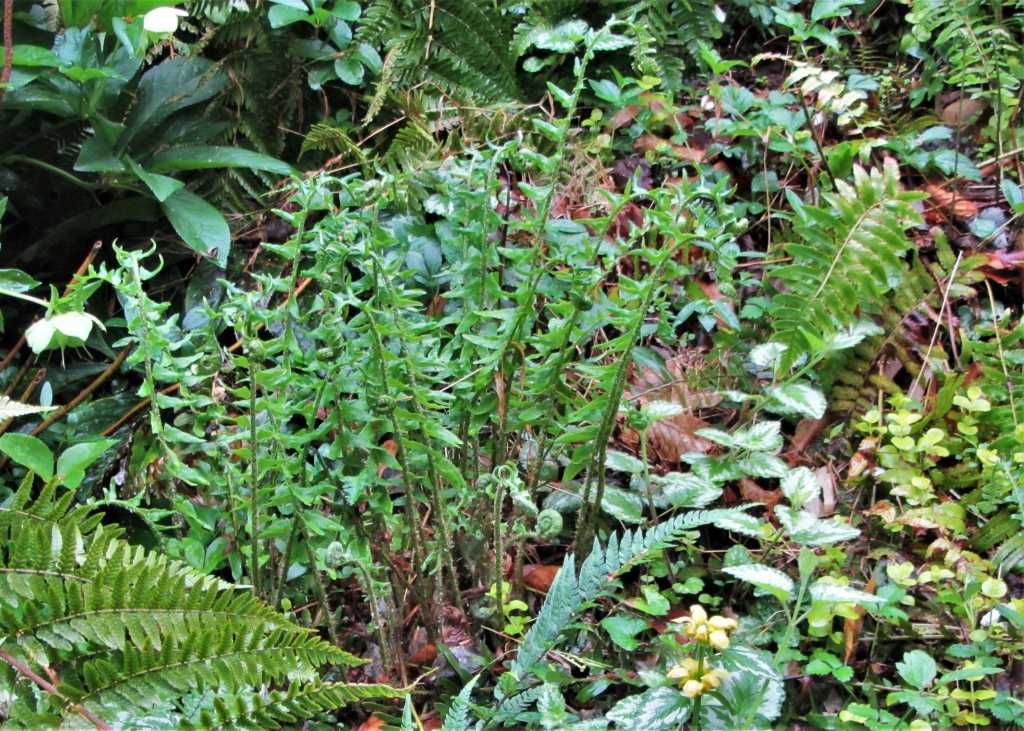
The wheel of the year clicks steadily ahead bringing us to the joyous celebrations of April. There is so much happiness in birdsong and the awakening garden as buds open, ferns unfurl their fresh fronds, and our skinks make their first skittering appearance of the season. We had a few days of June this past week when temperatures reached the high 80s. That really put things on ‘fast forward.’ We even saw some a few dragonflies and butterflies.
Then nature slammed on the seasonal brakes with a weather front that slammed us back into February, it seems. Our high today of 54F happened around sunrise. The north wind has kept our temperatures dropping all day, and we’ll enjoy a rainy night in the low 40s. Perfect sleeping weather, perhaps, but not a great way to start the Easter weekend. At least there is no snow in our forecast and no freezing nights. With dogwoods and Azaleas in full bloom now, we’re very grateful for small climatic blessings.
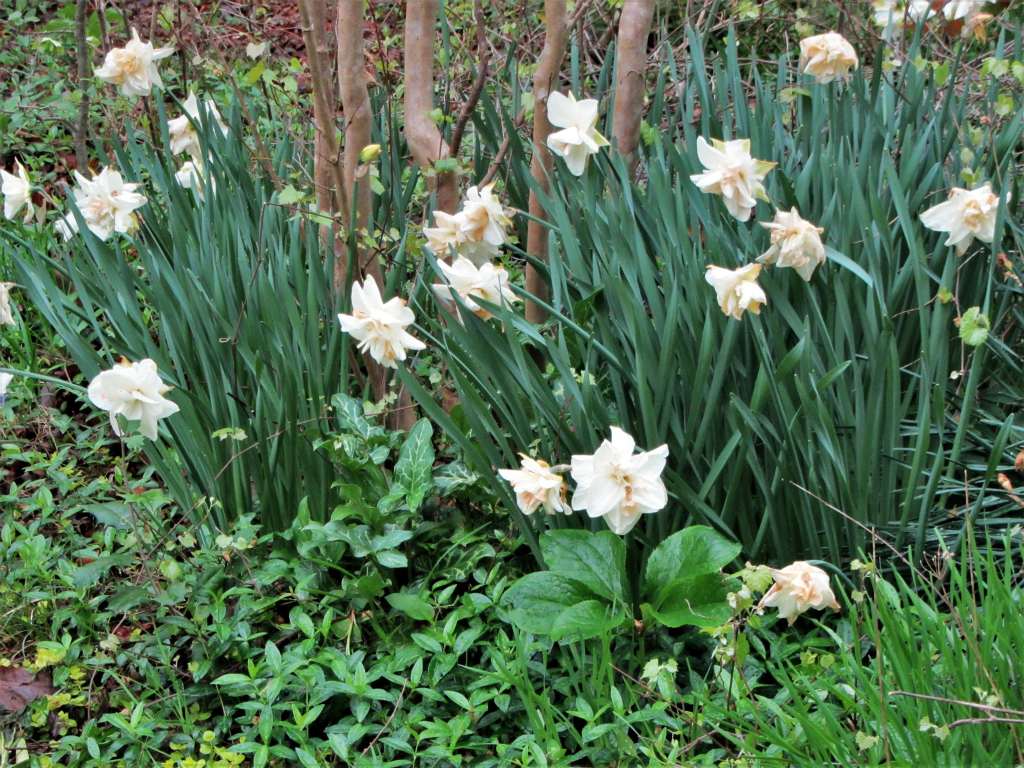
We make only two seasonal pilgrimages a year now to The Bulb Shop in Gloucester to pick up our bulb orders. Back in the day, before Covid, we would make several trips a season to shop at a few favorite stops, tour the display gardens, visit with friends, and have lunch in one of the character restaurants around Gloucester Courthouse. Now we are happy to simply enjoy the drive, pick up the order, and have a brief visit at the Bulb shop, which we did on Wednesday.
In this season of celebration, my partner treated me to a selection of new digging tools. What luxury! I would have been quite happy with any one of them, but he gifted me with all three. The gardening tools at the bulb shop are of consistently high quality and are built to last. I love the V-shaped cutting tip of these ‘diggers’ that slice through what needs slicing in pursuit of that perfect little hole for planting a plug or bulb.
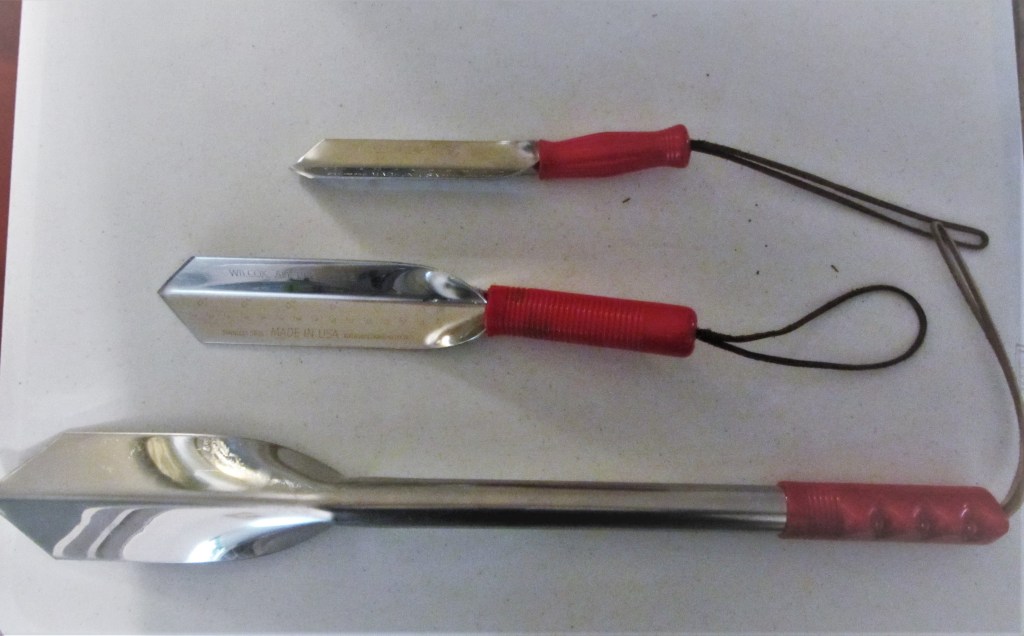
There is something very satisfying about excavating and preparing each planting hole to the perfect size for the new plant. The depth and width should be generous but not too excessive and the excavated soil well broken up. I sprinkle in a dash of Bio-Tone or Plant-Tone, loosen any roots on the transplant, and then snug it into its new home. A watering in and perhaps a covering of some moss or mulch completes the job.
I am still editing, pulling out more shoots of goldenrod, pruning out branches and ripping out more invasive vines than I am planting anything new. But all the new Christmas ferns are planted now along with most of the little perennial starts that I’ve been stockpiling this past month. I’m slowly finding spaces for some larger ferns and seedling trees. There is still the matter of a nicely rooted Muscadine grape vine that I pulled out of the pot where it grew from a seed left by a squirrel. Surely there is someplace around here where it can grow?
I’m trying a new late summer blooming bulb, Amarine belladiva. Deer resistant, it is another member of the Amaryllis family that gives us so many stunning flowers. I’m also trying a new, variegated Gaura, ‘Passionate Rainbows,’ that should be an interesting addition to the garden for us and for the butterflies. The Begonias and Alocasia we picked up in Gloucester with these perennials will have to wait in the garage until the weather settles. They are too heat loving to tolerate this wintery spell of damp weather so soon after leaving the greenhouse.
We almost began moving pots and baskets back outside this week from their winter sanctuary in the garage. Almost, but then we decided that was ill-advised when the weekend forecast for cold weather came into view. Who can really trust spring before mid-May, anyway?
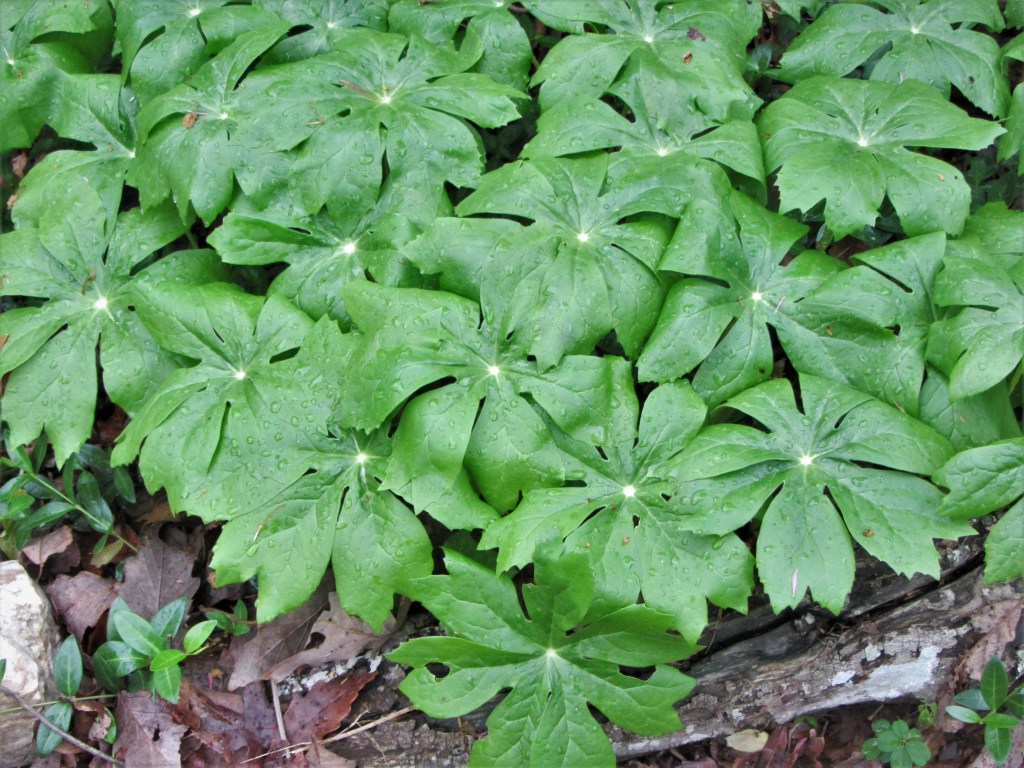
My parents used to tell me that a little knowledge is a dangerous thing. I was too young and naïve to really understand their meaning at the time. But one of my favorite writers for the Washington Post, Dana Milbank, has written a deliciously wonderful essay about his experiences during his ‘Master Naturalist’ training that brings the receipts for this profound truth. It details how some of the personalities he has encountered these past months have tried to convince him that his typical Northern Virginia suburban plot is ‘killing the Earth’ because he has Asian shrubs and a lawn.
Some of the purists he met counseled that he should rip out his non-native plants, which he has spent the last few decades acquiring and nurturing, in favor of an all-new selection of native plants. Thank goodness, he heard some opposing viewpoints before digging out everything. He ended up buying lots of new plants, though, and instead of the beautifully manicured and blooming yard he had before, he now is looking at ‘mud and scrawny sprigs.’ So much for understanding the functional value of all plants, even those that don’t boast the proper provenance….
One ‘native plant nursery’ sold Milbank a seedling oak tree, just a few inches tall, for $20.00. A squirrel made off with a similar sized tree with its first 4 leaves open already, peacefully growing in a large pot on our back deck last month. Maybe what was left of its acorn doomed the baby tree. I would have been proud to give Millbank a few of my remaining home-grown oak trees for free. Acorns aren’t that scarce or hard to grow…
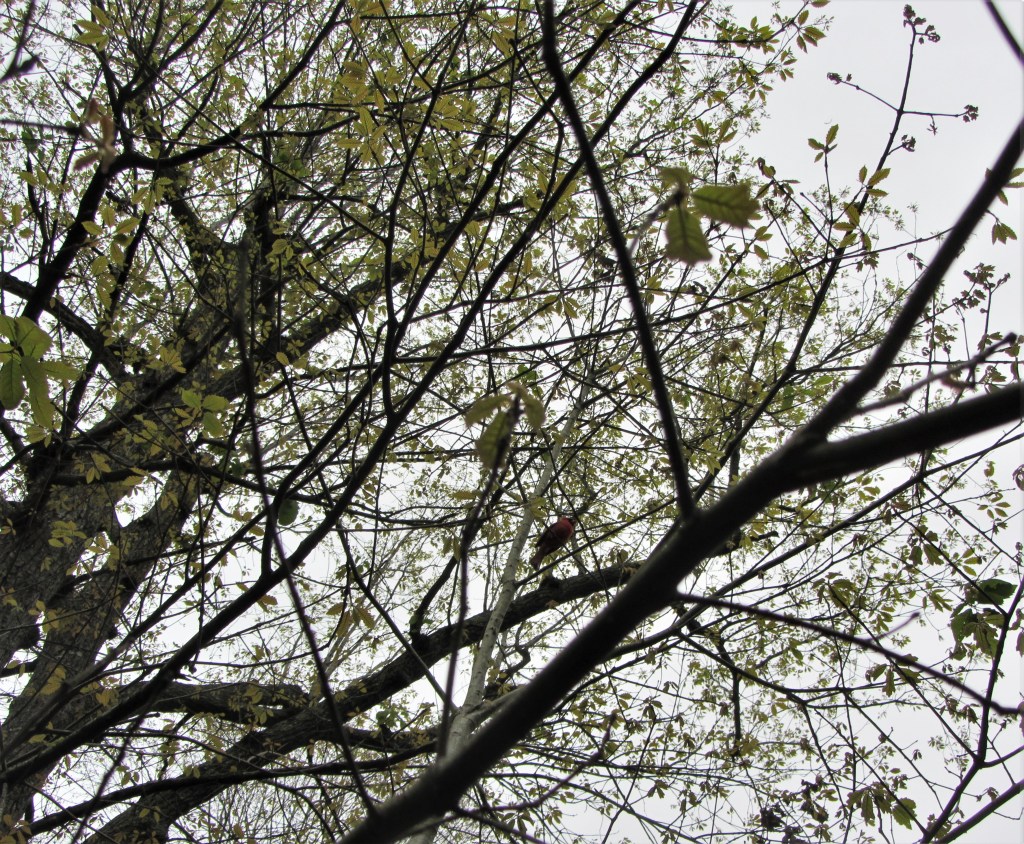
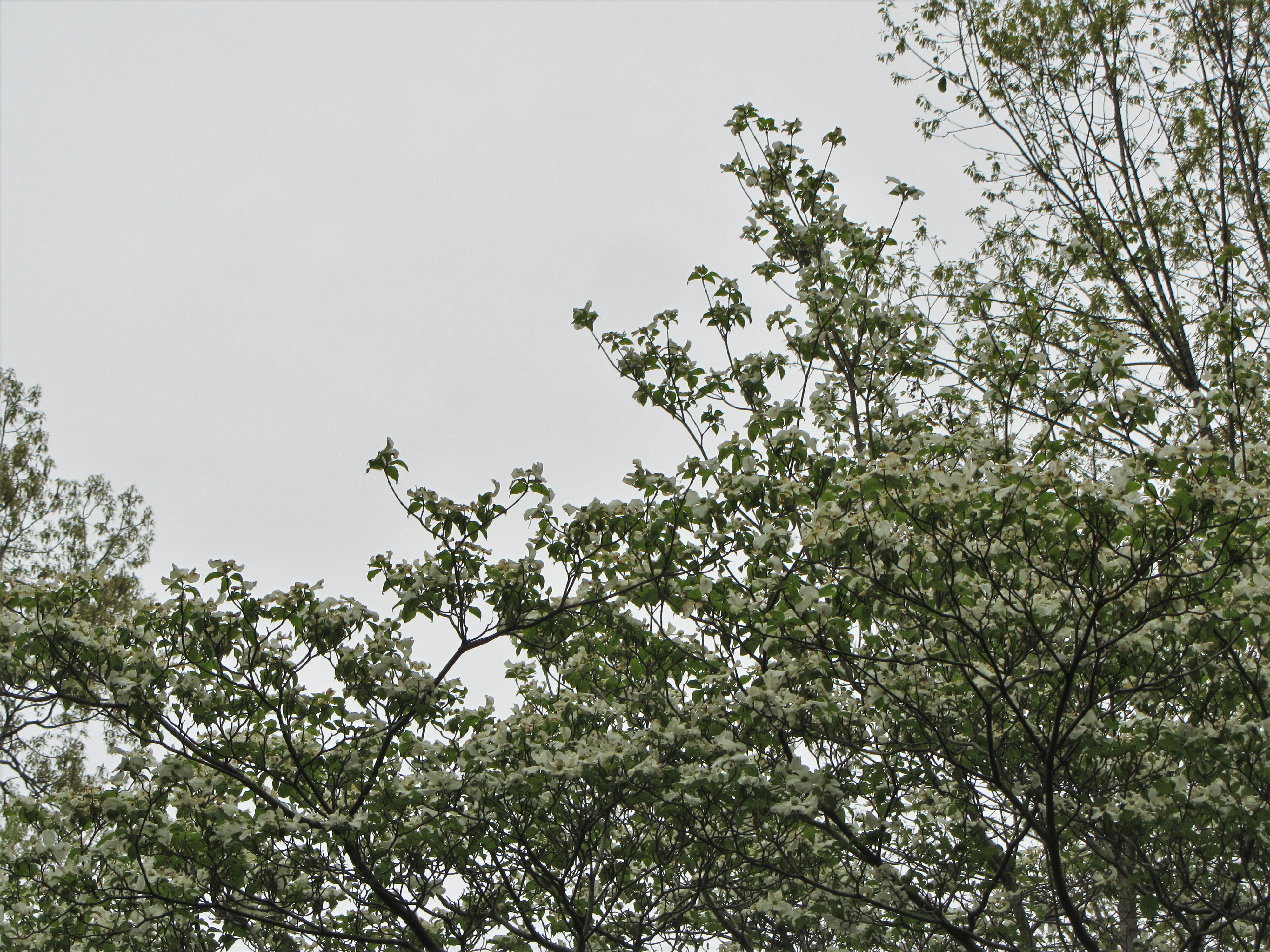
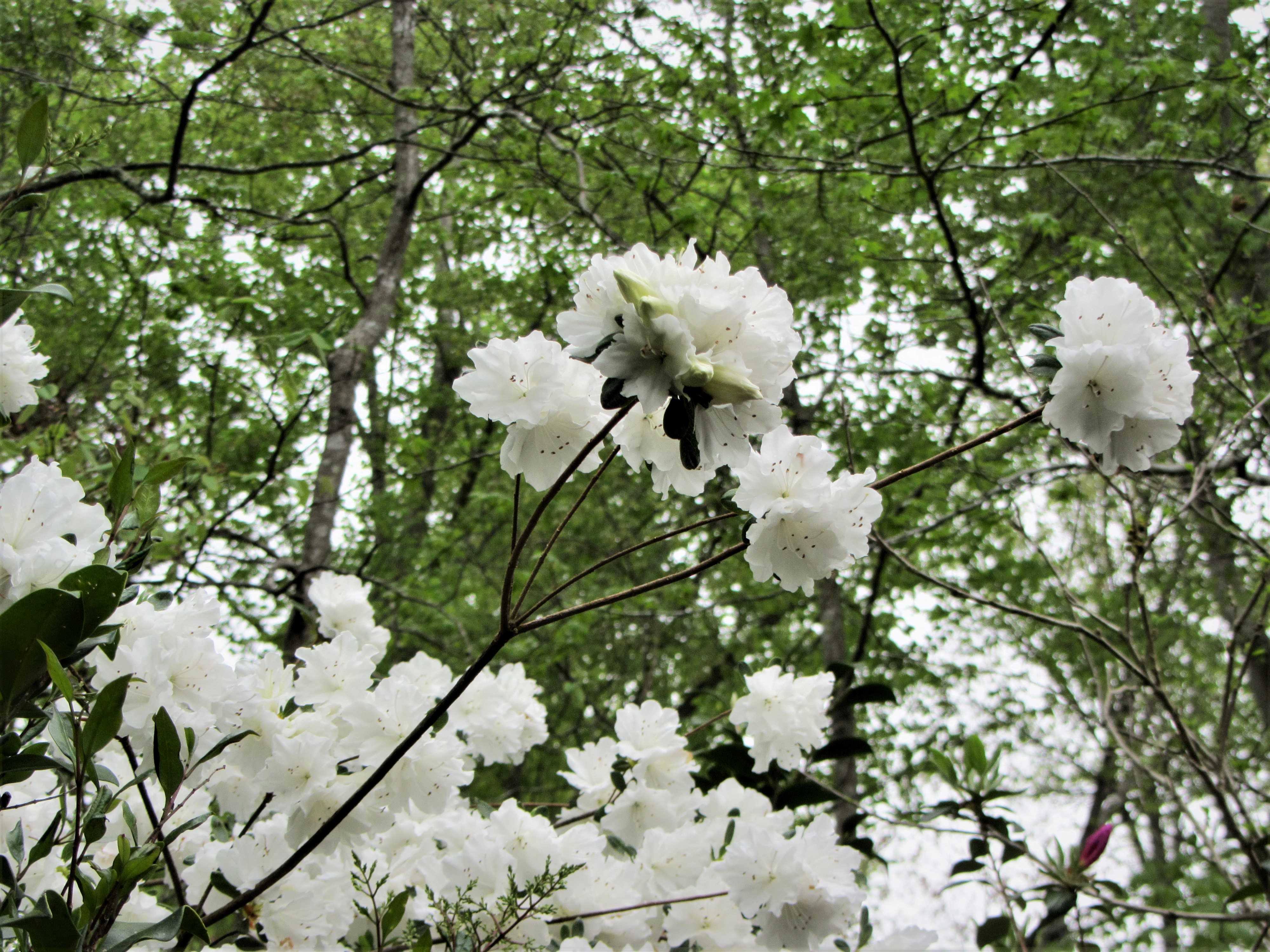
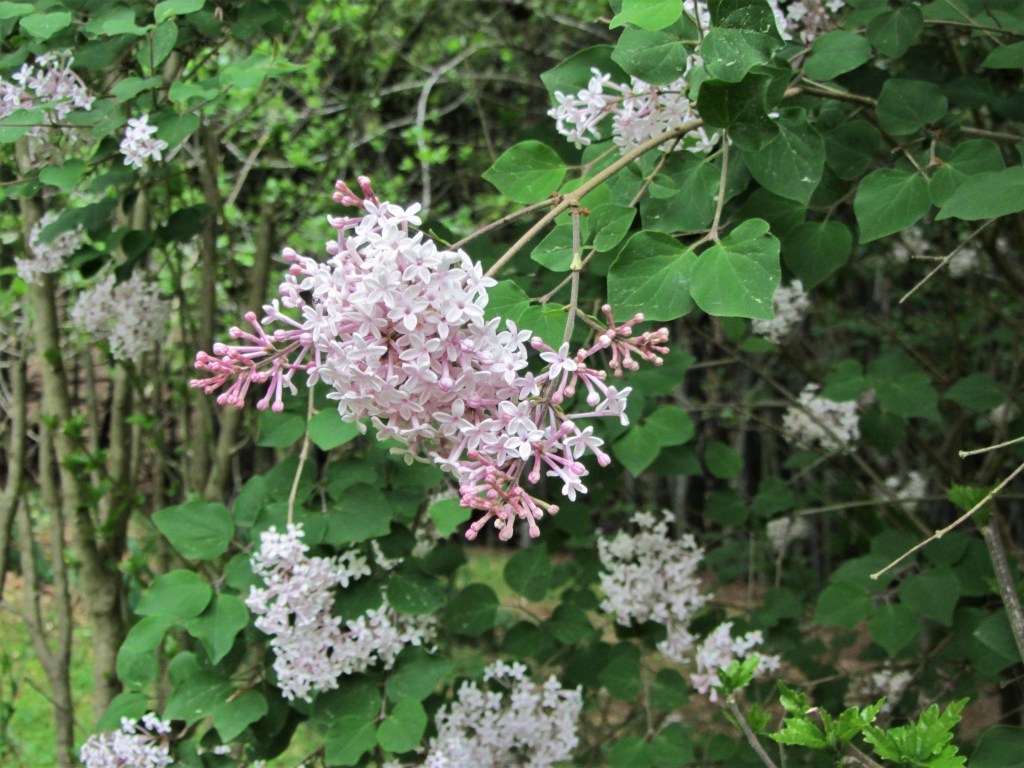
In all, Milbank spent over $400 for 38 new native plants. At least he heard the deeper environmental wisdom of Doug Tallamy in time to understand that adding an oak tree or two is one of the best things any gardener with a yard can do for the environment. Adding keystone species, reducing lawn, and avoiding chemical sprays buys us a ticket to enjoy our flowering Azaleas, lilacs and Camellias guilt-free.
Gardening shouldn’t burden any of us with guilt. We can all improve on our personal best, but it is the getting outside and touching the soil that matters. It is our relationship with our environment, with our plants and the creatures who share the garden with us that adds that magic sparkle to our lives. We work best and accomplish the most where we are happy and at peace. And no, our suburban gardens aren’t the driving force in our current ecological challenges.
The wheel of the year turns relentlessly, doesn’t it? Iris spikes appeared quite suddenly this past week, stretching taller each day, buds still tightly closed. This rain will make the garden stretch even more as every leaf and stem reaches for the sun and sky. Moss keeps filling in more bare spots on the paths, and old friends have broken ground and reminded me of where they grow. A garden is an ever-evolving community, always changing, and I can’t wait to see what surprises this year brings.
With appreciation to Jim Stephens of Garden Ruminations, who hosts Six on Saturday each week.

You might enjoy my new series of posts, Plants I Love That Deer Ignore.
Visit Illuminations Each Day for a daily garden photo and a quotation
 Our Forest Garden
I got quite excited when I saw you mention a bulb shop in Gloucester, somehow I feel yours is a few hundred miles from the Cotswolds? We are heading there tomorrow to visit a relative, maybe I’ll look out for a bulb shop anyway!
LikeLiked by 1 person
Well I certainly hope you find one! Isn’t it interesting how so many place names were simply transplanted from your corner of the world to ours? Yes, ours is only a 40 drive north for us, but several thousands of miles from the Cotswolds. Happy Easter! ❤
LikeLiked by 1 person
It’s quite a volatile season, isn’t it?! I’ll have to look for that variegated Gaura–it sounds exciting and I do need some Gaura here. 😉 Your lilac is breathtaking…
Happy spring from the other side of the continent!
LikeLiked by 1 person
Thank you so much! All good wishes appreciated. This year is the first time I’ve seen that Gaura offered for sale and I hope you can find it locally. If not, B&B ships plants. These come as well rooted plugs with about 4″ of leafy growth. The lilac surprised me this year, coming out so early. It is one of the few varieties that will put up with our summers. So happy that you like it too! Happy Spring! ❤ ❤ ❤
LikeLike
Love your new digging tools, I do love a high quality digger! ❤ Yes, one can't be too much of a purist in the garden. I have mixture of native and non native and the plants that aren't native can feed native birds and bees at different times of the year.
LikeLiked by 1 person
Exactly! Everything fits into the web and community in its own particular way. Insects and birds are present here earlier and later in the season than ever due to the changing weather. Very few natives are available to provide nectar, especially, from late fall through until late February. The non-natives, like Hellebores, help fill that gap to get insects through the warmer winters. Non-native shrubs that produce berries and seeds help the birds get through the winter, too. Enjoy the day! ❤ ❤ ❤
LikeLiked by 1 person
Natives are actually difficult to work with in some regions, and quite impractical. I mean that, in some ecosystems, native plants are neither conducive nor practical for home gardens. At the moment, natives is a difficult topic because of the issue with the public landscapes in Ilwaco that Tangly Cottage Gardening has maintained for so many years.
LikeLiked by 1 person