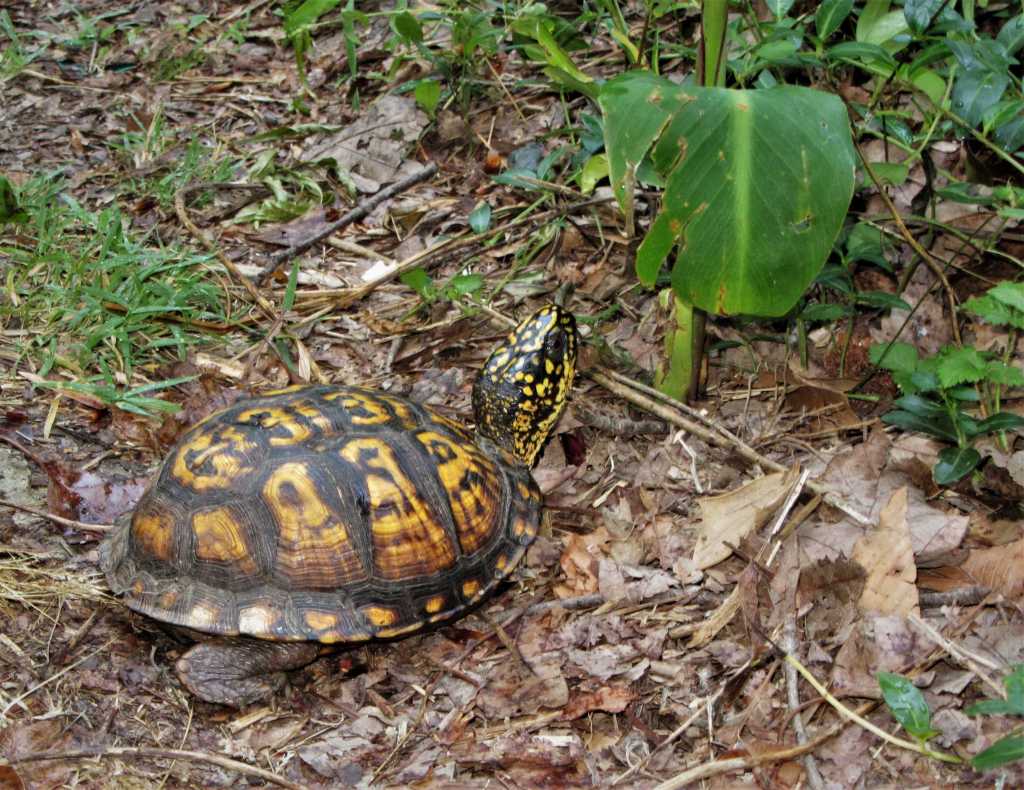
I went out into the garden very early on Friday morning and found a beautiful box turtle on one of the paths. We know each other. At least two of these beautiful turtles frequent our yard and it isn’t unusual to find one or the other or both of them. Often, they are well-hidden in some tall foliage, and sometimes I find them on the patio on a hot, summer day, looking for a drink.
I thought it a little odd to find this little guy with his head and neck fully extended. He just patiently waited until I passed, dumped out the coffee grounds I was carrying, and them passed a second time. It was only later, looking back at his portrait, that I realized that he was perfectly lined up to have a bite of the Canna leaf he was admiring. He just waited until I wasn’t watching him.
Turtles are omnivores, and I like to imagine they eat mostly insects. But this little turtle studying the Canna leaf offers a clue to an ongoing garden mystery. Thus far three of the little Christmas ferns I planted back in March and April have been shredded and their roots dug up. What would do that?

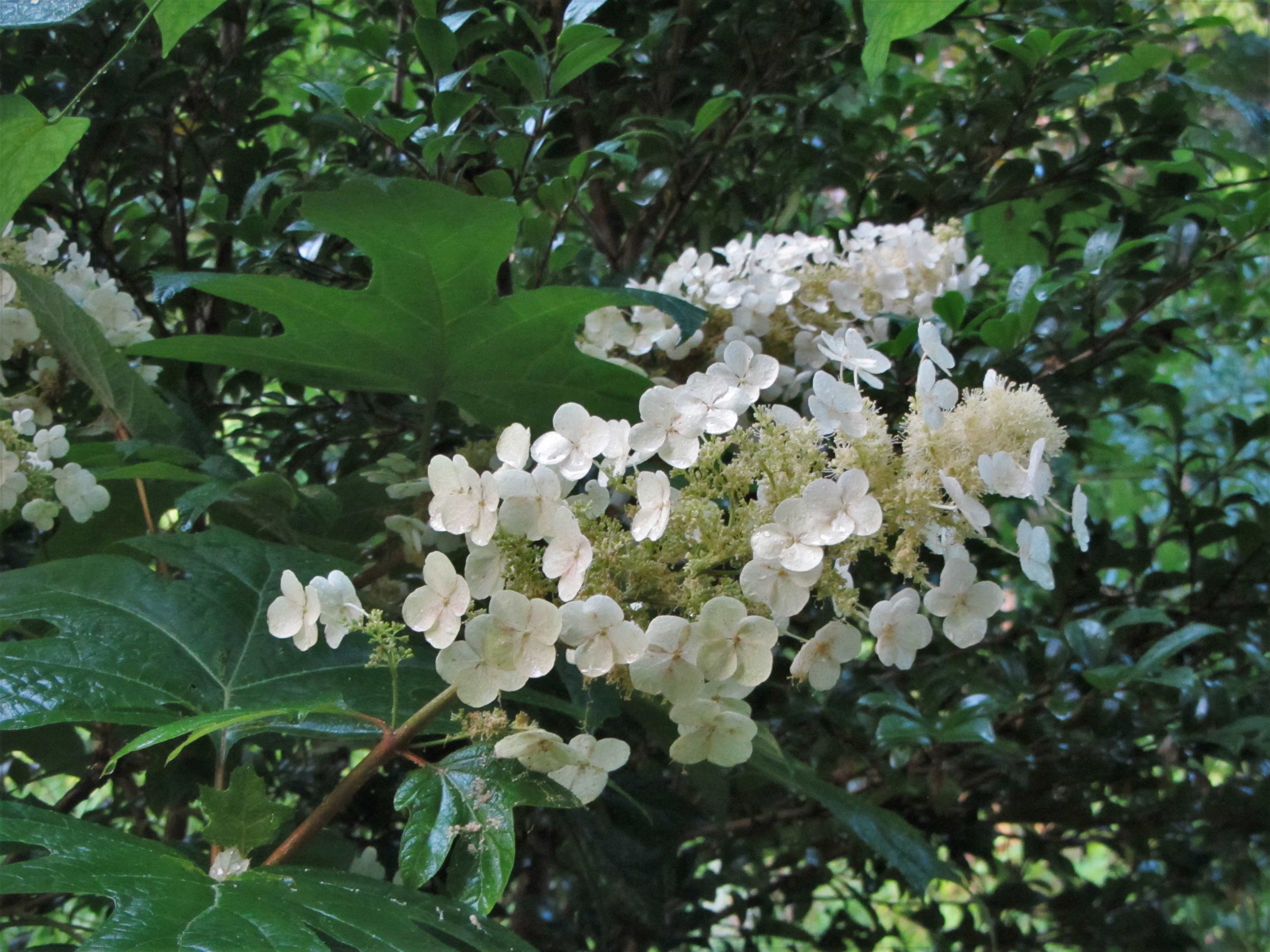
It’s not unusual to find evidence of deer grazing a leaf here and there, but they rarely touch a fern. Christmas ferns have such tough, leathery leaves that they aren’t the first choice for any of the animals who visit us. We have rabbits, but they normally dine on clover and grasses. This is the first time I’ve found new plants dug and their roots shredded. I’ve been trying to figure out who has been attacking the ferns, and now two newly planted Aquilegia plants, too.
One of the little columbine starts has maybe a 60% chance of surviving. It looked rather dry and was already browning when I discovered it sadly hanging out of its planting hole, only a few roots still in the Earth. I pushed it back in place, covered its roots, watered it in, and am hoping for the best. The other Aquilegia was attacked Thursday night. It was lightly grazed, and I found a deep hole beside its root ball while I was visiting with the turtle on Friday morning. What are the chances that the turtle is both nibbling and digging?
There is far more grazing and damage to plants than is usual this early in the season. It may be that our dry weather is forcing herbivores to find moisture where they can. The bowl of water I set out on the patio for the birds, turtles, skinks, squirrels, and rabbits is generally close to empty by the end of the day. I have been filling it twice a day, lately.
A neighborhood friend wrote to me on Friday morning asking whether she could return most of the little redbud trees I gave her and her husband earlier this month. She was upset that several leaves had been grazed already, and the rooted Forsythia cutting I shared was gone entirely. Without a fence, all of the animals in the neighborhood have free range in her yard. She kept the largest of the redbuds and plans to put a cage around it. I totally understand. Redbud, Cercis canadensis, is one of those ‘safe,’ ‘deer resistant’ trees that deer normally ignore. But even my mature redbuds are missing some leaves as high up as the does can reach them, this month. ‘Normal’ has flown out of the window.
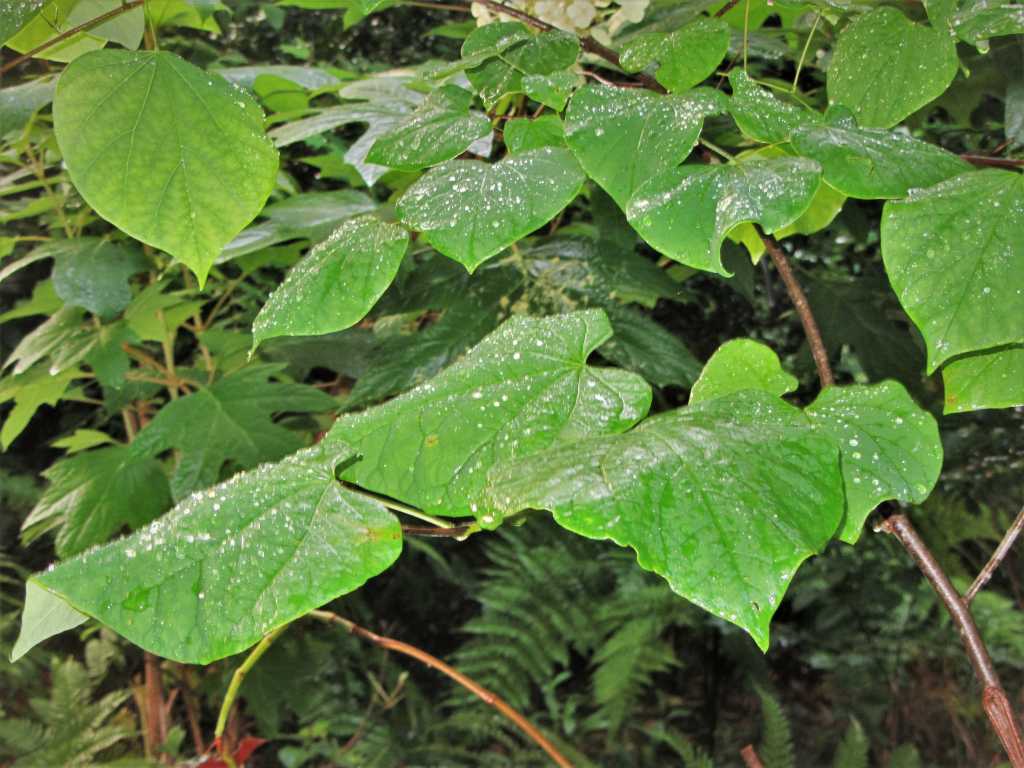
It is very dry in parts of Virginia this June. I read an article in the Washington Post about the drought in Northern Virginia that has grown so bad, the Potomac River is much lower than usual for June, and the drinking water has developed an ‘off’ taste from the algae in the river. Low moisture content in the soil has begun to affect crops. We have water restrictions here, but at least our rivers are flowing just fine. And we’ve had some wonderful rain this week, with more in the forecast.
I found two of my favorite Hydrangea shrubs brutalized on Monday, with missing leaves and broken branches. I’ve been using Plantskydd and Repels-All faithfully to try to protect them, but piles of deer droppings tell the tale. I neatened them up, making clean cuts below the jagged gnawing on some branches, and salvaged what I could of the broken branches that were left.
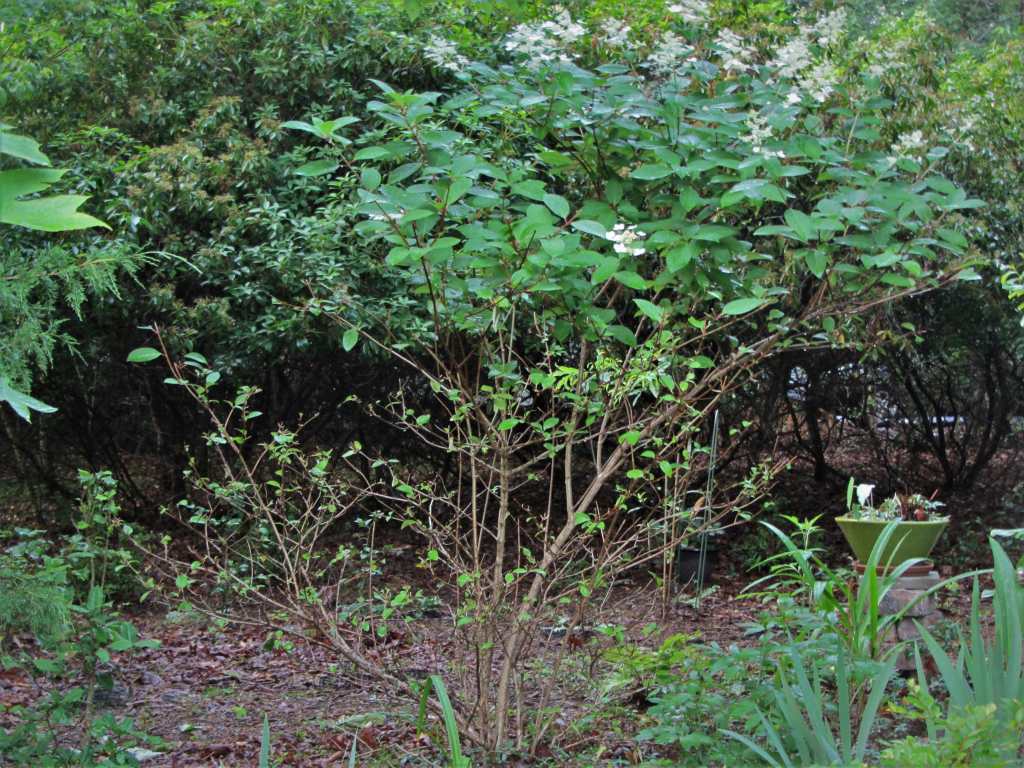
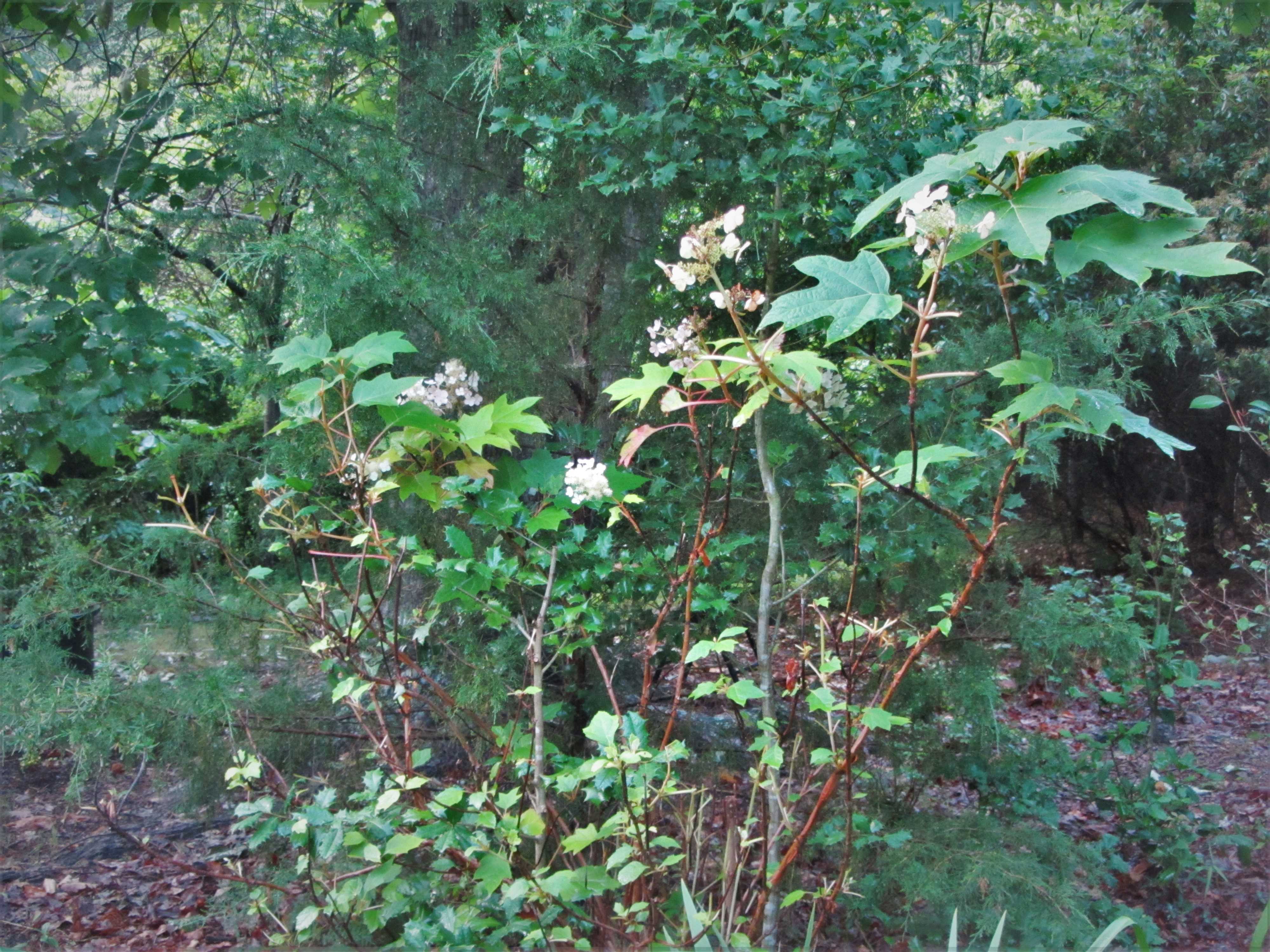
One of the cuttings, new growth this year, is sitting happily in a jar of water in my kitchen window. And it looks like roots are forming along the lower stem. I’ll be so pleased if this Hydrangea will root in water. Other cuttings, with older wood, I’ve stuck into moist soil in containers in hopes that perhaps they will root, too. We’ll see what they do.
I have good luck, usually, with Hydrangea cuttings. Most types root easily. The trick is getting the young plants to survive long enough to grow beyond the reach of grazing deer. Hydrangea seems to be a favorite of our herd, for some reason.
That is the thing with deer. They are very smart. But they don’t read. They have no idea which plants are the ‘deer resistant’ plants they are supposed to leave alone. And a product that repels them for a time will just stop bothering them after a while.
I’ve spent time chasing deer out of the yard every day this week. They have been nibbling all sorts of things that they should be leaving alone, even prickly holly leaves! I’ve tried nearly every trick on the list of how to deter deer. They are like ghosts, slipping through our fences and eluding our best efforts to thwart them.
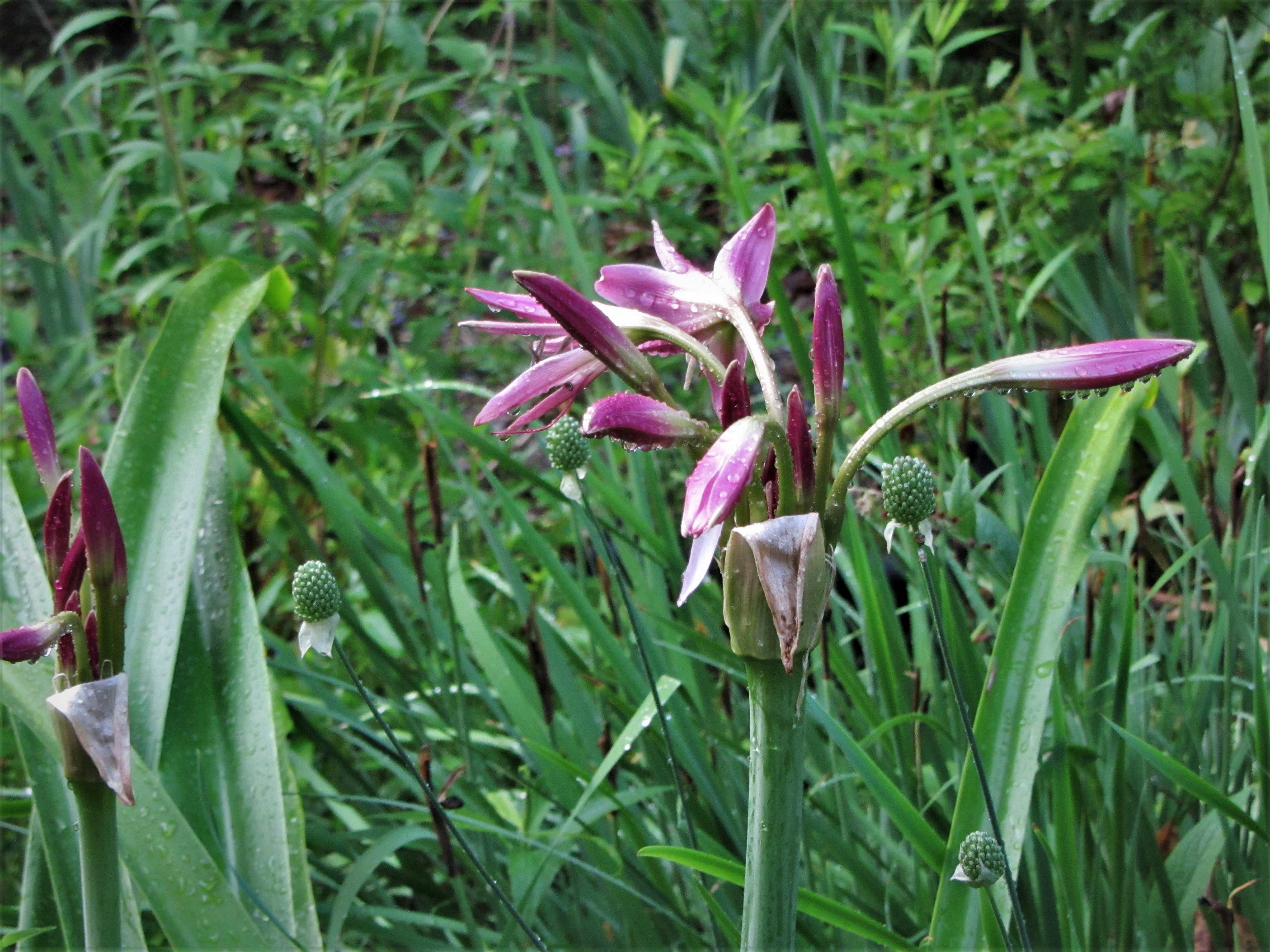
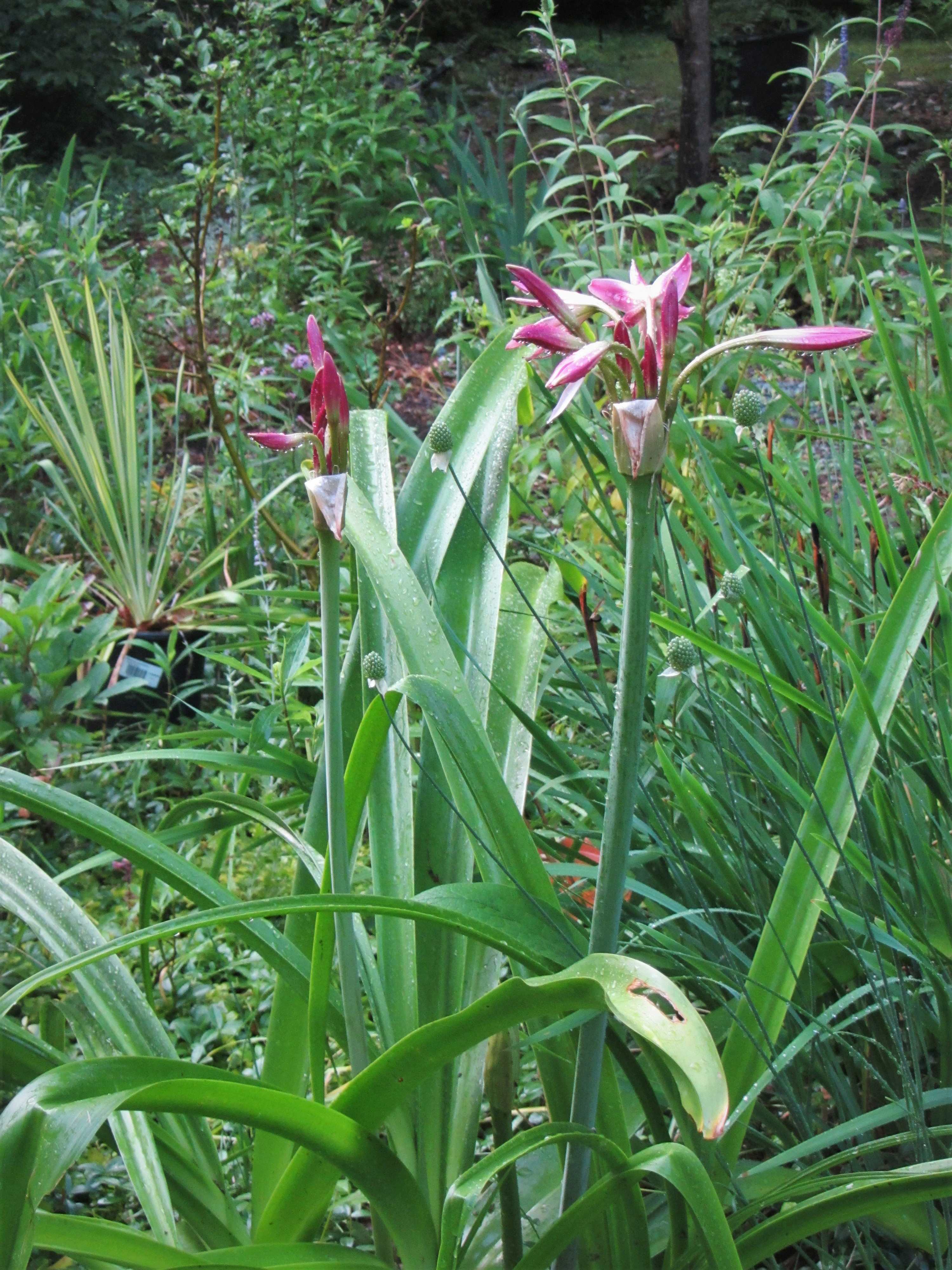
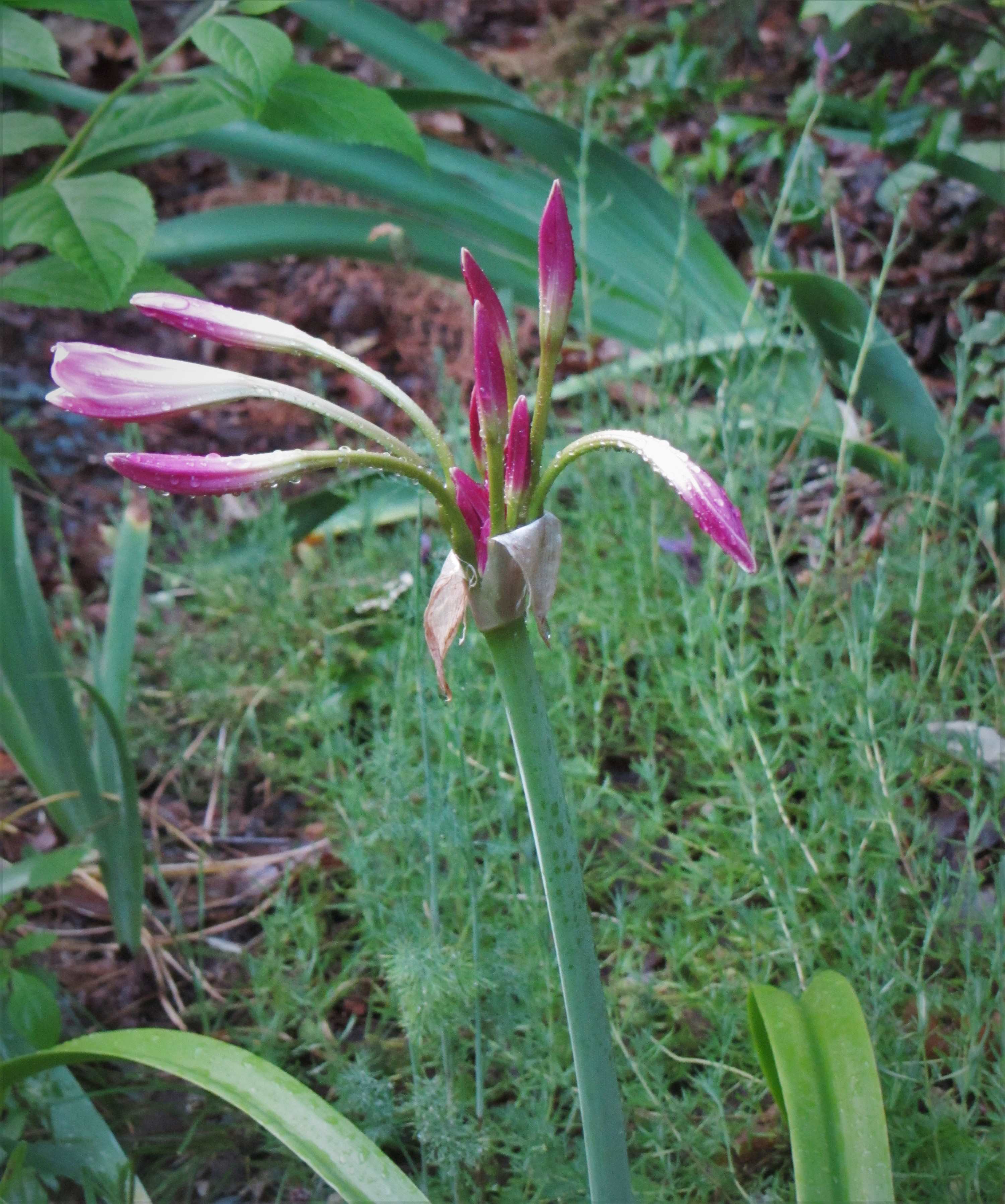
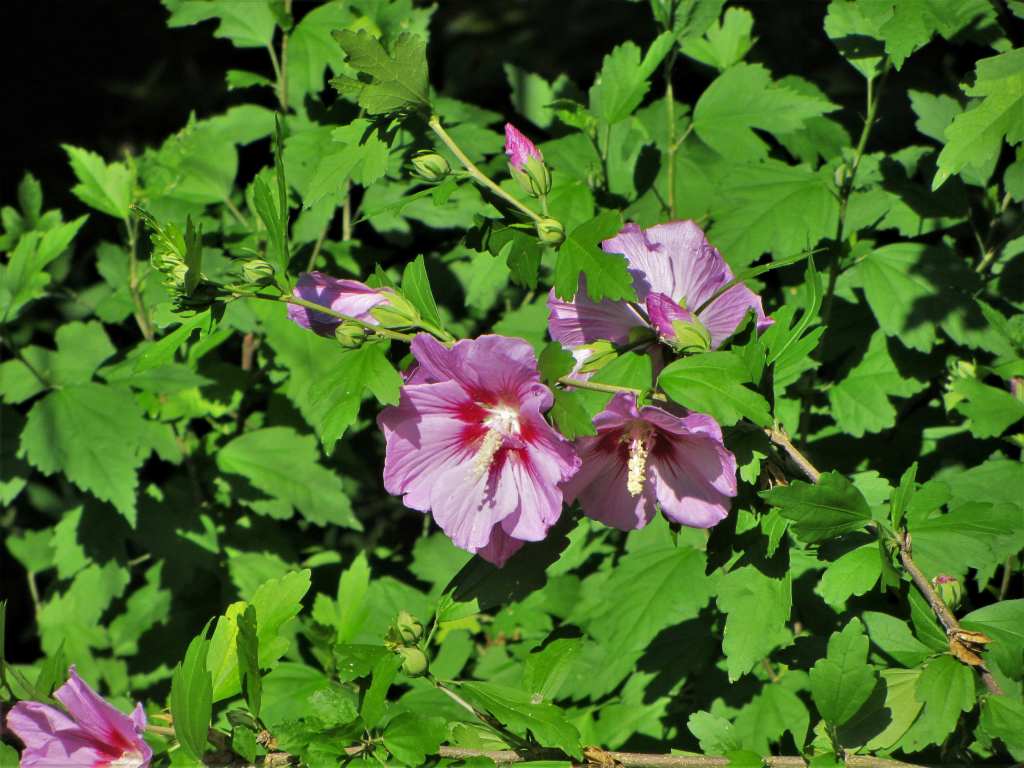
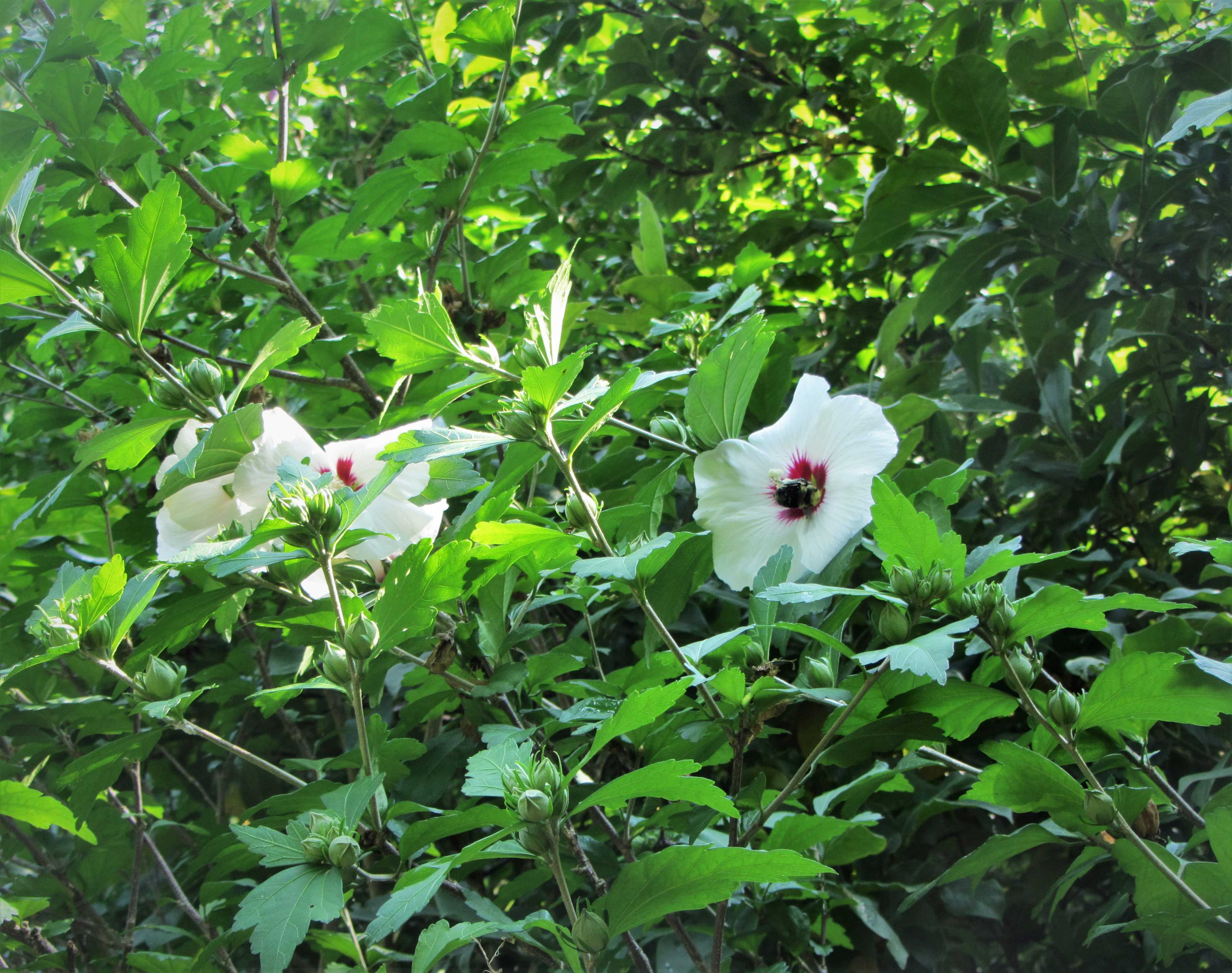
Now that we’ve finally had some rain, I look forward to seeing our garden repair the critter damage and really grow into its summer beauty. The first Rose of Sharon flowers opened this week, and the bees have been happily buzzing around them. We have Crinum lilies ready to bloom, and the butterfly bushes opened their first blossoms of the season yesterday. I found the Gardenias magically in bloom on Monday, and the lower garden is filled with their perfume. More and more leaves keep opening on the Caladiums, and the Lantana has finally taken off and produced a few flowers. And I’m thrilled to watch our patches of moss continue to expand a bit more each week, as they fill in and grow lush.
Jim suggested a wonderful book to me in last week’s comments, and I have been thoroughly enjoying The Lost Rainforests of Britain by Guy Shrubsole. I had no idea that much of the British Isles once were covered in temperate rainforests, and that remnants of those ancient woods remain today. There are efforts underway to not only conserve these remnants, but to replant areas that have been de-forested for centuries with the tree and fern species indigenous to the area. And of course, many animal species will follow to live in this new habitat.
Trees in rainforests support many additional species of mosses, ferns, vines, lichens, and fungi, which makes them a tremendous resource for filtering the air and sequestering carbon. Trees also return huge quantities of water to the atmosphere, soaking it up through their roots, and then releasing water vapor from every leaf.
Planting and caring for trees improves the ecosystem in countless ways, but especially by helping to regulate the water cycle. When forests are destroyed, the atmosphere holds more carbon, nitrogen and air-borne pollutants. Trees filter and sequester these while producing oxygen. But the atmosphere also grows drier, because trees aren’t returning water vapor to the air. Trees, and particularly rain forests, are an important component for improving our planet’s atmosphere and potentially reversing our climate challenges. They are functional as well as beautiful.
We don’t have enough precipitation here in coastal Virginia to support a rainforest perhaps, but we have enough to support trees, shrubs, mosses and ferns. I guess I will just have to plant enough of them to grow, and to support the critters, too. Tough work, maybe, but somebody gets to do it.
Happy Gardening this week! And Happy (almost) Summer Solstice!
With appreciation to Jim Stephens of Garden Ruminations, who hosts Six on Saturday each week.

You might enjoy my new series of posts, Plants I Love That Deer Ignore.
Visit Illuminations for a daily photo and
 Our Forest Garden
Sorry to hear of all the frustrating damage. I am reading that same book now, it has been on my TBR list for a while and I got stuck into it yesterday, in fact I was with a relative who lives on the edge of Dartmoor only yesterday. I’m not too far into the book yet, but it is fascinating.
LikeLiked by 1 person
Oh, how interesting! And you have a relative who lives on the edge of Dartmoor! I hope you are able to explore the old remnants of rainforest. I am reading slowly because it is so interesting and detailed, but also because I was already in the midst of the Lars Muhl trilogy when I started the rainforest book. They balance one another well. I totally support efforts to restore and expand the rainforests everywhere, but particularly in Wales, Britain, Scotland, and Ireland. They are a cultural, as well as an horticultural treasure.
LikeLiked by 1 person
Oh no! Did I mention that our six lily pad disappeared prior to the frost last year, and that while I tried to figure out what happened to them, I noticed a turtle? I do not know what I can grow in the pond now.
LikeLiked by 1 person
No, you didn’t mention that as I recall. So the turtle may have enjoyed your lily. Is it coming back this spring, or is it a goner? Maybe you can grow some Iris and Aroids along the edge of the pond, and perhaps try again with a lotus or lily?
LikeLiked by 1 person
I have not seen any new growth yet, although I have noticed something that could be one of those Pacman shaped leaves floating on the surface. It is obscured by debris from the willow above. Louisiana iris from Tangly Cottage Gardening lives on a portion of the bank now, and I intend to move it around as it grows, but that can not replace the water lilies.
LikeLiked by 1 person
No- nothing replaces waterlilies. I hope you have confirmation soon that it survived, and I hope the Iris grows well for you. We were on Jamestown Island today, and I was amazed to find a tiny white wildflower growing in and among the cattails and pickerel weed. It was mostly these three plants growing together in a natural matrix around the edges of the waterway. The white flowers were tiny, but they were as tall as the other plants- like an aquatic Gaura, almost.
LikeLiked by 1 person
Cattails had been a bit too vigorous where the pond is now. We removed many of them before restoring the pond. I am watching them now because I do not want them to dominate again.
LikeLiked by 1 person
They do grow in quickly, don’t they? We have a terrible problem in this area with invasive Phragmites species, which out-compete the cattails. So we are happy to see the cattails! The waterways and ponds around the island are all silting up, and the vegetation is taking over many other creeks and wetlands in our area that used to be navigable, at least with shallow draft boats. I spent some time trying to track down the white flower mixed with the cattails and pickerel weed and the closest I can come is that it may be a type of wetland or bog orchid- potentially a Platanthera species. I’m going to publish a photo of it on my other site this morning.
LikeLiked by 1 person
The cattails at work have fortunately been docile since the pond was cleared two years or so ago. I do not know why. I doubt that the turtle has been there that long to eat the rhizomes.
LikeLiked by 1 person
Here is a photo of the natural waterway on Jamestown Island and the white flowering plant I’m trying to ID: https://illuminationeachday.wordpress.com/2023/06/18/june-18-2023/
LikeLiked by 1 person
That does not even look familiar. I have no idea what that is or what it is related to.
LikeLiked by 1 person
Eliza Waters helped me identify the white flowering plant as Sagittaria lancifolia. It is native along the Atlantic coast. I went back today and took additional, better photos of it. It grows like the pickerel weed from an edible tuber that is much like a small potato.
LikeLiked by 1 person
I also have had plants uprooted soon after planting. This has happened to phlox, alyssum and some sweet peppers. I assumed it was the deer but it may be my new visiting armadillos as they search for grubs. The deer are unstoppable and I fear the armadilloes may be also.
LikeLiked by 1 person
They are sneaky, aren’t they? So grateful that we don’t have armadillos on the prowl! Sometimes we can see plants have been pulled down into vole tunnels, but that isn’t the case in this area. It is hard to be upset with a hungry animal, but they can certainly upset our garden plans!
LikeLike
I notice that the hibiscus syriacus is already in bloom! A month earlier than ours, for once. Cute little turtle box… We no longer have turtles here. Protected endangered species
LikeLiked by 1 person
Yes, we were surprised to find them in bloom this week, too. Quite early, but much appreciated, all the same. I’ve cut ours back hard the past two winters. They have responded with these gorgeous flowers in abundance.
LikeLiked by 1 person
Reading your post I’m beginning to have a new appreciation for my urban garden, no worries about turtles or deer eating my plants here.
LikeLiked by 1 person
There are trade-offs, to be sure. I love the birds that find us here, and the (usual) quiet. But the deer certainly put a damper on one’s enthusiasm for gardening. ❤
LikeLiked by 1 person
Oh, deer! They are such voracious munchers. I noticed last summer when we were in drought, they were particularly relentless, so perhaps that explains the uptick for you. My friend planted a new redbud a week ago and it has already been browsed. They have few predators, so their numbers keep rising. I just learned from a neighbor that a catamount was seen only 1/2 mile from here, yikes, not sure an apex predator is what I’m looking for as an answer to the deer problem!
LikeLiked by 1 person
No predators around here! But there are hunters here and there which is our only saving grace in controlling the population. But the hunting season is short and ended months ago. There is comfort in knowing that redbuds are getting grazed in other areas, too. New plants from the nursery, with lots of nitrogen in the plant tissue are especially appealing and normally older, more established plants are passed over here in favor of whatever is new. That hasn’t been true this year, though. I am hoping we have more precipitation through the rest of the summer so the deer aren’t so desperate. Be careful going out at night, with a catamount in the area!
LikeLiked by 1 person