
Anachronism (N.): A chronological inconsistency, a thing or person that is out of place in time, especially a juxtaposition of things from different time periods.
We have been blessed with rain. Inches and inches of rain, sometimes falling quietly, sometimes in torrential sheets announced by booming thunder, have replenished the soil and collected in pools along the roadsides. There was already street flooding and tidal flooding early Wednesday morning. And the rain continues. We’ve had cool, overcast days when the drip, drip, drip goes on for hours, slowly sinking deeper and deeper into the soil. We’ve had wakeful nights listening to the wind and thunder growing ever closer.
Early Friday morning, I went out for a walk-about during a break in the rain. Careful to stay on the paths, I propped up a few flopping stems, picked up some fallen branches, and admired the swollen, spreading moss on our paths. There were new fiddleheads and fronds on ferns, alongside new vole tunnels through the soft ground. And I was surprised by vibrant flowers which seemed to have just appeared overnight.
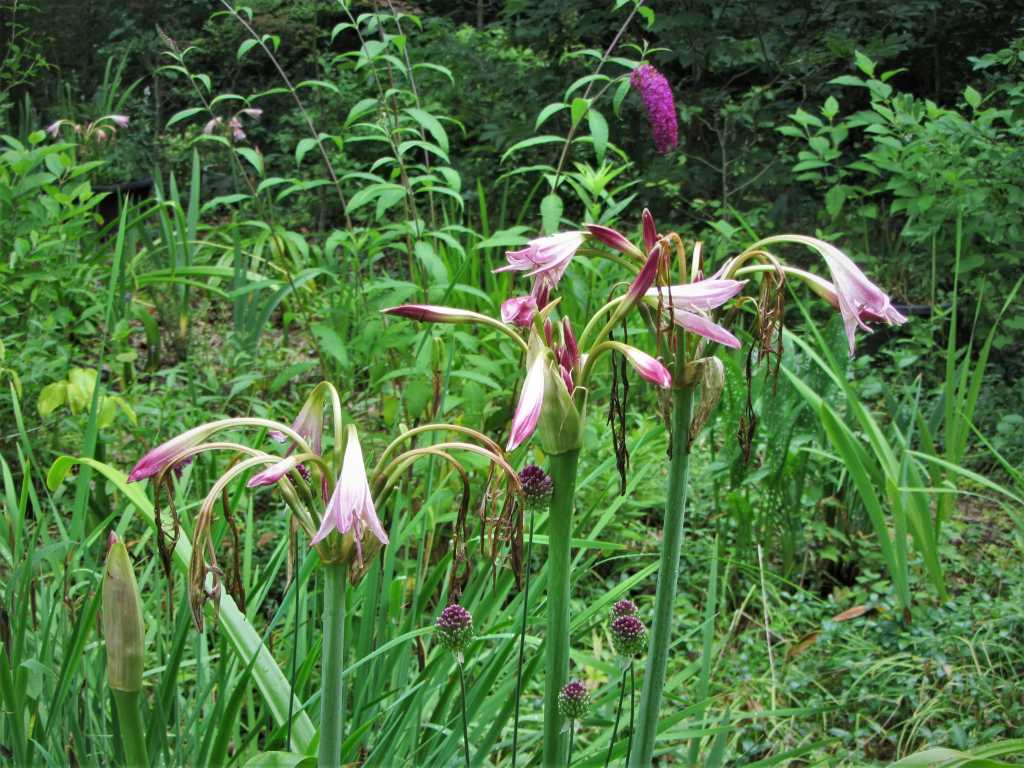
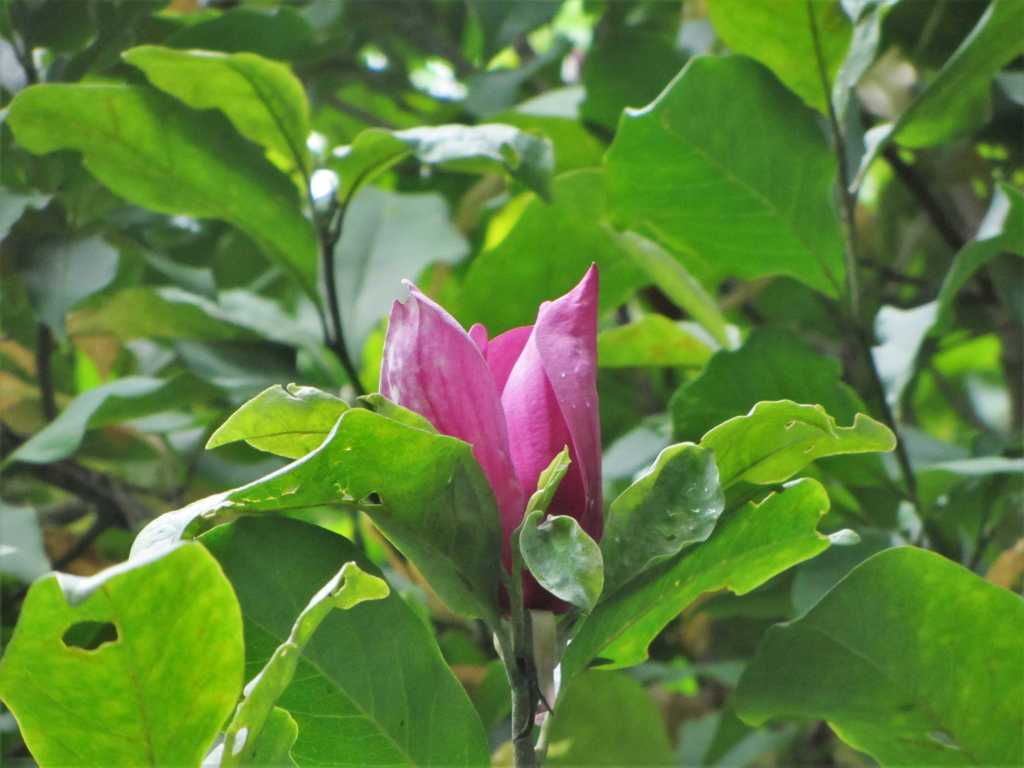
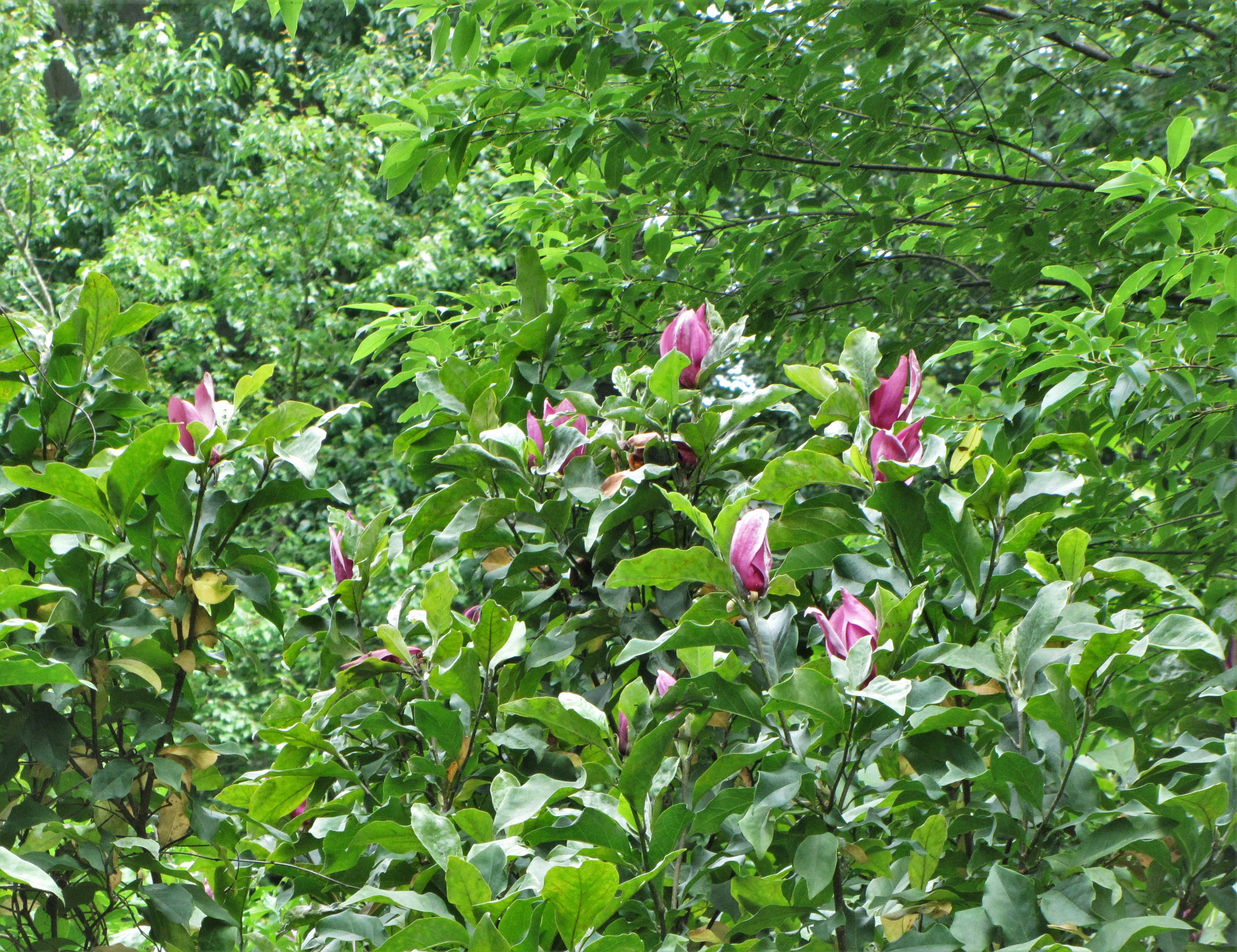
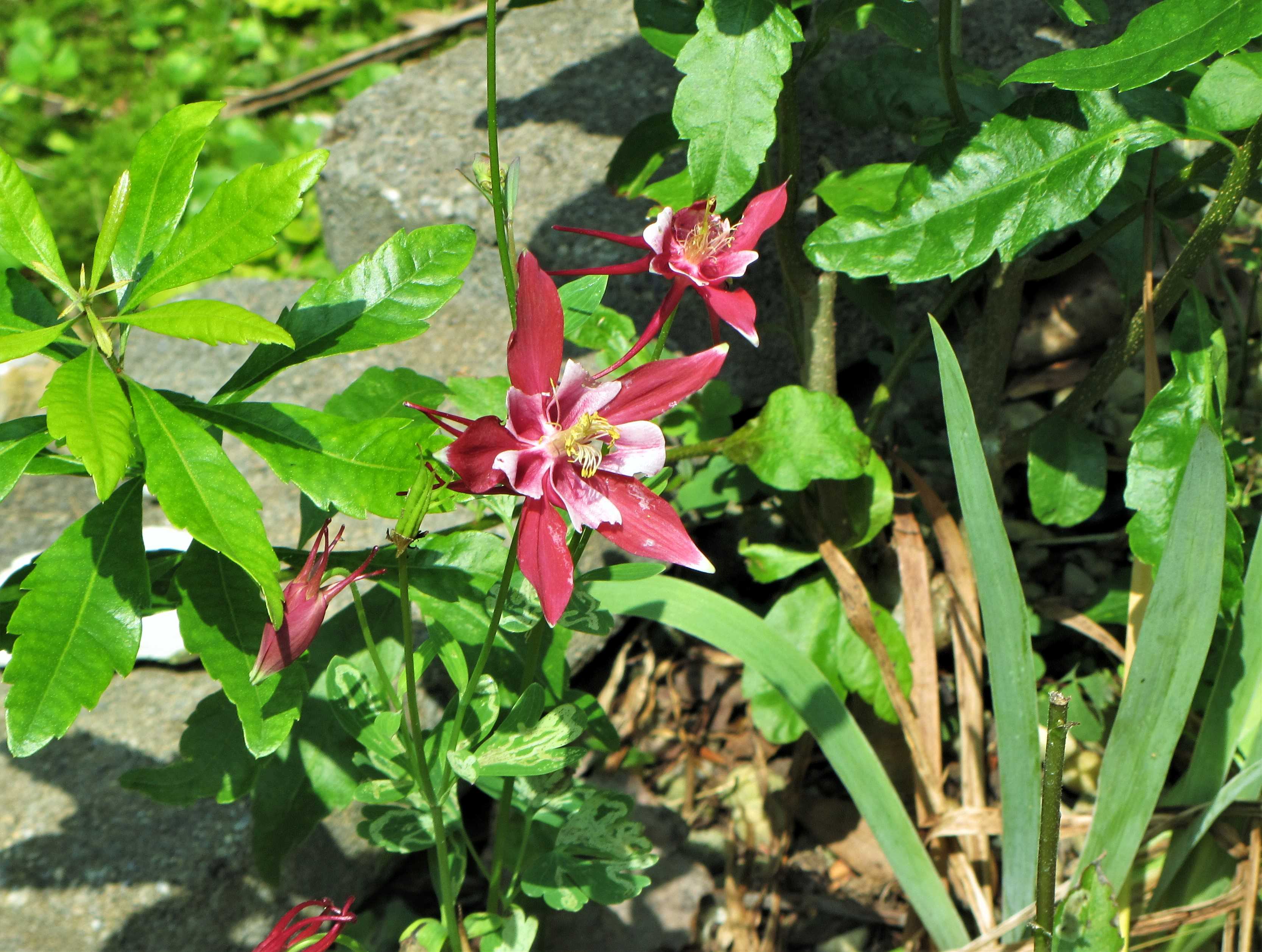
The Crinum lilies are blooming alongside Alliums just beginning to show color. Several Columbine have flowers again, and the newly planted Salvias are bright with promise for a long season of color. But what caught my attention were the huge pink flowers atop our hybrid Magnolia liliiflora trees. This is a spring blooming Magnolia which may open its first flowers in March, but usually finishes blooming in April. Some years the flowers are caught in a late frost.
The spring bloom this year was spoiled by a cold spell. And now the trees are trying again. We’ve seen sporadic late bloom from these trees in past years, and it always catches us by surprise. It is a beautiful gift of flowers out of season.
But then there is the Azalea growing nearby, also with a flower in bloom this week. This is one of the old hybrids, planted long before the ‘Encore’ Azaleas came to market. But there, beside the path, was one perfect pink Azalea flower. And a few meters away a Japanese quince, which began blooming in February and bloomed continuously for weeks, just finishing in early May, is trying yet again. I found a glossy round bud earlier in the week, and it was a fully open flower by Thursday. The photos didn’t come out well, perhaps a combination of the light and my surprise to find these spring flowers blooming again at the end of June.
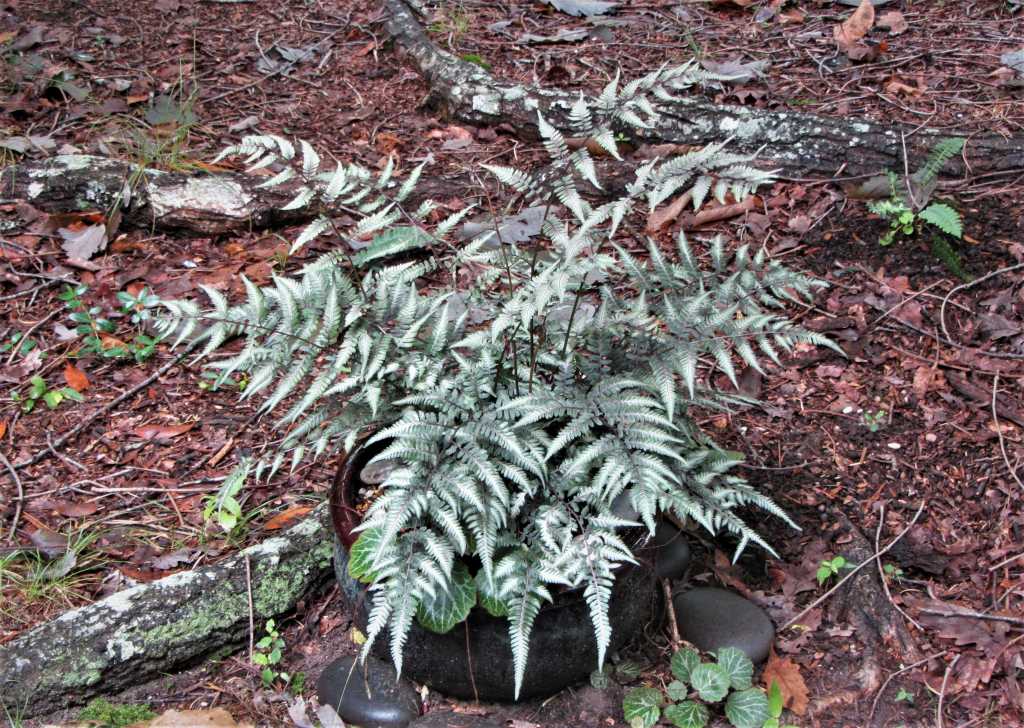
There has been little accomplished in the garden this week beyond admiring it. I did take the opportunity to move a few baby sporeling ferns from the propagation box, where they’ve been growing for more than a year now, into proper pots. There are more sporelings coming along, but these few clumps seemed large and mature enough to survive without the controlled humidity of the box. I potted six small clumps and set the tray of them in a sheltered spot where they get good light and air but no sun. They have had perfect conditions this week to establish.
This week we have had ‘rain forest weather,’ wet and cool. Lichen glows from wet tree trunks and wet mists float down the hill and across the yard. When the sun breaks through for a few minutes, it almost startles with its intensity and heat.
We had flashes of sun while I was wandering about checking on things on Friday. I was looking for a spot to hang a newly planted hanging basket with a last white flowering Dragon’s Wing Begonia we had picked up at the garden center earlier in the week. Suddenly, I realized that my clothing was all wet, and not from rain. By the time I had hung the basket, rescued a broken stem of another Begonia growing nearby, and taken a few last photos I felt like I’d been outside a bit too long and headed back to the cool indoors. By the time I’d put the stem in water and washed my hands we heard the rain pounding down again, and thunder rolling in the distance. We had a few minutes of an almost tropical downpour with heavy rain that left the patio flooded once again.
I read that the eastern Atlantic Ocean, near the British Isles and Europe, is about 9F warmer near the surface than usual for this time of the year. This is very unusual and will have huge impacts, especially for anything living in the ocean. Water temperature affects the chemistry of the ocean, but also begins to impact circulation patterns of ocean currents, and of course the weather.
We’ve been hearing about the extreme heat in the Gulf of Mexico, which is fueling dangerous storms across of much of the United States. From the Eastern Pacific into the Caribbean the unusually warm water temperatures are the wild card in our summer storm forecast. Already we have Tropical Storms Bret and Cindy moving westwards. Yes, these named storms developed weeks earlier than usual.
We realize the fluidity of time, the futility of expecting nature to stick to our human expectations and schedules. We see that time is more construct than fact when nature dances to her own tunes and rhythms, perhaps more syncopated than we expect.
It can be a hard thing to understand, when change upsets our world, and harder to accept. Chris Gloniger, an 18-year veteran TV meteorologist in Des Moines, Iowa, announced his resignation from his position at KCCI-TV this week after receiving threats and abuse from viewers over his reporting about climate change. He is suffering from PTSD for doing his job, like so many others these days. He is leaving public-facing meteorology for an undisclosed job that will allow him to focus more on the science of climate change.
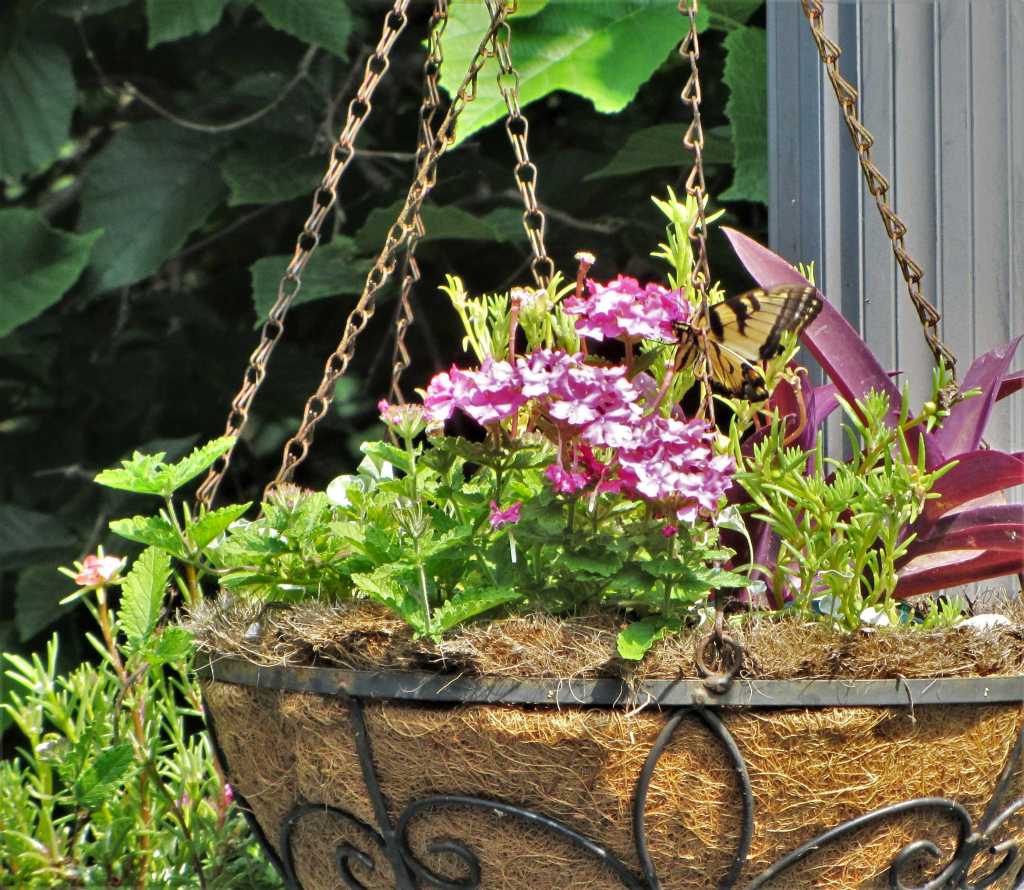
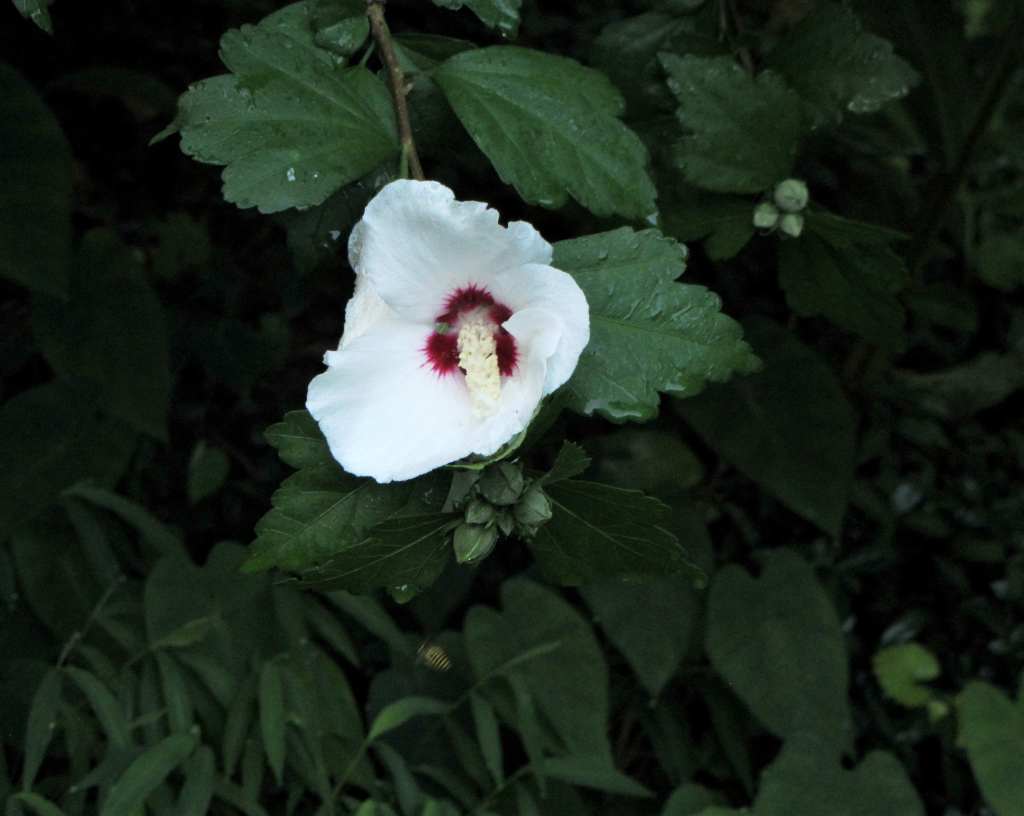
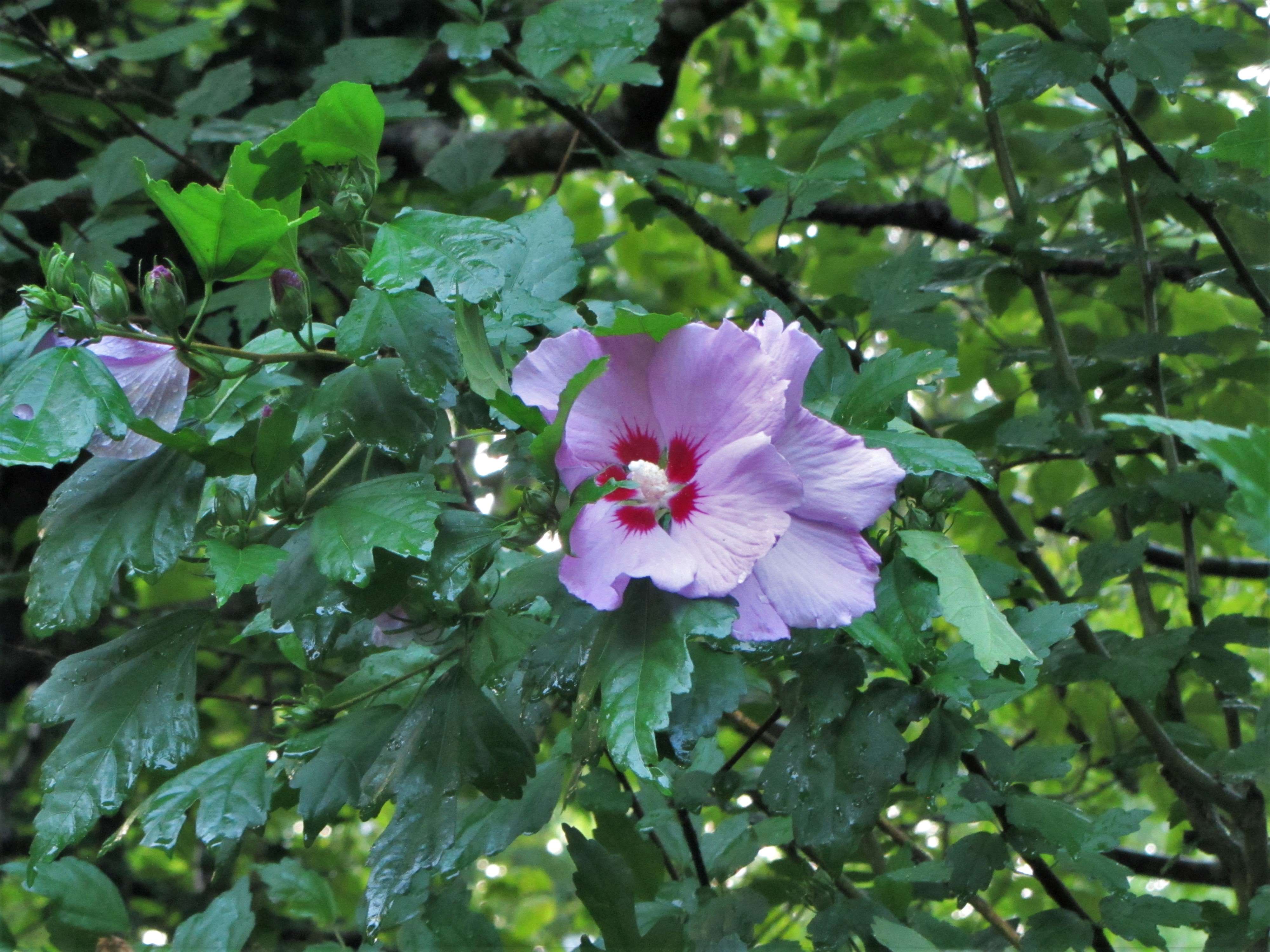
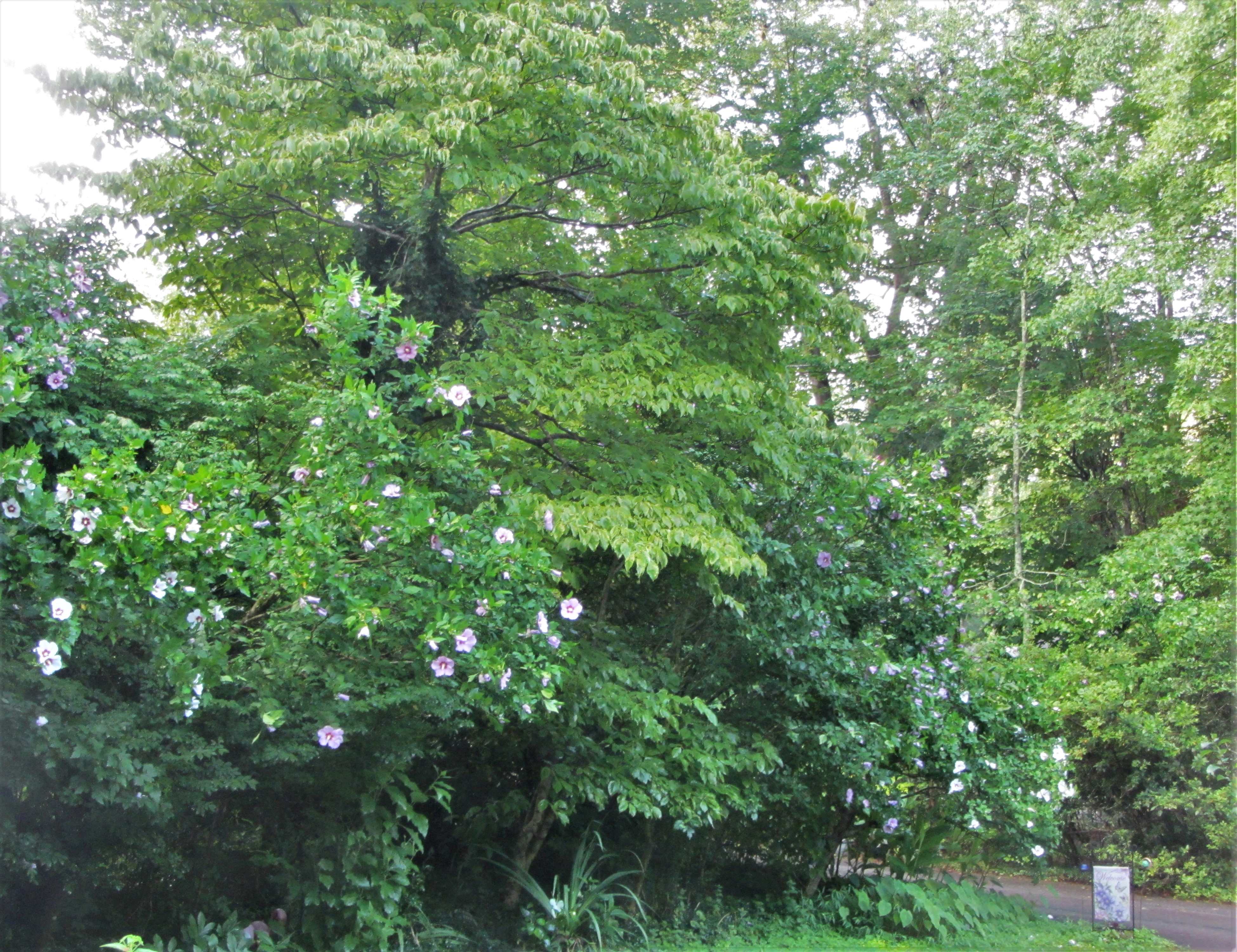
Six on Saturday asks for six new things each week. I’m not sure that my photos match my musings very well this time. This week’s photos are a bit blurry, taken sometimes through glass windows and in low light. There was the bright yellow butterfly frantically drinking from a basket of Verbena, trying to fuel up before the rain came again. There was the huge hawk perched on the corner of the roof, that took off as soon as my camera made a noise when it focused. There are the tiny toads, the size of a pinkie nail hopping around under the hose behind the house, and the low hum of bees feasting in the Rose of Sharon flowers.
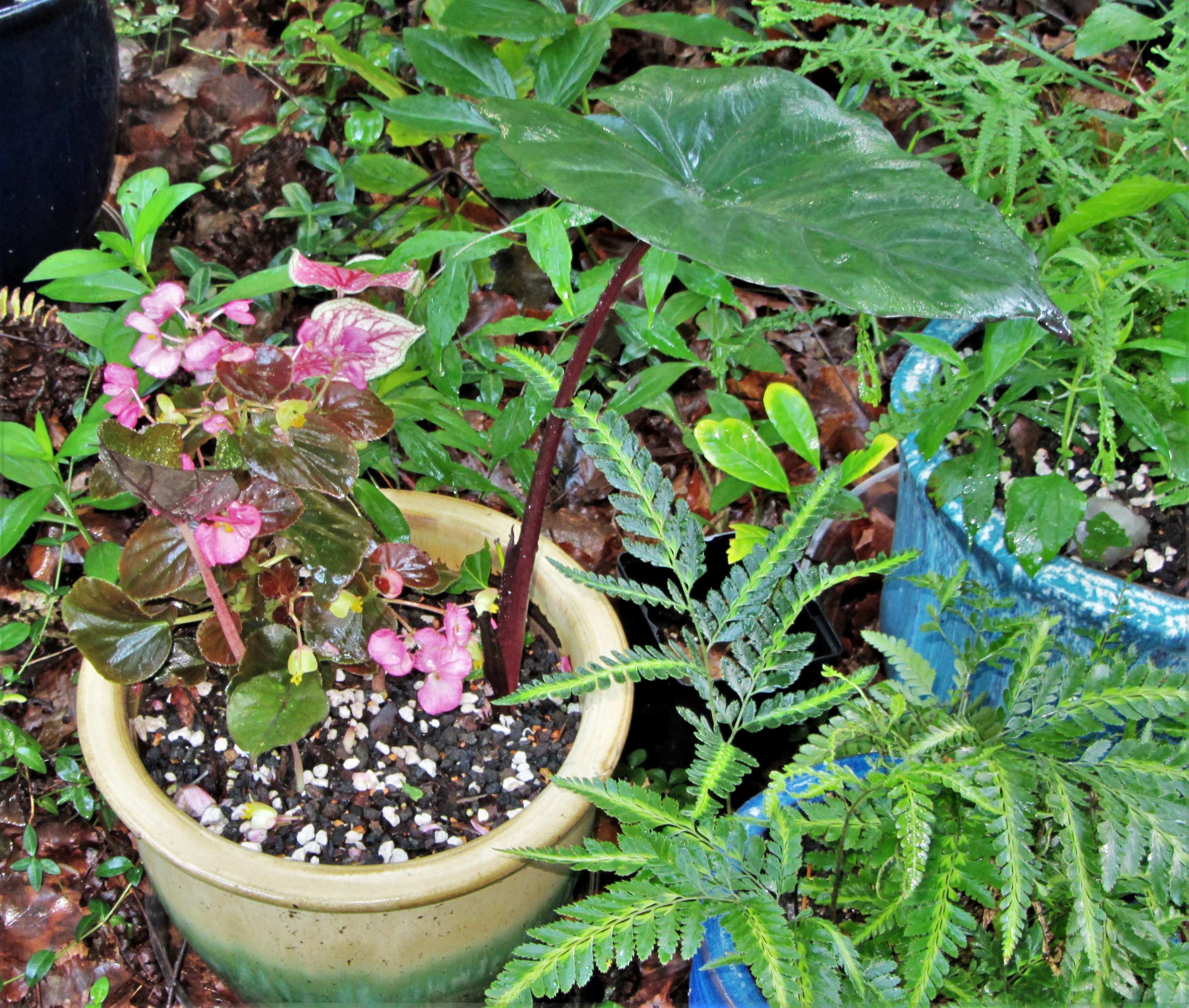
And there is evidence of new leaves sprouting from buttonbush and Hydrangea stems ravaged by grazing deer, proof that life goes on. These shrubs are busy repairing themselves, giving themselves another chance to shine this year. Just like the Caladium and Colocasia leaves emerging from desiccated, dead-looking rhizomes that never got to properly grow last summer, life finds a way, when given a chance.
We are very grateful for the rain. It will fuel some beautiful growth in the garden as we head into July, now that things are heating up for the summer ahead.
With appreciation to Jim Stephens of Garden Ruminations, who hosts Six on Saturday each week.

You might enjoy my new series of posts, Plants I Love That Deer Ignore.
Visit Illuminations for a daily photo and quotation
 Our Forest Garden
Unsettling times.
LikeLiked by 1 person
The weather extremes are worrying, for sure. One can only pray it doesn’t get biblical! We are all at the mercy of Nature, and the balance that is inherent in that force.
LikeLiked by 1 person
Hot and dry here – we may get some rain tonight/tomorrow…
LikeLiked by 1 person
Glad that you got some rain.
LikeLiked by 1 person
It has been wonderful to listen to the rain this week ❤ ❤ ❤
LikeLike
Not all weather leaves historical traces like glacial groves. At one time we had lots of ice. And now that we have thrown a monkey wrench er carbon wrench into the workings of the weather lets just say we will perhaps get wiser learning from our mistakes. If we survive them. Society civilization if you will is a delicate balance just like the weather. I hope we can put them both back together…
LikeLiked by 1 person
We agree pm all of your points here, John. Thank you for that insight. ❤
LikeLiked by 1 person
We were also alerted by the impressive rise in temperature of the Atlantic Ocean. At this time of year the ocean is 19-20°C and now it’s more like 24°C (i.e. the temperature at the end of August: pleasant for swimming but unfortunately the climate change will keep doing damage…)
LikeLiked by 1 person
Yes, the ocean feels more like bathwater more and more. I watched the starfish and sea urchins disappear- or close to disappear- in just a few years’ time in the Pacific Northwest near my daughter’s home between 2010 and around 2018. I was told that warmer water made the chemistry ‘off’ for them to survive in the tidal pools. I worry what these warmer temperatures mean for all of the life that has been a part of these ecosystems for such a long time.
LikeLiked by 1 person
Six on Saturday is a reminder of how odd the weather has been this year. I know that most bloom is delayed here, and that vegetative growth that relies on warmth is minimal, but it becomes more obvious when I see how much more advanced such bloom and growth is in other regions, particularly regions where it should be later than here.
LikeLiked by 1 person
Absolutely. I felt that way looking at Fred’s post, in particular. Most of my Aroids are still very, very small, and the Rudbeckia and Echinacea are stunted. Finally a white Echinacea bloomed, only to be absolutely gnawed to stubs last week. That hasn’t happened in past years. We are beginning to see some flowers, but very sparse and slow- even the Gaura is scraggly and bare.
LikeLiked by 1 person
I notice that some species that are naturally endemic to climates with more pronounced seasons are delayed by cool weather more, likely because they know how to respond. Tropical plants, some of which do not know when to stop growing in autumn, try to grow anyway, but are subdued by the lack of warmth.
LikeLiked by 1 person
Plants seem to be at the limits of what they can tolerate for protracted periods just about every year. Plants are at the bottom of every food chain on the planet and it’s not like we have massive over capacity to produce it to begin with. It was plants that drew down CO2 levels in the atmosphere to create the conditions we need to live in, over billions of years. Losing the conditions necessary for plants to thrive is seriously bad. By comparison, the extinction of a few species of tigers or elephants is inconsequential.
LikeLiked by 1 person
Interesting points, Jim. Finding the balance, as always, is so important to making a positive difference. We need to find plants adapted to the reality of our current (and future) conditions- food as well as ornamental plants- and grow as much as we can to filter the air. I’ve been making the point, in writings for our MG website, that ‘native’ plants may not still be the best choices as our climate changes. We need to find plants- even those from Europe, Africa, the Middle East, etc. that will grow well in the conditions we can provide without extensive irrigation and fertilization. This may also require us to shift what foods we choose, to eat more sustainably ourselves.
LikeLike