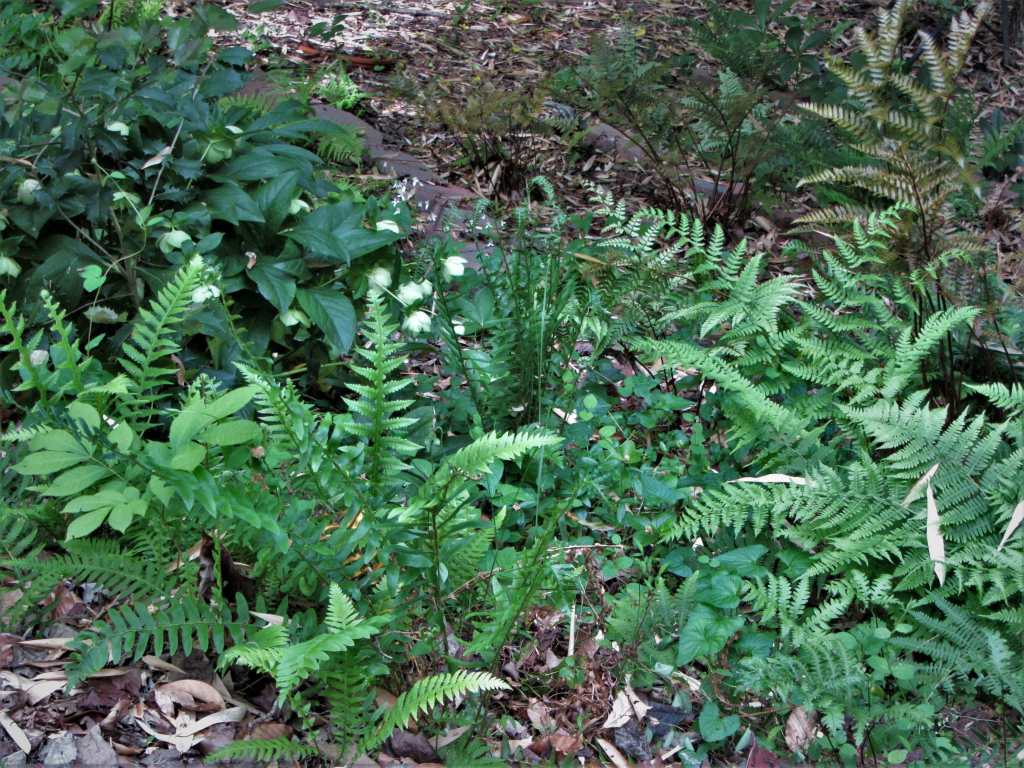
It is so easy to fall in love with ferns. Their textured leaves present in an infinite variety of forms, each arising on a sturdy stipe from roots or rhizomes. Some ferns form neat vase shaped clumps. Others wander with fronds arising individually as rhizomes branch and grow, with a single ‘plant’ covering many square feet.
Our fern garden grows from a small effort to control erosion and shade out weedy grasses on a steep slope behind our house. We began more than a dozen years ago. The slope begins close enough to our foundation that planting this area had a high priority on the ‘to-do’ list in our new yard. We needed a very hardy, relatively large evergreen fern and so I began with Dryopteris erythrosora ‘Brilliance.’
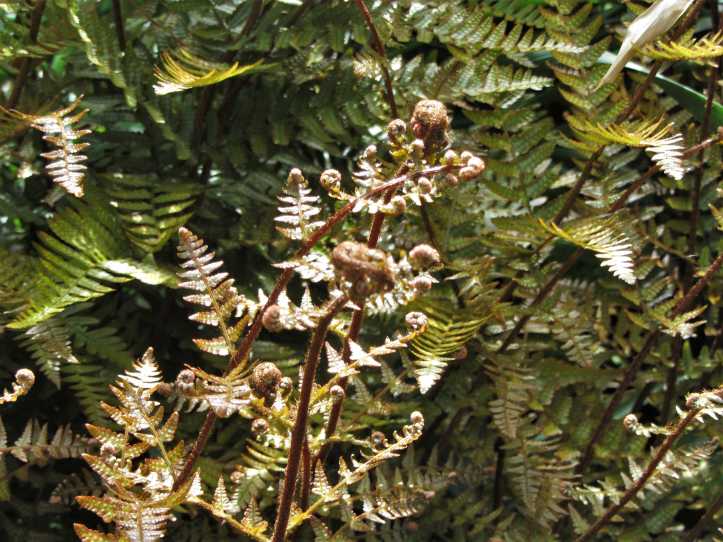
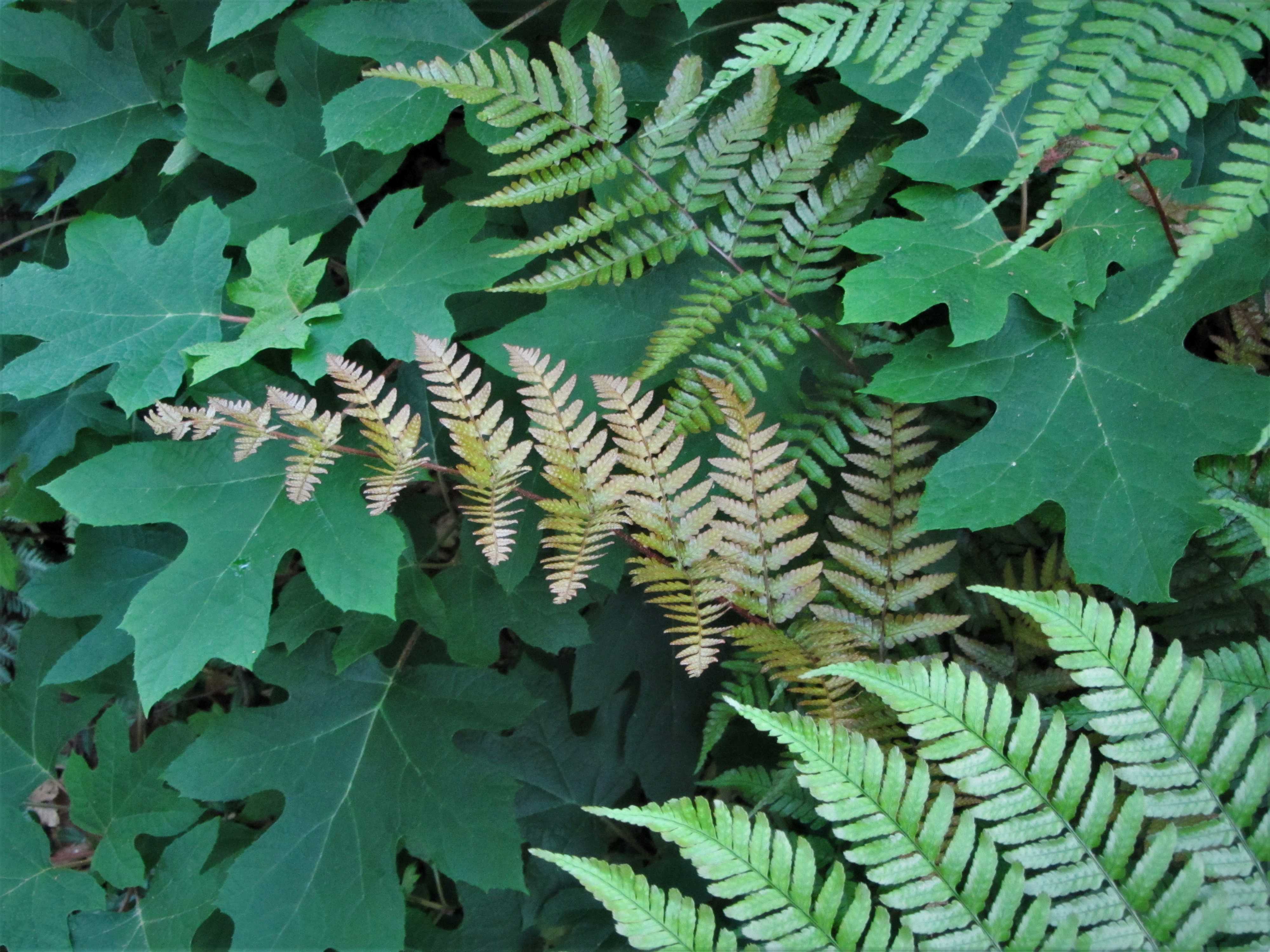
This autumn wood fern already had my attention, and we had moved a few potted plants from our former garden. Each frond emerges as a beautiful copper fiddlehead which uncurls into a graceful, delicate double pinnae blade before finally growing green as the frond matures. This sturdy fern grows taller and better each year, eventually to around 3’-4’ tall and wide. Autumn Brilliance fern is easy to source in most garden centers at a very reasonable price.
A former gardener on our property had already planted a half-dozen Christmas ferns, Polystichum acrostichoides, as part of the foundation planting across the shady back side of our home. There was also a beautiful clump of delicate lady ferns growing under some rose of Sharon shrubs in back.
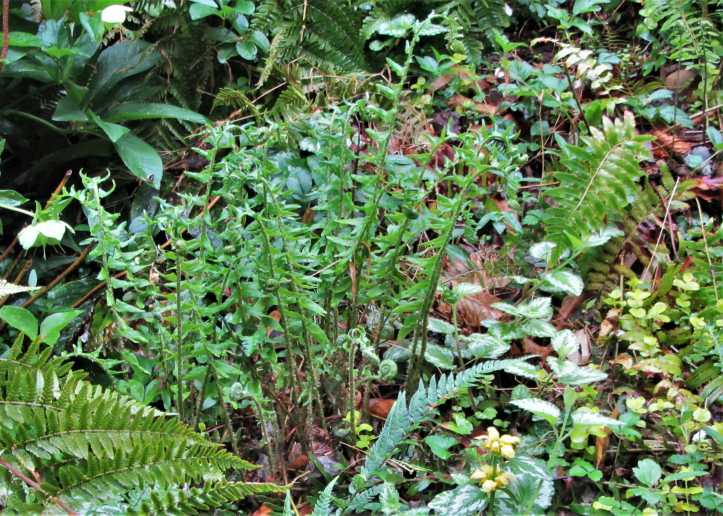
Over the past dozen years, we have added uncounted new ferns and developed more and more areas of fern gardens wherever we have some shade. A neighbor invited me over to dig ferns from her back yard in the early years. She had a tremendous, naturalized collection of ferns indigenous to our neighborhood. I didn’t know their names back then, but still fell in love with their beautiful forms.
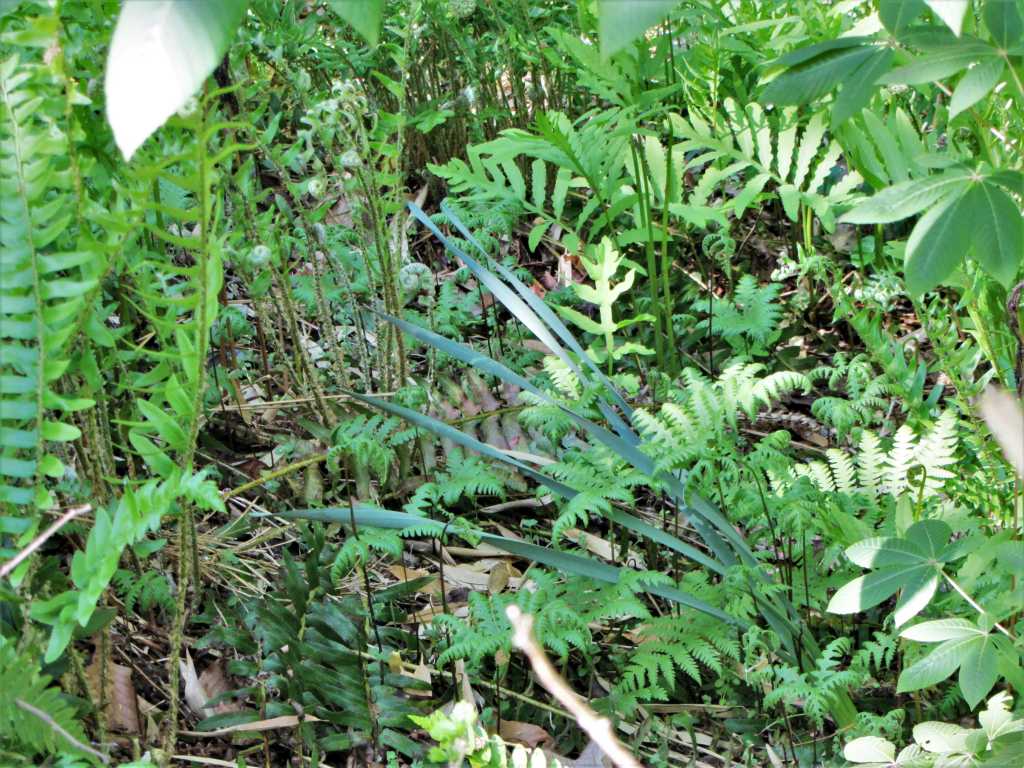
The areas of our back garden planted in ferns continue to expand as we use ferns to stop erosion on sloping land. We have learned that ferns are a low-maintenance gardening option. The deer that keep finding their way into our yard rarely browse ferns. Birds, skinks and box turtles find shelter under their arching fronds. Shade loving shrubs and flowering plants mix well with a variety of ferns.
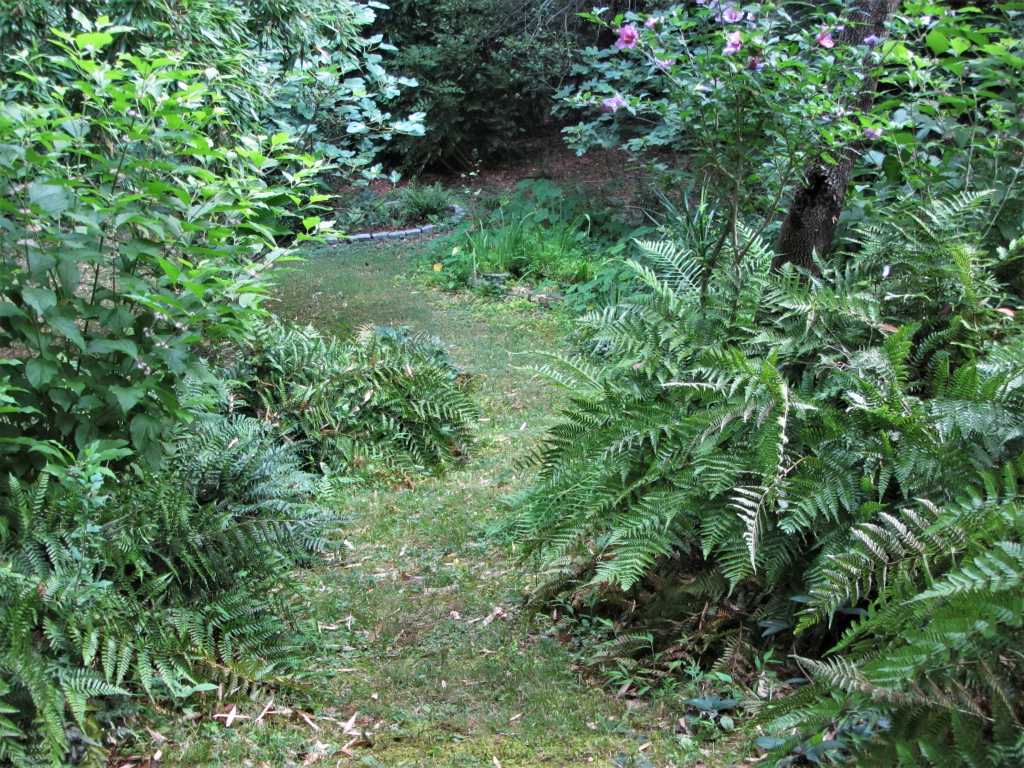
All of this collecting allows me to learn more about different types of ferns. At first, I relied on reading descriptions in on-line nursery catalogs. Plant Delights catalog has the widest selection of ferns of any of the companies I do business with. They not only introduce plants found on collecting trips, but they also do some breeding, and introduce ferns for other breeders. I count on Plant Delights to offer new and interesting ferns each year. I also turn to their website as a quick reference on fern facts to check the hardiness, mature size, and other details about specific fern cultivars.
My library of fern books has also continued to grow. I’m interested in our indigenous native ferns, but also want to learn about ferns from other continents that will thrive in our conditions. Joining the Hardy Fern Foundation opened up new opportunities to learn about fern species, and to see how others grow ferns in various climates. And I depend of good websites, like the NCSU North Carolina’s Extension Gardener Plant Toolbox. Of course, the more I learn about ferns and see interesting selections that we don’t yet grow, the more interested I am in sourcing new varieties.
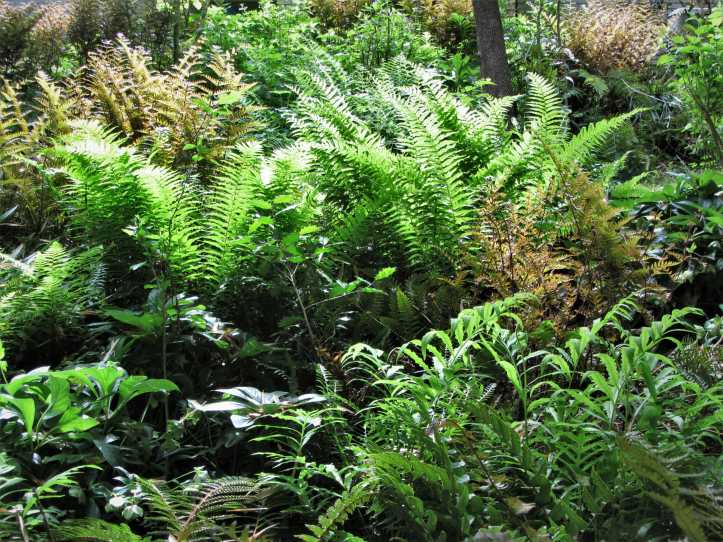
Our local garden center offers an astounding variety of ferns. They have an excellent supplier. They get new shipments of ferns in both spring and fall, and I’ve been thrilled to find some of those varieties on my ‘wish list’ locally and at reasonable prices. Some of my favorite recent finds have been the southern wood fern, Dryopteris ludoviciana, and Athyrium ‘Ghost,’ which is a hybrid of our native Athyrium filix-femina and a Japanese painted fern. They always carry a great variety of holly ferns, along with specialty selections like the hart’s tongue fern, Asplenium scolopendrium.
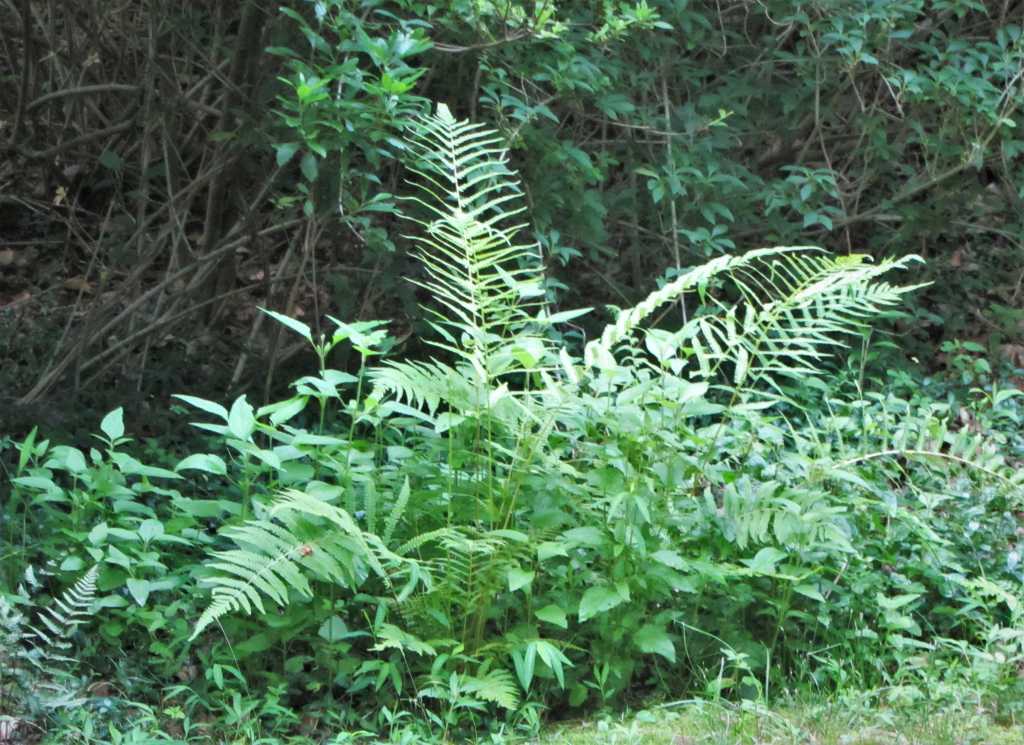
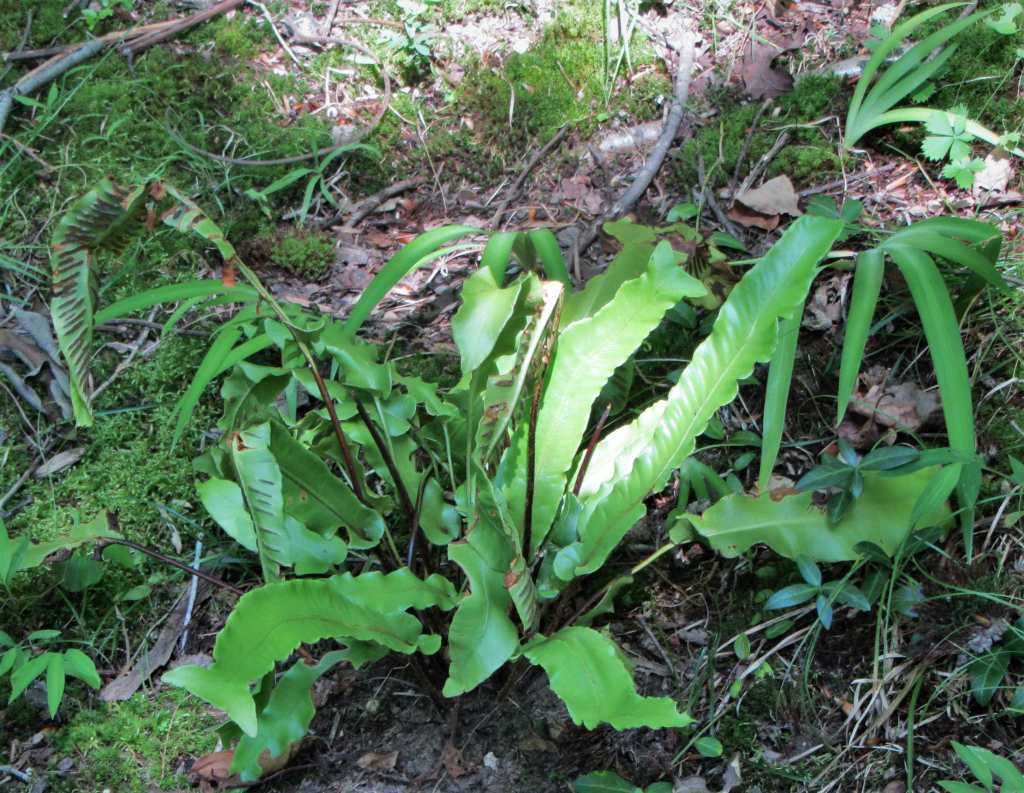
The hart’s tongue fern has been one of the most challenging ferns for me to grow, partly because I planted the first several that I purchased in too much sunlight. I underestimated how much shade they require. This is one plant that will thrive in deep shade. It slowly expands in moist soil to form a patch of upright, tongue shaped undivided fronds that arise directly from a rhizome.
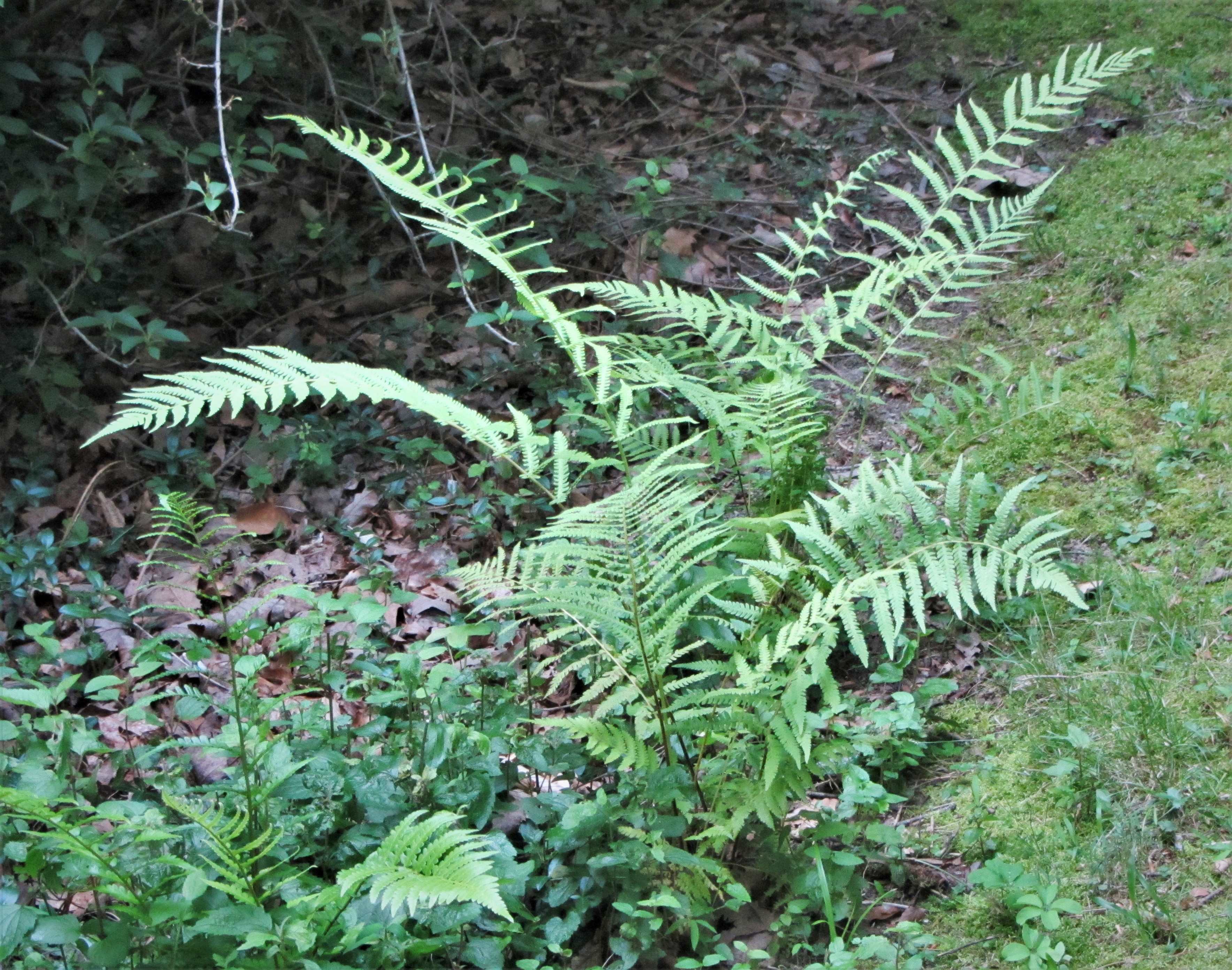
It is amazing to me that some ‘shade-loving’ ferns can often withstand several hours of sunshine, when they have enough moisture. Native Southern lady ferns, A. filix-femina, ssp. asplenioides were already growing on a west facing bank, in partial sun, when we moved here. What a surprise to find a large, very delicate looking fern growing in the sun! Finding that sweet spot for each variety where they get the light they need, without getting baked, is important for growing ferns successfully.
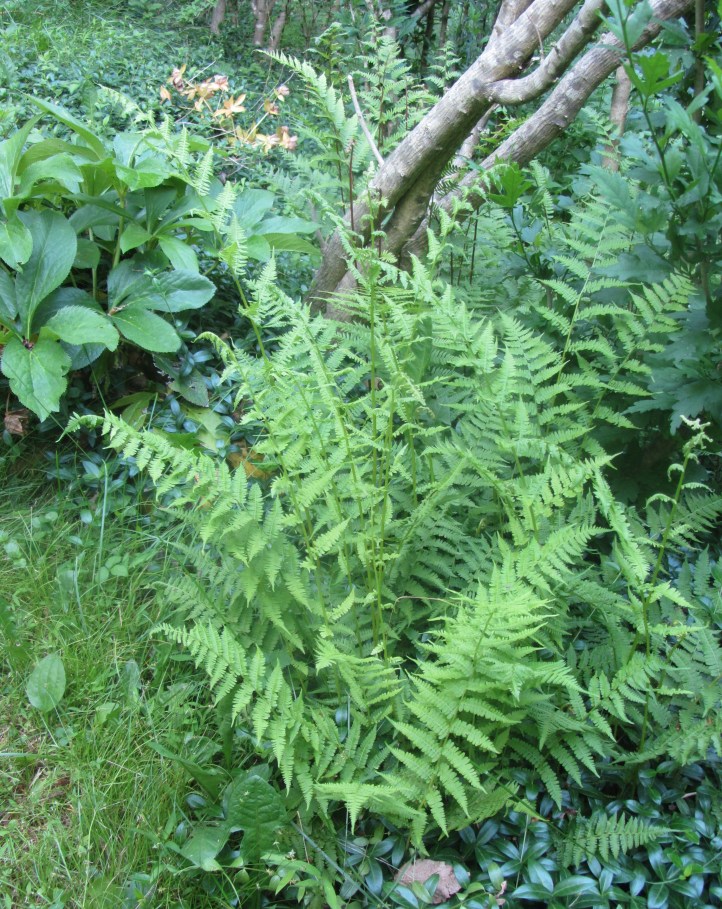
Some ferns want soggy ground near a swamp or creek for best growth; others can grow on tree branches, in sandy soil or on rocks. I once found ebony spleenwort growing from the branches of a Juniper shrub. Discovering the preferred soil chemistry and moisture content for each type of fern, along with the optimum balance of sunlight to shade, is the key to success with ferns. Once planted in the right place, ferns become long-lived garden companions. We even find baby fern ‘sporelings’ growing in areas where established ferns shed their spores.
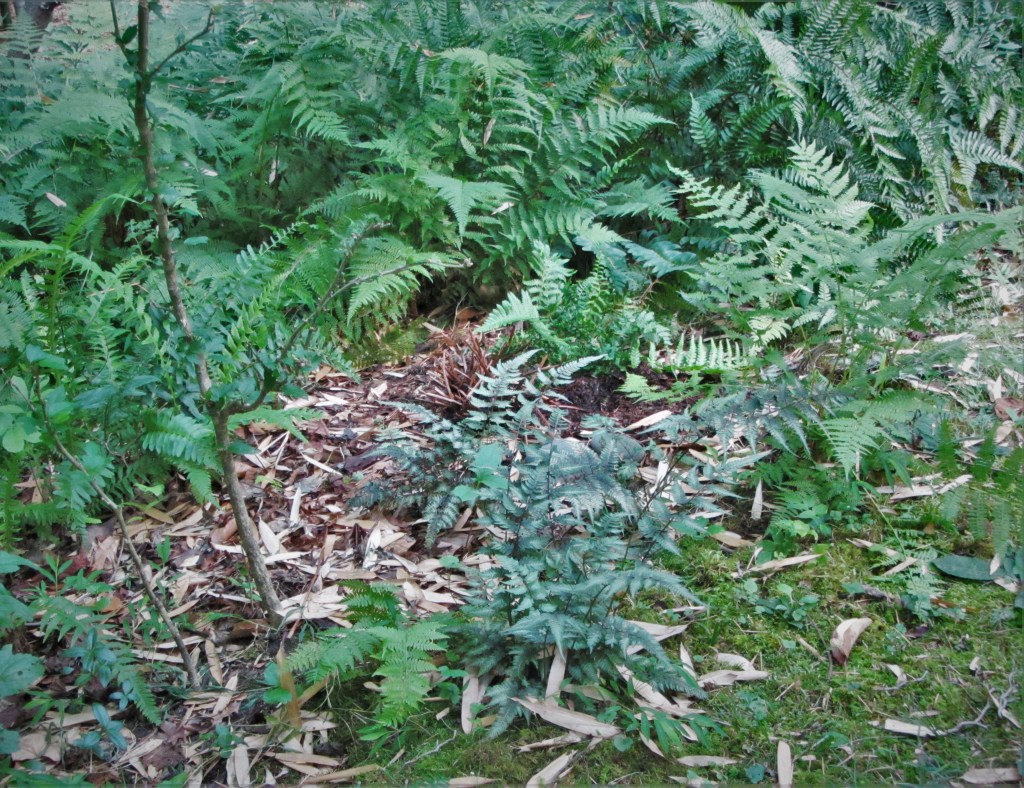
This spring, I found Japanese beech fern, Phegopteris decursive-pinnata, at our local garden center for the first time and was curious to try it. Its tag indicated that it needs moist soil in deep shade. Before I could decide where to plant it, the poor plant shriveled. It was such a disappointment. But not one to give up easily, I potted up the root ball and crown in a larger container, put it in a shadier spot in our nursery area, and kept it watered.
Luckily, a second plant- the last one on the rack- was still available, and I planted it the day after we purchased it. The Japanese beech fern is a ‘running’ fern, sending up new fronds from roots that range far and wide. That process was beginning in the nursery pot, so I separated a few clumps with roots from around the edges before planting the main fern in a moist area where there is space for it to roam. The first plant recovered, and it was among the ferns I planted in our newest area of fern gardens this past weekend.
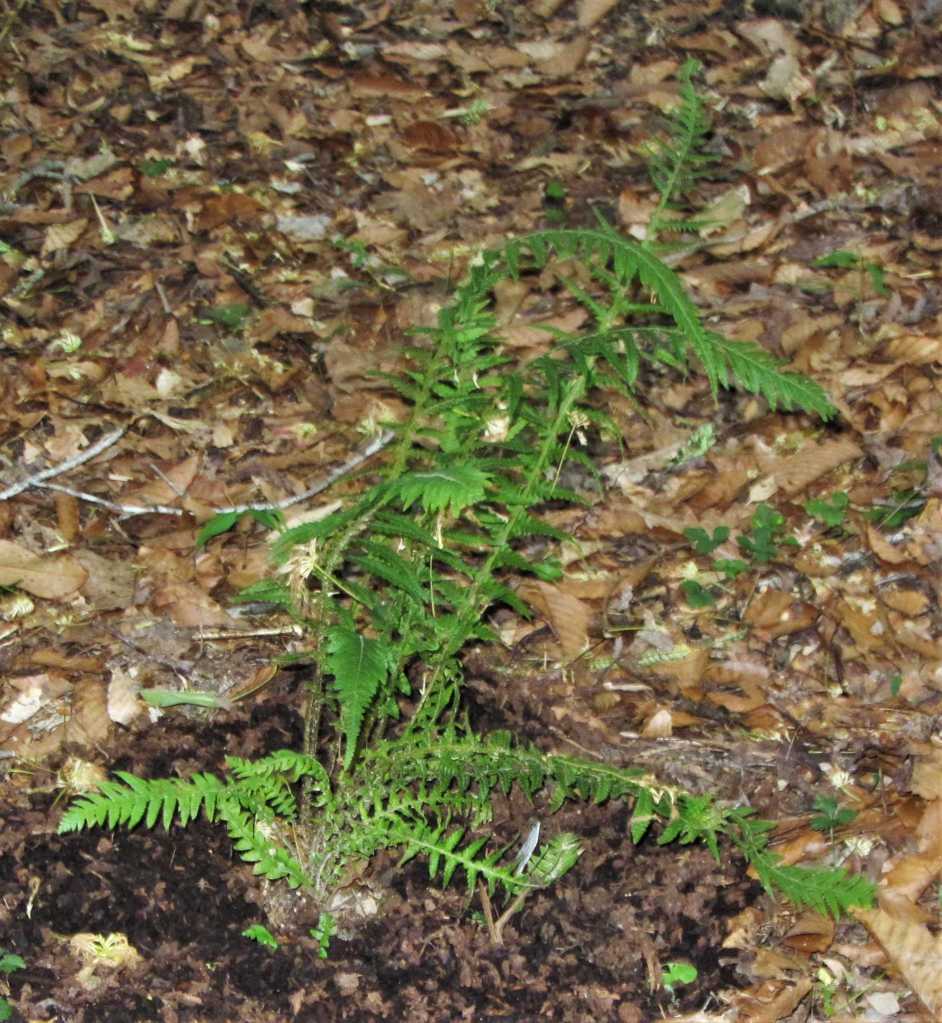
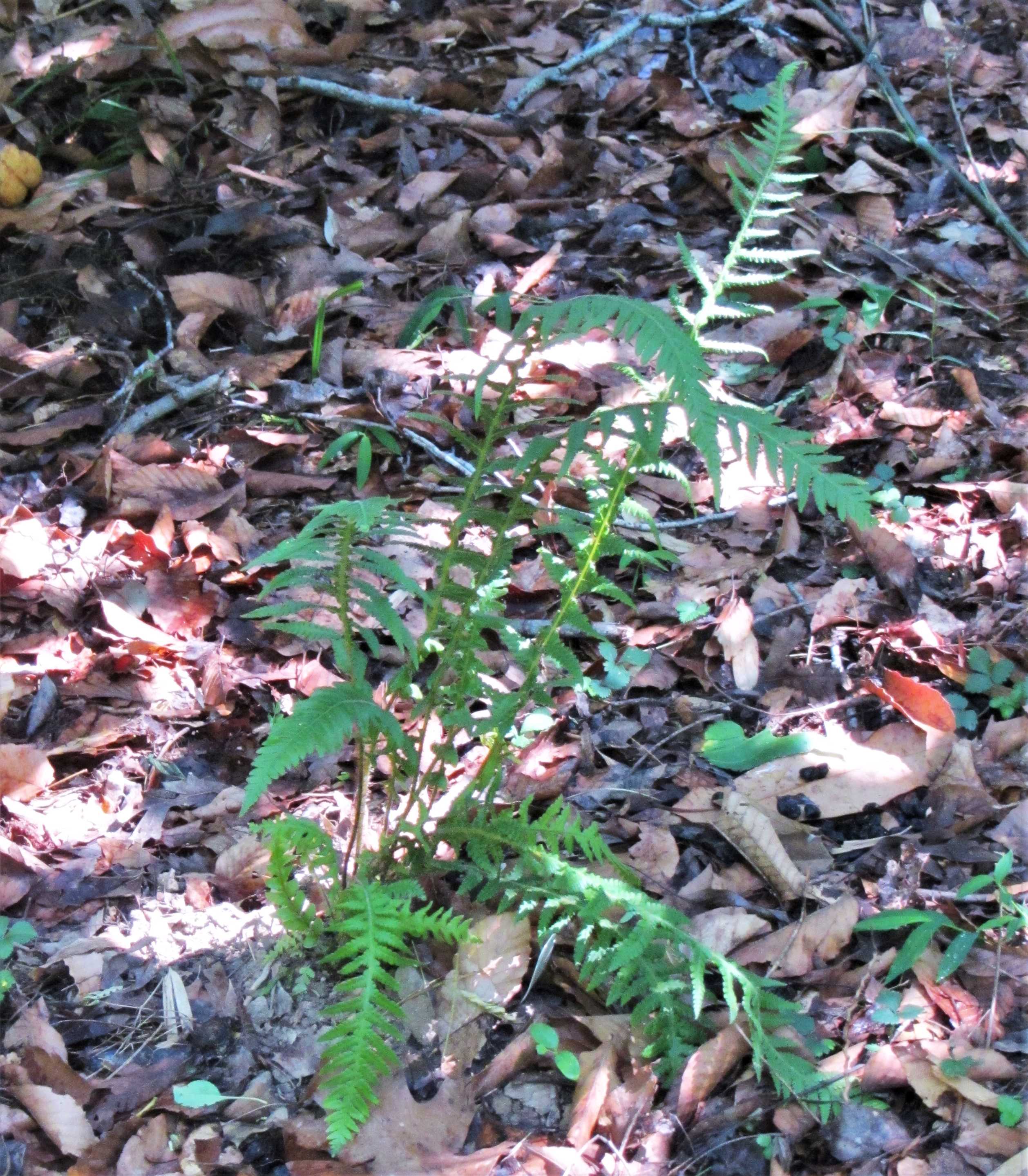
There was one unplanted section of our steep back garden when I began working with it in the autumn of 2020. It is entirely shaded by a clump of hazelnut trees and mountain laurel. That first autumn, I planted a mixture of Christmas ferns and holly ferns to line both sides of a pathway, then added some daffodil bulbs in the brighter areas between some of the ferns. All the ferns survived their first winter, and it was beautiful in spring 2021.
Since planting those first few ferns in this otherwise neglected area of the yard, I’ve added Dryopteris x australis, a native hybrid; Dryopteris affinis ‘Cristata;’ Polystichum polyblepharum; two native lady ferns with red stipes; divisions of the Japanese Beech fern; a few autumn brilliance ferns; and another hart’s tongue fern. Asplenium species are the most challenging of ferns for me to grow, but I keep trying, hoping to figure out where they will thrive.
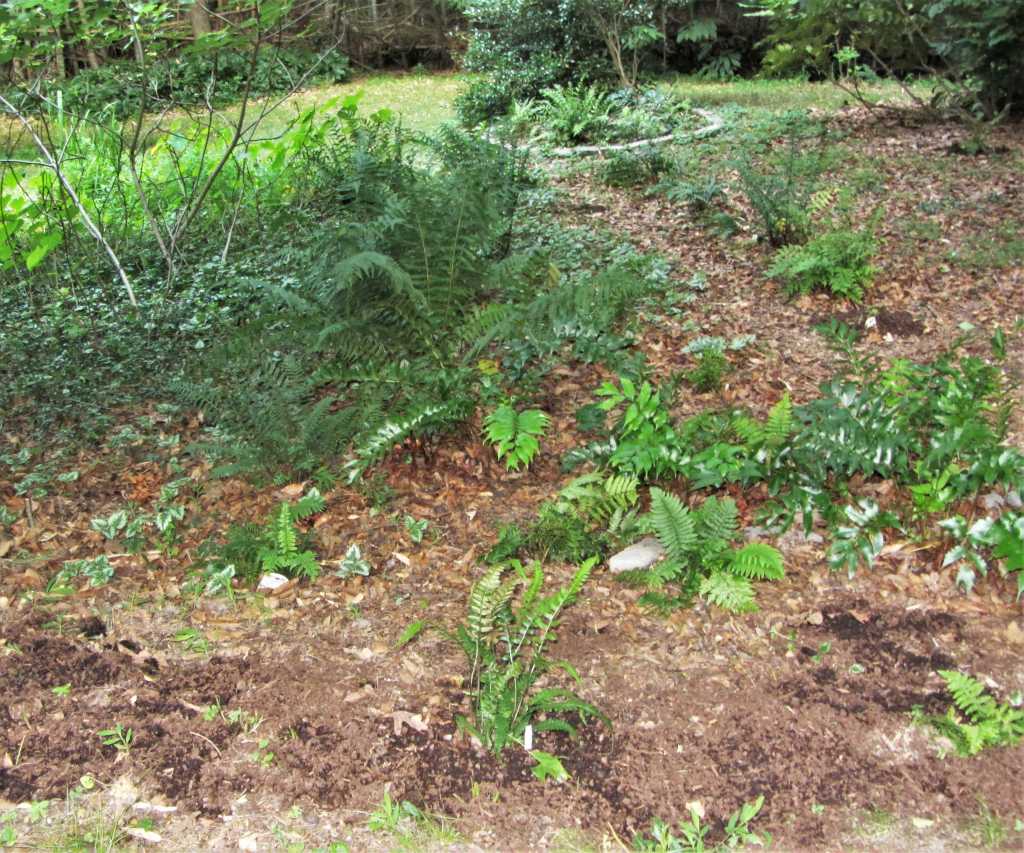
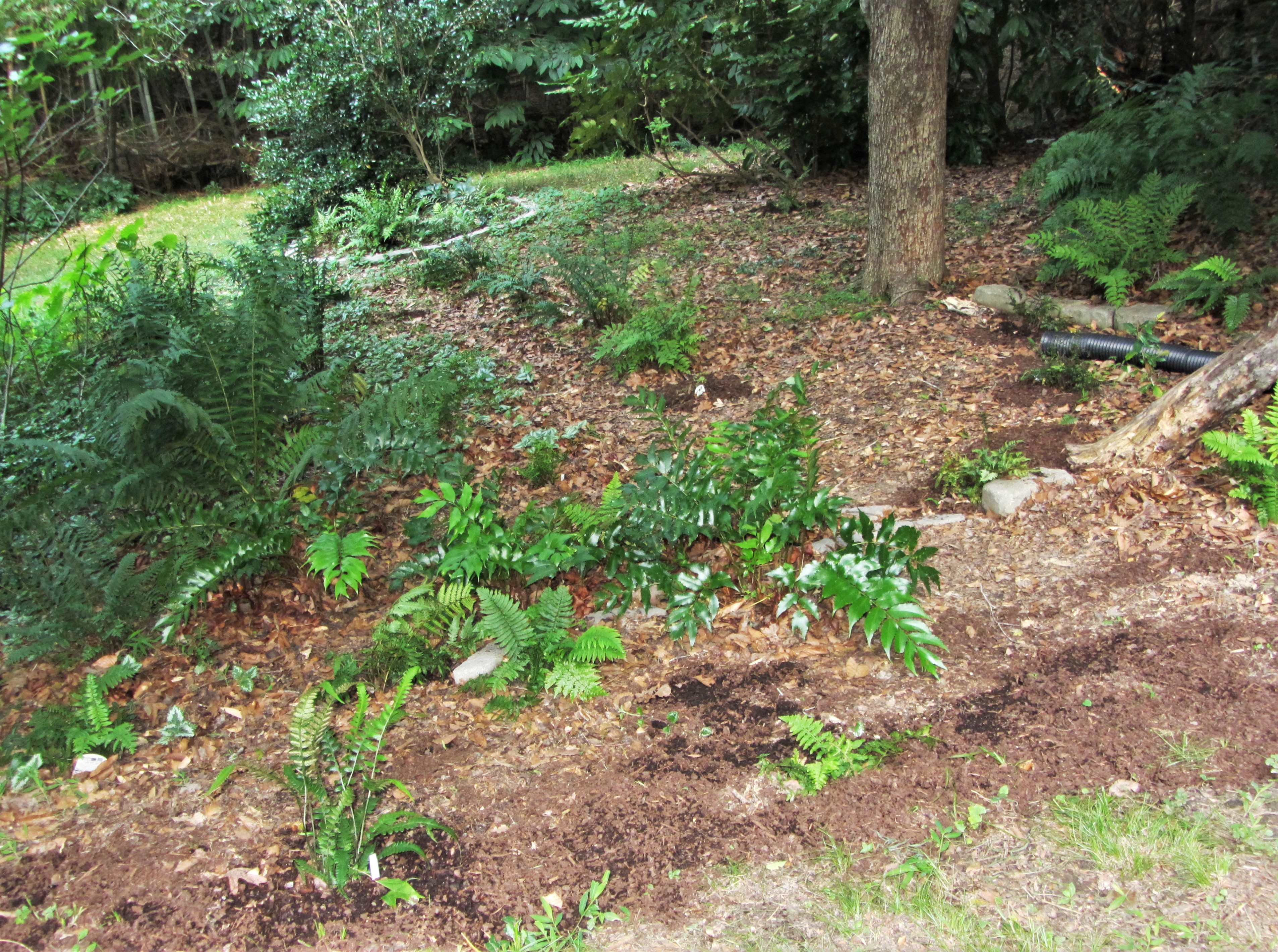
My partner and I sat studying this area recently, and he encouraged me to plant more ferns. He has named the area our ‘Fern Grotto’ since part of the area is concave, like a valley between sloping land on three sides. The entire area is shady and moist. Much of it is already covered in Lamium. A few old Yucca plants and some Hellebores randomly poke up through the groundcover. This ‘grotto’ is adjacent to that very first bank we planted all those years ago. This fall we will plant a few more tall, evergreen ferns like autumn brilliance among the Lamium.
If you were to ask, ‘What is your favorite type of fern?’ I would answer, ‘Those that have fiddleheads and stipes.’ It is hard to settle on a favorite when there is such an overwhelming variety of great choices available.
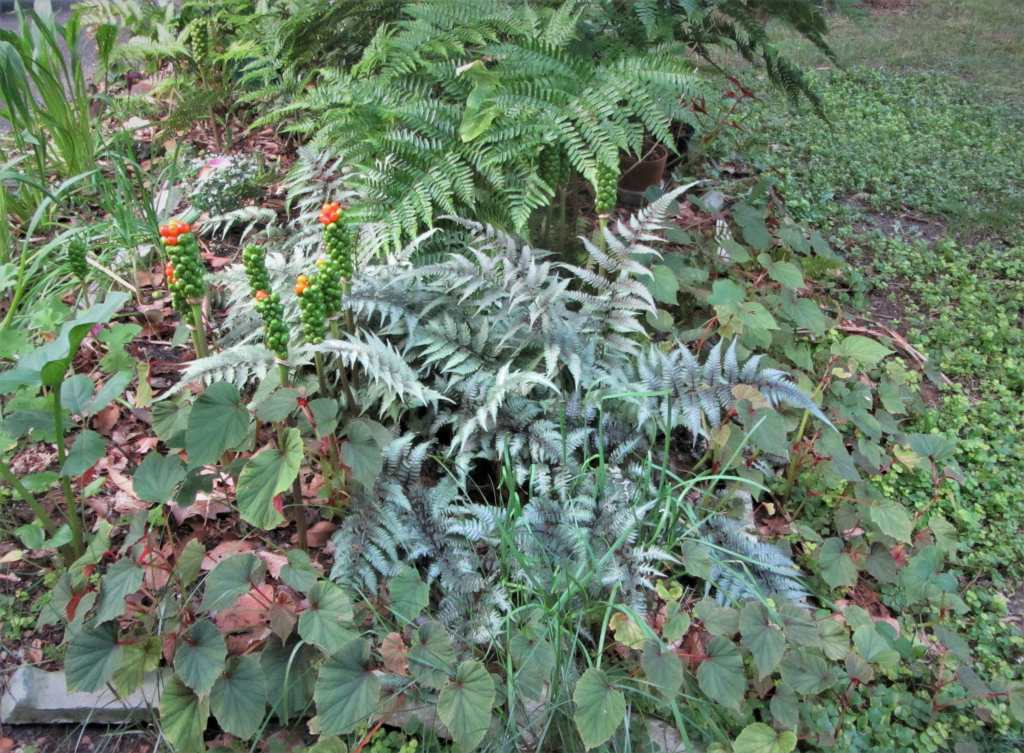
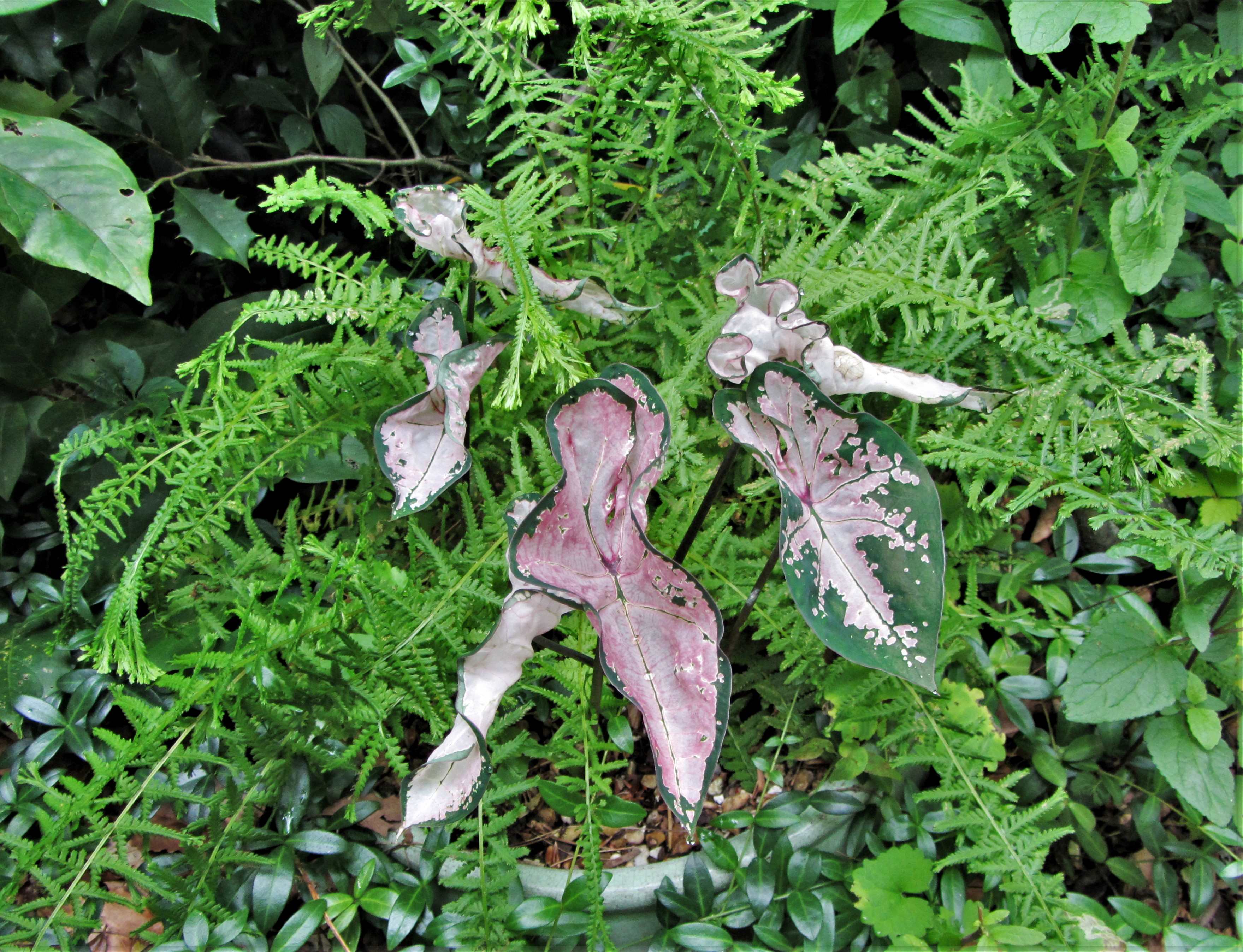
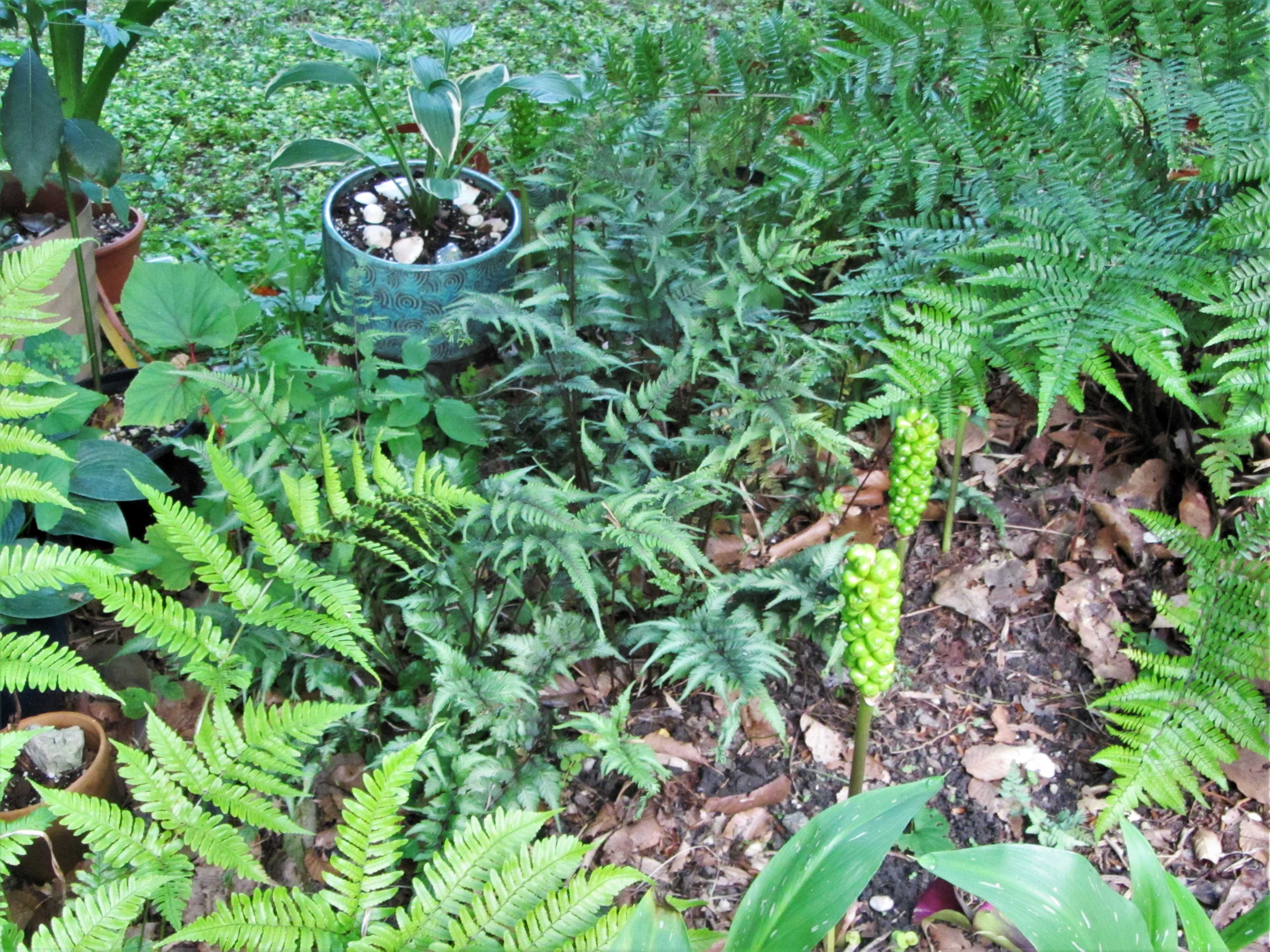
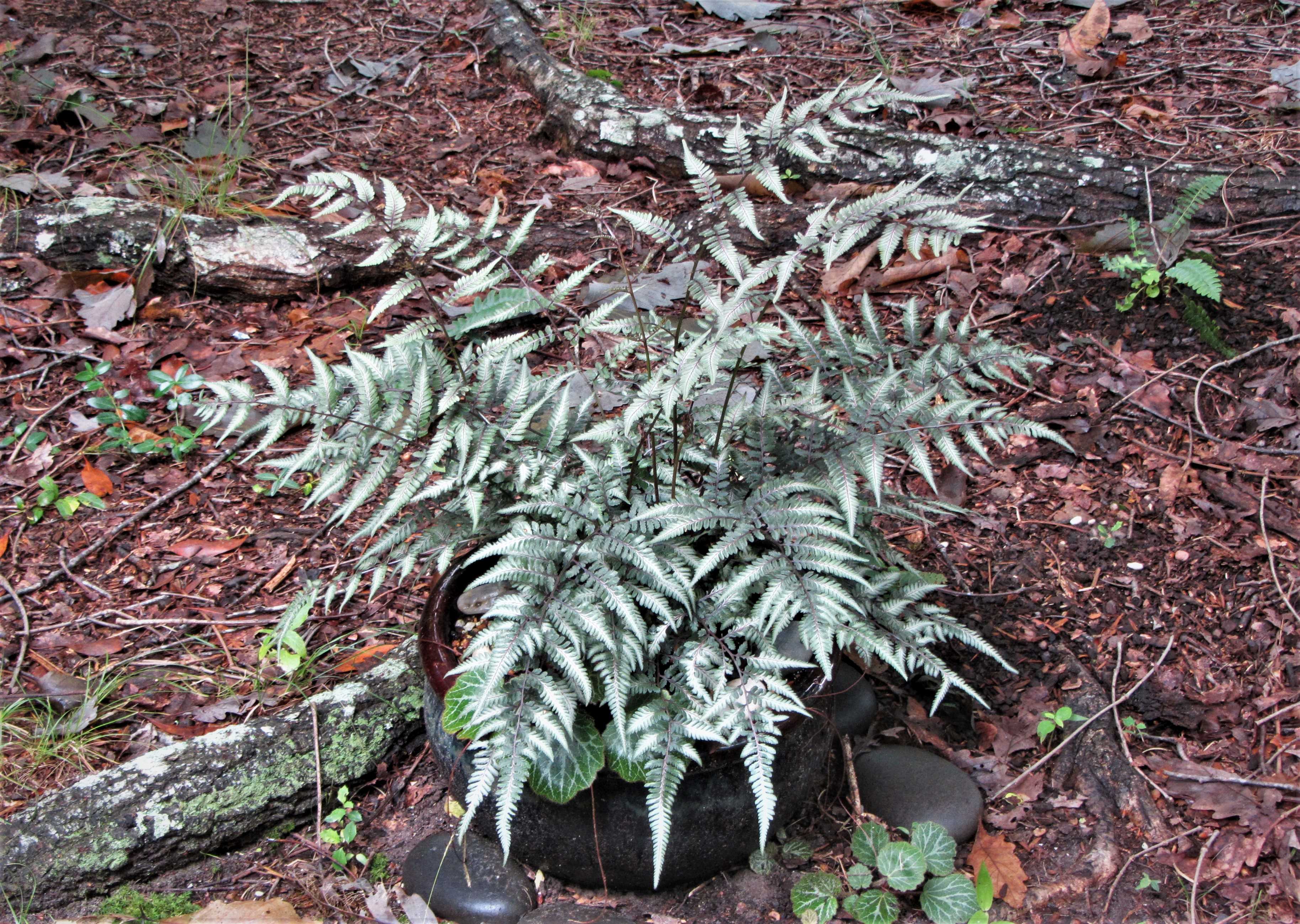
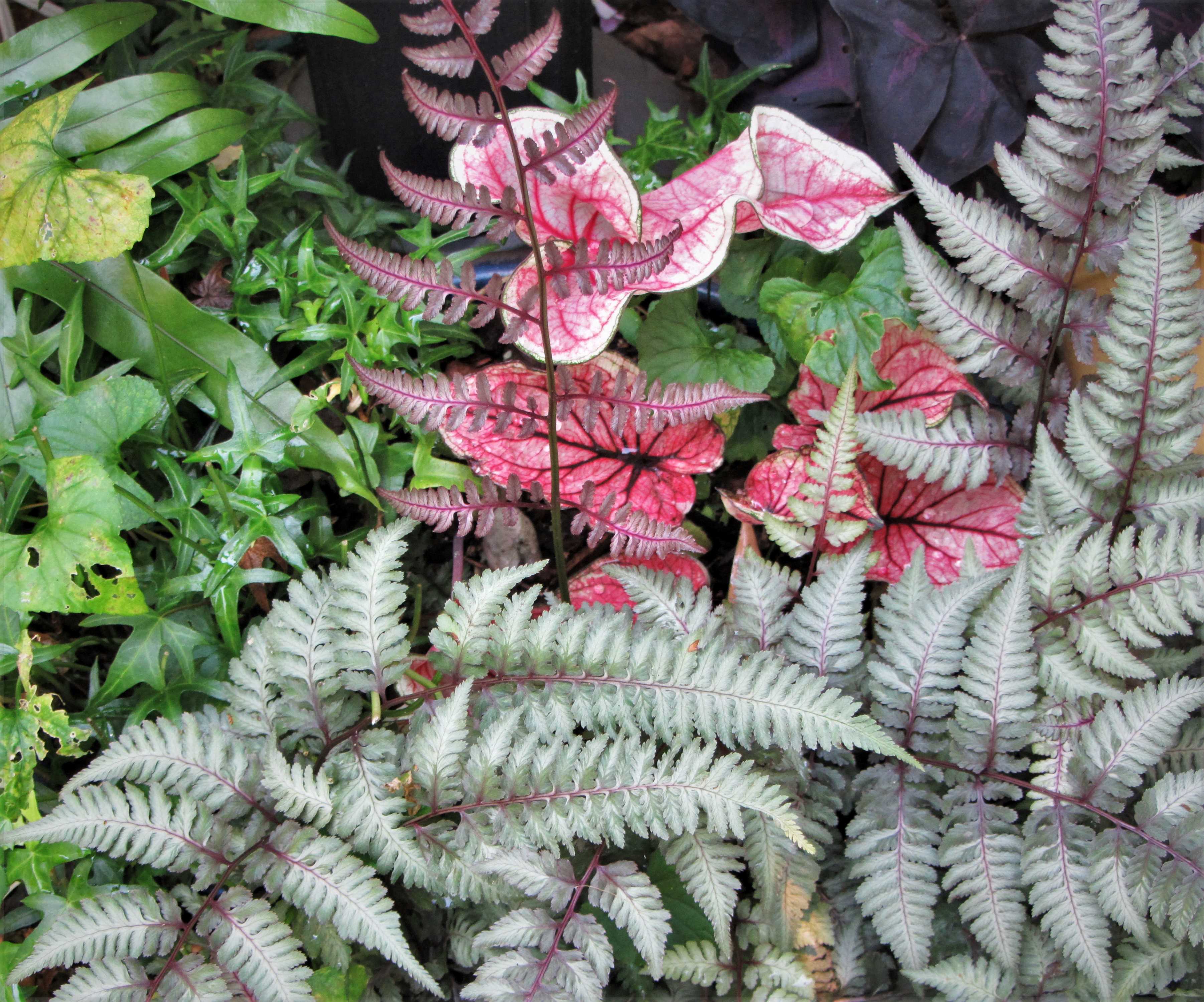
That said, there are a few types that clearly thrive in the conditions we can offer. All the various species and cultivars of lady ferns, and particularly the Japanese painted ferns and hybrids, grow well here. Lady ferns naturalize in our garden, so I often find natural hybrid babies growing up through the moss. We have similar great results with Dryopteris varieties, Polystichum, and even with the sensitive fern, Onoclea sensibilis.
You can probably guess that I have a secret wish list of ferns I still hope to acquire and grow. Many of these are found in the pages of the Plant Delights catalog. Normally, self-discipline and good sense prevail. Plant Delights charges three times the amount our local garden center does for a fern, and they come in a smaller, 3.5” pot. The smaller root mass can be a blessing when trying to excavate a planting hole between tree roots. Plants in large pots require large holes, which may be impossible in a wooded garden like ours. So, the ferns from Plant Delights are a perfect size for me to work with.
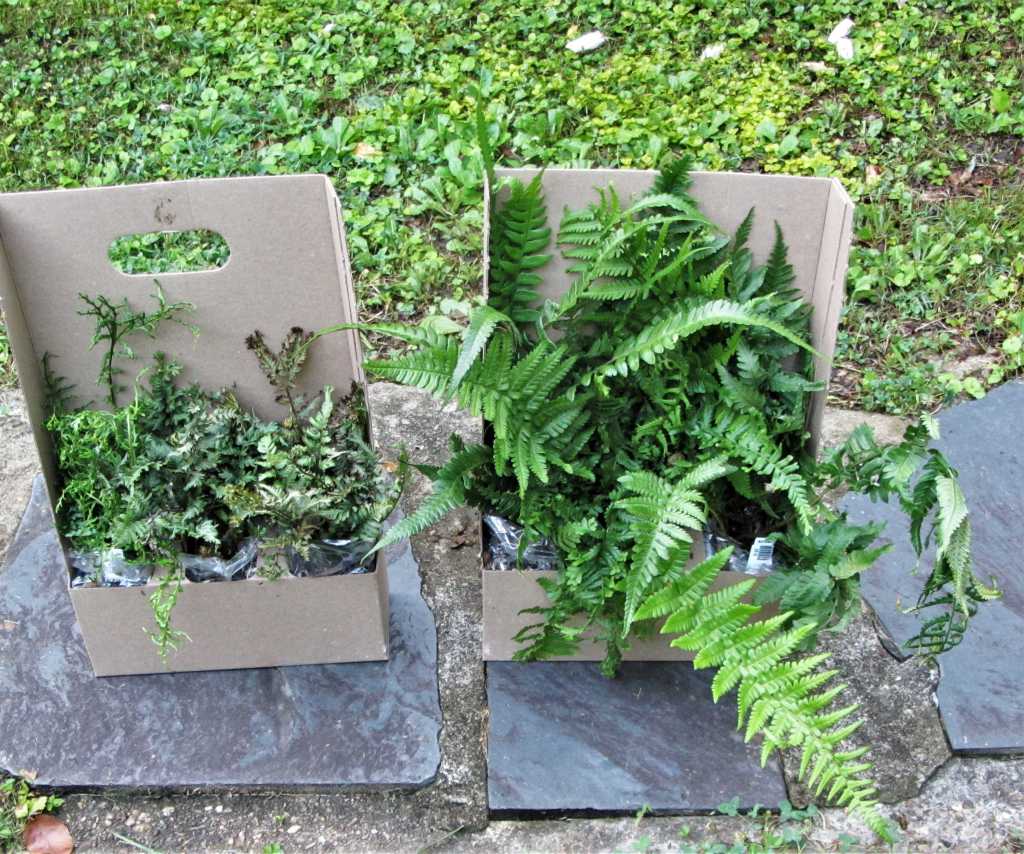
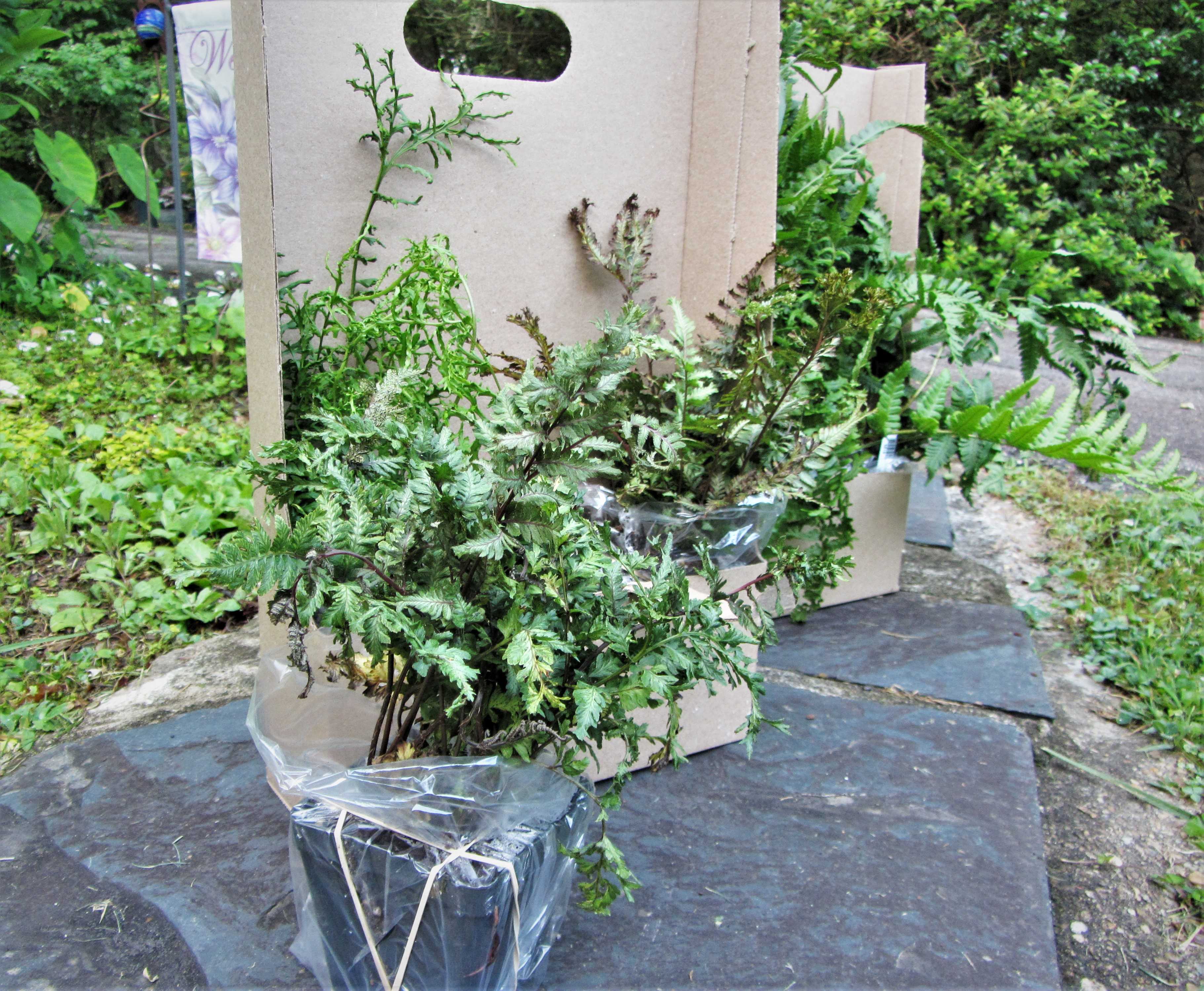
Because you pay the same shipping charge for a single plant or six plants at Plant Delights, I normally try to order a full box of six at a time. Did I mention that shipping is now more than $40.00 for that box of six plants? That is a commitment, especially when you consider that one can bring home several flats of ferns from the local garden center on a gallon of gas. How important is it to grow that shiny new fern?
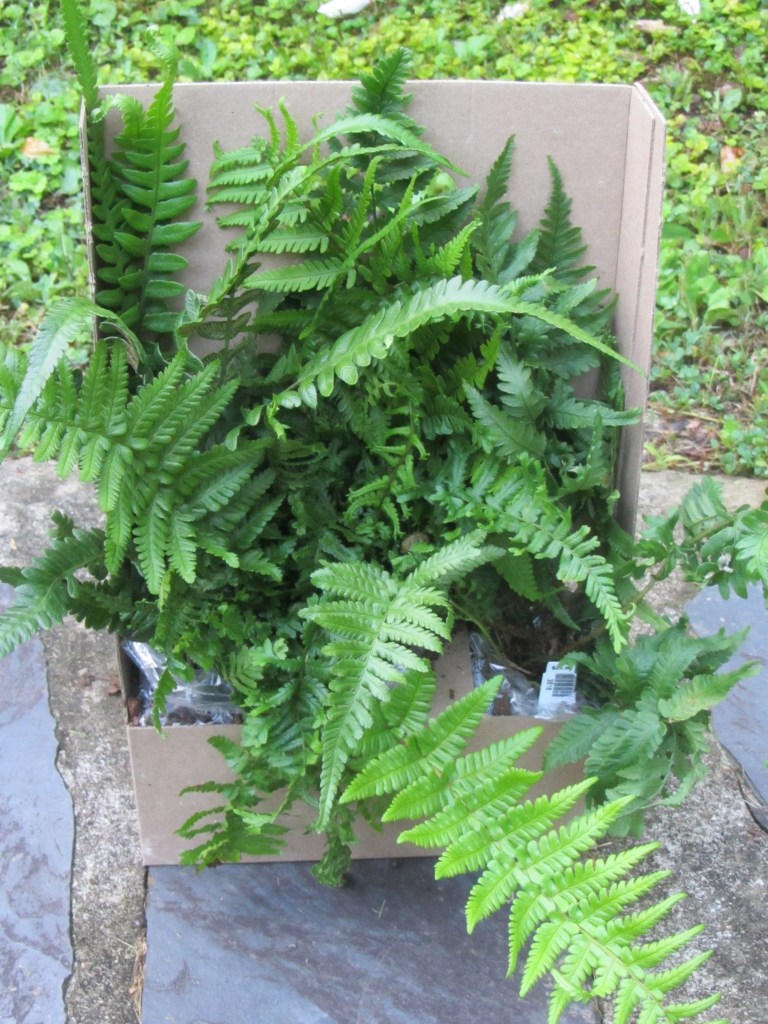
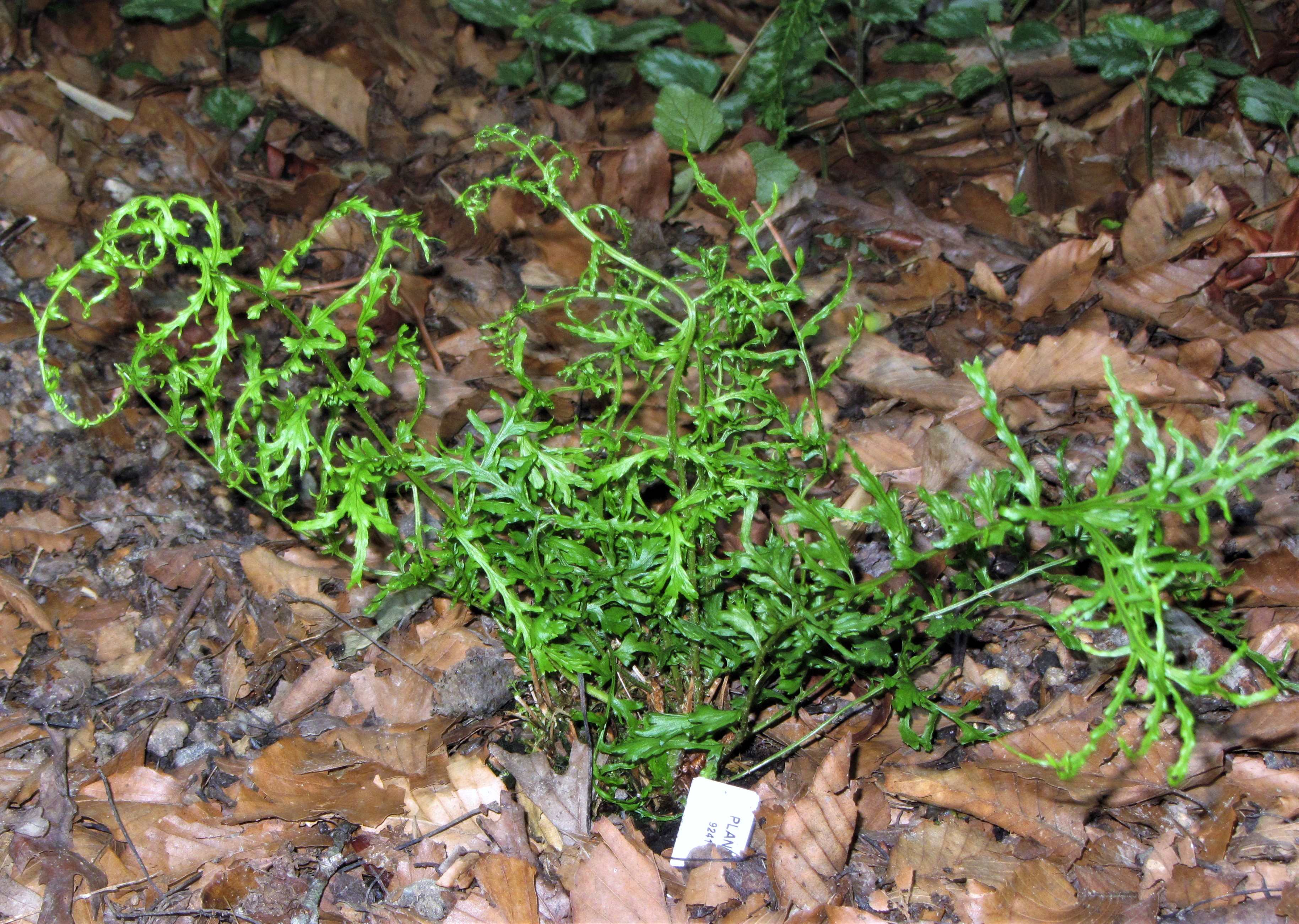
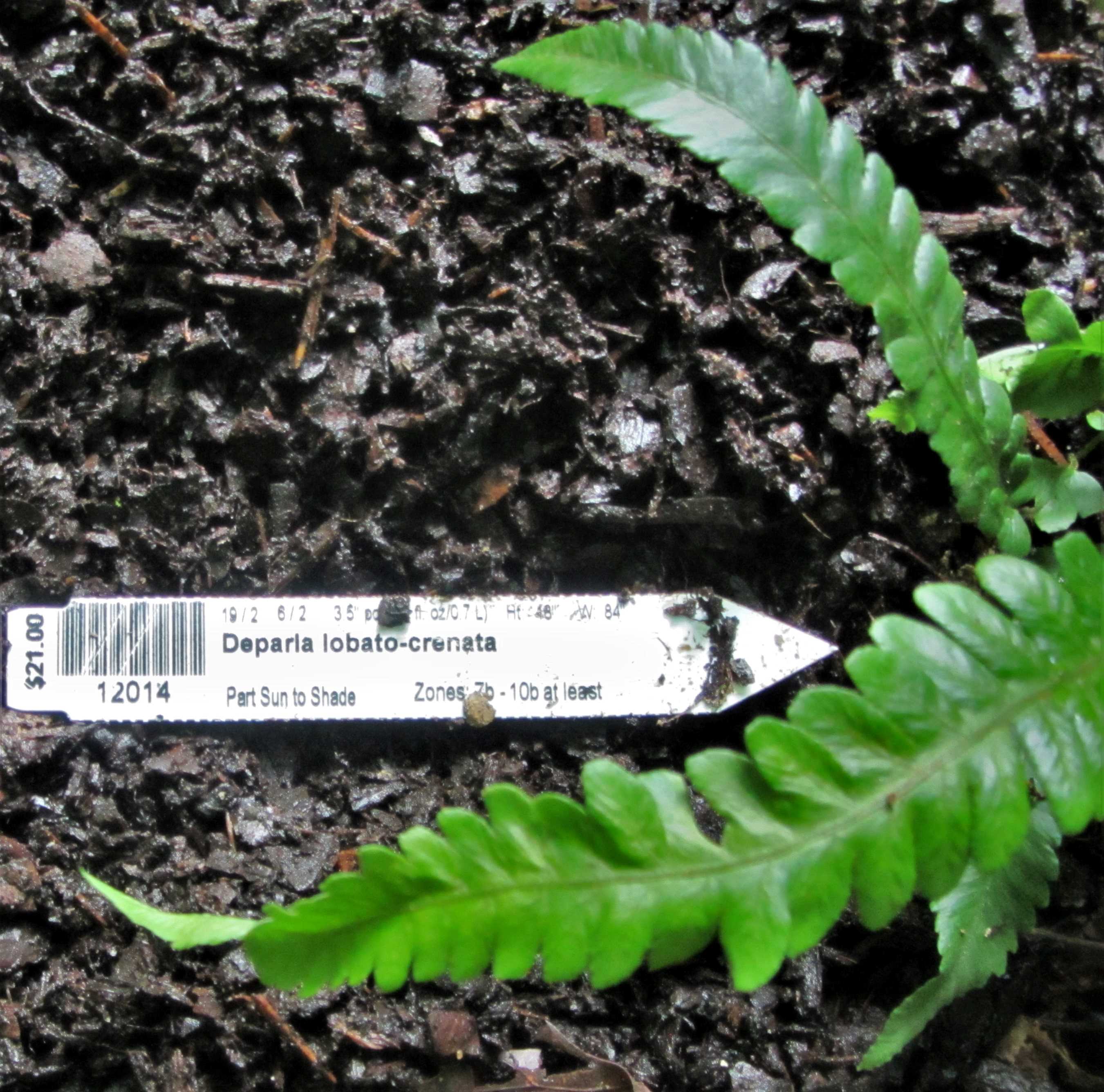
I’ve watched several coveted ferns, like the Dryopteris koidzumiana with bright red fronds, come into stock and sell out again in a flash. I’ve also been wanting to grow a particularly beautiful, crested A. niponicum called ‘Joy Ride.’ What finally motivated me to follow-through with an order was the appearance of a new variety called Deparia lobato-crenata. It is a ground cover, spreading Japanese sword fern with delicate, dark green fronds. It helped that it, and several other ferns I’ve had my eye on for years, were on sale.
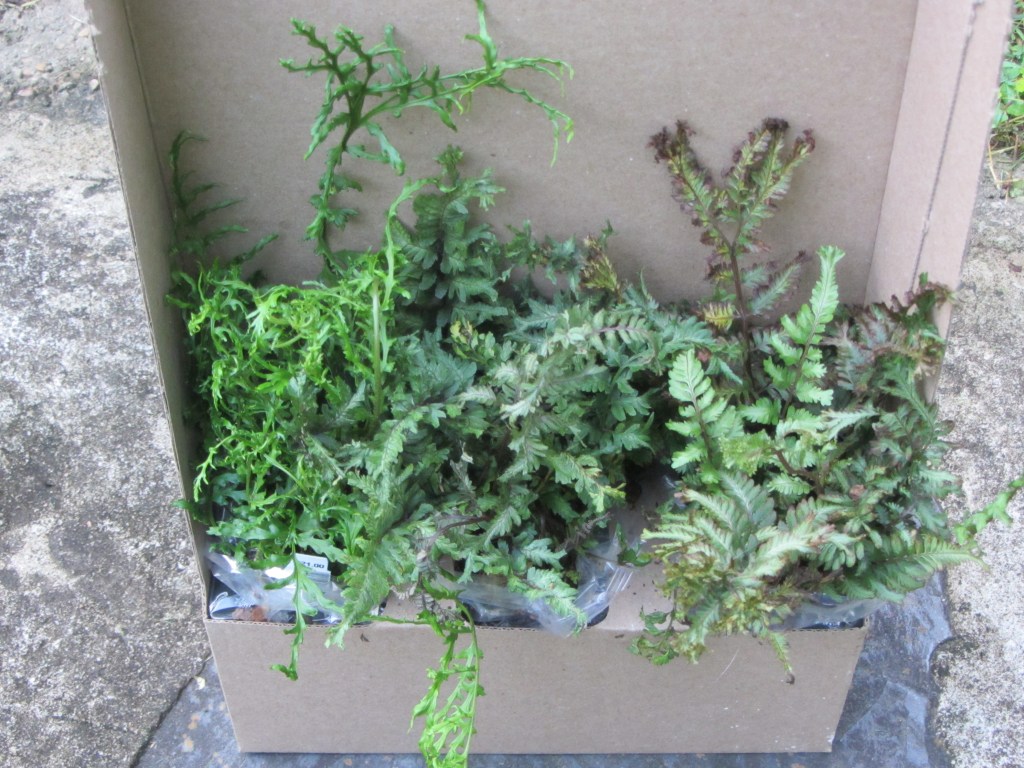
I gritted my teeth and placed the order. I try to not even think about how much I ended up paying for each fern, tax and postage included. It is a rare splurge, especially after I vowed to stop ordering plants through the mail several years ago. Even though summer heat is upon us now, I am confident that I can keep these new ferns happy enough to survive through to September.
The ferns arrived late Saturday in the heat of the afternoon. My partner heard the UPS truck and brought the package in. I opened the box and found the six ferns alive and perfectly packed.
It was only early next morning, when it was cool enough to go out and plant them, that I unpacked each fern from its plastic wrapping and really had a look at the plants and their roots. Four of the six ferns were in great shape with moist medium and well-developed roots. It was the two Athyriums in the order that were nearly bone dry. Their pots were only partially filled with medium. The roots weren’t as developed as I would hope for, but they were alive.
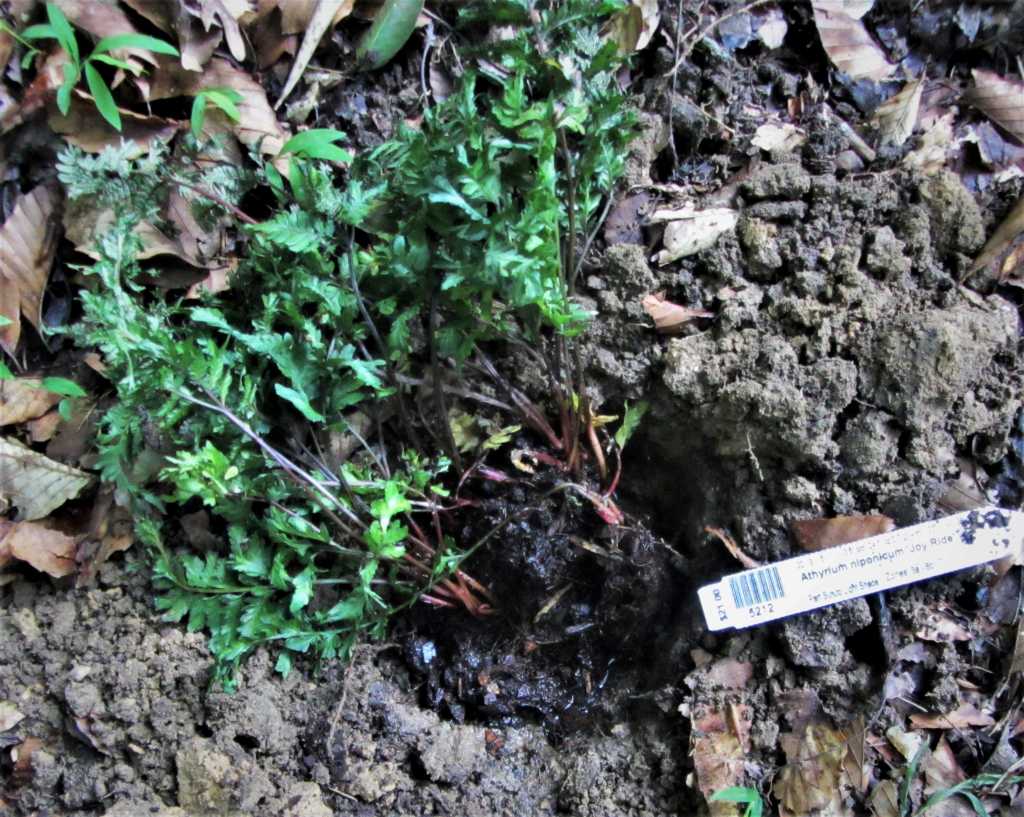
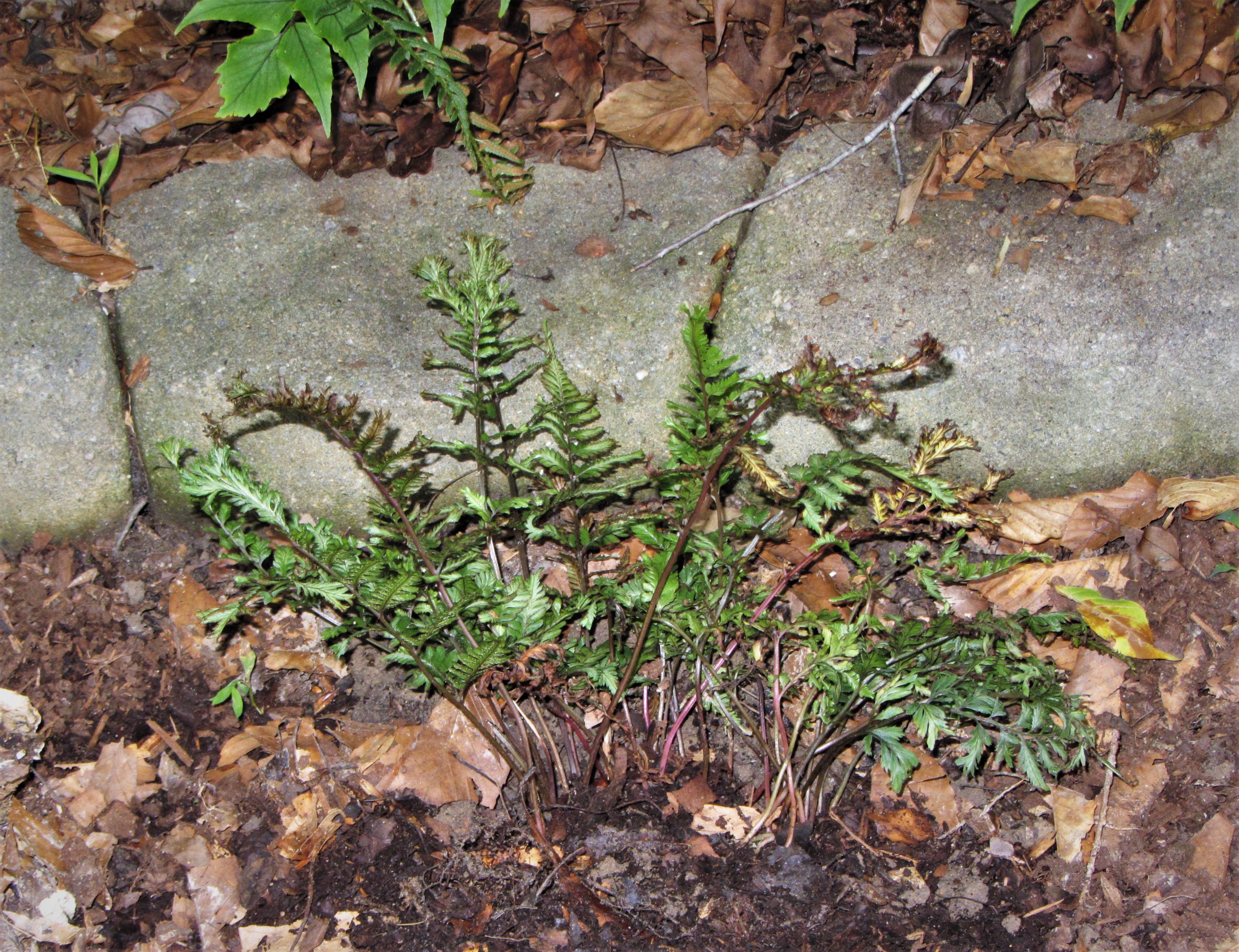
Five of the new ferns are now adjusting to their new lives in ‘Fern Grotto.’ A. ‘Joy Ride’ and A. ‘Thrill Seeker’ are growing near one another in a shady spot where a pipe carrying run-off from one corner of the roof empties.
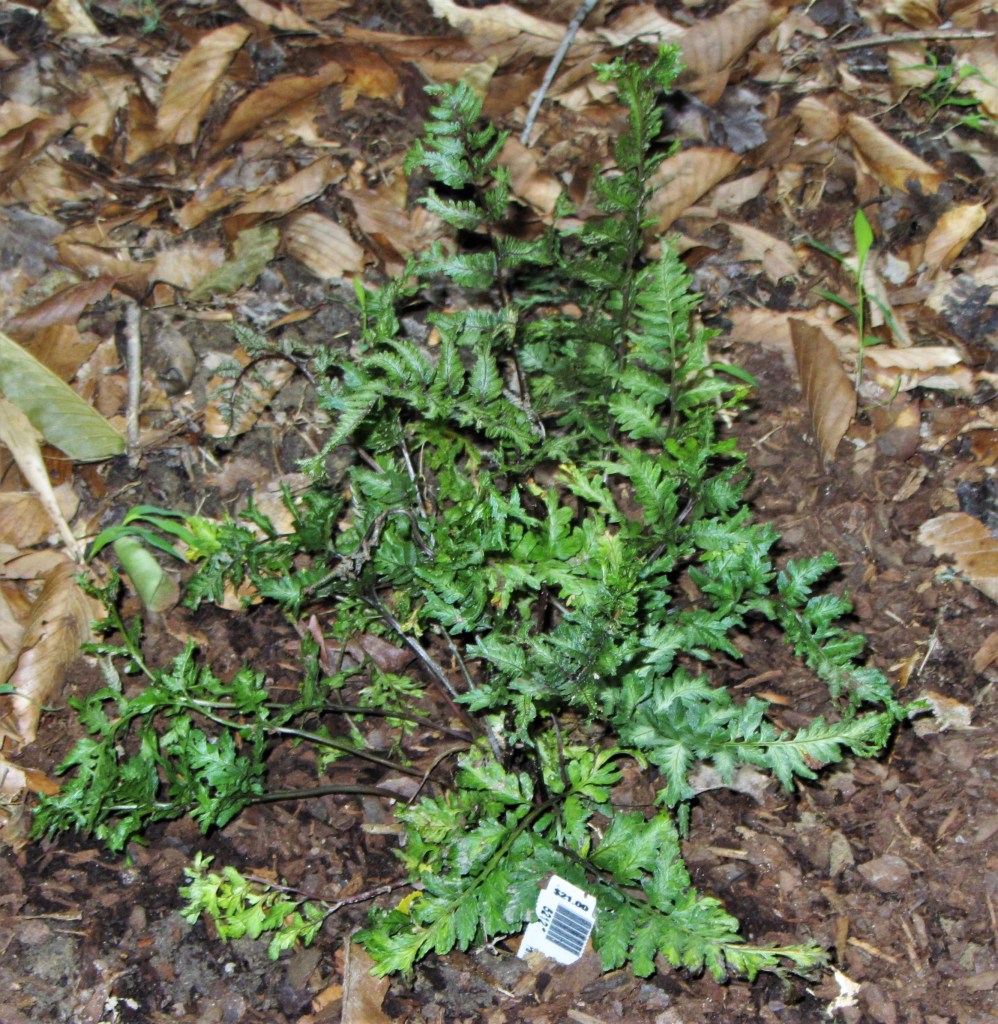
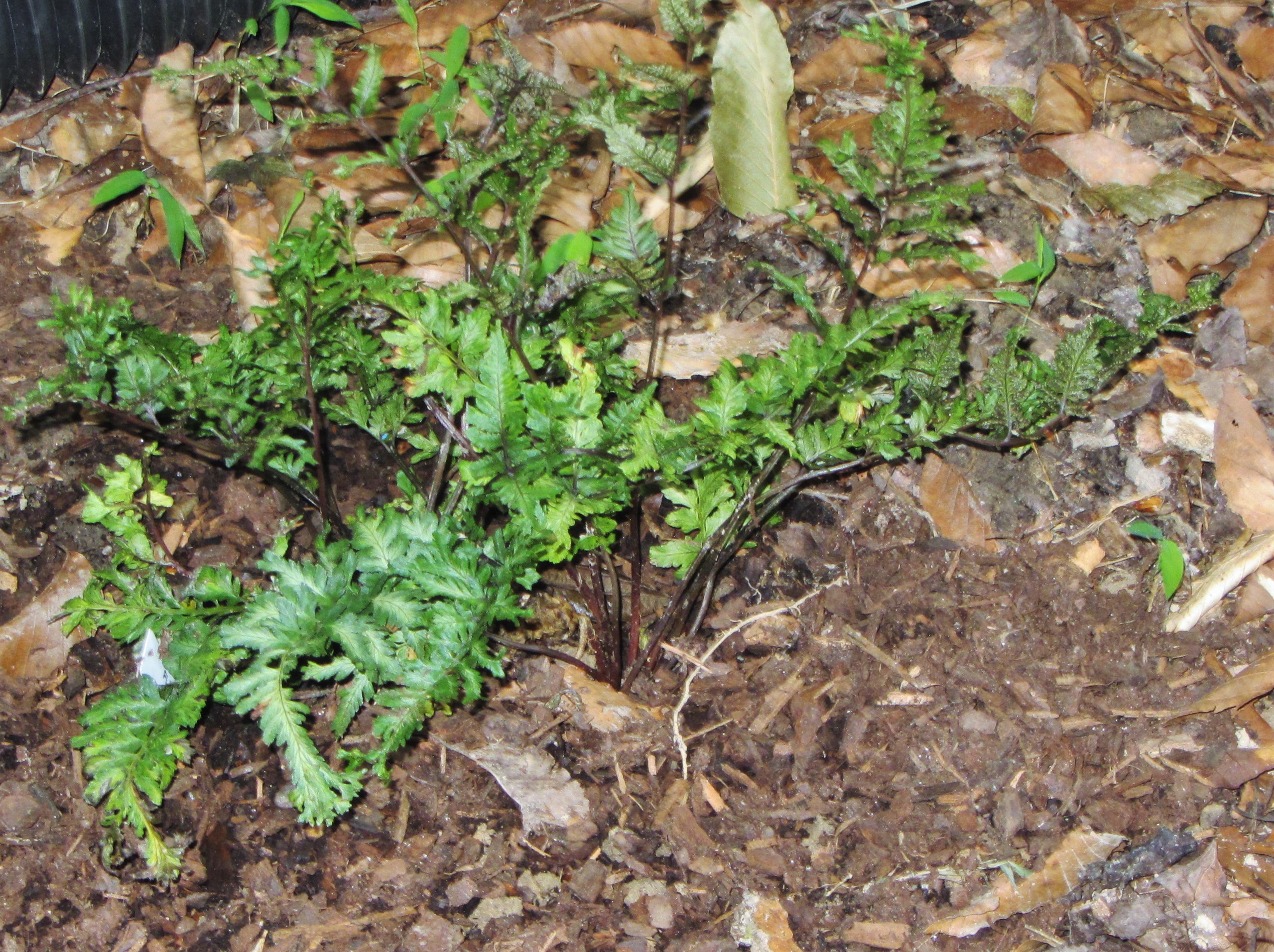
I watered them well with dilute Neptune’s Harvest as I planted them to quickly re-hydrate and revive their roots. They have shade most of the day. The Deparia grows in a bit more sun, at the top of the bank. I hope it will spread to fill in that space where recent heavy rain has caused new erosion.
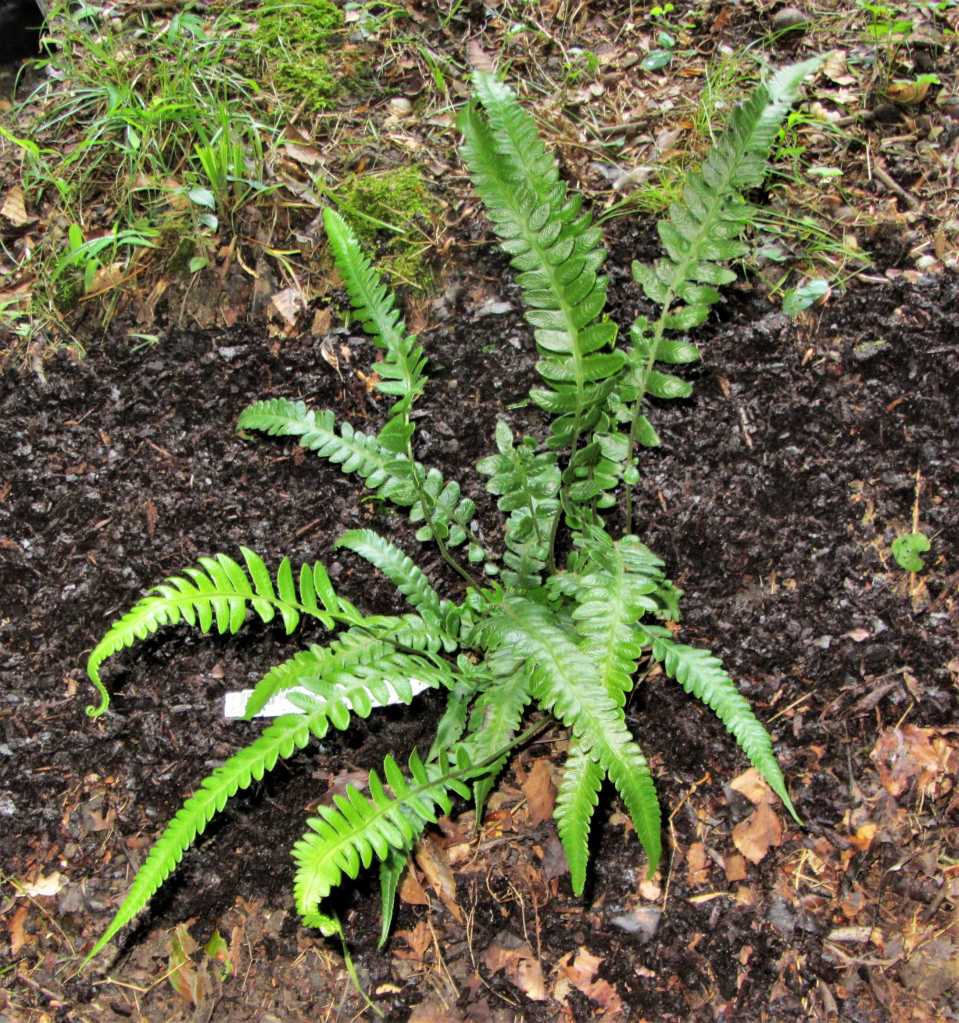
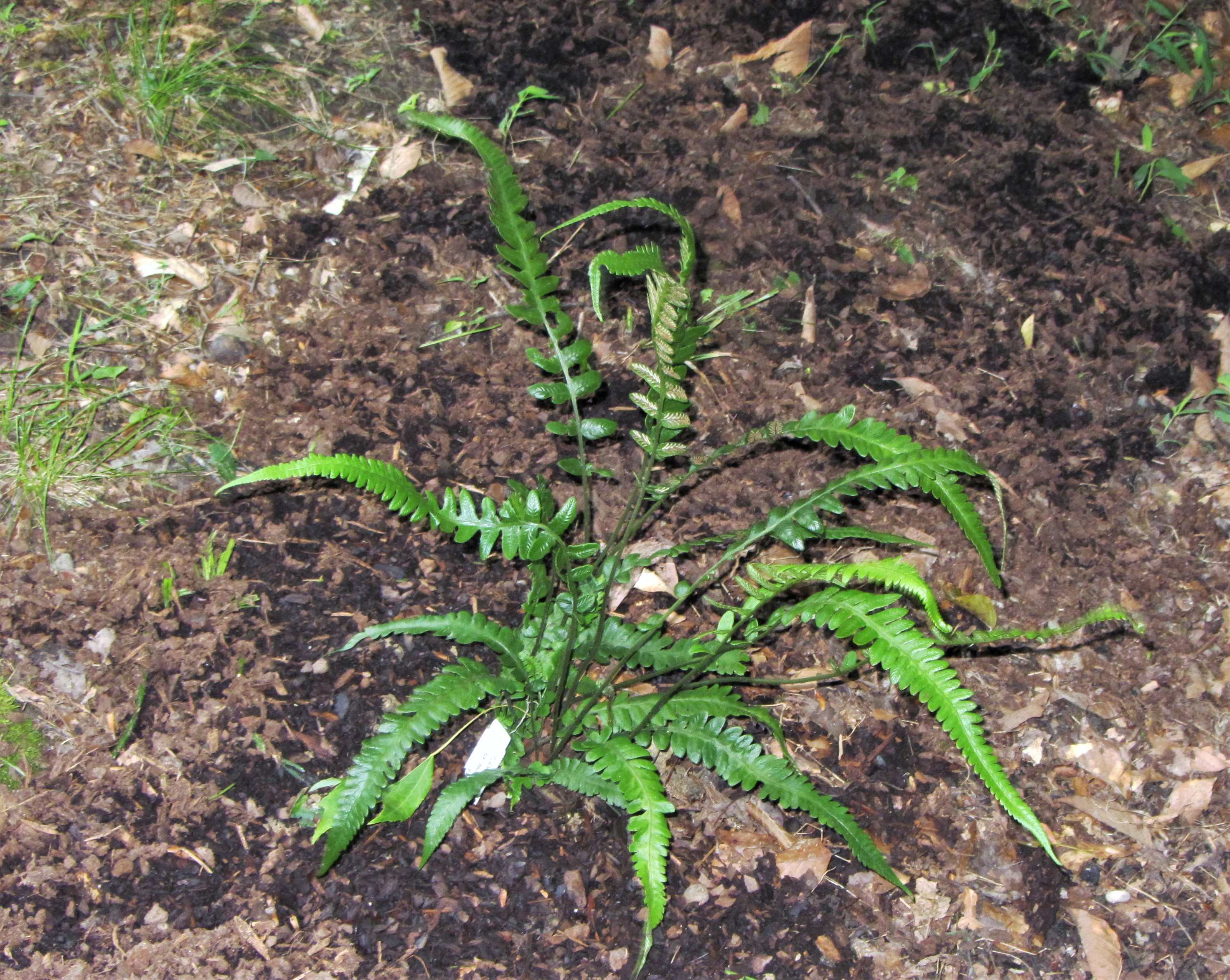
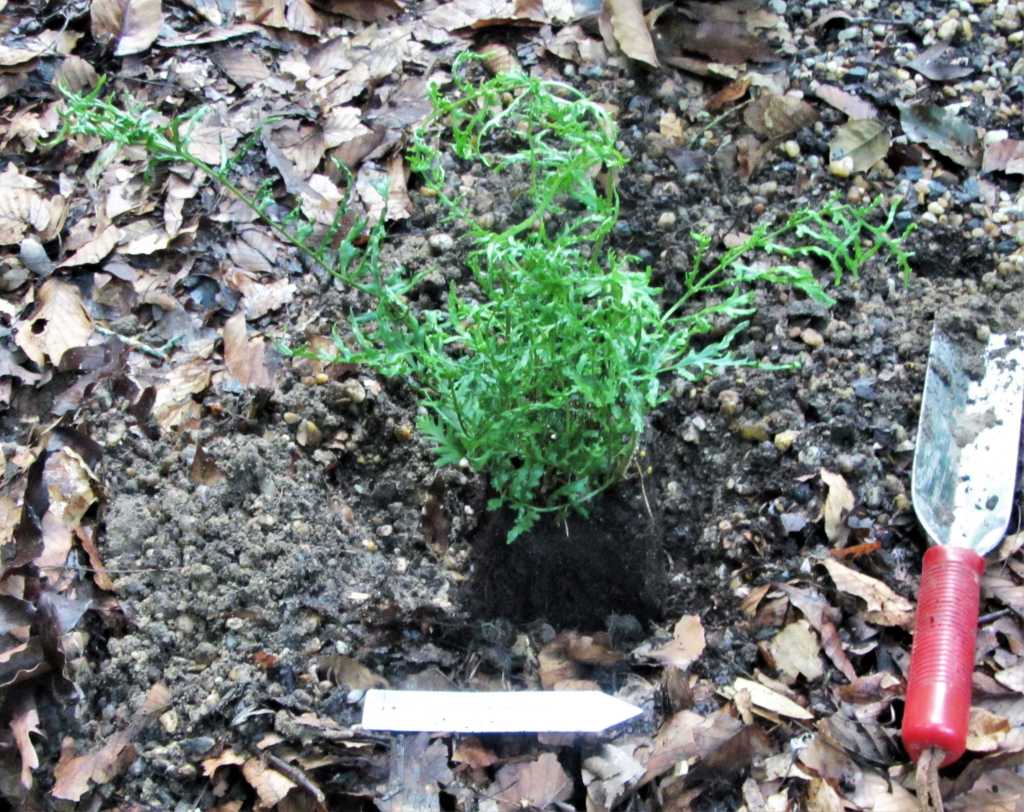
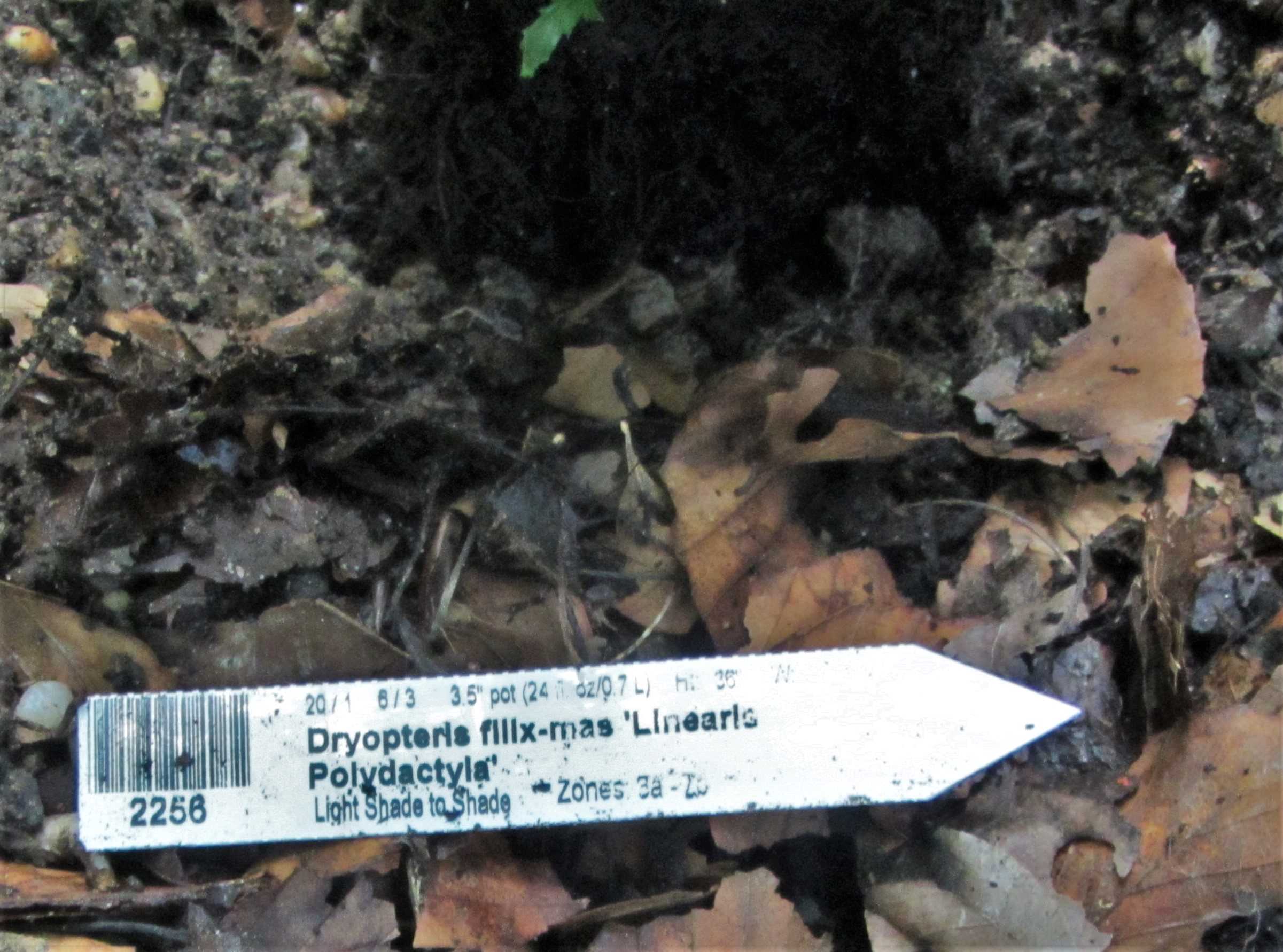
Below the Deparia, I planted D. uniformis ‘Cristata,’ which will grow to perhaps 20” tall eventually, and D. filix-mas ‘Linearis Polydactyla.’ This is an English cultivar of a plant native in both Europe and North America. It is extremely ‘frilly’ and will grow to about 3’ tall.
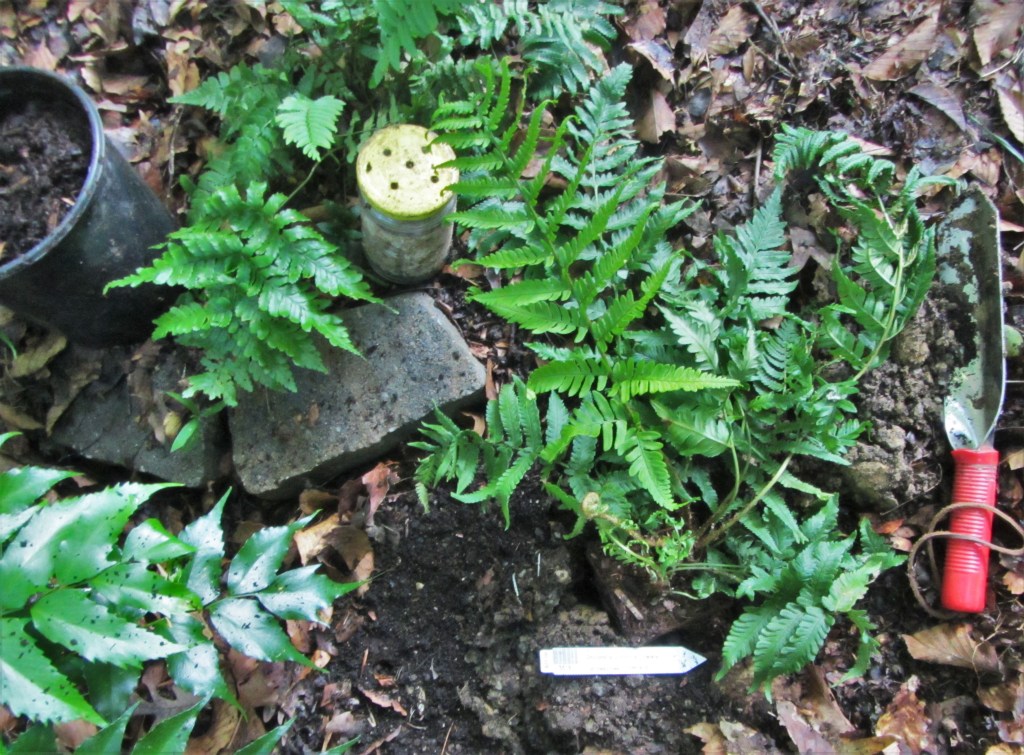
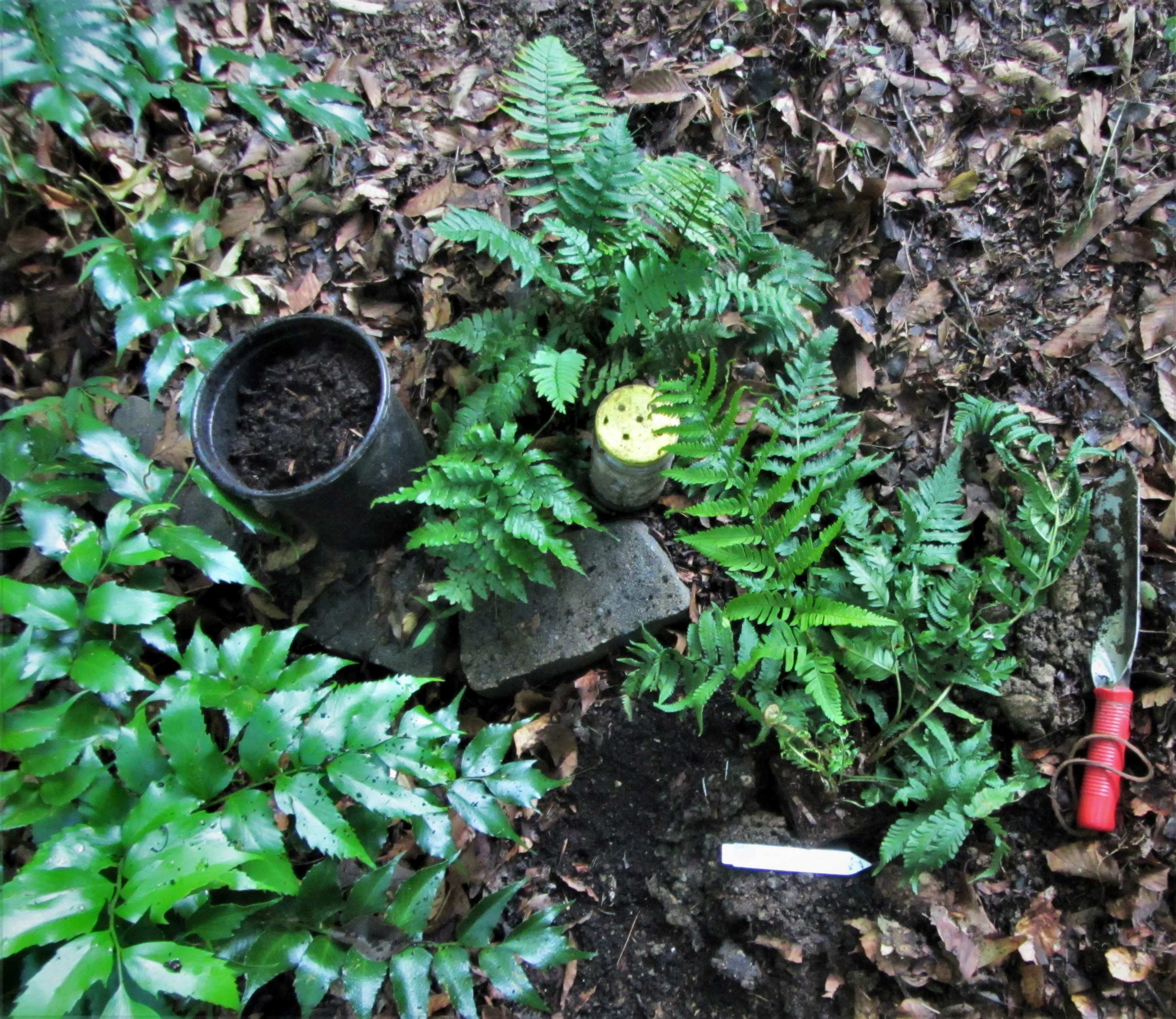
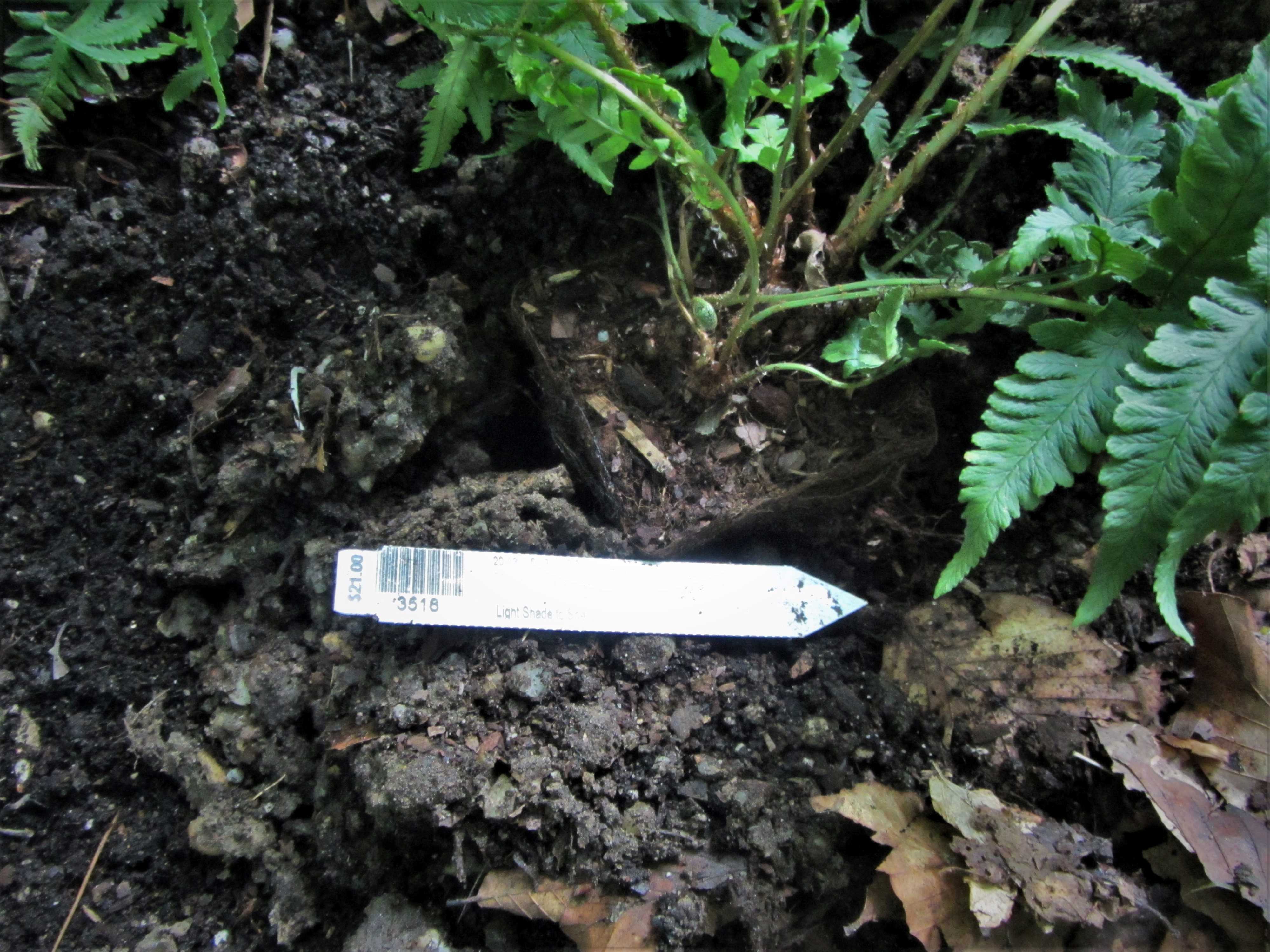
The third wood fern, D. cristata ‘The King,’ is planted in a nearby established area to fill a space left by a large fern that didn’t come back this spring. That fern’s demise remains a mystery, and I’ve waited and waited to see whether it might still begin to grow.
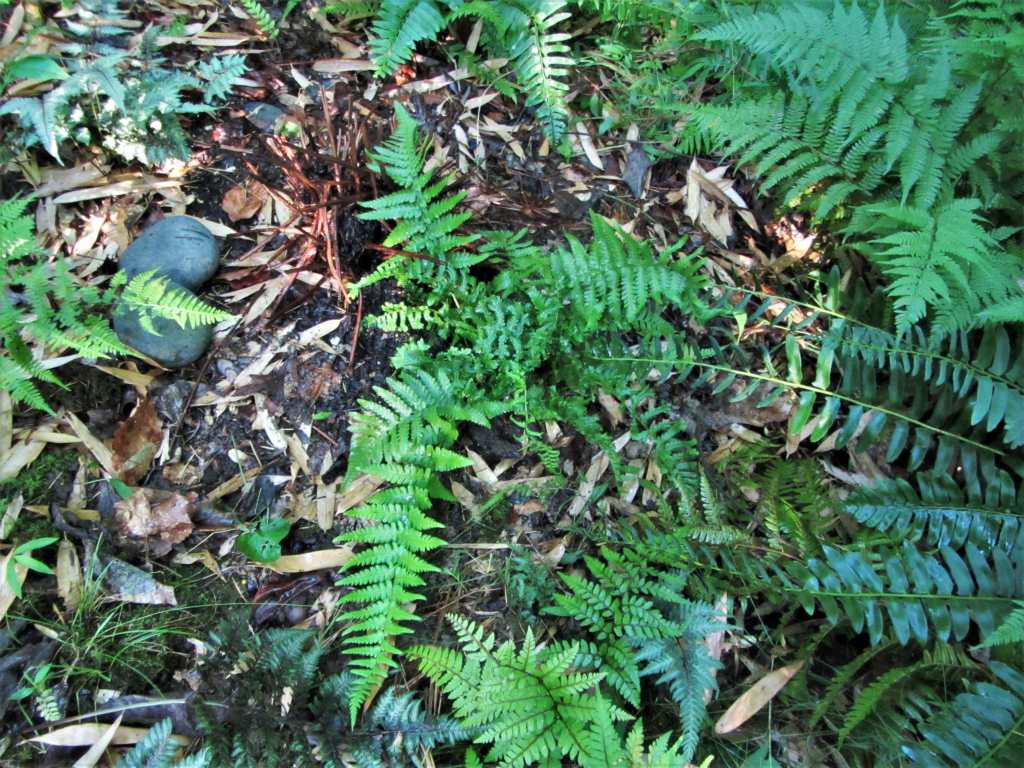
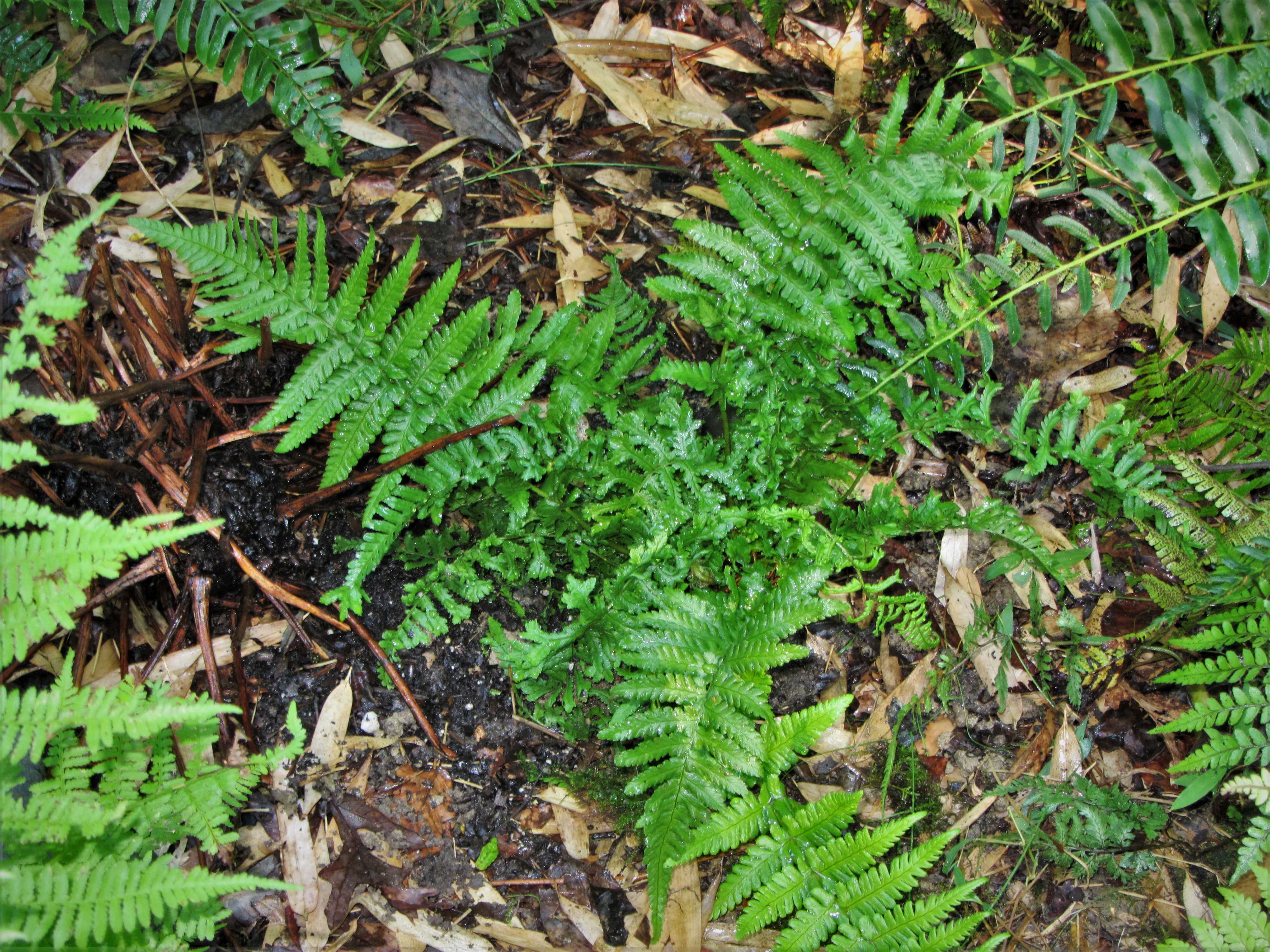
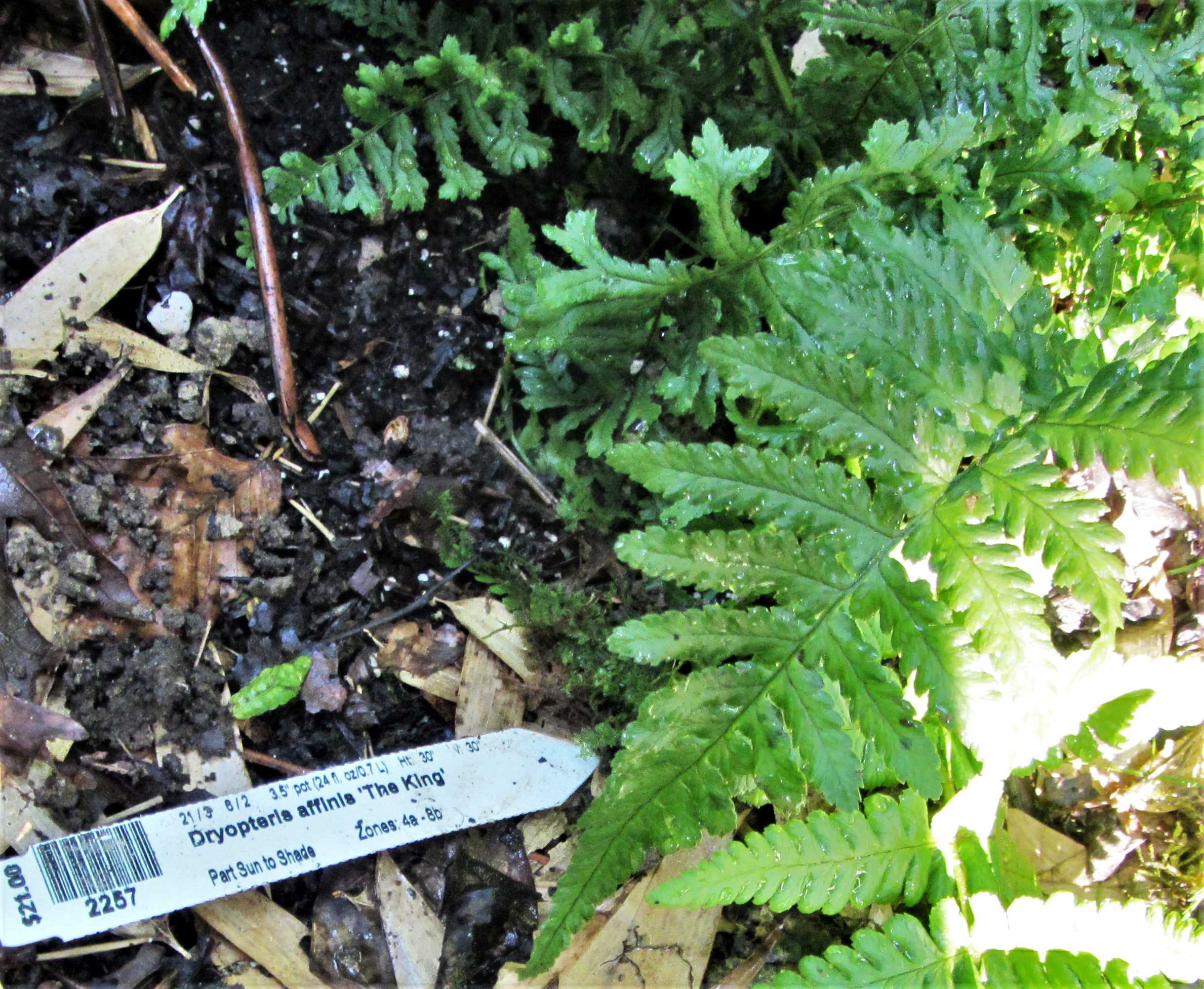
Ferns rarely need any fertilizer unless they are growing in containers. I still plant new perennials with a good sprinkle of Espoma’s Bio-Tone in their planting hole to get them off to a good start. Bio-Tone is a 4-3-3 starter fertilizer with a variety of mycorrhizae to help plants get established. As extra insurance, I watered in these ferns, planted so late in the season, with ‘Neptune’s Harvest,’ a fish and seaweed emulsion, to give them some ‘first aid’ and help them establish during summer’s stressful weather.
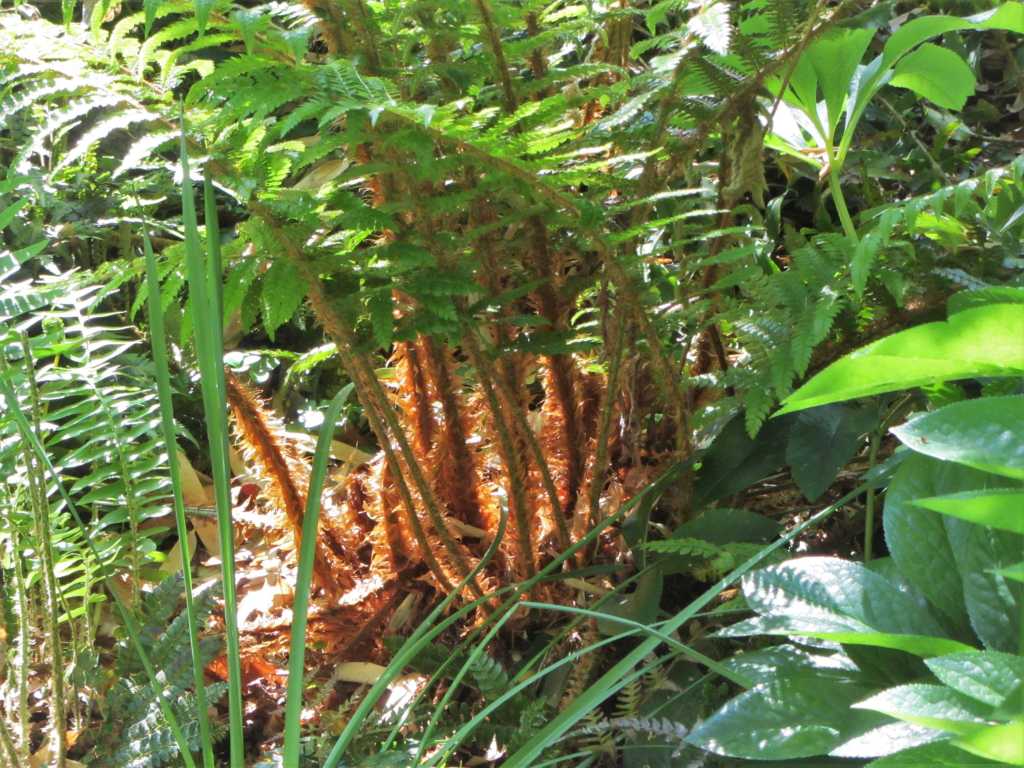
Mixing ferns within a planting requires a bit of thought and understanding of how they grow over time. I like to have a solid structure of evergreen ferns because they not only hold the space, but they also continue to filter the air and sequester carbon throughout the winter. The more delicate deciduous ferns can grow around them.
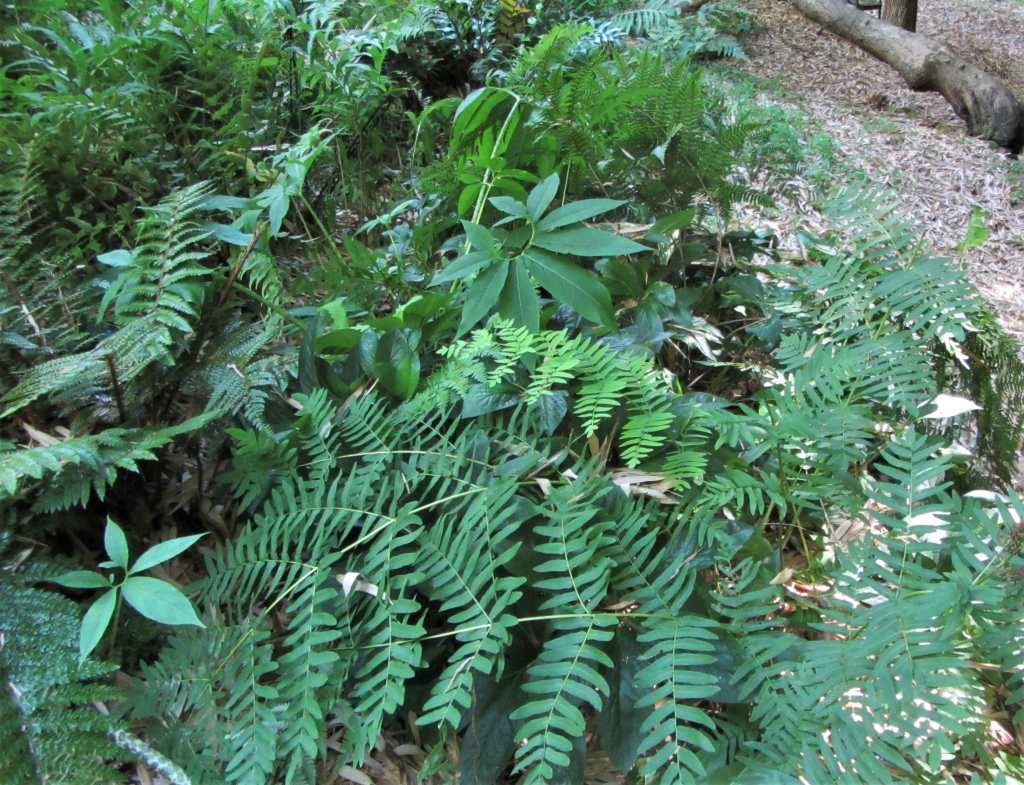
It is important to imagine how large a fern will grow when it is mature, and how much horizontal space it will require. Spacing ferns too closely together when they are small means that some will get ‘buried’ under the larger fronds of others as the planting matures.
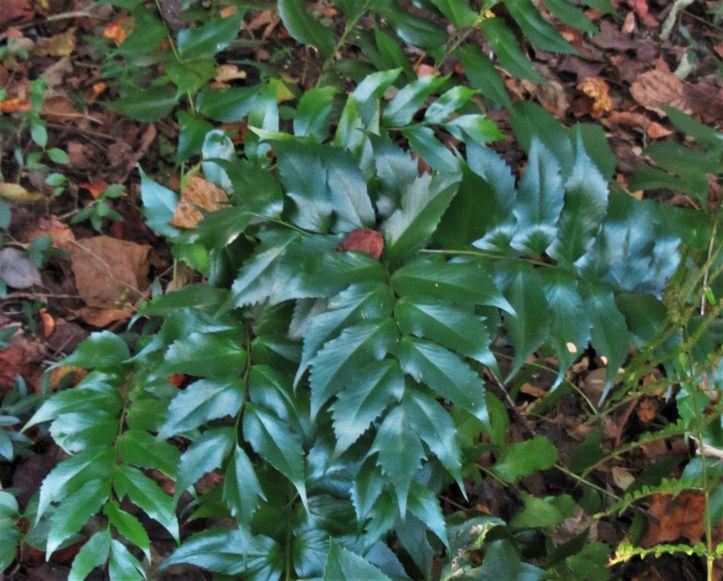
Some gardeners trim fronds away in the fall after frost. I generally wait until spring, allowing older fronds to serve as ground cover through the winter. Leaving the aging fronds also gives the crown some protection from winter weather. It is smart to grow ferns that are hardy to at least one zone colder, especially when growing in the shade or on a slope where cold air can settle. Fronds from larger ferns will also help protect smaller and younger ferns through the winter. I begin to tidy up as new fiddleheads emerge in March, and continue through mid-summer as older evergreen fronds fade.
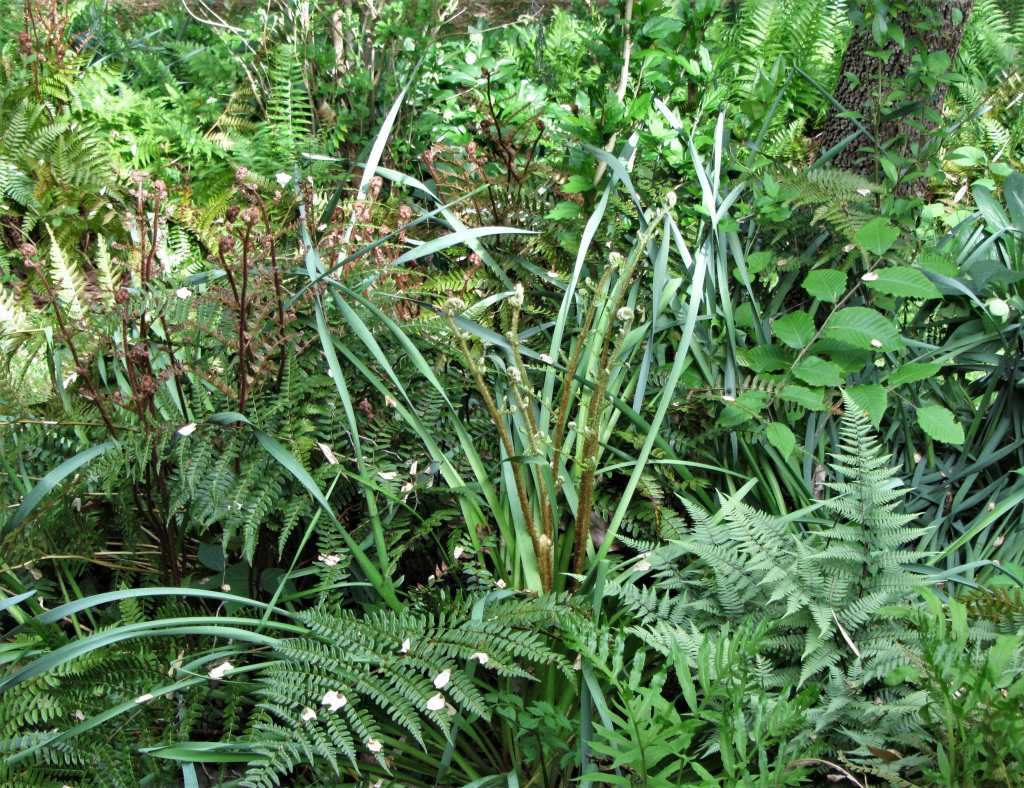
Ferns, one of the easiest plants to grow, are also some of the most rewarding. They survived in the wild for millions of years before they ever came into cultivation by gardeners. They demand very little care or attention once established, but reliably return year after year. They grow well in spots where most flowering plants would languish. And their beautifully cut and twisted fronds delight with their fantastic shapes and subtle colors. I’m quite sure that our collection of ferns will continue to grow as ‘Fern Grotto’ expands.

You might enjoy my new series of posts, Plants I Love That Deer Ignore.
Visit Illuminations for a daily photo and quotation
 Our Forest Garden
You have an impressive collection of ferns! I didn’t see maidenhair… does it not grow there? I have a few and a friend gave me a few stolons of a miniature Japanese maidenhair. It is rather lacy and low, so I have to keep an eye on it to make sure it doesn’t get overtaken. Best thing about ferns beyond their beautiful texture is that the deer ignore them!
LikeLiked by 1 person
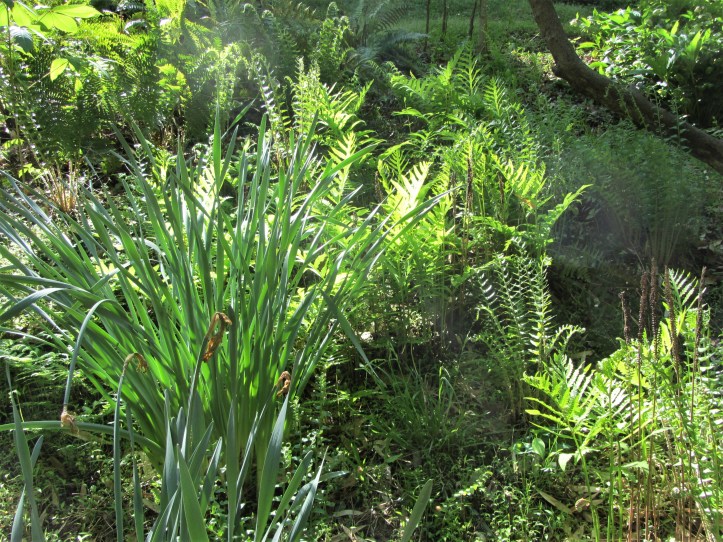
Eliza, you are so observant! Yes- we have maidenhair, and no there were no photos. In looking back at old photos during my prep to write this article I realized that a beautiful maidenhair- one of my favorites- is one of the smaller ferns under that arching mass of leaves topped by the royal fern. I am going to peel back the layers and try to find whether it is still growing down there in the ‘plant cave.’ We also have maidenhairs in a new section of the fern garden that I built in the spring of 2021. It is alive, but not yet photogenic. That who area is a bit sparse. Even the autumn brilliance growing there were down to just crowns by spring. I planted a maidenhair in the hollow stump of a tree on the edge of our yard that fell in a storm last summer. It fell down our neighbor’s driveway, and they had it removed. But the stump is on our side of the line. That one is adjusting and alive 4 mos. after planting, but I am ready to lift and transplant it if it doesn’t show enthusiasm for its stump-pot soon. Finally, I have several maidenhair growing in deeper pots with large Begonias. I have the best luck with them in pots here for some reason. I still think of them as very fragile although I know they are hardy and tough. I ‘thought’ deer ignore ferns, Eliza, but there have been too many nipped fronds this season. Some of those baby Christmas ferns planted in March disappeared entirely, with efforts to dig out and shred their roots. I suspect that turtles dug those. It was so dry here for so long that the animals were desperate for moisture and there has been more ‘grazing’ than usual on plants that usually are safe. A strange year thus far! Just saw a statistic on the local news that our area was the hottest in VA over the past year. W’burg is #10 on the list, but a community just 20 miles or so away is #1. The difference is that they have far fewer trees. Hope you enjoyed your celebrations yesterday! ❤
LikeLike
A quiet down-day for us yesterday… we needed it!
The past two winters I’ve have vole damage on a Christmas fern near the house and another nest on a supposedly toxic Hellebore. Even garlic doesn’t deter them. I’m going to get some Repels-all pellets to see if that works. It is always something!
LikeLiked by 1 person
Yes, always something new and exciting. We thought we finally had a respite from voles here, but they have returned this year. Our neighbor, who let her cat roam and hunt in our yard freely, moved house. I always complained about that cat stalking birds. My partner told me to appreciate the cat for hunting voles. Turns out, he was right. Hard to believe they burrowed into your Hellebores, and I’m so sorry for your Christmas fern. Have you tried chewing gum? We (used to) tear sticks of Juicy Fruit or Doublemint into 3-4 sections and place the still wrapped hunks of gum into tunnels before we smashed the tunnels. We fill the tunnel openings with stones. Guess what happens when they try to eat the gum? A non-toxic, but not non-lethal solution…. A quiet day here yesterday, too. Best kind! ❤ ❤ ❤
LikeLiked by 1 person
Thanks for the tip!
LikeLiked by 1 person
If you decide to try it, I hope that it will work as well for you as
it did for us.🐝🐝
LikeLiked by 1 person
I am part way through a book called Britain’s Lost Rainforests and ferns feature greatly, so this post of one of those synchronicity moments.
LikeLiked by 1 person
Yes, synchronicity on several levels because I’m working my way through that same book! I made the mistake of turning to the photos in the back, and I just get lost in the photos. But it is a well-written book and I mean to finish it soon. So glad you enjoyed the photos of our ferns! I would love to build a ‘stumpery,’ here eventually. If our rain were more reliable, and summer temperatures not so extreme, we’d have the conditions for great moss and lichens and something closer to a temperate rain forest in our area. We have bits and pieces to our southeast in Seashore State Park and the Dismal Swamp. ‘Spanish moss,’ a lichen, will even grow near the coast in Virginia Beach. Enjoy the day! ❤ ❤ ❤
LikeLiked by 1 person
Ah, it was you! I couldn’t remember who it was that was also reading the same book.
LikeLiked by 1 person
BTW, did you ever see a message from me via your contact form? I wanted to invite you and your to guest on my Enchanting Gardens series. Let me know if you are interested.
LikeLiked by 1 person
Thank you for the invitation, and I’m sorry to say that I didn’t see your message. I responded to your very kind invitation on your website. Thank you so much for asking ❤ ❤ ❤
LikeLike