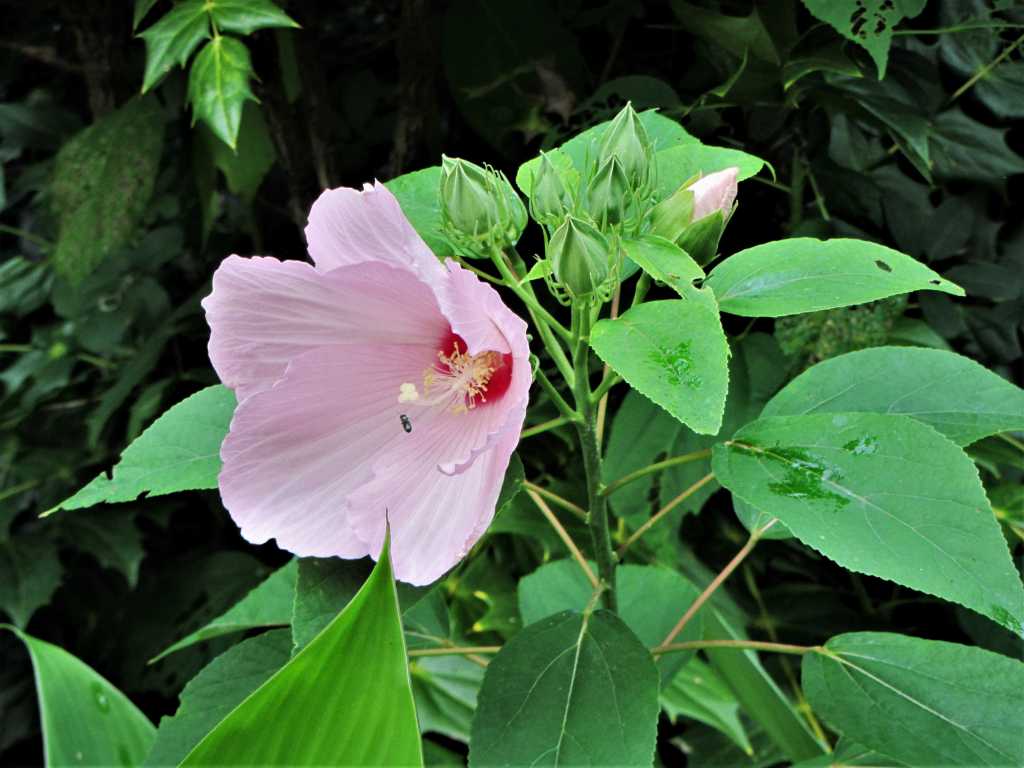
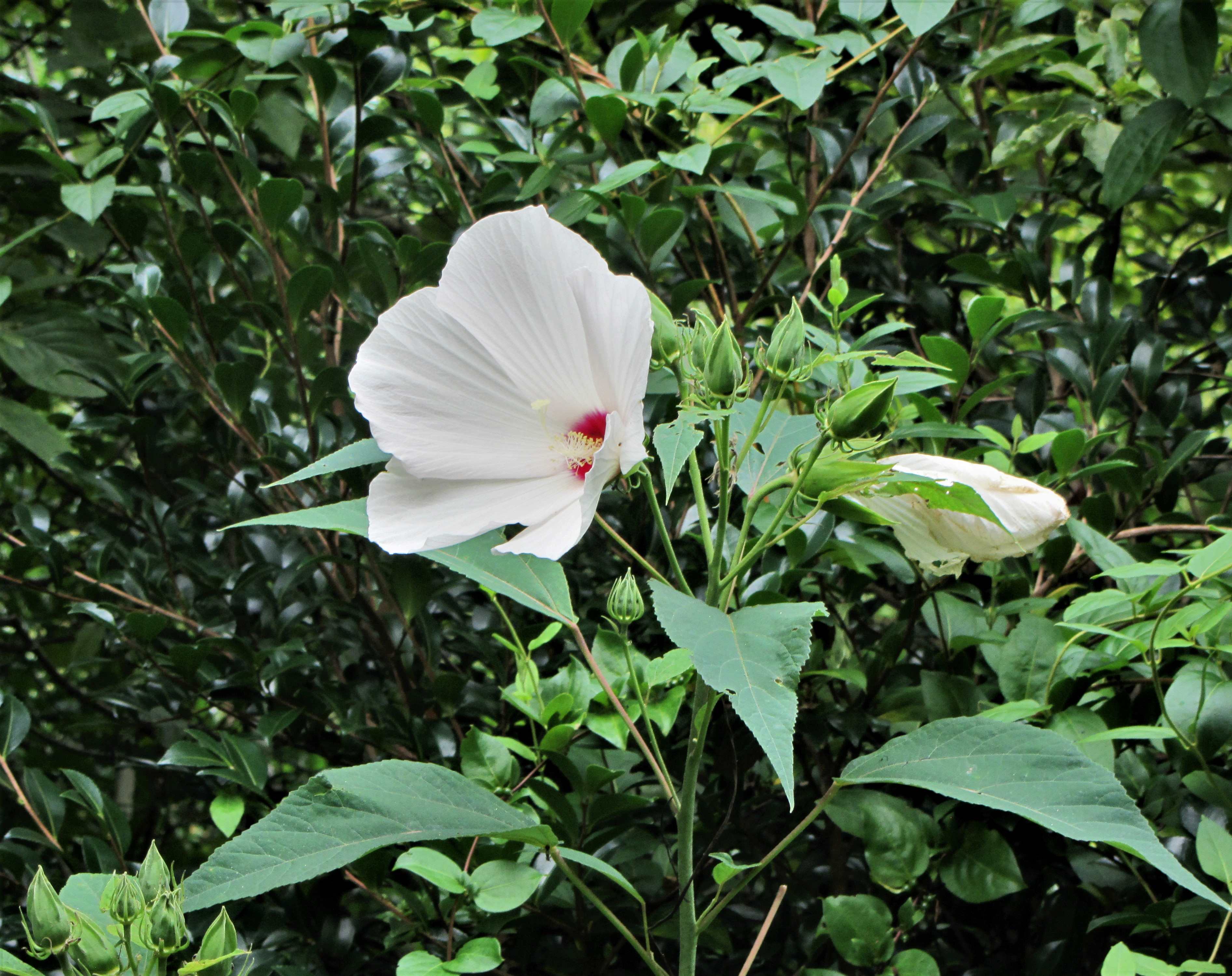
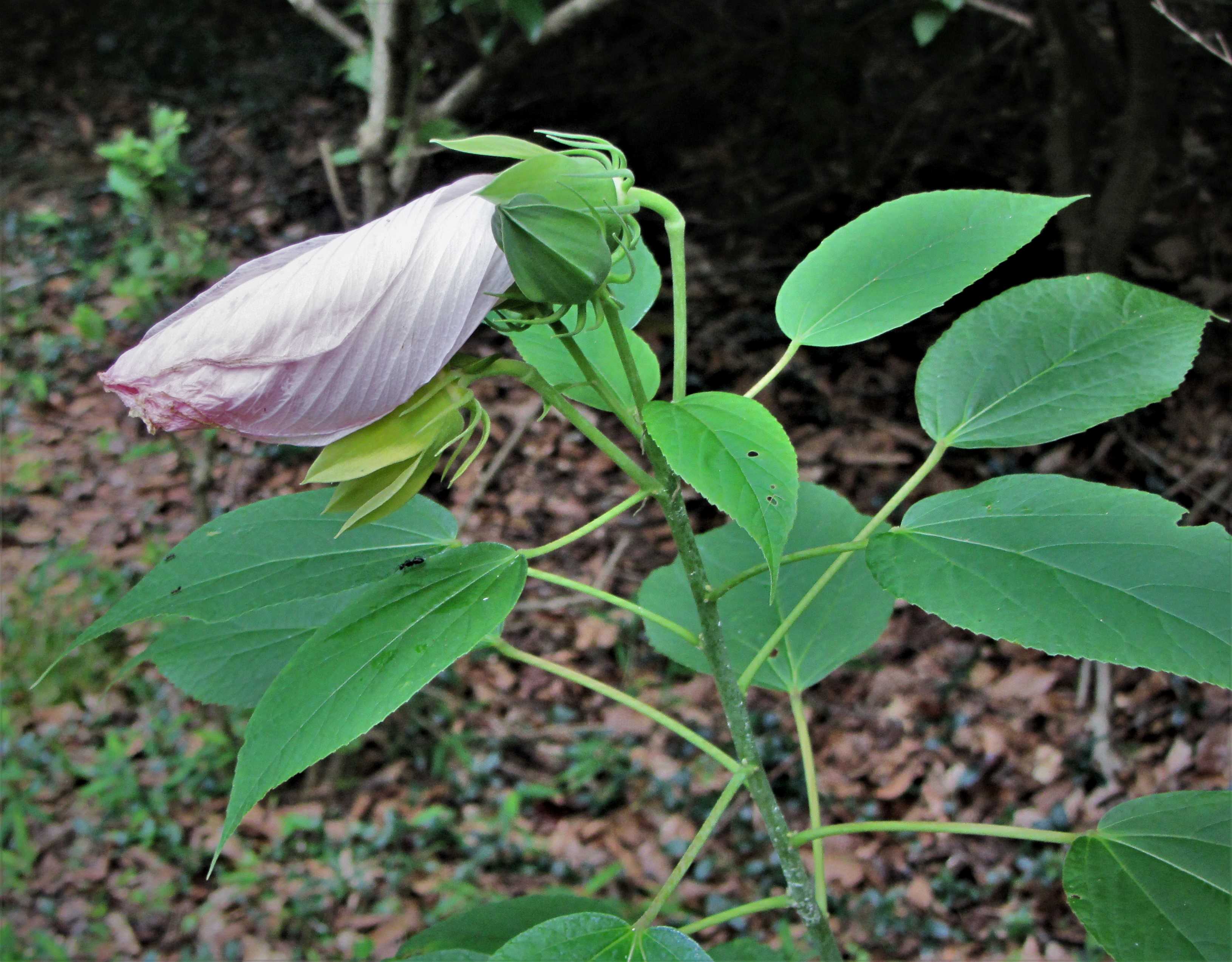
We were driving on the Colonial Parkway beside the James River earlier this week when we noticed a thick colony of pink and white Hibiscus Moscheutos in full bloom. A large colony growing in wetlands is simply spectacular. These herbaceous perennials grow to 4′-6′ tall and wide each spring before covering themselves with flowers in late July and August. Each wide flower has a prominent ‘furry’ looking pistil column covered in short, pollen bearing anthers growing directly out of the side of the stye. As you might imagine, these generous flowers attract hummingbirds, butterflies, native bees, and many other pollinating insects to their banquet.
Each flower lasts only a day or two, but the buds keep opening on each stem over a period of weeks, before the seed capsules turn brown in the fall. Birds feast on the seeds through the early winter. These native Hibiscus want consistently moist acidic to neutral soil in full to part sun. They can tolerate some brackish water and so are found all over our area along rivers, creeks, ponds, and swamps.
But they will grow in drier conditions, too, and we have enjoyed several clumps that were already growing in our yard when we took over this garden. Other than a little water in dry spells, the only care we give is to cut down last summer’s woody stalks in early spring. New growth comes from the crown each summer.
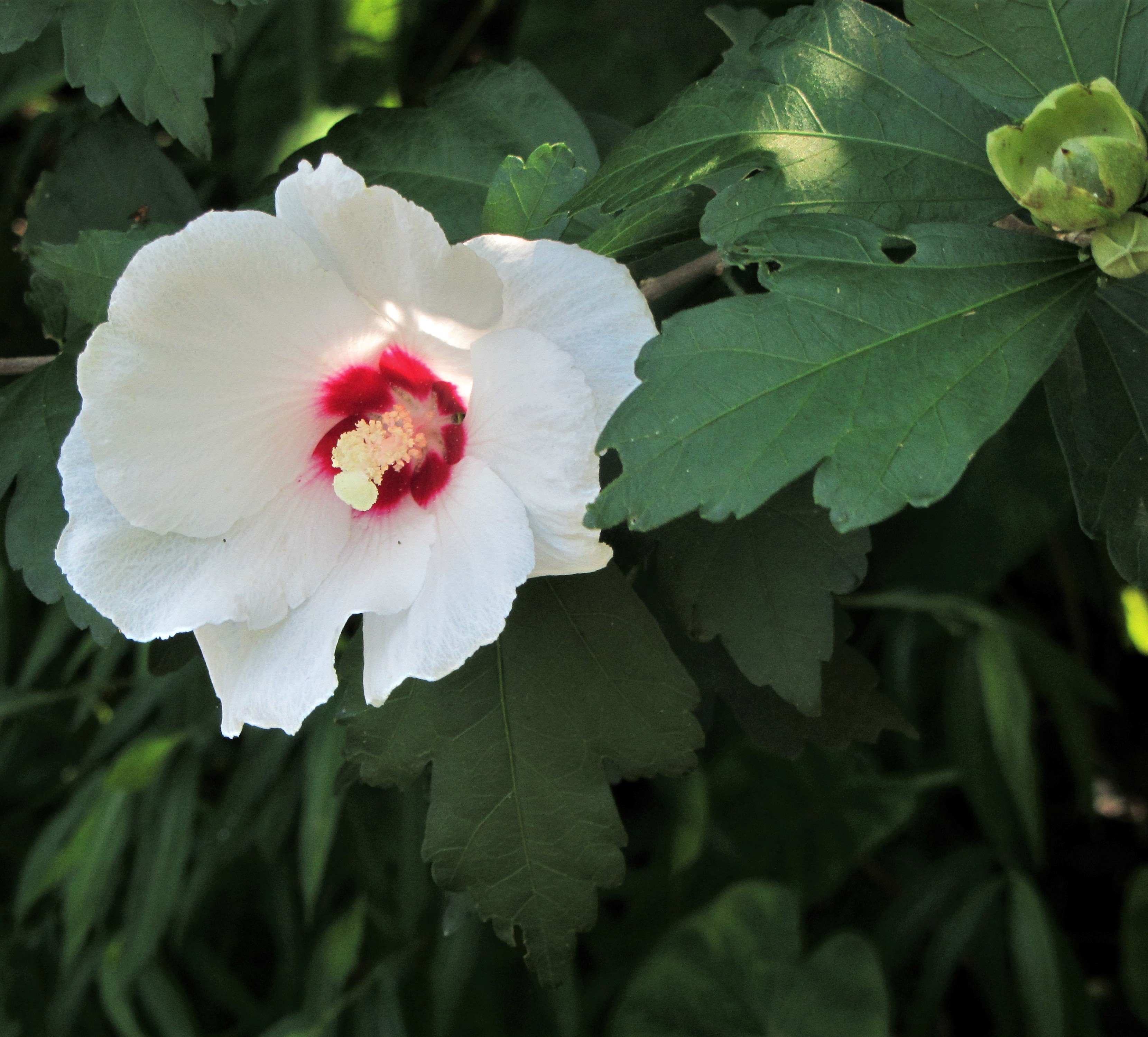
We planted a showy red hybrid at some point, and while it is still alive it hasn’t bloomed for several years. Perhaps it is in too much shade, now. These plants are sun lovers and want their own space to thrive. These are a much larger flowering, herbaceous, native version of the woody H. syriacus, Rose of Sharon shrubs that grow all over our yard. (last photo in the series above) The shrubs are native to the Middle East but have been in the trade for a long time, and naturalize in our area.
The Hibiscus are blooming a little late in the season this year. I found the first flowers of the summer in our yard, this morning. We’ve had good rain this week, a few thunderstorms, and enough heat that I’ve stayed indoors most days. The wildfire smoke returned for a few days mid-week, too.
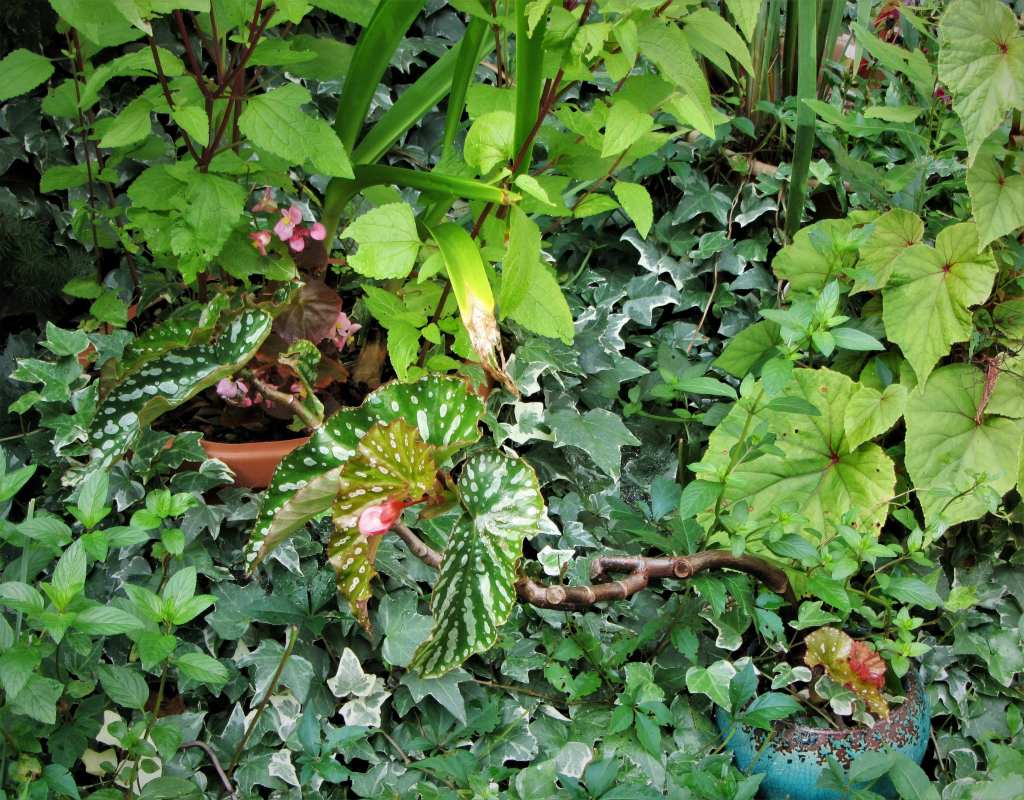
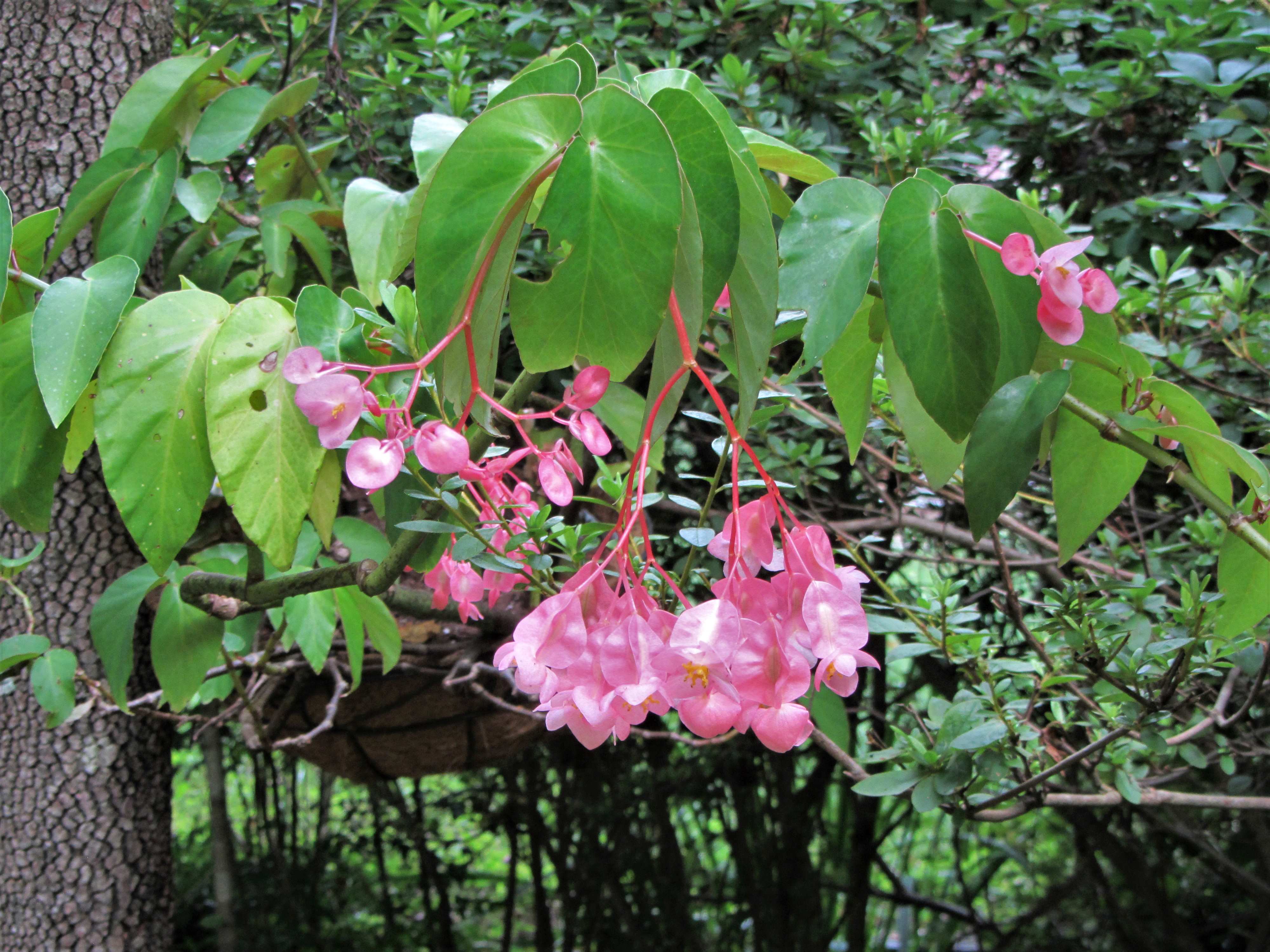
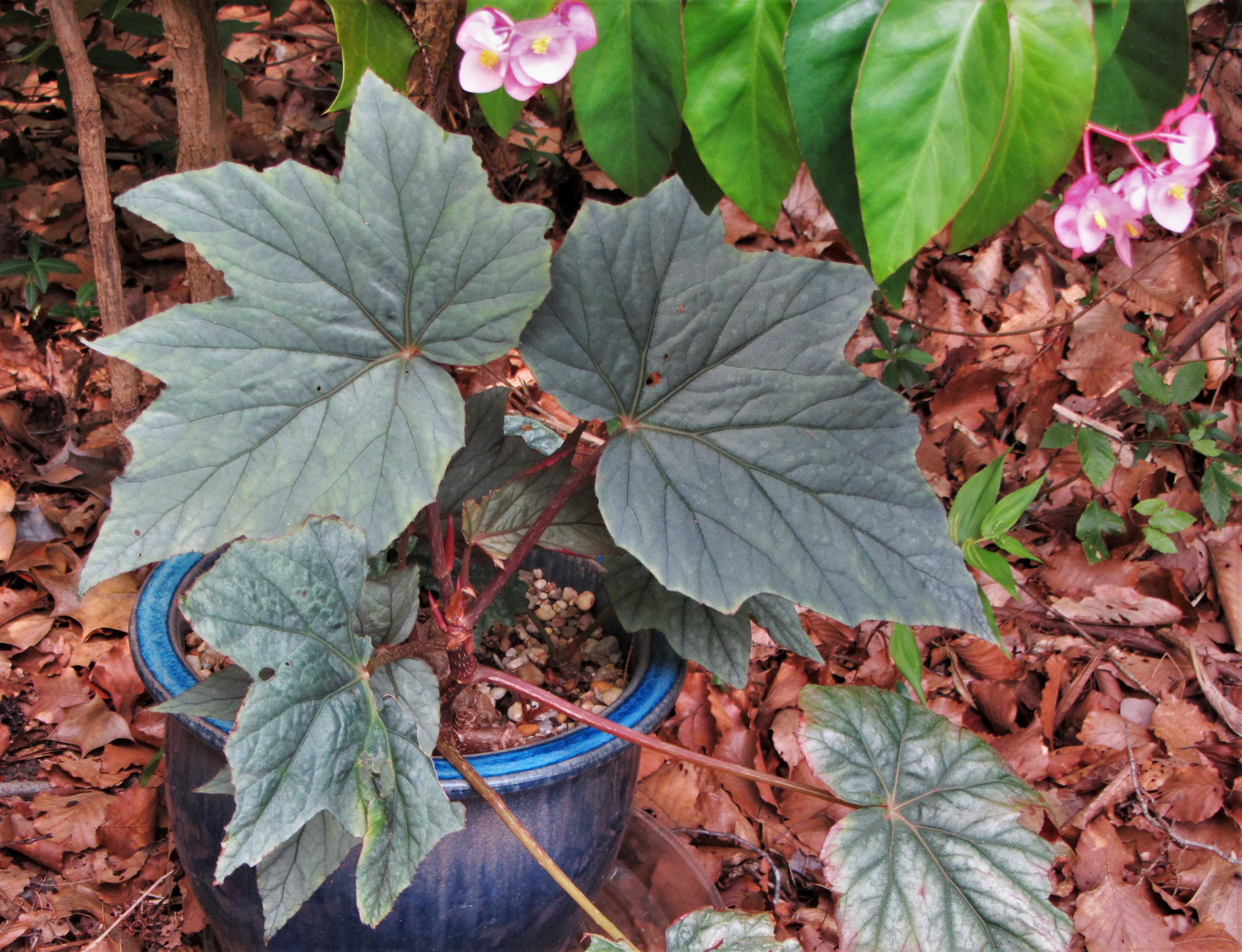

Other late summer perennials in our garden look like they are poised to bloom soon, but the real color still comes from our collection of tender Begonias and Aroids, the geraniums, ferns and herbs. Few of the showiest ferns are native. Which means that without our ‘exotic’ plants from around the world, our yard wouldn’t have much to look at this week beyond moss, oak trees, the native Hydrangeas, and some weedy look perennials approaching shoulder height.
Our tender Begonias, ferns, Caladiums and other Aroids were in sad shape when we finally brought them outside in late May and early June. I’m happy to say that most survived and have clothed themselves in new leaves. Some are in full bloom once again. Our Begonias are among the success stories this week.
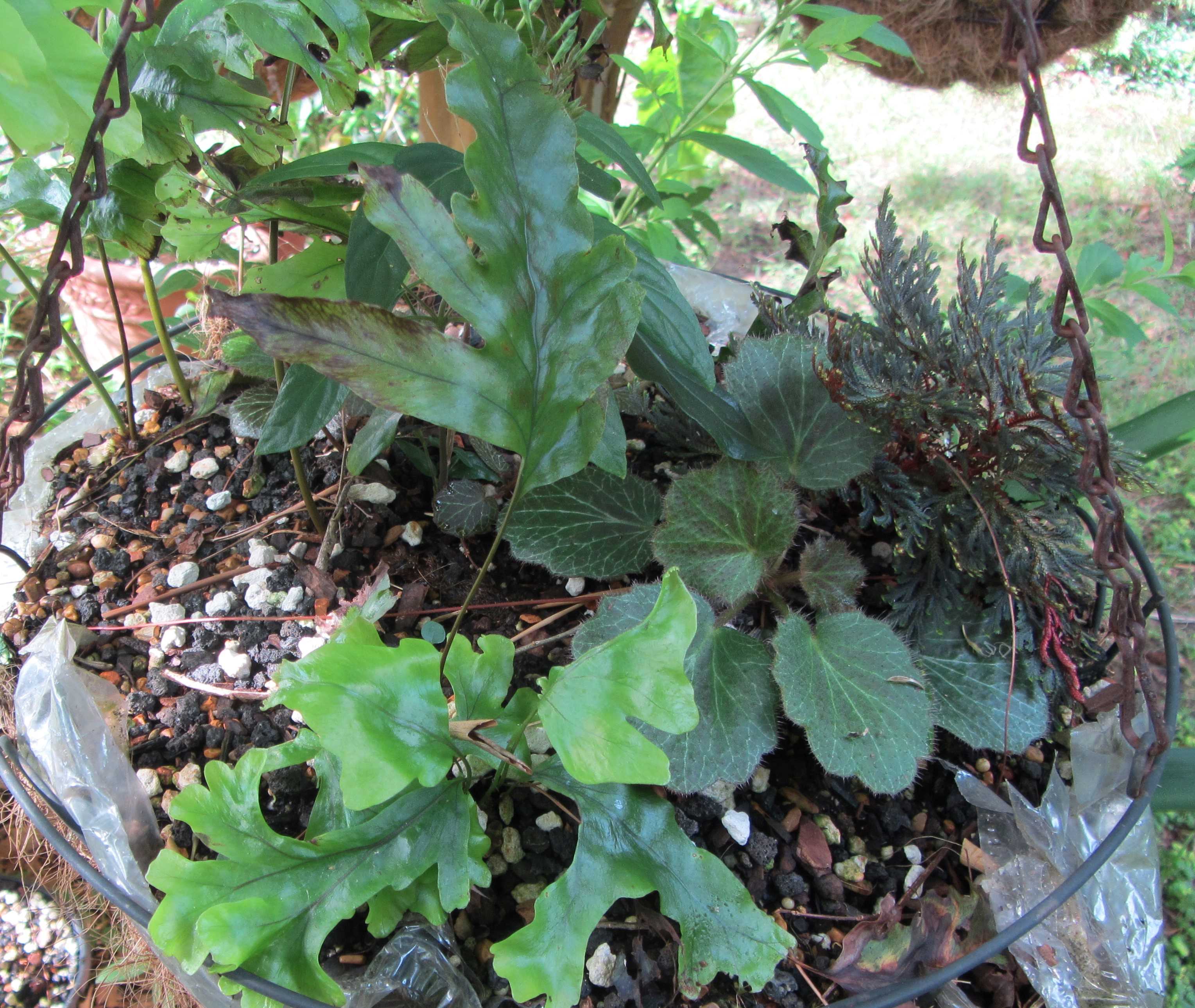
We’ve had enough heat and humidity now to inspire our ‘tropical exotic’ plants to relax and grow. We are growing some small specialty Begonias and ferns in hanging baskets. I planted most of these from divisions or plugs this spring, so it is their first season.
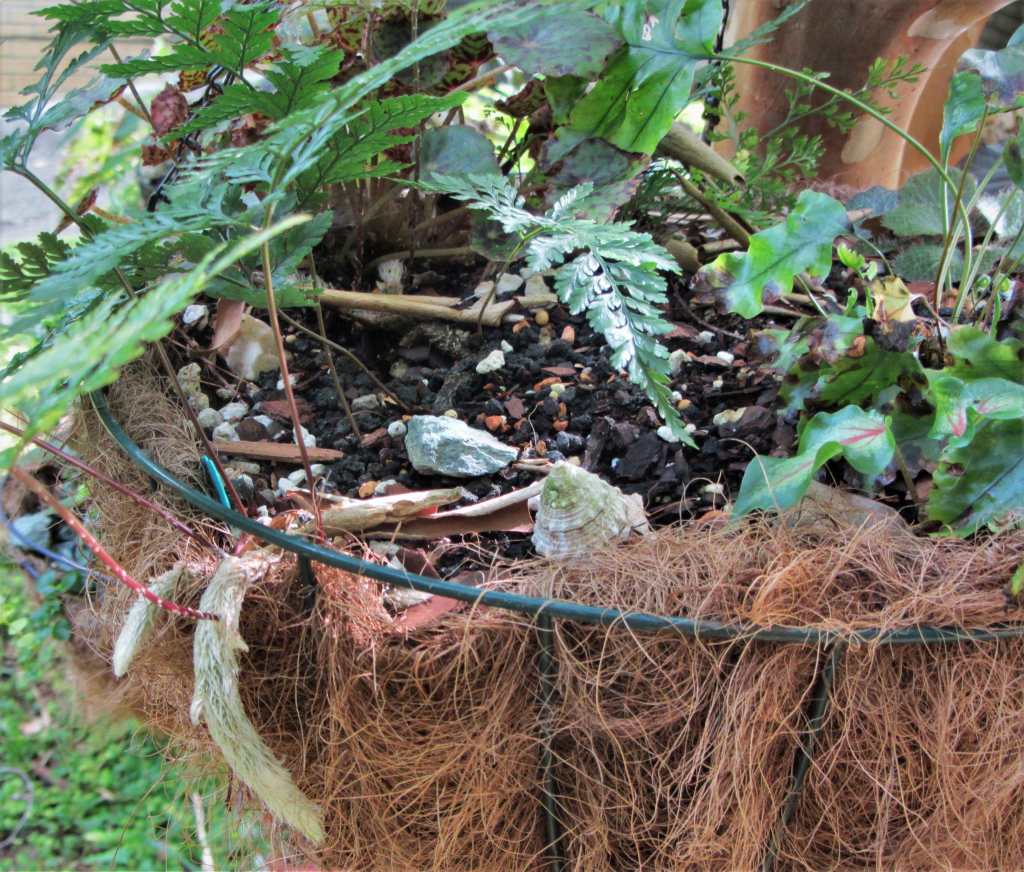
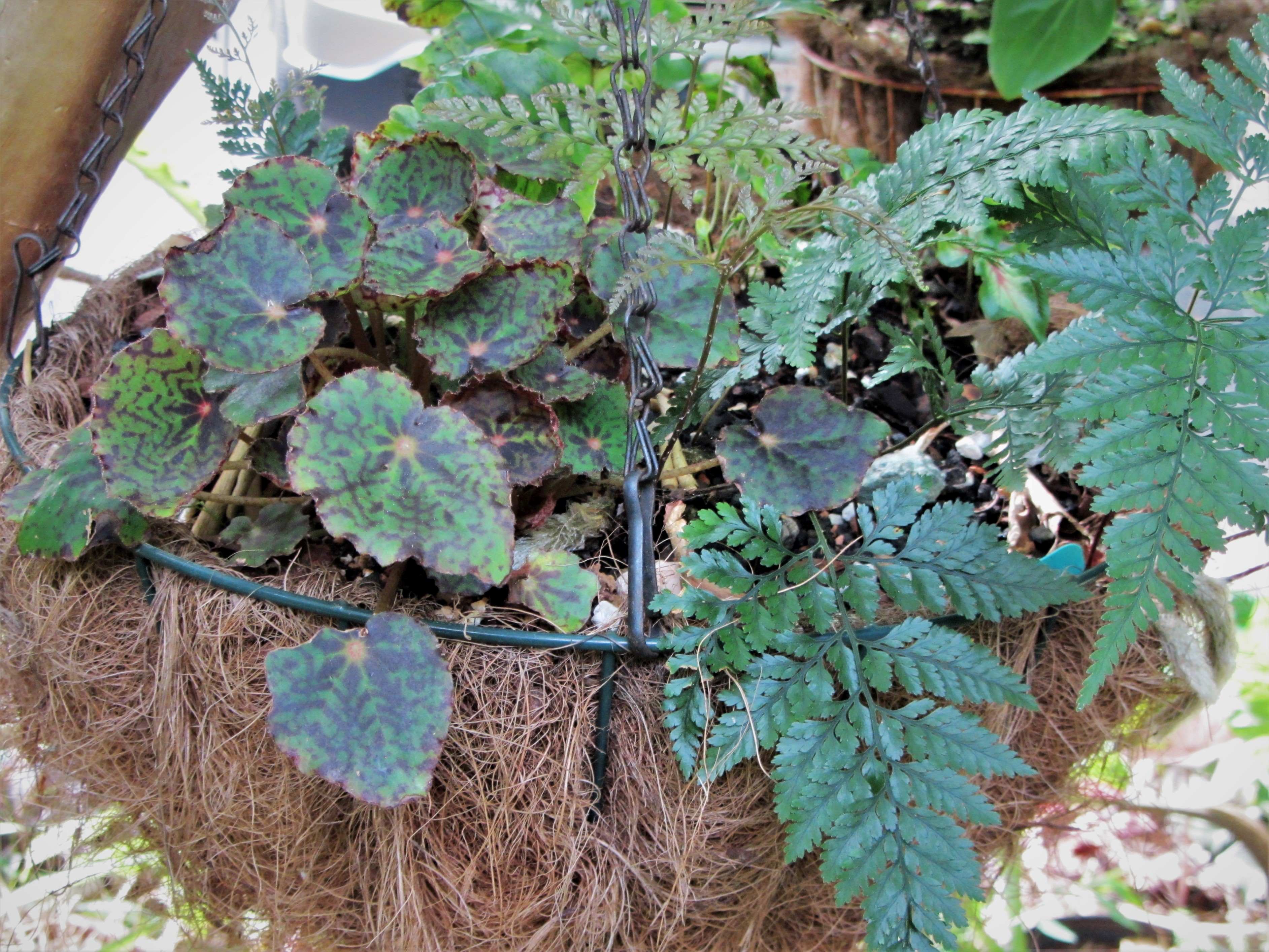
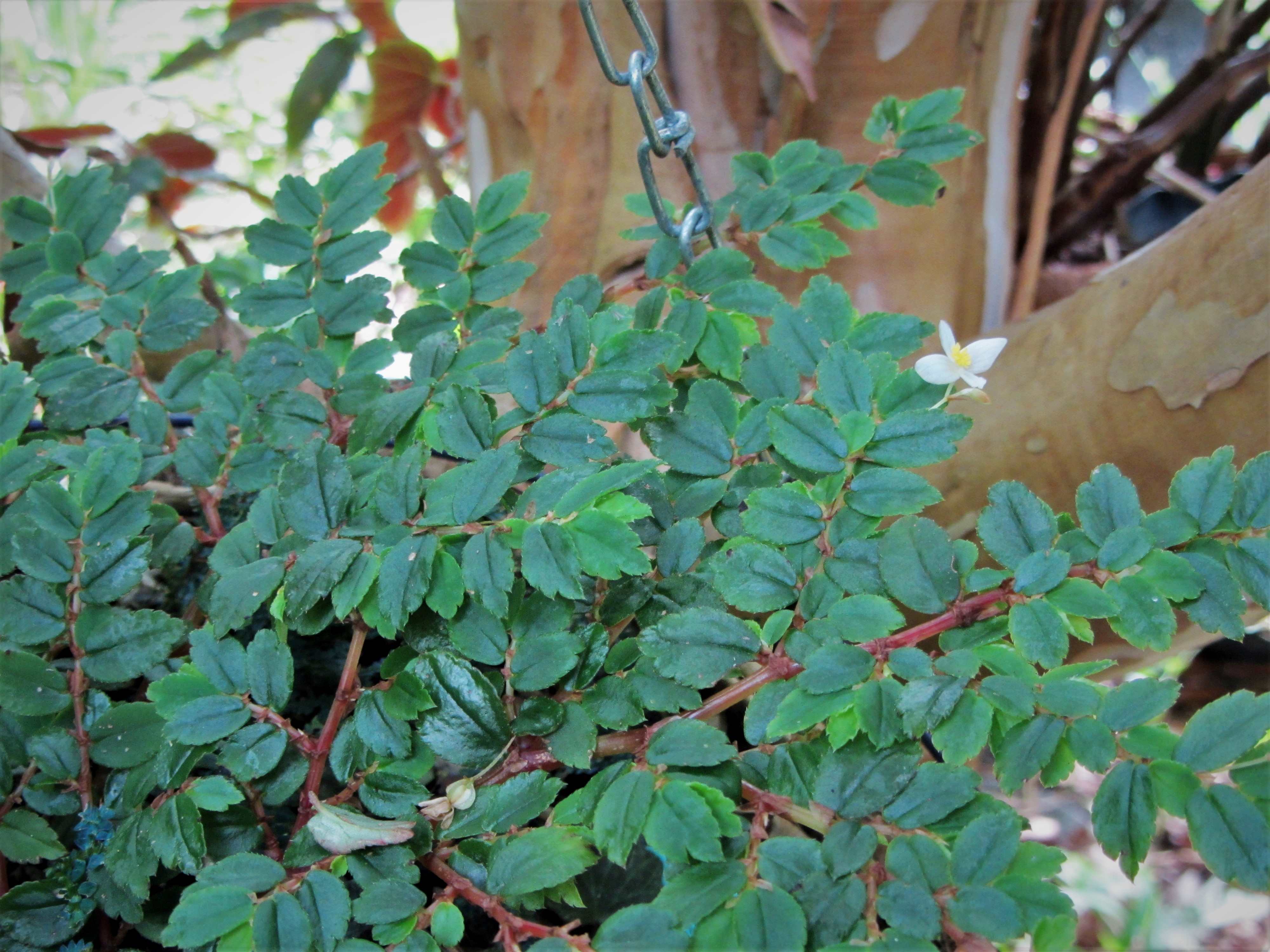
One of my favorites is the rabbit’s foot fern. The furry foot is actually a rhizome, and fronds grow individually along its length. The other is an Pteris tabletop or ribbon fern. Begonia foliosa ‘Tiny Pink’ grows with the ribbon fern and Saxifraga stolonifera.
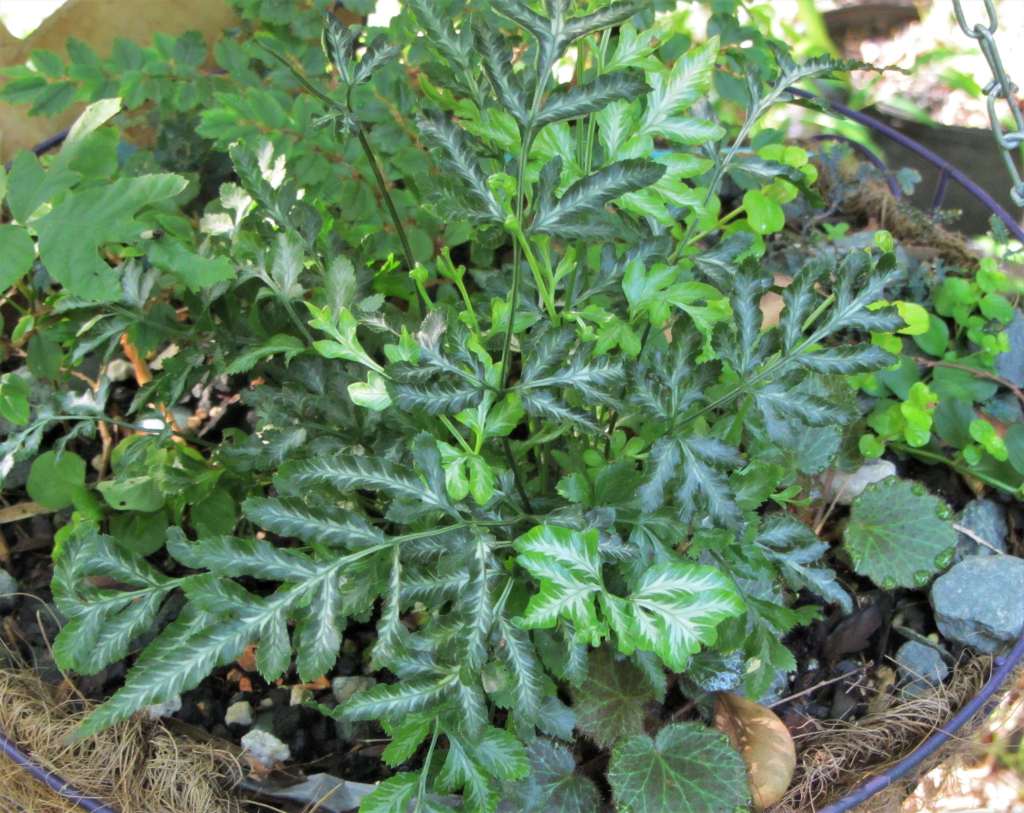
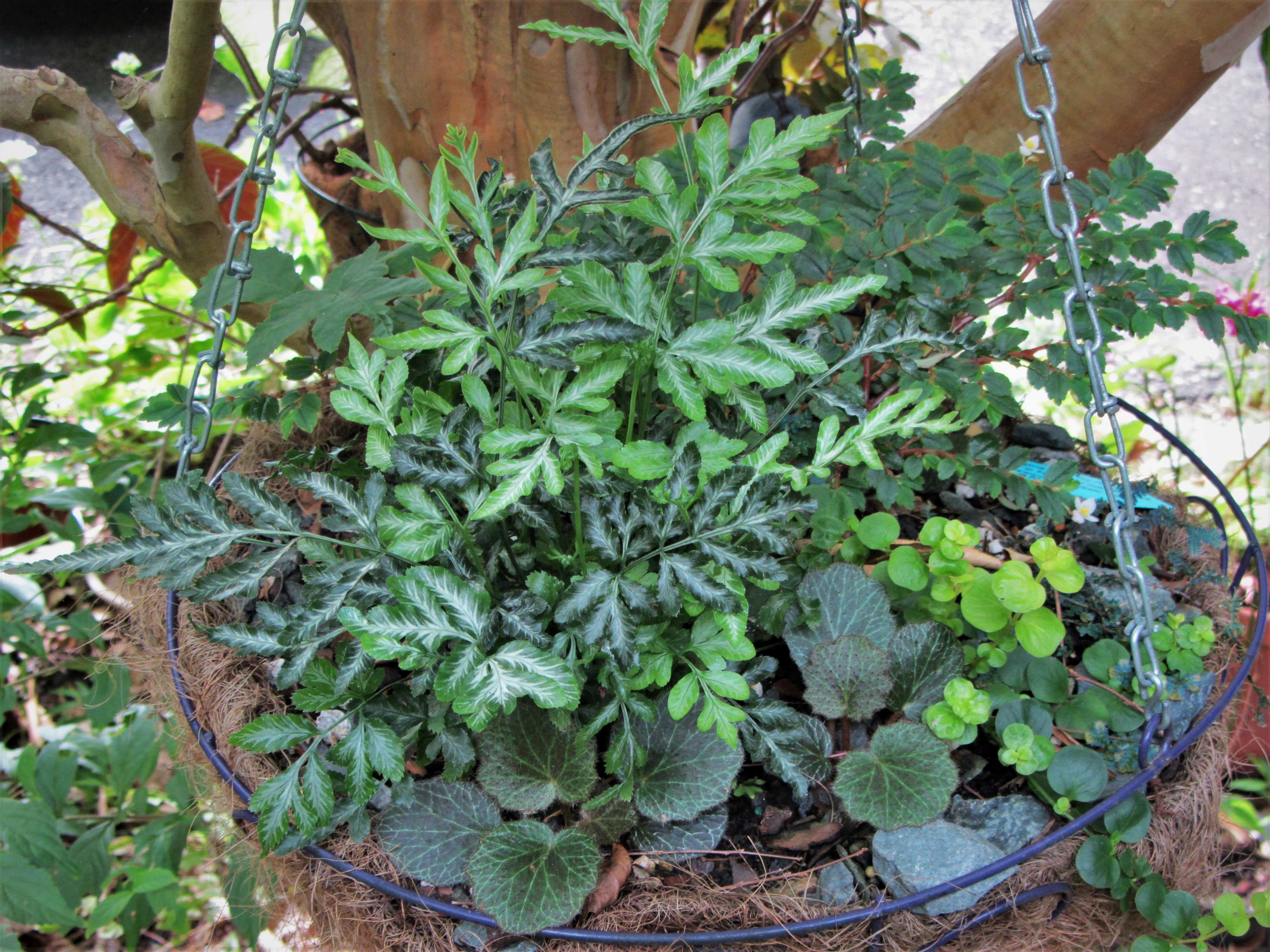
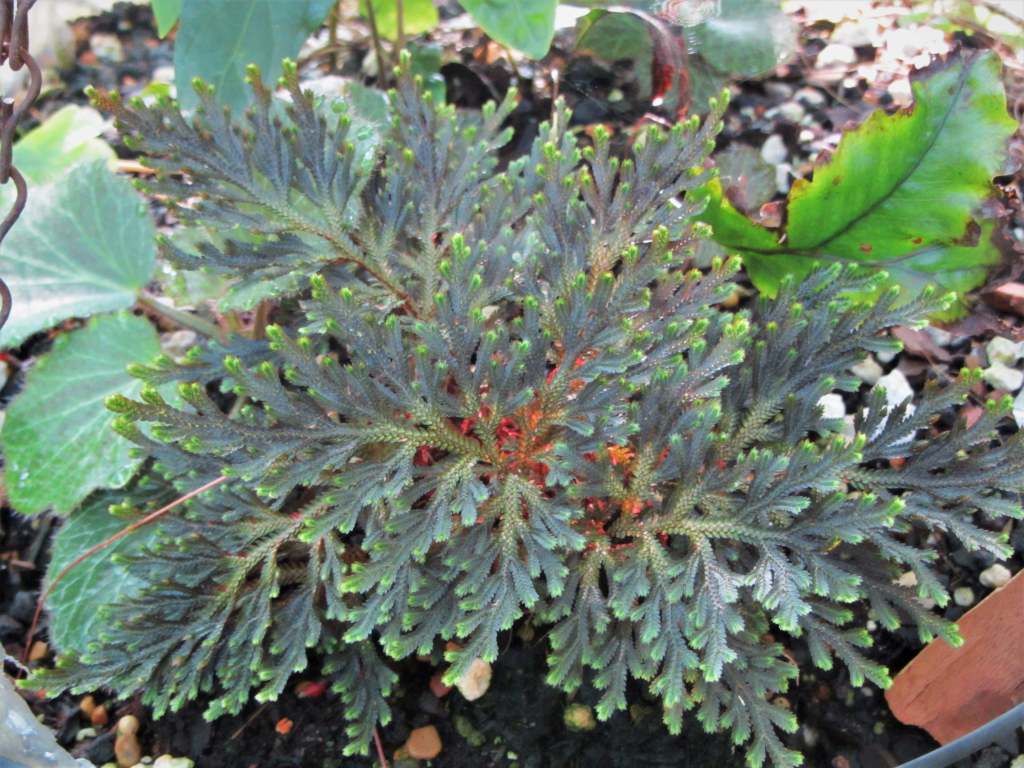
Selaginnella is neither a moss nor a fern. It is a genus of low growing, branching vascular plants with simple, scaly leaves. Roots emerge from its creeping stems. Some species are hardy in our climate and serve as good ground cover. The one growing in this basket is a new variety to me and I suspect that it is tender. At any rate, it will come indoors this fall. with its companion tender footed ferns.
Naturalists generally encourage planting natives to support various insects, which support the rest of the food web. We are told that specialist insects usually won’t eat exotic plants. So I’ve been watching our plants for insect damage. Something besides the deer certainly nibbles on some of the leaves. Maybe some of these exotics really do support the ecosystem here in more ways than we expect. Certainly they support pollinators with their nectar, and grazers with their leaves.
Another success story this week is the Salvia that fell victim to my string trimmer two weeks ago. There is lots of new growth appearing from the crown of the plant, and the stems are beginning to root in water indoors. I’ll pot those up in the next few days. I’ve been potting up rooted Begonia stems this month, along with some ‘cuttings’ rescued from a grazed Hydrangea. Thank goodness many plants will root quickly and easily in the summer.
Already today we have watched a young rabbit nibbling grass near the front patio, a little toad hopping along the gravel behind our house, a blue tailed skink clinging to a window screen while I watered containers, native bees gathering their breakfast, ants on the Hibiscus, and a mother cardinal bathing in a bowl of water. We have listened to many types of birds singing in the trees around the house. I also found a new bird’s nest in a shrub this morning. We enjoy the many animals that live in the garden, even those birds who sing before sunrise.
We are trying to find a balance between providing habitat and support for the many indigenous species that live here, and the insect and Avian travelers who visit, while still growing plants we enjoy and that make us happy. We enjoy color and texture and the fun of growing something new. I’ll count this week, this month, and this summer a success on both counts.
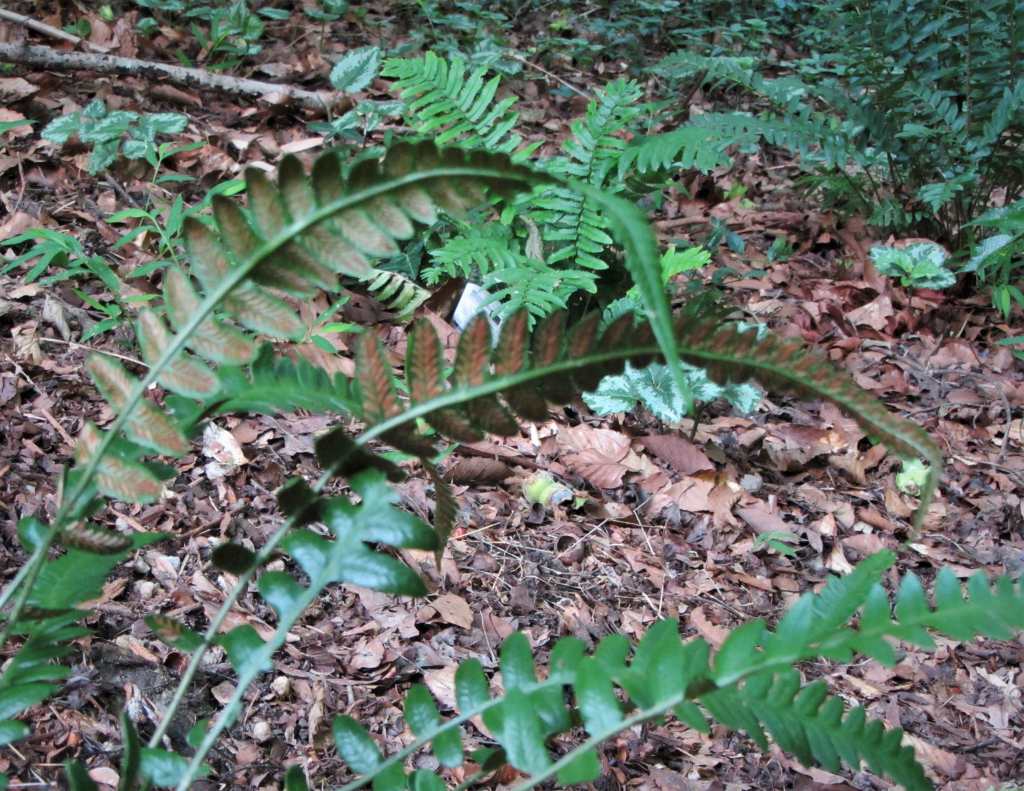
There are ripe spores on the new Deparia lobato crenata, Japanese sword fern, planted earlier this month. I have harvested a frond to collect spores and will hope to sow them in the next week or two. (#2 An established shade garden where Hostas have survived grazing thus far, ferns have triumphed over the dry weather, and things generally look pretty good for late July.) 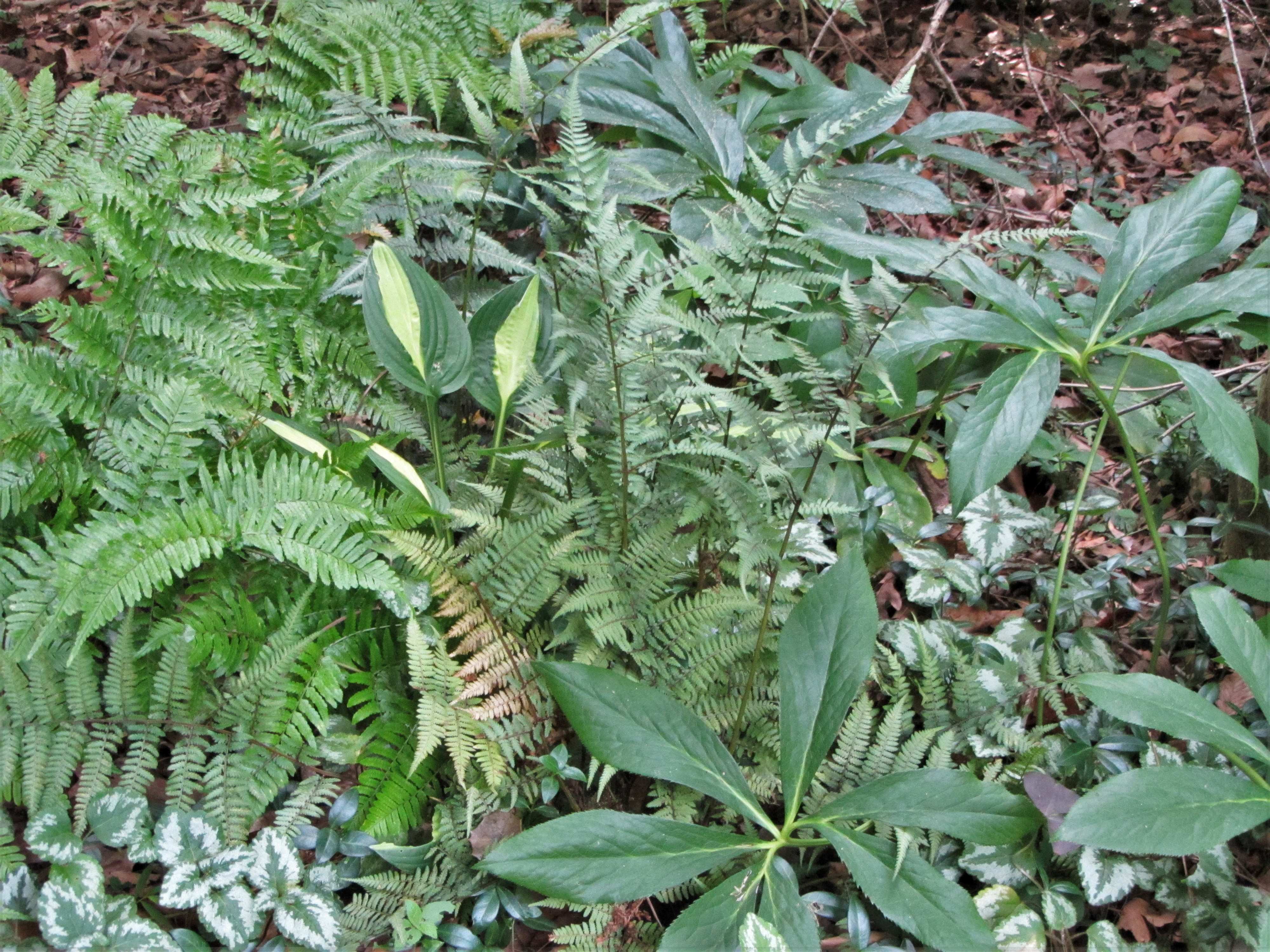
With appreciation to Jim Stephens of Garden Ruminations, who hosts Six on Saturday each week.

Late Summer in the Garden: To Do, To Do Less, and What to Avoid
You might enjoy my series of posts, Plants I Love That Deer Ignore.
Visit Illuminations for a daily photo and quotation
 Our Forest Garden
The Hibiscus is lovely. I struggle with begonias as I tend to overwater them then under water and they they get miffy and die.
LikeLiked by 1 person
I’m so sorry about your Begonias! Sometimes they look dead, but come back with new leaves when conditions improve. I chucked one under a shrub one spring because I couldn’t revive it in its pot. Weeks later, I noticed it was covered in new leaves, lying under the Azalea with no care whatsoever. You are right that they don’t want to be overwatered, and they resent too much direct sunshine. Better luck next time! ❤ ❤ ❤
LikeLiked by 1 person
Clubmoss is an odd one. It looks like seaweed. I have actually seen it in nurseries, but never knew what to do with it.
LikeLiked by 1 person
It is an odd one. Trader Joes offers a pretty variegated one each December that they sell as ‘Frosty Fern.’ I have had some success with them as houseplants, but learned that some types will survive our winters planted in a protected spot in partial shade. Their function in their native environment is as ground cover, perhaps some as epiphytes growing in moss on the branches of trees. They like humidity and generally thrive in the same conditions that will support ferns and/or mosses.
LikeLiked by 1 person
I was surprised to see it available because it looks so much like a native but perhaps unrelated species that is known by the same name, but the native species is not considered to be desirable.
LikeLiked by 1 person
How interesting. When I bought S. arborvitae, the seller told me it is native, but a native plant expert told me it is not (after I planted it at the botanical garden.) I left it in place and it did OK, but I think the location was too dry for its liking. It is functional as a ground cover and is an attractive, neutral plant. Why is the native species in CA not considered desirable? Selaginella is definitely an acquired taste, as it doesn’t meet most people’s expectations for an attractive plant.
LikeLiked by 1 person
‘Supposedly’ it needs to be blasted off of concrete structures, such as bridges, with high pressure water. I do not know why it is known for that, since it is uncommon, and if it is present at all, is not nearly as profuse as common moss. To me, it seems to be too rare to be a problem at all. Besides, once moss and such is removed, there is no indication of damage to the old reinforced concrete bridges that they inhabit. I do not see what all the fuss is about. Most sources indicate that neither of the two native species are actually native here. Selaginella bigelovii might be the undesirable sort, but it could be Selaginella hansenii. However, if I remember correctly, it might be a completely unrelated species or genus that we know simply as clubmoss.
LikeLiked by 1 person
So interesting, Tony. A shame to need to blast vegetation off of concrete structures. It must be quite beautiful in an odd sort of way growing on old structures.
LikeLiked by 1 person
It is weird. I suppose that those who remove the moss and such know why they do it, but I do not get it. The moss and such comes back very soon afterwards anyway.
LikeLiked by 1 person
I also have lots of hibiscus syriacus here and it’s a joy to see them back every July. Gorgeous selaginella that we only see in the botanical gardens around here.
LikeLiked by 1 person
Well Fred, we agree on the rose of Sharon. I didn’t care for them at first because they can be weedy and spindly here if they aren’t pruned in late winter. But I fell in love with them when I saw how they attract hummingbirds and butterflies, and they do have such pretty flowers. They self-seed all over here so there is a ready supply to give away or to plant in a spot that needs some summer color. We have a nursery in a nearby city that offers the Selaginella in 1 inch pots for use in terrariums. That is where I found that plug. Trader Joes Grocery store sells a pretty variegated tender variety in December that they market as ‘Frosty Fern.’ It makes a nice winter houseplant and can be combined with other tender winter ornamentals. Only occasionally will I find it at our local nursery, sold in the spring or summer for use outside. It isn’t a common plant in our area. There is a variety sold as S. ‘Arborvitae’ that is hardy and makes a lovely ground cover.
LikeLiked by 1 person
Such an interesting Six and I really like the Ferns and Begonias in hanging baskets
LikeLiked by 1 person
Thank you so very much ❤ ❤ ❤ The Begonias are always fun to watch each year.
LikeLiked by 1 person