
A full supermoon marked the new month this week, finally turning the page on the hottest and most angst filled July on record in remembered history. August dawned in our community with lower temperatures, less humidity and blessed rain. We have had thunder, downpours, and gentle rain through the night. Thursday morning dawned clear and bright and under 60F. The favorable weather has provided several opportunities to enjoy working in the garden again.
Reasonable temperatures and breathable air restored me to the joys of simply wandering around and doing whatever came to hand that needed doing this week. I’ve puttered with the ferns, clipped honeysuckle and Akebia vines out of shrubs, photographed the growing mosses, and potted rooted cuttings. We even made the trip out to our favorite garden center.
The Sturgeon Full Moon on Tuesday brought gentler weather, and a lighter mood. It also brought us a pair of green hummingbirds, a butterfly or two flashing their yellow wings through the shrubs, and a new crop of baby skinks. And the crape myrtle trees have bloomed at last. They usually bloom here around the end of June into early July and remain in bloom through late September. Only a few stragglers here and there throughout the community showed any color by mid-July this year. This week, they have burst into bloom most everywhere, lining our streets and gracing front yards with trees covered in shades of red, pink, purple and white.
I was inspired to work with the badly grazed Athyrium otophorum, or eared lady fern, to help it bounce back from its encounter with the deer. I had a box of coffee grounds ready to deploy and a fresh bag of pine bark fines from the garden center. I cleared the space around the base of the fern and spread a thin collar of damp grounds from crown out to where the drip line should be, then covered the grounds in an inch or two of mulch. It didn’t take long to go through that bag of mulch once I took time to really ‘see’ where it was needed around new plantings and areas where older mulch had washed out. A good, deep watering over the fresh mulch should stimulate new growth, soon.
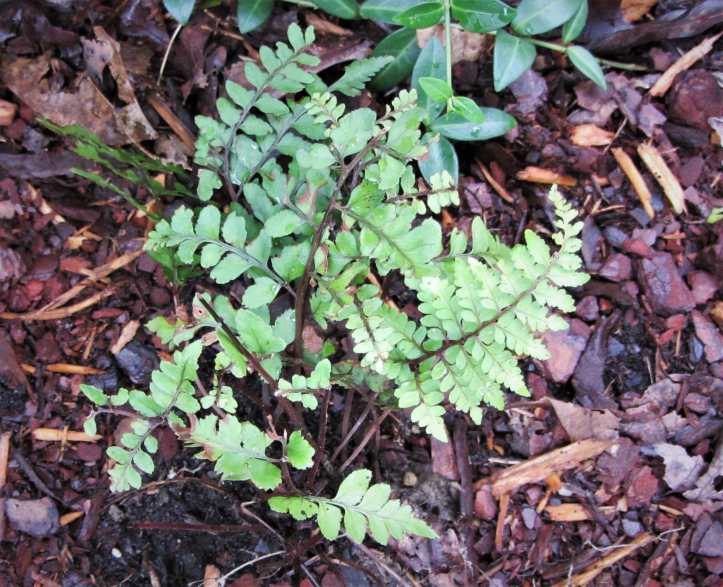
Coffee grounds contain nitrogen and other essential nutrients for growth. They will enrich the soil as earthworms gradually bring them, a mouthful at a time, deeper into the mix. The pine bark fines prevent the coffee grounds from drying out or washing away too soon. This is a method recommended by Dr. Linda Chalker-Scott, who is an associate professor at Washington State working with the Extension Program. This technique holds promise for getting new plantings off to a great start, and for rescuing damaged and stressed plants like this little fern.
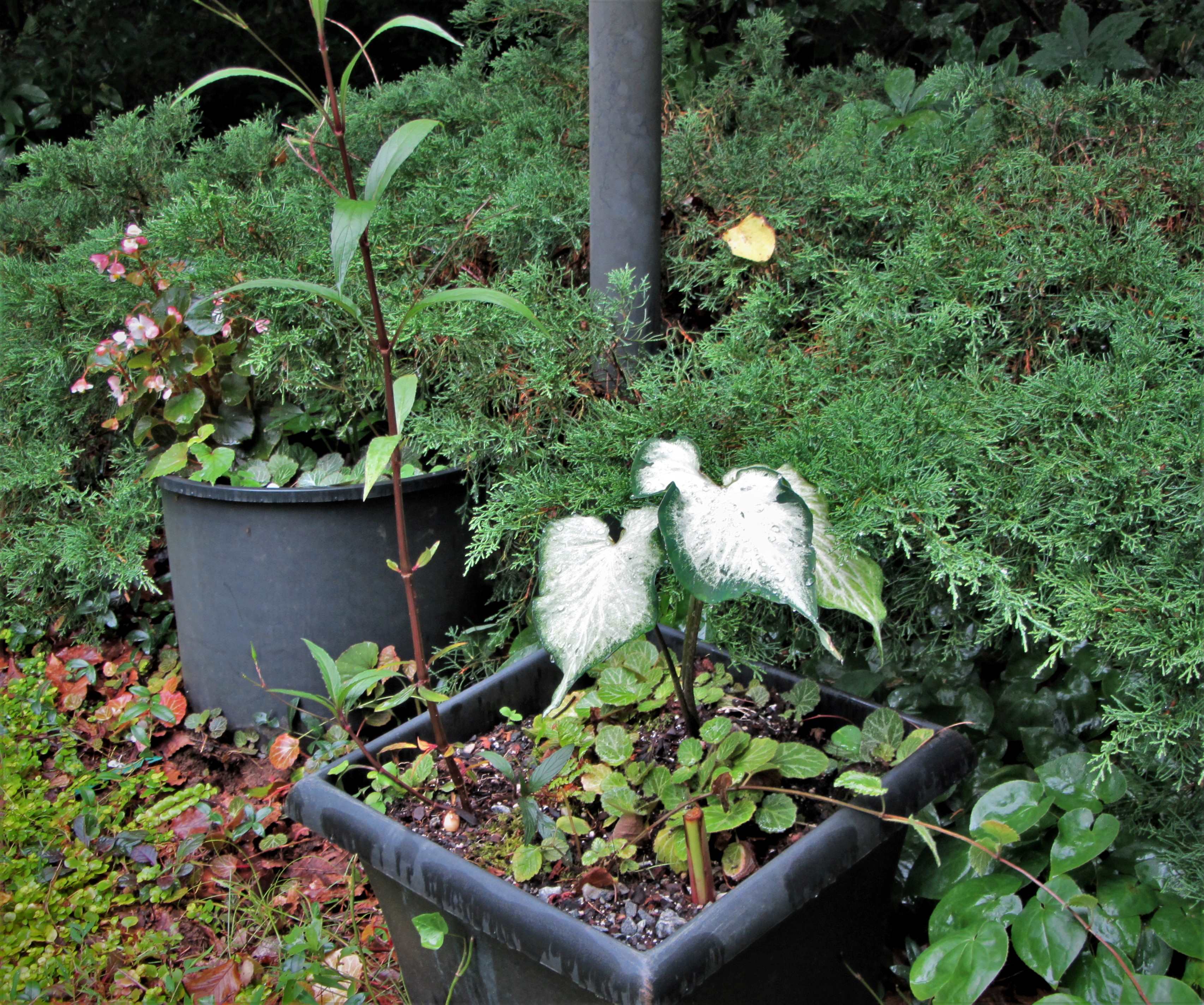
I bought a beautiful white Caladium and a blooming Mexican Petunia to add to a pot that has only sulked thus far this year. Its central fern is alive but hasn’t returned to normal growth and its Salvia died over winter. A Heliotrope I planted this spring somehow lost root mass. I’m still trying to figure that one out. The Petunia went in fine, but there wasn’t enough space for the massive roots and rhizomes of the Caladium. Luckily, I had a Caladium growing in a small pot on the deck that was ready to step up to a roomier container. And it fit.
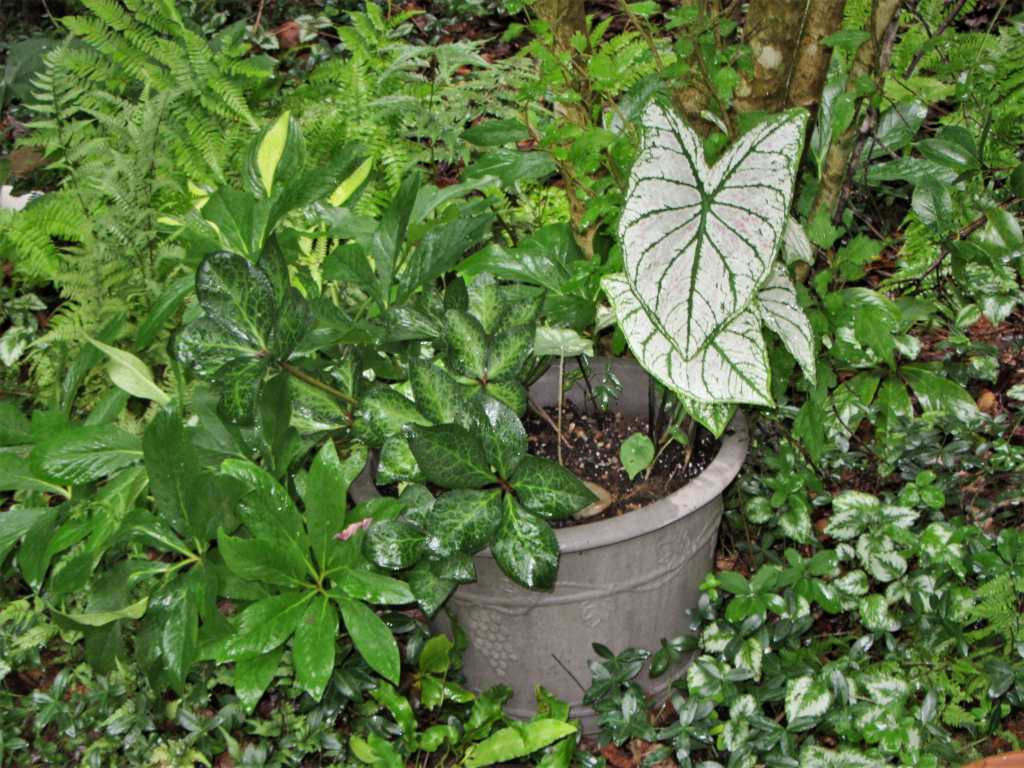

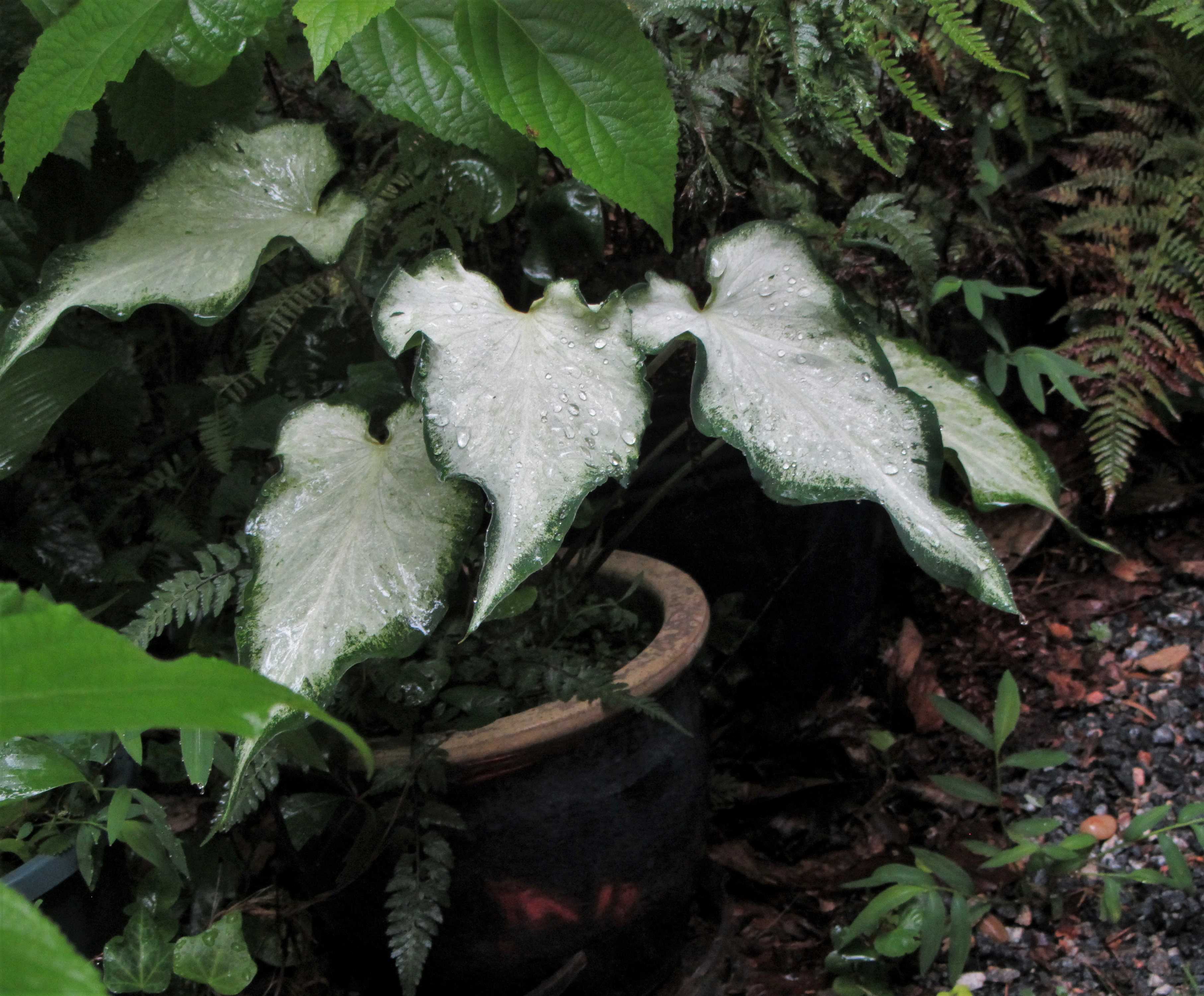
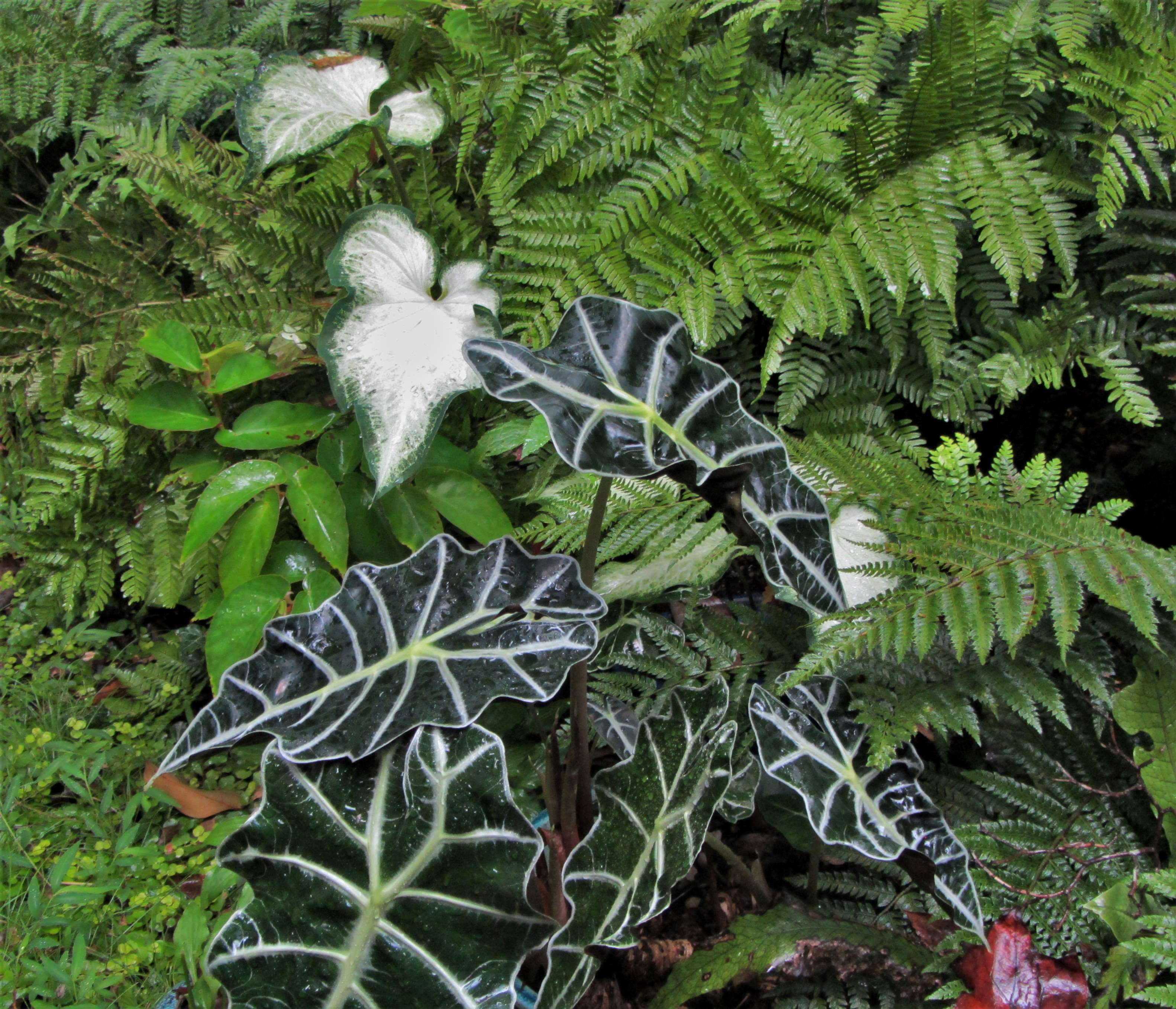
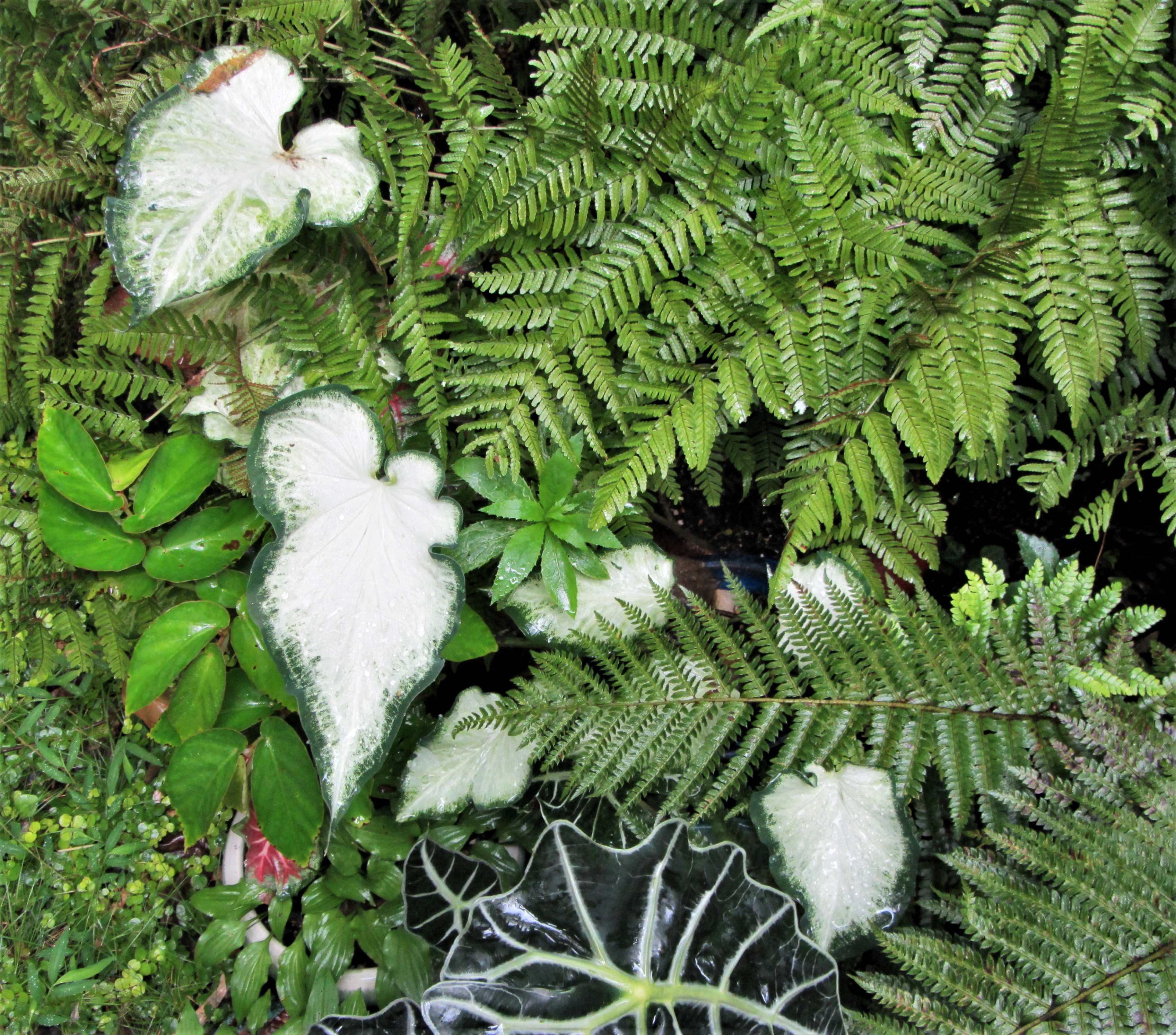
The new Caladium is happily growing in a shaded container beside a Hellebore, surrounded by ferns. It gives a much-needed bit of drama to this shady planting.
The spores I’ve planted the past few years have produced boxes of baby ferns. I’ve been moving these out and up into other pots over the past few weeks, and I moved another batch on Thursday morning. Transplanting these ferns is a bit trickier than you might expect. For one thing, their roots are still quite small and delicate.
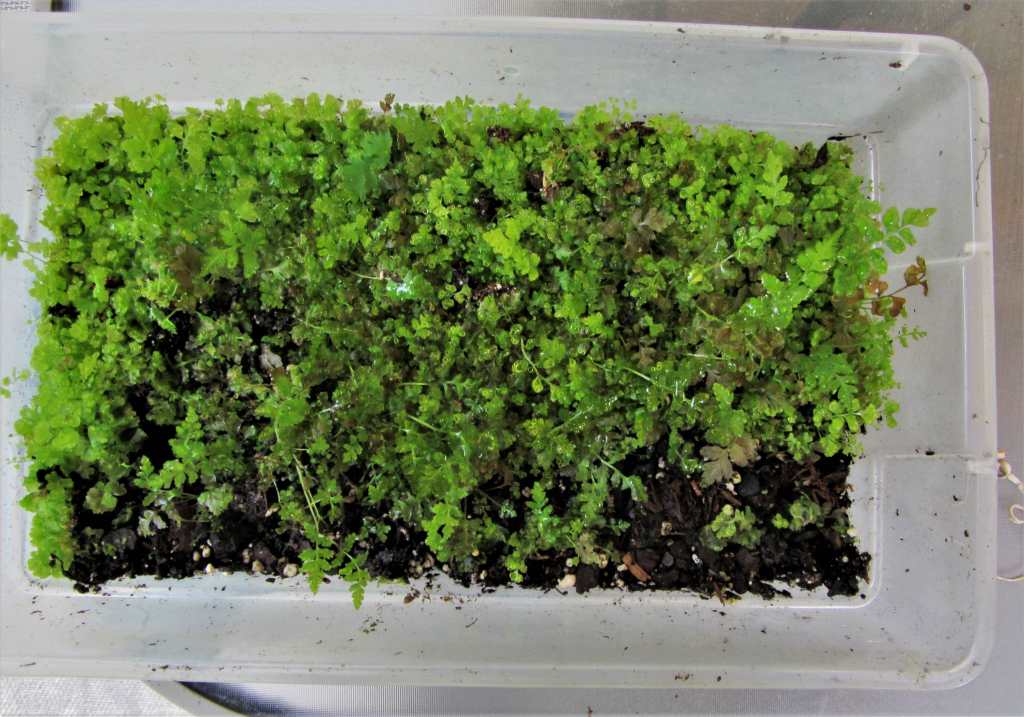
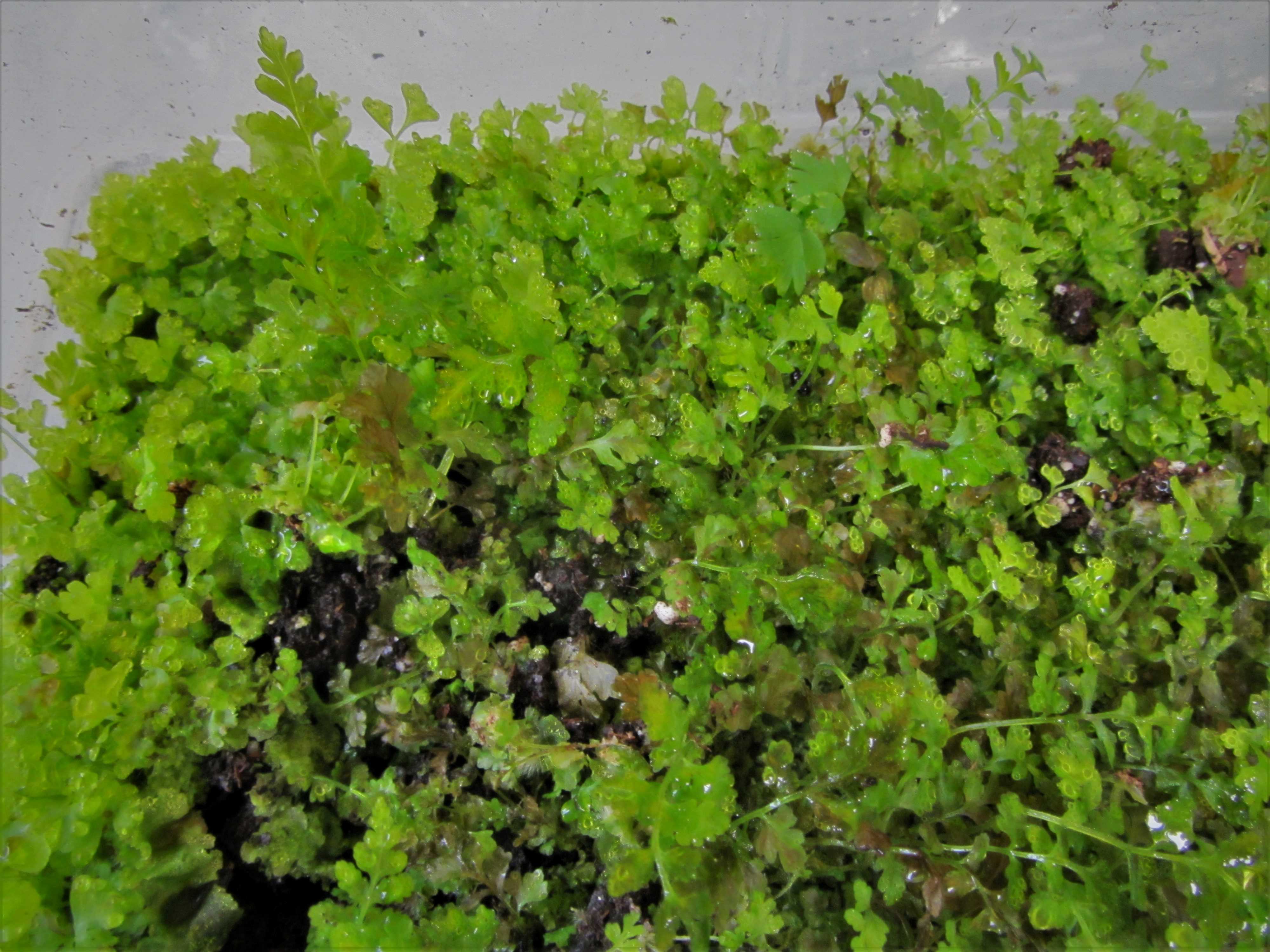

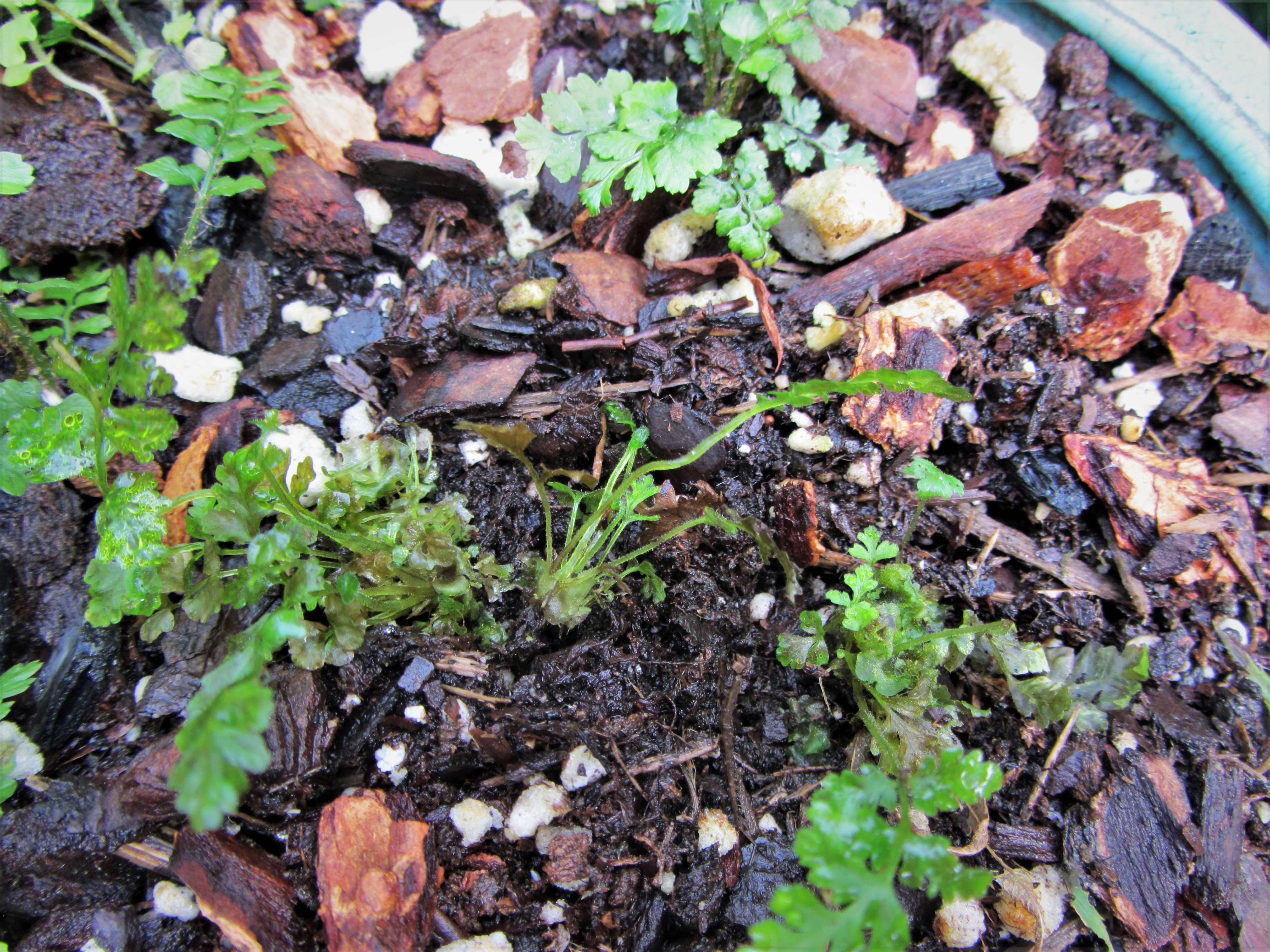
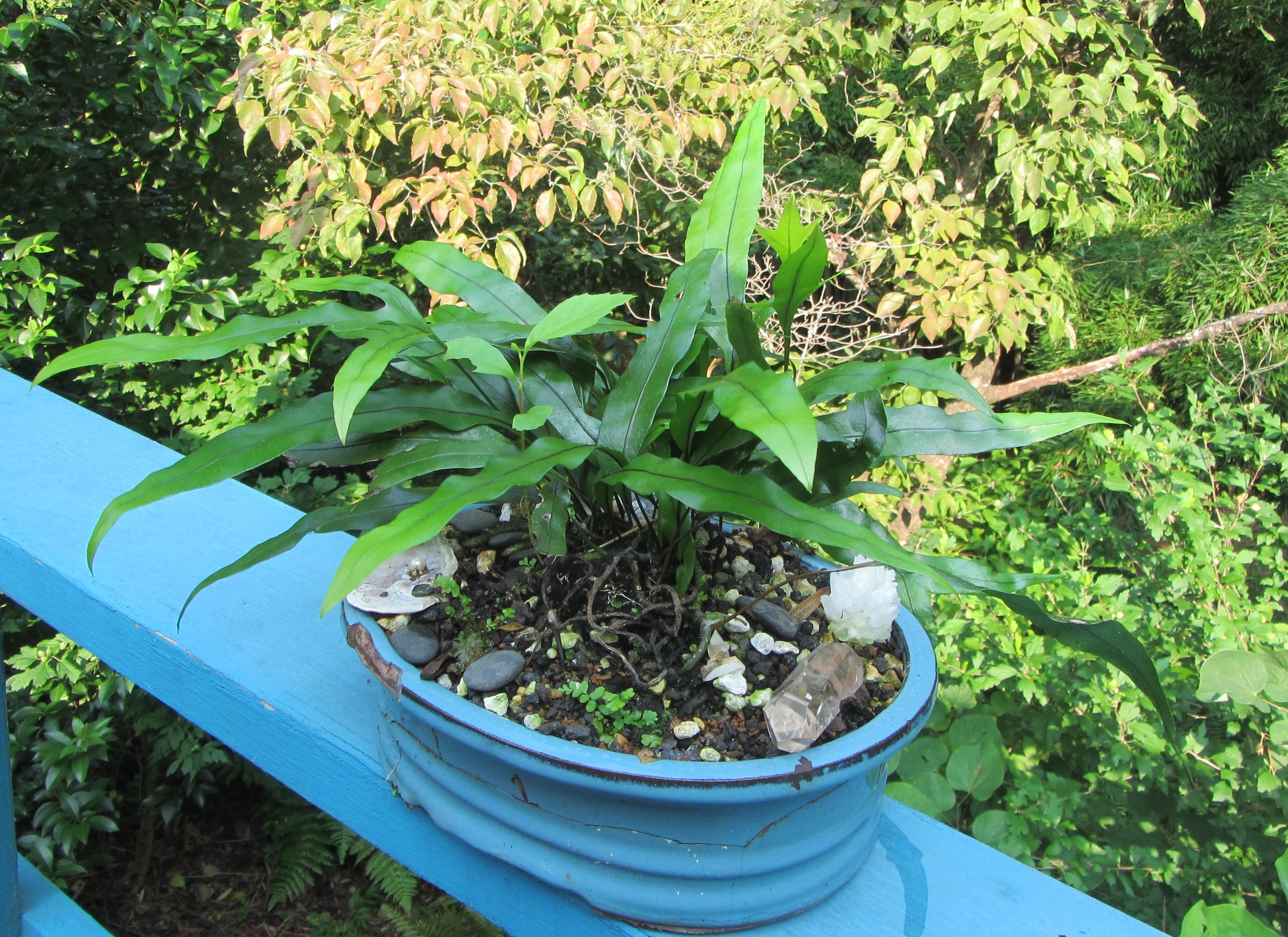
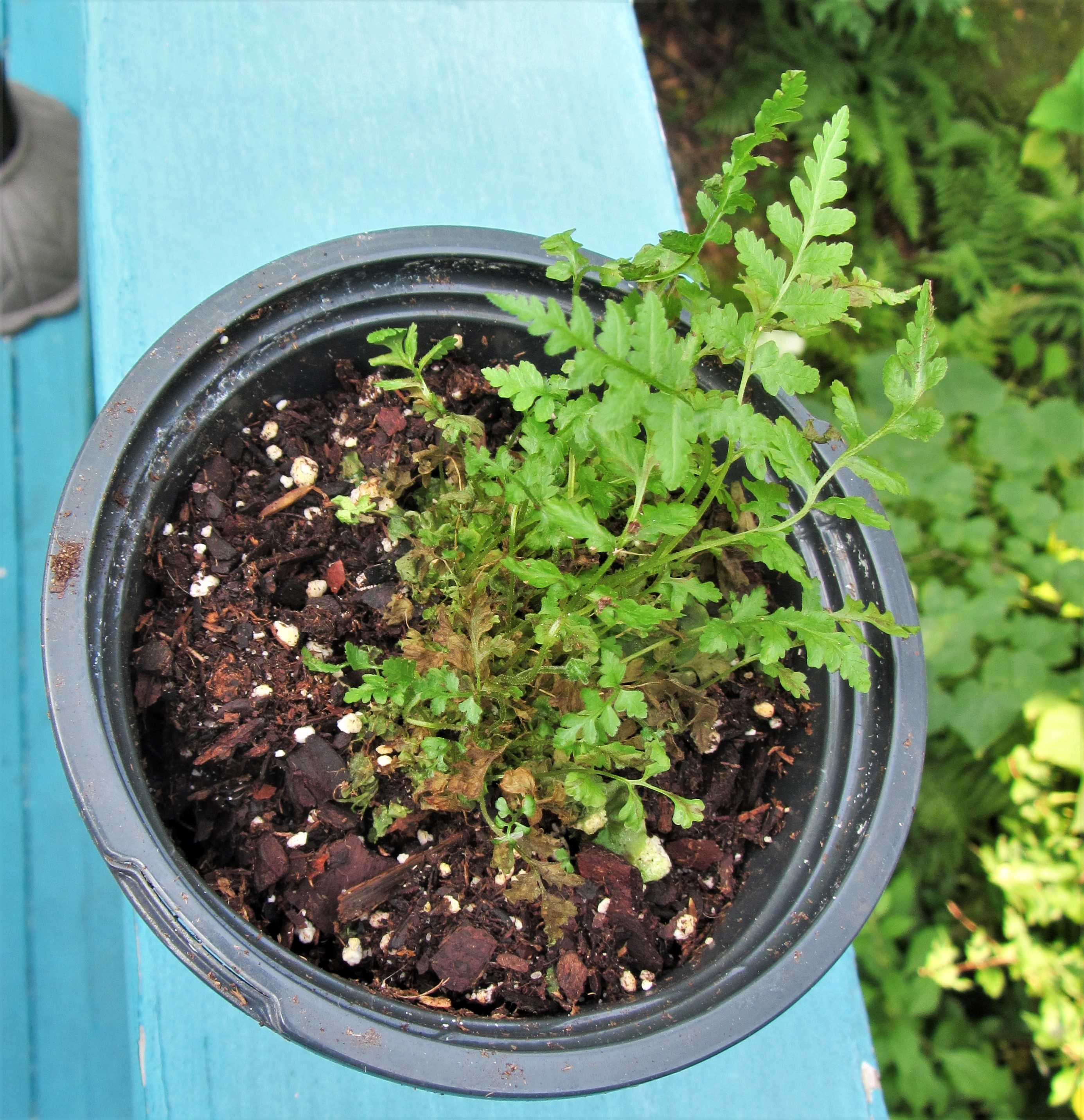
They would benefit from lights and misting, but I don’t have such a set-up. I’ve found that moving them in summer, when there is plenty of humidity, offers a greater chance of success than moving them in the fall. Oddly enough, these baby ferns also do better when planted into an established container underneath a more mature plant. The ‘mother plant’ offers humidity and shade. The larger volume of soil in a large pot means that the planting medium is less likely to dry out around their tiny roots.
I’m watching flower buds swell on our late summer perennials. Sensitive plant, black-eyed Susans, and other flowering plants promise that August and September will be brighter here than June and July.
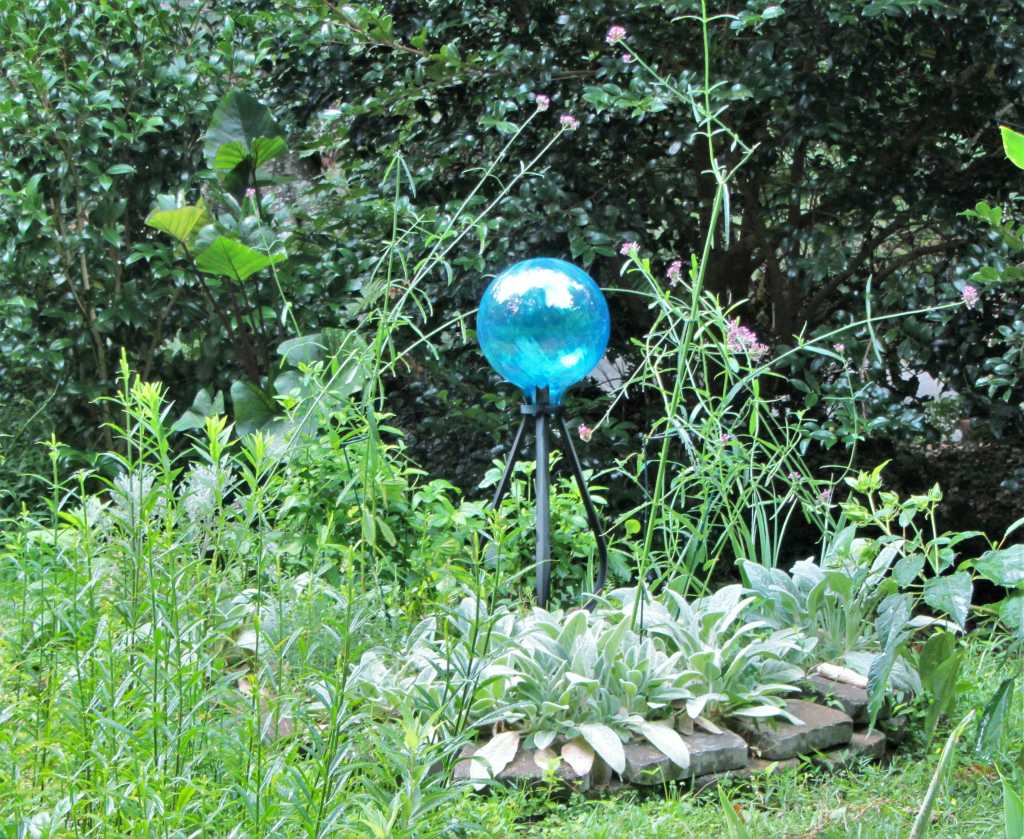
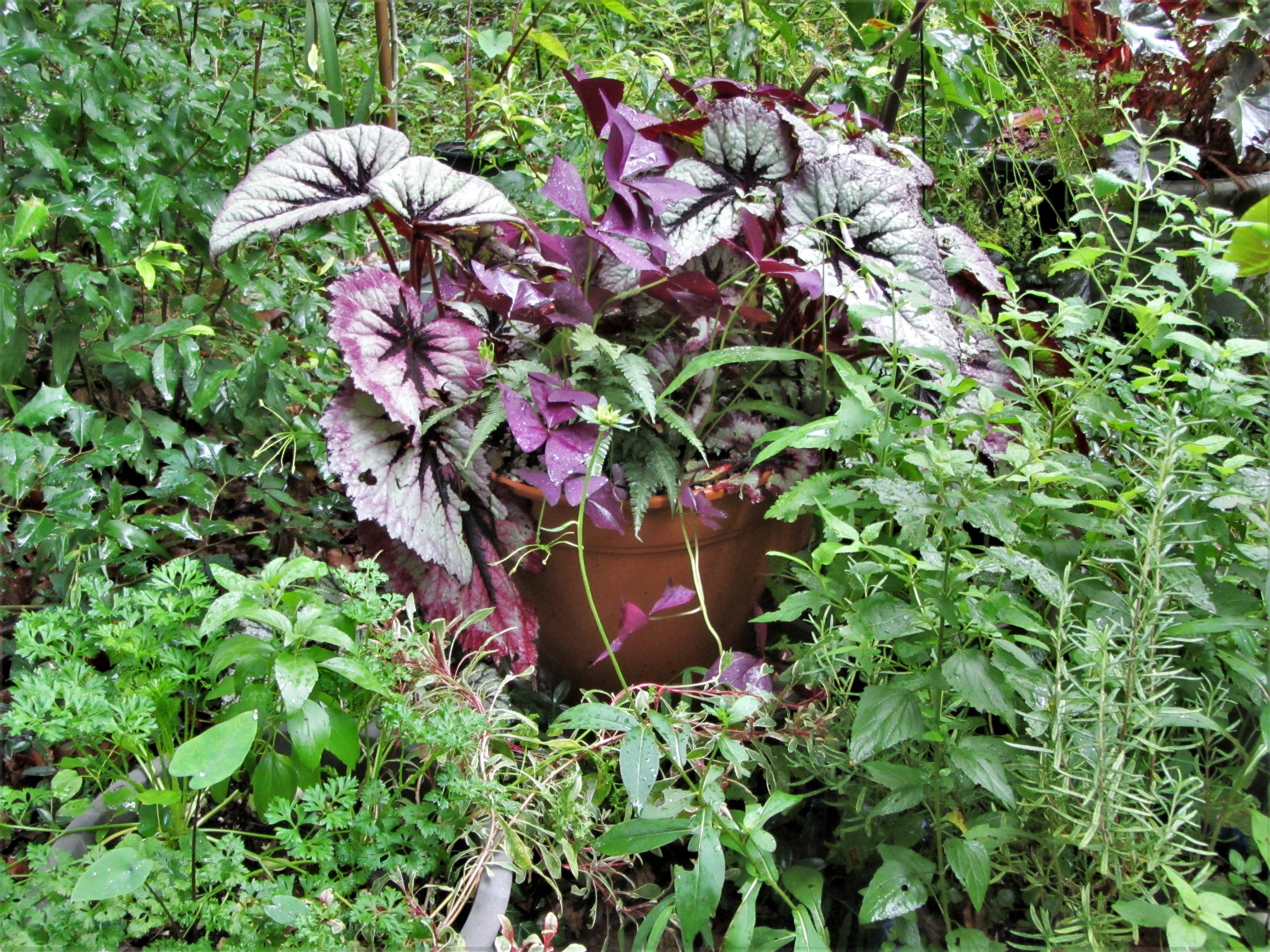
Funny how we remember our garden as fully grown and luxuriant in bloom. When weather delays the normal progression of growth and bloom, something seems a bit off. It is like waiting for a concert that is very late to start, and we’re left squirming in our seats making small talk while trying not to complain too much.
August is settling gently over the garden, inviting us to relax and enjoy these last days of summer. It is a time for growth and the fulfillment of promises made months and years ago at planting time. We will finally see what has come from our efforts, and what surprises nature still has in store for this gardening season.
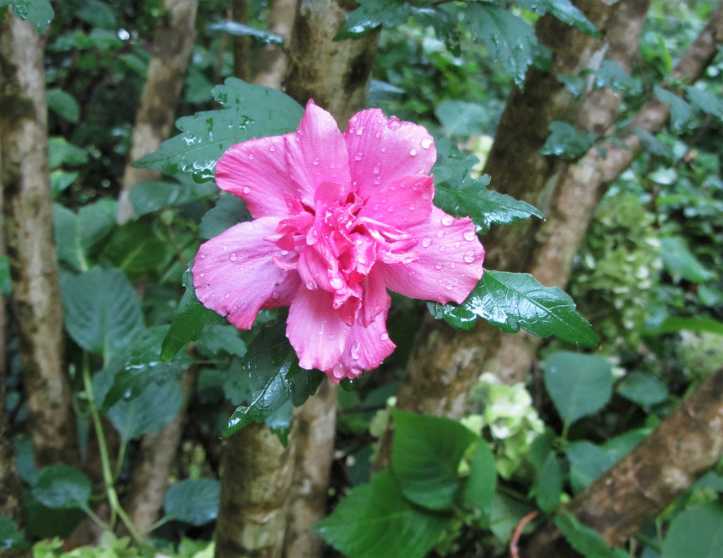
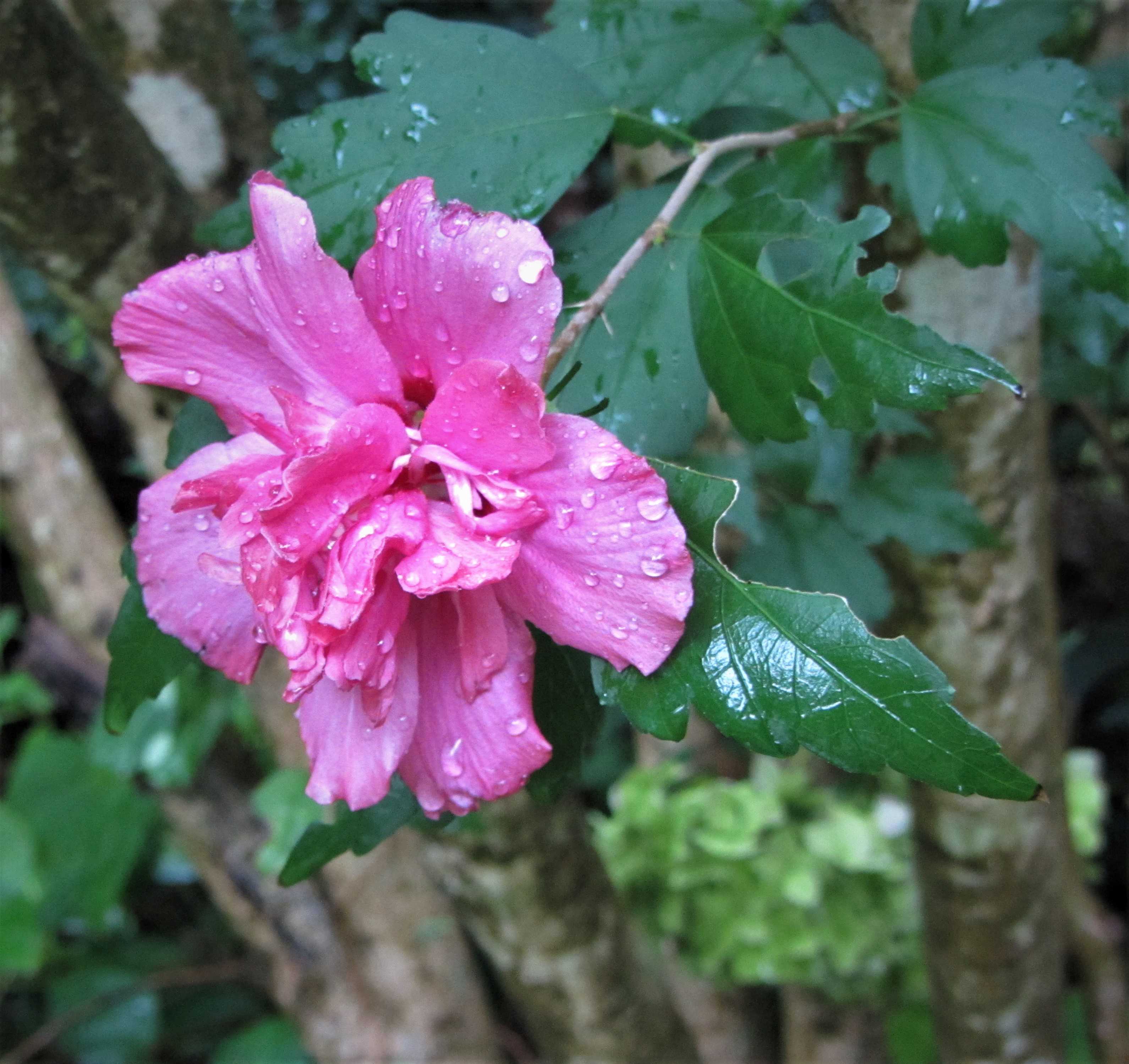
With appreciation to Jim Stephens of Garden Ruminations, who hosts Six on Saturday each week.

Late Summer in the Garden: To Do, To Do Less, and What to Avoid
You might enjoy my series of posts, Plants I Love That Deer Ignore.
Visit Illuminations for a daily photo and quotation
 Our Forest Garden
Wonderful, love you dedication to the ferns. Glad you have some rain. We have a storm today with rain and winds expected later, we are looking forward to promises of warm and dry next week after a soggy and cool July.
LikeLiked by 1 person
Well I hope you have a great book handy to enjoy while it rains. Have you read any of Ellen King Rice’s botanically themed novels? They are set in the Pacific Northwest of the US and are very well written. There is a great story, and a great deal to learn botanically from her characters (who are botanists or mycologists) as well. We have been revived by the rain, and hope you get your sunshine and warmth next week.
LikeLiked by 1 person
Not heard of this author, I shall look her up, which one do you suggest I start with?
LikeLiked by 1 person
I began with EvoAngel, which is a real thriller and presents some interesting ideas. I just finished The Slime Mold Murder. It has such an awful title that I almost didn’t read it. I downloaded a sample to my Kindle and fell in love with the main characters and so finished it very quickly. I’m going back now to Undergrowth, which I started and then was distracted from finishing some months ago. If you like to learn from what you read, then you will enjoy this author.
LikeLiked by 1 person
Ferns from spores is more than I have patience for. Fortunately, most of the ferns we grow at work can be found growing wild in the forest. They sometimes get moved from situations that we do not want them, and into places where we do want them.
LikeLiked by 1 person
That is certainly the most natural, easy way. I end up moving volunteer ferns here out of areas we would mow, or from walkways, and plant them where they can develop to their potential. They are usually Athyriums, Cyrtomiums, or Polystichums. It is so nice to have a local source where you can find and transplant what you need. Which native ferns are most common in your area?
I was curious to learn about ferns’ reproductive process. I’m not growing them under any pressure to produce- just from pleasure in observing the process progress.
LikeLiked by 1 person
polystichum munitum and Woodwardia fimbriata are the two most common. Adiantum aleuticum grows wild also, but is not often in need of relocation from our landscapes or areas to be developed.
LikeLiked by 1 person
I had to look up the common names here. Western Sword Fern is one I would love to be able to grow, but I’ve read that it doesn’t like the East Coast climate. We are too hot and humid in our area. But it seems to be relatively close to our P. acrostichoides- Christmas Fern. I would also love to be able to grow your Giant Chain Fern. It is gorgeous, with such an interesting texture. We have two native Woodwardia species here, and both perform extremely well. I really like our native Sensitive Fern, Onoclea sensibilis. It is so similar to one of our native W. areolata that I always have to look them up to remind myself of which is which. Both spread on rhizomes, which makes a lovely planting.
LikeLiked by 1 person
All of the native ferns are appealing in the wild, but only the maidenhair fern (which is the least common in the wild) is as appealing within refined landscapes. Giant chain fern breaks apart easily from wind, and constantly needs deteriorated old foliage groomed from it. Western sword fern accumulates quite a bit of old fronds below, and may not conceal them with new fronds from above. If we need to relocate them, we try to delay the process until the rainy season starts. They typically dry out for the following season, but then reappear for the second season. I prefer to put them in the background of landscapes.
LikeLiked by 1 person
One of my last things at the botanical garden was to suggest to those managing the ‘native grasses garden’ that they should plant Polystichum in the shaded areas of the adjoining woods. There are Polystichum through the woods already, and they were replacing weedy growth with ferns. I kept digging and transplanting Woodwardia and Onoclea out of the paths to other areas- mostly in spring as they emerged. But then you do have to keep them water. They do require cutting fronds and keeping them in good shape. I didn’t know that the Giant Chain fern breaks apart easily. That is good to know. The Polystichum accumulates old fronds here, too. Mostly, I just leave them for groundcover because they don’t catch my eye as offensive.
LikeLiked by 1 person
In the wild, their bad habits are not a problem. It is their normal behavior. We just notice it within refined landscapes. I happen to like Western sword fern.
LikeLiked by 1 person
I believe it grows both taller and wider than Christmas fern. It must be stunning in its natural environment.
LikeLiked by 1 person
It is not exactly stunning. It is more woodsy or rustic. I lack proficiency with all that fancy landscape designer lingo.
LikeLiked by 1 person
Proficiency in the eye and in the hands is far more valuable and useful than proficiency with the lingo. I really like the appearance of ferns. They are so sculptural, and have interesting texture and depth.
LikeLiked by 1 person
I sent off an article to the Hardy Fern Foundation about planting Christmas ferns as a way to sequester carbon year-round. They are almost like ground cover in places in our woods here. I think they can be used in wooded areas or background areas of residential yards in a similar way.
LikeLiked by 1 person
That is how Western sword fern can get within the redwood forests. Not much else wants to live under redwoods. Their litter is naturally herbicidal.
LikeLiked by 1 person
But their litter doesn’t deter the ferns?
LikeLiked by 1 person
No. They are some of the few species that tolerate it.
LikeLiked by 1 person
We have several trees that are allelopathic as well. Fagus is one of them that grows here in abundance.
LikeLiked by 1 person
Several species do that within the chaparral climates here. Redwood is one of the most efficient, although it is not a chaparral species.
LikeLiked by 1 person
Bravo on starting ferns from spores. We have an active native plant society at the Birmingham Botanical Gardens nearby who hold a sale every June. It is my source of new plants for my garden.
LikeLiked by 1 person
Thanks so much! Our local botanical garden holds plant sales in May and I often find some real treasures there. Our local native plant society holds a sale there each May as well. So many native plants just aren’t available commercially yet. It is a wonderful resource to have them available from other native plant enthusiasts.
LikeLike
I am impressed – growing ferns from spores! I have but one native Ostrich fern, You post is refreshingly peaceful. The elderberries are ripening here, but it has been dry. I need to tap the rain barrels today and give things a long drink.
LikeLiked by 1 person
Thanks so much. The ferns are fun to watch develop. If they have handled this business on their own for millions of years, perhaps I can’t mess things up too much. We have blackberries ripening here. It seems like your part of the country has had much more heat that usual this summer. I’ve been astounded at the temps on the Weather Channel for areas near Canada. I hope the rain finds you soon, re-fills your rain barrels, and waters your garden so you won’t need to tap them again for a while. ❤ ❤ ❤
LikeLike
My first thought when you said that baby ferns do better if planted under a ‘mother plant’ was mycorrhizae. It seems likely that ferns would form mycorrhizal associations and that plants grown from spores started in sterile conditions would lack them. Is that something you’ve come across any reference to? I still haven’t tried growing ferns from spores, having resolved so to do many times.
LikeLiked by 1 person
That is an interesting observation, and makes sense. Yes, all microbes and spores in the soil should be killed when the soil is sterilized. So the sporelings grown in relatively sterile conditions would lack associations with mycorhizae until they are transplanted into inoculated soil. Great observation! You should have an easier time of it with ferns than I have had, with your greenhouse. Heat mats and grow lights can speed the process.
LikeLike
I’m in awe of your propagating ferns… I doubt I’d give them careful attention required as you do!
LikeLiked by 1 person
Eliza, they have been doing this for millions of years without any human assistance. The best I can do is provide what they need and then try to stay out of the way and not interrupt their process. The main thing here is patience, to allow the time they need at each stage. I hope you will try it!
LikeLike