
Hummingbirds live exclusively in the Americas. Most species live primarily in Central and South America. One species, the Ruby Throated Hummingbird, comes to the Southeastern states to breed each summer. The Roufous Hummingbird may overwinter along the Gulf Coast, and may wander up to Virginia in early spring before flying to the West Coast for summer breeding season. Most of the hummingbirds who live some part of the year north of Mexico prefer the West Coast, from California to Alaska.
Their nests are as small as half of a chicken’s egg, made from moss and lichen and held together with sticky fibers pulled from spiders’ webs. They hide in shrubs and trees, glued to a branch with strands of web.
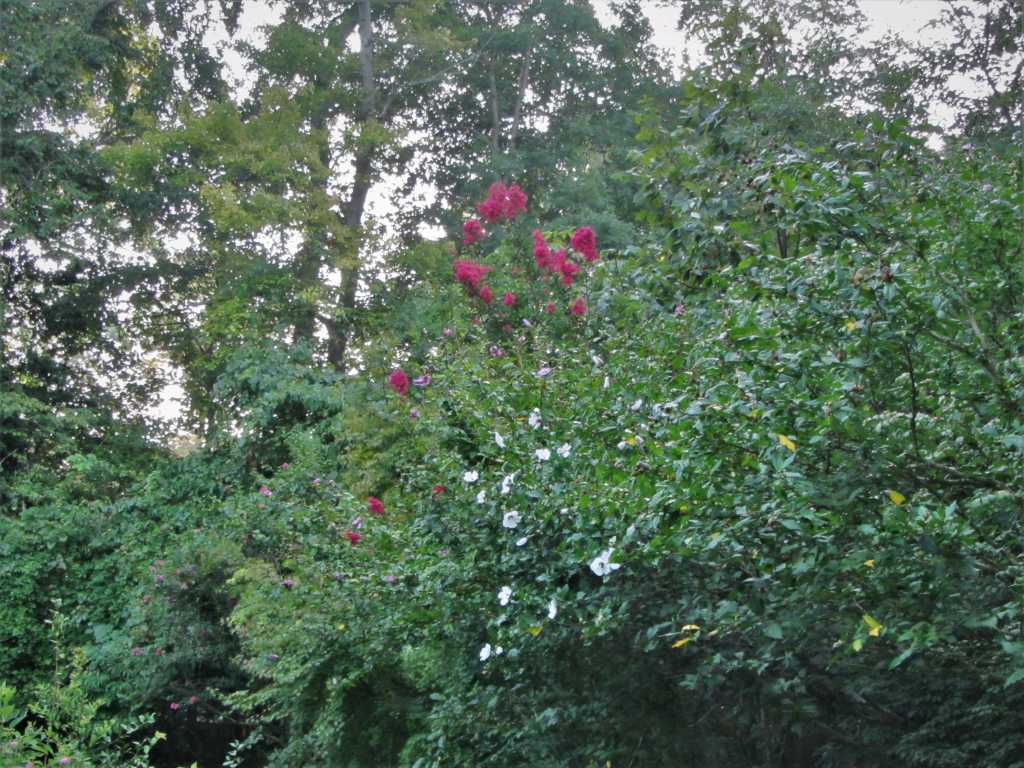
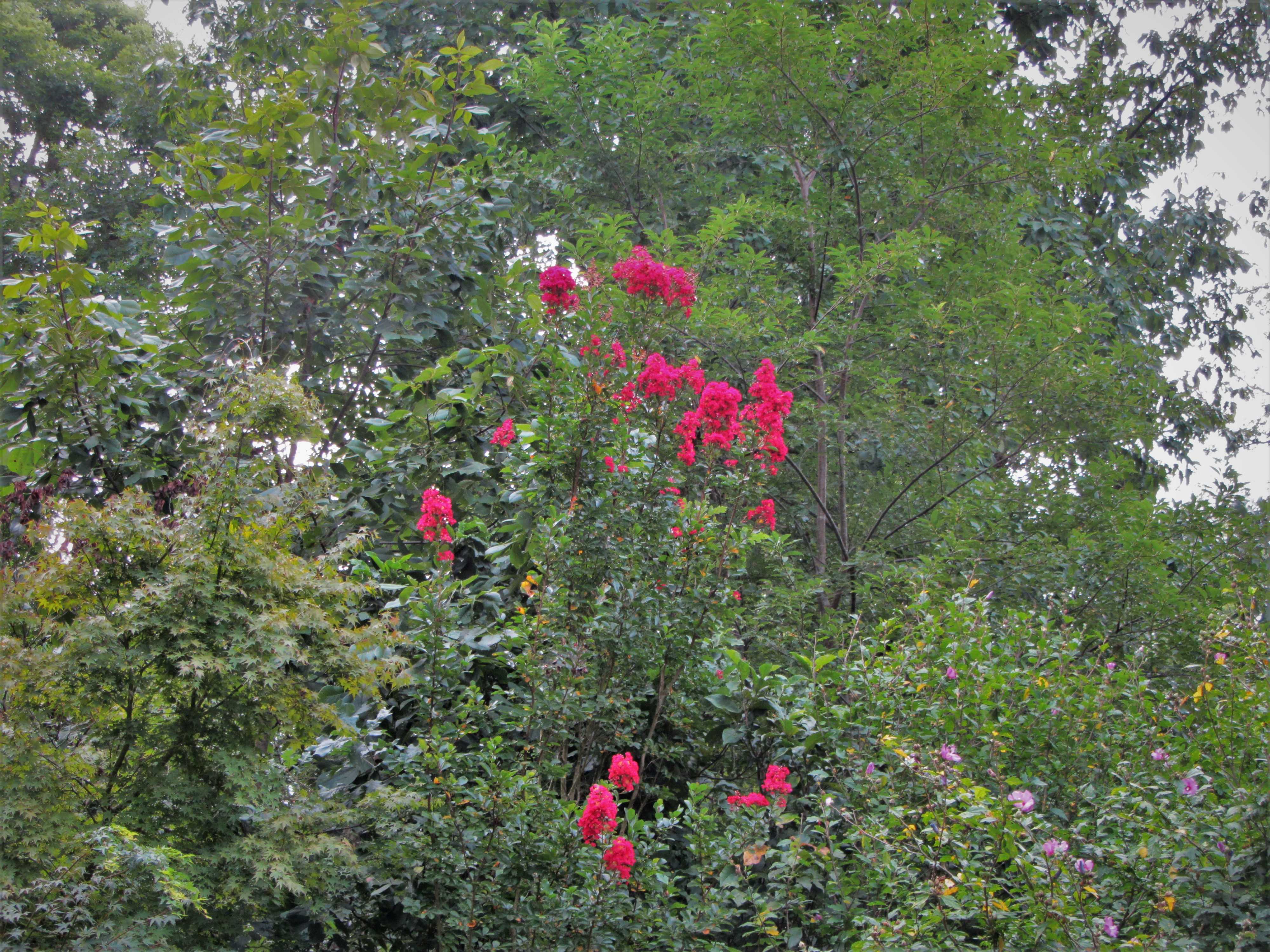
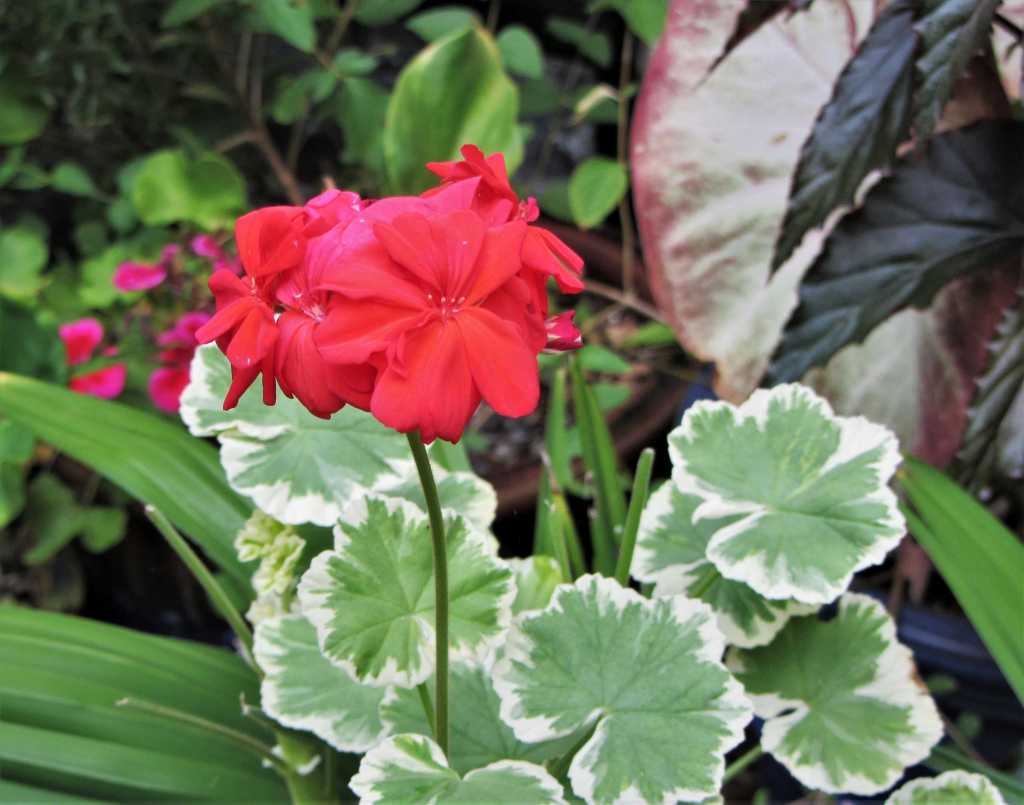
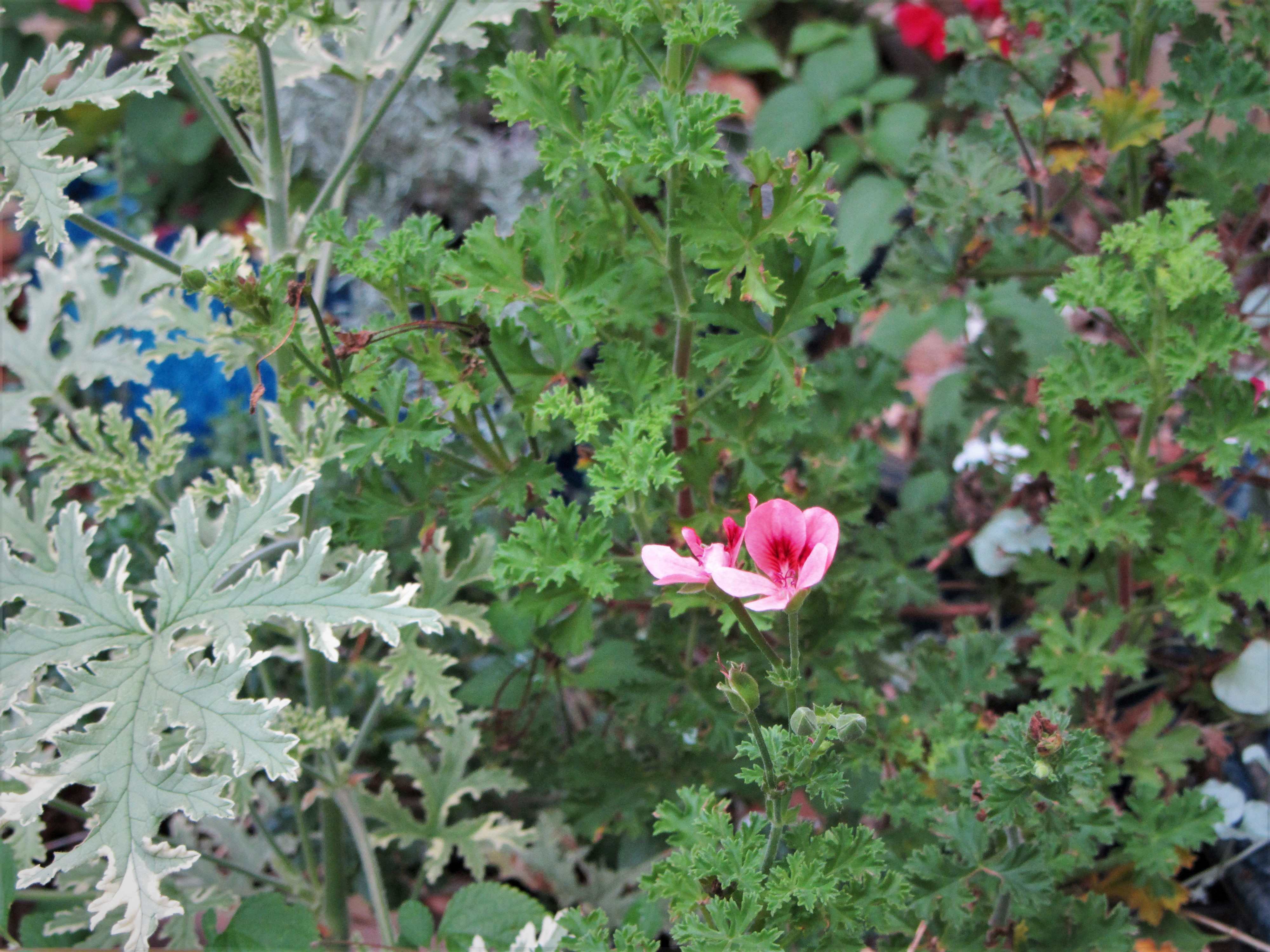
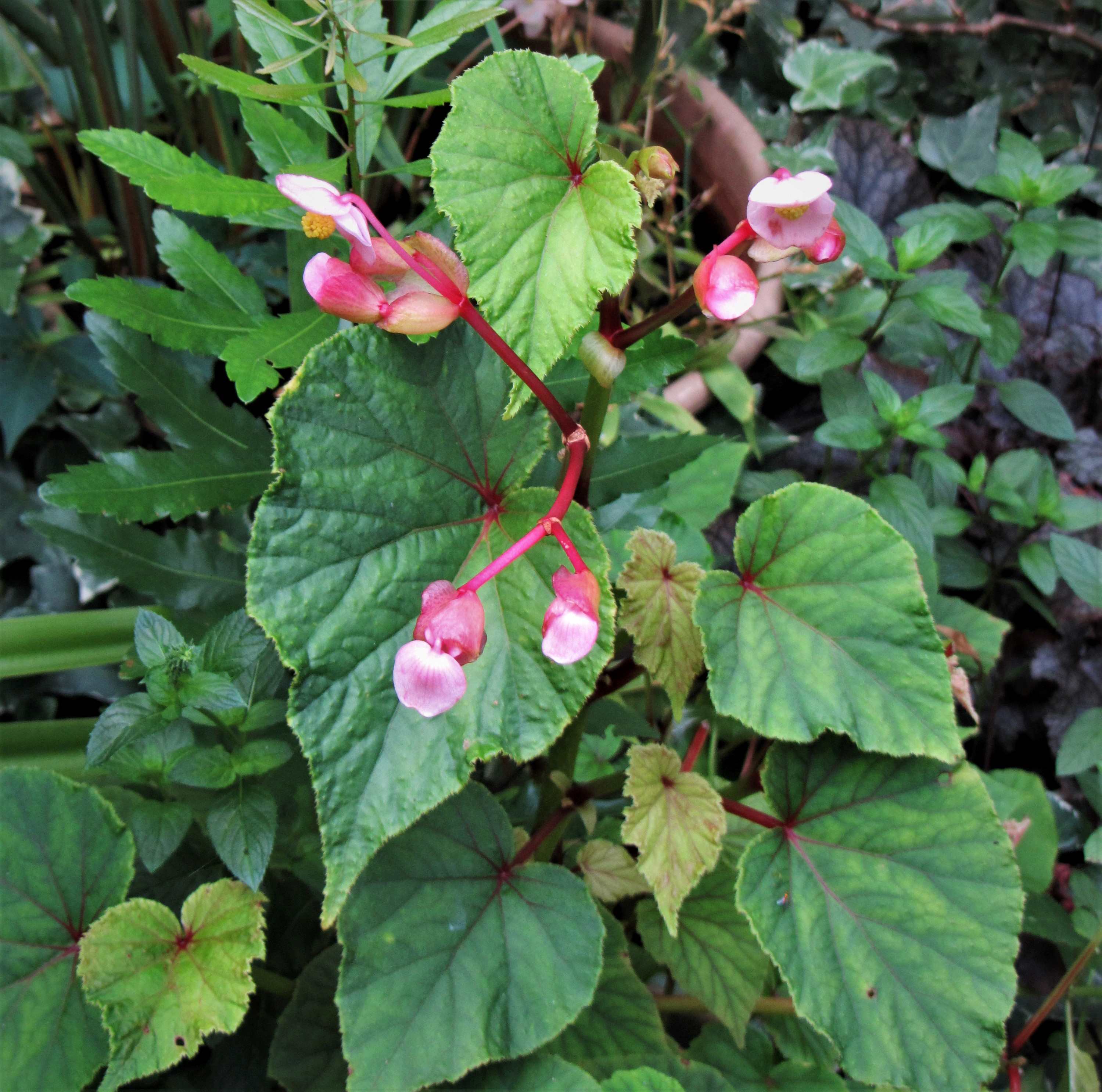
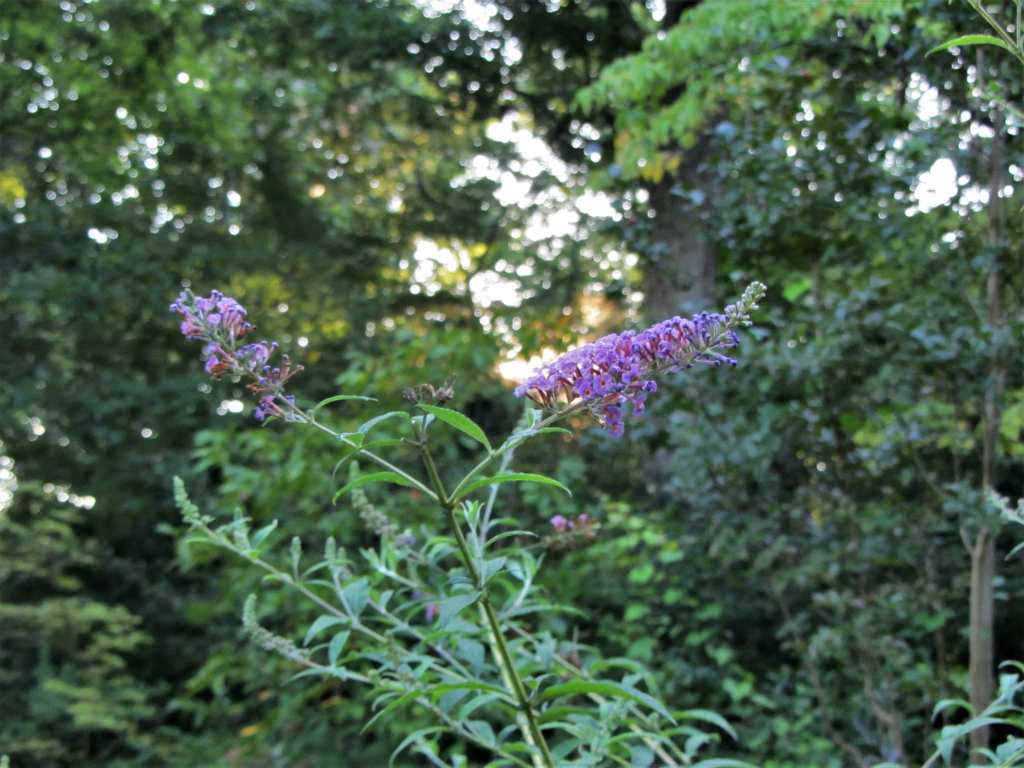
I am reading and writing about hummingbirds this week, and photographing their favorite nectar plants, for an article I’ll publish in a few days on our Master Gardener website. Hummingbirds are on the mind, I’ll admit, and so this week’s ‘Six’ will be photos of the plants that Hummingbirds visit in our garden.
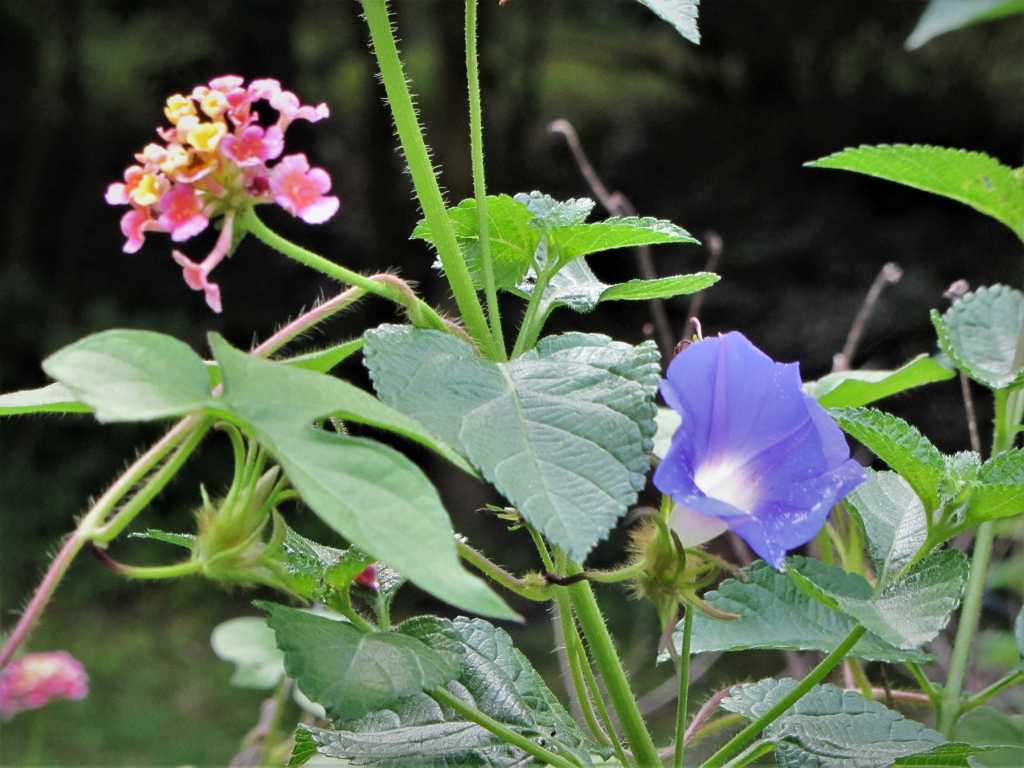


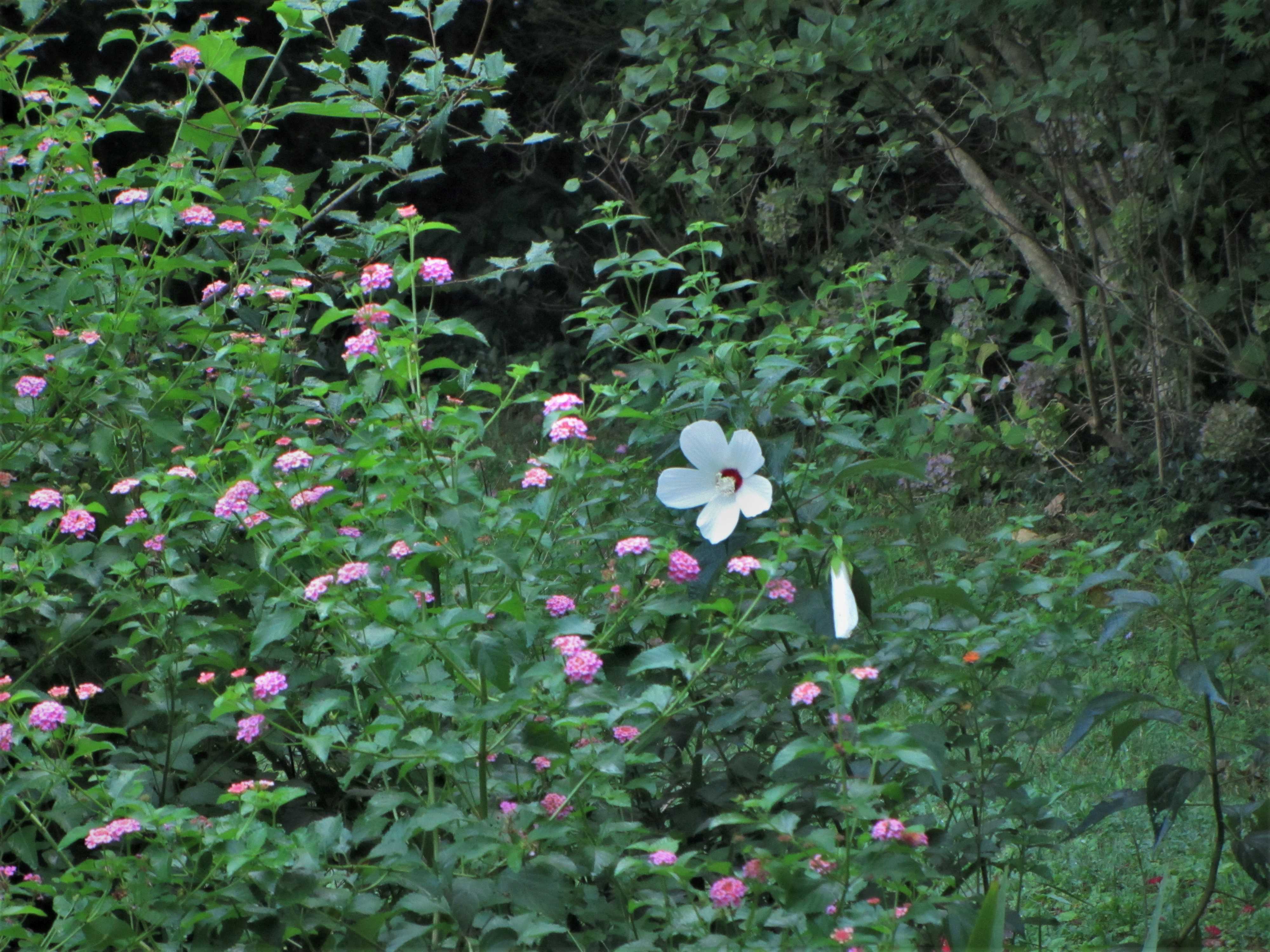
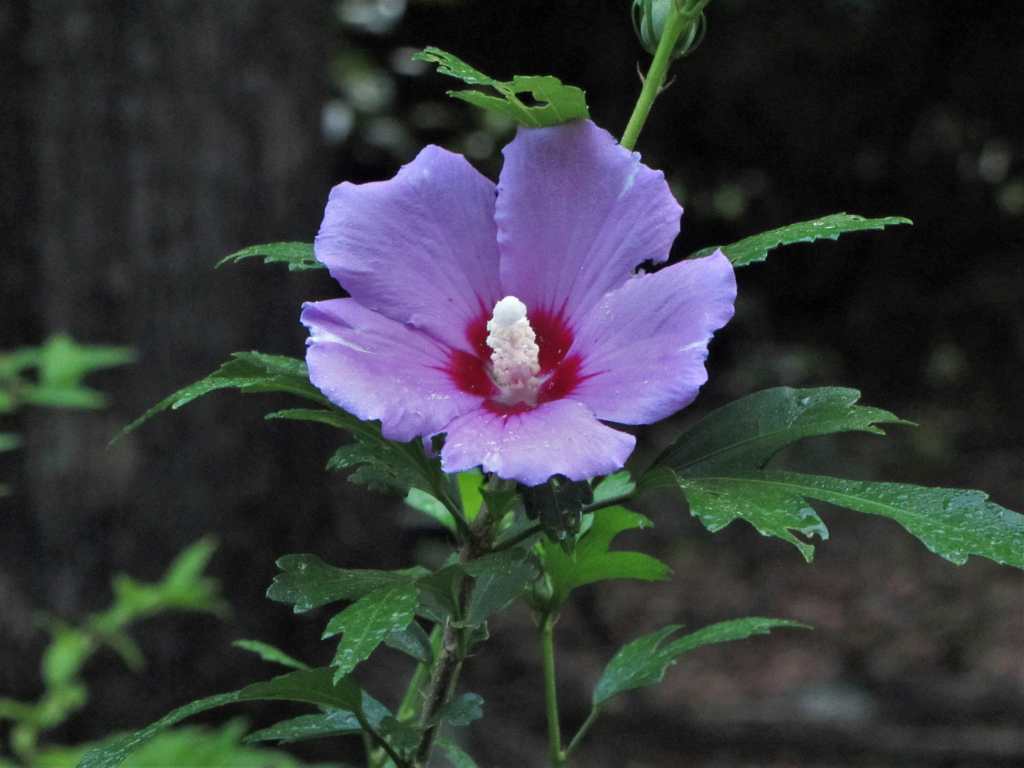
As I compile that list of ‘preferred’ plants for my article, I am astounded at how quickly the list has grown. Hummingbirds are generalists, though they have preferences. Hummingbirds are attracted to the color red. They will still visit flowers that are pink, purple, white yellow, orange or blue. They like narrow, tubular flowers with abundant nectar. They will drink nectar from tiny flowers, like those on mint or basil, as well as large flowers like Hibisus.
Like all wildlife, they want an abundant supply of food, a source of clean water, safe habitat for nesting and raising their young, and safe, secure places to rest and view the landscape. Since they are such tiny birds, hardly more than a mouthful for a prowling cat or hungry owl, their main concern, after food and romance, is for their safety.
Trees and large shrubs offer places to nest and perch. When those trees also produce nectar rich flowers, and attract a variety of yummy insects, all the better. Trees and flowering shrubs growing on the edge of sunny, open areas will attract hummingbirds. We have Rose of Sharon shrubs, crape myrtle trees, and Buddleia, butterfly bush that fill these needs and provide an ever-renewing source of nectar through much of the summer.
Food sources high in the air, well off the ground, provide the most safety while hummingbirds feed. That is why the love hanging baskets filled with flowers like Verbena and Petunias. They also like tall perennials like Verbena bonariensis, and tall, shrubby Salvias. They take a risk in feeding from lower growing annuals and perennials in easy reach of a cat or snake. They visited my containers on the patio in the very early morning, secure in the knowledge that there were no cats or snakes in the area, so close to the house.
Hummingbirds will remain in our area for another month or two, before beginning their migration back to Mexico and Central America for the winter. They provide great entertainment as we watch them from the cool shade of the house. We have enjoyed a few cooler and more comfortable wet days this week, but the weekend and week ahead will once again feel like August. I went out to water and take photos early this morning. It was steamy and uncomfortable again as the sun rose above the trees, and I was happy to retreat back indoors a little before 8:00. With coffee in hand, I have settled in to write for the morning. But first, these ‘Six on Saturday’ for you.
With appreciation to Jim Stephens of Garden Ruminations, who hosts Six on Saturday each week.
How to Create a Haven for Hummingbirds 8.12.23
You might enjoy my series of posts, Plants I Love That Deer Ignore.
Visit Illuminations for a daily photo and quotation


Gotta love hummingbirds! I grew up in California, and there are several varieties there, but now I m content with my ruby throats. In my garden, they love cardinal flower, the red flowers from my scarlet runner beans, milkweed, and even E purpurea. I supplement with a hummingbird feeder and enjoy watching them very much!
LikeLiked by 1 person
How interesting, I was once asked if we had Hummingbirds in my garden, sadly the UK is too far and too cool for them.
LikeLiked by 1 person
It is interesting that there aren’t any hummingbirds in the UK. Your summers would be perfect for them, it is the winter weather where they prefer warmer, sunnier days.
LikeLike
Hummer babies are out en force, so much activity around the feeders and flowers. Crocosmia and monarda are favorites!
LikeLiked by 1 person
Aren’t they fun?
LikeLiked by 1 person
Like getting buzzed by tiny X-wing fighter jets! 😀
LikeLiked by 1 person
There are no hummingbirds here in Europe. But I remember the ones I saw in Guadeloupe/Martinique (west indies) and it was amazing to see them foraging.
LikeLiked by 1 person
They are such fun to watch! It is hard to follow their movements sometimes, when they flit around so quickly. I’m glad you got to enjoy them in the West Indies.
LikeLiked by 1 person
What a pity they only live in the Americas! Such a treasure. Very interesting and informative blog post about hummingbirds and the flowers to support them!
LikeLiked by 1 person
Thank you! It is interesting that they are only found in the Americas. There is some sort of law prohibiting their import to Hawaii. They are much brighter and larger in more tropical areas, but we certainly enjoy them here. You will find a link to the article I finished yesterday, with a series of wonderful photos of hummingbirds by local nature photographer Jim Easton, available now at the bottom of yesterday’s Six on Saturday.
LikeLike
The hummingbirds frequent my cannas, salvia, lantana and Rose of Sharon. If you put up two feeds near each other you will be entertained by “jousts”. The little combatants are extremely territorial. We have ruby throated hummers from April until End of September.
LikeLiked by 1 person
Those are some of their favorite flowers here, too. They are definitely entertaining!
LikeLike
Mount Umunhum is the resting place of the hummingbird. That is what the name means in the Ohlone language. I can see why. Hummingbirds are very common here, and are even more common there! Much of the chaparral vegetation relies on them for pollination, so does what it must to attract them.
LikeLiked by 1 person
Thank you for sharing this. It is hard to imagine hummingbirds thriving in the chaparral. Nature always balances itself, doesn’t it?
LikeLiked by 1 person
Gee, I consider hummingbirds to be chaparral and desert wildlife. They do not need much to keep going, so can get what they need from chaparral and desert blooms.
LikeLiked by 1 person
Talk of sprinklers and misters must sound silly, from the point of view of the species in your area 😉
LikeLiked by 1 person
Sprinklers are likely more common here than most places in America because the exotic species in most landscapes would not survive without them. Misters are more for greenhouses though.
LikeLiked by 1 person
Lovely six. We have similar plants but sadly nothing as exotic as a hummingbird.
LikeLiked by 1 person
Thank you ❤ ❤ ❤
LikeLiked by 1 person