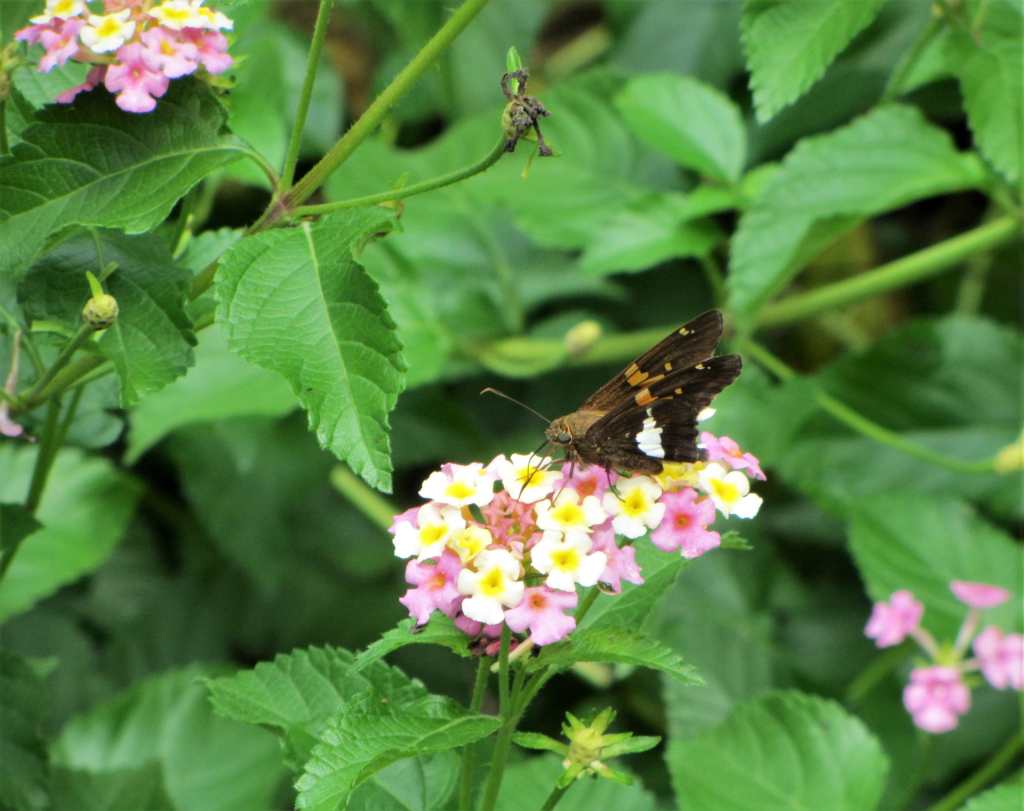
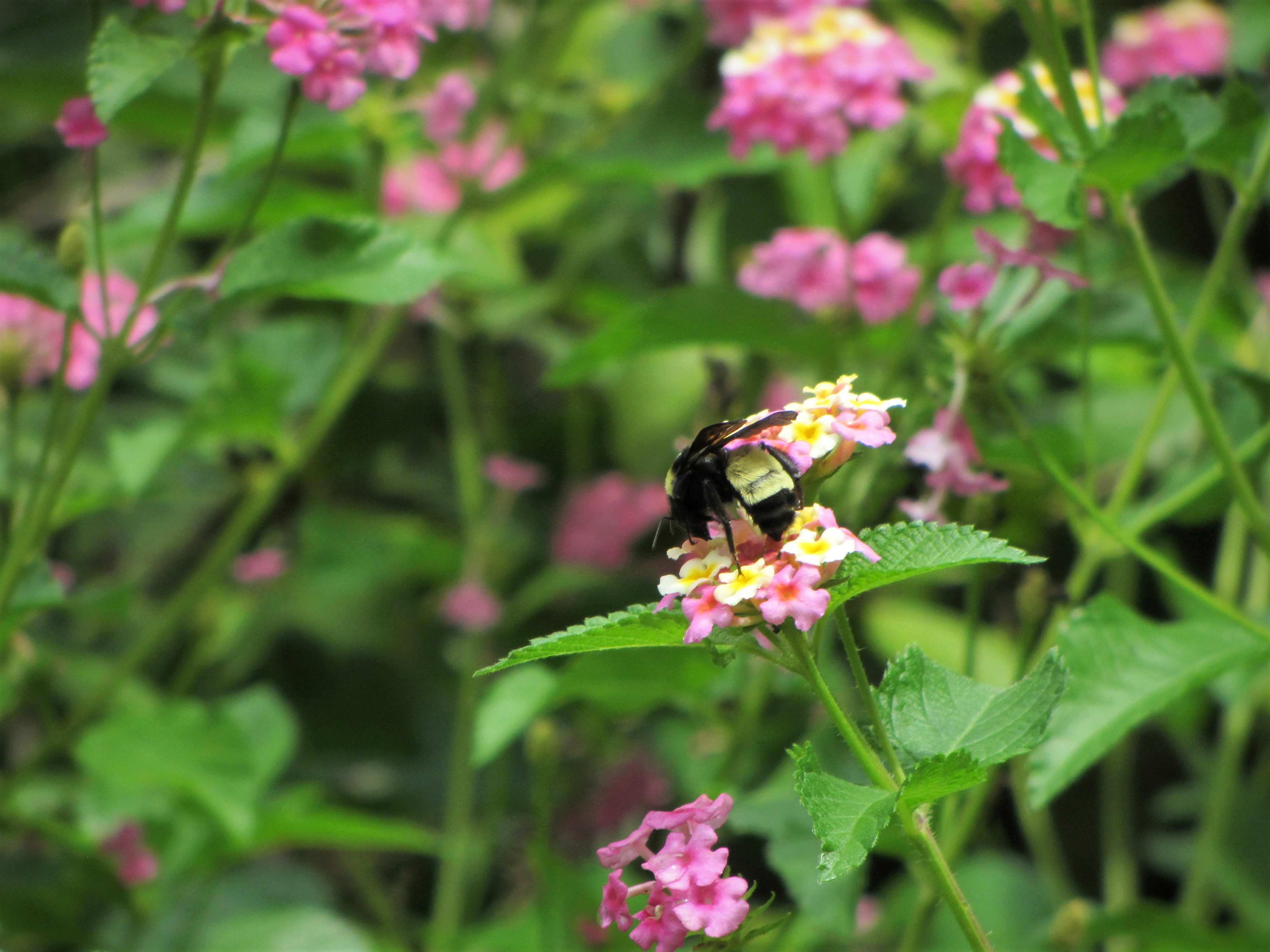
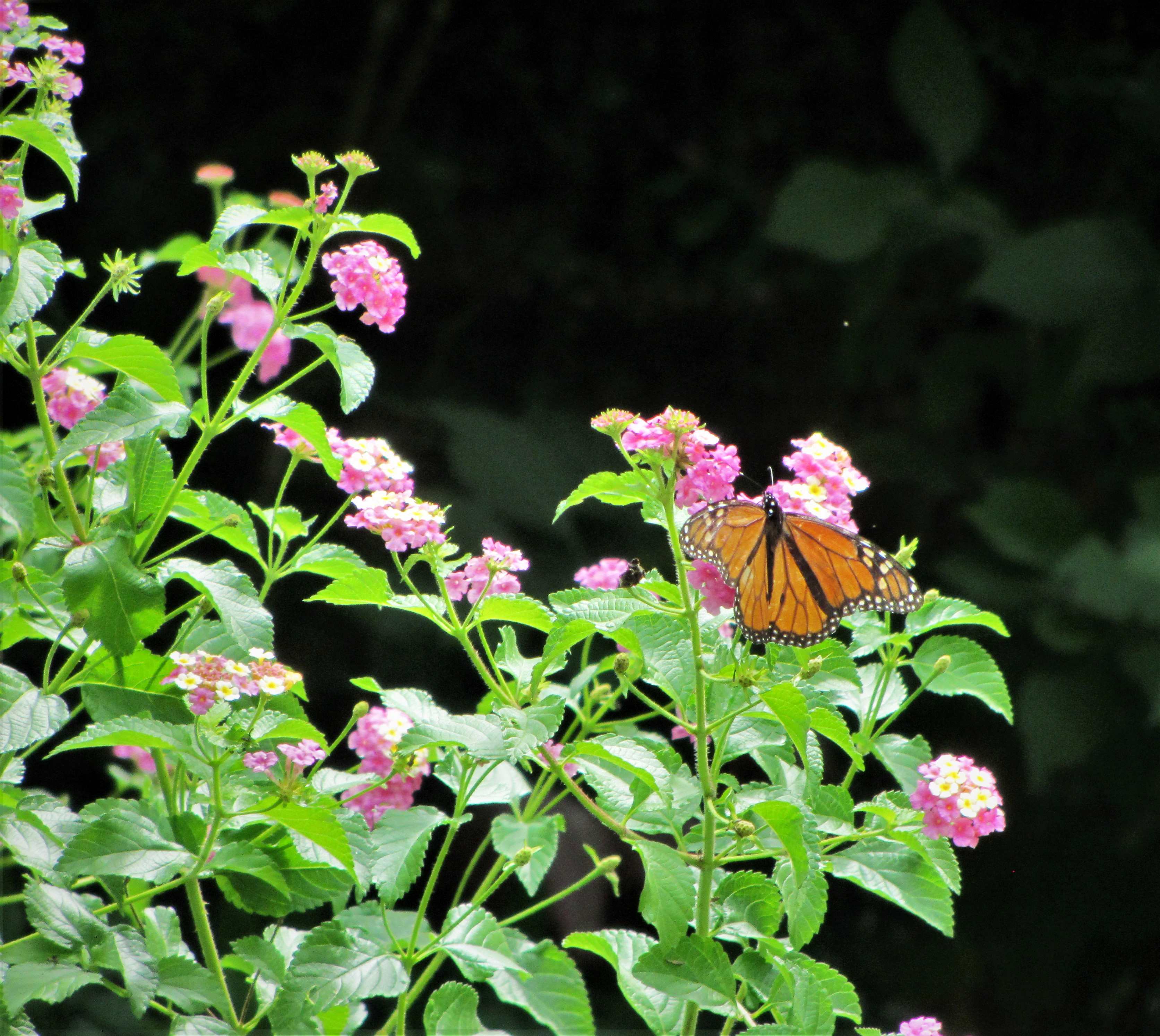
Gardeners have been observing the odd timing of plants appearing and blooming in our gardens since early spring. Sometimes plants appear earlier than expected and sometimes later. We’ve seen bloom of familiar trees and perennials delayed by weeks in some cases.
Here in Williamsburg, we had a cold, late spring followed by a sustained period of dry weather. The gardening year got off to a meager start of very limited growth, largely due to dry conditions, when perennials usually thrive. We went from cold to heat, while the weather remained dry for much of the time. Even with supplemental irrigation it has been a challenge to support newly acquired plants while they establish.
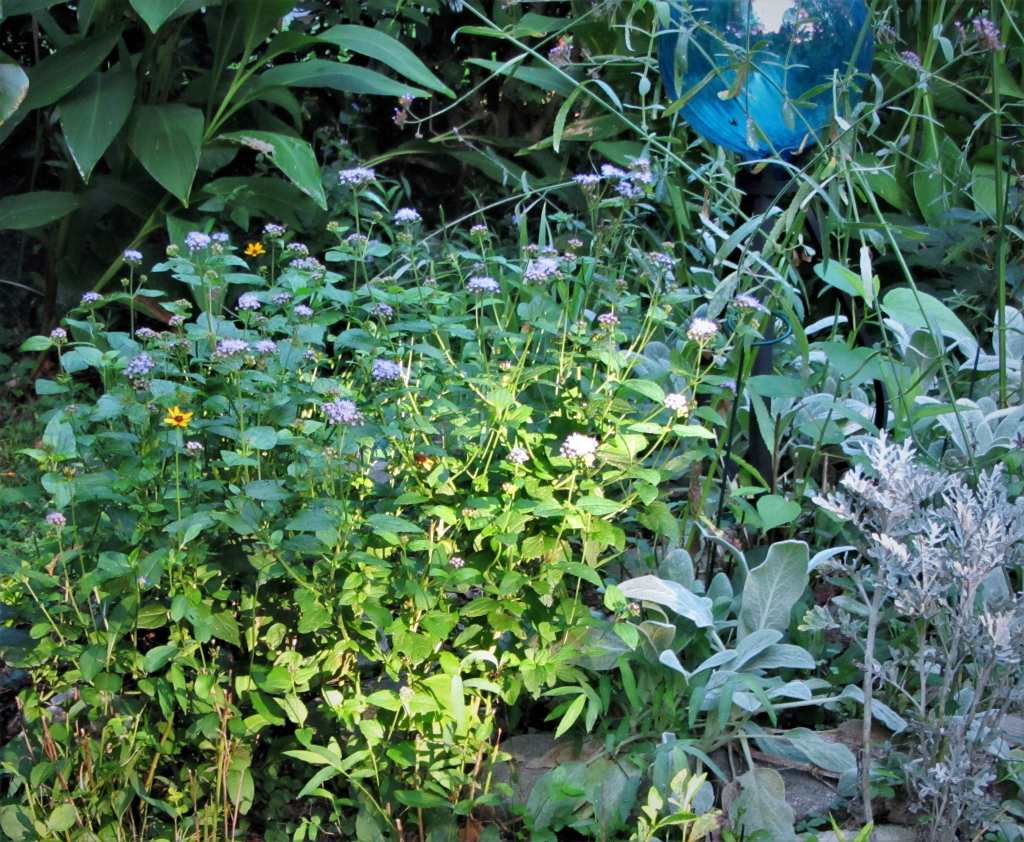
Blue mistflower, or wild Ageratum, seeds itself around the garden. It grows here with lamb’s ears, black-eyed Susans, Verbena bonariensis and other perennials in a bed that receives regular irrigation. This area has also been heavily grazed this summer even though the plants here are considered ‘deer resistant.’ 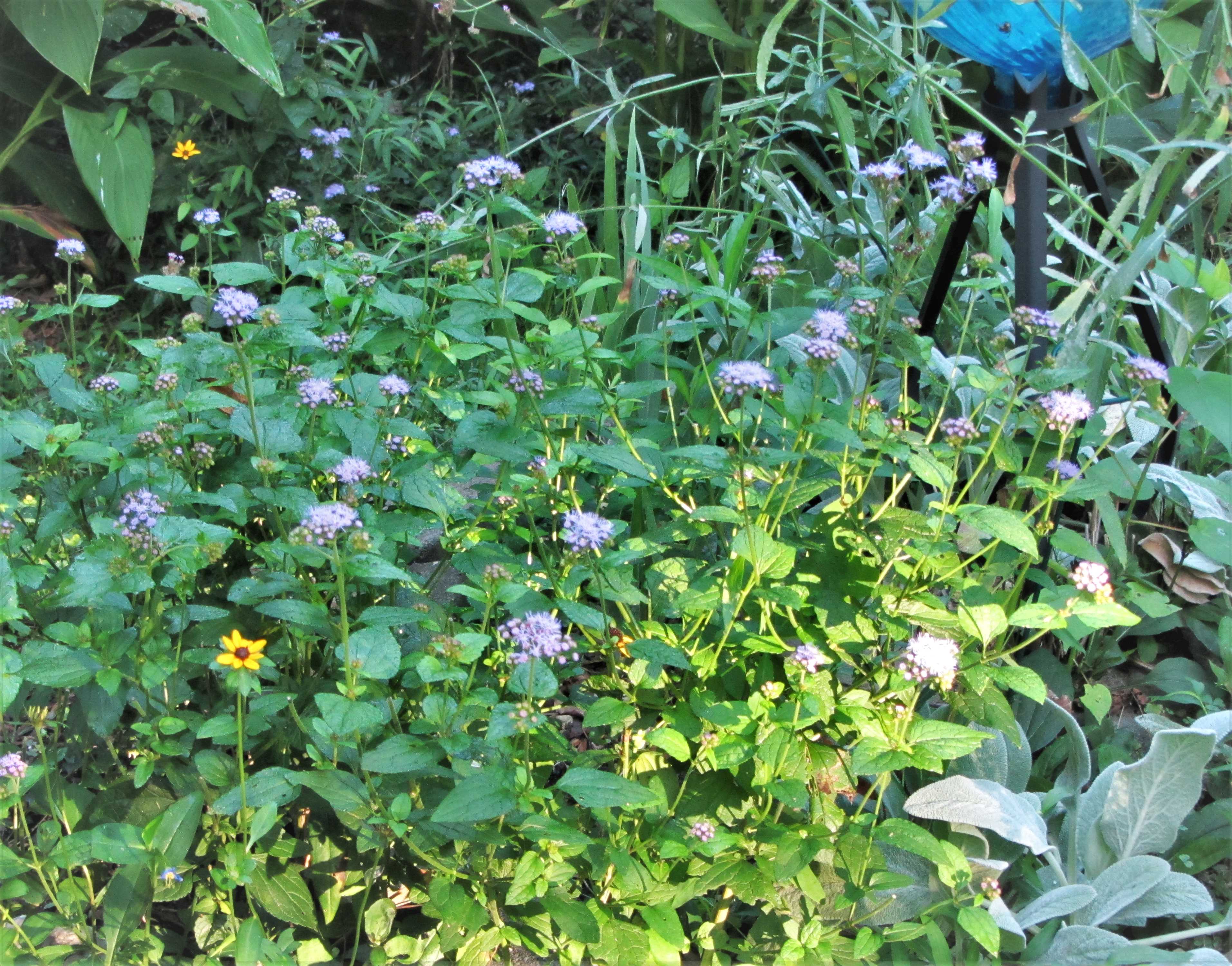
Unusually hot and dry weather led to more grazing in our garden this summer from deer, rabbits, and even turtles. With water scarce, they ate plants they normally ignore, like Echinacea. All in all, things have appeared a bit ‘off’ since the daffodils bloomed. All through July and early August we waited and watched for our usual crowd of butterflies on the Hibiscus and Lantana. These deep rooted, established plants have fared better than most. Butterflies remain scarce, but we finally found the Lantana in the front yard enjoyed by four or five at a time on a few days last week.
We were thrilled to finally see the butterflies, and delighted to finally have a few days of deep, penetrating rain. With a hurricane to our south, we were blessed with some of its rain before it roared off the coast into the Atlantic as a tropical storm. We have also enjoyed much cooler temperatures in recent days. And flowers.
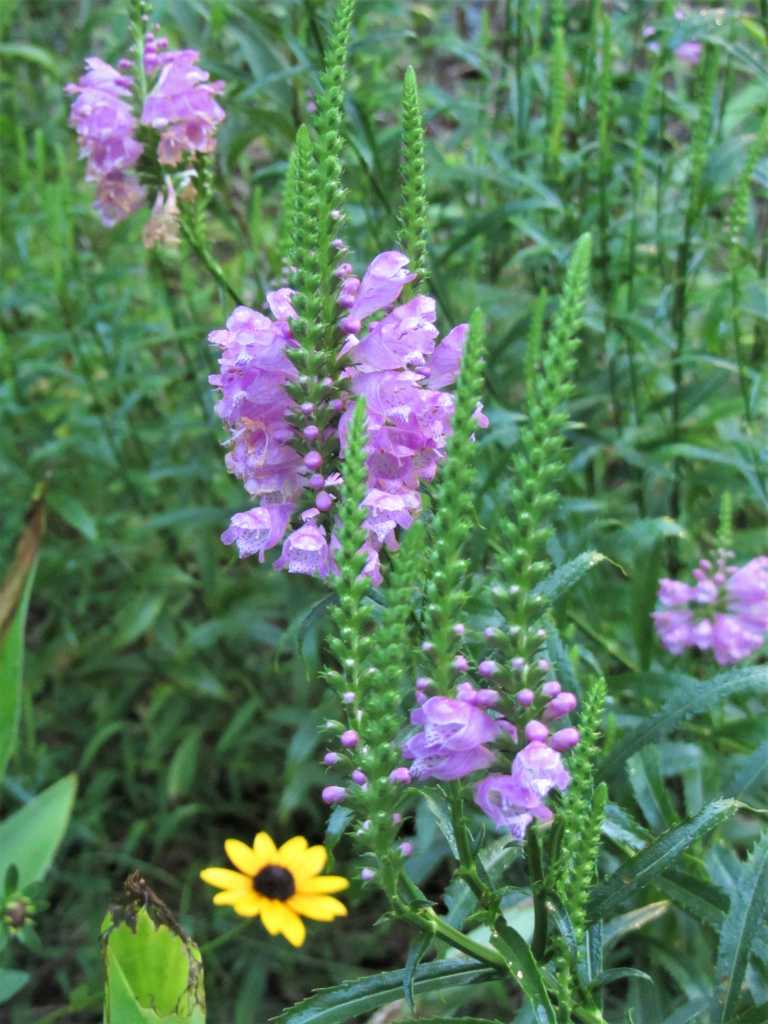
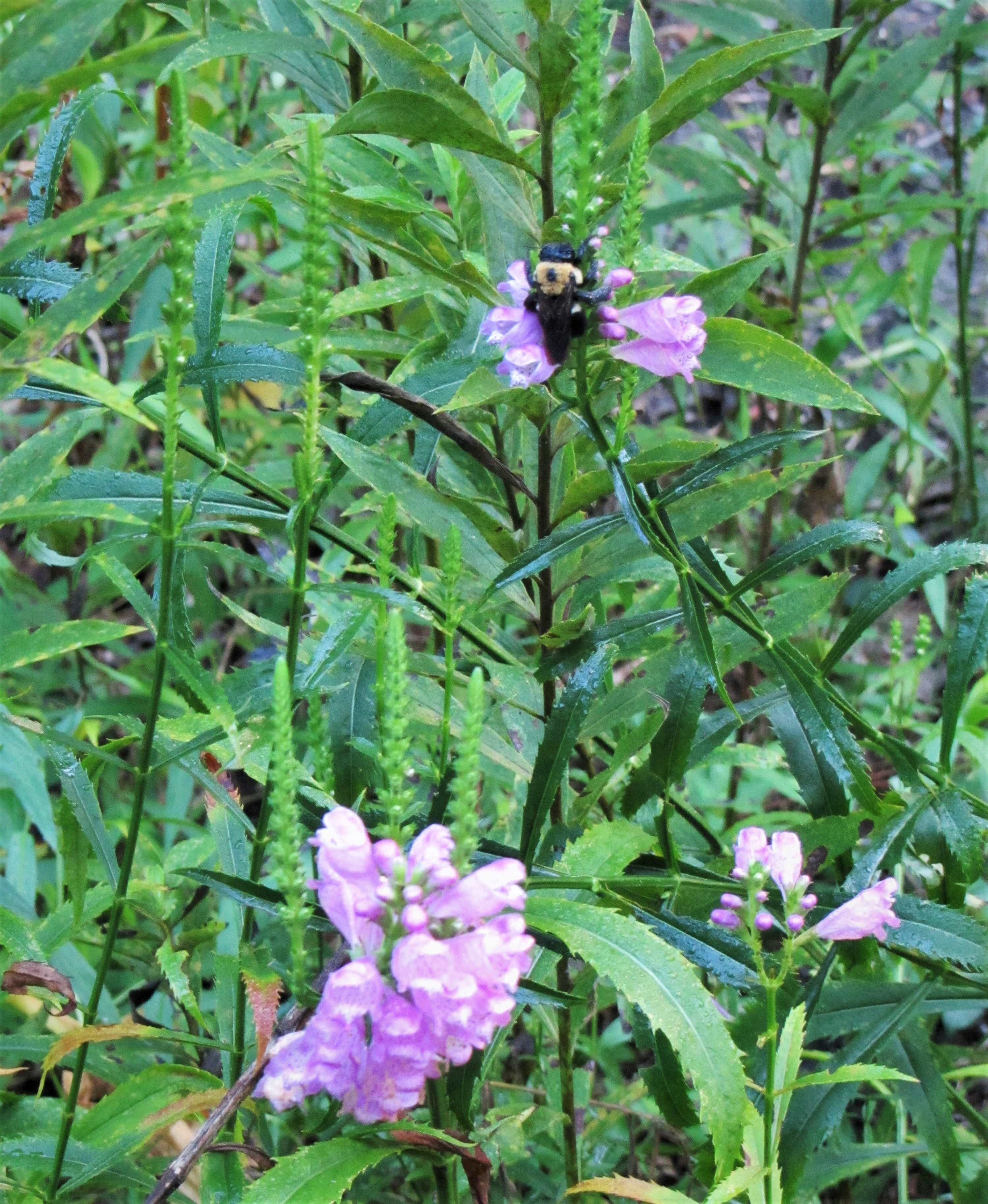
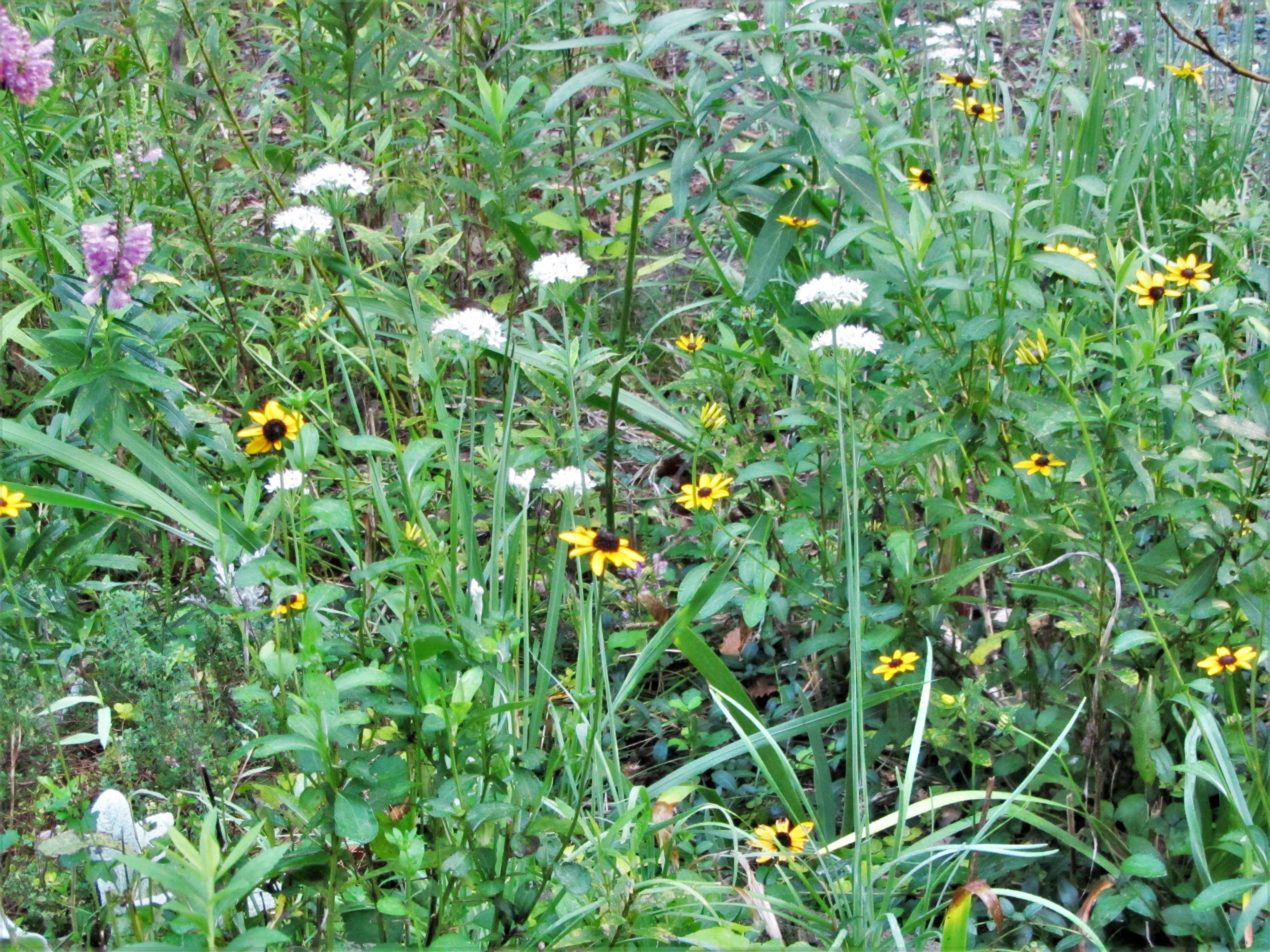
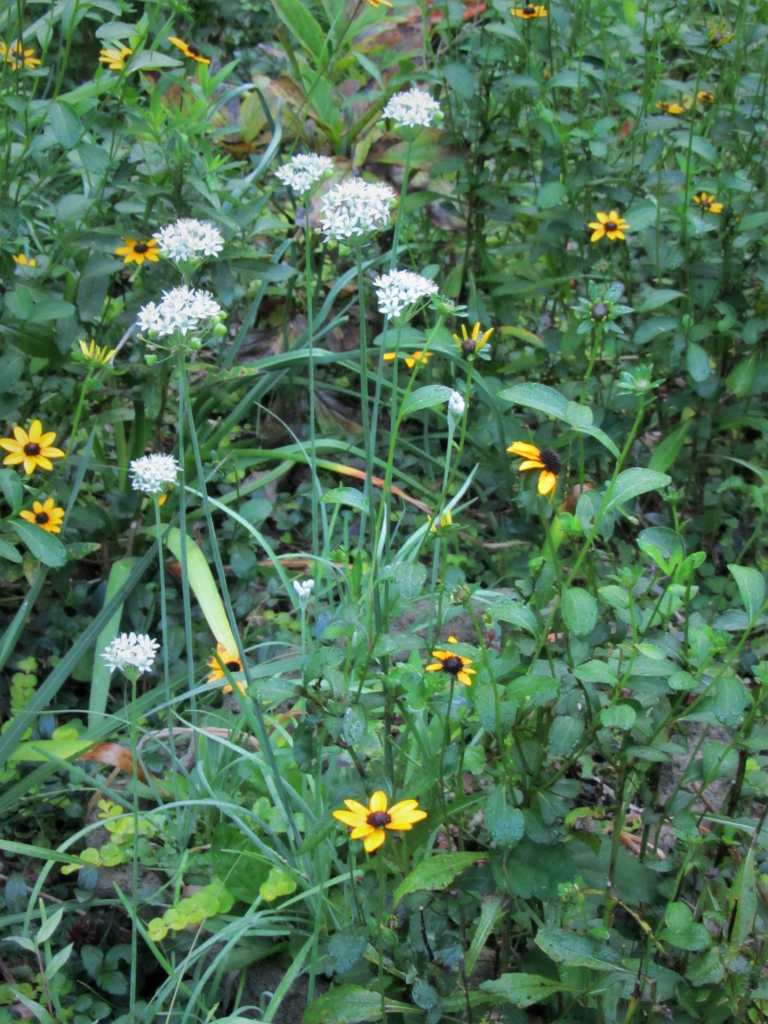
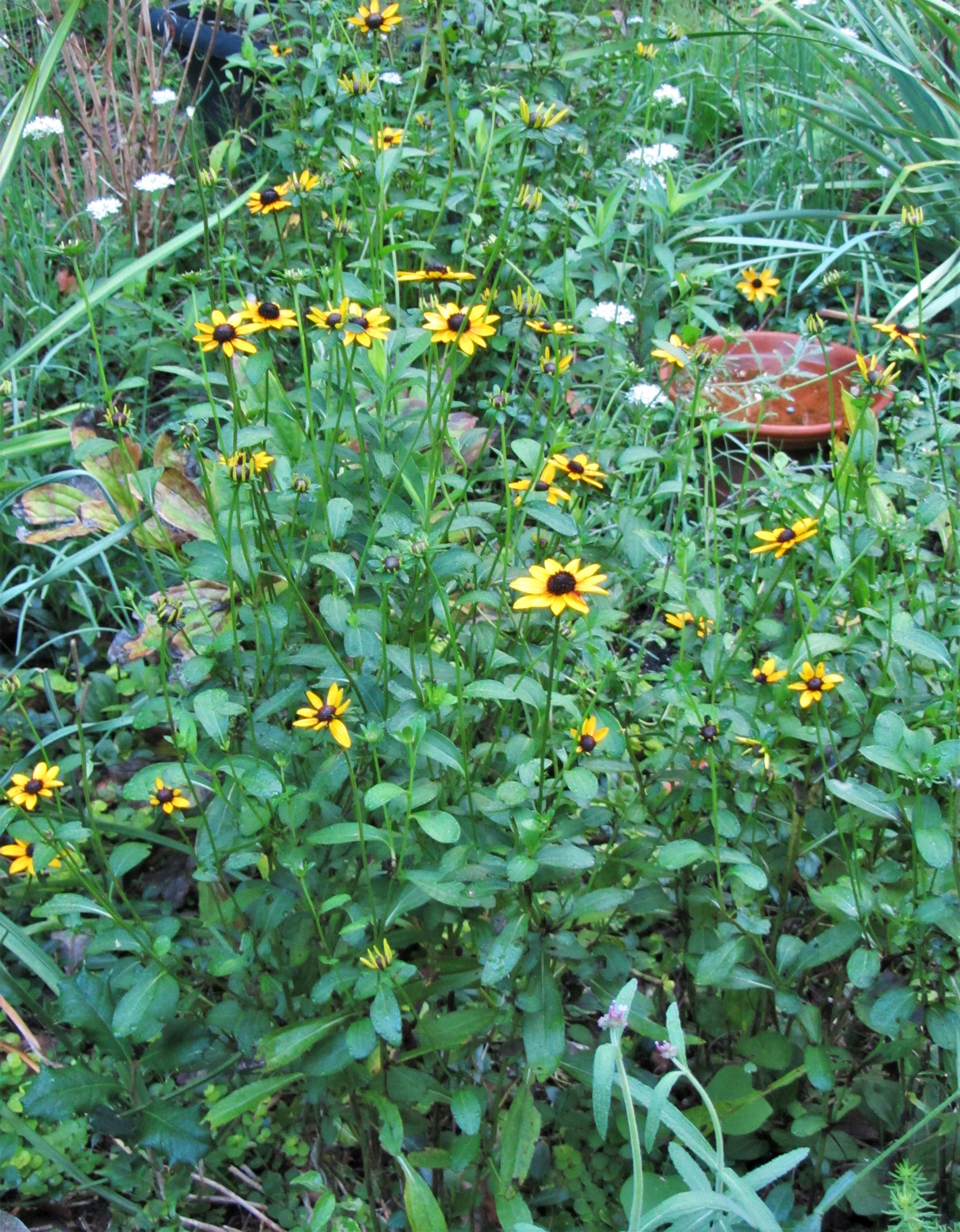
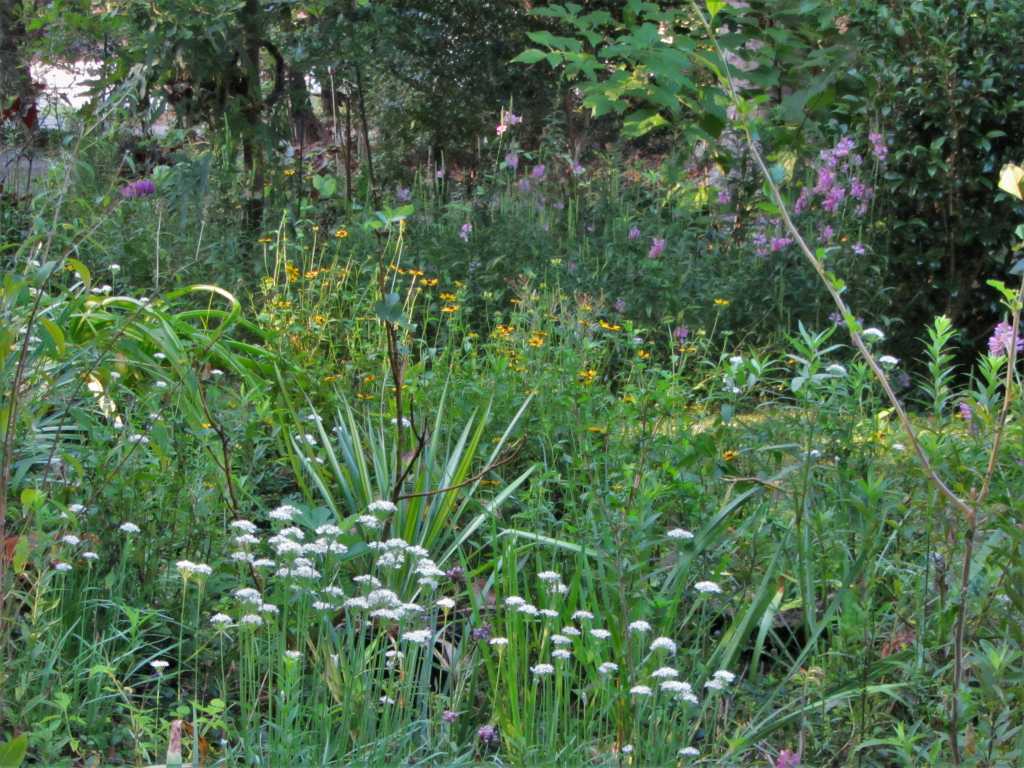
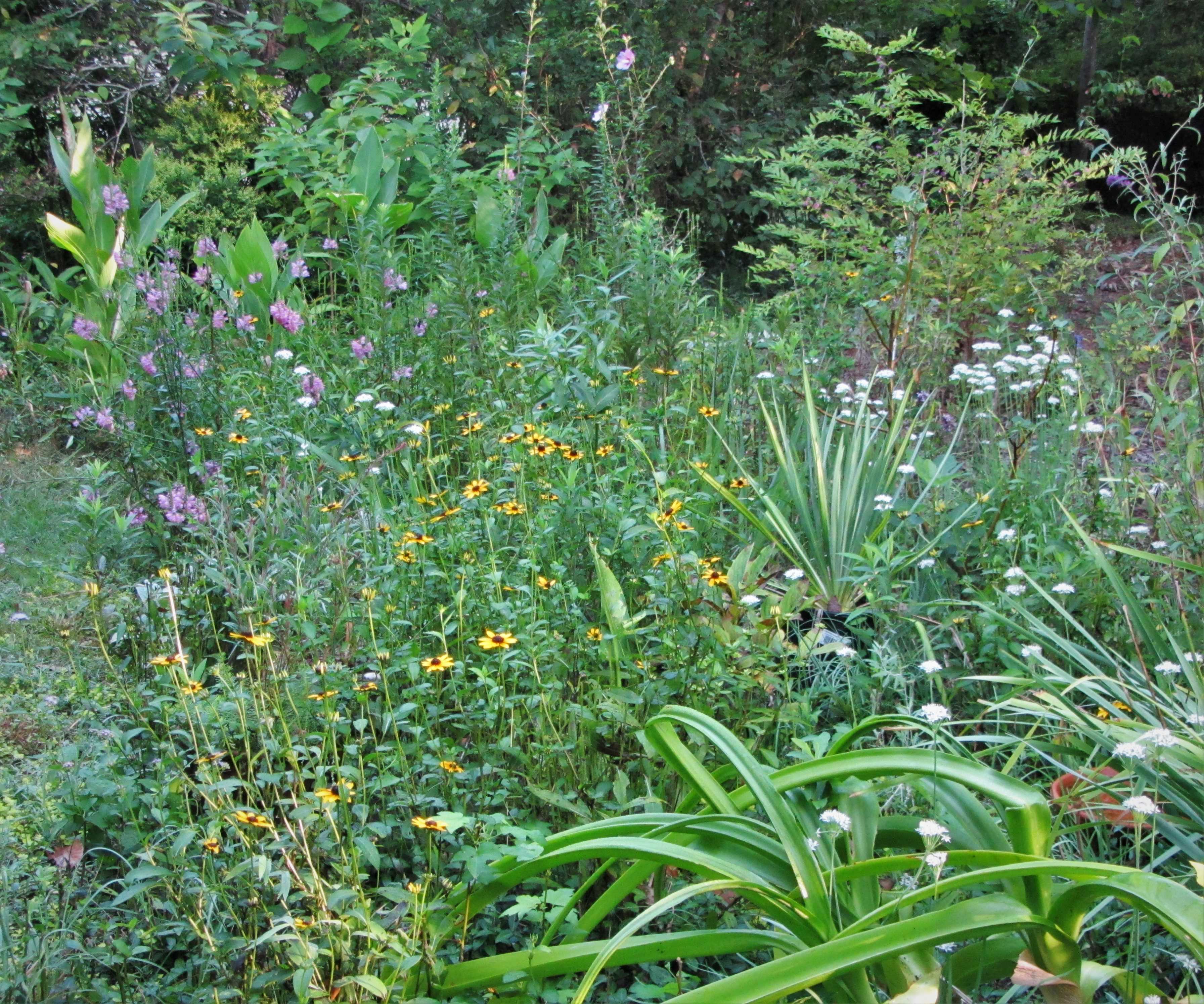
Established fall blooming perennials in our upper garden responded to the rain with their first real flush of bloom of the season in the past few days. We have primarily: black-eyed Susans, Rudbeckia hirta, badly grazed this year but still alive and blooming; the garlic chives, Allium tuberosum; pink obedient plant, Physotegia virginiana; and native blue mistflower, Conoclinium coelestinum. Bright flowers finally fill this space that has seemed so empty since spring.
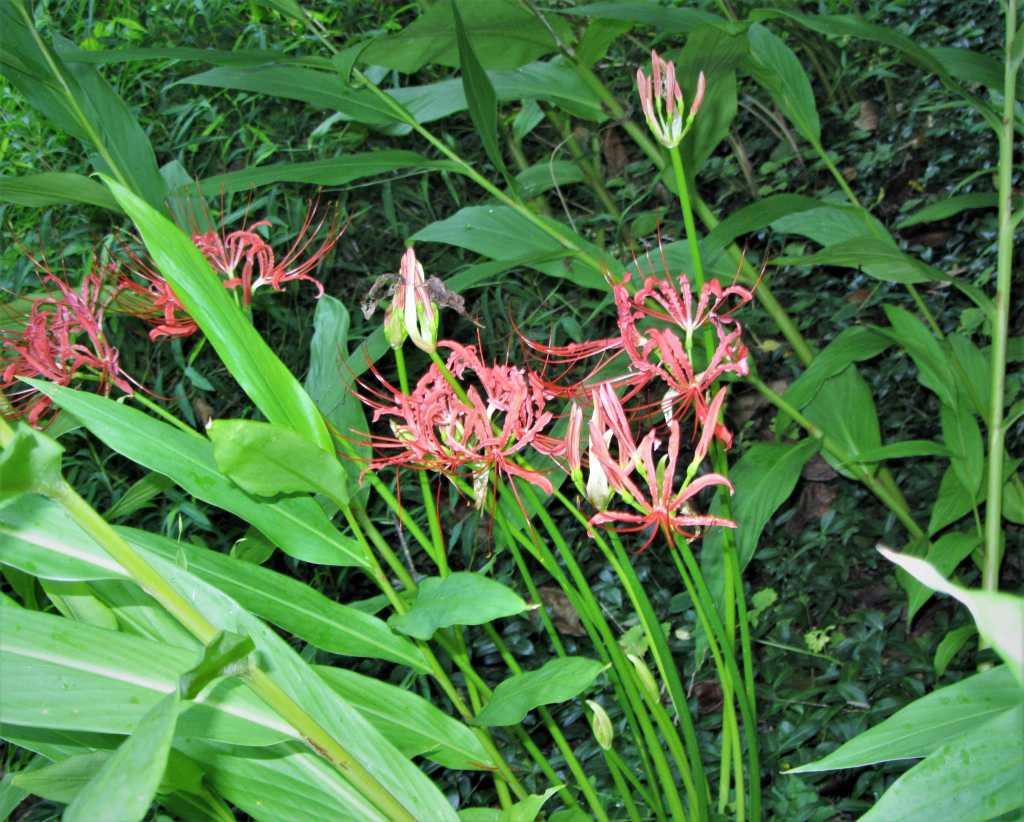
The hurricane lilies, Lycoris radiata, have also been blooming in recent weeks, creating clouds of spidery, red flowers in unexpected places. They simply appear in late summer after a rain, followed by their leaves that will grow and feed the bulbs through till early spring. Our lilies were planted years ago, and many are now in part shade and should be divided and moved this fall.
We still have 60-90+ days in our growing season before our first frost, here in coastal Virginia. We hope that the rain will come more regularly for the rest of the season, and that we can enjoy flowers and wildlife for another few months. This feels like almost a selfish wish when we think of those who have lost their homes and gardens to natural disasters this summer. It has been a very hard summer for so many across the planet, and all in all we have been very fortunate to have survived it as well as we have.
It was cool enough on Friday morning to venture out with the string trimmer to tidy things up a bit. I found a few flowers on Salvia plants that have struggled since April or May. Everything was soaking wet, a huge blessing, and the sun broke through the clouds. The hummingbirds and butterflies, so aware and appreciative of a safe space to feed and rest, give us hope for better days ahead.
Labor Day weekend in America signals the transition from summer to autumn. With the equinox still three weeks away, we call it ‘meteorological fall.’ School is back in session and we’re searching for pumpkin lattes and pumpkin muffins, even if it is still 90F outdoors. As summers grow more extreme, I enjoy autumn just as much as spring. It is a joy to watch the days grow shorter, the nights cooler, and to see flowers blooming in that last joyful explosion of color before winter finds us once again.
With appreciation to Jim Stephens of Garden Ruminations, who hosts Six on Saturday each week.

You might enjoy my series of posts, Plants I Love That Deer Ignore.
Visit Illuminations for a daily photo and quotation
 Our Forest Garden
I hope that the season ends with a flourish for you.
LikeLiked by 1 person
Thank you so much! We are watching the butterflies again today, and spotted a Zebra Swallowtail for the first time in a long time. It is wonderful to see them enjoying this beautiful day!
LikeLike
Physotegia virginiana really a very pretty flower, I had seeds but they did not germinate. I’ll have to renew my stock. When I read that you have 60 to 90 days left before the first frost, it’s scary… Here the first frost often arrives around Christmas or in January.
LikeLiked by 1 person
That used to be the case here, too. The rivers protect us from frost, somewhat. We are surrounded by water on a peninsula, with two large lakes in our community. We only had one light snow last winter here, and very few hard frosts until late January. Obedient plant is very pretty, with neat dark green foliage, and it is well-behaved. There are a few other colors, but all of ours are from some roots a neighbor brought to me in a paper bag in 2013. We’ve been delighted with how well it has settled in here.
LikeLiked by 1 person
Obedient plant was one of those few species that we got acquainted with in school, but did not see much of since then. I might have seen it less than five times in the very early 1990s. I thought that a white cultivar was the most popular cultivar while we were in school, but I do not remember.
LikeLiked by 1 person
White may be more popular in the west. I don’t see it much around here, and I really like the color we were given. I would be happy to plant white if I could find some. Do you, or have you ever, had any in your plantings?
LikeLiked by 1 person
I never grew it. I met a colony of it that bloomed white while we were in school and studying the plant materials that we would likely be working with in the real World, but then barely worked with it again. I briefly worked at a nursery in the early 1990s that sold the white cultivar. When I saw the purplish pink color in another nursery shortly afterward, I was told that it was the ‘typical’ color. I can not remember encountering it after about 1995.
LikeLiked by 1 person
Fascinating. Now I will be on the look-out for the white variety. It would be very pretty growing in the mix with the white chives.
LikeLiked by 1 person
It is a good clear white, and I am an expert on white!
LikeLiked by 1 person
Your garden looks like a butterflie’s paradise! ❤
LikeLiked by 1 person
That is always the plan! We are enjoying lots of butterflies and a few hummingbirds in the garden today ❤ ❤ ❤
LikeLiked by 1 person
I adore skippers! They are so fuzzy and cute. We used to have a gigantic lantana at my childhood home that was covered in them all summer long.
LikeLiked by 1 person