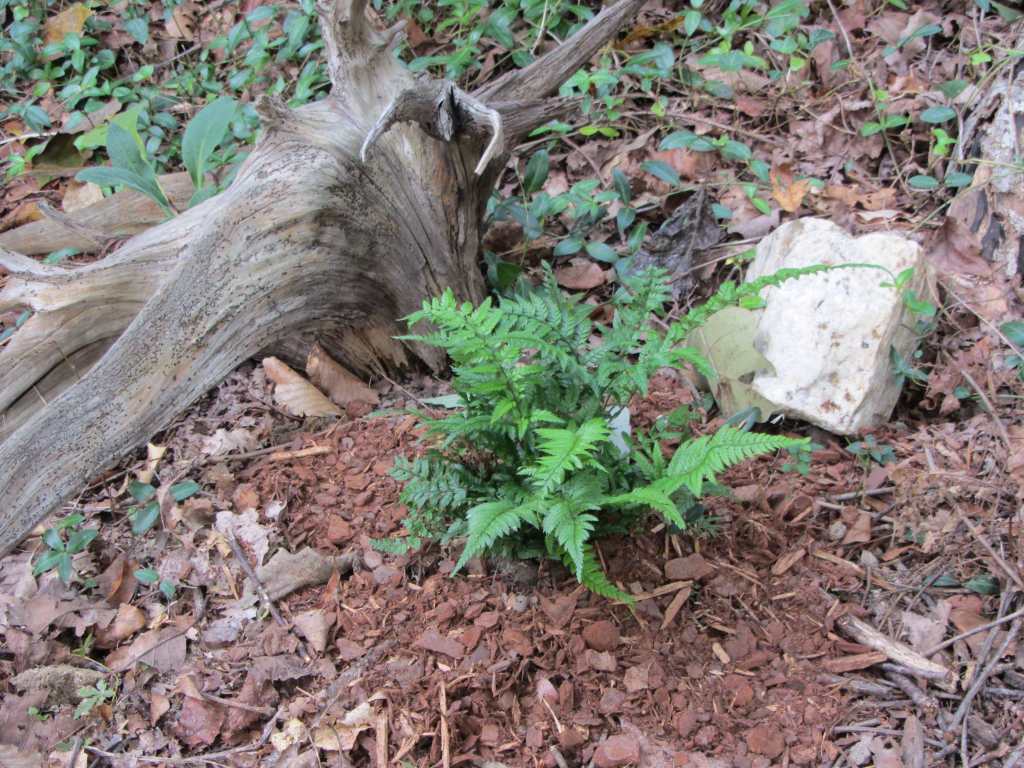
Last month, when our local Ulster-American Homestead garden center received its first fall shipment of ferns, they had a few trays of Korean Rock fern, Polystichum tsus-simense, which is an unfamiliar fern to me. I was looking for small Christmas ferns, P. acrostichoides. In fact, I had requested another flat of 3” Christmas ferns in late summer, and my contact at the nursery had been trying to source them for me. The only Christmas ferns in stock that day grew in huge gallon pots.
Christmas ferns have, for some unknown reason, been scarce this year. You might expect something so common in our area to be easy to come by, but they aren’t. And I am continuing my project of planting more evergreen ferns in our garden to sequester carbon year-round.
The tag didn’t say whether or not the P. tsus-simense is evergreen in our climate. It is a pretty little fern, with finely cut, but leathery foliage, and I took a chance on three. Once I began doing a bit of research at home, I was very happy to have all three, and ended up buying several more a few days later. Not only is P. tsus-simense evergreen, but it stays neat and relatively small for a fern, topping out around 15” tall and wide at maturity. It is an Asian and African fern hardy in Zones 6-9. I expected it to be just as deer resistant as the other Polystichums I grow. This is a tough genus of fern, and the hairs and bristles on their stipes and unfurling fronds makes them irritating to tender mouths.
As I’ve researched this little Korean rock fern, I’ve learned that its name has shifted. You will find it listed as P. luctuosum on the NC State Gardener’s Toolbox website, and as P. tsu-sima elsewhere. The RHS website lists it as P. tsussimense. While it is no longer unusual for a plant have a change of genus name, it is more unusual to have so many different species names in circulation at once.
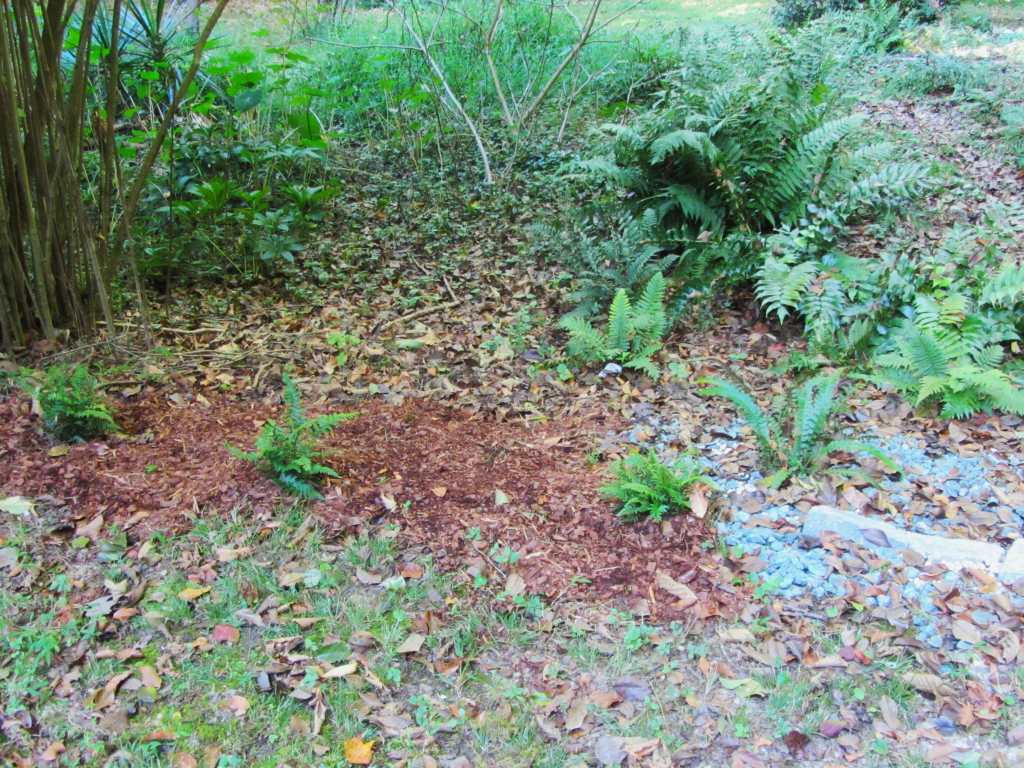
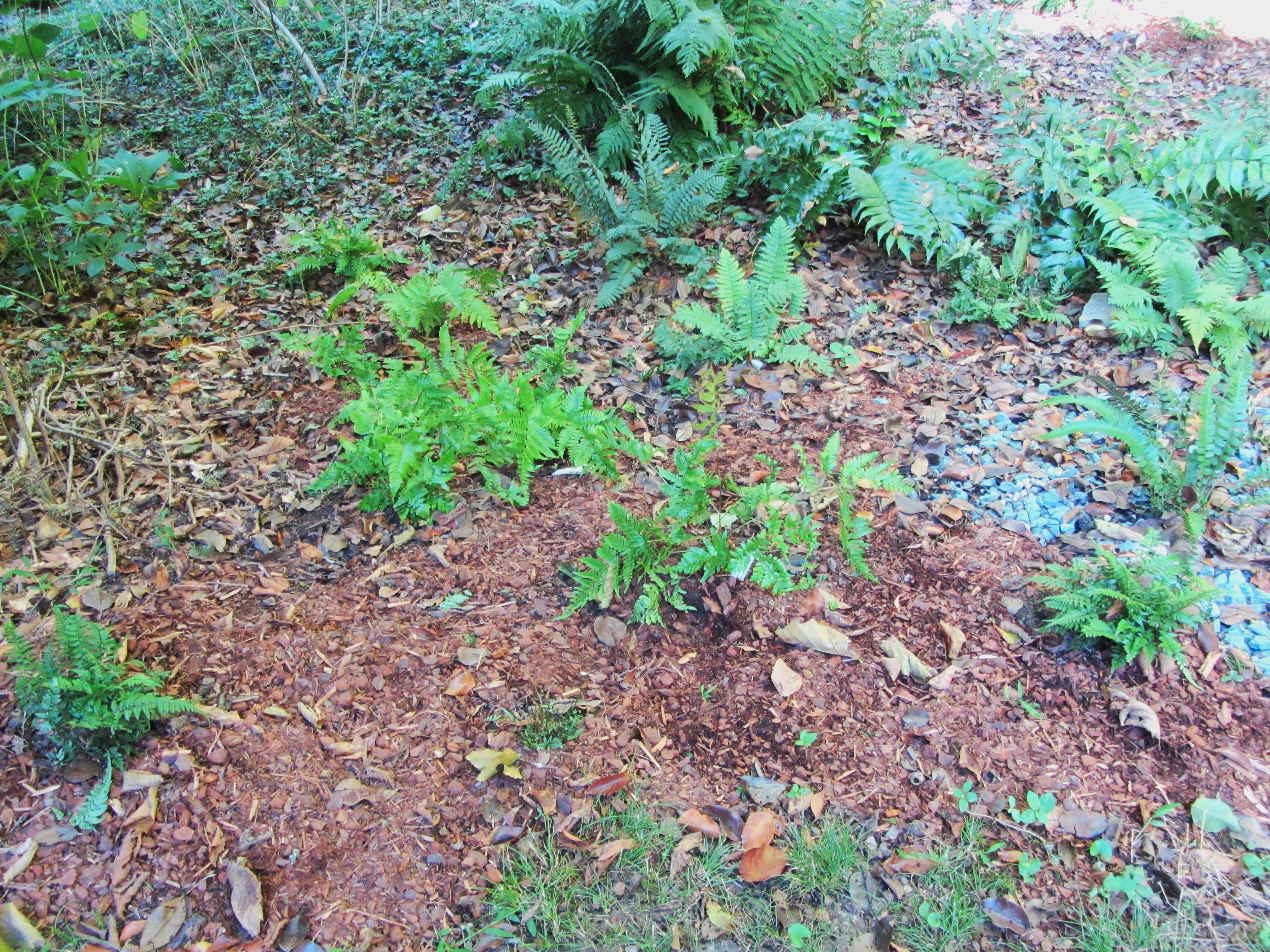
The past week has allowed me to plant about nine of these little Korean rock ferns, seven new D. erythrosora ‘Brilliance,’ three new tassel ferns, and several clumps of ostrich fern that a neighbor brought over. I have been working on our newest area of fern gardens and adding a few additional ferns in the woodlands at the top of our garden.
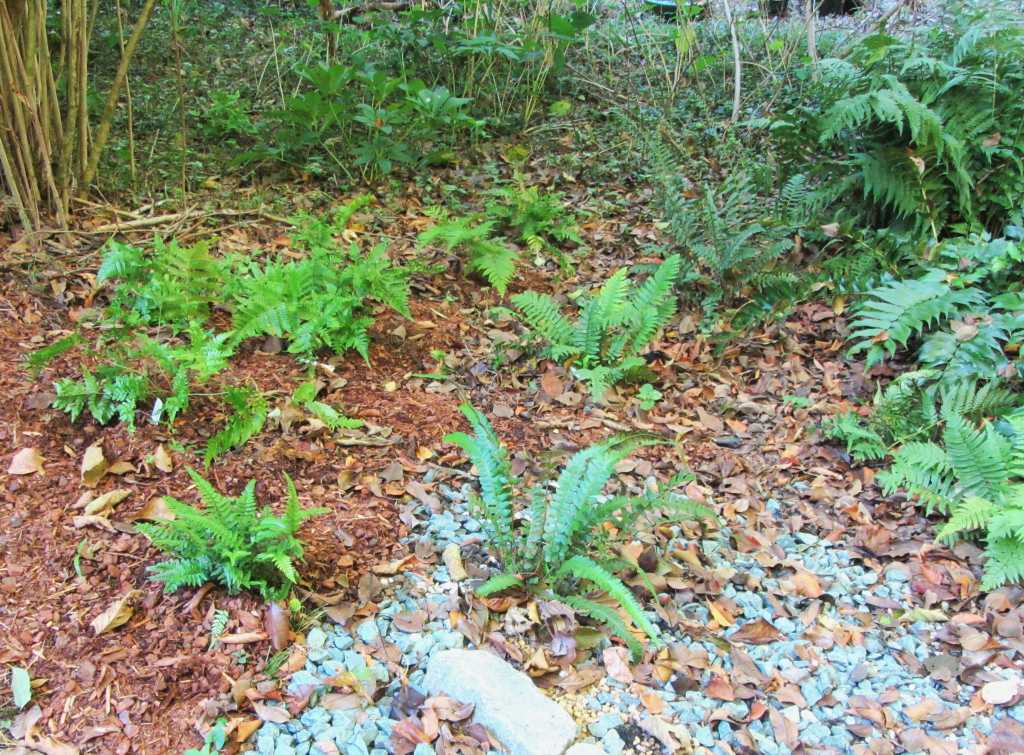
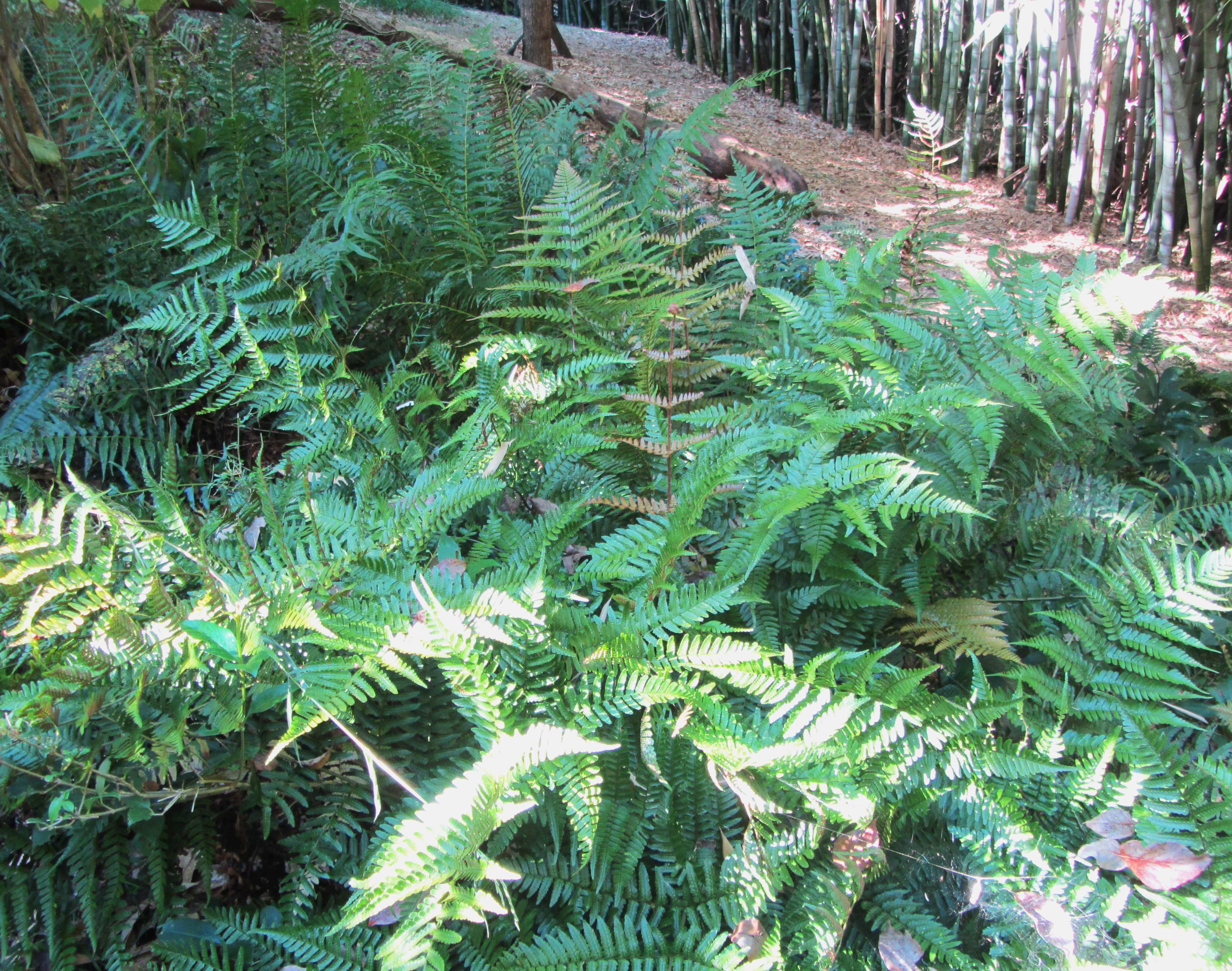
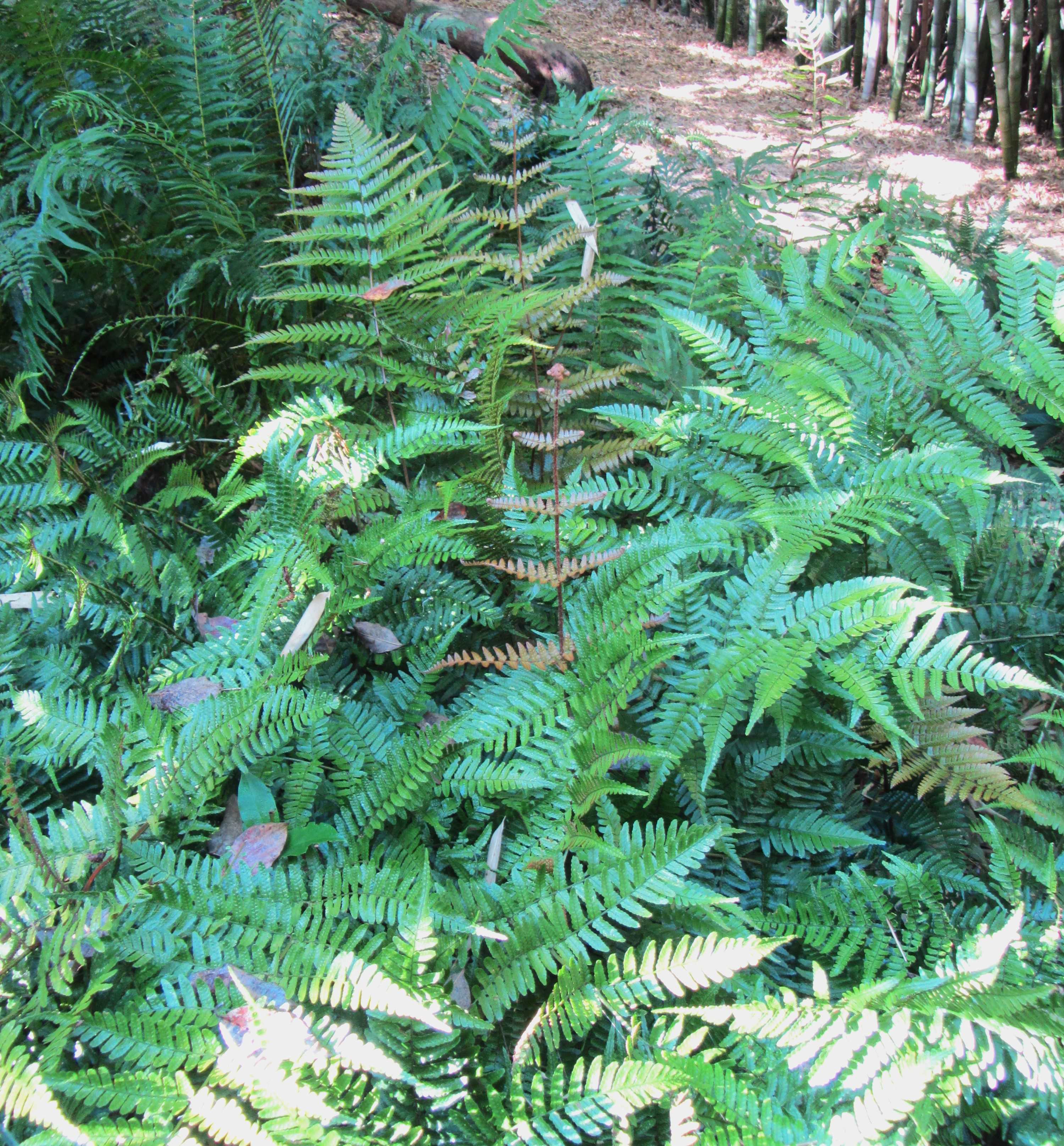
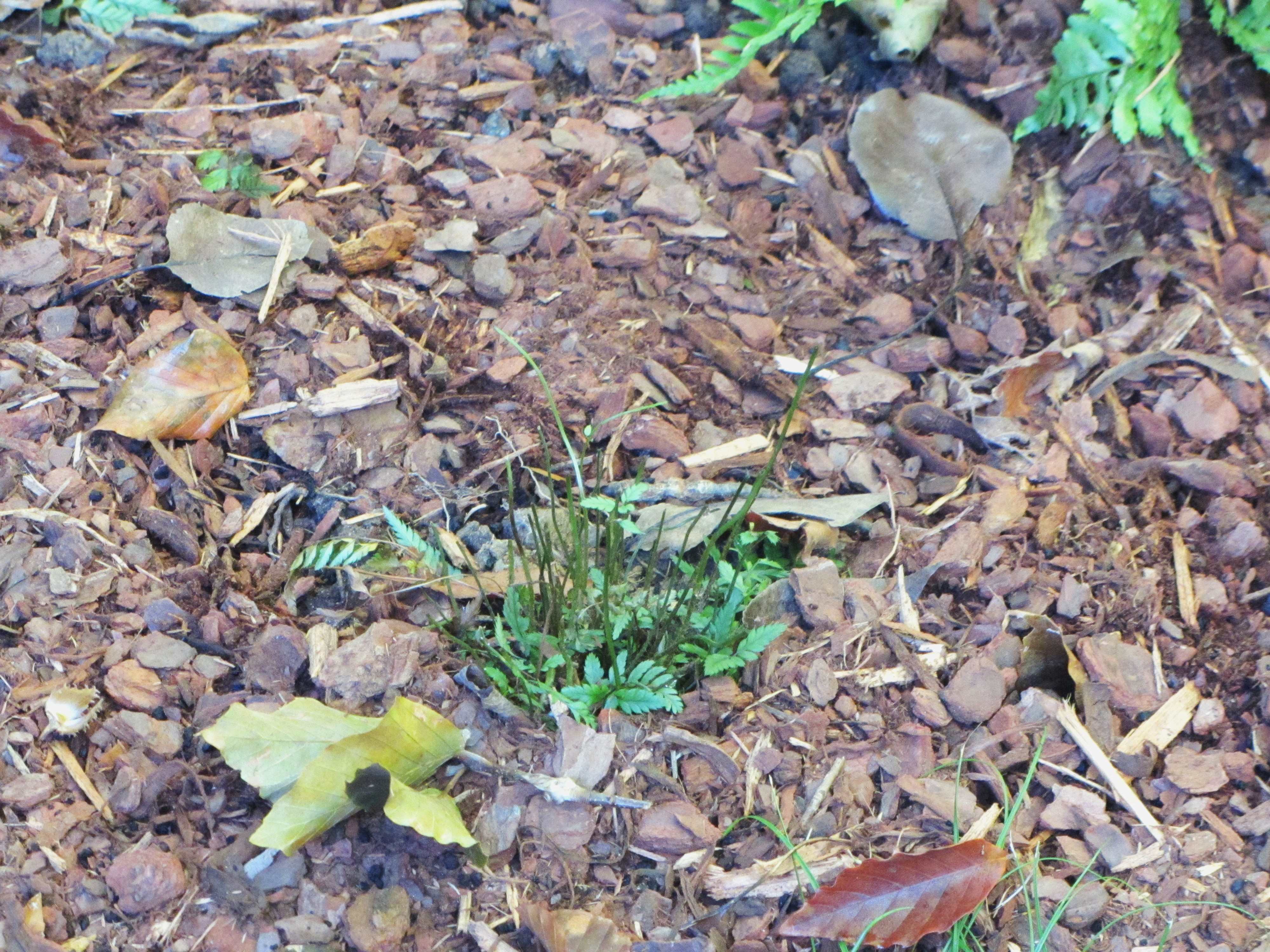
So, imagine our surprise to come out on Wednesday morning to admire the work in progress, and discover one of the newly planted Korean rock ferns nibbled down to its crown. There were a few stray frond tips dropped nearby, but otherwise, this beautiful new fern was something’s lunch. Its sisters on either side and across the way were pristine. Only one fern was eaten.
We had noticed a few fronds missing from the first Korean rock ferns I planted up in the woodlands, but never the entire plant. We will add this to the growing list of ferns nibbled by animals in our garden in recent months.
For years now, I’ve considered ferns to be relatively safe plants because animals so rarely taste them. I’ve advised others to plant ferns with confidence that they will grow where deer and rabbits eat tastier plants. This year has been different. Some of the Christmas ferns I planted early last spring were uprooted and eaten whole- only bits of roots were left. Various Athyrium species have been nibbled or consumed this summer. A little A. otophorum, planted new this spring, was grazed to the dirt in August. And various Japanese painted ferns have lost fronds to grazers as the season wore on, unusually hot and dry even for coastal Virginia. I assumed that the hart’s tongue ferns I planted last fall, and this spring, were just struggling in our climate. But now I realize that they have been feeding critters all summer long.
It may be that newly planted ferns of whatever species are just be too attractive to skip because they are still full of nitrogen fertilizer from the nursery. Animals are drawn to new plants because the nitrogen makes them taste ‘salty.’ That helps explain some of our losses but doesn’t cover the older Athyriums that have consistently fed animal visitors for months now.
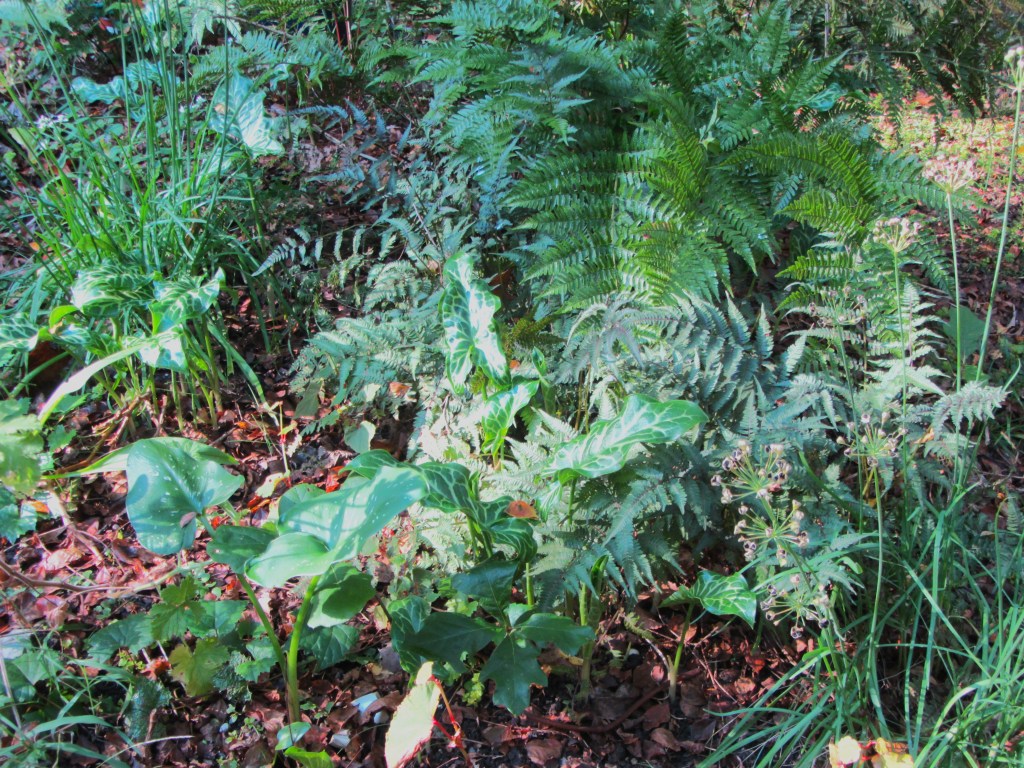

When I came out this morning to photograph the new clumps of Matteuccia struthiopteris, ostrich fern, I found that two of those new clumps were grazed back to the crown, too. Who knew deer or rabbits would eat ostrich fern? None of these clumps had many fronds to begin with, but since they are deciduous, I still expect them to make it to next spring. Their roots will grow through the winter.
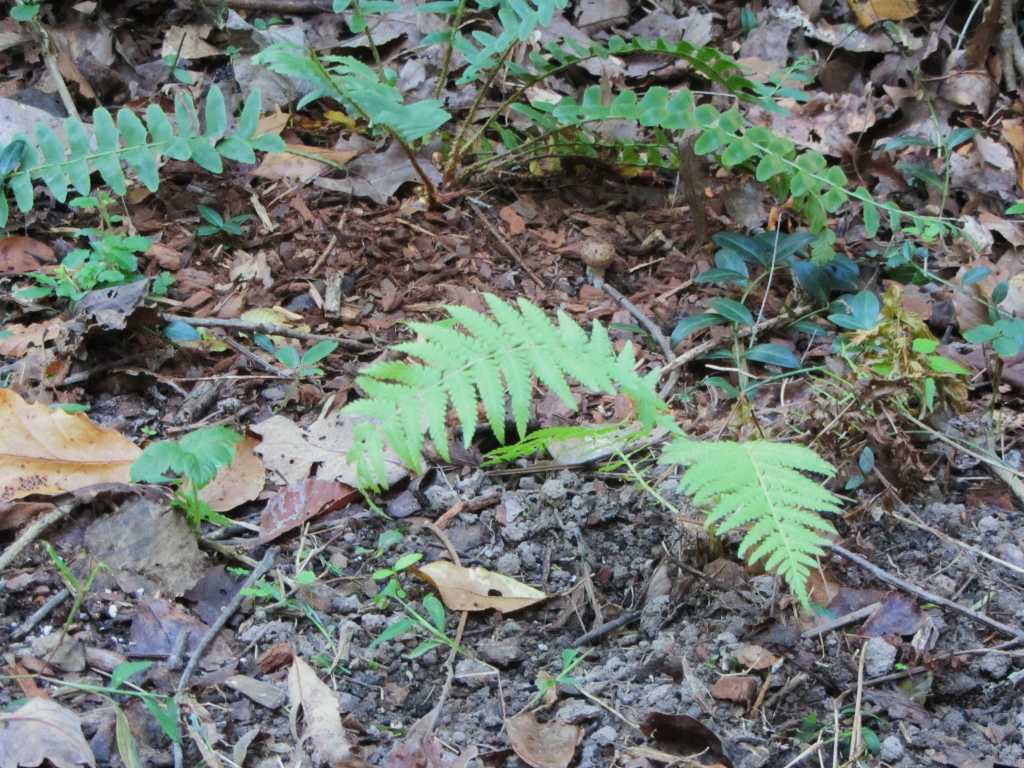
Foreground- a newly planted ostrich fern division, that hasn’t been grazed. Background is one of the new Christmas ferns planted last March. The second photos shows a mature Christmas fern that has grown in the shadow of our home for twenty years or more. Evergreen vines also sequester carbon throughout the year. 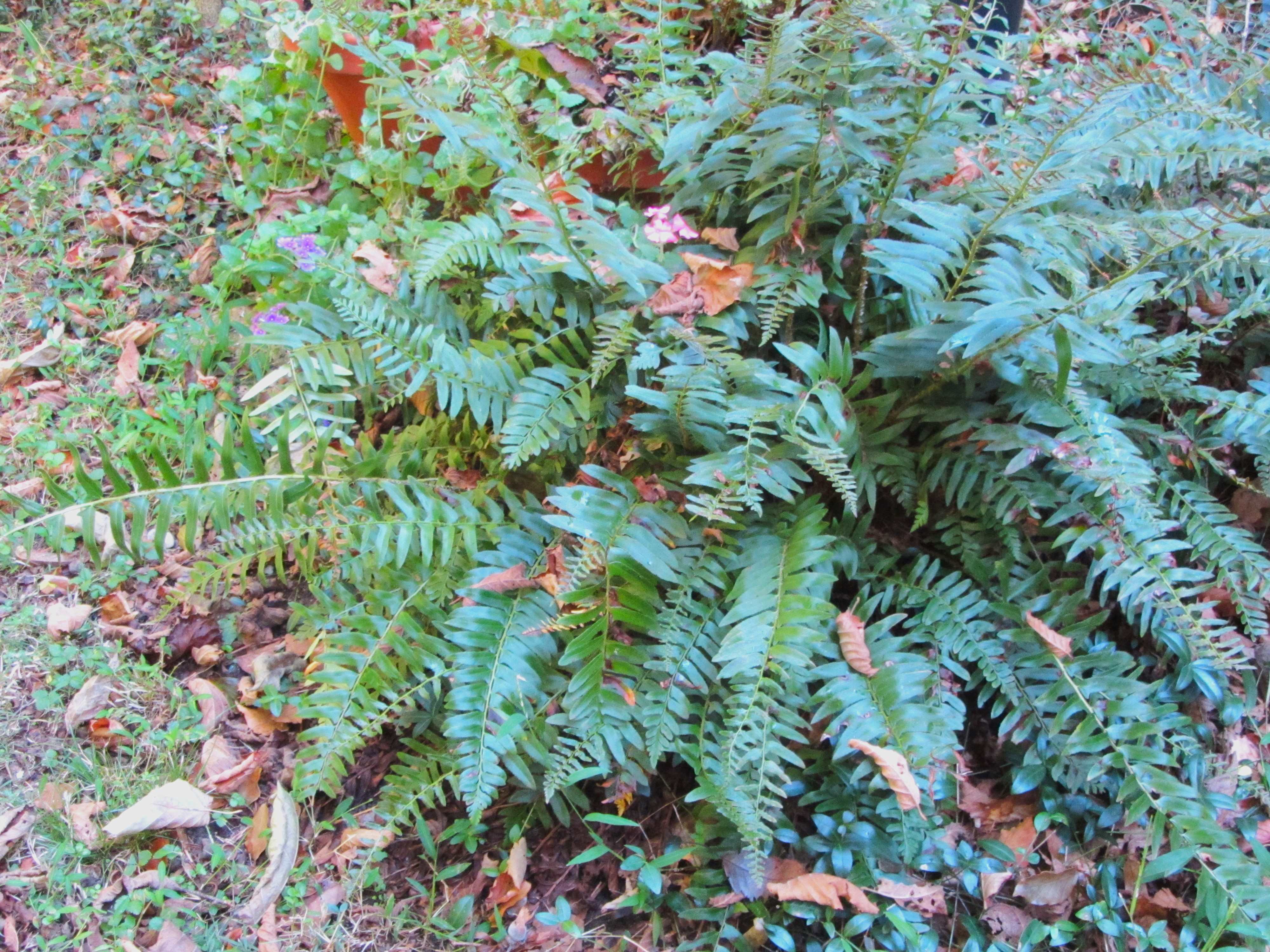
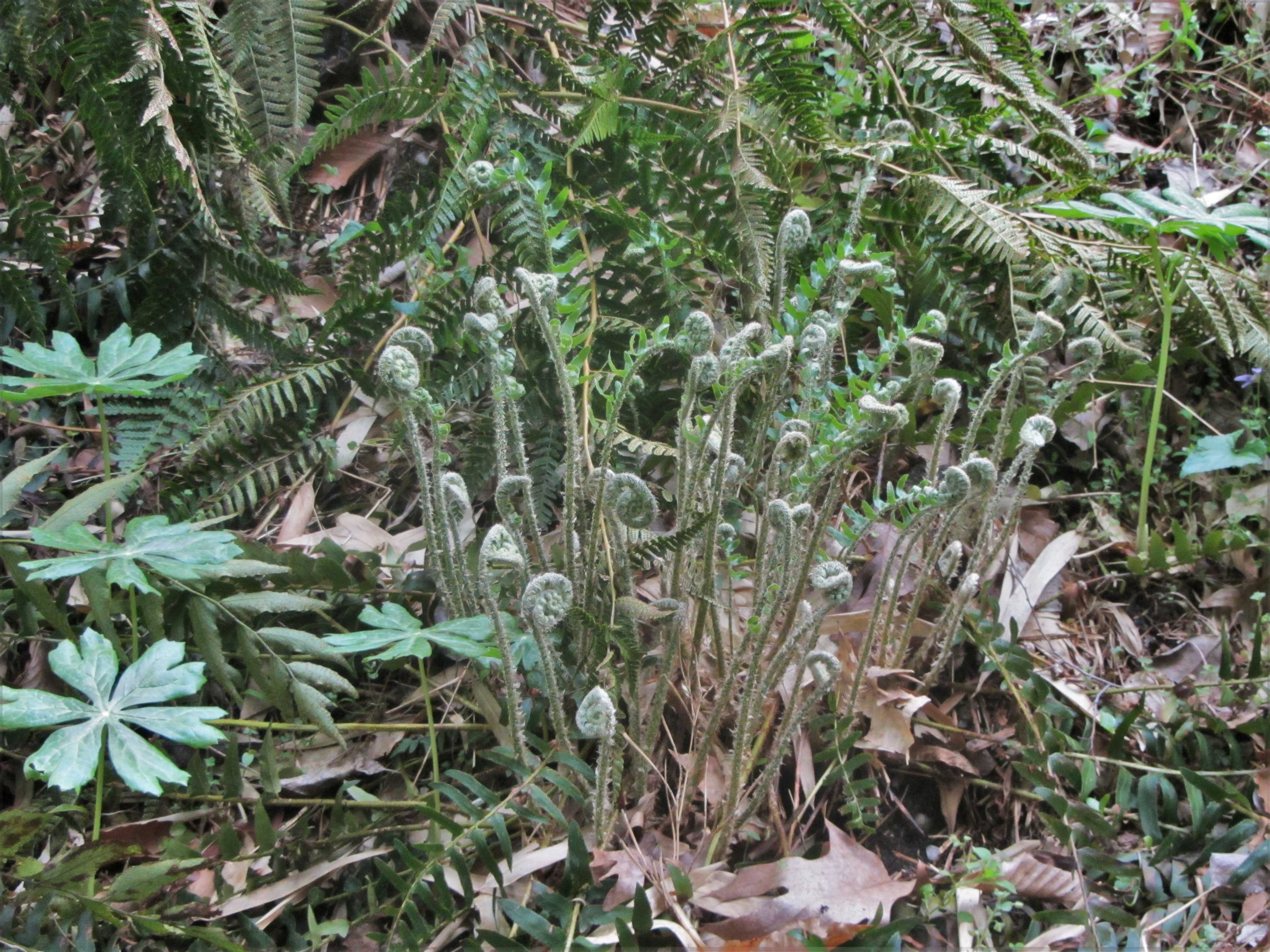
There are still a few beautiful, evergreen ferns consistently left alone by the grazers who frequent our yard. I still highly recommend all these for our climate because they are tough, resilient through all seasons and all kinds of weather, and keep doing their quiet work of filtering carbon and other greenhouse gasses and fine particulates out of the air year-round, sequestering these pollutants in their fronds and roots. They scrub the air, as well as providing habitat, and sometimes their fuzzy hairs for wildlife. The birds hunt for food beneath them even as they use the hairs to line their nests.
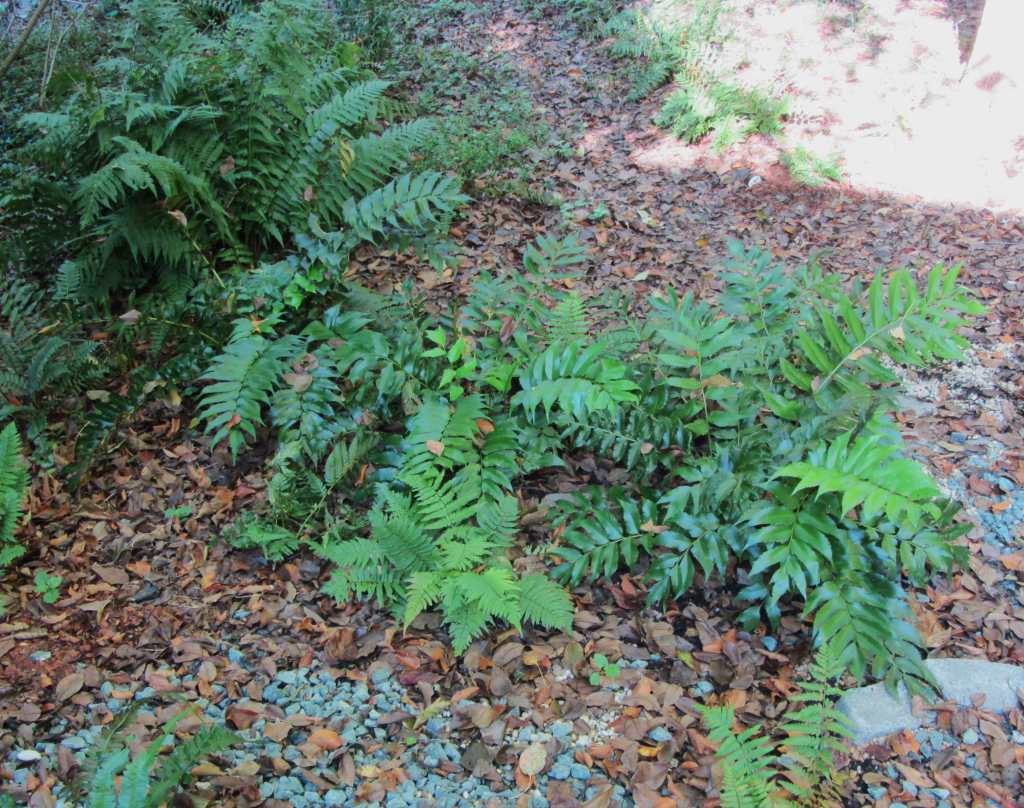
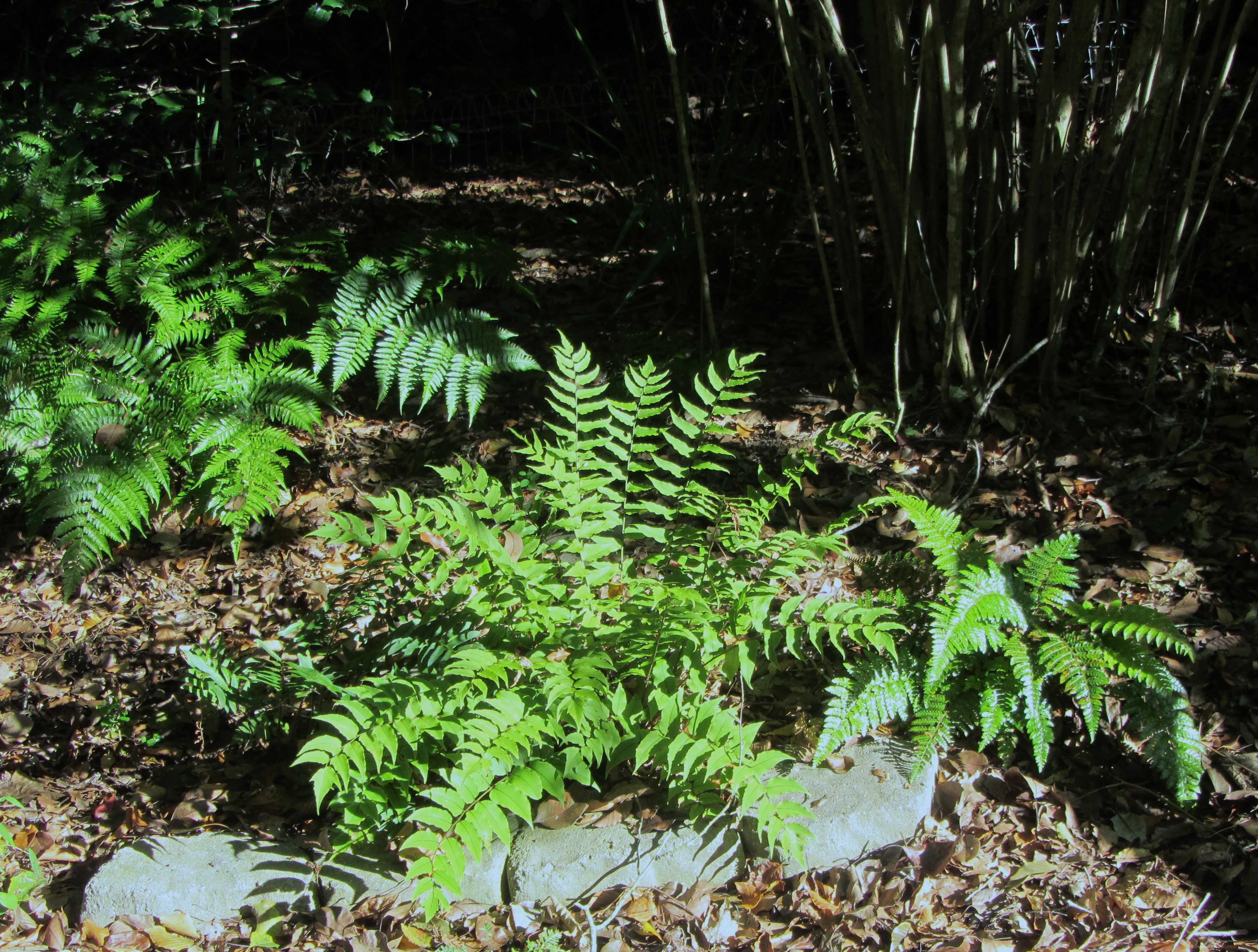
This is my current list of favorite evergreen ferns. If all goes well, we’ll add the little Korean rock fern to the list next spring:
Dryopteris erythrosora ‘Brilliance’, Autumn brilliance fern (this is a patented cultivar of an Asian species)
Polystichum acrostichoides, Christmas fern (East Coast US native)
Polystichum polyblepharum, Tassel or bristle fern (Asian species)
Cyrtomium falcatum, Japanese holly fern (Asian species)
Cyrtomium fortunei Fortune’s holly fern (Asian species)
Some of the native Asplenium species, like ebony spleenwort, are also evergreen. It is very rare to find these available to purchase locally. They must be ordered from specialty fern suppliers.
Ferns may be relatively small, but they are highly functional and beautiful plants in the garden, especially when they provide color and structure in their planting areas throughout winter. Many will grow in deep shade where flowering plants struggle. Use them under shrubs, as ground cover beneath trees, and on slopes to prevent erosion during heavy rain.
I’ve treated all of our new ferns with organic, granular Plantskydd now, expecting that to help protect them from rabbits, squirrels and deer. Once their roots settle in to their new homes, and new growth begins in the spring, I’m sure that they will prove resilient and reliable for many years to come.
With appreciation to Jim Stephens of Garden Ruminations, who hosts Six on Saturday each week.

Learn more about ferns at The Hardy Fern Foundation.
You might enjoy my series of posts, Plants I Love That Deer Ignore
 Our Forest Garden
I am grateful that no “critters” have taken to munching on my ferns but the animal world has been gradually encroaching into our suburban neighborhood.
LikeLiked by 1 person
Here is a fresh link to my post for this week. Hope this one works.
LikeLike
Thank you for the link. It worked perfectly and I love your first photo of the Heuchera, particularly. A lovely cultivar! I’m usually drawn to the ones with purple and pink leaves, but H. ‘Glitter’ is a beauty that I’ll keep an eye out for up here. Lovely six this week. I’ve had mixed success with the Indian holly fern. It is a beauty, but very cautious in sending up new fronds here. It is somewhat rare to find, too, and a real joy when happy. So glad that the critters in your yard are leaving our ferns alone. I’ve discovered that they normally take entire fronds, and there may not be much evidence left behind unless they graze the entire plant. I plan to be more faithful in using repellents around the newbies.
LikeLiked by 1 person
I’ve discovered that voles will eat Christmas ferns and hellebores, mostly in winter. I always thought hellebores were particularly pest-free, but obviously not!
LikeLiked by 1 person
Oh Eliza, Hellebores, too? They must really be desperate. I had a series of little Oregon grape holly seedling shrubs disappear over summer, and perhaps voles had something to do with those, too. They were sited in an area where they should have grown easily. Those pesky voles! I hope you were able to replace your ferns and have some seedling Hellebores ready to transplant.
LikeLike
They didn’t outright kill either, but ate a large portion of it. The fern got hit two winters in a row. Hidden under snow, one has no idea until spring. This year, Repels-All granules are going down!
LikeLiked by 1 person
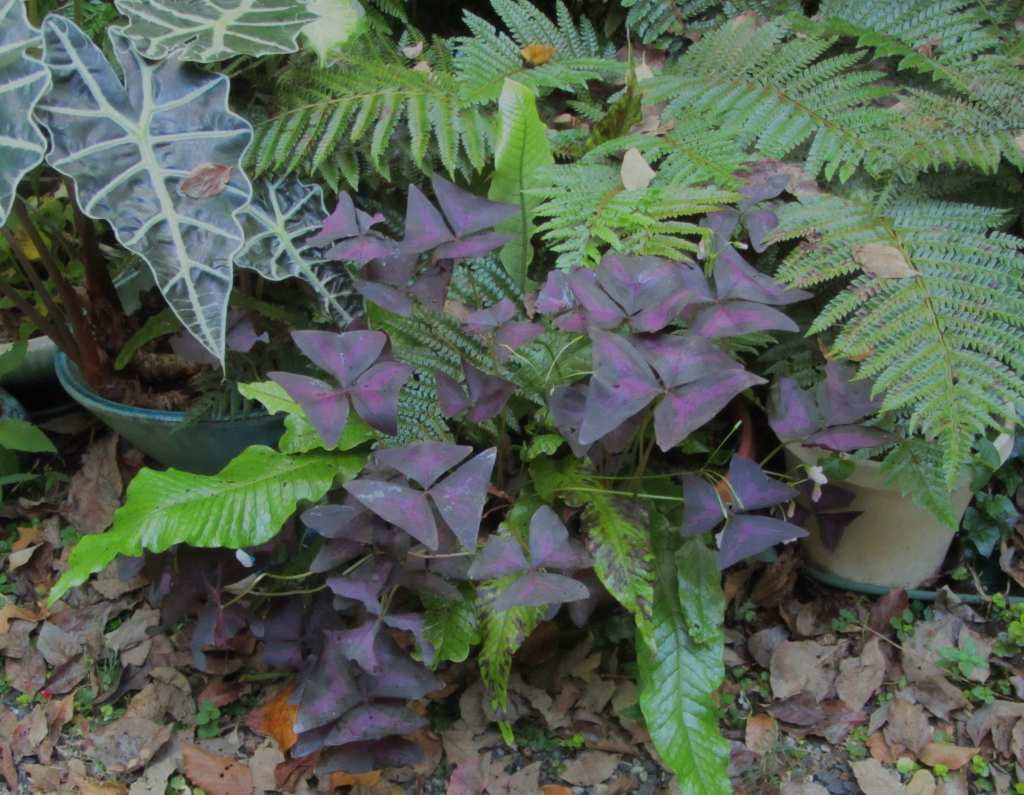
I had never heard of the term ‘Christmas Ferns’ until now, I really like how you have grown the oxalis to such great effect amongst the ferns, I do have this growing elsewhere in the garden, and I have noted to move some to where the fern are growing. Many thanks for this inspiration.
LikeLiked by 1 person
Thanks for visiting, Noelle. The ‘Christmas ferns’ got their name because they are so beautiful in our native woodlands in December. They absolutely shine. Most of our other native ferns are deciduous and disappear after the first frost, but these Polystichums look beautiful year-round. Oxalis looks amazing grown in combo with a variety of other plants, particularly as a ground cover under taller foliage specimens with long petioles, like Alocasia. Have fun!
LikeLike
Surprising and very interesting description of all these ferns. Here there are many in the woods of different varieties (I would even say too many because no animal nibbles on them). Even hart’s tongue ferns survive very well in my garden. The only ones that need to be protected here are the tree ferns but I have still been trying to grow them for 3 years… (dicksonia antartica and cyathea australis)
LikeLiked by 1 person
Ah, Fred, I always envy the wonderful plants you can grow in your climate. I tried tree ferns when we first moved here and had little success. They must come indoors for about six months of the year, which and present its own challenges. I am so impressed that you can grow them in your garden. Our soil is likely a little too acidic for the hart’s tongue ferns to be truly happy here.
LikeLiked by 1 person
I’ve always relied on the fact that nothing munches on ferns. I’ll have to keep a better eye on them.
LikeLiked by 1 person
Same here- until just recently. The only constant is change, no?
LikeLiked by 1 person
Ferns can be difficult to identify! The native ostrich fern here resembles the ostrich fern of other regions, although it is a different species, Dryopteris arguta. It might also be known as the Western wood fern. Actually, what we consider to be the ostrich fern might actually be more than a single species. Anything that resembles it gets the same designation.
LikeLiked by 1 person
You are so correct about how hard it can be to identify ferns! The day my neighbor gifted me with these ferns she couldn’t recall their species. So I began digging through my references trying to ID them. None of my ‘guesses’ held up to scrutiny. One factor frustrating even pinning down a genus was the total lack of spores under the fronds. That should actually have been my clue. Since no fertile fronds were included in the divisions, it didn’t occur to me to assume that this was a species with separate fertile and infertile fronds. When I wrote back to thank my friend and tell here they were all planted, she told me that she remembered what a third neighbor had called the ferns when she gave the original divisions to her, many years ago. That was the clue I needed to confirm the ferns as our ‘ostrich fern.’ I had never heard of a Dryopteris species known as ‘ostrich fern.’ I’ll have to look that one up!
LikeLiked by 1 person
That is the problem with common names. They are not universally common.
LikeLiked by 1 person
That has been the wisdom for as long as I’ve been gardening. But the way they keep switching plants from one genus to another, and even updating species names, you almost need a reference book to properly name even common plants. I’ll never forget my dismay the day I learned that Mahonia aquifolium had been moved to the Berberis genus. ‘Berberis’ just doesn’t have the same ring as ‘Mahonia’ when chatting about such a beautiful plant! (I still call it Mahonia, even as I’m digging up and rescuing seedlings from our neighborhood entrance, or my parents’ yard, and bringing them home to grow on!)
LikeLiked by 1 person
Many of us prefer the names that we originally learned, but that defeats the purpose of universal nomenclature. Oh well, I am no botanist.
LikeLiked by 1 person
I was surprised, but pleased, to learn yesterday that the climbing Hydrangea vine, native in our area, that I learned as Decumaria barbara has been moved now to the Hydrangea genus. It was so confusing to call it ‘Climbing Hydrangea’ and yet have it in a different genus. The way that the names in the ‘universal nomenclature’ keep changing so quickly, it is easy to find oneself outdated if one isn’t constantly looking up this information for some purpose. I still want to call Mahonia, ‘Mahonia’ because I really dislike the Berberis genus in general. Such is life.
LikeLiked by 1 person
Gee, I was not aware that this particular hydrangea was not a hydrangea. It is rare here anyway. Many of the Eucalypti are now Corymbia, but I still use the old name because I have no idea what a Corymbia is.
LikeLike
What a lovely collection of ferns! You’ve reminded me that I’ve definitely got a shady patch that could use some planting, and ferns would indeed do the trick there. How odd that they are getting nibbled, though — I don’t think anything has ever touched our patch of ostrich ferns for the decade that we’ve been here.
LikeLiked by 1 person
You can rarely go wrong with planting more ferns! I hope you find some this fall that you will enjoy for many years to come ❤ ❤ ❤
LikeLiked by 1 person