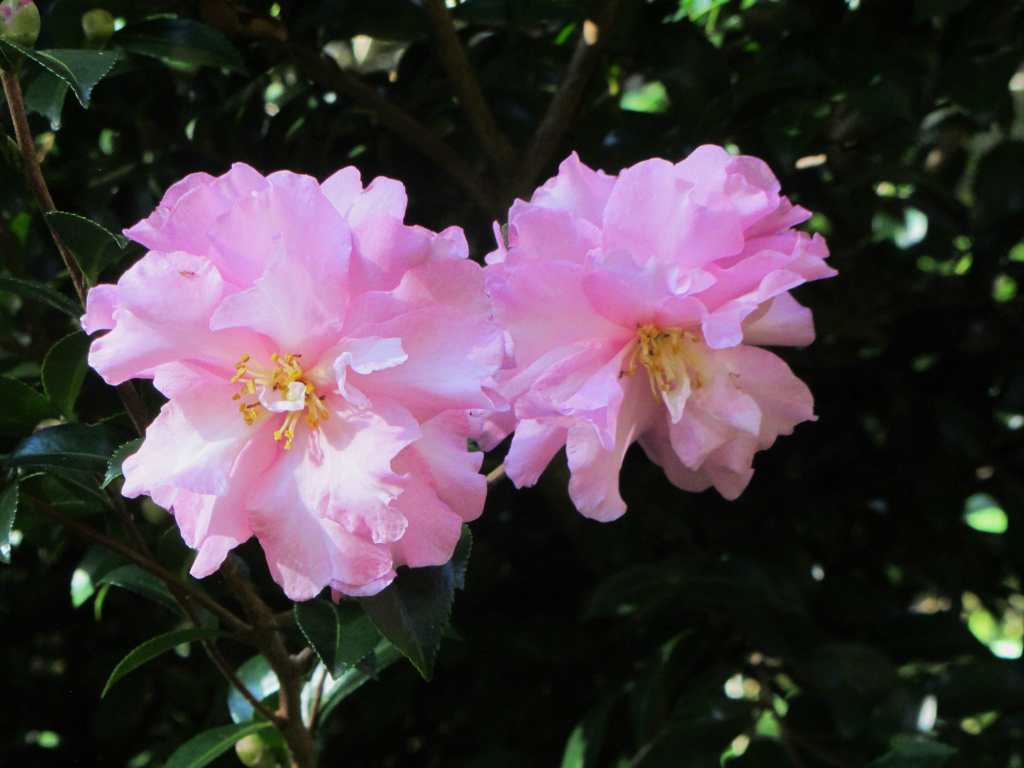
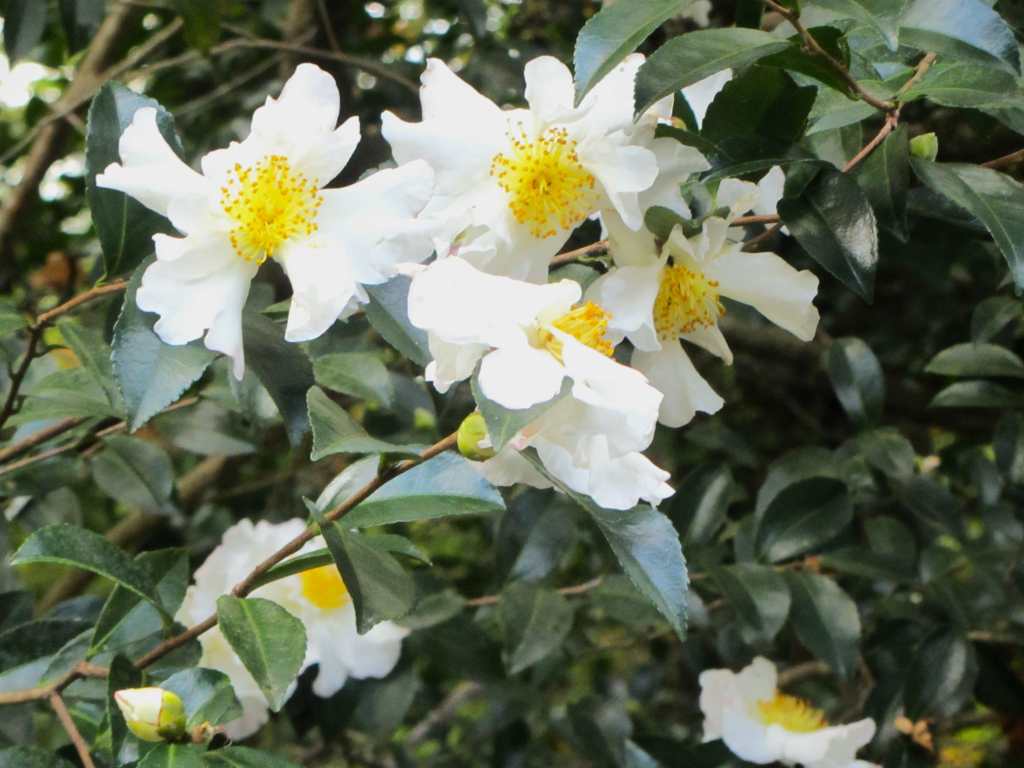
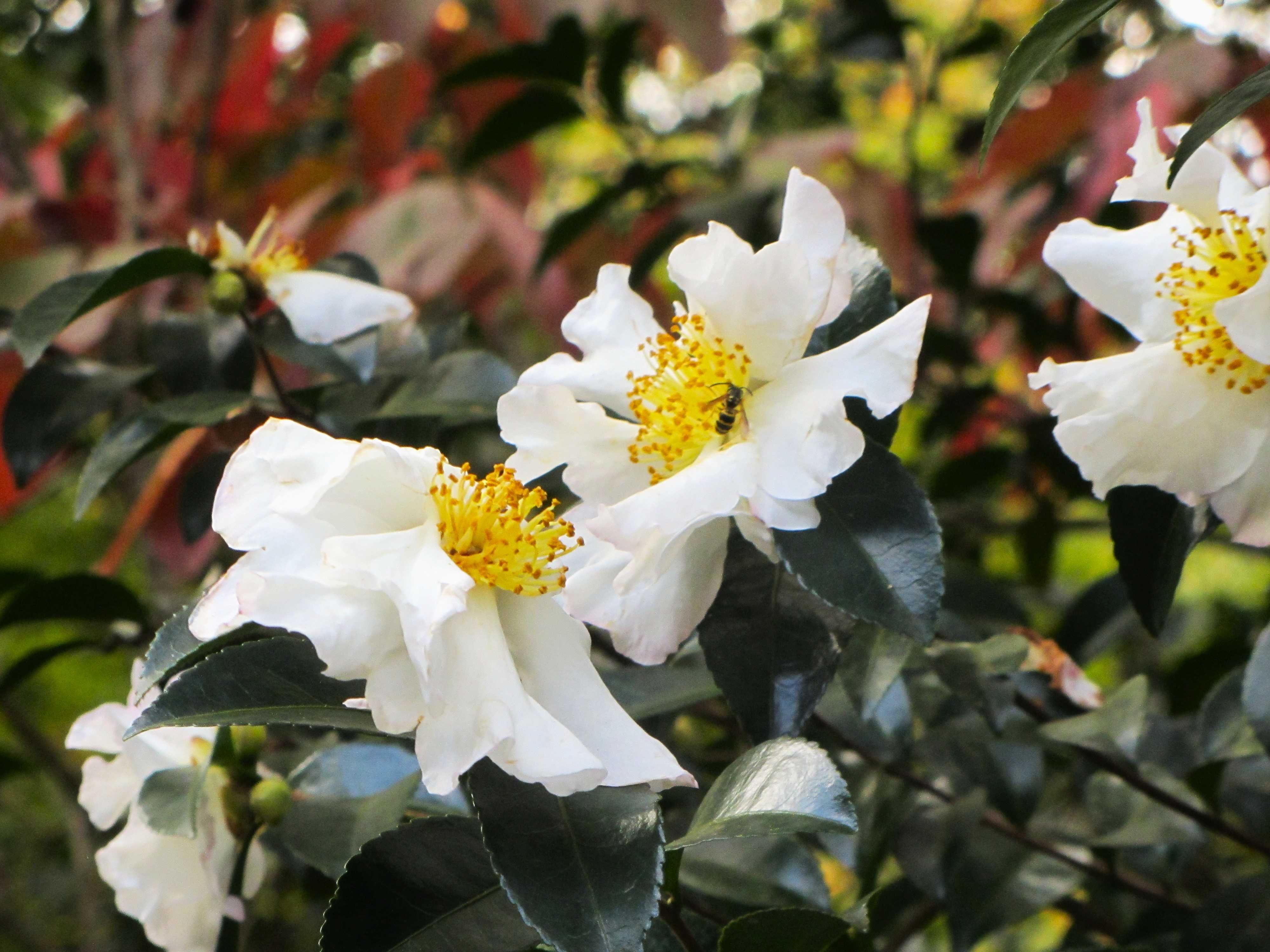
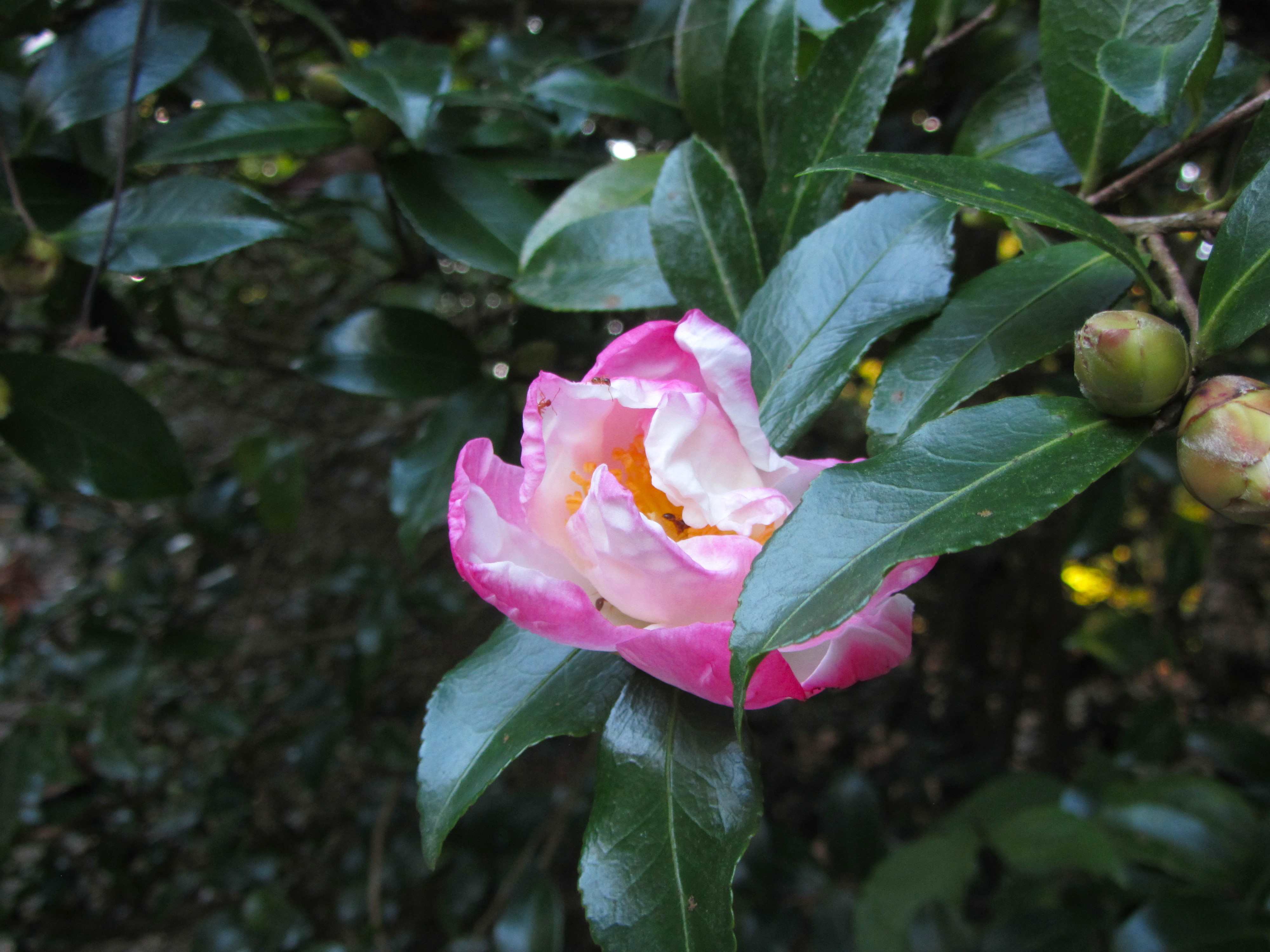
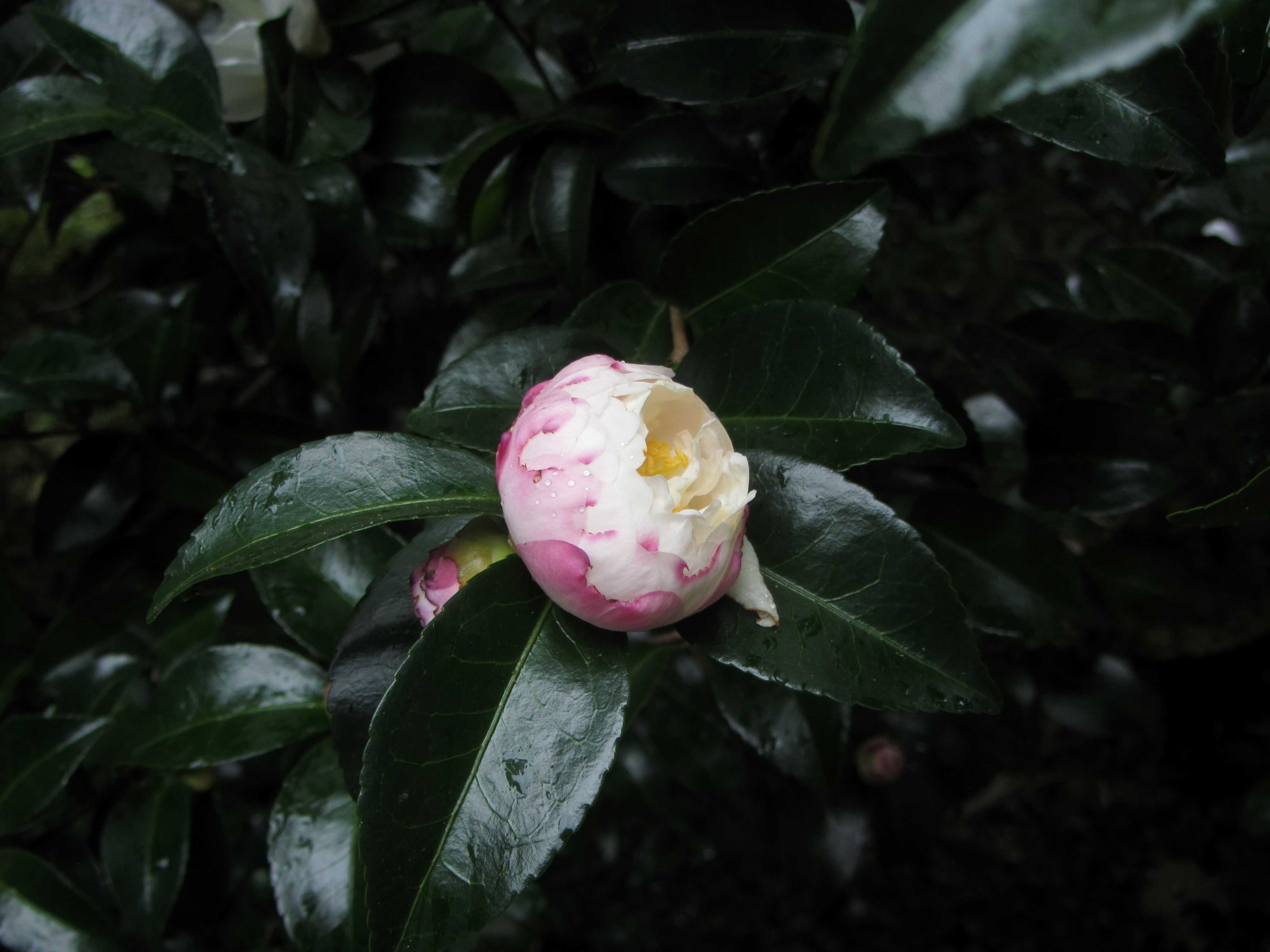
October brings us Camellias. Camellias signal that summer’s heat has broken and the garden is transforming itself for autumn and winter.
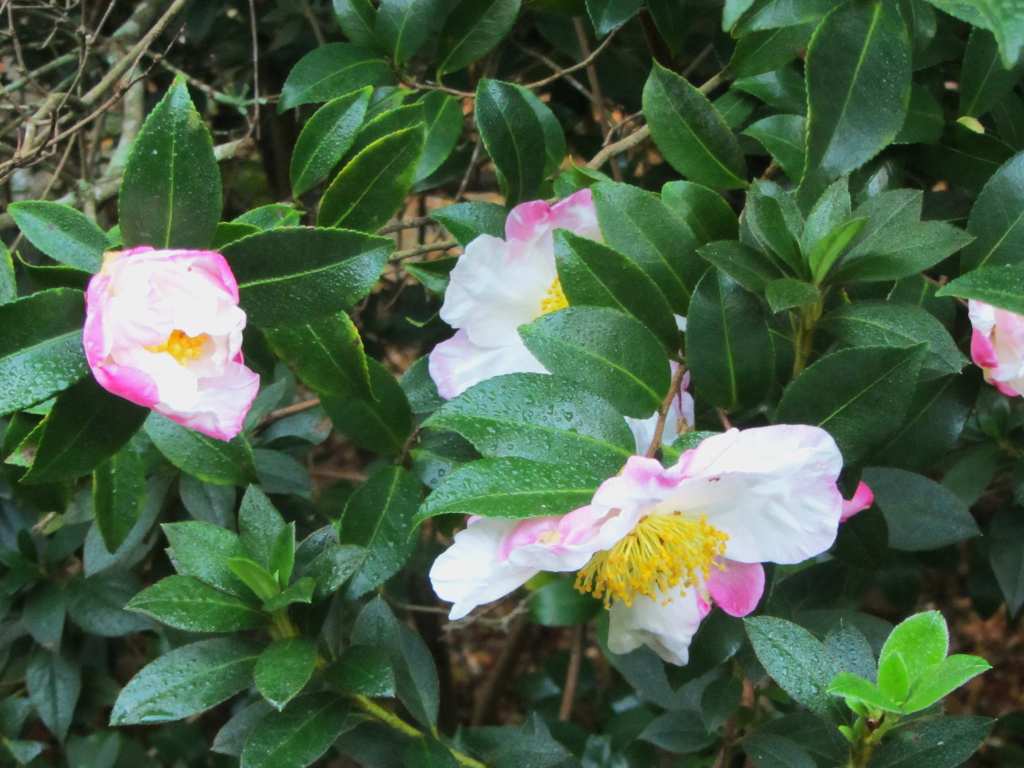
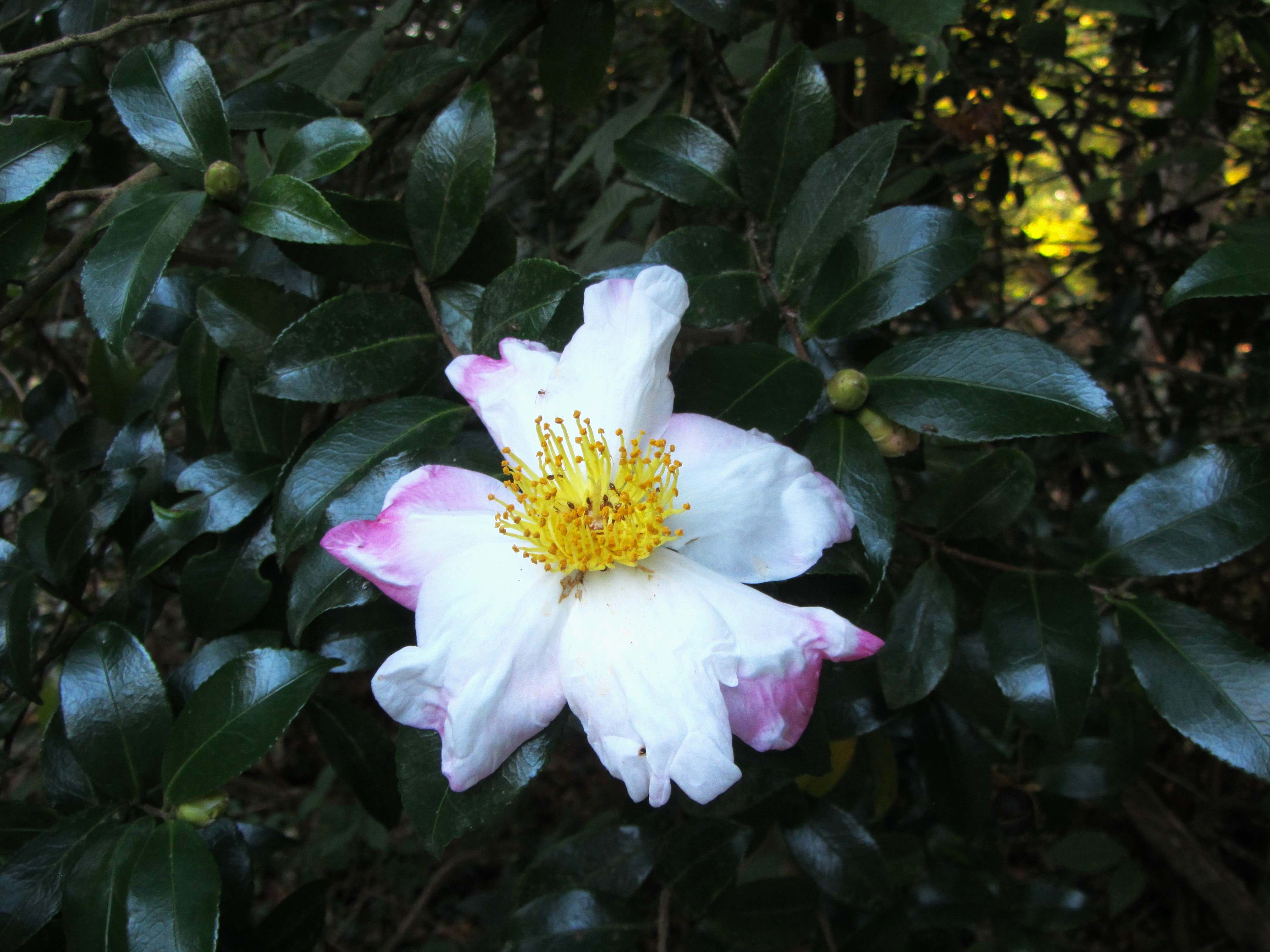
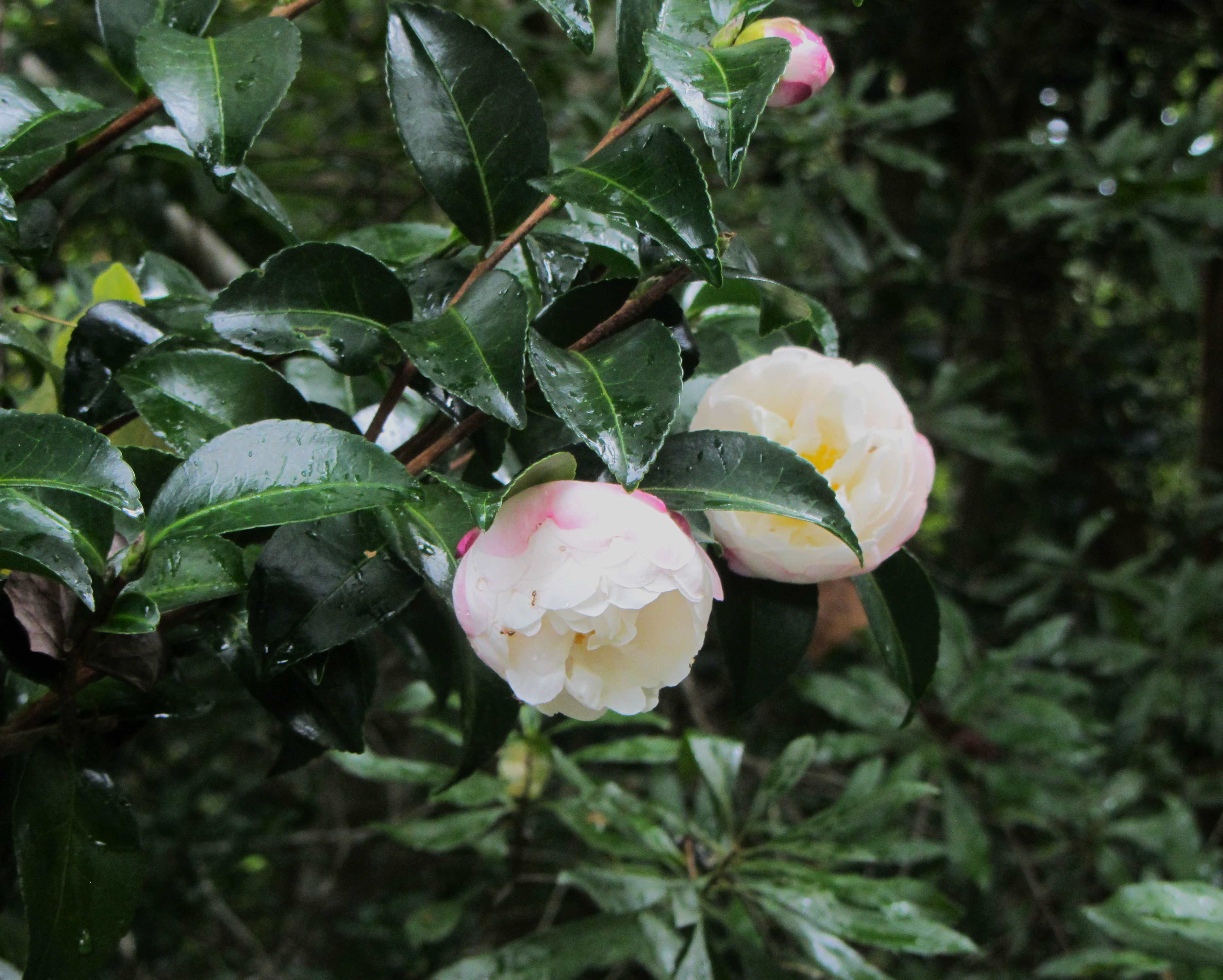
We have Camellias that bloom from mid-October through the winter, and again in the spring. Of all of the different varieties and colors we grow, the earliest delight us the most. They are the lightest, the brightest, and the most delicate.
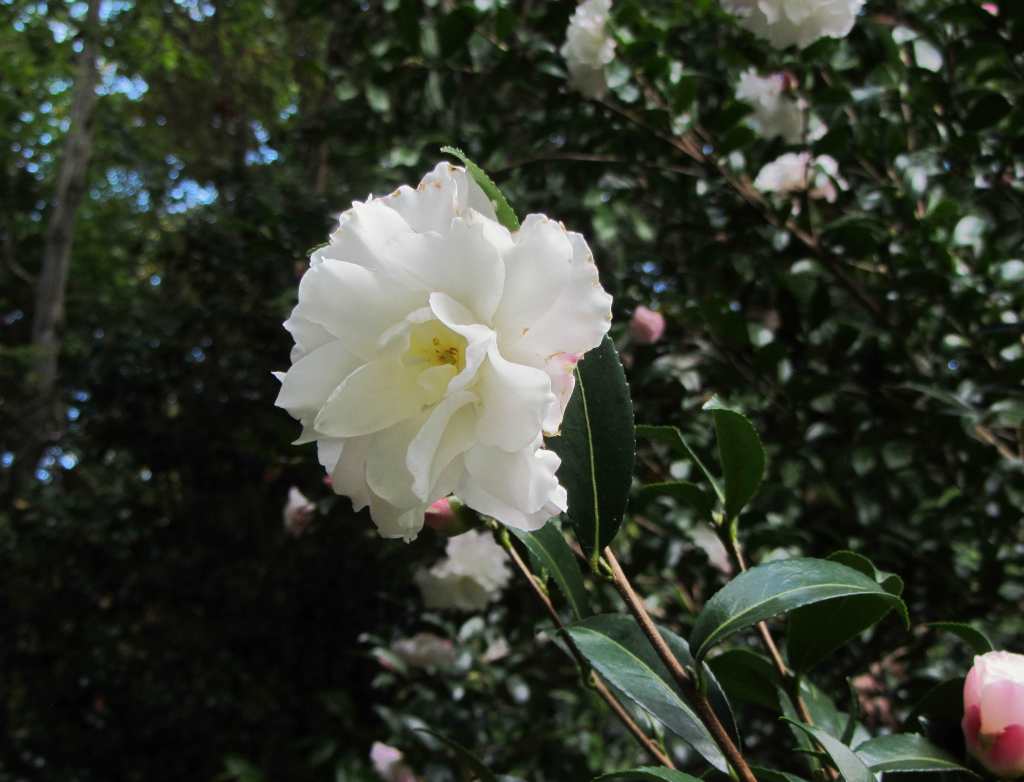
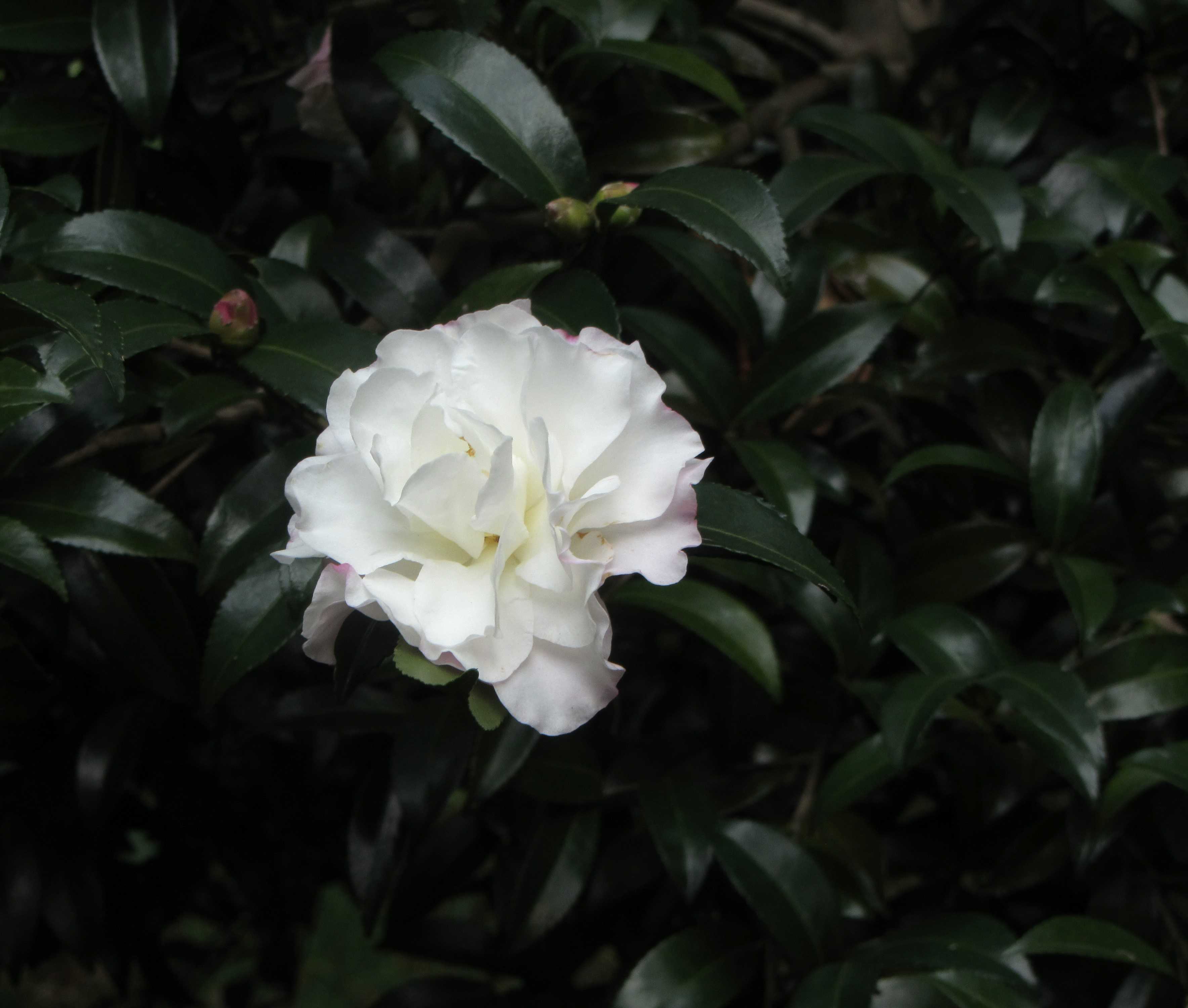
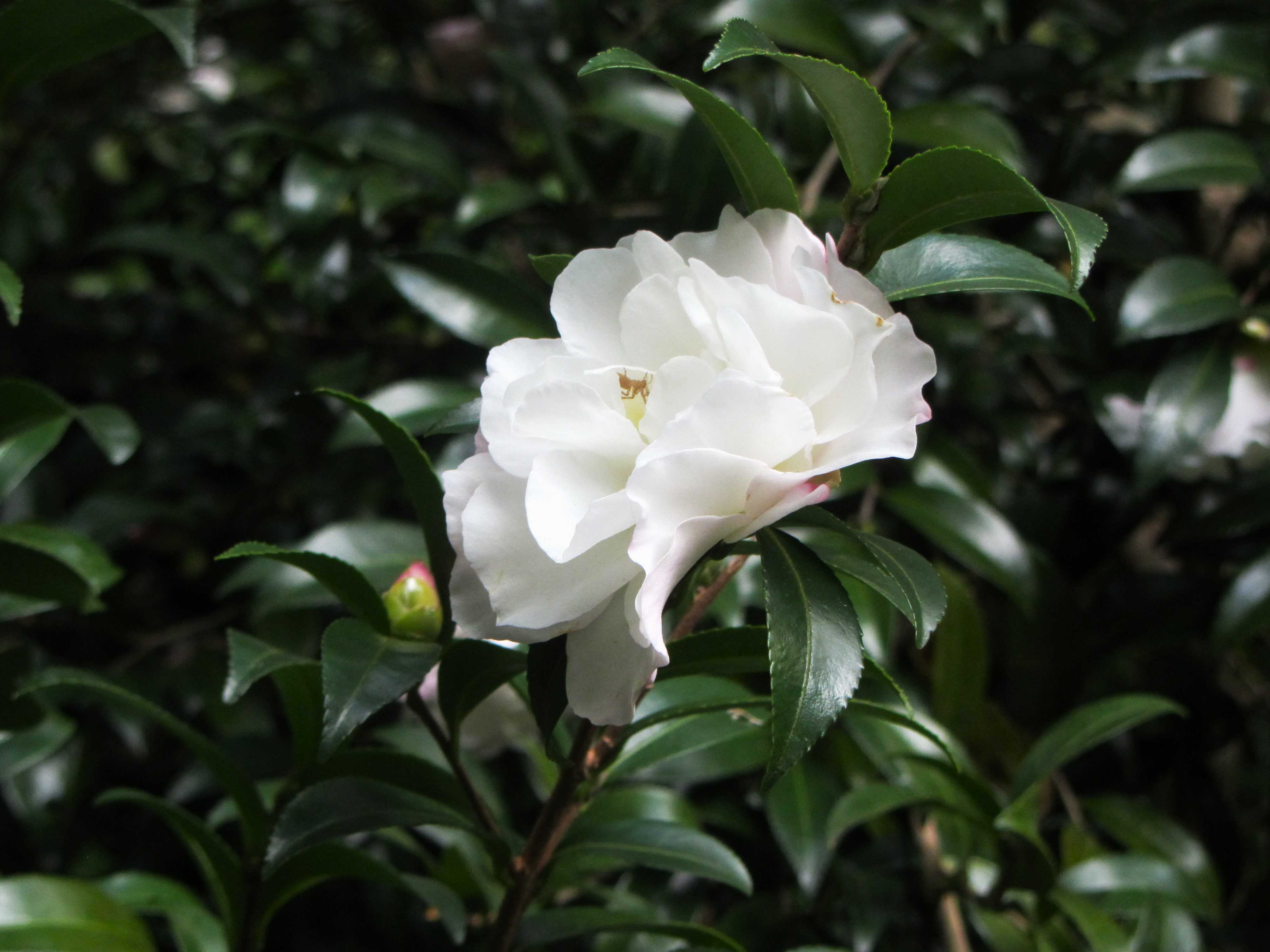
So this week I want to celebrate our Camellias for Six on Saturday. Some of our favorites are in bloom now. These evergreen shrubs like it here and cover themselves with flowers for weeks at a time.
If you are interested in learning more about Camellias and how to grow them, you might enjoy this 2019 post to Forest Garden, “Blossom XLIV : Camellia Sasanqua.”
The past few weeks have been a busy stretch and I haven’t had much time for my own writing on this site. I’ve been writing about climbing vines common in our part of Virginia for the Master Gardener website, and I’ve published two different versions of my annual gardening calendar.
These calendars are designed for gardeners with notes and reminders for each season. The frost dates, equinoxes and solstices, and lots of holidays and observances are included for each month. One version uses photos from my own home garden, including photos of our Camellias. The other one features trees, water scenes and wild shore birds that live in our area. If anyone is interested in having one of these spiral bound wall calendars, please leave me a note in the comments with your email, and I will get in touch with you. I have a few extras and am selling them at cost.
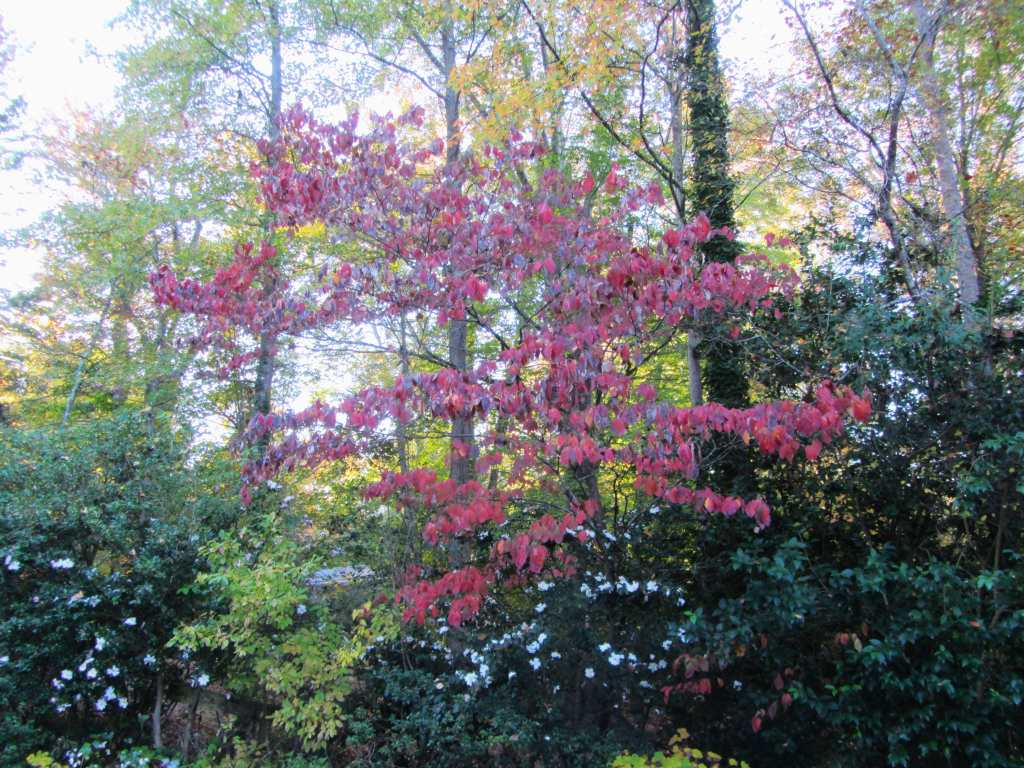
The change of seasons here is exciting, but always a busy time. We have the first nights in the 30s forecast for next week. So now that all of the ferns are planted I will turn my attention to bringing the tender tropical plants back indoors. We have another day or two in the 80s, and then the cold will find us. And the Camellias won’t mind a bit.
With appreciation to Jim Stephens of Garden Ruminations, who hosts Six on Saturday each week.

 Our Forest Garden
These are lovely, I expect that Jim will enjoy this post.
LikeLiked by 1 person
Thank you! I was thinking of Jim while working with the photos. He always shows such beautiful Camellias!
LikeLike
Totally agree with Rosie. This is a kind of Six especially for our Boss Jim. Camellias are his specialty (we have a saying in French: “c’est sa tasse de thé” literally it’s his cup of tea ! 😀)
LikeLiked by 1 person
Well, I hope it hits the spot for everyone who enjoys Camellias. When I was a child, my grandmother had a huge red flowering Camellia beside her front porch that was usually blooming at Christmas. I simply couldn’t understand how she could have flowers like that blooming in the winter. My love for the genus probably came from those early experiences.
LikeLiked by 1 person
Thank you for posting those beautiful camellias photos. My favorite plant are the sasanquas and japonicas which bloom during these dreary cool, wet days which are to come.
I would enjoy having one of your spiral bound calendars (topdock@gmail.com).
LikeLiked by 1 person
Thanks very much! These amazing flowers bloom just when we need them most, don’t they? I will send you an email this afternoon. I have a quick out of town errand and am headed out the door now, but will be in touch later today with info about the calendars. I appreciate your interest in having one.
LikeLike
Such beautiful pictures, you have some lovely Camellias. I wish I could grow them.
LikeLiked by 1 person
Thank you! The sasanquas grow in a fairly narrow range in the Southeast and need cold protection for anyone in colder regions. They were grown, potted, in glasshouses in England when they were first imported from China. It took a while to determine how much winter weather they can withstand and still grow well. These perform much better for us than most varieties of roses, and I think they are just as beautiful.
LikeLiked by 1 person
I have always loved the dark glossy leaves with all the lovely flowers. In Seattle at the university arboretum, there was a whole area of nothing but camellias.
LikeLiked by 1 person
It must be gorgeous!
LikeLike
i love your garden! very pretty. i don’t think i can grow this flower– too far north. thank you for sharing with us~
LikeLiked by 1 person
Thank you 🍀. Camellias don’t like really cold winters. Otherwise they are very versatile and easy to grow.
LikeLiked by 1 person
We used to grow these and Camellia japonica with a few Camellia reticulata. I miss them very much.
LikeLiked by 1 person
What happened? Why did you stop growing them? I’ve never had the opportunity to grow C. reticulata but am curious. Someone I knew gave me seeds from her C. sinensis, but I didn’t get them past seedling stage with a pair or two of leaves. I am starting seeds now from some of these shrubs. Would you like me to include some seeds with the holly seedlings? My intent is to get those into the mail on Monday.
LikeLiked by 1 person
Other crops became more lucrative, and others were phased out. Because I have been away for so long, I do not know what is being grown. I really should find out. Although I intend to grow at least one cultivar of Camellia sinensis in the future, it is one of the few species that I would like to get an identified cultivar of, rather than grow from seed. My colleague who grew Camellia had only about two cultivars in the collection, but they were not in production. Thank you anyway. I will be away for a few days, but should be before anything you send on Monday arrives.
LikeLiked by 1 person
Lovely. When sasanquas were introduced to the UK they failed to make the impact that japonicas and later williamsii’s did, probably because they were thought to need shade and consequently were shy flowering. It’s taken a century for them to begin to become widely known and appreciated though I still encounter people who didn’t even realise there were such things as autumn flowering Camellias. As you say, they are light and bright; refined in flower and leaf compared to their spring cousins.
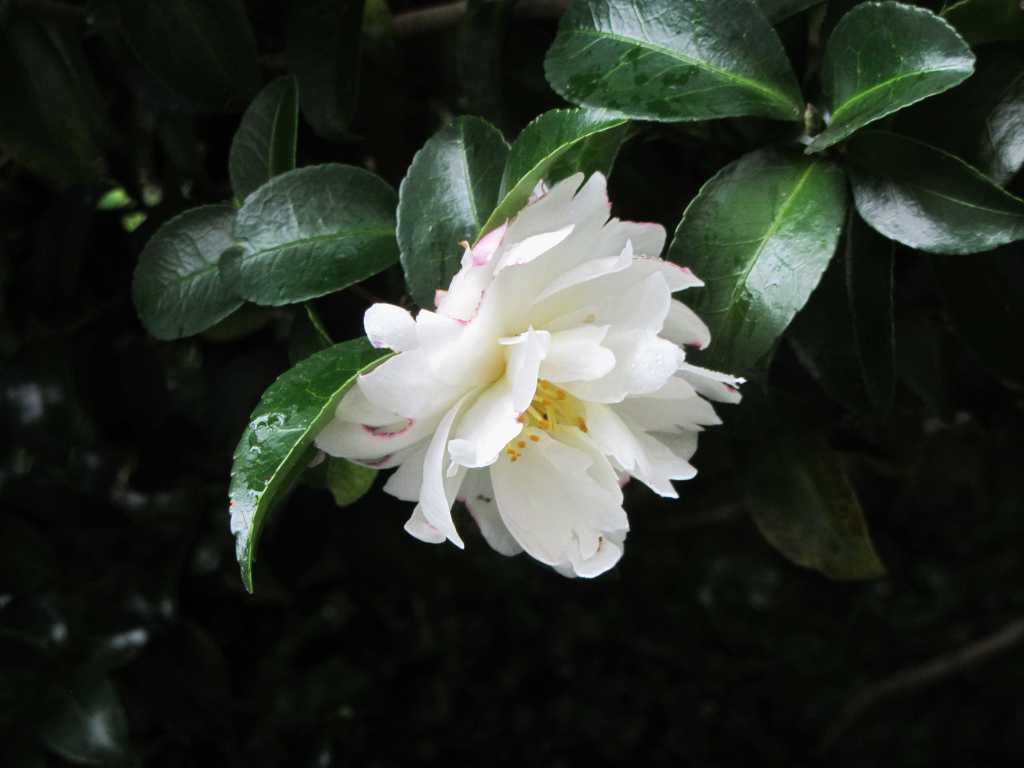
Picture 3 particularly caught my eye as I’ve been trying to nail down which is which betwenn ‘Setsugekka’ and ‘Kenkyo’ and yours looks very much like what I have been calling ‘Kenkyo’ but am told is probably ‘Setsugekka’. You don’t happen to have a name for it do you?
LikeLiked by 1 person
Jim, I’ll see whether I can dig that up for you in the coming days. I hope that as the climate continues to warm that the Sasanquas will catch on in the UK.
LikeLike
What a beautiful collection of camellias! I’m not sure if there are any that would survive in our climate outdoors, but I’m always pushing at the limits of what’s possible to grow and this might just be an interesting challenge of of these days 😀
LikeLiked by 1 person
It is always fun to try new things. Many plants will thrive a Zone or two north of their official range if you can give them shelter, mulch, frost protection, or site the in a ‘microclimate’ near your home. I hope you find one that will work for you! The Japonicas are the most hardy of the group.
LikeLiked by 1 person
Thanks for the tip, that is very heartening to hear! I’m still trying to determine where the best microclimates are and seeing if I can place some windbreaks that would increase those areas. Every year I’m surprised by how many plants I thought I’d never be able to grow are now thriving in our area.
LikeLiked by 1 person