

We walked up the drive, admiring the flowering Camellias and showering leaves on this bright, warm, sunny November morning. The movement of bees caught our eye. The Camellia closest to us was simply covered with a cloud of tiny bees going flower to flower. We stood and watched them feed, listening all the while to the calls of songbirds and rustle of squirrels in the fallen leaves. Our yard is alive with activity.
The bowl of water on the front patio keeps us entertained as birds visit to bathe, squirrels visit to drink, and leaves catch and float on its surface. It needs cleaning and refilling at least twice a day in our dry autumn weather. It is so dry, and hasn’t rained for so long here now, that we have been under a fire alert this week. I’m still hauling the hoses around to water several mornings a week as though it were still July, and the ground is too dry and hard to plant the bulbs waiting in the basement for the weather to shift, so I can plant them.
This week I have been dutifully watching continuing education videos from the Virginia Native Plant Society when I’ve not been watering or watching birds bathe. One was a recent presentation by a local Master Naturalist speaking about the many challenges facing Virginia’s native plant population. She taught me something I hadn’t previously known, and that is that Nandina berries (drupes), scarlet and beautiful this time of year, contain enough cyanide to poison even songbirds who gorge on them during migration.
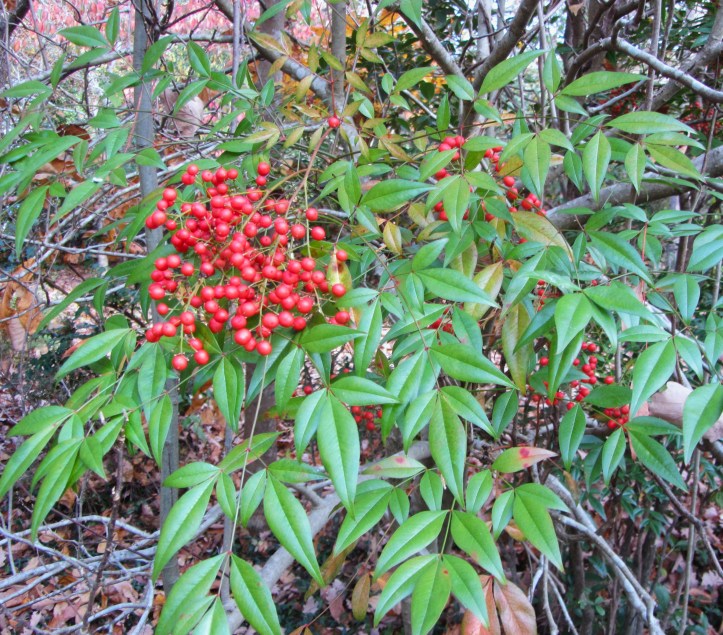
Who knew? Already aware that many wild berries, particularly non-native ones, contain cyanide, I thought that the birds could eat these berries without suffering any harm. We don’t find many dead birds under our berry laden shrubs. The speaker indicated that certain bird species, like grosbeaks, mockingbirds and robins, gorge on berries when they find them. Those birds that gorge on many berries at once are the ones who suffer from over-indulging in cyanide laced fruit. Apparently, this is more of a problem in the Southeastern states than in any other part of the country. Nandina domestica and its hybrids are not officially on Virginia’s list of invasive plants, yet, but they are in neighboring North Carolina and in other states in our region. So I collaborated with some Master Naturalist friends to write about ‘the problems with Nandina’ for our local Master Gardener website.
In working on the article with these very smart people , I ran smack into the controversy over native v. Asian or European plants once again. I had hoped to leave that hot-button issue in my wake when I resigned as a volunteer from our local botanical garden, where a new crop of volunteers were enthusiastically ripping out the beautiful non-native shrubs and perennials planted (and donated) by previous volunteers, to replant those now bare areas with ‘indigenous natives.’ From photos I’ve seen, many of the areas I once tended have since been ripped out and sit bare or replanted in something else over this past year.
In this time of rapid climate change, the traditional ‘phenology,’ or timing of natural processes, is off. All through the 16th, 17th, 18th, 19th and 20th centuries the climate in North America, Europe, and in fact much of the planet has grown progressively warmer. Real ‘winter’ has virtually disappeared in many areas. I’ve certainly seen it in my own lifetime. It was announced this week that every month in 2023 has ranked as the hottest on record, and carbon dioxide levels keep on climbing.
Not only are individual days and nights growing hotter as heat records fall, but the winters grow shorter and milder as warm-weather seasons extend in both spring and fall. This means that insects, birds, and other animals need food sources in fall, winter, and early spring that our indigenous native plants, adapted to a colder climate, simply don’t provide. There are no ‘native’ plants blooming in my garden right now beyond a few late, stray flowers on the obedient plant. Those aren’t enough to sustain the insects active now.
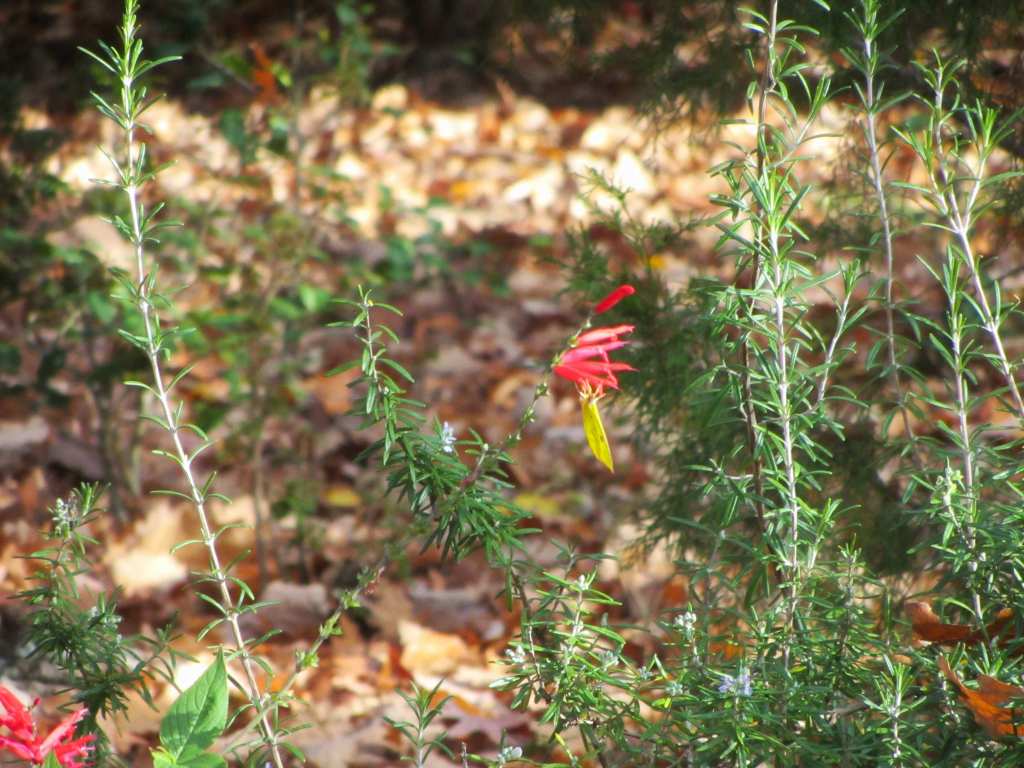
I plant a lot of flowering shrubs, herbs, and perennials to feed the hungry insects, birds, and other animals that are active when native plants have already gone dormant. The banquet is laid and the guests fly, crawl, and scamper here to eat and drink. I am unapologetic about planting a wide variety of functional, non-native plants.
But while the timing of animal activity changes, so too does that ‘native’ flora tend to creep ever northwards. Trees once happy and healthy here now suffer in the heat, while trees that were once native to our south, like the Southern Magnolia, naturalize in new, more northern regions. Any drive through the country or down the Colonial Parkway emphasizes how many native trees have simply died in our changing weather, or from new insects and diseases that thrive here now. I just learned that our area, formerly Zone 7b, has recently been reclassified as Zone 8a on the USDA 2023 updated map.
Which brings us back to those Master Naturalist friends who also educated me about one of my favorite winter blooming shrubs, Berberis (Mahonia) aquifolium, which blooms from December through early March and then sets edible berries that ripen in early summer. I always believed my shrubs were in fact B. aquifolium, a North American native shrub. But I was shown this week that the species naturalized in our area is B. japonica or B. bealei, collected in China by Robert Fortune in the mid-19th century. Add another ‘non-native’ to my list of favorite plants.
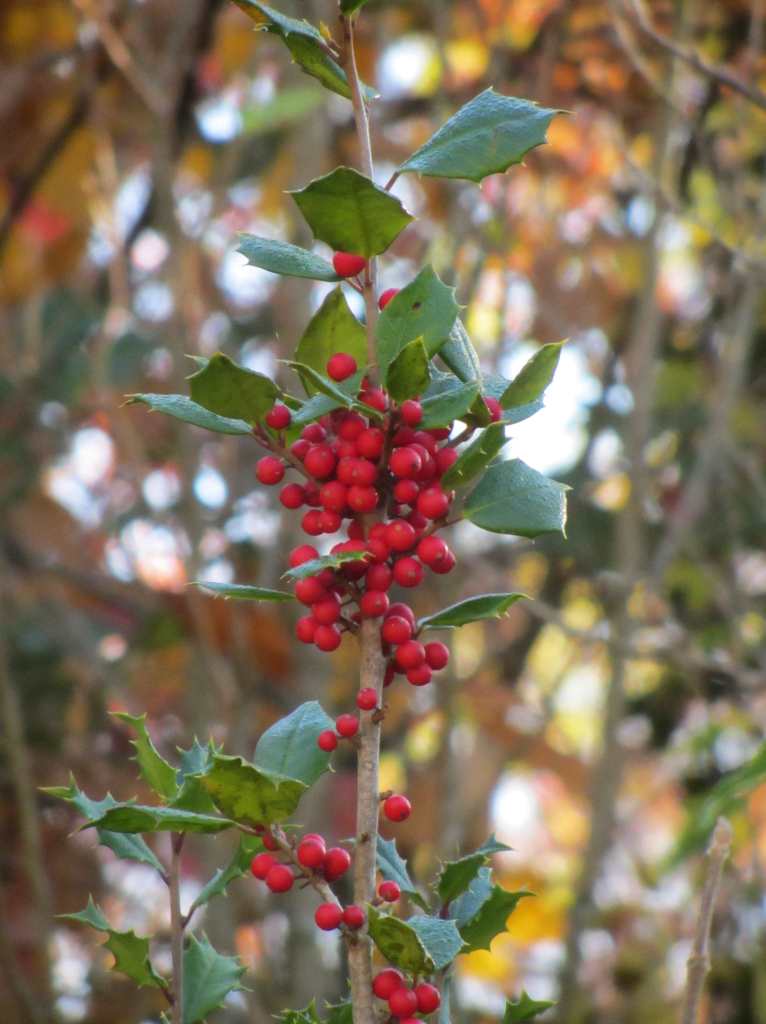
I asked a Master Naturalist friend and Tree Steward to help me to compile a list of great ‘native’ shrubs to replace Nandina in residential landscapes. The let me know that they didn’t approve of my recommendation of Mahonia. Working on that list reminded me, yet again, how challenging it is to find a native plant that in functional, beautiful, and non-aggressive for a residential landscape. We were focusing on evergreen shrubs that produce berries that ripen in late autumn and persist through winter, but ended up adding a few deciduous selections, too. Holly trees and shrubs were next on the list, along with Viburnums, mountain laurel, wax myrtle, and Juniperus species.
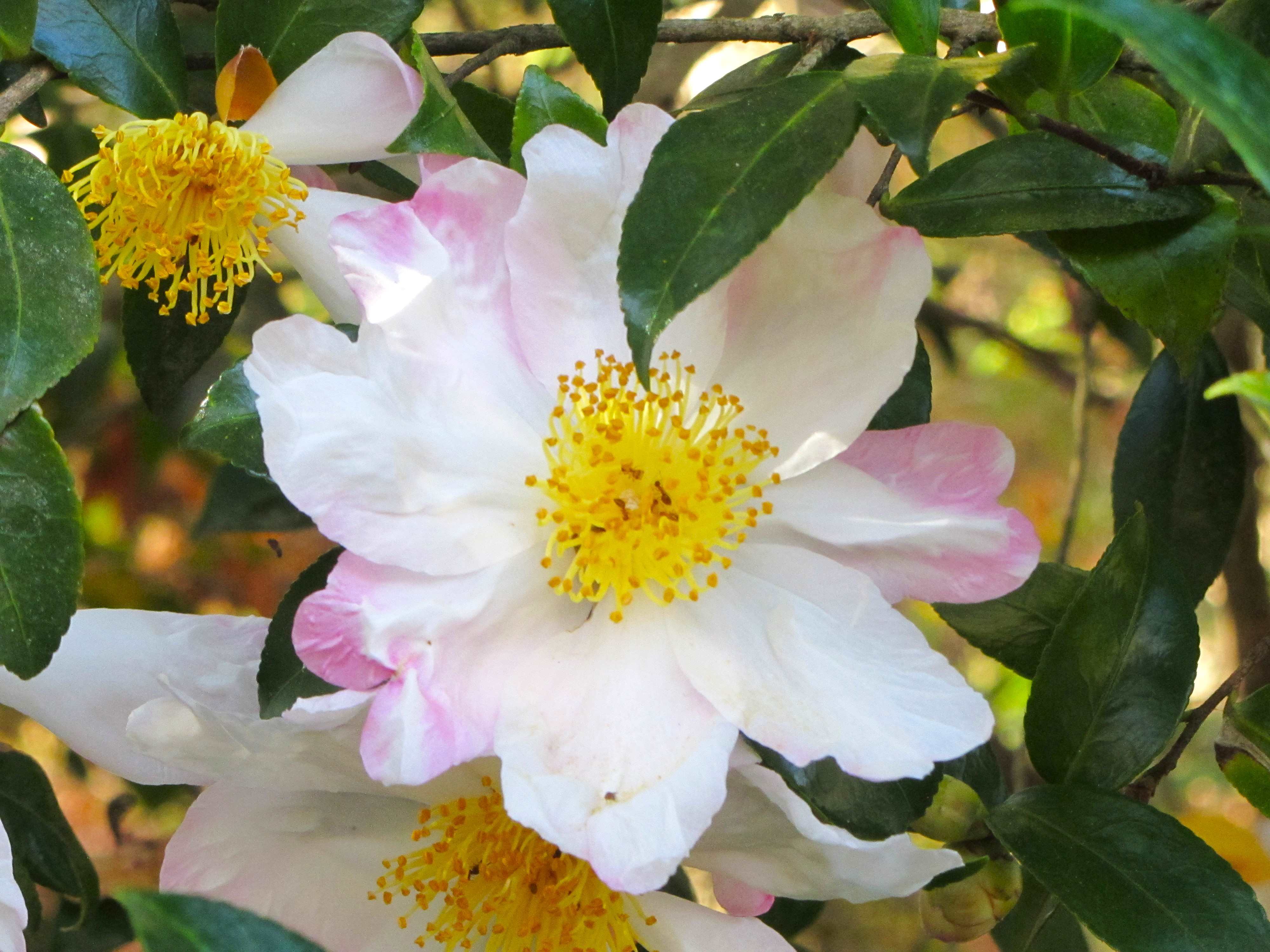
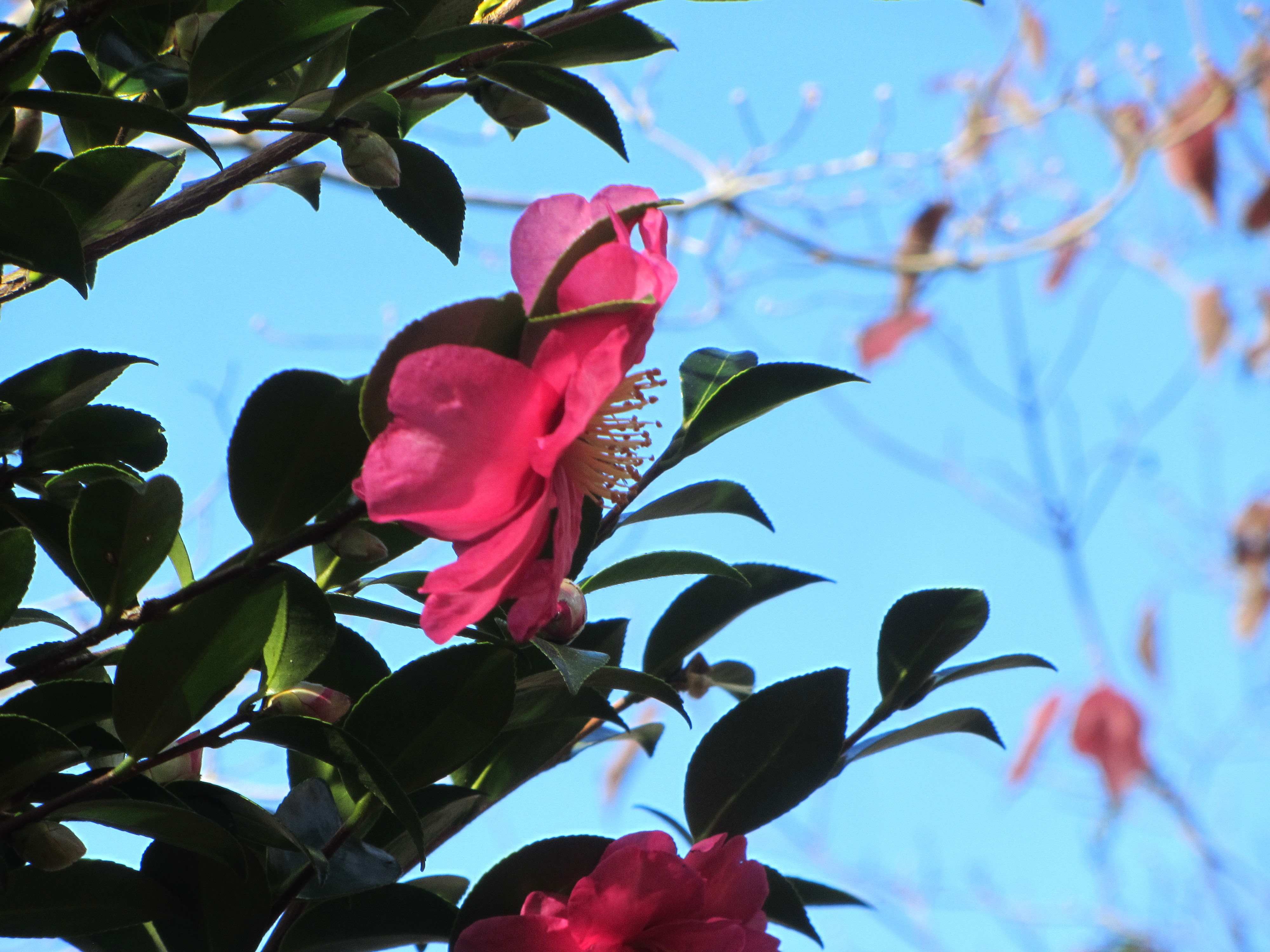


So with the article finally published, and my own Nandina berries clipped, bagged and thrown away; I turned my attention to pruning out other ‘distractors’ from around our Camellias. Gone are the woody skeletons of beautyberry and a few scraggly rose of Sharon seedling shrubs. Gone are more vines invading our shrub border. Gone are the fading Canna canes, too, and another load or two of stiltgrass. I’m still letting the fading obedient plant, garlic chives, and black-eyed Susans stand because they are full of seeds for the birds.
Gardening is as much about editing, as it is about planting, isn’t it? I’ve planted a flat of hybrid Violas this month, and am deciding whether to add a few more. They, along with Hellebores and early flowering bulbs help feed the pollinators through the winter and early spring. As the leaves fall like snow, and nuts and berries ripen, it is clear that the the winds of change are blowing our way. I just wish they would bring a good, soaking rain our way, too.
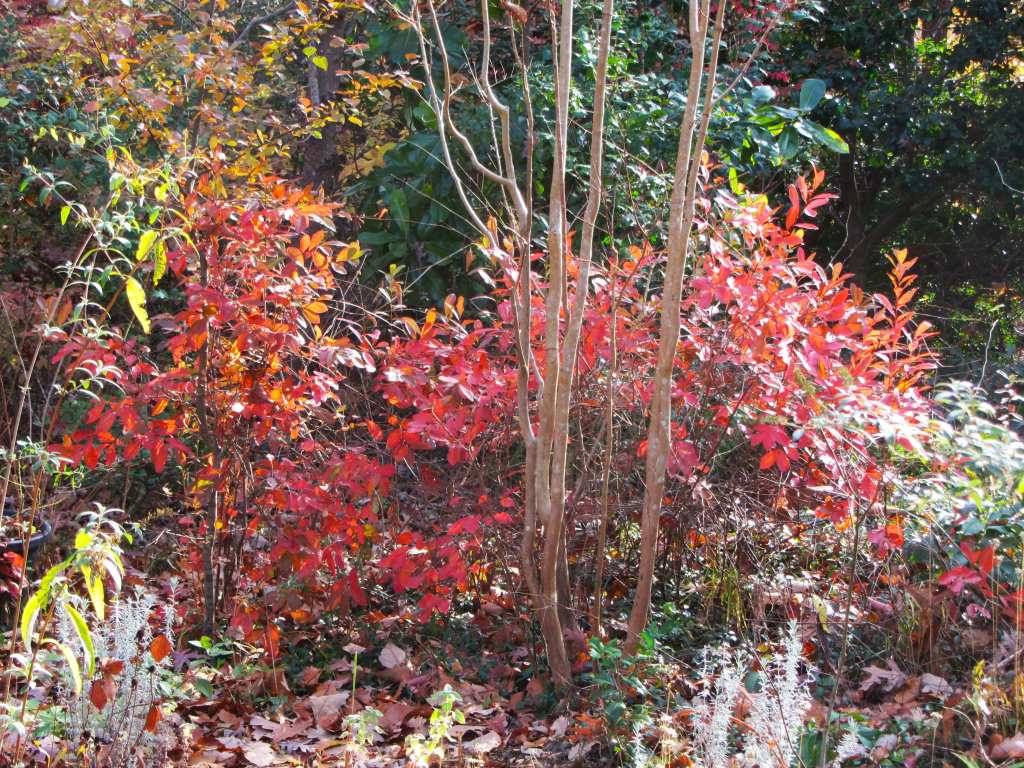
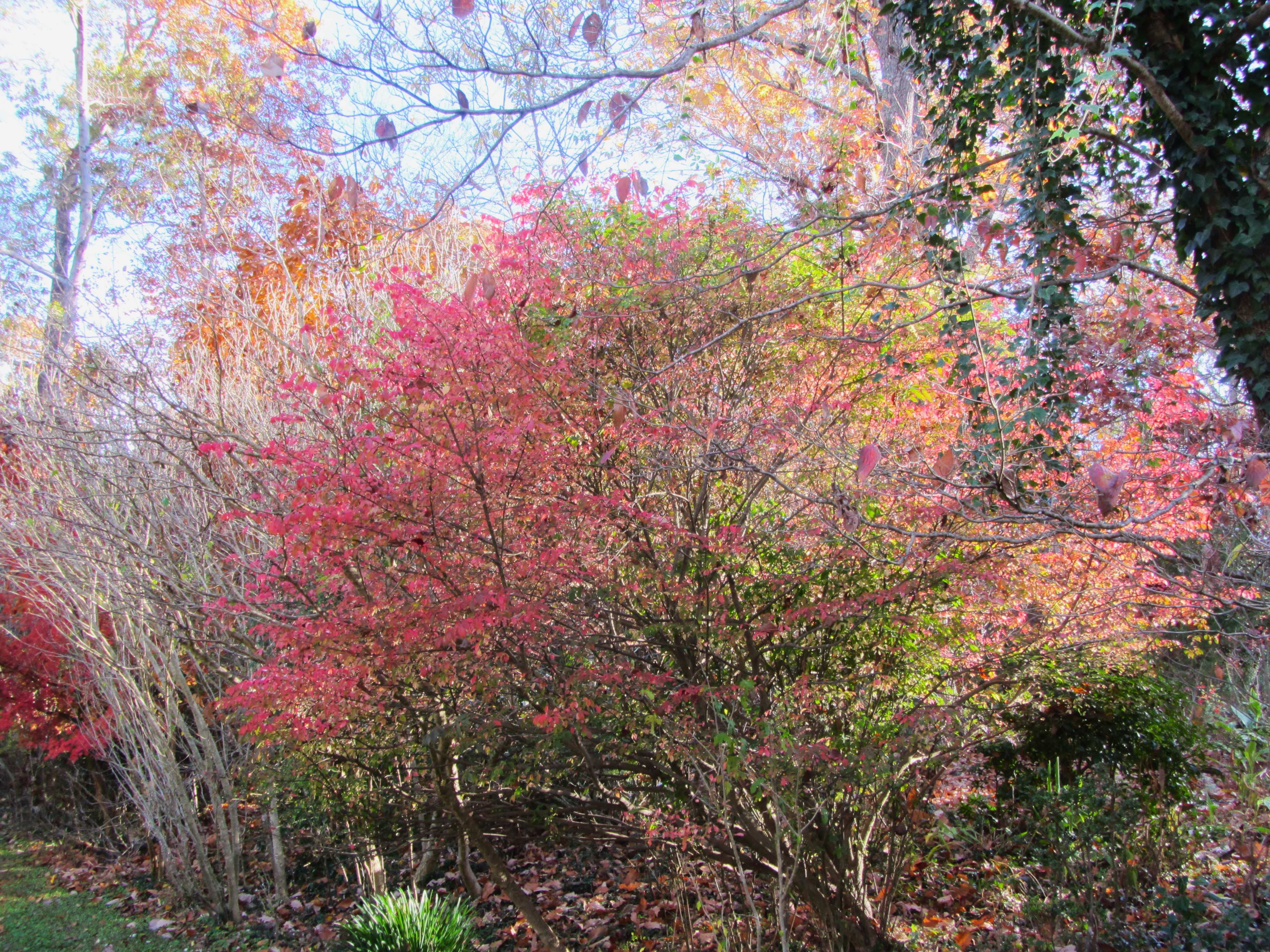
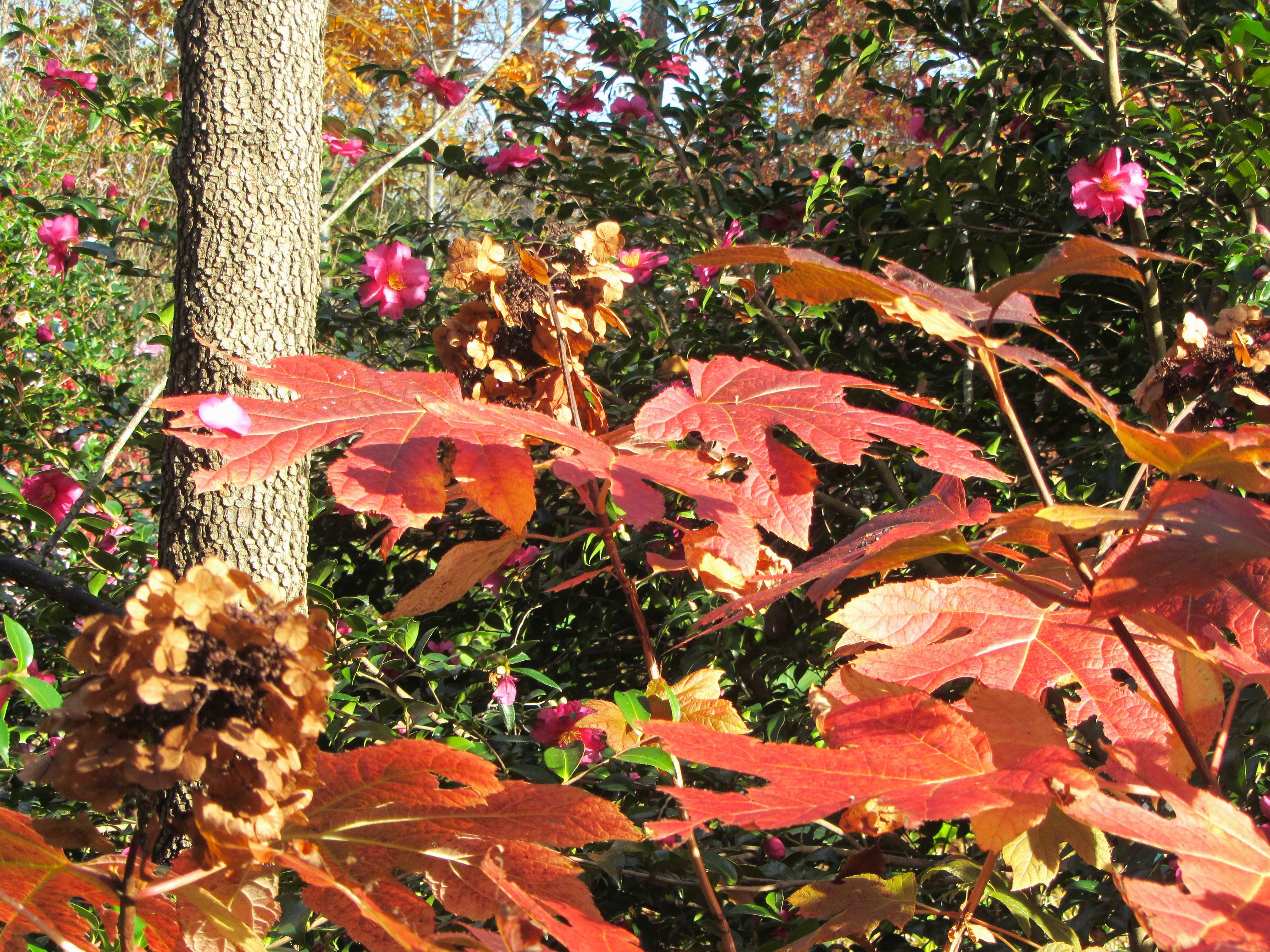

With appreciation to Jim Stephens of Garden Ruminations, who hosts Six on Saturday each week.

 Our Forest Garden
You can have some of our rain, it have been continuous for weeks.
LikeLiked by 1 person
Would love to relieve you of some of that burden- It keeps evaporating from our forecast, then heading off across the pond towards the beautiful isles and Europe.
LikeLiked by 1 person
I learned something today, tks : Nandina berries are much more toxic than we think. I have a nandina here but it doesn’t bear fruit yet. The classification of USDA zones has been modified a few days ago, it seems logical given global warming. I was in 8A , maybe I will move to 8B…
I send you some rain , we have too much
LikeLiked by 1 person
Thank you for your gift of rain. We were originally forecast to have some on Friday and Saturday just passed, but it fizzled out before reaching us. Our next opportunity appears to be Tue./Wed. and we expect to get some to break this dry pattern. I have a Nandina grown from seed collected from a friend- hers had white berries. I’ve been growing this little shrub in a pot for about six years now and it bloomed for the first time this year. I remember my mother using Nandina in arrangements, and having it in the yard, since childhood. I had no idea it was so toxic, either. It will be interesting to hear what your new zone is. I have an interactive map for the US, but not for Europe, and plan to write an article in the coming days about the implications of the change for us here. One thing the speaker pointed out is the retreat of the cool weather zones. Cool weather and dormant periods are so important for many of our trees, particularly the conifers. Have a great week!
LikeLiked by 1 person
Maybe they will update the map for Europe too ?!
LikeLiked by 1 person
It looks like they’ll have to… whether we like it or not.
LikeLiked by 1 person
American holly! Ilex opaca! I got SIX seedlings now! Thank you SO much!
LikeLiked by 1 person
I discovered I had ‘nightmare nandina’ when I began gardening. Also known as heavenly bamboo, it isn’t heavenly or bamboo. Not only are the berries toxic, it’s all but impossible to get rid of. That’s when I turned to native plants.
LikeLiked by 1 person
Oh gosh, thanks for the note about nandina — it’s definitely something I would just randomly grabbed for the looks otherwise.
LikeLiked by 1 person
Of course- it has interesting evergreen foliage, an unique form, and produces red berries at the holiday! That is what has kept it popular for so long- plus it is tough as nails to grow. I was really surprised to learn that its berries are toxic enough to hurt birds who eat too many of them at once. Surprised enough that I checked the information in multiple sources, including the Cornell Labs of Ornithology, just to make sure that it wasn’t a rumor perpetuated by social media. Hope all is well with you- ❤
LikeLiked by 1 person