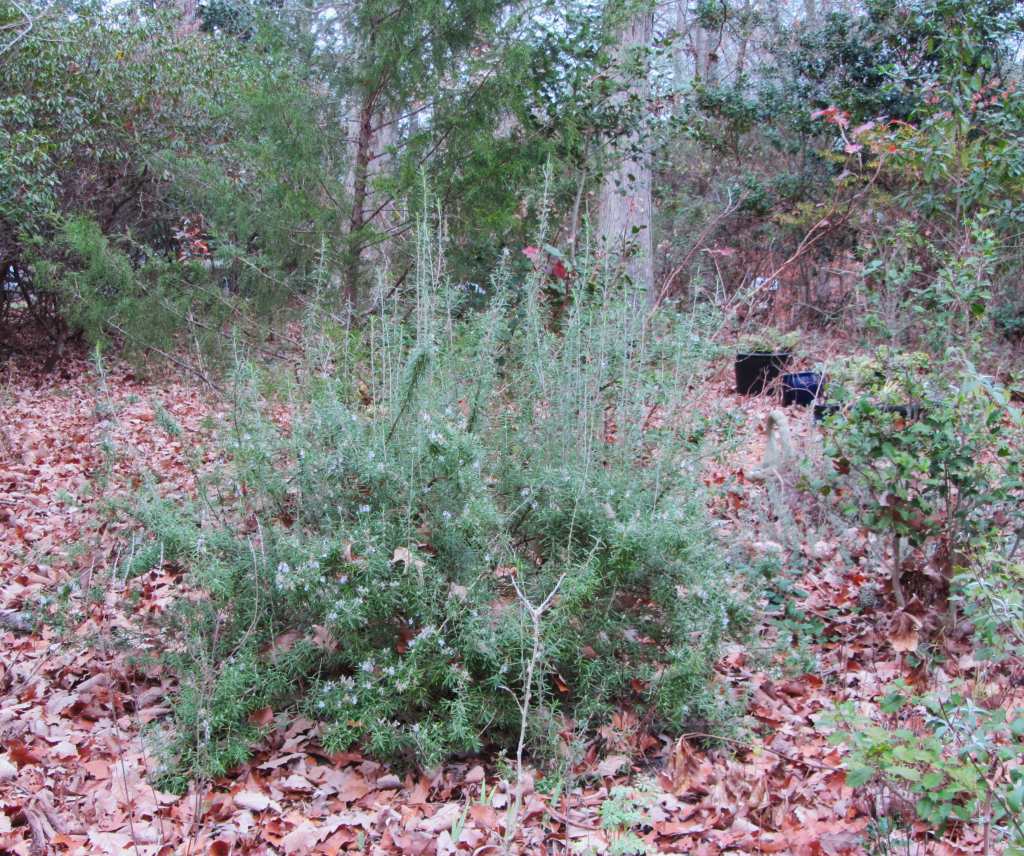
This week we celebrated the winter solstice, the shortest day of the year. While Thursday and Friday may have been a breath shorter than Wednesday and today, it is really this period of dark days that we experience as we wait for the sun’s return and lengthening days at Christmas, and in the new year. I have always called December 23 “Christmas Eve, Eve” because it has been the last day for preparations before Yule on the 24th and 25th. Most of us remain very busy and have little time to spend in the garden.
Janus, ‘the two-faced god’ was one of the two gods of the ancient Romans who ruled over this time of the year. Saturn, whose astrological house is Capricorn, was celebrated at Saturnalia, December 17-23, a favorite festival for Romans and all in lands under their influence. Saturnalia was all about feasting, drinking, dancing, getting rowdy, and ended with a show of generosity on December 23 as gifts were exchanged to celebrate every sort of relationship people might enjoy. Personally, I am very grateful that vestiges of Saturnalia have survived to our present day Christmas celebrations. I reflect on all of this and other roots of our contemporary Christmas, as I remember friends and family and seasons long past, this week.
In parts of Europe, the largest log available was dragged into the house, even if it was stuck into the fireplace end-on-end so the other end extended out into the room. The party and celebration lasted until the Yule log was consumed by fire into a pile of embers and ashes. Saturn’s brother, Janus, inspired a more reflective time after the party died out, ruling the astrological house of Aquarius. You may find his name in the month to come.
We are more sober when facing the new year ahead, taking stock of our achievements and sorrows, goals and aspirations. Many of us set out some plan for self-improvement. We may look for fresh ideas to meet the challenges in our lives. Janus invites us to look backwards to the past and bring whatever wisdom is gleaned into our projections for the future. Days lengthen, we may have some down-time for resting and planning, and we restore our energy for the work ahead in the new year.
This is never more true than when managing a garden. I am sparing you the photo of a half-eaten pumpkin pulled off of our porch this week and left oozing onto the front patio. We have enjoyed guessing who might be responsible, but the nearby trees were full of birds when we found it, waiting for their chance to snag a seed or bit of pulp. The geraniums hanging half-way out of a pot nearby led me to believe that some hungry does may have been celebrating the season on our patio, especially since we keep a bowl of water there for the squirrels and birds.
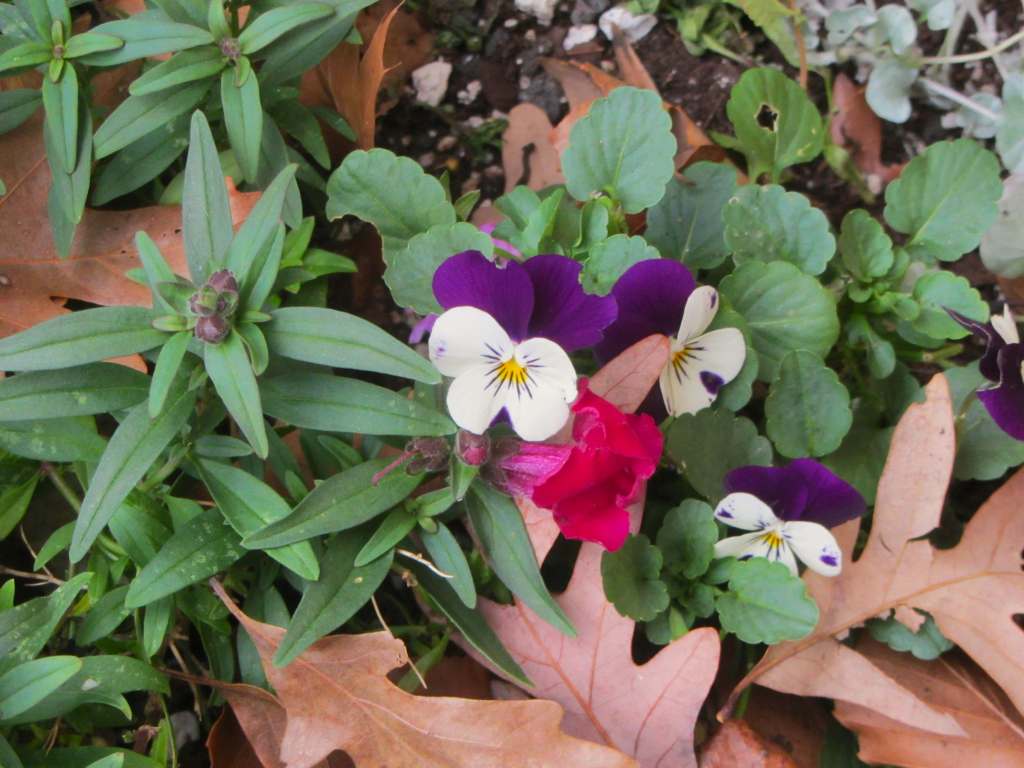
Evidence of hungry animals proves I need to come up with better solutions to our ongoing challenges with hungry wildlife. I tucked a few desiccated Viola plugs back into their pots yesterday, and reburied the Cyclamen tubers yet again. There are signs of life everywhere this winter where squirrels have been digging and birds harvesting berries from the trees.
Most of our trees have dropped their leaves after back to back weekend storms bringing us wind and rain. Their buds swell with promise. I have been working on an article this week about the beauty of particularly interesting deciduous trees that grow in our area. Once their leaves have fallen, we can really appreciate the geometry of their structure and the texture of their bark.
Those fallen leaves are so important for feeding and renewing the soil, protecting the soil and its rich ecosystem of invertebrates and fungi, and giving the perennials a bit more protection from winter cold. We mostly leave our leaves where they lie in most parts of the garden until February or early March, when we chip them up and move them to the paths. Some years I’ll bring out the blower on a warmish January day to clear them off of the mossy areas.
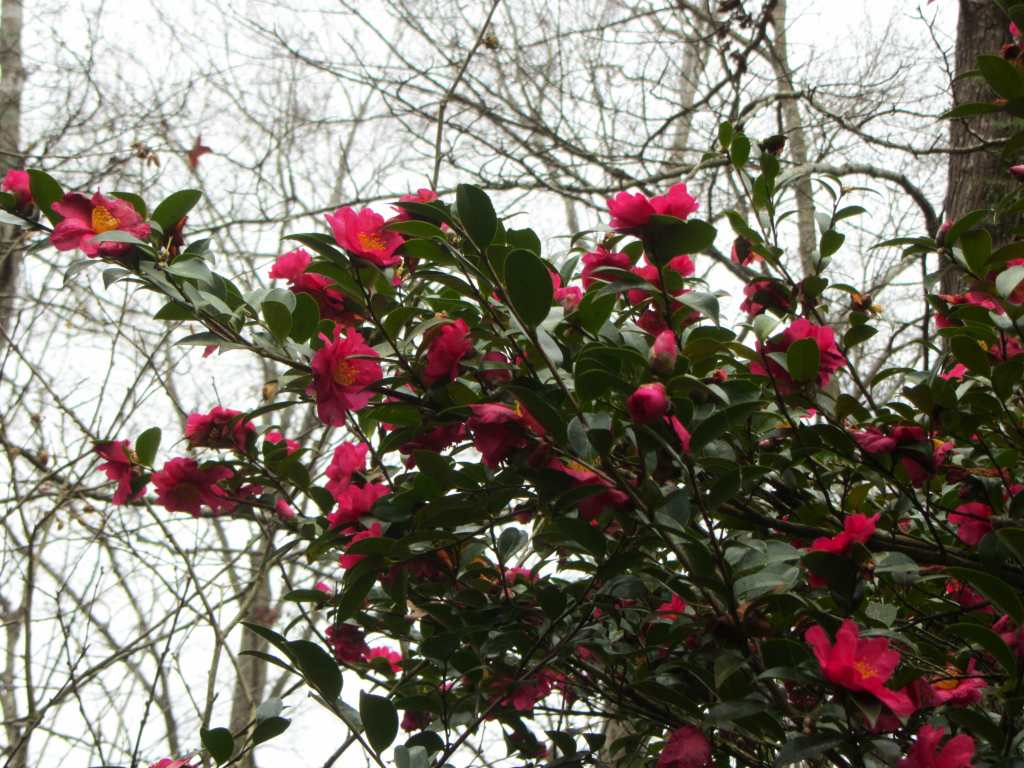
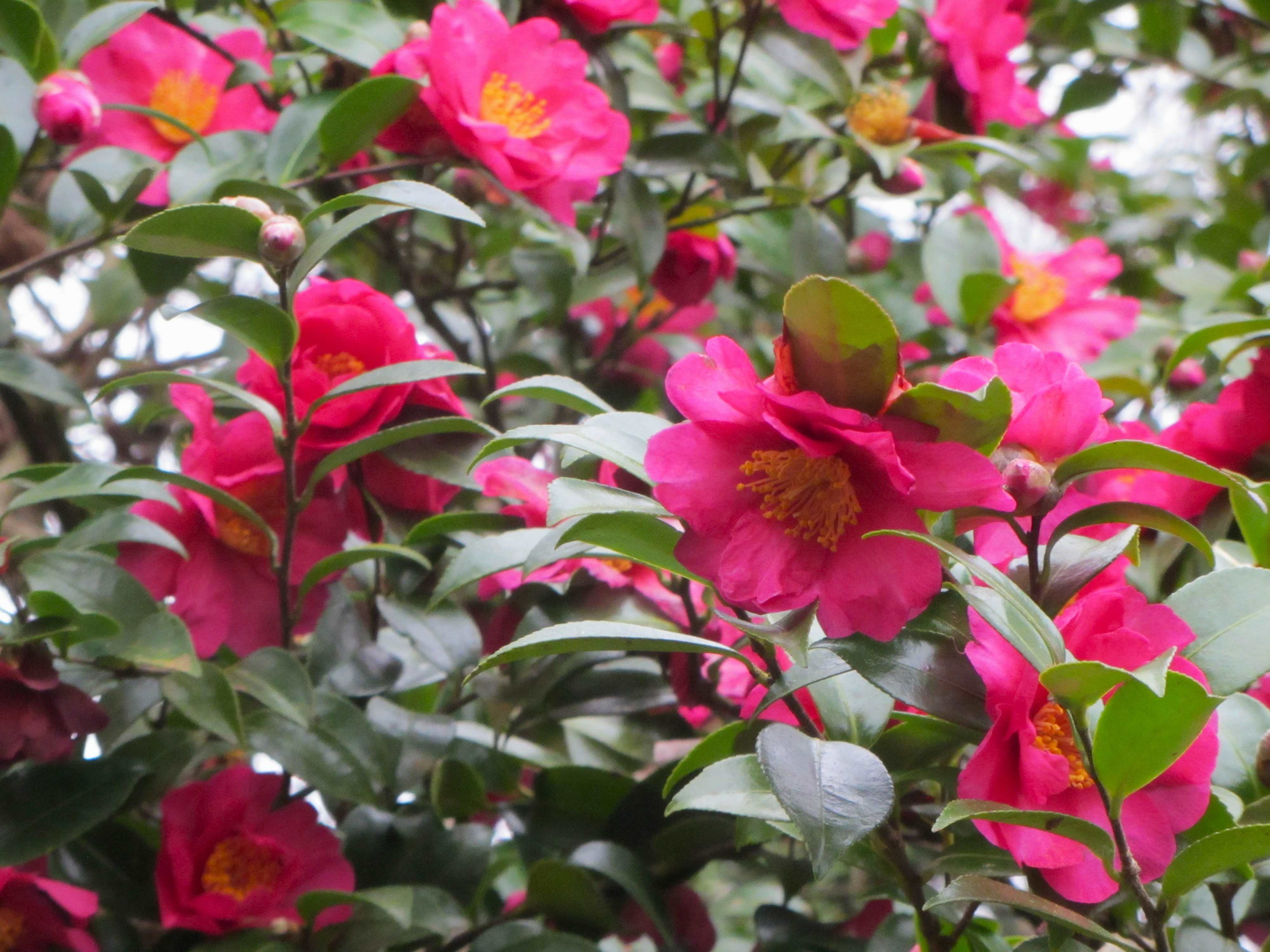
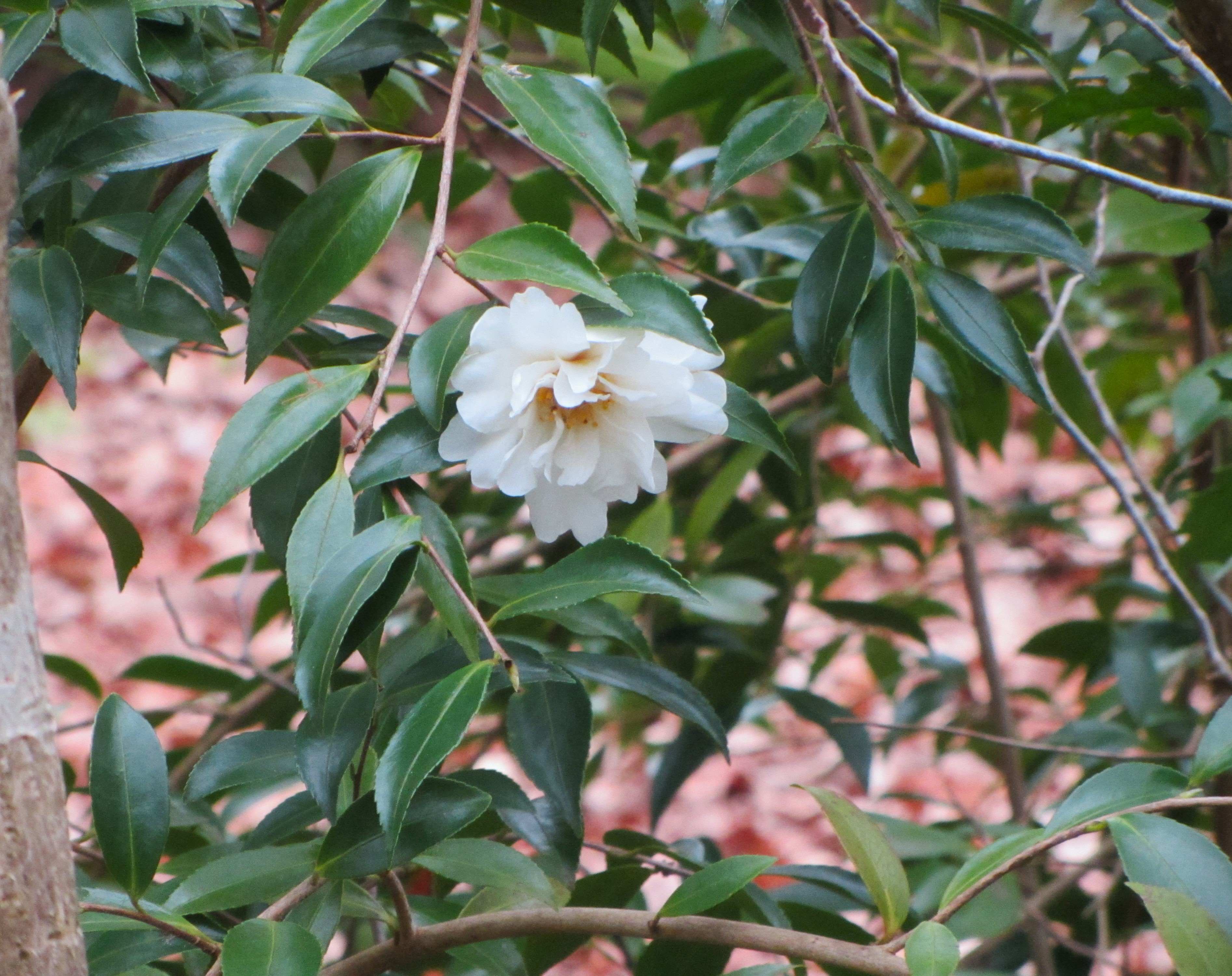
I am still looking back to the accomplishments of the past few months, not yet ready to plan much further ahead than where to bury the bulbs still in their crate in the basement. They remain on my epic ‘to-do’ list, waiting for a warm day when I don’t have other more pressing tasks. We can plant bulbs here through mid-January and still have a beautiful display in spring.
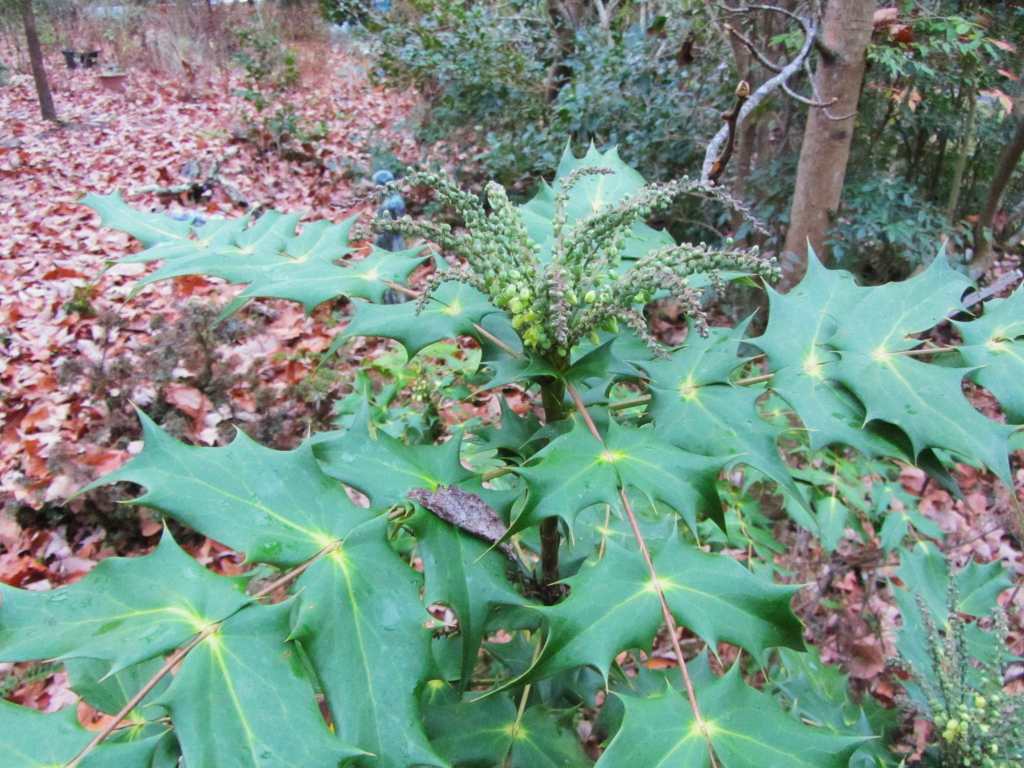
Until then, we are enjoying the Camellias still in bloom, and Oregon grape holly preparing to bloom, and the ferns still bravely green and standing. Even the wild red cedar trees look elegant shining in the winter sunlight where they glow green against all of the grey and brown around them. To everything there is a season, and this is a season for rest and rejuvenation in the garden, in preparation for what lies ahead.
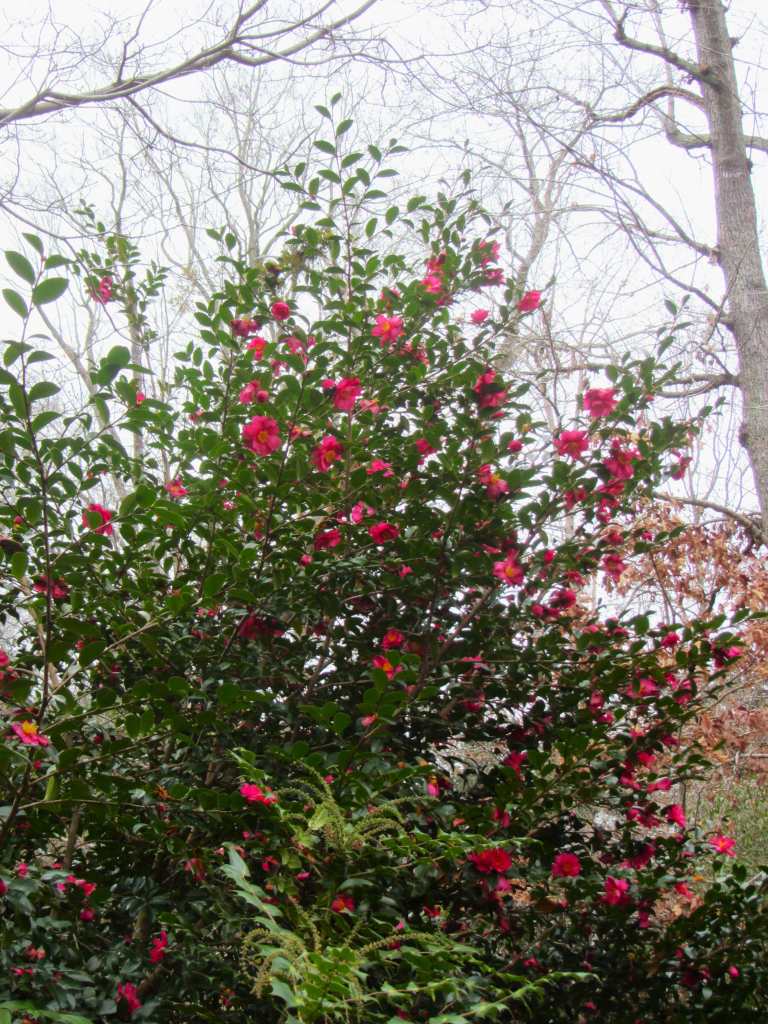
With appreciation to Jim Stephens of Garden Ruminations, who hosts Six on Saturday each week.
 Our Forest Garden
This is very well written and I learnt a lot. Concerning plants and photos, the pink camellia remains my favourite. I wish you and yours a Merry Christmas of course.
LikeLiked by 1 person
Thank you, Fred. The pink is my favorite fall Camellia, too! Merry Christmas to you and yours! ❤
LikeLiked by 1 person
Your camellias are gorgeous! Happy Christmas! 🎄
LikeLike
Merry Christmas, Eliza. Those Camellias make us smile every time we come and go up the drive. The cold, rain and wind haven’t bothered them at all. I hope you have snow for the new year! ❤ ❤ ❤
LikeLiked by 1 person
What a lovely post. Seasons greeting to you.
LikeLike
And Seasons greetings to you, too. I am so happy that you enjoyed the post. ❤ ❤ ❤
LikeLike
It just occurred to me that, not only does the Latin name of the State Tree of Oregon mean ‘false-false cypress’ (Pseudotsuga), but that, contrary to its name, the State Flower of Oregon is neither a grape nor a holly. (We know it only as Oregon grape here.)
LikeLiked by 1 person
Did you happen to see my Six on Saturday?
LikeLike
I did. That is a wonderful photo and I’m just thrilled that you got a decent berry production this year on the beautyberry! I was working from my tablet when I read your post and registered a ‘like,’ but didn’t try to leave a comment. Thank you for showing how well those little cuttings have performed! I’m looking forward to photos of berries on your little holly seedlings in a few years, too! Merry Christmas to you and yours! ❤
LikeLiked by 1 person
OH! The American holly is RAD! Brent thinks that I am being silly about it, but that is a species that I happen to like, and want to get reacquainted with. I still do not know what to do about pruning the beautyberry, but will delay doing anything this year because they are so young. I will likely need to prune them next year.
LikeLiked by 1 person
That is what makes botany so endlessly entertaining. And I thought that I had the Northwest native species of (Mahonia) Berberis aquifolium when just a few weeks ago, it was proven to me that I actually have B. bealei, a Chinese species of similar form with a slightly different leaf. It is one of my favorite winter plants but probably isn’t ‘Oregon grape holly’ but rather ‘Chinese grape holly!’ And just when you think you have a handle on the names of things, someone decides to reorganize the genera….
LikeLiked by 1 person
I thought that it looks nastier than Oregon grape. I suspect that it gets nastier where winters are colder, but it does not seem as nasty as yours in Oregon and Washington, where it gets quite cold. It is a species that I am unimpressed with here, but is much more impressive farther north. I brought one back from Washington last spring, so I am determined to like it.
LikeLiked by 1 person