
We are enjoying the warmest few days in ages. I went out for a moment on Friday morning, then tucked back indoors just long enough to find gloves and light pruners to ‘take care of a few things.’ That led to the official beginning of ‘spring clean-up’ as I cut away discolored Helleborus leaves, cleaned up the bleaching remains of last summer’s ginger lilies draped over this spring’s daffodil leaves, and nipped a few dried perennial stems and ambitious honeysuckle vines that got in my way. A few minutes work brought immense satisfaction.
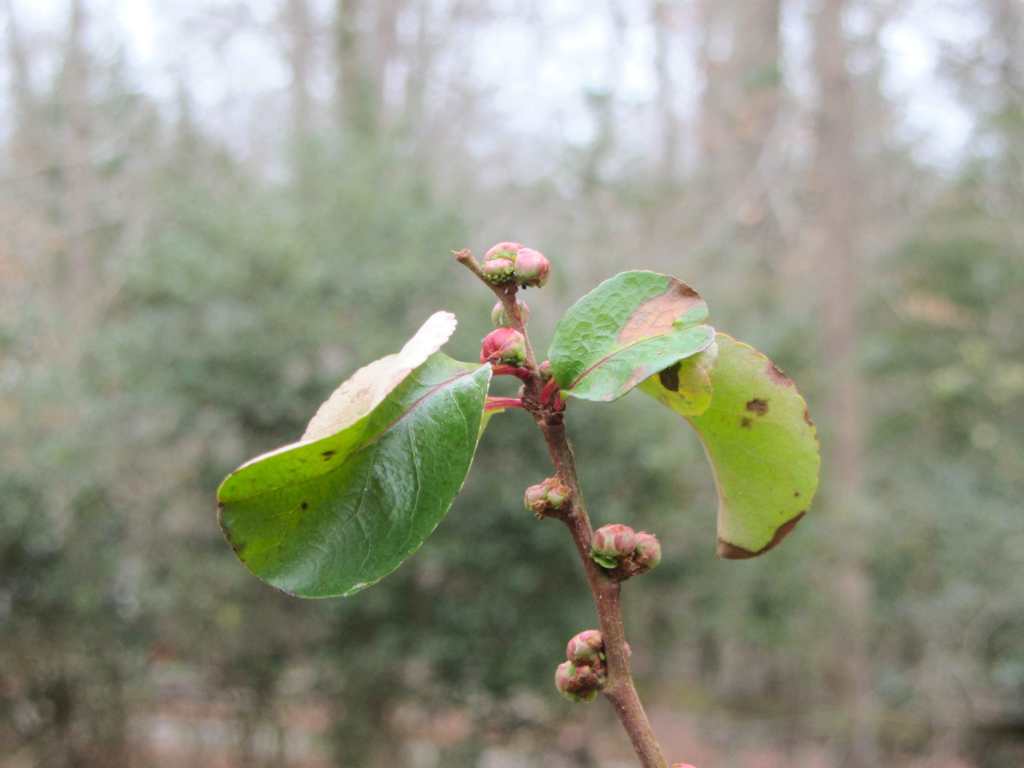
I had already ventured out, pruners in hand, on Wednesday afternoon to harvest a few branches of Japanese Quince for the a vase. One vase became two, but two trips out to the shrubs in front, warmly wrapped and wearing a hat, were more than enough. The wind had a bite. But the swelling buds and gathering birds insist that spring is nearly here.

Which is a problem, when you stop to think about it, because it is only February 10. We will have wintery weather, I expect, through at least late March. We need winter for so many reasons, even though it isn’t the most enjoyable of seasons. That said, we’re spotting huge flocks of birds in the trees surrounding our yard, especially in the mornings, and spotting a wide variety of different species at the water bowl on the patio. The many flocks of geese on the river and in the estuaries look as though they may just be passing through, too. But which way? And are they confused, too?
The Forsythia branch I found lying on the driveway last month is in full bloom now beside the kitchen sink, and the shrubs outside show swelling buds, but still no flowers. Perhaps by next week.
The Oregon grape holly is making up for the lack of yellow Forsythia flowers outside with a spectacular showing of their own yellow flowers. These shrubs have naturalized in our area and I sometimes spot them in bloom in the woods beside the Colonial Parkway, as well as in yards and along streets throughout our area. These are good wildlife plants because they provide nectar when native shrubs aren’t yet in bloom, and they provide delicious and edible drupes by early summer. Sometimes deer will nip these flowers while they are still in bud, but these seemed to have made all the way through to bloom.
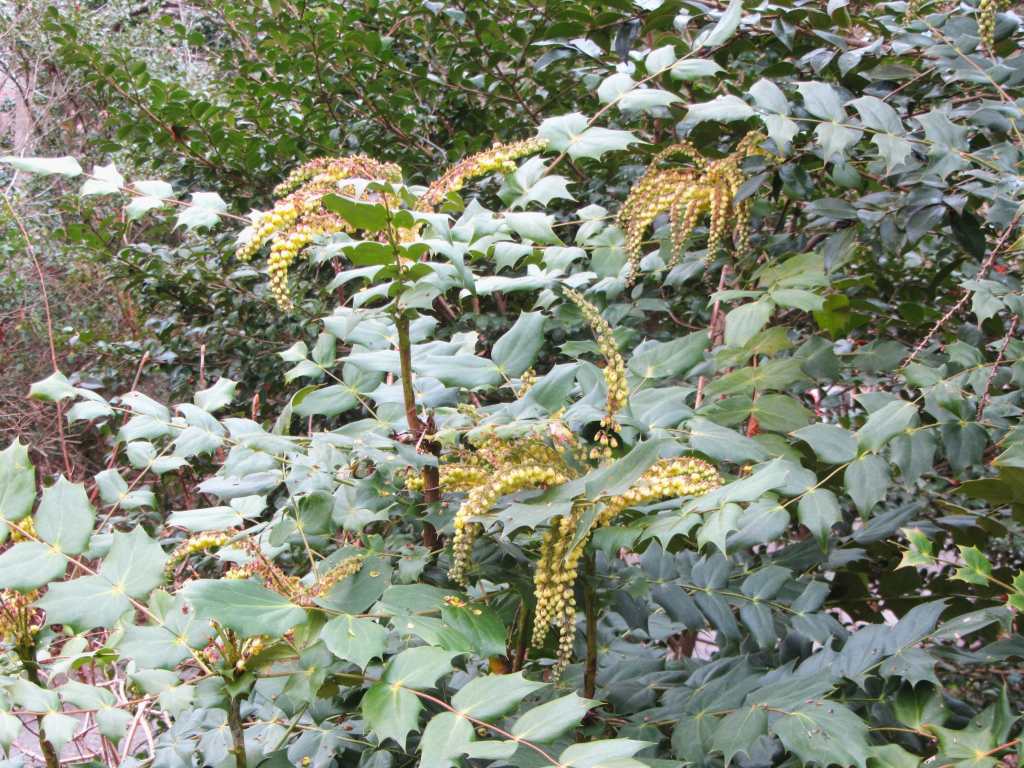
Oregon grape holly, now known as Berberis bealei, is a Chinese species, not the native species from the Pacific Northwest as I long believed it to be.
New Helleborus plants came into bloom this past week, too. Many of these are seedlings that I have dug and spread around over the years, but their colors and patterns always please and surprise. I could fill an entire post this week with nothing but Helleborus flowers.
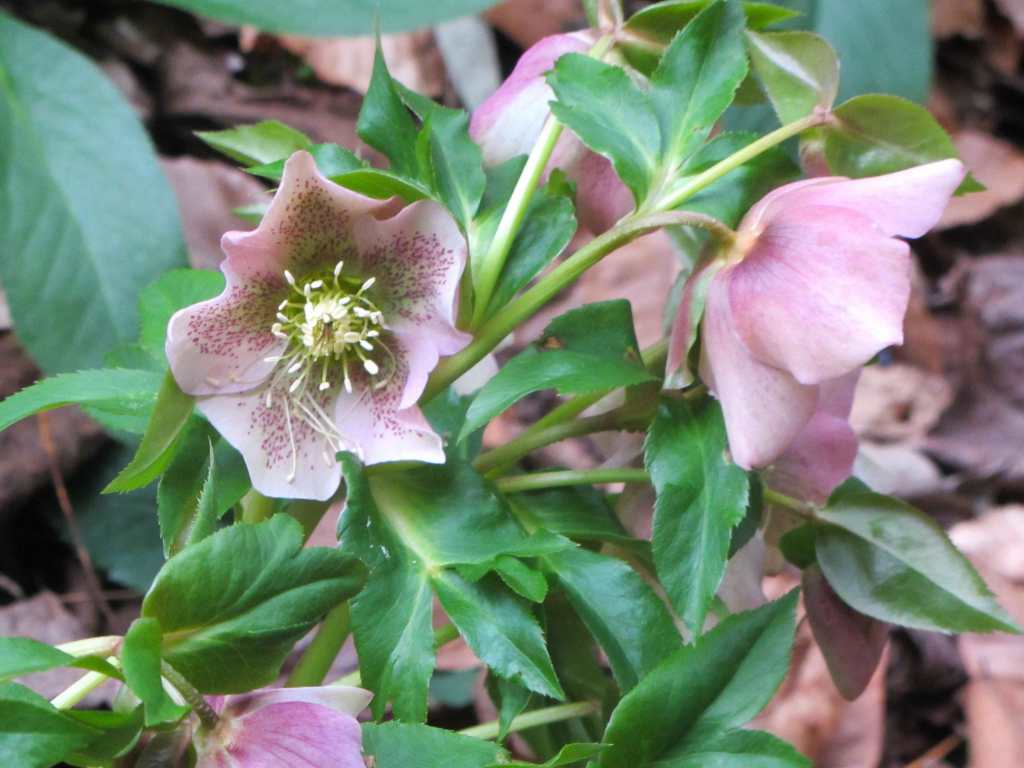

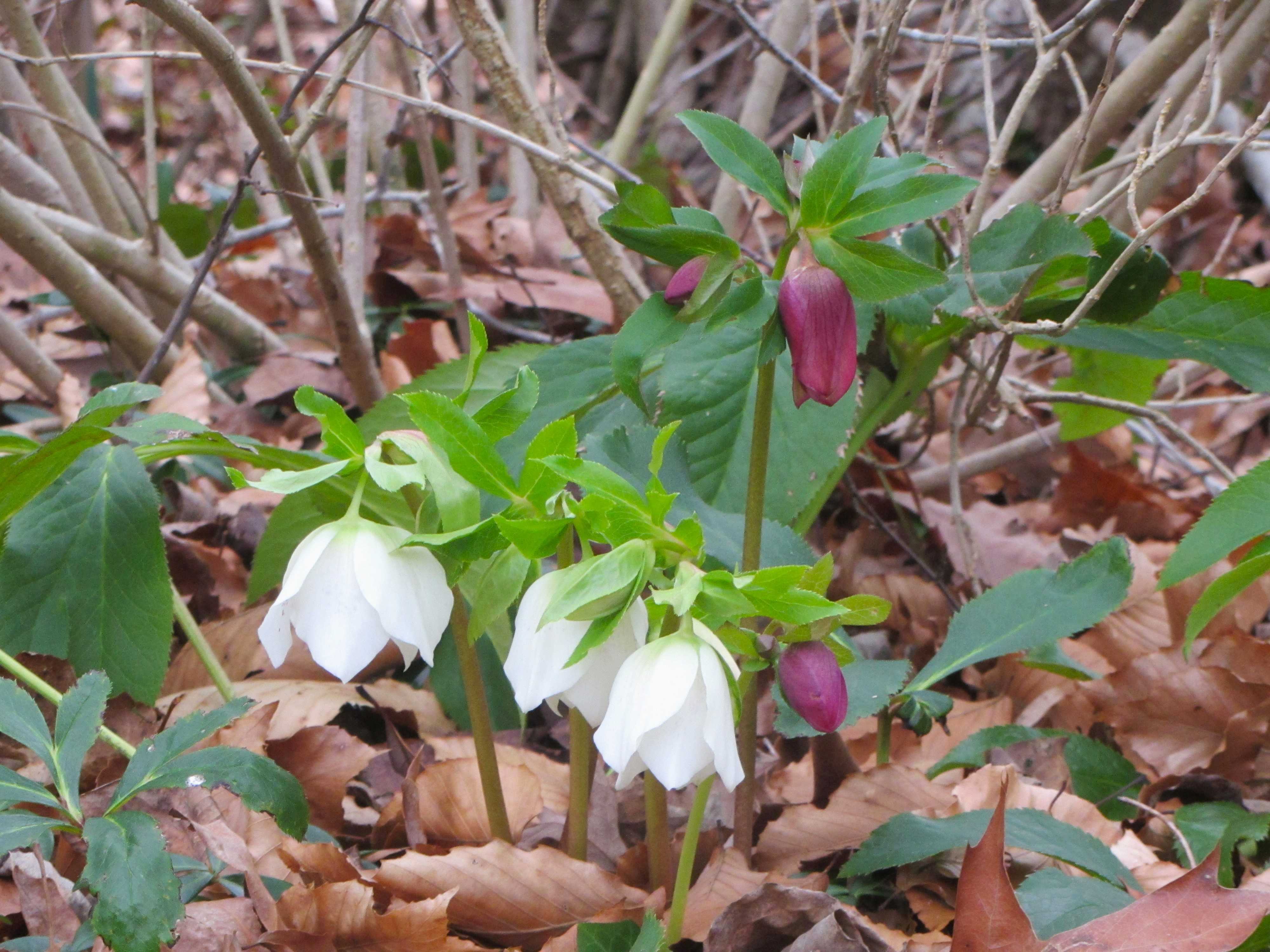
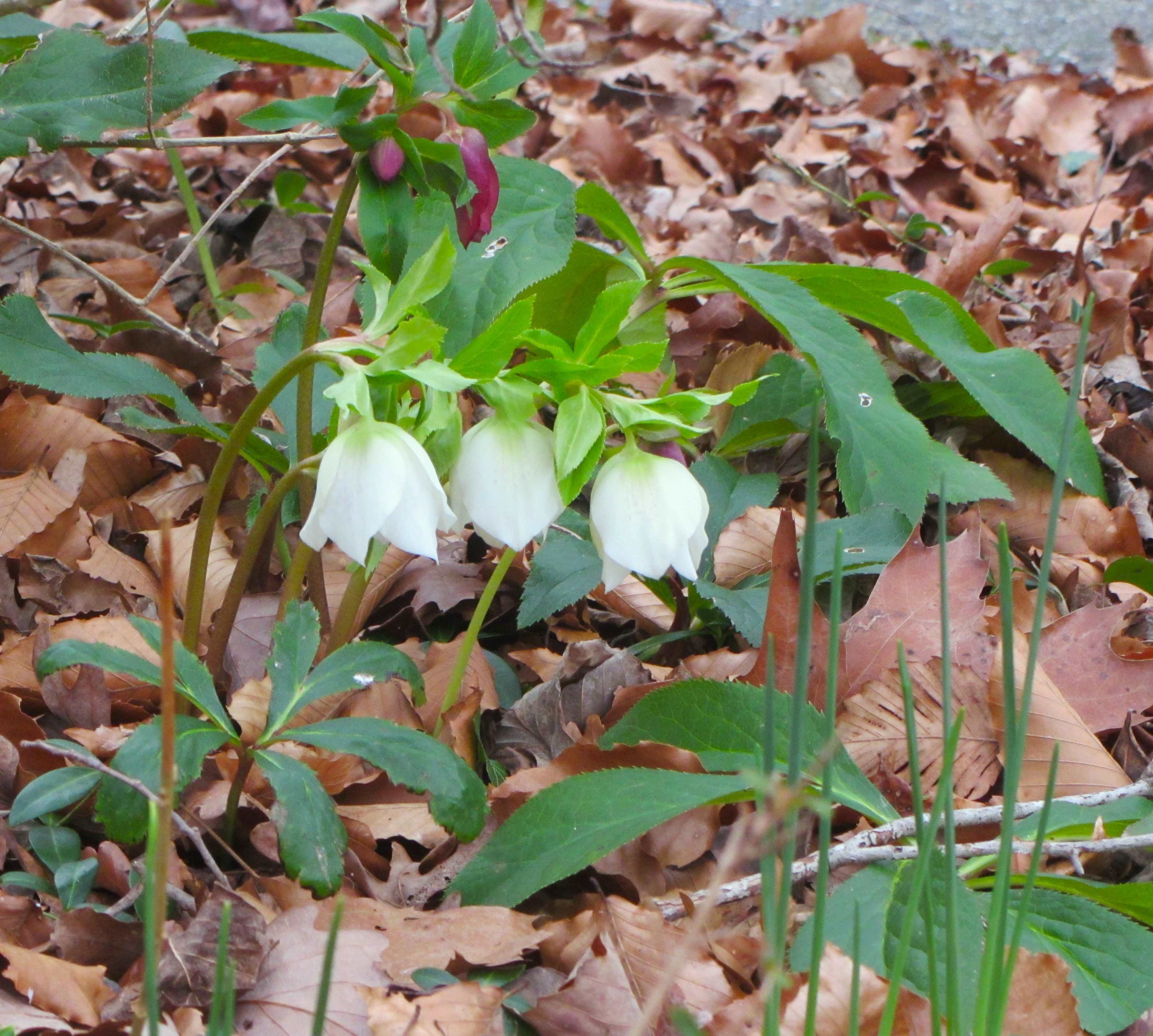
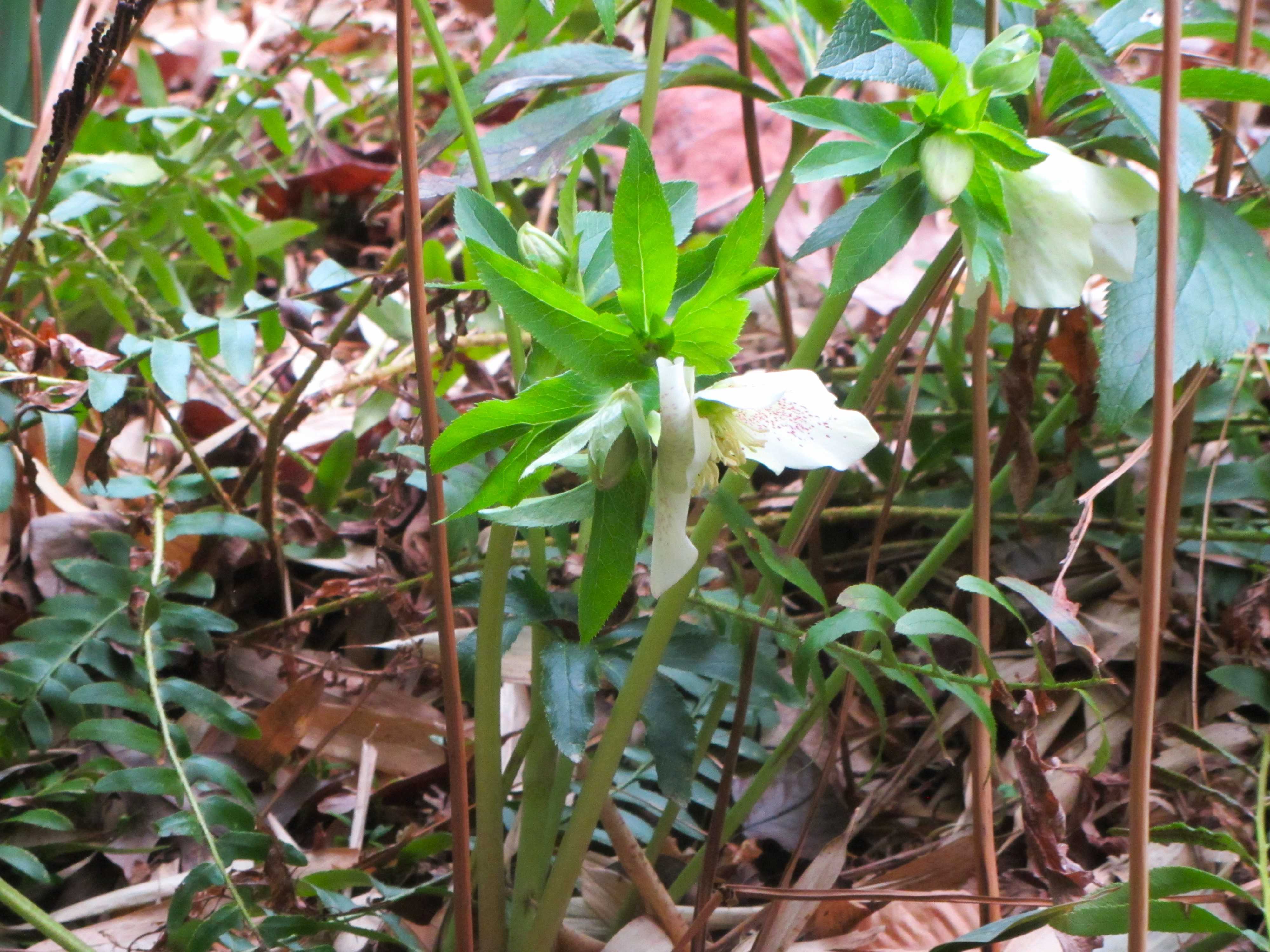
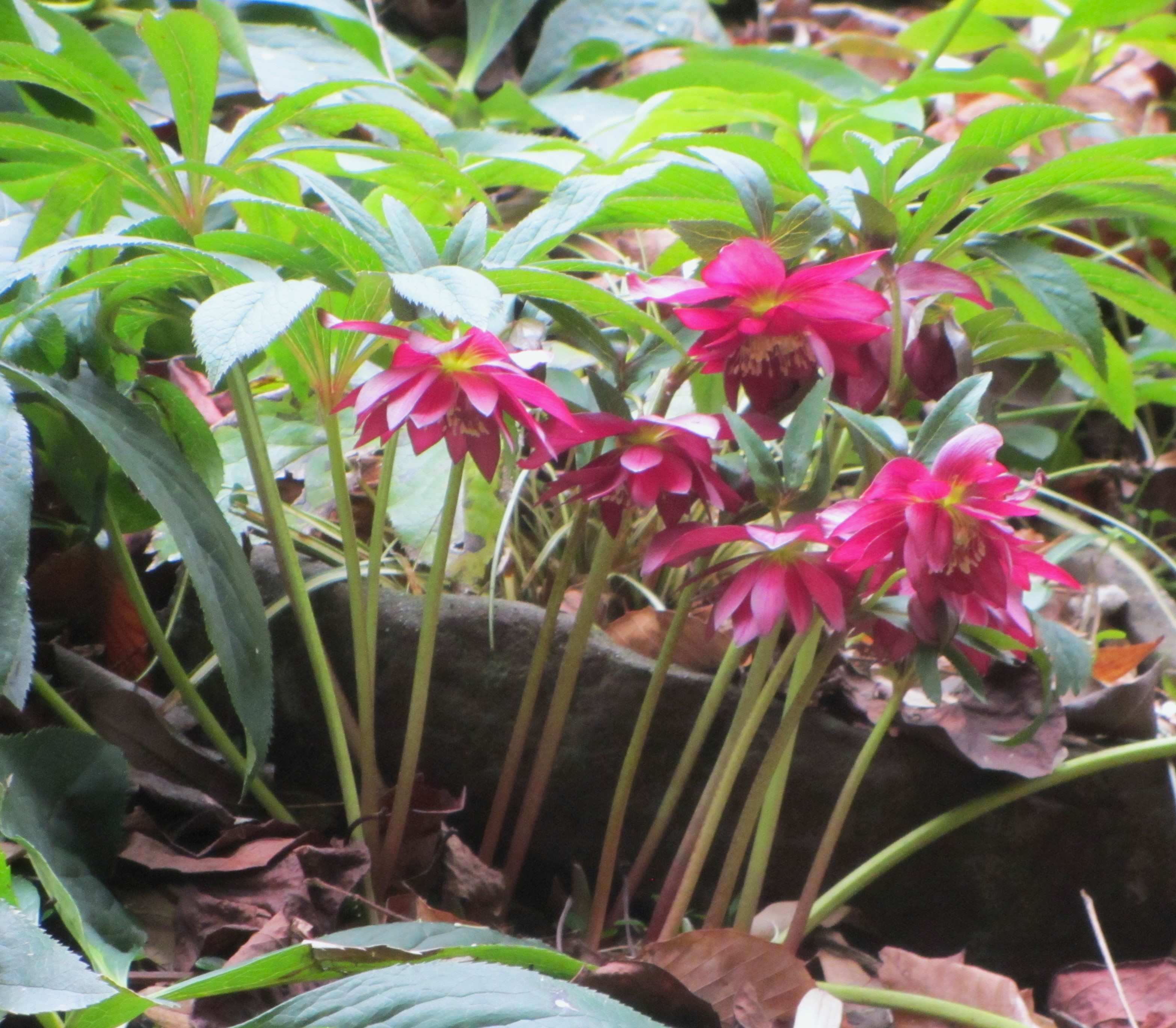
Our local nursery has been advertising their first spring shipments of new Helleborus plants. So far, self-control has won out, and I’ve not started shopping for new Helleborus varieties. We have been adding them to new areas in recent years, particularly among the ferns and in areas of dry shade. Hellebores grow extraordinarily well here, liven things up in the winter, and provide a nice green filler plant through the summer.
This week I did a bit of research into the three species of Myrica which thrive in our area, for a new article, and in studying photos realized that all three of those East Coast species grow not only in our area, but in our yard. Myrica is better known as bayberry or wax myrtle. It is both fragrant and evergreen, but more often seen in the edges of the woods or beside wetlands rather than in someone’s yard because it isn’t very showy or exciting.
Our newest volunteer seedling is the rarest of the three species found in our area, swamp myrtle or M. caroliniensis. This is another great shrub for wildlife because it provides drupes through the winter like holly does. So many gardeners would probably pull their Myrica seedlings and call them weeds, but I am going to let these grow because they are so important in the local ecosystem. Wax myrtle will never bloom with bright flowers like the Camellias, or have big interesting leaves like the oakleaf Hydrangeas. But they certainly do attract the birds!


Were you hoping for six more weeks of winter on Groundhog’s Day last week, or were you hoping for an early spring? Talk about conflicting points of view! While we all love spring and dread winter’s heating bills, I know many of us are also very concerned about our rapidly warming planet. Snow cover in winter makes such a huge difference by reflecting heat back out into space while replenishing ground water, and native plants need the cold. But there is no snow in sight for Coastal Virginia. We are enjoying a warm day and waiting for rain to start by evening.
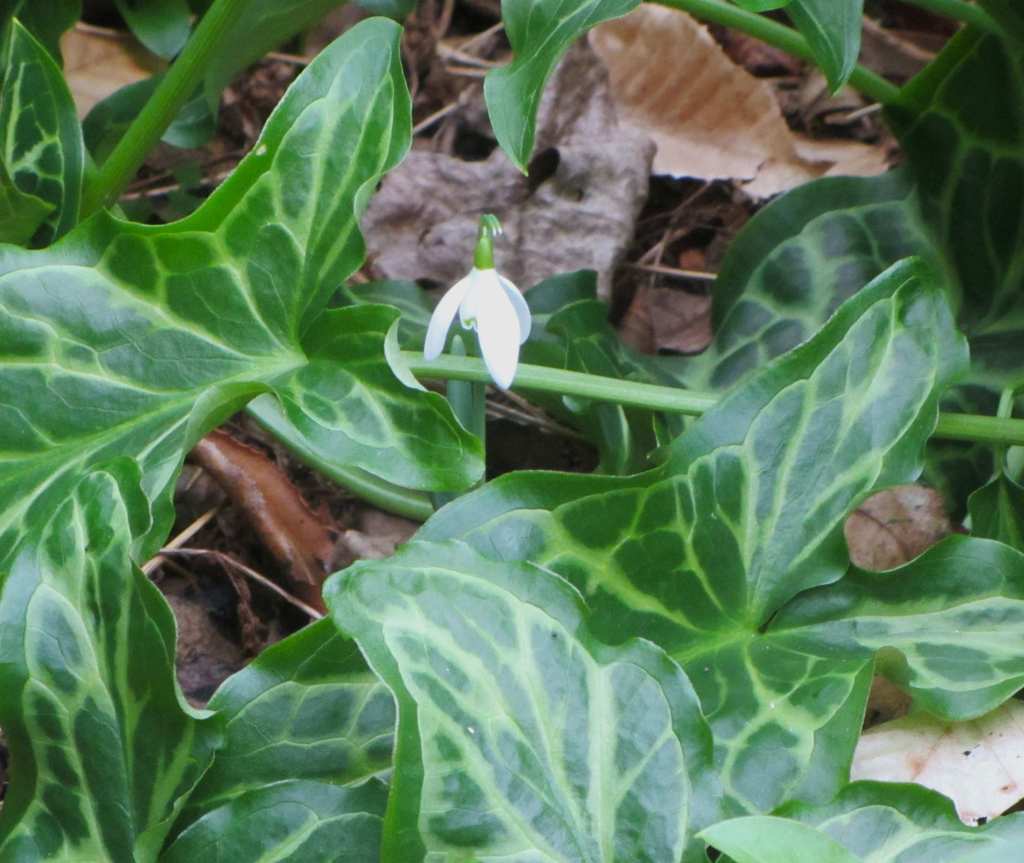
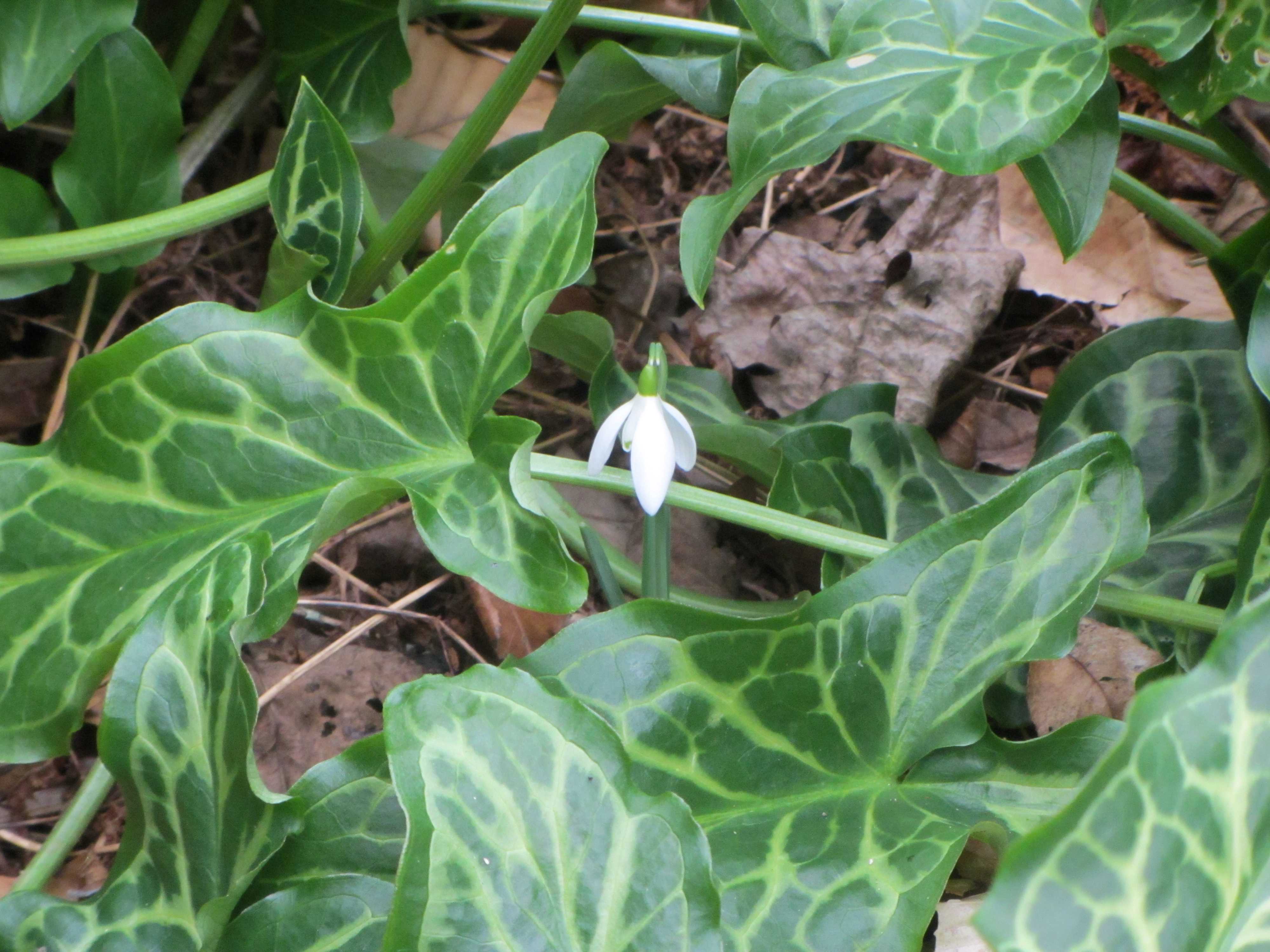
So I’ll leave you with another winter flower, a snowdrop that has just bloomed. It may be the closest we come to snow for a long time to come.
With appreciation to Jim Stephens of Garden Ruminations, who
hosts Six on Saturday each week.

 Our Forest Garden
The snowdrop looks a little shy amongst that clump of Arum.
LikeLiked by 1 person
We are warm and wet in my part of the UK, but the north had snow this week. As you say we need the colder days to off set the warmth.
LikeLiked by 1 person
This Japanese quince flower is very early. My father-in-law had a plant a few years ago and had to cut it down and dug it up. How hard the stump was to lift up and how resistant the wood was!
This week I really appreciated the very pretty color of the camellia of course but especially these pink hellebores: gorgeous.
LikeLiked by 1 person
Well your father in law certainly got a work out over the Japanese quince he removed. Did you rescue any divisions or cuttings for your own garden? I remember a huge one in the center of the back yard of one of my childhood homes- at least it seemed huge to me at 7. It was the older kind with thorns, and it made fruit each summer. I loved its red flowers in early spring. The quince really is undisciplined and a fast grower, but those early flowers are worth it to me. I’m glad you enjoyed the pink hellebores and the Camellia. Every time a hellebore bud opens it is a surprise to see what markings may be inside. Have a terrific week!
LikeLiked by 1 person
no, I didn’t have enough space to add a Japanese quince tree to my garden, even though it’s a very pretty shrub/tree
LikeLiked by 1 person
Myrica california inhabits some of our few ‘designed’ landscapes because it is native nearby. They are not much to brag about, but I do not like cutting any of them out, since I know that they were components of a ‘designed’ landscape. Oregon grape did not make the cut though, since it is native farther north than here. I am surprised to learn that it is also native farther to the south also, including in Los Angeles County and San Bernardino County. Those seem like odd places for that species.
LikeLiked by 1 person
Yes, I agree that those would be odd places for the Oregon grape, but this family of shrubs seem to be very versatile and tough. Myrica seems to be a fairly coarse plant overall, not much to look at, but that is through the lens of my human point of view.
LikeLiked by 1 person
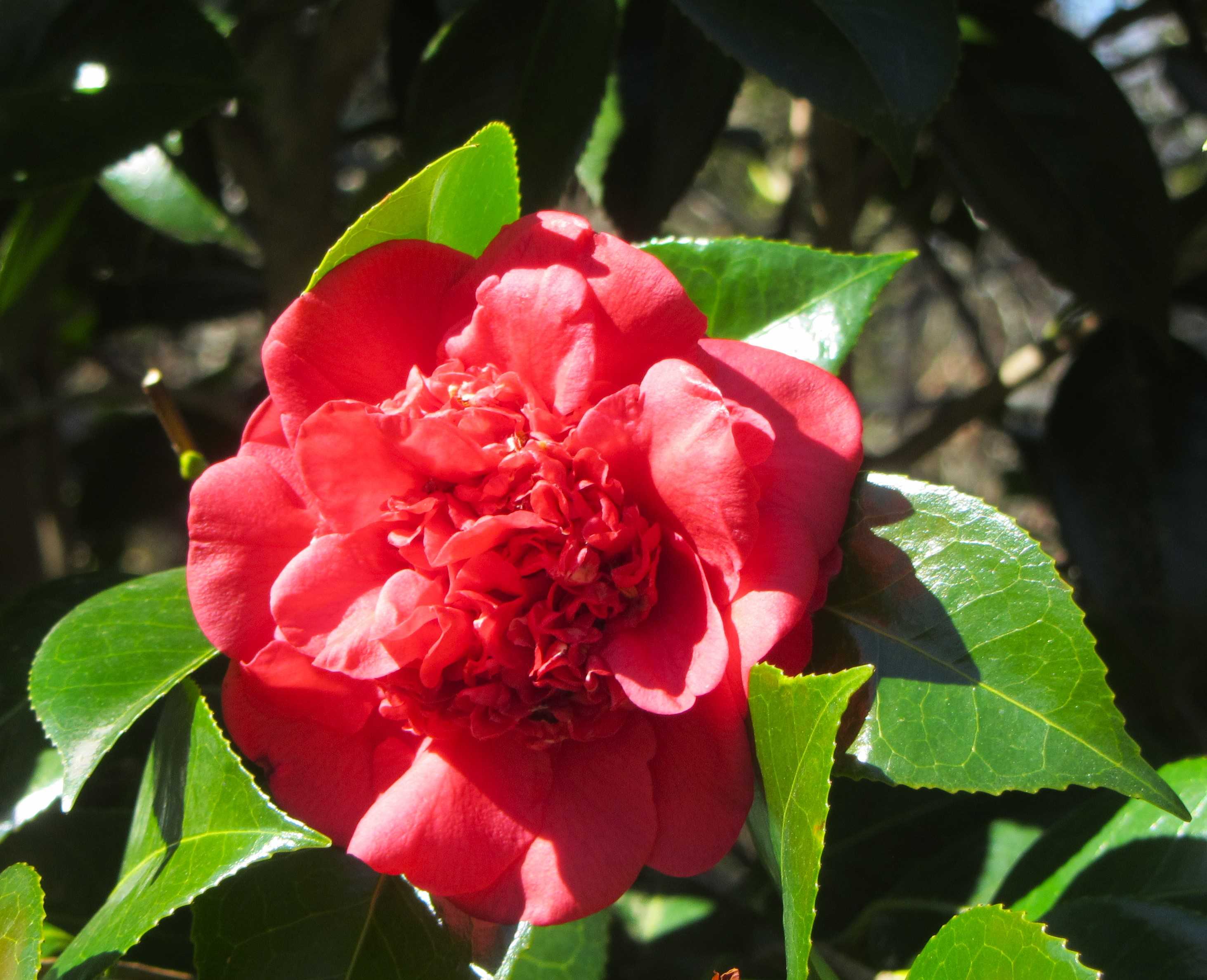
I’m always very reluctant to try to identify Camellias, there are so many of them and you will have over there any number of varieties that have never been introduced over here and that I have never seen. Plus the flower form can change significantly between different climate areas. That said, it could be ‘Kramer’s Beauty’.
LikeLike
Jim, I understand. So often I admire Camellias, and other plants on your site, while knowing that they simply aren’t available here. C. ‘Kramer’s Beauty’ certainly looks right. There are so many thousands of named selections now, and as you said, variations appear based on climate and culture. I would have purchased that shrub around 2010 at the local hardware store, so it wasn’t anything exotic at that time. It certainly is pretty now and we enjoy it a lot. Thank you for having a try at identifying it.
LikeLike