It was bright and warm enough yesterday to sit outside for a while on the back deck while burning the coating off of a new hot plate for melting wax. I ended up staying out long enough to melt down nearly all of our old candle stubs and pour them into jars with new wicks. It is a pleasant sort of recycling to accomplish once or twice a year.
And I had time to water and tend all of our overwintering potted trees and baby ferns sheltering against the house. Buds are swelling on the Japanese maples, the baby Camellia shrubs look healthy, despite attention from the squirrels, and a few Violas have flowers. Squirrels have been uprooting the Viola plugs this winter, so I find the desiccated remains and push them back into the soil, hoping for a small miracle that will help them survive until spring.
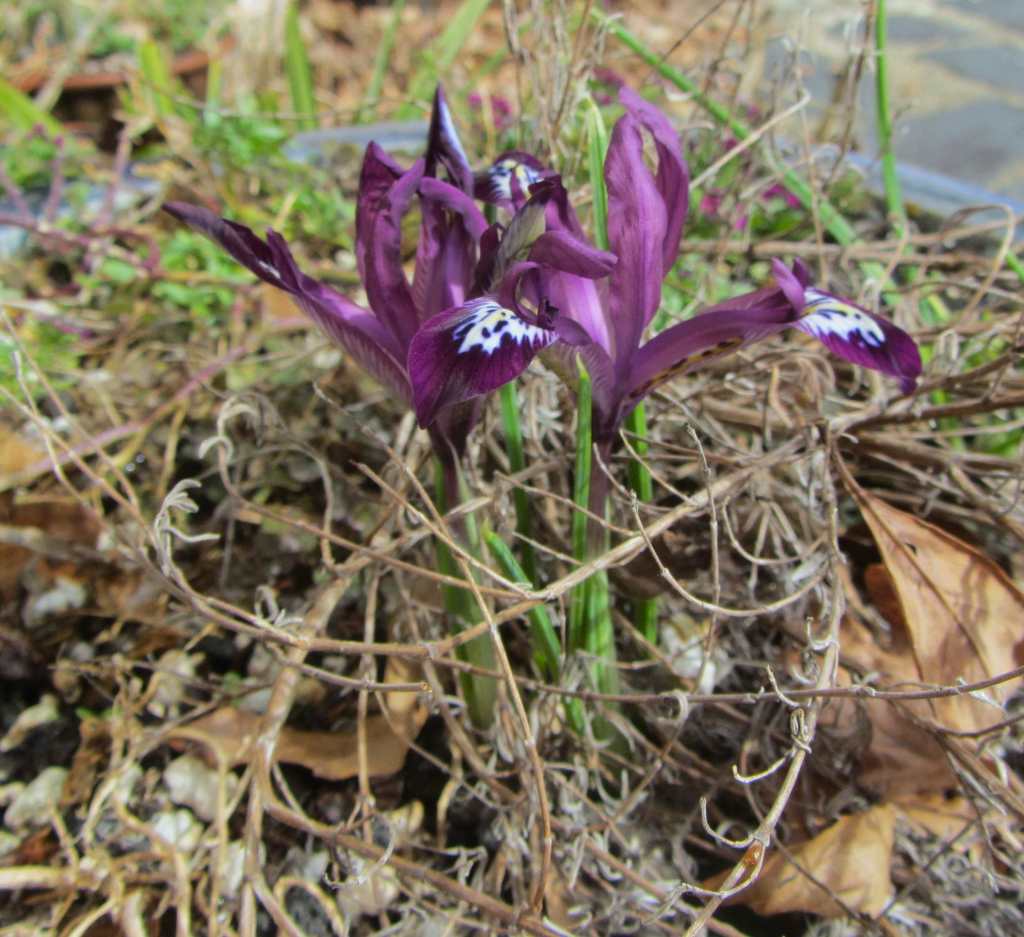
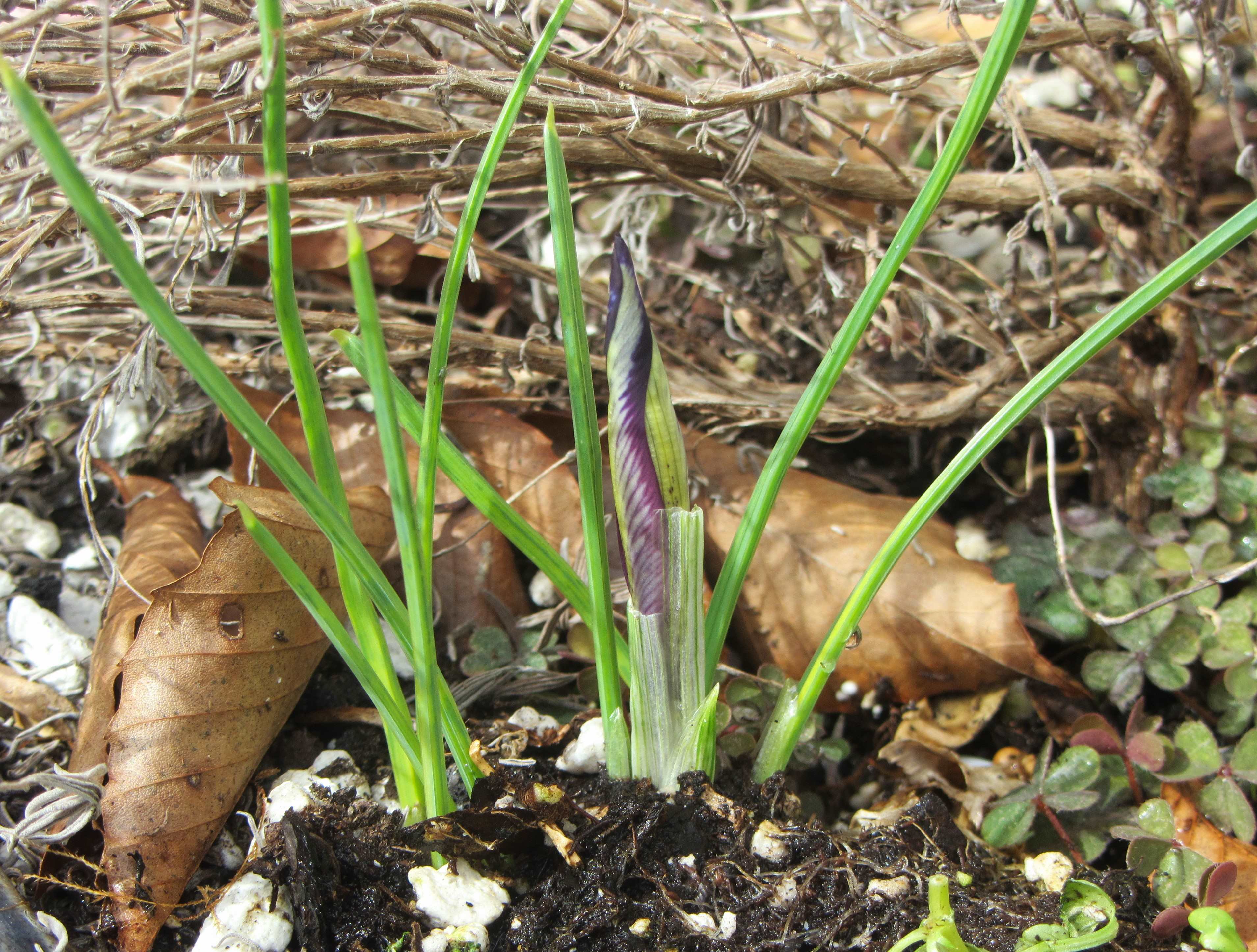
Eventually, I unplugged the hot plate and went around to the front patio to water and refill the birds’ bowl. And that is when these tiny, perfect Iris flowers caught my eye. Iris reticulata are some of the earliest bulbs of late winter, and I have planted scores of them over the years. But they don’t like our wet summers. It is a very happy surprise to see them last more than a season, and these have been in the pot on our front porch for so long that I had totally forgotten they are here.
These beautiful little Iris are survivors. They survived digging squirrels, chaotic weather, and a forgetful gardener, to bloom in the middle of February and warm my heart with their tenacity and charm. They must enjoy the baking they get each summer here. They share the pot with a Spanish Lavandula, a Viola nibbled almost to its crown, purple Alyssum that has bloomed continuously since autumn, and some volunteer Oxalis. I hope that the Lavandula will leaf out soon, but it may already be a relic of the past. I’m sure there are some Narcissus in there too, that have yet to make their debut.
You might expect that a large pot on the porch by one’s front door would look more impressive. Things come and go in this pot seasonally, but this winter’s plantings have been picked over by birds, squirrels and deer. Who knows, maybe rabbits, too. I caught them eating succulents on the porch last summer. The Iris are inspiring me to freshen it up once again.
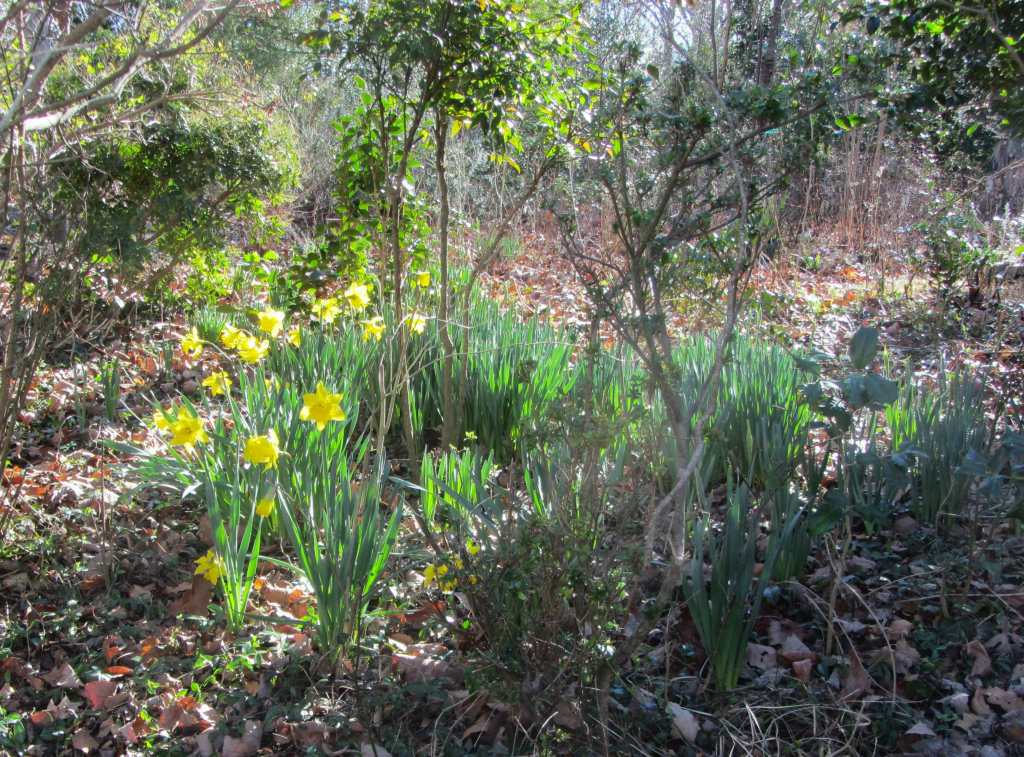
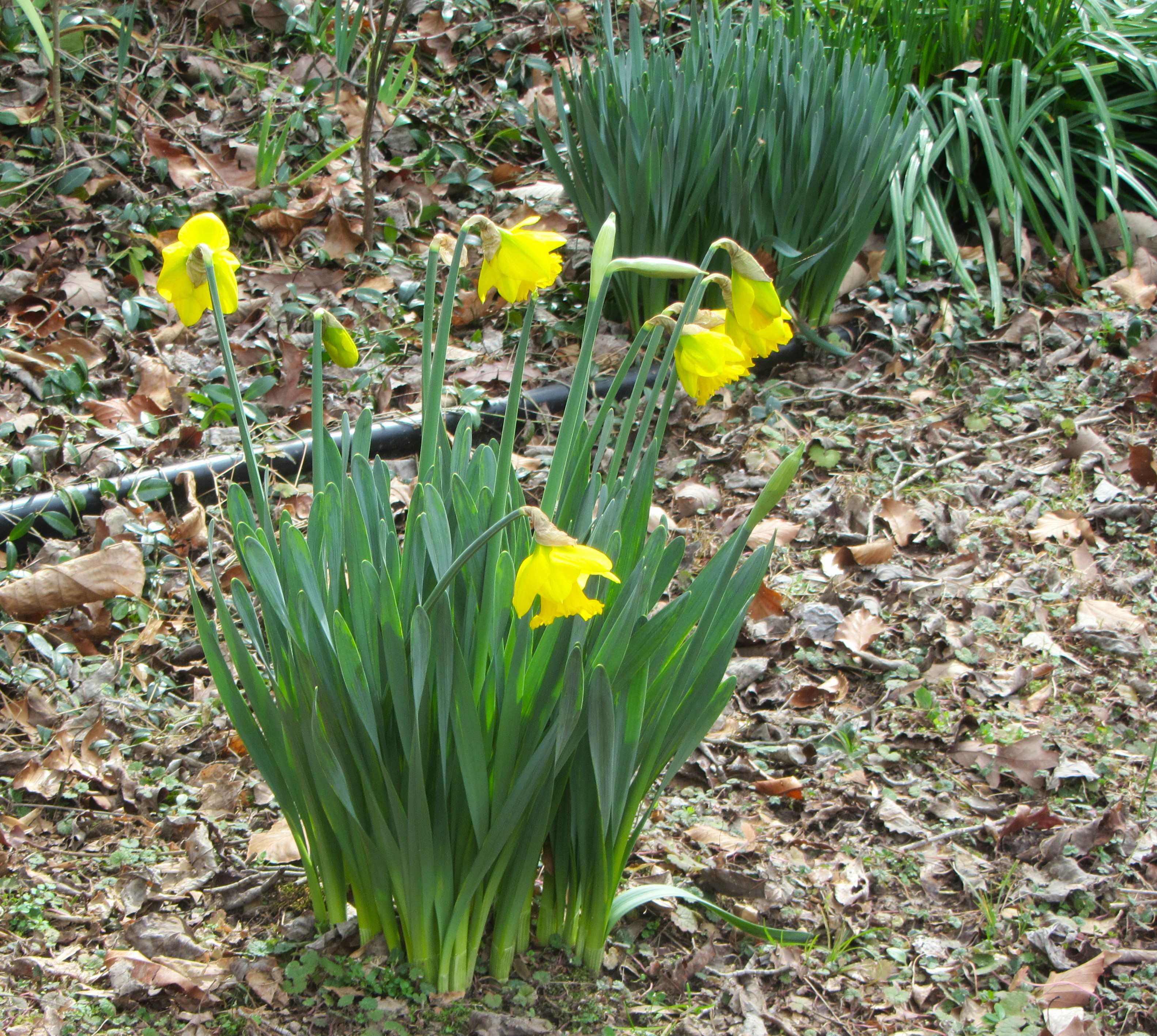
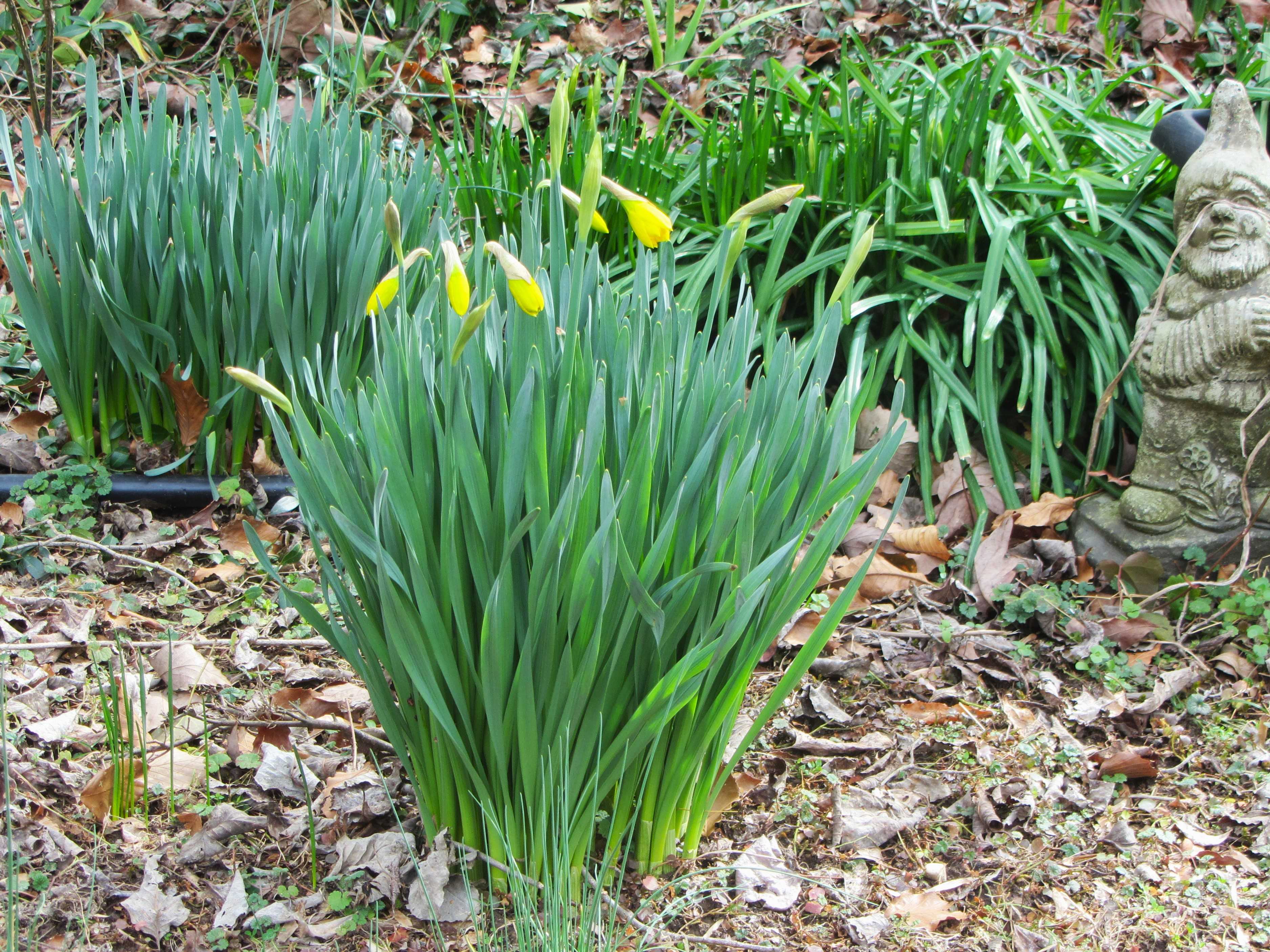
We’ve had rain, followed by some beautiful warmish days this week. The daffodils are finally beginning to bloom. And my partner found the first Crocus in flower yesterday. It promptly closed its petals again as the wind shifted and turned chill. We are heading into another cold spell and the wind is up this morning, despite the bright sunshine. Snow passed to our north overnight, leaving us with only a brief rain shower.
As we wander around the yard checking on the progress of everything, noticing what needs pruning, and looking for beauty, I notice how everything blooming or in bud is from elsewhere. The native flora still looks tired and bleak.
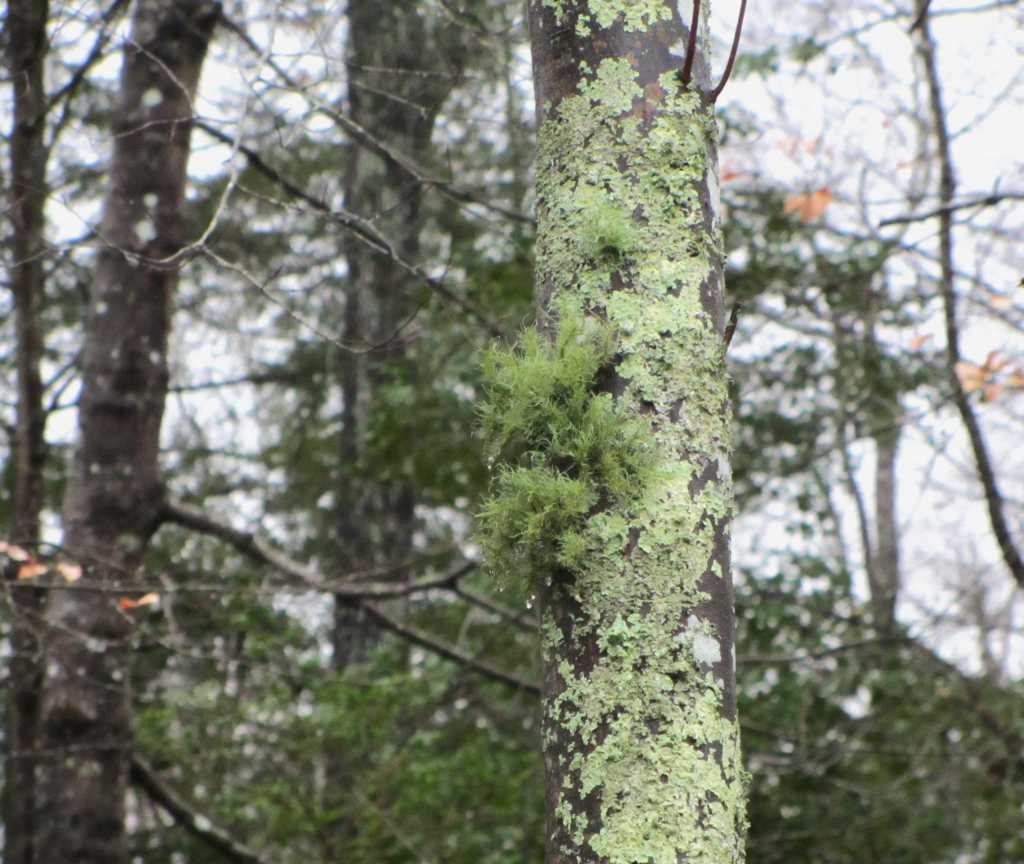
We’ve been driving up the Colonial Parkway and onto Jamestown Island, the historical site of first English settlement in the 17th Century, where the landscape has settled into evergreen, brown and grey. Pines, wax myrtle, holly, cedar, Magnolia, and native red bay shine evergreen in the sunlight above moss, lichens, and a few evergreen ferns. Everything else is dormant still. A few geese forage in the wetlands where tubers grow in the mud, and berries remain plentiful for the birds. Beyond that, nothing blooms to feed winter insects.
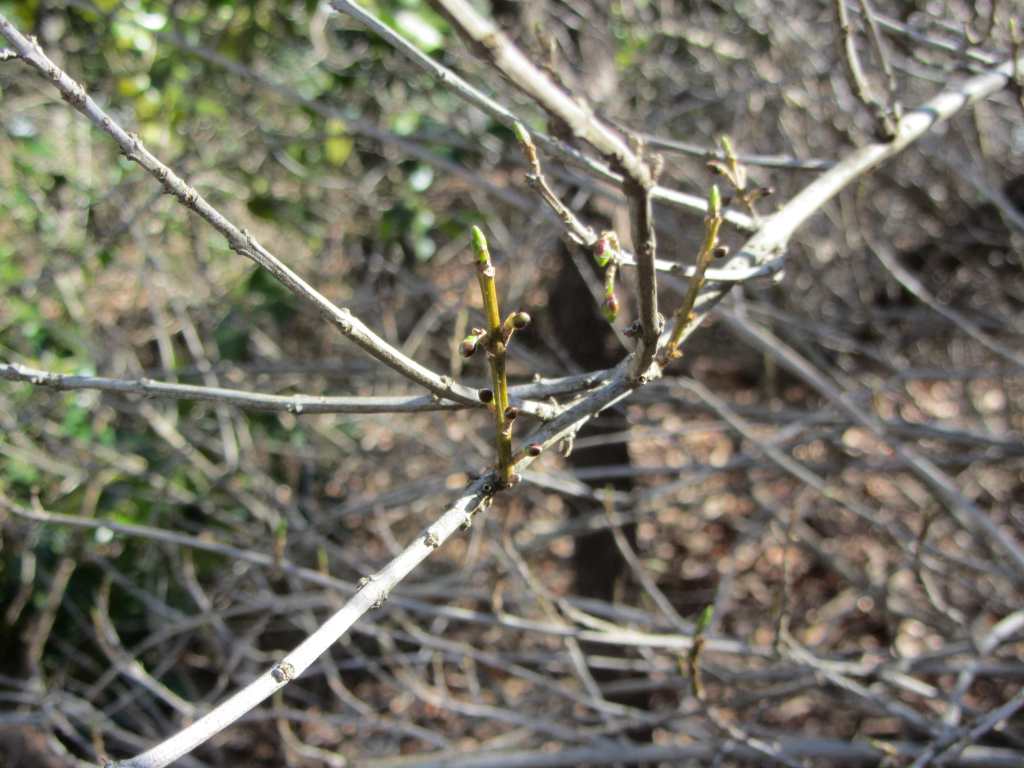
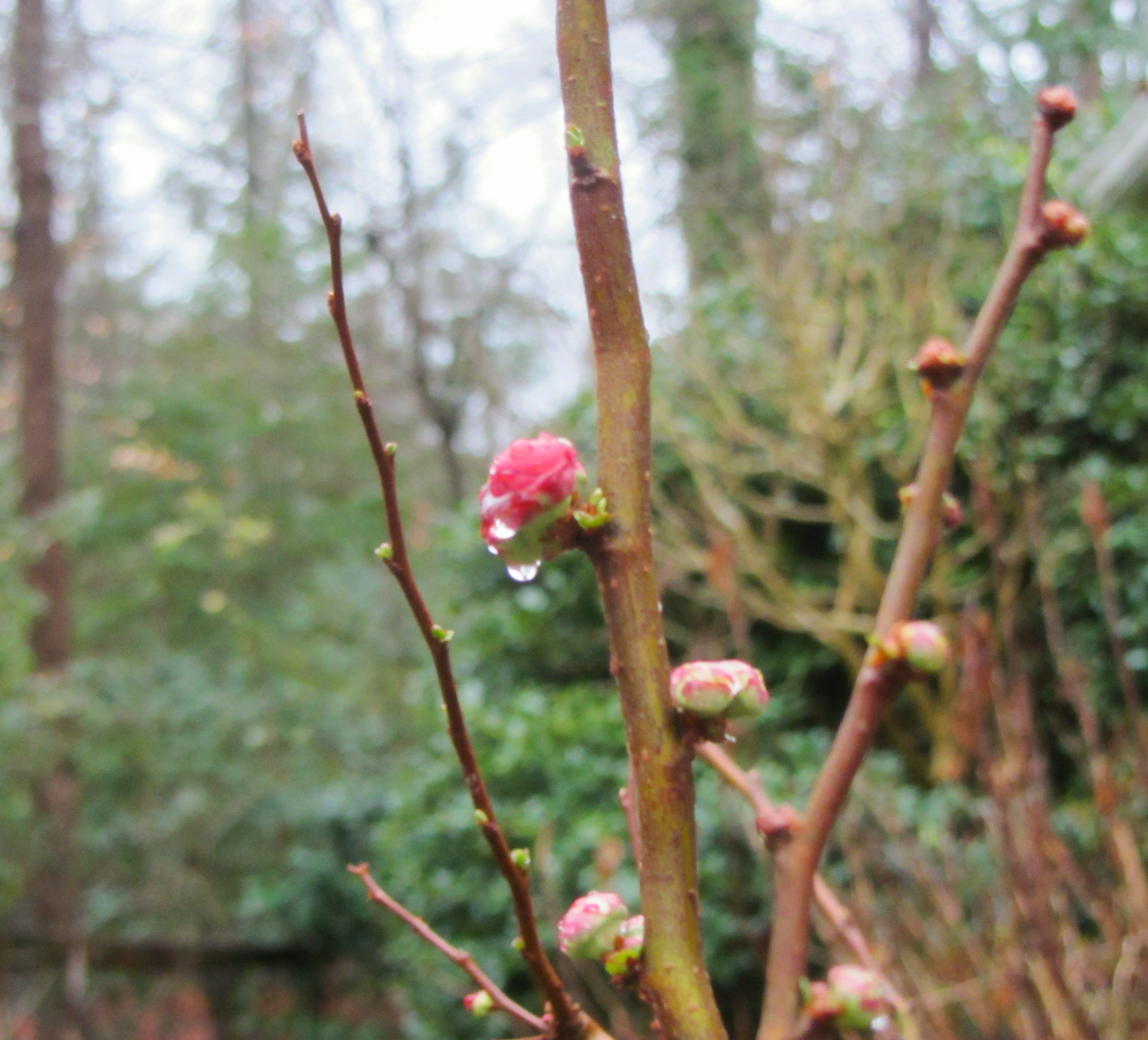
Winter allows us to appreciate the small, beautiful things we find in growth even more than other seasons. We all need that beauty and evidence of life and renewal. I love the excitement of watching winter flowers emerge and brave even the coldest days of the year. I am watching the progress of Forsythia, Camellia, and Chaenomeles buds as they swell and show color. Iris leaves poke up through the wet Earth, and soon the first fiddleheads will appear.
Camellias, Narcissus, and Hellebores bloom in abundance during these last frozen weeks of winter here. Jim mentioned Camellia Forest Nursery, located in central North Carolina, in his response about my mystery Camellia last week. I believe he has identified it correctly as C. japonica ‘Kramer’s Supreme.’
I poked around on the Camellia Forest website for a while and ordered a few more Camellias, to arrive next week. The new C. sinensis, tea Camellias, will live in pots on the front patio; and I also ordered a deliciously scented white fall blooming hybrid known as C. x ‘Scented Snow.’ It may live in a container for a year or two, but will eventually join our other Camellias in the garden. Our collection of Asian and hybrid Camellias keeps growing.
I found a book this week that resonates so strongly with my own evolving understanding of what and how to plant that I wish I knew the author. Fred Pearce is an award winning British journalist who has been covering stories about climate change, invasive species, and the ecology of sensitive places for decades now. He has worked in over 80 countries and written a wide range of books on environmental topics. His 2015 book, The New Wild: Why Invasive Species Will Be Nature’s Salvation, reminds us that there are no ‘pristine’ untouched native environments anymore, and that the human hand has shaped the planet to the point where we need to look forward towards survival rather than backwards to some mythical time in the past before humans began changing the environment and moving plants around.
I want to order perhaps half a dozen copies of this book and send them to colleagues in our area who take joy in ripping out introduced plants and replacing them with ‘natives.’ People move around to find a better place to live. Plants and animals also move around and evolve. Sometimes plant species are selected and improved through hybridization, and imported and exported through trade. When plants thrive in a new environment they enrich the biodiversity of their new home, providing new opportunities for animals, insects, and other plants. They function within the landscape or they die. We have to consider all sides of this die which has already been cast, not just a single face. And we can’t wallow in our xenophobia and nostalgia if we are to meet today’s challenges, environmental and otherwise.
So I will leave you today with a quotation from Pearce’s introduction:
“It is foolish to fear nature at its most dynamic-red in tooth and claw, rhizome and spore, root and branch. As true environmentalists, we should rejoice when species burst through the paving stones of our cities or wash up on foreign shores. We should celebrate nature’s powers of recovery. We should let it run wild. How else are species to thrive and respond to the disruption of our activities, including climate change, if not by invading new territories, by becoming aliens? True nature lovers should see that.”
from the introduction to The New Wild: Why Invasive Species Will Be Nature’s Salvation by Fred Pearce
With appreciation to Jim Stephens of Garden Ruminations, who
hosts Six on Saturday each week.

 Our Forest Garden
I agree with you on invasive plants. I don’t understand why some people get so bent out of shape because a wild plant is not ‘native’ to a country and they immediately want to eradicate them. In JAn/Fec we have masses of yellow flowers (the plant name escapes me) which the bees adore. But the purists want to get rid of it.
LikeLiked by 1 person
My thinking is tending more towards ‘native to planet Earth.’ So long as a plant is functional in the landscape and can thrive with a minimum of added resources, why not let it have a chance to live? There is a distinction between ‘introduced’ and ‘invasive,’ however. Invasives can become thugs, crowding out other more desirable plants. I”m thinking of some Asian grasses and vines here that kill other plants in their path without really adding anything to the landscape or the ecosystem. It is a fine line, isn’t it? Thank you for visiting and for leaving comment!
LikeLiked by 1 person
Agreed – I have become enamored with Wisconsin native plants and the insects they attract, so am mostly limiting new additions that are native, but I would never get rid of my lilacs or stop growing my favorite plants (unless I found out that they were invasive in a way that can’t be managed). I find removing seed heads when you truly do not want spread is usually pretty effective.
LikeLiked by 1 person
Very good idea to add camellias sinensis to your garden. I sowed some a few years ago (seeds from Reunion Island), they( 2) are still in a pot in the greenhouse and measure about 40 cm high. I hesitate to plant them outside because a first batch sown at the same time, had been planted in the ground and I had lost them. Soon our first cup of tea? Good luck with yours
LikeLiked by 2 people
Thank you so much, Fred. A local gardener gave me a few sinensis seeds in 2020, and I kept them going for several months. They germinated indoors over winter, and then I moved them outside in the summer. I believe the squirrels got them that first summer because they were in quart sized nursery pots mixed in with some oak seedlings. I am hoping that by ordering plants already a year or two old, I’ll have a better chance of raising these despite the wildlife. Looking forward to that first cup of tea! Cheers!
LikeLiked by 2 people
Keep us updated on these plants !
LikeLiked by 1 person
I read Fred Pearce’s book back then and it was a compelling read, but I lean towards Doug Tallamy’s work because we need natives to feed the insects upon which the food chain depends. His research concludes that as long as 3/4 of the plants are native, the system will bear it. Unfortunately, invasives are taking over, particularly riverine habitats and I’ve seen a huge decline of songbirds along our river where 90% of the vegetation is non-native. I miss the warblers that used to nest there!
LikeLiked by 1 person
Tallamy’s work is compelling, too. I particularly like the work he is doing with Keystone species. He has finally come around to teaching that all native species (as well as all introduced species) aren’t equal, and that those that support the most insect species, and make the most connections with the ecosystem, are the most important to nurture. Beyond certain trees, I’m still not finding native herbaceous species that fill the niche of supporting pollinators in winter. I’m sorry you have seen such a decline in songbirds in your area along the river. What is growing there now that has crowded out your native plants? ❤ ❤ ❤
LikeLike
Knotweed (ugh), bittersweet, multiflora rose, and honeysuckle, mostly. The knotweed has increased the most radically and is nearly impossible to eradicate, believe me, we have tried!
LikeLiked by 1 person
Oh, those such tough ones to fight! All are a problem in this area, too. So sorry to know that they are changing your environment and reducing your bird count.
LikeLiked by 1 person
Food for thought as usual, yes we need to learn to evolve and thrive with nature.
LikeLiked by 1 person
The birds need insects and caterpillars to survive and feed their young. The keystone plants like oak, hickory and willow serve that purpose. It is the host plant specific butterflies that will struggle.
LikeLiked by 1 person
I’ve believed that for a long time. And I’ve made a point to grow specific native host plants for the butterflies. We had fewer butterflies last summer than ever before and I didn’t find any cats at all. It seems that there are other factors in play- probably on the winter end of the migration, and perhaps as a result of weather events. But my host plants weren’t used last summer at all, so far as I could tell. We usually have a lot of swallowtails here and I have paw paw trees and plant lots of parsley, rue, and fennel. The summer before our Asclepias went untouched. I know that our many oak, hickory, and black cherry trees trees host a variety of insects, but we aren’t finding as many as I would hope. Even with all of the nectar plants from spring through early winter, I just didn’t find many butterflies or wasps visiting the flowers. It is a concern, and I hope we see the population bounce back this summer. Planting keystone plants really helps the greatest number of creatures with one’s available resources.
LikeLiked by 1 person
Iris reticulata is rad! I should have gotten some while in the Pacific Northwest; and I should get some when I return in a month or so. I was so pleased with the Louisiana iris and Algerian iris from Tangly Cottage Gardening that I did not slow down long enough to grab any. I notice that some bloom white, although the blue is too perfect for that species. I have enough flowers that excel at white anyway. Do you notice that Iris reticulata bloom gets damaged by rain because it blooms so early, or does it just bloom through it like daffodil?
LikeLiked by 1 person
Yes, I reticulata is one of my favorite Iris types. And yes, they are tough as well as perfectly beautiful. I especially like them in shallow containers. I have never noticed them ruined by the rain, the way some of the German bearded Iris can be ruined by heavy rain. They would probably be perfect in your climate. They are only available here in the fall for a few weeks. I learned the hard way to plant them right away and not store the bulbs because they mold easily, which ruins them. They are great in a rock garden or with pebble mulch, which helps keep the petals clean when it rains. You can order them beginning in March, for fall delivery, at our local family owned bulb shop brentandbeckysbulbs.com. That is where I order from and they have 7 varieties available this year: https://brentandbeckysbulbs.com/?s=iris+reticulata&post_type=product&dgwt_wcas=1
They also carry I. histrioides, which are just as lovely. I hope you find some for next spring!
LikeLiked by 1 person
I do not know what cultivar I saw in Washington, but they were the more common rich sky blue color, which is what I prefer. ‘Pauline’ is exquisite as well, but I am not so keen on purple. Oddly, I am less impressed with white than with purple. The purple is such a perfect purple, while the white is just sort of average white, and there are better white iris. Embarrassingly, I must get more purplish Navy blue Louisiana iris from Tangly Cottage Gardening because what I got last year was almost completely eaten by gophers. I am so ashamed that it happened so quickly. Anyway, I will inquire about Iris reticulata while there. I know I also saw it somewhere within her landscapes, but can not remember where. I will try the white, or any other cultivar, if she recommends it. The common blue sort that I will get are in my Pa’s neighborhood. I can ask a neighbor who I suspect discarded them if he happens to know what cultivar they are, if they are a cultivar.
LikeLiked by 1 person
Ah, I see- you are building up your ‘friends and family’ garden with bulbs from those you know. I. reticulata ‘Katherine Hodgkiin’ is one of my favorite dwarf early Iris, that I have planted over the years: https://brentandbeckysbulbs.com/product/histrioides-katharine-hodgkin/ and ‘Harmony’ is my favorite blue I. reticulata: https://brentandbeckysbulbs.com/product/reticulata-harmony-2/. But the deep purple Pauline make a nice foil planted with most anything in early spring, though some may find them too dark. I hope you can find what you are looking for. Since you didn’t invite the gophers over for brunch, I hope you won’t let yourself feel too embarrassed over the Iris. We can’t grow everything in pots forever…. ❤
LikeLiked by 1 person
I have a rule against purchasing plant material. My Dalmatian iris is still my favorite because I have grown it since before kindergarten. It is from my maternal maternal great grandmother’s garden. Just about everything in my garden is from ‘somewhere’. Both the Algerian iris and Louisiana iris are from Tangly Cottage Gardening in Washington (which is neither Algeria nor Louisiana), and will be with me as long as I am gardening. I like ‘Red Velvet Elvis’ Louisiana iris, but will not grow it unless I get it from somewhere important.
LikeLiked by 1 person
Well then I am especially happy to be able to contribute plants to your collection from time to time. And I am sorry that the little dwarf Iris don’t Seem to increase enough here to divide and share. The ones in flower 2 weeks ago in the container are still blooming.
LikeLiked by 1 person
Thank you, but I should get plenty when I go to Washington in the next month or so. With so many other perennials here now, I would prefer to limit the species to a single cultivar. (It might actually be the straight species.) Once I acquire such a perennial, I am obligated to grow it forever, and I bring many back from the Pacific Northwest!
LikeLiked by 1 person