I can’t recall whether the groundhog saw his shadow or not. The hopeful ritual on Candlemas each year has little correlation with reality. Some might say, “Who’s reality?” Spring has such a jagged and uneven edge. March came like a lamb yesterday, calm and mild. The rain began by early evening and never stopped. The front yard looks flooded near the patio and I’m listening to rain on the roof and in the trees. Others to the north and west have snow- lots and lots of snow.
Local meteorologists like to call March 1 the first day of ‘meteorological spring.’ I always chuckle when they choose to change the season weeks ahead of the sun. But it doesn’t matter, really, because the plants in our garden have already decided it is spring. Ignore the fact that it was 28 degrees here on Friday morning. It has been getting warm enough by mid-day, and days have lengthened enough already, for the plants to respond.
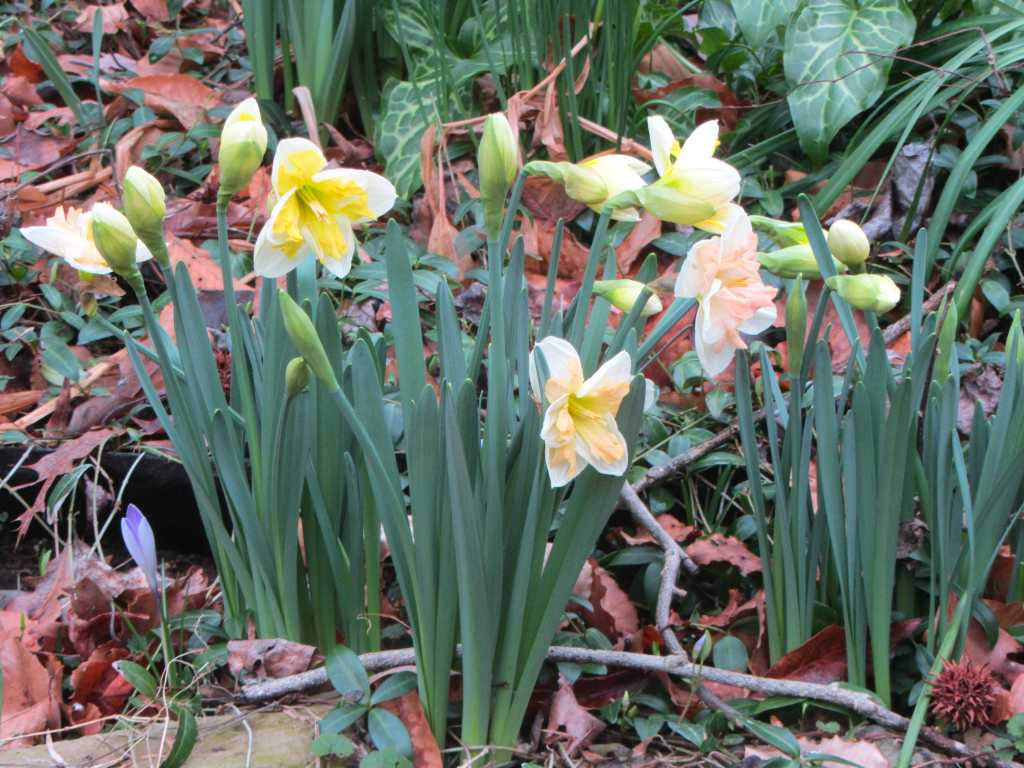
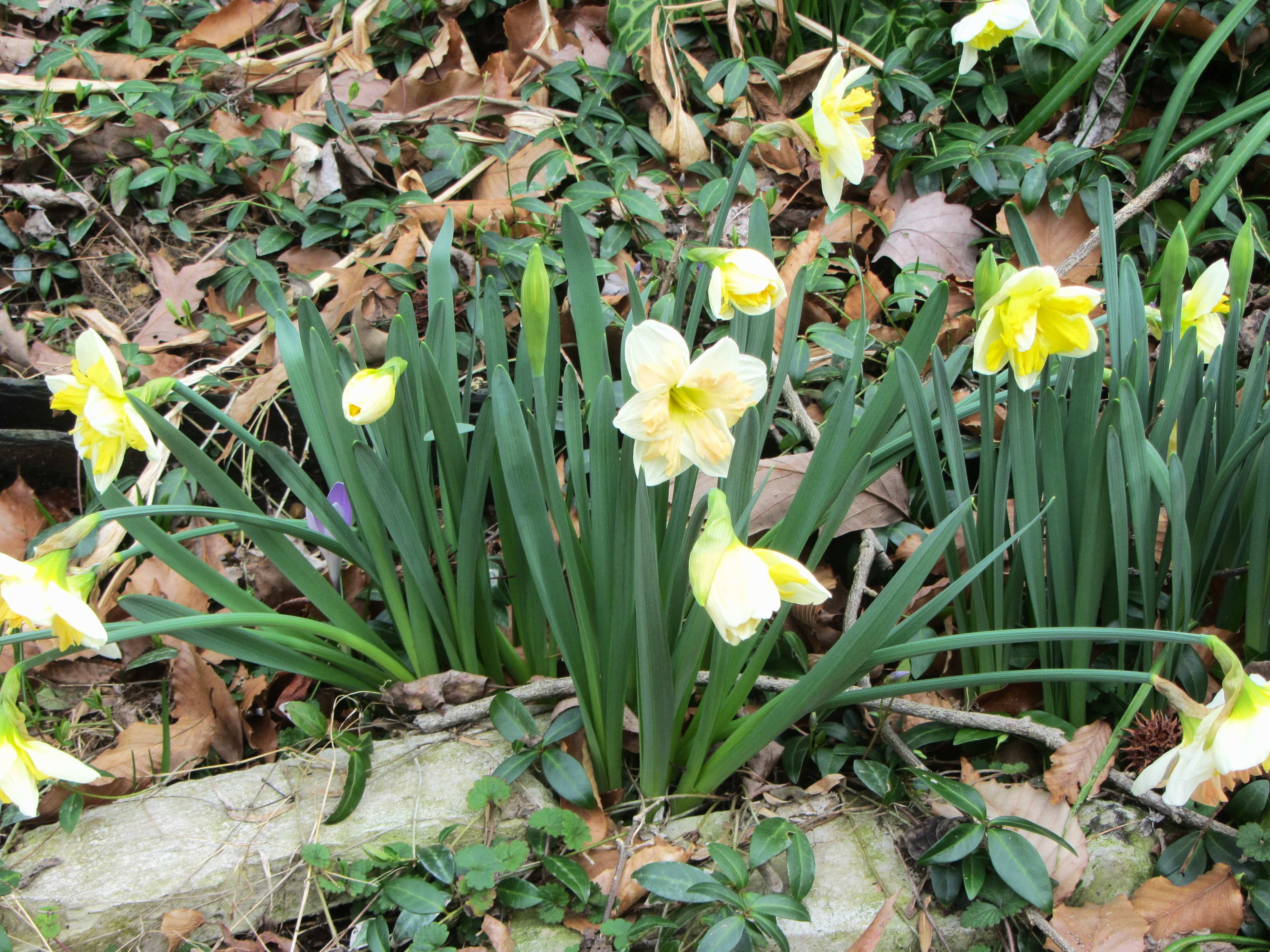
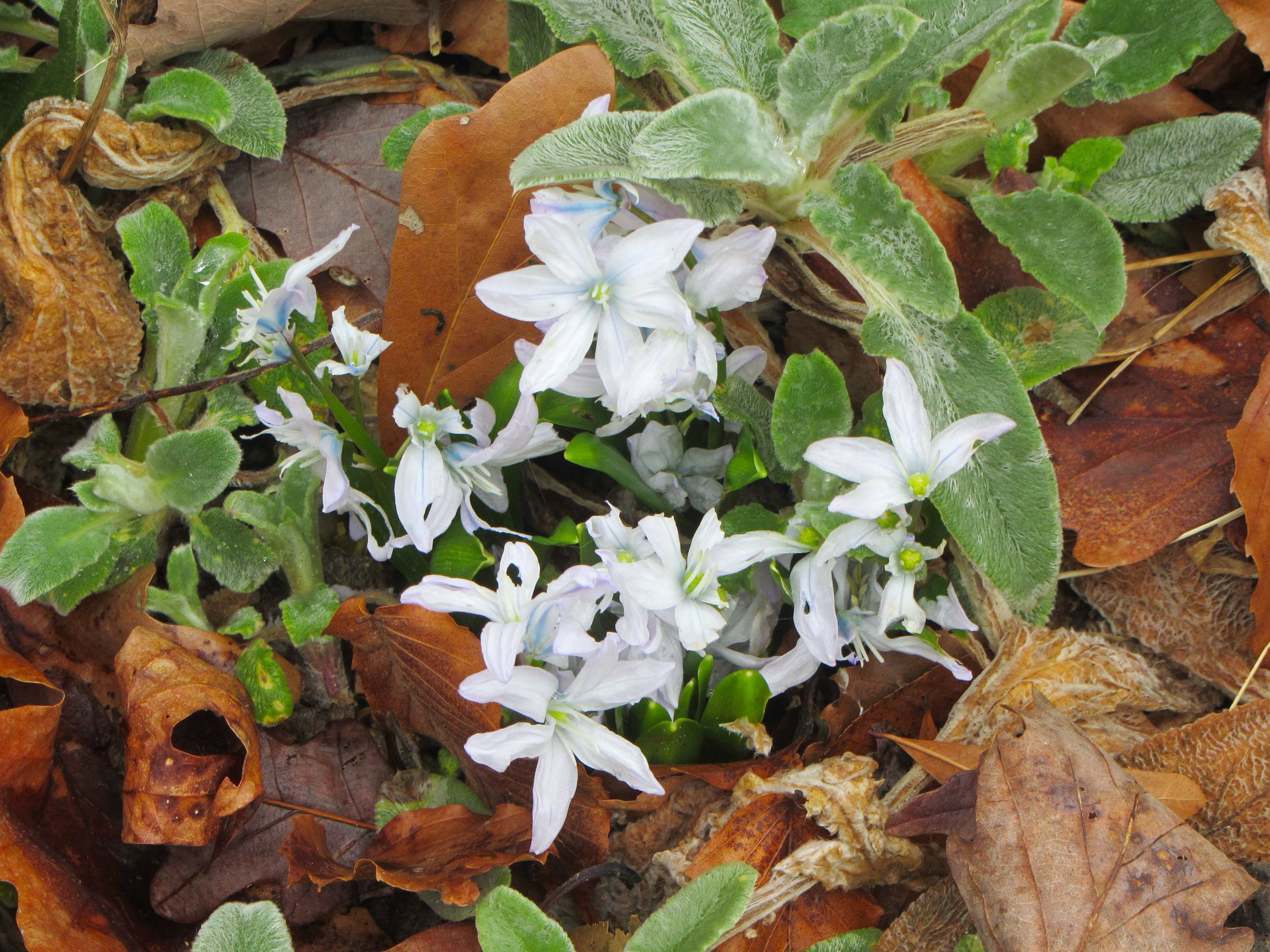
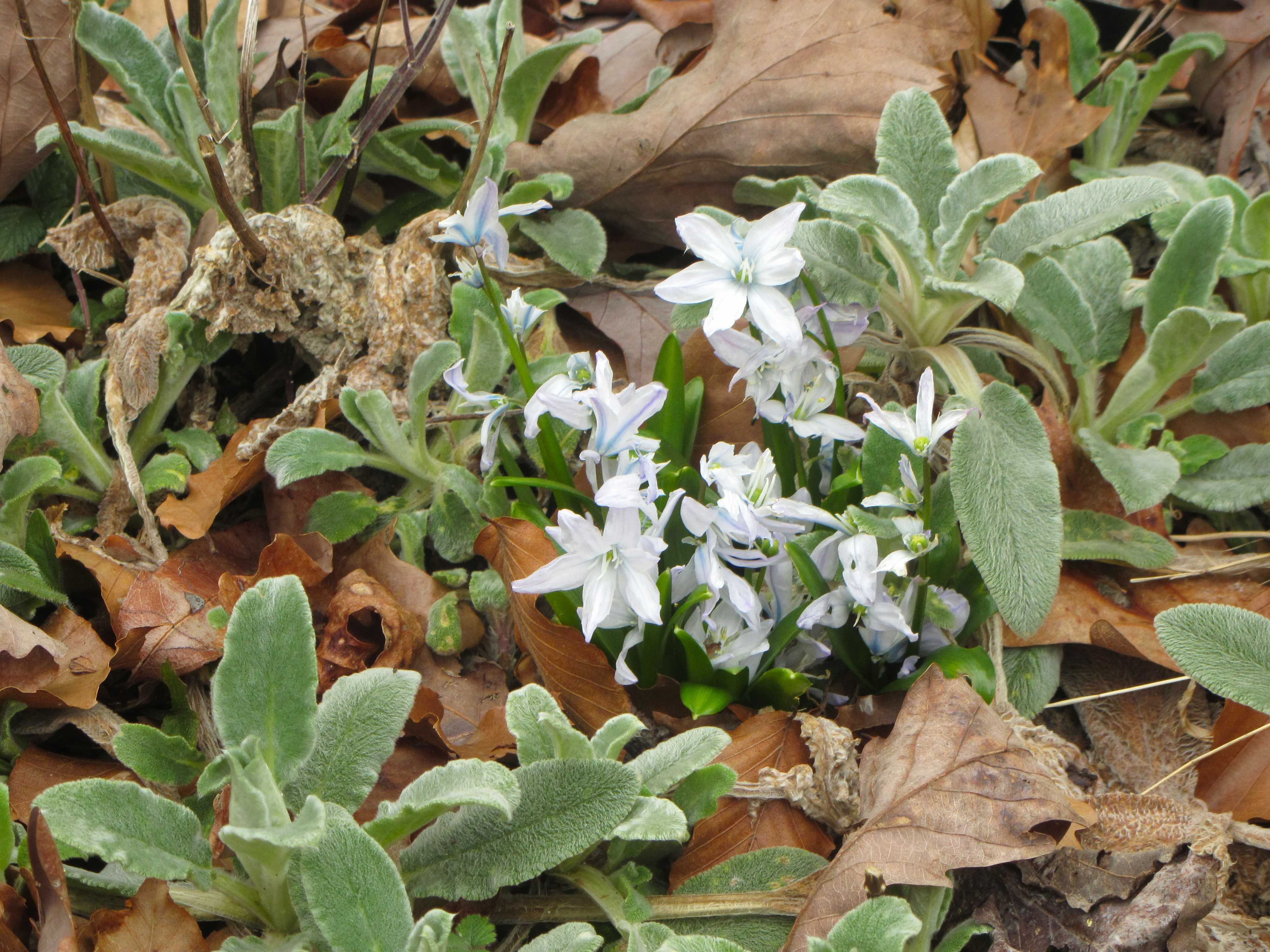
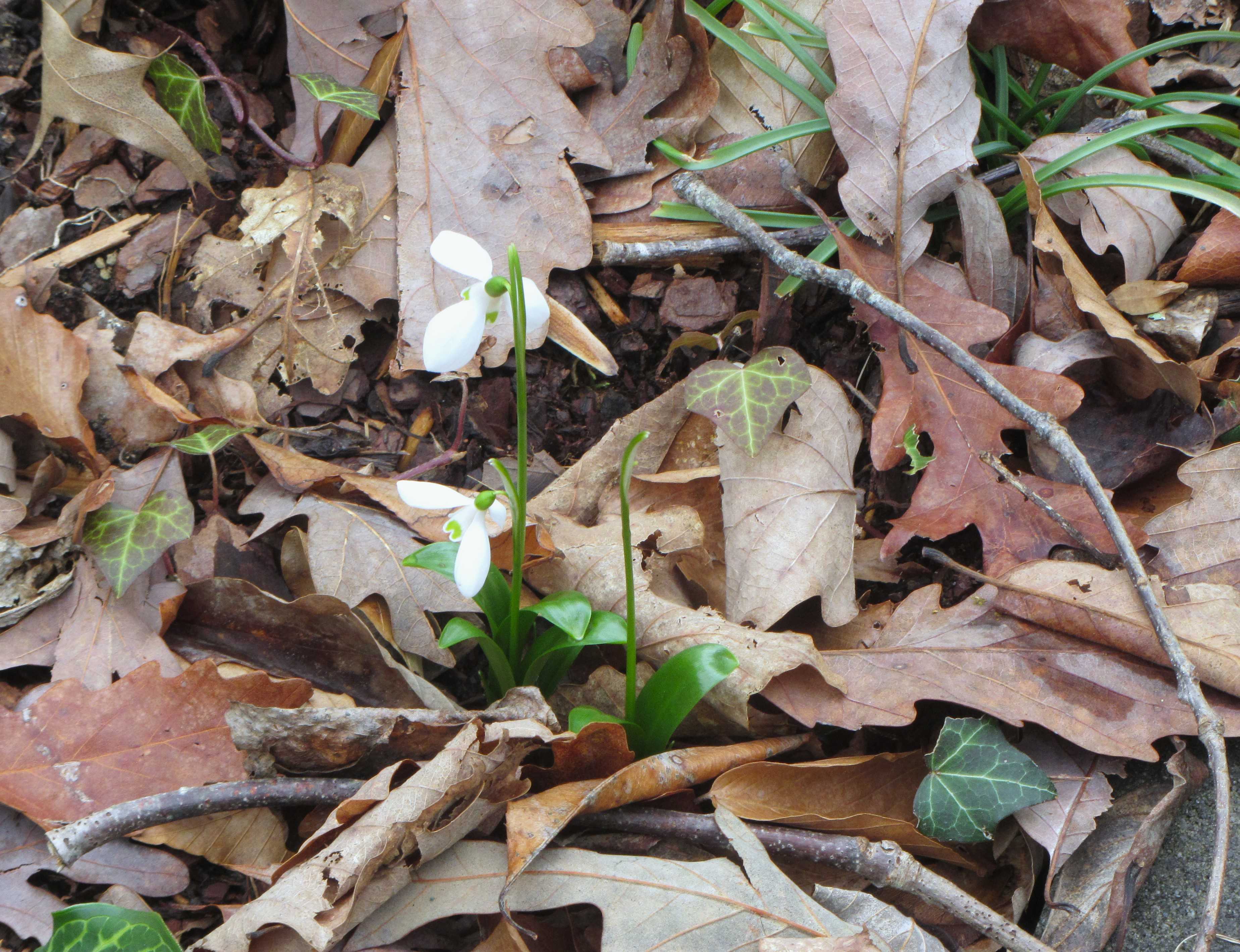
Every day there is something new now. A new bulb that has surfaced and bloomed, a new shrub in bloom, new signs of growth on a perennial. There is more to investigate when I wander outside with my camera. Spring is always filled with surprises.
I was surprised on Wednesday afternoon when a package of bare root trees I had ordered last September arrived unexpectedly. A friend asked, “Didn’t you choose your shipping date?” Probably, yes. And truthfully I knew to expect them in early March. But I wasn’t expecting the two large heavy boxes of trees on Wednesday, demanding immediate attention. Over 100 bare root redbud trees need some focused care to survive until they are planted. And I’m not doing the planting, this time.
By early afternoon on Friday the trees had been unpacked, soaked, sorted, packaged, and sent out into the world to friends who had ordered them last spring, and a few more willing to take them and plant them this spring. State nurseries often send a few extra trees, which is good. But all of these trees were huge and healthy. Only one or two were scrawny sticks with just a few roots hanging on. So we have 100+ new redbud trees in our neighborhood now to bloom for years to come.
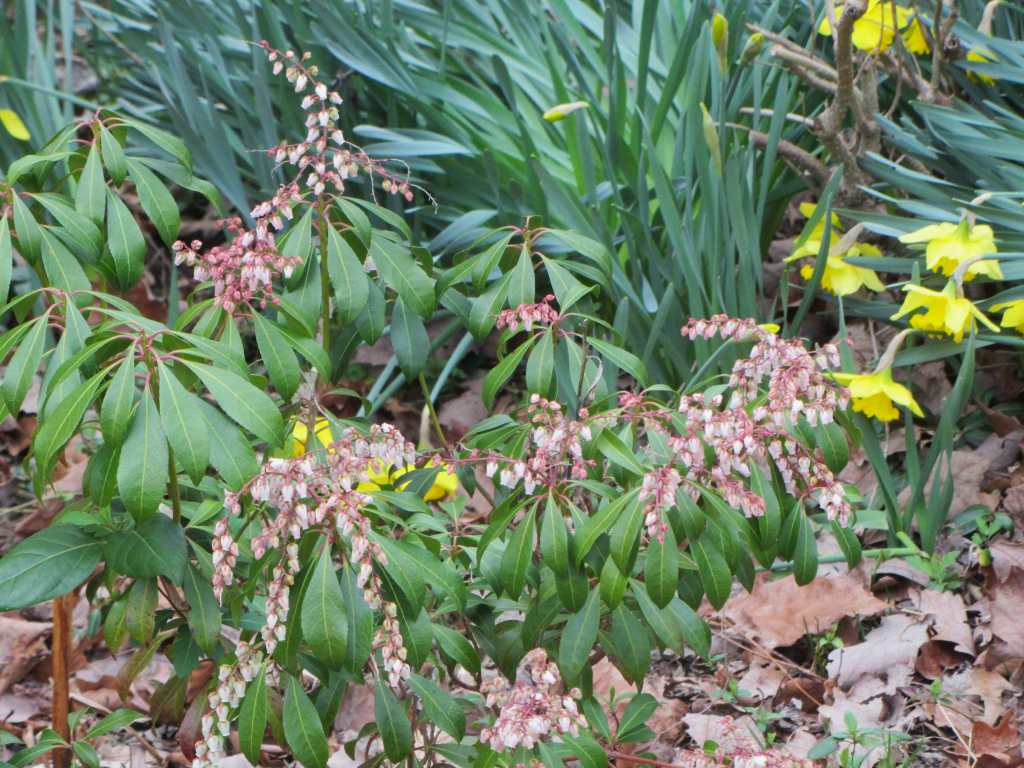
Redbud trees grow wild here and are probably our earliest native tree to bloom, a harbinger of spring. They covered this land when the neighborhood was developed decades ago. They feed the soil with nitrogen captured from the air, hold our sloping yards against erosion, feed wildlife, and survive in sun or shade. They grow best on the edge of the woods, which pretty much describes our neighborhood.
I am happy that we can restore a native tree species in our community as a cooperative effort, replacing some of those lost over the years and maybe adding new ones in yards that were razed during construction. Each tree planted will produce enough seeds to populate a forest within a few years. I find new redbud seedlings in our yard each spring.
A friend and fellow tree-planter picked up the extra trees yesterday to plant in a few county parks where she manages ongoing tree-planting efforts. She plants hundreds of trees each spring, pulling in teams of volunteers to help her. I admire that she plants a good mix of native species to restore diversity, attract and sustain a wide variety of animal species, and also to provide some fruit and nuts for visitors in county parks.
I have been thinking about biodiversity this week, and also about how nature repairs itself given half a chance, while reading another Fred Pearce book, A Trillion Trees: Restoring Our Forests by Trusting in Nature. Pearce has documented ecosystems in many areas of the world that thrive from the biodiversity created when man works with nature, planting useful species in a woodland, but also allowing nature to select which species survive and thrive in the space. The results are perhaps not what we would predict from our armchairs or office desks. His message is mostly good news about our planet’s resilience and the unexpected value of biodiversity, even when that diversity includes introduced species.
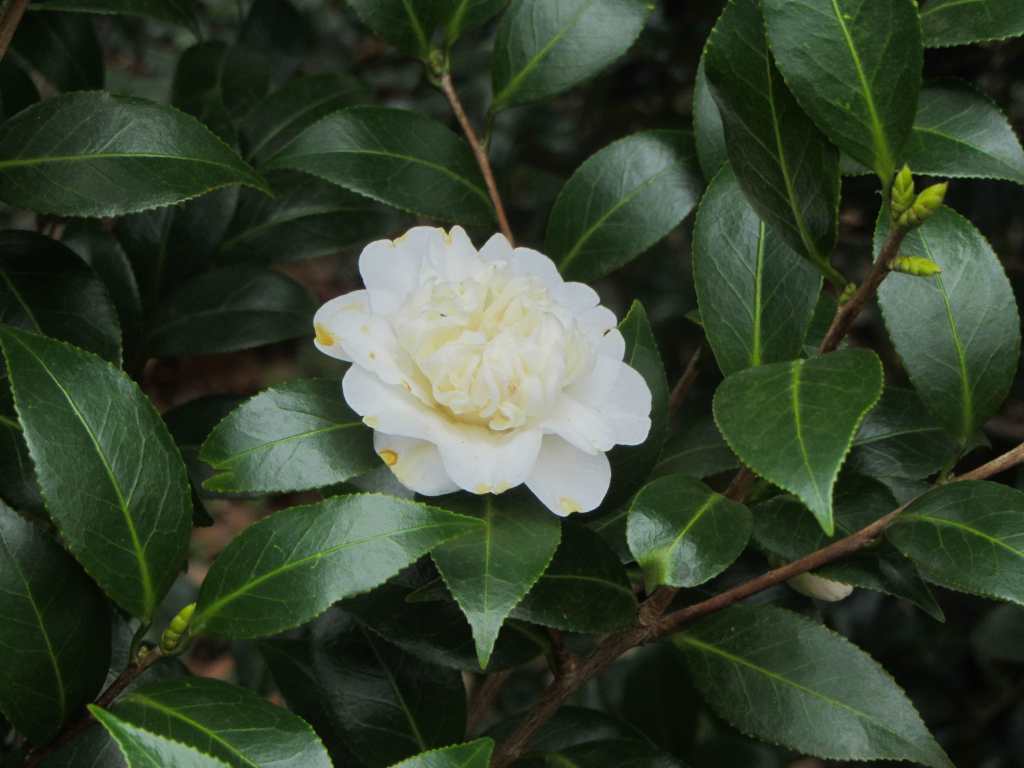
And I’ve been thinking about biodiversity while reading more about Camellias, particularly tea producing Camellias, and writing about growing tea. Of course, while reading about tea, writing about tea, and drinking tea, I also ordered a few more tea plants. That crate arrived Friday late morning while I was in the thick of getting the redbuds out to neighbors. When I finally unpacked the tea shrubs hours later I found them perfectly packed, healthy and ready to grow.
It may be time to trust the weather enough to move the young tea plants outside onto the deck. Experience tells me to wait a bit. I try to remember, spring has a ragged edge and a fickle nature. The wind changes direction and the temperatures plummet. Nights remain cold even when the afternoons turn balmy.
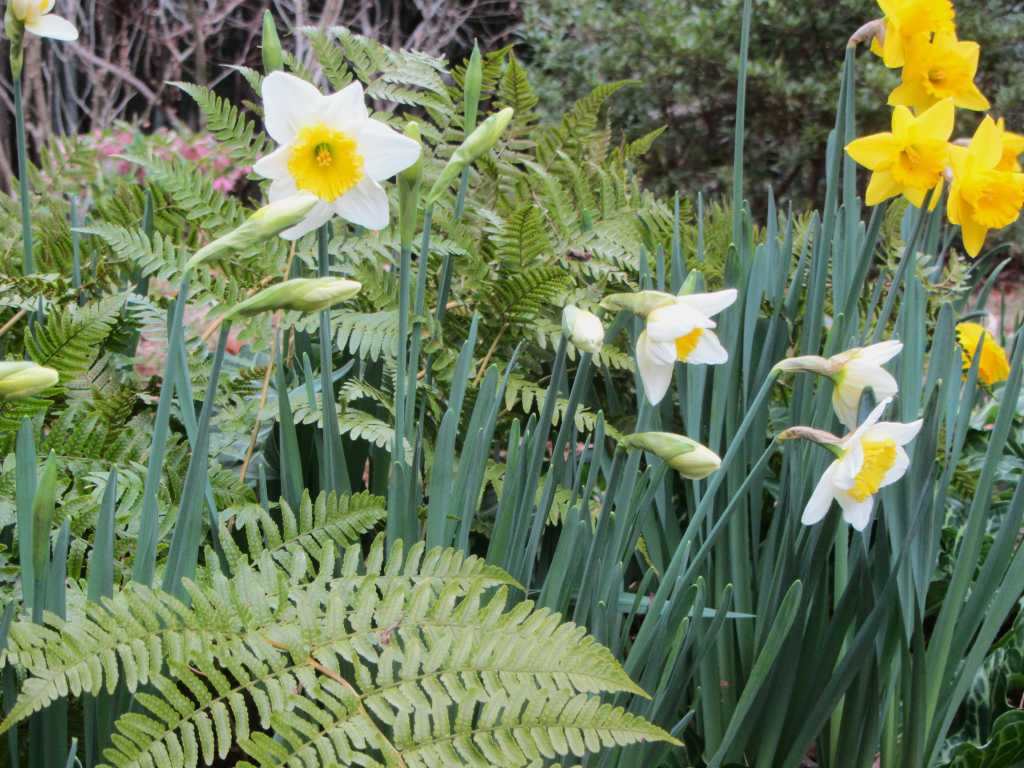
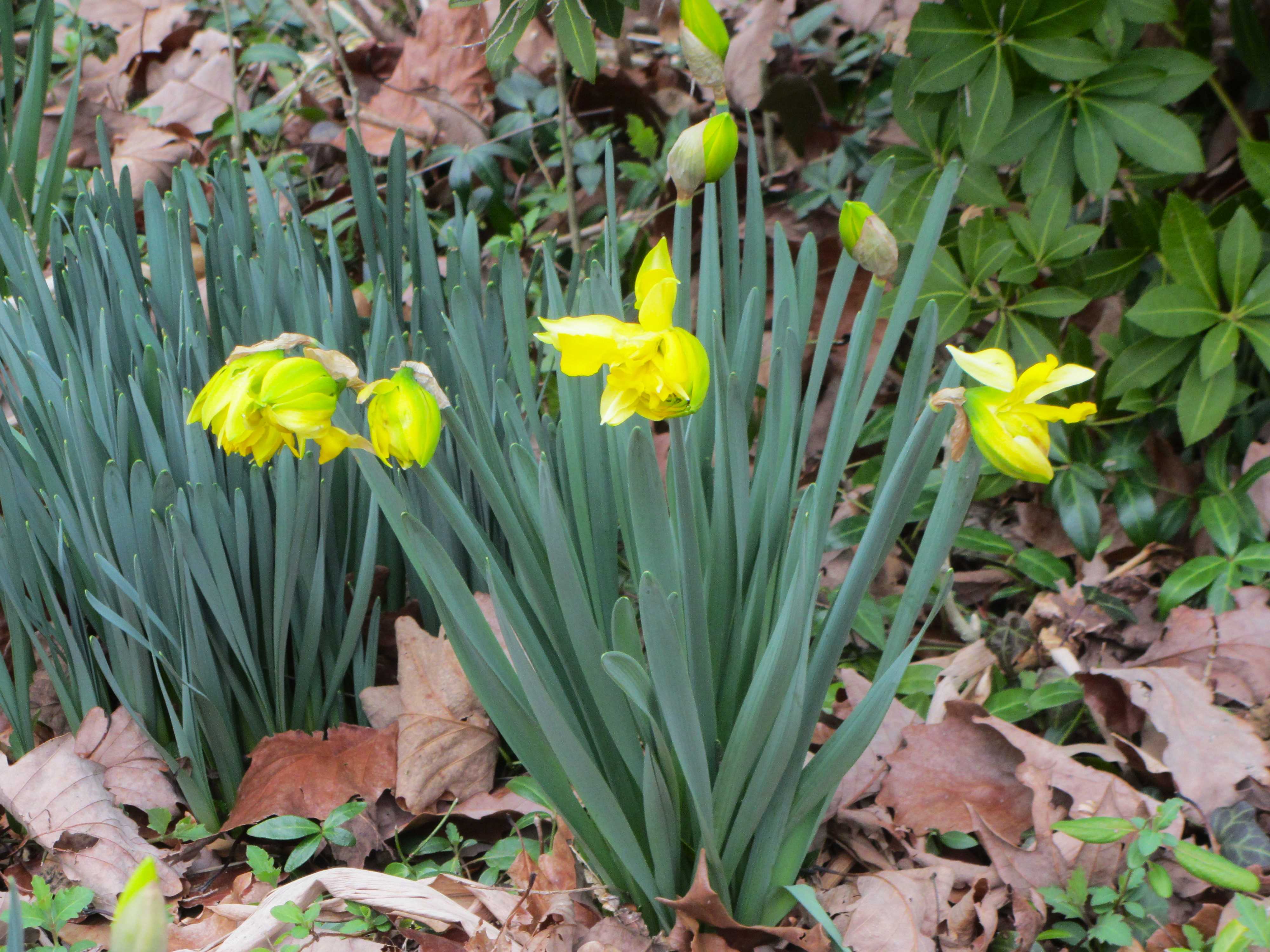
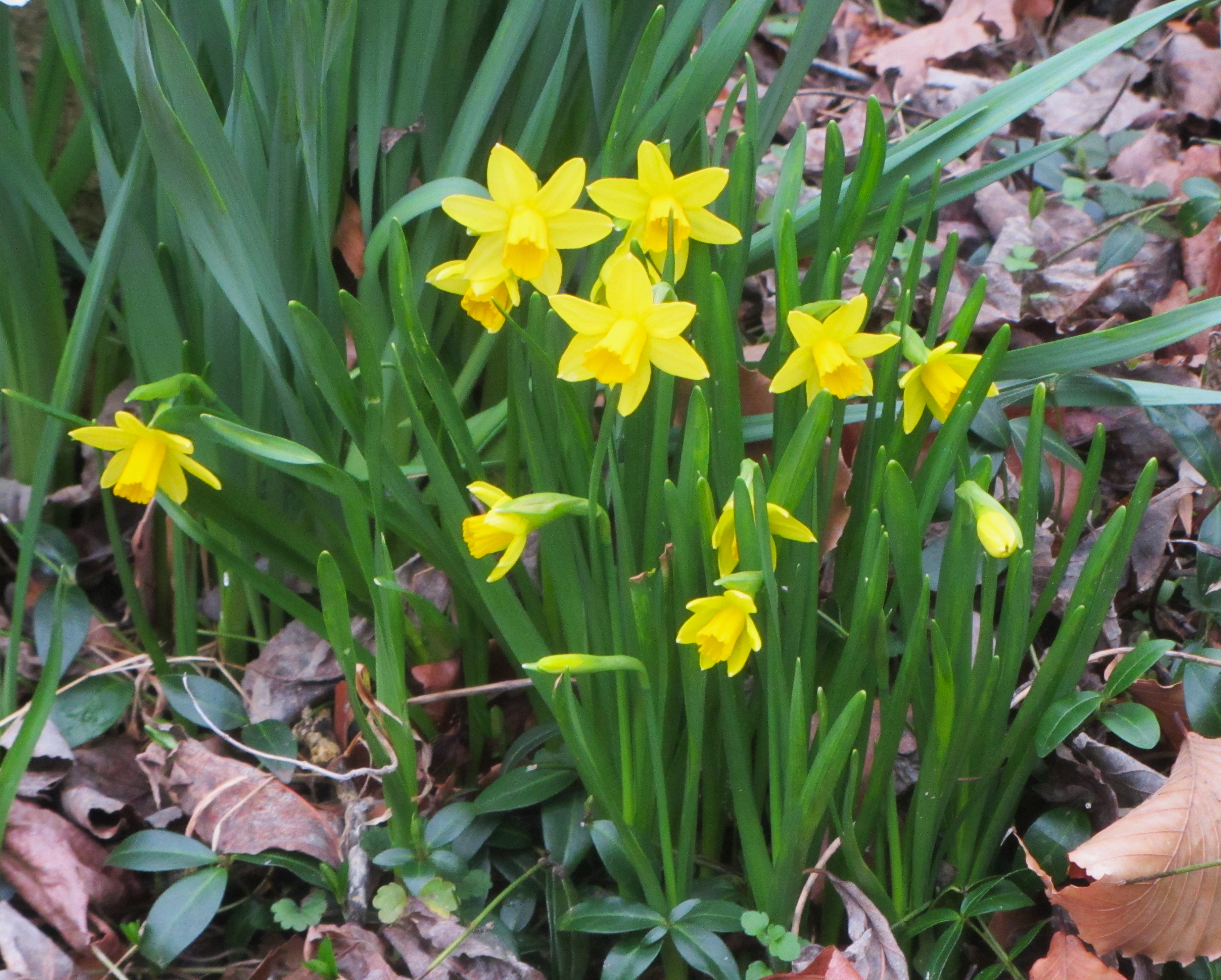
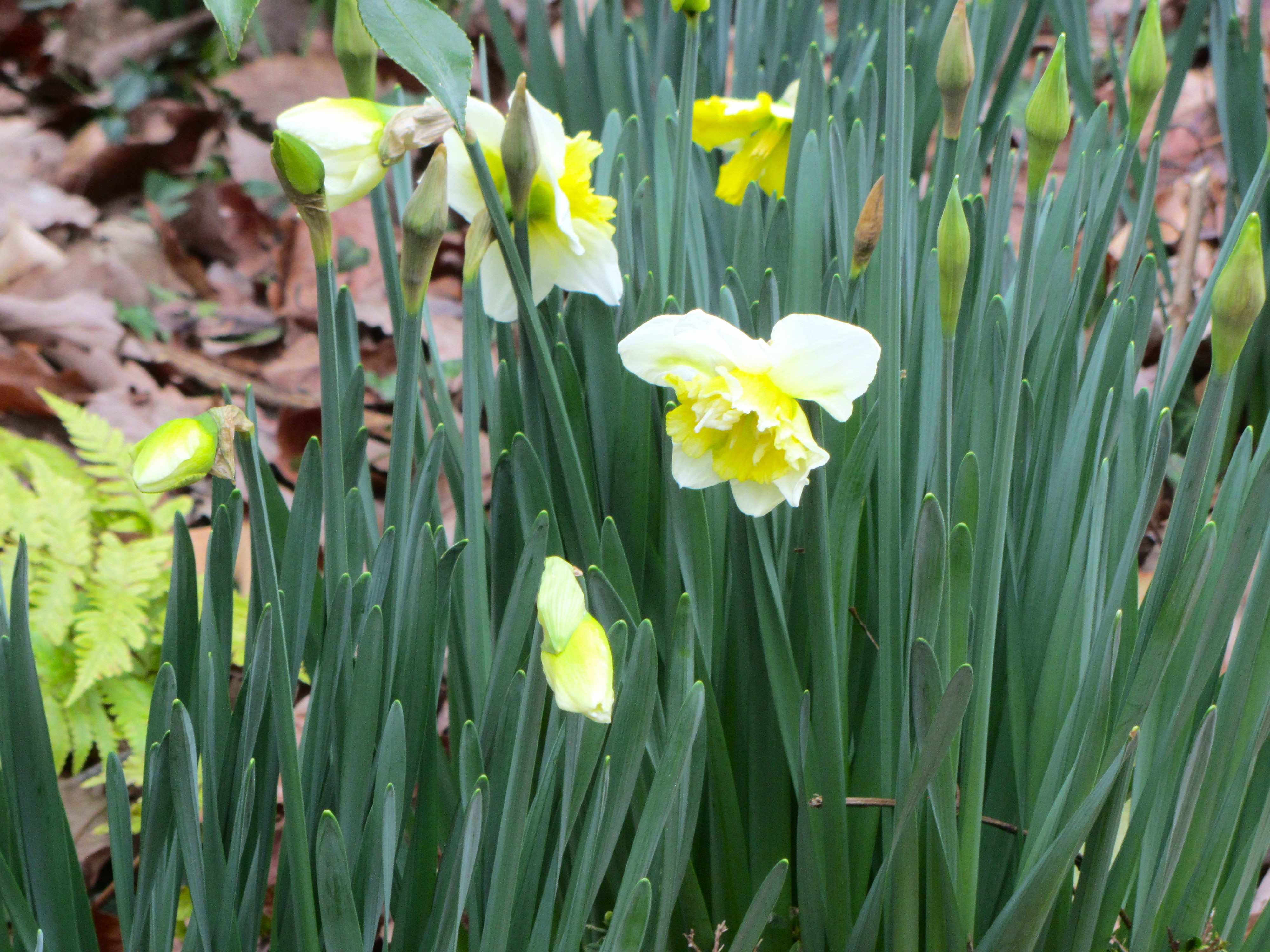
We live amidst uncertainty. Which may be why I love watching the familiar faces of daffodils as they bloom each spring, the flowers bursting from woody stems, and the first tentative leaves of perennials pushing up through the wet mulch. When so much of our world feels in flux, we can depend on the sights and sounds and fragrances that greet us with each new season.
With appreciation to Jim Stephens of Garden Ruminations, who
hosts Six on Saturday each week.

 Our Forest Garden
Lovely to hear all about the tree planting projects, well done.
LikeLiked by 1 person
It is very exciting, and heartwarming to find how many neighbors want to participate ❤ ❤ ❤
LikeLike
Yes, Spring does have a jagged edge but it also can be the thing of beauty. I also believe that introducing native trees into our yards enhances biodiversity. I shudder when I see yards being razed of trees by new owners in order to plant a lawn.
LikeLiked by 1 person
Here, they do it for lawns, sometimes to install solar on the roof, and sometimes new owners are just afraid of the trees. I always wonder why someone who is afraid of trees buys a home in a forested community where everyone enjoys, and benefits from the shade. I hope your spring remains a thing of beauty ❤
LikeLike
Pretty little pink bells from the pieris! Here I have to wait a little longer to see them.
I see that tea is still highlighted in your Six and as promised I talk about it in mine! ( You will see my plant).
LikeLiked by 1 person
I am looking forward to reading yours and seeing your tea!
LikeLiked by 1 person
Eastern redbud was one of several species that I brought from Oklahoma. Like beautyberry and American holly, I wanted seed from wild redbud, rather than a cultivar. Cultivars are available here, and they might be prettier, but they are not the same.
LikeLiked by 1 person
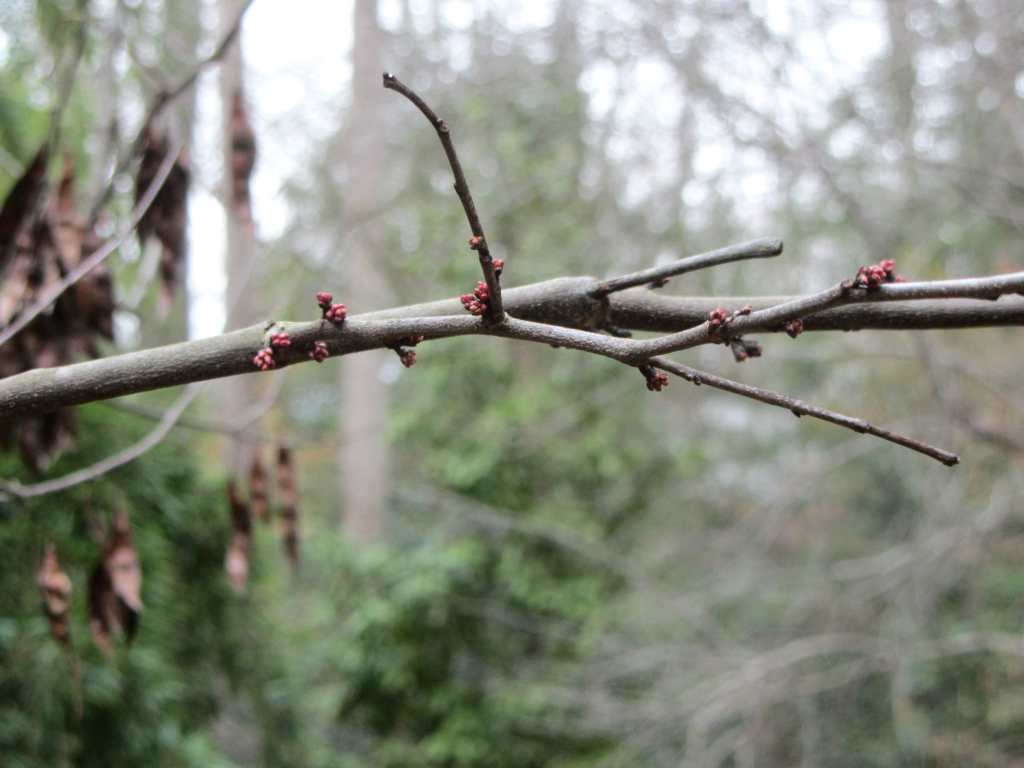
Tony, I have a tree covered with seed-filled redbud pods. You can see one of the pods in the first photo. And it is the straight species that grows wild in my yard. Are you saying that you already have some little redbud trees that you got in Oklahoma? They are still alive? Because if you want a redbud seedling or some seeds, I usually have plenty to share. And no, cultivars are not the same.
I am very excited because I found and gathered seed pods yesterday from a Japanese maple in my yard. It is the first time that I’ve noticed seed pods on it, (remaining from last year) and so I started those seeds yesterday in hopes to get a few new baby trees. When re-potting a little Japanese maple earlier today I noticed that the cutting I struck in the same pot last summer rooted, and so now has its own pot to grow on. Such wonderful discoveries now that spring is here!
LikeLiked by 1 person
Thank you, but I am satisfied with the redbud from Oklahoma, and would prefer to get self pollinated seed from them if I want more in the future. (It could potentially be a distinct variety or slightly genetically different from yours.) It will likely be the only Eastern redbuds that I ever grow. The cultivars are very appealing, but I am already tired of them. ‘Forest Pansy’ became overly popular. Fancier cultivars are mostly grown by those who want to brag about them.
LikeLiked by 1 person