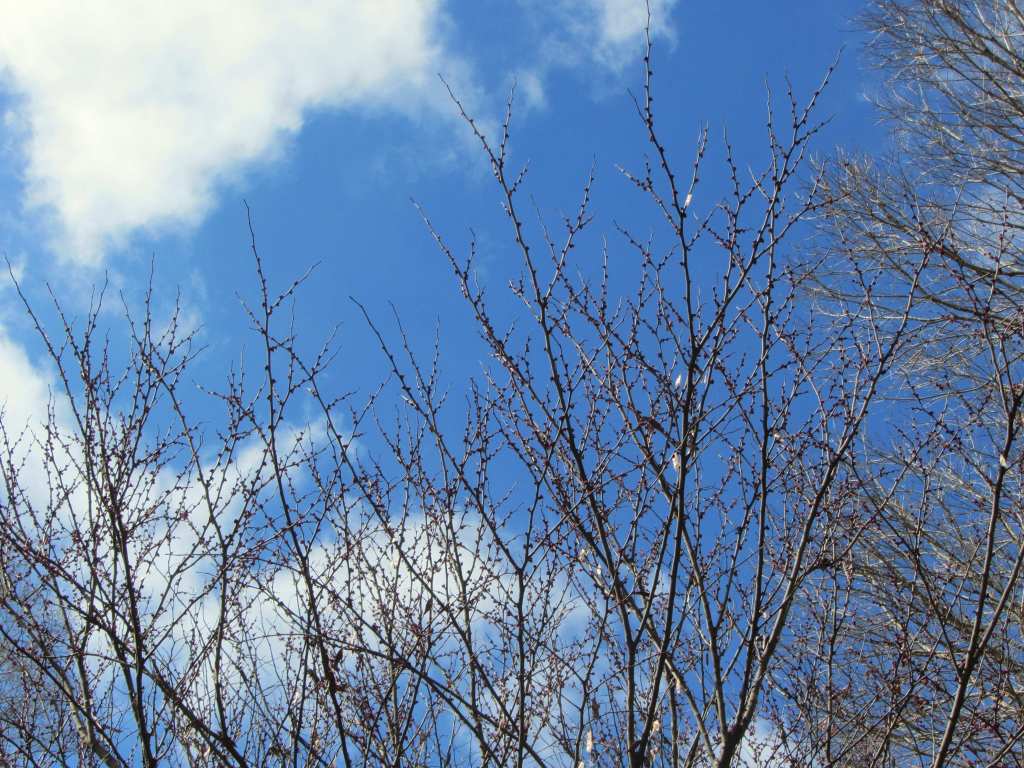
Like cracking an egg to make an omelette, nature has provided warmth and wet weather to crack winter’s woody stems and allow fresh green and white, scarlet, pink and yellow growth to emerge from their protective bark. This miracle unfolds daily now, with growth and change visible almost hour by hour.
We took a drive along the James River on Friday to enjoy the fresh scarlet leaves of red maples emerging against the skyline. The unfolding leaves surround each tree with a haze of bright color against the sky, and could be taken for a million tiny flowers instead of leaves. Here and there is the puffy whiteness of a blooming Callery pear, a beacon to hungry bees as winter gives way to spring.
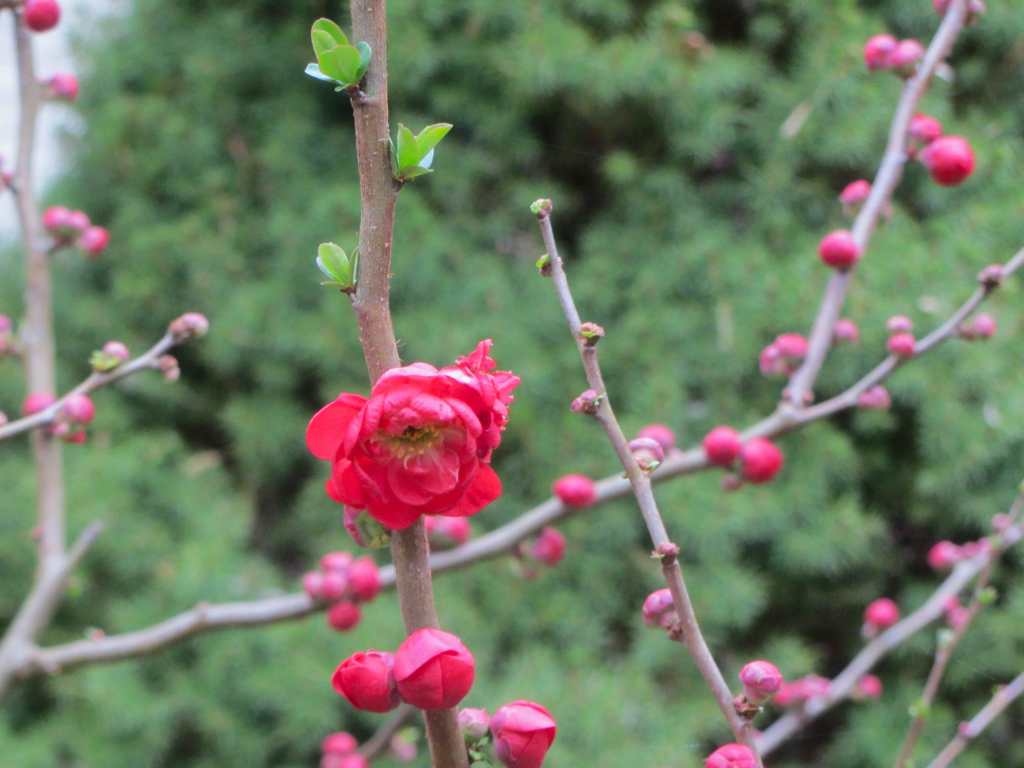
Stubborn buds that swelled with life, but have held their protective scales tightly closed over tender petals and leaves for weeks, finally relaxed to release their soft, new growth. Once freed, each tiny leaf explodes into life as a perfect miniature replica of its summer self.
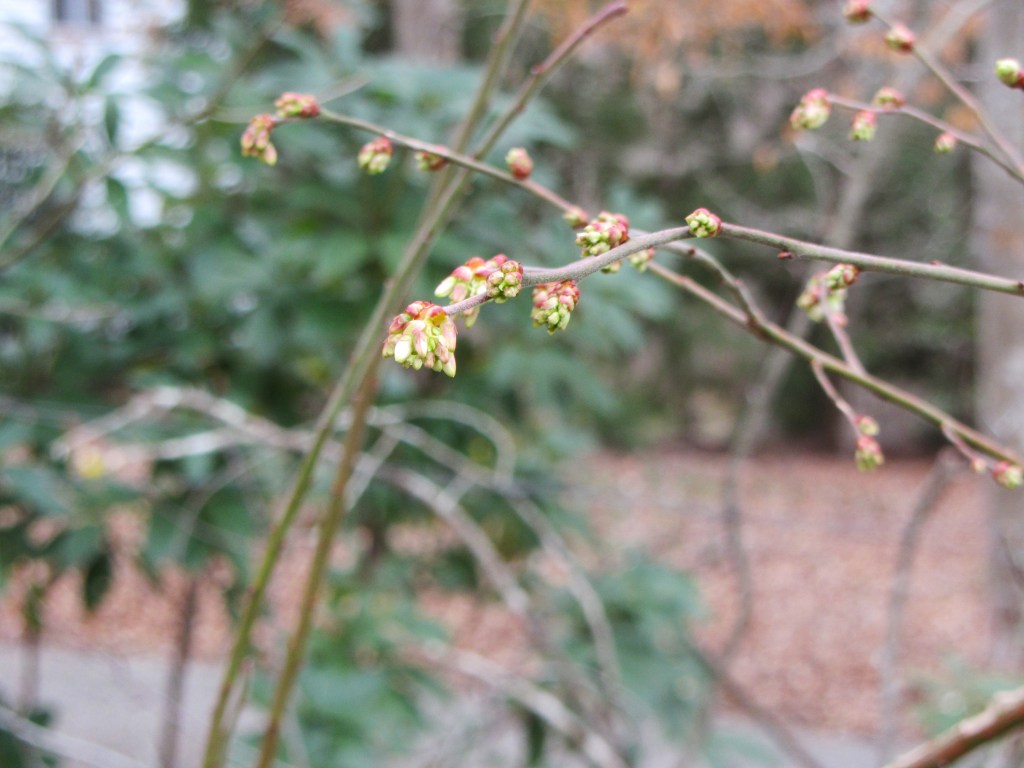
I went out on the deck last Tuesday morning to investigate squirrel noises and found all of the potted maple trees in leaf. One Japanese maple had partly turned over, an excavation in the edge of its soil evidence of the squirrel’s mischief. The squirrel earned my thanks in the end, because while re-potting the tree to larger accommodations, I noticed that a stem, casually struck into the edge of the pot last summer, was alive and well-rooted. One never knows which stems stuck in haste will root and which will wither, but this one is on its way to growing into its potential.
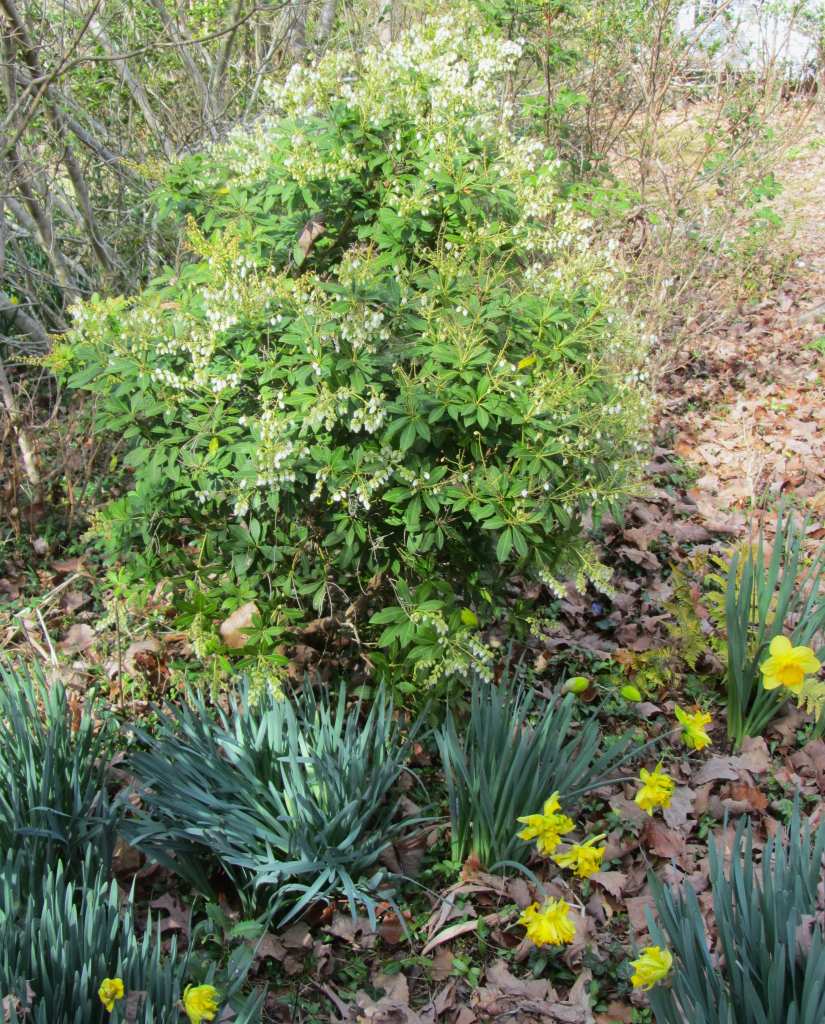
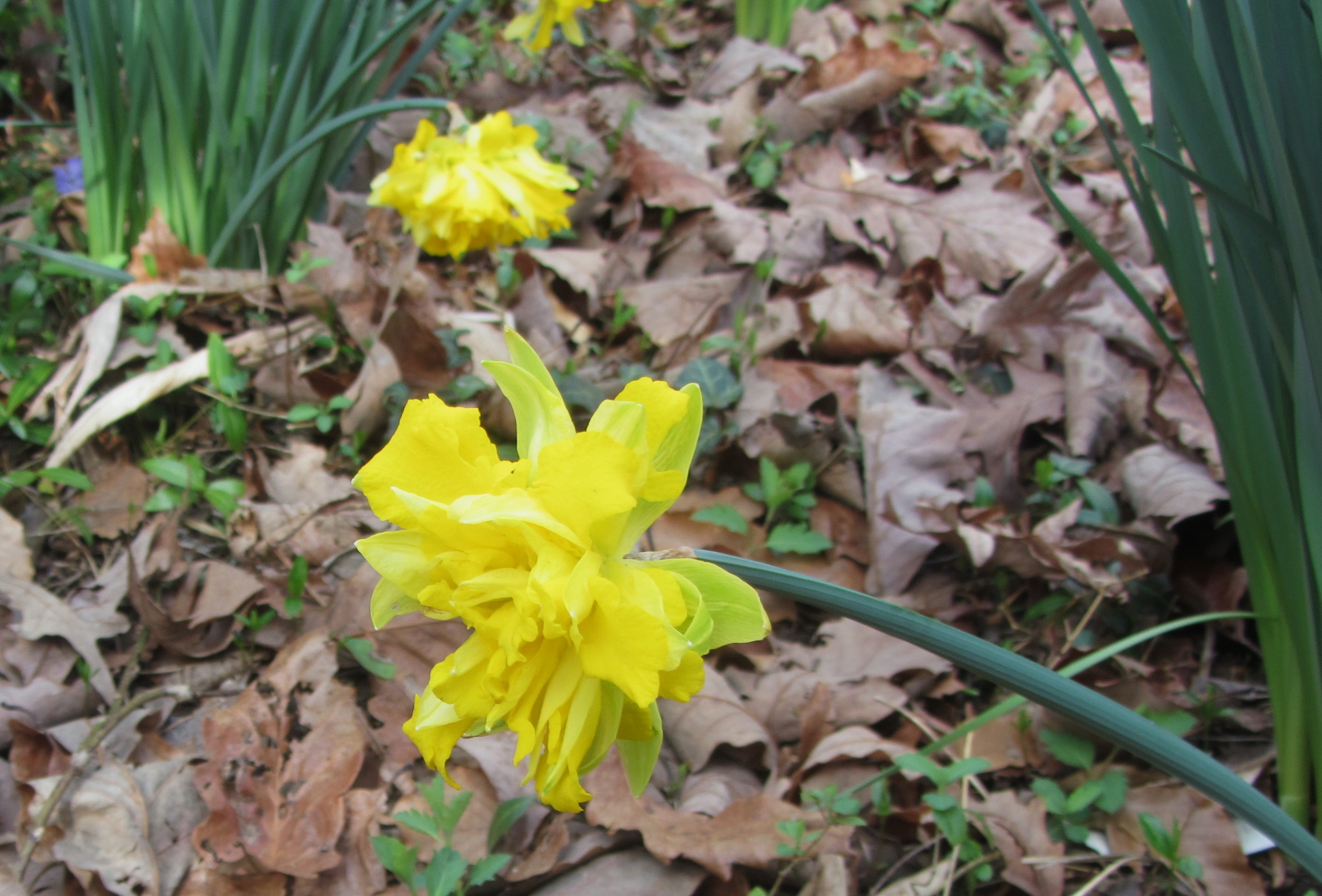
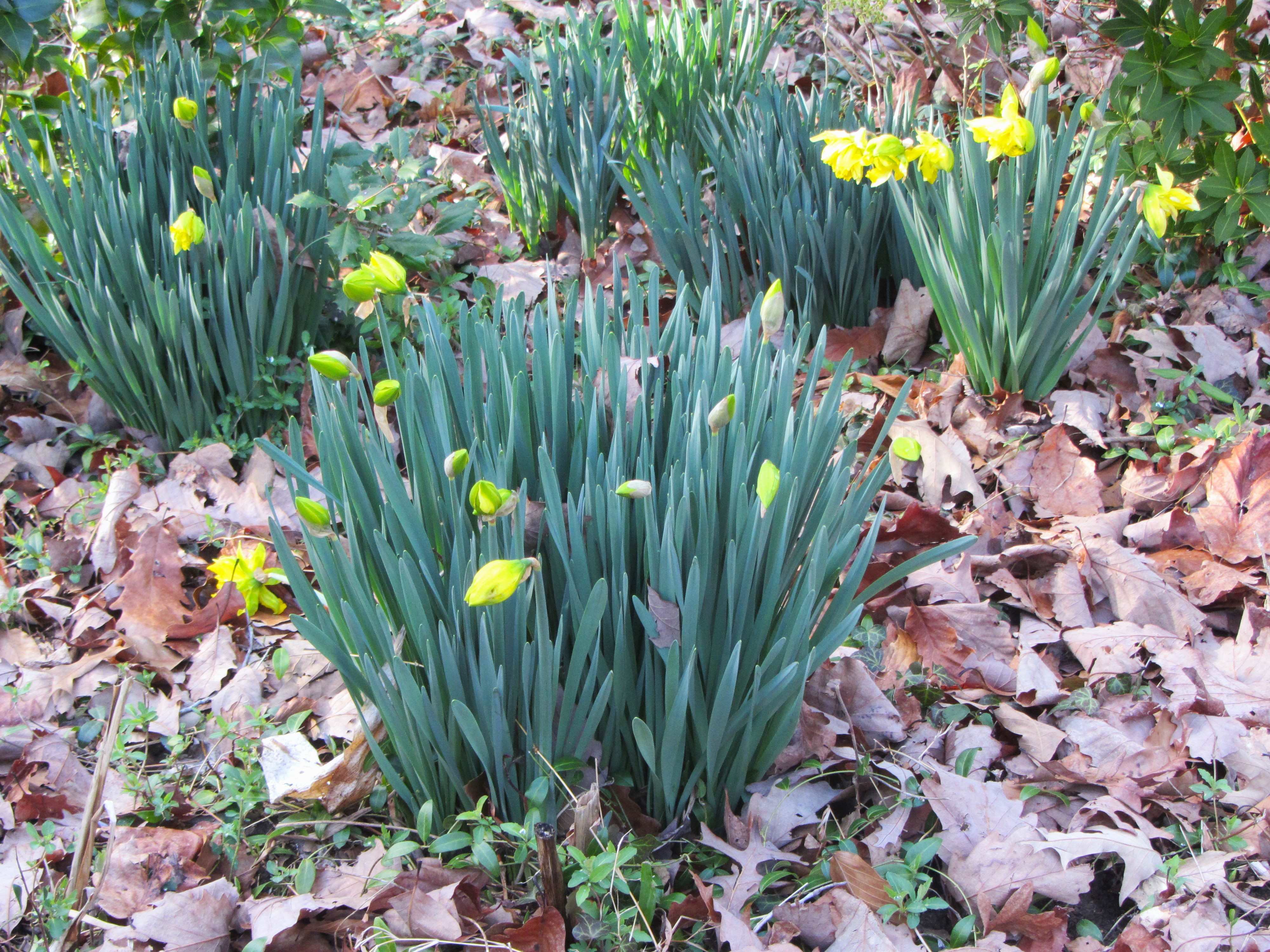
And now the emptiness of our winter garden has begun filling with life once again. Bare bones of brown and grey, mud and moss recede behind foliage and flowers. It is a miracle, always inspiriting joy and amazement, that proves once again that life goes on, and nature always triumphs in the end.
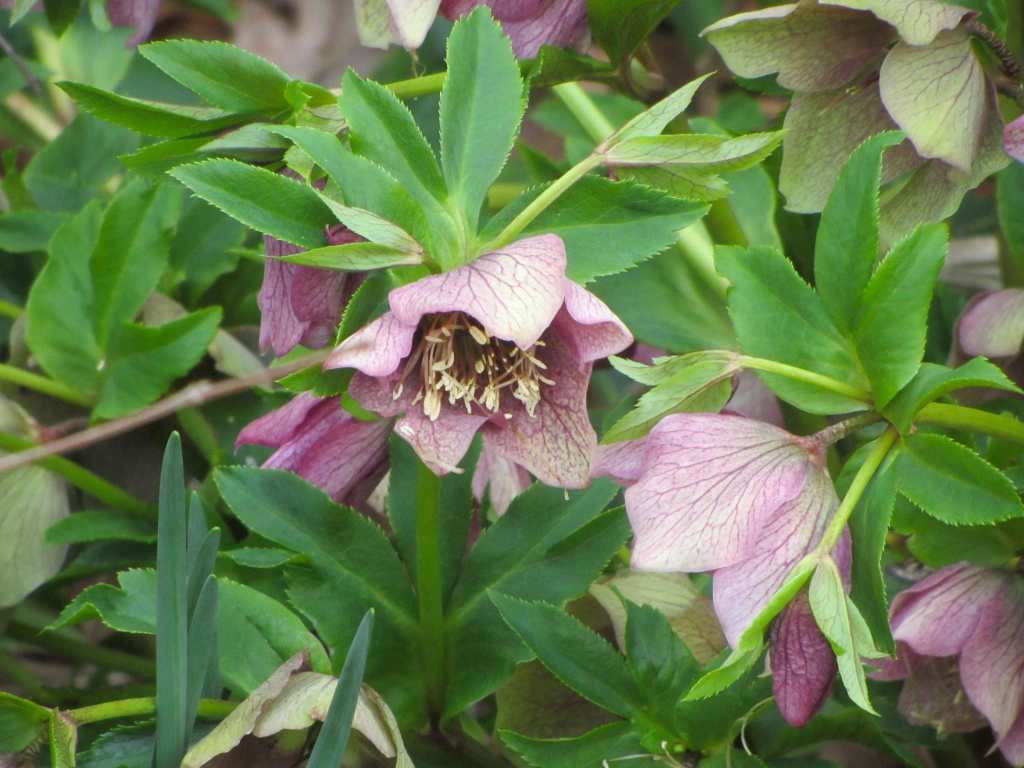
Hellebore hybrid with emerging Narcissus foliage. The second photo is a seedling I just noticed on Friday. Can anyone identify it from its leaf? Clue: it is the first seedling of this genus that has volunteered for me- most I start inside from seeds gathered in early fall. And I am over the moon with excitement to find it! 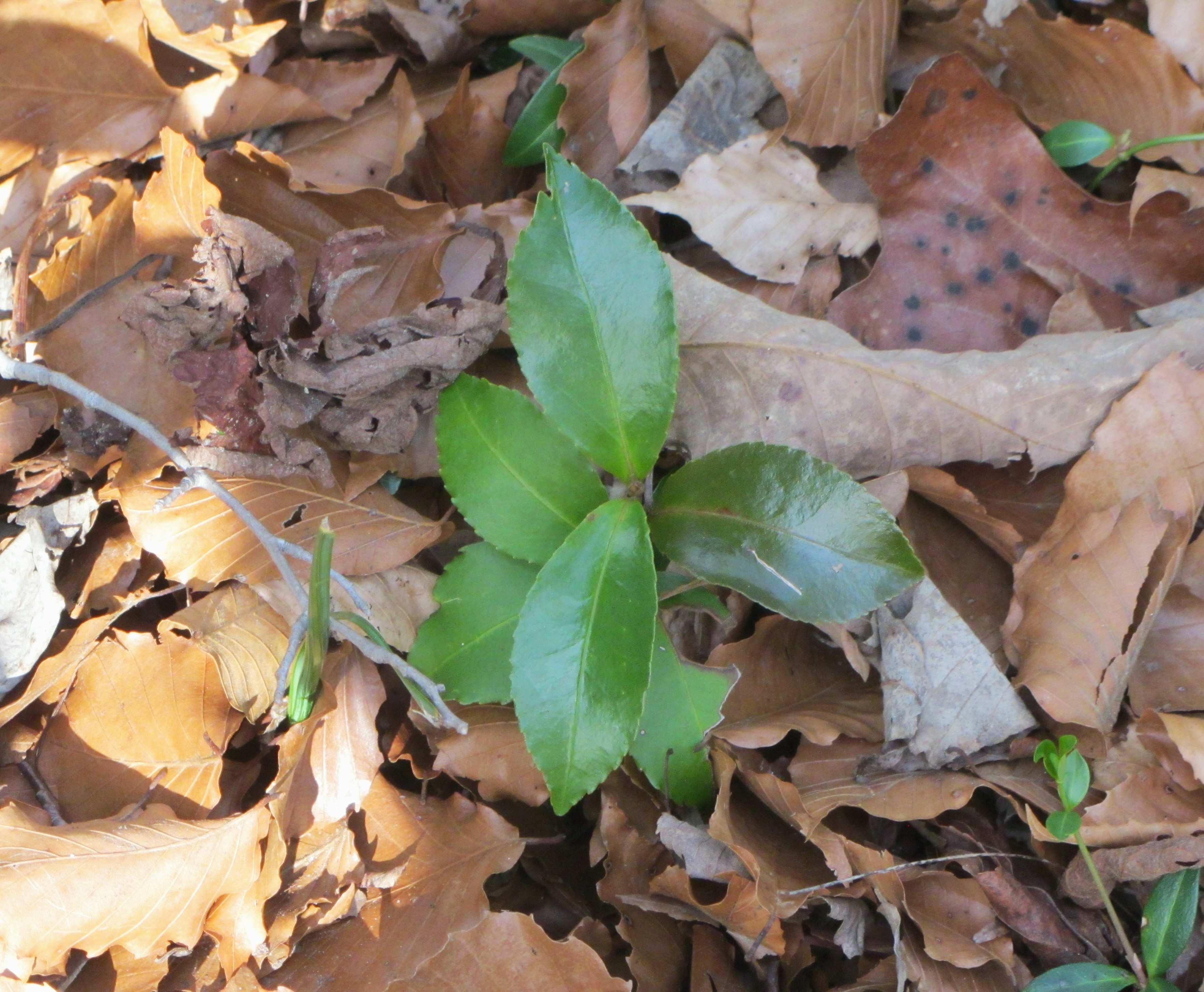
With appreciation to Jim Stephens of Garden Ruminations, who
hosts Six on Saturday each week.

 Our Forest Garden
There truly is a joy that comes with spring. New life is coming back to our gardens.
LikeLiked by 1 person
❤ ❤ ❤
LikeLike
Love the colour of the quince!!
LikeLiked by 1 person
Isn’t that a pretty one? Of the ‘Storm’ series, that one remains my favorite.
LikeLiked by 1 person
It’s an exciting and busy season.
LikeLiked by 1 person
❤ ❤ ❤
LikeLike
Smashing colors of Scarlet Storm ! I love it.
LikeLiked by 1 person
❤ ❤ ❤
LikeLiked by 1 person
Is it a camellia seedling?
LikeLike
Yes! You win! ❤ ❤ ❤
LikeLike
Ha, not bad for a guess from someone who doesn’t see them here!
LikeLiked by 1 person
Flowering quince is so pretty. As much as I dislike most modern cultivars, I have been impressed by ‘Double Take Orange’. It is gratifying that it is a modern cultivar of a traditional spring bloom, although I still prefer the weedy old fashioned sort.
LikeLiked by 1 person
It comes early enough in the season that we are still grateful for any flowers, and not so choosy about the specifics. When I first saw the shrubs several years ago the orange and pink vied for attention with the red and it was a hard choice. But I wanted all of the new shrubs I planted to be the same and the scarlet seemed the best choice for the setting. I would love to grow the white, introduced after I purchased these, but the species Chaenomeles I ordered last spring, with white flowers, didn’t make it. I waited too long to plant or repot it after it arrived, and that was that. I still hope to add a white Chaenomeles to our garden because we enjoy the white Camellias so much.
LikeLiked by 1 person
If I had a choice, I would have preferred the ‘Double Take Scarlet’, but it did not survive. It and orange and pink, as well as several other cultivars of other species were samples from Proven Winners. The only reason that all of them were not so disappointing was that I expected them to be disappointing. (I got what I expected.) ‘Double Take Orange’ survived, but is not as strong as old cultivars. I am very pleased with its bloom, but if I add more flowering quince to the landscapes, I will likely grow copies of old cultivars. The primary advantage of ‘Double Take’ is that they are cooperatively compact! There is plenty of space for larger cultivars though.
LikeLiked by 1 person