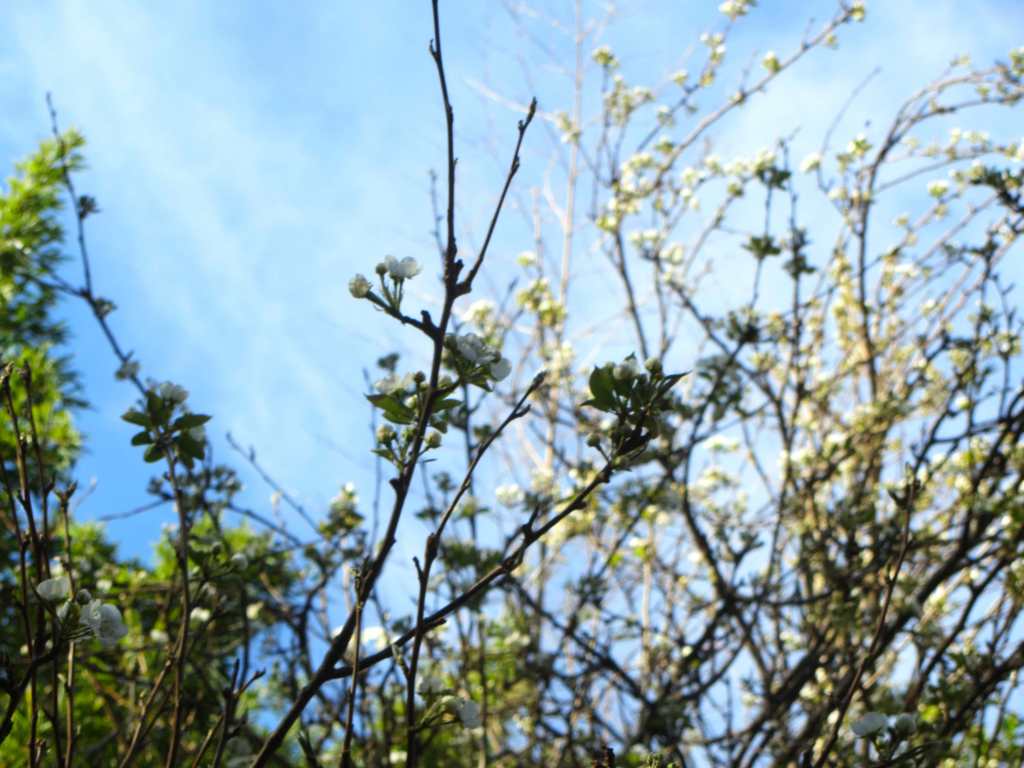
I received the digital equivalent of a ‘Wanted!’ poster in my email yesterday, sent by a friend in our local Master Gardener’s unit: “Callery Pear- Please Beware!”
“Now is the time to identify this tree because it is easy to spot when it is in bloom. Tag the identified trees on your property so you can easily find them later in the year when it is time to utilize control methods. Do not buy or plant this tree or its cultivars.
“With its oval shape, white flowers, attractive fall foliage, and tolerance for difficult growing conditions, Callery pear (Pyrus calleryana) has long been beloved by landscapers and homeowners alike. Unfortunately, this tree has escaped cultivation and poses a major threat to our forests and native plants. Despite this, Callery pear and its cultivars continue to be sold by nurseries in Virginia and elsewhere.
“Native to China, Callery pear,especially its cultivar ‘Bradford,’ was widely planted beginning in the 1960s. Plant nurseries could not seem to sell enough of them despite some unfortunate characteristics: Callery pear and its cultivars are short-lived, The(ir) branches … break easily in storms, (and) the flowers have an unpleasant scent, often compared to rotting fish.”
BLUE RIDGE PARTNERSHIP FOR REGIONAL INVASIVE SPECIES MANAGEMENT
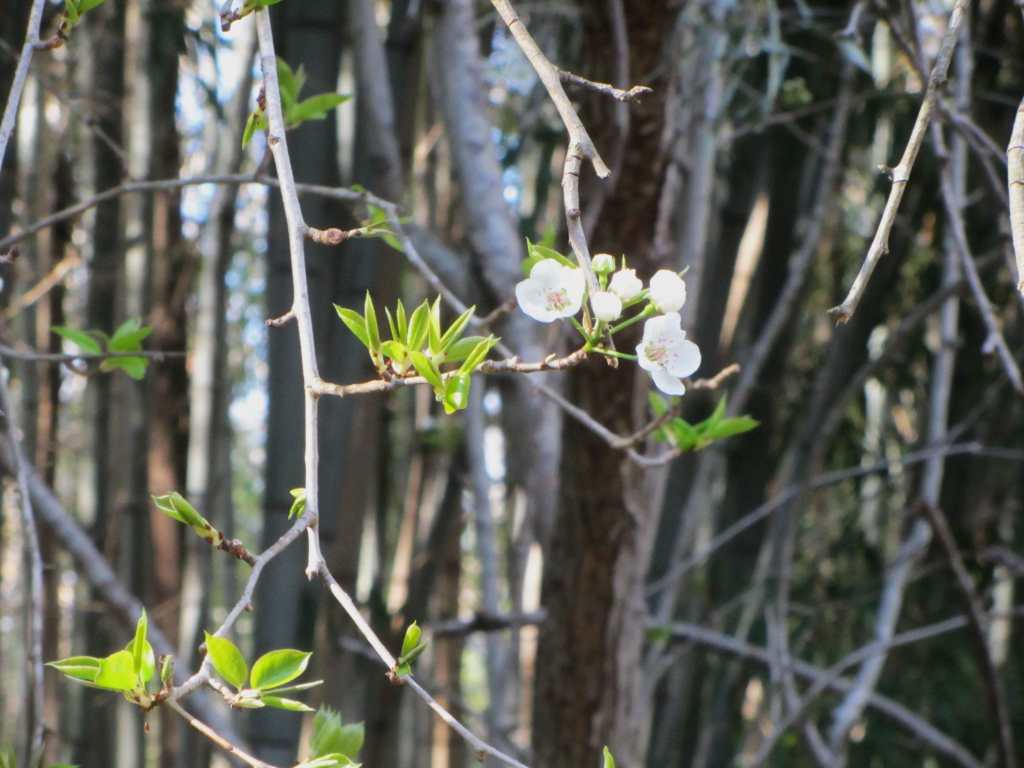
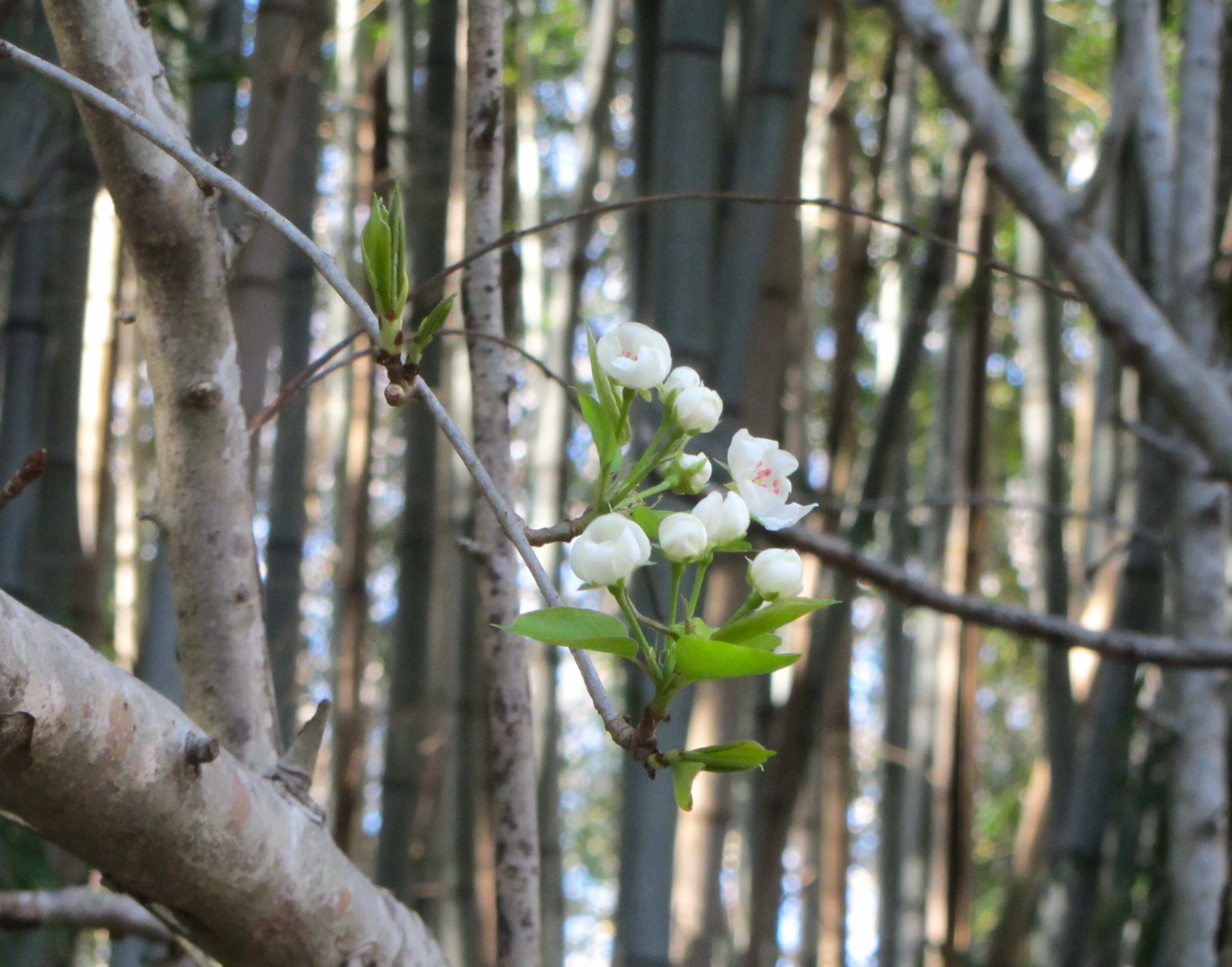
For the record, I’ve always admired ‘Bradford’ ornamental pears because their flowers suddenly transform a stand of bare, deciduous trees into an unmistakable herald of spring, One day, bare trees and the next day, flowers! We have quite a few growing ‘wild’ in our area, particularly along major roads. They are very pretty, which was the point from the beginning. And they have adapted to our soils and climate so well they grow without any of the spraying of fungicides and insecticides, or specialized pruning that fruit trees normally require. They are now vilified for their vigor, adaptability, and success.
Native and agricultural bees love the early flowers of Bradford pear and buzz around them searching for much needed late winter sustenance. Apparently, in the wild, the hybrids originally intended to be sterile now produce a small fruit, much like a crab apple, which attract birds, squirrels, and other hungry wild animals. The animals spread their seeds around. Their leaves feed insect larvae all summer. What am I missing here?
Oh, of course- these villainous trees also grow on disturbed land, like roadsides and abandoned fields, holding the soil and protecting it from erosion, meanwhile sequestering carbon and other pollutants in the air into their biomass. If they are short-lived, then other trees have the opportunity to germinate and grow between them, in succession, as the land is ‘re-wilded.’
As my husband commented, as we discussed this effort to exterminate flowering trees, “How dark must their hearts be, if they can’t recognize the beauty and peace surrounding the Bradford pears?”
As you may guess, the only recommended ‘management’ for this species is murder by herbicide. The ‘Fact Sheet’ attached to this email warned against just cutting down trees or saplings because they can re-sprout from their roots. Rather, concerned vigilante ‘gardeners’ are encouraged to use known carcinogenic, highly polluting and dangerous chemicals to ‘pound the stake through the heart’ of the tree with commercial herbicides. What could go wrong with that plan?
Since the late 1980s and early 1990s, in the US, a growing movement to identify, villify, and destroy ‘invasive plants’ has evolved with the full support and encouragement of those corporations that produce the herbicides. This is big business, particularly when they can convince every ‘conscientious’ homeowner to buy gallons of chemicals to search out and destroy every blooming ‘weed’ on their own half-acre of yard.
And then, we look at one another and wonder why our bird populations are in decline. Where are all of the butterflies we remember from childhood? What has happened to nature? and how do we restore her? Well, a good start would be to stop destroying her with chemicals and short-sighted sorting of ‘bad plants’ from ‘good’ ones.
If you are interested in exploring these ideas more, I highly recommend Tao Orion’s thoughtful 2015 book, Beyond the War on Invasive Species: A Permaculture Approach to Ecosystem Restoration.
One day, late in my Master Gardener training, our guest speaker was a professor from the state university sponsoring the program who came to speak with us about lawn care and managing weeds and invasive species. As I expected, he also came to instruct us in how to use ‘Round-Up’ and other common herbicides, including how to apply them with a paint brush. My father had just died, a few months before, from complications related to his Parkinson’s disease. So the suffering of those afflicted with disease related to using these chemicals was, and remains, very fresh in my mind. How dare anyone encourage use of a chemical, while ‘volunteering,’ with such grave health impacts associated with its use?
I very nearly walked out and walked away from the entire program, but instead raised my hand and asked how much funding the university received each year from the company that manufactures the chemicals he was advising us to use. He had no idea, he said. Knowing the grave health consequences for people using herbicides and other such chemicals, I was incredulous that he was advising a bunch of older, would-be ‘volunteers’ to use or recommend them.
Why do we need to make war on functional plants in the environment? Why do we distribute ‘seek and destroy’ orders against wildlife supporting, flowering trees? How is spraying herbicides into our environment, particularly when they kill systemically and indiscriminately, considered acceptable, let alone a good thing? When sprayed, these chemicals will kill any plant they touch, including native and other ‘desirable’ plants; and the chemicals persist in the soil and ground water.
I will continue to rant on this topic to anyone who will listen, but for now we will return to our regularly scheduled ‘Six on Saturday’ celebration of spring.

Temperatures warmed here a bit more each day this week, with immediate and visible results in the garden. Our first daffodils opened only two weeks ago, but now it seems that they all want to bloom at once. Forget early, mid-spring, and late bloomers this year. The season is compressed, it appears, as the days rapidly heated up to nearly 80F on Thursday and Friday.
Friends stopped by this week and we stood together admiring the Japanese Pieris shrub in full bloom, surrounded by clouds of bees. Huge fat bumblebees lumbered from flower to flower alongside skinny striped bees. Their sound and energy is mesmerizing as they come out to feed so early in the season.
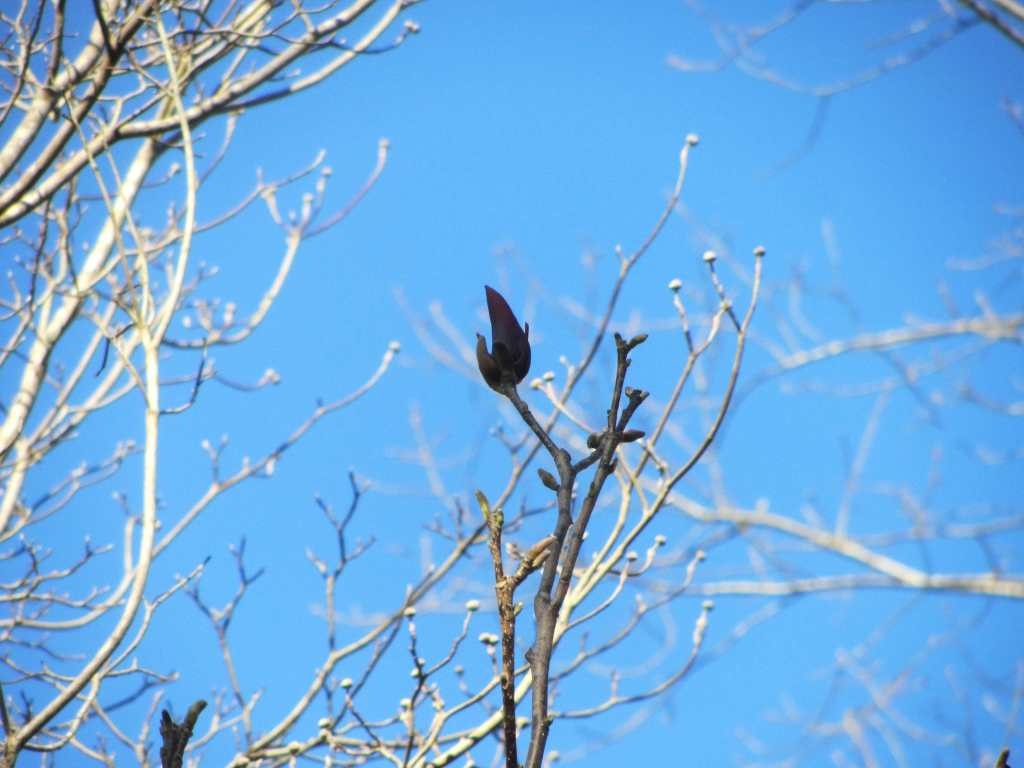
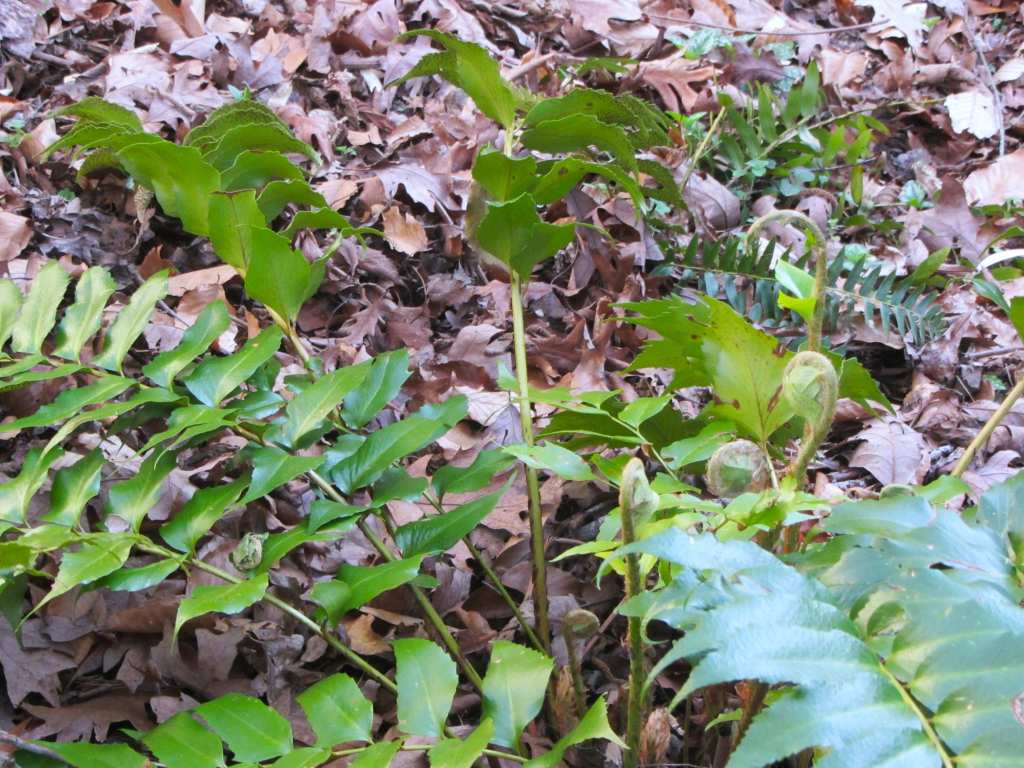
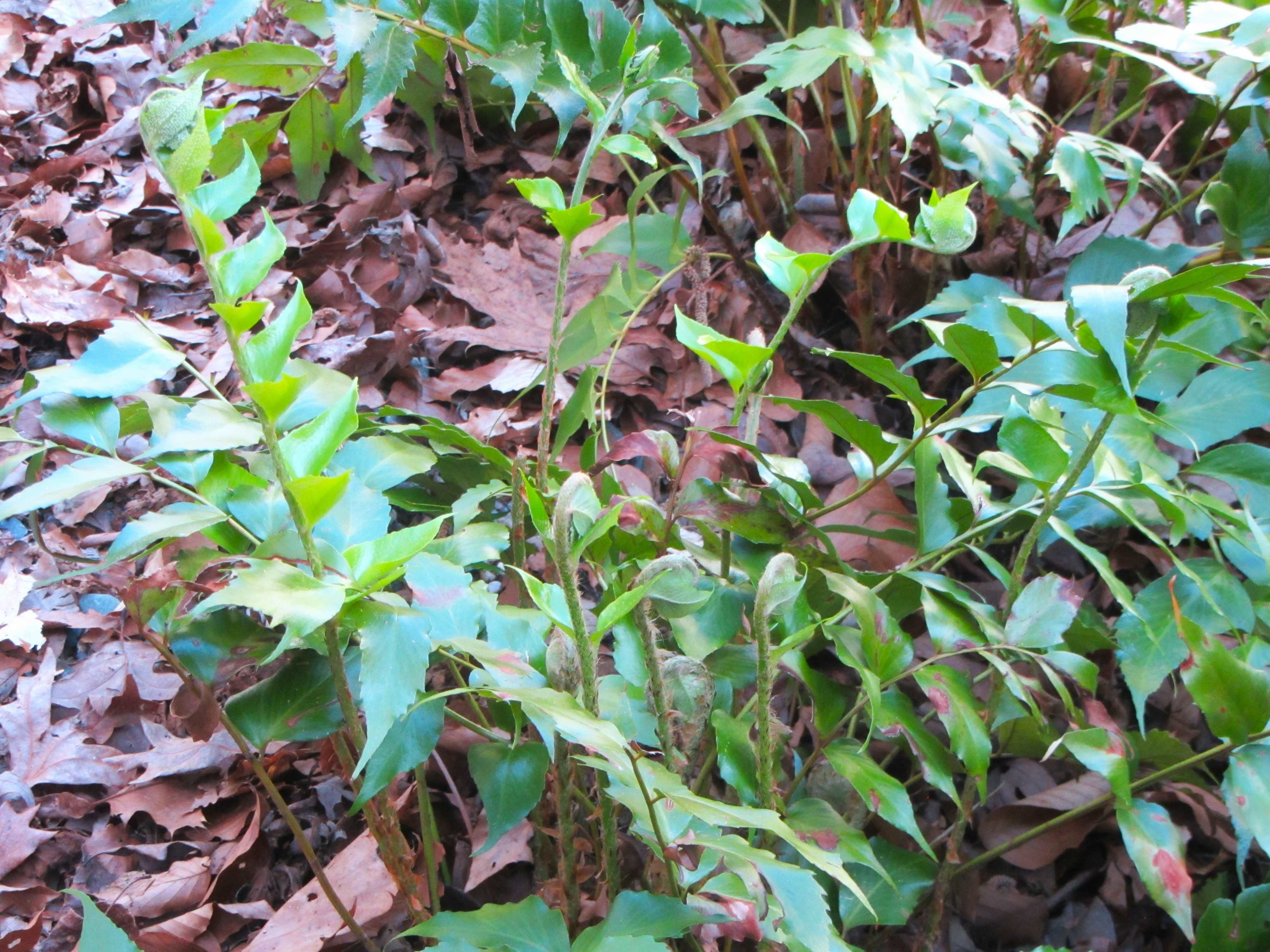
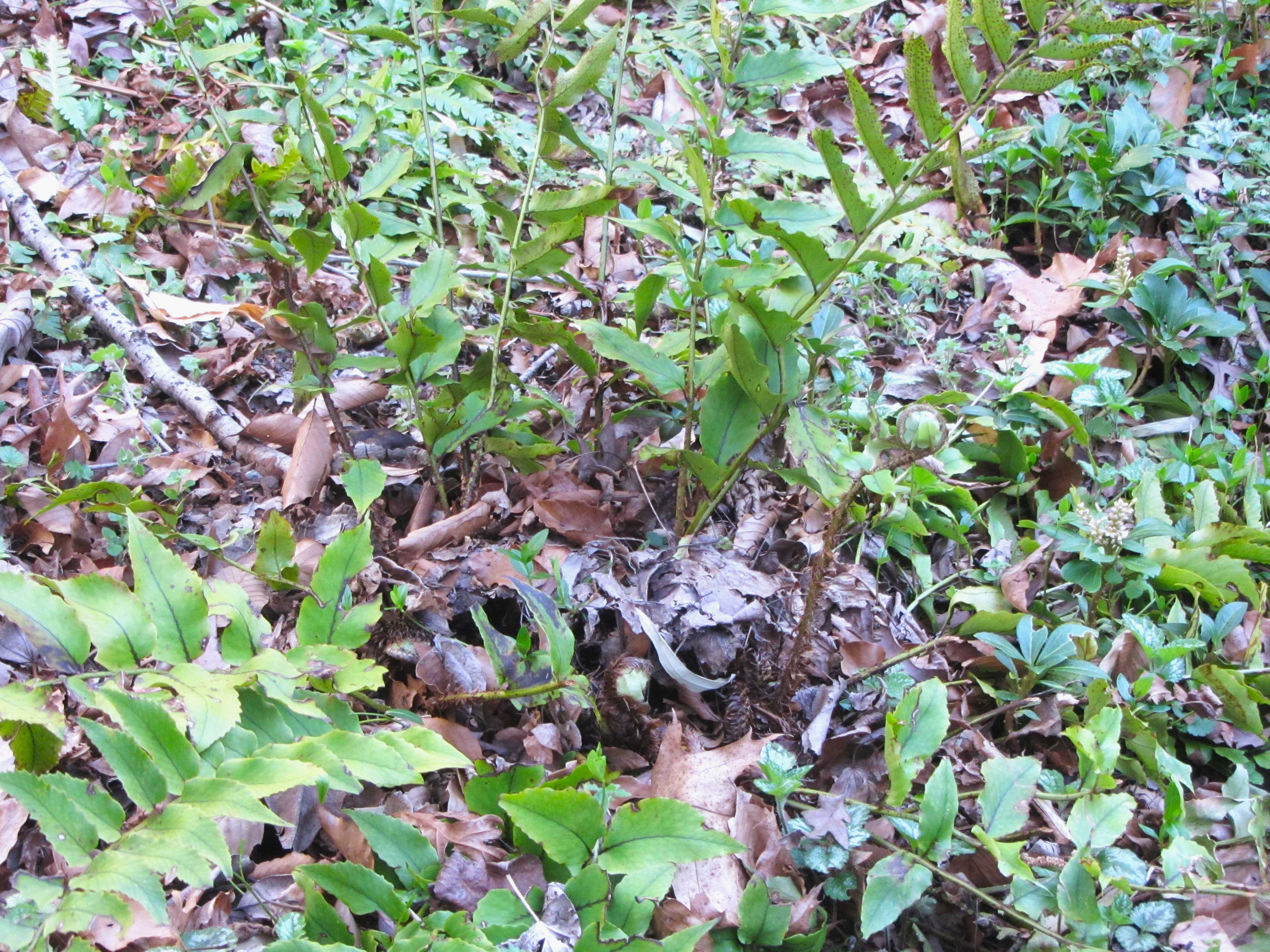
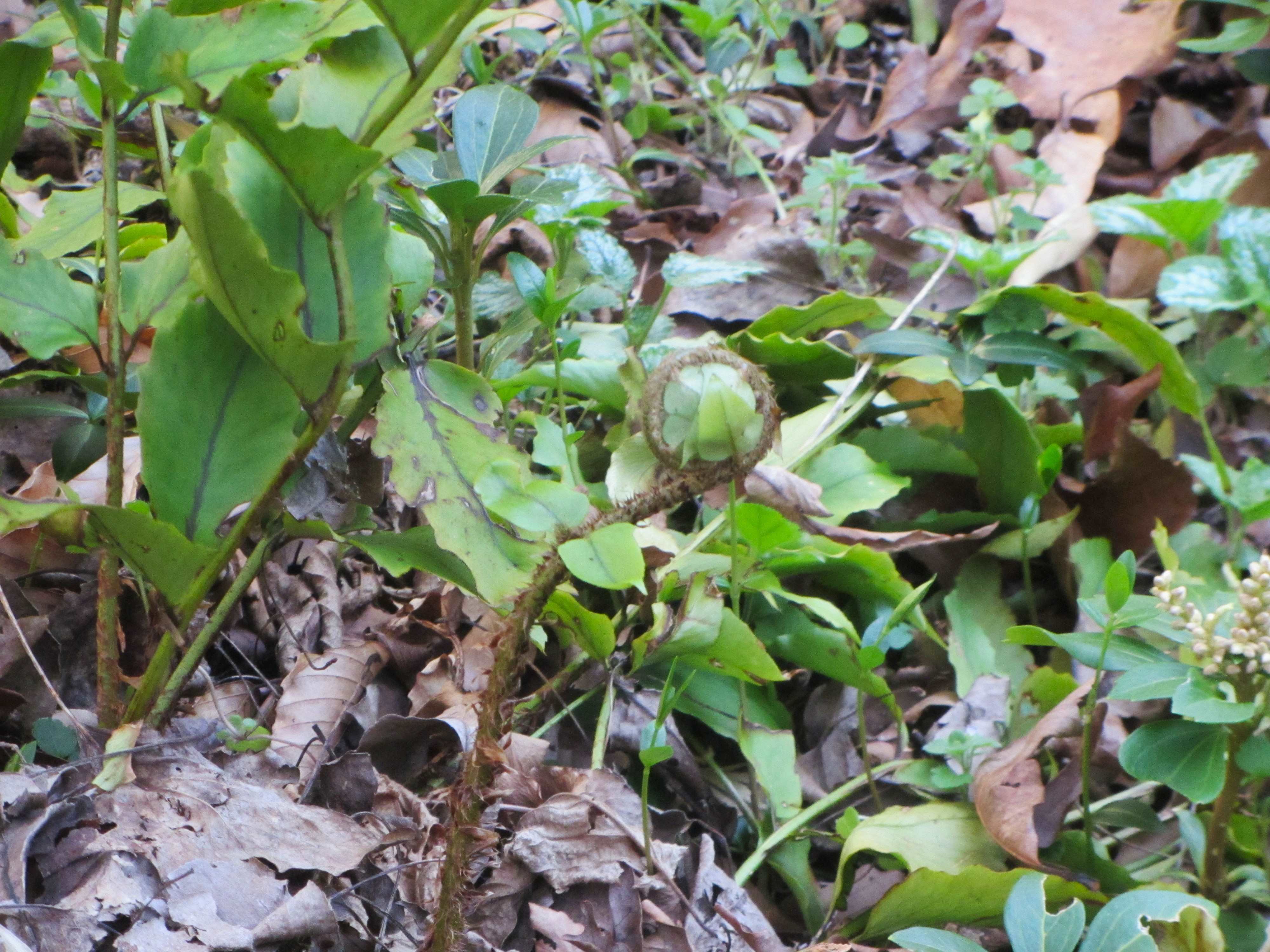
We also have the first Asian Magnolia flowers opening, and leaf buds on trees opening throughout the garden. Ferns are awakening and extending their fiddleheads in search of light. Small leaves are appearing from the ground to remind me where perennials bloomed last summer. Squirrels chase each other and birds sing. I spotted three yellow Cloudless Sulphur butterflies, and a Painted Lady one afternoon. We even heard what we thought were the first spring songs of frogs this week. The phrase, ‘Everything, everywhere, all at once!’ comes to mind as I walk through the garden, pruners in hand, ready to groom or prune.
The earth is awakening, preparing for another year of life and growth. Gardening is an act of love, recognizing and working with the generosity of Earth, water, sun and sky. We are stewards of the land and the creatures who visit our gardens. Let our loving respect for life drown out those voices of hate, who would subdue and destroy it for their own profit.
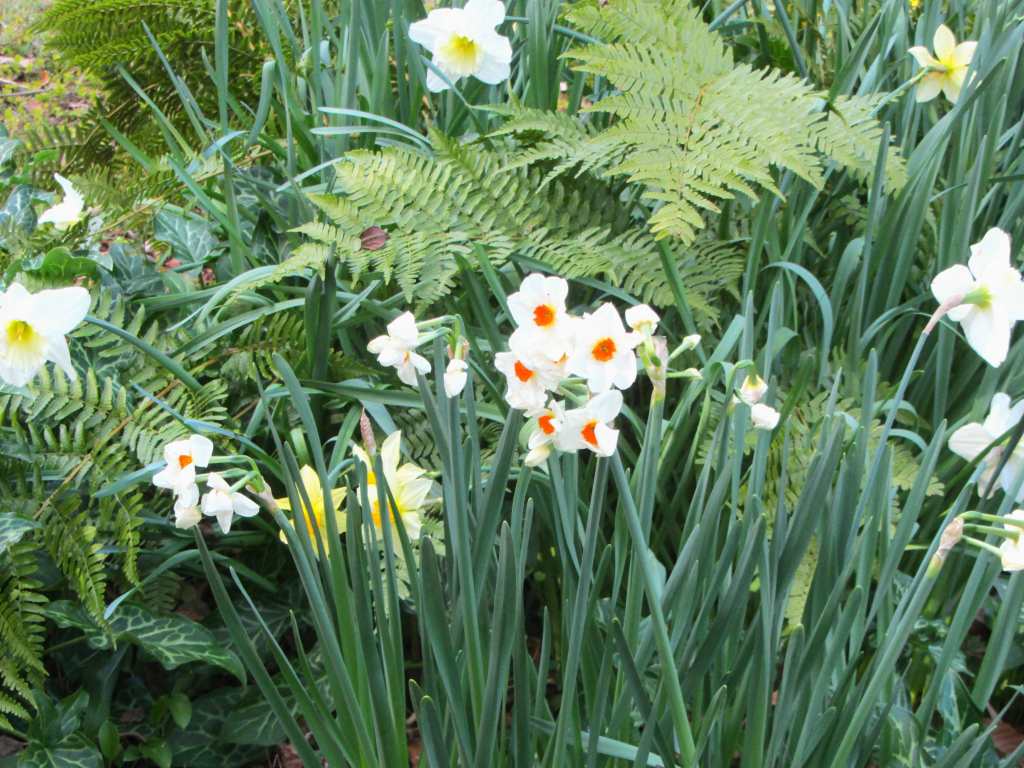
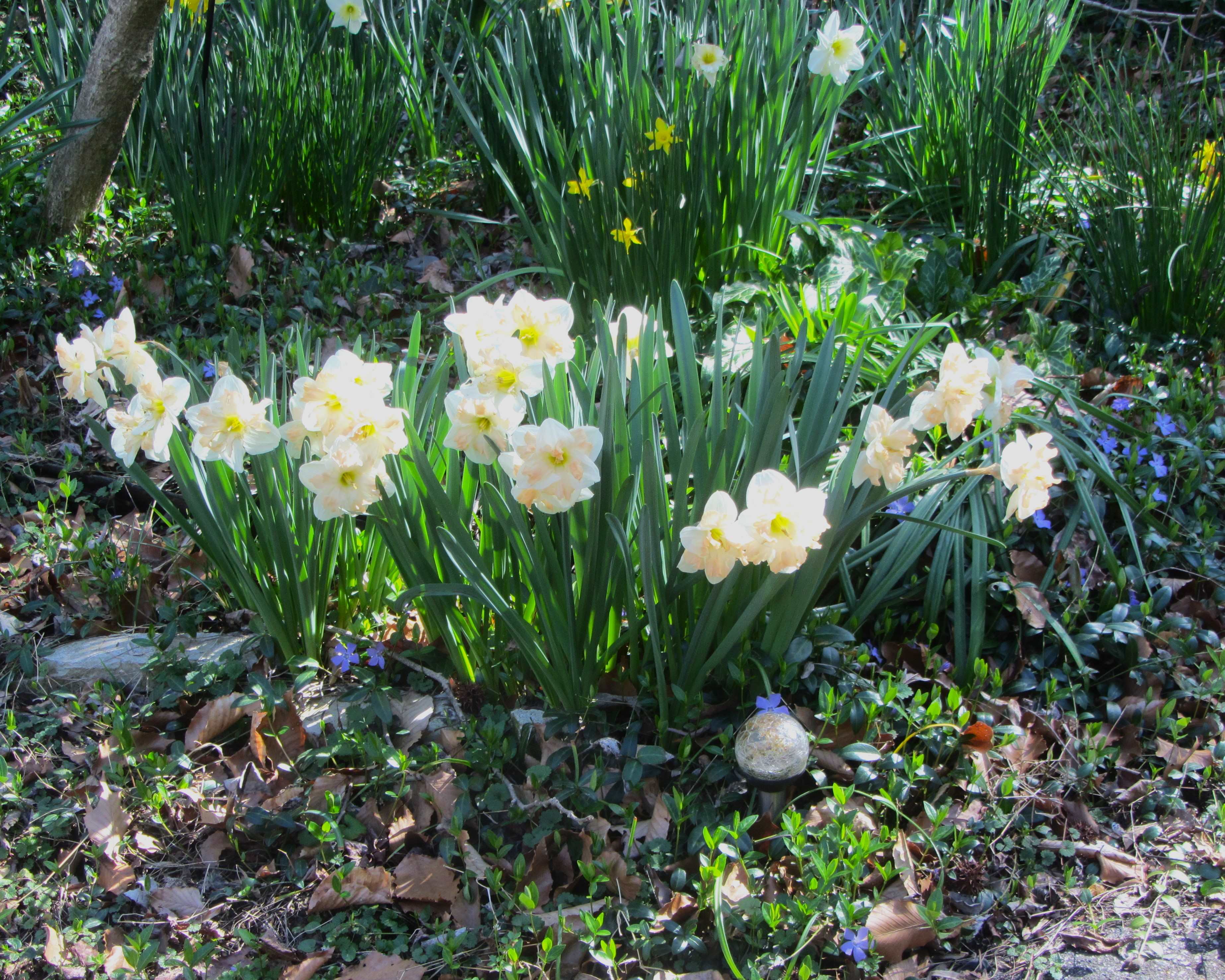


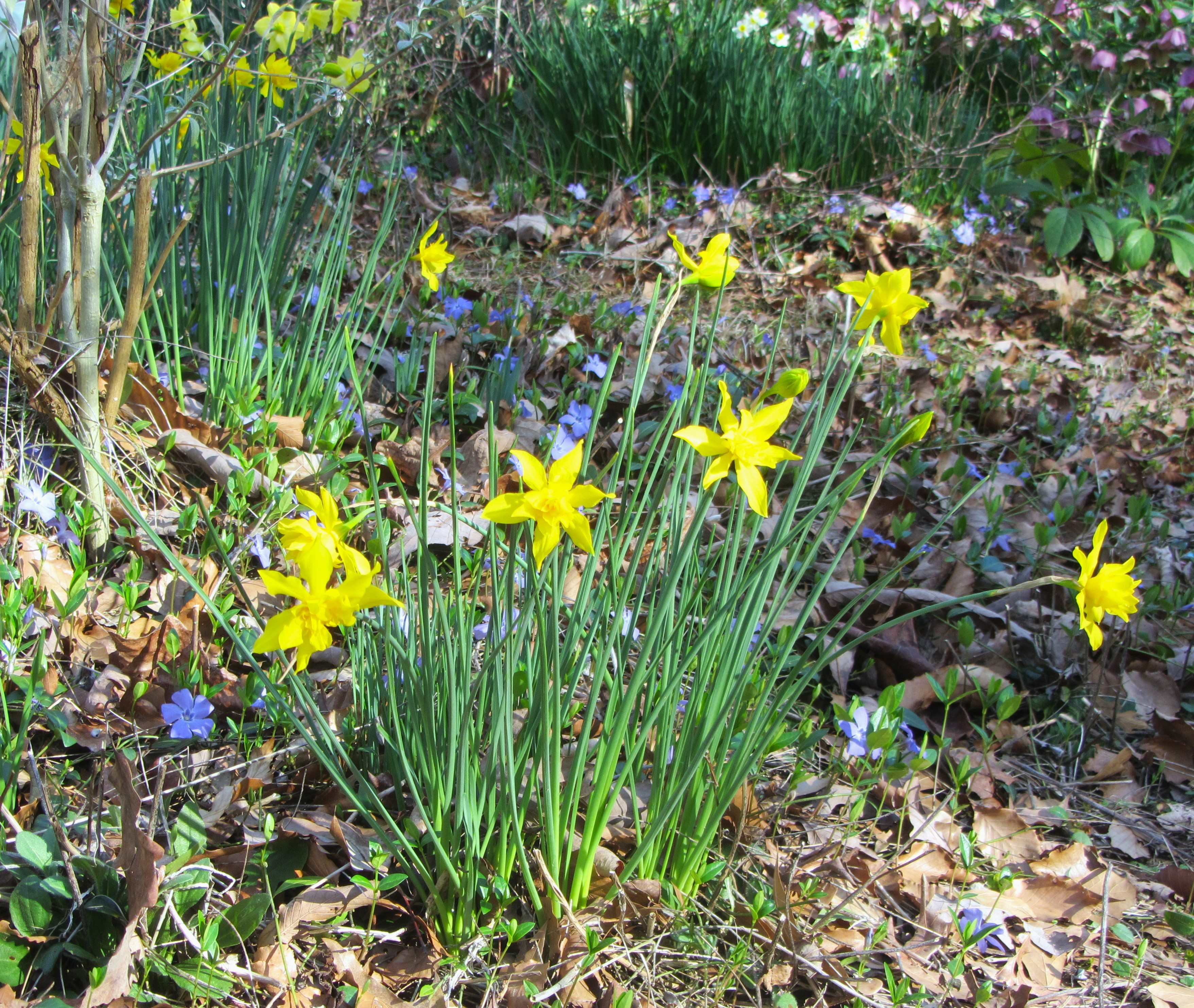
With appreciation to Jim Stephens of Garden Ruminations, who
hosts Six on Saturday each week.

 Our Forest Garden
My two pear trees trained as cordons produced a few fruits for the first time last year but we were puzzled when they disappeared overnight just before we were preparing to pick them. Your mention of squirrels made me wonder if they could have been the culprits? The trees are not within reach of humans and the only other animal to visit the garden is a fox.
LikeLiked by 1 person
You probably, unknowingly, fed your squirrels. They are crafty and smart, focused on finding food with little else to distract them. A friend entirely encased her tomatoes in netting to protect them, but the squirrels found a way to wiggle in through the seams. She found her tomato vines stripped one morning when she went out to harvest the fruit she had watched ripening. Such is life.
LikeLike
Quite happy for you to rant. It’s time enough for a big chemical re-think.
LikeLiked by 1 person
❤ ❤ ❤
LikeLike
Thanks for the book recommendation! I think that when it comes to attempting to restore habitats there are better ways of doing it. In our prairie restorations in my state, the best method is fire as our native plants evolved with amazing huge prairie fires, usually started by lightning, that kept non native trees and shrubs from gaining foot hold. Nothing so drastic needed in my tiny native planting area. I pull up baby trees, excess native reseeds, dandelions, Glechoma hederacea. I occasionally find purslane which I have eaten, but it will reseed like crazy, so like any gardener who hates to use chemicals, I never let it flower and pull it up carefully when I find it.
I am not perfect in my plan. I admit to allowing a lawn service to fertilize and treat my lawn. If it were up to me, I would tear out the lawn and replace it with native shrubs and plants, but the spousal unit likes grass. At least my service lets me choose the frequency and application manner. We spot treat any weeds in the lawn, not broadcast treatment
LikeLiked by 1 person
This is such an interesting view on the pear trees. I’ve often wondered myself why they are hated so much when they feed insects which feed birds, etc. I recognize their vigor, especially now as I drive down the highway and see nothing but clouds of white blooms. It’s a beautiful view. But I feel like that is the way life is, nothing stays the same, we as humans try to control everything and I am guilty as well. But maybe it’s just time for things to change, plants and animals go extinct while others are taking their place or new species are discovered. I think our planet is ever evolving and we as humans usually don’t like change. Mother Nature knows what she is doing. The chemical people though, they are the ones we have to look out for.
Very thought provoking post and your daffodils are beautiful.
LikeLiked by 1 person
Thank you so much for your comments. We are enjoying the daffies! Yes, change is the constant, and we end up getting into the most trouble when we try to fool, or second guess Mother Nature. So true ❤ ❤ ❤
LikeLiked by 1 person
That is unfortunate about the callery pears. It is one of the four most reliable trees for autumn foliar color. It does not get big enough for its structural deficiency to be much of a problem. The foliar fragrance is not so bad either, since bloom is inhibited by minimal chill through winter. They are only unpopular because most of the best arborists are from the East.
LikeLiked by 1 person
Thank you for that bit of wisdom, Tony. Nice of you to say that we have good arborists back here- maybe because there are so many? But you make excellent points about this particular hybrid species of tree. Thank you-
LikeLiked by 1 person
Horticulture is taken more seriously outside of California. Here, anyone who flunked out of any other industry can become a so-called arborist or gardener. The industries attract them. There are certainly some very good arborists and gardeners here. They are just not the norm.
LikeLiked by 1 person