
Happy Easter Weekend to everyone.
We took a detour back to winter this past week with several wet, cold, windy days. We knew it was coming, along with nights right at or below freezing. Our local meteorologists are showing us charts of the ten wettest Marches on record, and showing us that as of yesterday we were 0.10 of an inch away from having the wettest March on record in our region. There is ponding on the streets and water standing in ditches we didn’t even know were ditches. This is really a very good way to head into late spring and early summer and the trees and perennials are well watered ahead of the heat.
I am in planting mode here, and planted a new border of large, evergreen ferns at the top of a bank behind our home to help manage run-off just hours before the heavy rains started mid-week. It is something I’ve been thinking about doing for months now. I was waiting and waiting for the native Christmas ferns I ordered to arrive, but since they aren’t available I went with a combination of my favorite Dryopteris erythrosora ‘Brilliance,’ a Dryopteris filix-mas, which should grow even larger over time, and a Polystichum polyblepharum, or Korean tassel fern. These species have already proven to grow here successfully and they will serve the purpose and make the area more attractive.

It occurred to me that the area where I planted the ferns, at the base of a stand of hazel trees, growing here since long before we came to the property, was bare earth with a little moss growing here and there. Across the path, at the base of our foundation, is another thick stand of Vinca minor surrounding some Christmas ferns, also decades old. All but one of the rose of Sharon trees growing here when we moved in have succumbed to disease.
I am going to belabor this point. The only ‘native’ plant wanting to grow between the foundation of our home and the edge of the bank, which the hazel trees have colonized, is moss. The Christmas ferns, Polystichum acrostichoides, grow there, but were clearly planted in a straight row by an earlier gardener. So when I bring in evergreen Asian Dryopteris and Asian Polystichum species to fill this empty niche, I am not crowding out any ‘native’ plants to do so. I am solving an erosion problem, filling an empty space, and making the place more beautiful by adding some plants that I know will thrive in this part of our garden. It seems like most of the plants I’ve brought here are international, rather than native. But they are additions, not replacements, to what nature has selected to grow here. I think that is an important point often overlooked in debates about what gardeners in our area ‘should’ or ‘should not’ plant. It is a hot topic here, maybe not so much in Europe where things are different, geologically, culturally, and botanically.
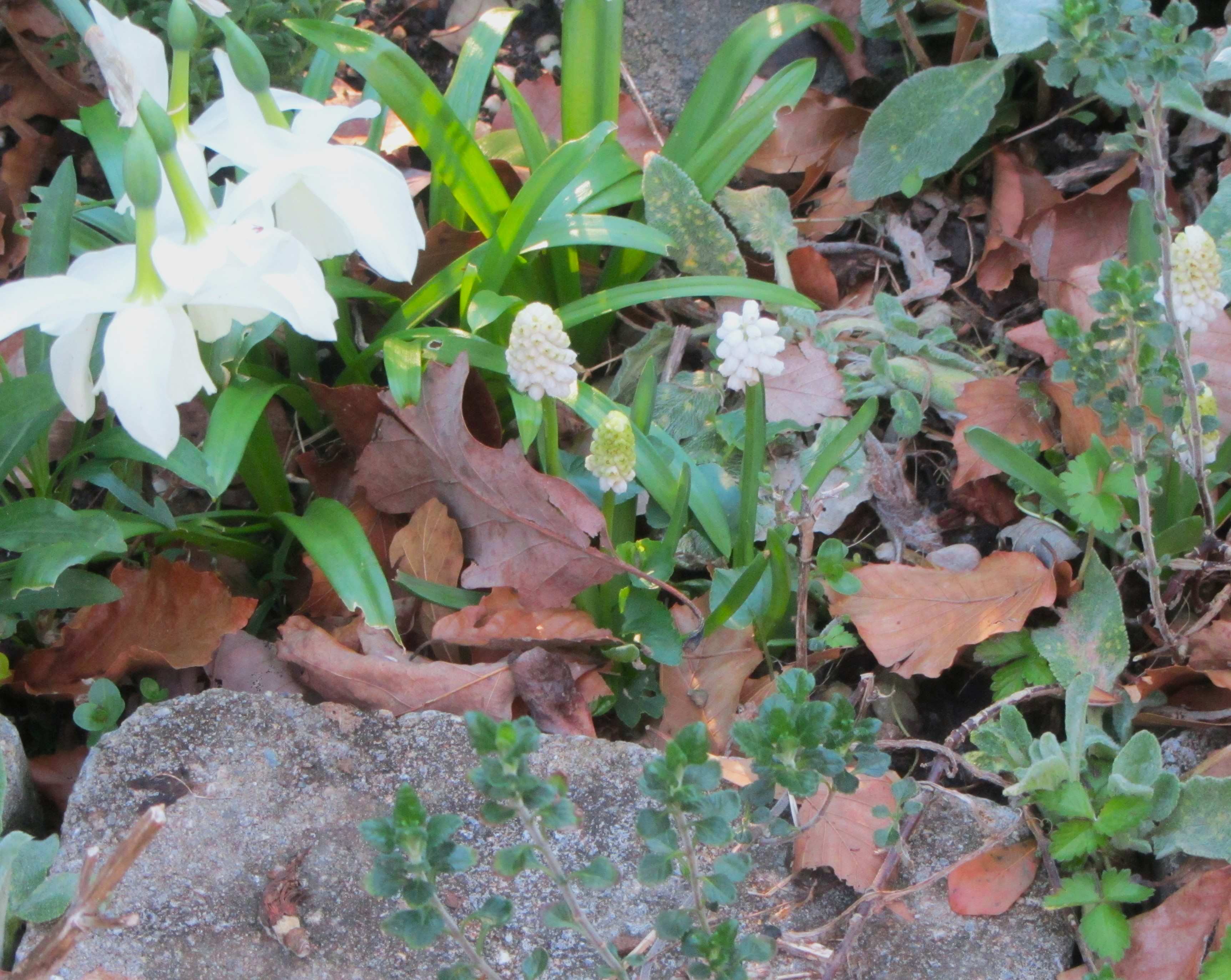
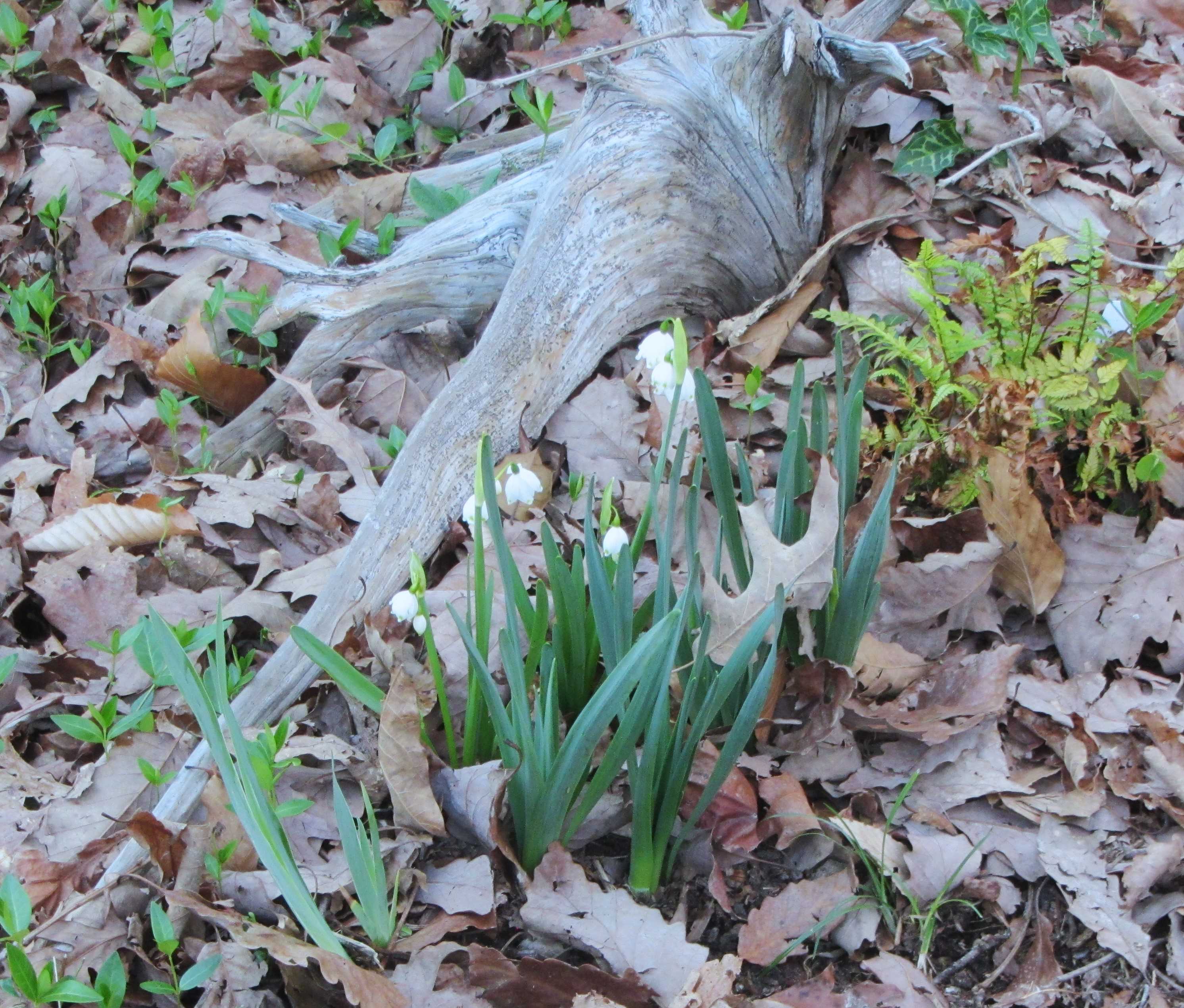
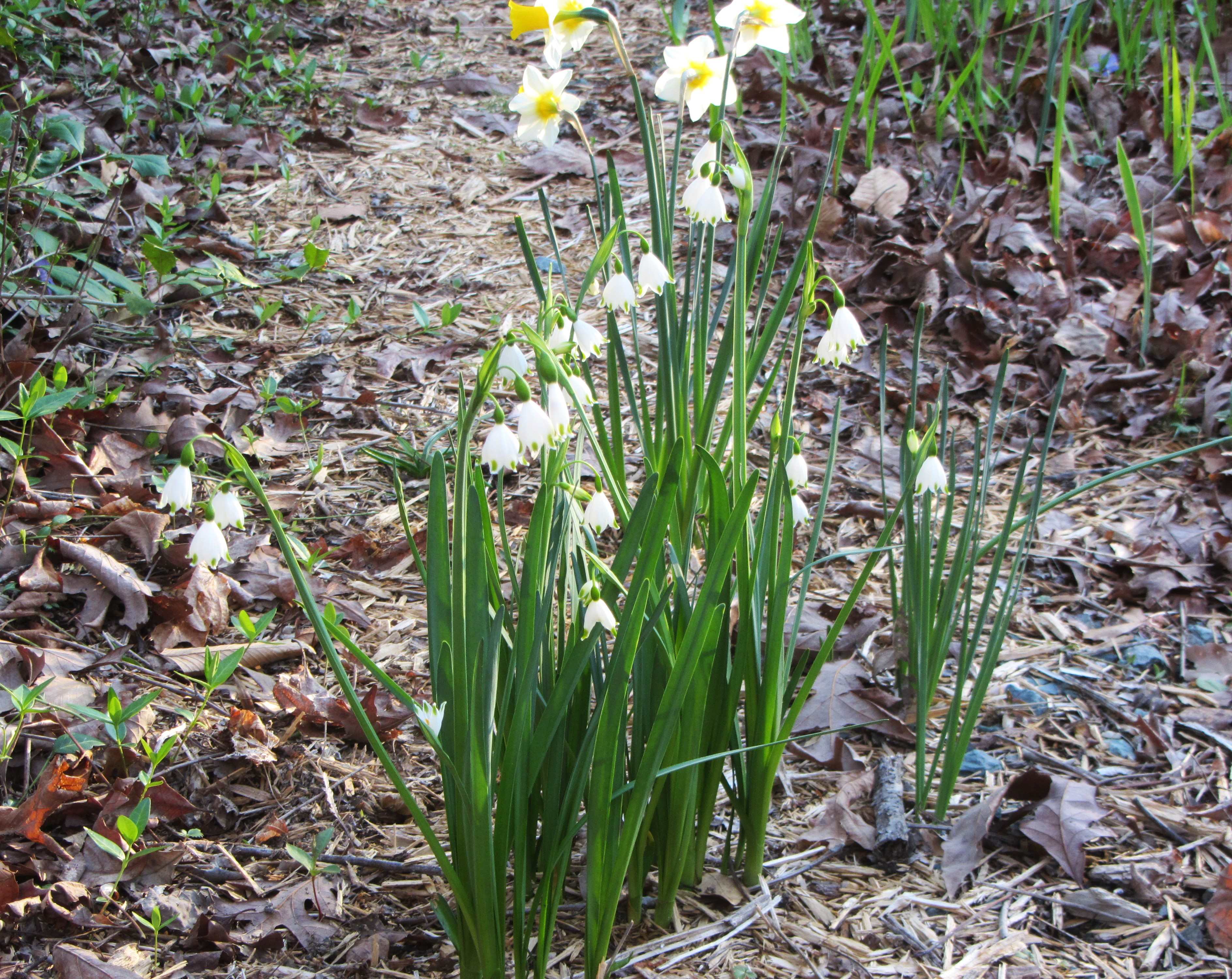
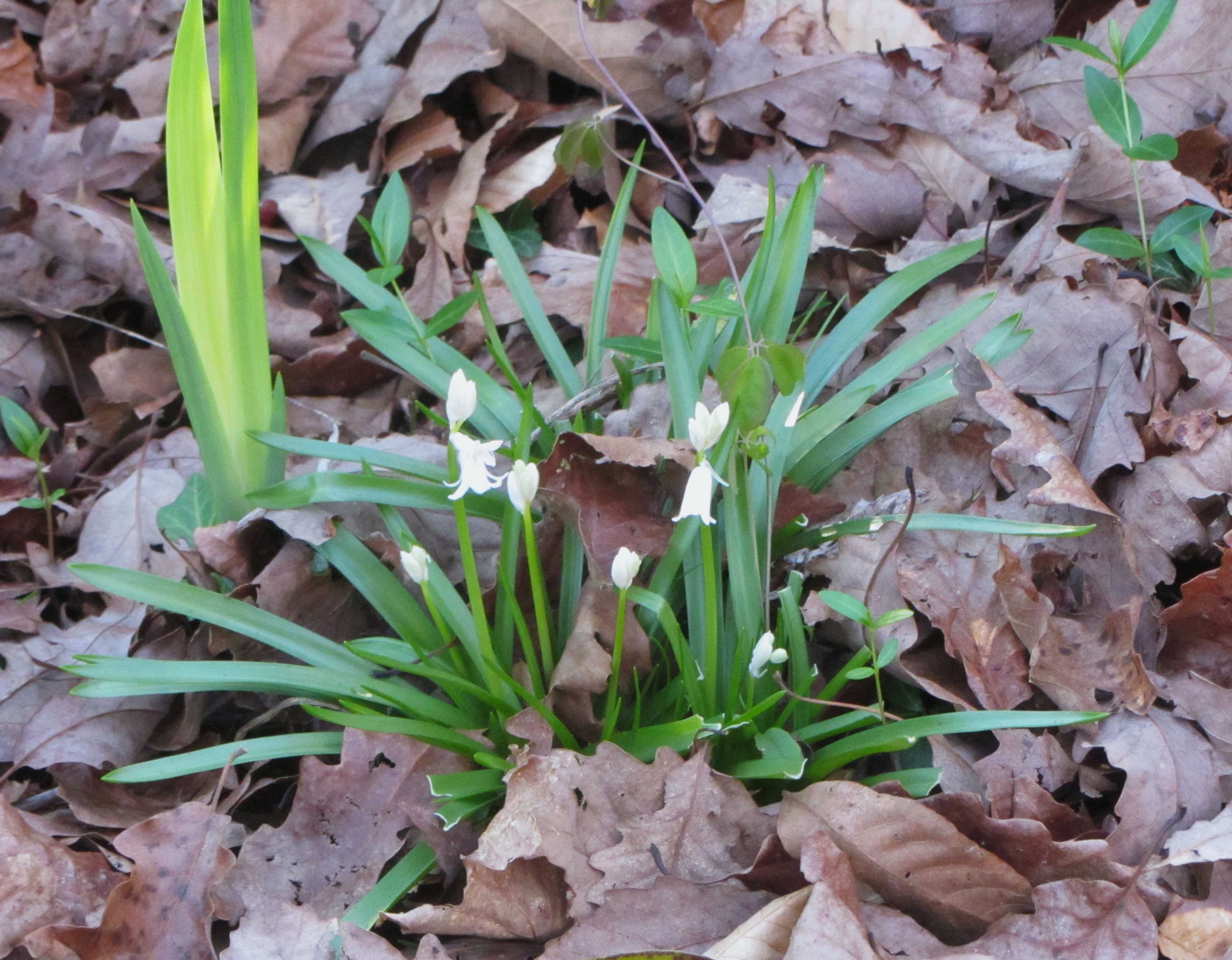
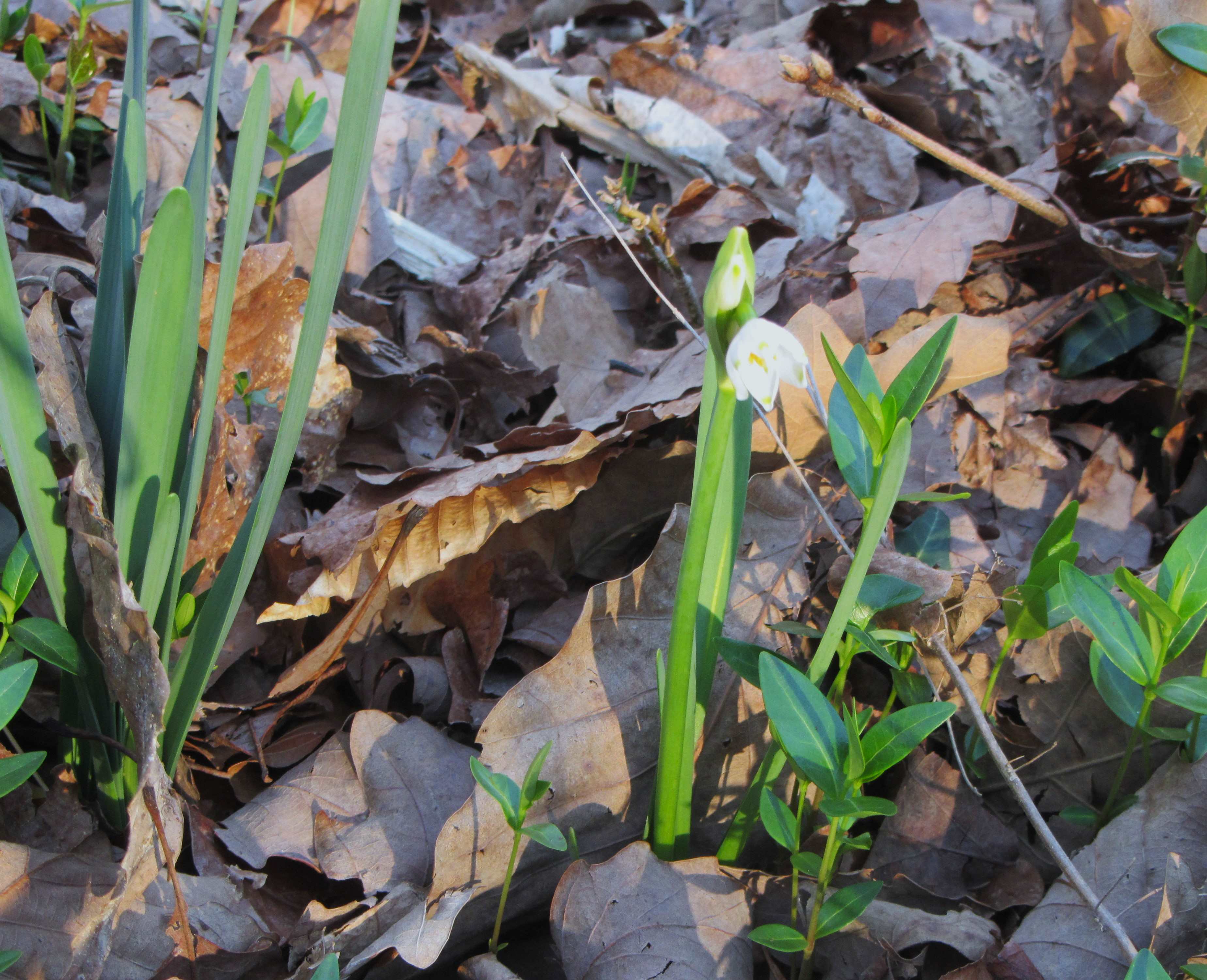
It was Friday before the weather cleared and warmed up enough to tempt me back out to wander with my camera in search of photos for this week’s ‘Six.’ We are still in this magical stretch of spring when growth is so fast that there are always new things in bud or bloom. It is hard to choose what to share. Several themes have come to mind while I edited photos. I could show you just new leaves emerging. Or perhaps just bulbs in bloom. I could also show you six photos of beautiful (technically invasive) plants working hard doing things in our little ecosystem that no native has volunteered to do here. I could show you the tray of geraniums I purchased on Friday morning and hope to pot up later today, or the additional ferns that came home along with the geraniums….
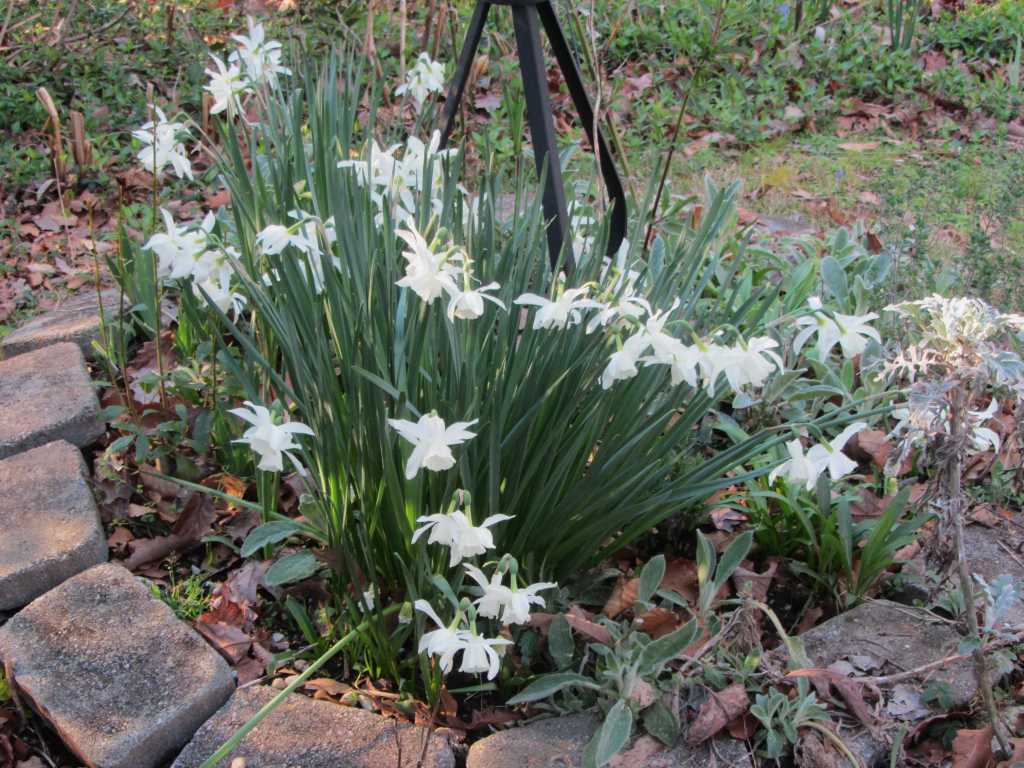
But when in doubt, I try to err on the side of showing something beautiful. And something new, if possible. I planted a lot of white flowering bulbs last season, and they are just beginning to flower now. There are Hyacinthoides, white ‘Thalia’ Narcissus, white Muscari, white Leucojum and Galanthus. I am enjoying them coming up alongside the emerging ferns.
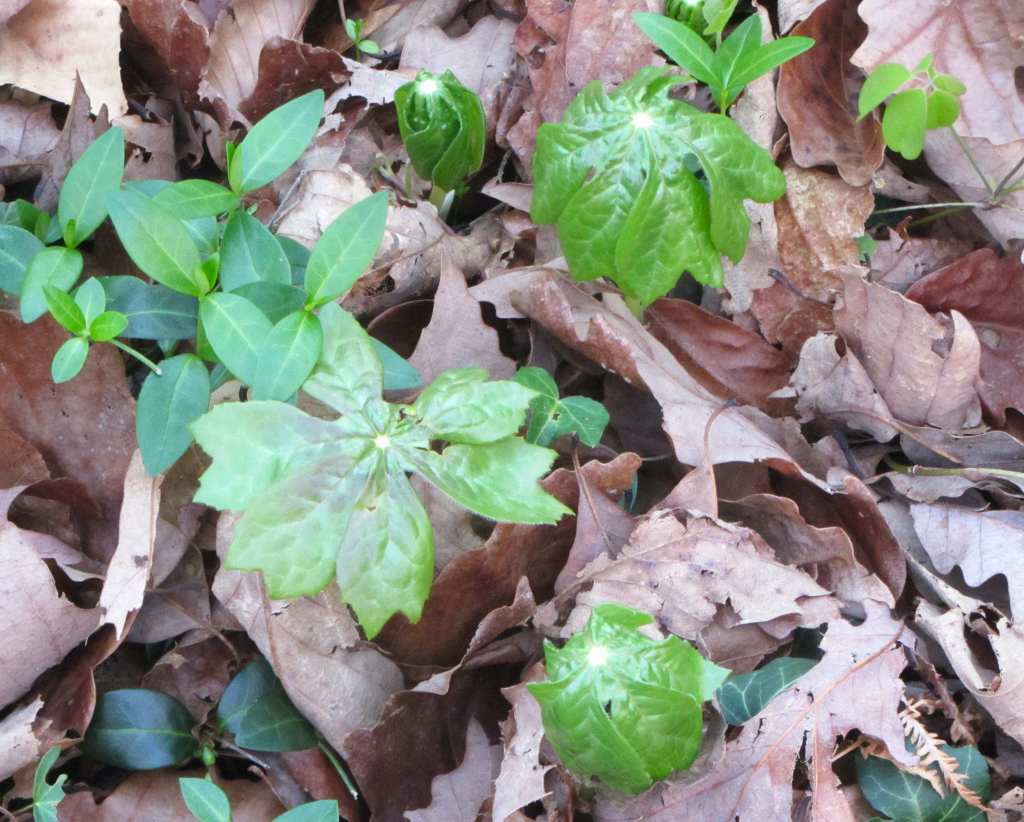
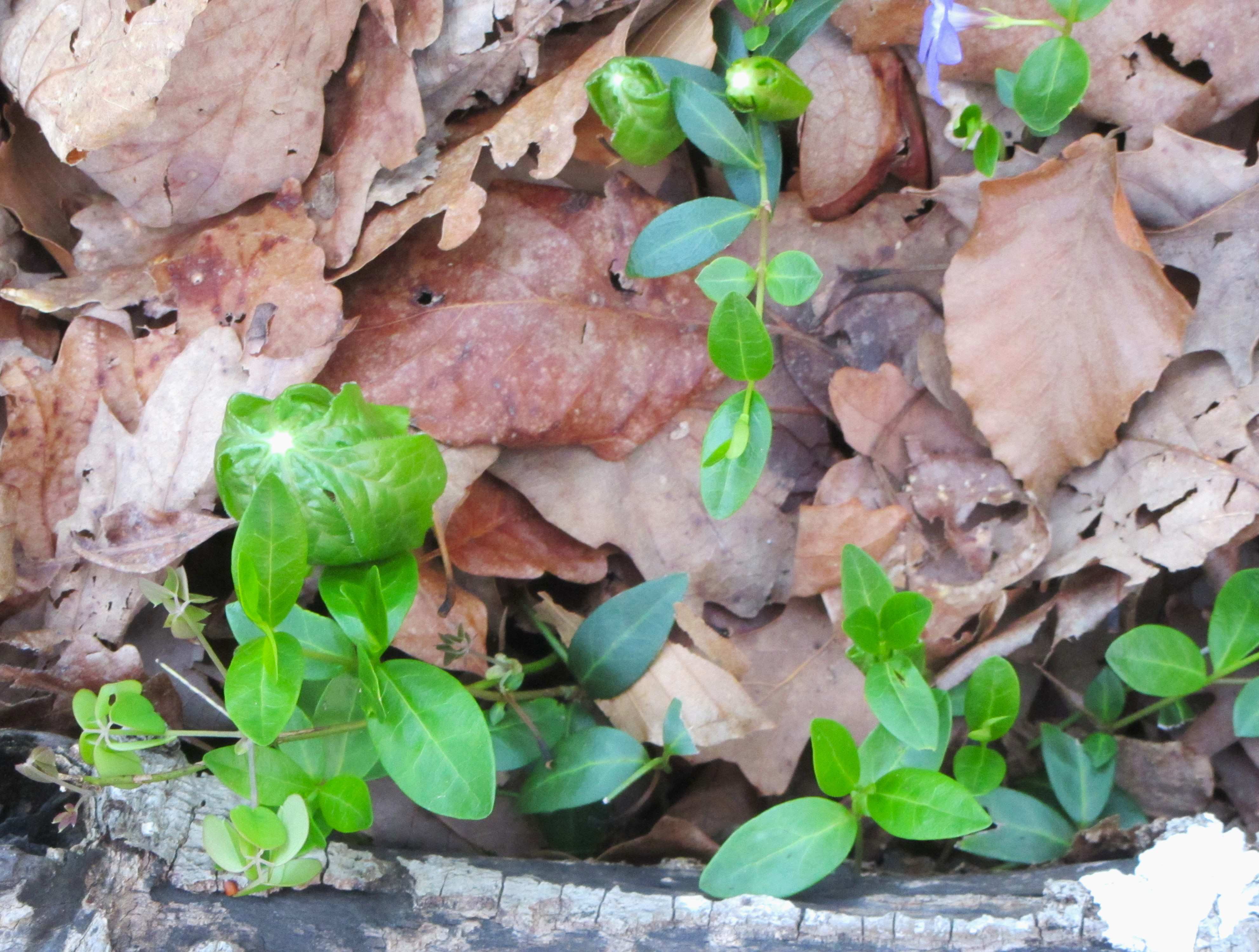
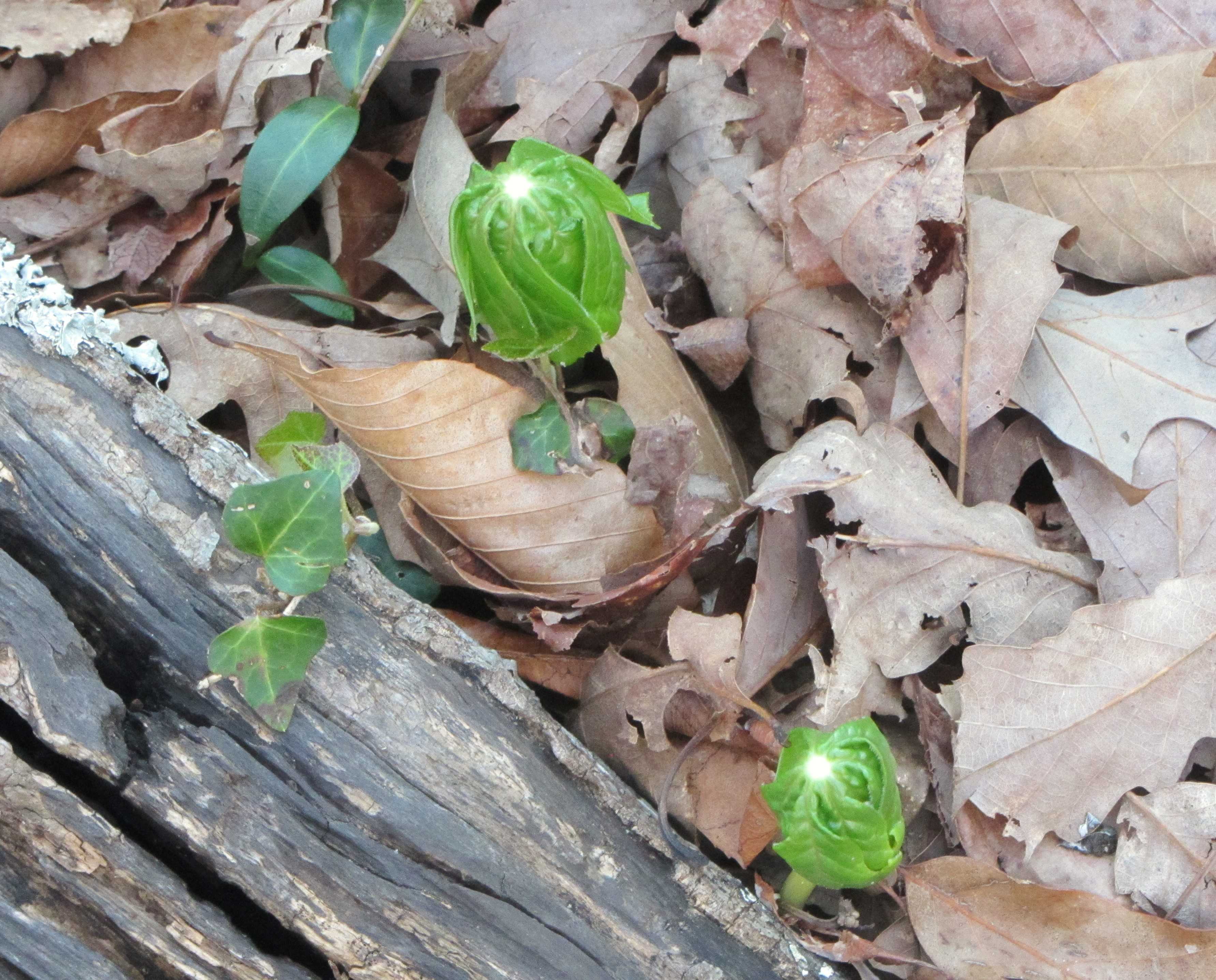
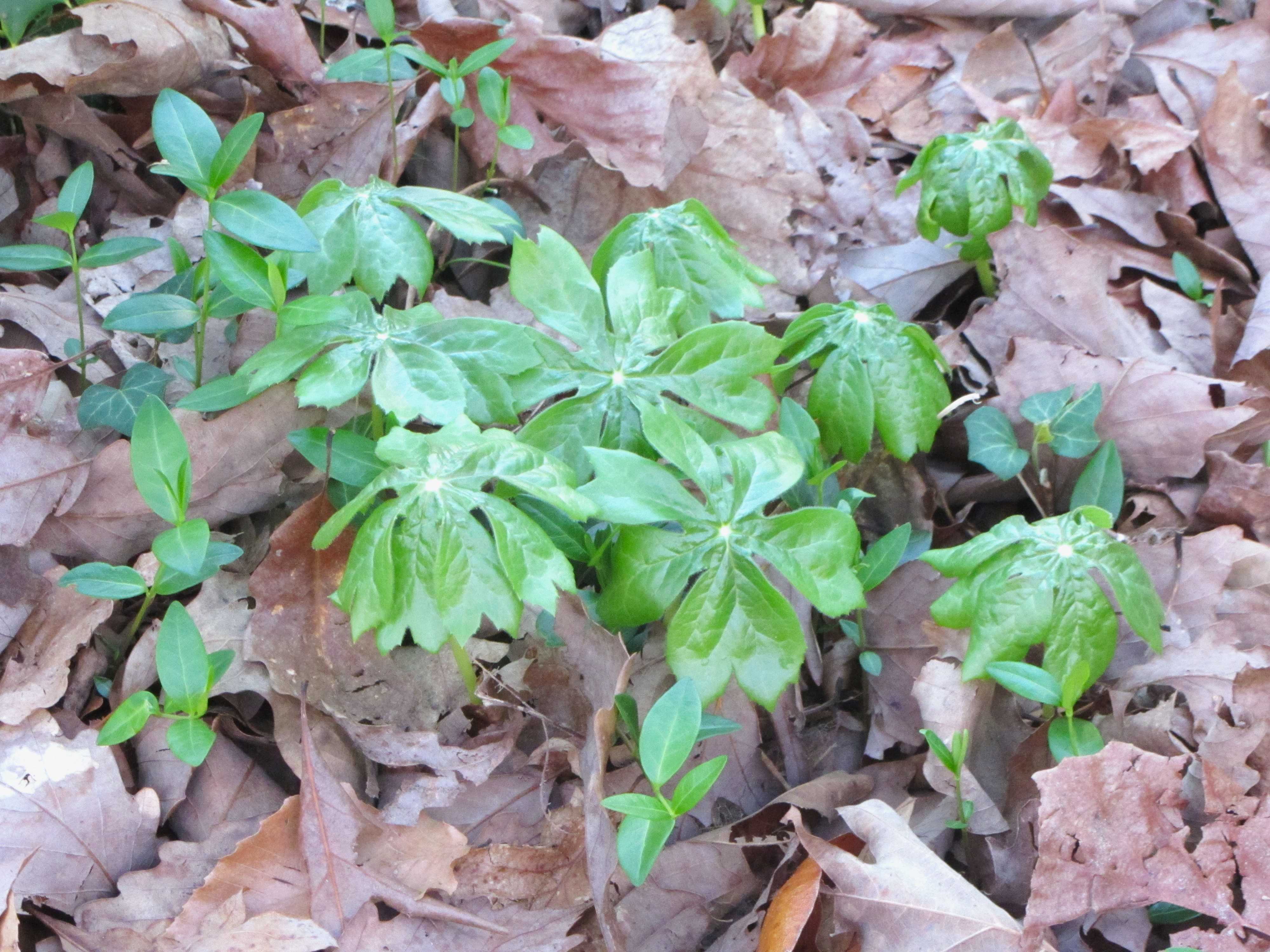
And I was fortunate enough to catch the mayapples, or mandrake, Podophyllum peltatum, just emerging on Friday afternoon. I can’t ever recall photographing them right as they push up through the leaf mulch before. Nor can I recall them emerging this early in the year. They caught me by surprise, but I am happy to see them because their patches expand a bit each year, and they have such an interesting leaf.
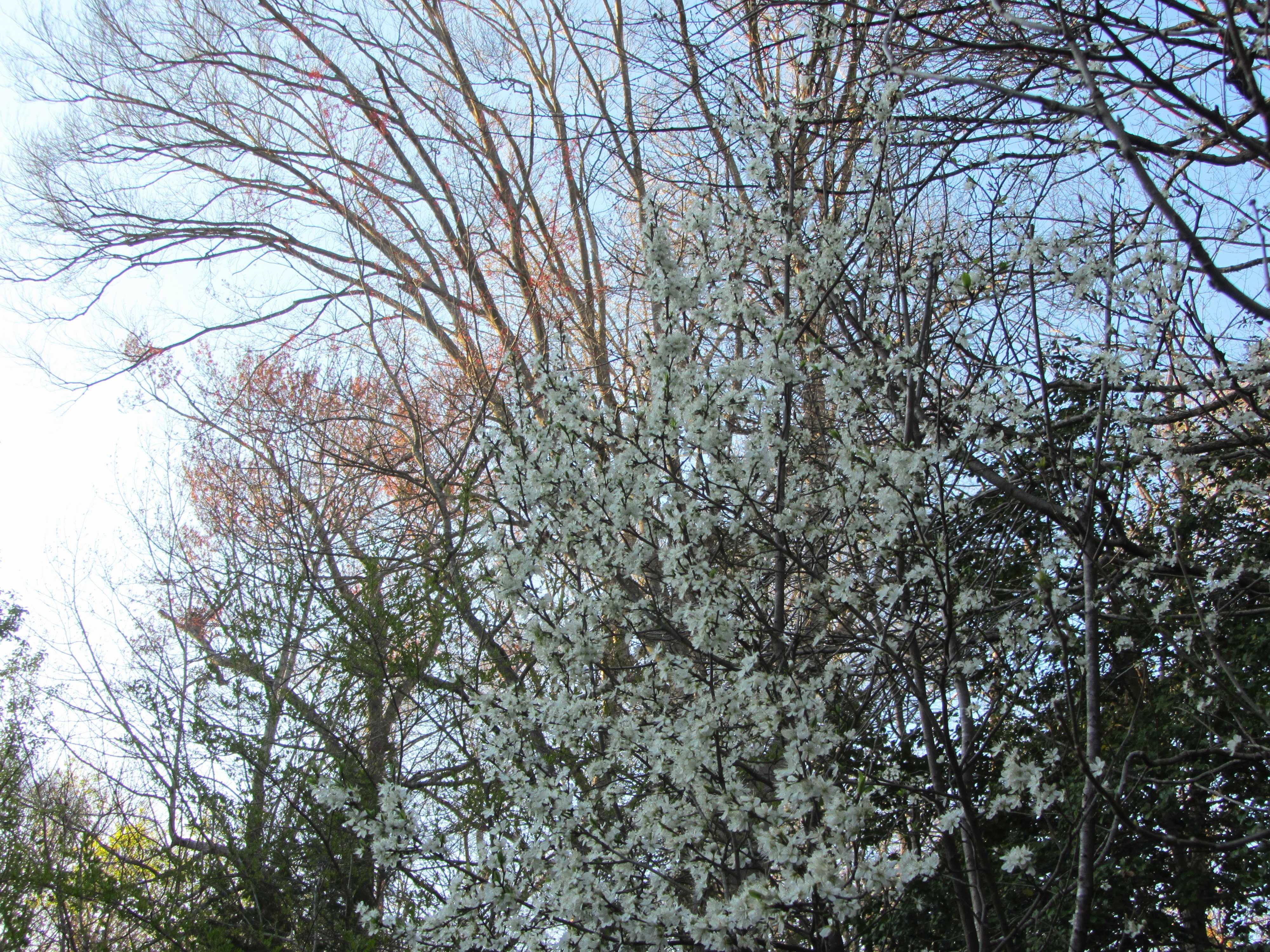
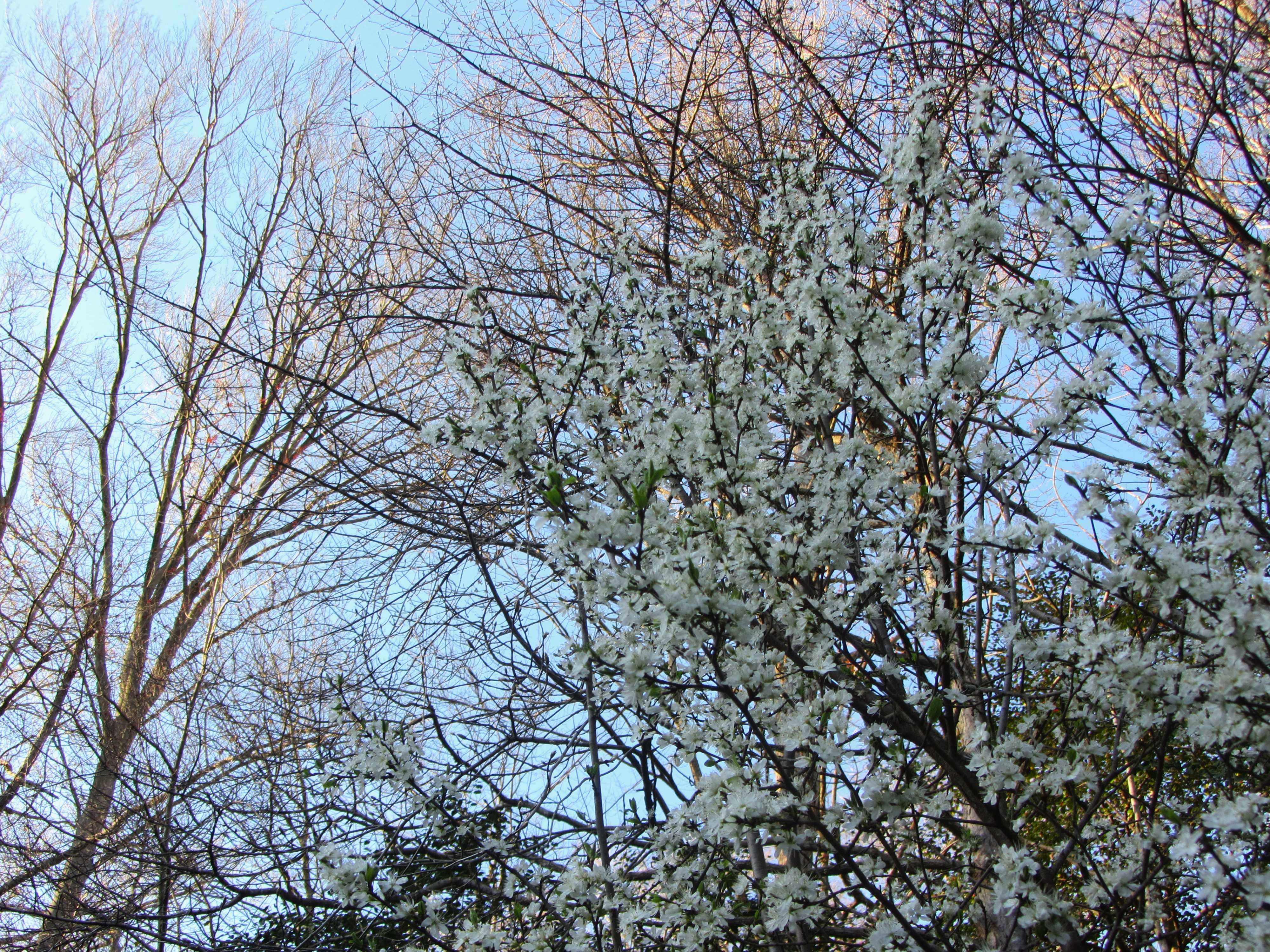
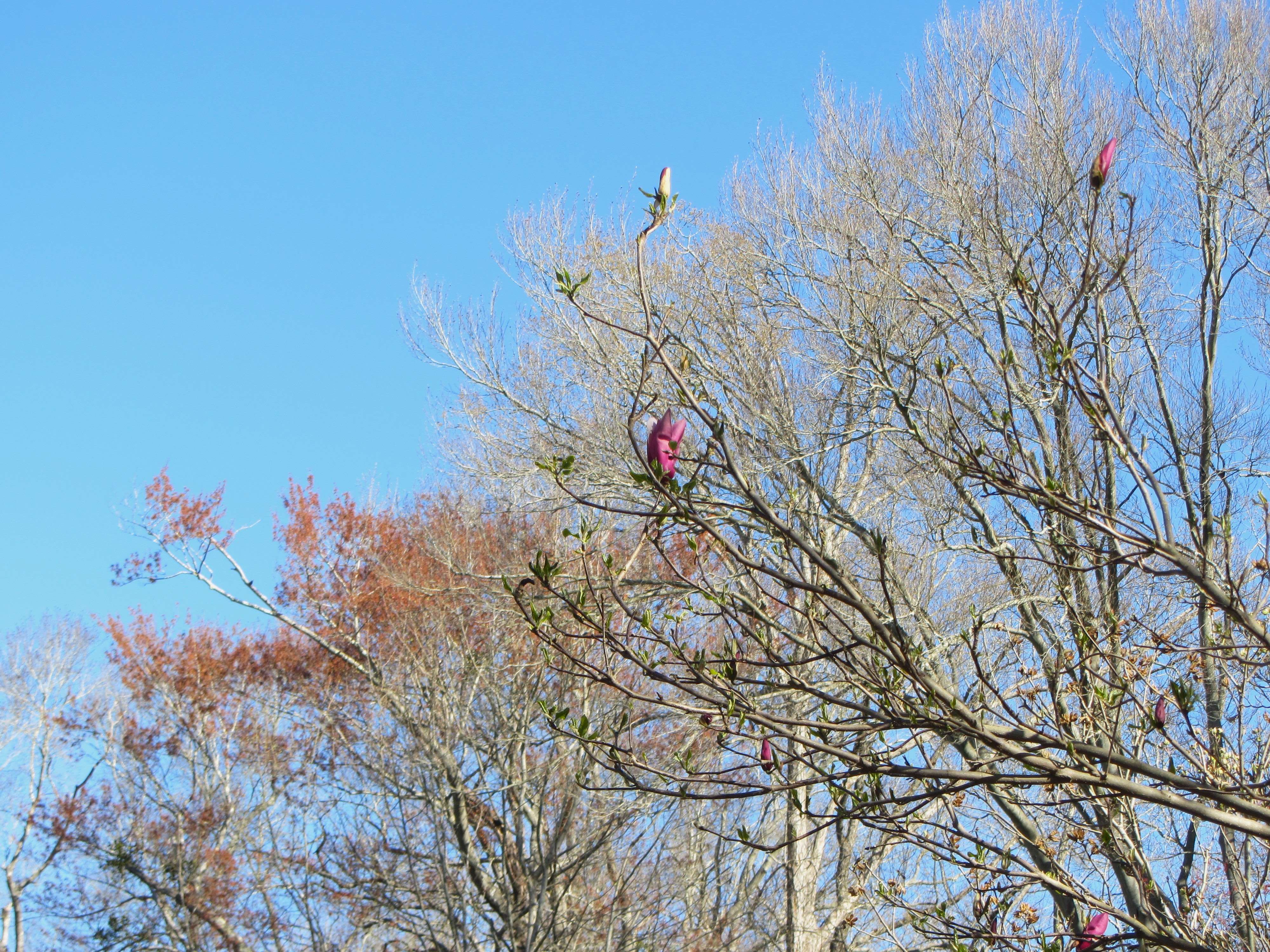
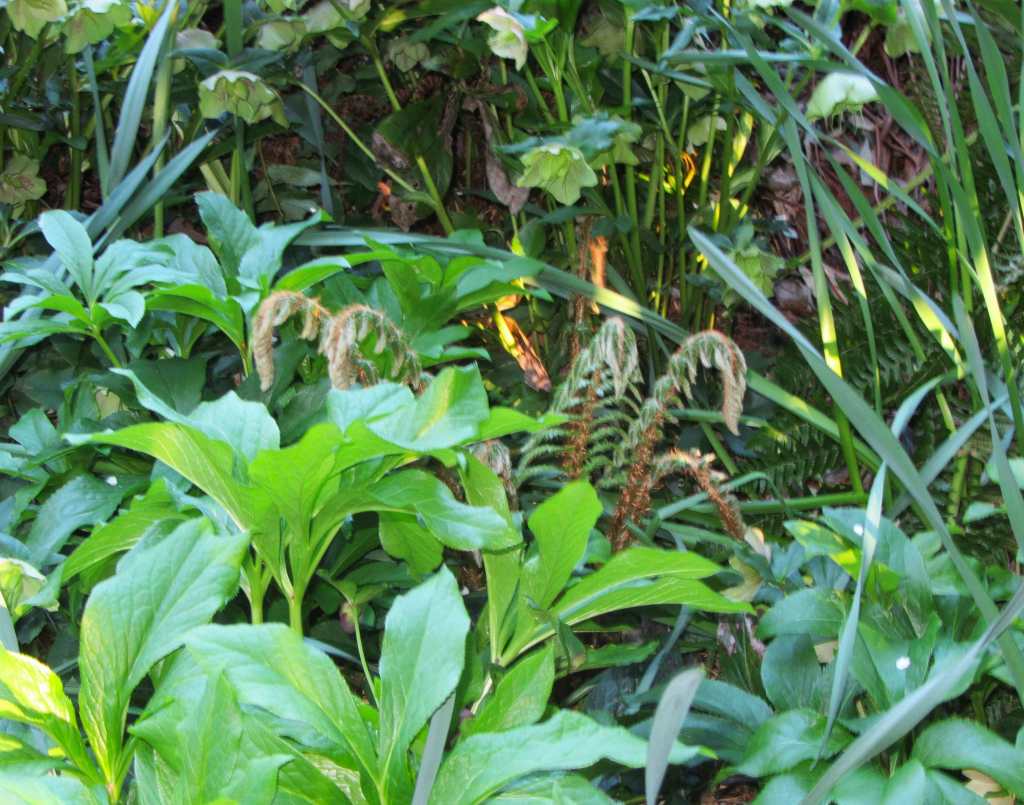
The dogwoods are in bloom, leaves are emerging on the trees, and finally the Japanese painted ferns have begun to emerge for spring. I found a few clumps of ‘volunteer’ ferns emerging through the moss in the back yard on Friday evening, right as the sun was setting. It is a beautiful time of the year here in community, and it looks like tomorrow will be a lovely day for folks to celebrate Easter.
This week I have continued researching how many so-called invasive plants actually benefit the ecosystems where they grow in Timothy Lee Scott’s very thoughtful and thought-provoking book, Plant Medicine: The Ecological Benefits and Healing Abilities of Invasives. He explains, in detail, how many of our most maligned plants have centuries of history as medicine within Chinese, Ayurvedic, and other healing traditions. In many cases, they have a similar function in the ecosystem as they do in the human body. I will be writing more about this in the coming weeks.

But I am also writing an article about a native holly species that Indigenous Americans used to brew a beverage variously known as black drink, cassine or cassina, Carolina tea or yaupon tea. They used it ceremonially, medicinally, and also as a daily beverage. It is made from the only North American holly known to contain caffeine, as well as some of the phytochemicals found in Asian tea and in cocoa. They introduced it to the Spanish, French, English and other explorers and settlers who came to North America, and the colonists exported it back to Europe, where it was popular for a while. It is quite a story, including how its eventual binomial botanical name, assigned by an English horticulturalist and friend of King George, soon after the Revolutionary War ended, killed its prospects as a competitor for Chinese and Indian tea.
It is amazing the secrets that plants hold. As Timothy Scott makes plain in his book, quite often the very plant needed to solve a problem turns up where, and when, it is needed most. Something to consider as our spring gardens begin to take shape.
With appreciation to Jim Stephens of Garden Ruminations, who
hosts Six on Saturday each week.


 Our Forest Garden
I can see that the fig tree is at the same stage here… I just came back from Rome where the baby figs were already as big as a small walnut….Pfff
Cute grape hyacinths with a very pale color rarely seen.
LikeLiked by 1 person
I hope you had a wonderful time in Italy. They already have tiny figs! How fascinating. I love hearing that your fig leaves are at the same stage as these, which are opening so quickly now!
LikeLiked by 1 person
Hey, I got an American holly, although not the yaupon. Why only white flowering bulbs? (I do not really need an explanation of course. It is my favorite color.) Snowdrops or snowflake? I know it as snowdrops, but only because there are no real snowdrops here.
LikeLiked by 1 person
Leucojum is known as ‘summer snowflake’ and Galanthus is known as ‘snowdrops’ in our area. I wanted to re-do the one round bed with the lamb’s ears with white bulbs and there were already some N. ‘Thalia’ growing there, so I added more along with the white Muscari. I had mostly blue flowers in another bed nearby- blue shades of Grecian windflower and blue Muscari with ferns, and the white Hyacinthoides. Other than the Thalias, most of the daffies I ordered this year were pale, but not necessarily white. I wanted more of some favorite varities, like N. ‘Exotic Mystery’ and N. ‘Poetica.’ You should see our white Azaleas in bloom now! Just stunning! A shame you don’t have snowdrops or snowflakes growing in your area. They are a welcome sight here each spring.
LikeLiked by 1 person
A few snowflakes grow here, although we know them as snowdrops. I see snowdrops only in pictures from other regions. I could eventually get some I suppose, and I intend to eventually try one of the more basic species (not a cultivar).
LikeLiked by 1 person