A huge nor’easter developed along the East Coast this week from the remnants of a powerful storm that blew in from the Pacific, over California and Oregon, last weekend. We watched its progress, knowing it would bring interesting weather as it approached our area. While this was a particularly active and destructive storm in some areas, with tornadoes and hail, flooding and heavy snow for many, we were very fortunate. We are grateful that what rain and wind reached us was manageable. The tornado warning on Thursday evening stopped at the banks of the river to our west. While we had thunderstorms and gust fronts deep into the evening, and rain all night, no tornadoes touched down in our area.
It snowed in West Virginia and western Virginia. It snowed north of us towards New England. Even Virginia’s Northern Neck, just to our north, endured heavy weather. We stayed above freezing, though it has turned cool again, and when the sun has broken through the heavy clouds in recent days, it was always a surprise and a blessing.
When we stepped outside on warmish afternoons this past week we were greeted with intense buzzing and perhaps the largest cloud of bees I have ever seen, since that Easter Sunday more than 20 years ago when a swarm of bees left one of my hives. My hive divided and I was caught unawares without a new one to house them. A bee keeping friend was able to come and capture the swarm from where it was resting in a nearby red cedar tree. The swarm of bees we have enjoyed this week is the joyous activity of native bees gathering pollen and nectar from a huge holly tree in full bloom. Individuals loop around and above the tree and fly out to greet us as we pass.
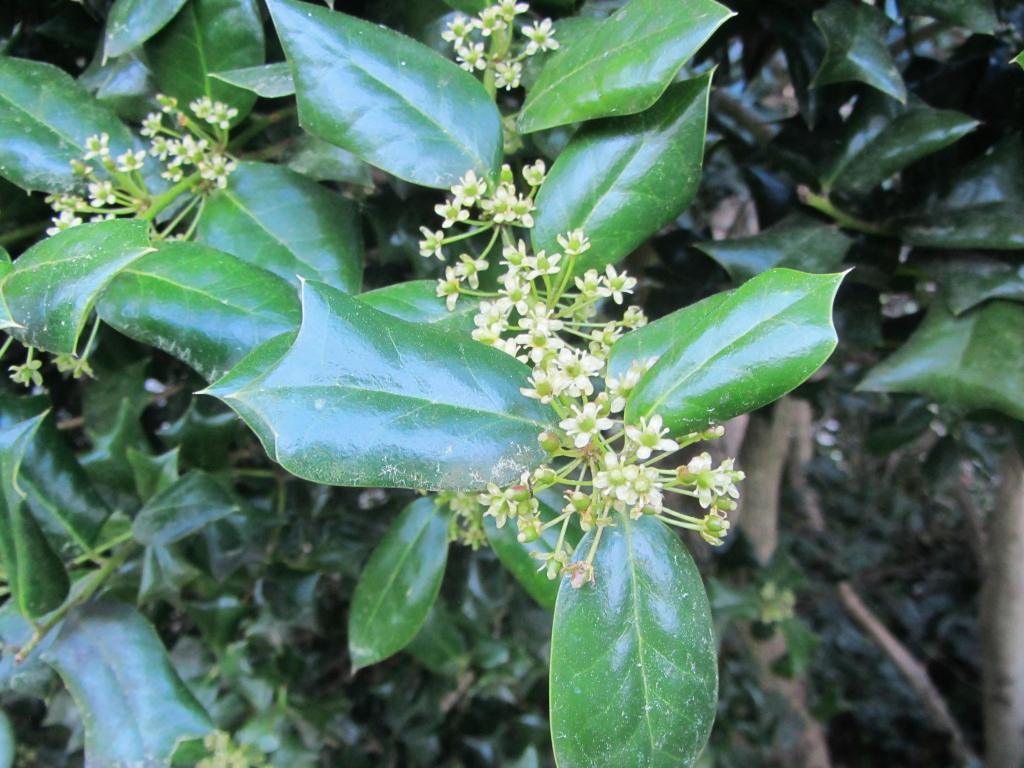
Bee activity in our garden has been the most intense this spring as I have ever seen it. There was an article in the Washington Post recently about the recovery of bee populations across the country, but only as measured by registered agricultural hives. The author suggested, and I would agree, that if there was a way to accurately count wild bees, native bees, that the numbers would be exponentially higher.
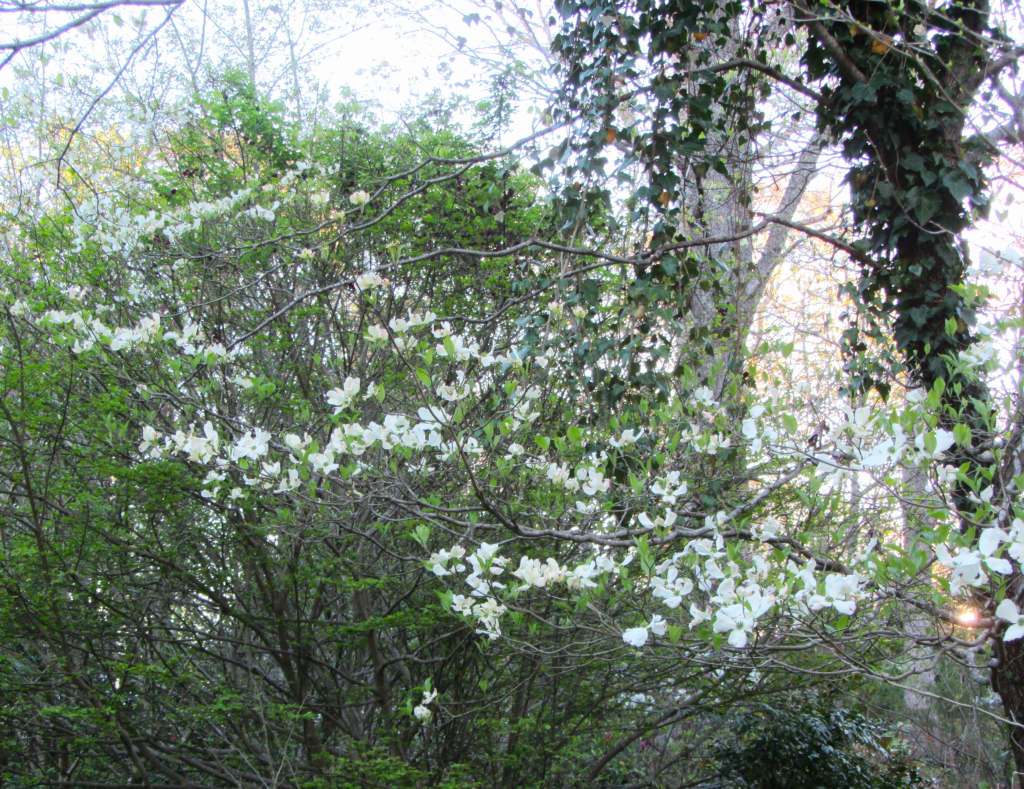
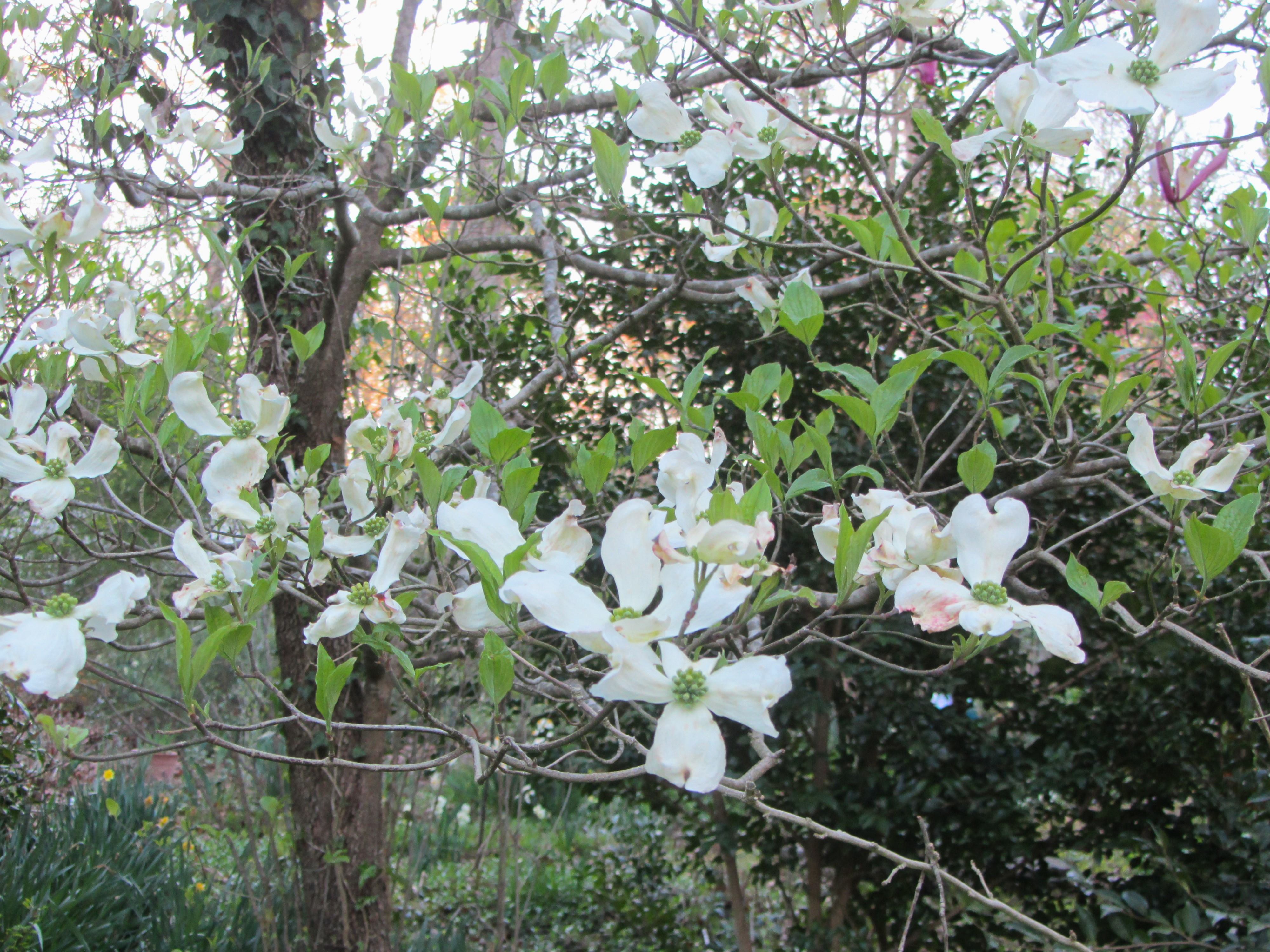
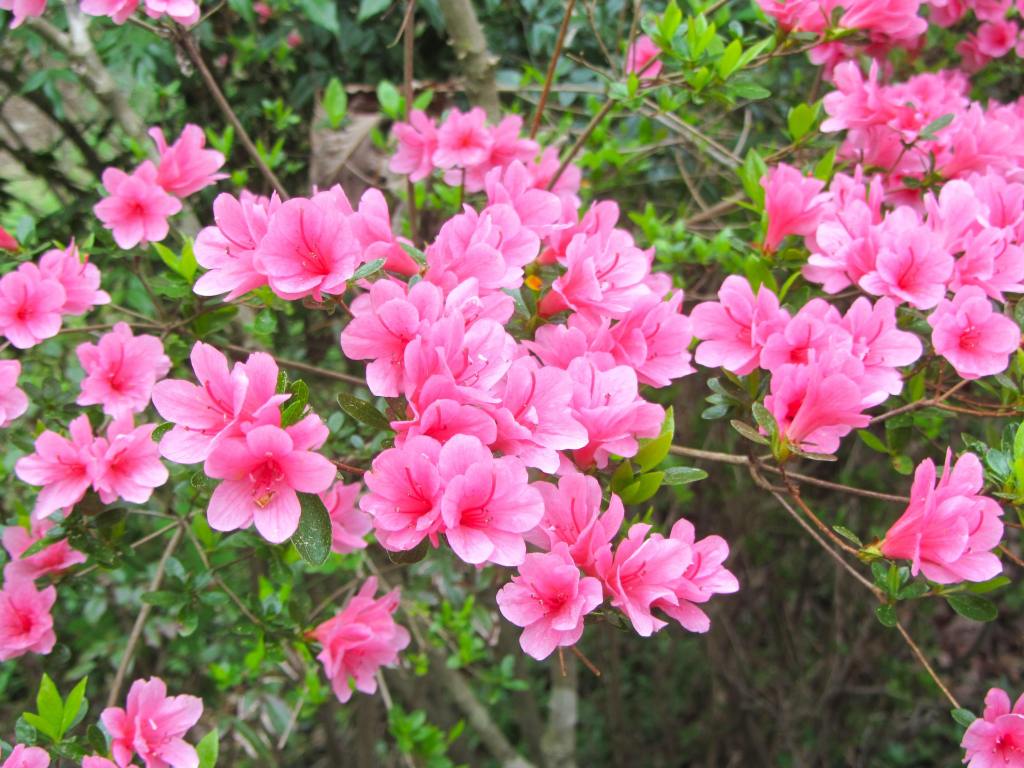
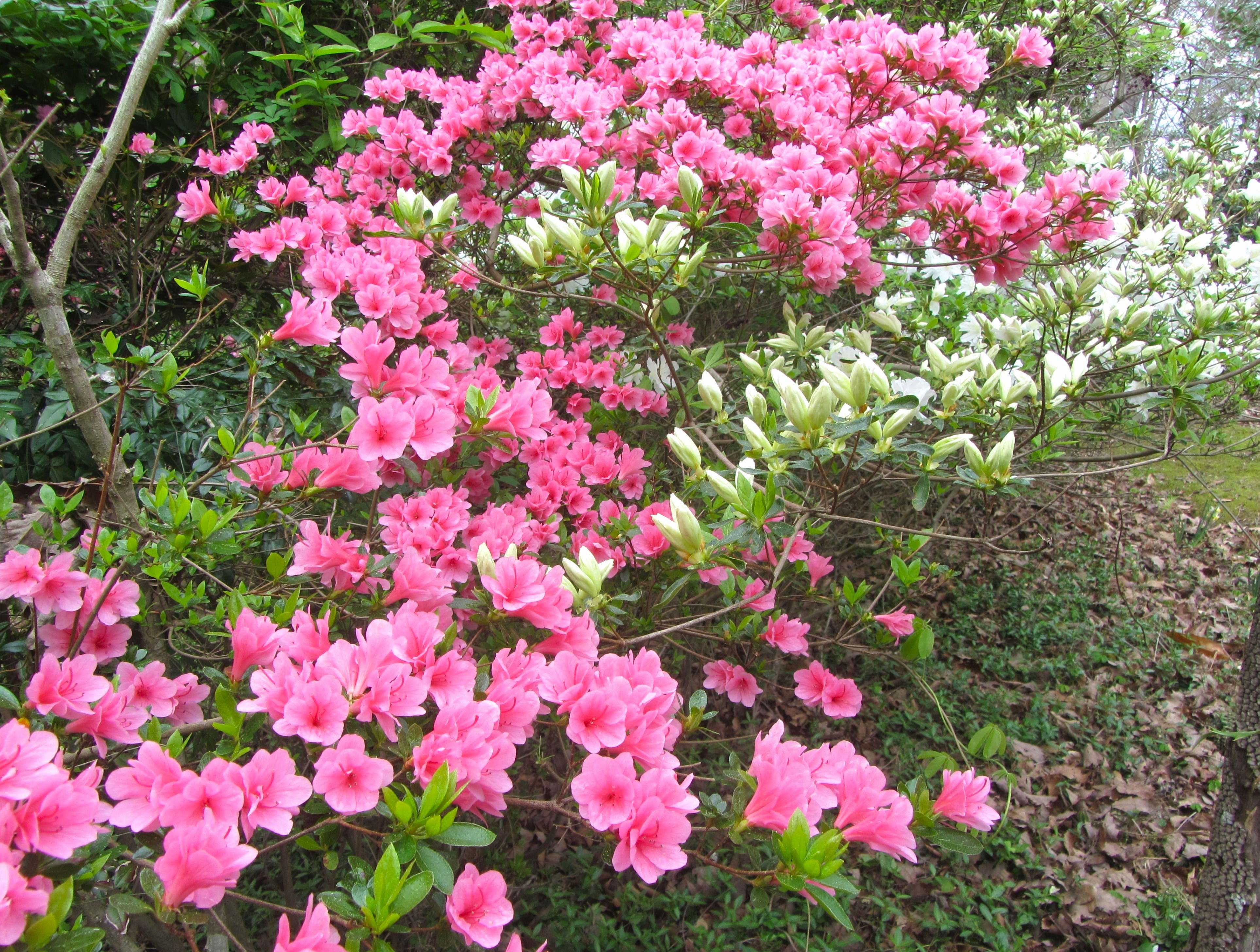
When we step out we can hear the buzz of life, and our lungs fill with the sweet and heady scent of flowers. Our neighbor told us that she can smell the daffodils on our end of the street just as soon as she turns the corner, at the end of her walk, to come home. Three of us have huge daffodil plantings, in addition to many Azalea shrubs, hollies, dogwoods, and other flowering trees. The oak trees also bloomed this week, and the pine trees are releasing pollen from their cones. Needless to say, puddles of pollen collect in all of the spots where rain pools, and our cars are frosted in yellow.

This is the time of year when nature shouts, “Surprise!” There are wonders everywhere. Green shoots pierce the moist earth in unexpected places; old friends nearly forgotten perhaps; or old friends anticipated, awaited, and greeted with relief. The Japanese painted ferns are emerging now, along with tiny native violets opening their first flowers of the season. Peonies stretch for the sun nearly overnight even as those late planted daffodil bulbs emerge and bloom.
It took only an hour or two to clean winter’s detritus from pots on the patio and near the kitchen door and refresh them with geraniums, Alyssum, and herbs. I pulled up snaking vines of ivy that protected the pots all winter, cutting their roots, making space for summer’s flowers. And always, I’m going back over everything with animal repellent and mulch.
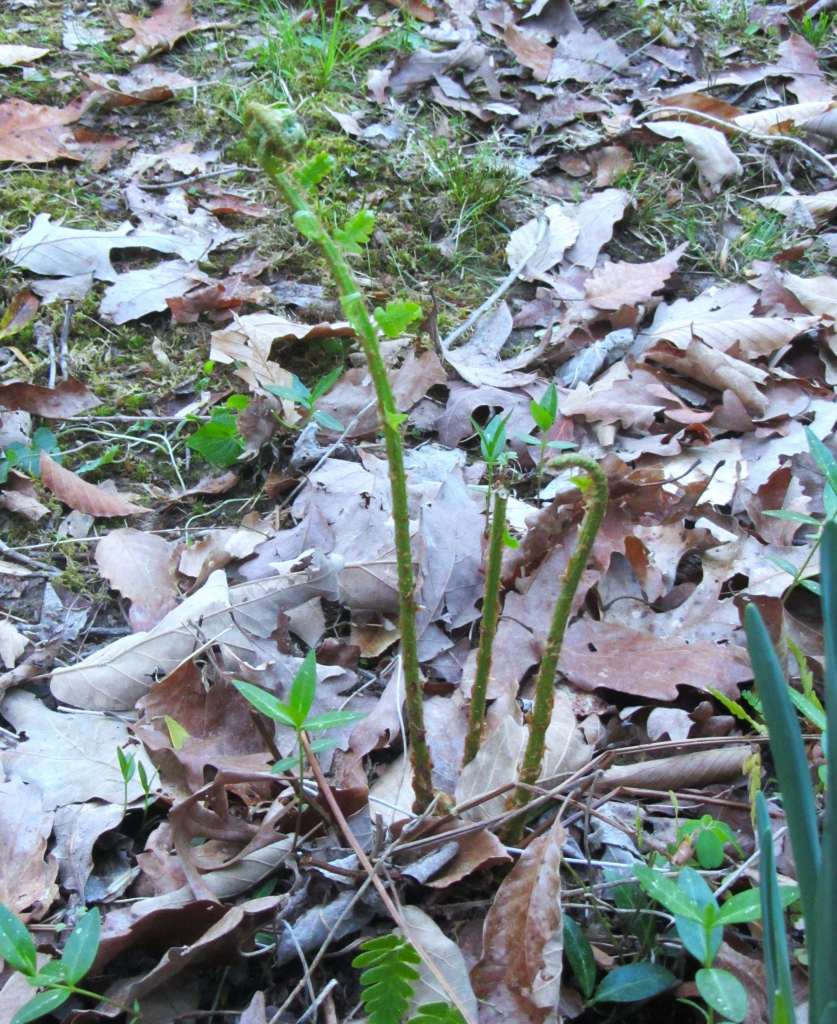
This is the first year I’ve ever felt a need to treat ferns with repellents. I’ve been watching for the ostrich fern a friend gave me last fall to emerge. I finally found the first one today, with two of its three fiddleheads already gone. I felt around for the shallow groove in the middle of the stipe, positioned just under the coiled fiddlehead, to confirm its species as Onoclea struthiopteris , or ostrich fern. It is native here that prefers wet, shady places. It spreads and runs once established, so I am looking forward to watching it grow if it can survive grazing deer.
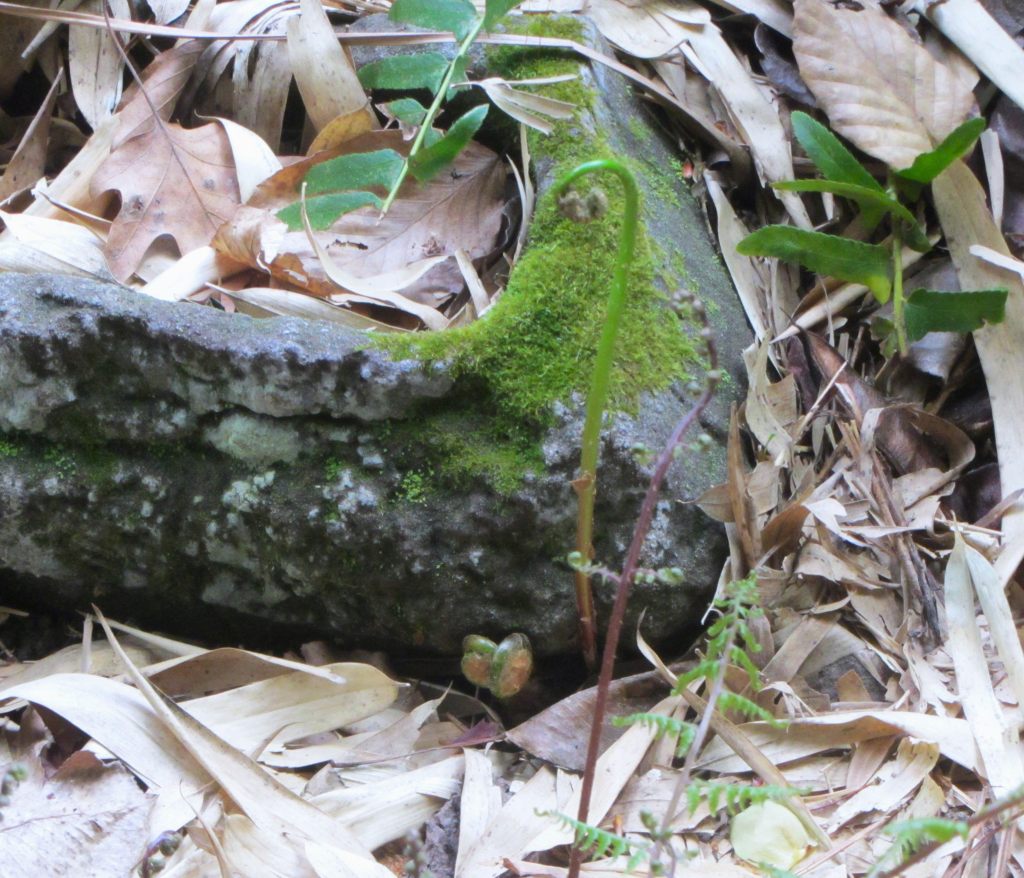
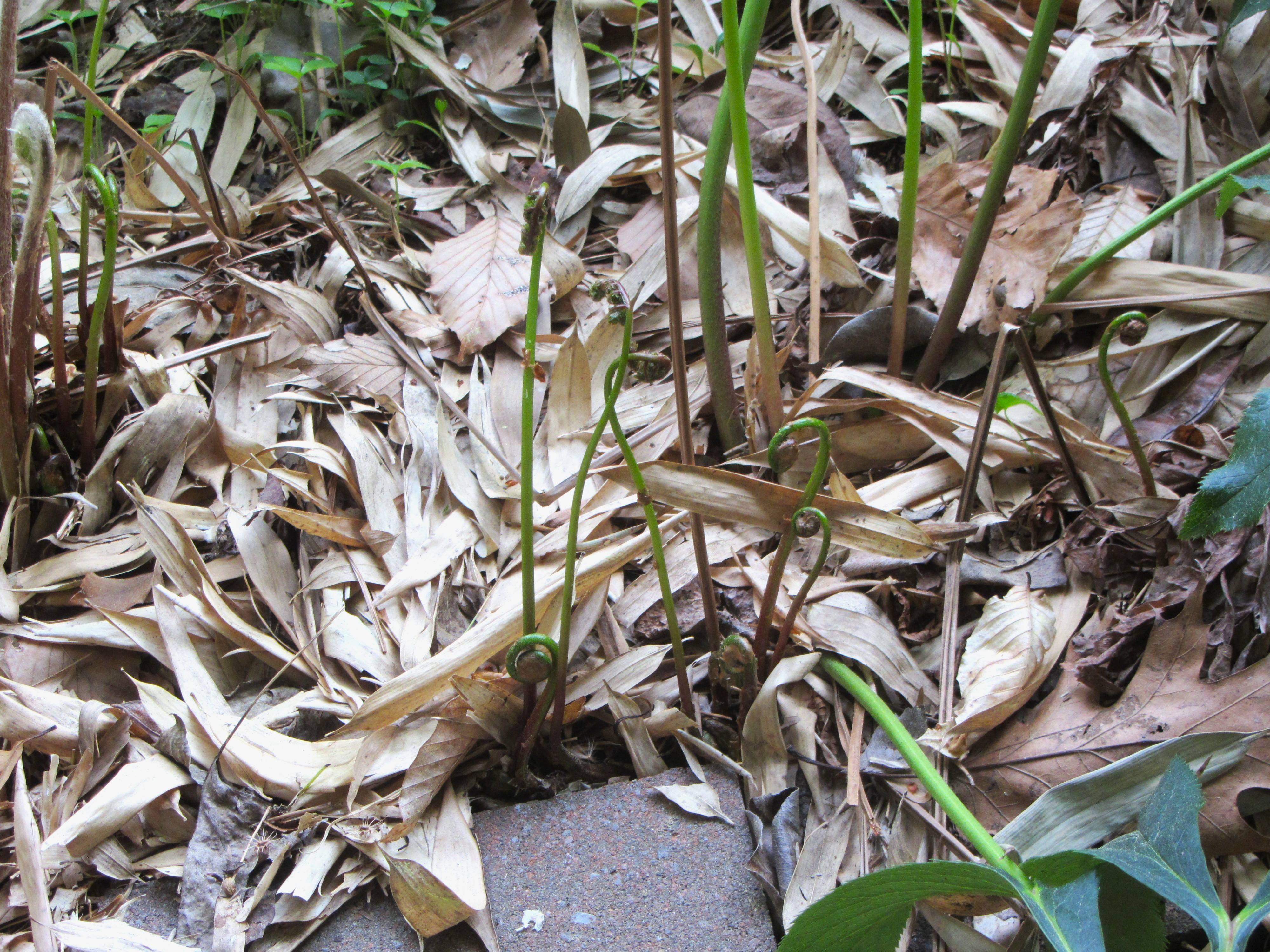
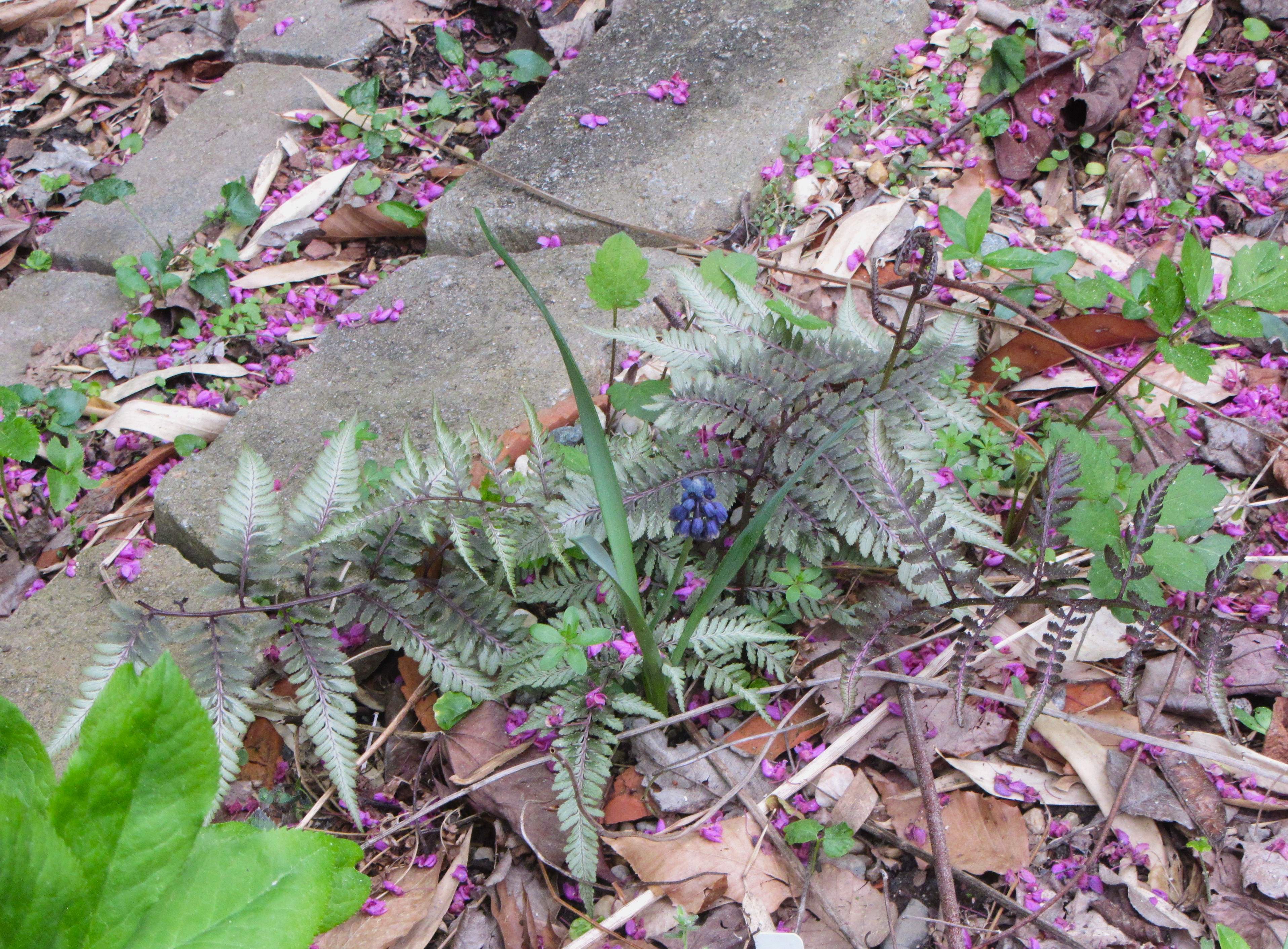
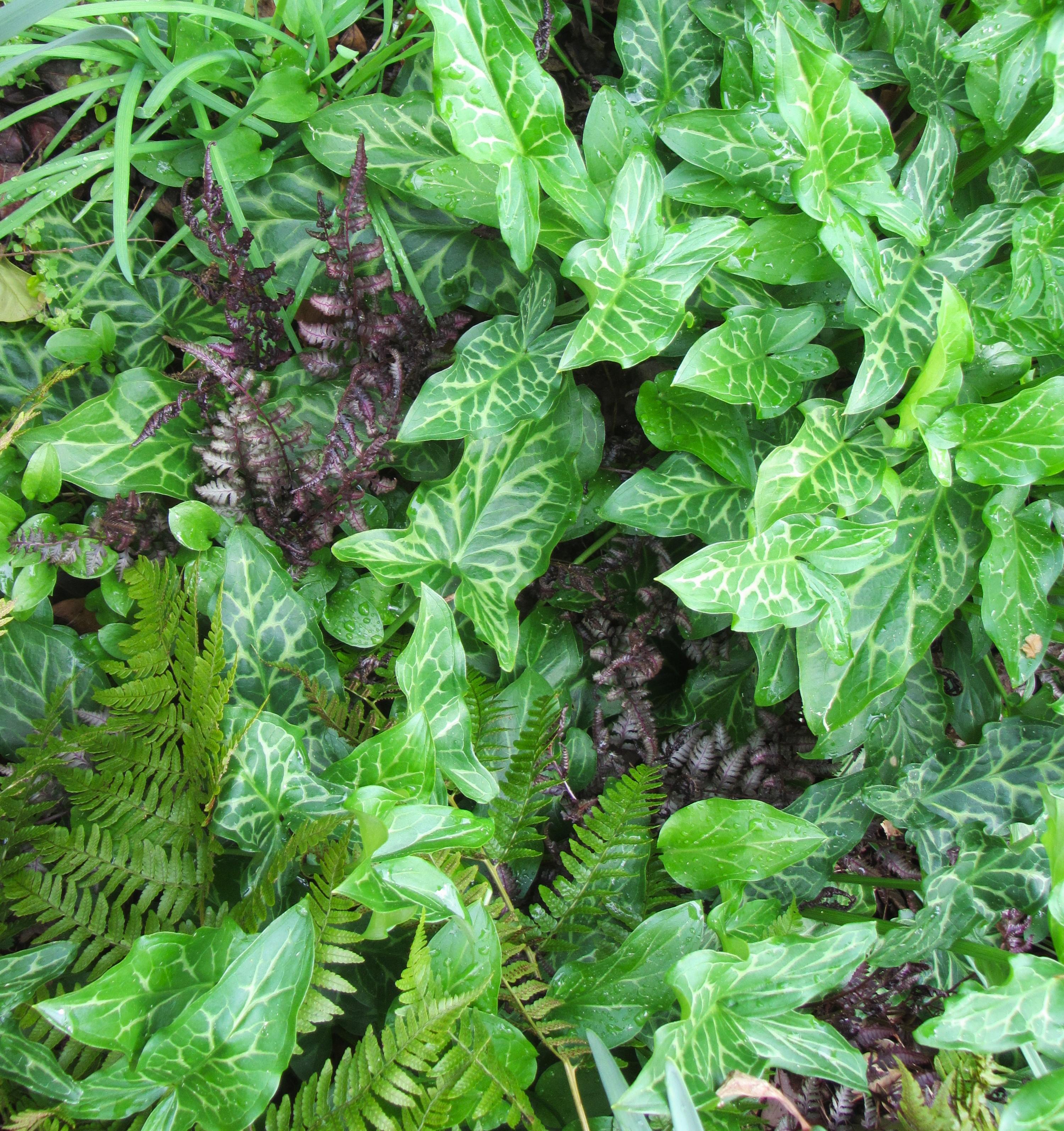
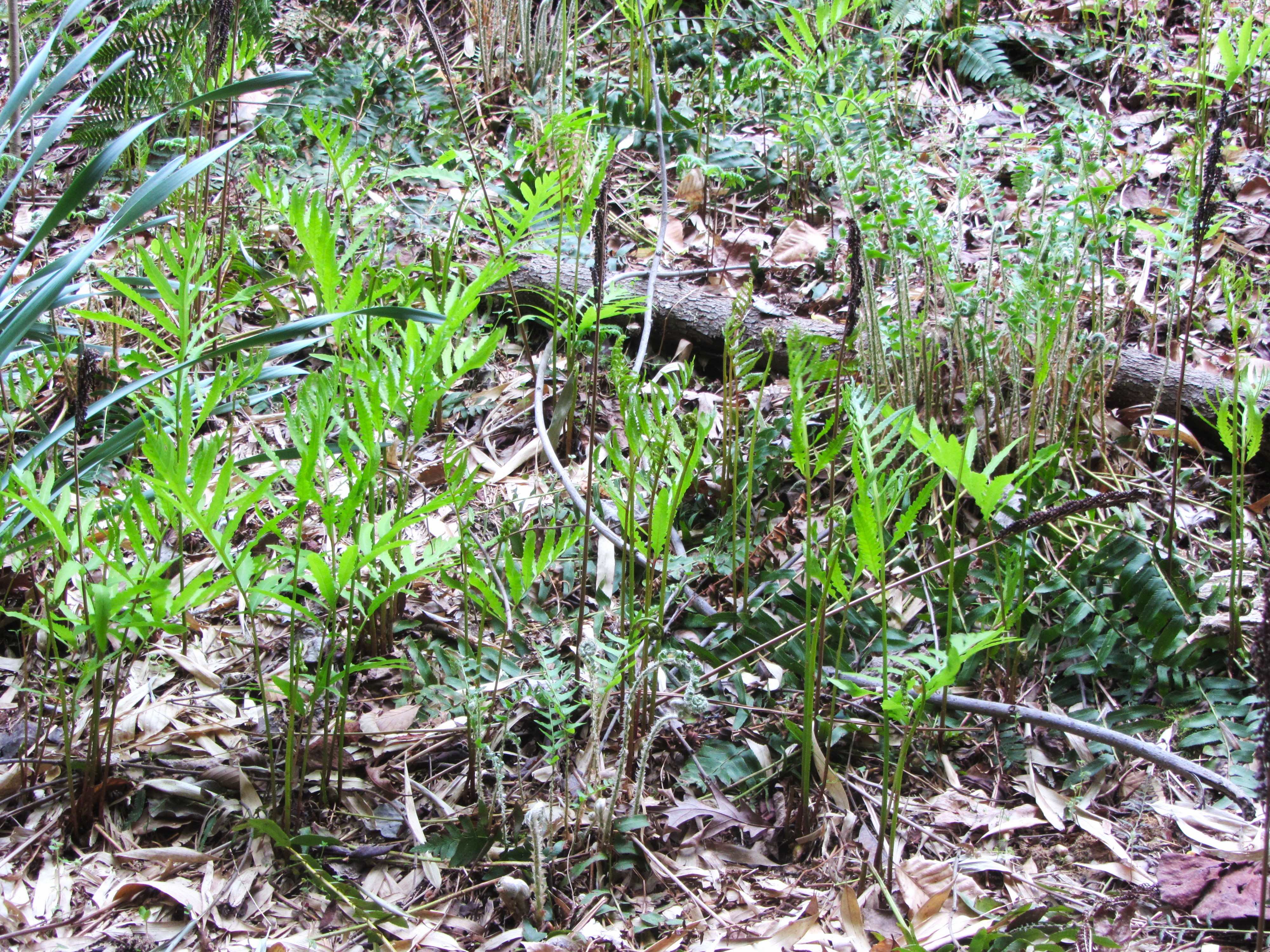
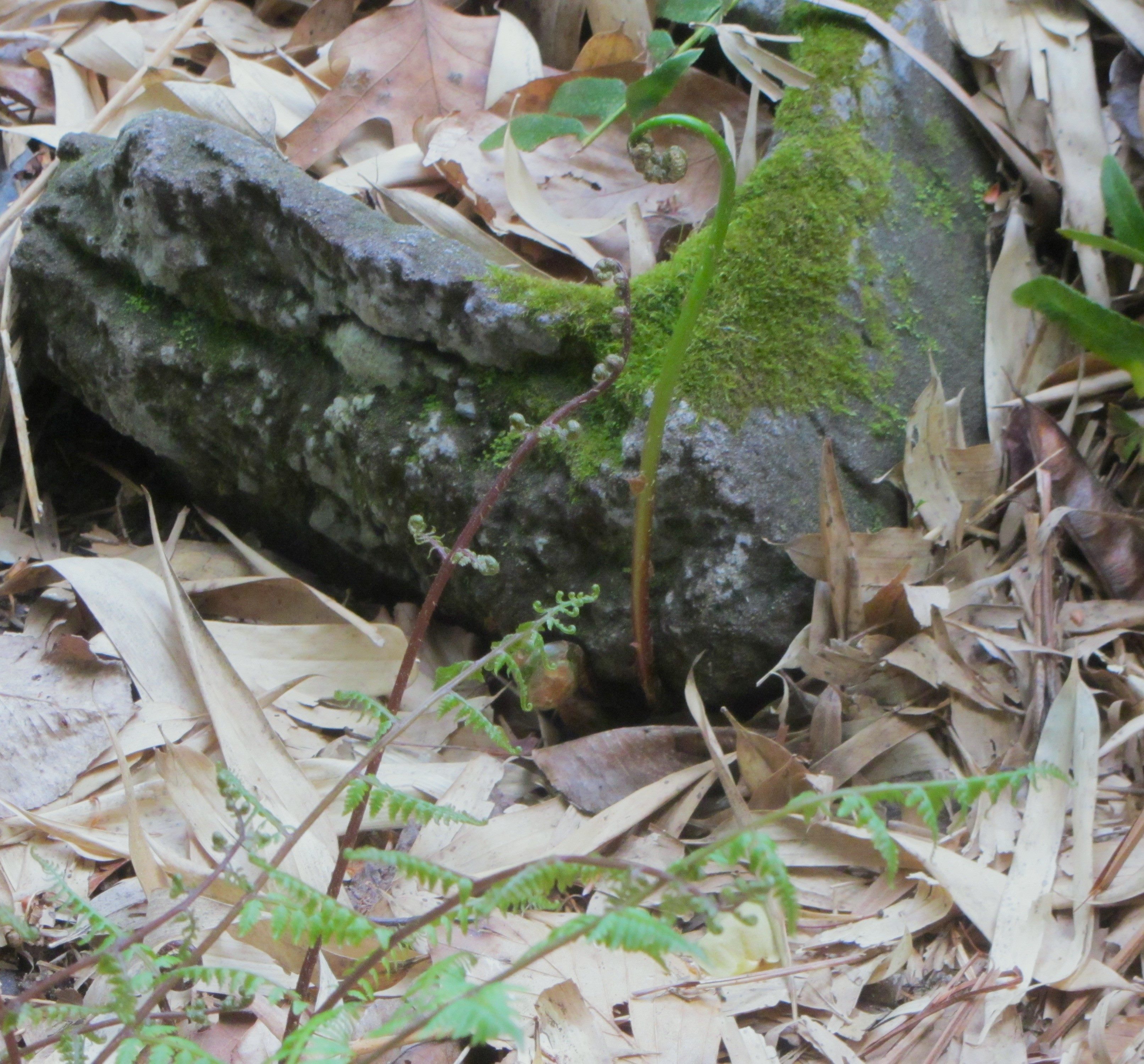
Ferns are finally emerging throughout the garden, each species on its own schedule. It is like an ongoing scavenger hunt, watching for ferns I recently planted and those deciduous ferns I remember from previous summers. Since many spread on rhizomes, or spread naturally on the breeze by spores, new fronds sometimes emerge in surprising places, like wildflowers.
April is such a magical and surprising time in the garden. Growth is fast and change is faster as early flowers fade and new ones open. New birds appear on their travels, and we hear new sounds in the night as owls hunt and frogs sing their springtime songs. Cool and cloudy weather prolongs the unfolding, stretching hours into days. We are trying to see and appreciate it all befor spring melts into the coming summer.
With appreciation to Jim Stephens of Garden Ruminations, who
hosts Six on Saturday each week.



Lovely to hear all about the bee activity. I love hearing buzzing when I am in the garden. I did spot a sleeping bumblebee on a Tulip last week, it was covered in pollen.
LikeLiked by 1 person
How wonderful ❤ ❤ ❤
LikeLike
How to treat ferns with repellents? Which one ? The azaleas are amazing , and the last photo of the lot is really pretty ! Well done
LikeLiked by 1 person
Thank you very much, Fred. I use granulated PlantSkydd or granulated Repels all. But then I also use spray on Repels all. I keep re-applying both with the hopes of discouraging grazers before they form too much of a habit at the ferns. The Azaleas have been here for many years, and somehow the older ones survive though the small ones get grazed quite a lot. I have always loved Azaleas so we are grateful for these survivors.
LikeLike
When we left on vacation, I was concerned about irrigation. Of course, it was no problem. The rain was substantial for much of the time while I was gone. However, rain was not so substantial in Washington. Cold rain resumed as I was returning, and there was a bit of snow on top of the Siskiyous, as well as Mount Diablo! That was scary, since I do not drive in snow, and I certainly do not drive in snow in mountains (in the Siskiyous)! Mount Diablo sometimes gets snow, but not in April! I can not remember snow in the mountains around here this late!
LikeLiked by 1 person
WoW! what a surprise that must have been. I am glad you made it safely through the mountains. Even rain and fog can make the trip way too interesting on those mountain roads.
LikeLiked by 1 person
Traffic was more of a problem. I do not mind driving slowly on wet highways, but I do not like to interfere with traffic. So many people live on the West Coast now that there is no section of Highway 5 that lacks traffic. I am glad that I traveled a bit while younger, when some of the highways, particularly through the Mojave Desert, were actually fun to drive on.
LikeLiked by 1 person
Love the Azalea!,🌸💞 You must have lots of daffodils. The potted geraniums look lovely, they are such happy pot residents!
LikeLiked by 2 people
Thank you!
LikeLiked by 1 person
Azaleas are the most beautiful shrub of the spring. My indices are in full bloom now.
LikeLiked by 1 person
The Indicas are absolutely my favorite, particularly Formosa and George Tabor. I remember going with my parents to admire Azalea gardens when I was tiny and have loved them every since ❤
LikeLike