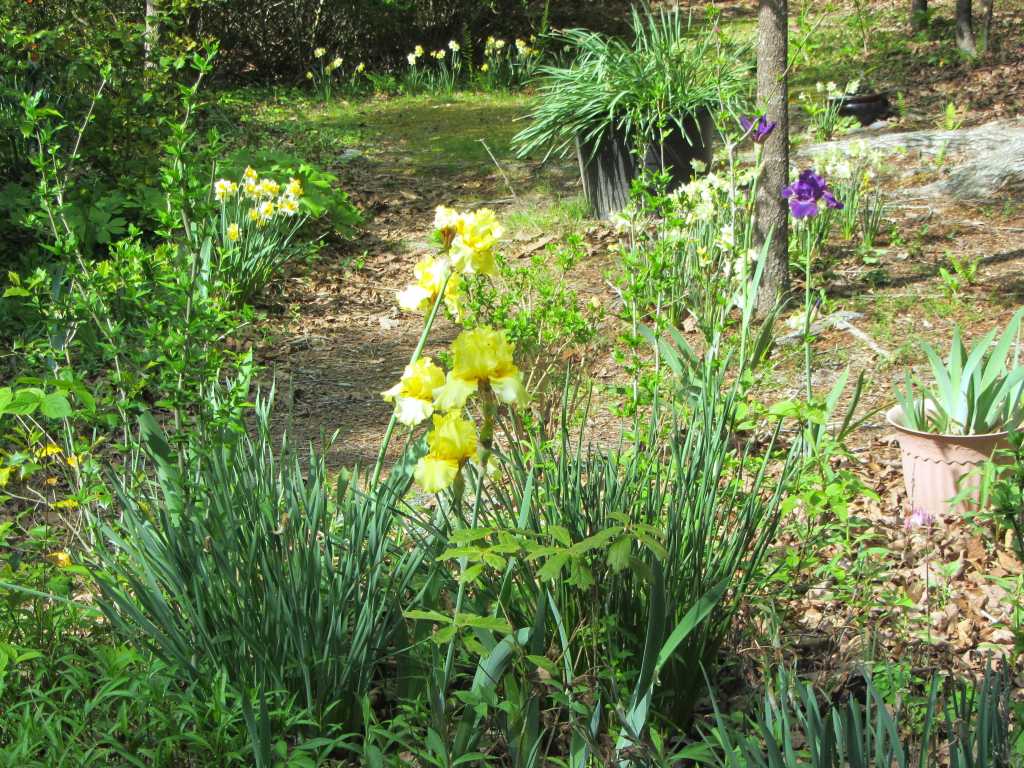
This is the “long view” across an area of the garden where I’ve been investing a lot of effort over the past year, beneath the shade of a great, double trunked swamp chestnut oak. It is the hub of life and wildlife in this part of the garden. The Christmas ferns that I planted a year ago are emerging, along with other ferns. Iris and the daffodils I planted this past January are blooming together. The ugly pot with Iris, right of this photo, was finally gifted to a neighbor yesterday who wanted more Iris for his yard. 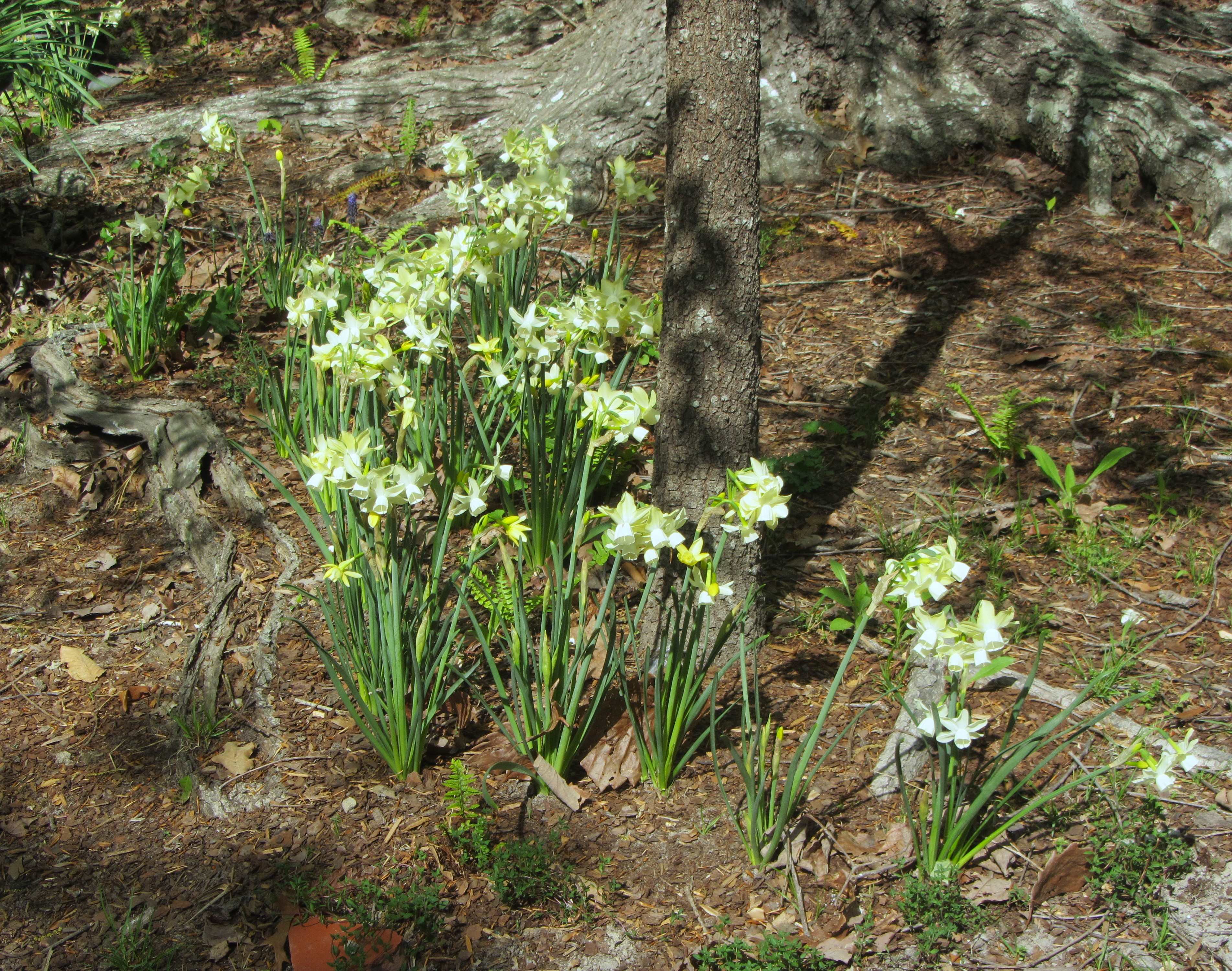
Late April finds our garden alive with birds, rabbits, squirrels butterflies, bees, and the occasional deer. The air is filled with birdsong from before dawn until dark, and with the hootings of owls in the night. The air is soft and fragrant from so many flowers in bloom all at once.
Our garden is a continuous ‘work in progress’ with plants coming and going, animals coming and going, and vines and some unwanted, but very persistent plants coming and going! It is never perfect enough to open to visitors who aren’t already friends. And this is one of my favorite times of year to enjoy its exuberance!
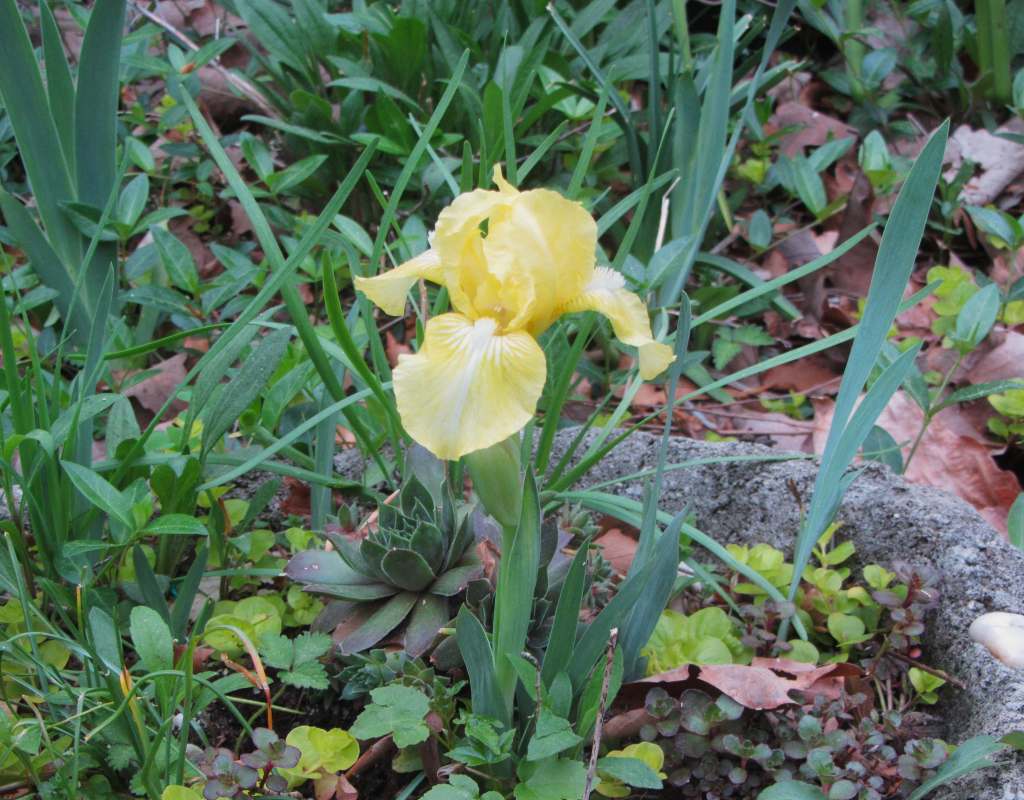
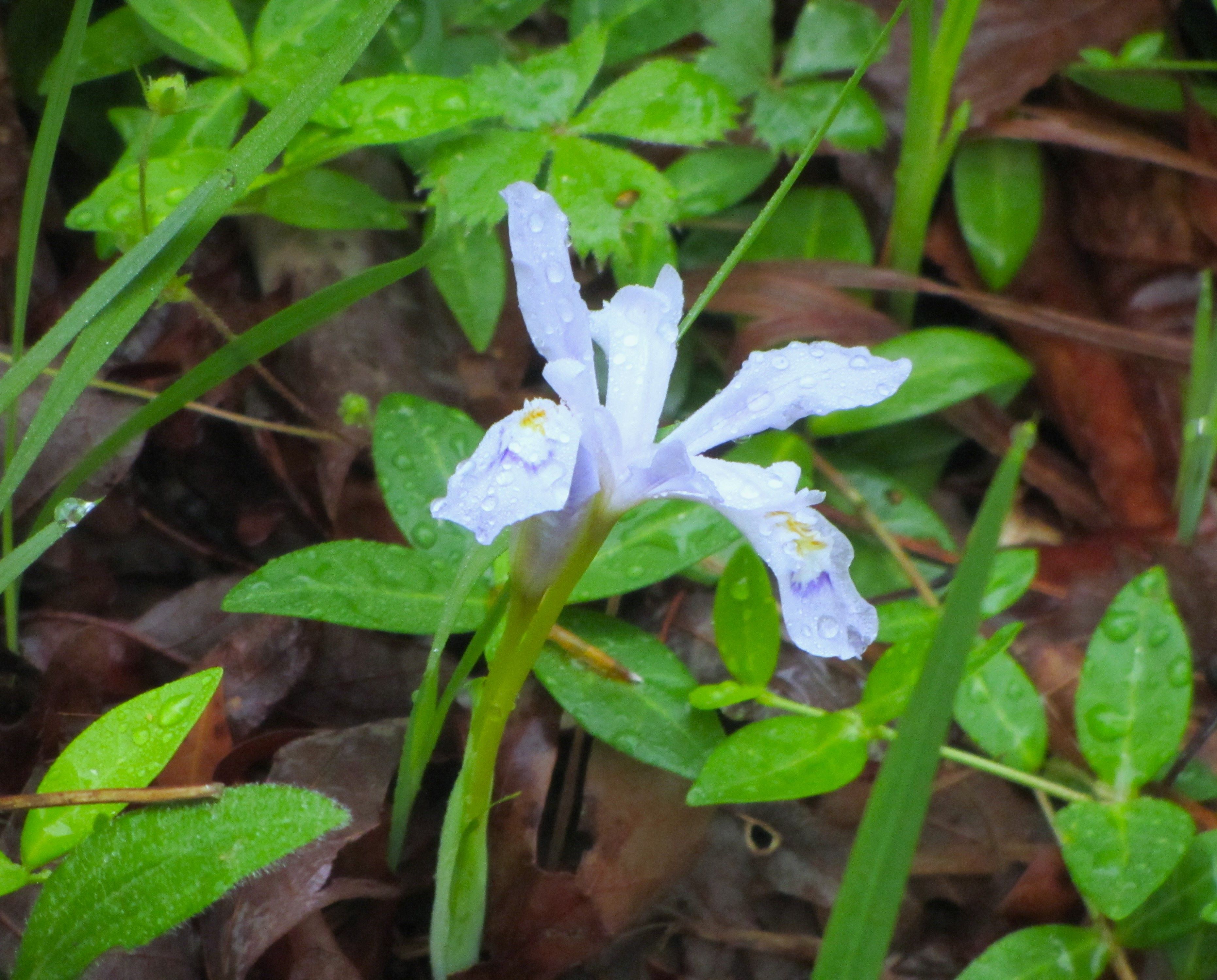
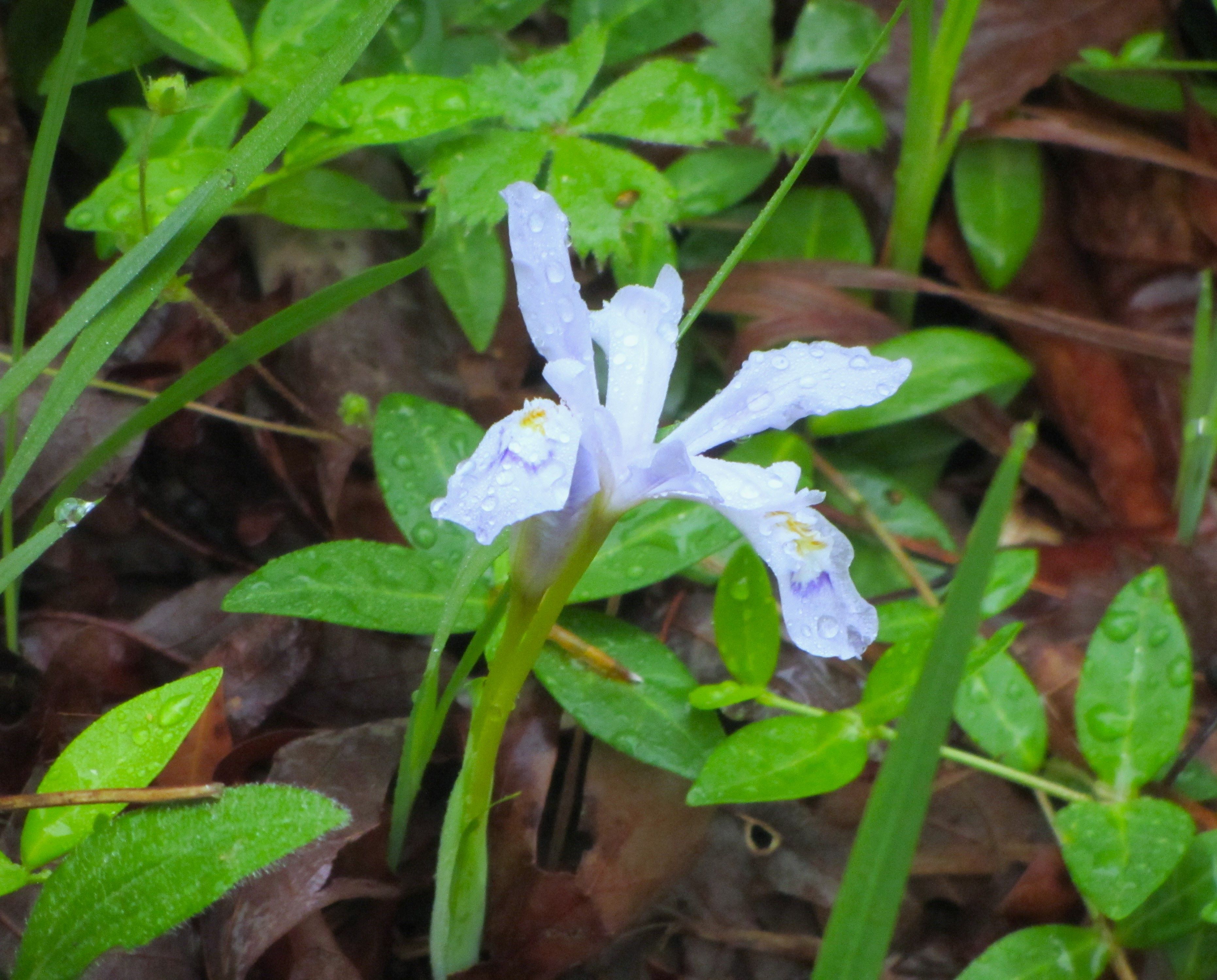
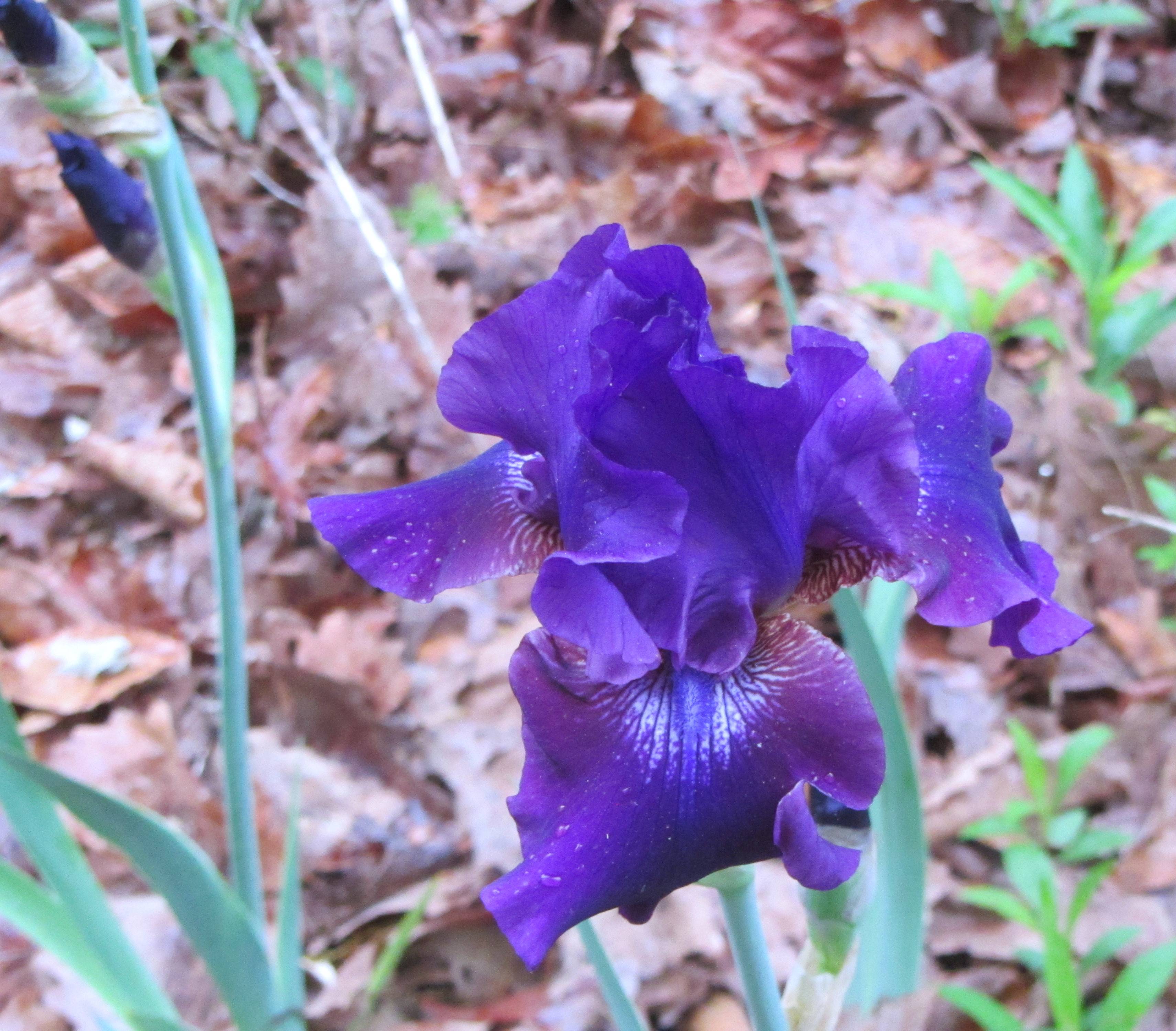
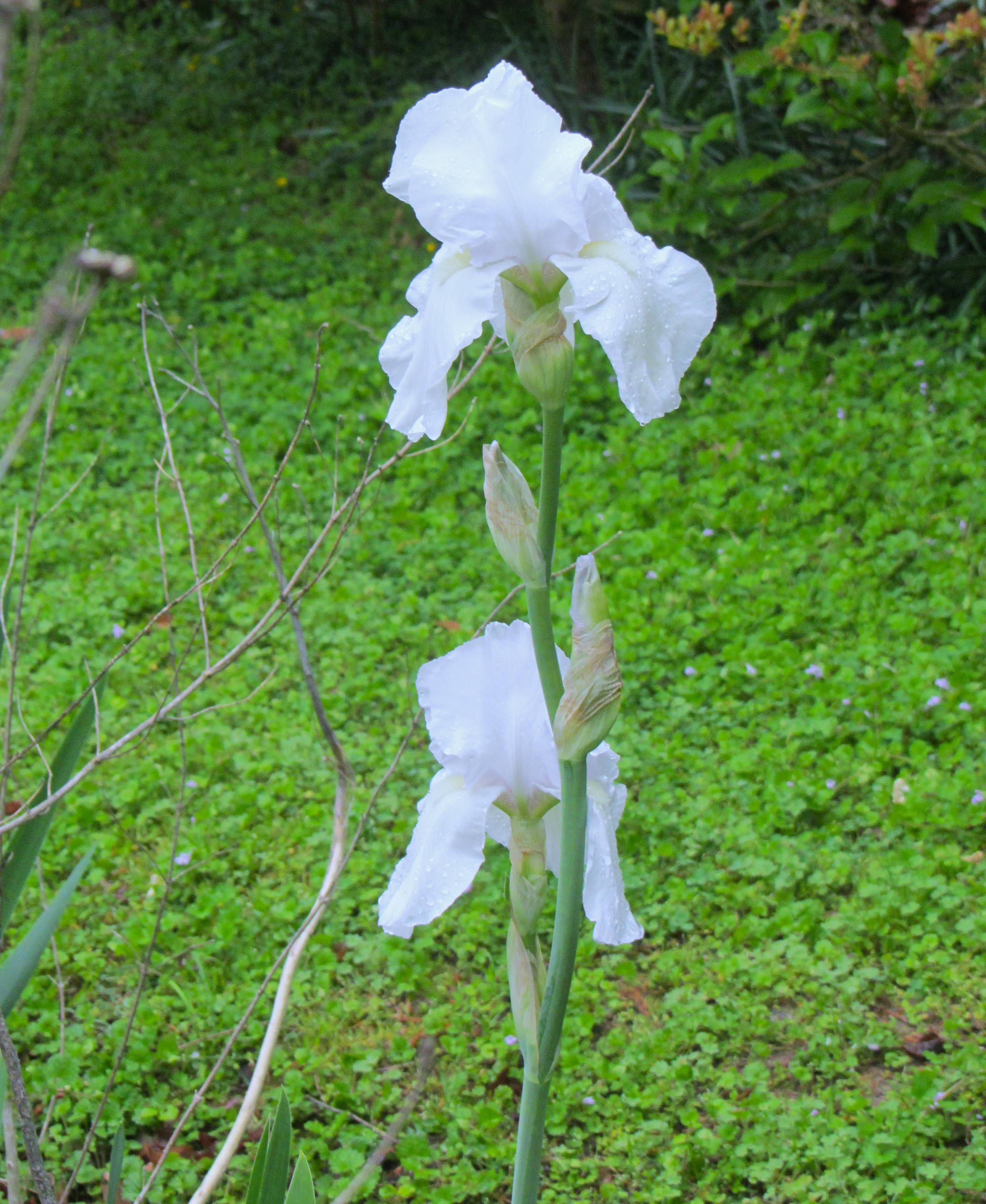
I missed sharing photos last Saturday, but little had really changed from the week before. Very warm weather, and more rain this past week, has accelerated the rate of growth over these past few days so the garden is alive with emerging Iris and blooming trees.
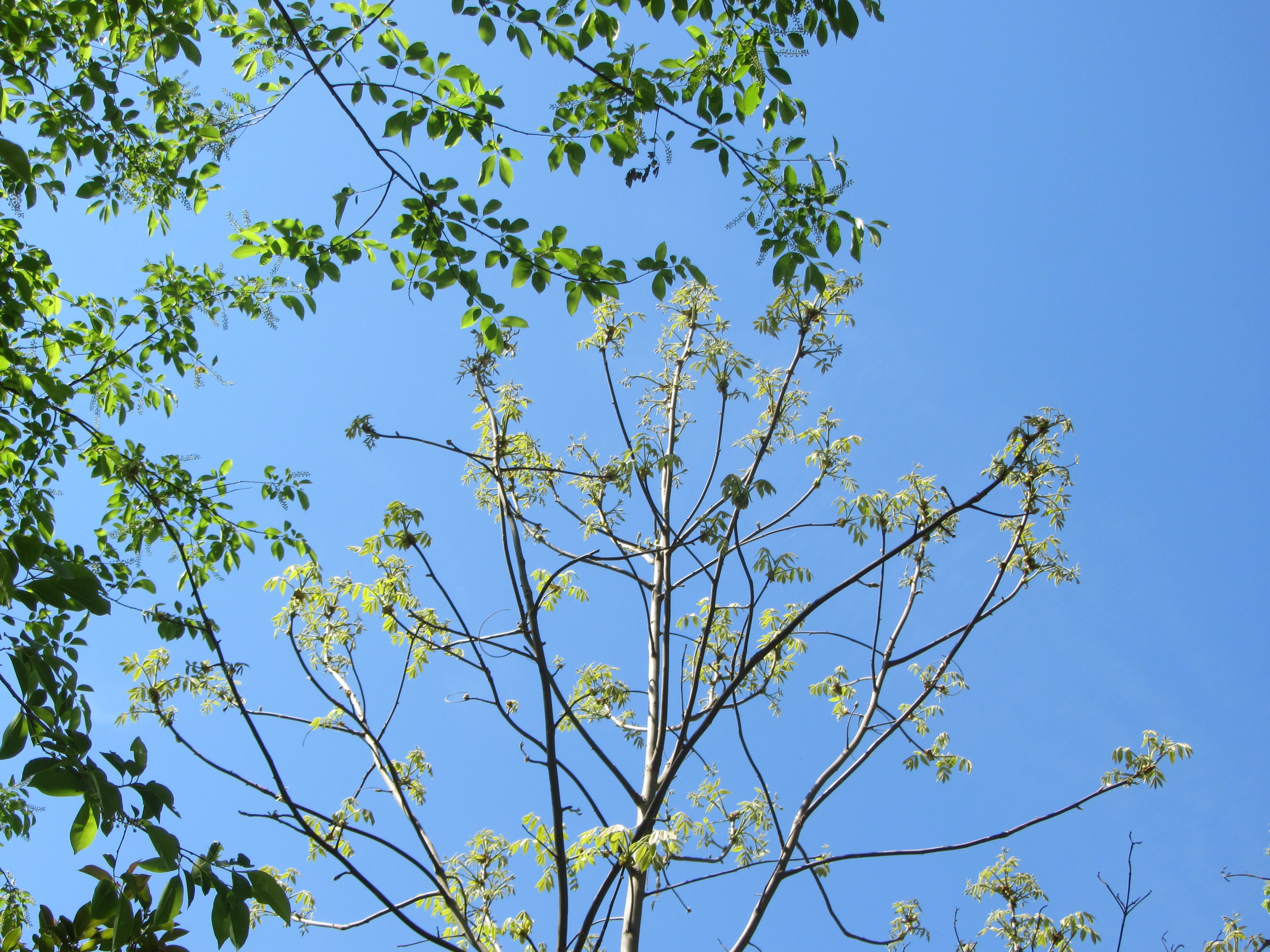
The third photo in the first series of photos, at top, shows the scene above the path, with a black cherry just beginning to bloom alongside a hickory tree with leaves just unfolding on the right. I have noticed black cherry trees beginning to bloom all around our area. One of our keystone native species here, it supports hundreds of species of butterflies and moths.
There is a ‘mystery tree’ that volunteered on the other side of our forest garden, right beside the old stump which still holds a pot of flowers and anchors a planting bed. I have been letting it grow, watching it with interest, and hoping it will bloom. It seemed to have long thorns along its branches by late last summer, and so I wondered whether it might be a native plum. Its bark screams ‘Prunus.’ Finally, when its leaves emerged this spring, I was able to match them to the leaves on the older, blooming black cherry tree, also a volunteer. Once the mystery tree finally blooms I will be able to call it a black cherry with 100% confidence. I hope it is a black cherry, as they attract so much wildlife to their long racemes of white spring flowers that are followed by small, but edible black cherries.
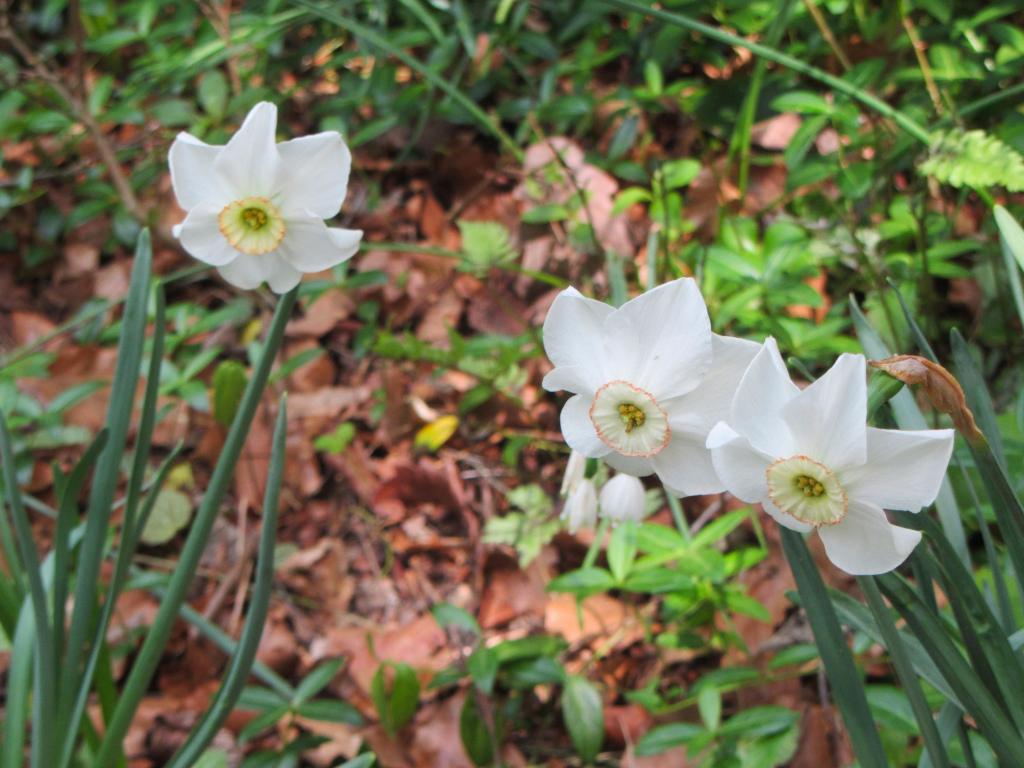
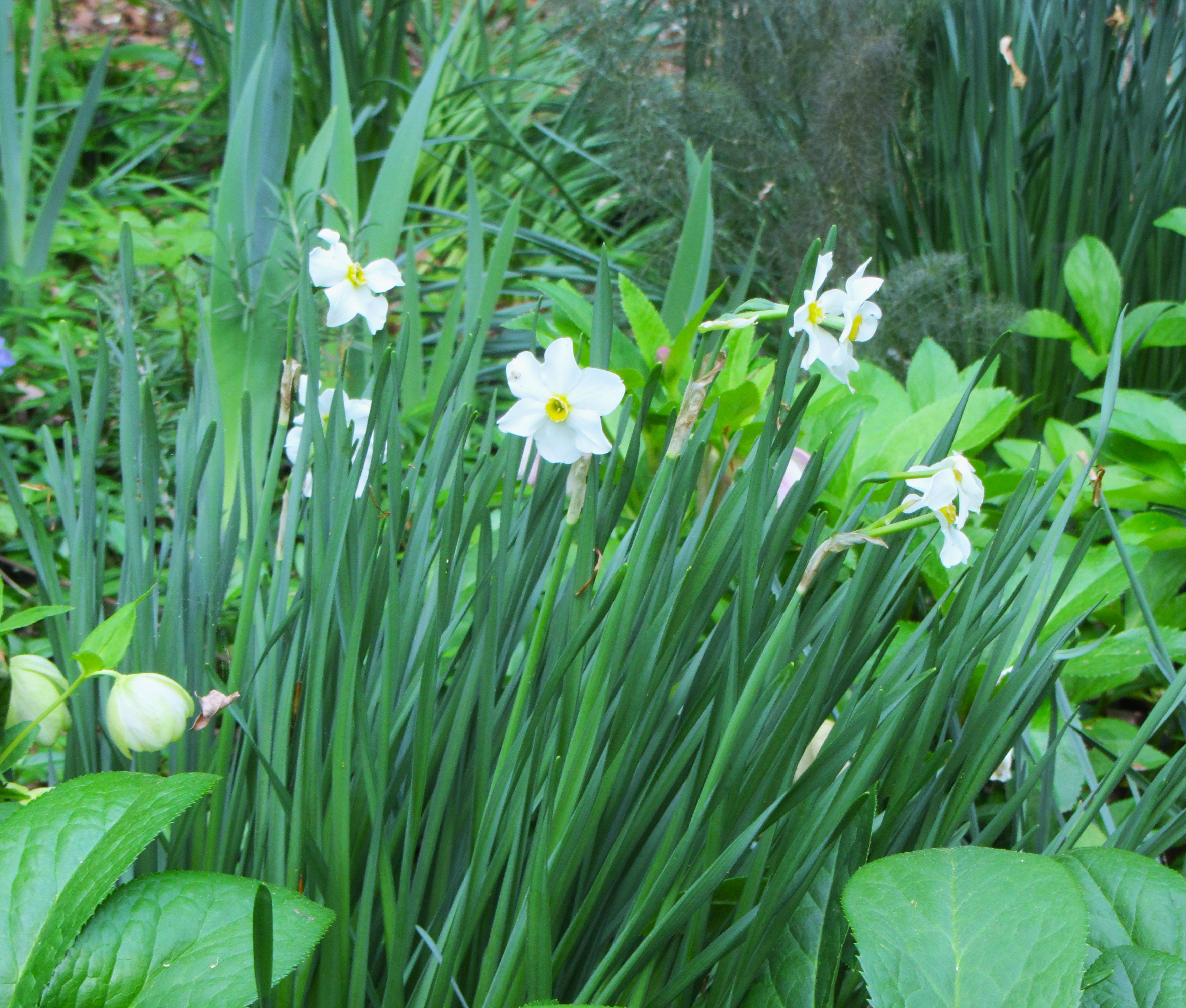
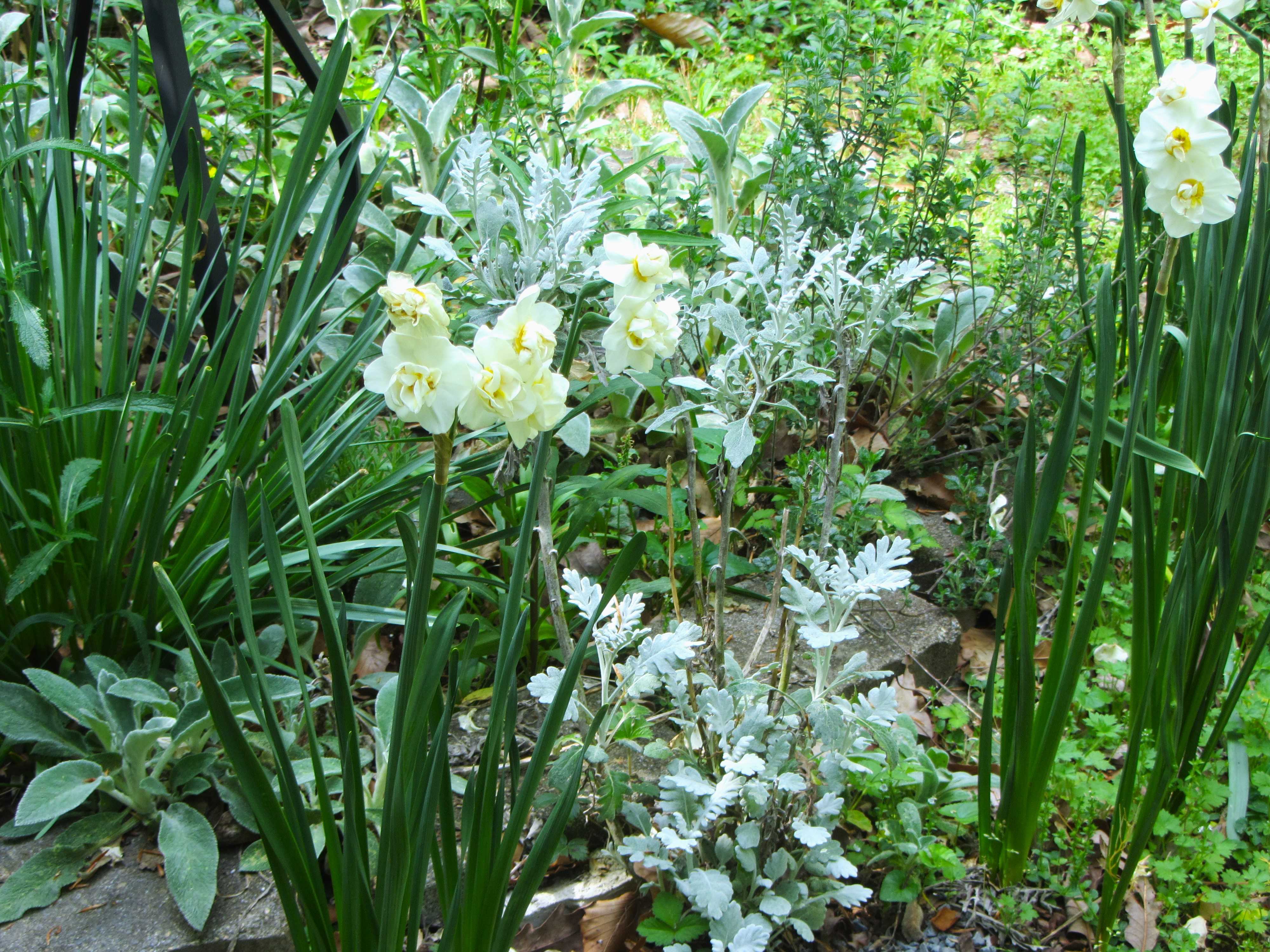
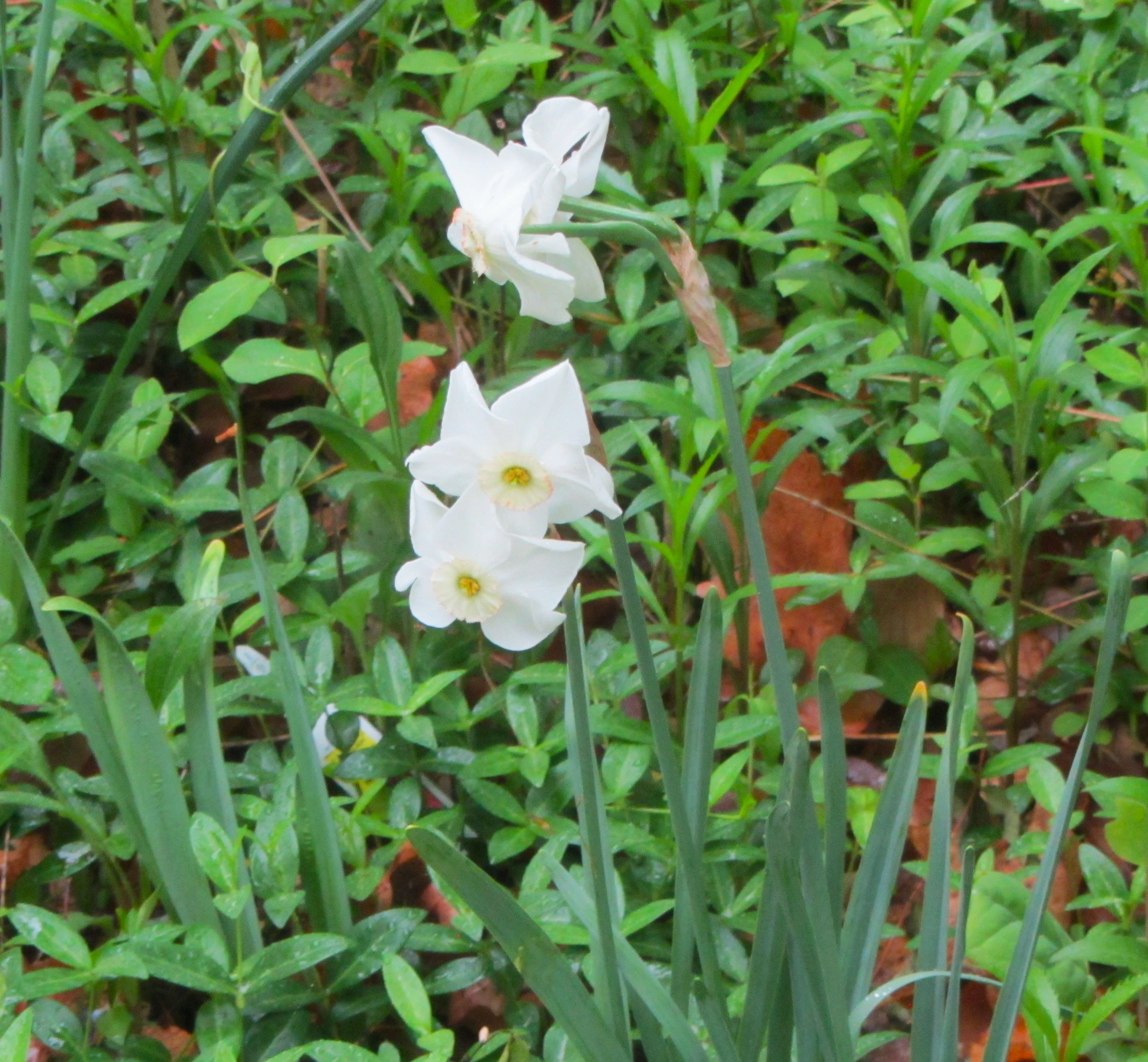
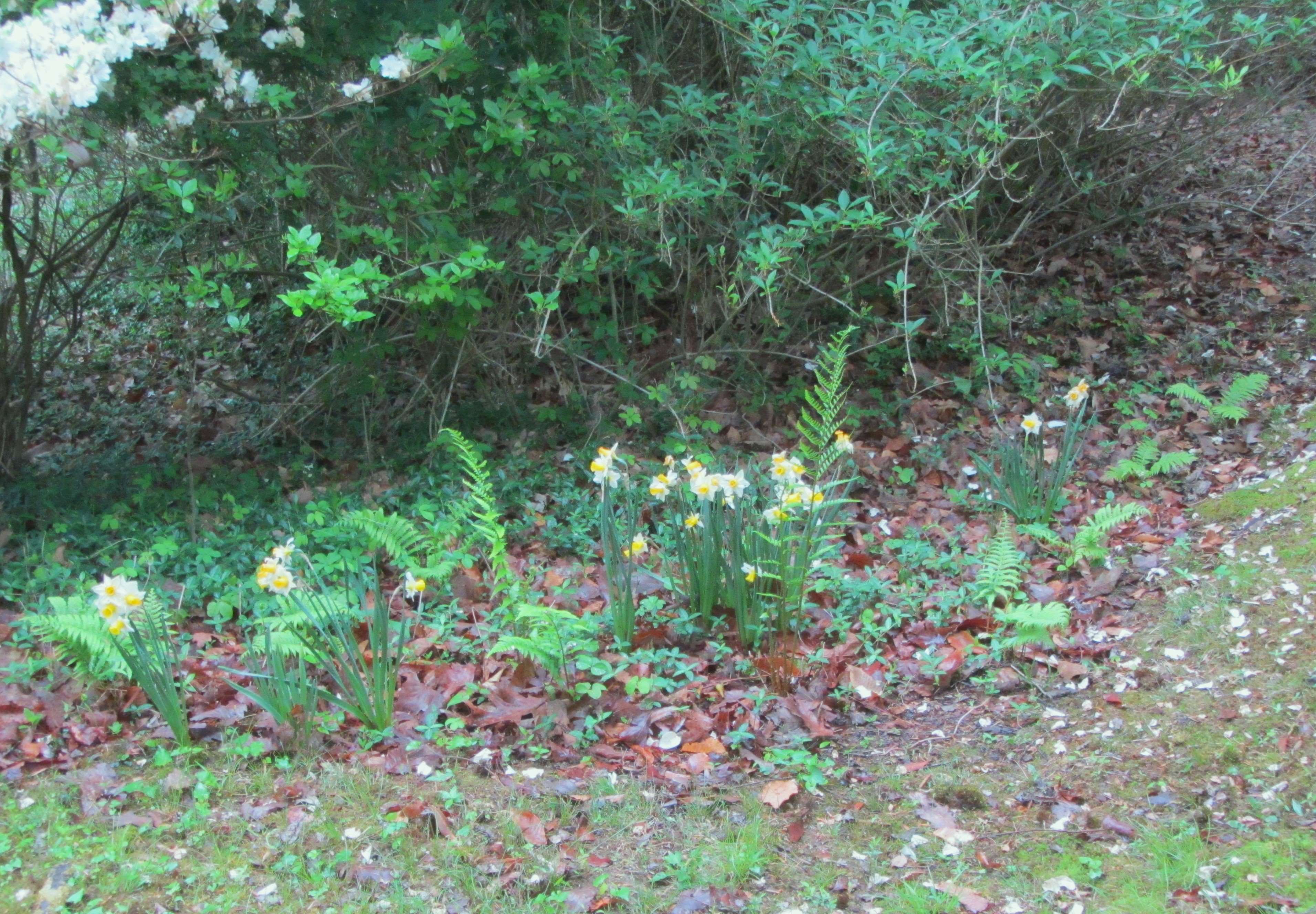
I began trying to plant the area under the swamp chestnut oak, among its roots, in the autumn of 2022, with mixed success. Dry shade is a tough place to plant. Dry shade during a drought, with lots of thirsty animals wandering about is even tougher. I was amazed to find leaves rarely ever grazed in a normal season grazed by animals during the drought. Even the new Christmas ferns struggled last summer, and the Heuchera, violets, and even daffodil bulbs I had planted previously struggled.
I have been adding fine bark mulch to the area frequently, treating it with animal repellents, and keeping it watered. Each surviving Christmas fern feels like a little victory. This spring I have been planting thyme around the previous plantings in hopes that its strong fragrance will discourage some of the grazing. A single Heuchera emerged from last year’s planting. It has survived for three weeks already, and so I am ready to plant more little Heuchera plugs and more thyme in the coming days.
I have been moving plants out of winter storage this week, too. Tony Tomeo sent me a wonderful gift box filled with various rhizomes that have been growing on in my garage and basement these past few months. I have been bringing those outside a little at a time, along with tender Begonias and ferns. Tony’s box included 25 starts of Canna ‘Australia,’ a beautiful variety with burgundy leaves and orange flowers. Tony has kindly explained that the rhizomes of all Canna are edible, and I think he told me that the leaves are edible, too, much like the leaves of a banana tree.
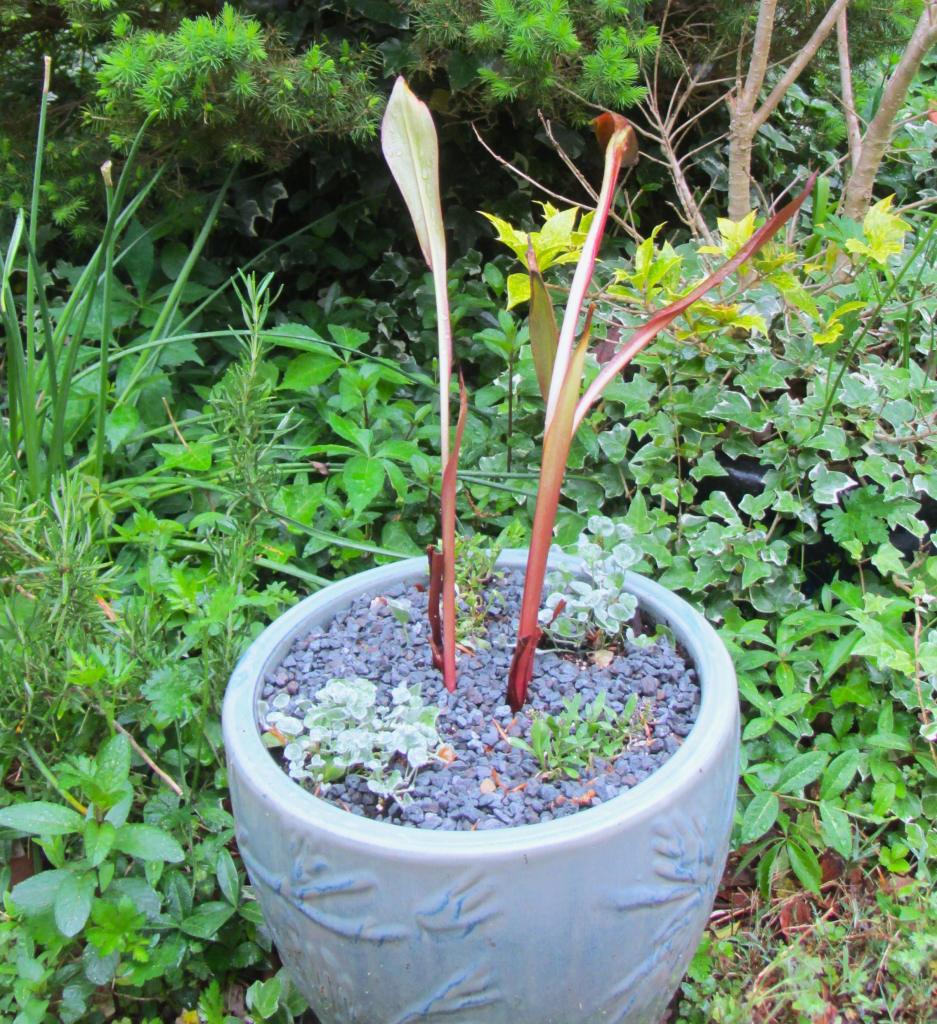
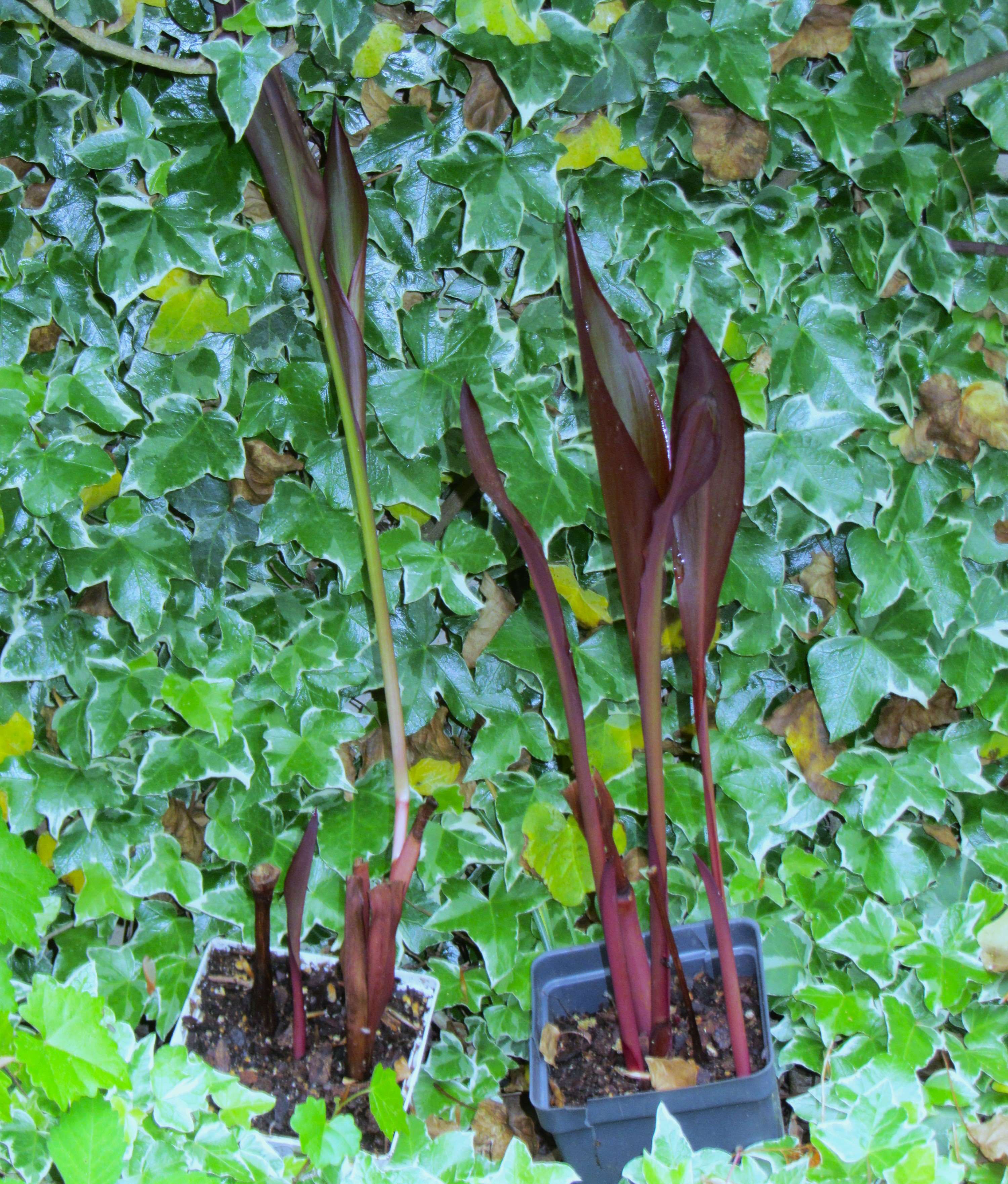
I brought out three pots this week for my own use, and have shared more than a dozen pots of the starts with neighborhood friends, who were all delighted to share in the bounty. I still have some more to bring out and plant this coming week. The largest, nicest clump went into a large container along with some Dichondra ‘Silver Falls,’ some Allysum, and some Caladium tubers. It has been in bright light and so looks a little faded at the moment. It will recover with new growth soon. The two other parts have rested in the shade and have better color.
I’m still planting ferns, herbs, and now a few perennial Salvias and foliage plants as I watch for what is emerging. The spring planting goes a bit slowly for me as I watch to see what has survived the winter and what needs to be replaced. I’ve been delighted to watch not only the Christmas ferns emerge these past two weeks, but also to see green returning to maidenhair ferns and a few other Dryopteris in pots. It is like welcoming old friends when these perennials emerge from winter dormancy.
As I have been doing some research for a new article about hedges and hedgerows this week, I have come across a fascinating little 2018 book called, The Biophilia Effect: A Scientific and Spiritual Exploration of the Healing Bond Between Humans and Nature, by Clemens Arvay. Arvay explains, in detail, how the biochemical messages sent between plants interact with the human immune system to promote health. He cites quite a bit of research from Japanese specialists in ‘Forest Medicine’ to describe the very specific health-giving effects of breathing the breath of trees. The immune system benefits and other effects of walking and spending time in a forest last for days.
This makes me very happy to realize that the benefits of living in a yard filled with shrubs and trees, along with whatever else one may plant, has measurable, health giving benefits. We are gardening for the joy of it, and the beauty of it, but also because it helps keep us and our neighbors healthy. That is definitely taking the long view of all of the investments and efforts we love to make in our gardens!


With appreciation to Jim Stephens of Garden Ruminations, who
hosts Six on Saturday each week.

 Our Forest Garden
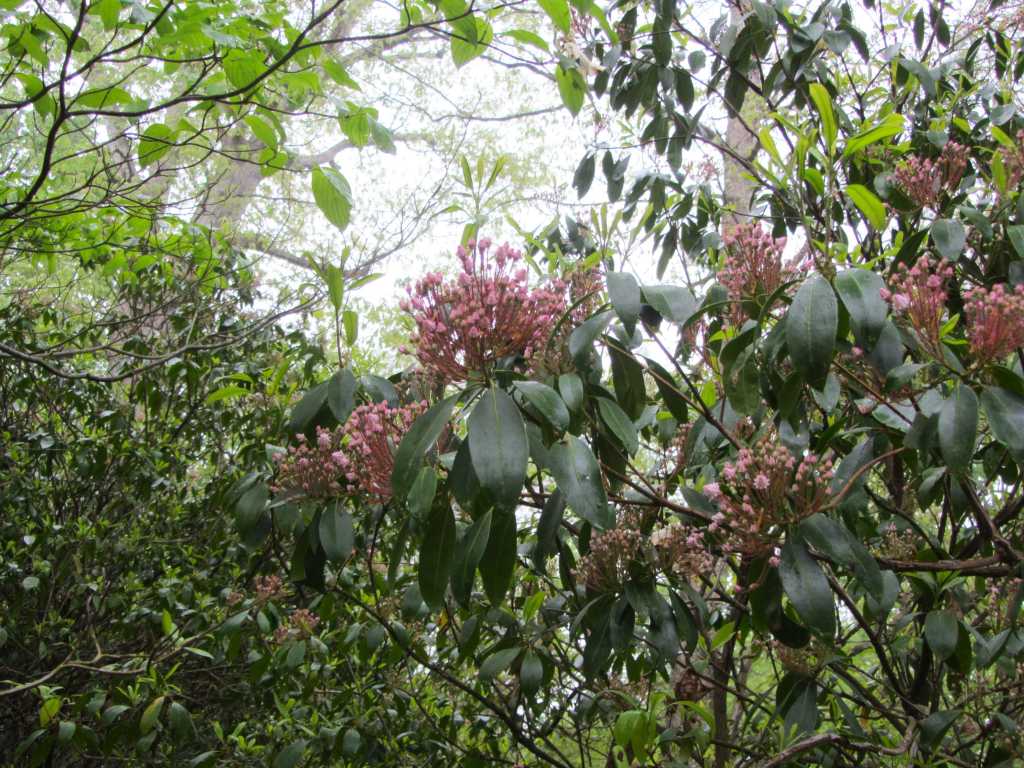
This Mountain Laurel is bigger than mine!… and with flowers right now when mine is budding. Is this the canna ‘Australia’ with this pretty red foliage? It is superb!
LikeLiked by 1 person
Yes, the pretty red foliage is the Canna Australia: https://brentandbeckysbulbs.com/product/canna-australia-indian-shot/
These mountain laurels were probably growing here already when the neighborhood was developed. They are likely about 60 years old or more. The buds just developed so fast this year! But we had record summer-like heat last week here, too. There is nothing like several days of record heat- more than 20F above average- to speed things along. Now we are back in a cool stretch so I hope we get to really enjoy the Mountain Laurel flowers, and other flowering shrubs, for a week or two.
LikeLiked by 1 person
This canna will be gorgeous !
LikeLiked by 1 person
Are you in North America? If so, should I send you a copy? There is not much left, and this is not the best time to send them, but it is possible.
LikeLiked by 1 person
Sadly no. France is too far away. Seeds are the only way… but I suppose I could find some online from a French supplier. Thanks anyway.
LikeLiked by 2 people
‘Australia’ is almost always sterile, and the few seed that it generates are not true to type. The Canna seed that I got is for relatively boring types that I grow as vegetables.
LikeLiked by 2 people
Tony, Fred is in France-
LikeLiked by 1 person
I was not certain if ‘French’ necessarily is in France.
LikeLiked by 1 person
Good point!
LikeLiked by 1 person
I love that nurturing plants is good for us and the planet.
LikeLiked by 1 person
Although just as edible as other cultivars, ‘Australia’ develops slender rhizomes that are difficult to peel. Should I send a few rhizomes of a cultivar that is more commonly grown as a vegetable? It is not very pretty, with more ribbony flowers, and can get to be annoyingly aggressive.
LikeLike
I would say, ‘yes,’ if we didn’t have voles wanting to eat those tasty rhizomes! I have lost so many Cannas to voles over the years. Right now I’m trying to figure out and where how to plant the beautiful plants you have already sent in places where the voles/deer/rabbits/squirrels won’t destroy them before they have a chance to grow. I probably won’t eat them, though it is cool to know that I could! ❤
LikeLiked by 1 person