Making a garden teaches us many things. Some things we can learn relatively quickly and easily. Others take many seasons to master. Perhaps one of the most challenging things to learn, and most important things to understand, is how to navigate sun and shadow.
Our plants need sunlight to grow and bloom, but too much sunlight and too little moisture will kill many plants. Too little sun and they will grow spindly with too few flowers and fruits. It takes experience to know how to site each plant so it gets the sunlight it needs and the shade it requires to survive through until fall.
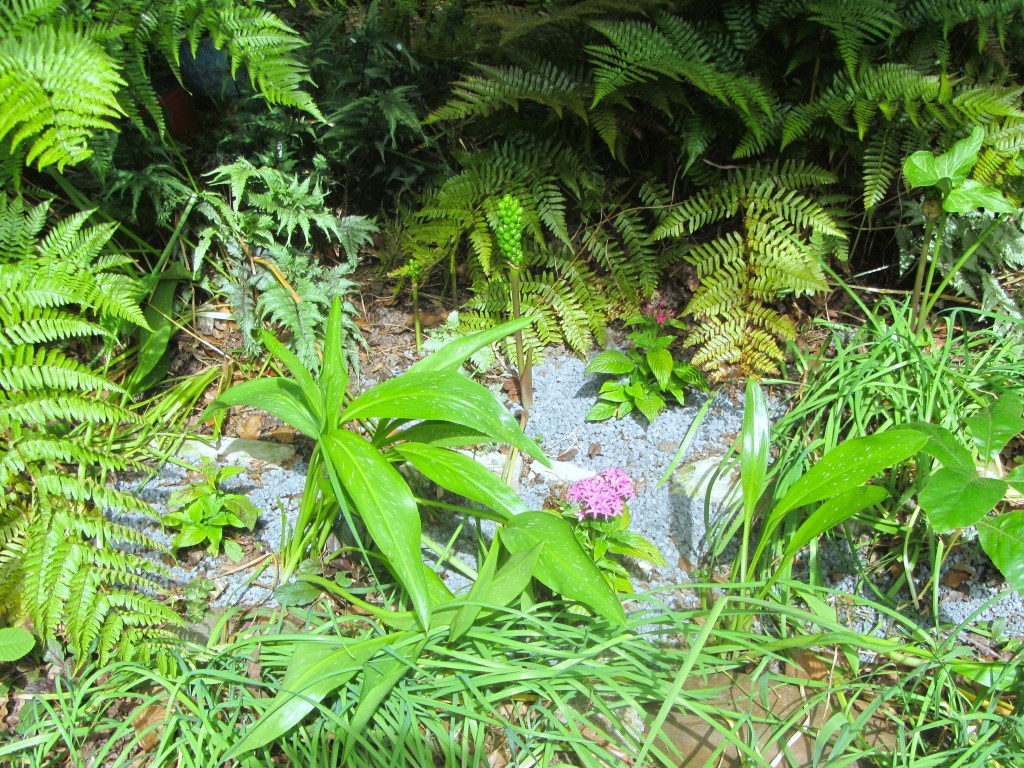
Now that the daffodils have died down and the calla lilies are up, I cleaned up this area between the ferns and garlic chives and planted annual Pentas. This area gets shade from the crape myrtle trees in the afternoon but is bathed in bright sunshine all morning. The grey mulch is Permatil, a product like gravel that is made from expanded slate which serves as a good soil amendment and mulch. 

By June, the sun here is hot and strong. I felt it burning my foot through both boot and sock while planting the other day. I want to begin my work in the garden soon past sunrise and finish by mid-morning. It is too hot to work in the full sun once it rises above the trees. This is an oppressive sun, hotter and more penetrating than the sun felt when I was a child. We retreat to the shade under the canopy of trees to tend the mosses and ferns and water from the shadows.
Just as the sun grows stronger with each week in spring, and later retreats lower on the horizon again in autumn, so we also have seasons in our lives. Navigating how much to stand in the sun, and when to retreat to the cool and more restful shade, and when to use the restorative powers of the night, helps us to survive the seasons of our own growth as well. The only constant is change, and constant change keeps us vital and alert. Gardens teach us that it may require many cycles of the seasons for a planting to mature.
What starts out as puny and unimpressive eventually grows into its potential. It takes time and patience and mindful tending, remembering to prune and water and feed and admire. You can’t rush the process. And sometimes those puny starts fail and we must try something else in their place.
This is the second summer that I have concentrated all of my resources back into my own garden. Last summer was hot and dry. It was a struggle to water enough to keep many plants alive, and thirsty animals ate a few of them. Some areas had run amok from my neglect in recent years. I have had to sort them out, clean them up, and plant anew. Others, that I thought were lost, have surprised me. They have leafed out, bloomed, survived.
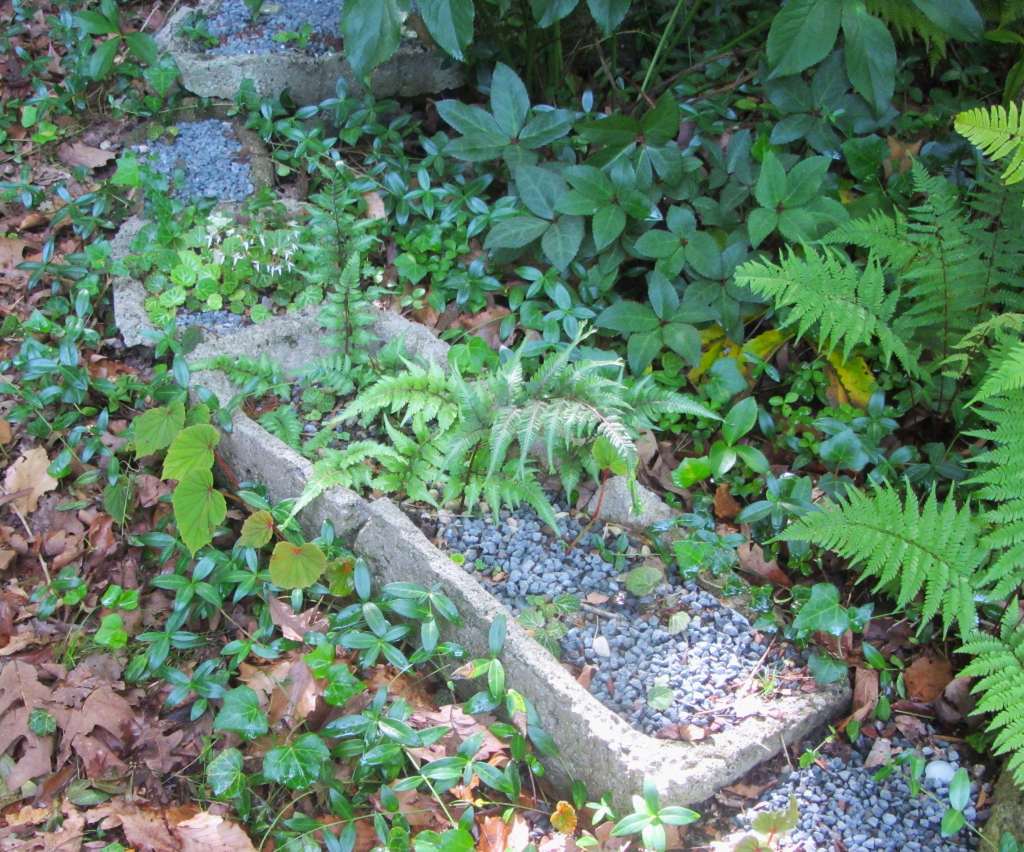
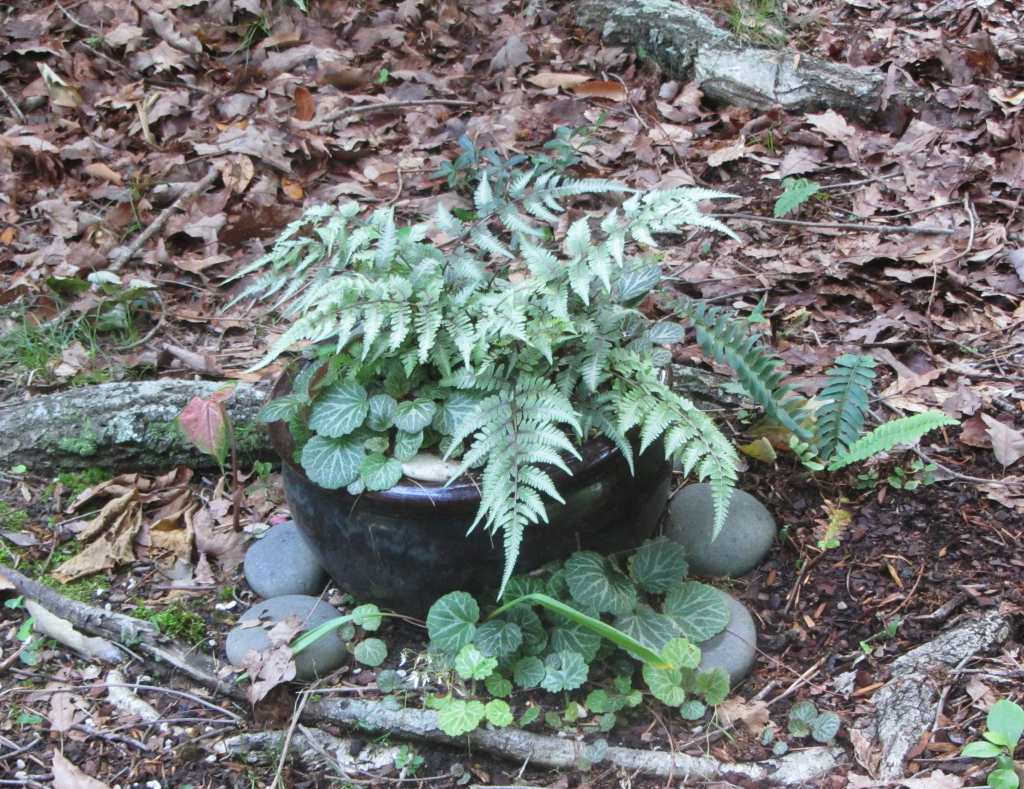
I made this planting area with hypertufa containers planted with ferns, Caladiums, strawberry begonias and ferns in 2014. it has gotten very overgrown with vines in recent years and gets more shade now. Some of the containers have broken and I’ve not given it much attention lately. Now that I’ve cleaned it up, renewed the soil and planted Caladium bulbs, I have high hopes that it will be beautiful again this summer. 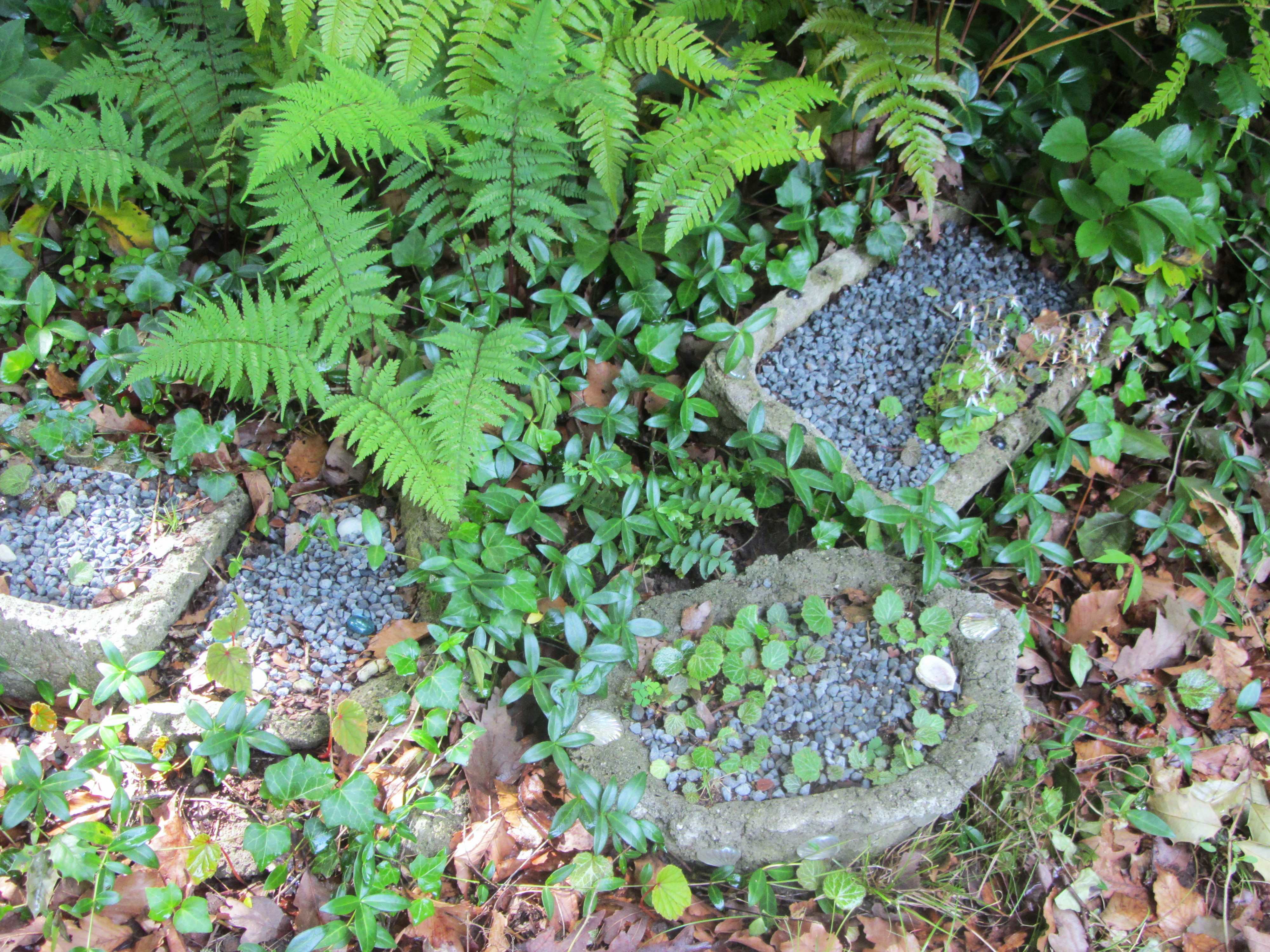
It has been a busy time these past few weeks of bringing the pots and baskets back out into the garden, trimming and feeding the tropical plants who overwintered indoors, planting the Caladium bulbs I stored last winter, and planting the ferns and flowers I have bought this spring. Success is the best fuel to feed enthusiasm. Success, and a little cooperation from the weather. We have been blessed with almost enough rain and some lovely cool days. We finally have a good start on the season ahead.
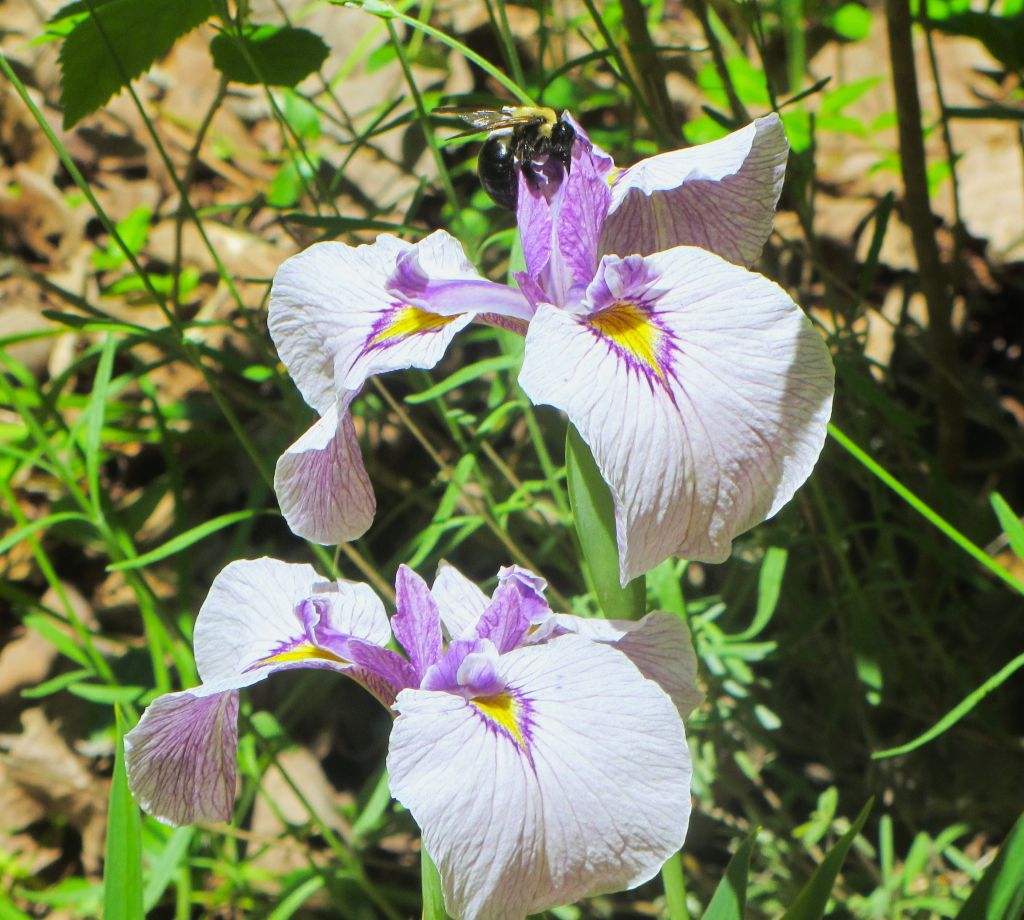
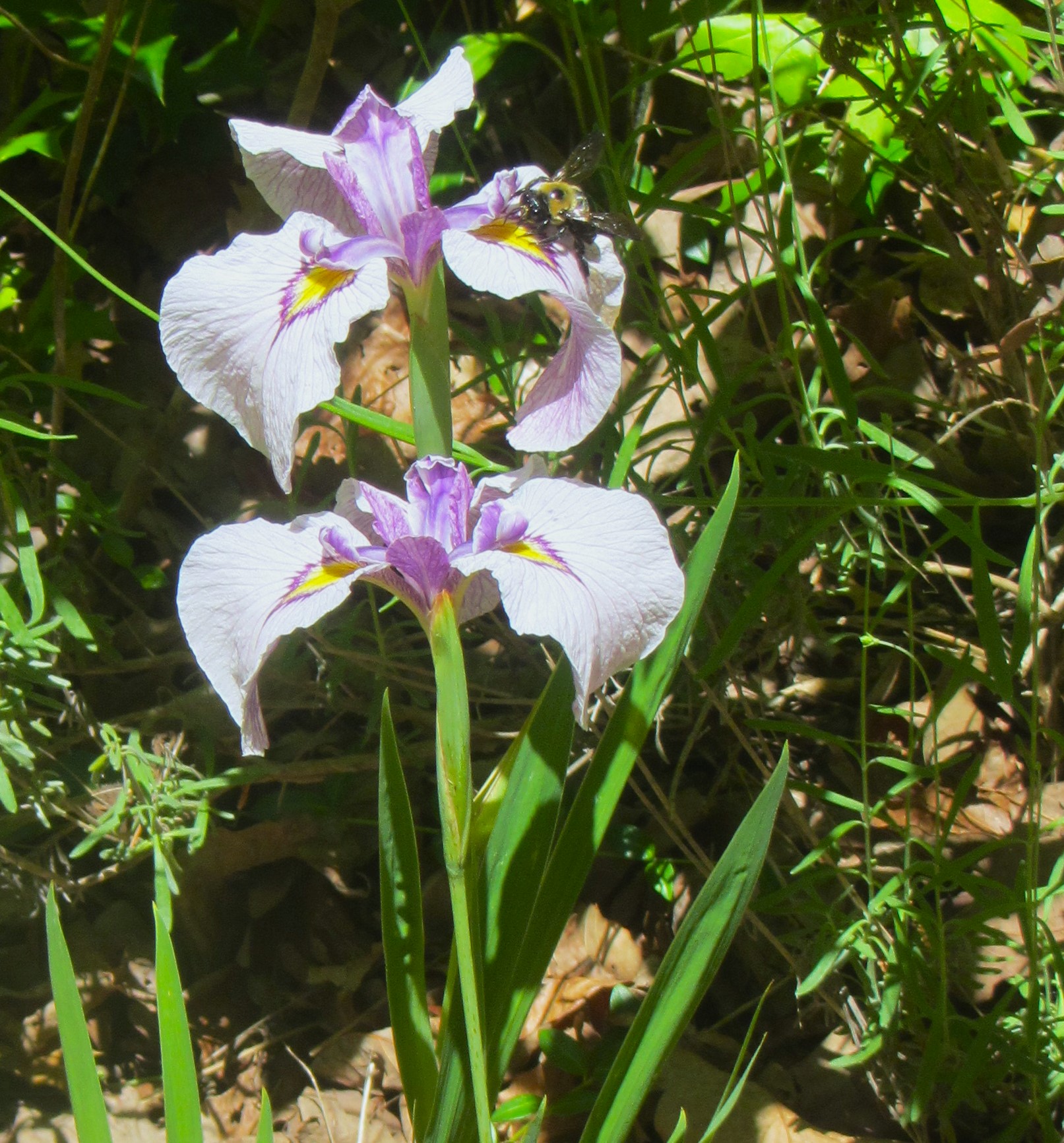
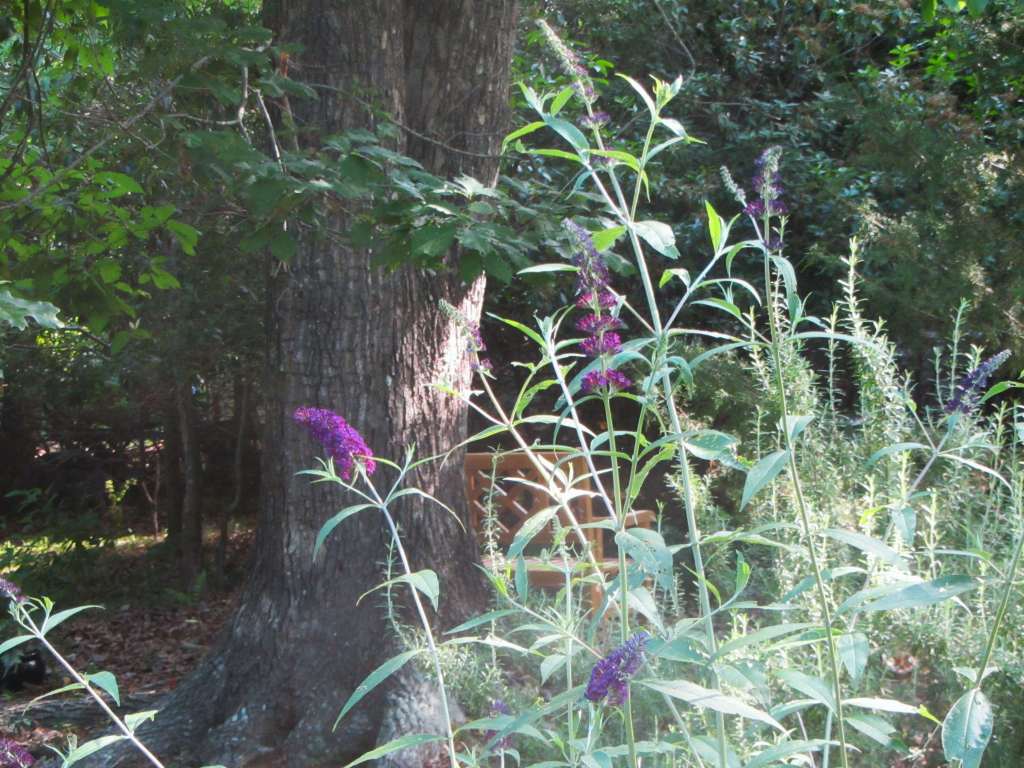
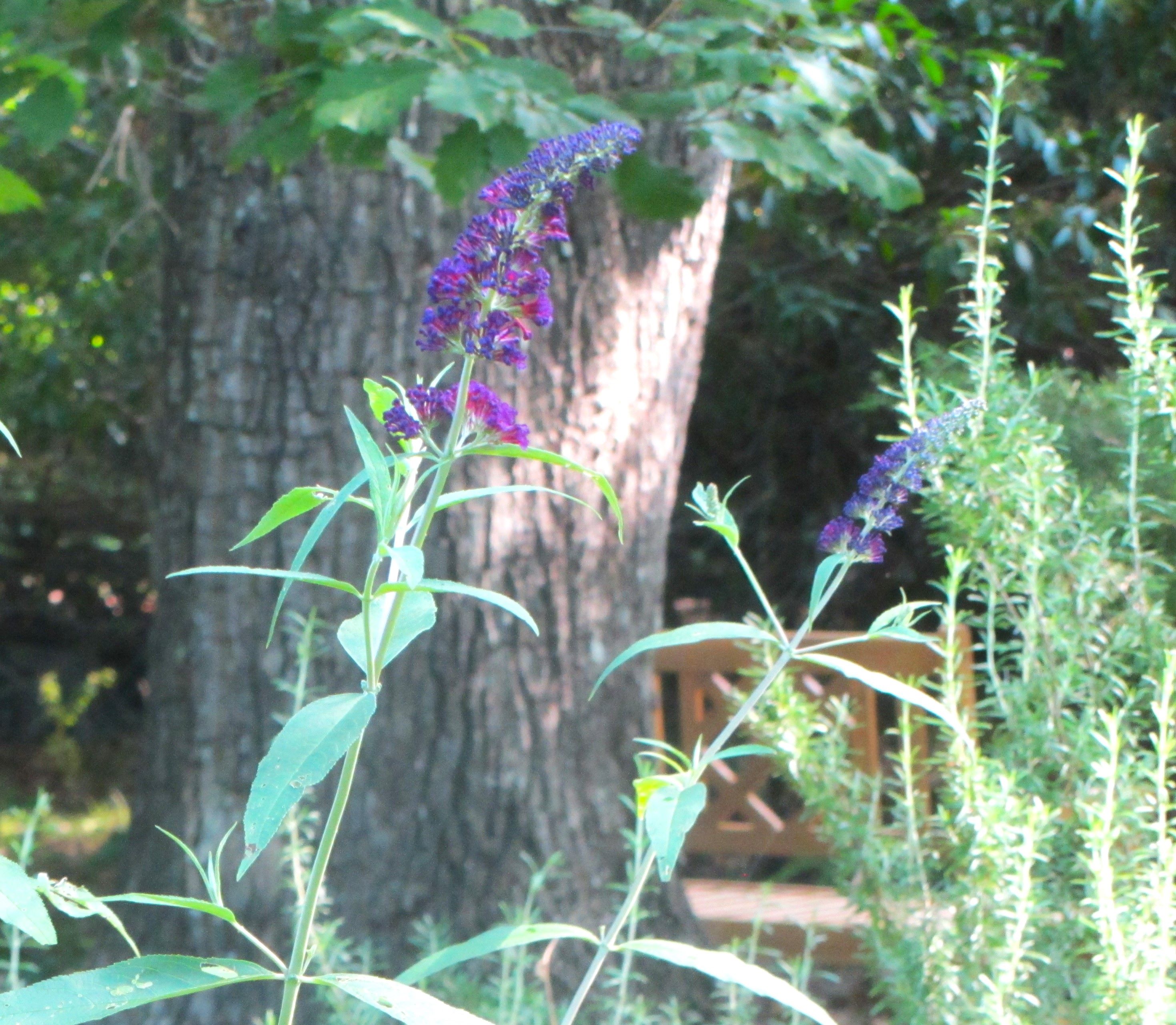
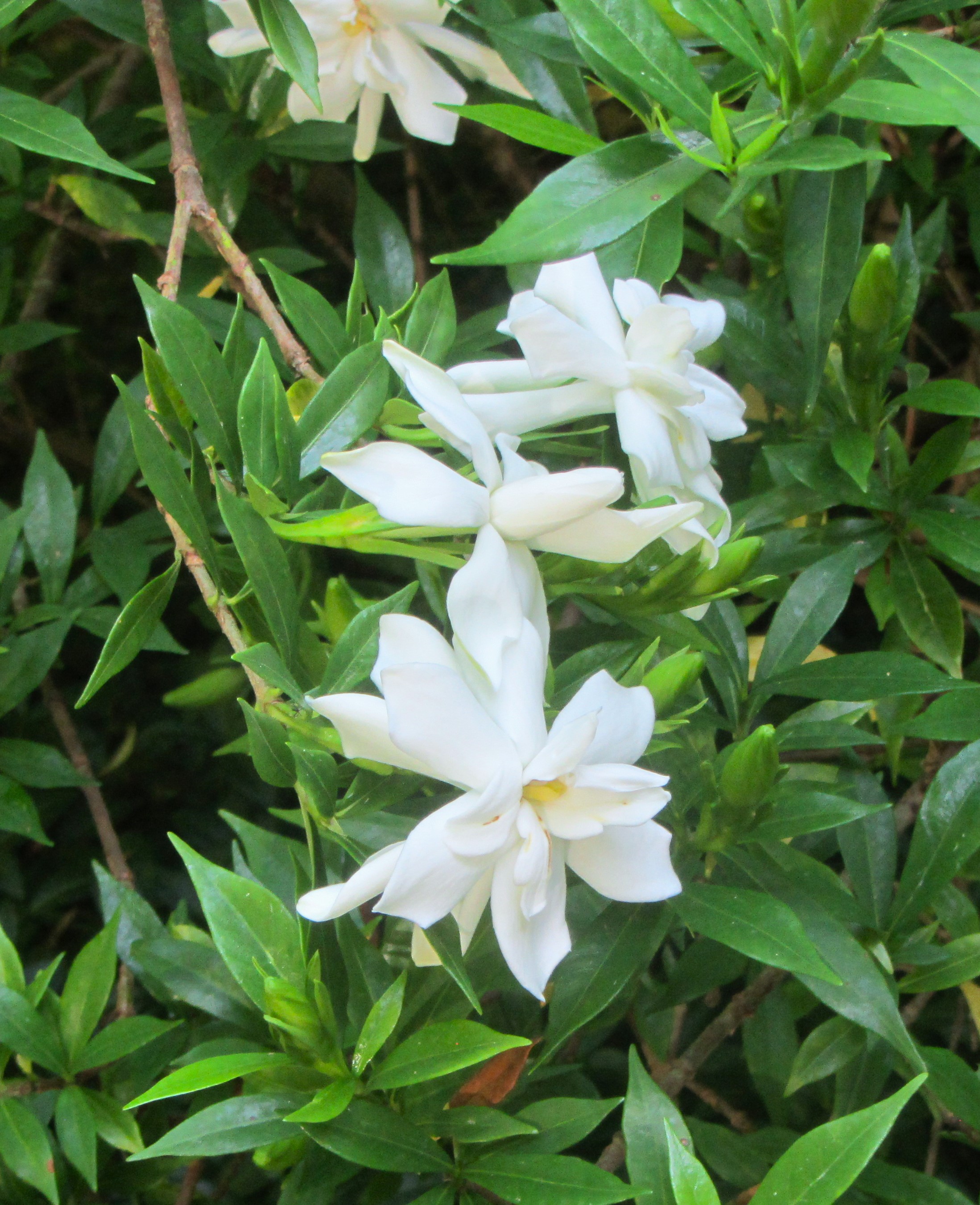
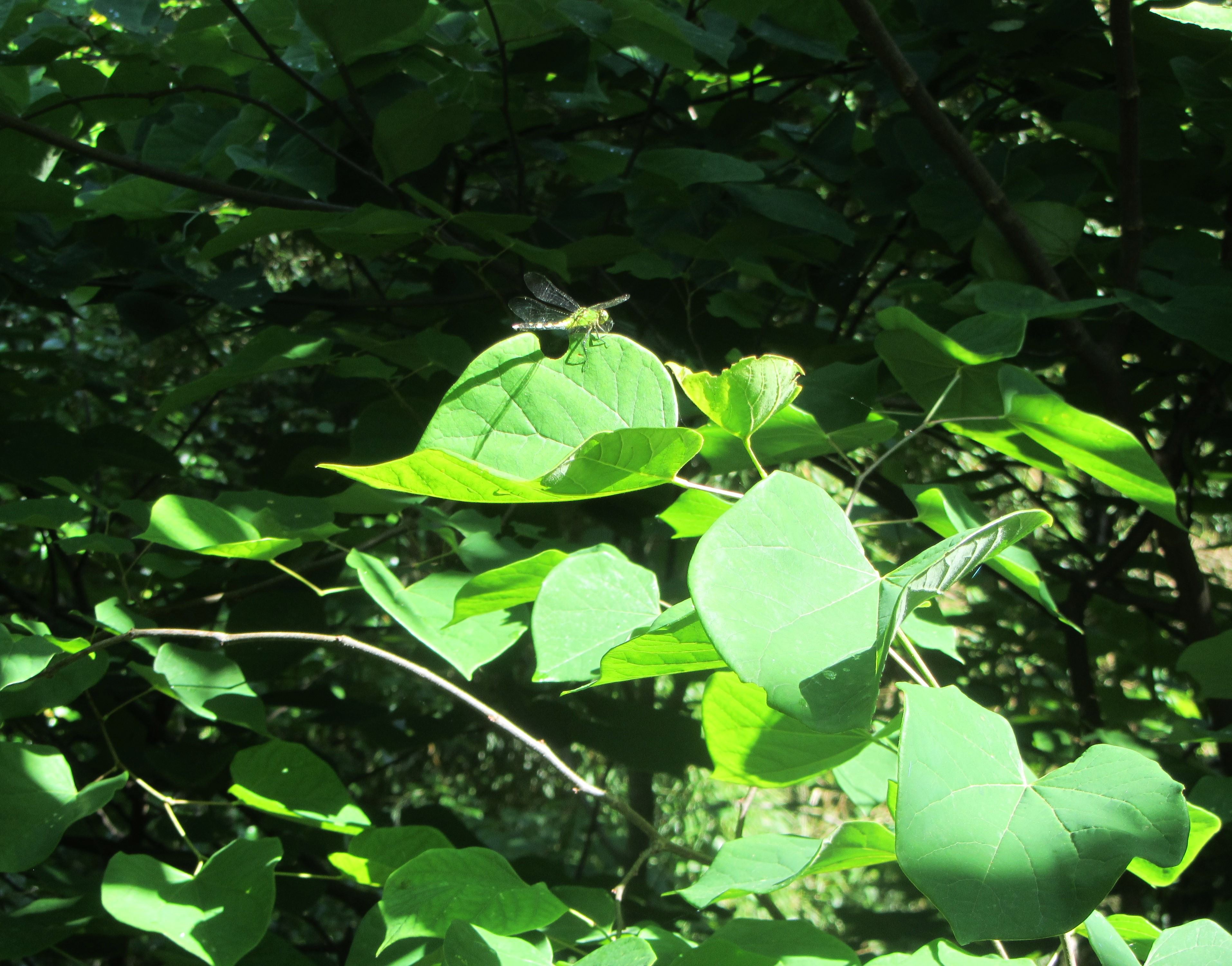
The hummingbirds showed up, finally, in late May. We’re finding butterflies and dragonflies, cicadas and bees. As we approach mid-summer, the days grow longer and hotter. The sun is working its magic to coax flowers from Hydrangeas and Gardenias, Buddleia and crape myrtle, Clematis and lilies.
The garden is alive and in bloom. We remember why we make the effort, and watch to see what beauty will greet us with each new day.

With appreciation to Jim Stephens of Garden Ruminations, who
hosts Six on Saturday each week.

 Our Forest Garden
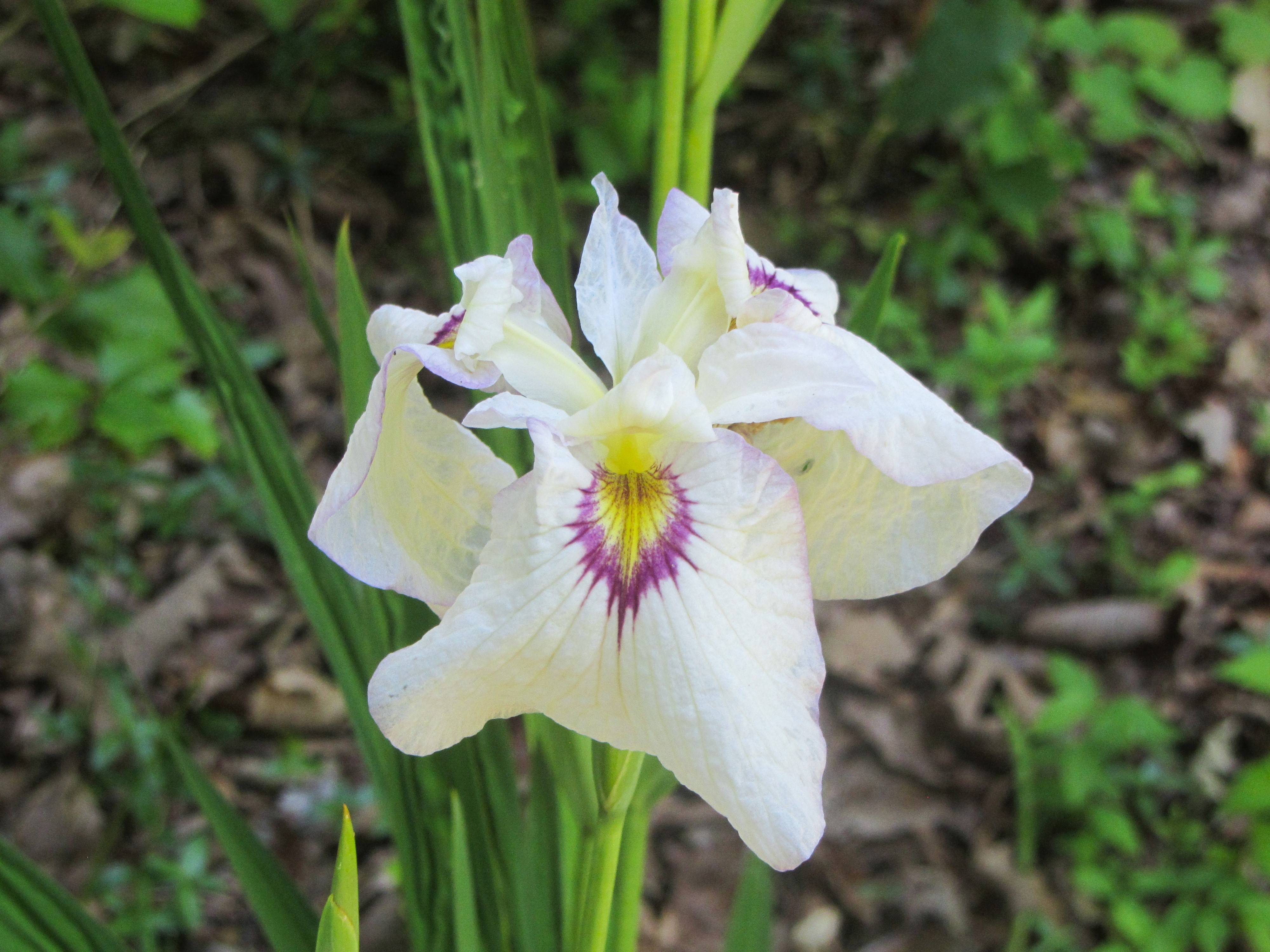
Permatill is interesting because I don’t know it here in France. I’m going to google about it because it matches my soil type and need mulch. Superb irises!
LikeLiked by 1 person
This is a different Permatil than I purchased years ago, from Espoma. That may have been made from clay, and this from slate. But products are endlessly useful. I bought a new bag of it this week simply to fill in a labyrinth of vole tunnels that have appeared in the small bit of lawn we keep in front. I don’t dig it into our clay soil, but trust it will work its way in over time. It is a great mulch/ground cover, however.
LikeLiked by 1 person
Interesting! I will look into permatill as well. It sounds like it has some great properties and would be great for my clay soil as well as to discourage the voles! Love the ferns and irises!
LikeLiked by 1 person
Thank you so much! I hope you can find permatil in your area. I keep finding new ways to use it, and it looks good topping the soil in containers.
LikeLike
I’m enjoying the redo of your 10-year-old hypertufa garden area. Amazing that some have lasted this well.
LikeLiked by 1 person
Thank you. The hypertufa held up better than I expected and better than many clay pots. There will be more photos as the Caladiums emerge 😉
LikeLike
Your first sentences are so true, and your entire post is full of wisdom. Gardenias, Irises, Ferns, and so much more. Oh my! The garden is alive and in bloom, for sure. Happy Six on Saturday!
LikeLiked by 1 person
Thank you! ❤ ❤ ❤
LikeLike
That is so true about understanding light and shade. It’s always my main concern when deciding where to plant something to position it where the conditions will best suit it and some plants are pretty picky about it. Every spot in our garden gets a different pattern of light throughout the year and every plant has different requirements, also on an annual cycle. Matching them all up is really challenging. Not so bad for things that want full sun or full shade all the time but the plants that have evolved to exploit a specific niche such as early spring just before deciduous trees come into leaf are trickier to keep happy. Nature appears to do it all so effortlessly but it’s illusory really; if conditions change, like tree cover spreading, the plants that can’t cope with the change have to move or die out. There is so much to be learnt just from careful observation, no lab required.
LikeLiked by 2 people
Yes, there is always more to learn, which is one reason that I find growing new varieties of plants endlessly fascinating. I notice that you often start new plants off in containers so that you can move them around until you find where they are happy. I tend to stretch plants’ preferences a bit to perhaps grow them in a shadier area than would gardeners living farther north, where the sun hasn’t become so intense. It is a challenge to match up all of the various preferences, and such a joy when it works out right!
LikeLike
You are right. gardening does teach us many things. For example I thought all succulents liked full sun … wrong. Another, they need watering for the first year during the summer until they are established. Two costly mistakes for me
LikeLiked by 1 person
Their is always more to learn, which makes gardening so fascinating. I thought that succulents were impervious to deer, but have learned that grazers enjoy them. My succulents have been especially hard hit this year once I moved the tender ones back outside. I tend to grow them in partial sun. Conventional wisdom here is that the fastest way to kill a succulent, or at least some of them, it to overwater them. But never watering can have the same poor results, especially before their roots get established. I am sure that soil, rainfall, and latitude all play into the equation. I hope you will have better luck with succulents going forward.
LikeLiked by 1 person
Gardenia are one of the many flowers that do not perform as well here as they do elsewhere. I had always been told that they prefer more humidity. However, some of the best here are in very exposed situations. There is no rhyme or reason to why they can perform somewhat well in a few situations that are nothing like they supposedly like. I added only one to the landscapes at work, and it is performing reasonably well since last winter. It is in a somewhat sheltered situation, within partial shade. Eventually, I would like to add at least one to my home garden, but that is in the future.
LikeLiked by 1 person
Gardenias perform very well in our climate. I planted that shrub years ago from a 1 gal. nursery container on a whim and have given it very little care since, other than to admire it. This is its best year for bloom. It is on a slope, receives excellent drainage, and is in a spot with partial sun. I don’t understand Gardenia’s rhymes or reasons particularly, but its fragrance certainly permeates a large area of the garden when it is in full bloom. The flowers don’t last very long individually, but they certainly have an intriguing fragrance which more than makes up for their appearance once they are past their prime. You might consult Dirr’s Encyclopedia to see whether he recommends a particular cultivar for your climate. I know there are lots of good ones out there now.
LikeLiked by 1 person
Recommendations are typically made by people who do not live and work here. Even those who live and work here do not know all of the diverse climates here. I just appreciate the few healthy gardenias that I encounter.
LikeLiked by 1 person