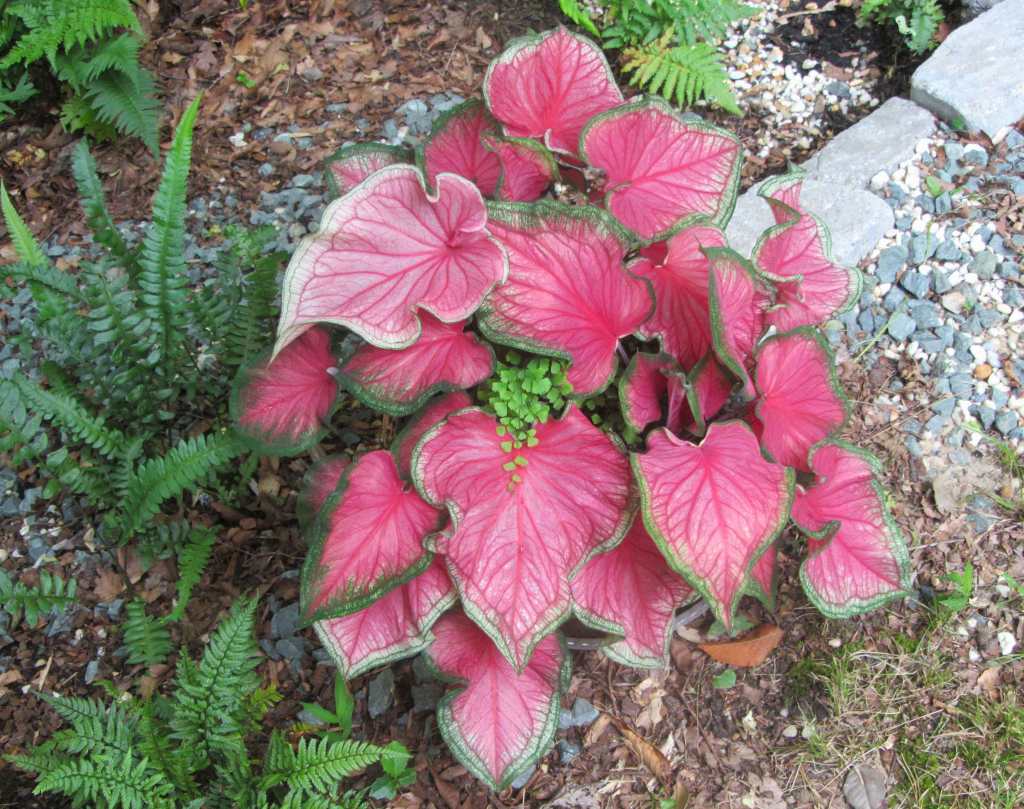
We haven’t had the sort of weather that encourages one to putter around outside for much more than 10 minutes at a time. It is classic Virginia summer on steroids, with night time temperatures hovering around 80F with over 90% humidity melting into sweltering days where the heat advisories begin before noon.
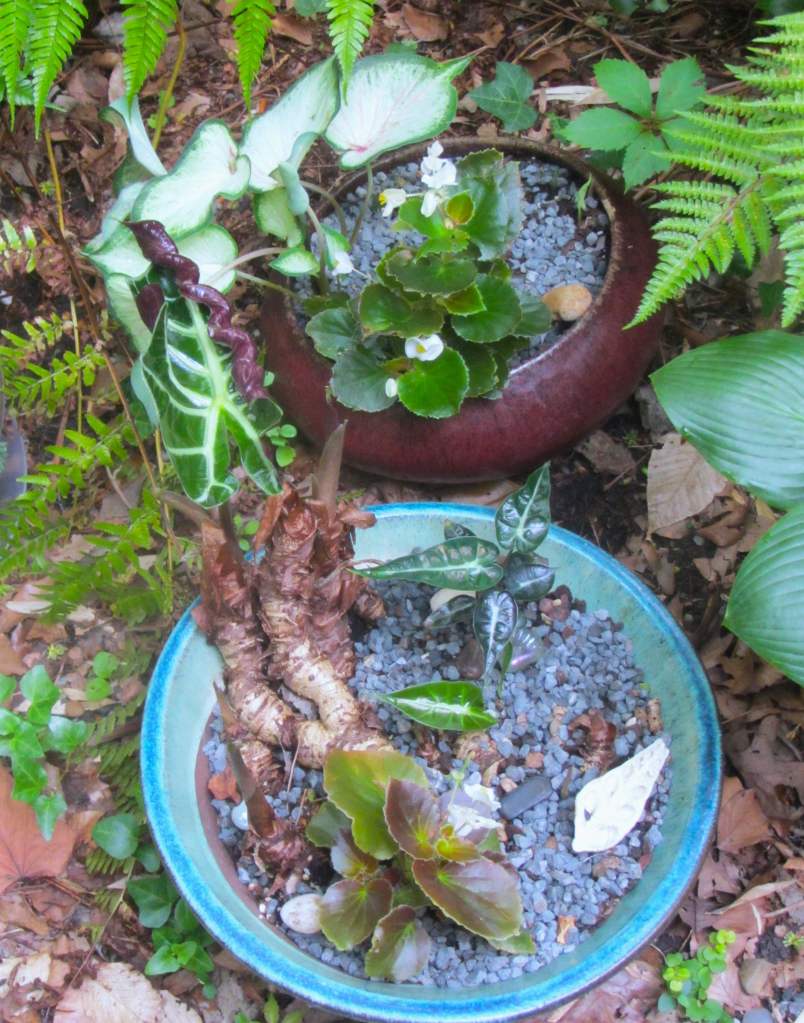
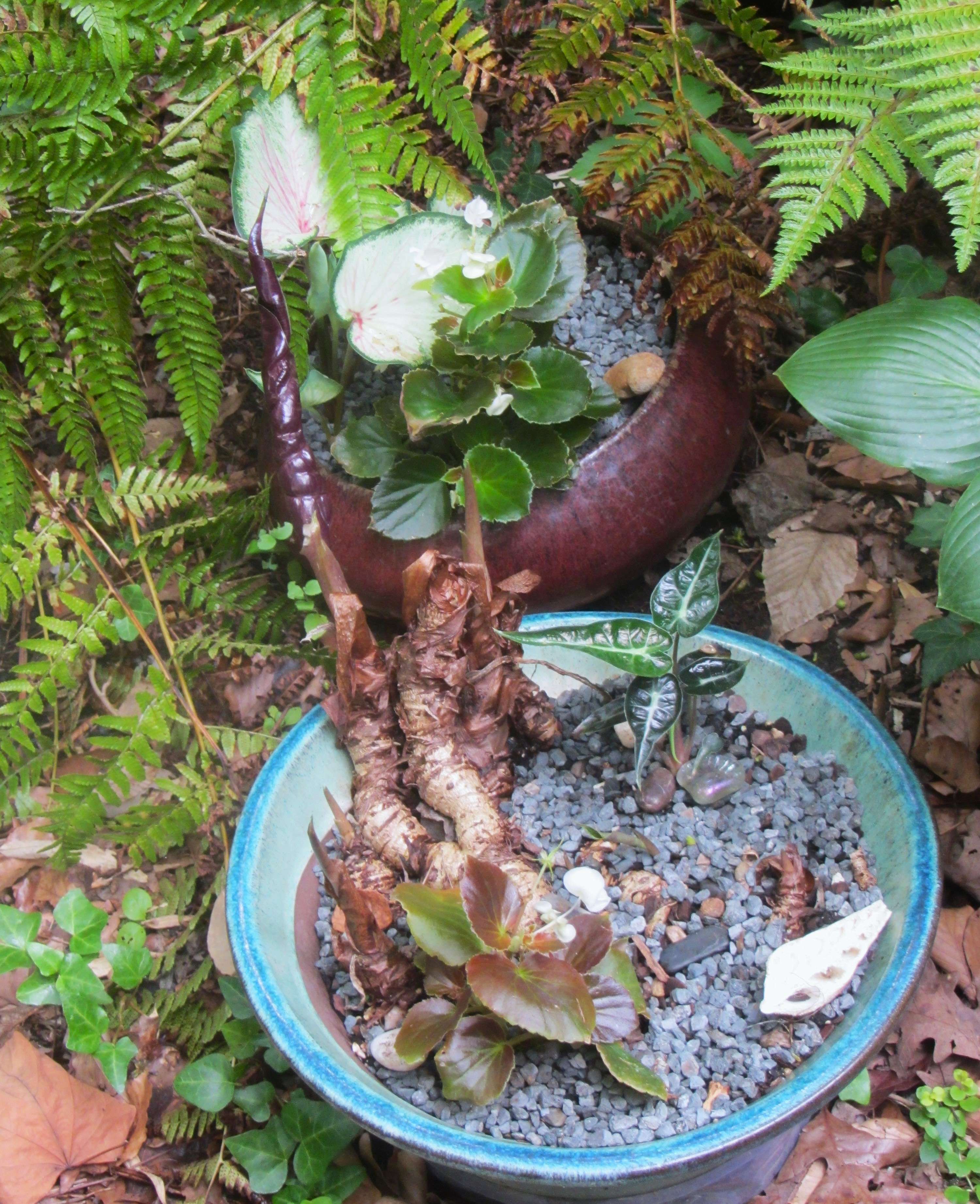
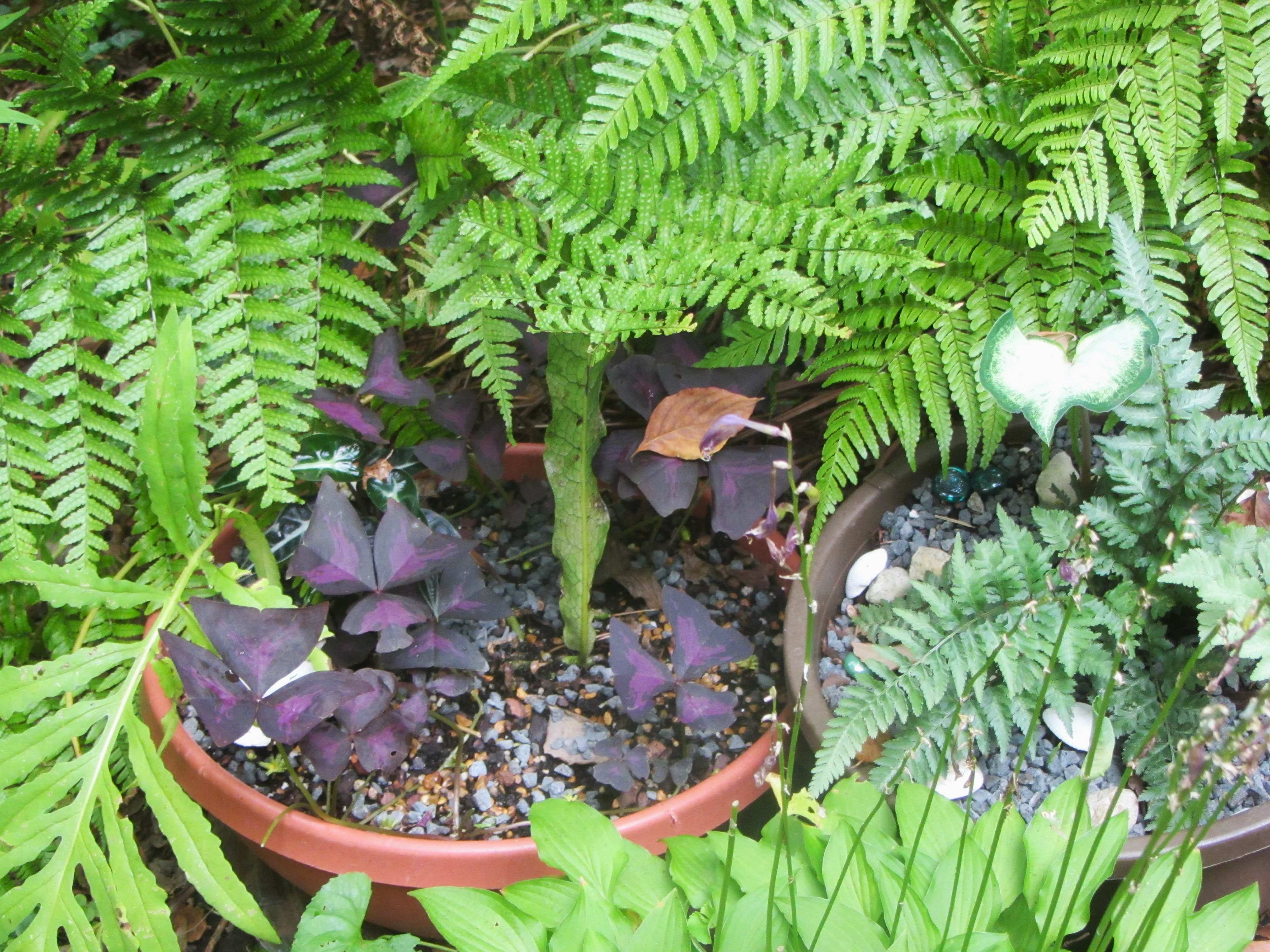
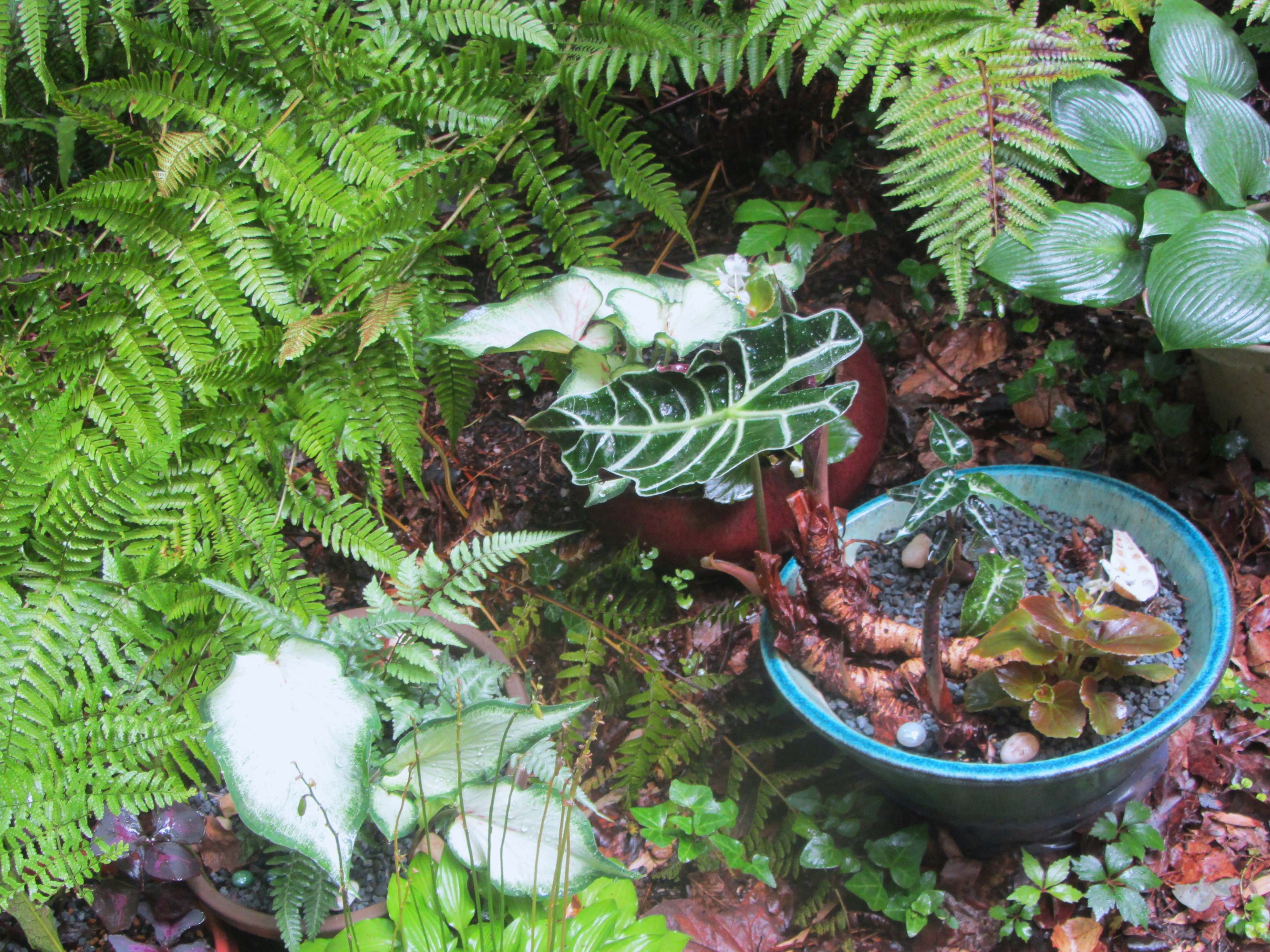
Tropical plants like Caladiums, Alocasias, and Colocasias thrive in weather like this, basking in heat and humidity. I have been watching the Caladiums emerge and expand their perfect leaves with tremendous satisfaction this week. Classic Caladiums asked me to post a Google review of an order I placed several weeks ago and I used this photo of ‘Sweetheart.’ But I went around taking photos of some of our Caladium plantings that day and so I will share a few more in this post, since that is the main excitement happening in our garden this week.
Caladiums are a perfect solution for us because they are bright and beautiful, require very little care beyond keeping them watered, and they are more ‘deer resistant’ than most things we plant. They contain little chemical ‘crystals’ in their leaves which burn and irritate the mouth of anything trying to eat them. So while a deer may sample a leaf here and there, it is less likely that they will graze the entire plant than with a tasty flowering plant or soft fern, like the Japanese painted ferns they have been eating lately.
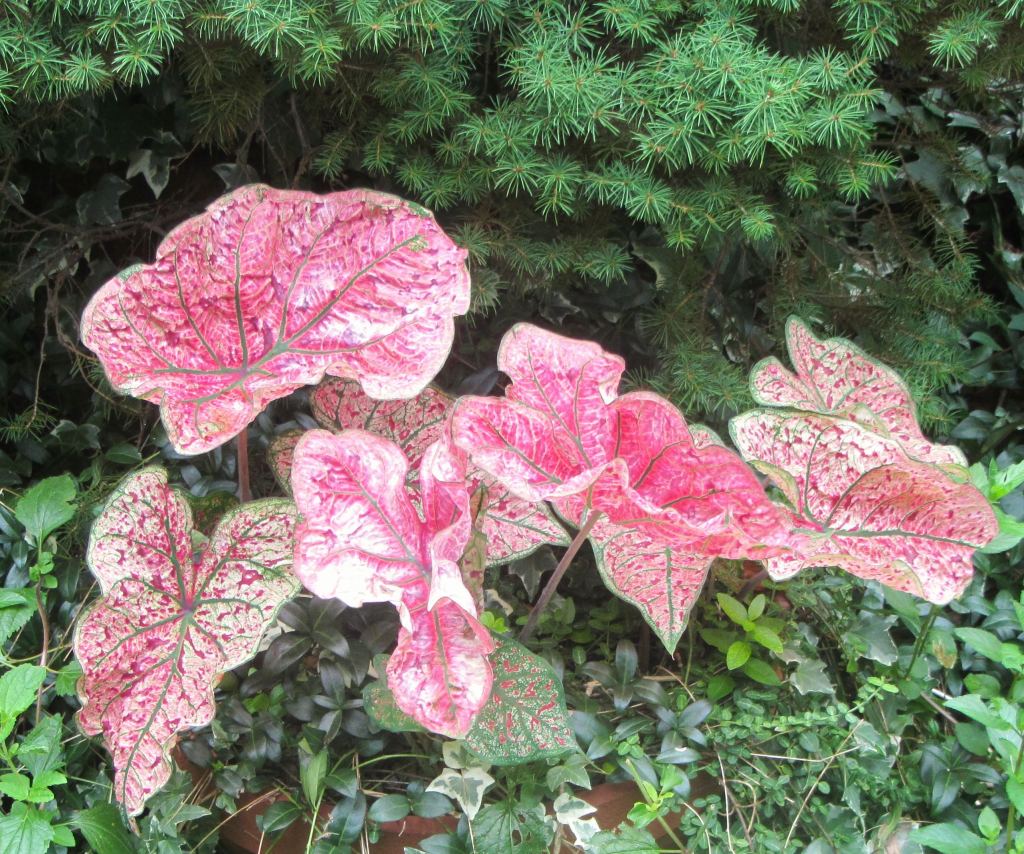
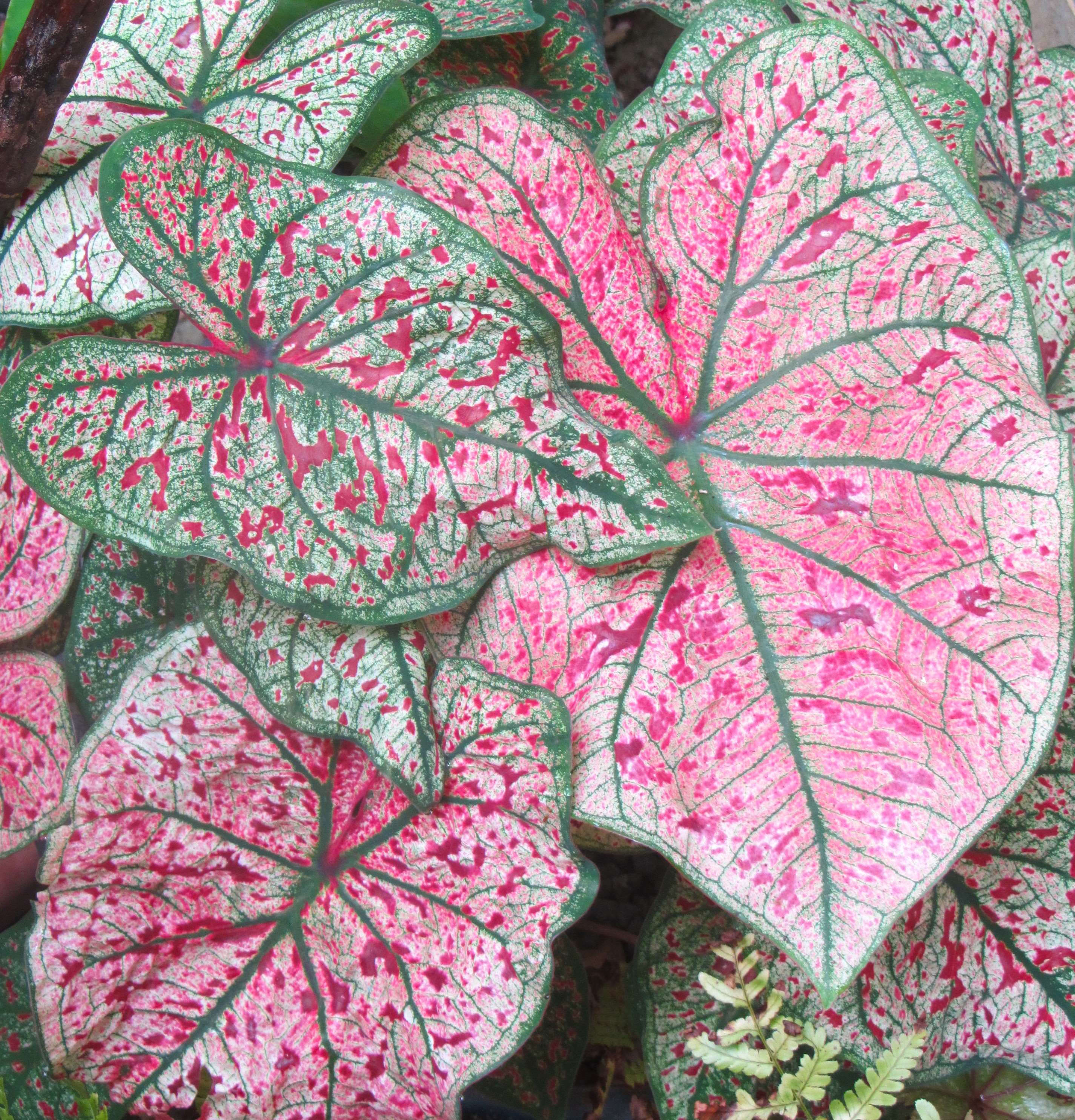
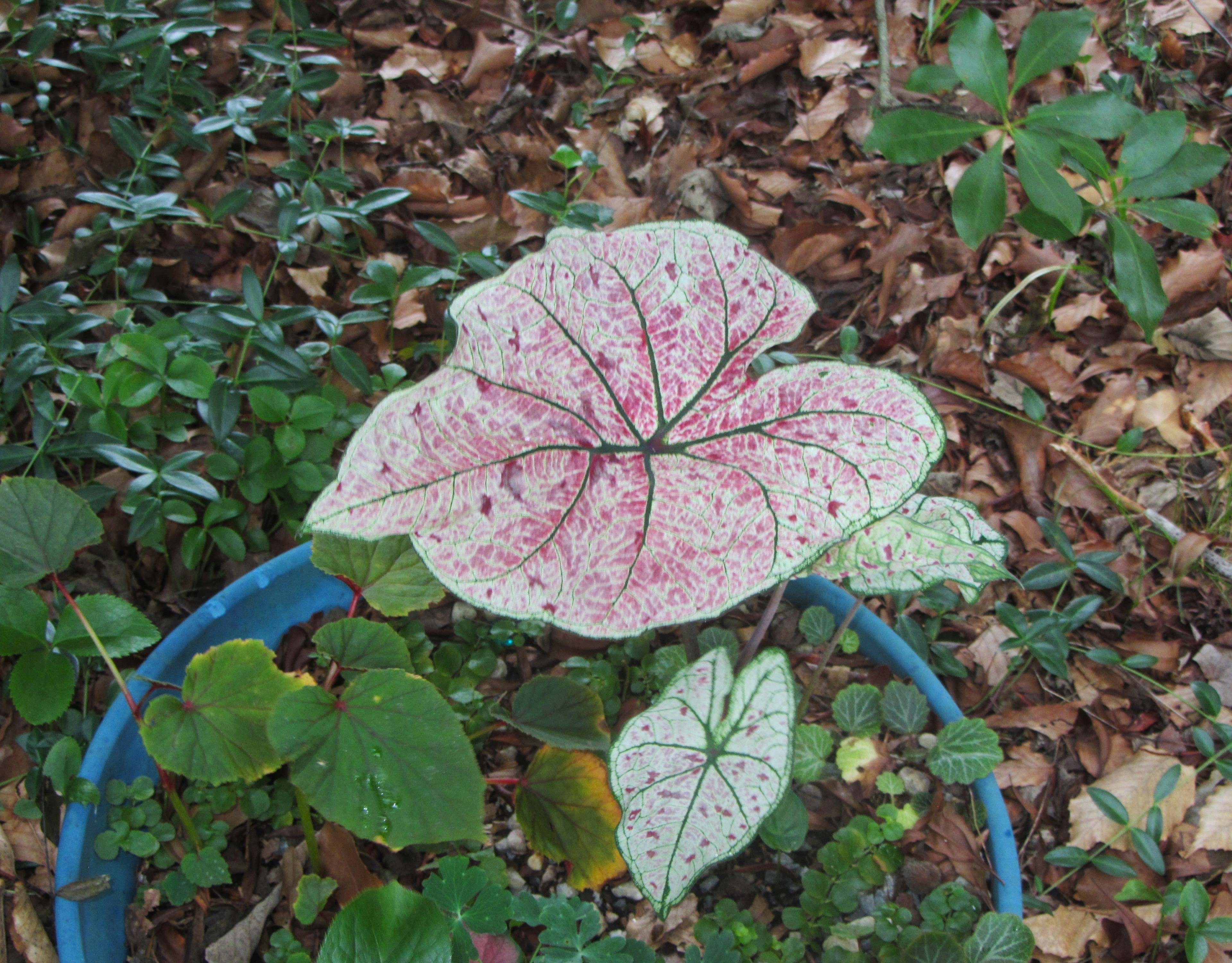

Most years I start our Caladiums indoors in April in large flats and then plant them out once the weather warms. But this year I waited and planted the tubers outside without starting them first, which is more efficient, and often easier when fitting them into established containers. It is important to spray those tubers with repellent spray first, because a few of these lovely ‘Sweetheart’ Caladiums that I forgot to spray before I planted them disappeared within the first week. I suspect the squirrels smelled them and wanted to give them a try.
We have several favorite Alocasias and Colocasias that I bring inside each fall to over winter. I sometimes try to test the hardiness of a few by leaving them outside on our protected patio over winter to see whether they will come up again in spring, which is rarely successful. But a favorite mask type Alocasia comes indoors to the living room most winters where it looks beautiful until almost spring.
But Alocasias drop condensation from the tips of their leaves. And this one had grown so large that there was no way to prevent it from dripping a constant drip of water on the floor. We decided to overwinter it in the garage. But by March it was totally dormant, and looked totally dead. I brought it back outside to its usual shady spot, finally, in early June and kept an eye on it. Nearly ready to admit defeat, I bought some 1″ replacement plants at Trader Joes in late June. The day I went out to plant them around the remains of our old favorite Alocasia, there were signs of new leaves beginning to emerge. What a relief! I added one of the new Alocasia to the pot in an empty space and planted the other one in a container nearby. Now our old favorite Alocasia is responding to the heat and humidity, and a little fertilizer, with beautiful new growth.
I did a quick walk-around on Wednesday morning and found the first Hibiscus moscheutos flowers in bloom, and the first of our heirloom Cannas blooming. We had white and pink flowers that day growing in two different areas of the garden. There are even more flowers open this morning. Hibiscus flowers are very short lived, but the hummingbirds, bees, and butterflies make the most of it while their nectar is available.
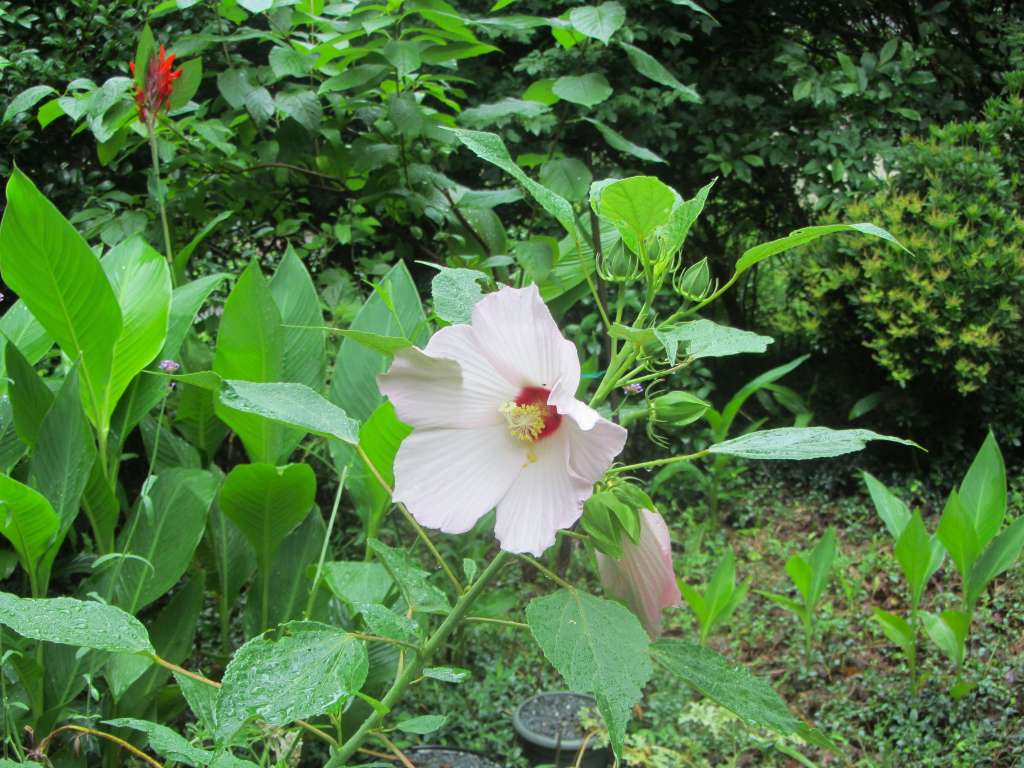
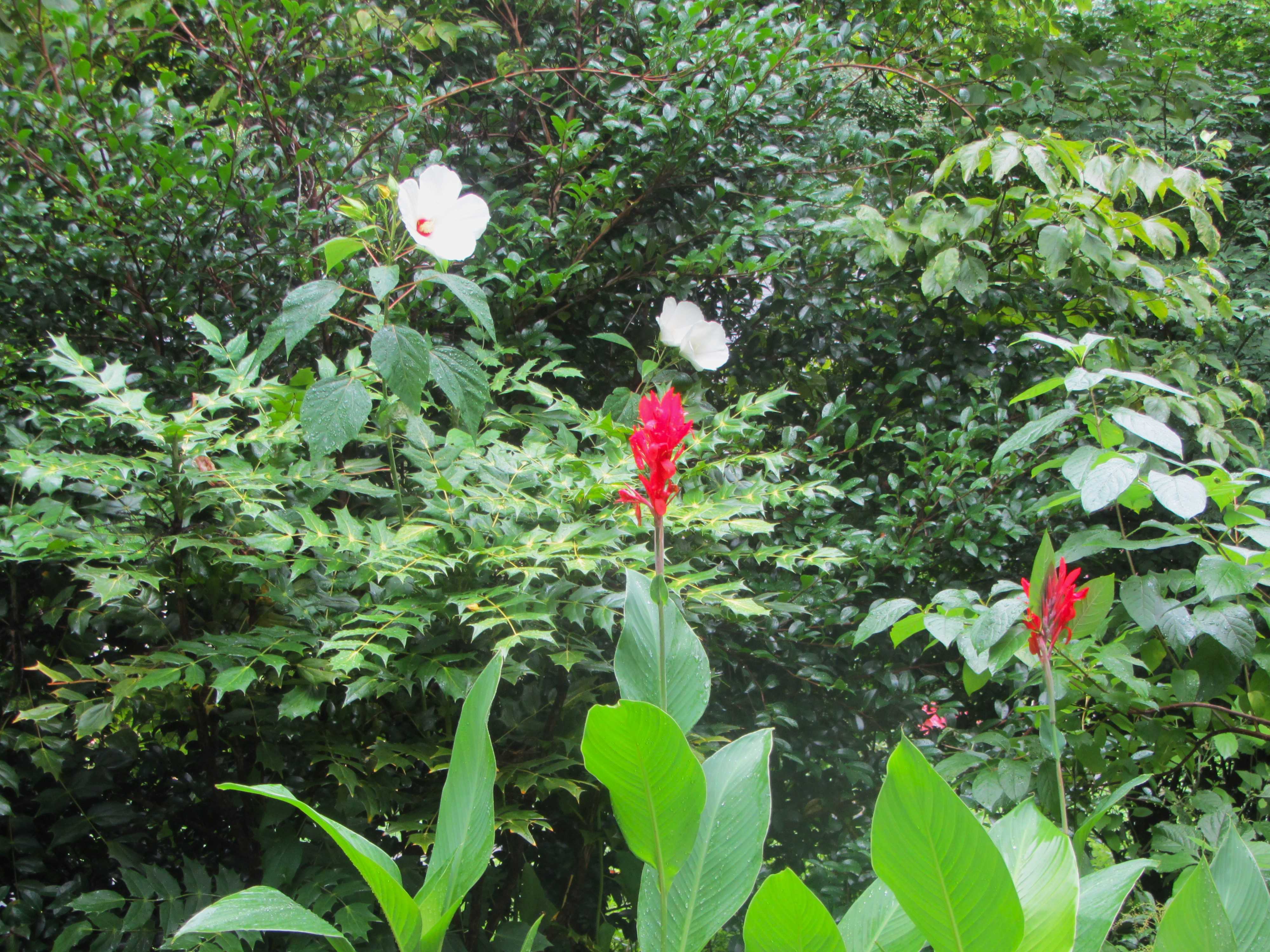

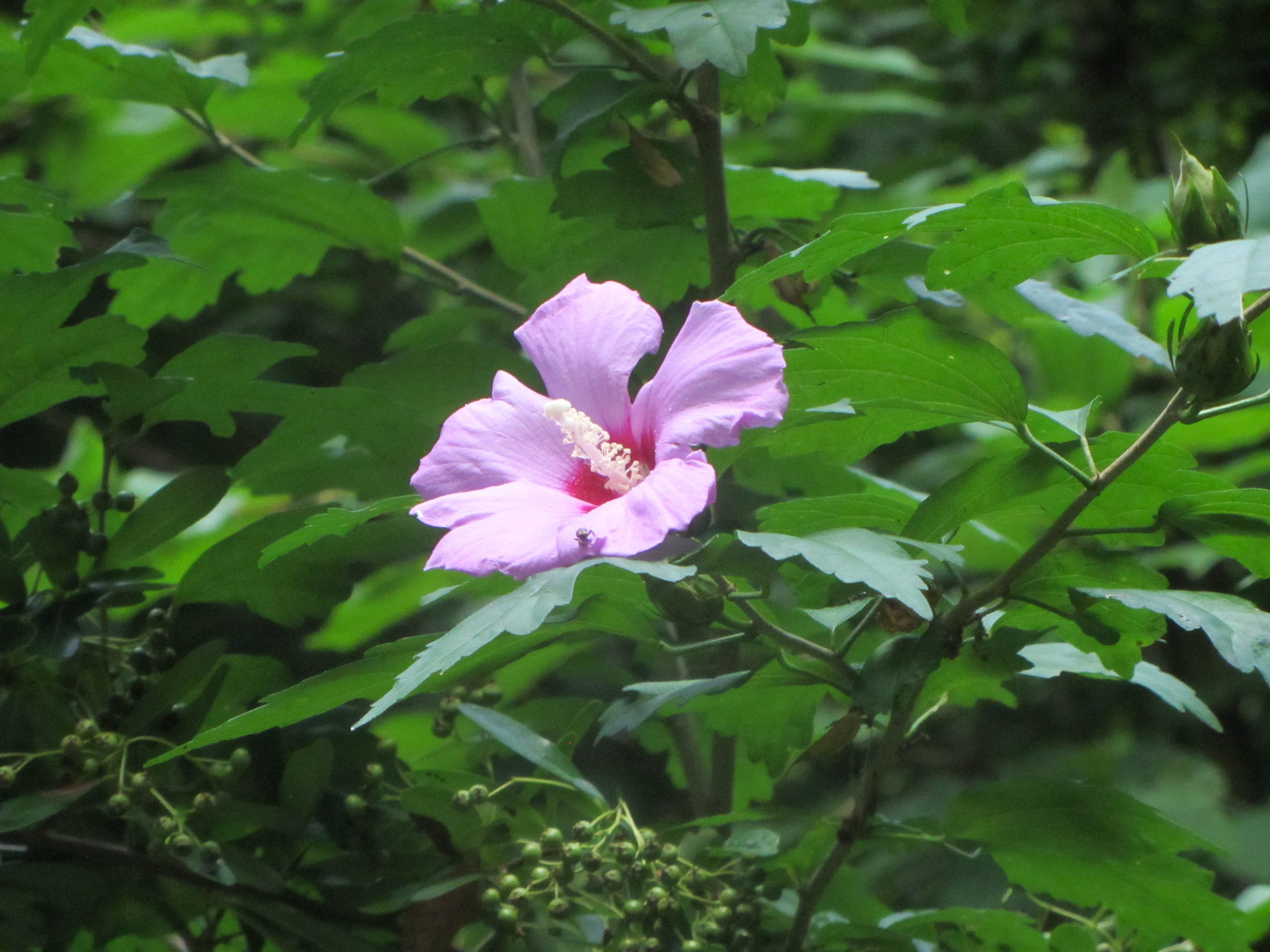
Hibiscus moscheutos, swamp Hibiscus, is native here and there is a beautiful stand growing on the banks of the James River along the Colonial Parkway. All those blooming in our yard are volunteers that we simply enjoy. The first photo above is a seedling blooming for its first year. But the last photo is H. syriacus, Rose of Sharon, which is not native to North America. The flowers are very similar and bees, butterflies and hummingbirds love both.
I watched a presentation this week by Dr. Doug Tallamy, author of several books encouraging home gardeners to plant wildlife gardens to support greater biodiversity, and especially to support native insects. Dr. Tallamy has a new book in production in which he answers a series of questions that he has received from gardeners over the years. He gave the keynote address at Virginia’s Master Gardener College last month where he previewed some of the material in his newest book. I have read all of Dr. Tallamy’s books so far and often cite his work in my own articles, and I especially promote his concept of a Homegrown National Park which grew out of his 2007 book written with Rick Darke, Bringing Nature Home.
During his keynote, Dr. Tallamy emphasized planting a large enough block of any particular native host plant for insects to find, and to make sure there is enough plant material to feed their larvae. He gave the example of swamp milkweed, Asclepias syriaca, and showed a lush stand of perfect plants blooming in his own yard. This is an easy thing to do when it means growing a single large native tree, but not so easy when space is limited for flowering plants growing in full sun.
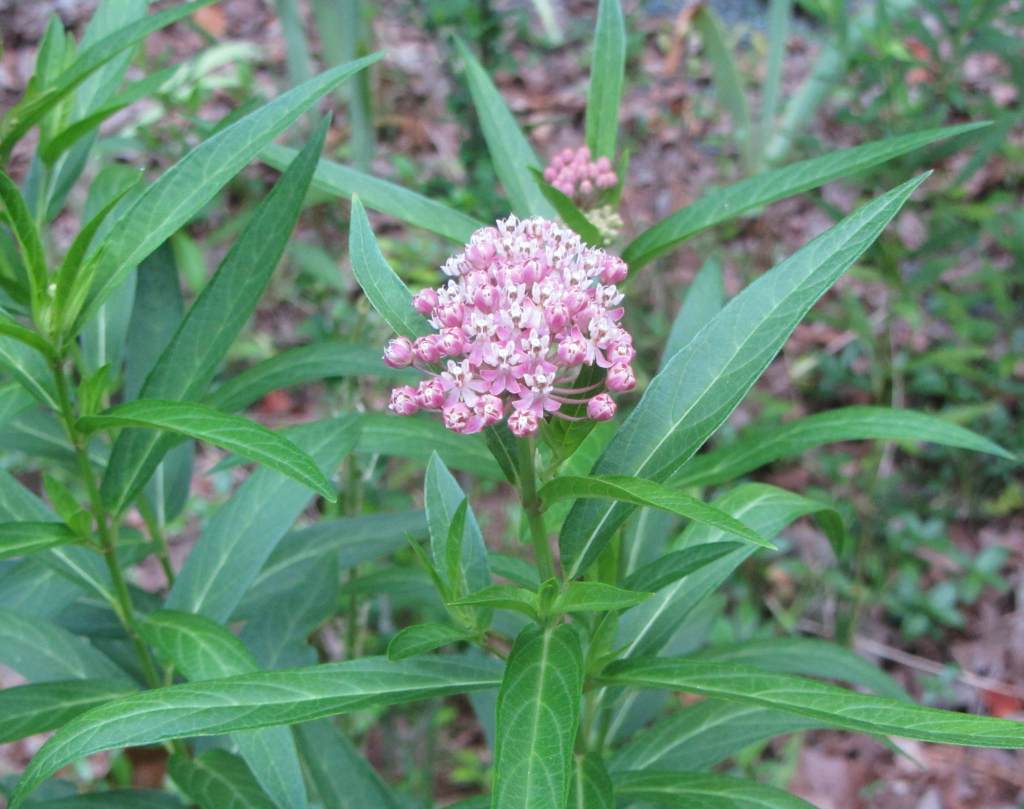

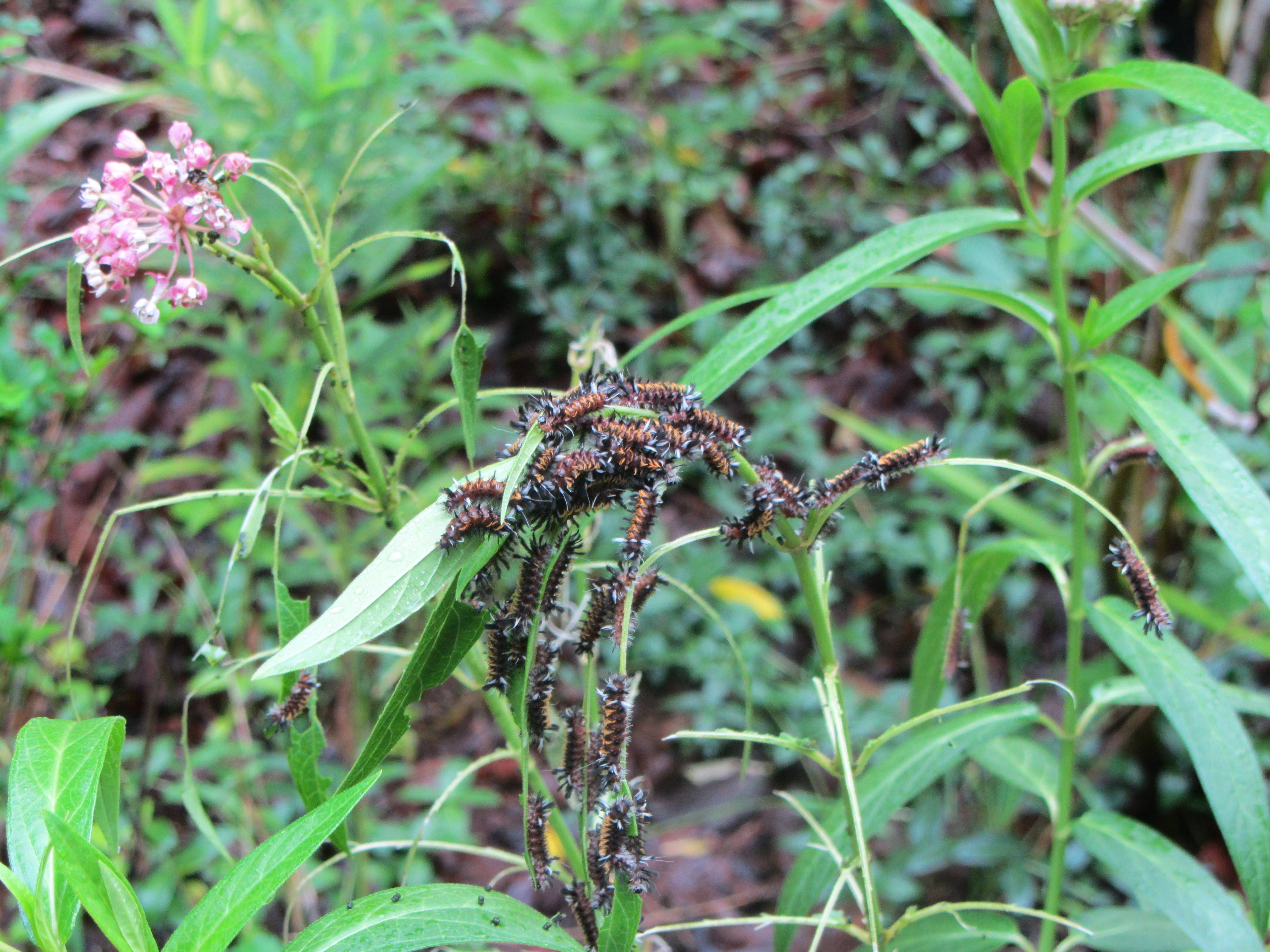
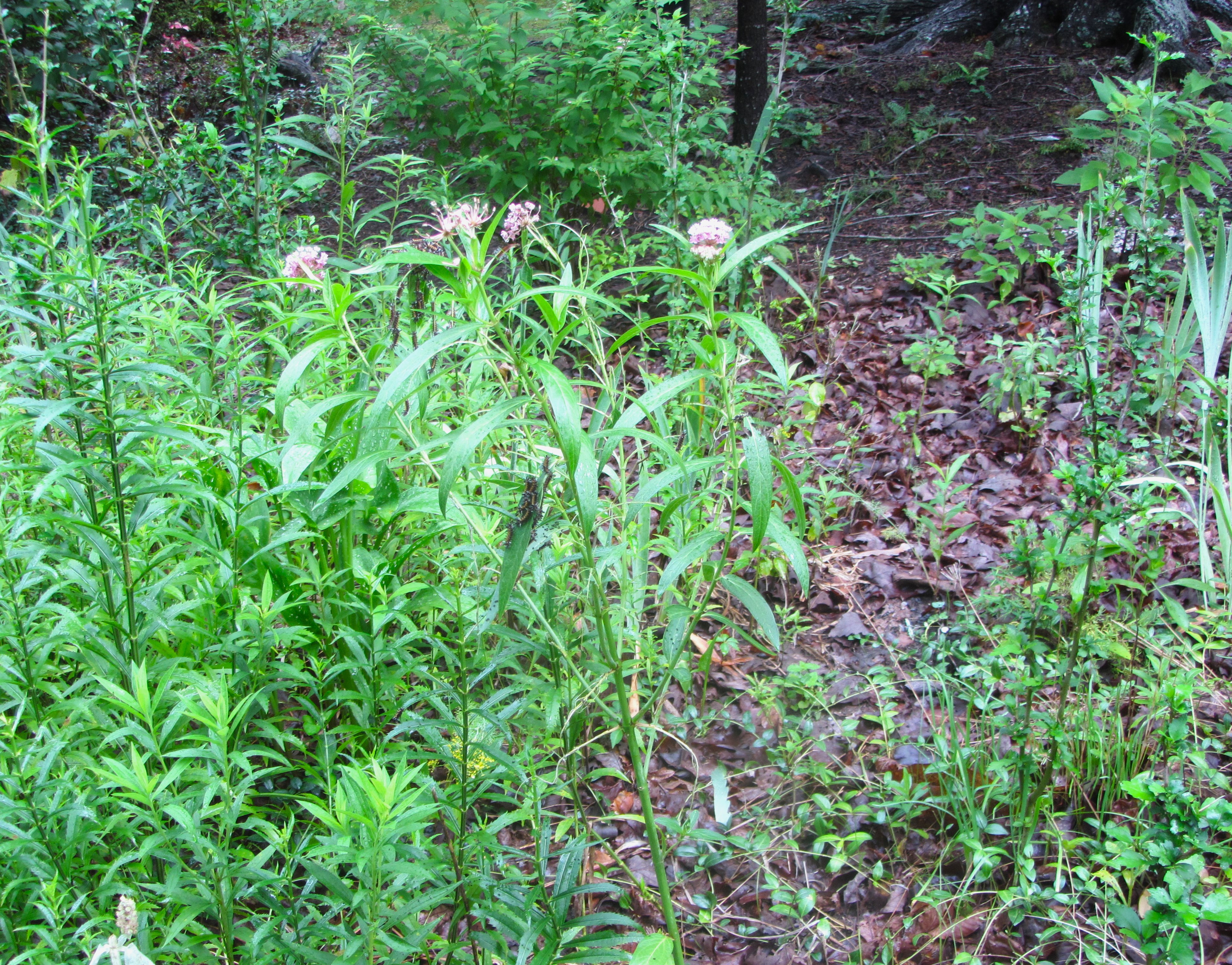
Years ago, I brought home a single swamp milkweed plant from a local plant sale and planted it in our upper perennial garden. It isn’t my favorite perennial, but I was doing my bit for the butterflies. When it came up this year, I wasn’t sure what it was, but let it grow. I could tell it wasn’t goldenrod or another gumball tree, so I left it alone. It was finally blooming on Wednesday, too, and I was glad I’d left the milkweed to bloom. It looked a bit lonely by itself, and there wasn’t a trace of an insect, egg, or larvae anywhere on it. I was wondering whether I should propagate it to add a few more milkweed plants in this area.
Fast forward to this morning. It is supporting a heavy load of crawling butterfly or moth larvae, and none of them are monarch butterfly cats. I haven’t been able to identify them so far this morning, but I suspect they are moths of some sort. If you recognize them kindly tell me what they are. They aren’t pretty, by the way, so don’t scroll through to the third photo if you don’t like caterpillars. (Many thanks to friend and fellow Master Gardener, and Master Naturalist Joanne Sheffield, who told me that these are Milkweed Tussock moth caterpillars. Like Monarchs, they prefer milkweed and the milkweed renders these little cats poisonous so the birds and bats will leave them alone. Thank you Joanne!)
Dr. Tallamy emphasized the vital importance of moth and butterfly larvae in his talk, and made his case for why moths are even more important than butterflies. I grew up putting cedar in the drawers and closets to keep moths out of my sweaters, mind you, but I am sure he meant outdoors. I listened, and accept his expert wisdom. But I’m not convinced that I want to plant any more milkweed here in my own yard. I tend to favor things that don’t get eaten up by the wildlife.
You may notice that some of these photos look very wet. We finally got the good rain we have been needing, and it rained for most of yesterday and into this morning. We are under flood alerts and advisories, but more rain is in the forecast. We’ve already had more than 6″ this week. I hope that everything in the garden that has been sulking in the dry ground explodes with growth in the days ahead. We had a break from the heat yesterday and this morning, but the heat returns in the coming days. I will probably continue gardening from an armchair- with reading garden books, watching Master Gardener videos, and doing a bit of writing. That said, I will keep an eye on everything and watch for hummingbirds from the windows.

With appreciation to Jim Stephens of Garden Ruminations, who
hosts Six on Saturday each week.



Fascinating, lots of plants here that I just don’t see or grow in the UK.
LikeLiked by 1 person
That is one of the reasons why I enjoy Six on Saturday so much! There are many beautiful plants grown in Europe and the UK that are much harder to source and grow over here. But I can admire them in SoS posts 😎
LikeLiked by 1 person
I agree! It is fun to see plants from all over that people are growing and learning about different habitats. Or see plants I am familiar with growing in other locations. Your A. syriaca has narrower leaves than what I see around here. Or one sees a plant grown where there is not as harsh a winter and it is enormous compared to what we would have locally because it maybe never goes dormant. Love the rabbits foot fern! I keep telling my husband that we should have the shady bit at the back of they yard all in ferns. Ostrich fern, Maidenhair fern, etc. Haven’t won him over yet…
LikeLiked by 1 person
Thanks very much for your observations. You are right that those milkweed leaves are rather narrow, which may be one reason I hadn’t recognized it before it bloomed. I love seeing how familiar plants grow for people in other environments. I will tell you that ostrich and cinnamon ferns are among the first that critters graze. Ferns are so similar, you might consider starting with some sturdier Polystichum or Dryopteris to anchor your fern garden, if you can convince your husband. There are lots of great ferns for northern latitudes and you may have an easier time of growing them than we do. I hope that you and yours have been OK with the crazy storms in your part of the country. Thanks for visiting!
LikeLike
Although caladiums are available here, they dislike the aridity. I would be annoyed that nurseries sell them at all if they did not do reasonably well near garden ponds. Alocasia and Colocasia perform a bit better, but the large sorts do not grow very large. We are growing a few of each, and might add some to one of the riparian landscapes for next year.
LikeLiked by 1 person
Nice six. Caladiums are difficult to grow here. Yours are gorgeous with very beautiful colors. Concerning the alocasias I only have one, overwintered in my living room.. but dripping , you are right, on the floor. I keep it outside from April to November anyway.
LikeLiked by 1 person
Yes, they drip quite a bit. It is always good if I can position other plants nearby to catch those drips! It had just grown too large last fall for the spot where it usually overwinters so I’ll need a new plan for this fall because life in the garage was not kind. We can keep things out through early November, but it is still a bit too cool here through most of April for the tropicals to come out. We only enjoy the Caladiums May through November. I lift them all, dry them out, and then pack the bulbs away for the winter. They aren’t happy when the soil falls below 60F. Have you tried overwintering yours dry?
LikeLiked by 1 person
I do that with colocasia and gloriosa so I guess it would be the same thing.
LikeLiked by 1 person