There are times in our lives, and in our gardens, when little seems to change. And there are other times when so much changes, everywhere, all at once that we have trouble noticing and understanding everything as it happens. Sometimes understanding only comes as we look back at what once was, and how things have become. It wasn’t enough to keep up with daily changes in our garden this week; it seemed that changes appeared hourly.
This has been a week of changing, changeable weather with sunny mild days in the 70s followed by downpours, wind, lighting, and chilly nights just above freezing. The wind has swung around the compass wildly, too, bringing those rapid changes with it. Abundant rain, fog, misty days, and warmth all worked their magic to awaken our slumbering garden.
The Spring Equinox this week tipped the balance from our wintery garden to one filled with springtime magic. Buds have opened on trees, shrubs, and flowers even as the ferns finally awakened and began to unfurl by Thursday afternoon.
I ordered three special ferns that I have been wanting to grow for ages from Plant Delights Nursery near Raleigh, NC. I ordered a special Dryopteris that is supposed to have more reddish tint than is usual on its new growth, D. erythrosora var. prolifica , because of its unusual lacy texture unusual color. I finally brought it, and its companions outside on Thursday because the weather seems to have settled enough that they will adjust without any shock from cold nights.
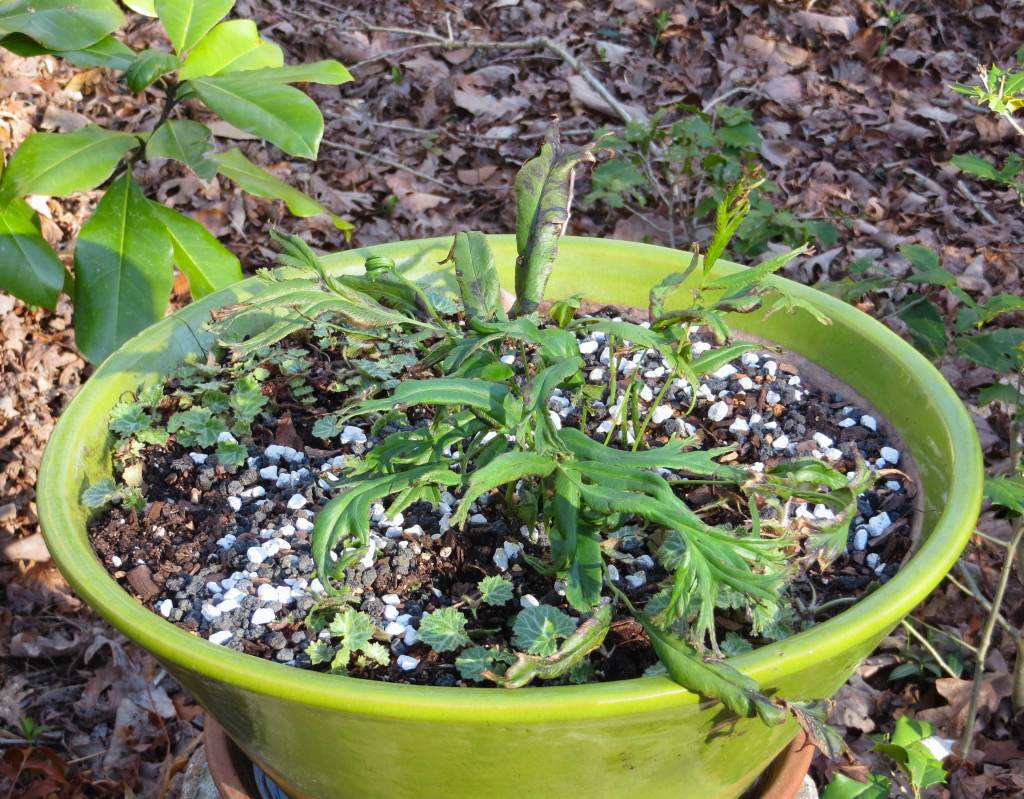
But I wasn’t ready plant it out in the garden since our evergreen ferns have taken so much abuse this winter from both the hungry deer and the weather. Our remaining ferns are tattered and ragged, and so I transplanted the Dryopteris, and the Coniogramme jinggangshanensis ‘Shishi’, into containers. I only planted the Woodwardia unigemmata ‘Ping Wu’ into the garden directly, and I’m hoping for the best. The crested bamboo fern is replacing a Japanese holly fern, Cyrtomium falcatum, that had lived in the container for several years and was both pot bound and badly burned by this winter’s cold. All of its foliage had browned this winter. So after trimming it back above and below ground, I found a quiet and protected spot in the garden where I hope it will recover.
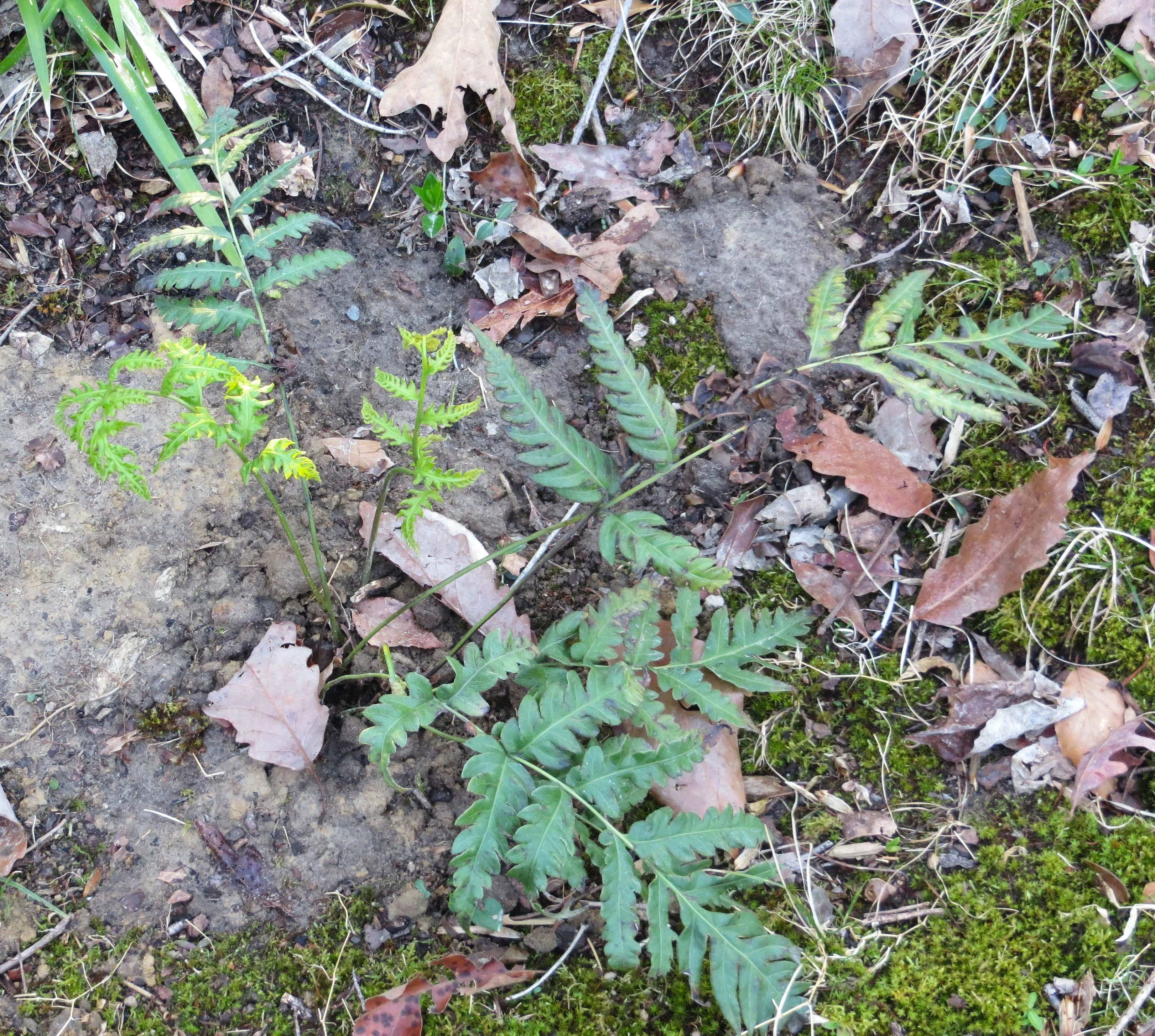
Both the holly fern and the Woodwardia went into one of our moss and fern gardens and so now I will need to help speed up a blanket of moss regrowing around them. Working with moss is a slow process where either patience or complete neglect seems to work. Moss grows on bricks and stones and patches of lawn with no encouragement or care. Getting moss to grow in where I want it can take years, and requires keeping the area moist and clean of debris. Transplanting small bits of the desired moss species to the open ground, and stepping on them firmly, helps, too.
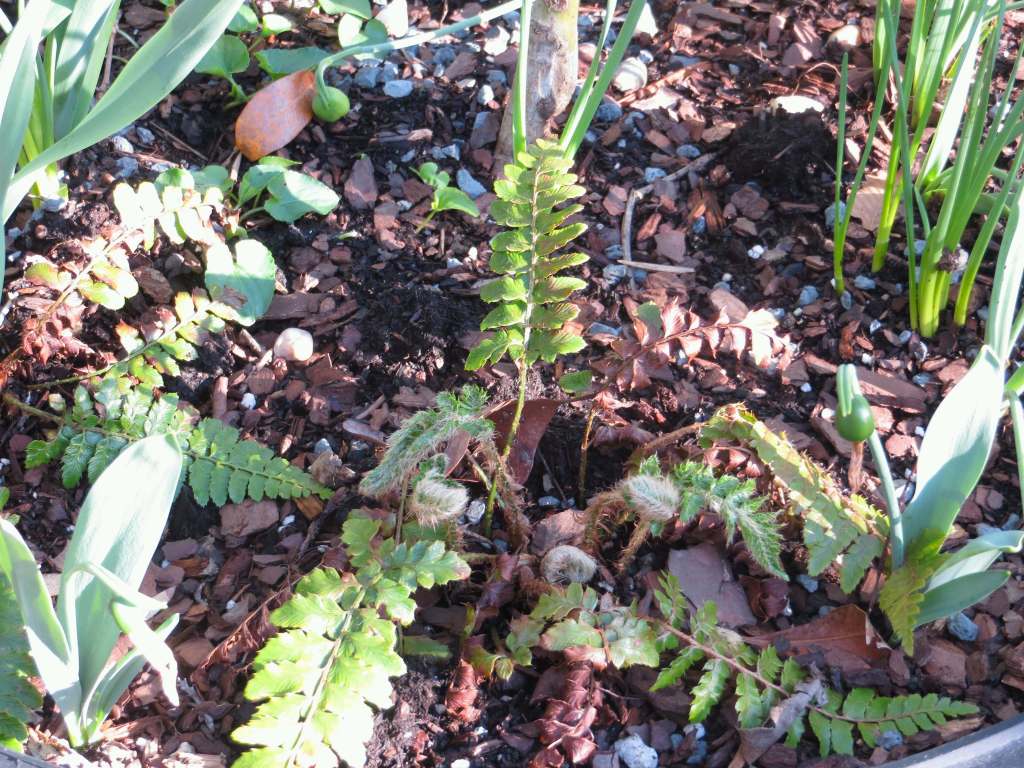
Photo 1 is a baby fern I grew from spores that has just emerged from its first winter in this container. I planted six sporelings of the same type in this container late last summer and several have survived. Photos 2,3, and 4 show holly ferns emerging in our fern garden after a very difficult winter. These ferns have all emerged since Wednesday and are rather late this year. 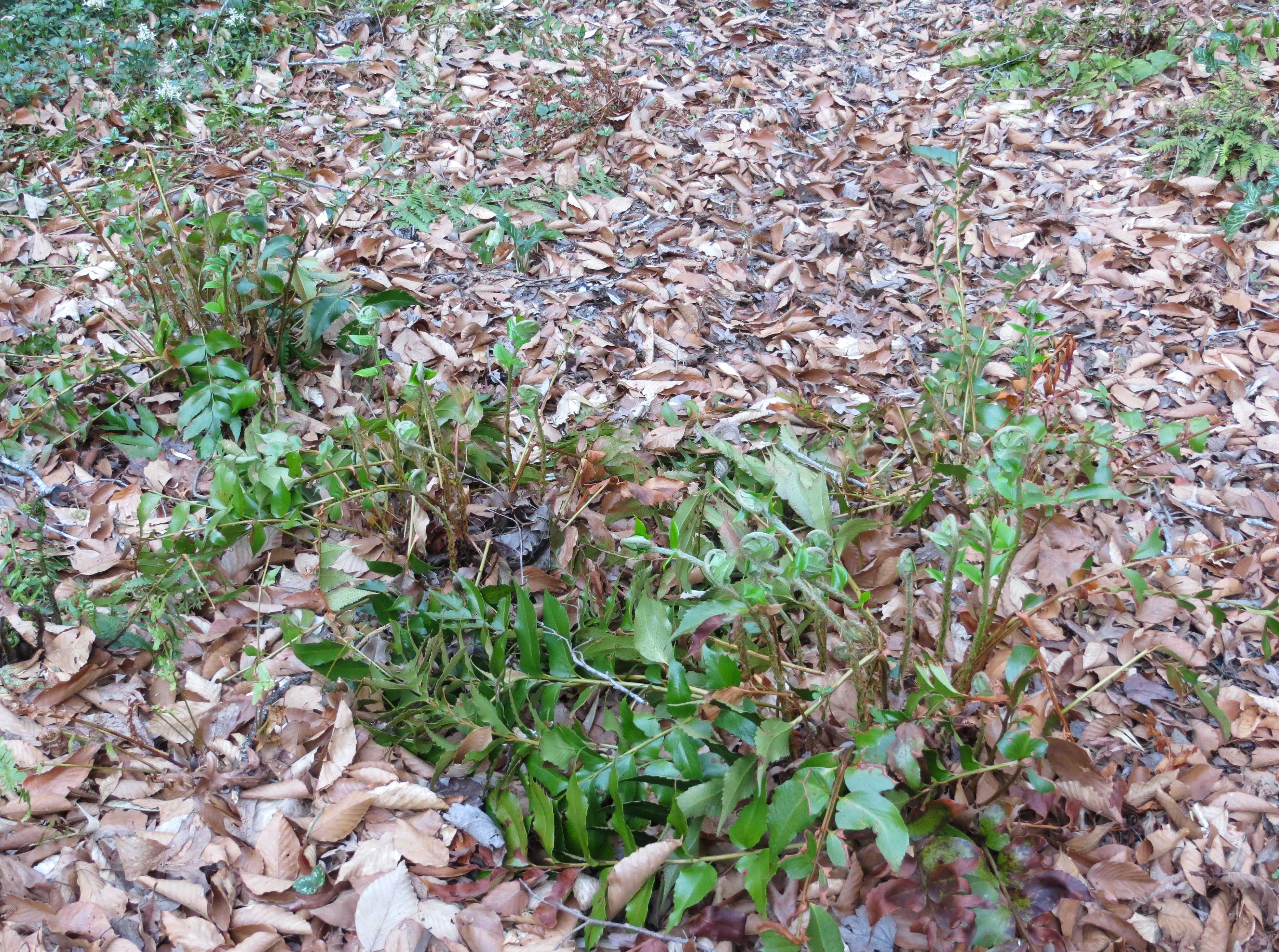


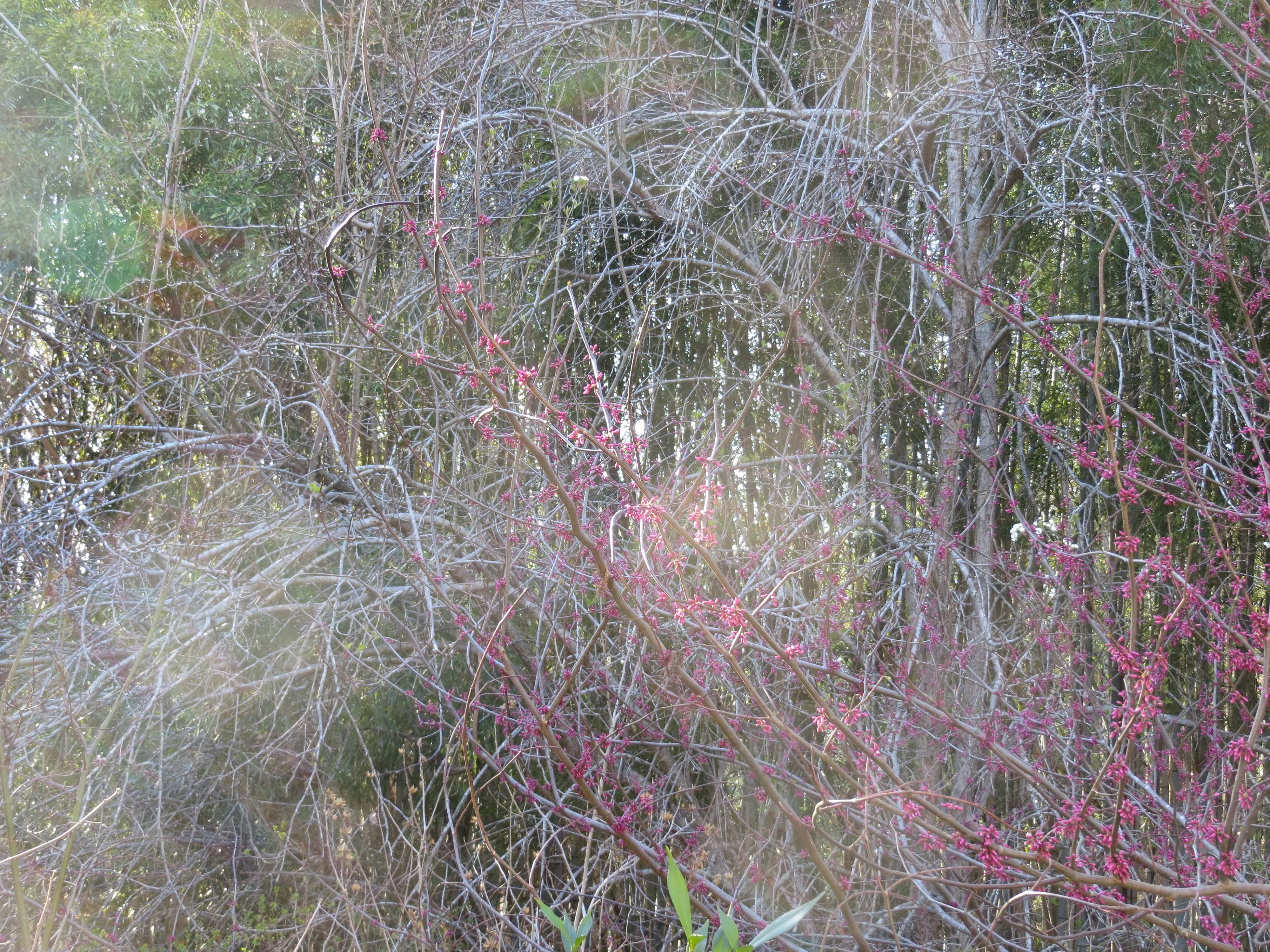
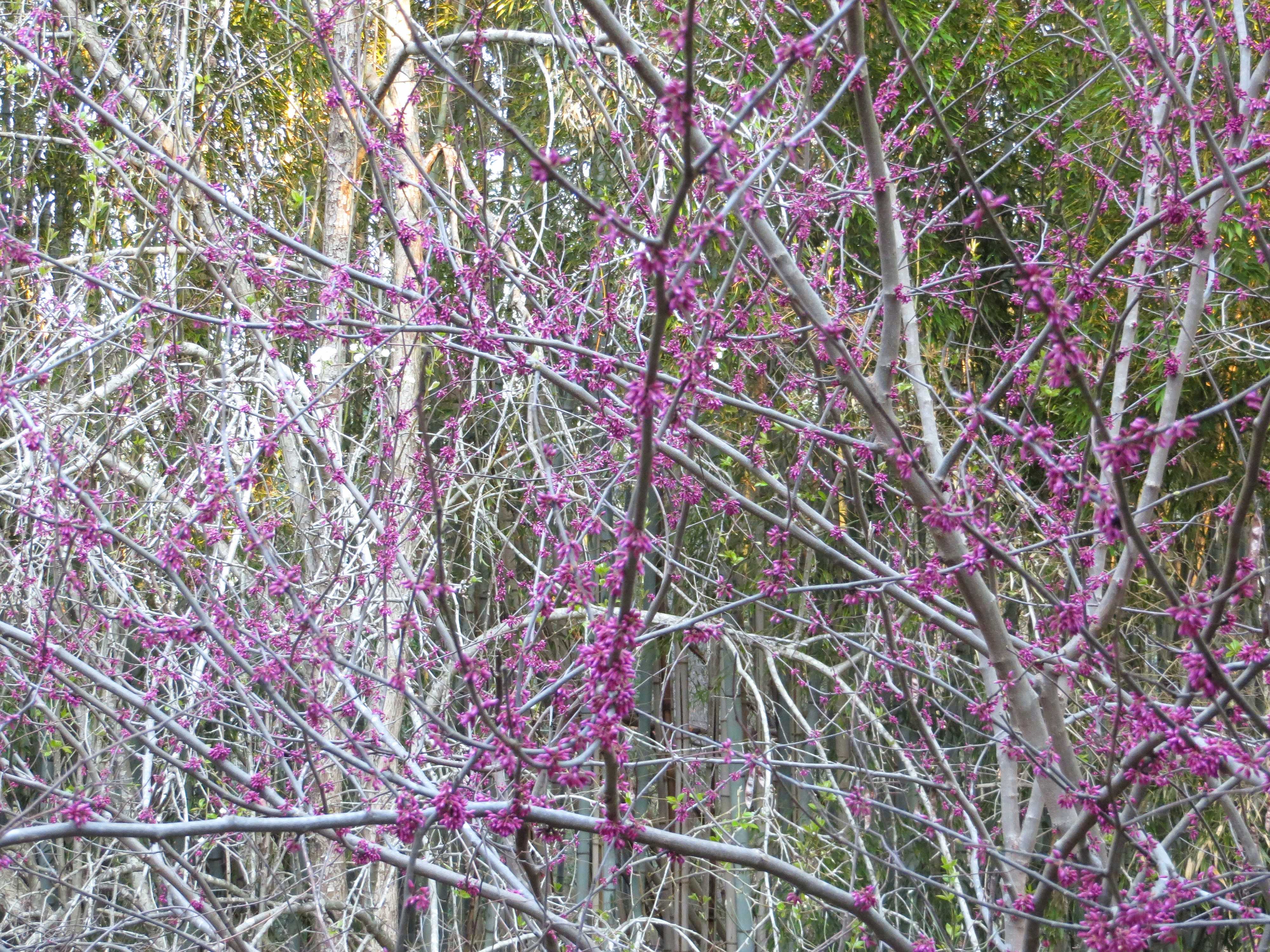
Redbuds finally bloomed here by Friday, and our Magnolia liliifloras have covered themselves with purple buds and hints of green where leaves will emerge. A native plum tree budded out by Friday and should bloom later today. New leaves are emerging on all of our Hydrangeas now, and even the oaks are showing a hint of green as they awaken.
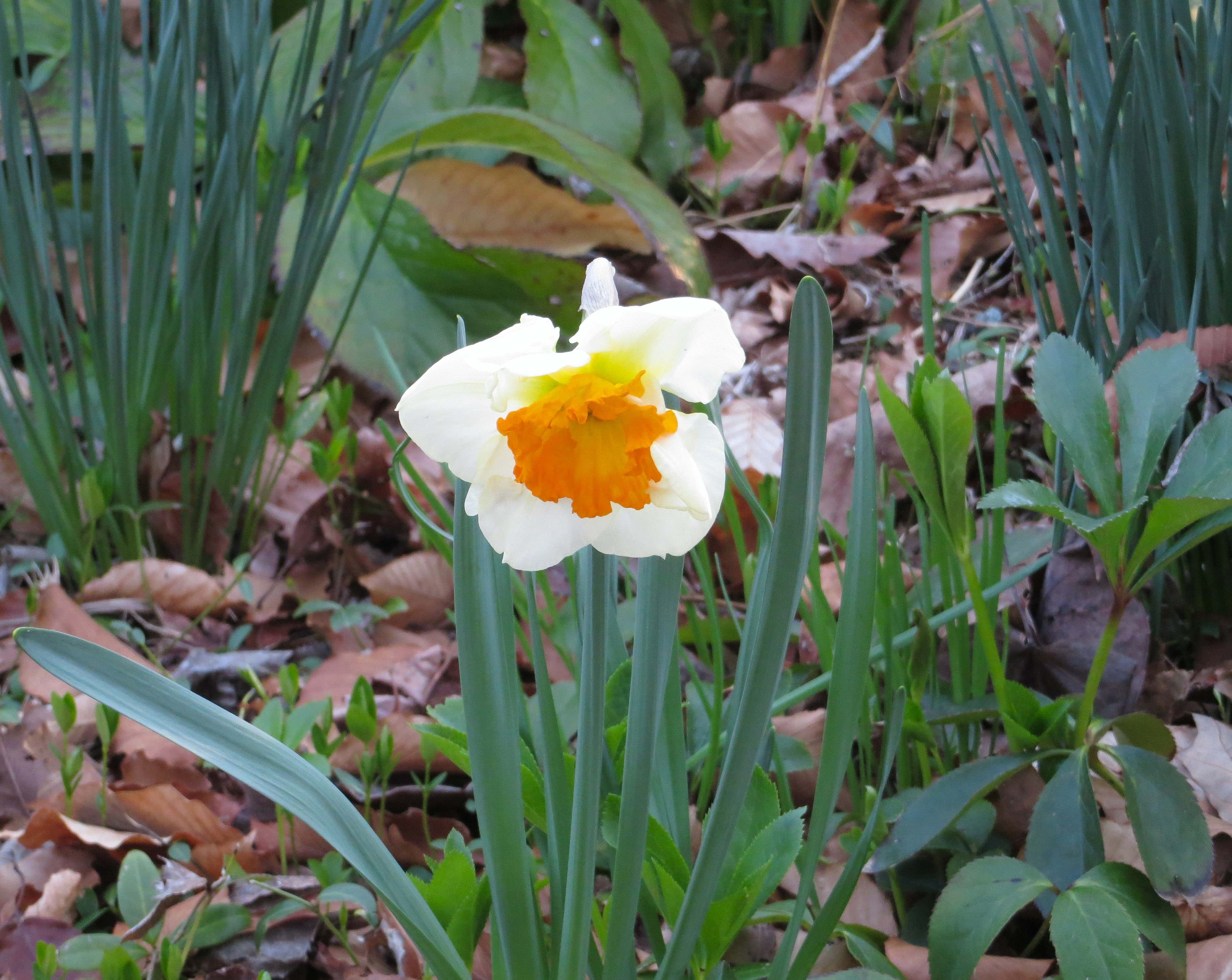
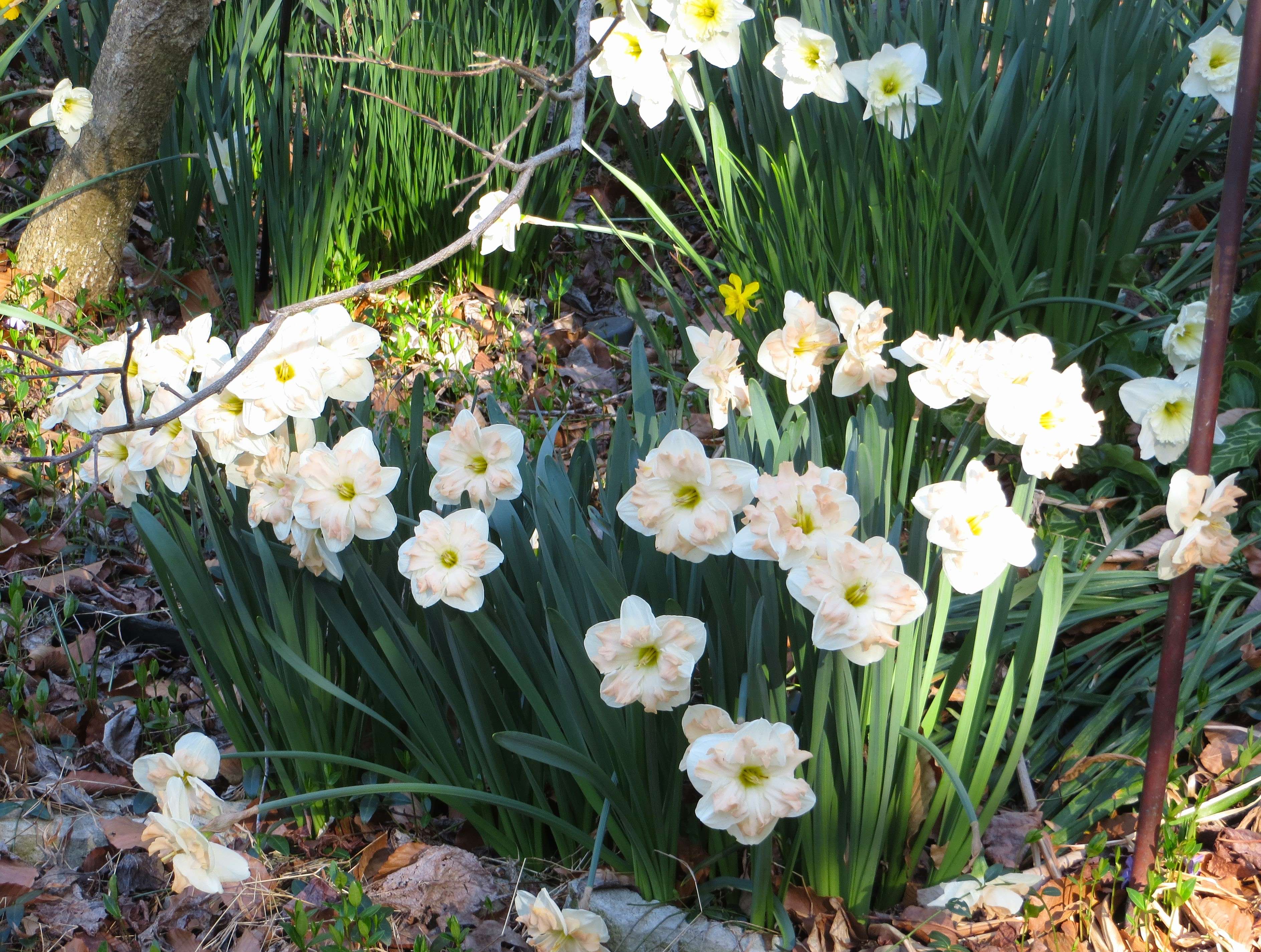
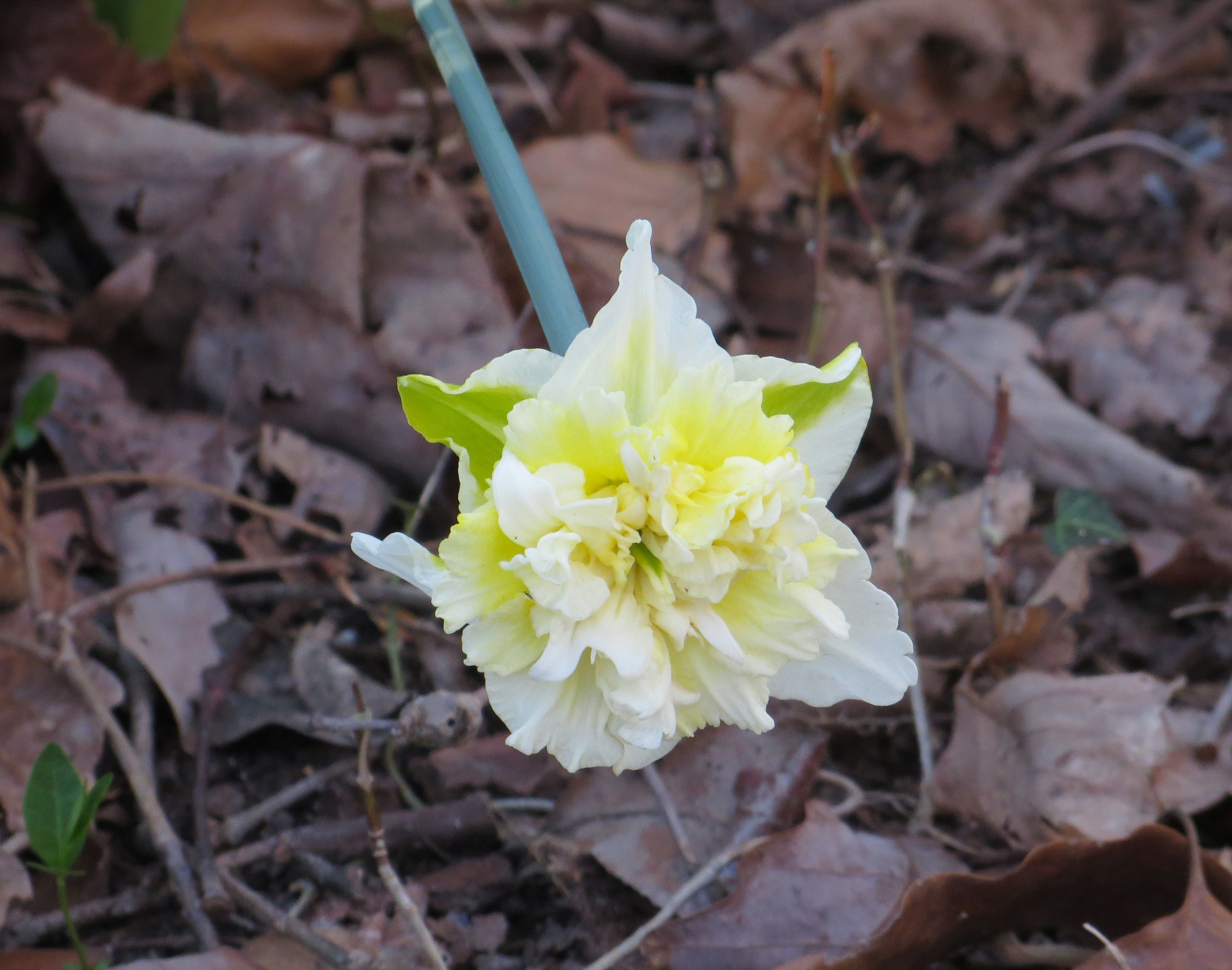
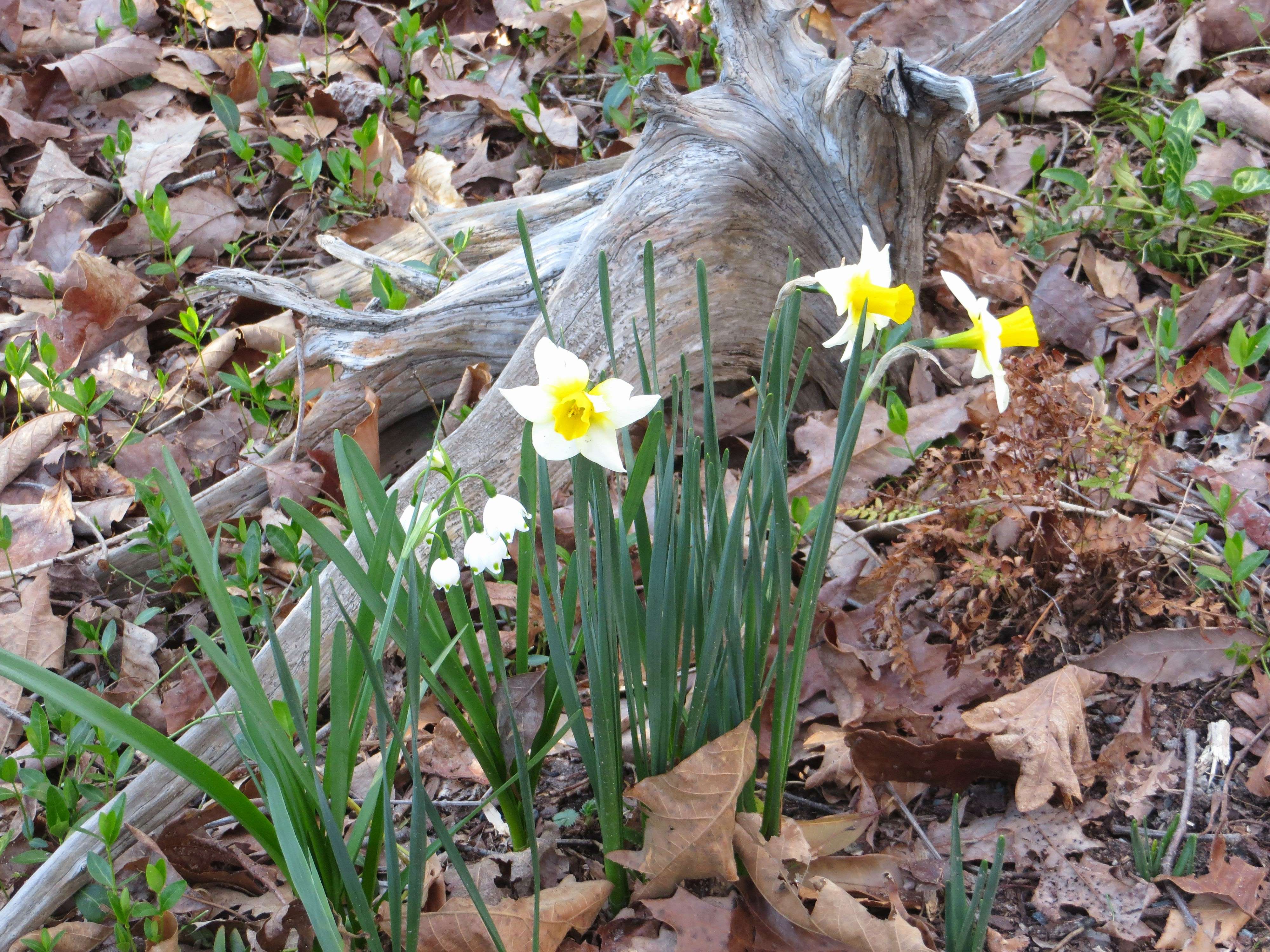
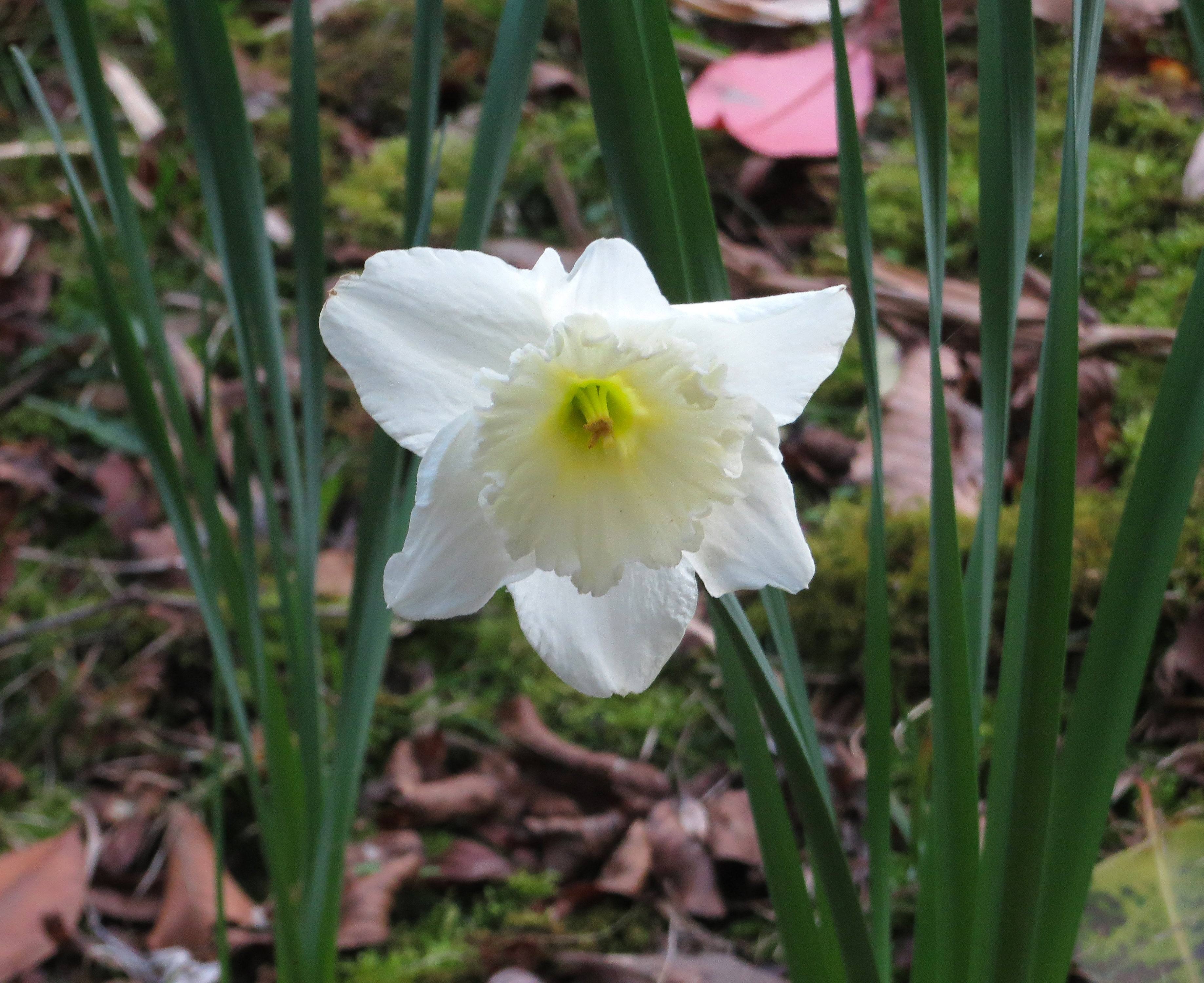
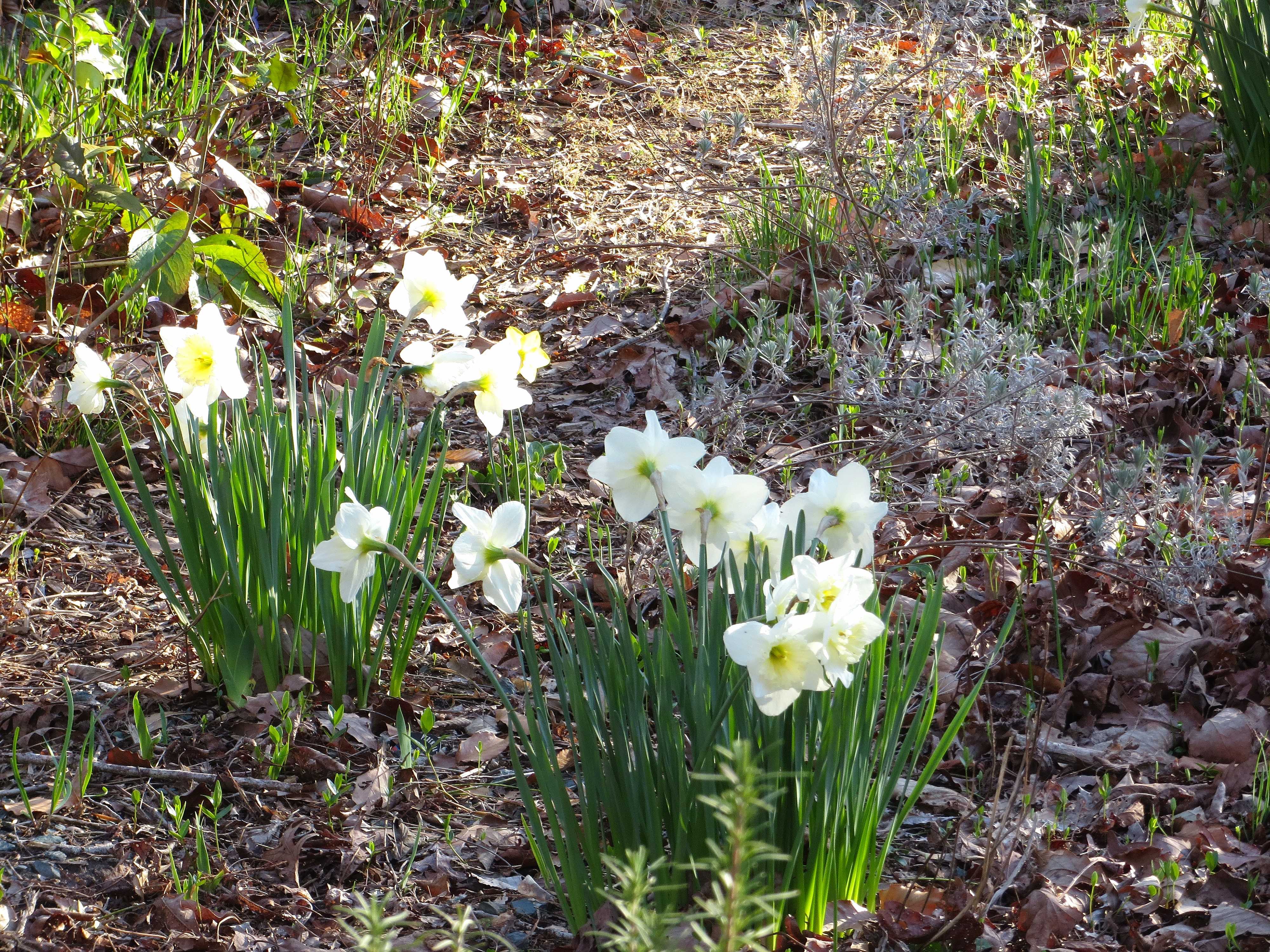
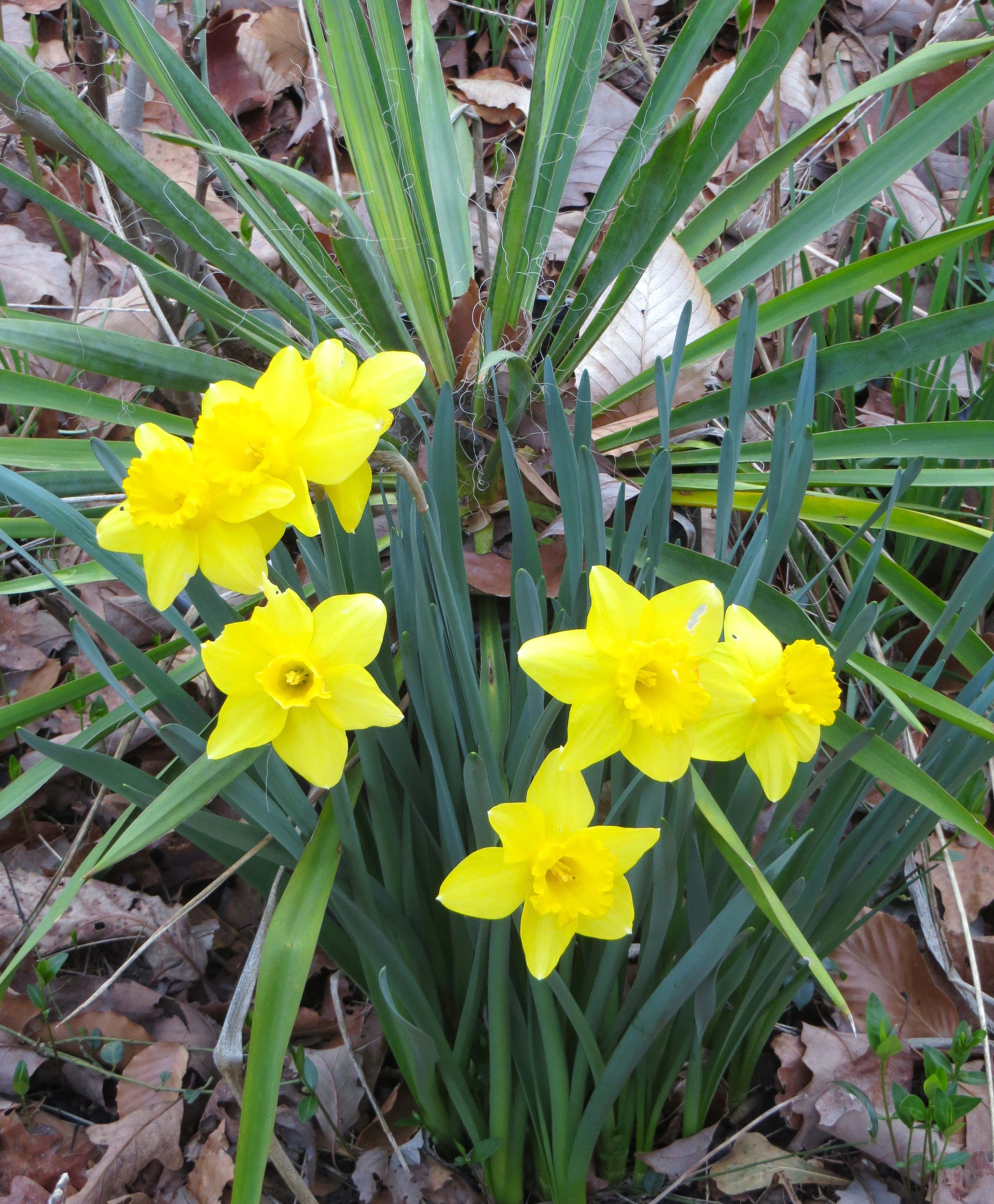
Narcissus of so many different sizes and varieties are blooming now. While they were slow to begin this spring, it seems the early and mid-season daffodils are all blooming at once. And the late season varieties are beginning to break ground with the tips of their leaves. While the Galanthus are going to seed now, the Leucojum have begun to bloom, growing into clouds of tiny white flowers beneath some of our Camellias.
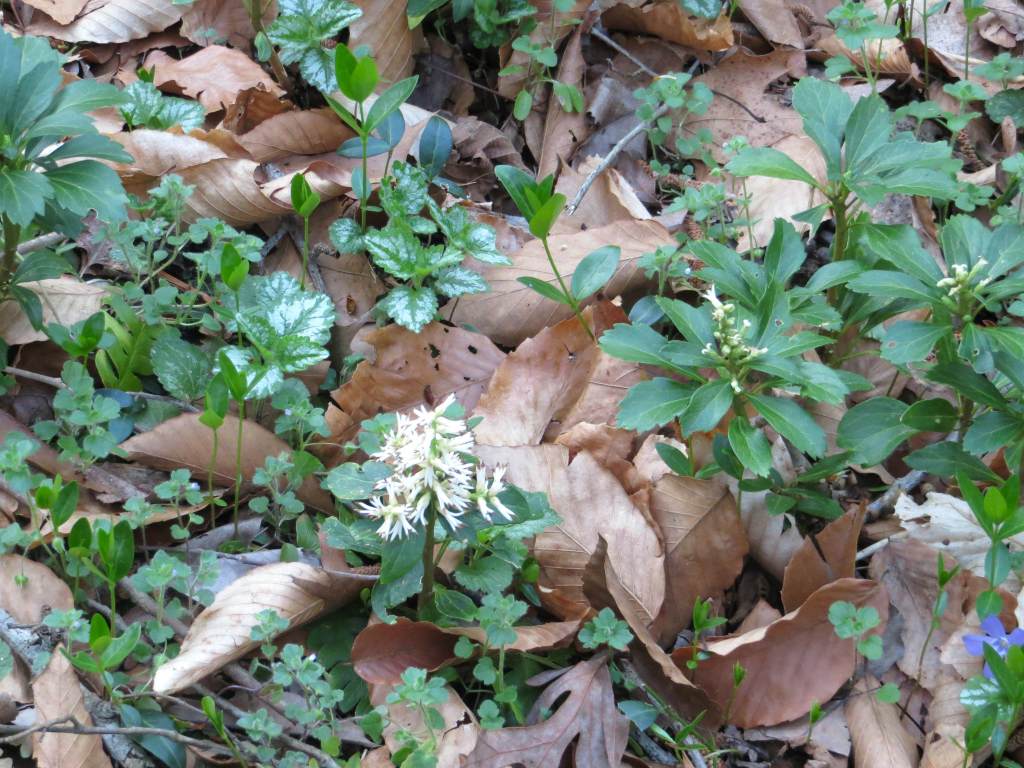
Are you acquainted with any gnomes, fairies, sprites, and other elemental beings who tend to plants and oftentimes share our gardens? It is difficult, nearly impossible, for our limited human senses to hear sounds and see light at wavelengths beyond our own sensitivities. Cameras can often reveal what our senses don’t perceive. But nature spirits are far older than humankind, and they carry on their work of helping plants to grow whether we acknowledge them, or not. They are attuned to the landscape and are a part of our Earth’s energies. And their awakening and activities at spring equinox is key to the unfolding of spring growth.
This week has found me cleaning up and starting fresh in several areas of our gardens. Snipping away old growth, cutting aggressive vines, removing old leaves, picking up sticks, refreshing pots, planting, and spreading deer repellent may not be glamorous work, but it is so important to clear away the old in order to appreciate the new. I have (finally) cleaned out an old, leaking pond liner that we inherited here, and am preparing to fill it with compost and plant it up with water loving Iris in the week ahead.
There is always something interesting to do in the garden, but the real magic happens whether we do anything, or not.
With appreciation to Jim Stephens of Garden Ruminations, who
hosts Six on Saturday each week.

 Our Forest Garden
I love the energy that comes with Springtime after the long winter months.
LikeLiked by 1 person
Leucojum bloomed quite a while ago here, so is now going to seed. It is our equivalent of snowdrop, and is known as such, since no one who I am aware of grows Galanthus. Does redbud grow wild there? Western redbud is native near here, but is very sporadic at higher elevations, so only blooms within landscapes if planted.
LikeLike
Yes, Cercis canadensis grows wild here, and most of my trees are self-sown trees of the wild species. I love the wild ones best because they grow into such interesting shapes when left alone. Shall I dig a seedling for you if a good one emerges this summer? I can pot it when I find it and then mail it once redbuds go dormant in fall. Yes, I would imagine that Galanthus prefers cool and damp to your warmer, drier climate. It was a little unusual for them to emerge so late and to overlap with the Leucojum, but since they are both so pretty, there is no need to complain. Here is more information on the various redbud species, but mostly about ours, if you are interested: https://jccwmg.org/wordpress/burst-into-spring-with-eastern-redbud/
LikeLiked by 1 person
Thank you, but I already grow Eastern redbud from seed that I collected in Oklahoma. It would be a good alternative to crape myrtle here, but does not perform as well, and does not last as long. Western redbud is smaller and shrubbier, although it can get quite tall, but lasts only about a decade or so. Those who know how to grow it leave a few seedlings as the original starts to die back.
LikeLiked by 1 person
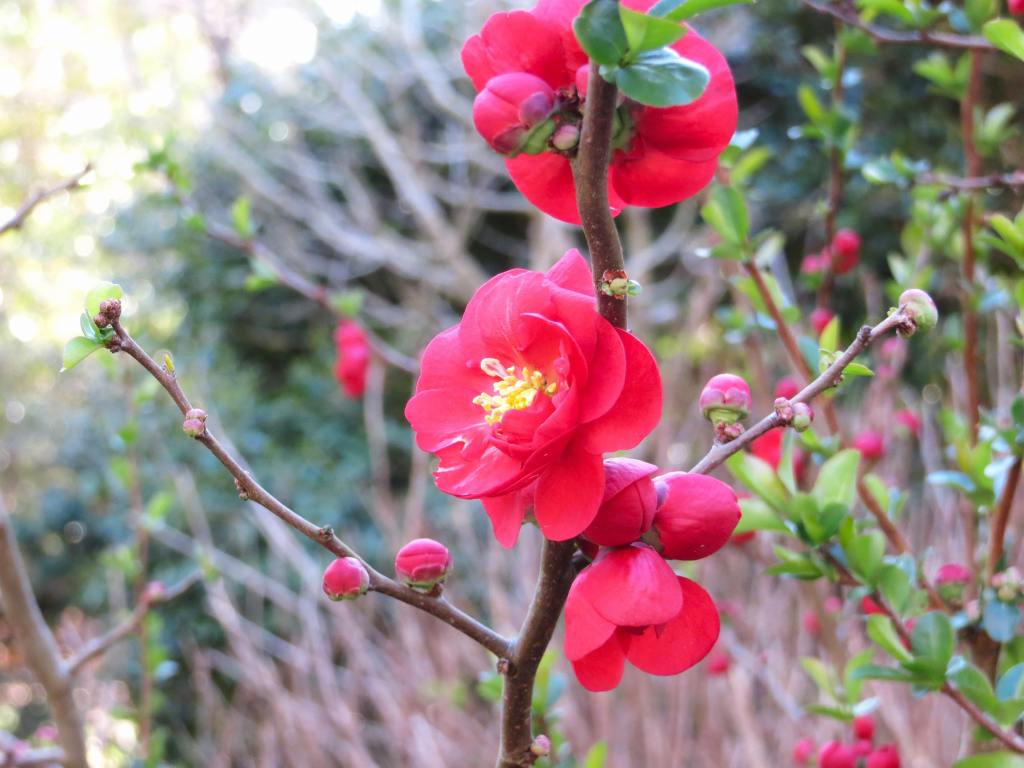
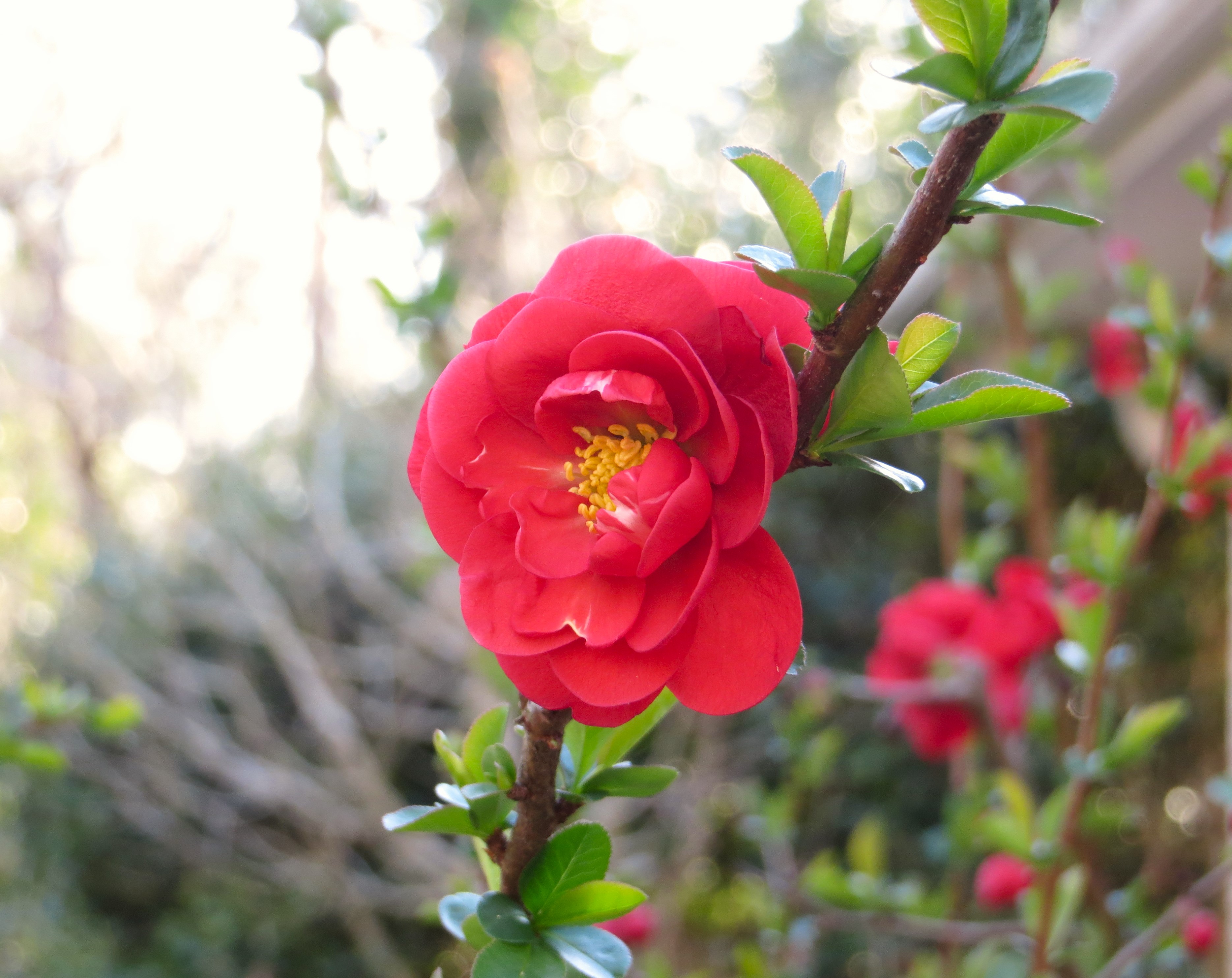
Chaenomeles is truly a superb flower, characteristic, both by its shape and its color.
I am jealous of this very pretty fern that you bought: the Woodwardia. I wish you good luck for it to grow well with lots of other photos in a few months/years
LikeLike
Thanks very much, Fred. This is one that produces little plantlets on its stipe, so I am looking forward to spreading it around. It has such a lovely texture! The Chaenomeles is fun when it bursts into this spectacular bloom early in the season. And I envy your lemon tree!
LikeLiked by 1 person