Life is always a bit of a gamble, isn’t it? We make decisions and make choices and do the best we can, moment to moment. Sometimes we ride a roller coaster for a while, second-guessing whether we made a good choice or a costly one. Other times we can feel a sense of certainty that we are doing the right thing, or the wrong thing, even without any substantial proof.
I took a gamble in early April and planted out a shipment of tender plants. I also began moving some Begonias and an overwintered scented geranium out during those soft, warm days full of promise. Nature followed suit- or perhaps led the way- by opening fronds and leaves and petals and allowing bits of green to poke through the earth to begin another cycle of growth. That all seemed very questionable by last Sunday evening.
The forecasters couldn’t call it. Some told us our temperatures on Tuesday night would stay in the low 40s and others issued a freeze warning for early Wednesday morning. There was a variety of forecasts from which to choose by mid-afternoon on Monday. Either way, it was going to be a cold stretch, with the potential for a hard frost.
I had already committed to spring, but I hedged my bets by bring a few things back in and clustering a few containers on the back deck near the house and covering them with a sheet. It has been a cold week, and we left the sheet in place until hours before the rain began on Thursday. And everything survived. They better than survived because it never did freeze here.
If only all gambles could pay off so well… The news this week has gone from terrible to tragic and I had to keep an eye on it, like it or not. Most of us of a certain age listened to someone along the way and invested in our financial futures. We never planned for the debacle that has crashed the markets this month. I woke up a 3 this morning and suddenly realized I should order a fresh pack of gardening gloves and a few extra pairs of nippers right now, since they likely come from somewhere in Asia. I wonder how many others are feeling the same foreboding and doing what they can to prepare for unknown months ahead?
Back when I was still teaching in public schools, there were many days when I needed to come home and simply ‘put my hands in the dirt’ to relieve the stress of the day. Pruning, planting, watering, and sometimes just sitting there admiring is such a helpful antidote to stress. Researchers have discovered in recent years all sorts of reasons to explain the wonderful healing power of spending time in nature. Everything from substances plants release into the air we breathe to bacteria in the soil that interacts positively with our skin are all proven to have healing qualities. Perhaps watching for the first butterflies of the morning and listening to geese converse as they fly overhead offers us a larger perspective, reminds us of the beauty that transcends our worries.
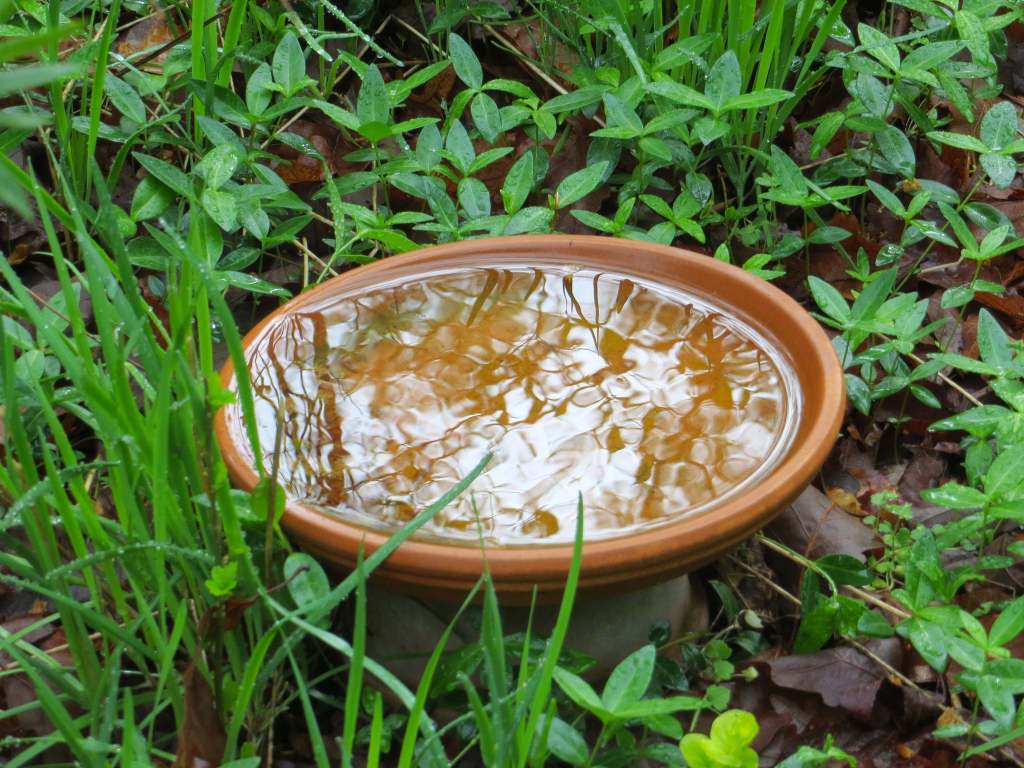
I feel encouraged that the terrible frost that worried me early in the week never happened. All the worry was for naught. Everything is still growing, blooming, and showing me what survived last summer’s drought and our long cold winter, to burst into life once again now that the conditions are favorable.
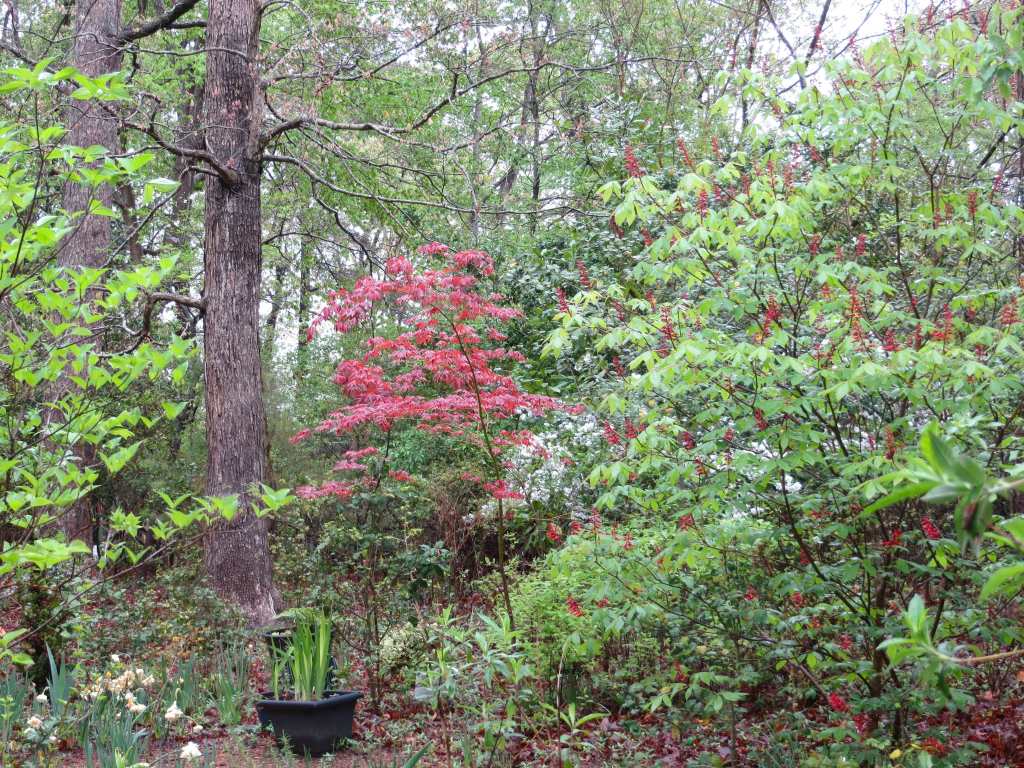
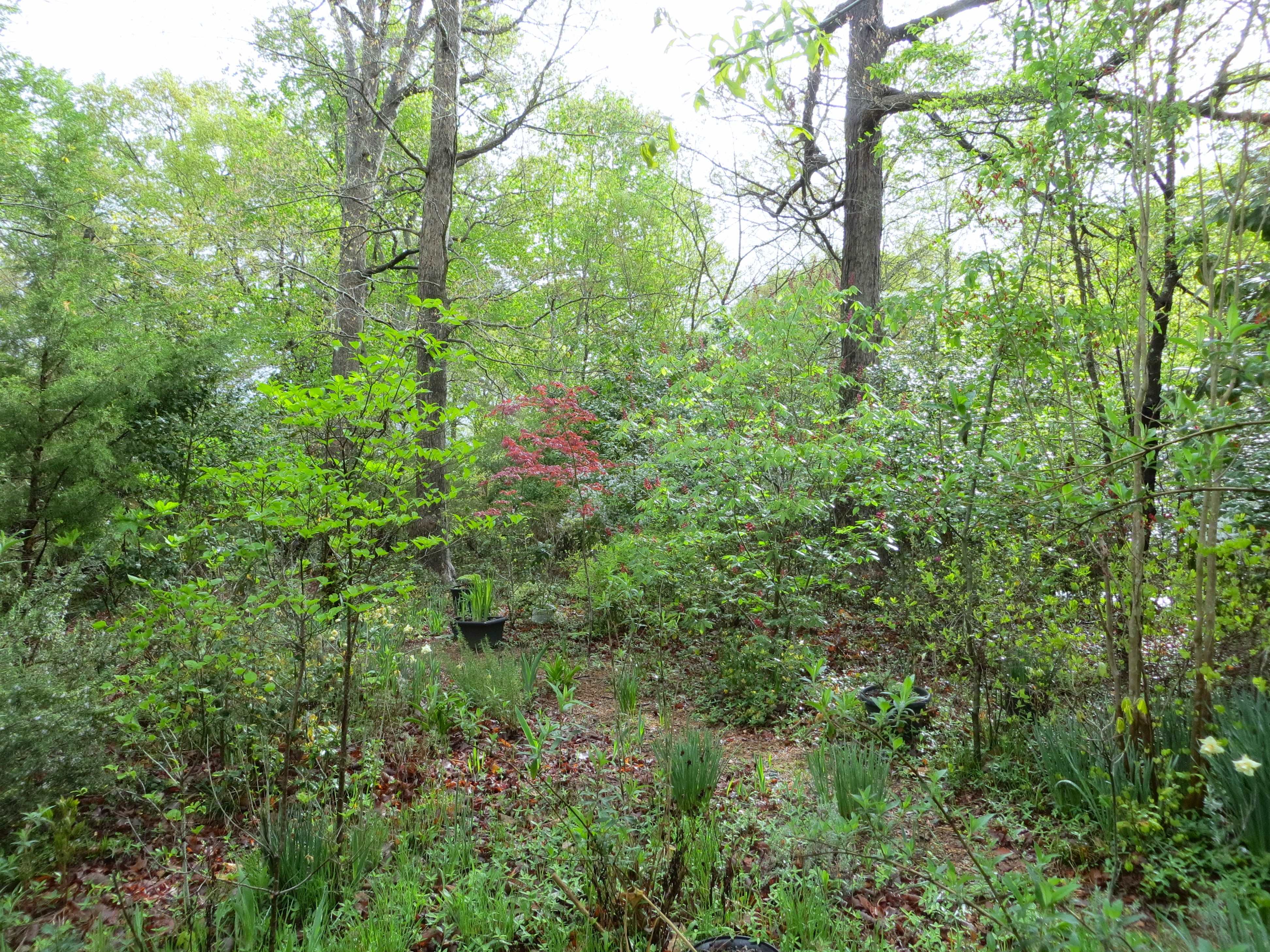
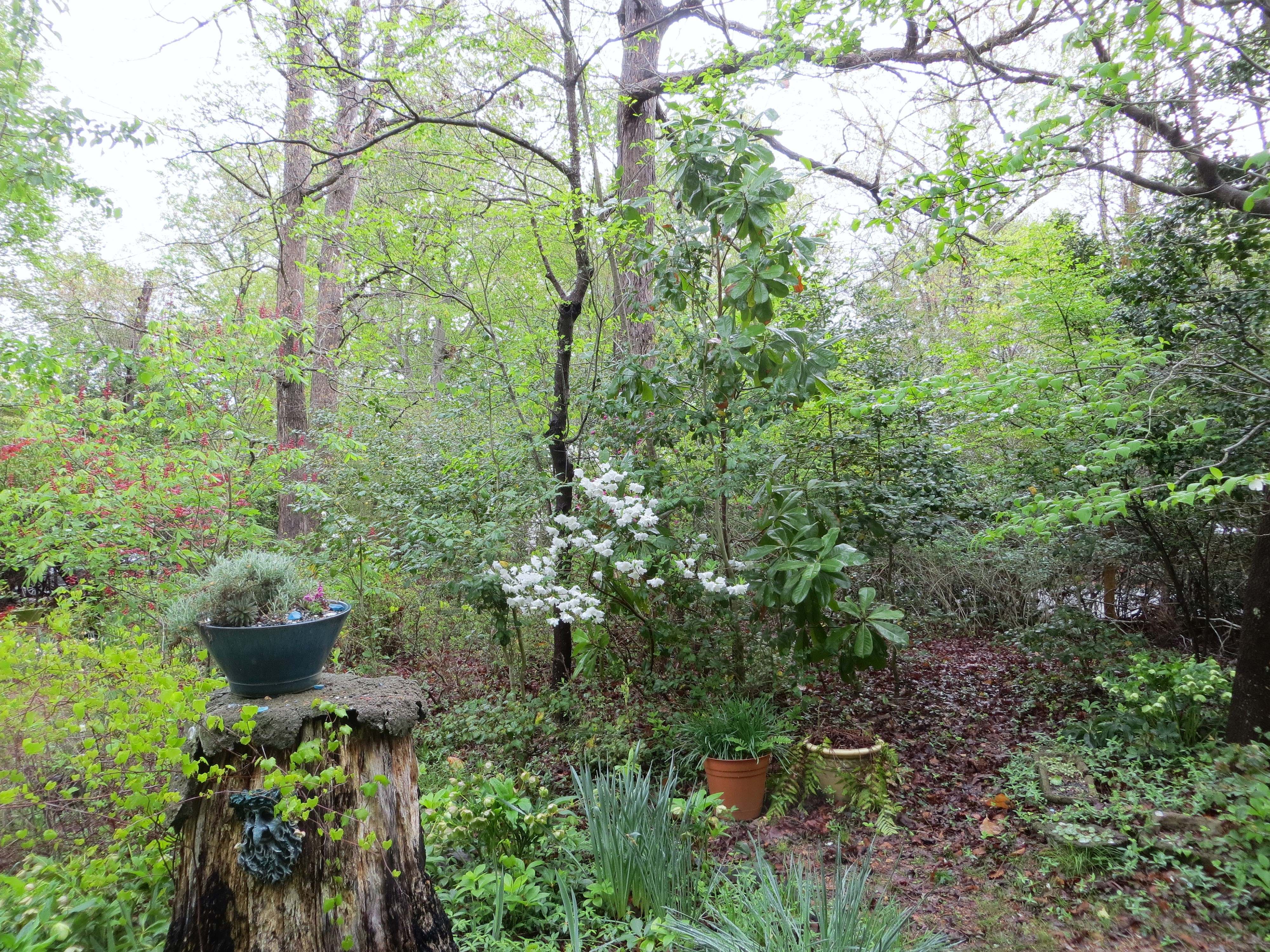
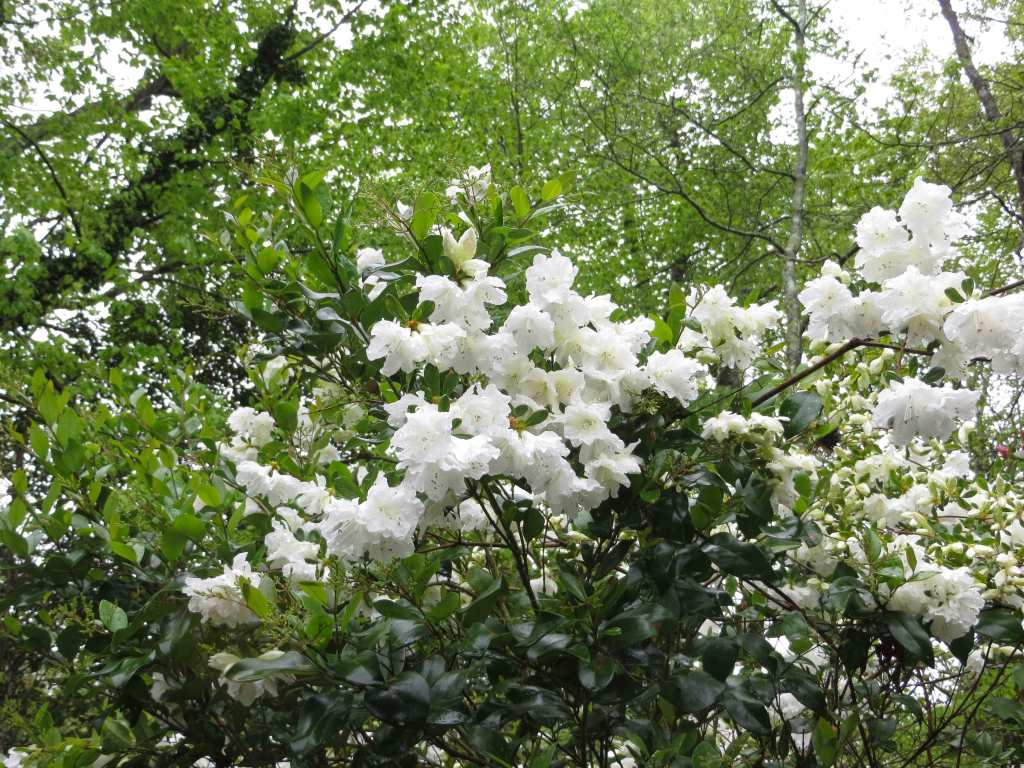
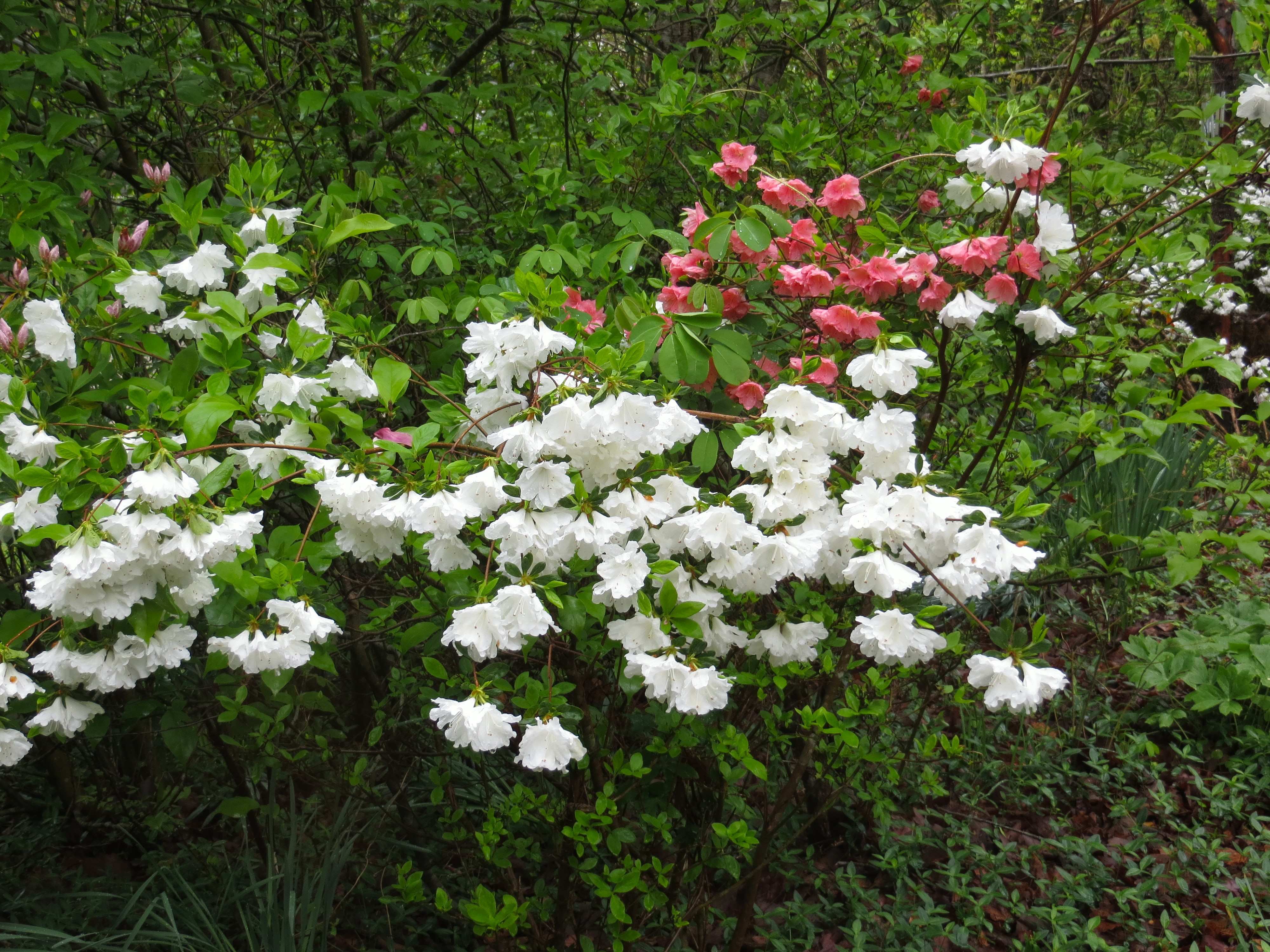
The week each spring when the dogwoods, the Azaleas, and the Wisteria all bloom is my favorite week of the year. And that is this week, when everywhere you look there is something beautiful to enjoy. The dogwoods plant themselves, sometimes with a little encouragement and assistance. But the Azaleas were left by an earlier gardener on this property. They filled the lot with Azaleas in many colors long before the deer herd grew so large. So I am three times happy to see every remaining Azalea shrub burst into bloom this spring. The tall ones bloom above the ‘grazing line’ of where the deer can reach. The shorter ones at least have leaves, proof of life, even if they won’t bloom this year.
We don’t grow Wisteria, though I’ll admit trying to establish it when we were first here. Perhaps it is a blessing that it never took hold and grew on the fence where I planted it because I had ordered Chinese Wisteria, now considered invasive. We have several patches of it in the community and I love seeing it in bloom. But it is very hard on the trees that support it. No one really gives Wisteria proper credit for improving the soil by fixing nitrogen on its roots, or for its ability to feed hungry bees in early spring. I’m always happy to find it blooming somewhere.
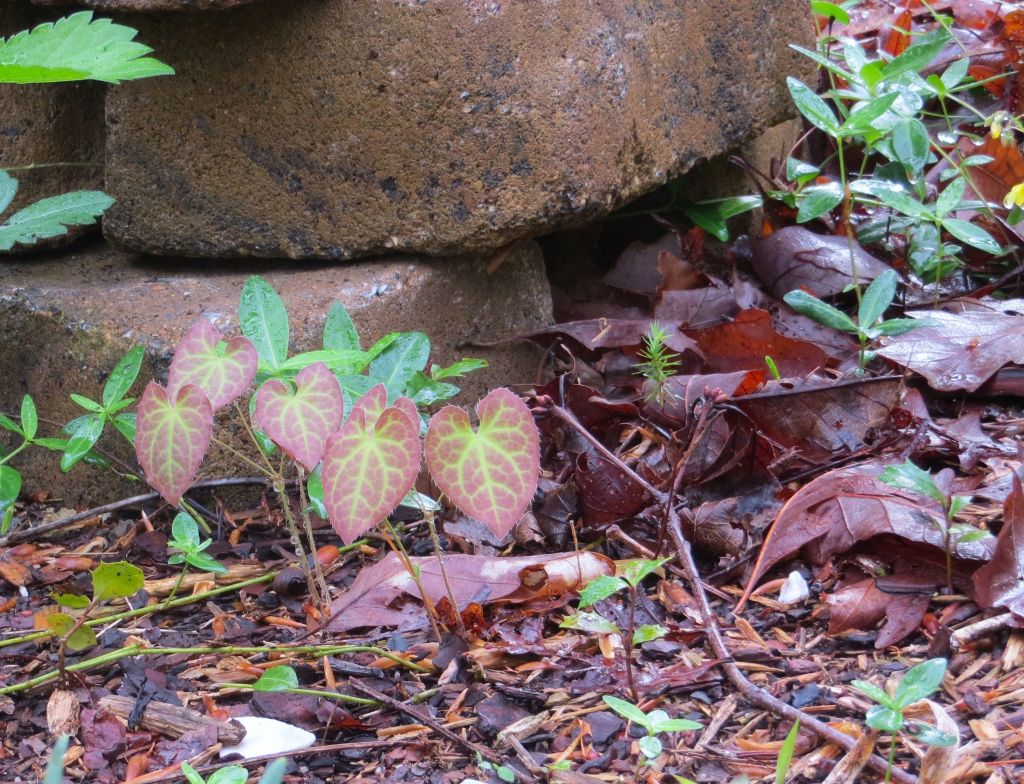
This Epimedium, and its neighbor a few inches away, came as unnamed divisions at a local charity plant sale two or three springs ago. The next few photos show Epimediums blooming in other areas of our forested upper garden. There is tremendous variety in leaf size and color, special markings, plant size, and flower color among different species and cultivars of Epimedium. 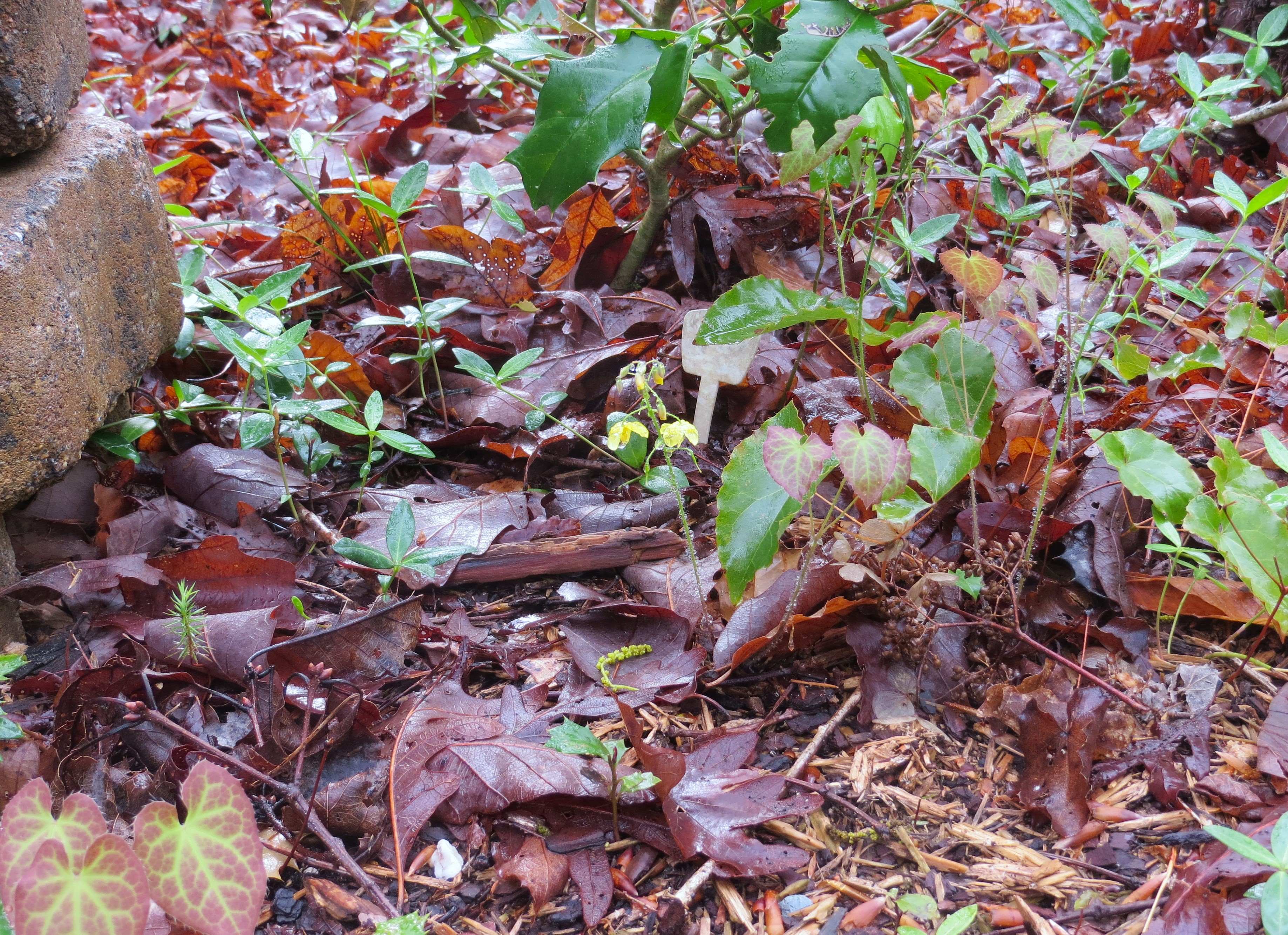
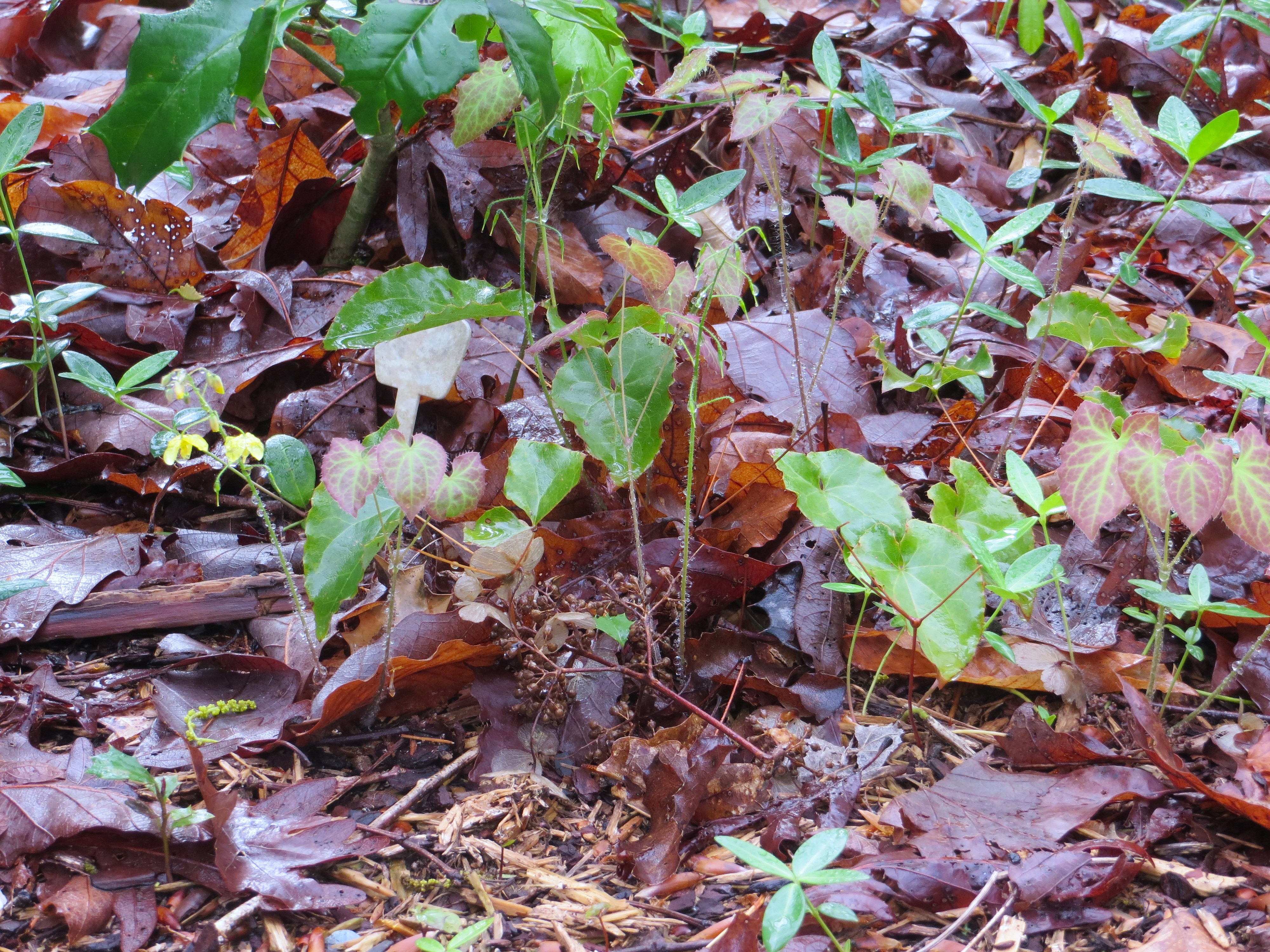
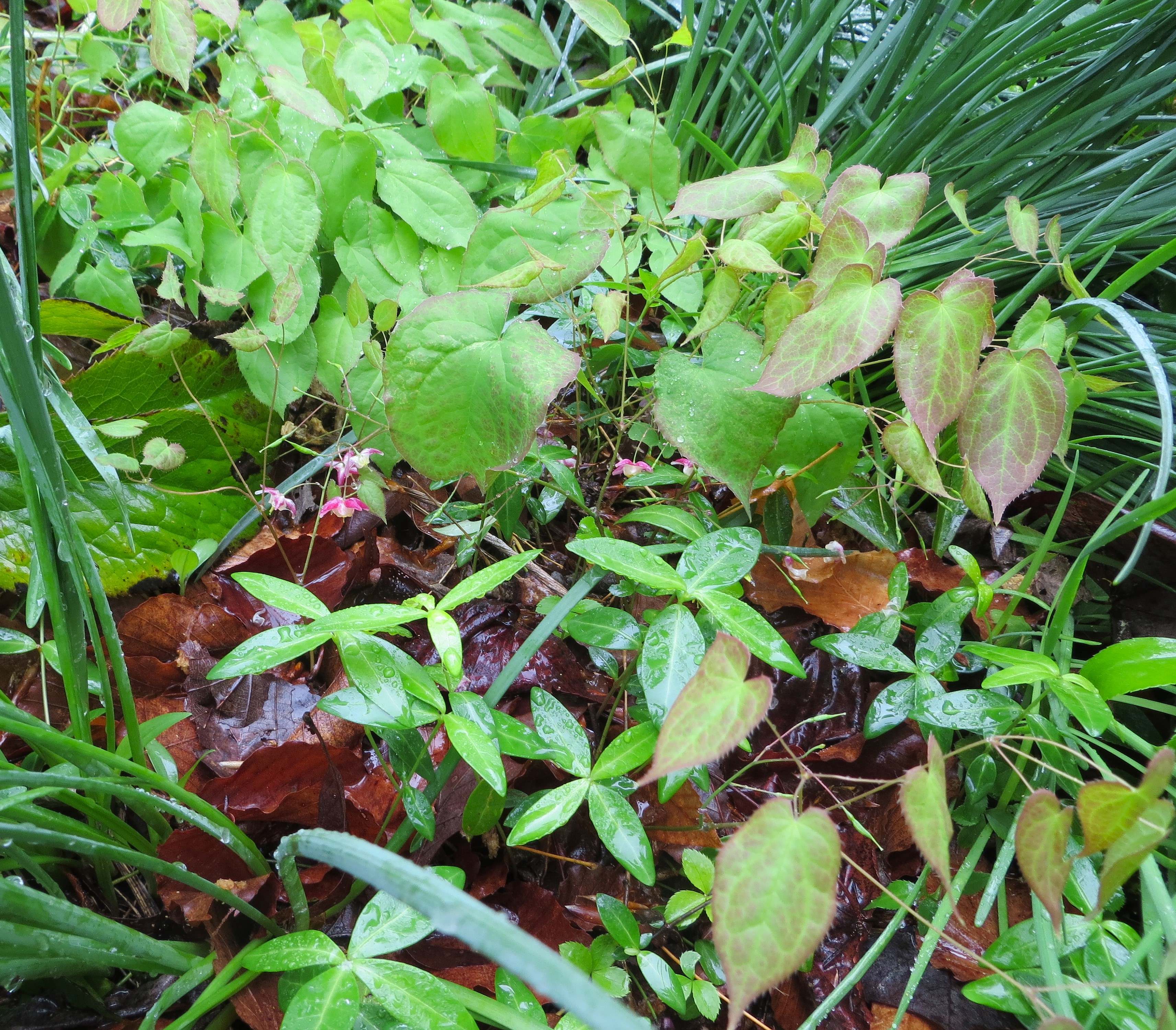
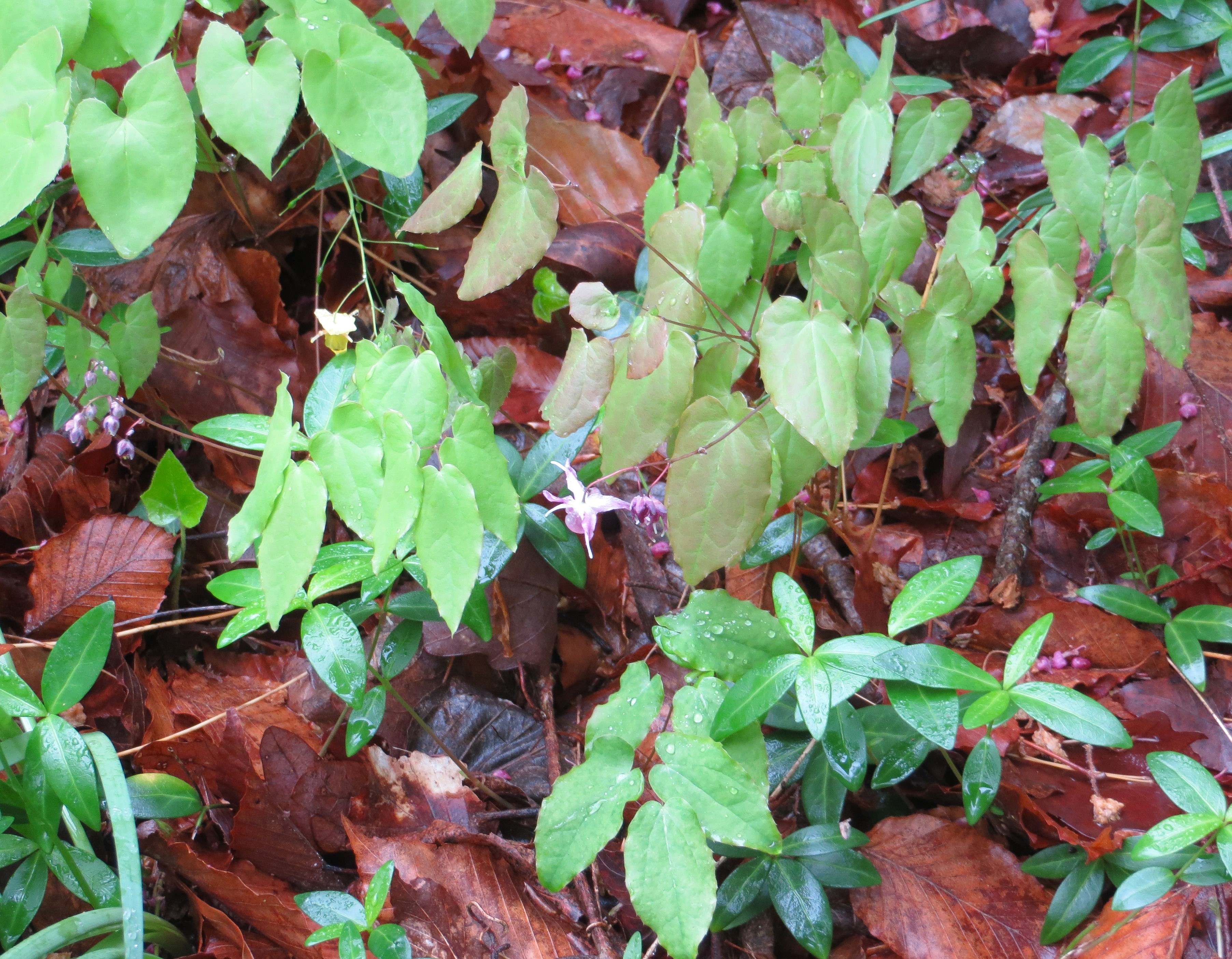
This spring I spent some time studying the Epimediums offered by Plant Delights Nursery in Raleigh, NC, and decided to add to our collection. There were two little Epimediums, also known as barrenwort or fairy wings, planted at the base of an old oak tree when we moved here. They never did much, but they both survived when the tree fell in the summer of 2013. I dug them up as we cleaned up from the storm and then replanted them in the raised bed I created around the remaining stump.
I’ve planted a few more Epimediums over the years. They can thrive in dry shade, keep their attractive leaves late into the winter, and they have such delicate, unusual flowers in the spring. I showed the first patch of Epimediums to bloom in our six last week. But a few more have bloomed this week, including two blooming for the first time after two or three years in the ground.
A new Epimedium, a Chinese species first collected in 2001 and now offered by Plant Delights called simply, E. sp.‘The Giant,’ arrived yesterday. I was astounded to find it in full bloom when I opened the box. It is supposed to grow to only about a foot high, but produces tall stalks of flowers to 3′-4′ each spring. The flower stalks are indeterminate, and so continue blooming over several months. I have its spot in a shady bed among ferns all ready to plant it in the next day or two. I plan to divide and move some of my other Epimediums this month to better positions and hope for them to take off and perform even better in the years ahead.
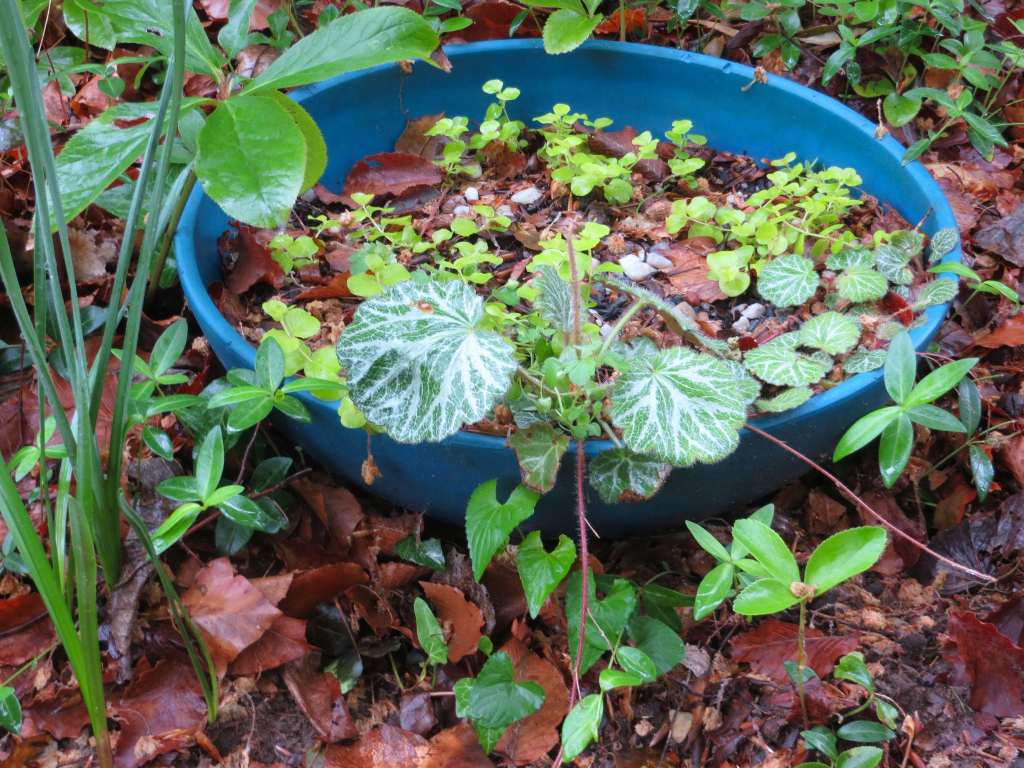
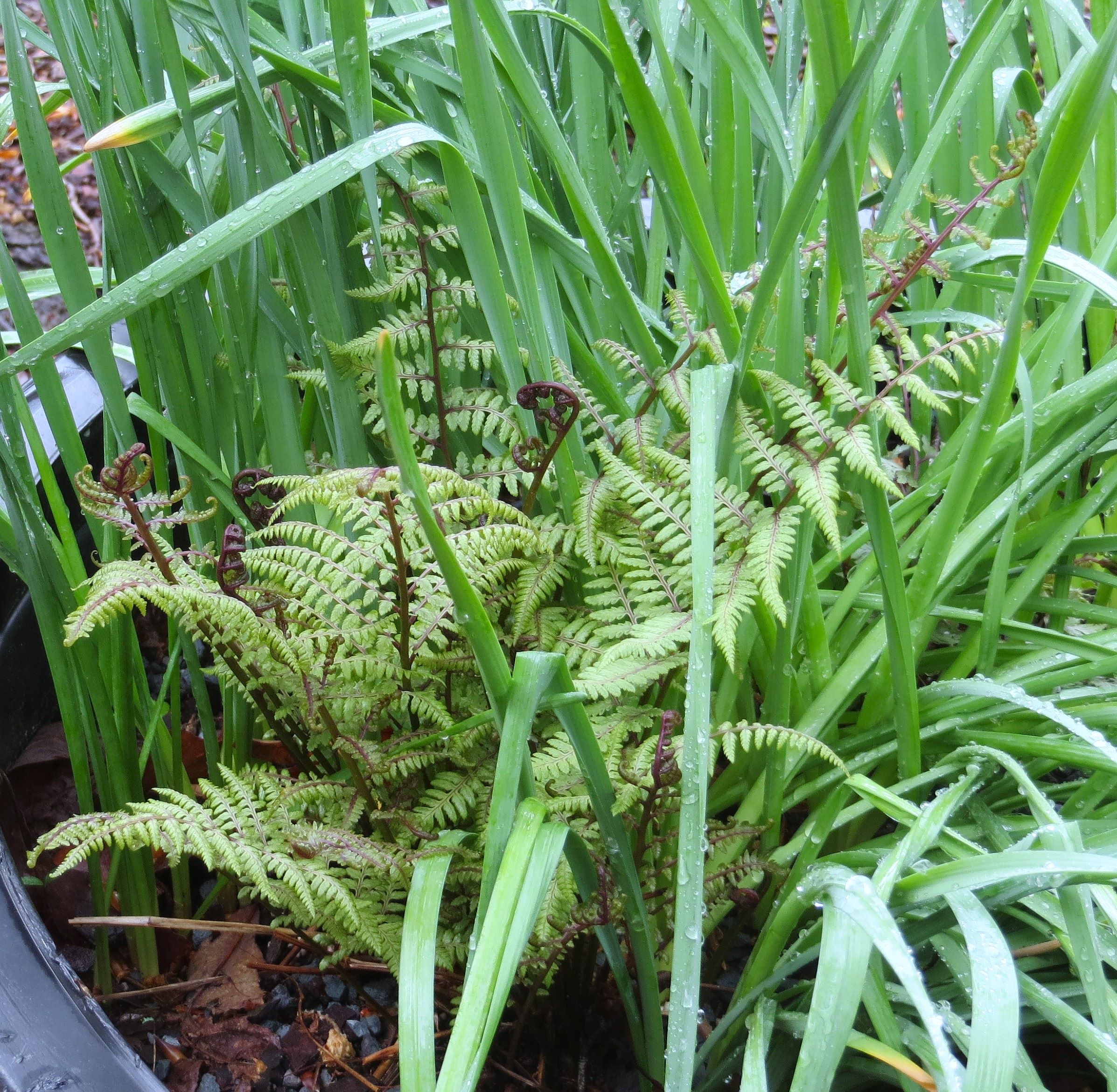
Strawberry Begonia, Saxifraga stolonifera, has beautifully marked leaves year round and tiny flowers on a tall stalk each spring. This one is ready to bloom in the coming days as it also stretches out stolons which will soon develop tiny ‘plantlets’ to root nearby. This one has been growing in our garden for several years and is the ‘normal’ size. This pot will soon be re-done to hold Caladiums through the summer. The second pot holds S. stolonifera and Athyrium ‘Godzilla’ that is just emerging from dormancy. 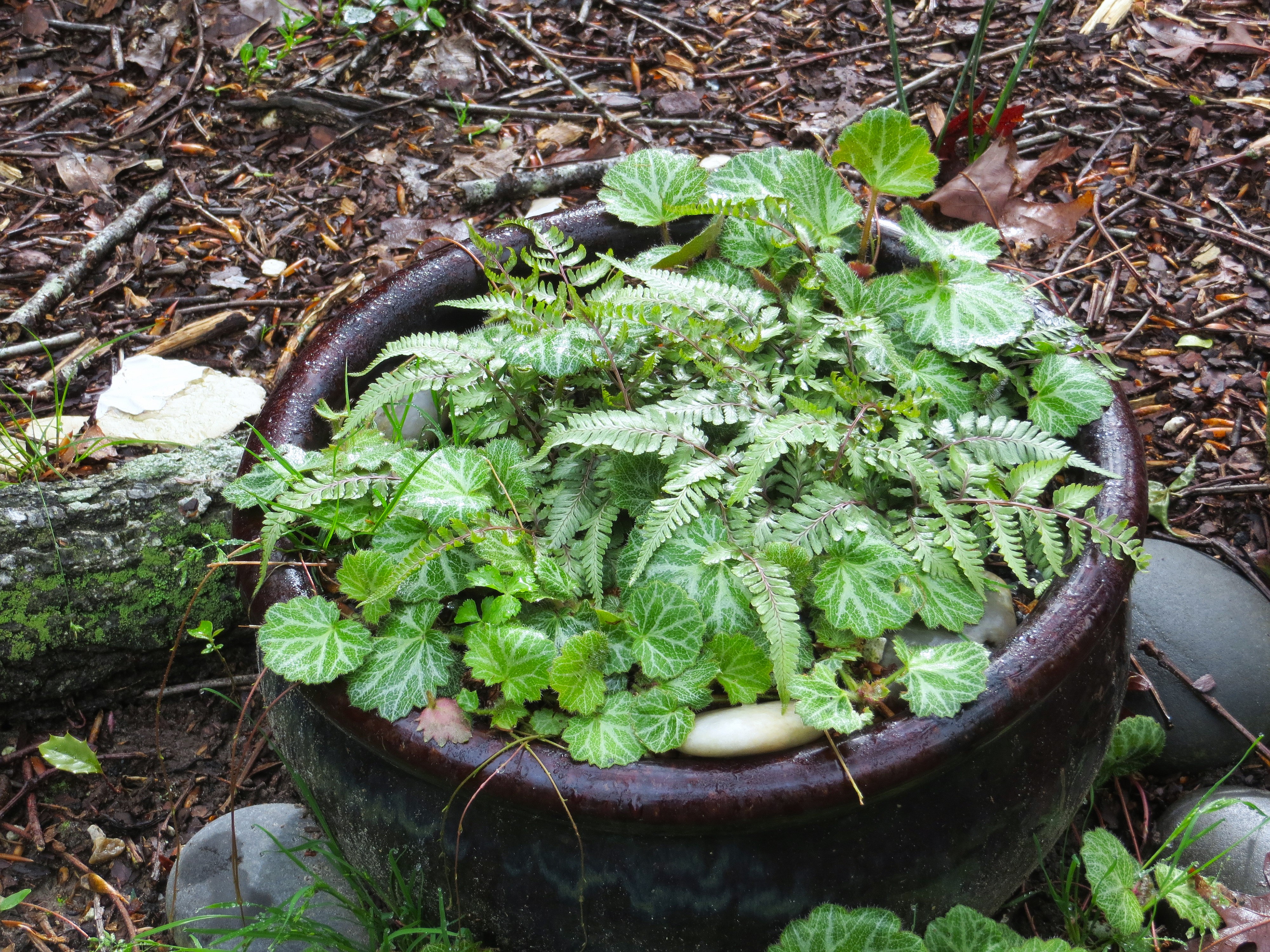
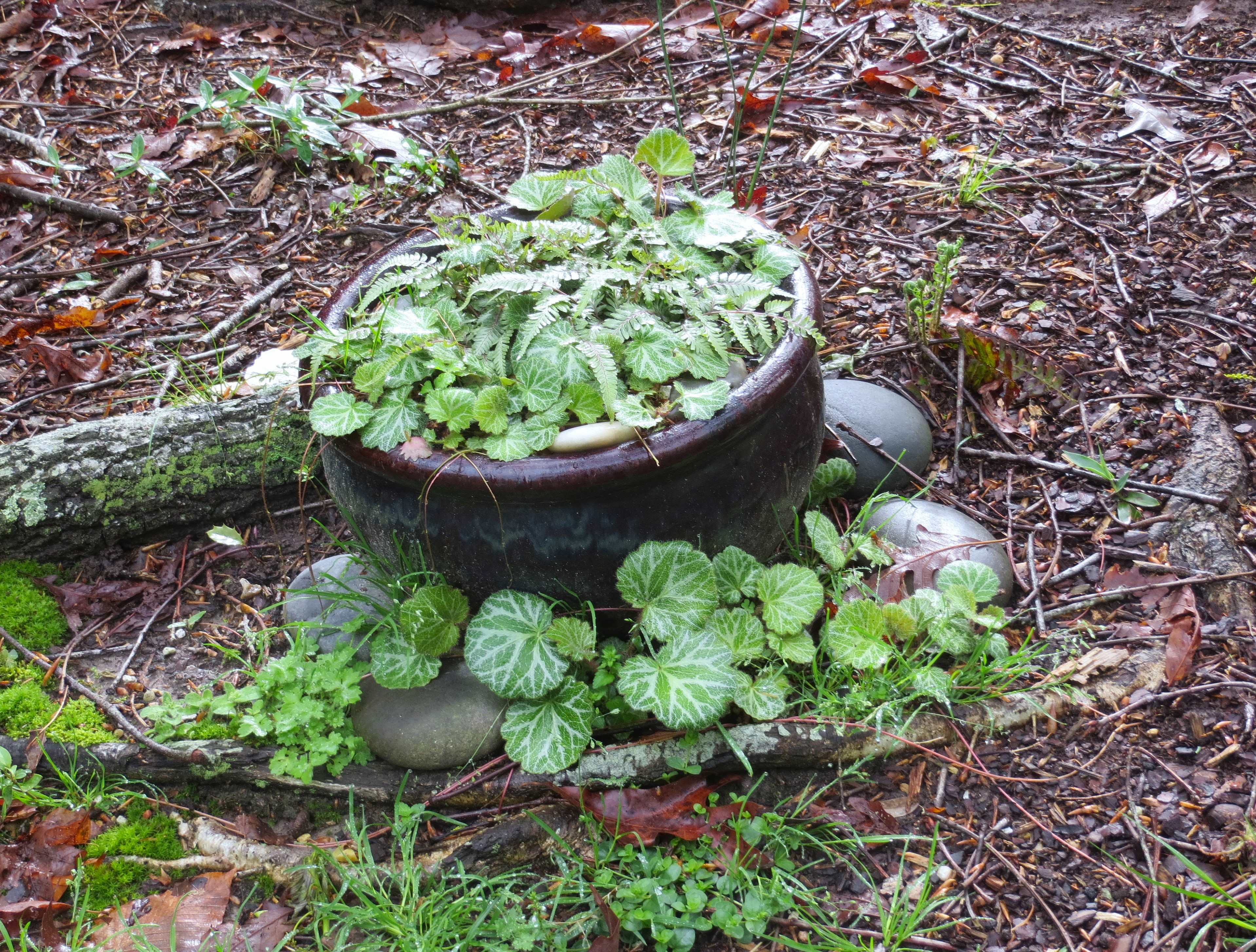
Plant Delights is also offering an unusually large-leafed Japanese strawberry Begonia with leaves that grow to 6″ across, though the plant remains 6″ of shorter. Saxifraga stolonifera ‘Nezu Jinga’ arrived with the Chinese species Epimedium, and a native pitcher plant to balance the box. I grew up considering strawberry Begonias as houseplants for hanging baskets. But I have been growing strawberry Begonia plants outdoors and spreading them around here for many years now. I enjoy their beautiful striped leaves that often persist through the winter and their sprays of tiny flowers each spring. Since they sometimes are grazed, this new one will likely be planted out of reach in a hanging basket or on the deck, at least until it gets established.
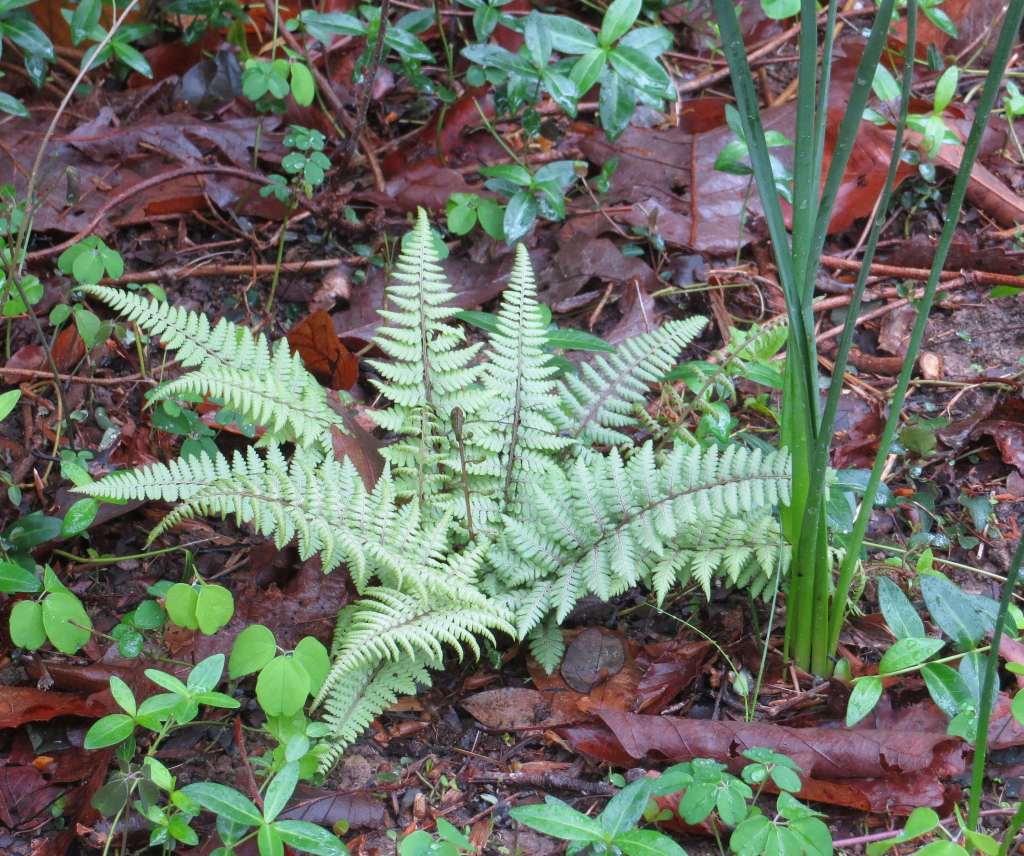
Ferns have continued to appear and unfurl this week. I’m sure the heavy rain of the past few days will speed them along. I’m watching for all of the little Christmas ferns I have planted from plugs these past two years and more of the various Japanese painted ferns I’ve planted, including a cohort of Athyrium ‘Ghost’ planted over the past two years. It is always fascinating to notice how each type of fern appears and opens on its own schedule. All of the individuals of a particular type begin to open their new fronds within just a few days of one another.
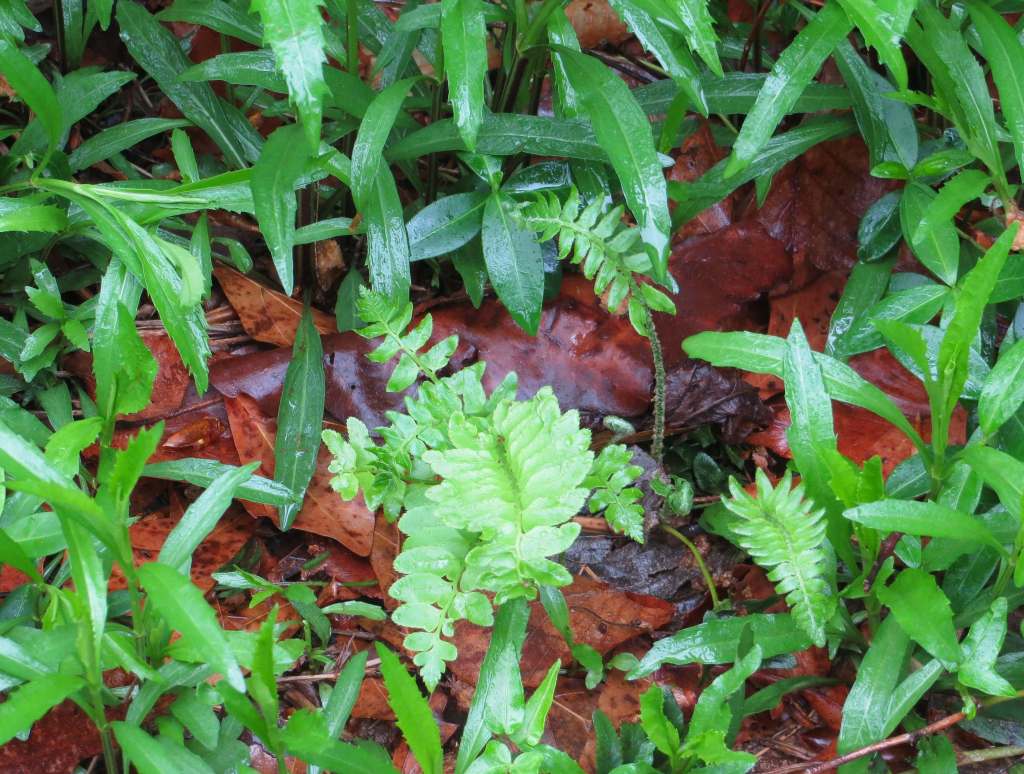
Christmas fern, Polystichum acrostichoides, emerges among perennials in its first spring after planting. 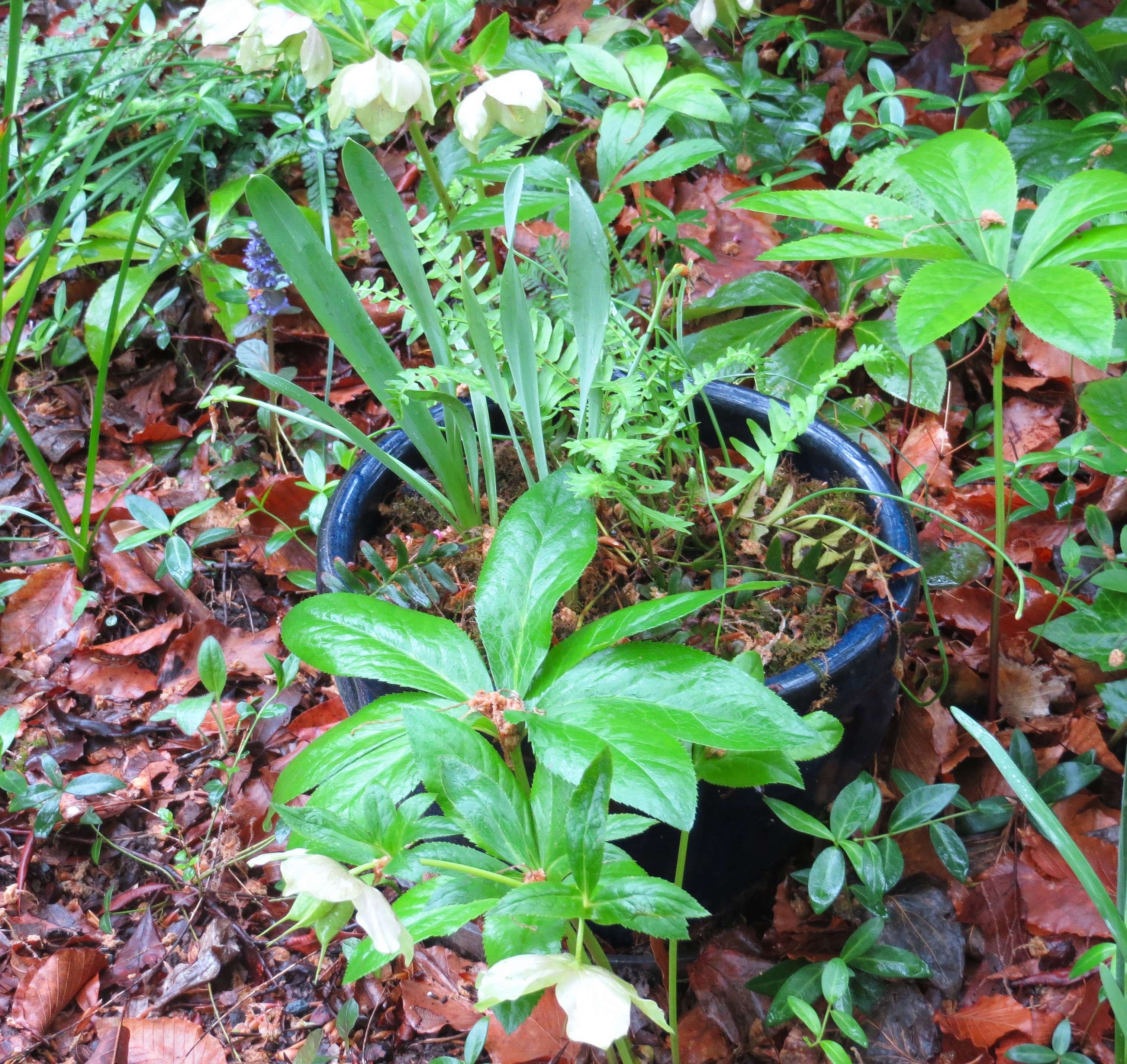
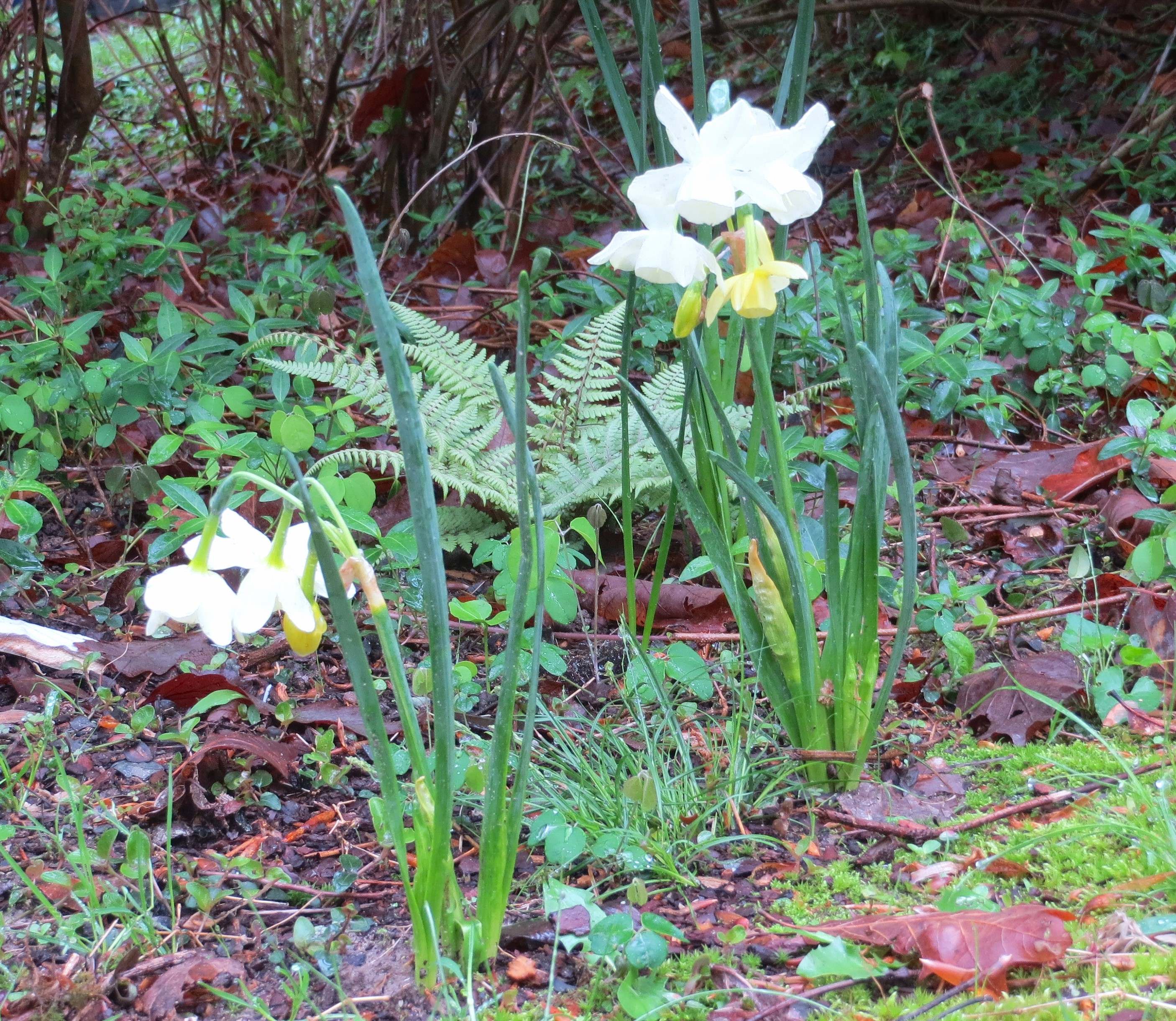
The daffodils are finishing for the year as the ferns and perennials appear. I am even more confident now that there won’t be any more frost here until at least November. It is finally safe to bring more tender plants outside for the summer and watch for more Irises to bloom in the coming days.
All gardeners take ‘calculated risks’ of one sort or another. Nature is unpredictable. Perhaps that is what keeps us enthralled as we watch the ebb and flow of life in our garden. It is good to find all of this spring’s plants still alive, and well, and growing. And even better to find a few welcome volunteers turning up for the very first time this spring.
With appreciation to Jim Stephens of Garden Ruminations, who
hosts Six on Saturday each week.

 Our Forest Garden
Marvelous abundance!
LikeLiked by 1 person
At last! ❤ ❤ ❤
LikeLike
These white azaleas and the pinks in the background are really very pretty. Your post is full of beautiful things!
I have a wisteria here and it really needs to be well guided, and monitored . You have to add a good stake . Otherwise it can destroy everything in its path.
LikeLiked by 1 person
That is the truth! Over time, even sturdy trellises and fences can be squeezed by its exuberance! We look forward to these beautiful Azaleas each year. The gardener who planted them made good selections over 50 years ago! ❤ ❤ ❤
LikeLiked by 1 person
There are so many tender plants popping up in the garden at the moment and now the forecast is for cold again with possible late April snow. What to do….!
LikeLiked by 1 person
So sorry to hear you have a late April snow on the way! Winter has really lingered this year. Do you have empty nursery pots to put over some of the shoots to protect them? Or something to use as a temporary mulch? This transition time is always dicey, isn’t it? Good luck! ❤ ❤ ❤
LikeLike
This is the time of year that the landscapes at work look more like Eastern landscapes, with dogwoods, azaleas, fresh fern foliage (and a few wisteria) and all that Eastern vegetation that will get ignored until it repeats its performance next year. Except for growing some on the farm, I have never worked with as many dogwoods as I work with here. They do not perform so well in most parts of California.
LikeLiked by 1 person
That is so interesting, Tony, that people are growing this combination of woody plants in your region. I wouldn’t expect dogwoods to perform well under your cultural conditions. Honestly, Azaleas mostly get ignored here, too, after they bloom. 😎
LikeLiked by 1 person
Oh, it is just a relatively narrow portion of the region, between the coastal mountains and the coast. Dogwoods are not happy on the inland side of the coastal mountains. Nor are they happy directly on the coast.
LikeLiked by 1 person
They don’t grow well directly on the coast here, either. They prefer an acidic loam soil- not sand. And they prefer the shade and shelter of growing under larger trees. They are happy in the mountains here, but I am noticing trees struggling more and more as the water table rises here, even near the rivers, as an aspect of sea level rise on the East Coast. Many of our dogwoods are also struggling with spot anthracnose and other microbial diseases. It is sad, but there are far fewer dogwood trees growing along the highways now than even 30-40 years ago.
LikeLiked by 1 person
The Scarlet Buckeye is beautiful, as are the other blooms and flowers you share here. Your foliage and growth is, not surprisingly, much farther along than ours here in the Upper Midwest. But we’re getting some warmer days, and all the plants are popping now. Happy spring!
LikeLiked by 1 person
Thank you! A preview of coming attractions as spring finds you, too! I hope you have better weather ahead. Happy spring! ❤ ❤ ❤
LikeLike