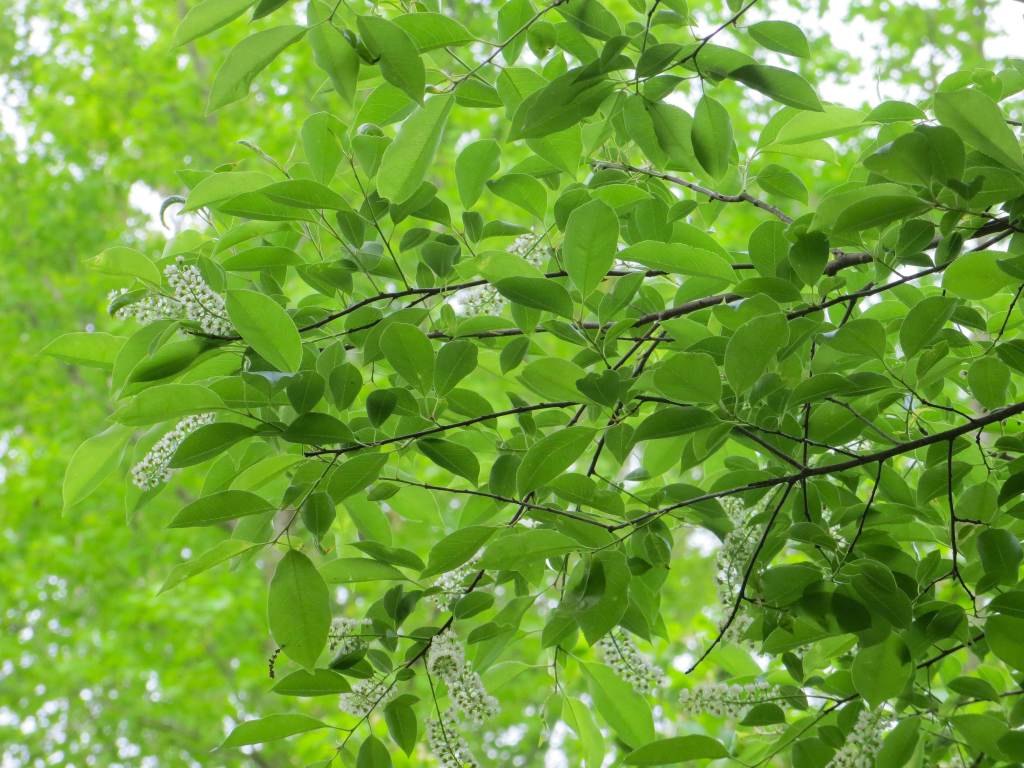
Native black cherry, Prunus serotina, is a keystone tree species in our area and hosts 340 different species of butterfly and moth. It is an important food source for native bees and other pollinators when it blooms in spring and its edible fruit feed birds and other small animals. Its cherries are small, and not very sweet, but are good for jam. 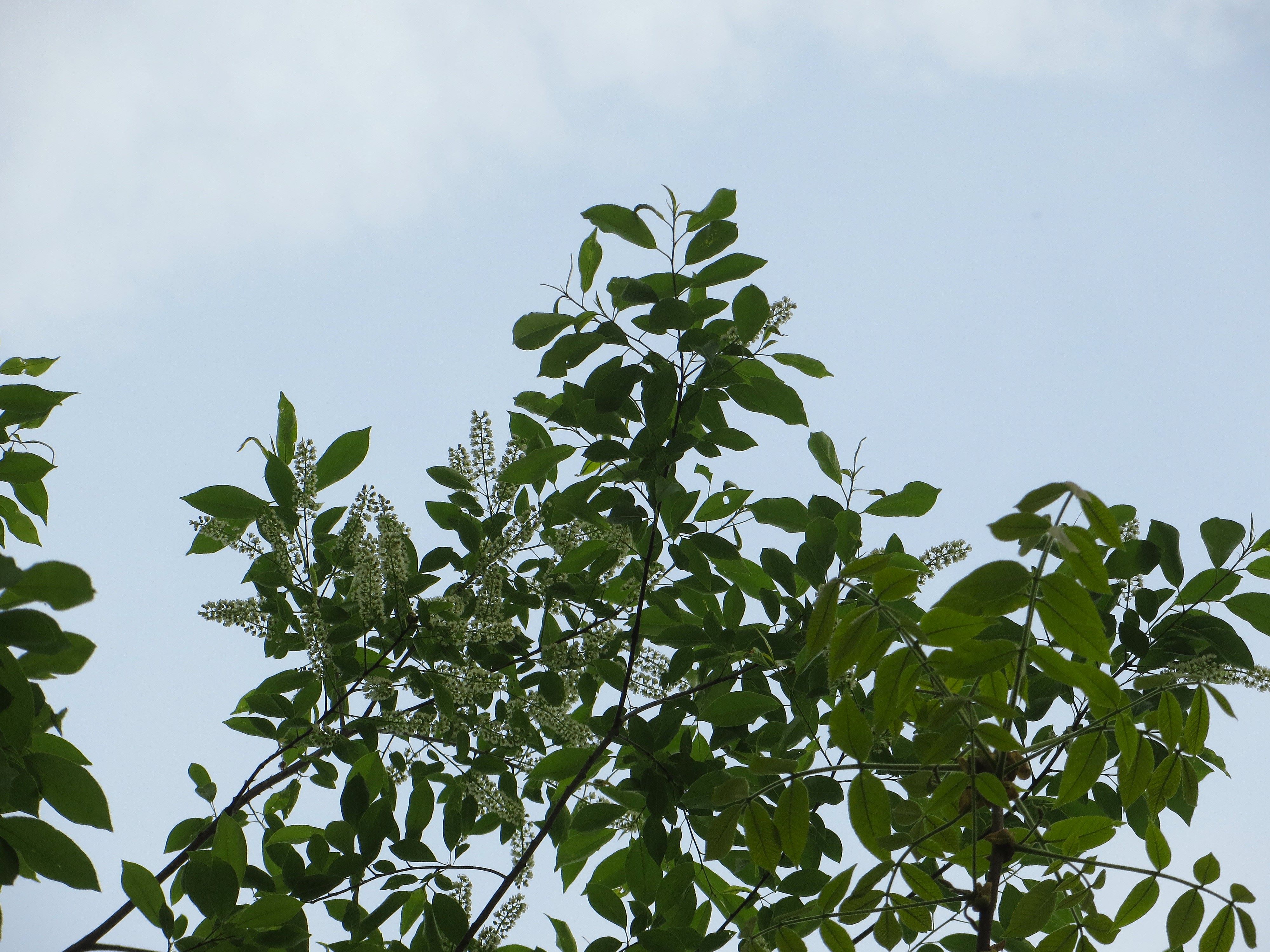
Full disclosure: I didn’t plant the black cherry tree, just as I didn’t plant the beautiful grove of ancient mountain laurel shrubs. They were already growing here when we came to this garden. But unlike the Azaleas and Asian Magnolia trees, planted by previous gardeners, these flowering trees are gifts of nature.
It took a few years to identify the black cherry tree because it took a few years of watching it before it finally bloomed. Its clusters of tiny white flowers may be considered insignificant by some. They aren’t showy like the huge pink Azalea flowers or brilliant Iris. It is fairly easy to identify members of the Prunus genus by the bark, if you know what you are looking for. It is beautiful, intricately marked bark. Beyond that one needs a few more clues to narrow down the species, and whether it may be native or not.
Black cherry is a keystone species in our area because it is so important to wildlife. Only oaks host more species of Lepidoptera than the three native species of Prunus: black cherry, chokecherry, and American plum. There are eight keystone species of trees in “Eastern Temperate Forests- Ecoregion 8” and two additional species of shrubs. Anyone wanting to support wildlife with native plants while also enjoying their own selections of more ornamental plants need only include a few keystone species for their region to cover their bases with the ecosystem.
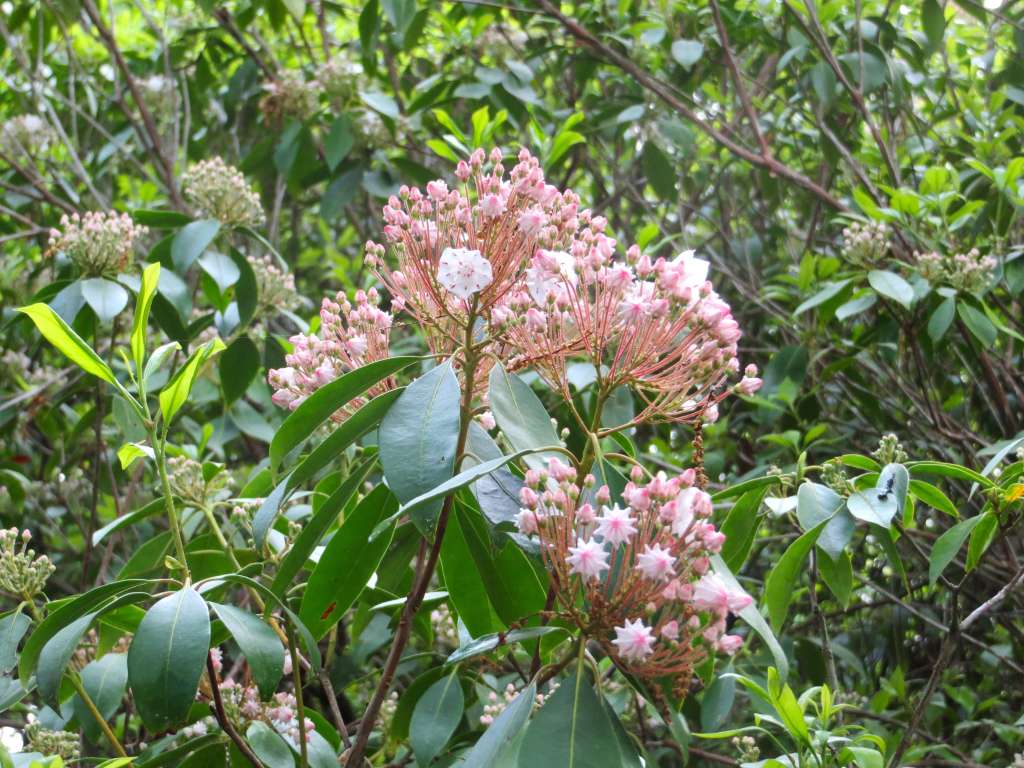
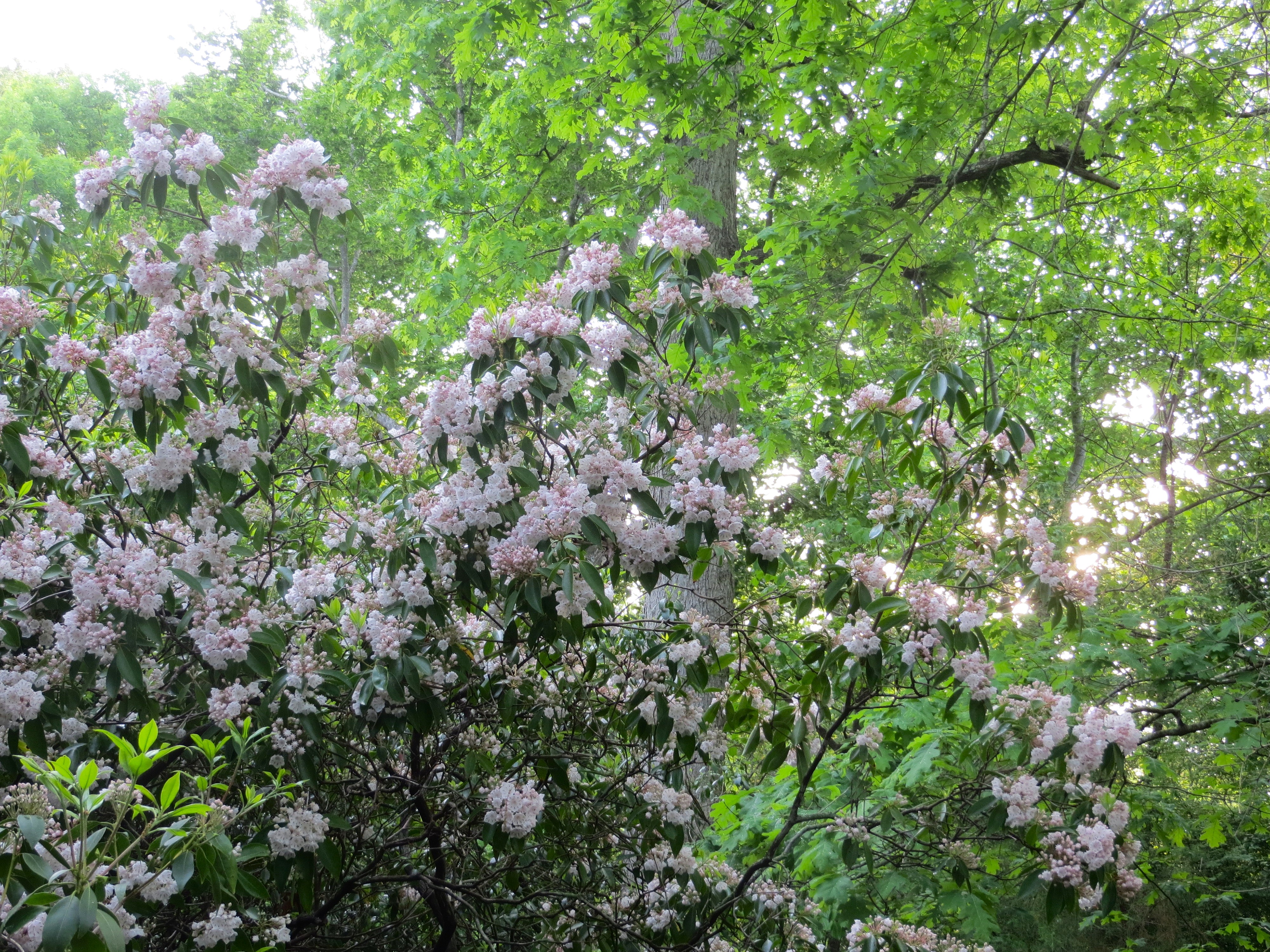
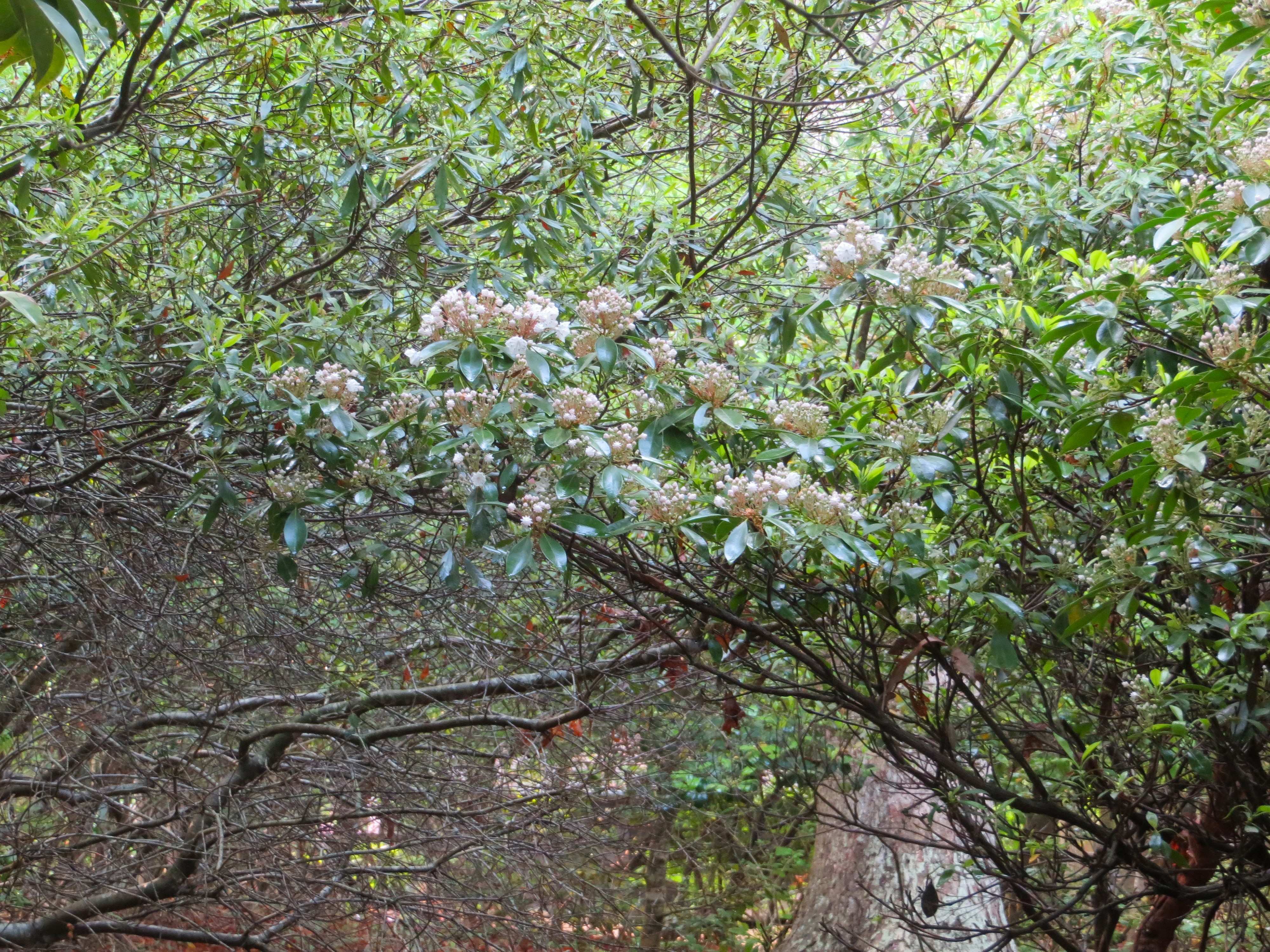
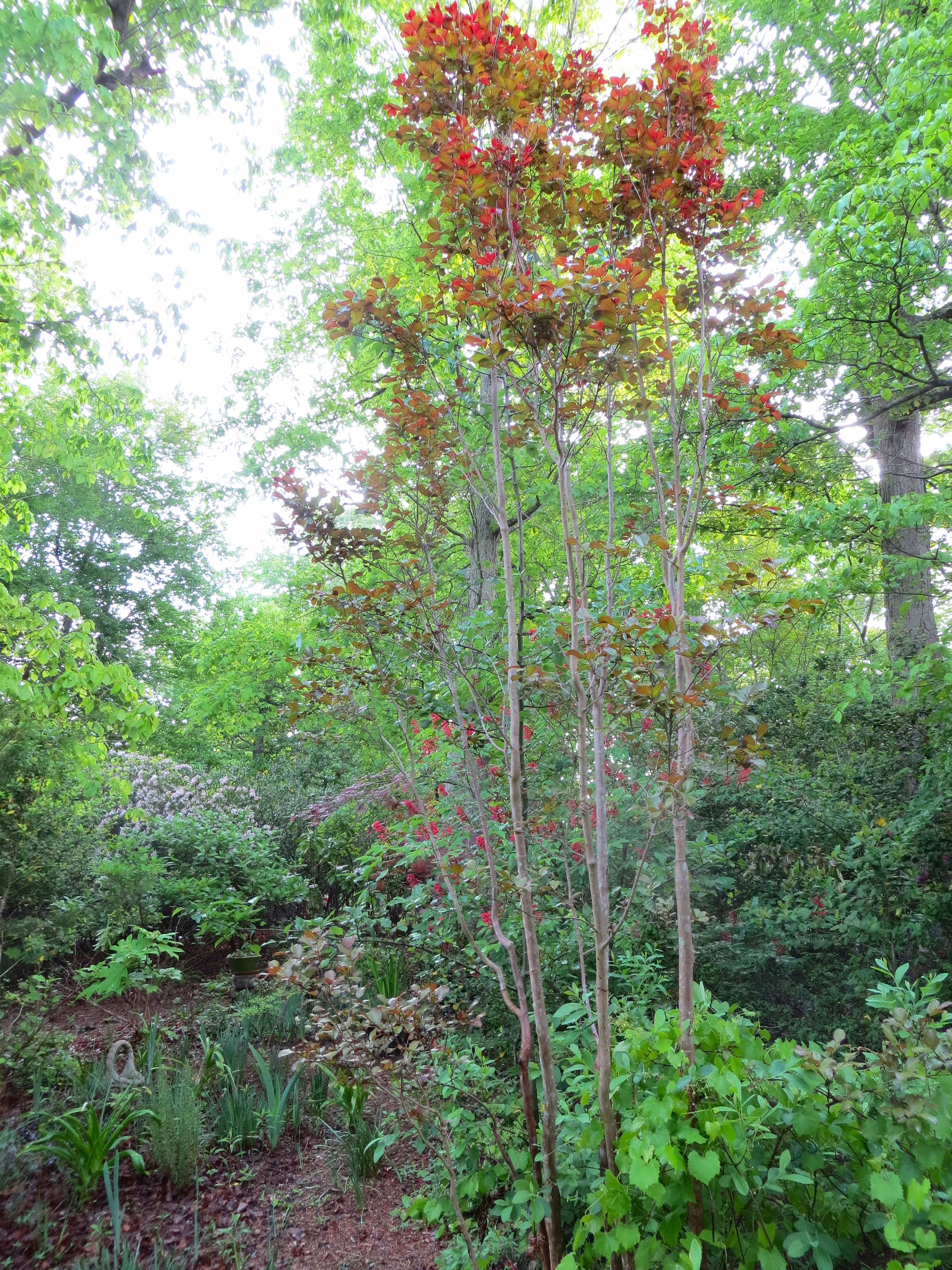
Mountain Laurel, Kalmia latifolia, may be my favorite ‘gift of nature’ shrub in our garden, though it is anything but a keystone species since it is highly poisonous. The ancient grove of mature Kalmia shrubs likely pre-date our neighborhood by decades. I’m still grateful to the builders for sparing them, and some beautiful old oak trees, when they built our home nearly 60 years ago. Kalmia probably lands in my ‘Six on Saturday’ lineup every year when it is in bloom.
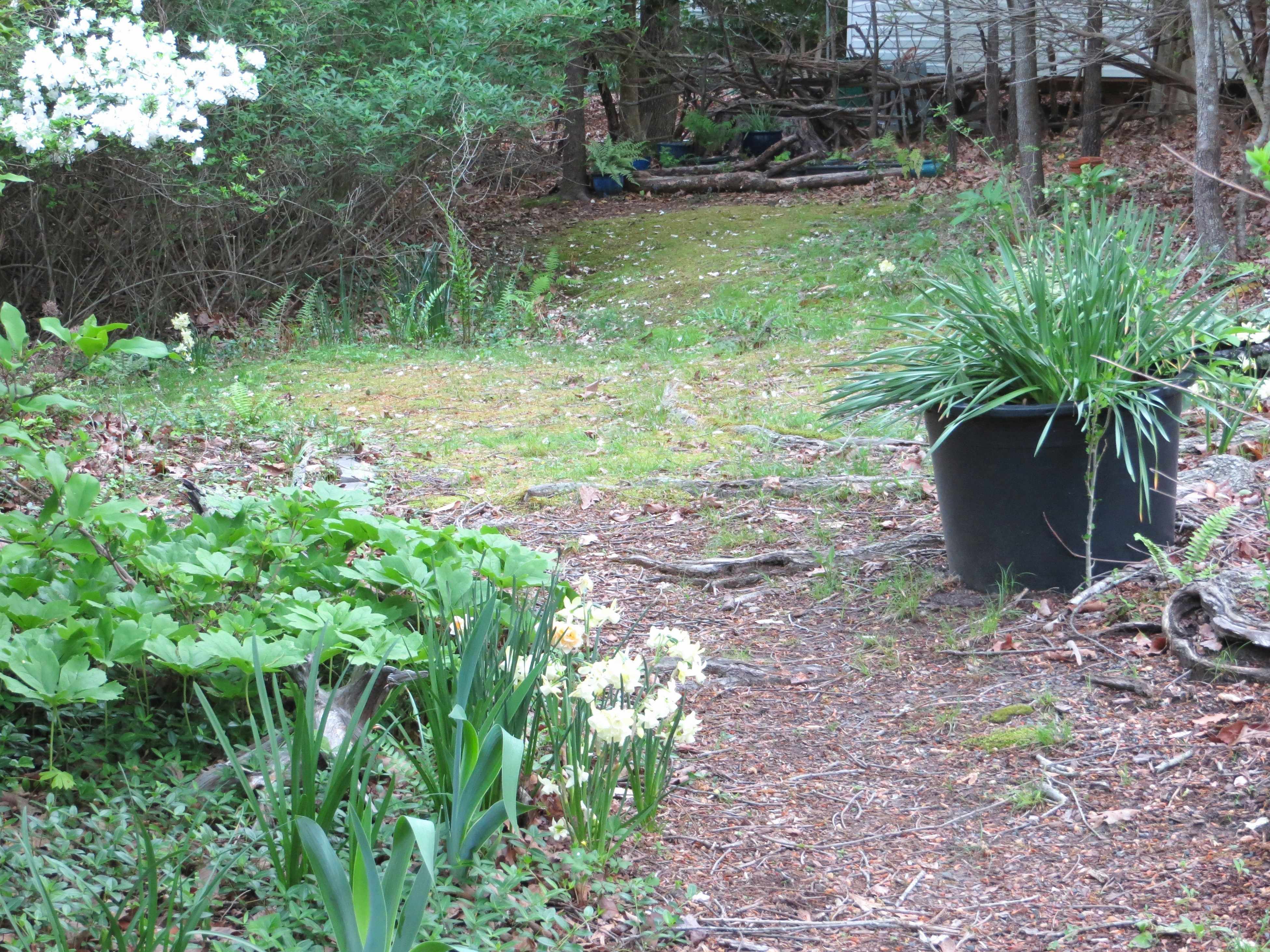
This shrub is so poisonous folks are cautioned to avoid honey made with its nectar. And yet the deer sometimes graze on its lower leaves, which they shouldn’t do but survive anyway, so the gnarled trunks of our shrubs are quite exposed. It is evergreen, with new leaves emerging around the time it blooms. The third photo in the group shows the ‘back side’ of the grove where the mountain laurel reaches out towards a hedge of also native wax myrtle shrubs. There is a shady tunnel here, on one edge of our yard, leading to one of the remaining beautiful old oaks. The last photo shows the mountain laurel grove in the distance when viewed down one axis of our front garden.
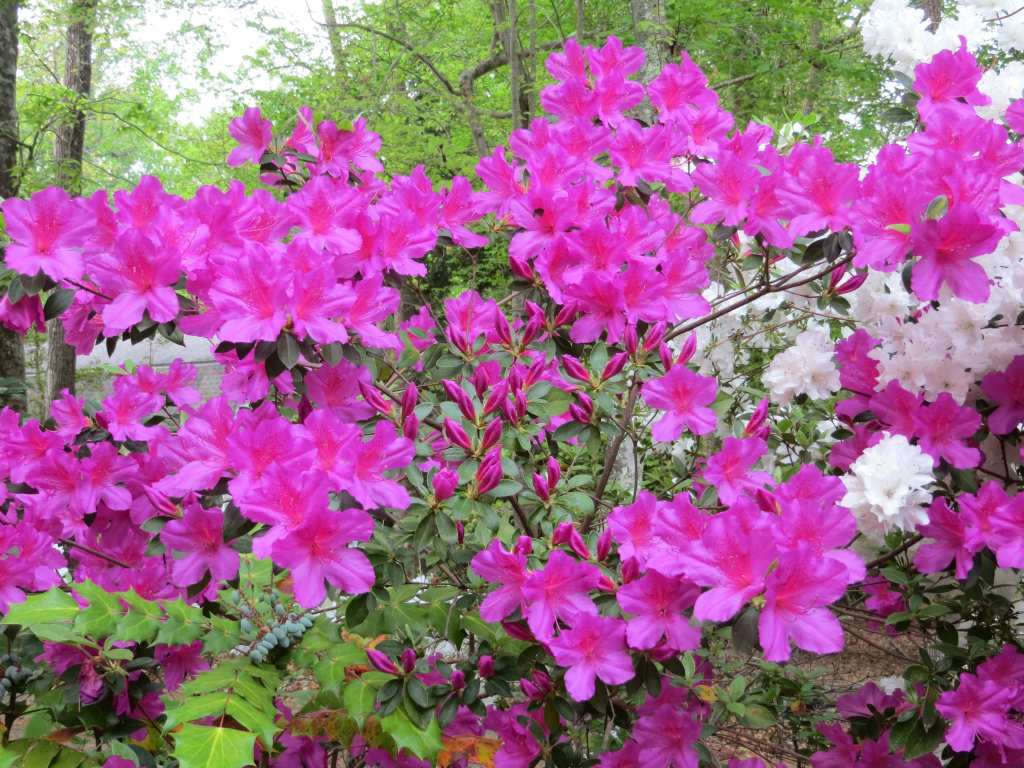
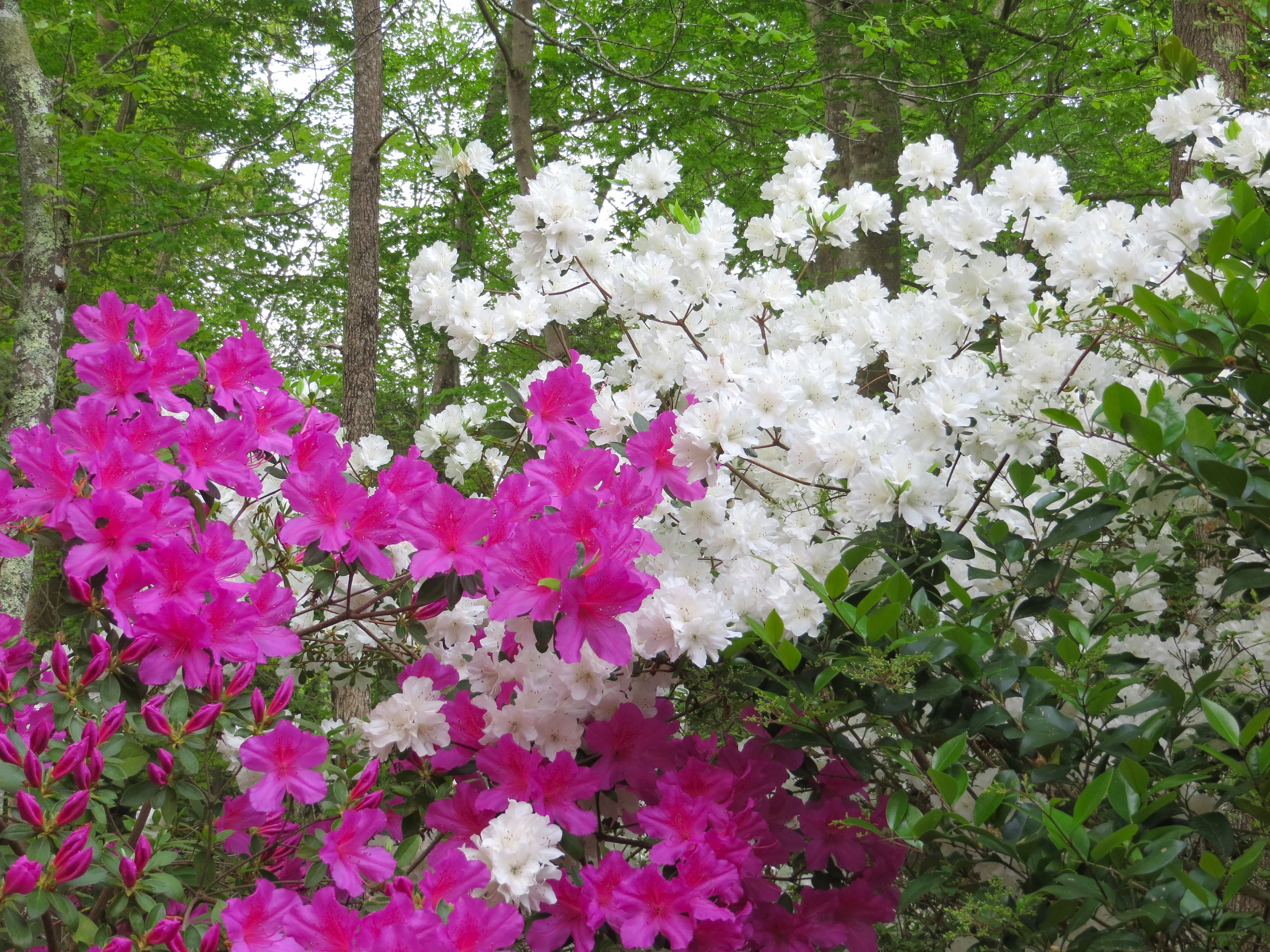
Azaleas bloom as Mahonia fruits ripen. The pink is most likely Rhododendron indicum ‘Formosa,’ and the white is likely R. ‘Mrs. G. G. Gerbing.’ These are old southern hybrid Azaleas. 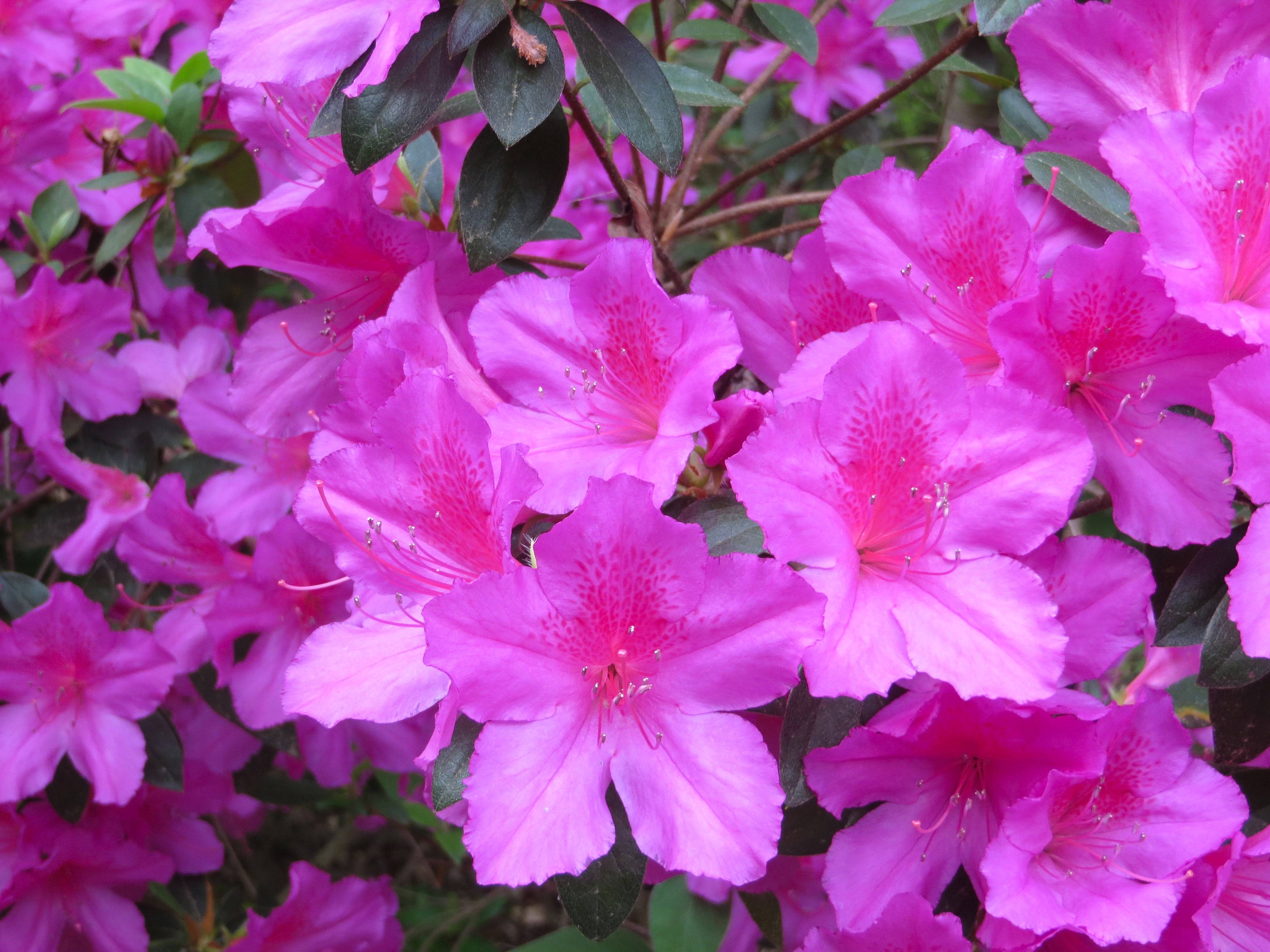
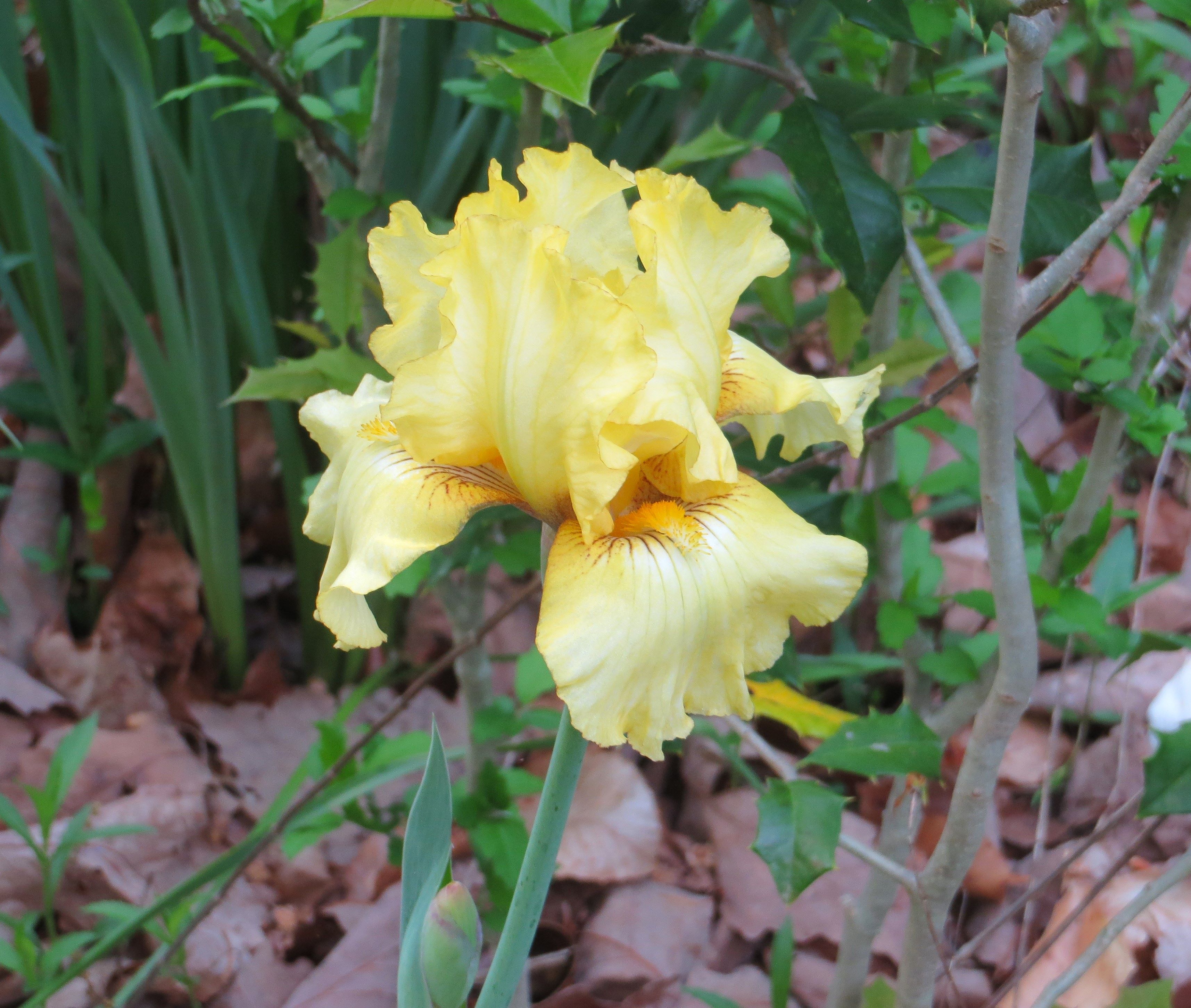
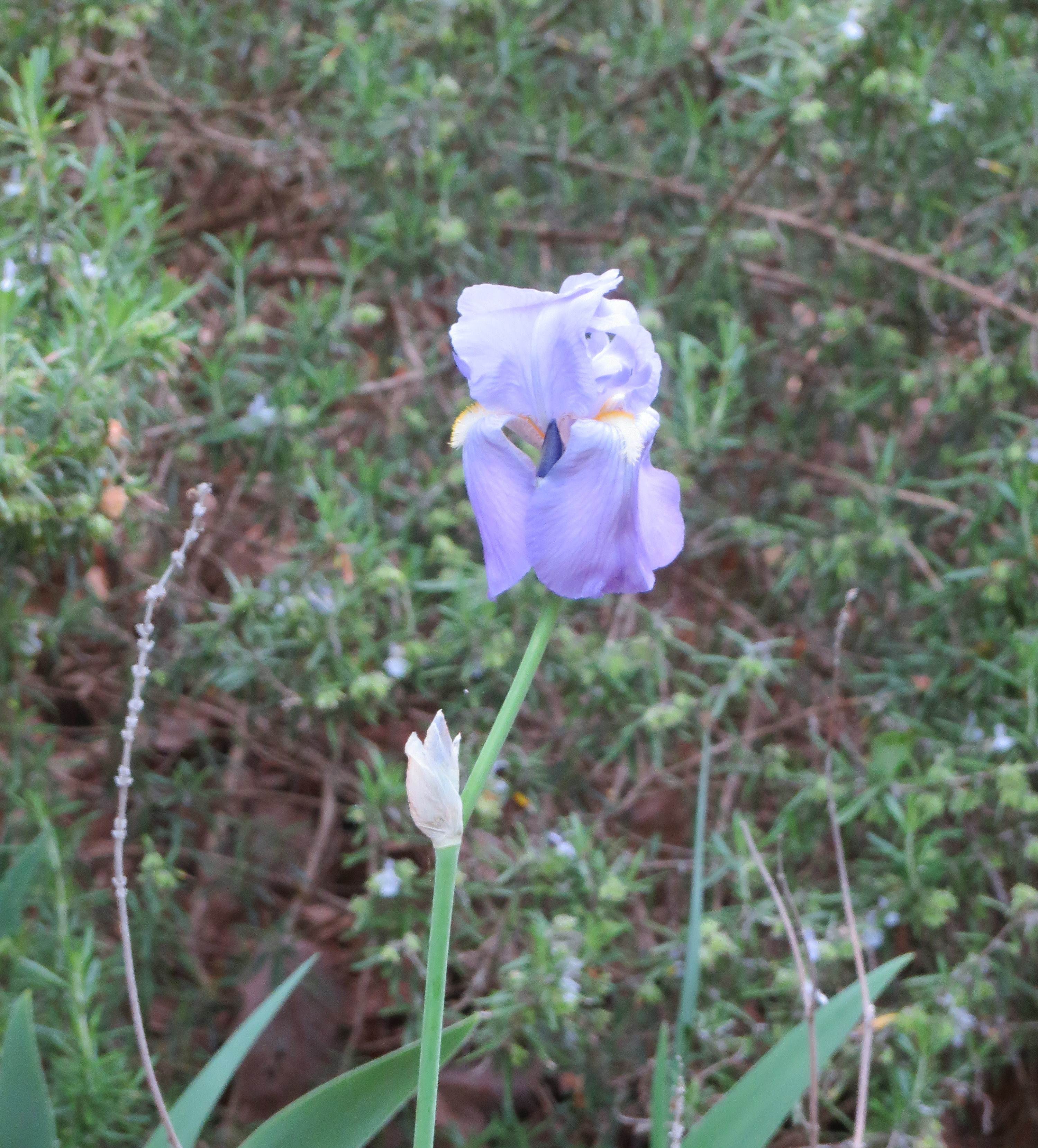
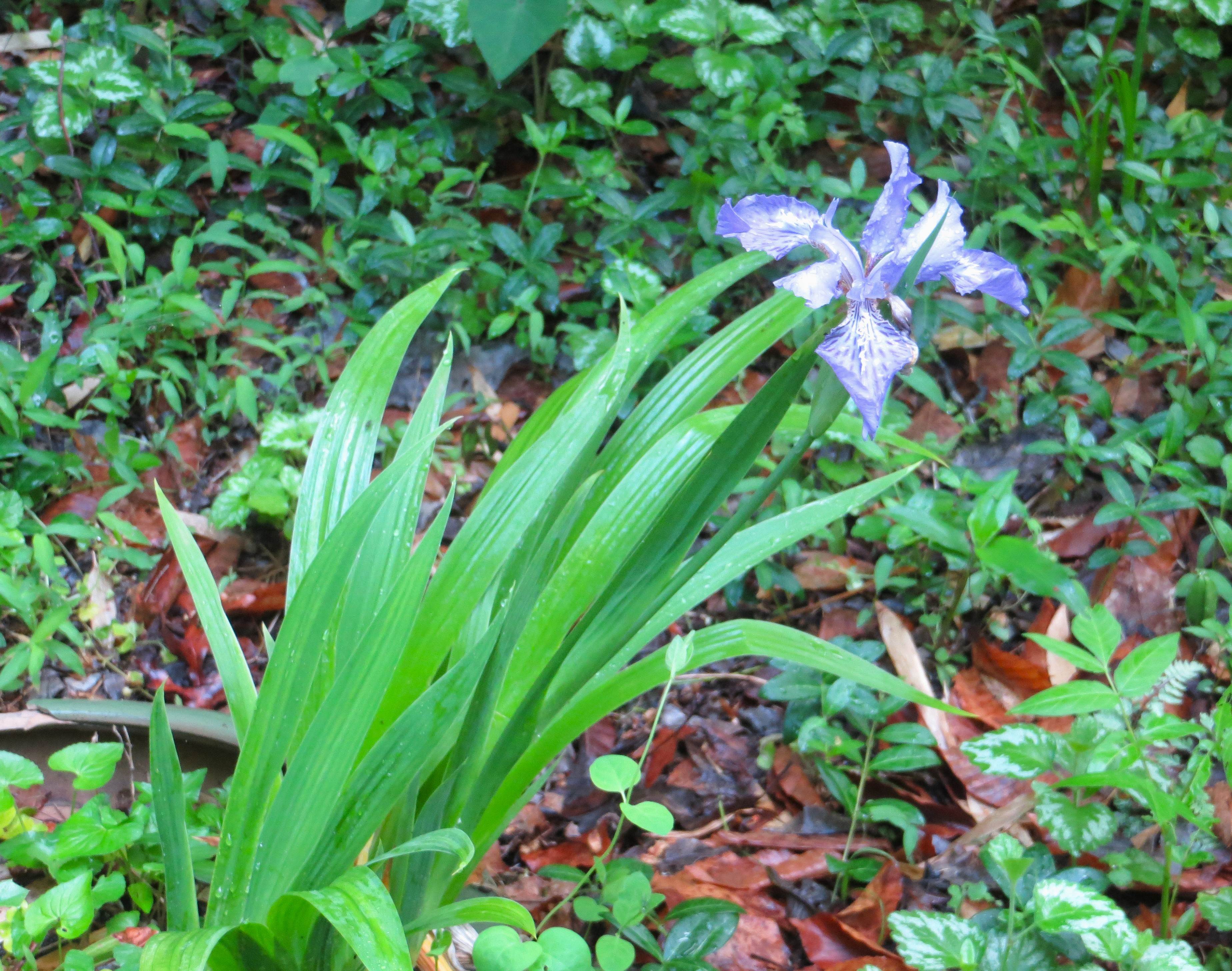
Four different Iris species bloomed this week. The Iris pallida, a European species planted in the Williamsburg area during the Colonial era, was a gift from a neighborhood friend. We had three German hybrid Iris varieties in bloom, Japanese I. tectorum or roof Iris, and some hybrid I. pseudata. I wasn’t conscientious enough to photograph the I. pseudata before the heavy rain last night. Yet they may be the most interesting as a new type of sterile hybrid with the appearance of the European yellow flag Iris pseudacorus, which is so hardy and persistent here that it has been labeled as ‘invasive.’ The pseudatas, a cross between Japanese I. ensata and I. pseudacorus, will bloom over the next few weeks and so there will be more opportunities to share a photo. I began collecting Iris species and hybrids when there was much more sun on our garden. I am hopeful that we’ll enjoy more Iris flowers through mid-May.
Have you ever come to view a ‘problem’ as a ‘gift?” Sometimes, things we first perceive as problems make us stretch and grow and lead us down new paths such that in hindsight, we can call those challenges ‘gifts.’ Oftentimes it is challenging to come around and shift our thinking to this more positive point of view. And it can take the passage of years to get there. Gardeners may understand this better than some, because we often see it play out in beautiful ways in real time.
One of our massive maple trees fell down a few summers ago during a storm. It may have been a hurricane, or at least a tropical storm, with a lot of wind. We found the tree down, along our property line, the next morning. And as the tree came down it took quite a few smaller trees and shrubs with it- woody plants that both screened our yard but also formed a barrier to slow down the marauding deer.
This entire area has been an unsightly ‘problem’ area for the past few years, and I haven’t been able to get much of anything to grow in or around the old stump of the maple tree. This is an area of dense, dry shade, run through with lots of woody roots from surrounding plants. It is also an area just past the grove of mountain laurel. I’ve been cultivating mosses and ferns along the pathway to this ugly ‘dead end.’ And of course, our neighbors use the area on the other side of the stump for storing things they don’t want to look at. I can say with confidence that I’ve carefully kept this area out of photos shared for the weekly ‘Six.’
This spring I was determined to figure out something to improve this area. And so my partner and I worked together to build (improvise) a new raised bed ‘Stump Garden’ around the old maple stump. We cut up the snag of a fallen apple tree to border the area, added several bags of fresh compost, and I have been both moving containers while also planting smaller plants, with small root balls, directly into the compost. This area has become a collection of horticultural bits and pieces needing a new home. Grouped together, they already bring color and interest to a formerly barren area.
The new stump garden from a distance 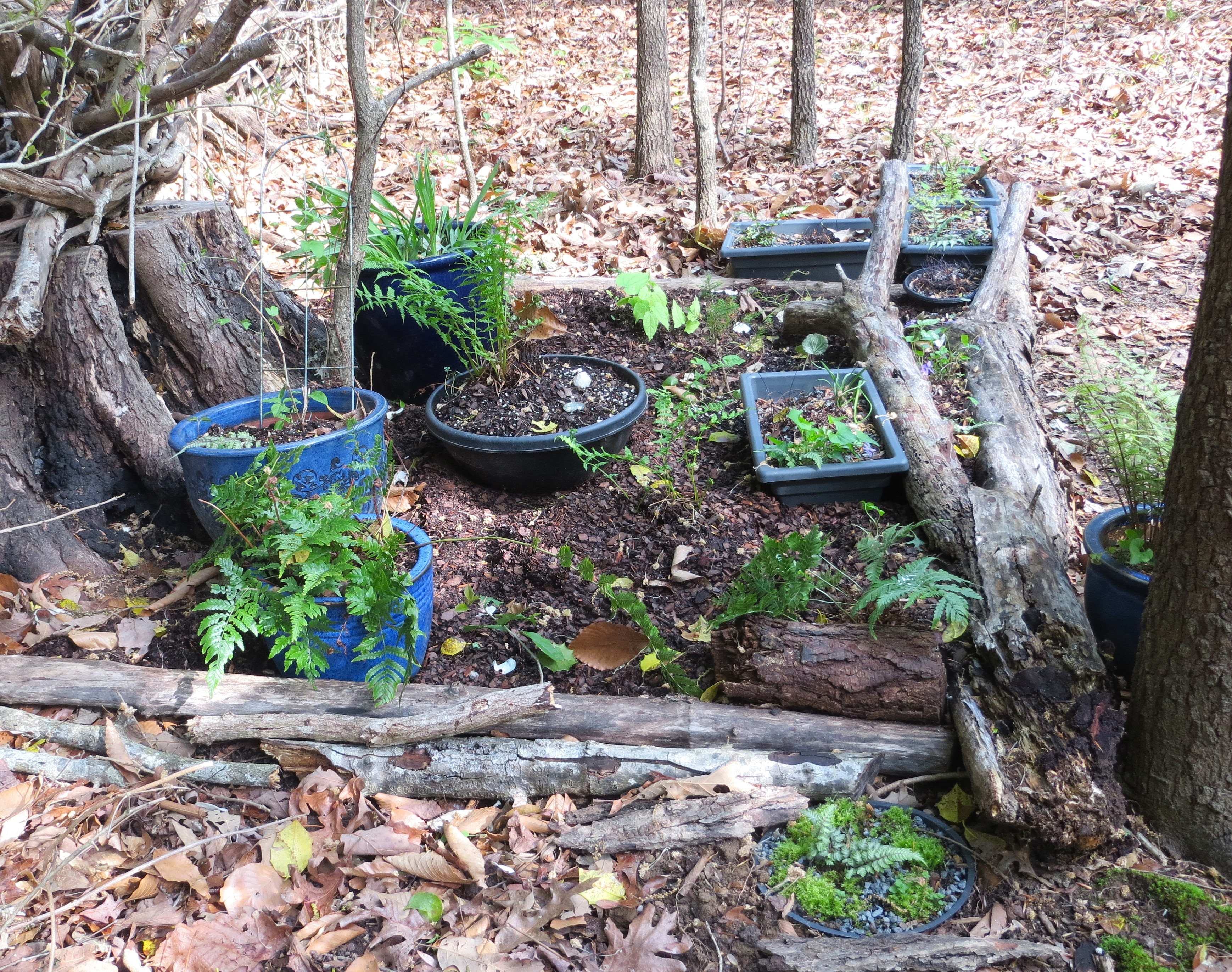
Containers are helping to hold the compost while new plants take root. 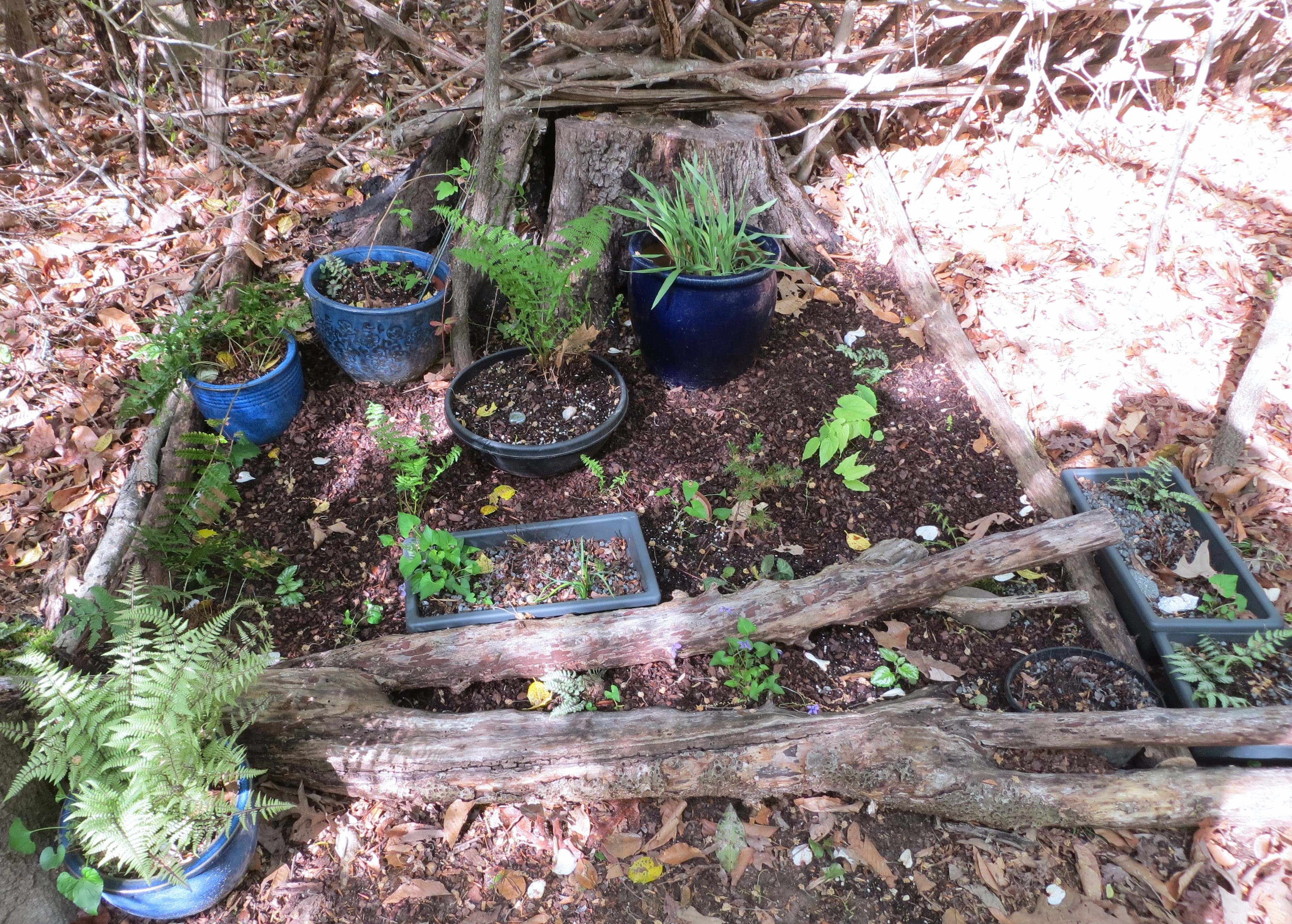
Some containers hold the roots of maidenhair ferns that I’m waiting for to emerge. 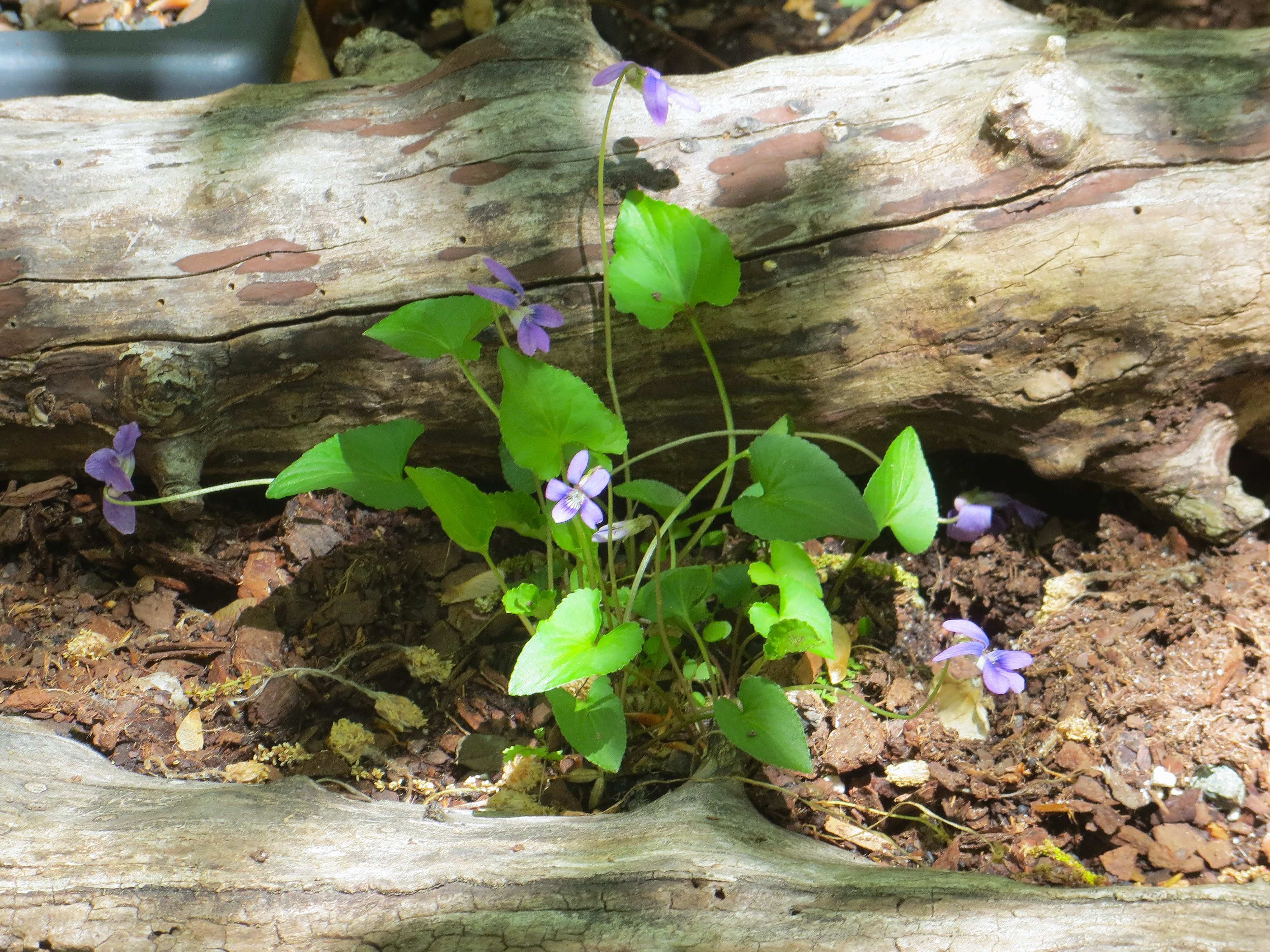
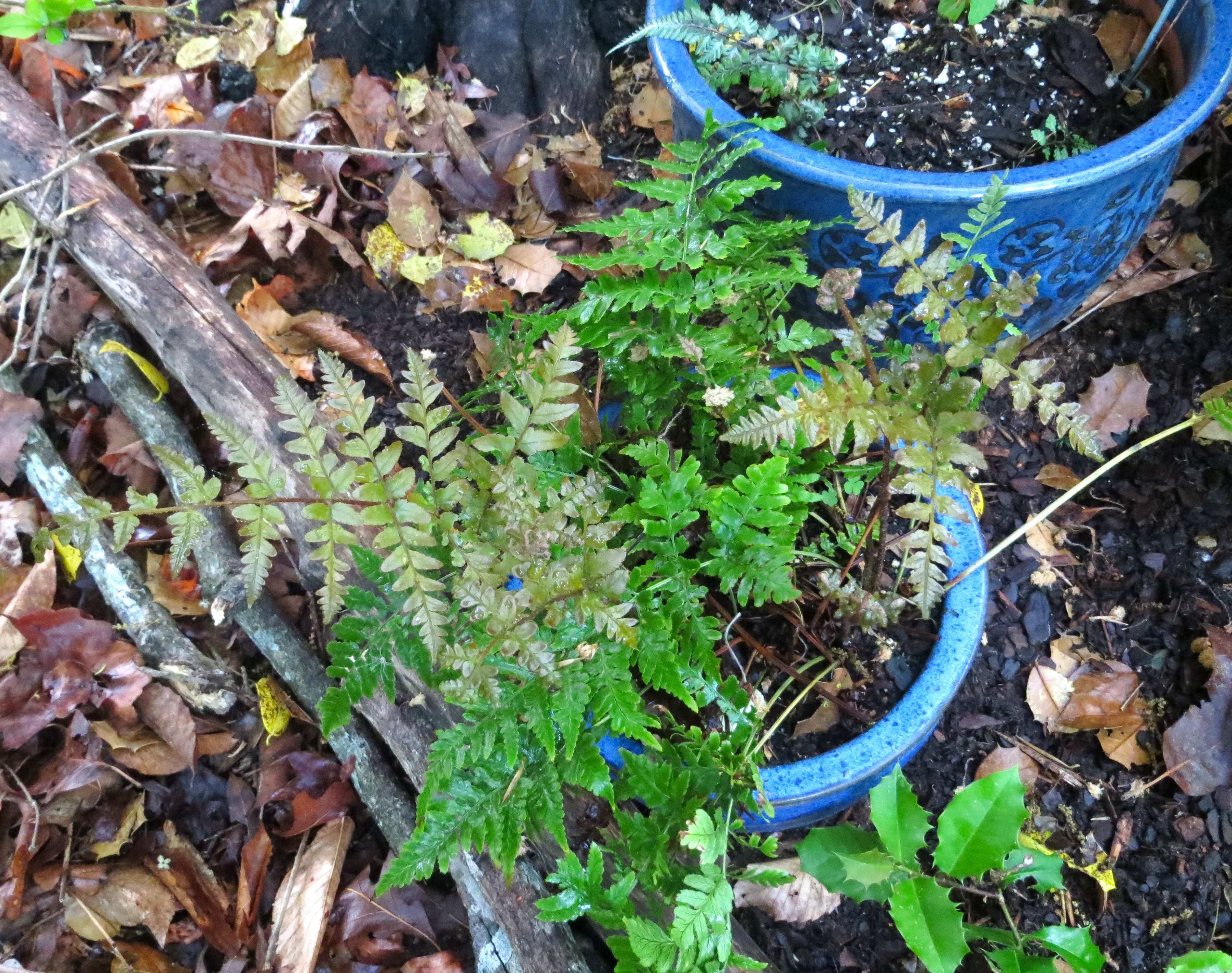
This is a Dryopteris, but I’m not yet sure which species. 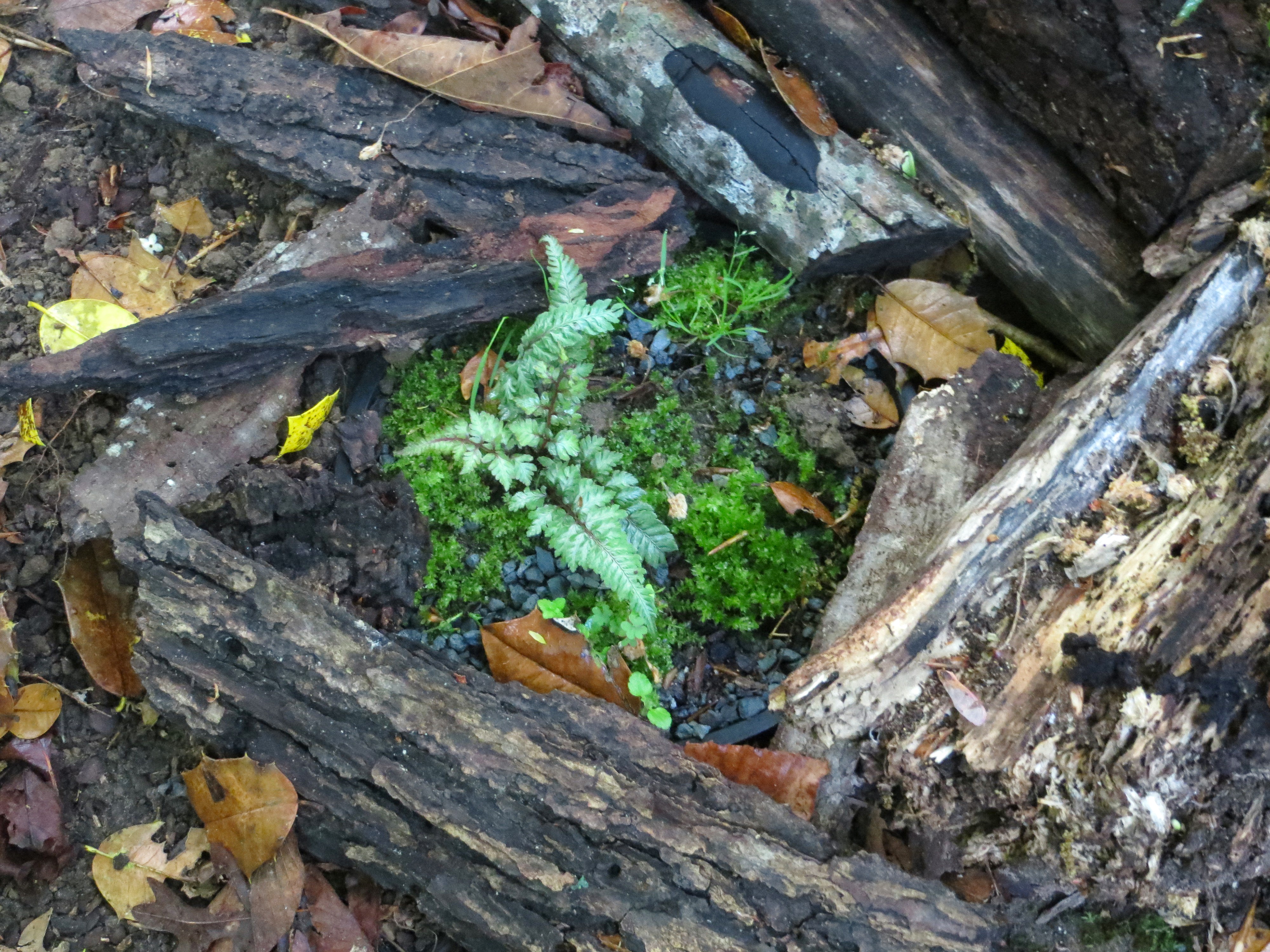
This is the Japanese painted fern sporeling that I potted a few weeks ago. 
The new stump garden today, after a good rain.
The old apple tree was perhaps a ‘gift of nature’ itself, just waiting until I recognized its potential for a new purpose. The window boxes, planted with a few sporelings I have raised along with a few ferns purchased last spring, allow these small ferns to mature a bit more before I plant them out. I’m still waiting to see whether some maidenhair ferns, Adiantum x mairisii if I’m remembering correctly, emerge this spring. So far, none of the several plants I overwintered in containers in a sheltered spot have put up new growth.
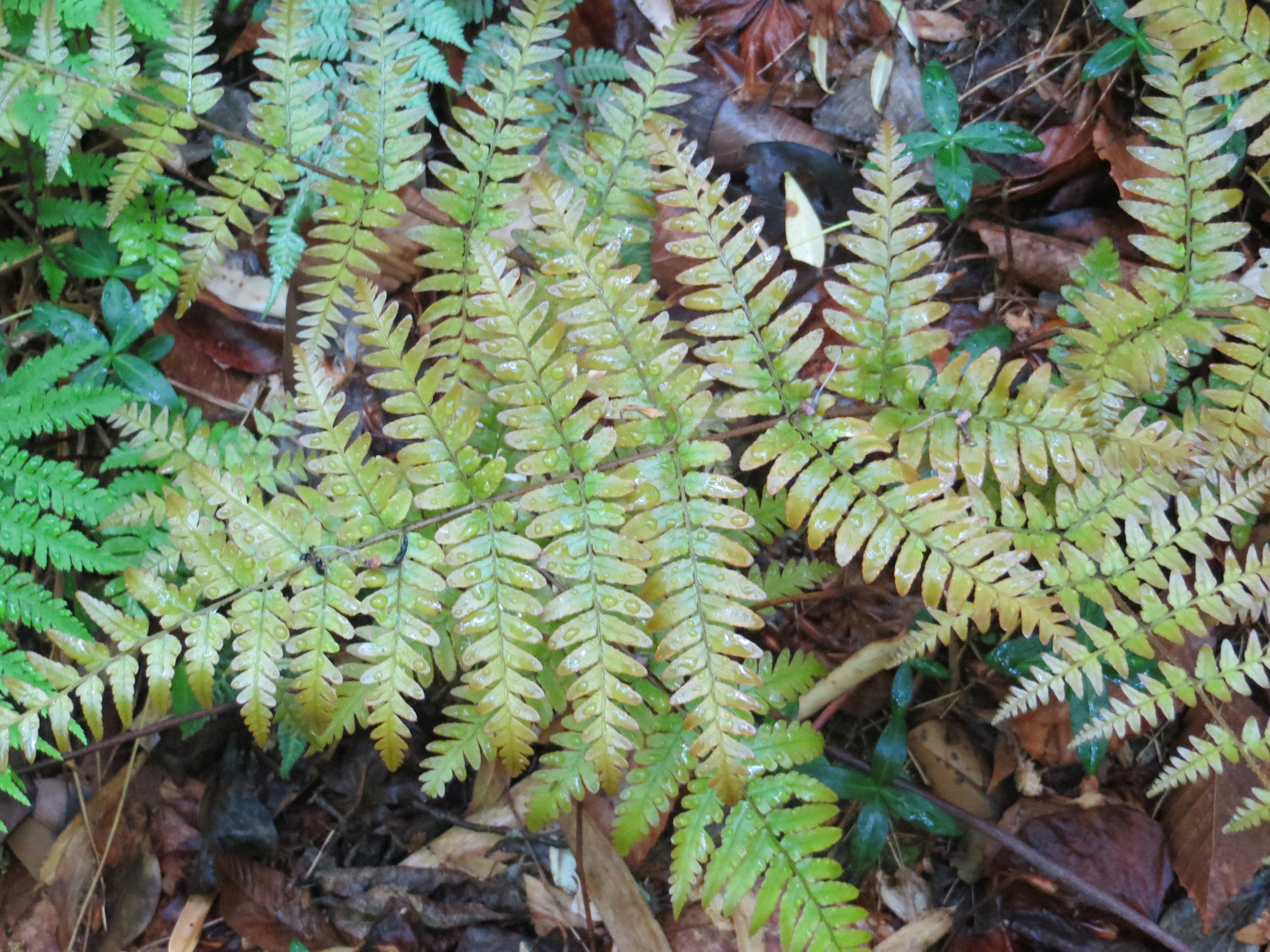
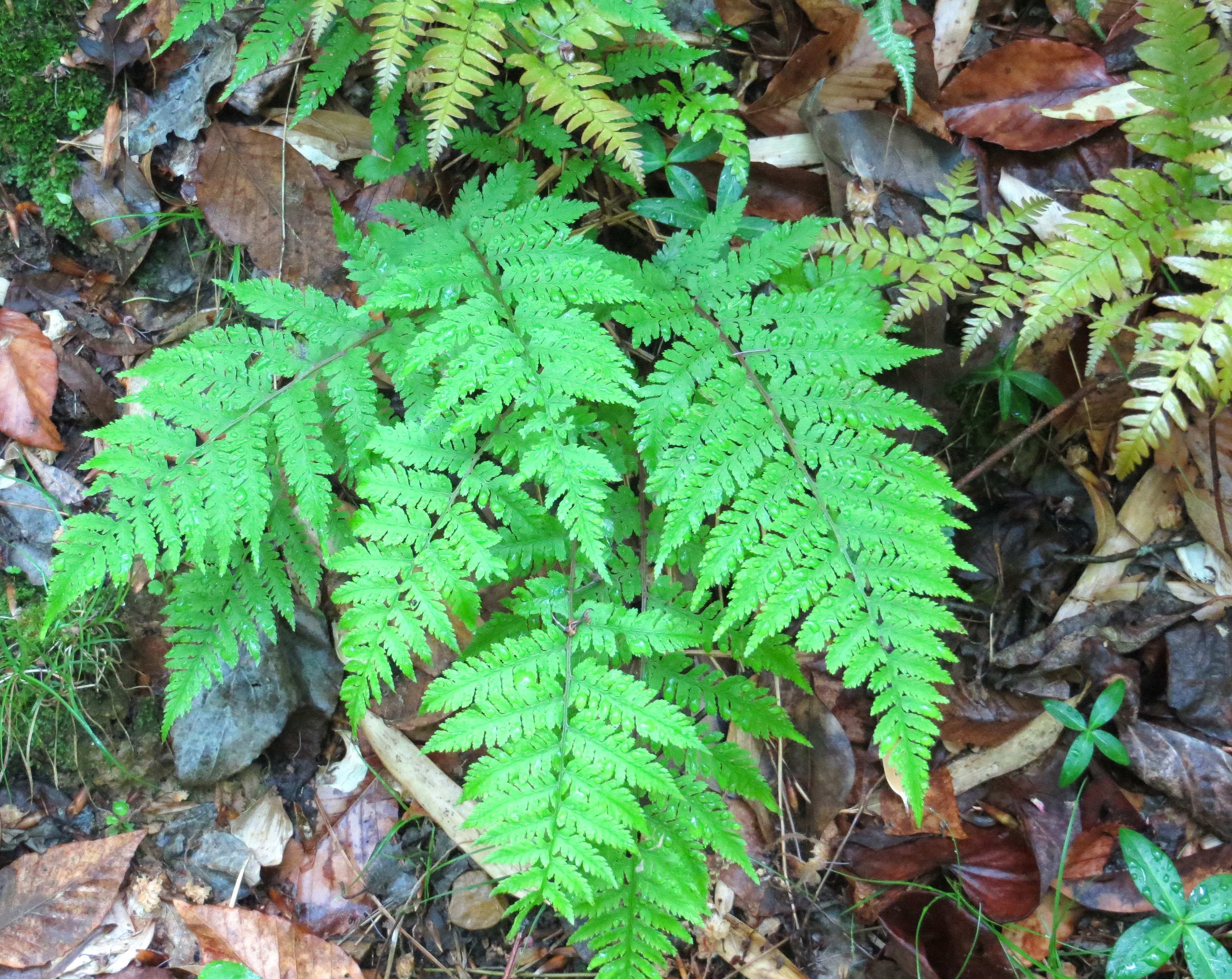
Ferns are a good solution for problem areas in this woodland garden. They thrive in the shade, cling to the slopes, handle heavy downpours gracefully, and don’t need constant grooming. There are two Dryopteris ferns anchoring this garden that I’m still trying to puzzle out. I bought them as tiny, unlabeled plants at Trader Joe’s. And I kept them indoors for a winter or two, unsure whether they were hardy. But now that I have determined they are hardy, I’m wondering whether they might be Dryopteris lepidopoda, known as the sunset fern, because their new fronds unfold a lovely shade of golden orange.
And that little volunteer sporeling of Japanese painted fern that I potted up for the patio and featured a few weeks ago? It has found a new home anchoring this garden, too. In addition to the ferns, there is a pot of rattlesnake master, a potted hybrid Clematis, a tiny seedling Japanese maple tree, some Saxifraga divisions, a transplanted Epimedium, native wood violets, and a few other ground cover plants. It may not look like much yet, but I expect this area to fill in quite nicely over the coming months.
Perhaps what is a ‘gift’ and what is not is just a matter of perception, like the question of what is a ‘weed’ or not. That rain last night was a gift for the garden, although it ruined a few Iris flowers and bent over a few branches. Seeing something as a ‘gift’ implies that we feel some appreciation and perceive a thing’s value. In my view, we become better gardeners as we cultivate of sense of appreciation for all life. Maybe aesthetics won’t seem like the highest value of a plant once we see how it makes useful connections with us, and with all of the other animals and plants in our garden.
With appreciation to Jim Stephens of Garden Ruminations, who
hosts Six on Saturday each week.

 Our Forest Garden
Black cherry is one that I would like to add to the garden, but can not justify. It gets too big. Its fruit is not useful enough for it to occupy space that other more useful fruit trees could utilize. So far, the entire garden downhill from the home is a gift from nature. Actually, I must thin out some of the gifts to relinquish space for what I want to add to the garden. I have avoided doing so in the past because the area is so scenic. Even as I add to it, I will not add anything that will compromise the scenic nature of the setting. All of that goes up on the hillside above the home.
LikeLiked by 1 person
It does require some editing and careful selection to keep everything in balance, doesn’t it? We never get any fruit- the birds and squirrels harvest before the cherries are quite ripe. I have another 2 or 3 seedlings coming up elsewhere, but things are getting rather crowded here, too. ❤
LikeLiked by 1 person
This kalmia is huge and amazing ! Mine is so small that it has only been planted for 3 years and is no longer flowering ( only the first yer ); is there a technique to make it flower again?
Should I feed it?
LikeLiked by 1 person
Fred, do you have acidic soil? Kalmia loves very acidic woodland soil. It is drought tolerant and grows well in sun to partial shade. You might want to give it yours some compost, pine bark or pine tags as mulch, or some Espoma holly tone if your soil is more neutral. I have heard that these are hard plants to transplant and that they take a while to establish. I do little for ours other than admire them and sometimes water them during very dry spells. I hope you get yours flowering again soon ❤ ❤ ❤
LikeLiked by 1 person
Thanks for all the advice. I don’t have acidic soil, but the kalmia was planted in a large bed with camellias, Japanese maples, fothergillas, etc., and when creating this bed, I added a good amount of ericaceous soil. Maybe not enough. I’ll add some at the base of the plant.
LikeLike
It should thrive in such acidic loving company, Fred. It sounds like a beautiful grouping. You might want to test the pH of your soil first, just to see how acidic it actually is already. Kalmia wants soil with a pH lower than 6, according to the NCSU website. Our soil is probably around 4 or 5, based on earlier soil tests. You likely already have a lot of humus in the soil in that bed. Kalmia is one of those plants that seems happiest growing on a slope, although mine are on relatively flat ground with just a gentle slope. Bonne chance mon ami!
LikeLiked by 1 person
Good idea to test the soil ! I have pH strips (used for my pond). Have a nice day over there 👋
LikeLiked by 1 person
More rain today- I’m quite happy! Fred, it occurred to me that if you built your bed with acidic soil that may or may not carry the acidity to the lower levels of soil. As your shrub grows and its roots grow deeper, it may be reaching soil that is more neutral or alkaline. Just a thought…
LikeLiked by 1 person
You’re right. The oldest shrubs (acer palmatum and fothergilla) have been there for about 15 years and show no signs of weakness due to the less acidic soil in depth. But perhaps the kalmia is more “acid-hungry” 😅
LikeLiked by 1 person
I love the stump garden, very well done.
LikeLike
Thank you ❤ ❤ ❤ It feels like a very 'small beginning,' but that is how most beautiful things begin, isn't it?
LikeLike
So many beautiful blooming trees and plants and lovely ferns! I’m a huge fern fan, too. Lovely selections for your “Six”!
LikeLiked by 1 person
Thank you, Beth! This is such an exciting time of year as our favorite plants awaken for another season! ❤
LikeLike
I hadn’t heard of Prunus serotina so I looked in my tree book to find that while it is rarely grown in gardens, it has managed to become naturalised in a few places. I think our equivalent would be bird cherry, Prunus padus. The other thing I hadn’t come across was the use of the expression “keystone species” to plants, though admittedly the failure may well be mine. Much of the TV and written media coverage of wildlife in the UK makes little or no mention of plants, even though ultimately every single animal is dependent upon them. I’m familiar with the fact that our oaks support a very wide range of species and that some of our insects are highly dependent on a single species of plant but it is good to see recognition for plants being the bottom tier of the pyramid more generally.
I’m not aware that I’ve ver had a worthwhile self sown fern grow in the garden. A couple of coarse native ferns regularly come up and get treated as weeds. I have a couple I’m keeping an eye on in hopes that may turn out to be something more interesting.
LikeLiked by 1 person
How interesting, Jim, that there is little discussion of ‘keystone plant species.’ I was thinking today that the tern is a misnomer and should be keystone genera because in all cases it is the genus that is cited. I credit Dr. Doug Tallamy with popularizing the notion that we should be planting our gardens to feed the insects in this country; and in feeding the insects we are then feeding the birds, etc. We have good resources through his books and ‘Homegrown National Park’ website and also the various wildlife groups in the US. I’ve written about keystone plants multiple times for the Master Gardener website I’ve been writing for. and like the notion that a single oak tree does far more for wildlife than a whole field of milkweed or other herbaceous host plants. I still have a bit of a problem seeing much of what I plant as simply food for the wildlife, though that is what happens too frequently, here. I like the motto of our local Resource Protection Office: “Plant more plants!” I’m having mostly Athyriums that naturalize, but also some Dryopteris and Cyrtomium. They are all nice plants as they mature.
LikeLike