Happy Mothers’ Day weekend to everyone, or, as my partner calls it, Happy ‘Women’s Day.’ There are many women who nurture people, projects, their communities and businesses who have chosen to remain active in the world and not to nurture children of their own. And we should celebrate them each May as well.
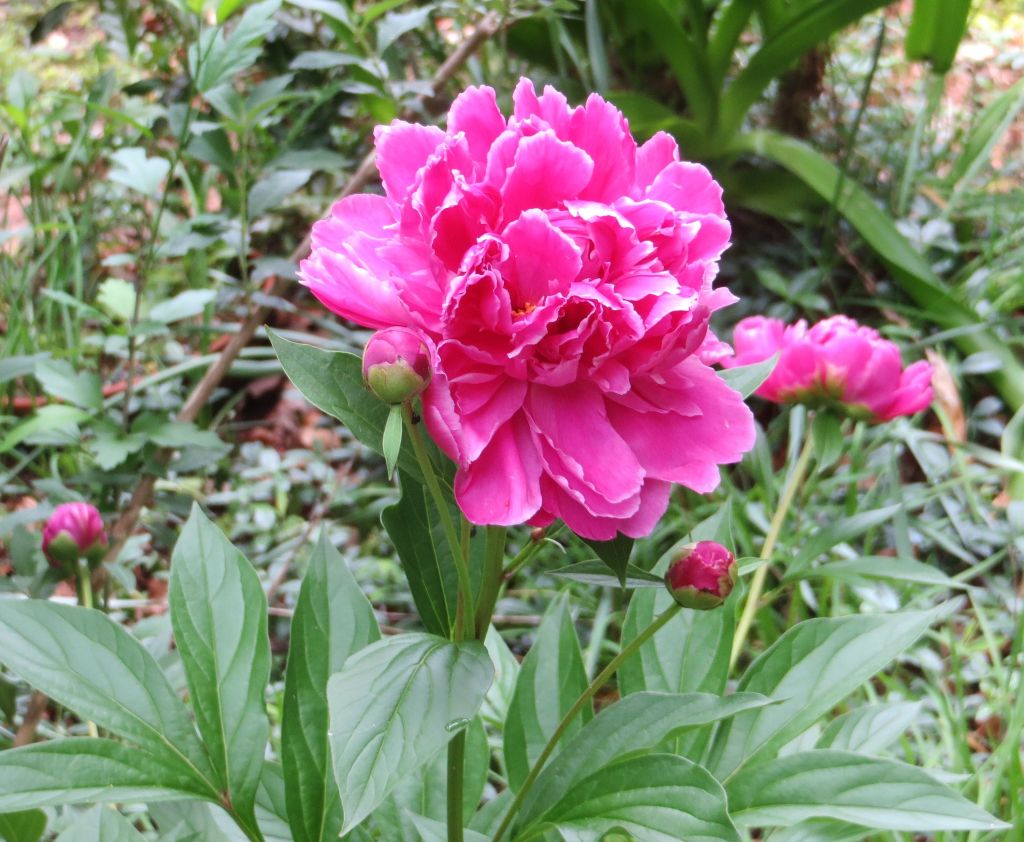
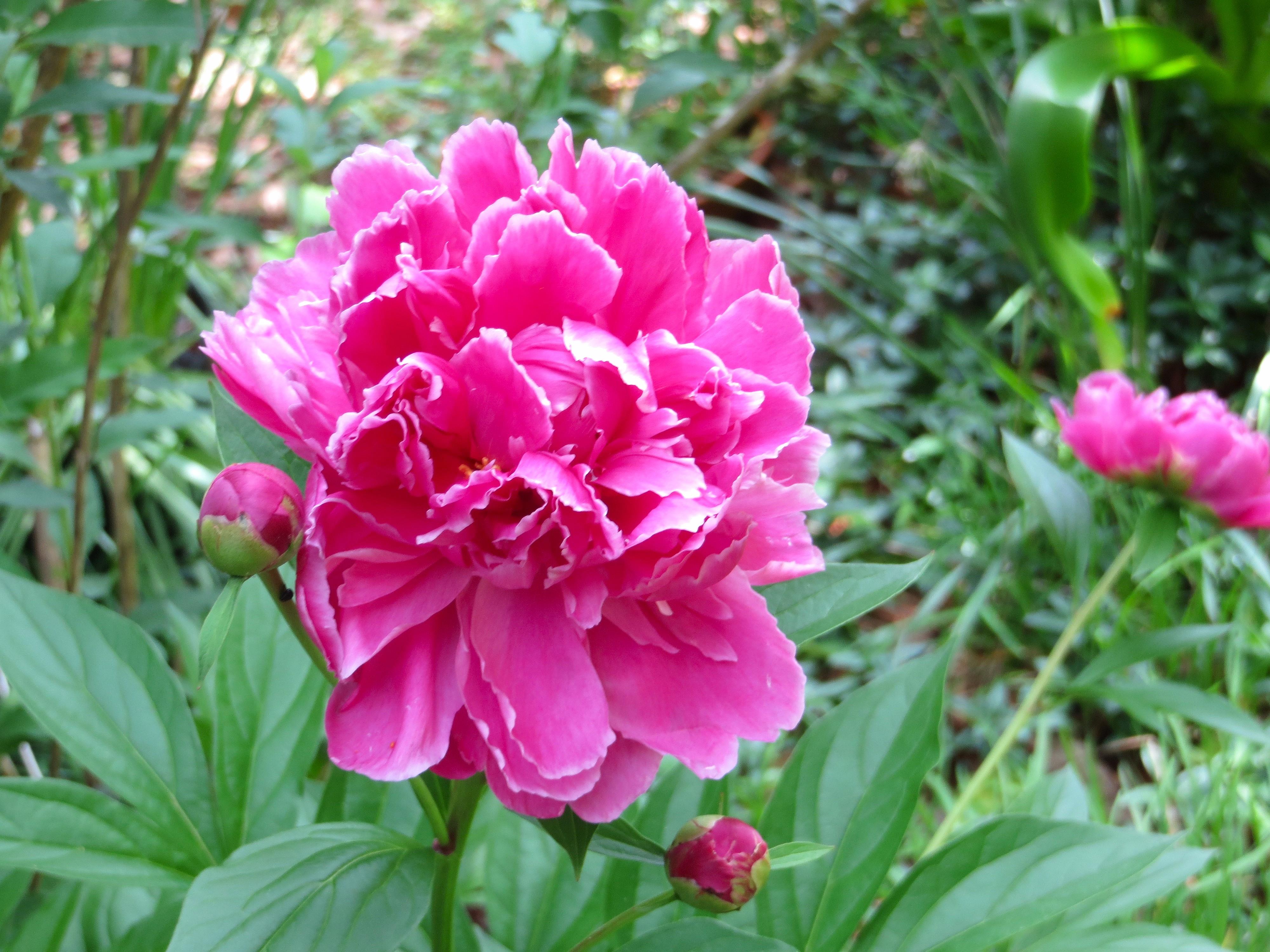
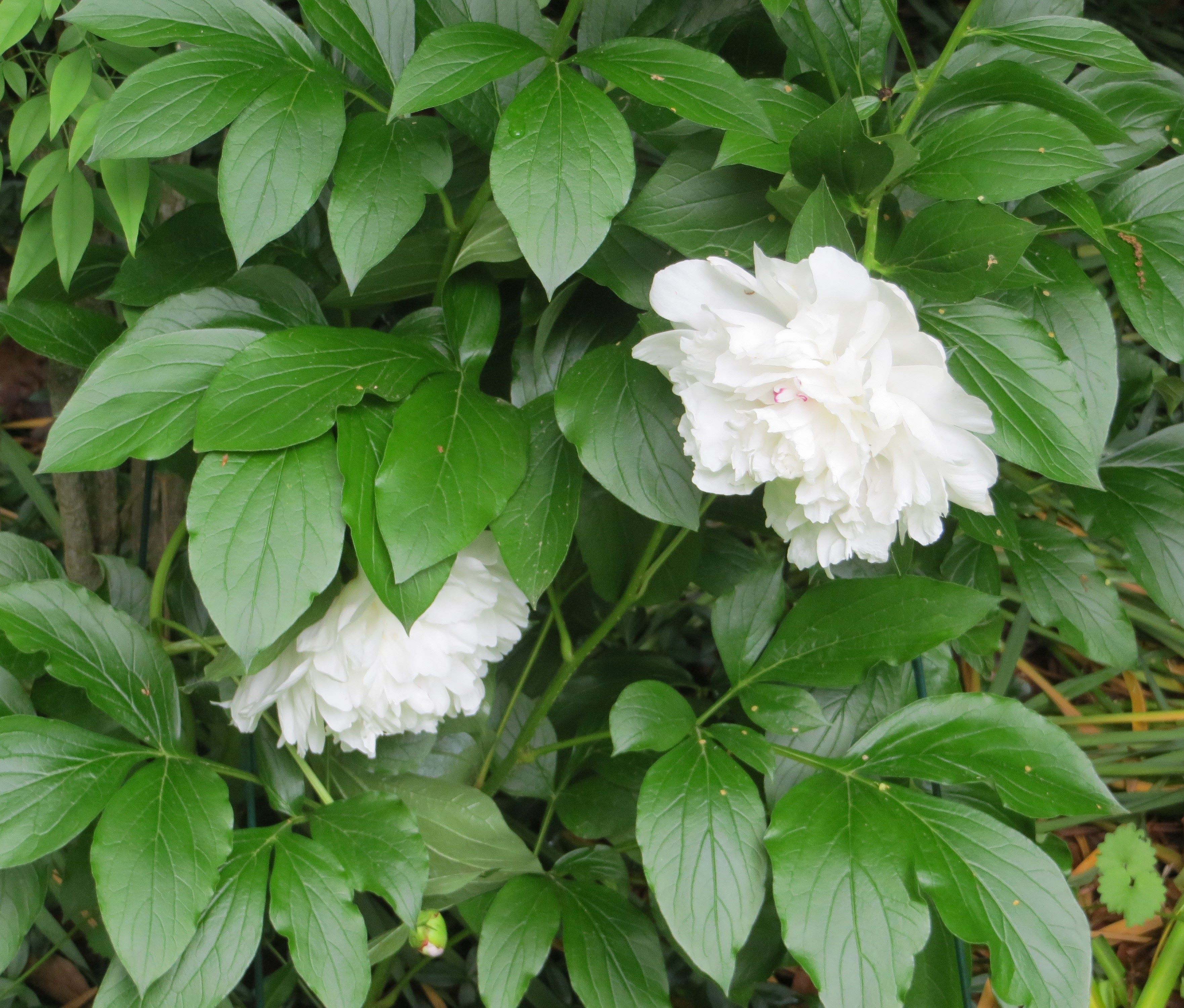
This week I invested some time in writing ‘Peonies for Mother’s Day,’ an article looking back a bit to my own years as the mother of a young child in an uncertain world. I chose then, and still would prefer, a living plant that blooms each May over an ephemeral gift of cut flowers. Since the ridiculous tariffs have already kicked in this year in the United States , inflating the cost of cut flowers for American families, it only makes sense to consider one of the beautiful May blooming perennials as a floral gift instead of a bouquet. Since peonies are so like roses in color, form and fragrance, sans thorns, I have written about the heritage and culture of peonies.
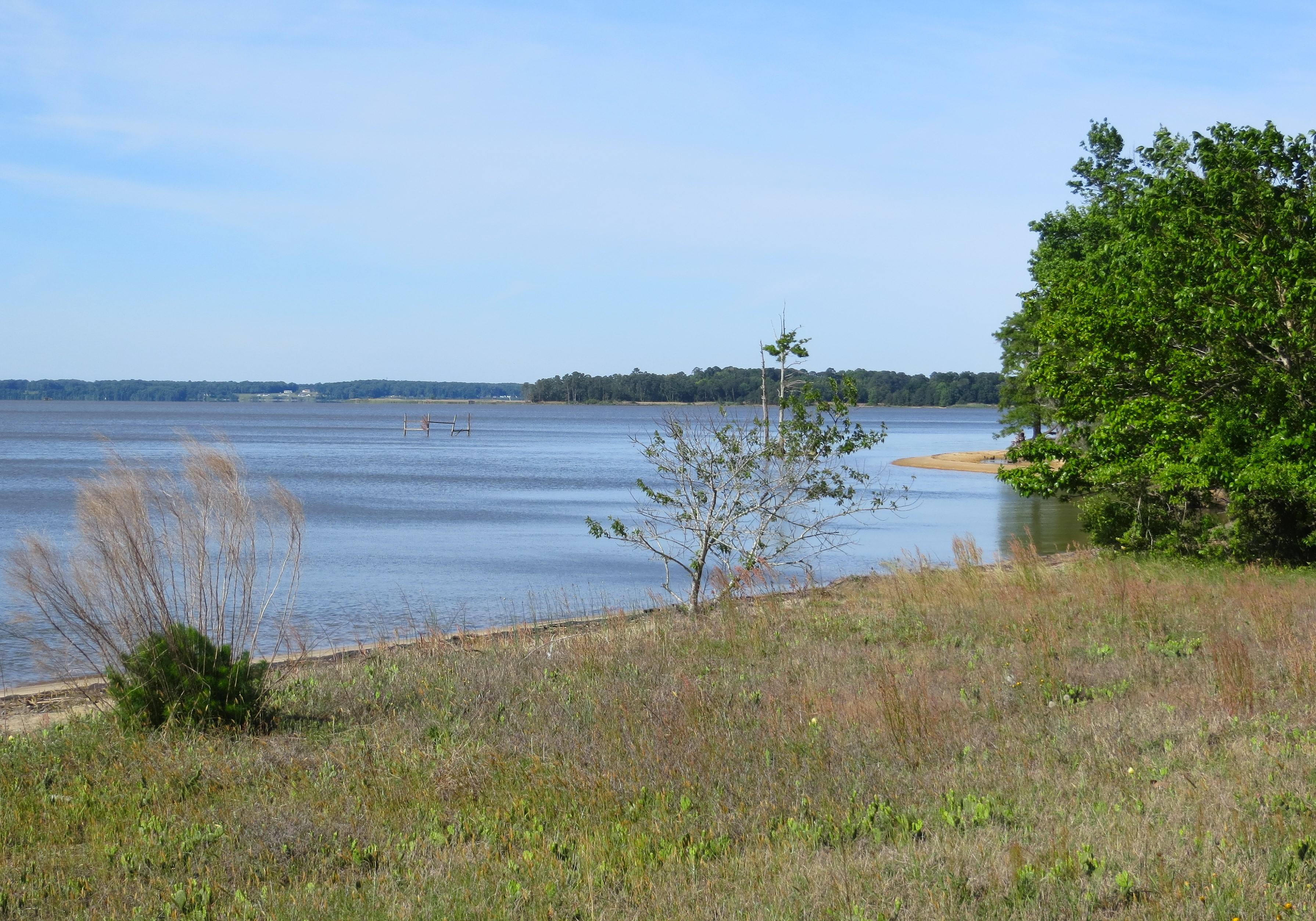
But the rest of this week’s Six on Saturday will be photos I took this morning during an early drive along the Colonial Parkway, a very narrow National Park which links the historic sites between Jamestown and Yorktown. These photos were taken on or near Jamestown Island.
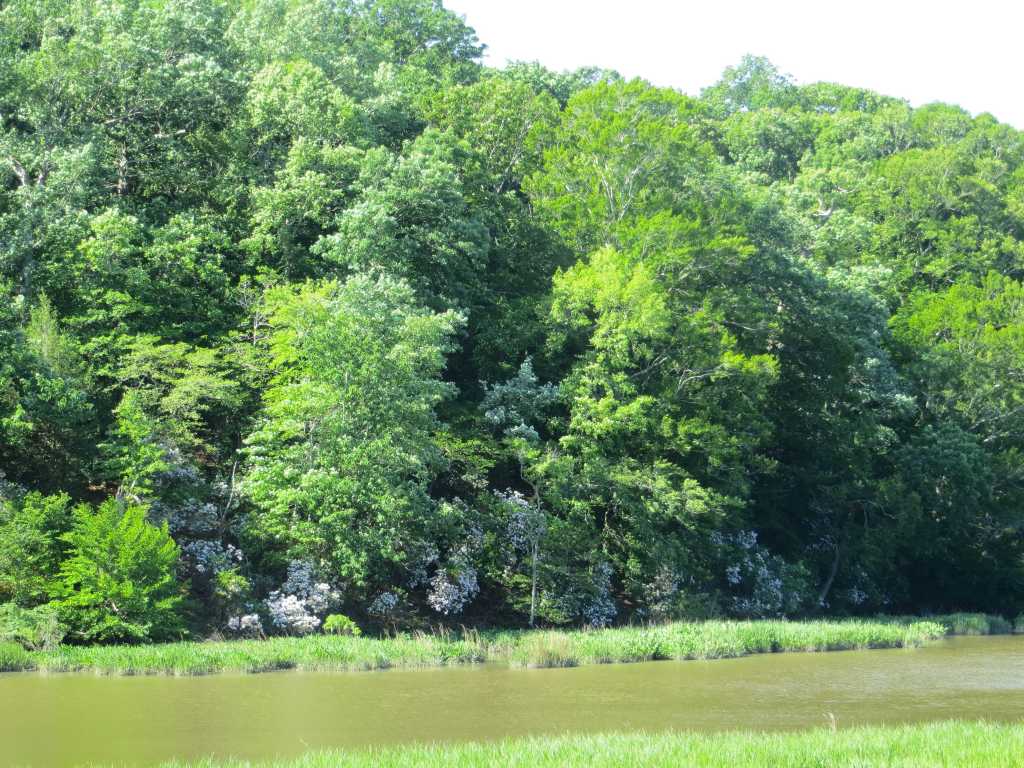
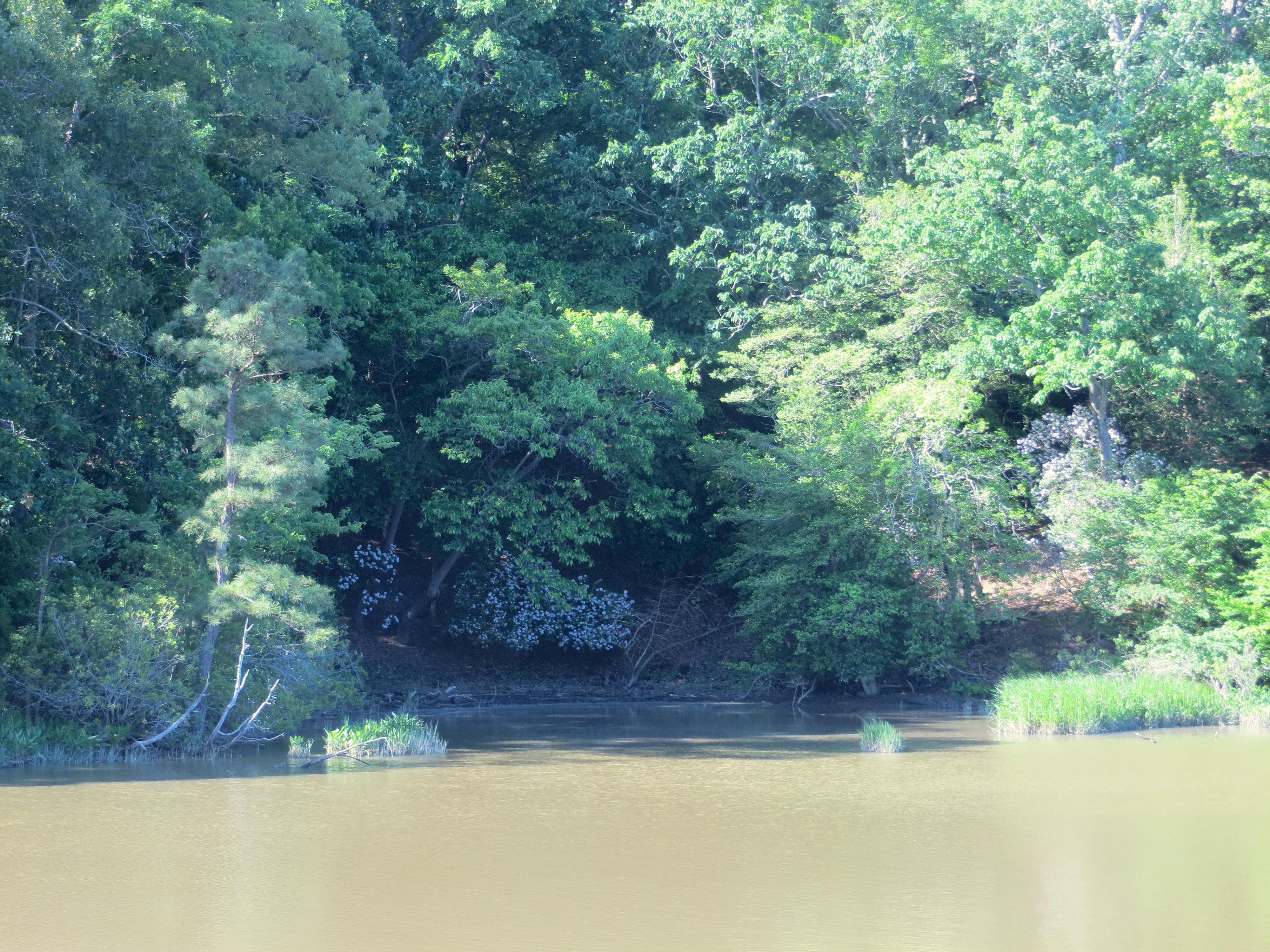
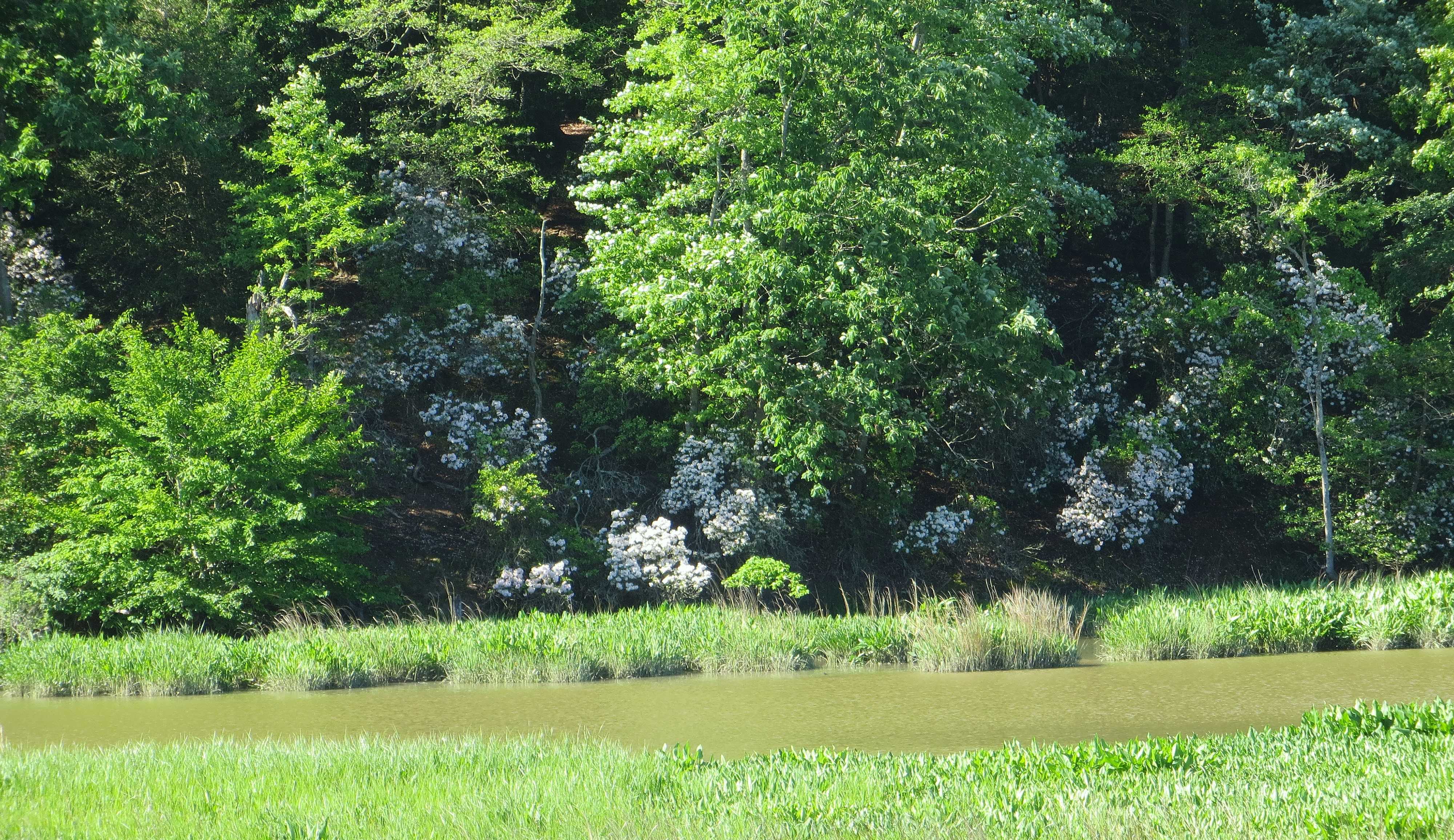
Mountain laurel shrubs, Kalmia latifolia, grow wild along the banks of Halfway Creek. They line the bank as far as one can see on either side of the bridge which crosses the creek. These are native shrubs which grow best when they grow wild. They can be difficult to transplant and are hard to purchase. They bloom in either soft pink or soft white. A shrub suited to acidic soils, they want sharp drainage and grow best on a slope, rather like Rhododendrons.
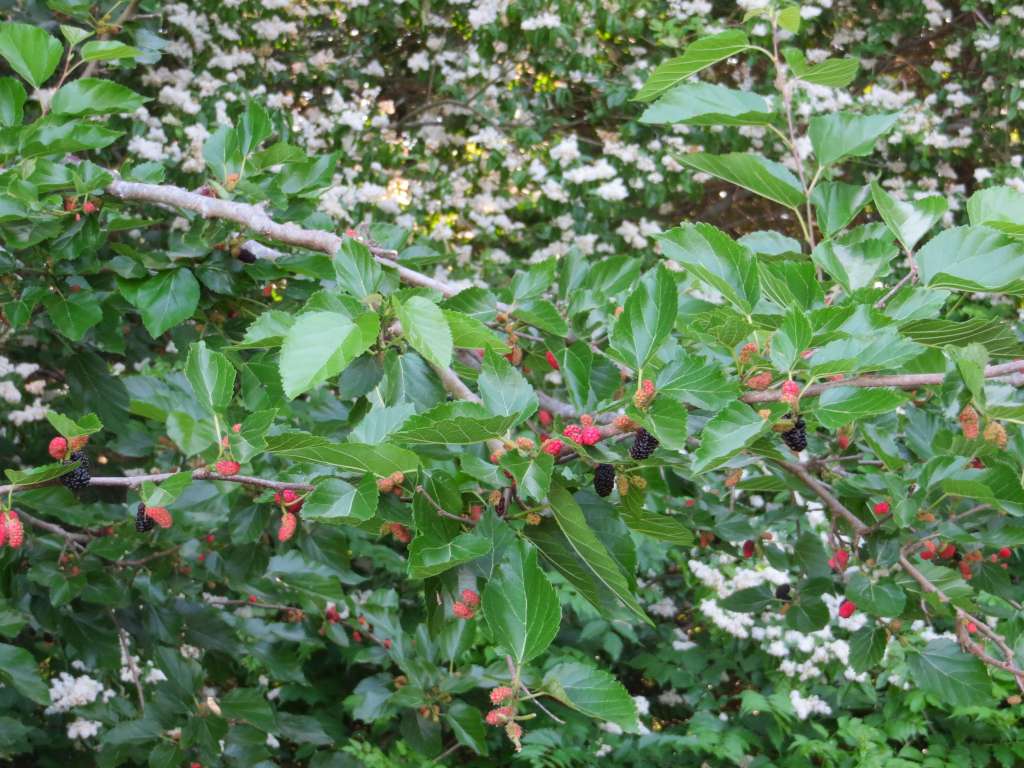
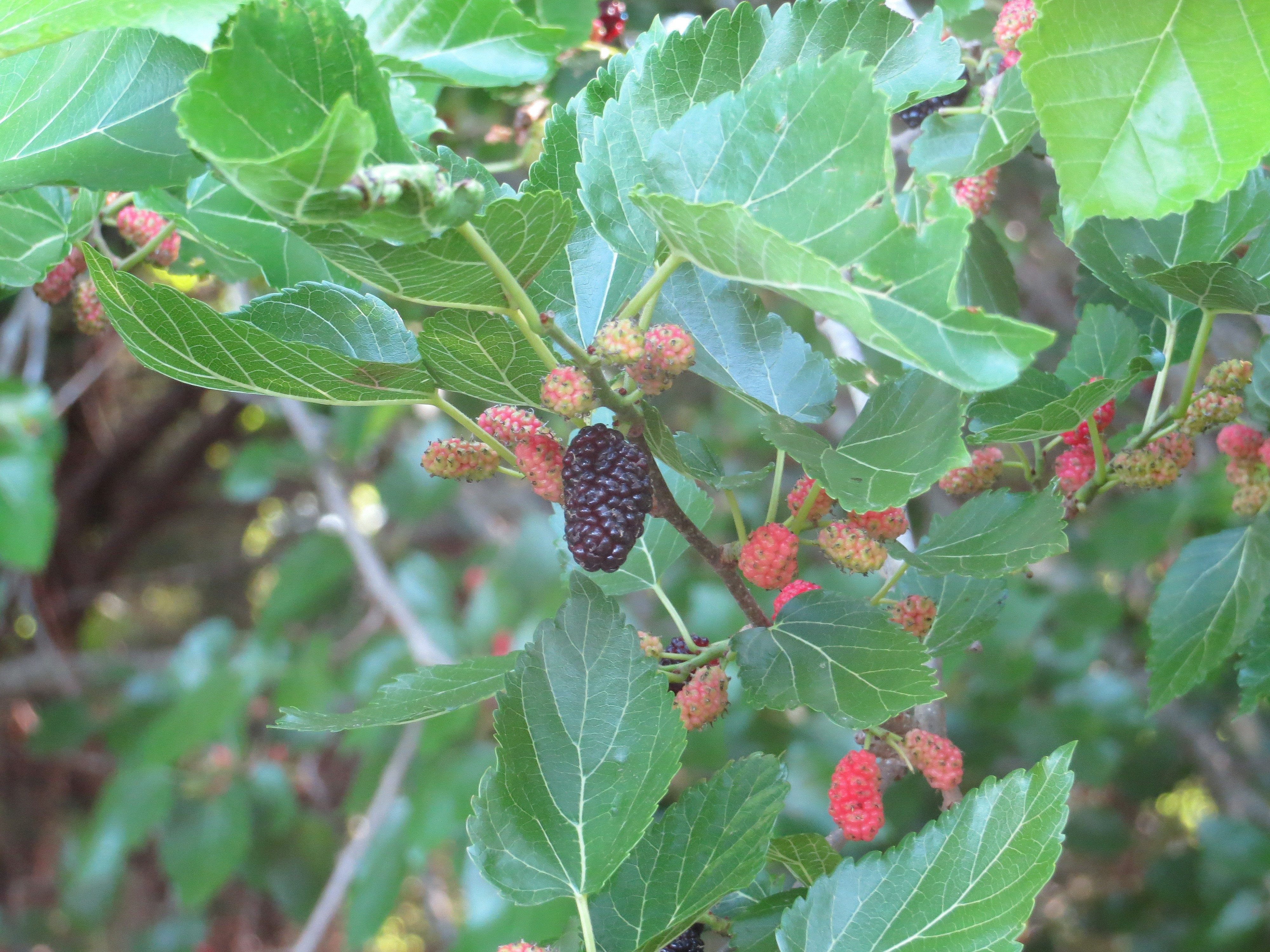
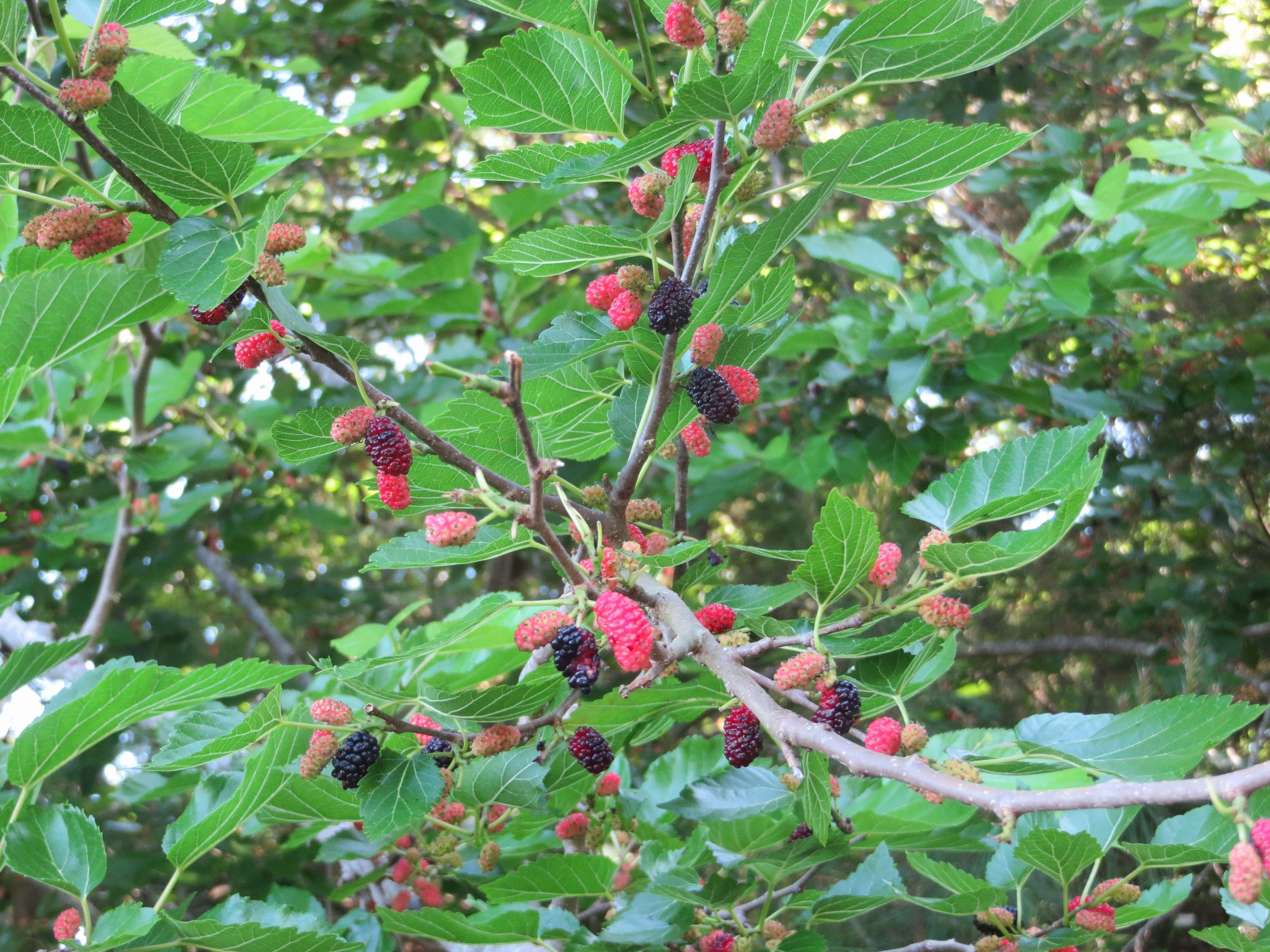
When we stopped on Jamestown Island for me to walk a bit in search of the yellow flag Iris I spotted earlier this week, I was happily surprised to find a mulberry tree with ripening fruit. I believe these are black mulberry, or Morus nigra, which is an edible fruit. White mulberry and paper mulberry trees also grow in our area, planted during the Colonial era.
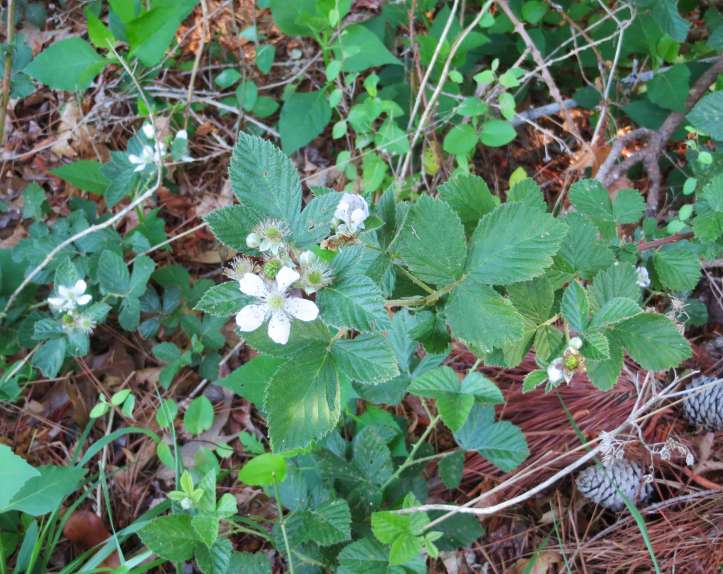
Wild blackberry bushes grow along the roadside, near the Visitor Center on Jamestown Island, under the mulberry trees. These are just a few of the many fruits one might forage along this historic and beautiful drive, except one may not harvest the fruit in the National Park. So all of this fruit should feed the birds, squirrels, and deer.
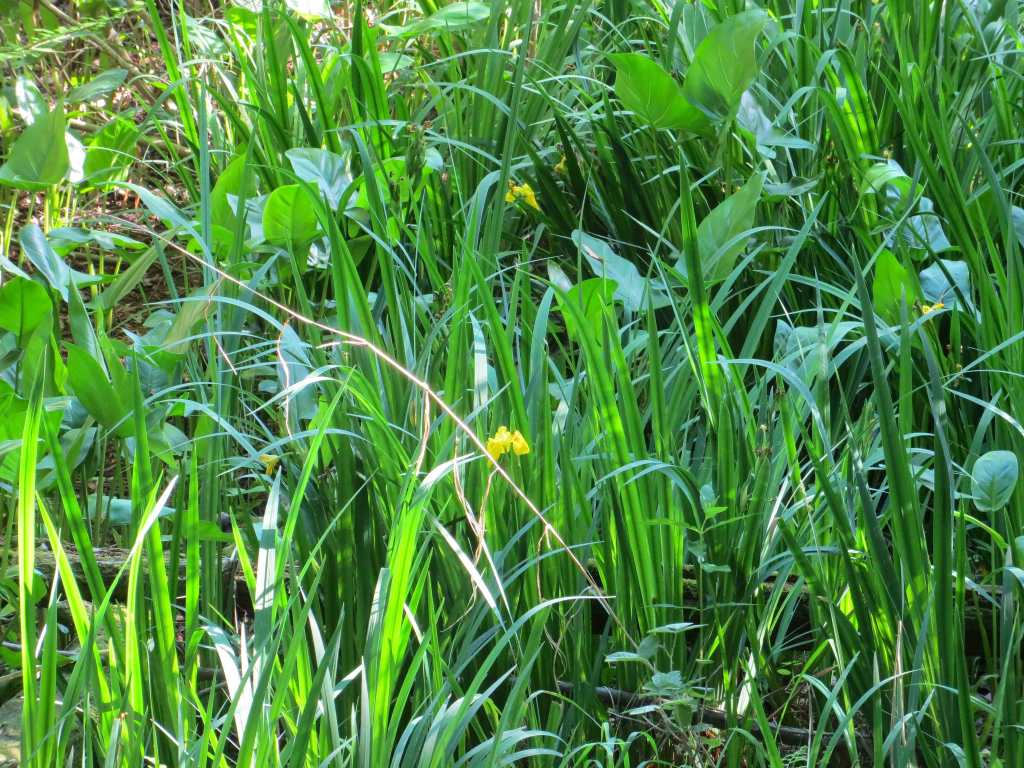
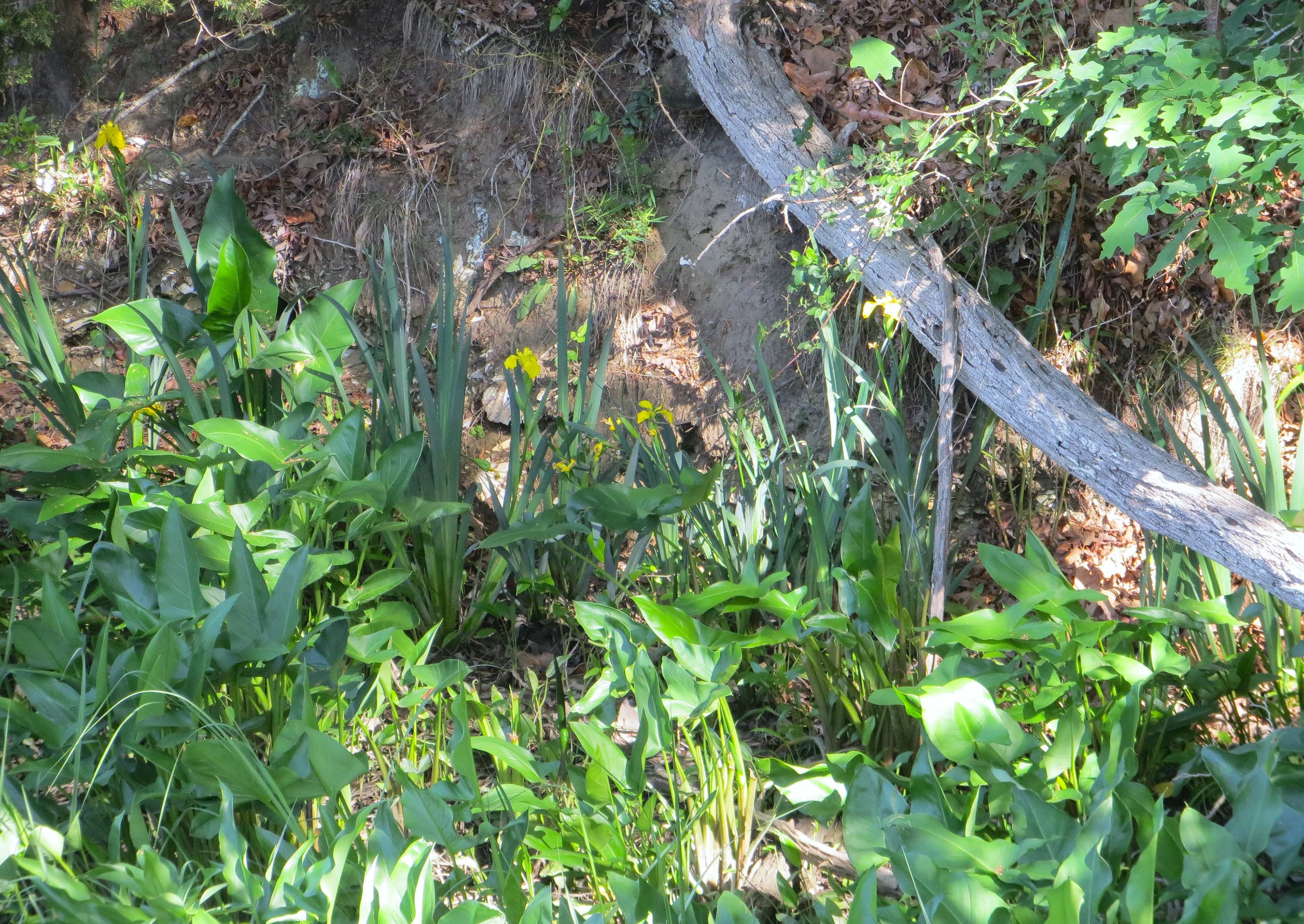
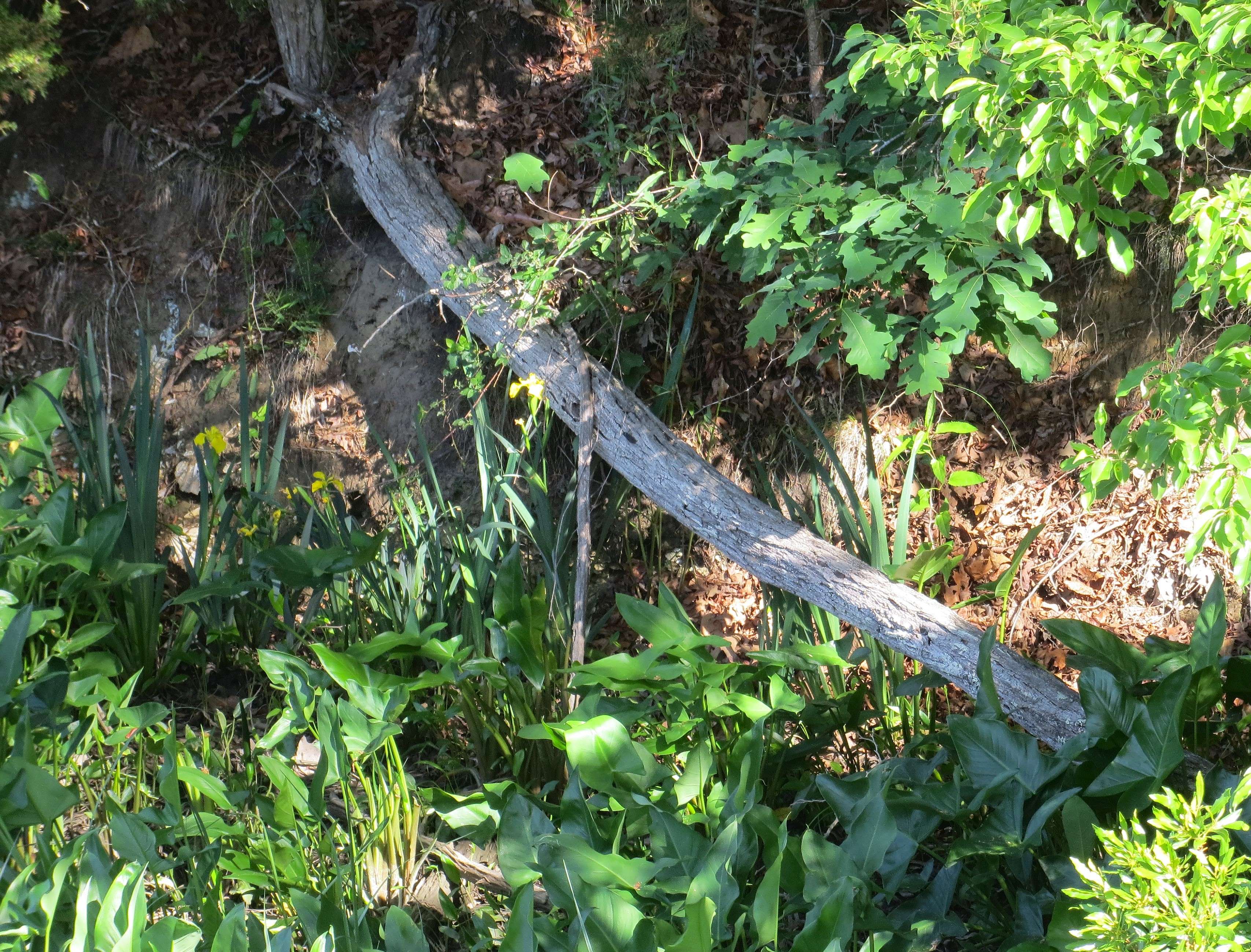
Yellow flag Iris grows persistently and promiscuously in our wetlands. It is one of the most beautiful and easiest to grow of our wetlands Irises. There were some growing in our garden when we arrived and I grew them in the Iris bed of the Williamsburg Botanical Garden when I tended it. Some of the members of the Board of Directors wanted them removed, however, because these are now considered ‘invasive’ in our area for their enthusiastic spread. About the time they decided the beautiful Irises had to go, I decided it was time for me to take my leave as well.
I was specifically searching for these naturalized Irises this morning and found them in a few different areas along our drive. They bloom for a few weeks in May each year and then their foliage stands until frost, performing a host of ecological services in wetlands. They hold ground against erosion, help to filter and purify local waterways, sequester carbon from the air, and provide habitat for a variety of insects, crustaceans, reptiles and birds. They grow with pickerelweed, Pontederia cordata, as seen here, and with cattails along our many creeks, lakes, and rivers.
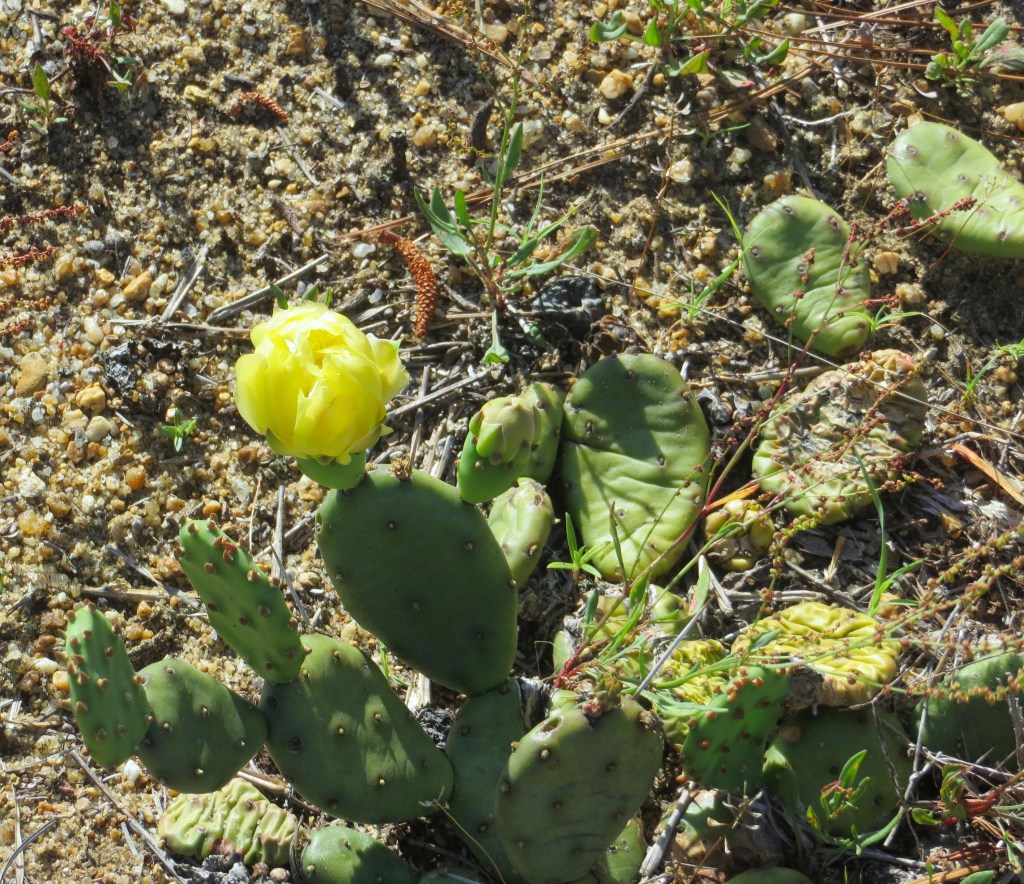
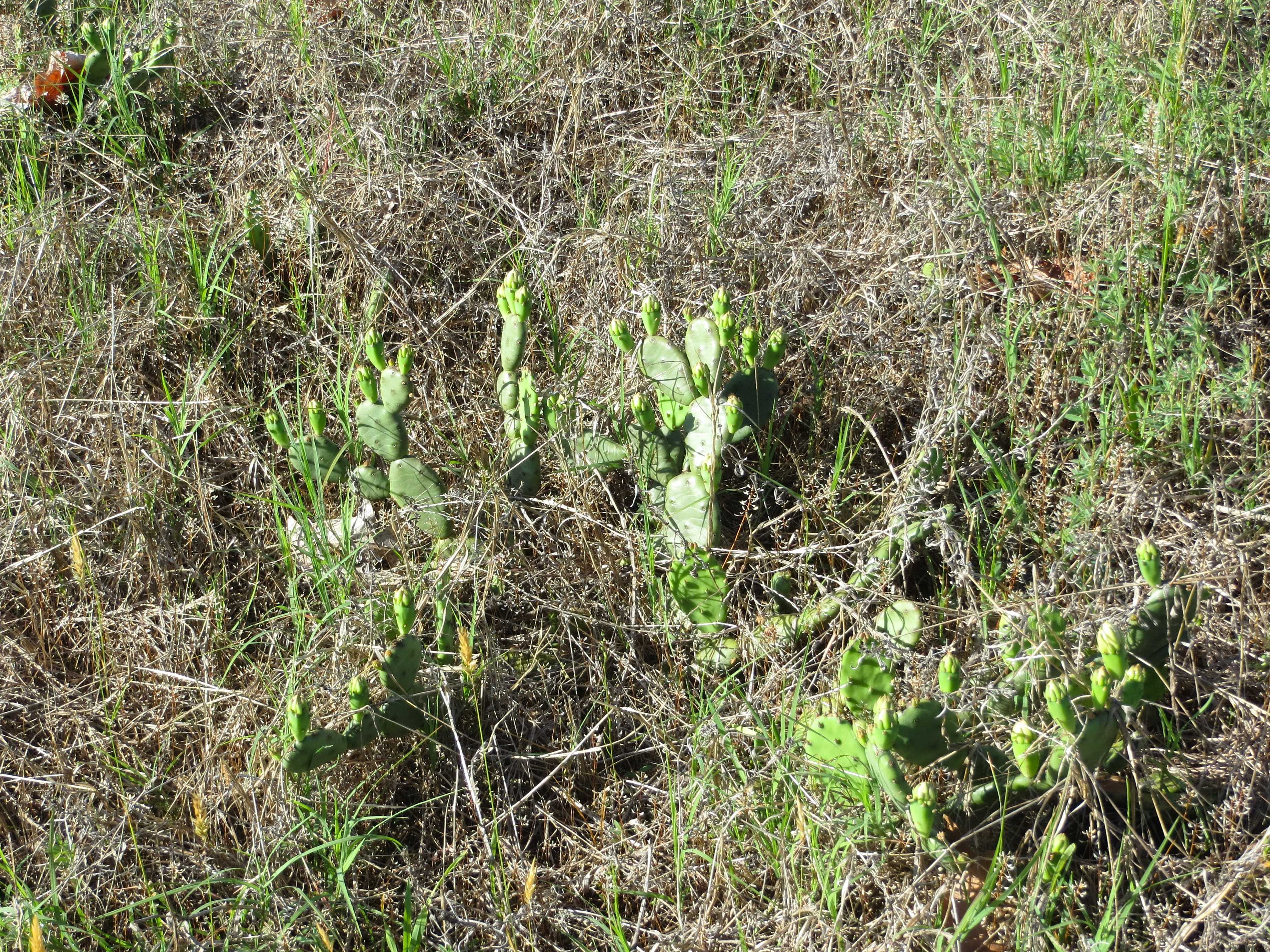
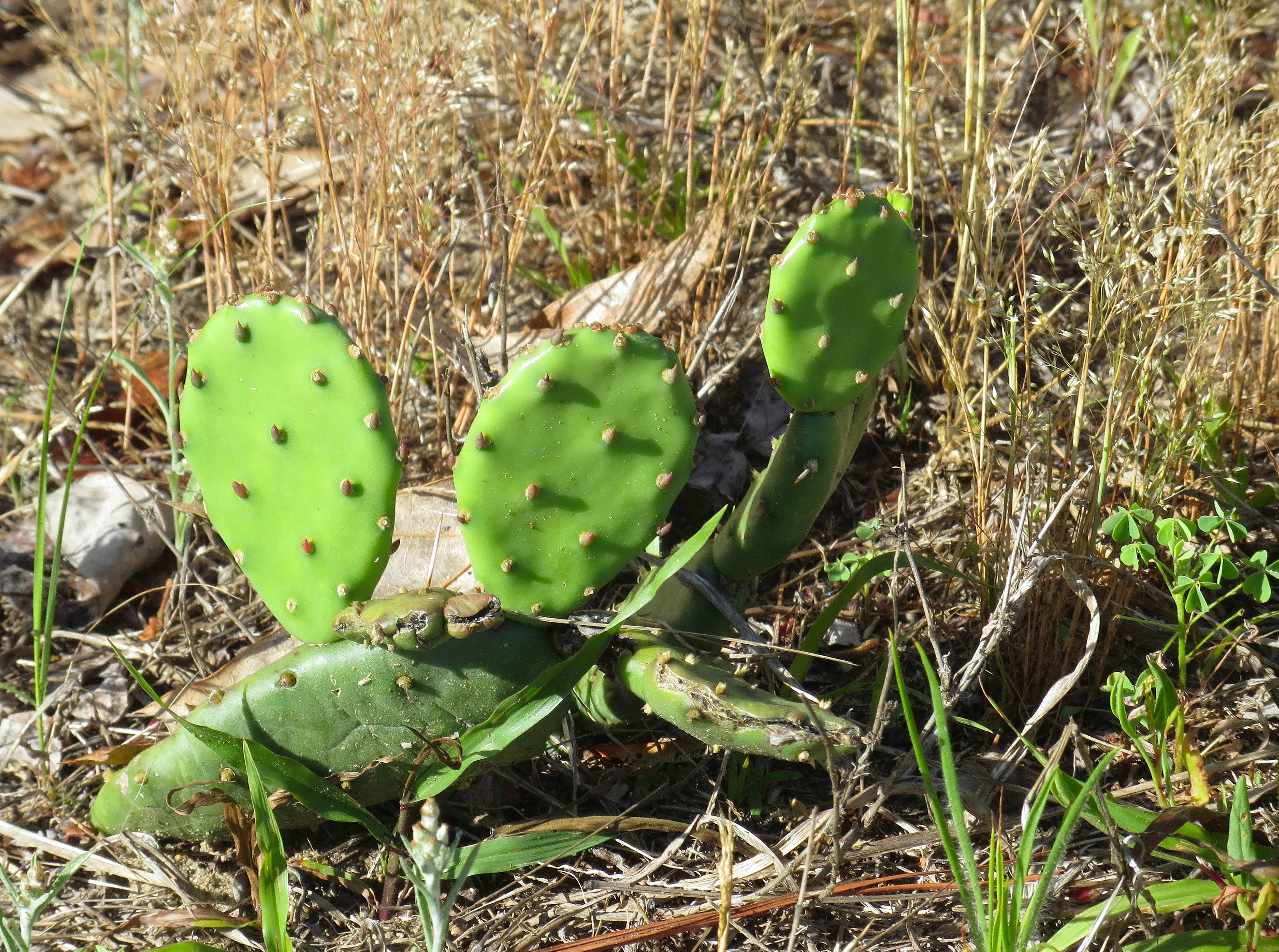
The sixth plant today is our native prickly-pear cactus, Opuntia drummondii. This grows in barren, weedy, gravelly stretches in full sun beside the James River. Its fruits, the red prickly-pears which will ripen in late summer, are edible raw or made into jelly. The green pads, a succulent leaf, also are edible. But beware because their spines are quite long and sharp!
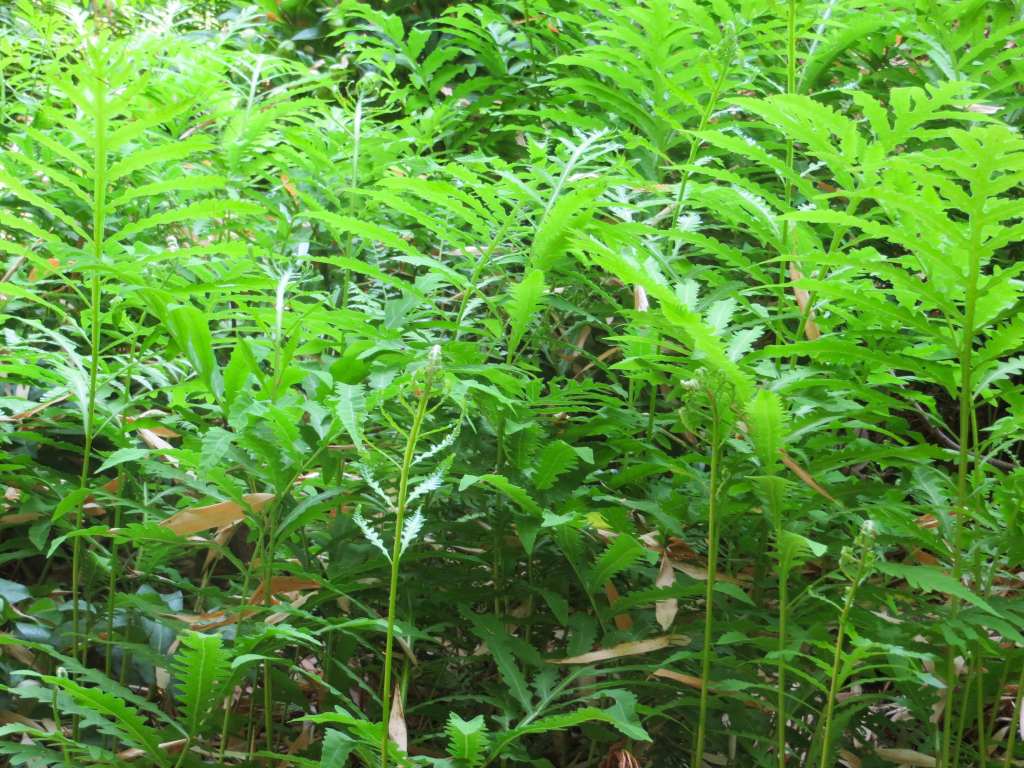
We’ll get back to our own garden next week. I’ll just leave you with a bonus photo taken this week in our fern garden of the native fern Onoclea sensibilis, or the sensitive fern. This grows wild on Jamestown Island, too, but in an area currently closed to traffic while repairs are made to the roadway. Next week’s post may be dedicated mostly to ferns since they are so beautiful at the moment. Fancy Fronds nursery sent me a ‘bonus’ fern in my shipment yesterday that I’ve never heard of or seen before, until it arrived as a gift in their latest shipment. We’ll have a photo of it next week!
Happy Mothers’ Day/ Women’s Day to everyone!
With appreciation to Jim Stephens of Garden Ruminations, who
hosts Six on Saturday each week.

 Our Forest Garden
Morus rubra, red mulberry is the native species there. Morus nigra, black mulberry might be naturalized. Mountain laurel and peony are both very rare here. I would like to add mountain laurel to my own garden, and try peony. I know that peony can grow in some gardens, but I can not determine why it is happy in some gardens but not others.
LikeLiked by 1 person
Hi Tony,
We have red, white, black, and paper mulberry in this area. While red mulberry is the native, the leaves on this tree were clearly those of the black mulberry. There aren’t others around that I’ve noticed so I doubt it has naturalized at the entrance to JT Island. It is a mystery-
Peonies, believe it or not, want a pH of less than 6. If your pH is higher than 6 where you plant them, then that may be a part of the problem. They also want consistently moist humus rich soil and some partial shade in the afternoons in southern latitudes. This is another plant that should be left undisturbed. It can take 2-3 years after planting or dividing for the plant to flower well again. I have never found a seedling mountain laurel even though I have perhaps a dozen of them in our garden. Odd, isn’t it?
LikeLiked by 1 person
The soil here is sporadically alkaline. It is typically not alkaline where redwoods grow, but can be slightly alkaline very nearby. That might explain why peonies perform well in some situations but not others that are within minimal proximity. I was always told that peonies need more chill than they experience here. However, I see them blooming nicely in some gardens near where they do not perform well.
I remember fig trees that grew wild in wilderness regions of the Sierra Nevada. They were supposedly planted by miners. They do not naturalize, but grow wild in some weirdly remote situations. Mulberries that are exotic but grow in the wild could have been planted into what were sensible situations at the time.
LikeLiked by 1 person
All true, Tony. And you will also find that some varieties of peonies need more cold than others. I found a list of maybe a dozen varieties of peonies on the NC State Univ. website that can perform well with warmer winters. I think there is still enough variation in the hybrid peonies, based on their parentage, that some are more tolerant of less than ideal conditions than are others.
There are many instances in our area of unusual plants planted long ago, before Colonial W’burg and the Parkway were ever developed, still growing strong today yet oddly out of place. Some naturalize and others don’t naturalize yet persist where planted. There are many invasive species, like Chinese Ligustrum, naturalized along the Colonial Parkway. Yet I don’t believe that many visitors are inspecting the vegetation to notice what belongs and what doesn’t. ❤
LikeLiked by 1 person
Most do not know what belongs and what does not. Some believe that Eucalypti are native here.
LikeLiked by 1 person
My daughter, who lives in Oregon, loves Eucalyptus. It is such an interesting group of woody plants. She was thrilled to receive one in an herb collection I sent to her. I haven’t gotten the ones available locally to ever overwinter here, so must grow it as an annual.
LikeLiked by 1 person
Eucalyptus citriodora is likely the species that was a component of an herb collection. Unfortunately, it is not very resilient to frost. It can freeze back to the base, and then regenerate annually. However, such fresh regenerated growth is best for herbal application. Skyler of Tangly Cottage Gardening grows some sort of Eucalyptus in Ilwaco, on the very southern coast of Washington, where it has no problem with frost, so it is possible to grow some types of Eucalyptus in some parts of Oregon.
LikeLiked by 1 person
Great information! Thank you!
LikeLiked by 1 person
Yep. Happy Women’s Day. You are right not everyone is blessed with motherhood.
I like the idea you are not allowed to pick the berries in the National park.
LikeLiked by 1 person
“Leave only footprints, take only memories” is the National Park System’s motto. I have seen folks gathering fruit in the fall, in secluded places on the island away from the visitor’s center. But if it is definitely discouraged if park staff sees any sort of ‘gathering.’ Happy weekend to you! ❤ ❤ ❤
LikeLiked by 1 person
Thanks for including the prickly pear. It has a lovely flower.
LikeLiked by 1 person
Yes, a lovely flower and a beautiful fruit. You just have to be cautious in handling it! ❤
LikeLike
The peonies are lovely and a gift of a peony is one that will be enjoyed for many years. We have peonies that were in our garden when we moved in – that was in 1989! They’ve been moved a few times to different places in the garden and they’re still thriving.
LikeLiked by 1 person
❤ ❤ ❤
LikeLike
I always think Mother’s Day is a good chance for all of us to celebrate–those who are mothers and those who have mothers. And as you say those who nurture others. Your selections are lovely, and now you have me hungry for Blackberries!
LikeLiked by 1 person
Well we are of like mind, then, and I hope you find some delicious blackberries sooner rather than later. As a teen, I always knew where to go pick blackberries in summer, and my mother always used them to make us delicious blackberry cobblers. My great-grandmother had a huge mulberry tree in her yard. I would pick them for her when we visited and she served them over ice cream. Oh, the wonderful fruits to enjoy each summer! ❤ ❤ ❤
LikeLike
These river banks with mountain laurels are magnificent. I have some yellow irises and pontederia around my pond. It’s not yet banned in France.
LikeLiked by 1 person
Aren’t the I. pseudacorus considered native in much of Europe? They are a beautiful variety of Iris and I’m always happy to find them blooming in May. The banks of mountain laurel are just breathtaking as you cross the bridge and see them extending into the distance on both sides. And they are still fairly common in our area where river and stream banks have been protected from developed, or developed carefully to leave the native vegetation in place. They are beautiful shrubs up close, too, with very gnarled, woody frames. Hope you’re well, Fred, Bonjour!
LikeLiked by 1 person