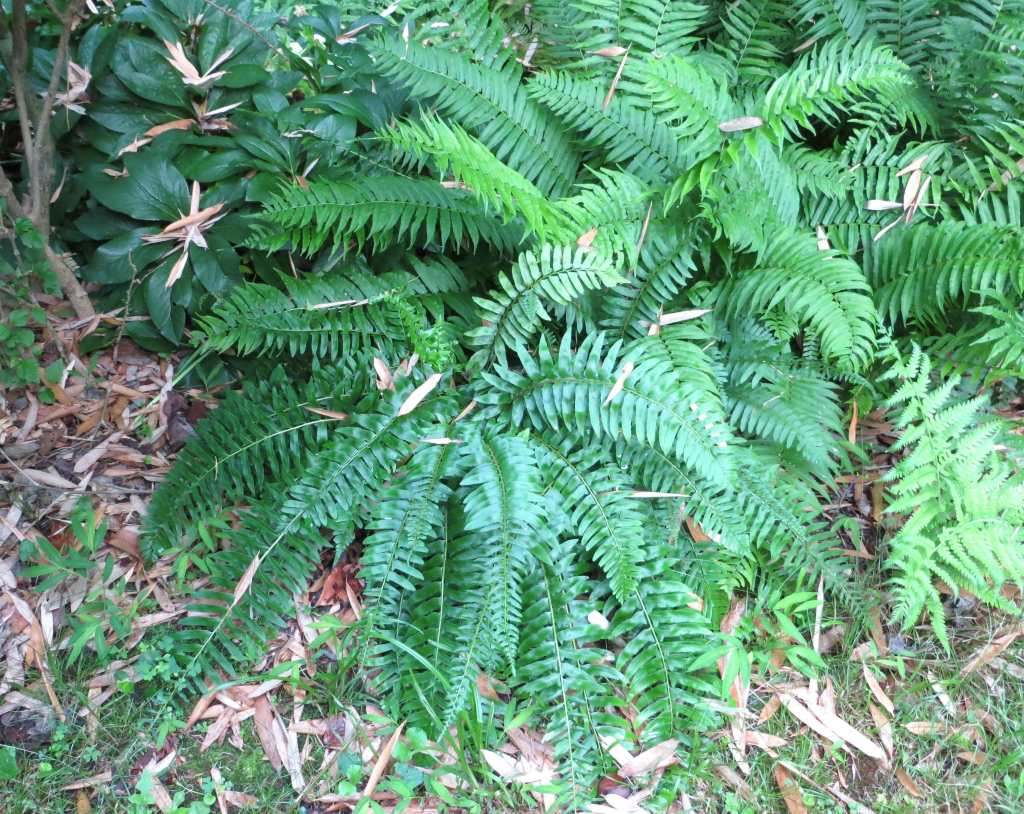
Native Christmas fern, Polytichum arostichoides, is one of the toughest hardy, evergreen ferns in our garden once it is established. It grows wild in the woods, and was already growing in this garden when we arrived. I have planted many more over the years because of the ecological services it provides. Polystichums may be called dagger ferns or sword ferns because of the form and texture of their fronds. Deciduous Thelypteris palustris volunteers to the right. 

I am always interested in growing a new and different type of ferns. Of course, I’m also interested in growing different trees, Hydrangeas, Irises, daffodils, Pelargoniums, Begonias, Salvias, Rhododendrons, and Camellias, to name just a few of my favorite types of plants. While some gardeners may be passionate landscapers, others of us are definitely passionate collectors. I enjoy watching the endless variations on a horticultural theme.
And so it is that I find myself particularly drawn to a few specific genera within the endless varieties of ferns. I’m particularly keen to learn which genera, and which species of those genera, will grow well in our climate and local conditions. Polystichum, Dryopteris, Thelypteris, and Athyrium have proven themselves tough and persistent.
It occurred to me a few years ago that Christmas ferns might be very useful to scrub the air to sequester carbon dioxide. While trees get most of the credit for carbon sequestration, all plants use carbon to produce sugars and store carbon in every cell of their structure. Evergreen ferns will keep scrubbing the air through the winter months, their leaf structure presenting plenty of surface area for respiration to occur. So they are purifying the air and producing oxygen, even through the coldest winter. Once established, these ferns don’t need any special care, though I water the young ones in dry spells and may clip away old, ragged fronds in early spring.
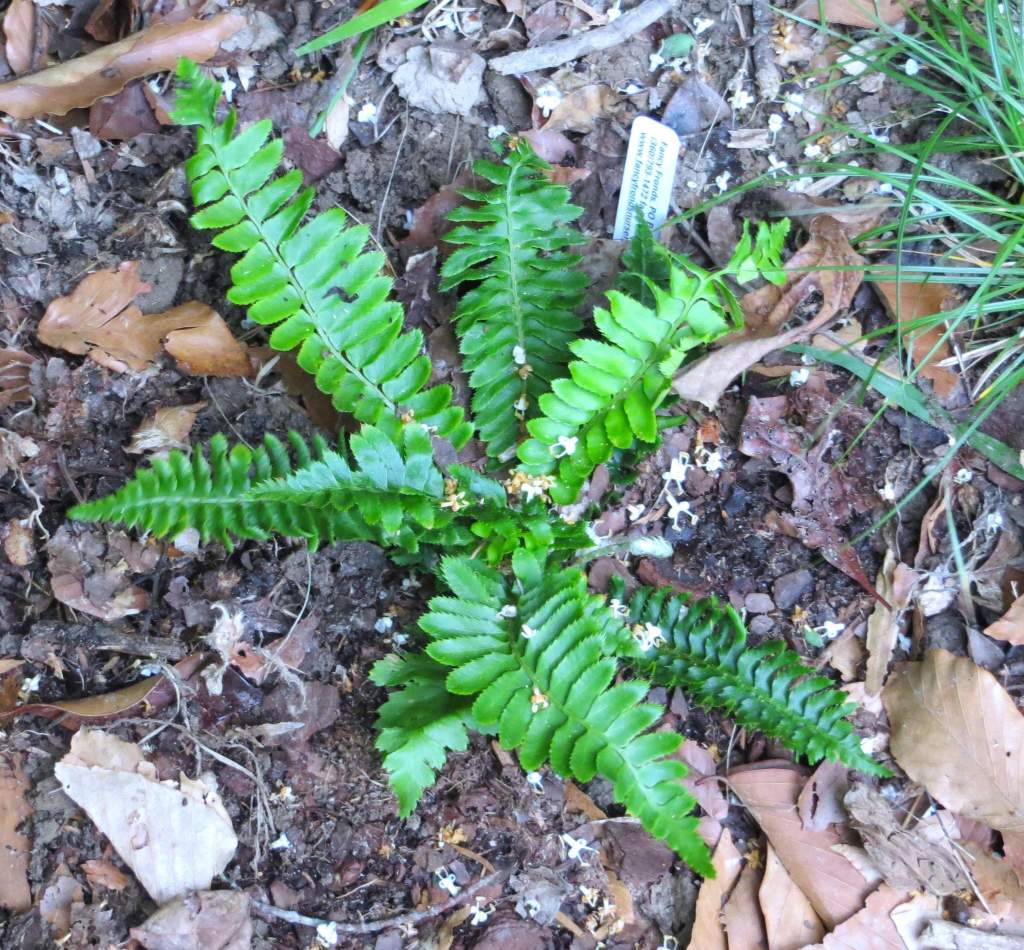
I have purchased and planted more than 200 Christmas ferns over the past two years and grown more from spores, using them as ground cover plants under trees and shrubs as well as to provide year-round structure in fern gardens we have planted to hold slopes against erosion. But we also plant several other Asian Polystichum species. I finally found the opportunity this spring to order the West Coast native P. munitum, or Western swordfern, from Fancy Fronds Nursery in Washington. These are much like our Eastern native but grow much larger, to 4′ tall and wide. I have planted three this past week, along with two P. neolobatum, and now look forward to watching all of them grow.
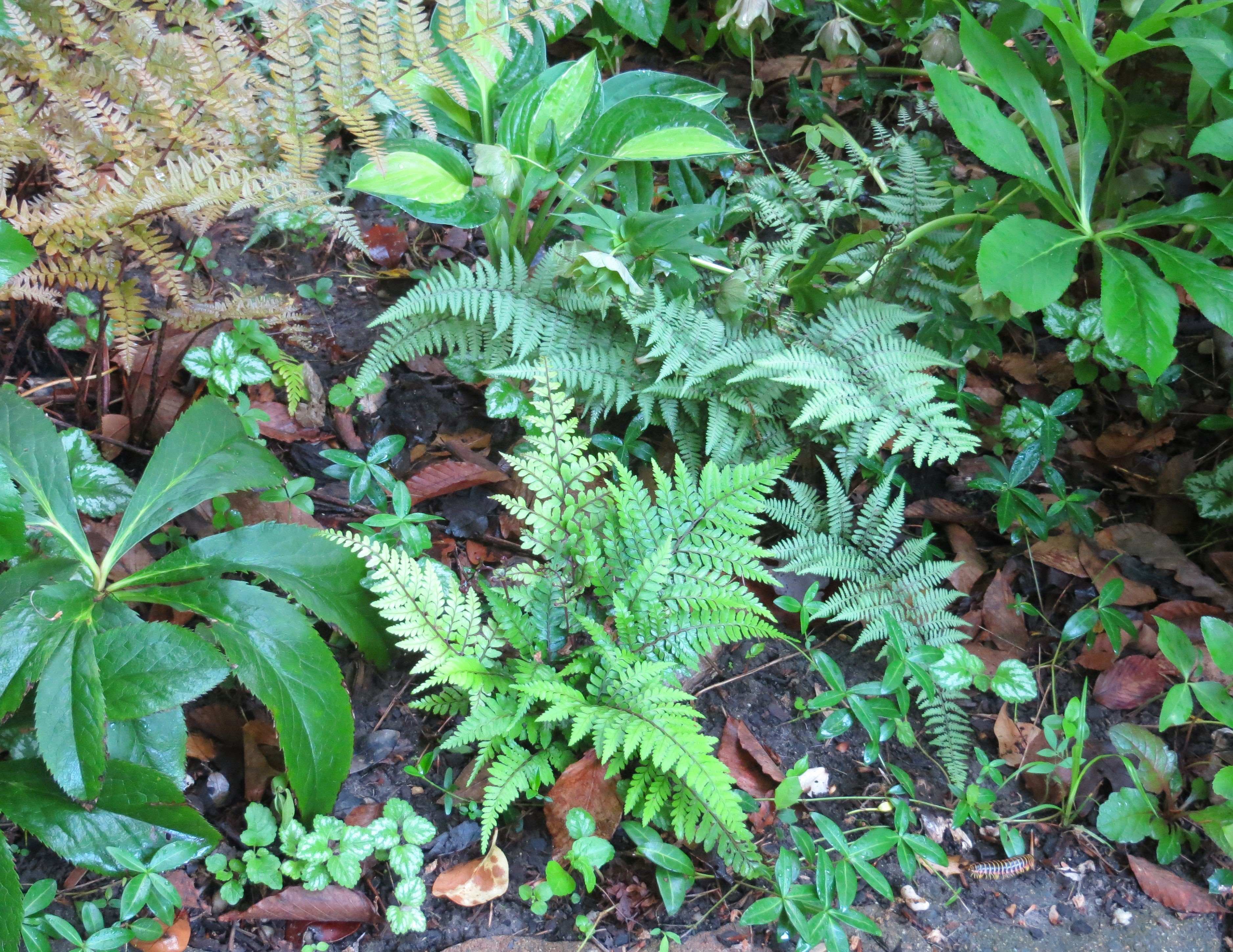


While the deep green, glossy Polystichums may look like the ideal fern form, there are many interesting variations in color, shape and size among the Athyriums, or lady ferns. Since Athyriums are all deciduous, they disappear after the first frost and can take some time to reappear in the spring. Most increase in size and grow slowly over time, becoming stronger each year. I am always watching and waiting for them to return as the weather warms. Athyriums may have red, purple, white, or silver highlights in their fronds, making them particularly interesting.
Athyrium filix-femina ‘Victoriae’ has an unusual structure to its fronds. 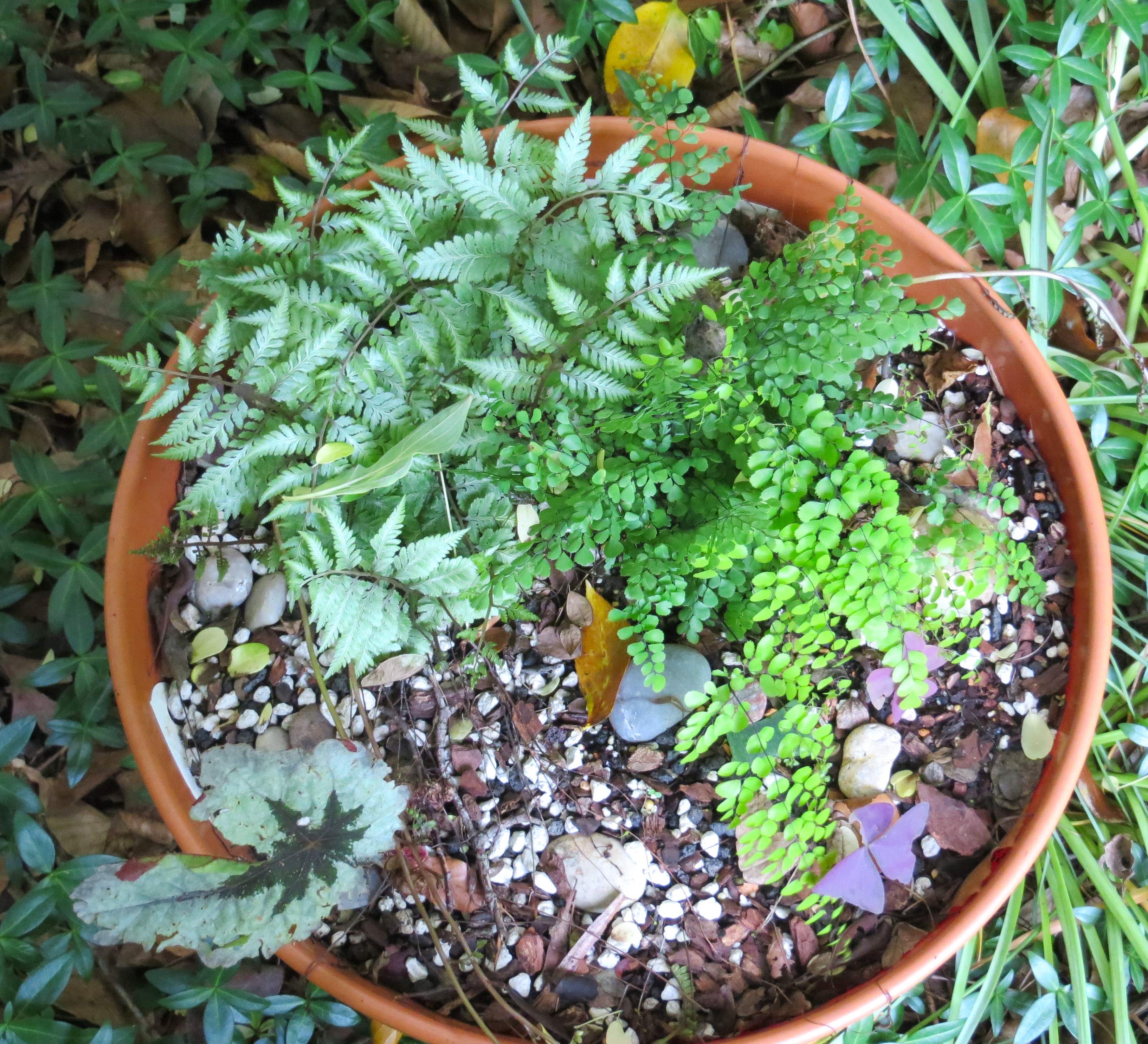
Overwintered A. niponicum ‘Pictum’ emerges beside an overwintered Rex Begonia and a newly planted Adiantum venustum. It began growng fronds weeks too early indoors and has had to replace them with new growth as it adjusts to outdoor conditions. 
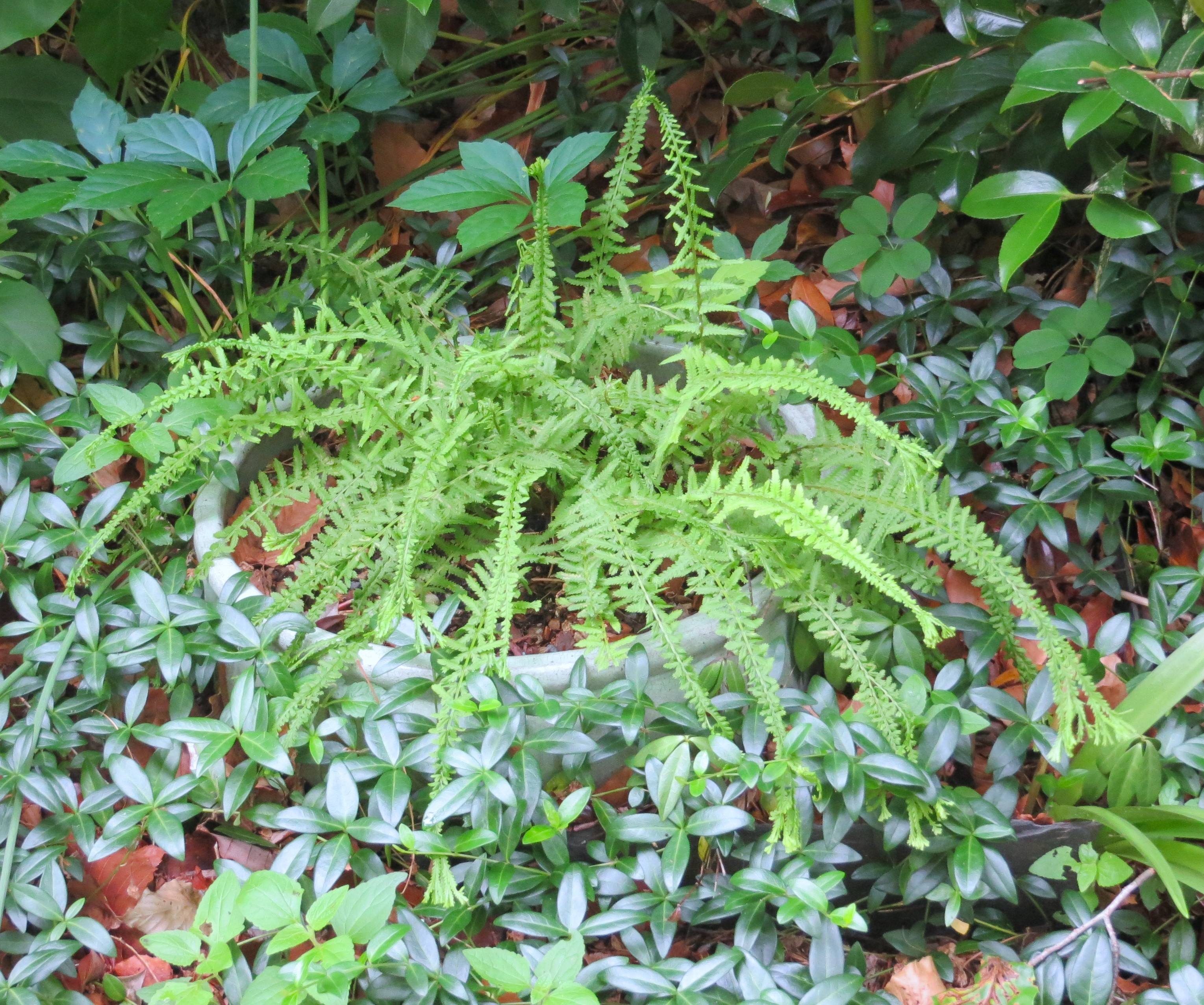
Adiantum venustum, or Himalayan maidenhair fern is just getting established in this container. 
Athyrium niponicum ‘Pictum’ has expanded over the years. This fern is at least 10 years old. 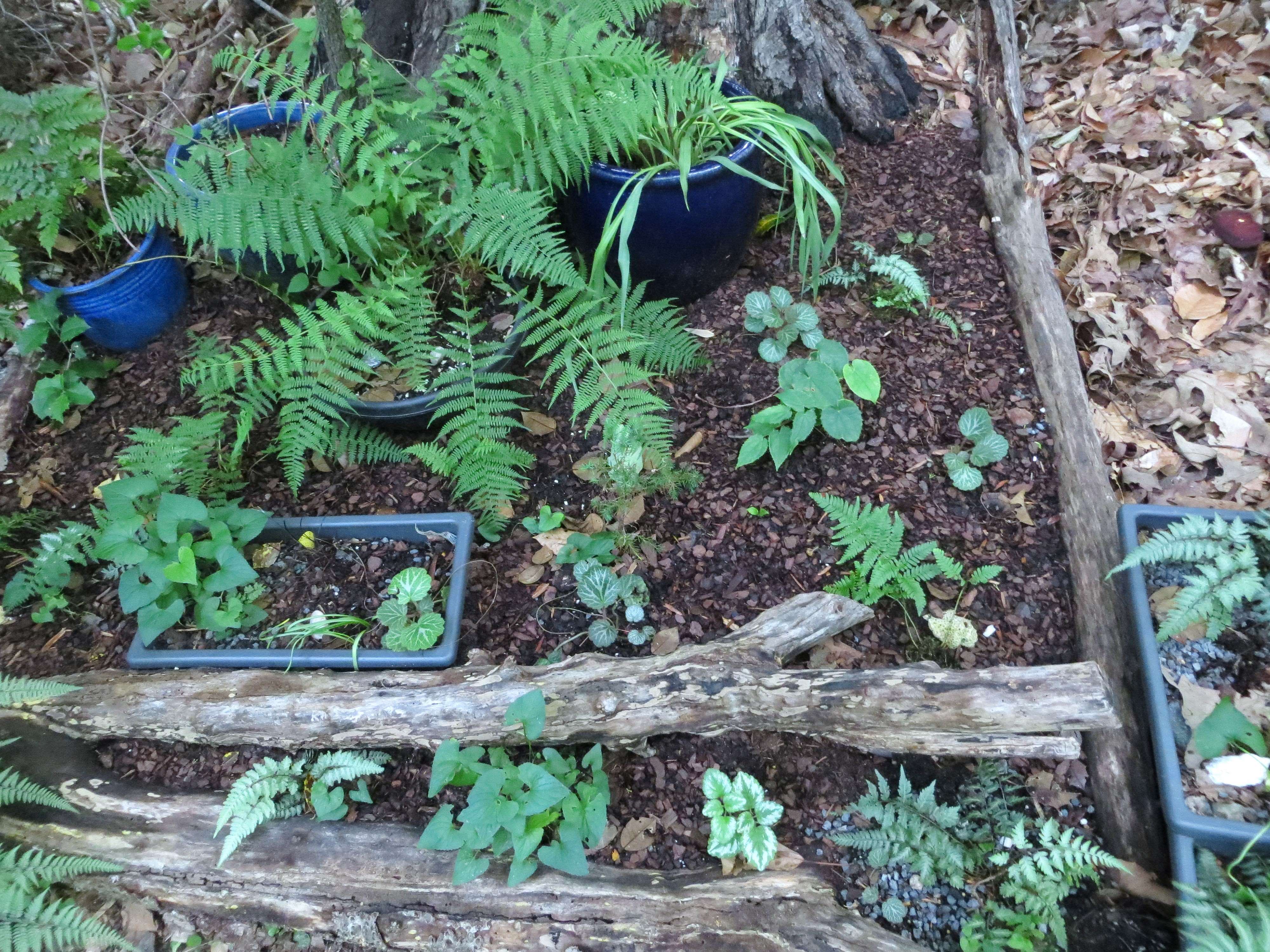
Athyrium niponicum sporelings are growing in our new shady rasied bed. Most of these are transplanted volunteers. 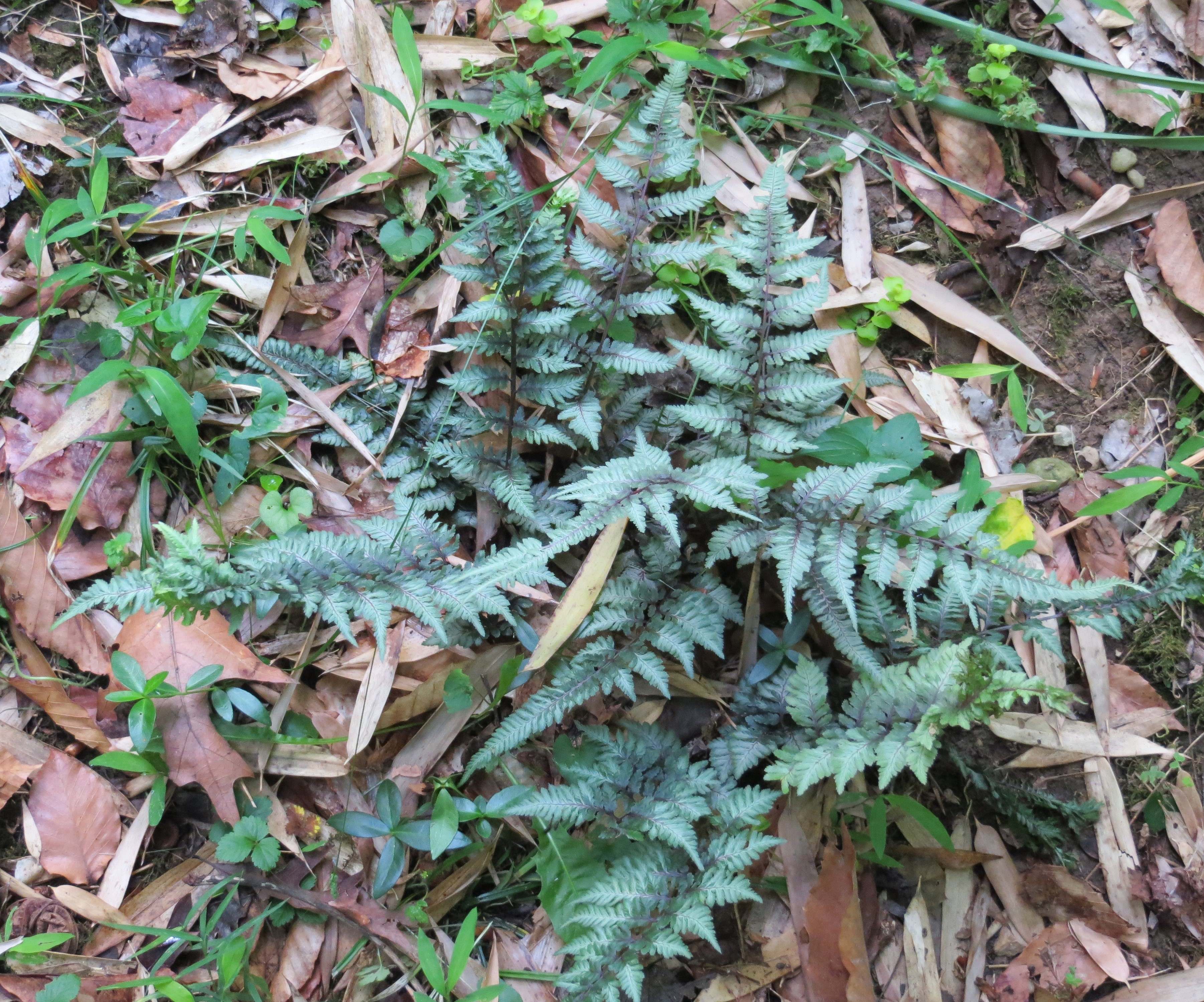
This volunteer sporeling Japanese painted fern has crests at the tips of its fronds. 
This is a cultivar of Japanese painted fern I had not heard or or previously seen. it was included as a gift with my recent order from Fancy Fronds nursery and is called A. ‘Pearly White.’ I look forward to watching it grow and develop this summer. 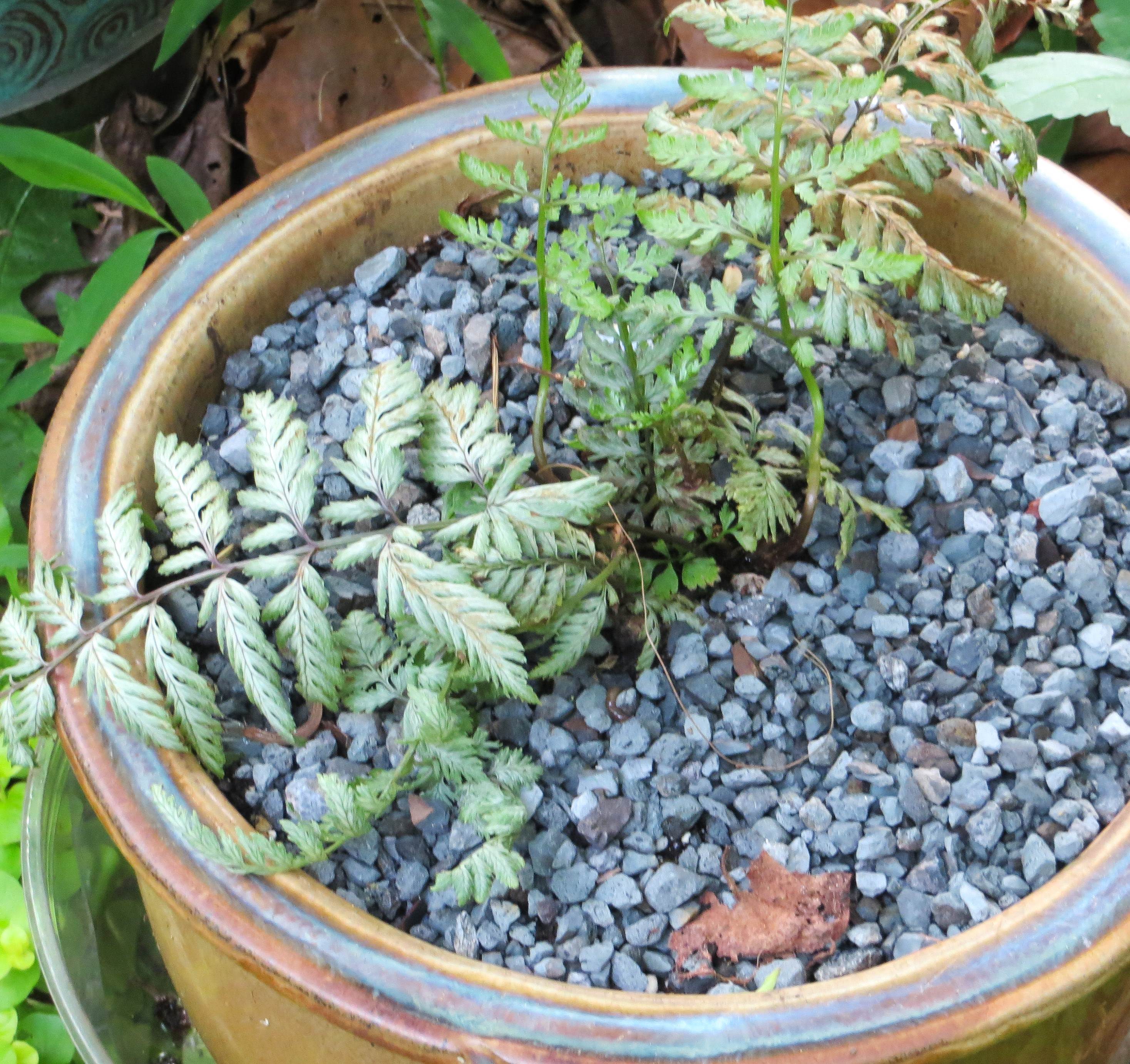
Dryopteris, another tough, hardy, and usually evergreen fern, sometimes emerges with colorful fronds, too. I like D. erythrosora for the coppery tint of its new growth. Like Athyriums, they get better each year as they establish, expand, and sometimes grow taller with age. Ours were badly grazed over winter this year for the first time, but they have returned healthy and strong.
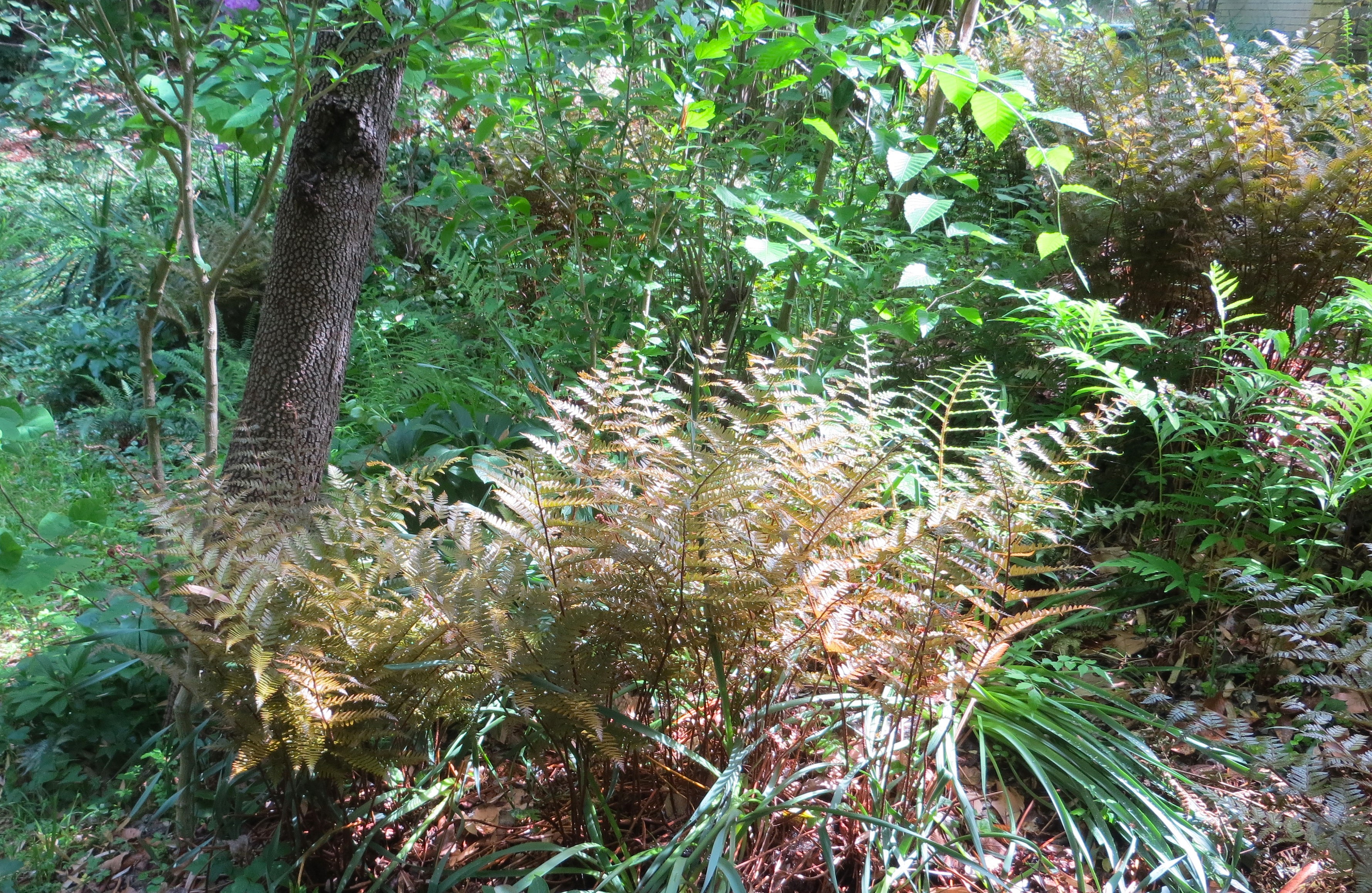
Dryopteris erythrosora shines coppery as it emerges each spring, aging to a reflective green through the summer and winter. 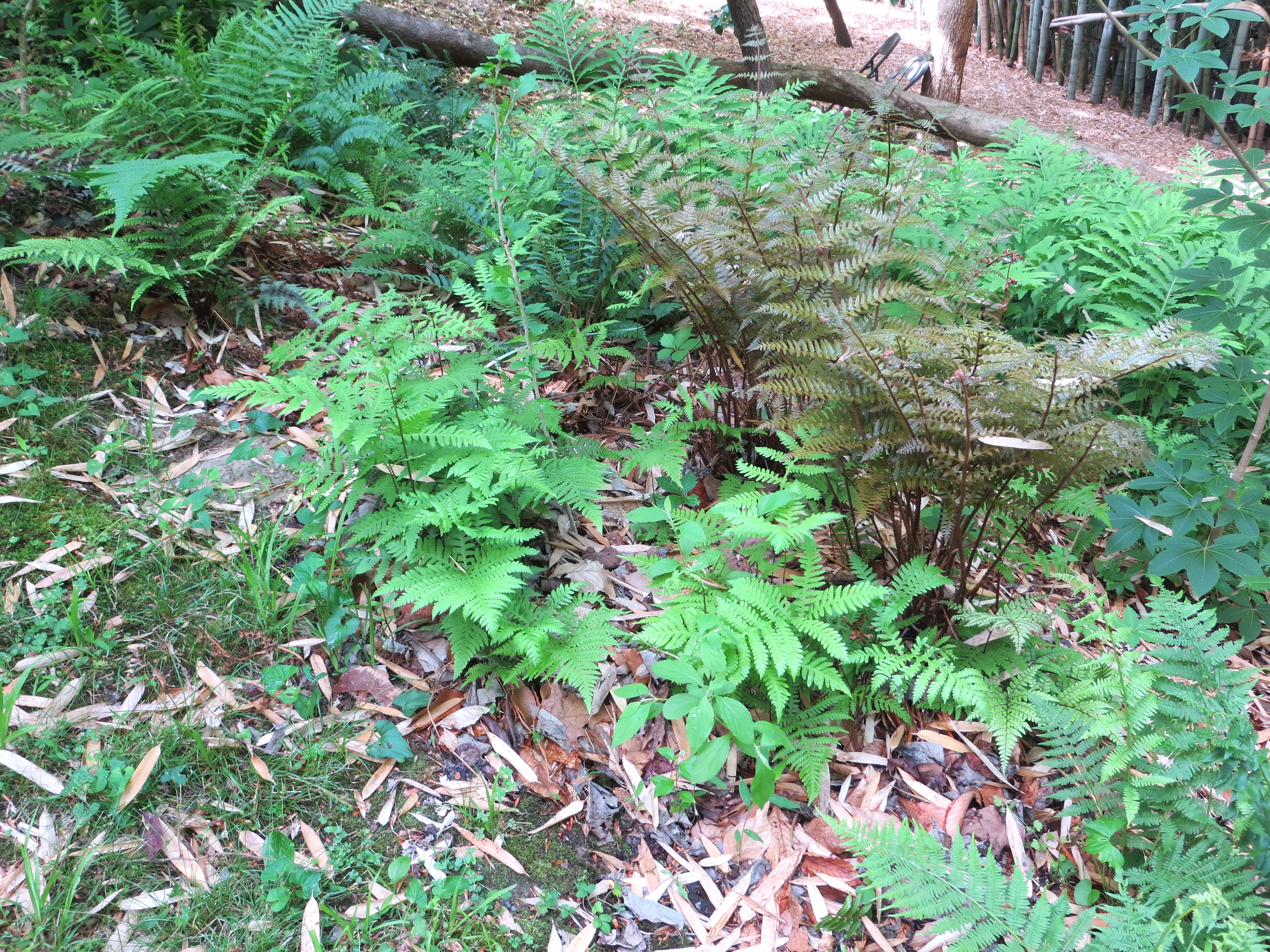
Broad beech fern, Phegopteris hexagonoptera, once was included in the genus Thelypteris. It grows here among Drypoteris and other ferns on a steep slope in our back garden. 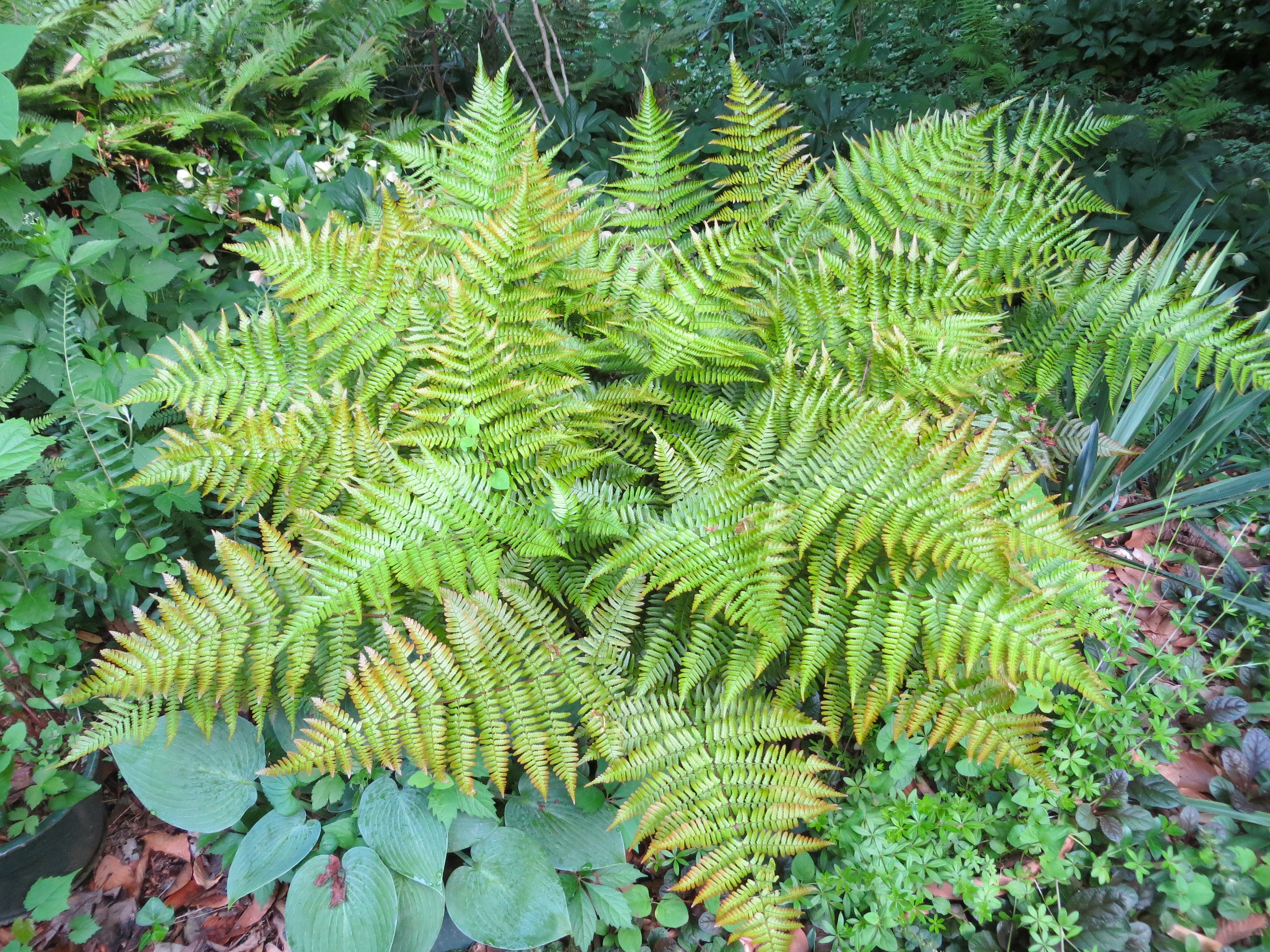
D. erythrosora grows near a container of Hosta.
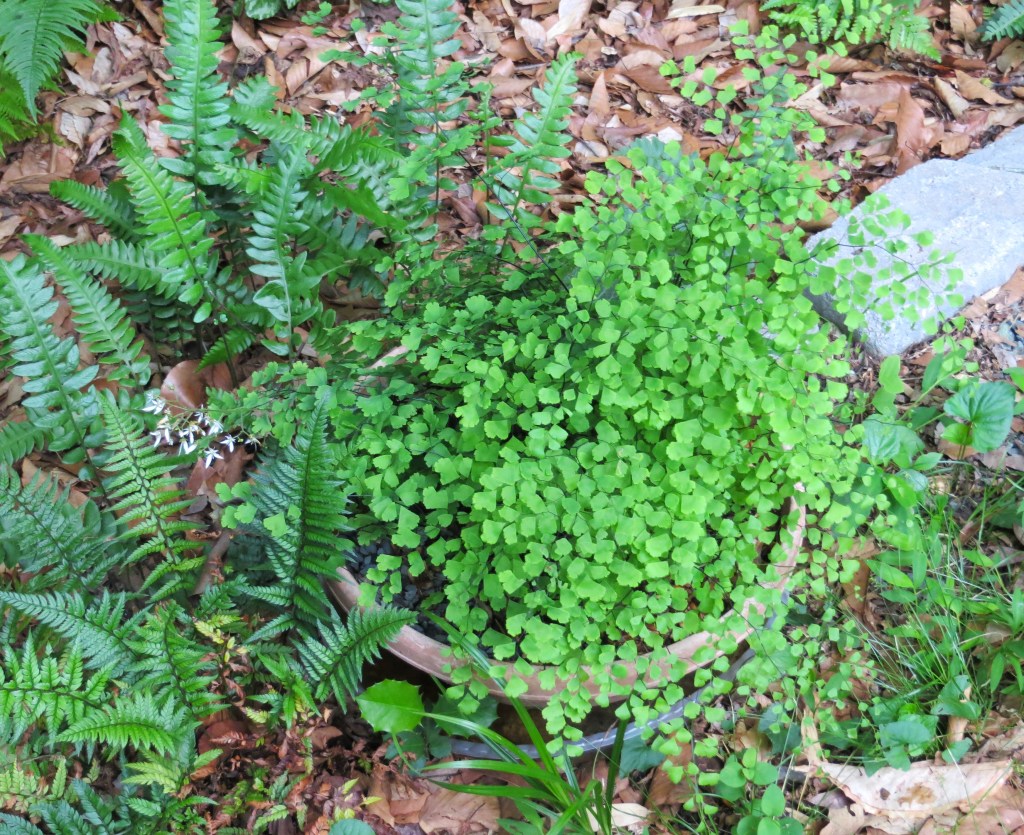
We had mixed results in overwintering several Adiantum plants this past winter. But one of my favorites from last summer made it through our winter, outside on the patio. Adiantum is deciduous and so again, it is a waiting game each spring to watch for new growth to emerge. I am still waiting on several containers containing the hybrid A. mairisii. But our Southern maidenhair fern, A. capillus-veneris, emerged early and has grown beautifully this spring. Last summer I grew it with some Caladiums in the container, but this year I will let it grow in the entire container. It grows here with Deparia lobato-crenata and another evergreen Polystichum, the Korean rock fern P. luctuosum.
There seems to be no limit to the variations of frond shape, size, form and color among ferns that grow easily in our area. While flowers are beautiful and fragrant, the beauty of ferns is longer lasting and much easier to maintain. As we look at the ecological challenges of our times, ferns provide many benefits while requiring less from us. Growing ferns in the shade under trees and larger shrubs offers us respite on sunny summer days, along with structure and beauty throughout the year.
With appreciation to Jim Stephens of Garden Ruminations, who
hosts Six on Saturday each week.

 Our Forest Garden
Oh well done, and you’ve made me have a think about ferns too.
LikeLiked by 1 person
Wonderful!
LikeLike
Beautiful ferns and best of all, the deer don’t eat them!
LikeLiked by 1 person
Thank you, Eliza. There was a time I would have agreed with you, but no more. Deer have been eating at least some of our ferns, sometimes, since last summer when it was so dry here. Now I am treating all of our ferns with repellents and hoping for the best…. The deer to change their grazing behavior according to the weather, etc. we are learning much to our dismay. ❤ ❤ ❤
LikeLike
Oh, not good news… there goes my plan to add more. Maybe hellebore? 🤔
LikeLiked by 1 person
Definitely Hellebore, which is very poisonous, but do wear your gloves if you have sensitive skin. Actually, I was reading something this week that indicated that deer have different preferences in different areas of the country. You might experiment, Eliza, and see whether or not your deer disturb ferns, and if so, which ones. Generally, the older the fern plant, the less likely the deer are to disturb it. But if you have found ways to protect your flowers, then the ferns should be fine in your garden. ❤ ❤ ❤
LikeLiked by 1 person
Ferns are more reliable than most other perennials in the shade of redwood forests.
LikeLiked by 1 person
Do you use P. munitum in your landscapes?
LikeLiked by 1 person
Yes, but not intentionally. It is native, so grows wild, and has a nice habit of showing up in situations where we can not get much else to perform well. It is remarkably tolerant of shade under redwood forests. Most do not get cut back, so pile up on their own detritus, which makes them quite full and fluffy on top.
LikeLiked by 1 person
It sounds very beautiful… I wonder whether these I have planted will be able to grow so large over time, with less deep shade?
LikeLiked by 1 person
They also grow in full sun, although slightly more compact. Once established, they are remarkably durable, and survive without rain from spring until autumn. Their only weakness is that they are not as resilient to transplant as other ferns are. They typically survive, even if they die back and then regenerate; but will require watering for quite a while until they get established again. When some get in our way, we dig them up, cut the foliage off, and bury the stumps just below the surface where we want more. We try to do this during autumn, at the beginning of the rainy season. Otherwise, we try to remember to water them.
LikeLiked by 1 person
All of that is very helpful, Tony. Thank you. I tried that transplanting technique this spring with a Cyrtomium that I wanted to move out of its container. Only I left the crown at ground level, but have been watering it and watching. So far, no new growth…. but perhaps there will be signs of life before long.
LikeLiked by 1 person
It is still early. (I do not know how the weather has been there, though.)
LikeLiked by 1 person
Cooler than usual this winter and spring- I am just giving it time to respond or to compost in place- one or the other… ❤
LikeLiked by 1 person
It’s the fern garden at your house! You are a queen of this plant variety. So many…
LikeLiked by 1 person
We discovered ferns are a good way to combat erosion on our steep yard soon after settling in here. And then we realized that we really love the ferns! Many of the ferns we grow naturally grow in the ravines in this area, so they are very happy. ❤ ❤ ❤
LikeLiked by 1 person
The ferns are very interesting, not something one sees every day.
LikeLiked by 1 person
They are interesting, for those who enjoy texture, and open up so many new possibilities for how to use them together.
LikeLiked by 1 person
Ferns are special–that is for sure. They like our plot of land here, too, and I like them back. They create a nice frame for certain areas of the garden. You have a nice collection, and beautiful images of them, too.
LikeLiked by 1 person
Thank you ❤ ❤ ❤
LikeLike
❤ ❤ ❤
LikeLike