

The first major hurricane of the season, Erin, passed us by well offshore. I take that as a good omen for the rest of hurricane season, which lasts here through November. There are at least two more potential storms out in the Atlantic Ocean at the moment, and they are forecast to also stay offshore and curve northeastwards to bring rain to parts of Europe and the British Isles that have been so dangerously hot this summer. We had some rain and much cooler weather move over us just ahead of the hurricane, steering it out to sea. And we have enjoyed the north wind these past few days. All in all, it is a pleasant ending to August.
We have been getting up very early and heading out to the nearby beaches along the James River both to watch the sky and to enjoy the cool of the morning. Walking on a narrow river beach forces one to attend to the tides and the wind, the creatures who live there, and the relentless effects of water on land.
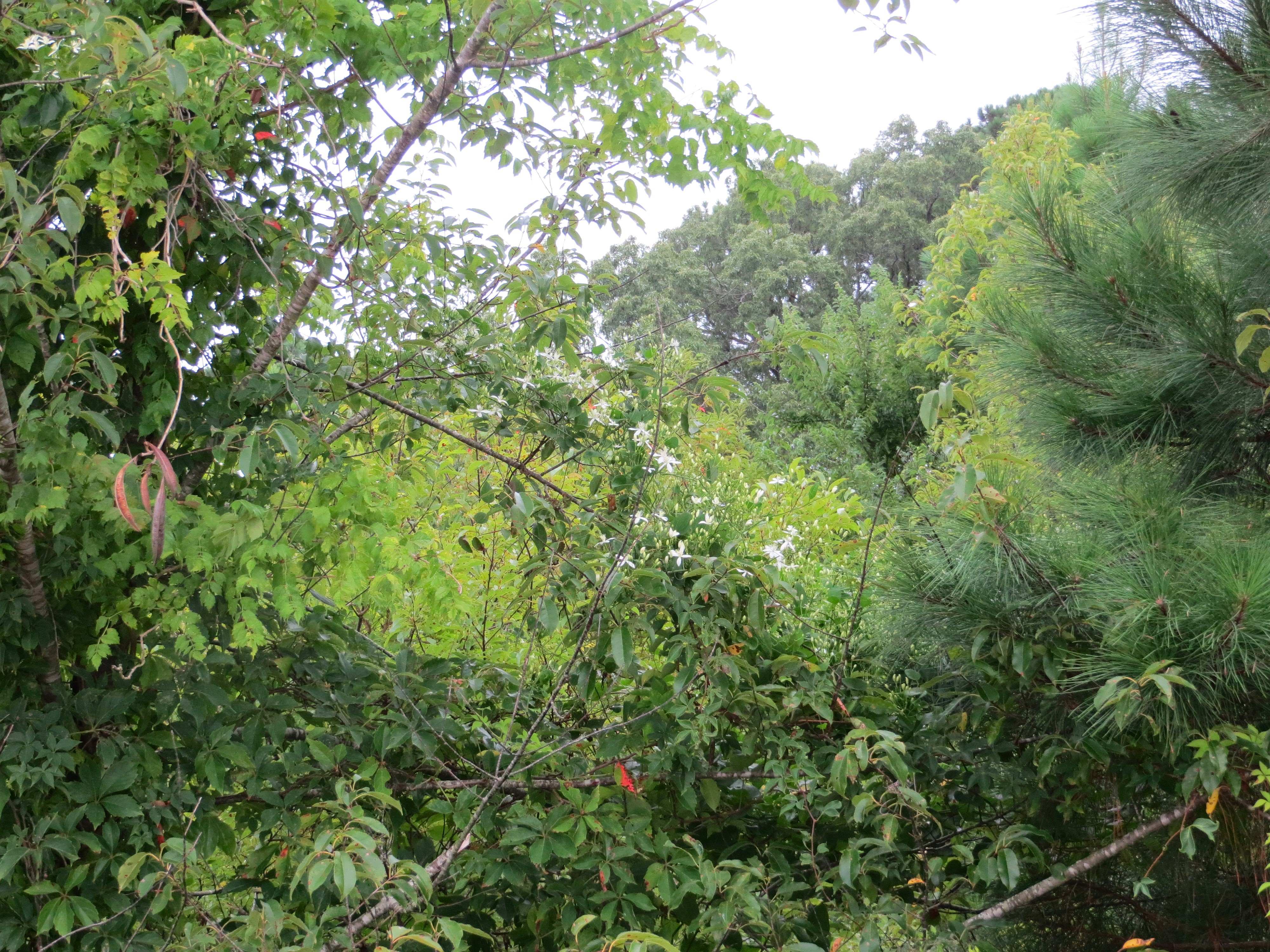
White Clematis flowers bloom to the right of a trumpet vine now showing both orange flowers and seed pods. Vines climb and twine on every available space along the banks of this James River beach. 
Trumpet vines, Campis radicans, climb this tree. 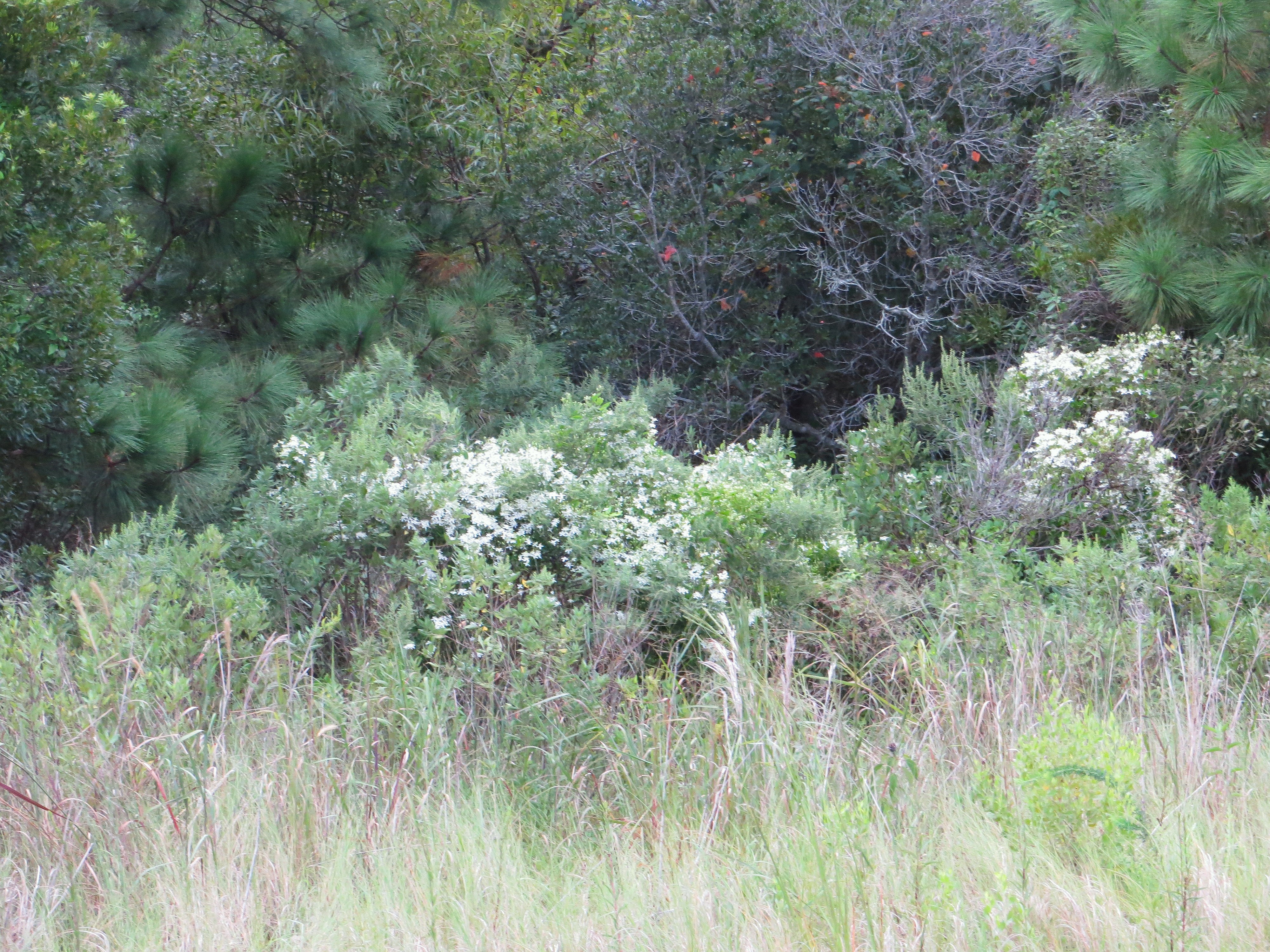
Sweet Autumn Clematis scampers over the shrubs lining the beach. 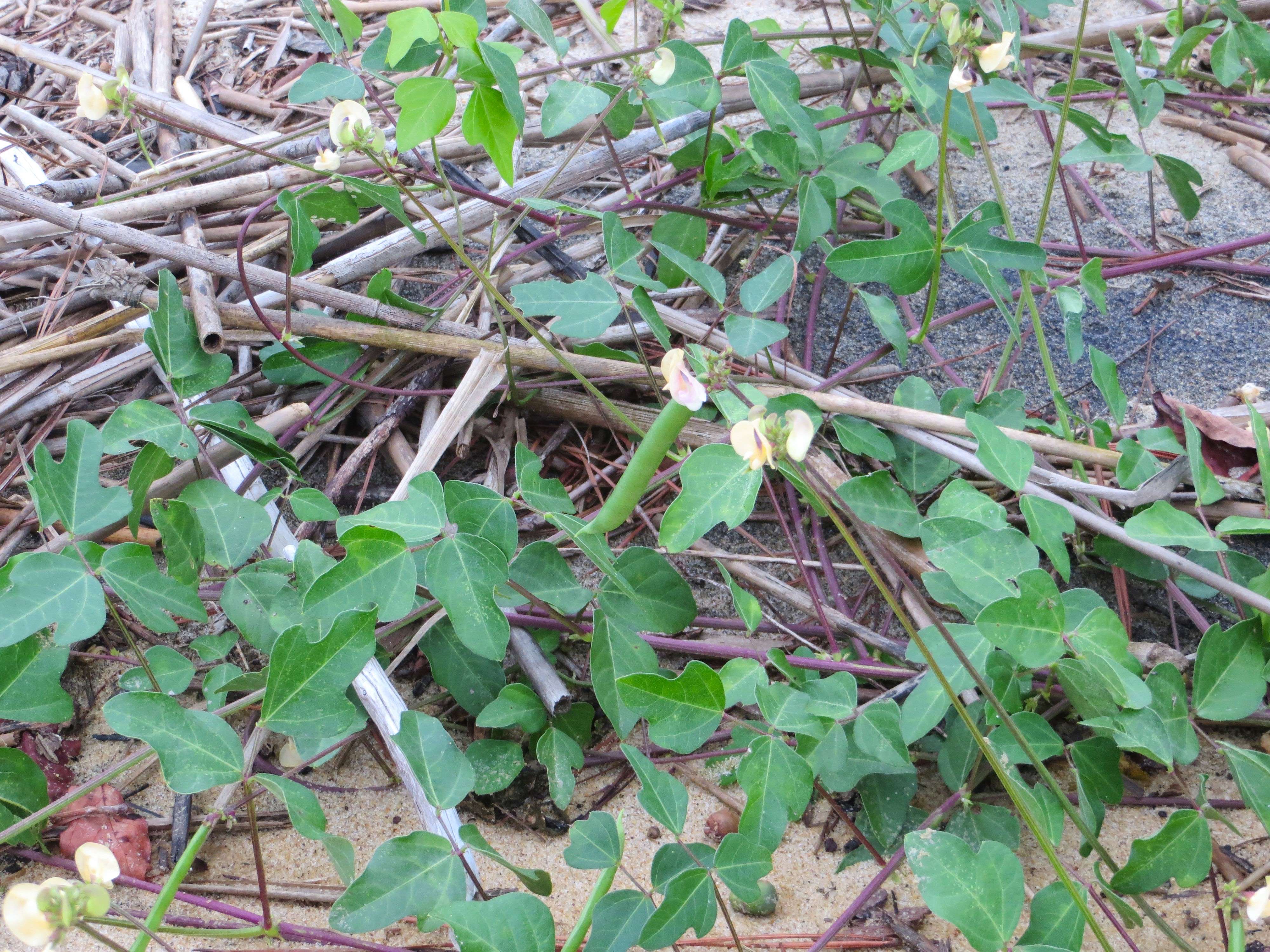
This is an legume vine blooming and producing fruit while also holding the sand at the high tide line of the beach. 
Native grape vines cloak a fallen tree along a creek which feeds into the James River. This entire area is underwater at high tide.
There are good lessons here for gardeners. Although the plants seem wild and tangled, the living and the dead coexist side by side, one making use of the other. And one soon notices how every single element, animate or not, is interconnected and interdependent. We can sometimes ignore that a bit in our tamer garden spaces, filling in the gaps with our own efforts. But out here on the windswept beach where no one intervenes with secateurs, a hosepipe, fertilizers or pesticides, one can observe cause and effect almost moment to moment.
On Wednesday, the day the storm passed closest to us, we were out on the beach a little past seven to watch the clouds and feel the wind. And we were both startled to hear a hummingbird buzzing nearby, finding breakfast from a Japanese honeysuckle vine that was scrambling across the beach grasses.

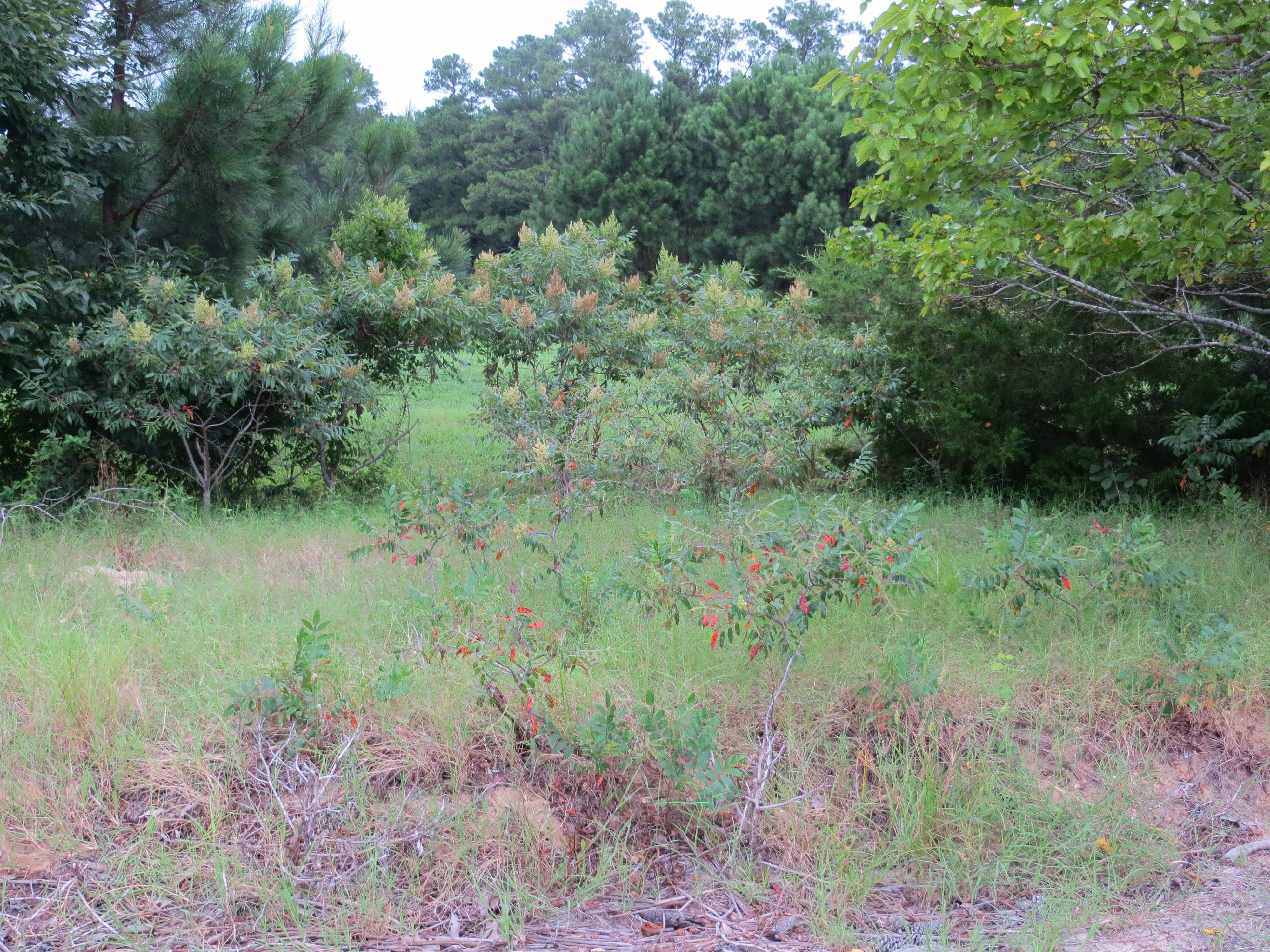
On Friday, I was thrilled to spot an orange Monarch butterfly feeding on the just opening flowers of a winged sumac shrub that was growing in a sunny field just above the high tide line of the beach. Winged sumac is a native shrub here, wild and spreading widely on its suckers. It is not something many would choose to plant in the limited real estate of their home garden. But it is stunning when it turns bright scarlet each autumn. Sumac shrubs not only attract monarchs, bees, and songbirds, but their extensive roots also help to hold this sandy riverbank against erosion from the river’s waves at high tide. Sumac blooms all along the roadsides of the Colonial Parkway.
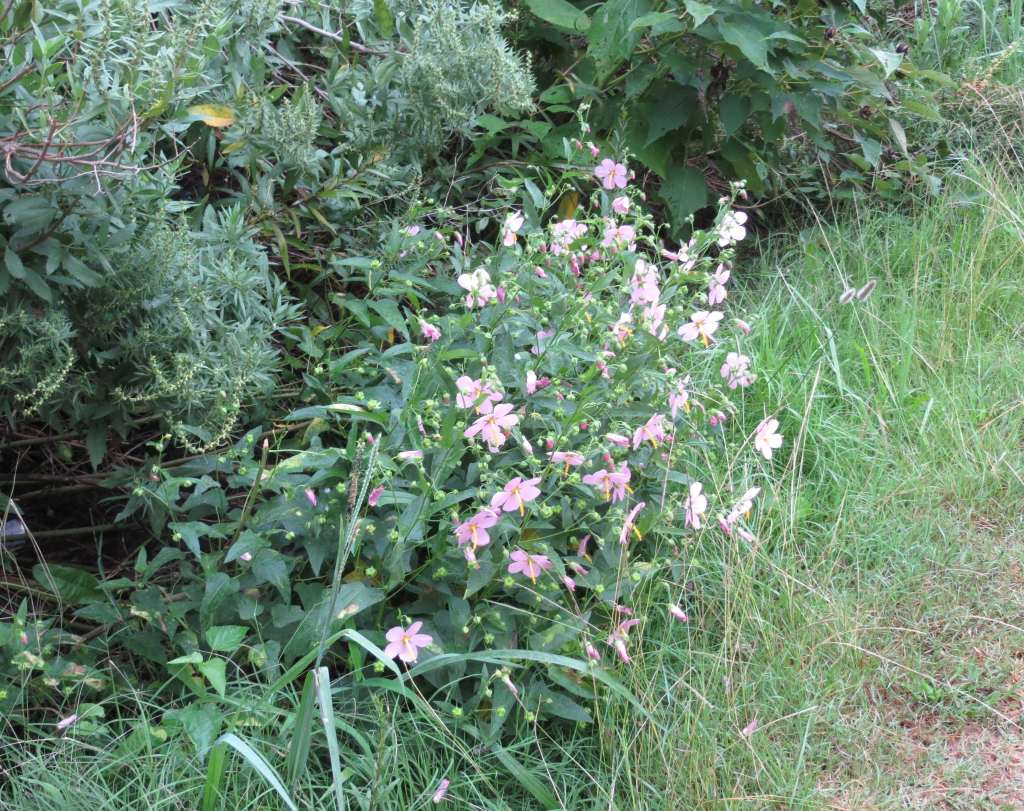
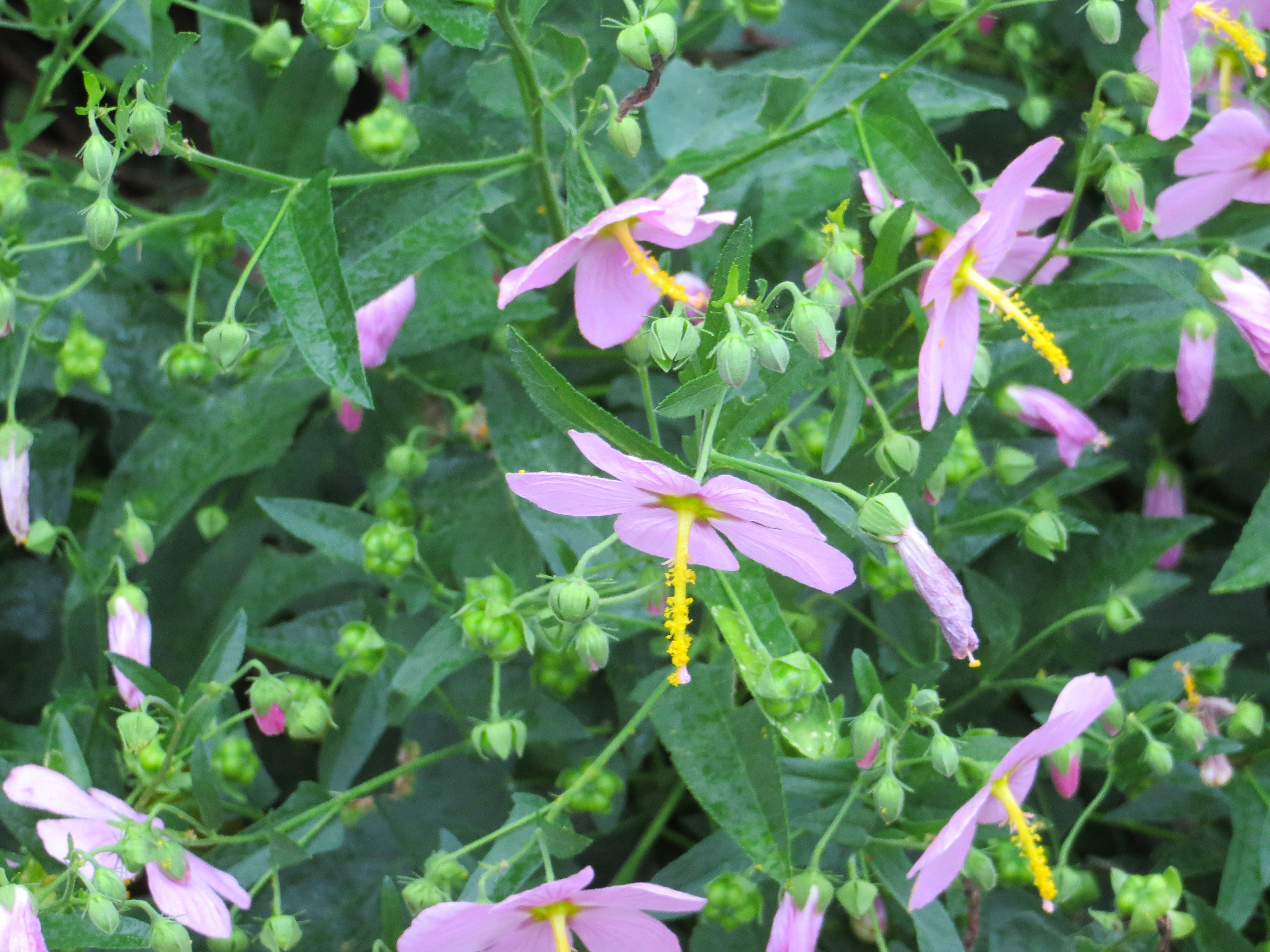
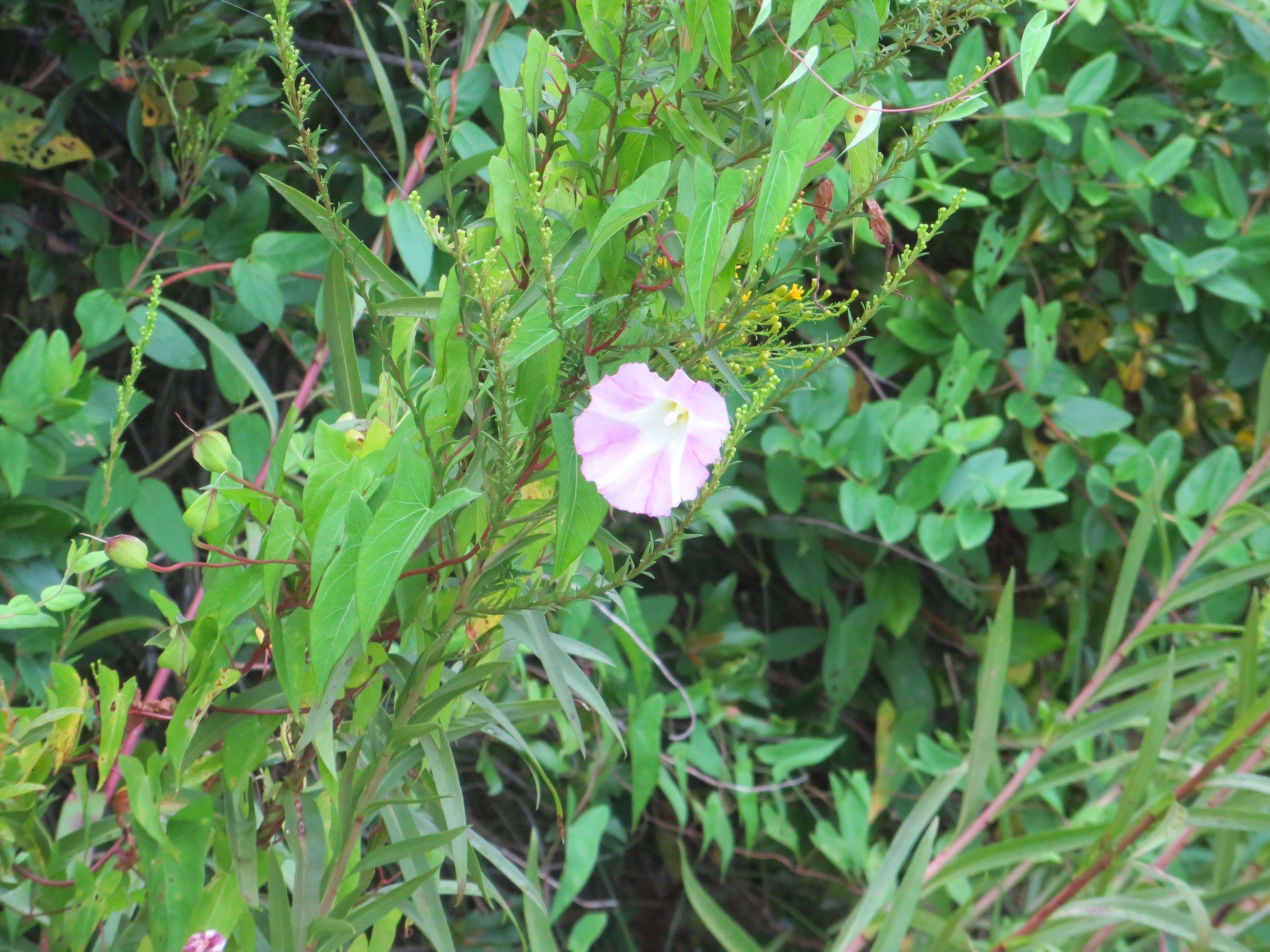
Walking along the riverbank reminds me that nature favors function over beauty. The tiniest, plainest flowers can still satisfy the butterflies, bees, and hummingbirds in search of nectar. And the creatures don’t care whether the flowers are carefully arranged and displayed, only that they continue to appear in abundance. Blooming vines provide the most abundant flowers, followed by seeds for the birds. And vines scramble everywhere along the beach; through the trees, over stumps and sand, and over the grasses. There is both native and Asian Clematis just coming into bloom alongside trumpet vine, which as been blooming long enough this summer already that seed pods hang beside late blossoms. There are morning glories and tiny flowers covering a wild legume vine that I can’t name. The vine, now also showing seed pods which look just like hericot verts, scrambles across the bare sand and up the steeply cut banks. It seems like the most life thrives in a confusion of abundance.
Later, we sit on our patio watching a trio of hummingbirds flit about from flower to tree to feeder and off again. I can tell we make them nervous, sitting there near their feeders. They frequent the wild patch of Lantana and morning glory vines dominating the center of our front yard this month. And they flit off to the several nearby Rose of Sharon trees to sit a moment and observe the scene before diving down for another sip of nectar.

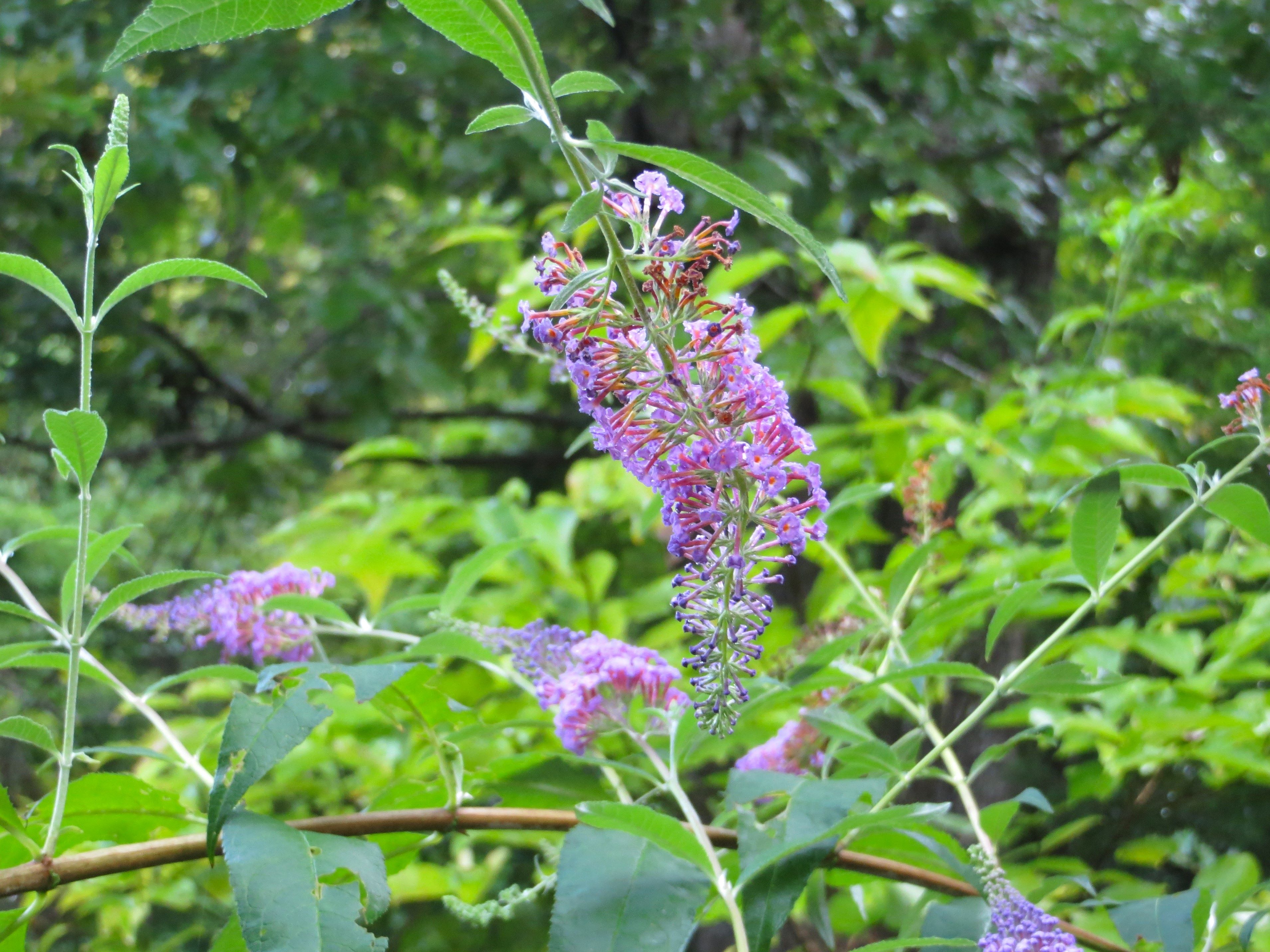
There are butterfly bushes, too, nearby, and lots more flowers inviting them. But they hang out around the Lantana, like most of the butterflies, because there are lots of spaces to find safety and perches to rest. They don’t seem to mind that it is all a bit of a shaggy mess at the moment. I have seen only five monarch butterflies all of this summer. Surely there were more that I missed because I was sitting inside where it was cool. But Lantana, like the Rhus, always attracts them to feed.
The flowers blooming in our garden now have been growing here for many years, and I have surely featured them again and again in a “Six on Saturday” posting. The upper garden is dominated by three large butterfly bushes in full bloom. Scarlet flowers top the Canna lilies. The first of the Rudbeckia have just begun to open. Hibiscus flowers glow from their shrubs, and the first of the hurricane lilies, Lycoris radiata, have bloomed this week. And so I wanted to share a few photos of wild flowers from the nearby river beaches for those who may not have visited coastal Virginia. I can’t name them all, but that doesn’t really matter. They support life, protect what is left of the beach, and give this place its unique character.


With appreciation to Jim Stephens of Garden Ruminations, who
hosts Six on Saturday each week.

 Our Forest Garden
Fingers crossed that Erin passing you by IS a good omen. By the time she reaches our shores she will be much less powerful but will perhaps bring some much-needed rain.
It’s lovely to see the native flora around the river, thank you for the tour.
LikeLiked by 1 person
You are very welcome, Helen. I have been so concerned about the summer heat and fire danger through so much of the world this summer. I certainly hope you get the rain you need ❤ ❤ ❤
LikeLiked by 1 person
When the tide comes in, is it just the River backed up, or is it actually from the ocean? I would not expect so much vegetation where saline ocean water comes in.
LikeLiked by 1 person
This is brackish water, Tony. The ocean meets the Chesapeake Bay and the mouth of the James River at Hampton. So this is a tidal area with partly salty water. Freshwater empties from natural springs in the area, from rainwater, and from spring fed lakes. The Jamestown colonists tried to live on Jamestown Island, in the river, which didn’t have those freshwater springs. So they were drinking brackish river water during one of the worst recorded droughts in that era. Had they just settled on the mainland, they could have had freshwater springs and probably more of them could have survived. Yes, it is surprising to me to see so much vegetation growing in sand, and very sandy silt, right on the banks of a brackish river. We saw dolphins in the river a few days ago and blue crabs wash up on the beach.
LikeLiked by 1 person
That is sort of what I suspected, but it is still impressive that such vegetation seems to be so healthy there.
LikeLiked by 1 person
Yes. Jim made a great observation in his comments about the soil’s health since this is a natural, undisturbed area.
LikeLiked by 1 person
Glad to hear that Erin has missed you. Where are you located?
Your garden is a treasure, and I love your statement about nature’s preference for function over beauty. ☺️
LikeLiked by 1 person
We are in Williamsburg, VA. We are far enough inland that we were not expecting damaging winds, and this storm brought almost no rain with it. Virginia Beach and the Outer Banks of North Carolina had more waves, more erosion and wind, and a more intense experience all around. Hurricanes sometimes come inland here or track across us, so we feel very lucky indeed. Thank you for your very kind words. We certainly love our garden and also the surrounding area, which is so unique and supports hundreds of bird species.
LikeLiked by 1 person
We’re in SE Florida and heard a lot about Erin, so we’re always wary. But I saw some of the news about the impact on the Outer Banks.
LikeLiked by 1 person
You are in a vulnerable spot this time of year! I am glad that Erin stayed well away from Southern Florida and hope the rest of this season’s storms stay well away, too. Rodanthe is in a tough spot, and Ocracoke was hit very hard too, from what we hear. The DoT in NC has learned how to protect the road and open things up again fairly quickly. They do a great job.
LikeLike
I would add to secateurs, hosepipe, fertilisers and pesticides the tools we use to damage the soil, since it seems to me that it is how well nature manages soil, even what we would think of as terrible stuff, that underpins the luxurious and varied growth. The interconnected and interdependent element in the soil, with fungi and bacteria in particular, is a large part of how nature achieves what it does, holding onto and recycling everything it needs more or less indefinitely. I am in awe of it and grow ever more so as I get older.
LikeLiked by 1 person
Yes, Jim, we agree on that. It has been so long since I’ve dug anything larger than a quart sized hole between the roots of some larger something that those tools never even occurred to me. But right you are. Mechanical tilling, and worse, does such violence to the fungi and all of the invertebrates, roots, and other living creatures which make up the soil’s ecosystem. The soil here along the river is mostly sand, with a little silty sand further up the bank towards the Parkway. It is a little reminiscent of the miracle at Findhorn, though no one is trying to grow cabbages here or live off of this soil’s produce. But nature achieves miracles here, as well, and the lush growth invites us to wonder, ‘How?”
LikeLike
Glad to see Erin made it far and didn’t do any damage. The unknown wild flower you discovered is very pretty. I hope to learn its name one day!
LikeLiked by 1 person
Thank you, Fred. It is so interesting to walk down a path and discover a beautiful flower growing wild and have absolutely no idea of its name. It goes to show that whatever it is we think we may know, there is always more to learn! I hope you are well and will be enjoying a breath of autumn soon.
LikeLiked by 1 person
Beautiful observations and images from your part of the world. Good to hear that the hurricane didn’t affect you much, and I hope the others stay offshore for the rest of the season. Your thoughts about wild things are poetic.
LikeLiked by 1 person
Thank you, Beth, for your kind words. The wild plants are utterly fascinating. On Sunday morning, I realized that one of the trees growing on the beach is covered with ripening persimmons. There is always something new to see and discover! ❤ ❤ ❤
LikeLike