We find ourselves deeply into November with shorter days and cooler nights. Has this past year flown past or crawled for you? This has been an odd year for sure, and one we won’t soon forget.
Yesterday we completed the annual trooping of the potted plants back indoors for the winter. It took three days but was a noticeably smaller operation this year. It has been a more challenging summer than usual in our area for plants, critters, and people. Likely the same in your area, too, as so much of the United States lived with weather disruptions and drought conditions which began in late winter.
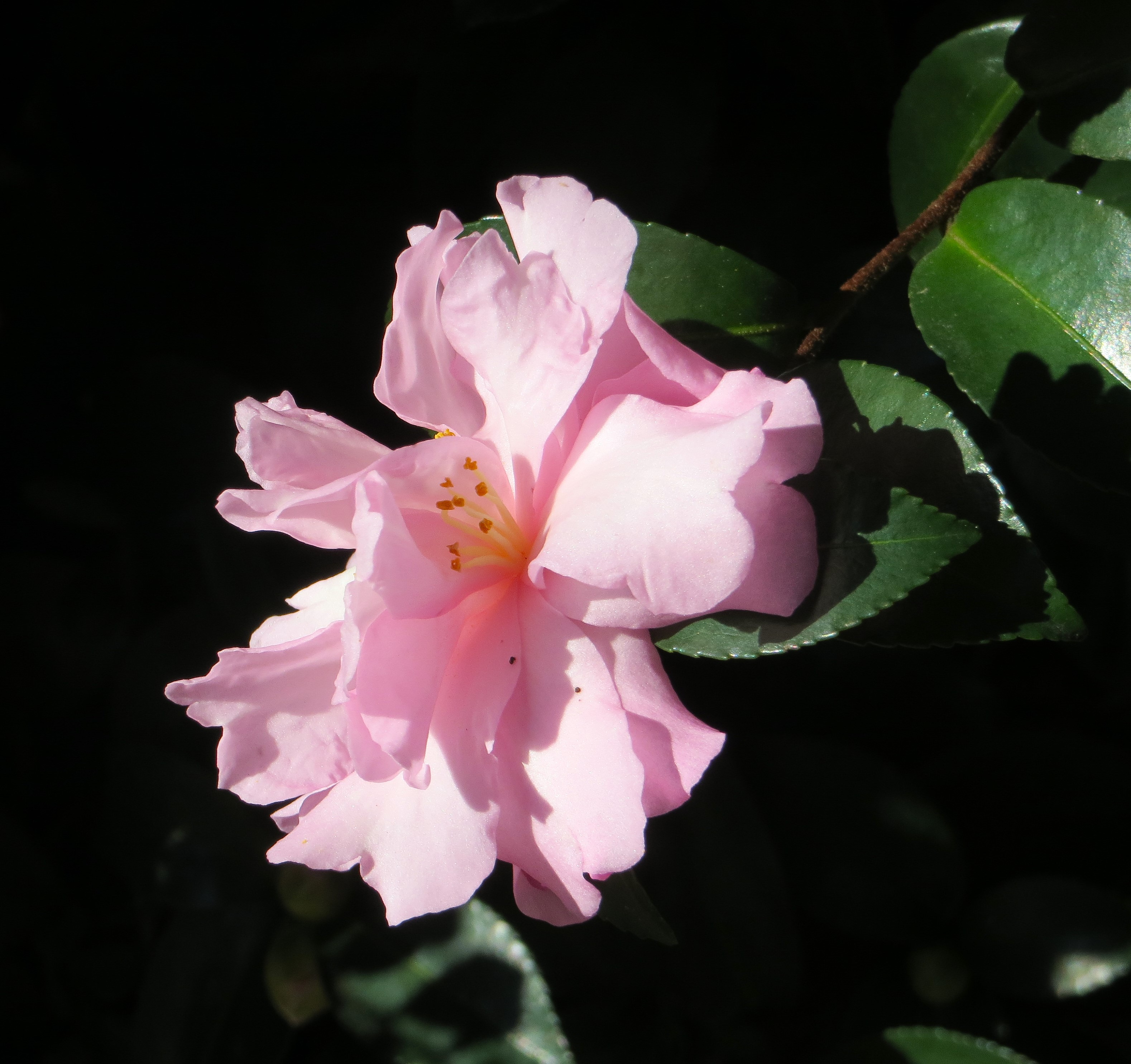
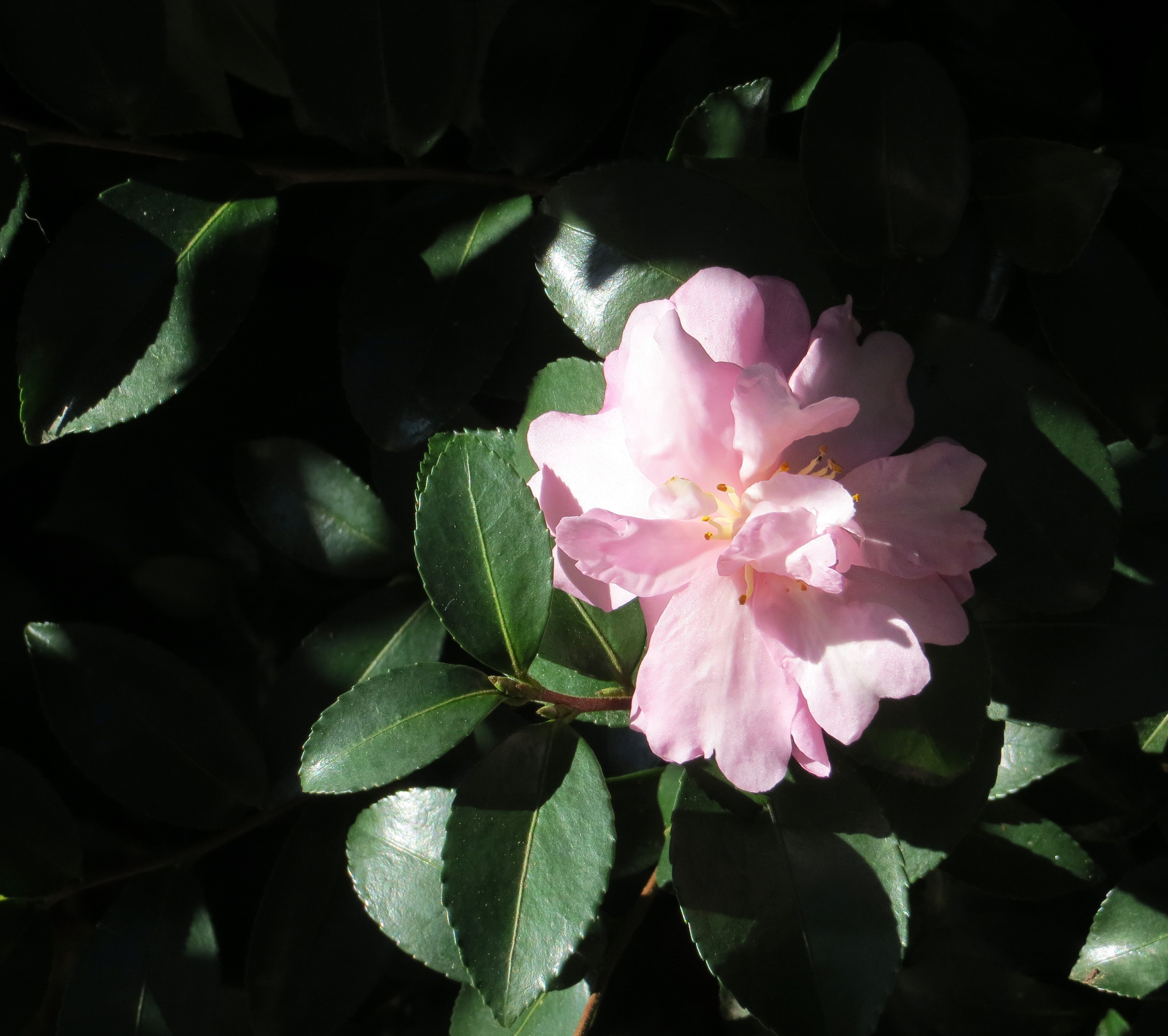
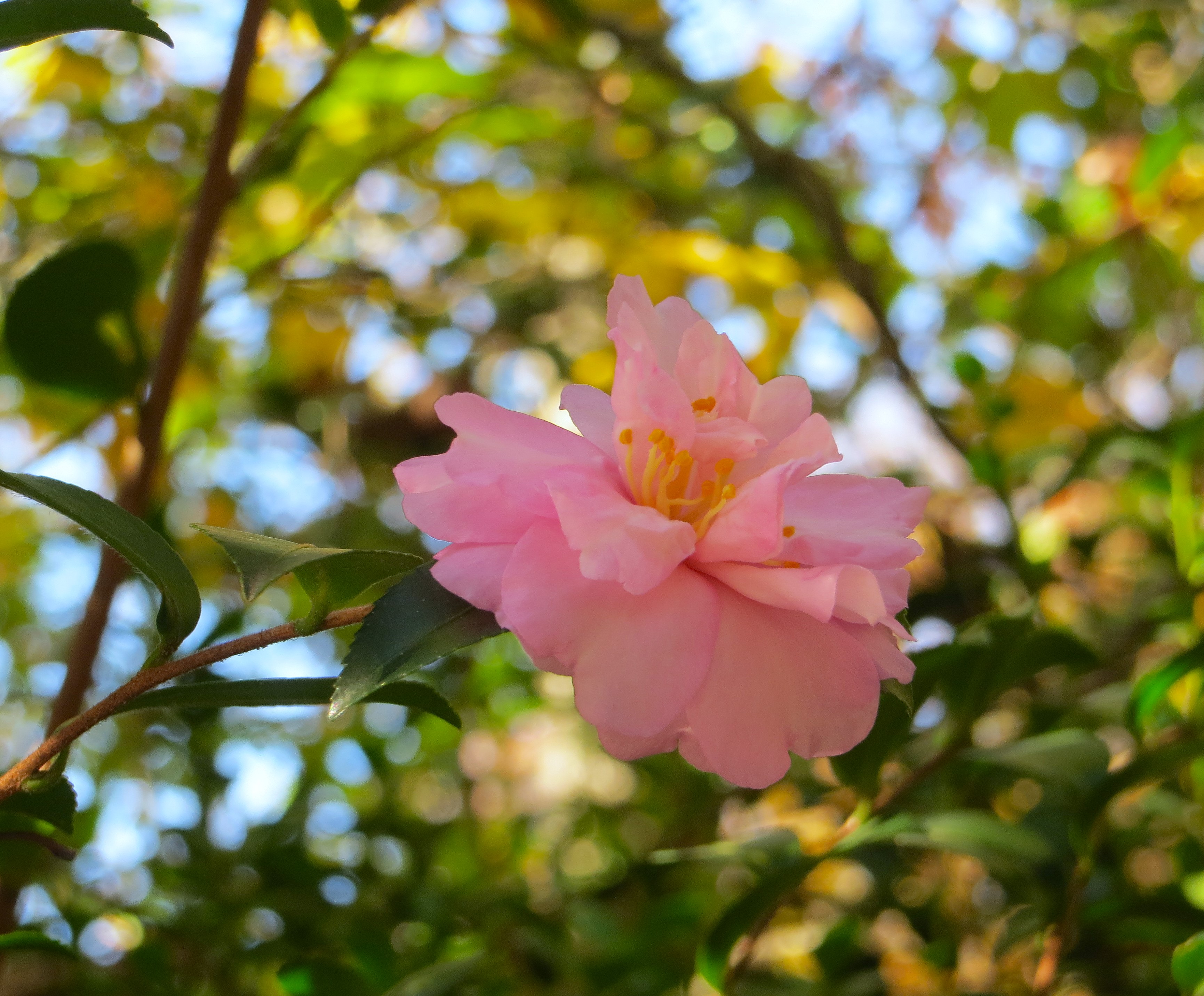
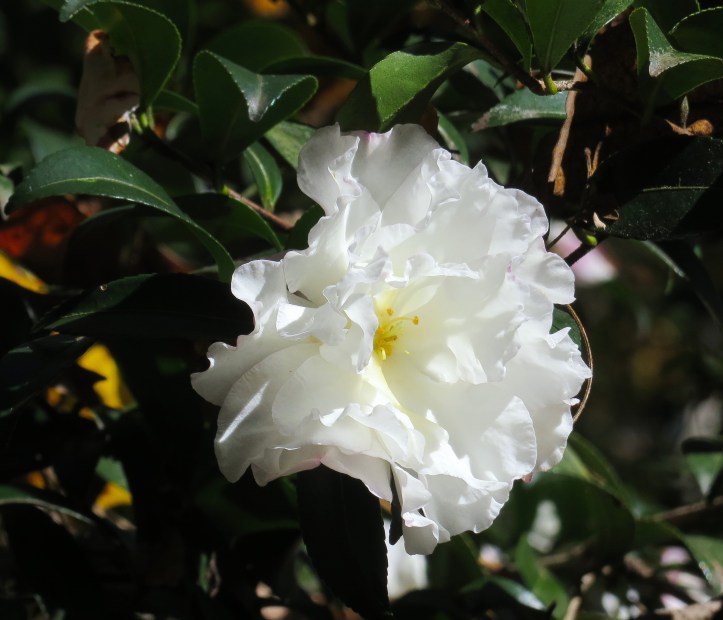
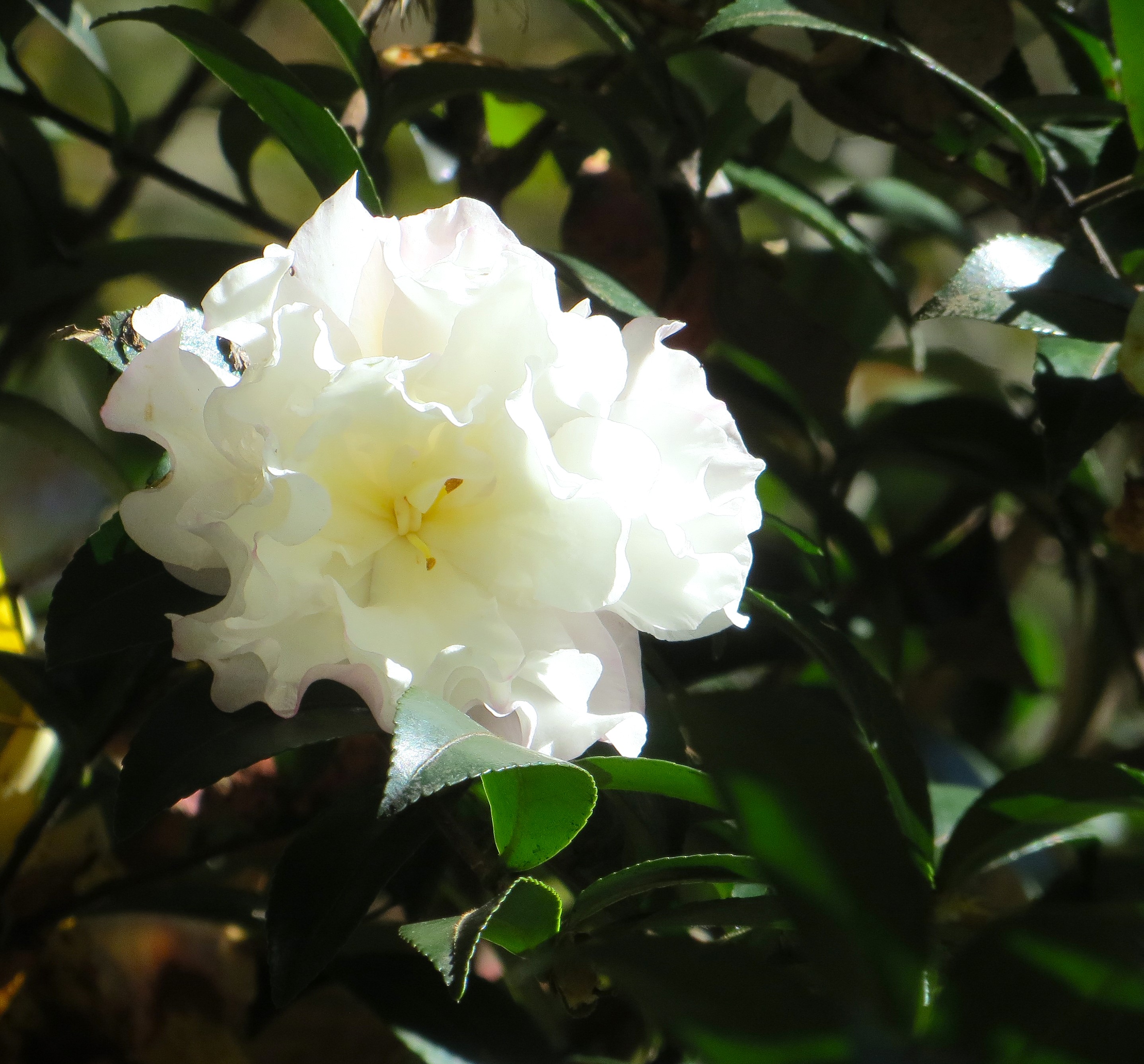
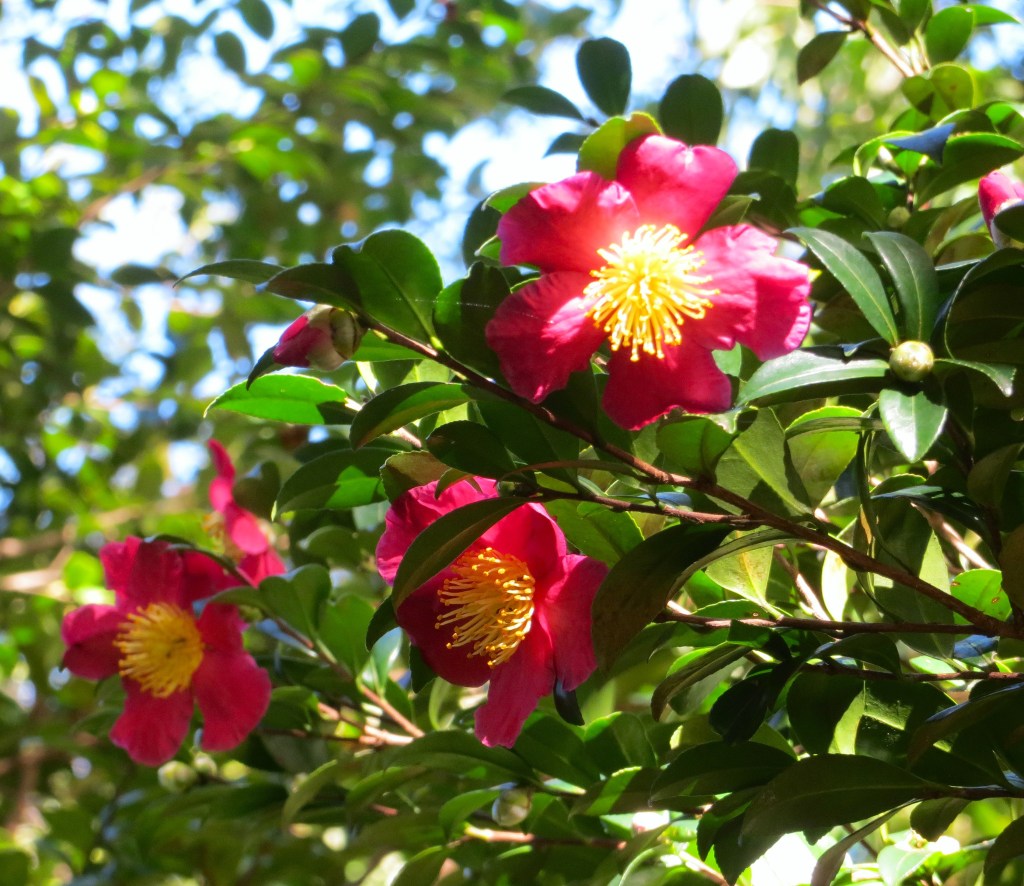
We were down more than 10″ of rain for the year when we had a few days of rain last weekend. The few times I determined to take photos for a SoS post these past few months, let’s just say the photos talked me out of it. That said, our Camellia sasanqua shrubs are fully in bloom and as beautiful as ever.
I managed to do a better job of keeping the pots and baskets watered this year than I did watering the garden in general, thus many survived, some thrived, and too many of our large, potted Begonias disappeared as deer snacks. Mostly Aroids survived the summer out in the yard, along with a few Begonias huddled up near the front porch and protected with our patio furniture and pots of rosemary.
Truth be told, I spent much of this past year writing, editing, formatting, and learning a bit about becoming an Indy author. It is a steep learning curve; endlessly tedious and infinitely rewarding. And I have three newly published books and my usual Gardener’s Calendar to show for the effort.
The first book, Growing a Greener Thumb: A Way of Gardening, is actually the second title because I published it first under the title: How to Grow a Greener Thumb: The Art and Science of Tending a Garden. It follows a year spent in the garden, bringing together selected gardening articles that I wrote for my earlier Forest Garden website over about 6 years, beginning in 2013. After publishing it, I kept editing and fiddling with it and re-published under a more streamlined title. This book is a primer for those of us who like to putter around our own gardens at home with all sorts of different plants. And I have realized over these past several months how much our climate, and our garden here, have shifted since those early gardening days in this area.
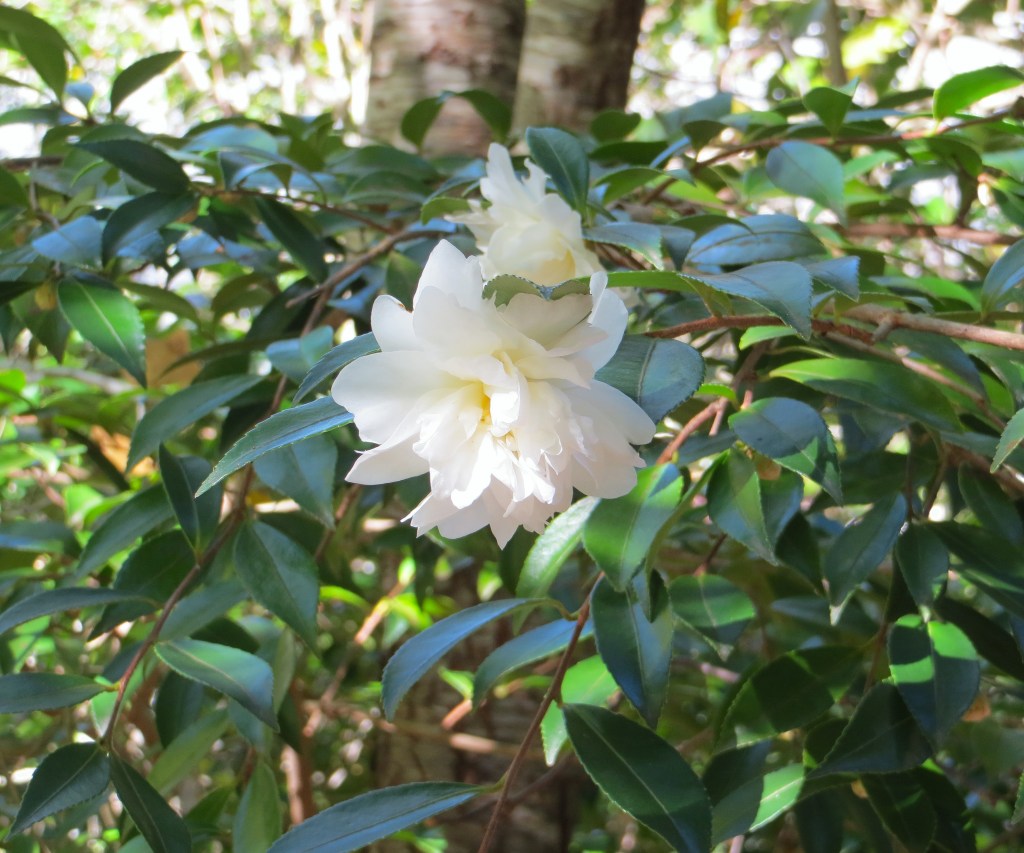
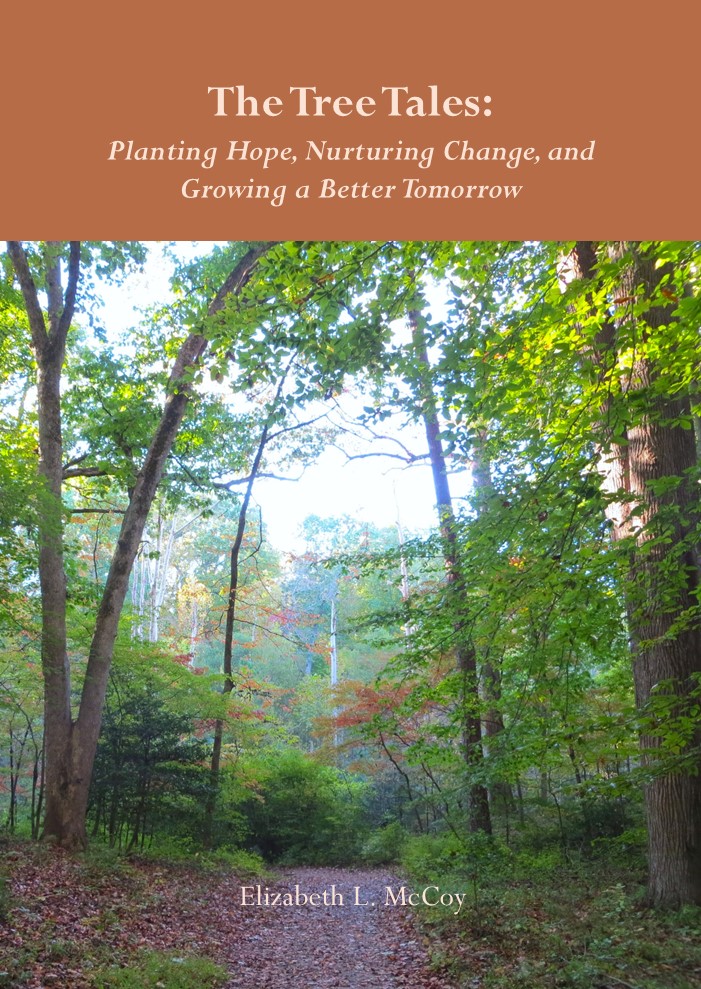
The following two books are mostly about trees. The Tree Tales: Planting Hope, Nurturing Change, and Growing a Better Tomorrow was published in October and is a love letter to trees and forests. It is also a practical guide for homeowners offering practical strategies for incorporating more trees and shrubs in a home landscape. I am convinced that growing woody plants is the most practical and accessible thing that any of us can do to help with scrubbing the air we breathe, and making our own communities more habitable and comfortable. Evergreen trees, like camellias, do this year-round, even in the depths of winter. And yes, there is an entire chapter about camellias, and another about yaupon, a native evergreen shrub in our area whose leaves can be brewed into caffeine-rich tea. Yaupon, a holly species, is a shrub that will grow in most any temperate garden, requires little care, and may be used like a box shrub.
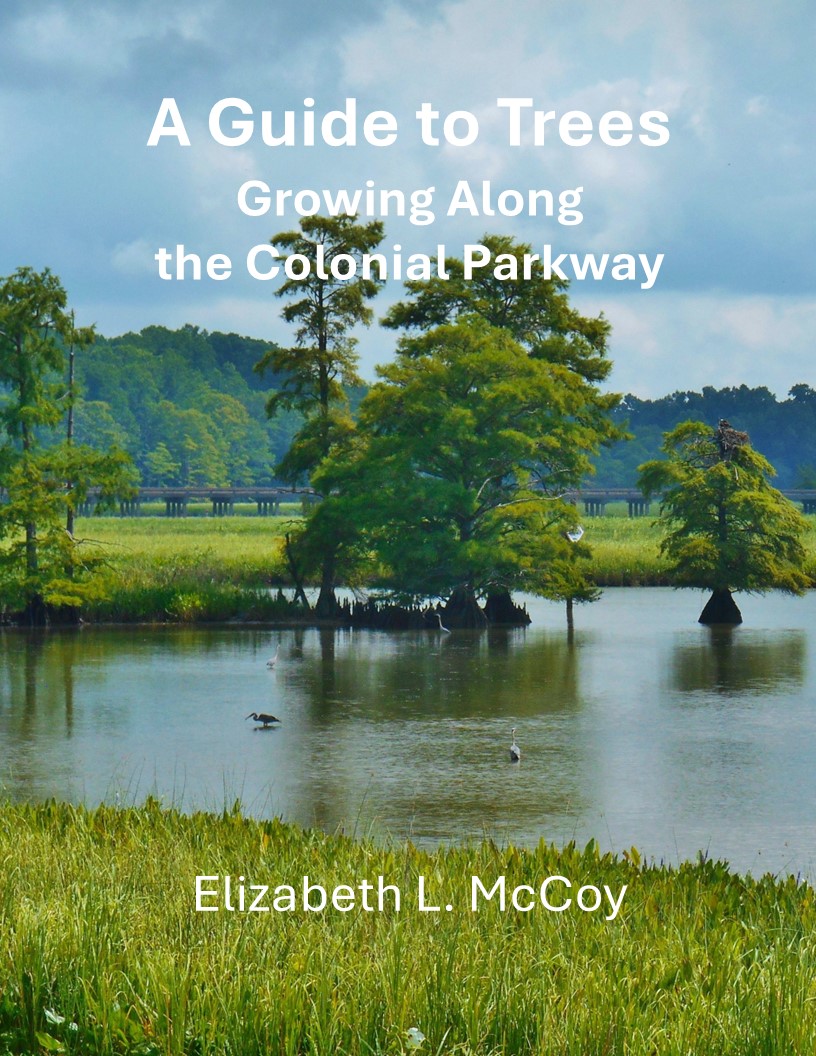
I set that manuscript aside while pre-readers were reading and offering comments, and turned to organizing photos to use in that book. Working with the photos inspired me to pull together a smaller project: A Guide to Trees Growing on the Colonial Parkway. It begins with brief history of our area, from per-settlement into the early Colonial era, then describes how historic preservation projects began in the 1920s to preserve Jamestown Island and Colonial Williamsburg. It goes on to discuss how the Colonial Parkway came about in the 1930s-1950s, and the renovation project currently underway. Once the history part is finished, we get into the botany of over 85 taxa of trees, shrubs, woody vines, and even a few notable herbaceous perennial plants found growing along the Parkway. Friends who work with the Jamestown Settlement and Preservation Virginia organizations advised on that project, which was completed and published by late summer.
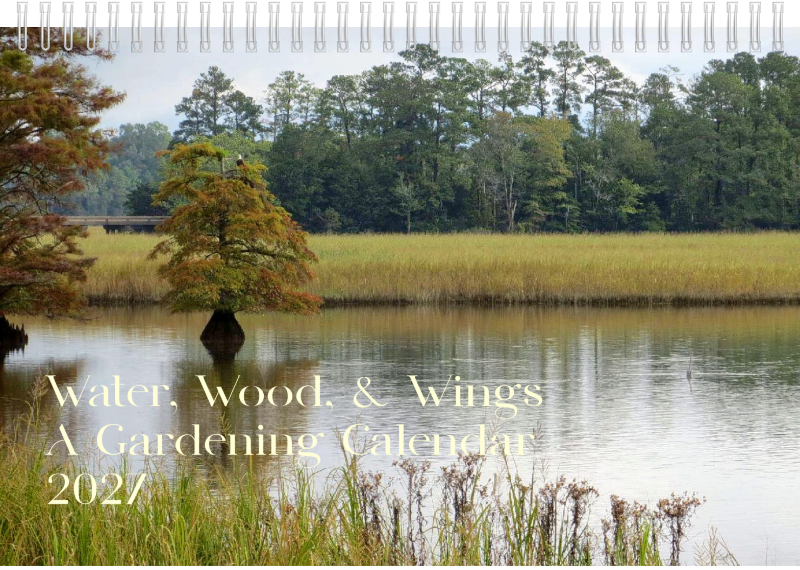
It took several more weeks of concentrated effort to revise The Tree Tales manuscript, illustrate it with photos, and format it for publication. With that effort completed now, I am taking a small break. This year’s calendar photos were drawn from photos I took and edited for The Tree Tales or the Parkway book. Some of the calendar photos are ones I liked but didn’t end up using, and others are published in one of the books or the other.
All of us who contribute to Six on Saturday understand that it is possible to “garden” right from your computer, planting ideas and harvesting enthusiasm. Editing is much like pulling weeds and moving plants around. My gardening during this hot and dry year has been mostly accomplished at the keyboard, and I hope that the three books and the calendar that are now loosed wild into the world will please and inspire.
You can see more about the books at: https://elizabeth-l-mccoy-books.com/books All are available through Amazon as both Kindle ebooks and as paperbacks, and are also published through IngramSparks so they are available to retail stores and libraries. I am selling calendars directly to friends, as in years past, should anyone be interested in this year’s Water, Wood and Wings A Gardening Calendar 2027.
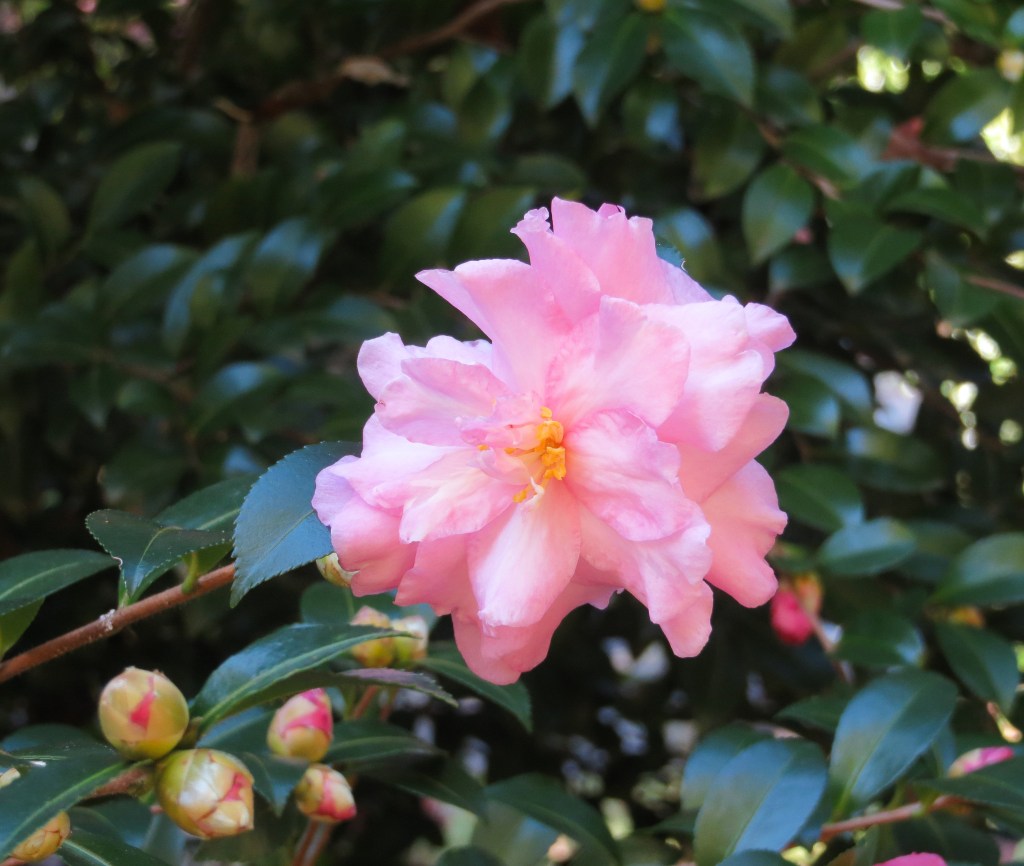
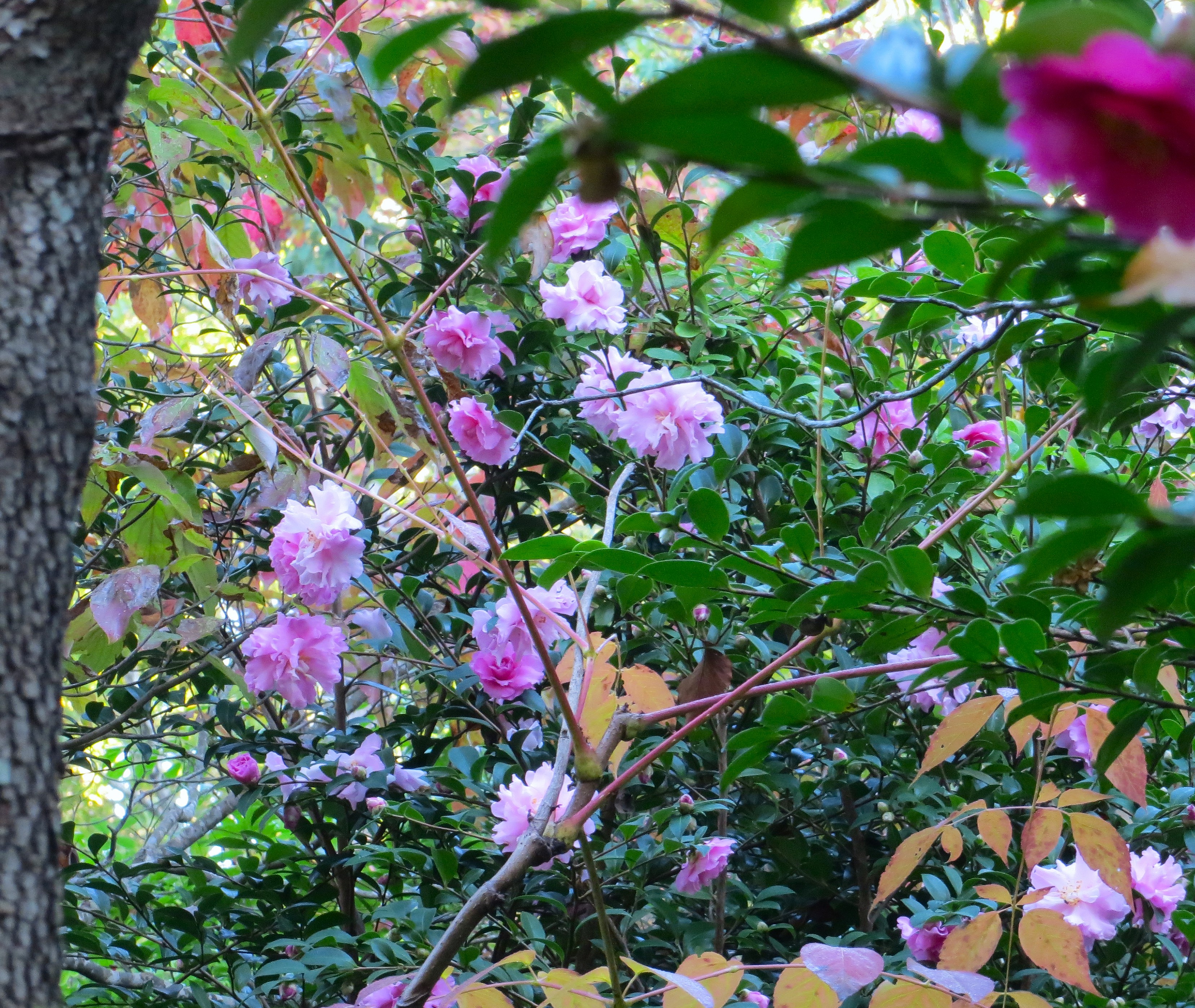
I am deeply grateful for our Camellias this autumn. They are bringing daily joy to us and to neighbors who see those blooming along the street. Their success underlines to me a key idea that I developed in The Tree Tales, and that is that flowering woody trees and shrubs are far more environmentally friendly, and far more efficient and sustainable, than planting lots of smaller herbaceous annuals or perennials. Woodies are more drought tolerant than herbaceous plants, can draw on stored reserves, and cover themselves in countless flowers. This certainly helps support thirsty and stressed pollinators even as they delight us with their beauty. Shrubs like camellias fill a niche in our yard that no indigenous native shrub can fill with flowers in autumn and again in early spring.
Thank you for sticking with me, if you are still reading, as I realize this post is a bit off-topic from a traditional Six on Saturday post. But I’ve been missing-in-action from this group for a while and so wanted to tell you some of the reasons why, and promise to try to do better whenever I have some good garden photos worth sharing in future.
With appreciation to Jim Stephens of Garden Ruminations,
who hosts Six on Saturday each week.
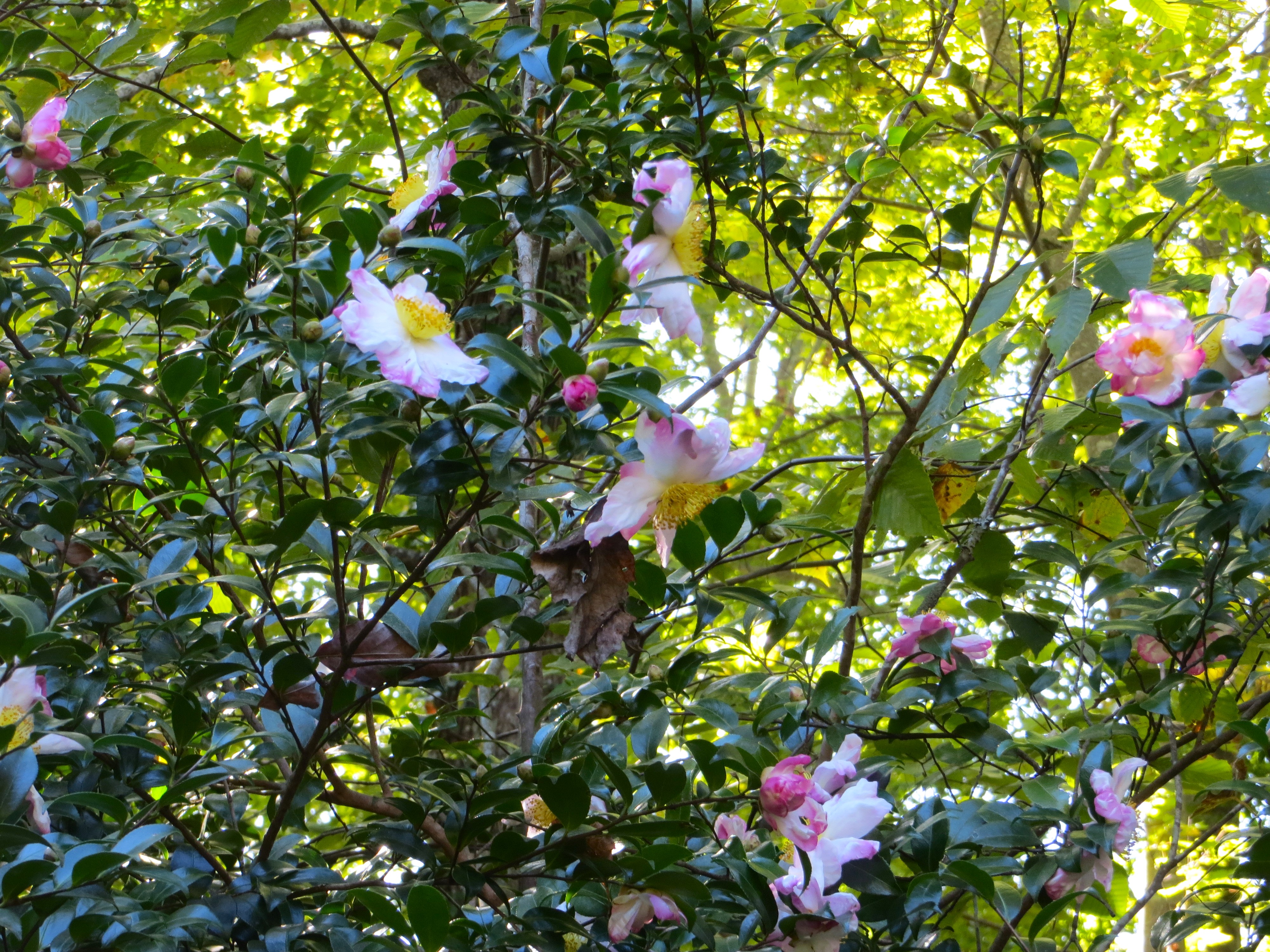
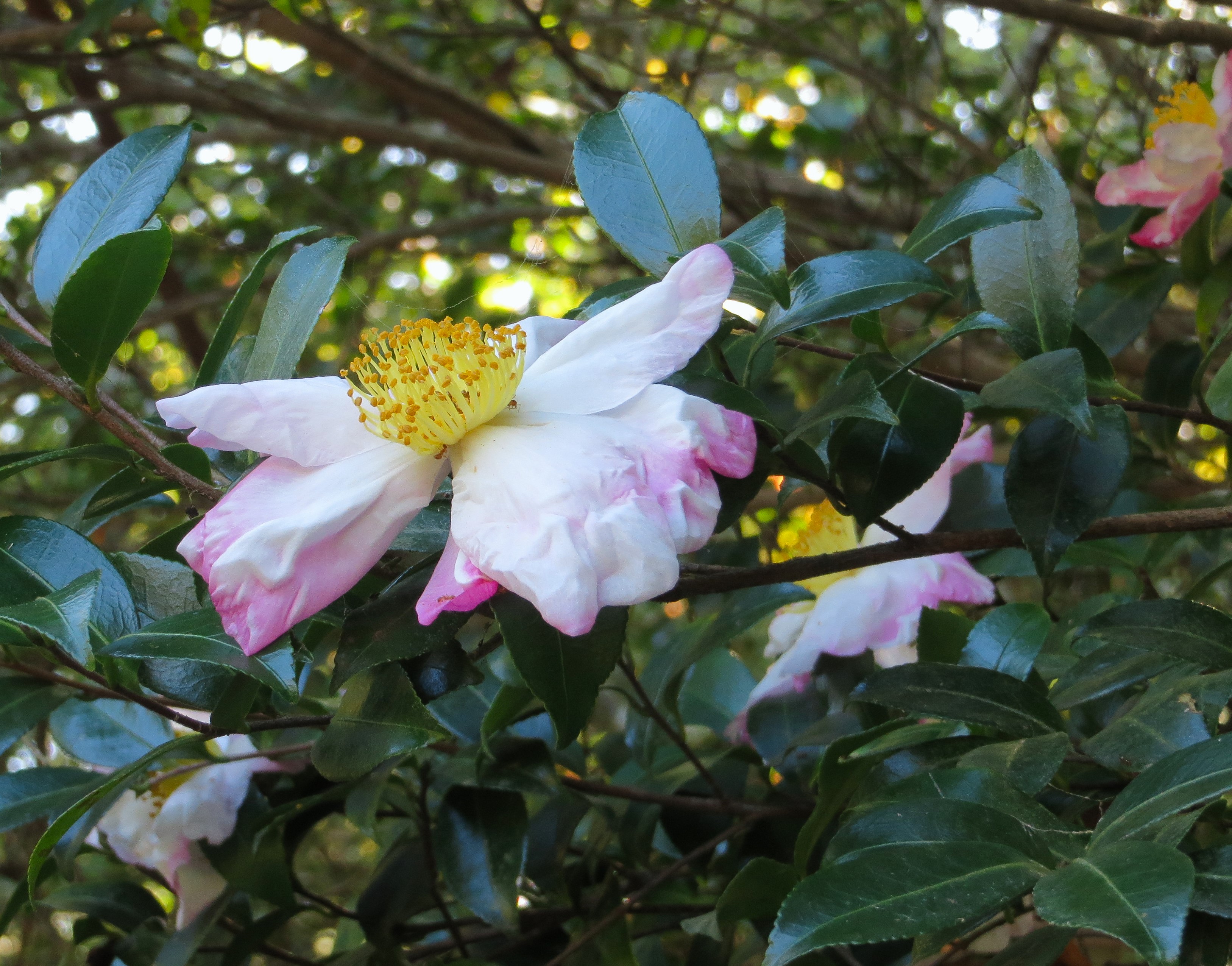


Perhaps a bit off-topic, but since there are 6 photos, you’re still within the theme. And the photos of these camellias are really very lovely.
LikeLiked by 1 person
Thank you so much, Fred!
LikeLiked by 1 person
Yes, they are very pretty Camellia sasanqua.
LikeLiked by 1 person
Congrats on your publications! I was thinking about you recently, wondering what you were up to. Hope you are having a great autumn. 👍🏼
LikeLiked by 1 person
Wonderful to hear from you, Eliza, and I hope that all is well with you and your family. Now you know how I’ve been trying to stay out of trouble, lately. It has been an interesting few months. Thank you, Eliza!
LikeLiked by 1 person